Showing posts sorted by relevance for query MADAGASCAR. Sort by date Show all posts

Thursday, January 12, 2023

It would take 23 million years for evolution to replace Madagascar’s endangered mammals

“Now or never” for preventing extinction

Peer-Reviewed Publication

FIELD MUSEUM

Mouse lemur 

IMAGE: BROWN MOUSE LEMUR, ONE OF THE 104 SPECIES OF LEMURS THAT ARE CURRENTLY THREATENED WITH EXTINCTION. A TOTAL OF 17 SPECIES OF LEMURS HAVE GONE EXTINCT SINCE HUMANS ARRIVED ON MADAGASCAR. view more 

CREDIT: © CHIEN C. LEE

In many ways, Madagascar is a biologist’s dream, a real-life experiment in how isolation on an island can spark evolution. About 90% of the plants and animals there are found nowhere else on Earth. But these plants and animals are in major trouble, thanks to habitat loss, over-hunting, and climate change. Of the 219 known mammal species on the island, including 109 species of lemurs, more than 120 are endangered. A new study in Nature Communications examined how long it took Madagascar’s unique modern mammal species to emerge and estimated how long it would take for a similarly complex set of new mammal species to evolve in their place if the endangered ones went extinct: 23 million years, far longer than scientists have found for any other island.

That is, simply put, really bad news. “It's abundantly clear that there are whole lineages of unique mammals that only occur on Madagascar that have either gone extinct or are on the verge of extinction, and if immediate action isn't taken, Madagascar is going to lose 23 million years of evolutionary history of mammals, which means whole lineages unique to the face of the Earth will never exist again,” says Steve Goodman, MacArthur Field Biologist at Chicago’s Field Museum and Scientific Officer at Association Vahatra in Antananarivo, Madagascar, and one of the paper’s authors.

Madagascar is the world’s fifth-largest island, about the size of France, but “in terms of all the different ecosystems present on Madagascar, it’s less like an island and more like a mini-continent,” says Goodman. In the 150 million years since Madagascar split from the African mainland and the 80 million since it parted ways with India, the plants and animals there have gone down their own evolutionary paths, cut off from the rest of the world. This smaller gene pool, coupled with Madagascar’s wealth of different habitat types, from mountainous rainforests to lowland deserts, allowed mammals there to split into different species far more quickly than their continental relatives.

But this incredible biodiversity comes at a cost: evolution happens faster on islands, but so does extinction. Smaller populations that are specially adapted to smaller, unique patches of habitat are more vulnerable to being wiped out, and once they're gone, they're gone. More than half of the mammals on Madagascar are included on the International Union for Conservation of Nature Red List of Threatened Species, aka the IUCN Red List. These animals are endangered primarily because of human actions over the past two hundred years, especially habitat destruction and over-hunting.

An international team of Malagasy, European, and American scientists, including Goodman, collaborated to study the looming extinction of Madagascar’s endangered mammals. They built a dataset of every known mammal species to coexist with humans on Madagascar for the last 2,500 years. (Humans have lived on the island, perhaps intermittently, for the past 10,000 years, but have remained constant there for the last 2,500.) The scientists came up with the 219 known mammal species alive today, plus 30 more that have gone extinct over the past two millennia, including a gorilla-sized lemur that went extinct between 500 and 2,000 years ago.

Armed with this dataset of all the known Malagasy mammals that interacted with humans, the researchers built genetic family trees to establish how all these species are related to each other and how long it took them to evolve from their various common ancestors. Then, the scientists were able to extrapolate how long it took this amount of biodiversity to evolve, and thus, estimate how long it would take for evolution to “replace” all of the endangered mammals if they go extinct.

To rebuild the diversity of land-dwelling mammals that have already gone extinct over the past 2,500 years, it would take around 3 million years. But more alarmingly, the models suggested that if all the mammals that are currently endangered were to go extinct, it would take 23 million years to rebuild that level of diversity. That doesn’t mean that if we let all of the lemurs and tenrecs and fossas and other unique Malagasy mammals go extinct, that evolution will recreate them if we just wait around 23 million more years. “It would be simply impossible to recover them,” says Goodman. Instead, the model means that to achieve a similar level of evolutionary complexity, whatever those new species might look like, would take 23 million years.

Luis Valente, the study’s corresponding author, says he was surprised by this finding. “It is much longer than what previous studies have found on other islands, such as New Zealand or the Caribbean,” says Valente, a biologist at the Naturalis Biodiversity Center and the University of Groningen in the Netherlands. “It was already known that Madagascar was a hotspot of biodiversity, but this new research puts into context just how valuable this diversity is. These findings underline the potential gains of the conservation of nature on Madagascar from a novel evolutionary perspective.”

According to Goodman, Madagascar is at a tipping point for protecting its biodiversity. “There is still a chance to fix things, but basically, we have about five years to really advance the conservation of Madagascar’s forests and the organisms that those forests hold,” he says.

This urgent conservation work is made difficult by inequality and political corruption that keeps land-use decisions out of the hands of most Malagasy people, says Goodman: “Madagascar’s biological crisis has nothing to do with biology. It has to do with socio-economics.” But while the situation is dire, he says, “we can't throw in the towel. We’re obliged to advance this cause as much as we can and try to make the world understand that it’s now or never.”

The critically endangered Verreaux’s Sifaka is one of the 109 species of lemurs that currently are extant on Madagascar. A total of 17 species of lemurs have already gone extinct.

CREDIT

© Chien C. Lee

Saturday, November 05, 2022

Human expansion 1,000 years ago linked to Madagascar’s loss of large vertebrates

Peer-Reviewed Publication

CELL PRESS

Current anthropized landscape of Madagascar 

IMAGE: CURRENT ANTHROPIZED LANDSCAPE OF MADAGASCAR view more 

CREDIT: MAGE CONSORTIUM

The island of Madagascar—one of the last large land masses colonized by humans—sits about 250 miles (400 kilometers) off the coast of East Africa. While it’s still regarded as a place of unique biodiversity, Madagascar long ago lost all its large-bodied vertebrates, including giant lemurs, elephant birds, turtles, and hippopotami. A human genetic study reported in the journal Current Biology on November 4 links these losses in time with the first major expansion of humans on the island, around 1,000 years ago.

“This human demographic expansion was simultaneous with a cultural and ecological transition on the island,” says Denis Pierron, French National Centre for Scientific Research (CNRS) researcher in Toulouse, France. “Around the same period, cities appeared in Madagascar and all the vertebrates of more than 10 kilograms disappeared.”

The origins of humans in Madagascar has long been an enigma, Pierron explained. Madagascar is home to 25 million people who speak an Asian language despite the island’s proximity to East Africa. Other groups who speak similar languages live more than 4,000 miles away. The people that live on Madagascar are known to trace their roots back to two small populations: one Bantu-speaking from Africa and another Austronesian-speaking from Asia. But, beyond that, the history remained rather murky.

To retrace the history and understand more about the origin of Malagasy people, a multi-disciplinary consortium launched in 2007 a project known as Madagascar Genetic and Ethnolinguistic (MAGE). Over a 10-year period, Malagasy and international researchers visited more than 250 villages across the country to sample the cultural and genetic human diversity.

In the new study, Pierron and his colleagues took a close look at the human genetic evidence. More specifically, they closely studied how various segments of human chromosomes were shared together with local ancestry information and computer-simulated genetic data. Together, they’ve inferred that the Malagasy ancestral Asian population was isolated on the island for more than 1,000 years with an effective population size of just a few hundred individuals.

Their isolation ended about 1,000 years ago when a small group of Bantu-speaking African people came to Madagascar. Afterwards, the population continued to expand rapidly over generations. The growing human population led to extensive changes to the Madagascar landscape and the loss of all large-bodied vertebrates that once lived there, they suggest.

The findings have important implications that may now be applied to studies of other human populations. For instance, it shows it’s possible to untangle the demographic history of ancient populations even well after two or more groups have mixed, by using genetic data and computer simulations to test the likelihood of different scenarios. The findings also offer new insights into how past changes in human populations led to changes in whole ecosystems.

“Our study supports the theory that it was not directly the arrival of humans on the island that caused the disappearance of the megafauna, but rather a change in lifestyle that caused both a human population expansion and a reduction in biodiversity in Madagascar,” Pierron says.

While these efforts have led to much better understanding of Madagascar’s history, many intriguing questions remain. For instance, Pierron asks, “If the ancestral Asian population was isolated for more than a millennium before mixing with the African population, where was this population? Already in Madagascar or in Asia? Why did the Asian population isolate itself over 2,000 years ago? Around 1,000 years ago, what triggered the observed cultural and demographic transition?” 

###

This work was supported by the Région Aquitaine “Project MAGE” (Madagascar Genétique et Ethnolinguistique) and the French National Research Agency (ANR) Grants “MADEOGEN.”

Current Biology, Alva et al. “The loss of biodiversity in Madagascar is contemporaneous with major demographic events.” https://www.cell.com/current-biology/fulltext/S0960-9822(22)01602-5

Current Biology (@CurrentBiology), published by Cell Press, is a bimonthly journal that features papers across all areas of biology. Current Biology strives to foster communication across fields of biology, both by publishing important findings of general interest and through highly accessible front matter for non-specialists. Visit http://www.cell.com/current-biology. To receive Cell Press media alerts, contact press@cell.com.

Saturday, March 09, 2024

Madagascar takes key step toward improving transparency of its fisheries
Mongabay.
7 March 2024


Madagascar recently released its first fisheries transparency report, part of an effort to open up, democratize, and improve the sustainability of its fisheries sector.

The report is a key step in a process defined by the Fisheries Transparency Initiative (FiTI), a Seychelles-based nonprofit.

It contains important information on traditional, artisanal and industrial fisheries, a list of the laws and regulations governing the sector, tenure arrangements, and access agreements — including previously undisclosed information.

It also assesses the country’s transparency according to the availability and accessibility of data from six thematic areas as outlined by the FiTI Standard.

ANTANANARIVO — Madagascar recently released its first fisheries transparency report, part of an effort to open up, democratize, and improve the sustainability of its fisheries sector. The report is a key step in a process defined by the Fisheries Transparency Initiative (FiTI), a Seychelles-based nonprofit.

FiTI announced on Jan. 26 that Madagascar had published the report, covering the 2022 fiscal year and containing previously undisclosed information, in December. Madagascar is one of just a handful of countries to have achieved this step in the FiTI process, Cabo Verde having published its first report around the same time. The same day, the U.S. pledged support to help Madagascar fight illegal fishing.

“The launch of the FiTI report is a first step towards better transparency of the fisheries sector in Madagascar,” Ketakandriana Rafitoson, executive director of Transparency International–Initiative Madagascar (TI-MG) and an author of the report as well as a current FiTI board member, told Mongabay. “However, a lot of efforts still have to be undertaken to fully comply with the FiTI’s 12 transparency requirements.”

The fisheries industry is one of the most vital and lucrative in Madagascar, an island nation with more than 5,600 kilometers (3,500 miles) of coastline and around 1.2 million square kilometers (463,300 square miles) of economic exclusive zone. The sector has an annual production capacity of $750 million, which is 5-7% of the national GDP, according to the fisheries ministry citing World Bank data. More than 500,000 fishers living along the island’s coastline rely on marine resources for food and incomes while feeding millions of people.
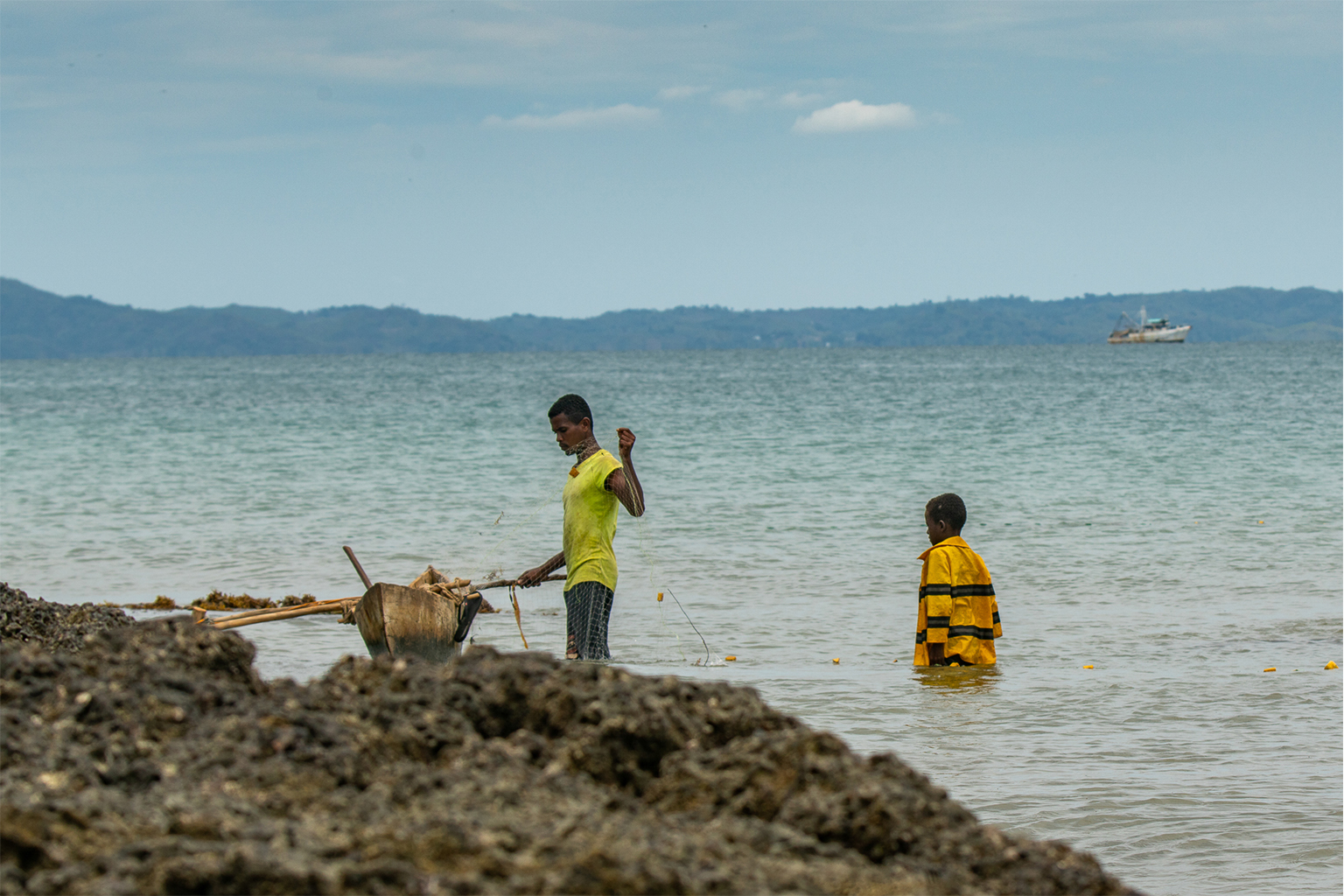
Small-scale fishers set a net close to shore on the island of Nosy Faly in northwestern Madagascar as an industrial trawler fishes further offshore in 2021. Image by Mongabay.

Lack of transparency in Madagascar’s fisheries sector has long raised concerns, with reports of foreign vessels abusively exhausting fish stocks in the country’s waters, and secretive fishing deals with shadowy foreign companies.

The report, drafted by consultant Eric Beantanana for Madagascar’s multistakeholder group (MSG), a committee that oversees the country’s participation in the FiTI process, provides information about traditional, artisanal and industrial fisheries, a list of the laws and regulations governing the sector, tenure arrangements, and access agreements. It also assesses the country’s transparency according to the availability and accessibility of data from six thematic areas as outlined by the FiTI Standard.

Most important, details on large vessels, both foreign and domestic, operating in Madagascar’s waters were made public for the first time: their manner of operation, license delivery process, duration of the agreements under which they operate, quotas, catches, taxes paid, and the fisheries ministry’s use of the money earned from the agreements.

The report also lists recommendations for the Madagascar government to continue improving transparency. For example, to digitize any documents relating to fisheries laws, regulations and policies so they are publicly available, and to progressively eliminate confidentiality clauses in fishing agreements it signs with foreign entities, among other recommendations.

Madagascar embarked on the FiTI process three years ago. Tsimanaoraty Paubert Mahatante, Madagascar’s minister of fisheries and blue economy and a fisheries scientist himself, told Mongabay that as soon as he was appointed minister in August 2021, he wrote to the FiTI board indicating the country’s willingness to join. “They are astonished at the beginning,” he said. “It was the first time to see a minister writing to them and sharing his will to join this organization.”

Madagascar and five other countries — Cabo Verde, Ecuador, Mauritania, São Tomé and Príncipe, and Seychelles — are currently FiTI “candidate countries.” Each has an MSG comprising representatives of government, civil society and the private sector to guide and report annually on its progress toward meeting the 12 transparency requirements of the FiTI Standard. By demonstrating consistent progress toward that standard, they can eventually become “FiTI Compliant” countries, a status that requires regular reporting and validation by FiTI to maintain.
The fishing trawler Cap-Saint Augustin fishing off the shore of Nosy Faly in 2021. 
Image by Mongabay.

Madagascar’s MSG currently includes 12 organizations and institutions. “This is the only way to ensure that the MSG is representative of all types of fisheries,” Naly Rakotoarivony, head of policy and partnership at the NGO Blue Ventures in Antananarivo and an observer during the FiTI process, told Mongabay. “[T]he call for interest was spread and made public at each fisheries regional office,” he said.

He added that small-scale fishers (SSFs) were well represented in drafting the report and on the MSG, both among civil society members — by the MIHARI network of locally managed marine areas — and among private sector members, by the Comité de Gestion de Poulpe, the octopus management committee in southwest Madagascar.

“As this is the country’s first FiTI report, it is very important to involve as many fishers as possible in the next report. The more fishers we have on board, the more impactful the report will be,” Rakotoarivony said.

Rafitoson of TI-MG highlighted several recommendations raised in the report. Key among them is to enhance the fight against corruption and to ensure strict law enforcement to avoid impunity, she said. Another is to better invest in the evaluation of fish stocks and carry out a professional assessment of biomass and fishing effort; such assessments haven’t been done, yet are critical to sustainably managing fish stocks, she said. Improving data collection and ensuring it’s accessible online is another important task.

The report notes that the ministry not having an online information portal contributed to a lack of transparency, but the ministry launched one in July 2023, after the period the report covers. Moreover, even before the portal launched, the ministry shared information on social media platforms, a factor the report did account for, Mahatante said. “As people follow us on them, mainly on Facebook, we publish all information about fisheries, aquaculture, and every activity of the ministry,” he said.

During a visit to Antananarivo in January, Calvin Foster (left), commander of the U.S. naval fleet that covers Africa, discussed with Tsimanaoraty Paubert Mahatante, Madagascar’s minister of fisheries and blue economy and a fisheries scientist, how the two countries could cooperate in reducing illegal, unreported and unregulated fishing in Madagascar’s waters.
 Image courtesy of Ministère de la Pêche et de l’Economie Bleue.

Yet Mahatante acknowledged that information dissemination remains a challenge, especially to small-scale fishers who need accurate information and technical assistance to improve their livelihoods. Lack of reliable internet access in rural areas, combined with high illiteracy rates nationally, prevent many from accessing these resources. “How can we translate all the good ideas expressed in the report to the SSFs? We have to make the information spread as wide as possible,” he said. One avenue will be through organizations like the MIHARI network that work directly with fishing communities, he said.

To Rakotoarivony, the preparation of the FiTI report and the creation of the ministry’s website are among the most significant governance achievements in the past year. Next steps for Madagascar include finalizing and launching the second FiTI report, covering 2023, and securing financing from FiTI to undertake additional transparency projects.

Additional outside support is also pending from the U.S. During a visit to Antananarivo in January, Calvin Foster, commander of the U.S. naval fleet that covers Africa, discussed with Mahatante how the two countries could cooperate in reducing illegal, unreported and unregulated (IUU) fishing in Madagascar’s waters. While the details have yet to be worked out, possibilities include the U.S. helping to train fisheries inspectors or patrol Malagasy waters, or providing fuel assistance, Mahatante said.

“They know the will to improve fisheries governance in general is there, and so they’d like to contribute to it to maintain the effort we’ve conducted so far,” Mahatante said, referring to the U.S. Navy.

Banner image: Young fishers set a net close to shore on Nosy Faly as an industrial trawler fishes further offshore in 2021. Image by Mongabay.

Thursday, October 02, 2025

Generation Z is stirring up rebellion across borders, from Morocco to Madagascar

Analysis


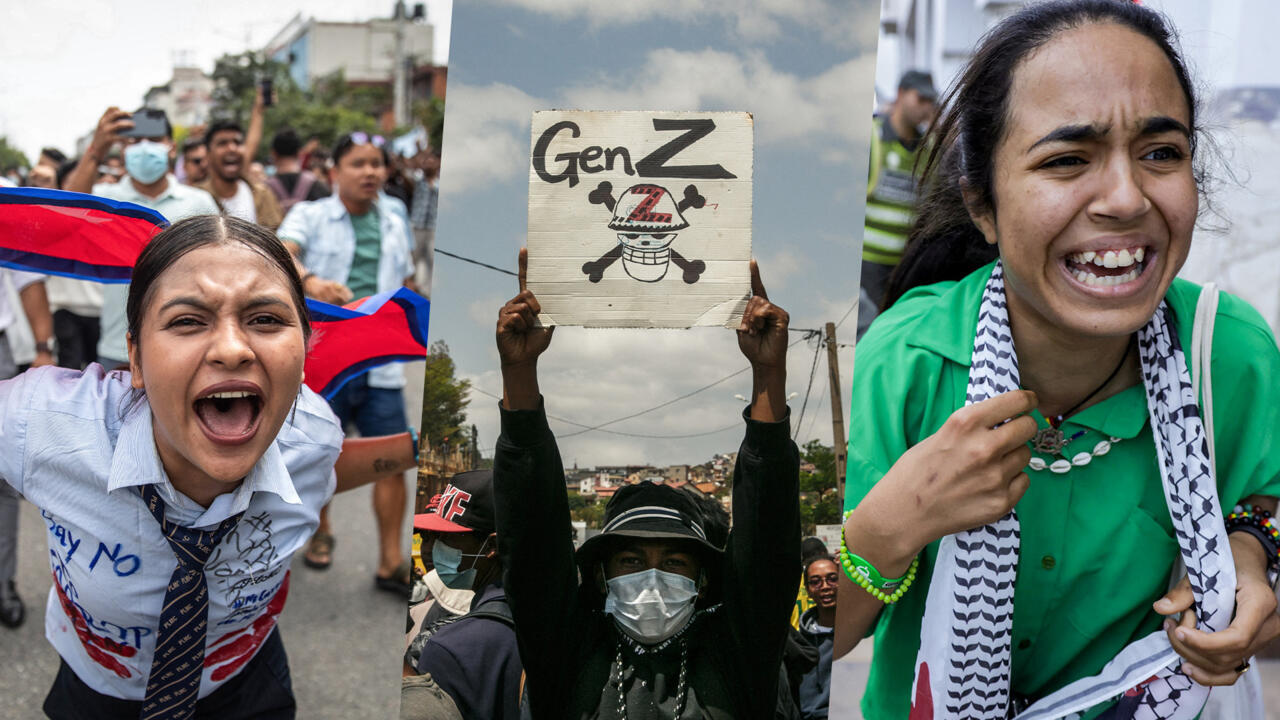
Gen Z, the first generation to have grown up in the internet age, has been at the forefront of anti-government protests in several countries of the Global South. Madagascar and Morocco are the latest countries to be hit by these youth-led movements, which use digital tools to communicate anger at corruption and underfunded social services.

Issued on: 02/10/2025 
FRANCE24
By: Grégoire SAUVAGE
Around the world, Gen Z is inventing new forms of mobilisation. 
© AFP / France 24 studio graphique
04:43


A persistent stereotype about Gen Z is that they are disengaged from and mistrustful of traditional politics, but judging by events over recent weeks, nothing could be further from the truth.

Media broadcasts have shown images of young people spearheading protests in the streets of Kathmandu, Nepal; Jakarta, Indonesia; Rabat, Morocco; and Antananarivo, Madagascar.

Three people were killed in anti-government protests across Morocco, the interior ministry said Thursday. The ministry said the three were shot and killed during an attempt to seize police weapons, though no witnesses could corroborate the report.

The protests have taken the North African nation by surprise and emerged as some of Morocco’s biggest in years. By midweek, they appeared to be spreading to new locations despite a lack of permits from authorities.

Madagascar’s protest movement began on social media under the banner “Gen Z Madagascar”, an informal group composed mainly of young people and students who claim to be “peaceful and civic-minded”. Although young people represent the overwhelming majority of the country's population – two-thirds were under 30 in 2023, according to UNICEF – Gen Z has never before taken such an active part in a political protest movement there.

"This movement is unprecedented, above all, because of its profoundly horizontal, spontaneous and decentralised nature. Unlike past mobilisations led or co-opted by political parties, unions or charismatic figures, this one arose from organic collective outrage, mainly in digital spaces, and took shape without a single leader," said Ketakandriana Rafitoson, professor of political science at the Université Catholique de Madagascar and vice chair of the NGO Transparency International.

“This gives it new symbolic power because it does not use the rationale of seizing power, but has an existential imperative: that of demanding a liveable future,” she said.
A common digital culture

Very much at home in the digital world, Gen Z has managed to mobilise a large part of the population in several countries using hashtags, AI-enhanced images, fast-paced videos – along with a healthy dose of sarcasm. After Madagascar’s President Andry Rajoelina sacked his government on Monday, he suggested he would select candidates for a new cabinet using LinkedIn – a proposal that was widely mocked by young internet users.


A Malagasy internet user's account mocks the president's proposal to use LinkedIn to hire government ministers. © Screengrab X


This social unrest, driven by tech savvy youngsters rebelling against inequality, can be seen as part of a broad movement that has already affected several Asian countries in recent months, including Nepal in early September, where the government was toppled in a matter of days. The Philippines, Indonesia, Bangladesh, Sri Lanka, and Kenya have all experienced similar protest movements.

In Morocco, thousands of young people active on the Discord messaging platform have been protesting since last week, mobilised by a movement that also claims to represent Gen Z.

Although unprecedented in terms of its organisation and methods of action, its demands are nevertheless in line with previous instances of social protest in the kingdom, according to Mehdi Alioua, a sociologist at Sciences Po Rabat-UIR.

“Ultimately, we see the same slogans calling for a more dignified life, better distribution of wealth, and above all, functional education and healthcare systems. These young people would like to respect the rules of a meritocracy, but they realise that the cards are stacked against them,” said Alioua.

In Madagascar, young people acknowledge the influence of Asian protesters thousands of miles away with whom they share many concerns, starting with the fight against inequality and corruption.

“The protests in Nepal were a key moment in the creation of the Gen Z Madagascar movement. Widely shared on social media, these protests in Asia played a major role in raising collective awareness in the country,” said a 26-year-old woman who did not want to named due to fears for her safety.


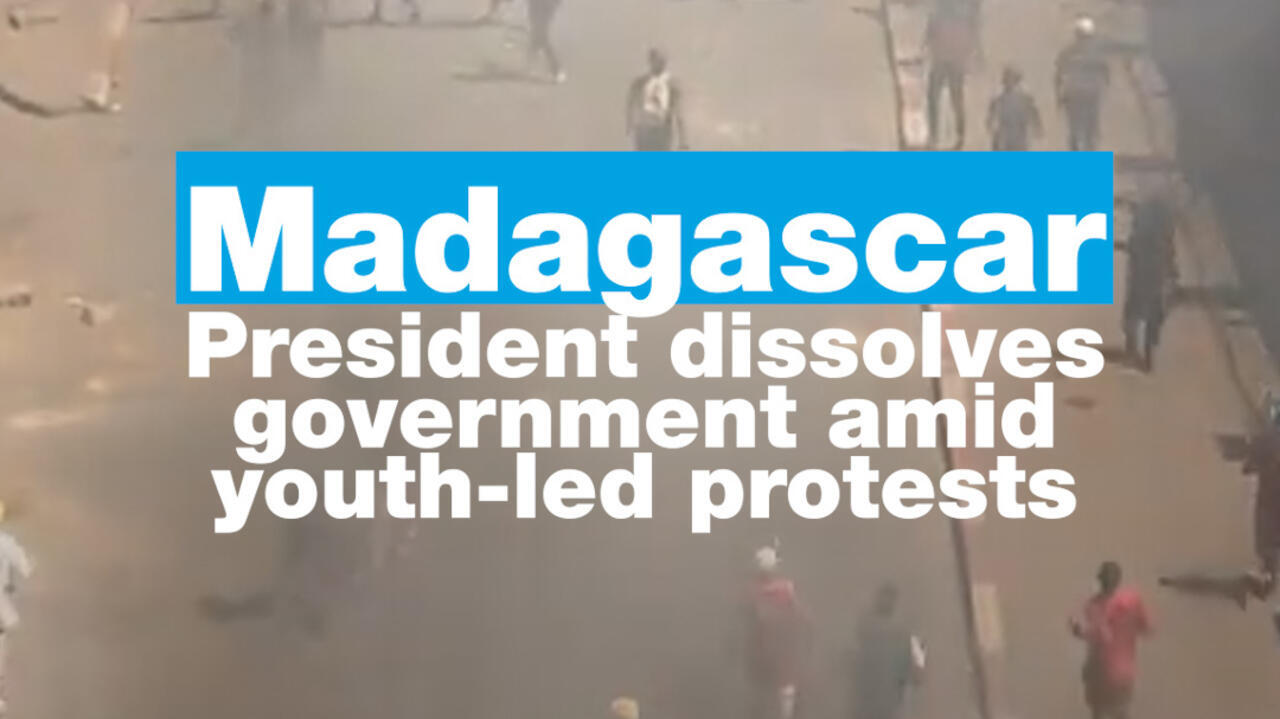
Madagascar: President dissolves government amid youth-led protests
EN Madagascar TikTok © France 24
00:44


“What happened in Nepal gave the people of Madagascar hope that it was possible to overthrow the system, that young people could take control of their own destiny, and that the country's situation was not inevitable. From then on, people began to speak out, and their voices came together under the Gen Z Madagascar movement,” she added.

A pirate flag from the Japanese manga series "One Piece" became a symbol of resistance for young people during protests in Indonesia and Nepal. In Madagascar, protesters are using a modified version of the flag where the skull-and-crossbones symbol sports traditional Malagasy headwear instead of a straw hat.


‘A turning point’

Protesters in Morocco and Madagascar are less focused than their counterparts in Asia on tracking the conspicuous consumption of “nepo kids” – children of the wealthy who flaunt their lavish lifestyles on the internet.

But in both Morocco and Madagascar, the anti-government movement is intent on exposing wealth inequalities between the ruling class and the average citizen.

Among the most viewed pages on the Malagasy internet are images of the eldest member of the Rajoelina family, who graduated from a Swiss hotel school costing €150,000 per year, while two-thirds of Madagascar's population live on less than two dollars a day.

Screenshot of an X account denouncing the lifestyle of the son of Madagascar's president. ©Screengrab X

Wasteful public spending is a common theme motivating the young protesters. In Madagascar, the costly Antananarivo cable car – one of the government's key infrastructure projects, but which has been deemed completely unsuited to the needs of the population – has galvanised the youth.

In Morocco, protesters are focusing on the huge sums spent on renovating several football stadiums for the upcoming Africa Cup of Nations and the 2030 World Cup, funds that could have gone to public services such as education and healthcare.

“There is an interconnection among Gen Z, particularly in countries in the Global South, whose elders led the revolution for decolonisation. But today, there is a generational divide because these young people feel that the promises of an independent nation with functioning institutions have not been fully kept,” noted Alioua.

Morocco rocked by violent clashes as youths protest health, education system
© France 24
01:31


“The similarities between all these movements are striking, both in terms of their demands and their methods of action, with viral campaigns, simple and inclusive slogans, and a rejection of traditional hierarchies. In all these countries, young people are acting as a barometer of a deep crisis in the state,” says Rafitoson.

Creative, daring and versatile, these Gen Z movements remain vulnerable to fragmentation and political exploitation. Can they move from expressing their collective anger to developing a real strategy? And can they avoid being assimilated into traditional political parties?


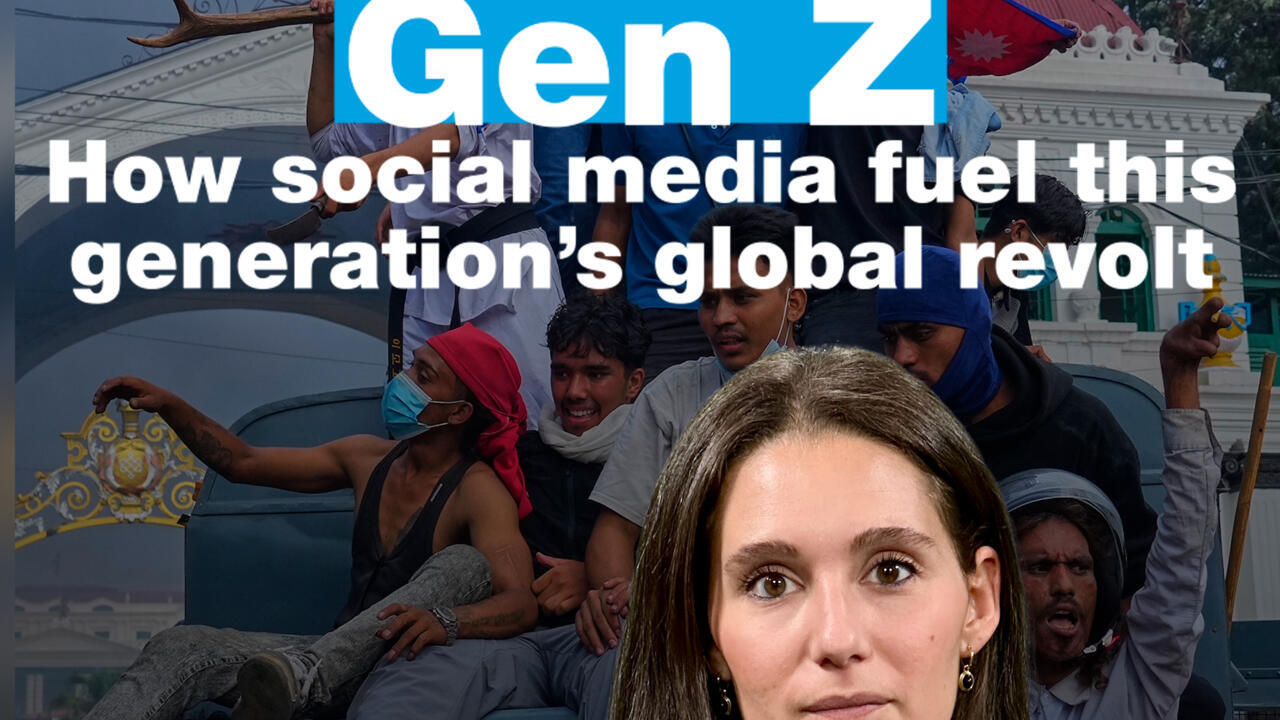
Gen Z: How social media fuel this generation's global revolt
EN Gen Z thumbnail © France 24
02:18


Despite these uncertainties, youth movements have already demonstrated their ability to bring about change by bringing down governments, although the social challenges remain daunting.

“Gen Z may not yet have a formalised political agenda. But it has already changed the terms of the debate with the idea that it is no longer a question of surviving in a failing system, but of radically transforming it,” said Rafitoson. "This is not a passing revolt, but a profound generational change that is under way. We may be living through a turning point today across the globe."

This article was adapted from the original in French by David Howley.

Thursday, February 13, 2020

Kenyan fossil shows chameleons may have ‘rafted’ from mainland Africa to Madagascar

February 9, 2020
 
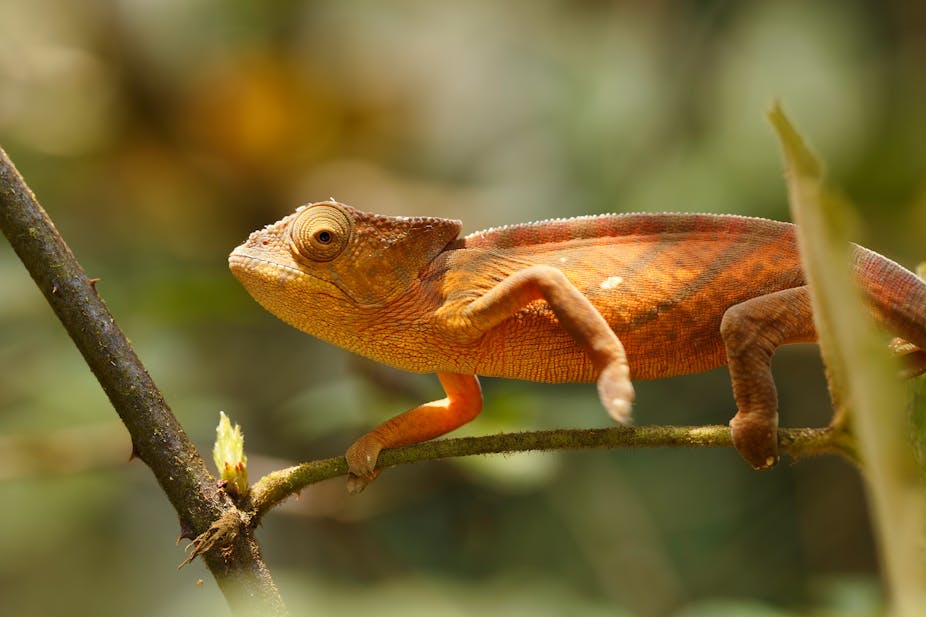
Parsons chameleon, Calumma parsonii, in Andasibe - Analamazaotra
National Park, Madagascar. Artush/Shutterstock

Chameleons (Chamaeleonidae) are a family of unique lizards with unusual characteristics: rapidly extendable tongues, feet with two toes pointing forward and two backward, a prehensile tail, and eyes that can move independently of each other. Many species also have the ability to change the colour of their skin.

There are about 213 species of chameleons in the world. They can be found in Africa, the Middle East, southern India, Sri Lanka and the Mediterranean region of Europe. About half of all species occur in Madagascar, a large African island in the Indian Ocean.

This island is therefore considered to be a centre of diversity for these lizards and there’s a long-held view that chameleons originated on Madagascar and came to mainland Africa through oceanic dispersal: they floated on huge rafts made of trees.

But little is known about how these lizards spread across the world and how they evolved. Their fossil record, the only form of direct evidence about their early evolution and history, is very scant.

A study in 2013 challenged this view. It suggested that chameleons likely originated in mainland Africa, rather than in Madagascar. It did this by analysing genetic information. But a key element was missing: a fossil chameleon of the right age and in the right place. This would give clear evidence of their history and evolution.


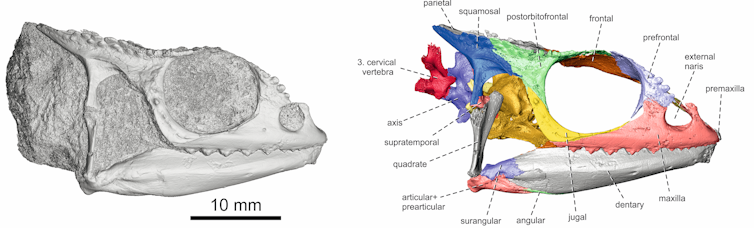
My colleagues and I did research on a chameleon fossil skull from Kenya. The fossil was first discovered in 1992.


We wanted to observe all the elements of the fossil’s skull in detail so that we could place its evolutionary history. The results were a surprise: the chameleon was from a genus that only exists in Madagascar today. Our study of this fossil chameleon skull shows that these chameleons could in fact have originated in Africa. This idea is supported by evidence which shows that ocean currents at the time moved towards Madagascar, allowing animals to make the journey from the continent to the island on rafts made of trees.
African origins

The fossil comes from Rusinga Island, a famous fossil site in Kenya. It is one of the oldest chameleon skull fossils, and the only known complete early Miocene (about 18 million years ago) specimen. It is remarkably complete and well-preserved.

However, it’s not been fully freed from the rock and there’s still sediment that fills the whole internal region of the skull. This conceals many bone elements.

We used a micro-CT scanner to give us an x-ray image of all the skull’s internal cavity, including the bones, surfaces and sutures. By looking at these features we could determine which species it most resembled. This modern, non-invasive technology is a very powerful science tool, allowing us to study fossils in a new way.

We found that it was a Calumma species of chameleon – but it was a new one, so we created a new name for it: Calumma benovskyi.

Since all species of this genus are endemic to Madagascar, and none exist anywhere else in the world today, this fossil uniquely shows that Calumma existed on continental Africa in the past.

Our results challenge the long-held view that chameleons originated from Madagascar and dispersed over water to Africa. It provides strong evidence of an African origin for some Malagasy lineages.
Rafting chameleons

At the time when the fossilised chameleon lived, the position of Madagascar relative to Africa was about the same as it is today. The separation of Madagascar from Africa had already occurred, during the age of dinosaurs, approximately 150 million years ago.

The presence of a Malagasy lineage on continental Africa during the early Miocene might appear as a surprise, but other endemic Malagasy animals – such as the Aye-Aye – have had similar patterns. Their fossils have been found on the continent, suggesting an African origin.

The idea is that animals might have used rafts of trees to cross from the continent to the island. Rafting has been suggested for many other lizards, so it is not unusual.

Why couldn’t it have got from Madagascar to Africa in the past? The answer lies with looking at how ocean currents flowed in the past.

With regards to chameleons and Africa, oceanic currents favoured eastward dispersal – away from Africa towards Madagascar – at that time of the Eocene until the end of the early Miocene, between 50 to 15 million years ago. So the dispersal would’ve only been possible towards Madagascar.

A study shows that shortly after the early Miocene, the currents between Africa and Madagascar turned in the opposite direction: westwards, toward Africa. This is what’s happening in present-day surface-water circulation. From the middle Miocene onwards, currents would have hindered a journey to Madagascar for any non-swimming animals.

Madagascar’s isolation from the continent supported the further evolution of its terrestrial animals and its exceptional biodiversity. These chameleons then continued to spread and evolve on the island, accounting for the many different endemic species.

To see the chameleon skull, a big piece of the puzzle for this lizard’s history, you can visit the palaeontology section at the Nairobi National Museum, where it is housed.


Author
Andrej Čerňanský
Scientist, Comenius University, Bratislava
Disclosure statement
Andrej Čerňanský receives funding from the Alexander von Humboldt Foundation, the Scientific Grant Agency of the Ministry of Education of the Slovak Republic and the Slovak Academy of Sciences


We believe in the free flow of information
Republish our articles for free, online or in print, under Creative Commons licence.Republish this article

Thursday, October 23, 2025


Madagascar: The island split in two by time


How ancient rifting reshaped the island's landscape and helped forge one of Earth's richest biodiversity hotspots.


ETH Zurich

Madagascar river 

image: 

River in Madagascar.

view more 

Credit: Sean Willett / ETH Zurich


Madagascar’s landscape tells a story of deep time: ancient rifting and geological tilting sculpted the island’s dramatic topography and steered its rivers, setting the stage for the evolution of its extraordinary biodiversity.

A new study published in Science Advances reveals that Madagascar’s striking landscape was shaped by not one, but two great rifting events, separated by nearly 80 million years. These tectonic shifts first tore the island from Africa, then from India, tilting and reshaping its terrain and setting the stage for life to flourish in isolation.

Madagascar first separated from Africa about 170 million years ago, forming a rugged western escarpment and an eastward-tilted plateau. For tens of millions of years, its rivers drained mainly eastward across this landscape.

When Africa and Madagascar split apart

But around 90 million years ago, a second rift opened on the island’s eastern side, separating Madagascar from India and the Seychelles. The crust thinned again — but this time the island tilted in the opposite direction, toward the west. The consequences were dramatic: rivers reversed course, the island’s main water divide shifted eastward, and a new, steep escarpment formed along the Indian Ocean margin.

When landscapes tilt – and new life emerges

“The key to understanding Madagascar’s landscape lies in its water divide,” says Romano Clementucci from ETH Zurich, lead author of the new Science Advances study. “When the island tilted after each rifting event, the main water divide, the line separating rivers flowing east or west, jumped across the island, transforming its hydrology and erosion patterns."

The island’s drainage system was almost completely reorganized. Old rivers reversed direction or abandoned their channels to follow the new westward slope, and erosion patterns flipped as well.

Over time, the western escarpment evolved into a worn-down landscape of remnant highlands and low-relief plateaus, while the east developed a young, linear, and steep escarpment - today’s most recognizable feature of Madagascar.

A driver of evolution

Madagascar is now one of the world’s most celebrated biodiversity hotspots: over 90% of its mammals and reptiles and more than 80% of its plants exist nowhere else on Earth. Researchers have long attributed this extraordinary biological richness to climate and isolation from the continents. But recent studies, including those by Liu et al. (2024) and Clementucci et al. (2025), add a deeper geological dimension to the story. 

The landscape itself may act as a «speciation pump», the migration of the divide didn’t just change where rivers flow, but where life could evolve.

This perspective echoes the vision of Alexander von Humboldt, who two centuries ago proposed a unified theory for understanding biodiversity patterns. The new study contributes to this theory by extending biodiversity drivers from classic climatic hypotheses to erosion process.

"Our work adds a new piece to the puzzle,” Clementucci says. "We show how ancient tectonic forces reshaped Madagascar’s surface, tilting the island and shifting the main rivers and mountain divides. Over millions of years, this created fragmented environments where species evolved independently, especially along the island's dramatic eastern escarpment."

The broader implication is a shift in how we view so-called “stable” regions such as Madagascar, South Africa, India, Brazil, or Australia and other passive margins. These areas are often seen as geologically quiet, yet they host some of the planet’s richest biodiversity. This study shows they are still highly dynamic, with landscapes that continue to evolve - changes which leave a lasting mark on biodiversity.

The escarpment mountains of western Madagascar. The landscape is dominated by isolated remnant peaks, witnesses of an ancient plateau that has been deeply incised by large river systems over millions of years.

Credit

Romano Clementucci / ETH Zurich

The escarpment mountains of eastern Madagascar, shaped by a tropical climate and steep topography. The escarpment has been retreating inland since the second rifting event (90 Ma) and today acts as a natural barrier to rainfall, marking the western limit of the island's humid eastern rainforests.

Credit

Romano Clementucci / ETH Zurich