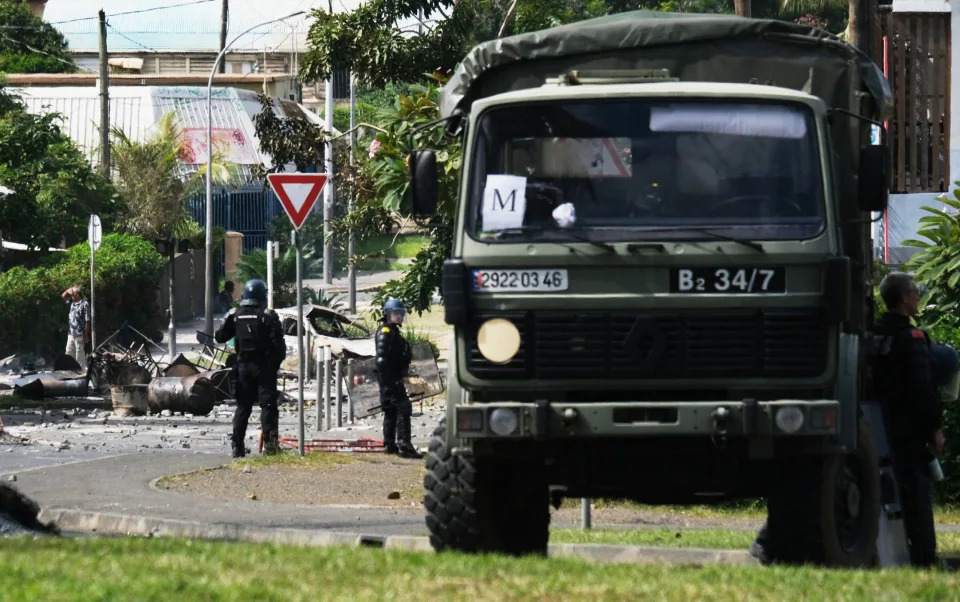
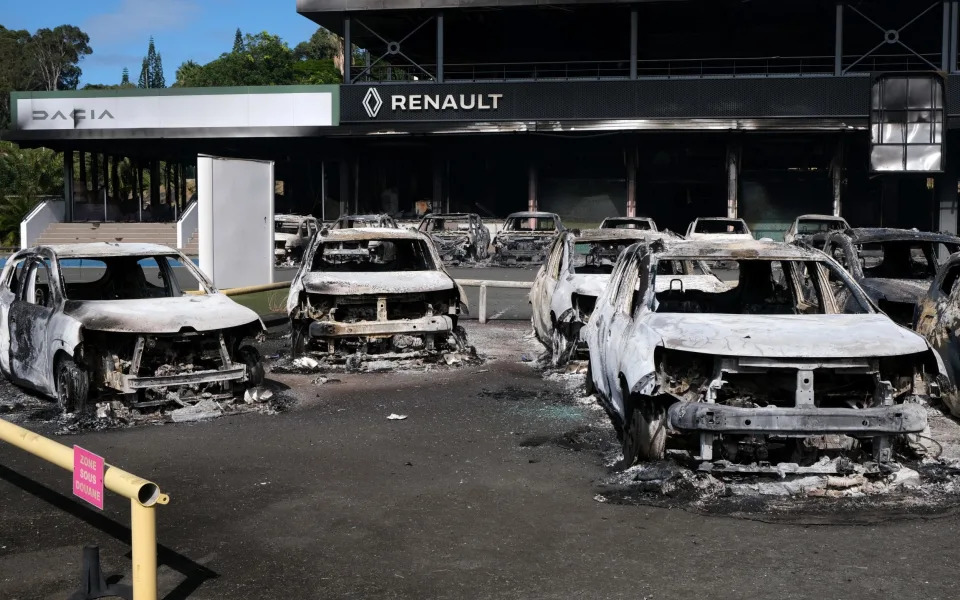
Showing posts sorted by relevance for query NEW CALEDONIA. Sort by date Show all posts

Friday, May 24, 2024

THE LAST COLONY VIVA INDEPENDENCE
 
‘Not our president’: after Macron’s visit, New Caledonia’s Kanak demand their own futur


Mathurin Derel in Nouméa and Ben Doherty
Fri 24 May 2024
THE GUARDIAN 

“I don’t know why our fate is being discussed by people who don’t even live here.”

The 52-year-old Indigenous Kanak – who gave his name as Mike – spoke from a roadblock just north of New Caledonia’s capital, in the hours before France’s president arrived in the Pacific territory that has been paralysed by violent protests.


‘We will fight until Kanaky is free’: how New Caledonia caught fire


The demonstrations began on 13 May sparked by voting reforms proposed by the French parliament. Looting, arson and clashes have left six people dead, hundreds injured and widespread damage. The unrest comes amid underlying concerns over inequality and longstanding efforts in New Caledonia to secure independence.

The voice of local Kanaks “is not being listened to”, Mike said.

Macron’s rushed visit was, even in the words of his own advisers, “double or quits … a bet”.

But while he sought meetings across the political divide and acknowledged that inequalities had widened, his language, too, was revealing.

“The return of republican order,” he said pointedly, “is the priority.”

He left New Caledonia after 18 hours on the ground, promising that the reforms that would give voting rights to tens of thousands of non-Indigenous residents would not be pushed through by force, but the situation would be reviewed again within a month.

On the roadblocks, protesters say a delay is not enough, and that the reforms should be withdrawn.
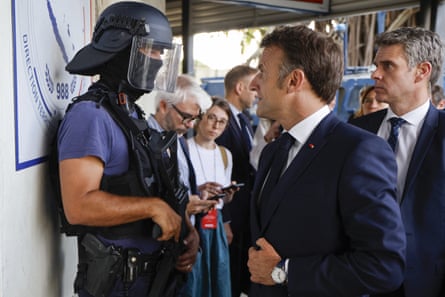
View image in fullscreenEmmanuel Macron arrives at the central police station in Noumea. Photograph: Marin Ludovic/ABACA/REX/Shutterstock


“The statements of president Macron are disappointing,” said a 51-year-old Kanak on Friday, from a roadblock.

“We are exactly at the same point. He continues to let the situation deteriorate without making a strong gesture to calm things down.”

“The solution won’t come from the state, it will come from the Caledonians,” activist Jean-Pierre Xowie, a member of pro-independence FLNKS, told French television from New Caledonia ahead of the presidential visit.

Macron said security forces would remain as long as necessary. But FLNKS spokesperson Jimmy Naouna insisted the presence of French security forces – more than 3,000 are now on the ground, mostly in and around Noumea – was inflaming the situation.

“You can’t keep sending in troops just to quell the protests, because that is just going to lead to more protests,” he told the ABC’s Pacific Beat.

“By deploying the army, what are we doing here? This is not a war-torn country. We are not terrorists, as they say” said Joseph, an activist posted at a checkpoint in Dumbéa, north of Nouméa.
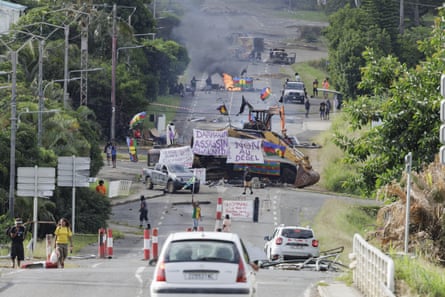
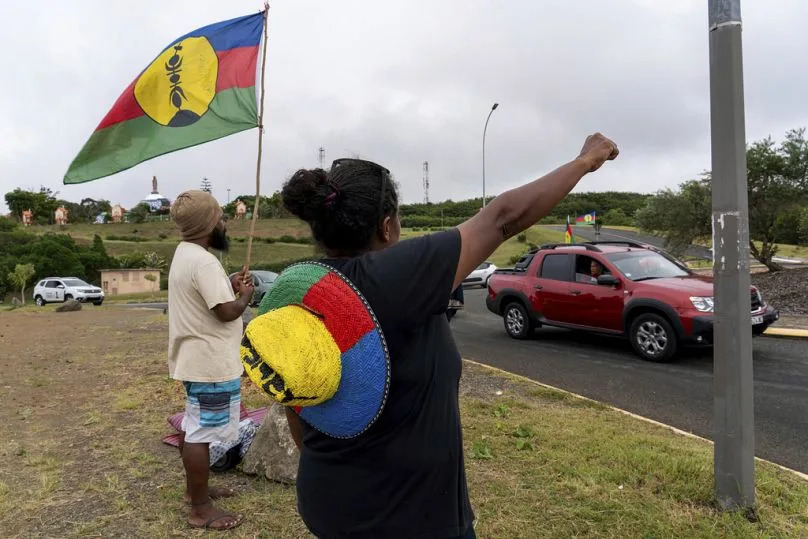
View image in fullscreenProtesters wave Kanak flags at a roadblock in Noumea. Photograph: MMIIAS/ABACA/REX/Shutterstock

Naouna said New Caledonia’s current conflagration was a “political situation so there needs to be a political solution”.

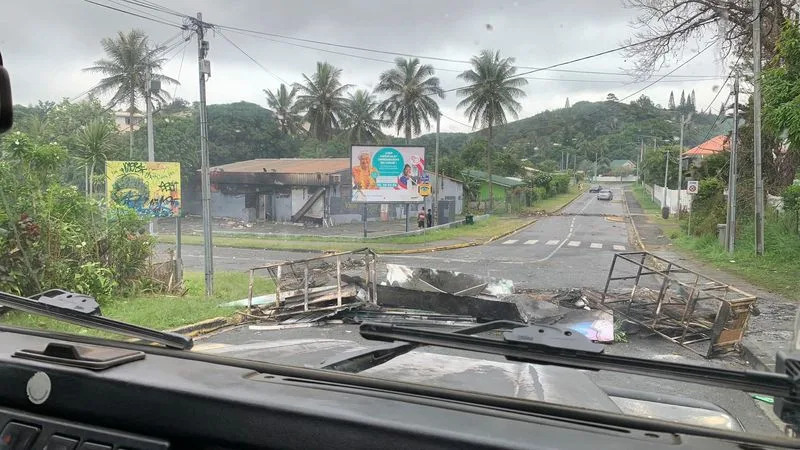
But on the barricades that have shot up around the territory, blocking major roads and infrastructure, activists make clear that there are economic and social aspects to these protests too; anger at the state among Kanaks is not confined to the voting reform issue.
Young people say ‘they are ready to die’


Lélé, a 41-year-old activist, unaffiliated with a political party, is extremely active on social media, showing the world what is happening in New Caledonia.

“The Kanak are not being recognised for their true worth, they want a fair redistribution of wealth. What we ask of Macron is to recognise the legitimacy of the Kanak,” said Lélé.

While many Kanak do not condone the recent violence, just as many understand the anger of disillusioned youth.

“We hear young people saying they are ready to die at the checkpoints … That shows how deeply they are affected in their dignity,” said Djamil, who is married to a Kanak woman and sympathises with the independence movement.

“Macron is stuck in his opinions. He hasn’t really taken the true measure of what is happening … He made a big mistake by letting the country get bogged down.”
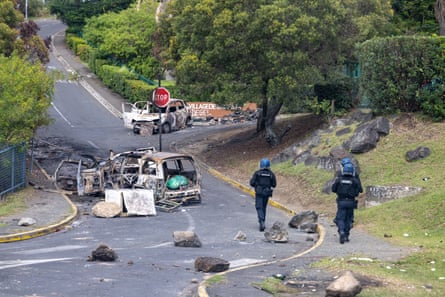
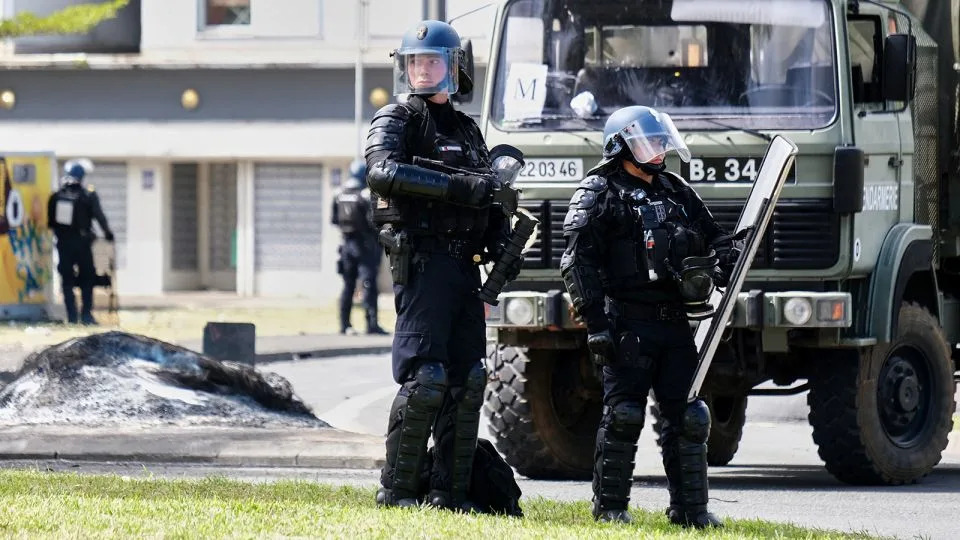
View image in fullscreenA patrol by gendarmes on Thursday secures the route taken by president Macron. Photograph: Chabaud Gill/ABACA/REX/Shutterstock

At immediate issue for France’s president was the proposed electoral reform bill, but the island territory is marked by deep disparities; the poverty rate among indigenous Kanaks, the largest community, is 32.5%, compared to 9% among non-Kanaks, according to the 2019 census.


Those disparities are even clearer within education and employment statistics. Only 8% of Kanaks hold a university degree and 46% hold no high school diploma. Meanwhile, 54% people of European background are university educated, with that proportion falling to 24% among people of mixed-heritage, the 2019 census shows.

Apparently referring to past efforts at widening opportunity, Macron said on Thursday that “rebalancing has not reduced economic and social inequalities, they have even grown”.

The broader impasse remains New Caledonia’s contested independence process.

Referendums between 2018 and 2021 saw a majority of voters choose to have New Caledonia remain part of France, instead of backing independence. The pro-independence movement rejected the results of the last referendum, held in 2021, which they had boycotted on the grounds that it was held at the height of the coronavirus pandemic. The movement had called on Kanaks not to participate in the vote, arguing that Covid had made pro-independence campaigning impossible, as entire villages observed customary mourning rites.

The three referendums were held under the Noumea accord struck with France in 1998, and the third referendum, in 2021, arguably brought that process to its conclusion. A previous referendum on independence, in 1987, had also failed.


Under the 1998 accord, new arrivals to New Caledonia were barred from enrolling to vote, in order to maximise Kanaks’ voting power. With the referendums concluded, the French government has moved to finally grant the vote to overseas-born, long-term residents voting rights.

Still, many Kanak people in New Caledonia continue to push for independence.
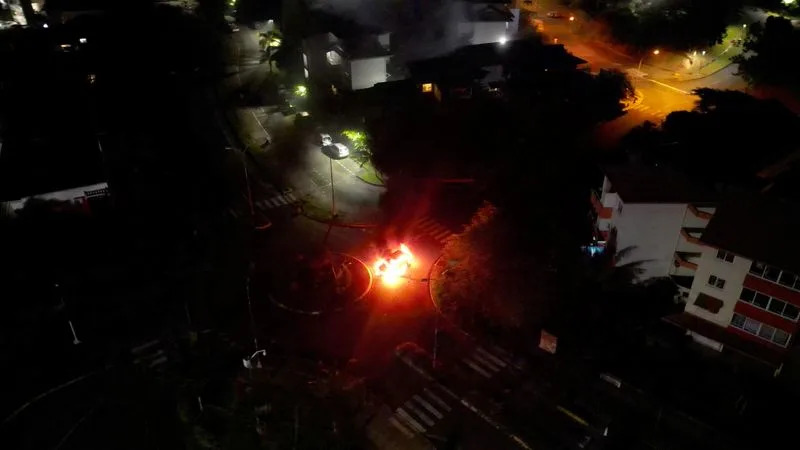
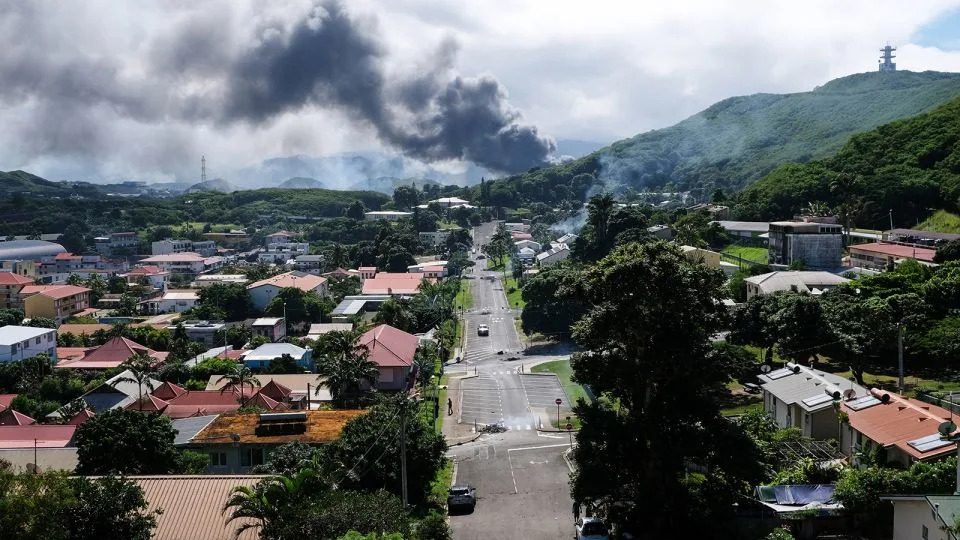
Drone footage of New Caledonia capital shows damaged buildings as Macron arrives – video

“Macron is welcome, but he is not our president,” said Axel, 21, who defines himself as a child of Kanaky, the name given to New Caledonia by the independence activists.

Protesters will finish the fight of 30 years ago, said Axel, referring to a period of violent unrest in the territory.

“Those who respect the Kanak people can live in peace with us,” the 51-year-old Kanak protester said on Friday.

“As long as there is no independence, there will be no security.”

With agencies


How is the violent unrest in New Caledonia impacting global nickel prices?
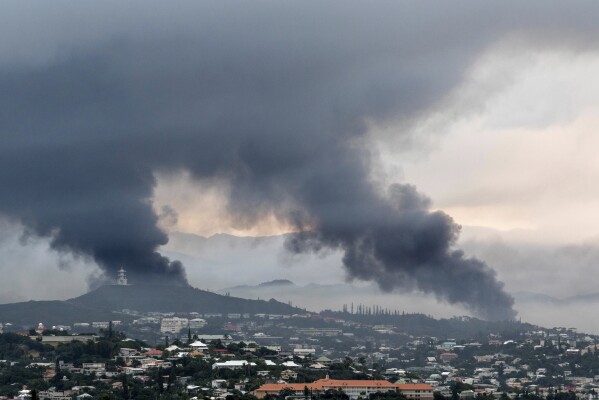


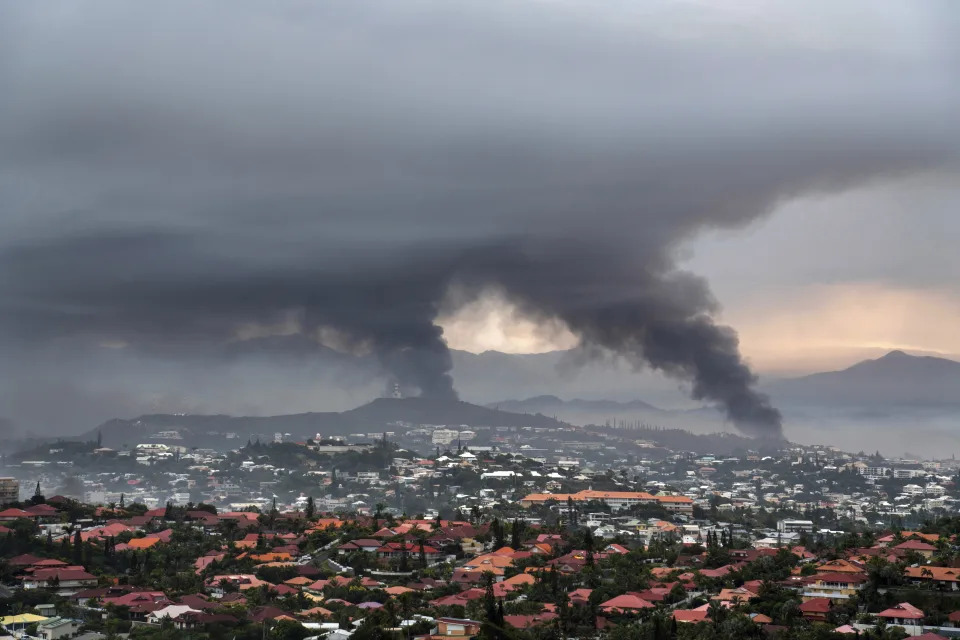
 Smoke rises during protests in Noumea, New Caledonia, on May 15, 2024. Global nickel prices have soared since deadly violence erupted in the French Pacific territory of New Caledonia. (AP Photo/Nicolas Job, File)
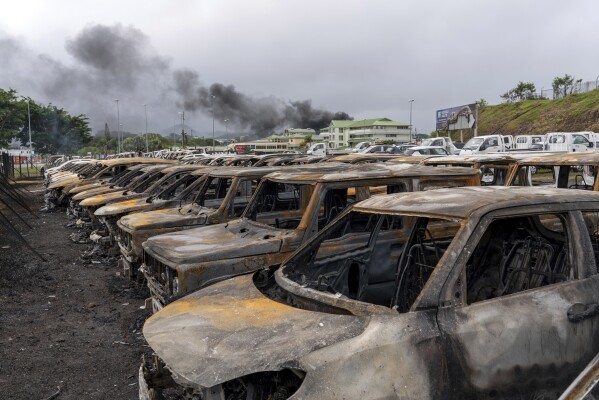

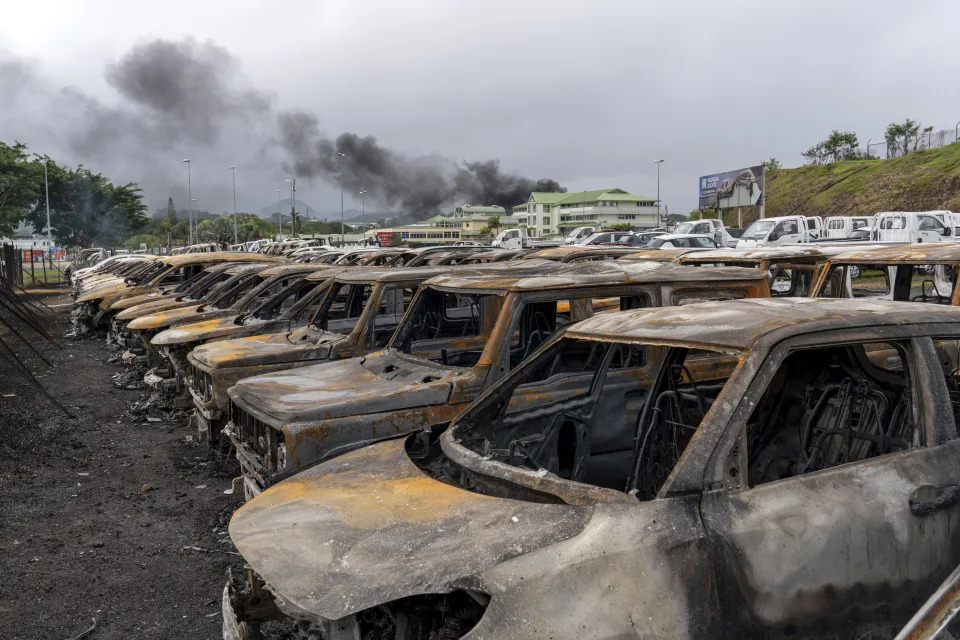
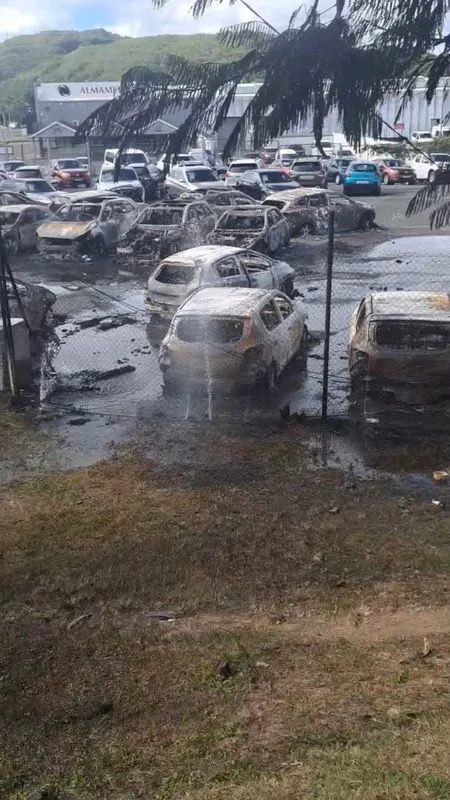
Burnt cars are lined up after unrest in Noumea, New Caledonia, on May 15, 2024. Global nickel prices have soared since deadly violence erupted in the French Pacific territory of New Caledonia. (AP Photo/Nicolas Job, File)
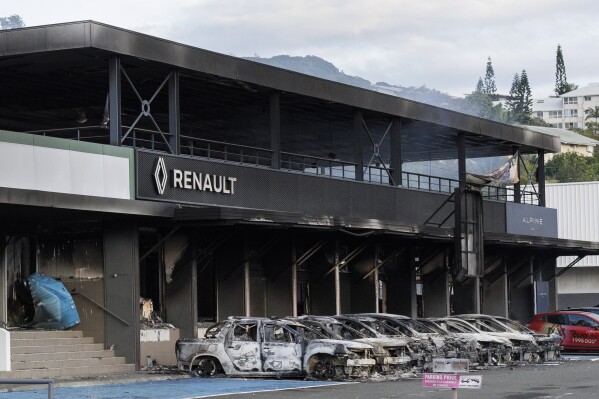

 A burnt car store is pictured in Noumea, New Caledonia, on May, 14, 2024. Global nickel prices have soared since deadly violence erupted in the French Pacific territory of New Caledonia. (AP Photo/Cedric Jacquot, File)
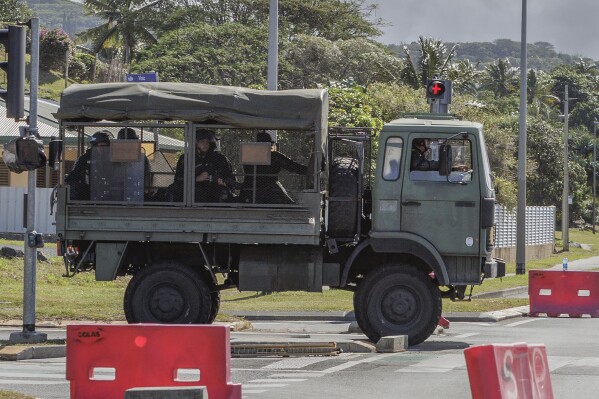
 French gendarmes patrol the streets in Noumea, New Caledonia, on May, 16, 2024. Global nickel prices have soared since deadly violence erupted in the French Pacific territory of New Caledonia. (AP Photo/Cedric Jacquot, File)
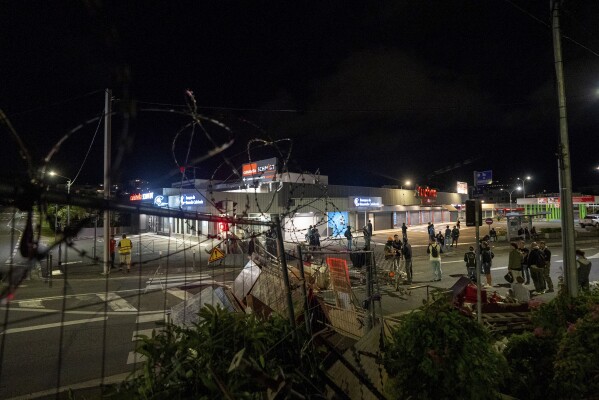
Residents stand in a blockade in Noumea, New Caledonia, on May, 15, 2024. Global nickel prices have soared since deadly violence erupted in the French Pacific territory of New Caledonia. (AP Photo/Nicolas Job, File)

BY VICTORIA MILKO
May 22, 2024

JAKARTA, Indonesia (AP) — Global nickel prices have soared since deadly violence erupted in the French Pacific territory of New Caledonia last week.

The overseas territory, which has been under French rule for over 170 years, is a major global producer of the critical material that is needed to make electric vehicle batteries, solar panels, steel and other everyday items.

Here’s a closer look at the global importance of New Caledonia’s nickel industry and why social unrest in the territory has impacted prices.

WHY ARE THERE PROTESTS IN NEW CALEDONIA?

Riots erupted after French lawmakers approved changes to the French Constitution that would allow residents who have lived in New Caledonia for 10 years to vote in provincial elections.

Opponents fear the measure will benefit pro-France politicians in New Caledonia, where pro-independence Indigenous Kanaks have long pushed to be free of France.

Kanaks are seeking independence for the archipelago of 270,000 people, while many descendants of French and other non-Indigenous people who have settled on the island want to remain part of France.

On May 15, France declared a 12-day minimum state of emergency on the island . It rushed in 1,000 troops to reinforce security forces that lost control of some parts of the capital, Nouméa.

WHY DOES NEW CALEDONIA MATTER TO THE GLOBAL NICKEL MARKET?

New Caledonia holds between 20-30% of the world’s nickel reserves. It is a huge part of the archipelago’s economy, compromising up to 90% of its exports and employing around a quarter of its workforce.

The European Union has named nickel as a critical raw material, which means it is economically and strategically important for the European economy but is considered to have a high-risk associated with its supply.

“Some of the discussion around France wanting to maintain its control over New Caledonia is motivated by its hopes to secure the large nickel deposits there, perhaps with an eye to future electric vehicle production,” said Nicholas Ferns, a research fellow at Monash University in Australia.

The United States and EU members have worked to secure their own critical material supply chains to catch up with China, which controls or is invested in a large share of the world’s supplies.

In 2021, EV maker Tesla invested in the Goro nickel mine when it was sold to a local consortium majority owned by local stakeholders.

WHY HAVE GLOBAL NICKEL PRICES SOARED?

Concerns over disruptions of supplies from New Caledonia due to the unrest and sanctions on metals including nickel from Russia have pushed global prices above $20,000 per ton for the first time since September.

The price of nickel on the London Metal Exchange rose to $21,275 per metric ton as of Tuesday from $18,510 on May 8, heading straight up after the unrest began.

The jump in prices came at the same time the Paris-based International Energy Agency said in a report that there could be future supply shortages of critical materials— including nickel— driven by “rapid” EV demand growth, mine closures and slowing investment.

“The high price of nickel will have most profound all-round impacts on the consumer,” said Lawrence Loh, a professor of strategy and policy at the National University of Singapore Business School. “We expect a trickle-down effect on the price increases of many consumer items which will lead to broader inflationary pressures.”

HOW IS NICKEL RELATED TO THE VIOLENT UNREST?

Although sharp jumps in commodities prices are disruptive for industries, New Caledonia’s nickel industry was in trouble even before the political crisis due to a 45% drop in global nickel prices last year.

That slammed the nickel industry-reliant economy. New Caledonia’s mining industry is struggling to compete against Indonesia, the world’s largest nickel producer, due to decades of export restrictions and high energy costs that have made its nickel more expensive and less profitable to produce. “The nickel industry is inevitably intertwined with the independence debate in New Caledonia,” said Ferns. “A downturn in nickel prices in recent years has exacerbated the economic issues in New Caledonia, which can then be connected to some of the factors involved in the recent riots.”

The French government has pledged to help maintain the territory’s nickel industry operations with subsidies.
___

Associated Press climate and environmental coverage receives support from several private foundations. See more about AP’s climate initiative here. The AP is solely responsible for all content.

VICTORIA MILKO
Milko is an Associated Press multimedia reporter covering the nexus of the energy transition, climate change and human rights across Asia-Pacific.

Tuesday, May 21, 2024

THE LAST COLONY  VIVA LE INDPENDENCE

New Caledonians Demand Complete Independence from France


The latest violent anti-French protests by New Caledonians seeking independence from France show clearly that it is time France respected the right of self-determination of the Kanak people of New Caledonia.


Africa Awakens provides in-depth knowledge, research and experience from an African perspective. If you are seeking more than a casual understanding of Africa, the target audience is those of African descent worldwide, foreign diplomats and policy-makers interested in Africa and last anyone interested in a detailed understanding of Africa. Read other articles by Africa Awakens.


France's Macron calls fresh emergency on New Caledonia unrest

Charlotte MANNEVY
Sun, May 19, 2024 


Around 1,000 police and military reinforcements have been sent to New Caledonia (Delphine Mayeur)

French President Emmanuel Macron called a meeting of his defence and security council for Monday to discuss the deadly unrest in the Pacific territory of New Caledonia.

It is the third such meeting in less than week, the previous two having resulted first in the decision to declare a state of emergency in the French territory and then to send reinforcements to help government forces on the ground restore order.

On Friday, Prime Minister Gabriel Attal met leaders of the parliamentary parties to discuss the crisis, in particular whether or not to extend the state of emergency beyond its initial 12 days.

That would require the approval of both the lower house National Assembly and the upper house Senate.

In New Caledonia on Sunday, French forces smashed through dozens of barricades in a bid to retake the main road to the archipelago's airport.

"Republican order will be re-established whatever the cost," French government high commissioner Louis Le Franc told reporters in Noumea.

If separatists "want to use their arms, they will be risking the worst", he warned.

New Caledonia, with a population of about 270,000, has been convulsed by unrest since Monday, sparked by French plans to impose new rules that would give tens of thousands of non-Indigenous residents voting rights.

The French territory off northeastern Australia has long been riven by pro-independence tensions, but this is the worst violence in decades.

Protesters have set vehicles, businesses and public buildings alight and taken control of the main road to La Tontouta International Airport, which has been forced to close to commercial flights.

- 'Short of food' -

Authorities say about 230 people have been detained while an estimated 3,200 people are either stuck in New Caledonia or unable to return to the archipelago.

France says about 1,000 additional security force members have been sent to the islands.

Some 600 heavily armed police and paramilitaries on Sunday took part in an operation to retake the 60-kilometre (40-mile) main road from the capital Noumea to the airport, authorities said.

Forces with armoured vehicles and construction equipment destroyed 76 roadblocks, Interior Minister Gerald Darmanin posted on X, formerly Twitter.

"The police came through, they cleared the road, and we stood aside. We're pacifists," said Jean-Charles, a man in his 50s wearing a scarf around his head and carrying a Kanak independence flag, a few kilometres outside the airport.

"Once they were gone, we put the roadblock back up," he added.

The highway is needed to restore supply chains as the archipelago faces shortages of items from groceries to blood for transfusions. "We are starting to run short of food," Le Franc said.

- 'This will end' -

An overnight curfew, state of emergency, ban on TikTok and reinforcements all failed to prevent more unrest from overnight Saturday to Sunday.

Groups set two fires and raided a petrol station, Le Franc's office said, as well as destroying schools, pharmacies and supermarkets.

The local government said schools would be closed until Friday. But authorities insisted the situation is improving.

Le Franc said security forces would stage "harassment" raids to reclaim other parts of the territory held by pro-independence groups.

"This will all come to an end, believe me," Le Franc added.

In Wellington, Foreign Minister Winston Peters said the New Zealand military had "completed preparations" for repatriation flights.

Australian tourist Maxwell Winchester and his wife Tiffany were barricaded in a resort on the airport road for days after they were supposed to leave Noumea.

"Every night we had to sleep with one eye open... worried that they were coming in to loot us," he said. "This morning at an exit near here, the gendarmerie was coming through and there was a shootout."

- 'Prevent civil war' -

New Caledonia has been a French territory since the mid-1800s.

Almost two centuries on, its politics remain dominated by debate about whether the islands should be part of France, autonomous or independent -- with opinions split roughly along ethnic lines.

Indigenous Kanaks make up about 39 percent of the population but tend to be poorer and have fewer years of schooling than European Caledonians. Kanak groups say the latest voting regulations would dilute the Indigenous vote.

The presidents of four other French overseas territories -- La Reunion in the Indian Ocean, Guadeloupe and Martinique in the Caribbean and French Guiana in South America -- on Sunday called for the withdrawal of the voting reform in an open letter.

Civil liberties groups have challenged the TikTok ban, with an emergency hearing scheduled at France's top administrative court in Paris for Tuesday.

burs-jj/bc


New Caledonia 'under siege' from rioting, says capital's mayor

Christy Cooney - BBC News
Sun, May 19, 2024


The Pacific territory of New Caledonia is "under siege", the mayor of its capital has said, following days of rioting that has left six people dead.

Nouméa mayor Sonia Lagarde said numerous public buildings on the archipelago had been set on fire and that, despite the arrival of hundreds of police reinforcements, the situation was "far from getting back to calm".

French gendarmes have launched a major operation to regain control of a 60km (37-mile) road between Nouméa and the airport, France's interior minister said.

The unrest began last week after lawmakers in Paris voted through changes that will allow more French residents to vote in local elections, a move indigenous leaders say will dilute the political influence of native people.

Officials said a sixth person was killed and two were injured during an exchange of gunfire at a makeshift roadblock in the north of the territory on Saturday.

Three indigenous Kanak residents, aged 17 to 36, and two police officers were previously confirmed to have been killed.

More than 200 people have so far been arrested and around 1,000 extra officers have been sent to join the 1,700 personnel already in the territory.

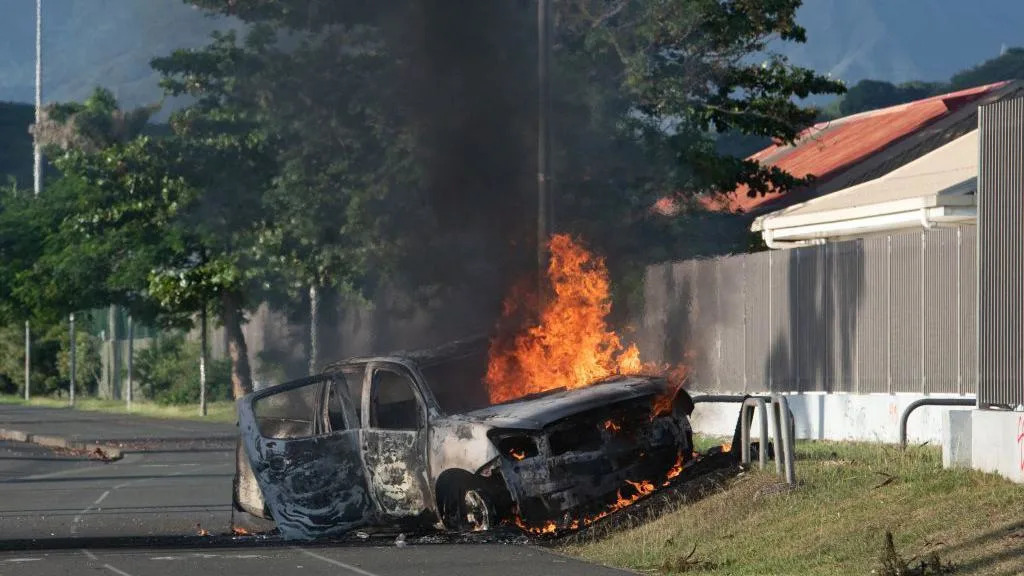
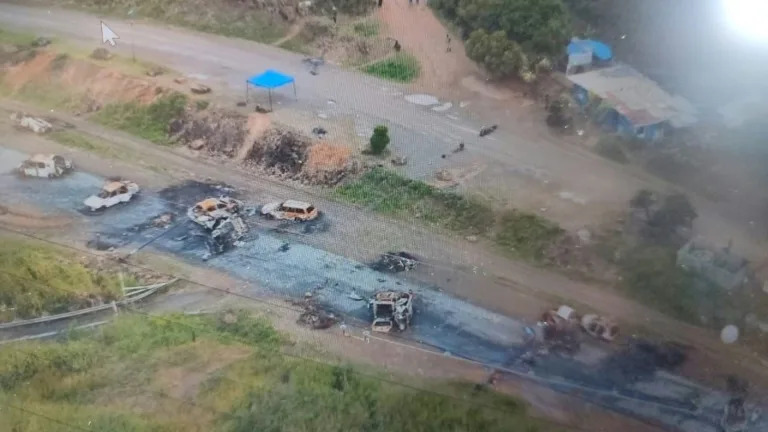
Pictures from the territory showed rows of burned-out cars, makeshift roadblocks, and long queues of people outside supermarkets.

Authorities have declared a state of emergency involving a night-time curfew as well as a ban on public gatherings, alcohol sales, and the carrying of weapons.

Speaking to French news channel BFMTV, Ms Lagarde said the last two nights had been calmer, but that the situation during the daytimes was not improving.

"Quite the contrary, despite all the calls for calm," she said.

She said it was "impossible" to quantify the damage already done but that the burned buildings included municipal buildings, libraries, and schools.

“Can we say that we are in a besieged city? Yes, I think we can say that,” she said. "It is desolation."

She added that security forces “need to be given a little time” to secure the situation.

Residents reported hearing gunfire, helicopters and "massive explosions" believed to be gas canisters exploding inside a burning building.

Helene, 42, who has been guarding makeshift barricades in shifts with neighbours told AFP: "At night we hear shooting and things going off."

With the closure of Noumea's international airport due to safety concerns, an estimated 3,200 tourists and other travellers have been stranded inside or outside the archipelago, according to the AFP news agency.

Tourists inside the territory have described having to ration supplies while they wait for a way to leave.

Joanne Elias, from Australia, who is at a resort in Noumea with her husband and four children, said she had been told to fill a bathtub in case the water ran out.

"The kids are definitely hungry because we don't really have much option of what we can feed them," she said.

"We don't know how long we're going to be here for."

On Sunday, New Zealand's Foreign Minister Winston Peters said in a statement that his country’s defence forces had "completed preparations" for flights to "bring home New Zealanders in New Caledonia while commercial services are not operating".

More French police arrive in New Caledonia amid riots

New Caledonia profile

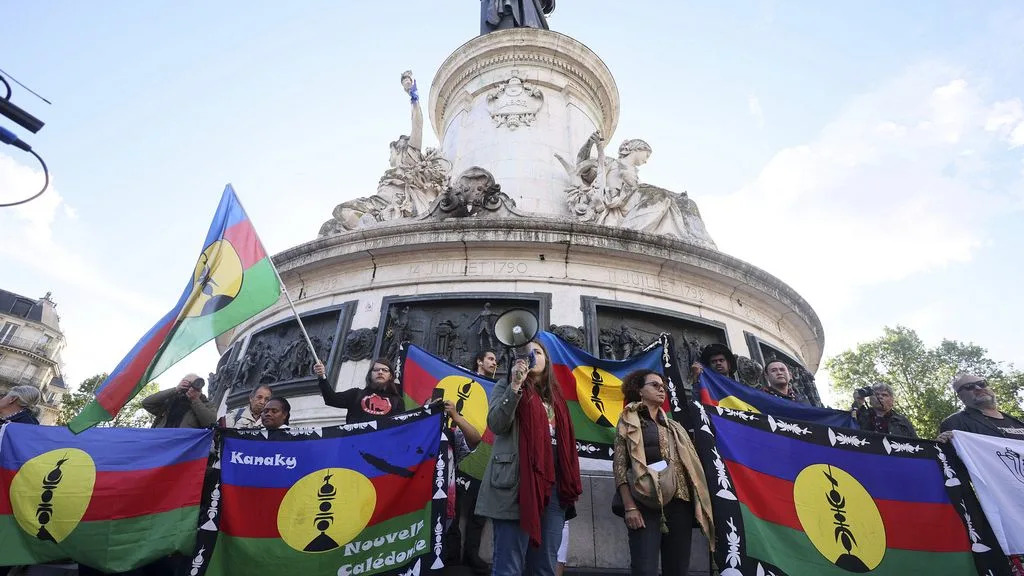
The opposition to the changes in the law has attracted support in France, with a solidarity protest taking place in Toulouse on Saturday and Kanak flags among those being flown at a pro-Palestinian demonstration in Paris.

The unrest has also renewed diplomatic tensions between France and Azerbaijan, which grew last year following Azerbaijan's seizure of the territory of Nagorno-Karabakh.

The region, which has an Armenian majority but lies within Azerbaijan, was the subject of a long-running dispute in which France had backed Armenia.

On Friday, French government agency Viginum, which monitors foreign digital interference, said it had detected a "massive and coordinated" online campaign pushing claims that French police officers had shot pro-independence demonstrators in New Caledonia.

The government alleged the involvement of "Azerbaijani actors" in the campaign, although Azerbaijan's government has rejected the claims.

Social media app TikTok has now been blocked in the territory.

New Caledonia has held three referendums on independence. The first two showed slim majorities for remaining part of France.

The third was boycotted by pro-independence parties after the authorities refused to postpone the vote due to the Covid epidemic.

Blockades cleared after New Caledonia unrest, schools still closed
DPA
Sun, May 19, 2024 

Burnt vehicles can be seen at an independantist roadblock at La Tamoa. The capital of the French Pacific territory of New Caledonia was rocked by riots after France's National Assembly approved contentious voting reforms to the territory that angered independence supporters. Delphine Mayeur/AFP/dpa

After days of serious unrest in the French overseas territory of New Caledonia, the situation appeared to be easing slightly on Sunday.

Several hundred police officers cleared the road from the capital Nouméa to the international airport of the archipelago in the South Pacific on Sunday, French Interior Minister Gérald Darmanin announced on the social media platform X.

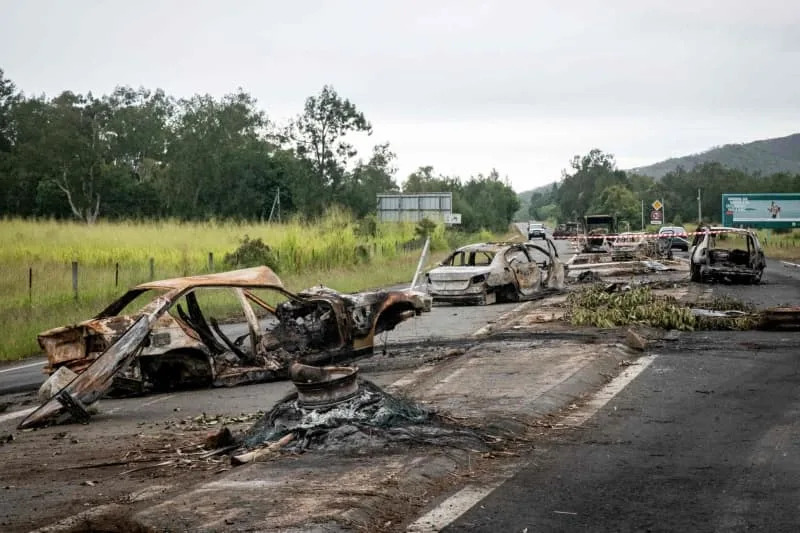
Independence supporters had set up over 70 roadblocks in New Caledonia in the past few days, for example with burnt-out car wrecks.

Several grocery shops have also been able to reopen, according to Darmanin. However, the road is currently not passable as normal and it could be some time before the airport reopens. Schools will remain closed until next Friday, he added.

Order will be restored "whatever the cost," French High Commissioner Louis Le Franc said at a press conference. "I would like to say to the rioters: Stop, return to calm, hand in your weapons." The previous night had already been calmer, he said.

Six people have been killed so far in the riots on the island 1,500 kilometres east of Australia and over 200 people have been detained.

The background to the protests by those in favour of independence for the archipelago is a planned constitutional reform by the government in Paris, which is intended to give thousands of citizens of French descent the right to vote and therefore more political influence.

However, the Kanak population group in particular - New Caledonia's Indigenous inhabitants - have long hoped for their own state. The national council of the Kanaks accused Paris of pushing ahead with the controversial reform without taking into account the resistance of the vast majority of the Indigenous population.

The former French colony had already gained extensive autonomy through the Nouméa Agreement of 1998. Paris is currently trying to conclude a new agreement with the political forces in the geopolitically and militarily significant territory.

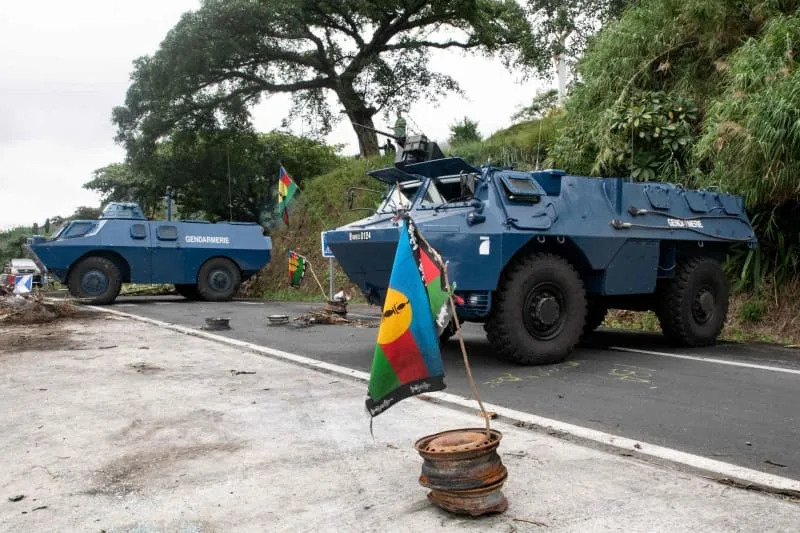
Armored vehicles of the French gendarmerie block the roadway. The capital of the French Pacific territory of New Caledonia was rocked by riots after France's National Assembly approved contentious voting reforms to the territory that angered independence supporters. Delphine Mayeur/AFP/dpa

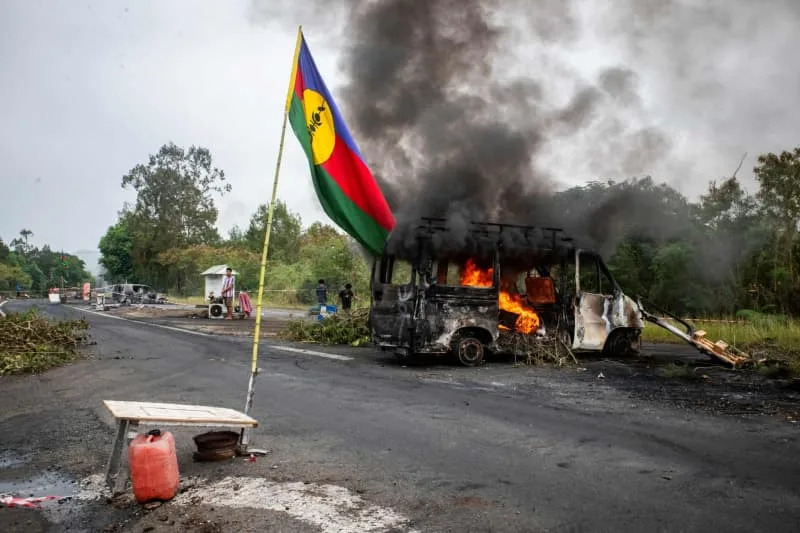
A Kanak flag waves next to a burning vehicle at an independantist roadblock at La Tamoa. The capital of the French Pacific territory of New Caledonia was rocked by riots after France's National Assembly approved contentious voting reforms to the territory that angered independence supporters. Delphine Mayeur/AFP/dpaMore

French security forces work to regain control of airport highway in violence-scorched New Caledonia


JOHN LEICESTER
Updated Sun, May 19, 2024


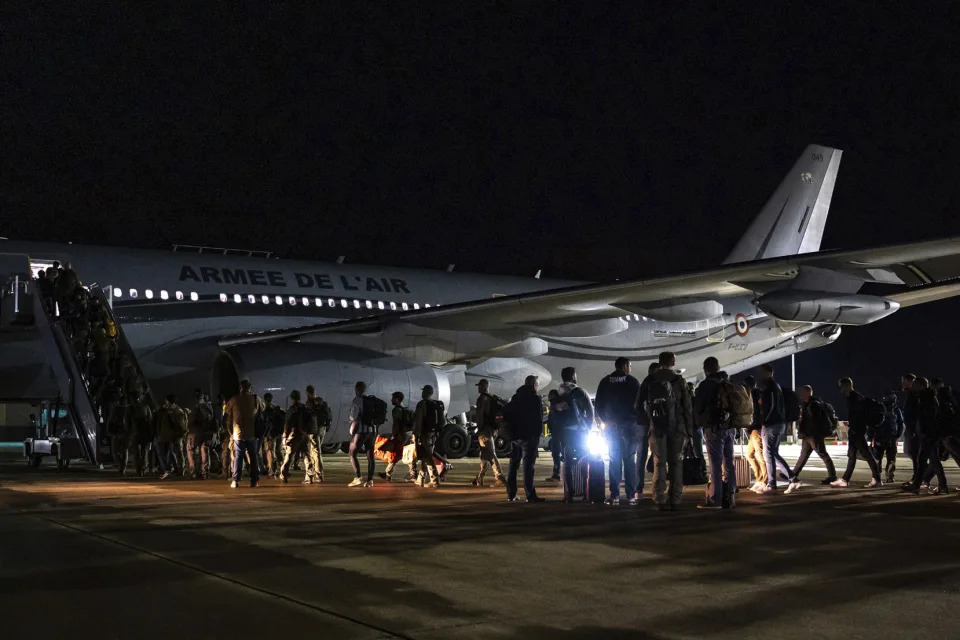
 This handout photo provided by the French Army shows security force embarking a plane to New Caledonia at the Istres military base, southern France, on Thursday, May 16, 2024. Using backhoes to shove aside charred vehicles, French security forces worked Sunday, May 19, 2024, to retake control of the highway to the international airport in violence-scorched New Caledonia, shuttered because of deadly unrest wracking the French South Pacific island where indigenous people have long sought independence from France.
 (Etat Major des Armees via AP, File)

Using armored vehicles and backhoes to shove aside charred barricades, French security forces worked Sunday to retake control of the highway to the international airport in violence-scorched New Caledonia, shuttered because of deadly unrest wracking the French Pacific archipelago where indigenous people have long sought independence from France.

An eventual reopening of the Nouméa-La Tontouta airport to commercial flights could allow stranded tourists to escape the island where armed clashes, arson, looting and other mayhem have prompted France to impose a state of emergency. The airport, with routes to Australia, Singapore, New Zealand and other destinations, closed Tuesday as protests against voting reforms opposed by pro-independence supporters degenerated into widespread violence, leaving a vast trail of destruction.

French Interior Minister Gérald Darmanin, posting on social media platform X, said the “major operation” was “aimed at fully regaining control” of the RT1 highway between the capital, Nouméa, and the airport 60 kilometers (nearly 40 miles) to the northwest. He said more than 600 gendarmes were deployed. The number spoke to the difficulty of clearing roads of charred debris and barricades erected by pro-independence demonstrators and residents who have banded together to try to protect homes and livelihoods against rioters and looters.

The police effort to reopen the airport road cleared nearly 60 barricades on its first day, French authorities in New Caledonia' posted on X.

The French High Commission, in a statement, described the night of Saturday to Sunday as “calmer" but still spoke of two blazes and the looting of a gas station, without giving details. A 6 p.m. to 6 a.m. curfew is in effect and security forces have been granted emergency powers, including house detention for people deemed a threat to public order and expanded leeway to conduct searches, seize weapons and restrict movements, with possible jail time for violators.

The High Commission also said 230 people it described as rioters have been detained.

Nouméa’s mayor, Sonia Lagarde, told French broadcaster BFMTV on Sunday that fully clearing the airport road could take “days and days” because of "an enormous amount of burned carcasses of cars.”

“The situation is still dramatic,” she said.

Gen. Nicolas Matthéos, head of the archipelago’s public order force of gendarmes, said some barricades had been booby-trapped with gas canisters and reinforced with “walls of vehicles."

The foreign ministers of Australia and New Zealand said they are seeking French green lights to fly out their nationals.

“French authorities advise the situation on the ground is preventing flights. We continue to pursue approvals,” the Australian minister, Penny Wong, posted on X.

On Saturday, French authorities reported a sixth fatality in the violence, following an exchange of gunfire at a barricade in the north of the main island, at Kaala-Gomen.

There have been decades of tensions between indigenous Kanaks seeking independence and descendants of colonizers who want to remain part of France.

The unrest erupted Monday as the French legislature in Paris debated amending the French constitution to make changes to New Caledonia voter lists. The National Assembly in Paris approved a bill that will, among other changes, allow residents who have lived in New Caledonia for 10 years to cast ballots in provincial elections.

Opponents fear the measure will benefit pro-France politicians in New Caledonia and further marginalize Kanaks who once suffered from strict segregation policies and widespread discrimination.


France mobilises police to regain control of New Caledonia airport road

Reuters
Updated Sun, May 19, 2024 

PARIS (Reuters) -French police trying to restore order in the island territory of New Caledonia after days of deadly unrest have cleared dozens of barricades that had been blocking the main road linking the airport to the capital, Noumea, a senior official said on Sunday.

Around 60 barricades that protesters had put up along the 60 km (37-mile) road have been dismantled but the road is not yet open as debris needs to be cleared, which will take several days, the territory's high commissioner, Louis Le Franc, told reporters.

The Tontouta airport is closed because of the unrest on the French-ruled South Pacific territory.

Protests erupted last week, sparked by anger among indigenous Kanak people over a constitutional amendment that will change who is allowed to participate in elections, which local leaders fear will dilute the Kanak vote.

Six people have been killed and the unrest has left a trail of burnt businesses, torched cars, looted shops, and road barricades, cutting off access to medicine and food.

Three of those killed were indigenous Kanak and two were police officers. A sixth person was killed and two seriously injured on Saturday during a gun battle between two groups at a roadblock in Kaala-Gomen, French police said, without identifying the groups.

More than 600 police were mobilised to clear the barricades on the airport road, including some 100 gendarmes who are part of a special, heavily armed unit, Interior Minister Gerald Darmanin said on X late on Saturday.

"With the forces that I have at my disposition we will be able to re-establish Republican order," said Le Franc, the high commissioner.

He said in a statement that the situation was calmer on Saturday night compared to previous nights, but added that there had been two fires and looting, and that 230 rioters had been arrested.

Dominique Fochi, secretary-general of the leading independence movement in the territory, urged calm but said the government must suspend the constitutional change.

"We need strong actions to calm the situation, the government needs to stop putting oil on the fire," he told Reuters.

The measure was approved by lawmakers in Paris and would allow French people who have lived in New Caledonia for at least 10 years to vote in provincial elections.

President Emanuel Macron has said he will delay signing it into law but that a new agreement between representatives of the territory's population must be reached before the end of June.

(Reporting by Layli ForoudiEditing by Bernadette Baum and Frances Kerry)


Australia, New Zealand send evacuation flights to New Caledonia

Updated Mon, May 20, 2024 


By Kirsty Needham and Lucy Craymer

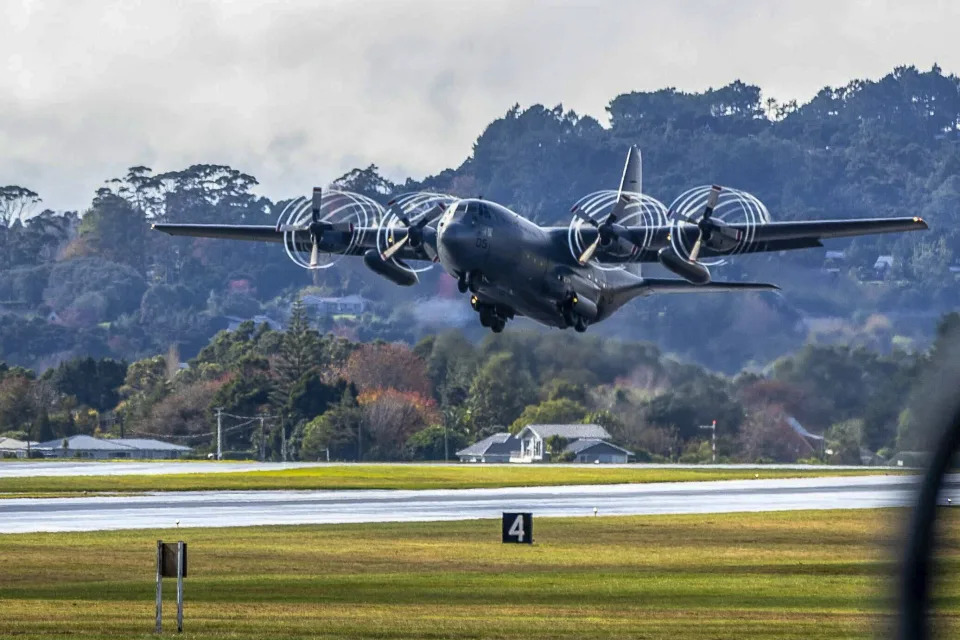
SYDNEY/WELLINGTON (Reuters) -Australia and New Zealand said they will send government planes to New Caledonia on Tuesday to evacuate nationals from the French territory which has experienced a week of deadly riots, sparked by electoral changes by the French government in Paris.

France's High Commission in New Caledonia said on Tuesday the airport remains closed for commercial flights, and it will deploy the military to protect public buildings.

There were around 3,200 people waiting to leave or enter New Caledonia as commercial flights were cancelled due to the unrest that broke out last week, the local government has said.

Over 1,000 gendarmes and police from France were at work, and another 600 personnel would be added in coming hours, France's High Commission said.

Roads in Noumea are being cleared, with bulldozers removing burnt out car carcasses and debris, it added.

Six people have been killed and the unrest has left a trail of burnt businesses and cars and looted shops, with road barricades restricting access to medicine and food. The business chamber said 150 companies had been looted and burnt.

New Zealand, French and Australian foreign ministers held a call on Monday evening, after New Zealand and Australia said they were waiting for clearance from French authorities to send defence aircraft to evacuate tourists.

A meeting of France's defence council later agreed for arrangements to allow tourists to return home.

"New Zealanders in New Caledonia have faced a challenging few days - and bringing them home has been an urgent priority for the government," New Zealand foreign minister Winston Peters said.

"We want to acknowledge the support of relevant authorities, both in Paris and Nouméa, in facilitating this flight," he added. Further flights will be sent in coming days, he added.

Australia's Foreign Minister Penny Wong said in a social media post on Tuesday that clearance had been received for two "Australian government assisted-departure flights today for Australian and other tourists to depart New Caledonia".

Protests erupted last week, sparked by anger among indigenous Kanak people over a constitutional amendment approved in France that would change who is allowed to participate in elections, which local leaders fear will dilute the Kanak vote.

Viro Xulue, part of a community group providing social assistance to other Kanaks amid the crisis, said it felt like a return to the civil war of the 1980s, and people were scared.

"We are really scared about the police, the French soldiers, and we are scared about the anti-Kanak militia terrorist group," Xulue told Reuters in a video interview.

Three of six people killed in the unrest were young Kanaks shot by armed civilians, and there have been confrontations between Kanak protesters and armed self-defence groups or civilian militias formed to protect themselves, France's High Commission previously said.

"The French Government doesn't know how to control people here. They send more than 2,000 military to control, but it's fail," Xulue said.

Pro-independence political parties say they want the French government to withdraw the electoral reform before they restart talks, while France said re-establishing order was a precondition to dialogue.

(Reporting by Kirsty Needham and Lucy Craymer; Editing by Michael Perry)

Australia and New Zealand sending planes to evacuate nationals from New Caledonia's unrest
Associated Press
Updated Mon, May 20, 2024 


SYDNEY (AP) — The Australian and New Zealand governments announced Tuesday they were sending planes to evacuate their nationals from violence-wracked New Caledonia.

Australian Foreign Minister Penny Wong confirmed Australia had received clearance from French authorities for two flights to evacuate citizens and other tourists from New Caledonia amid violent unrest that has beset the French Pacific archipelago where indigenous people have long sought independence from France.

“We continue to work on further flights,” Wong wrote on the social media platform X on Tuesday.

The Department of Foreign Affairs said 300 Australians were in New Caledonia.

New Zealand also announced it was sending a plane Tuesday to evacuate 50 of its nationals from Noumea, the Pacific island's capital, in the first in a series of proposed flights to bring its citizens home.

“New Zealanders in New Caledonia have faced a challenging few days — and bringing them home has been an urgent priority for the government,” Foreign Affairs Minister Winston Peters said.

“In co-operation with France and Australia, we are working on subsequent flights in coming days.”

At least six people have died and hundreds more have been injured in New Caledonia since violence erupted last week following controversial electoral reforms passed in Paris.

Some 270 rioters had been arrested as of Tuesday, and a 6 p.m.-6 a.m. curfew was in effect for the archipelago of about 270,000 people.

France has sent in over a thousand security personnel, with hundreds more due to arrive Tuesday, as it tries to quell the unrest and restore control.

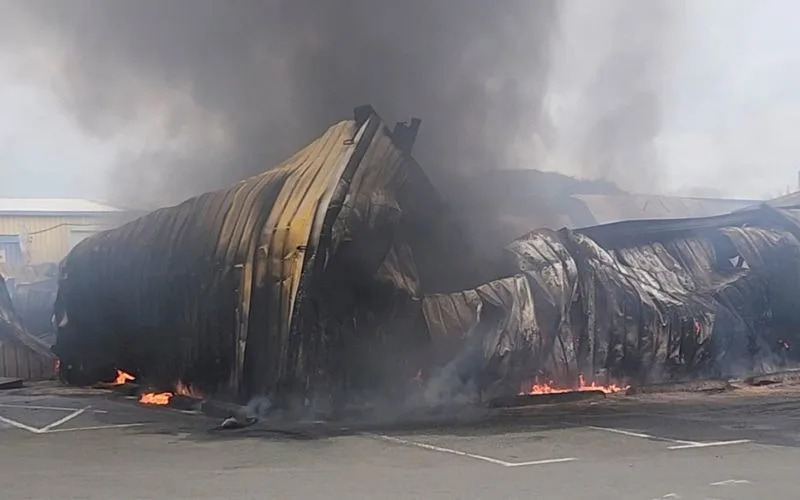
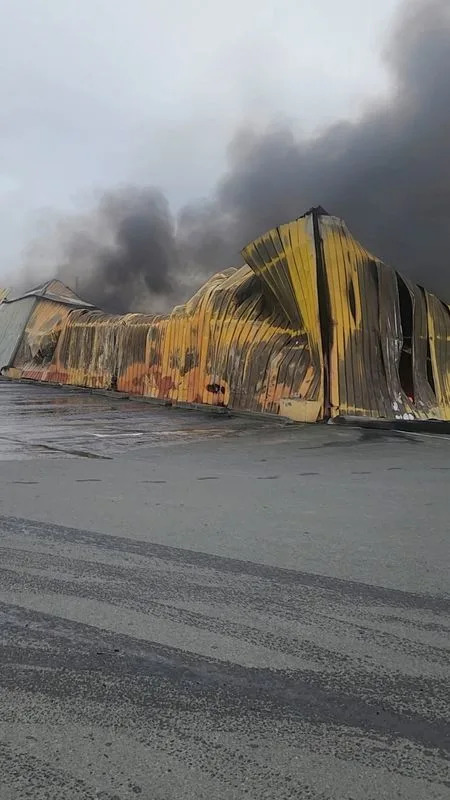
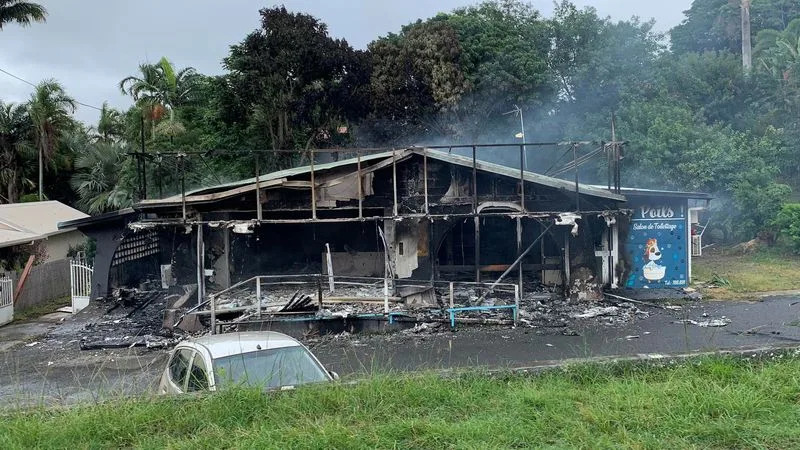
Armed clashes, looting, arson and other mayhem turned parts of the capital, Noumea, into no-go zones. With columns of smoke billowing into the sky, hulks of burned cars littered roads, businesses and shops were ransacked and buildings became smoking ruins.

There have been decades of tensions between indigenous Kanaks seeking independence and descendants of colonizers who want to remain part of France.

The unrest erupted May 13 as the French legislature in Paris debated amending the French constitution to make changes to New Caledonia voter lists. The National Assembly in Paris approved a bill that would, among other changes, allow residents who have lived in New Caledonia for 10 years to cast ballots in provincial elections.

Opponents fear the measure will benefit pro-France politicians in New Caledonia and further marginalize Kanaks who once suffered from strict segregation policies and widespread discrimination.

How is Azerbaijan involved with France and New Caledonia?

Daniel Harper
Sun, May 19, 2024 

How is Azerbaijan involved with France and New Caledonia?

France has accused Azerbaijan of meddling in its Pacific archipelago territory of New Caledonia.

Despite the vast geographical and cultural distance between the Caspian state and the French Pacific territory, this claim is rooted in a complex web of historical, political, and diplomatic tensions.

The Crisis in New Caledonia


New Caledonia, located between Australia and Fiji, is a French territory with a history of striving for independence.

The recent unrest in New Caledonia was ignited by a new electoral law perceived by the indigenous Kanak population as discriminatory.

This law allows people who have lived in New Caledonia for at least ten years the right to vote in local elections, which pro-independence supporters argue will dilute the Kanak vote.


France's Accusations

France's Interior Minister, Gérald Darmanin, has publicly stated that Azerbaijan, along with China and Russia, is interfering in New Caledonia's internal matters. "This isn’t a fantasy. It’s a reality," Darmanin told the France 2 TV channel, emphasizing the seriousness of the allegations.

The French government points to the sudden appearance of Azerbaijani flags at Kanak independence protests and the backing of separatists by groups linked to Baku.

Azerbaijan has vehemently denied any involvement, calling the accusations baseless. "We completely reject the baseless accusations," said Ayhan Hajizadeh, a spokesperson for Azerbaijan's Foreign Ministry. "We refute any connection between the leaders of the struggle for freedom in Caledonia and Azerbaijan."

A significant element in this story is the Baku Initiative Group, established during a conference in July 2023 in Azerbaijan. This group, which includes participants from various French territories seeking independence, aims to support anti-colonial movements against France.

The group has expressed solidarity with the Kanak people and condemned the recent electoral reforms in New Caledonia. "We stand in solidarity with our Kanak friends and support their fair struggle," the Baku Initiative Group stated.


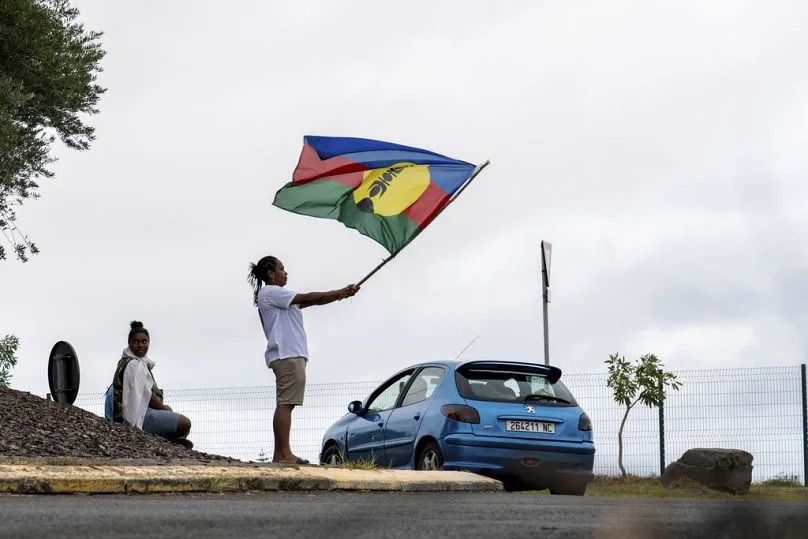
A woman waves a Kanak and Socialist National Liberation Front (FLNKS) flag in Noumea, New Caledonia - Nicolas Job/Copyright 2024 The AP. All rights reserved


Why are France and Azerbaijan clashing diplomatically?


The tensions between France and Azerbaijan extend beyond New Caledonia. France is a traditional ally of Armenia, Azerbaijan's historical rival, particularly regarding the contentious Nagorno-Karabakh region.

Following the 2020 war and a subsequent 2023 offensive by Azerbaijan to reclaim control of Nagorno-Karabakh, France has openly supported Armenia.

This support includes defence agreements and military equipment supplies, fuelling further animosity from Azerbaijan. Darmanin referred to Azerbaijan as a "dictatorship," highlighting the deep-seated distrust.

France has also accused Azerbaijan of engaging in disinformation campaigns to destabilise its territories. Pro-Azerbaijani social media accounts have been linked to the spread of misleading content about the French police's actions in New Caledonia.


A French government source mentioned a "pretty massive campaign, with around 4,000 posts generated by (these) accounts," aimed at inciting violence and mistrust.

This follows France recalling its ambassador to Azerbaijan in April, with President Macron expressing regret for Azerbaijan’s actions, along with his hope that the Azerbaijanis would clarify their intentions.


A woman waves a Kanak and Socialist National Liberation Front (FLNKS) flag in Noumea, New Caledonia - Nicolas Job/Copyright 2024 The AP. All rights reserved
Why New Caledonia?

While Azerbaijan's direct interest in New Caledonia might seem far-fetched, it fits into a broader strategy of challenging the French colonial legacy and supporting separatist movements.

By aligning with anti-colonial sentiments, Azerbaijan aims to position itself as a champion of liberation movements, simultaneously discrediting France on the international stage.

This effort is seen as part of a broader geopolitical manoeuvering, including Azerbaijan's efforts to tarnish France's image, as noted by its alleged disinformation campaign against France's capability to host the Olympic Games.

The heightened tensions have had further repercussions. The French Sports Minister cancelled the Olympic flame's journey through New Caledonia, for security reasons, but also an action that reflects the severity of the unrest and the accusations of foreign interference.

The involvement of Azerbaijan in New Caledonia's unrest is a multifaceted issue rooted in broader geopolitical rivalries and historical grievances.

For Azerbaijan, supporting independence movements in French territories is a way to strike back at France for its support of Armenia and to bolster its own international standing.

For France, these actions represent a direct challenge to its sovereignty and stability in its overseas territories, prompting strong accusations and heightened tensions between Paris and Baku.


French forces smash roadblocks in bid to clear key New Caledonia road

AFP
Sun, May 19, 2024 

Burnt out cars scattered along the main road from New Caledonia's capital, Noumea, to the airport where French forces have launched a major operation to regain control (-)


French forces smashed through about 60 road blocks to clear the way from conflict-stricken New Caledonia's capital to the airport but have still not reopened the route, a top government official said Sunday.

And after six nights of violence that has left six dead and hundreds injured, security forces will launch "harrassment" raids to reclaim other parts of the Pacific territory, the French government representative in New Caledonia, Louis Le Franc, said in a televised address.

"Republican order will be re-established whatever the cost," Le Franc, the central government's high commissioner, warned radicals behind the violence.

The Pacific archipelago of 270,000 people has been convulsed by unrest since Monday, sparked by French plans to impose new voting rules that would give tens of thousands of non-indigenous residents voting rights.

The territory has long suffered from ethnic tensions and opposition to French rule by Kanak groups.

Authorities said 600 heavily armed police took part in an operation Sunday to retake the 60-kilometre (40-mile) main road from Noumea to the airport that has been closed to commercial flights since the unrest erupted.

The local government estimates around 3,200 people are either stuck in New Caledonia or unable to return there from abroad since flights have been cancelled.

Australia and New Zealand have been pressing France for clearance to launch evacuation flights for their citizens.

Le Franc said about 60 roadblocks put up by pro-independence groups had been "broken through" without violence.

But the official added that the route was full of wrecks of cars, burned wood and metal which had only been cleared at 15 of the roadblocks. Le Franc said the road was also damaged in several places.

AFP journalists on the road found some roadblocks had been re-established by separatists, although they were eventually able to reach the airport.

Le Franc said police units would launch "harrassment operations" in coming hours to retake "hardcore" areas in Noumea and the towns of Dumbea and Paita.

"It is going to intensify in coming days" in zones held by independence activists, said Le Franc. "If they want to use their arms, they will be risking the worst."

"I want to tell the rioters: stop, return to calm, give up your arms," added Le Franc, saying the crisis remained "unprecedented" and "grave".

mdh/tgb/tw

Wednesday, May 15, 2024

THE LAST COLONY -- VIVE LE INDEPENDENCE

Four dead in New Caledonia riots, France to declare state of emergency

Kirsty Needham and Juliette Jabkhiro
Updated Wed, May 15, 2024 


Damage caused by rioters in New Caledonia

SYDNEY/PARIS (Reuters) -France will declare a state of emergency on the Pacific island of New Caledonia on Wednesday after three young indigenous Kanak and a police official were killed in riots over electoral reform.

The state of emergency will give authorities additional powers to ban gatherings and forbid people from moving around the French-ruled island.

Police reinforcements have been sent to the island after rioters torched vehicles and businesses and looted stores. Schools have been shut and there is already a curfew in the capital.

"Since the start of the week, New Caledonia has been hit by violence of a rare intensity," said Prime Minister Gabriel Attal.

"No violence will be tolerated," he said, adding that the state of emergency "will allow us to roll out massive means to restore order."

Earlier in the day, a spokesman for New Caledonia's President Louis Mapou said that three young indigenous Kanak had died in the riots. The French government later announced that a police official had died from a gunshot wound.

Rioting broke out over a new bill, adopted by lawmakers in Paris on Tuesday, that will allow French residents who have lived in New Caledonia for 10 years to vote in provincial elections - a move some local leaders fear will dilute the Kanak vote.

"Residents are terrorised, armed and organising themselves to make the rounds tonight and protect their homes," said Lilou Garrido Navarro Kherachi, 19, who drove around protester blockades on Wednesday morning in the island's capital Noumea.

She said she heard gunfire and saw burning cars and buildings, including a ruined veterinary clinic where neighbours had evacuated the animals before the fire spread.

Police were outnumbered by protesters, she told Reuters.

Electoral reform is the latest flashpoint in a decades-long tussle over France's role in the mineral-rich island, which lies in the southwest Pacific, some 1,500 km (930 miles) east of Australia.

France annexed the island in 1853 and gave the colony the status of overseas territory in 1946. It has long been rocked by pro-independence movements.

LOOTING

New Caledonia is the world's No. 3 nickel miner and residents have been hit by a crisis in the sector, with one in five living under the poverty threshold.

"Politicians have a huge share of responsibility," said 30-year-old Henri, who works in a hotel in Noumea. "Loyalist politicians, who are descendents of colonialists, say colonisation is over, but Kanak politicians don't agree. There are huge economic disparities," he said.

Henri, who declined to give his full name, said there was significant looting amid the riots, with the situation most dangerous at night.

The French government has said the change in voting rules was needed so elections would be democratic.

But it said it would not rush calling a special congress of the two houses of parliament to rubber-stamp the bill and has invited pro- and anti-independence camps for talks in Paris on the future of the island, opening the door to a potential suspension of the bill.

The major pro-independence political group, Front de Liberation Nationale Kanak et Socialiste (FLNKS), which condemned the violence, said it would accept Macron's offer of dialogue and was willing to work towards an agreement "that would allow New Caledonia to follow its path toward emancipation".

Most residents were staying indoors. With stores closed, breastfeeding mothers were organising to share milk with mothers who have none left to feed their babies, said witness Garrido Navarro Kherachi.

She said she moved to New Caledonia when she was eight years old, and has never been back to France. Although eligible to vote under the new rules, she says she won't "out of respect for the Kanak people".

"That would give me the right to vote but I don't feel I know enough about the history of Caledonia and the struggle of the Kanak people to allow me to vote," she said.

(Reporting by Kirsty Needham in Sydney and Dominique Vidalon, Elizabeth Pineau, Michel Rose, Augustin Turpin, Juliette Jabkhiro and Camille Raynaud in Paris; writing by Kirsty Needham and Ingrid Melander; Editing by Sonali Paul, Ros Russell and Christina Fincher)

France declares state of emergency in New Caledonia after deadly riots

RFI
Wed, May 15, 2024 


French President Emmanuel Macron on Wednesday declared a state of emergency in New Caledonia after four people – including a gendarme – were killed in riots that broke out over controversial changes to voting rules.

Hundreds of people have been injured in the worst unrest the Pacific island has seen since the 1980s, with schools and shops shuttered as police reinforcements were sent in.

French authorities say more than 130 people have been arrested since protests turned violent on Monday.

Shops were looted and vehicles set on fire, prompting authorities to ban public gatherings and close the main airport. A night-time curfew has been extended to Thursday.

The Interior Ministry said 500 security forces would be deployed to support the 1,800 police and gendarmes already in the French overseas territory.

“All violence is intolerable and will be the subject of a relentless response to ensure the return of order," the Elysée's website said.

Those killed were young indigenous Kanak people, a spokesperson for New Caleonian leader Louis Mapou said, as well as a gendarme who was shot in Plum, a south-western coastal village.

New Caledonia has witnessed decades of tensions between indigenous Kanaks seeking independence from France, and the descendants of colonisers who want to remain French.

This week's violence came after the National Assembly on Tuesday approved a constitutional reform that would increase the number of people eligible to participate in elections.


Why this French island in the Pacific is being roiled by violence over a vote held 10,000 miles away

Angus Watson and Helen Regan, CNN
Wed, May 15, 2024 

Deadly violence on the French island of New Caledonia erupted for a third day Wednesday, with armed clashes between protesters, militias and police, and buildings and cars set on fire in the capital of the South Pacific archipelago.

At least four people have died in the unrest, which is considered the worst since the 1980s, and prompted authorities to impose a curfew in the capital Noumea. It has also banned public gatherings, carrying weapons and selling alcohol, and closed the main airport — usually a busy tourist hub — to commercial traffic.

The violence is the latest outburst of political tensions that have simmered for years and pitted the island’s largely pro-independence indigenous Kanak communities — who have long chafed against rule by Paris – against French inhabitants opposed to breaking ties with their motherland.

France’s military has mobilized and flown in “four additional squadrons to restore order,” according to French Interior Minister Gerald Darmanin.

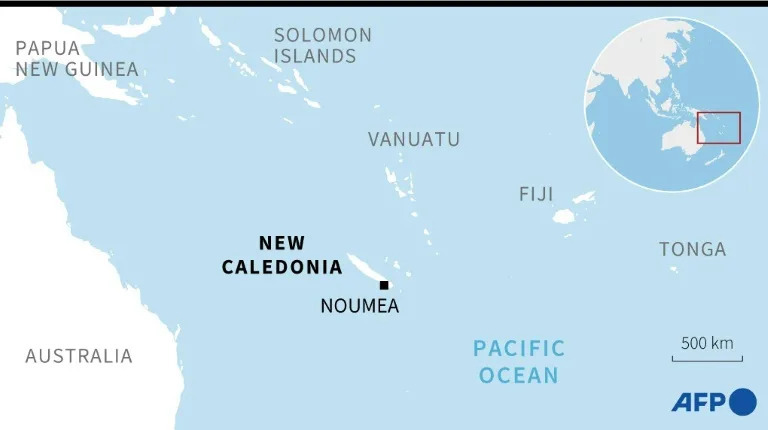
Lying in the South Pacific with Australia, Fiji and Vanuatu for neighbors, New Caledonia is a semiautonomous French territory — one of a dozen scattered throughout the Pacific, Caribbean and Indian Ocean.

Protests began Monday involving mostly young people, in response to the tabling of a vote 10,000 miles (17,000 kilometers) away in the French parliament proposing changes to New Caledonia’s constitution that would give greater voting rights to French residents living on the islands.

On Tuesday, legislators voted overwhelmingly in favor of the change.

The move would add thousands of extra voters to New Caledonia’s electoral rolls, which have not been updated since the late 1990s. Pro-independence groups say the changes are an attempt by France to consolidate its rule over the archipelago.

“The last two days we’ve seen violence of a scale we haven’t seen for 30 years in New Caledonia,” Denise Fisher, a former Australian Consul-General in New Caledonia, told CNN. “It is kind of marking the end of 30 years of peace.”

“The Kanak people are objecting to [the vote in France] not just because it’s been decided in Paris without them but also they feel that they want it to be part of a negotiation … which would include another self determination vote and a range of other things.”

French President Emmanuel Macron called for calm, issuing a letter Wednesday to New Caledonian political leaders urging them to “unambiguously condemn all this violence” and inviting both pro- and anti-independence leaders to meet him “face to face” in Paris.

Macron will chair a defense and national security council on Wednesday, focusing on the violence, the presidential palace said.

Macron’s administration has pushed for a pivot to the Indo-Pacific, stressing that France is a Pacific power, as China and the United States beef up their presence amid a battle for influence in the strategically important region. New Caledonia is at the center of that plan.

“The stakes are high for France,” Fisher added. “France has identified an entire Indo-Pacific vision for itself.”

“The legitimacy of France’s participation this way, having an influence in this way, is in question when you have scenes like this.”
The violence

Three people - two men and a woman, all indigenous Kanaks - have been shot dead in the violent protests and looting, according to Charles Wea, spokesperson for Louis Mapou, President of the Government of New Caledonia. A French police officer who was injured by gunfire in the riots also died, French interior minister Gérald Darmanin said.

Demonstrators have also set fire to buildings and cars in Noumea, defying a curfew that has been extended to Thursday.

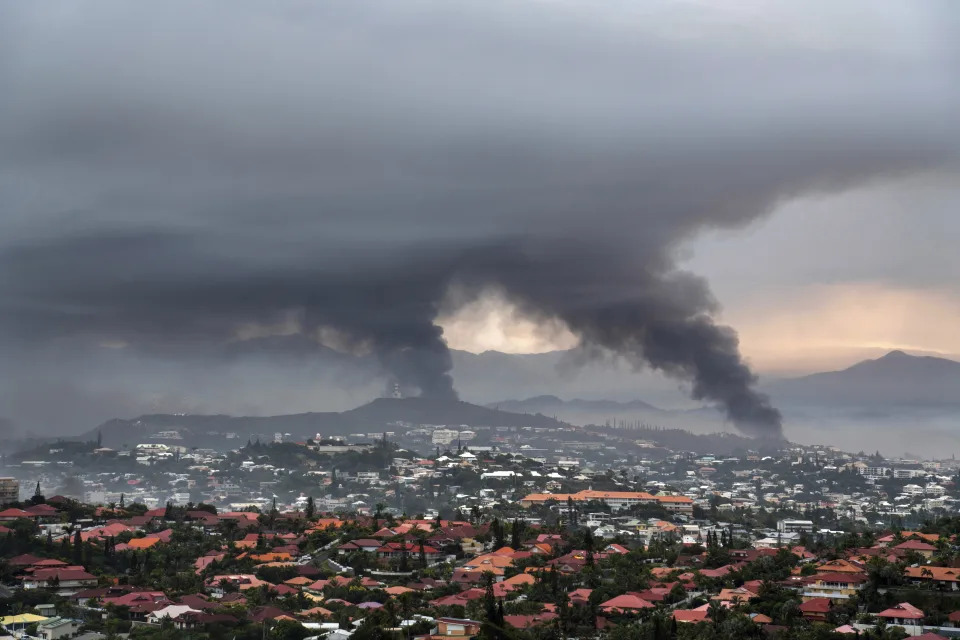
Thick plumes of black smoke covered the capital on Wednesday morning, social media video showed. Images showed burned-out cars, fires in the street, and shops vandalized and looted.

“Some are equipped with hunting rifles with buckshot as ammunition. Others were equipped with larger rifles, firing bullets,” the French High commissioner to New Caledonia Louis Le Franc said.

More than 140 people have been arrested, while at least 60 security personnel have been injured in the clashes between local nationalist groups and the French authorities, according to Le Franc.

One Noumea resident told CNN affiliate Radio New Zealand of panic buying reminiscent of Covid-19. “A lot of fire, violence…but it’s better I stay safe at home. There are a lot of police and army. I want the government to put the action for the peace,” the person told RNZ, asking to remain anonymous.

Smoke rises in the distance in Noumea, New Caledonia on May 14, 2024. - Theo Rouby/AFP/Getty Images

French gendarme officers guard the entrance of the Vallee-du-Tir district, in Noumea, New Caledonia on May 14, 2024. - Theo Rouby/AFP/Getty Images
The vote

Colonial France took control of New Caledonia in 1853. White settlement followed and the indigenous Kanak people were longtime victims of harsh segregation policies. Many indigenous inhabitants continue to live with high rates of poverty and high unemployment to this day.

Deadly violence exploded in the 1980s eventually paving the way towards the Noumea Accord in 1998, a promise by France to give greater political autonomy to the Kanak community.

Multiple referendums were held in recent years - in 2018, 2020 and 2021 - as part of the agreement offering voters in New Caledonia the option to secede from France. Each referendum was voted down, but the process was marred by boycotts from pro-independence groups and by Covid-19.

Voter roles have been frozen since the Noumea Accord, the issue that France’s parliament was seeking to address in the vote that sparked this week’s violence.

French lawmakers in Paris voted 351 – 153 in favor of changing the constitution to “unfreeze” the territory’s electoral rolls, enfranchising French residents who have been in New Caledonia for 10 years.

The lists were frozen by the French government to appease pro-independence Kanak nationalists who believe new arrivals to the former colony, including from France, dilute popular support for independence.

Both houses of France’s parliament need to approve the constitutional change passed by the National Assembly.

On Tuesday, French Prime Minister Gabriel Attal said the government would not call a meeting of the parliament to vote on the motion before talks with Kanak leaders, including major independence alliance the Kanak and Socialist National Liberation Front (FLNKS).

“I invite New Caledonia’s political leaders to seize this opportunity and come to Paris for talks in the coming weeks. The important thing is conciliation. Dialogue is important. It is about finding a common, political and global solution,” Attal said on the floor of the National Assembly.

FLNKS issued its own statement Wednesday both condemning the vote at the National Assembly and calling for an end to the violence.

“FLNKS appeals to the youth involved in these demonstrations for appeasement and to ensure the safety of the population and property,” the statement read.

State of emergency set for France's New Caledonia after deadly riots

Mathurin DEREL
Wed, May 15, 2024 


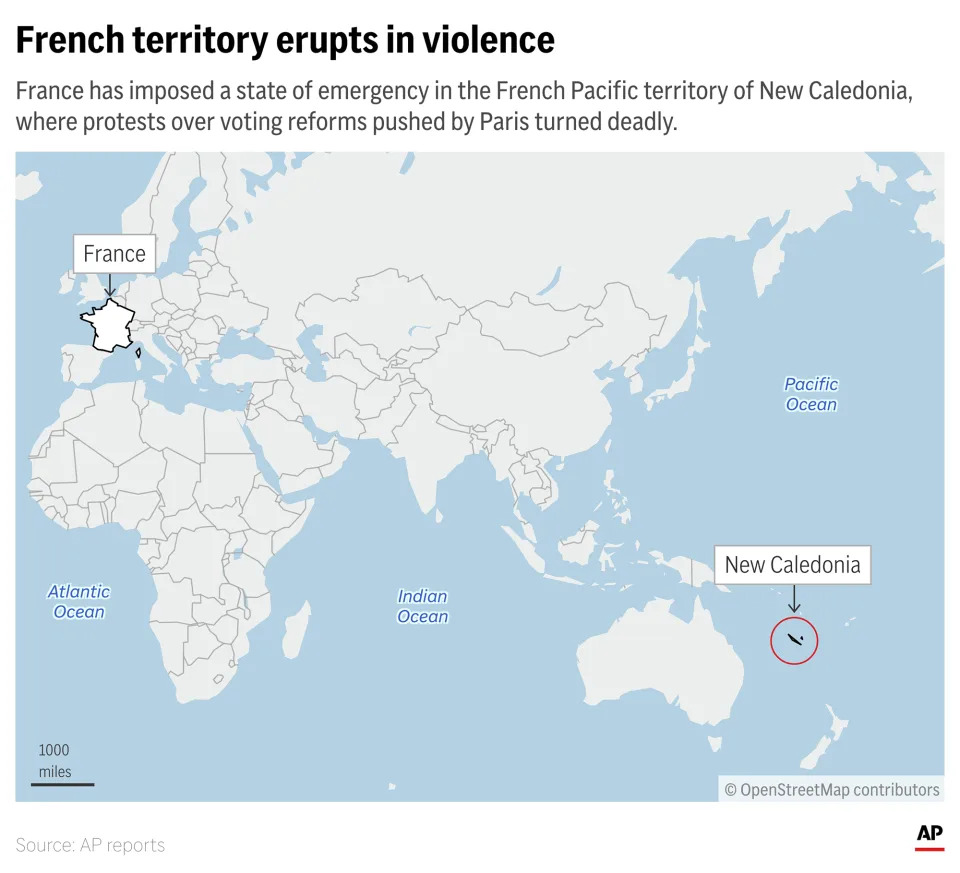
Map of New Caledonia in the Pacific Ocean. (STAFF)


President Emmanuel Macron moved Wednesday to declare a state of emergency in France's Pacific territory of New Caledonia after a second night of rioting that left four dead, including a gendarme, and hundreds wounded.

Anger over constitutional reforms from Paris boiled over again after the lower house of parliament overnight backed a hotly-disputed voting reform that the representatives of the indigenous Kanak population say weighs against them.

Despite heavily armed security forces fanning out across the capital Noumea, and the ordering of a nighttime curfew, rioting continued overnight virtually unabated in the worst violence there since the 1980s.

New Caledonia, which lies between Australia and Fiji, is one of several French territories spanning the globe from the Caribbean and Indian Ocean to the Pacific that remain part of France in the post-colonial era.

Colonised by France from the second half of the nineteen century, it already has special status within France unlike other overseas territories.

While it has on three occasions rejected independence in referendums, independence retains support particularly among the indigenous Kanak people.

Macron warned that any further violence would be met with an "unyielding" response and called for a resumption of political dialogue to end the unrest, the Elysee said in a statement.

"The president has requested that the decree aimed at declaring a state of emergency in New Caledonia be included on the agenda" of a cabinet meeting this afternoon, the presidency said.

- Looting and fires -

Shops were looted and public buildings torched during overnight violence, the authorities there said.

Hundreds of people including around 100 police and gendarmes have been injured in the unrest, French Interior Minister Gerald Darmanin said in Paris.

The presidency said three people had been killed, while a gendarme has been very seriously wounded. The gendarme -- based outside Paris -- later died of his wounds, the national gendarmerie said.

Macron cancelled a planned domestic trip and moved Wednesday's regular cabinet meeting to hold a crisis meeting with key ministers on New Caledonia earlier on Wednesday.

In Noumea and the commune of Paita there were reports of several exchanges of fire between civil defence groups and rioters.

Streets in the capital were pocked with the shells of burned-out cars and buildings, including a sports store and a large concrete climbing wall.

"Numerous arsons and pillaging of shops, infrastructure and public buildings -- including primary and secondary schools -- were carried out," said the High Commission, which represents the French central government in New Caledonia.

- 'Calm and reason' -

Security forces had managed to regain control of Noumea's prison, which holds about 50 inmates, after an uprising and escape bid by prisoners, it said in a statement.

Police have arrested more than 130 people since the riots broke out Monday night, with dozens placed in detention to face court hearings, the commission said.

A nighttime curfew was extended, along with bans on gatherings, the carrying of weapons and the sale of alcohol.

The territory's La Tontouta International Airport remained closed to commercial flights.

As rioters took to the streets, France's lower house of parliament 17,000 kilometres (10,600 miles) away voted in favour of a constitutional change bitterly opposed by indigenous Kanaks.

The reform -- which must still be approved by a joint sitting of both houses of the French parliament -- would give a vote to people who have lived in New Caledonia for 10 years.

Pro-independence forces say that would dilute the share of the vote held by Kanaks, the Indigenous group that makes up about 41 percent of the population and the major force in the pro-independence movement.

But those in favour of the reform argue voter lists have not been updated since 1998 -- depriving island residents who arrived from mainland France or elsewhere since then of a vote in provincial polls.

Macron has said French lawmakers would vote to definitively adopt the constitutional change by the end of June unless New Caledonia's opposing sides agree on a new text that "takes into account the progress made and everyone's aspirations".

After he urged local representatives to soothe tensions, major pro- and anti-independence parties issued a joint statement Wednesday calling for "calm and reason" to return to the archipelago, adding that "we are destined to keep living together".

burs-jh-sjw/jm


New Caledonia police patrol streets with burnt cars

VIDEO TRANSCRIPT
Reuters 
Updated Tue, May 14, 2024

STORY: :: New Caledonia police patrol streets with burnt cars

after protesters blocked key roads

::May 13, 2024

:: Noumea, New Caledonia

:: The international airport is shut and a curfew is in place,

according to the French High Commission

::Thio, New Caledonia

:: Protesters fear the proposed changes to the

constitution may dilute the vote of indigenous Kanak

New Caledonia's government called for calm and condemned the destruction of property. Video showed police patrolling the streets among burnt-out cars and plumes of smoke, after protesters had set up blockades on key roads on Monday (May 13).

The protests and violence happened on Monday ahead of debate on Tuesday in the French National Assembly on changes to the New Caledonian constitution. The proposed changes would allow more French residents to vote in New Caledonia elections, which independence supporters fear will dilute the vote of indigenous Kanak.

The French High Commission said in a statement that significant disturbances in the capital, Noumea, and surrounding townships were ongoing, and numerous buildings including shops, pharmacies and car dealerships were damaged. So far 36 people had been arrested.

France sends more police, seeks talks, to quell New Caledonia riots


Updated Tue, May 14, 2024

France sends more police, seeks talks, to quell New Caledonia riots

By Kirsty Needham and Juliette Jabkhiro

WELLINGTON/PARIS (Reuters) - France sent extra police squadrons to quell riots on the Pacific island of New Caledonia on Tuesday but also opened the door to a negotiated settlement with pro- and anti-independence groups.

Overnight, rioters burnt cars, dozens of businesses, clashed with police and set up barricades to protest against plans to allow more people to take part in local elections in the French-ruled territory, which indigenous Kanak protesters reject.

The proposed changes, which the National Assembly in Paris will vote on later on Tuesday, would allow French residents who have lived in New Caledonia for 10 years to vote in provincial elections - a move local leaders fear will dilute the Kanak vote but the government says is needed so elections are democratic.

"The streets were on fire, they were rioting in the streets, quite a frightening experience actually," New Zealand tourist Mike Lightfoot told TVNZ television.

Despite a curfew, violence continued on Tuesday evening on the island, situated some 20,000 km (12,427 miles) from mainland France, local broadcaster NC La 1ere reported.

The island's capital Noumea was covered by a cloud of black smoke, NC La 1ere said, adding that a local sport facility had been set ablaze. It also reported a riot in a prison.

One of five island territories spanning the Indo-Pacific held by France, New Caledonia is the word's third-largest nickel producer and is the centrepiece of French President Emmanuel Macron's plan to increase Paris's influence in the Pacific.

Prime Minister Gabriel Attal said the vote should proceed in the afternoon as planned, but confirmed that Macron would not rush into convening a special congress of the two houses of parliament required to rubber-stamp the bill.

Instead, he would invite representatives of the territory's population - both pro- and anti-independence - to Paris for talks on the future status of New Caledonia, after decades of tensions over France's role.

"It's through talking, and only through talking, that we can find a solution," Attal told lawmakers. "All we want is to find an overall political agreement, with those in favour of and against independence."

He did not spell out what such a deal could cover.

VIOLENCE

At a rally in Paris, pro-independence protesters said the bill should be withdrawn.

"If there is violence today (in New Caledonia), it's in response to the violence we've suffered from since colonisation," Kanak youth leader Daniel Wea, 43, told Reuters, saying the planned electoral changes would leave the Kanaks isolated on their island.

"We're here to show ... we will fight until we get what we want: independence," said 24-year-old Wendy Gowe, whose grand-fathers died when violence flared up on the island in the 1980s.

New Caledonia is situated 1,500 km (930 miles) east of Australia, with a population of 270,000 including 41% Melanesian and 24% of European origin, mostly French.

A 1998 Noumea Accord helped end a decade of conflict by outlining a path to gradual autonomy and restricting voting to the indigenous Kanak as well as people who arrived in New Caledonia before 1998.

The accord allowed for three referendums to determine the future of the country. In all three, independence was rejected, but that did not end the debate over the island's status or France's role.

Meanwhile, French miner Eramet said its local unit SLN had raised its security level amid the unrest and that its plant was running at minimum capacity.

"Our mines are halted, just like the vast majority of mines in New Caledonia," a spokesperson told Reuters.

Nickel miner Prony Resources said it activated a crisis unit to "maintain our industrial facilities and prevent any damage to our assets".

The French government has been negotiating a rescue package for the loss-making New Caledonian nickel sector, including a commitment to supply Europe's battery supply chain, but talks have stalled amid current political tensions.

(Reporting by Lucy Craymer and Kirsty Needham in Wellington, Dominique Vidalon, Tassilo Hummel, Gus Trompiz, Elizabeth Pineau, Juliette Jabkhiro in Paris; Writing by Ingrid Melander; Editing by Neil Fullick, Stephen Coates, Christina Fincher, William Maclean)


Curfew imposed in New Caledonia after violent protests against constitutional reform

RFI
Tue, May 14, 2024 at 12:03


The local government in New Caledonia has called for calm after violence broke out during protests to changes to the constitution being debated in the French National Assembly, which are denounced by supporters of independence for the overseas territory in the Pacific.

"All the reasons discontent, frustration and anger could not justify hurting or destroying what the country has been able to build for decades and compromising the future," the local government said in a statement Tuesday, after protests turned violent on Monday.

Violence broke out on the edge of a demonstration organised Monday by pro-independence supporters against changes to the constitution that would allow more French residents to vote in elections in New Caledonia, which independence supporters fear will dilute the vote of indigenous Kanak.

Several police officers were injured during clashes with protesters, the French High Commission said Tuesday, announcing a curfew in the capital, Noumea, on Tuesday night.

Buildings and businesses in Noumea and the surrounding areas were damaged and cars set on fire. Firefighters said they received nearly 1,500 calls Monday night and intervened in 200.

Pro- and anti-independence demos in New Caledonia split French island group

France mulls New Caledonia electoral reform ahead of key vote


‘High-calibre weapons’ fired in riots on French Pacific island

Our Foreign Staff
THE TELEGRAPH
Tue, May 14, 2024 

Rioters fired “high-calibre weapons” at police during a night of violent unrest and looting on the island of New Caledonia, the French Pacific territory’s high commissioner has said.

High Commissioner of the Republic Louis Le Franc told reporters that “there have been no deaths” but “shots were fired at the gendarmes using high calibre weapons and hunting rifles”.

The unrest erupted on Monday in the French-run archipelago as protesters demonstrated against proposed voting reforms that have angered separatists.

At least two car dealerships and a bottling factory in Noumea were set on fire in arson attacks. Several supermarkets in the capital and neighbouring towns Dumbea and Mont-Dore were looted.

French gendarme officers on patrol in Noumea amid protests against a constitutional bill aimed at expanding the electorate for an upcoming election - THEO ROUBY/AFP

Sylvie, whose family has lived in New Caledonia for generations, said: “The police station nearby was on fire and a car was too, in front of my house. There was non-stop shouting and explosions, I felt like I was in a war. We are alone. Who is going to protect us?”

On Monday night groups of young masked or hooded demonstrators took over several roundabouts and confronted police, who responded with non-lethal rounds. Several vehicles were torched during violent clashes.

A total of 36 people were arrested and 30 police officers were injured, authorities confirmed. A night-time curfew, a ban on public gatherings, and a ban on alcohol sales are now in place until 6am on Wednesday.


Schools, colleges and the international airport are closed until further notice.

The high commission, the representative of the French state in New Caledonia, said: “Very intense public order disturbances took place last night [Monday] in Noumea and in neighbouring municipalities, and are still ongoing at this time.

The New Caledonia government appealed for “reason and calm” and called on “all Caledonians to demonstrate a sense of responsibility” while the commission said it was “massively mobilising internal security and civil security forces”.

Cars at a Renault dealership in the Magenta district in Noumea were torched during the protests - AFP

The unrest comes as a constitutional reform is being debated in the national assembly in Paris. It aims to expand the electorate in the territory’s provincial elections.

France vowed in the Noumea Accord of 1998 to gradually give more political power to the Pacific island territory of nearly 300,000 people.

Under the agreement, New Caledonia has held three referendums over its ties with France, all rejecting independence.

The pro-independence Indigenous Kanaks rejected the result of the last referendum held in December 2021, which they boycotted due to the Covid-19 pandemic.

Smoke can be seen in the distance as a result of the riots in Noumea - AFP

The Noumea Accord has also meant that New Caledonia’s voter lists have not been updated since 1998 – meaning that island residents who have arrived from mainland France or elsewhere anytime in the past 25 years do not have the right to take part in provincial polls.

The French government has branded the exclusion of one out of five people from voting as “absurd”, while separatists fear that expanding voter lists would benefit pro-France politicians and “further minimise the Indigenous Kanak people”.

During a visit to the territory last year, Emmanuel Macron, the French president, said he wanted a revised constitutional status for New Caledonia to be in place by the beginning of 2024.

Mr Macron has been seeking to reassert his country’s importance in the Pacific region, where China and the United States are vying for influence but France has territories such as New Caledonia and French Polynesia.

BURN! FULL MOVIE
GREAT ANTI IMPERIALIST FILM  
REVOLT IN AN 18TH CENTURY SUGAR COLONY IN THE CARIBBEAN