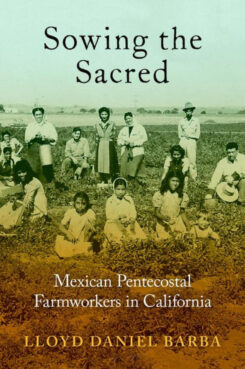
The surge of Protestant missionaries and charismatic revivals across South America didn’t happen in a vacuum; it unfolded within a Cold War landscape where the United States actively sought religious movements that could blunt the rise of Catholic liberation theology.
If you look closely at the historical record, declassified CIA cables, State Department memos, USAID contracts, congressional hearings, and the work of historians like Greg Grandin, Stephen Rabe, David Stoll, Martin-Baró, and Linda Rabben, the answer is no longer a dramatic conspiracy theory. It’s simply what happened. Not in the sense that every missionary was a covert agent. But because U.S. intelligence and diplomatic officials, from the 1950s through the 1980s, intentionally used Protestant missions as one tool in a broad counterinsurgency strategy designed to weaken liberation theology and preserve U.S.-aligned capitalist order in Latin America.
Before I expound I should let the reader know that I am no stranger to the world of Christian missions. I grew up the son of a Pentecostal pastor and went to school to get two degrees in church history. During college and seminary, I led and participated in mission trips to Fiji, the Philippines, and El Salvador. I worked at Oral Roberts University coordinating student missions trips across Latin America, Africa, and Asia. My intentions were completely sincere. Everyone around me believed we were spreading the gospel. What I didn’t understand at the time, what most missionaries never understand, is that the infrastructure we were plugged into had been shaped for decades by the Cold War, and that evangelical missions, especially the charismatic and Pentecostal branches, had been intentionally cultivated and supported by U.S. political and intelligence structures as an ideological counterweight to the very Christian movements the poor in Latin America were building for themselves.
To see why, you have to understand liberation theology. In the 1960s and 70s, Catholic priests, nuns, and laypeople across Latin America began reading the Bible with the poor in small base communities, and their work was shaped by theologians who helped give this movement its intellectual clarity. Gustavo Gutierrez in Peru, whose book A Theology of Liberation named the movement, argued that faith without a commitment to justice was empty. Leonardo Boff and Clodovis Boff in Brazil taught that the Gospel required solidarity with the poor and resistance to the structures that kept them poor. In El Salvador, thinkers like Jon Sobrino and Ignacio Ellacuria described the oppressed as the “crucified people,” showing that Christian faith was tested in the concrete suffering of those pushed to the margins.
These theologians did not invent liberation theology from above. They put into words what Christian base communities were discovering for themselves as they studied scripture in the shadow of military dictatorships, land monopolies, and U.S. backed elites. These communities did not just pray together. They examined the conditions of their lives. They asked why their societies were structured to benefit a small ruling class and what it meant that Jesus identified with the poor. Liberation theology took those questions seriously and treated them as a call to collective action, offering ordinary people new tools to interpret their own oppression and to organize for land reform, workers’ rights, literacy, and democracy.
Washington saw this as a threat because it encouraged people the empire needed to stay quiet to start asking political questions. The U.S. had already watched Cuba fall out of its orbit, and it was not interested in watching the rest of Latin America follow. So in the late 1960s, U.S. intelligence reports start describing liberation theology as a “subversive movement.” State Department briefings warned that Catholic priests sympathetic to the poor were helping create “pre-revolutionary conditions” in rural areas. The CIA produced internal assessments describing certain bishops as “radicalizing forces.” When the Brazilian bishops issued statements against torture under the military dictatorship, the U.S. embassy cabled Washington expressing concern that the Church was becoming politicized “in dangerous ways.”
So how do you stop a religious movement you can’t outlaw, that is spread through small communities, and whose leaders are clergy protected by the Vatican? The U.S. didn’t try to crush liberation theology directly. It tried to dilute it. Replace it. Counterprogram it. And evangelical missions became one of the most effective instruments for doing that.
This was not merely accidental alignment. It was intentional policy. The U.S. did this in several ways.
The first was through direct coordination with evangelical missionary organizations. One of the clearest examples is the Summer Institute of Linguistics, or SIL, the academic wing of Wycliffe Bible Translators. SIL specialized in going into remote Indigenous regions, studying unwritten languages, creating alphabets, and translating the Bible. These were trained linguists, many with graduate degrees. Their work, on the surface, was scholarly and humanitarian. But during the Cold War, SIL received contracts and grants from USAID, the U.S. Agency for International Development, which was a core part of U.S. soft-power strategy abroad. In several countries, including Guatemala, Peru, Brazil, and Ecuador, USAID partnered with SIL to carry out literacy programs among Indigenous groups. These literacy materials often included explicitly anti-communist lessons woven into biblical stories. In Guatemala, SIL teams operated in areas where leftist guerrillas were active, and the military government, backed by the U.S., gave SIL extraordinary freedoms and protection because they saw the missionaries as tools to pacify Indigenous resistance.
Anthropologists who worked in those regions documented how the presence of SIL often coincided with government resettlement programs designed to pull Indigenous people out of autonomous territories and bring them under state control. This was not because SIL itself was designing counterinsurgency tactics, but because SIL created the infrastructure, the literacy programs, the airstrips, the missionary aviation networks, that the state could use. Their aviation service, JAARS (Jungle Aviation and Radio Service), transported missionaries, medical supplies, literacy materials, and occasionally state officials in regions where guerrilla movements operated. JAARS pilots were not CIA assets, but they were operating in regions largely inaccessible to government forces without them, and the cooperation was mutually beneficial.
The second major example involves the Assemblies of God and Pentecostal missions more broadly. In Brazil, Chile, Argentina, and Guatemala, especially during their military dictatorships, the U.S. government openly preferred evangelical churches to the Catholic Church. During the Pinochet dictatorship in Chile, U.S. officials praised Pentecostal churches for “keeping the masses calm” and for reducing support for the left. In Brazil’s Amazon region, the military dictatorship encouraged American Pentecostal missions to expand because they provided a religious alternative to the radical priests who were helping Indigenous communities organize against land seizures. U.S. diplomatic cables from the 1970s note with approval that Pentecostal movements “lack the politicizing tendencies of certain Catholic clergy.”
Then there’s Campus Crusade for Christ, better known today as Cru. The founder, Bill Bright, made anti-communism a central part of his ministry from the 1950s onward. Campus Crusade programs were supported by U.S. embassies in various countries, especially during the authoritarian rule of Brazil’s military junta. In 1974, Bright launched the “Here’s Life” campaign in Brazil with the blessing of the U.S.-backed government. Internal documents show coordination between Campus Crusade and U.S. consular officials, who saw the campaign as a way to promote a depoliticized Christianity that discouraged support for leftist organizing. This was part of a broader U.S. strategy: if liberation theology created politically conscious Christians, evangelical revivalism created inward-focused ones.
The third major mechanism involved what the CIA called “psychological operations.” U.S. information agencies like USIA produced materials portraying liberation theologians as Marxist infiltrators who wanted to destroy the Church. These were circulated to conservative Catholic bishops, Protestant leaders, and local elites. The CIA also supported radio networks like Trans World Radio and HCJB (based in Ecuador), which broadcast sermons across the continent preaching submission to authority, anti-communism, and personal salvation rather than social transformation. Historians have shown that these broadcasts increased sharply in regions where liberation theology was strongest.
And then there is Guatemala under Efraín Ríos Montt. If there is a single moment when evangelical Christianity and U.S. counterinsurgency fully merged, it is this period. Ríos Montt was a general who took power in a 1982 military coup. He was a born-again Pentecostal and a member of an American-affiliated charismatic church. His weekly national TV addresses sounded like sermons, mixing Bible verses with calls for total obedience to the state. His government carried out one of the worst genocides in Latin American history against the Maya. Ríos Montt was not just supported by the U.S., Ronald Reagan personally praised him as “a man of great integrity.” American evangelical leaders visited him, prayed with him, and publicly defended him. Meanwhile, Catholic priests who supported Indigenous rights were being assassinated or disappeared.
Ríos Montt’s rule was not an outlier. It was the logical end of a decades-long project: replace politically engaged Catholicism with a politically harmless Protestantism, so that the structures of inequality remained untouched.
Even in countries without open dictatorships, the same pattern emerges. In Brazil, as Catholic base communities organized unions and landless workers, the Assemblies of God exploded in membership. In Chile, Pentecostal revivals surged under Pinochet. In Peru, evangelical missions expanded rapidly in the 1980s as Catholic priests began speaking against the military’s human rights abuses. In every case, U.S. officials described Protestant growth as a stabilizing force.
What makes all of this chilling is that it worked. By the 1990s, liberation theology had been sharply weakened. The Vatican, under pressure from conservative factions and geopolitical concerns, disciplined liberation theologians. Meanwhile, Pentecostal and charismatic Christianity had become the fastest-growing religious movement in Latin America. Today, Pentecostals form one of the strongest voting blocs for right-wing and authoritarian politicians across the continent.
Most missionaries who participated in this never knew. Their intentions were honest. Mine were honest. But the structure, the funding, the partnerships, the diplomatic support, the propaganda, the development projects, had been engineered long before any of us arrived. The U.S. didn’t need missionaries to be CIA agents. It just needed them to preach a version of Christianity that left the economic order untouched.
And that is exactly what happened.
Further Reading and Sources
For readers who want to investigate this history in more depth, the following books and primary source collections offer the most reliable and well documented accounts of the relationship between U.S. foreign policy, Protestant missions, and the suppression of liberation theology.
Greg Grandin, The Last Colonial Massacre. A detailed study of Guatemala and the Cold War with extensive analysis of how the U.S. opposed liberation theology and supported evangelical alternatives.
David Stoll, Is Latin America Turning Protestant? The Politics of Evangelical Growth. A careful examination of why evangelical missions expanded during military regimes and how that growth intersected with U.S. strategic priorities.
Phillip Berryman, Liberation Theology and The Religious Roots of Rebellion. Clear introductions to liberation theology and its political context.
Stephen Rabe, The Killing Zone: The United States Wages Cold War in Latin America. Focuses on U.S. foreign policy in Latin America with discussion of religious dynamics under military regimes.
Linda Rabben, Unnatural Selection. Documents missionary involvement in Indigenous regions and the political implications of their presence.
Manuel Vasquez and Anna Peterson, Christianity, Social Change, and Globalization in the Americas. A broader contextual look at how Christianity and politics interact in Latin America.
National Security Archive, Cold War in Latin America Collections. Declassified U.S. embassy cables, CIA reports, and military documents.
CIA CREST Database. Digitized declassified files related to psychological operations, USAID partnerships, and religious influence programs.
These sources provide the clearest window into how religious movements became instruments within larger geopolitical strategies across the Western Hemisphere.
Ufmg.br
' R. H. Tawney, Religion and the Rise of Capitalism. Page 3. Page 4 ...

Protesters invade the National Congress of Brazil
The far right in Latin America is angry. Brazil’s Jair Bolsonaro and Argentina’s Javier Milei always look furious, and they always speak loudly and aggressively. Testosterone leaks from their pores, a toxic sweat that has spread across the region. It would be easy to say that this is the impact of Donald Trump’s own brand of neo-fascism, but this is not true. The far right has much deeper pedigrees, linked to the defence of the oligarchical families that have roots in the colonial era across the virreinatos (viceroyalties) from New Spain to Rio de la Plata. Certainly, these far right men and women are inspired by Trump’s aggressiveness and by the entry of Marco Rubio, a furious defender of the far right in Latin America, to the position of US Secretary of State. This inspiration and support are important but not the reason for the return of the far right, an angry tide that has been growing across Latin America.
On the surface, it looks as if the far right has suffered some defeats. Jair Bolsonaro is in prison for a very long time because of his role in the failed coup d’état on January 8, 2023 (inspired by Trump’s own failed coup attempt on January 6, 2021). In the first round of the presidential election in Chile, the candidate of the Communist Party, Jeannette Jara won the most votes and will lead the centre-left bloc into the second round (December 14). Despite every attempt to overthrow the government of Venezuela, President Nicolás Maduro remains in charge and has mobilised large sections of the population to defend the Bolivarian Revolution against any threats. And, in late October 2025, most of the world’s countries voted for a UN General Assembly resolution that demands an end to the blockade on Cuba. These indicators —from Bolsonaro’s imprisonment to the vote on Cuba— suggest that the far right has not been able to move its agenda in every place and through every channel.
However, beneath the surface, there are indications that Latin America is not seeing the resurgence of what had been called the Pink Tide (after the election of Hugo Chávez in Venezuela in 1998) but is experiencing the emergence of an angry tide that slowly has begun to sweep the region from Central America down to the Southern Cone.
Elections in South America
The first round of the Chilean presidential election produced a worrying result. While Jara of the Communist Party won 26.85 percent of an 85.26 percent turnout, the far right’s José Antonio Kast came in second with 23.92 percent. Evelyn Matthei of the traditional Right won 12.5 percent, while the extreme right candidate who was once with Kast and now to his right, Johannes Kaiser, won 14 percent. It is likely that Jara will pick up some of the votes of the centre, but not enough to overcome the advantage of the far right which looks to have at least more than 50 percent of the voters on its side. The so-called social liberal, Franco Parisi, who came in third, endorsed Kast in 2021 and will likely endorse him again. That means that in Chile, the presidency will be in the hands of a man of the far right whose ancestry is rooted in German Nazism (his father was a member of the Nazi Party who escaped justice through the intercession of the Vatican) and who believes that the dictatorship in Chile from 1973 to 1990 was on balance a good idea.
North of Chile, in Bolivia, the new president Rodrigo Paz Pereria, son of a former president, beat the far right’s Jorge Tuto Quiroga (a former president) in the second round of the election that had no candidate of the left (this after the Movement for Socialism governed Bolivia continuously from 2006 to 2025). Paz’ own party has a minority position in the legislature and he will therefore have to align himself with the Quiroga’s Libre coalition and he will likely adopt a pro-US foreign policy and a libertarian economic policy. Peru will have its own election in April, where the former mayor of Lima —Rafael López Aliaga— is expected to win. He rejects the label far right but adopts all the generic policies of the far right (ultra-conservative Catholic, advocate for harsh security measures, and favours a libertarian economic agenda). Iván Cepeda of Colombia is the left’s likely candidate in their presidential election in May 2026, since Colombia does not permit second terms (so President Gustavo Petro cannot run again). Cepeda will face strong opposition from Colombia’s oligarchy which will want to return the country to their rule. It is too early to say who Cepeda will face, but it might be journalist Vicky Dávila, whose far right opposition to Petro is finding traction in unexpected parts of Colombian society. It is likely that by the middle of 2026, most of the states along the western edge of South America (from Chile to Colombia) will be governed by the far right.
Even as Bolsonaro is in prison, his party, the PL (or Liberal Party), is the largest bloc in Brazil’s National Congress. It is likely that Lula will be re-elected to the presidency next year due to his immense personal connection with the electorate. The far right’s candidate – who will be either Tarcísio de Freitas, the governor of São Paulo state, or one of the Bolsonaro’s (wife Michelle or son Flavio) – will struggle against him. But the PL will make inroads into the Senate. Their control over the legislature has already tightened the reins on the government (at COP30, Lula’s representative made no proposals to confront the climate catastrophe), and a Senate win will further their control over the country.
Common Agenda of the Angry Tide
The Angry Tide politicians who are making waves have many things in common. Most of them are now in their fifties —Kast (born 1966), Paz (born 1967), Venezuelan politician María Corina Machado (born 1967), and Milei (born 1970). They came of age in the post-dictatorship period in Latin America (the last dictatorship to end was in Chile in 1990). The decade of the 1990s continued the economic stagnation that characterised the 1980s —The Lost Decade (La Década Perdida) that convulsed these countries with low growth rates and with poorly developed comparative advantages forced into globalisation. It was in this context that these politicians of the Angry Tide developed their common agenda:
Anti-Communism. The far right in Latin America is shaped by an anti-left agenda that it inherits from the Cold War, which means that its political formations typically endorse the era of US-backed military dictatorships. The ideas of the left, whether from the Cuban Revolution (1959) or from the era of the Pink Tide (after 1998), are anathema to these political forces; these ideas include agrarian reform, state-led finance for industrialisation, state sovereignty, and the importance of trade unions for all workers and peasants. The anti-communism of this Angry Tide is rudimentary, mother’s milk to the politicians and used cleverly to turn sections of society against others.
Libertarian Economic policies. The economic ideas of the Angry Tide are shaped by the Chilean “Chicago Boys” (including Kast’s brother Miguel who was the head of General Augusto Pinochet’s Planning Commission, his Minister of Labour, and his head of the Central Bank). They directly take their tradition from the libertarian Austrian School (Friedrich Hayek, Ludwig von Mises, and Murray Rothbard as well as Milton Friedman). The ideas were cultivated in well-funded think tanks, such as the Centro de Estudios Macroeconómicos de Argentina (founded in 1978) and the Chilean Centro de Estudios Públicos (founded in 1980). They believe the State should be a force to discipline the workers and citizens, and that the economy must be in the hands of private interests. Milei’s famous antics with a chainsaw illuminate this politics not only of cutting social welfare (the work of neoliberalism) but of destroying the capacity of the State itself.
Culture Wars. Drawing on the wave of anti-gender ideology and anti-migration rhetoric, the Angry Tide has been able to appeal to conservative evangelical Christians and to large sections of the working class that has been disoriented by changes seen to come from above. The far right argues that the violence in working class neighbourhoods created by the drug industry is fostered by ‘liberalism’ and that only tough violence (as demonstrated by El Salvador’s president Nayib Bukele) can be the solution; for this reason, they want to strengthen the military and police and set aside constitutional limitations on use of force (on October 28, the government of Bolsonaro ally Cláudio Castro in Rio de Janeiro sent in the police who killed at least 121 people in Operation Containment). It helps the far right that it adopted various conspiracy theories about how the ‘elites’ have spread ‘globalised’ ideas to damage and destroy the ‘culture’ of their nations. This is a ludicrous idea coming from far right and traditional right political forces that champion full-scale entry of US corporations into their society and culture, and that have no respect for the histories of struggle of the working class and peasantry to build their own national and regional cultural worlds. But the Angry Tide has been able to construct the idea that they are cultural warriors out to defend their heritage against the malignancies of ‘globalisation’. Part of this culture war is the promotion of the individual entrepreneur as the subject of history and the denigration of the necessity of social reproduction.
It is these three elements (anti-communism, libertarian economic policies, and the culture wars) that brings together the far right across Latin America. It provides them with a robust ideological framework to galvanise sections of the population to believe that they are the saviours of the hemisphere. This Latin American far right is backed by Trump and the international network of the Spanish far right (the Foro Madrid, created in 2020 by Fundación Disenso, the think tank of the far right Vox party). It is heavily funded by the old elite social classes, who have slowly abandoned the traditional Right for these new, aggressive far right parties.
Crisis of the Left
The Left is yet to develop a proper assessment of the emergence of these parties and has not been able to drive an agenda that sparkles with vitality. A deep ideological crisis grips the Left, which cannot properly decide whether to build a united front with the traditional right and with liberals to contest elections or to build a popular front across the working class and peasantry to build social power as a prelude to a proper electoral push. The example of the former strategy (the electoral alliance) comes from Chile, where first the Concertación de Partidos por la Democracia (Concertación) formed in 1988 to keep out the parties of the dictatorship from power and second the Apruebo Dignidad formed in 2021 that brought Gabriel Boric of the centrist Broad Front to the presidency. But outside Chile, there is little evidence that this strategy works. The latter has become harder as unionisation rates have collapsed, and as uberisation individualises the working class to erode working class culture.
It is telling that Bolivia’s former socialist Vice President Álvaro García Linera looked northwards to New York City for inspiration. When Zohran Mamdani won the mayor’s race, García Linera said, “Mamdani’s victory shows that the left must commit to boldness and a new future”. It is hard to disagree with this statement; although, Mamdani’s own proposed agenda is mostly to salvage a worn-out New York infrastructure rather than to advance the city to socialism. García Linera did not mention his own time in Bolivia, when he tried with former president Evo Morales to build a socialist alternative. The left will have to be bold, and it will have to articulate a new future, but it will have to be one that emerges from its own histories of building struggles and building socialism.Email
Vijay PrashadVijay Prashad is an Indian historian, editor, and journalist. He is a writing fellow and chief correspondent at Globetrotter. He is an editor of LeftWord Books and the director of Tricontinental: Institute for Social Research. He is a senior non-resident fellow at Chongyang Institute for Financial Studies, Renmin University of China. He has written more than 20 books, including The Darker Nations and The Poorer Nations. His latest books are Struggle Makes Us Human: Learning from Movements for Socialism and (with Noam Chomsky) The Withdrawal: Iraq, Libya, Afghanistan, and the Fragility of U.S. Power. Tings Chak is the art director and a researcher at Tricontinental: Institute for Social Research and lead author of the study “Serve the People: The Eradication of Extreme Poverty in China.” She is also a member of Dongsheng, an international collective of researchers interested in Chinese politics and society.