Ehren Watada: The Duty to Oppose Crimes of State
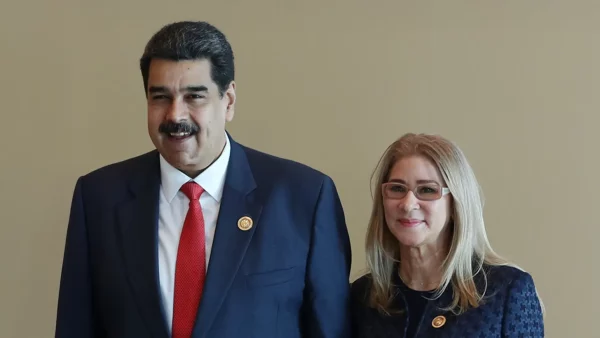
The US attack on Venezuela and its kidnapping of President Maduro and his wife has launched the US on a new round of crimes against US law, international law, and the US Constitution. Meanwhile, the Trump administration has started proceedings against military veteran Sen. Mark Kelly for saying military officers have a duty to disobey illegal orders. Asked “who will enforce the law when a government violates it with impunity,” Judge Bernard Victor A. Roling of the Tokyo War Crimes Tribunal answered, “The world “has to rely on individuals to oppose the criminal commands of the government.” This is the story of one US military officer who opposed the criminal commands of his government.
Near the end of 2025, as the US military was attacking Venezuelan fishing boats and amassing a huge naval flotilla positioned to attack Venezuela, six members of Congress who are military and CIA veterans issued a video statement addressed to military personnel. It declared they have a duty to refuse to obey illegal orders.
“Like us, you all swore an oath to protect and defend this Constitution. Right now, the threats to our Constitution aren’t just coming from abroad, but from right here at home. Our laws are clear. You can refuse illegal orders. You must refuse illegal orders. No one has to carry out orders that violate the law or our Constitution.”
President Donald Trump responded on Truth Social: “It’s called SEDITIOUS BEHAVIOR AT THE HIGHEST LEVEL. Each one of these traitors to our Country should be ARRESTED AND PUT ON TRIAL.” In a second post, Trump wrote: “This is really bad, and Dangerous to our Country. Their words cannot be allowed to stand. SEDITIOUS BEHAVIOR FROM TRAITORS!!! LOCK THEM UP???” In a third post he added, “SEDITIOUS BEHAVIOR, punishable by DEATH!” He also reposted a statement saying: “HANG THEM GEORGE WASHINGTON WOULD !!” On January 5, Defense Secretary Pete Hegseth announced that the military had started administrative actions against one of those issuing the statement, Senator Mark Kelly. Kelly is a retired Navy captain who flew 39 combat missions as a naval aviator.
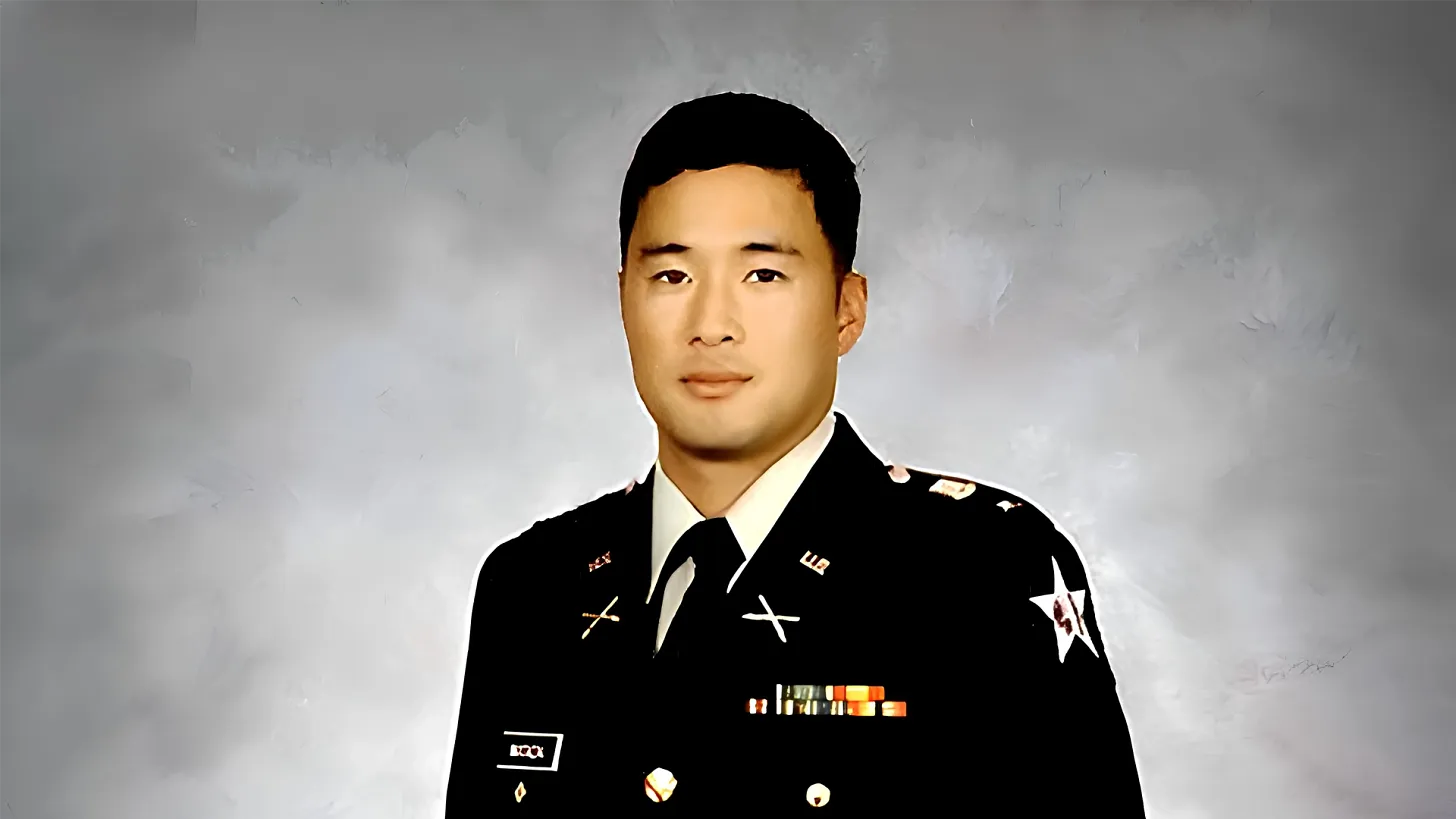
Not just military personnel but all people have an obligation to oppose criminal acts of our governments. This is the story of Ehren Watada, a military officer who refused what he considered an illegal order to participate in the US war against Iraq.
Ehren Watada’s Story
I was sitting in a conference on Cape Cod in May, 2006, when I was called out to take an urgent long distance phone call. It was West Coast activist David Solnit who told me that a military officer had informed local anti-war veterans that he intended to refuse to deploy to Iraq. David asked me to help with his defense.
The officer was a 28-year-old Army lieutenant named Ehren Watada. A former Eagle Scout with a degree in finance, Watada volunteered for military service after 9/11. His motives could hardly have been more patriotic. For himself and his fellow soldiers, he said, “the reason why we all joined the military” and “the commitment we made to this country” is “to sacrifice everything–sacrifice our lives, our freedom–to ensure that all Americans live in a country where we have true democracy.”
When he learned that he would be ordered to Iraq, Lt. Watada began to read everything he could find about the war, on all sides, so that he could better motivate the troops under his command. One of the books he read was James Bamford’s A Pretext for War. I worked on a documentary about Watada called In the Name of Democracy, in which he described his shock at what he learned: “Our country, and we as a military, had been deceived. There’s no other way of putting it. Whether they misrepresented the truth, or they told half-truths or misled–it’s a lie.” The Iraq War was “a war not out of self-defense but by choice.”
Watada was not a pacifist. He based his stand on the falsehood of the justifications for the war and on the usurpation of legitimate constitutional authority by the officials of the George W. Bush administration.
“There came a time when I saw people with power, and they held that power absolute and they did not listen to the will of the people. That was the leadership of our country. Those were the people who were in charge of our lives, and yet they did what they wanted to do with impunity, and nobody was willing to stand up and challenge them.”
On June 7, 2006, Watada issued a video press statement announcing his refusal to deploy because the Iraq War was illegal and “participation would make me party to war crimes.”
“It is my conclusion as an officer of the armed forces that the war in Iraq is not only morally wrong but a horrible breach of American law. Although I have tried to resign out of protest, I am forced to participate in a war that is manifestly illegal. As the order to take part in an illegal act is ultimately unlawful as well, I must as an officer of honor and integrity refuse that order.”
Crucial to his argument was the unconstitutionality of the decision to go to war. “We had people within our country with tremendous amounts of power who were doing whatever they felt they wanted to,” Watada explained. “There were no checks and balances like our Constitution espouses.”
His disobedience was also his duty under international law: The UN Charter and the Nuremberg principles “bar wars of aggression.” As treaties, they are US law as well.
Watada was aware that imprisonment was the likeliest consequence of his action. But he planned to put the war on trial in the process: “I will try to argue the legal merits of the war: that it is illegal, that it is immoral and that officers and soldiers of conscience should not be forced to do something that is illegal and immoral.”
The Army charged Lt. Watada with failure to deploy to Iraq with his unit and began court martial proceedings that echoed the old saying, “Military justice is to justice as military music is to music.” Watada and his supporters prepared to put the war on trial. But Military Judge Lt. Col. John Head refused to allow Watada’s motivation for refusing the order–the war’s illegality–even to be considered. At the last minute he declared a mistrial.
The Army attempted to retry Watada, but civilian US District Court Judge Benjamin Settle barred the retrial as a violation of the Constitution’s ban on double jeopardy — prosecuting a person more than once for the same offense. Three military courts rejected Watada’s double jeopardy claim; but as soon as the case was appealed to a civilian court, Judge Settle issued a stay blocking the retrial and charging that “the military judge likely abused his discretion.” The Army announced it would appeal but then did nothing for eighteen months, leaving Watada in limbo. Finally, after a campaign by Watada’s supporters, the Obama administration’s Department of Justice nixed the Army’s appeal. The Army threatened to court martial Watada on other charges but finally decided to accept defeat and let Lieutenant Watada go free.
The military veteran members of Congress who asserted the duty of military personnel to refuse to obey illegal orders represent the bedrock of US military law, US constitutional law, and international law. [1] As the Nuremberg Tribunal after World War II stated, “Complicity in the commission of a crime against peace, a war crime, or a crime against humanity” is “a crime under international law.” Under the US Constitution, international law is the law of the land. In 2006, Gen. Peter Pace, then chairman of the Joint Chiefs of Staff, was asked, “Should people in the US military disobey orders they believe are illegal?” He answered, “It is the absolute responsibility of everybody in uniform to disobey an order that is either illegal or immoral.”
What about those of us who are not in military uniform? In the Flick case the Nuremberg Tribunal ruled that international law “binds every citizen just as does ordinary municipal law.” Judge Bernard Victor A. Roling of the Tokyo War Crimes Tribunal addressed the question, Who will enforce the law when a government violates it with impunity? The answer: The world “has to rely on individuals to oppose the criminal commands of the government.” I guess that’s us.
[1] For background on war crimes law, see Jeremy Brecher, Jill Cutler, and Brendan Smith, eds, In the Name of Democracy: American War Crimes in Iraq and Beyond (New York: Metropolitan Books, 2005. Available for free download at https://www.jeremybrecher.org/downloadable-books/inthenameofdemocracy.pdf and https://truthout.org/articles/soldiers-must-disobey-unlawful-orders-under-trump-its-their-legal-duty/


.jpg)
No comments:
Post a Comment