Showing posts sorted by relevance for query SAHEL. Sort by date Show all posts

Friday, June 03, 2022


Africa, the Collateral Victim of a Distant Conflict

Amadou Sanogo (Mali), You Can Hide Your Gaze, but You Cannot Hide That of Others, 2019.

On 25 May 2022, Africa Day, Moussa Faki Mahamat – the chairperson of the African Union (AU) – commemorated the establishment of the Organisation for African Unity (OAU) in 1963, which was later reshaped as the AU in 2002, with a foreboding speech. Africa, he said, has become ‘the collateral victim of a distant conflict, that between Russia and Ukraine’. That conflict has upset ‘the fragile global geopolitical and geostrategic balance’, casting ‘a harsh light on the structural fragility of our economies’. Two new key fragilities have been exposed: a food crisis amplified by climate change and a health crisis accelerated by COVID-19.

A third long-running fragility is that most African states have little freedom to manage their budgets as debt burdens rise and repayment costs increase. ‘Public debt ratios are at their highest level in over two decades and many low-income countries are either in, or close to, debt distress’, said Abebe Aemro Selassie, the director of the African Department at the International Monetary Fund (IMF). The IMF’s Regional Economic Outlook report, released in April 2022, makes for grizzly reading, its headline clear: ‘A New Shock and Little Room to Manoeuvre’.

Jilali Gharbaoui (Morocco), Composition, 1967.

Debt hangs over the African continent like a wake of vultures. Most African countries have interest bills that are much higher than their national revenues, with budgets managed through austerity and driven by deep cuts in government employment as well as the education and health care sectors. Since just under two-thirds of the debt owed by these countries is denominated in foreign currencies, debt repayment is near impossible without further borrowing, resulting in a cycle of indebtedness with no permanent relief in sight. None of the schemes on the table, such as the G20’s Debt Service Suspension Initiative (DSSI) or its Common Framework for Debt Treatments, will provide the kind of debt forgiveness that is needed to breathe life into these economies.

In October 2020, the Jubilee Debt Campaign proposed two common sense measures to remove the debt overhang. The IMF owns significant quantities of gold amounting to 90.5 million ounces, worth $168.6 billion in total; by selling 6.7% of their gold holdings, they could raise more than enough to pay the $8.2 billion that makes up DSSI countries’ debt. The campaign also suggested that rich countries could draw billions of dollars towards this cancellation by issuing less than 9% of their IMF Special Drawing Rights allocation. Other ways to reduce the debt burden include cancelling debt payments to the World Bank and IMF, two multilateral institutions with a mandate to ensure the advancement of social development and not their own financial largess. However, the World Bank has not moved on this agenda – despite dramatic words from its president in August 2020 – and the IMF’s modest debt suspension from May 2020 to December 2021 will hardly make a difference. Along with these reasonable suggestions, bringing the nearly $40 trillion held in illicit tax havens into productive use could help African countries escape the spiralling debt trap.

Choukri Mesli (Algeria), Algeria in Flames, 1961.

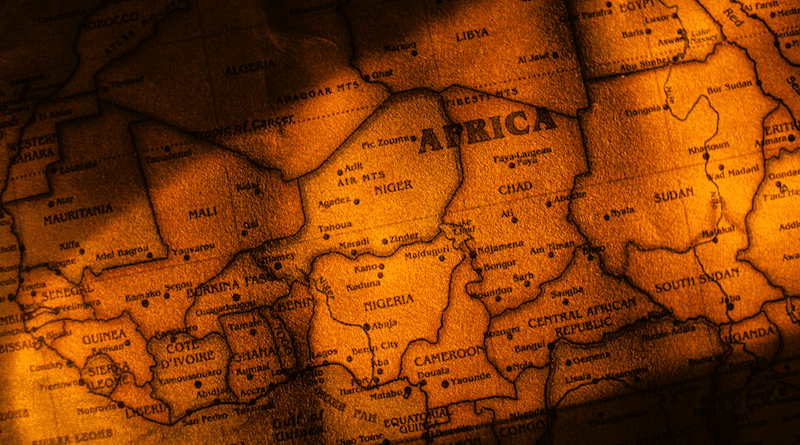
‘We live in one of the poorest places on earth’, former President of Mali Amadou Toumani Touré told me just before the pandemic. Mali is part of the Sahel region of Africa, where 80% of the population lives on less than $2 a day. Poverty will only intensify as war, climate change, national debt, and population growth increase. At the 7th Summit of the leaders of the G5 Sahel (Group of Five for the Sahel) in February 2021, the heads of state called for a ‘deep restructuring of debt’, but the silence they received from the IMF was deafening. The G5 Sahel was initiated by France in 2014 as a political formation of the five Sahel countries – Burkina Faso, Chad, Mali, Mauritania, and Niger. Its real purpose was clarified in 2017 with the formation of its military alliance (the G5 Sahel Joint Force or FC-G5S), which provided cover for the French military presence in the Sahel. It could now be claimed that France did not really invade these countries, who maintain their formal sovereignty, but that it entered the Sahel to merely assist these countries in their fight against instability.

Part of the problem is the demands made on these states to increase their military spending against any increase in spending for human relief and development. The G5 Sahel countries spend between 17% and 30% of their entire budgets on their militaries. Three of the five Sahel countries have expanded their military spending astronomically over the past decade: Burkina Faso by 238%, Mali by 339%, and Niger by 288%. The arms trade is suffocating them. Western countries – led by France but egged on by the North Atlantic Treaty Organisation (NATO) – have pressured these states to treat every crisis as a security crisis. The entire discourse is about security as conversations about social development are relegated to the margins. Even for the United Nations, questions of development have become an afterthought to the focus on war.

Souleymane Ouologuem (Mali), The Foundation, 2014.

In the first two weeks of May 2022, the Malian military government ejected the French military and withdrew from G5 Sahel in the wake of deep resentment across Mali spurred by civilian casualties from French military attacks and the French government’s arrogant attitude towards the Malian government. Colonel Assimi Goïta, who leads the military junta, said that the agreement with the French ‘brought neither peace, nor security, nor reconciliation’ and that the junta aspires ‘to stop the flow of Malian blood’. France moved its military force from Mali next door to Niger.

No one denies the fact that the chaos in the Sahel region was deepened by the 2011 NATO war against Libya. Mali’s earlier challenges, including a decades-long Tuareg insurgency and conflicts between Fulani herders and Dogon farmers, were convulsed by the entry of arms and men from Libya and Algeria. Three jihadi groups, including al-Qaeda, appeared as if from nowhere and used older regional tensions to seize northern Mali in 2012 and declare the state of Azawad. French military intervention followed in January 2013.

Jean-David Nkot (Cameroon), #Life in Your Hands, 2020.

Travel through this region makes it clear that French – and US – interests in the Sahel are not merely about terrorism and violence. Two domestic concerns have led both foreign powers to build a massive military presence there, including the world’s largest drone base, which is operated by the US, in Agadez, Niger. The first concern is that this region is home to considerable natural resources, including yellowcake uranium in Niger. Two mines in Arlit (Niger) produce enough uranium to power one in three light bulbs in France, which is why French mining firms (such as Areva) operate in this garrison-like town. Secondly, these military operations are designed to deter the steady stream of migrants leaving areas such as West Africa and West Asia, going through the Sahel and Libya and making their way across the Mediterranean Sea to Europe. Along the Sahel, from Mauritania to Chad, Europe and the US have begun to build what amounts to a highly militarised border. Europe has moved its border from the northern edge of the Mediterranean Sea to the southern edge of the Sahara Desert, thereby compromising the sovereignty of North Africa.

Hawad (Niger), Untitled, 1997.

Military coups in Burkina Faso and Mali are a result of the failure of democratic governments to rein in French intervention. It was left to the military in Mali to both eject the French military and depart from its G5 Sahel political project. Conflicts in Mali, as former President Alpha Omar Konaré told me over a decade ago, are inflamed due to the suffocation of the country’s economy. The country is regularly left out of infrastructure support and debt relief initiatives by international development organisations. This landlocked state imports over 70% of its food, whose prices have skyrocketed in the past month. Mali faces harsh sanctions from the Economic Community of West African States (ECOWAS), which will only deepen the crisis and provoke greater conflict north of Mali’s capital, Bamako.

The conflict in Mali’s north affects the lives of the country’s Tuareg population, which is rich with many great poets and musicians. One of them, Souéloum Diagho, writes that ‘a person without memory is like a desert without water’ (‘un homme sans mémoire est comme un desert sans eau’). Memories of older forms of colonialism sharpen the way that many Africans view their treatment as ‘collateral victims’ (as the AU’s Mahamat described it) and their conviction that it is unacceptable.

Vijay Prashad is an Indian historian and journalist. Prashad is the author of twenty-five books, including The Darker Nations: A People’s History of the Third World and The Poorer Nations: A Possible History of the Global SouthRead other articles by Vijay, or visit Vijay's website.

Friday, May 05, 2023

Germany flexes its soft-power muscle in Africa's Sahel


William Noah Glucroft
05/03/2023

The end of Germany's military mission in Mali is the beginning of a broader development strategy across the Sahel. Improved prospects for people there mean more security for Europe, officials say

When the German military ends its operations in Mali in May 2024, Germany plans to expand economic aid and partnership programs in the Sahel region.

The plan, as outlined in a paper published on Wednesday by the Ministry of Economic Cooperation and Development (BMZ), seeks to "orient itself on the needs of the people" in the region. The plan seeks to bring in more partners over a wider area.

"We are more successful when we act together with international partners than everyone on their own," BMZ Minister Svenja Schulze said in a statement.

Germany has long been a significant player in stabilization and development efforts in the largely francophone Sahel.

With deeper engagement, Germany hopes to be a soft-power leader in a region it classifies as central to European security. As part of that commitment, the BMZ says that Schulze will put herself up as the chair of the Sahel Alliance, a cooperation among Sahelian and Western countries and organizations. The Alliance, which takes credit for supporting nearly 1,200 projects totaling €26.5 billion ($29.3 billion), will choose the chair at a meeting next month in Mauritania.

Schulze: Regional development new focus of Germany in Sahel
01:39

Troops out, aid stays

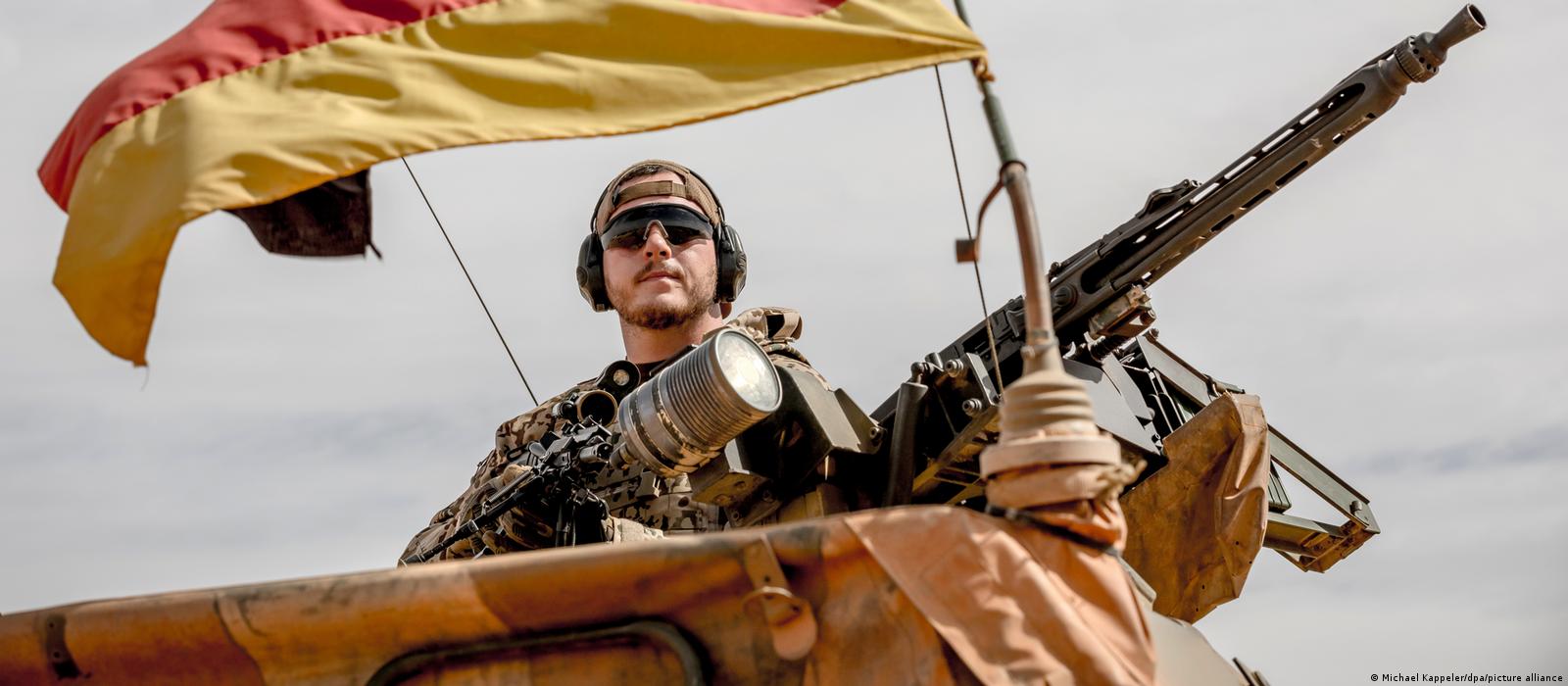
The "Plus" announcement is a signal from the German government that it remains committed to the region even after German troops end their participation in a United Nations peacekeeping mission in Mali.

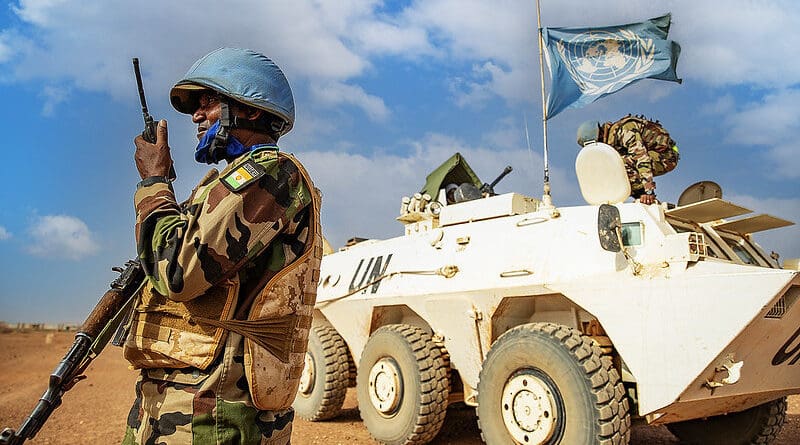
The UN first approved the multinational deployment in 2013, with the aim of smoothing the way to a peaceful and democratic transition of political power. Despite the presence of more than 12,000 troops and a separate French combat mission, jihadist violence has taken hold. A coup in 2021 ushered in leaders who oppose the UN mandate.

They have instead turned more towards Russia for support, welcoming in the paramilitary Wagner Group. Western countries have accused Wagner personnel of undermining security and killing civilians there. Malian and Russian officials say they are providing the same assistance as the UN peacekeepers.

The disagreement has bubbled up in the aftermath of the frenzied and failed end to security operations in Afghanistan in 2021. The combination of events led to a broad rethink of Germany's military footprint abroad.

Prosperity there, security here

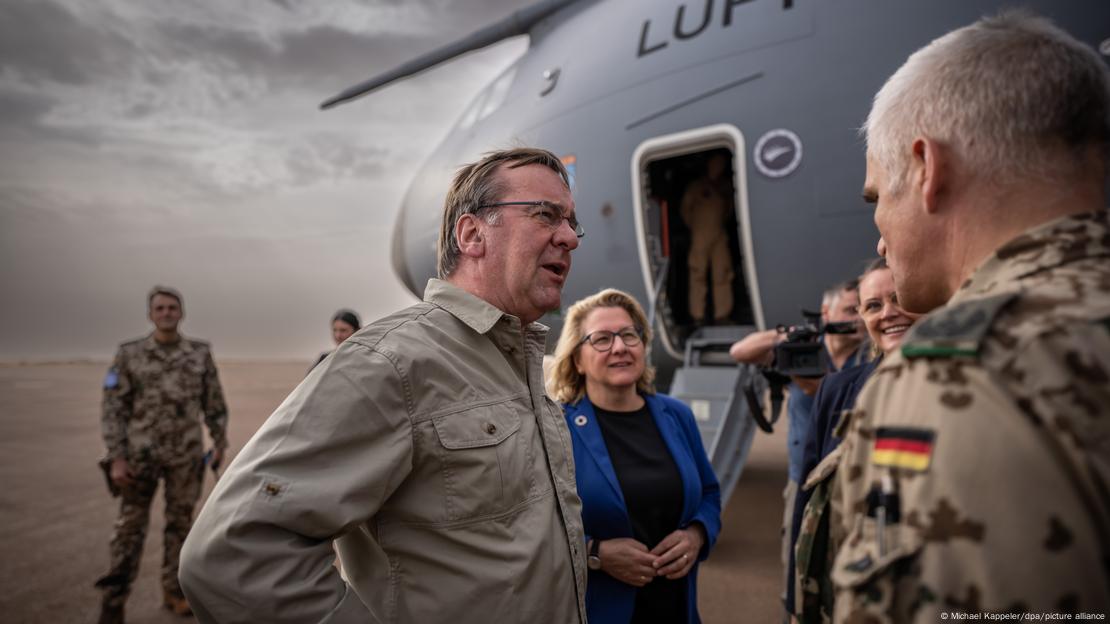
With the withdrawal of its contingent of as many as 1,100 troops, Germany is all but giving up on Mali, while maintaining a security presence in neighboring Niger. Unlike Mali, officials have said Niger's government remains open to cooperating with German and other international actors. In April, Defense Minister Boris Pistorius and Development Minister Schulze made a joint trip to the region.

In addition to being one of the poorest areas of Africa, the Sahel and its neighbors are one of the youngest. Two-thirds of its population is under the age of 25, according to the UN. German officials, citing UN reporting, have said that extremist groups fill the vacuum left by an absence of jobs and economic opportunity. Young people, and especially young men, are drawn into violence less out of ideology than practicality. They need to earn a living.

"The BMZ strengthens economic prospects there and resilience against crises with new job possibilities such as in processing agricultural products, crop protection, carpentry work, or expanded infrastructure like water pumps."

Defense Minister Boris Pistorius and Development Aid Minister Svenja Schulze traveled to the Sahel region together in April 2023
Image: Michael Kappeler/dpa/picture alliance


The dual-threat

Viewing extremism, and the underlying economic causes, as a regional threat, the "Plus" initiative seeks to stay one step ahead of its spread. Regional, rather than country-by-country, cooperation answers a long-time call from officials there.

"The crisis in the Sahel region is coming into the coastal countries," Robert Dussey, Togo's foreign minister, said at the Munich Security Conference in February, as he shared a stage with Schulze. "If, for example, you think for a minute to let us resolve the Sahel security question ourselves, it will be a mistake for everyone."

Many people have fled the physical and economic insecurity. The UN Refugee Agency counted nearly three million forcibly displaced people in 2022 and expects similar high levels this year "given the complex interplay between conflict, climate change, food insecurity and widespread lack of socioeconomic opportunities."

That interplay also links the Sahel to Germany and Europe more broadly. While most displaced people remain somewhere in the region, some make the dangerous journey through northern Africa, across the Mediterranean, and into Europe. In 2022 alone, more than 2,400 people died at sea, a toll the International Organization for Migration acknowledges is an undercount.

Terrorism and refugees both put pressure on domestic politics and fuel nativist backlash. The "Plus" initiative is an effort to combat both, in the hope that improving lives and livelihoods there can stave off political tension here.

Edited by: Rina Goldenberg

Thursday, July 11, 2024

Prospects Dimming For Democracy In The Sahel – Analysis

UN mission in Mali. Photo Credit: MINUSMA/Harandane Dicko

By 

By Charles A. Ray


(FPRI) — The COVID-19 pandemic, in addition to the human toll and negative economic impact in sub-Saharan Africa, also contributed to a decline in democracy. According to a May 26, 2021, article from the Council on Foreign Relations, more Africans were living under fully or partially authoritarian states than at most points in the previous two decades.

Citizen discontent with leaders’ attempts to remain in power through circumvention of the electoral process has led to political instability, demonstrations, and violence even in relatively democratic countries like Kenya and South Africa. While the average level of democracy across the continent remains relatively stable in 2024, the continual incidents of military takeovers and conflicts in Ethiopia, Sudan, and Cameroon, pose challenges to consolidating democracy. Despite continuing progress in countries like Gambia and Zambia, and with nine African countries in the top fifty in the world in levels of democratic participation, the continental averages in representation and rule of law have declined over the past five years.

The Sahel: A Belt of Instability

The region of sub-Saharan Africa demonstrating the most severe decline in democratic governance has been the Sahel, the semi-arid belt connecting North Africa across the Sahara Desert with the tropical savannahs to the south.

Since 2020, there have been four coup d’etats and three attempted coups in West Africa and the Sahel. The four military takeovers in Guinea, Burkina Faso, Mali, and Niger, were ostensibly because of economic stagnation and continuing insecurity and were initially received positively by the civilian populations. That support seems to continue despite the juntas not delivering on promises to improve security. The median age of populations in the Sahel ranges from fourteen to twenty-six, and one would think that such a youthful population would be a seed-bed for popular uprising as it has been in other regions of the world, but this has not happened. The security situation in the countries of the Sahel has worsened, and despite being one of the world’s richest regions in terms of natural resources, in April 2023, the United Nations estimated that food insecurity and malnutrition were on track to reach a ten-year high. Some 45,000 people were at risk of experiencing “catastrophic levels of hunger.” Up to 80 percent of the people of the Sahel live on less than $2 a day, with poverty more widespread than in most other parts of Africa.

One-by-One, They All Fall Down

While there has been a distinct shift to the right and autocracy in a number of regions, the Sahel leads the way in unconstitutional and attempted takeovers since 2020. Between 2020 and 2023, there were eight combined successful and attempted coups in the Sahel in six countries, from Guinea on the Atlantic to Sudan on the Red Sea.


Mali 

Of the five coups that Mali has suffered since gaining independence in 1960, two of them were in 2020 and 2021. The country has faced an insurgency by the Tuareg (a minority ethnic group), jihadists, and criminal gangs since 2012, with limited success despite years of US, French, and other international support to strengthen Mali’s national army. In 2020, a colonel who had been trained by US, French, and German forces overthrew the elected president. This led to France withdrawing its forces from Mali and the junta subsequently toppling its own appointed civilian president, then turning to Russia’s Wagner Group for security support. This move has not lessened the insurgency and has led to massive human rights abuses against the civilian population.

Chad

Military officers seized power in Chad in 2021 after the death of President Idriss Deby, who had taken over in a coup in 1990. Deby had ruled for thirty years as a hardnosed autocrat but enjoyed US and western support because he’d aligned himself with international counterterrorism efforts. The leader of the coup was Deby’s son, Lieutenant General Mahamat Deby. Although the junta allowed national dialogue and a transition to democracy, there are signs that it is repressing opposition and taking steps to improve relations with Russia and eject US military trainers from the country, in a move to retain power indefinitely. Insurgencies continue in the north and south of the country.

Guinea

A US and French trained officer led a coup in 2021, overthrowing the corrupt eleven-year rule of President Alpha Conde, who had come to power under questionable circumstances after the country had suffered decades of autocratic rule with a promise to restore democracy. However, once in power, he proceeded to undermine it. Conde’s decision to change the constitution to allow him to run for a third term in office was very unpopular and the main reason stated by the junta for the takeover.

Burkina Faso

Between January and September 2022, Burkina Faso suffered two military takeovers. On January 24, 2022, soldiers ousted President Roch Marc Christian Kabore, replacing him with Lieutenant Colonel Paul-Henri Sandaogo Damiba. Then, on September 30, Damiba was removed from his post and replaced by Captain Ibrahim Traore. Demonstrators supporting Traore attacked symbols of French presence in the country. After Traore’s installation as “transitional” president, he ordered the removal of French troops and approached Russia and Mali for security support. In September 2023, the elections intended to restore democracy to the country, which had been scheduled for July 2024, were deemed “not a priority” and indefinitely postponed. Increased violence in the capital Ouagadougou have fueled rumors that the country might be edging close another coup.

Niger 

Niger had five coups after independence in 1960 but had experienced a decade of relatively stable progress toward democracy until July 2023, when a group of soldiers overthrew democratically elected President Mohamed Bazourn, who had held office since 2021. The coup leaders’ excuse was the continuous deterioration of the security situation. The army had received training from the United States and France and was home to a US drone base and 1,100 American military troops engaged in counterterrorism operations. Subsequently, the junta ended its military agreement with the United States, demanded withdrawal of American troops, and invited Russian military “advisers” into the country.

Sudan 

After independence in 1955, Sudan suffered six coups and fifty-three years of military rule. Popular protests in 2019 motivated army officers to overthrow the autocratic ruler General Omar al-Bashir and work with civilian activists to transition to democracy. That transition was junked in 2021 as the coup leaders began fighting over who would control the country. The conflict between General Abdel-Fattah Burhan, commander of the Sudanese military, and General Mohammed Hamdan Dagalo, commander of the paramilitary Rapid Support Forces, has cost the lives of many civilian noncombatants, created a humanitarian crisis, and forced many nations, including the United States, to evacuate their embassies.

Playing the Long Game

With Russia moving into the region to fill the void left by the departure of US and French military forces, the short- and medium-term prospects for democratization of the Sahel seems exceedingly dim.

According to a June 6, 2023, Rand Corporation article, the Sahel is now the epicenter of global terrorism, accounting for 43 percent of deaths attributed to global terrorism in 2022. Burkina Faso and Mali accounted for 73 percent of terrorism-related deaths in the Sahel in 2022 and 52 percent of all such deaths in sub-Saharan Africa. With both terrorism and coups on the rise, the United States needs to take a new look at its policy towards the Sahel. Washington must move away from the security-first approach of providing weapons and tactical training, which has not worked, to a policy of institution building with a focus on civilian control and responsible use of military forces.

Such a policy should be uniformly implemented across the entire region, without exception, with human rights and laws of warfare violators held accountable for their actions. Rather than defaulting to a tactical response to extremist movements, the primary focus should be on identifying and addressing the root causes of such extremists. While it will be difficult in the short-term future to work with Sahelian militaries that have engaged in unconstitutional power grabs, when the United States can re-engage, the emphasis should be on good defense governance, development of proper doctrine, and establishment of effective civil-military relations, with a view to building effective, professional military forces that serve the nation rather than specific interest groups or those who seek power.

The American response to coups of any kind should be consistent and definite. The US government should condemn all takeovers and immediately suspend all military assistance and apply visa restrictions on coup leaders regardless of the motivation for the coup or the level of prior cooperation in US counterterrorism operations.

This fundamental shift in Washington thinking will not be easy to implement and will require a long-term focus rather than the short-term, quick results focus that unfortunately characterizes much of current US strategy. The United States should also be willing to stay for the long haul and not be turned off by lack of short-term success of its strategy. While it must be aware of other external players in this long game, some who will oppose the States and others who are ostensibly on the government’s side, it should be wary of over-estimating competitors or outsourcing to putative friends. The US approach should be based on what’s in the best interests of the country first, and the people of the specific African country secondly. It must be prepared to present itself as a reliable and consistent partner in the long-term economic and political development of the Sahel and be a desirable alternative to the current cast of characters aiding the region.

The long-term objective should be the development of professional, democratic, stable partners in the interest of peace and prosperity for everyone involved.

  • About the author: Charles A. Ray, a member of the Board of Trustees and Chair of the Africa Program at the Foreign Policy Research Institute, served as US Ambassador to the Kingdom of Cambodia and the Republic of Zimbabwe.
  • Source: This article was published by FPRI


Published by the Foreign Policy Research Institute

Founded in 1955, FPRI (http://www.fpri.org/) is a 501(c)(3) non-profit organization devoted to bringing the insights of scholarship to bear on the development of policies that advance U.S. national interests and seeks to add perspective to events by fitting them into the larger historical and cultural context of international politics.

Saturday, June 28, 2025

Morocco's Atlantic gambit: linking restive Sahel to ocean

El Argoub (AFP) – A planned trade corridor linking the landlocked Sahel to the Atlantic is at the heart of an ambitious Moroccan project to tackle regional instability and consolidate its grip on disputed Western Sahara.

Issued on: 29/06/2025 - RFI

The project aims, in part, to cement Morocco's control over the disputed Western Sahara © Abdel Majid BZIOUAT / AFP

The "Atlantic Initiative" promises ocean access to Mali, Burkina Faso and Niger through a new $1.3-billion port in the former Spanish colony claimed by the pro-independence Polisario Front but largely controlled by Morocco.

But the project remains fraught with challenges at a time when military coups in the Sahel states have brought new leaderships to power intent on overturning longstanding political alignments following years of jihadist violence.

The Moroccan initiative aims to "substantially transform the economy of these countries" and "the region", said King Mohammed VI when announcing it in late 2023.

The "Dakhla Atlantic" port, scheduled for completion at El Argoub by 2028, also serves Rabat's goal of cementing its grip on Western Sahara after US President Donald Trump recognised its sovereignty over the territory in 2020.

Morocco's regional rival Algeria backs the Polisario but has seen its relations with Mali, Burkina Faso and Niger fray in recent months after the downing a Malian drone.

Military coups over the past five years have seen the three Sahel states pivot towards Russia in a bid to restore their sovereignty and control over natural resources after decades within the sphere of influence of their former colonial ruler France.

French troops were forced to abandon their bases in the three countries, ending their role in the fight against jihadists who have found sanctuary in the vast semi-arid region on the southern edge of the Sahara.

'Godsend'

Morocco is building economic ties with several countries in the Sahel, including those that experienced military coups in recent years © Abdel Majid BZIOUAT / AFP

After both the African Union and West African bloc ECOWAS imposed economic sanctions on the new juntas, Morocco emerged as an early ally, with Niger calling the megaproject "a godsend".

"Morocco was one of the first countries where we found understanding at a time when ECOWAS and other countries were on the verge of waging war against us," Niger's Foreign Minister Bakary Yaou Sangare said in April during a visit to Rabat alongside his Malian and Burkinabe counterparts.

The Sahel countries established a bloc of their own -- the Alliance of Sahel States (AES) -- in September 2023 but have remained dependent on the ports of ECOWAS countries like Benin, Ghana, Ivory Coast and Togo.

Rising tensions with the West African bloc could restrict their access to those ports, boosting the appeal of the alternative trade outlet being offered by Rabat.

- 'Many steps to take' -

Thousands of miles of road still need to be built as part of the project © Abdel Majid BZIOUAT / AFP

Morocco has been seeking to position itself as a middleman between Europe and the Sahel states, said Beatriz Mesa, a professor at the International University of Rabat.

With jihadist networks like Al-Qaeda and the Islamic State group striking ever deeper into sub-Saharan Africa, the security threat has intensified since the departure of French-led troops.

Morocco was now "profiting from these failures by placing itself as a reliable Global South partner", Mesa said.

Its initiative has won the backing of key actors including the United States, France and the Gulf Arab states, who could provide financial support, according to specialist journal Afrique(s) en mouvement.

But for now the proposed trade corridor is little more than an aspiration, with thousands of kilometres (many hundreds of miles) of desert road-building needed to turn it into a reality.

"There are still many steps to take," since a road and rail network "doesn't exist", said Seidik Abba, head of the Sahel-focused think tank CIRES.

Rida Lyammouri of the Policy Center for the New South said the road route from Morocco through Western Sahara to Mauritania is "almost complete", even though it has been targeted by Polisario fighters.

Abdelmalek Alaoui, head of the Moroccan Institute for Strategic Intelligence, said it could cost as much as $1 billion to build a land corridor through Mauritania, Mali and Niger all the way to Chad, 3,100 kilometres (1,900 miles) to the east.

And even if the construction work is completed, insecurity is likely to pose a persistent threat to the corridor's viability, he said.

© 2025 AFP


Friday, July 05, 2024


U.S. out of Africa: Voices from the Struggle

AFRICOM Watch Bulletin #52

As anti-imperialist sentiment gains momentum in Africa, the Alliance of Sahelian States has demonstrated a clear resolve to reclaim sovereignty from foreign powers. The backlash against Western presence, and French presence in particular, has ignited a broader conversation about the future of foreign intervention and the true path to self-determination for African nations. Yet, while AFRICOM and Western military forces are being pushed out of the Sahel by people’s movements, we see a much different relationship elsewhere on the continent taking note, in particular, of the ongoing close coordination between the US and Botswana Defense Forces as well as the US and Kenya Defense forces even as they are illegitimately deployed against their own civil society.

With Kenya as a current poster child, we observe that in Africa, there are hundreds of political parties that do not serve the interests of African people. These parties serve as middlemen between imperialism and the masses of the people.  But even in more convoluted or reactionary political environments, there is always pushback. In tandem with the events in the Sahel, Kenya is witnessing its own wave of resistance against neocolonialism, particularly in the form of protests against President William Ruto and his collusion with the IMF to further immiserate the Kenyan people on behalf of Western interests. Ruto has also sent Kenyan police to Haiti, ostensibly to serve Western imperialist agendas under the guise of peacekeeping, in a plan crafted in large part by Meg Whitman, U.S. ambassador to Kenya. These moves have been met with significant opposition within Kenya, highlighting a broader continental struggle against foreign domination and exploitation. The ongoing events signal a rising Pan-African consciousness that seeks to dismantle the remnants of colonialism and resist new forms of imperialist control.

AFRICOM Watch Bulletin spoke with Salifu Mack who is a high school English and History teacher, music lover, and sparkling water connoisseur. He is also a member of the Black Alliance for Peace and the All African People’s Revolutionary Party and an organizer with the Lowcountry Action Committee in the Lowcountry of South Carolina.

AFRICOM Watch Bulletin: You recently spent time on the ground in Burkina Faso during or shortly after the uprisings that led to the backlash against the French colonialists. Did you feel that this was just another military coup in Africa or that this was different and why?

Salifu Mack: Even before arriving in Burkina Faso, it was quite clear to me that the character of this coup was different from what is commonly associated with coups in Africa. My comrades on the ground at the Thomas Sankara Center for African Liberation and Unity had been reporting for months prior about the sentiment that had been emanating from the masses.

During my time in Burkina Faso, it was quite clear to me that the movements of the Traore administration have been in direct response to, and many cases, in lock-step with the demands of the people of Burkina Faso. While many coups in Africa are a top-down imposition of the will of a few “strong-men”, moves in Burkina Faso such as the ejection of the French military, embassies, and certain NGO and media properties, were demands originally spurring from the grassroots. The military coup led by Captain Ibrahim Traore just provided the muscle to move those demands into reality.

This is quite different from the January 2022 coup that preceded Traore, led by Paul-Henri Sandaogo Damiba. That coup administration was deeply unpopular with the masses and lasted only 8 months. Often in Western circles, it is easy to discuss the African masses as people who lack discernment, but the reaction to Damiba contrasted against the positive reaction to Traore should be enough proof to demonstrate that people in Burkina Faso are using sound reasoning and discernment skills to determine what is in their best interests.

AFRICOM Watch Bulletin: Clearly, France was the primary target among foreign interests. What signs, if any, did you see that the focus would then shift to US AFRICOM next or in the future?

Salifu Mack: On February 2, 2024, I attended a rally outside of the U.S. Embassy in Burkina Faso, organized by an organization called the Black African Defence League. The group was there to deliver a letter to the US ambassador to Burkina Faso, demanding US military bases withdraw from the country immediately.

They also denounced US imperialist policy, stating that U.S. interference in the affairs of the Alliance of Sahel States would not be tolerated by the popular administrations and that consequences for such interference would be backed by the masses of the country. I remember being so blown away not just by this action, but by the very clear analysis that members of the organization displayed regarding imperialism.

They understood quite clearly the essence of the idea that imperialism is the primary contradiction in the world today, and they situated the U.S. at the center of that. They were declaring that while France has been the most visible hand in the oppression they’ve experienced, France would never have such abilities without the backing of the U.S. and NATO more explicitly. They pointed directly to the 2011 NATO-led invasion of Libya as a material starting point for the issue of terrorism plaguing the Sahel today. Two months later, the U.S. was dismissed by Niger, and the action was widely celebrated across Burkina Faso.

AFRICOM Watch Bulletin: With the exit of the French, a power vacuum has been created in the Sahel. Some suspect that the US will fill that vacuum. Others think that Russia via its Wagner group or China might fill that void. In your view, how best can Africans fill that void?

Salifu Mack: This question comes up quite commonly in western Pan-Africanist spaces and I just want to point out that it goes back to what I mentioned in my first response, but unfortunately it’s going to be a little long-winded. Africans in the Sahel are not being lulled into compliance by the scent of some fancy Russian perfume or the promise of sweet words. The Sahel is a region of Africa that has been absolutely ravaged by the results of years of Western meddling in African affairs, direct and indirect. The Sahel has also, up to the point of establishing a relationship with Russia, received close to no real material support from any outside forces to help tackle that problem.

The Sahel is surrounded by countries that at best are hollowed-out shells of nations due to years of neocolonial leadership, and at worst, are treacherous lackeys of Western imperialism who willingly engage in acts of sabotage against nations who won’t comply with it. This question and criticism are also often raised by the Western diaspora, who must be mindful of our inability to materially change anything about our situations abroad, and who should be honest about the fact that our powerlessness has led to a passive complicity with U.S. imperialism. With that context in mind, I think we must discuss Sahelian partnerships with Russia, or whoever else they may engage with in the future, with a bit of humility.

While navigating desperate conditions, leaders of the AES have still managed to initiate quite meaningful security partnerships with the Russian state. Russian flags stand tall beside flags of Mali, Burkina Faso, and Niger at roundabouts in all three countries. And it is not because Burkinabe are engaged in a delusion of “friendship” but because they understand the utility of strategic alliances.

In an ideal world for most people I encountered, Africa solves its own problems. However, the Sahel is forced to deal very acutely with the reality that Africa at this very moment has been conquered. They are also more honest about the reality that Africa does not exist in a world apart from the rest of this planet. Sahelian partnerships with Russia have assisted in the longstanding fight against terrorism, creating space and opportunity for meaningful attempts at development. The need for development in the Sahel states is an ill-understood aspect of the struggle there.

The concern moving forward, in my opinion, needs to be less about filling a void, and more about building upon the achievements of the current struggle. This phase in the AES is just a building block, and each of us has a role to play in building new ones. Africans in the West need to turn our attention towards AFRICOM (through organizations like the Black Alliance for Peace) because its meddling against the region is only going to escalate from here. I also think that we need to be engaged in moving resources to organizations in the Sahel, like the Thomas Sankara Center so that they can continue to facilitate opportunities for in-person work with the masses throughout the region. There are quite energetic anti-imperialist and socialist organizations in the Sahel. Organizations are attempting to do a lot at this moment with very limited resources. The defense of our liberated territories has to be a priority because as these nations increase their capacity, they can increase the power of their material contributions toward the struggle for Pan-Africanism, which is also a very clear motivation of the masses in these countries. I have never encountered Africans with a more serious commitment to pan-African unity than I did in Burkina Faso.

AFRICOM Watch Bulletin: What evidence of structural or policy changes can you identify on the ground that has directly and positively impacted the material reality of the masses since the uprisings and coup?

Salifu Mack: The Traorè administration has received a lot of positive attention for kicking out the French military, NGOs, and enemy media, and rightfully so. I think many people living in the deluded realities of Western states that commit and fund terrorism but do not have to bear the brunt of terrorists running around unchecked, can not appreciate how meaningful it is to Burkinabè to see their anxieties about security being dealt with effectively for the first time in years. But in my opinion, more attention should be paid to the administration’s intense focus on development.

Captain Ibrahim Traoré has demonstrated that he is wholly invested in the process of nationalizing Burkina Faso’s resources. In 2023, the administration announced it would be nationalizing the sugar sector. The SN SOSUCO sugar company, which was once privatized during the term of the counterrevolutionary president, Blaise Compaoré, is now state-owned.

This administration has also positioned Burkina Faso, one of Africa’s foremost gold-producing states, to develop technology to process gold mine residues on-site. Construction on the factory began in November, and it was opened this January. In his formal announcement, Captain Ibrahim Traoré noted that the facility is 40% owned by the state.

In addition, Burkina Faso has long implemented land reform policies limiting the amount of land that can be privately possessed to 5 hectares. To boost production, the current administration is subsidizing the cost of agricultural equipment for farmers and has set a goal to increase the productivity of irrigated areas by at least 50%.

AFRICOM Watch Bulletin: Many African people in the United States question why we should care about what goes on in the Sahel. How would you respond to this and how can those who do care get involved?

Salifu Mack: In chapter 19 of Africa Must Unite, Kwame Nkrumah states that “… any effort at association between the states of Africa, however limited its immediate horizons, is to be welcomed as a step in the right direction: the eventual political unification of Africa.” In my observation, the average, everyday African in Burkina Faso is extremely concerned with the total unity of not just the Sahelian states, but all of Africa. It’s my most sincere hope that the AES can model something that will be the envy of Africans across the continent. The AES states have taken on a huge responsibility which must be delivered on by any means necessary. And this means that Africans everywhere — we are around the world — have a responsibility to defend it.

This defense, however, can not be actualized as passionate individuals reposting content on social media. We have to be members of political formations with clear principles, and goals, that have an emphasis on political education and action. We need to develop an analysis that helps to draw very succinct connections between what is going on in places like the Sahel and Haiti, and places like Baltimore and Los Angeles. Places where concepts like “terrorists” and “gangs” are being weaponized against the African masses to manufacture consent for police brutality and imperialist invasion.

There is no cure for the Democratic Republic of the Congo, no way to “free” Sudan, no end to settler colonialism in Western Sahara, or true liberation for Africans in the United States without this unity. No confrontation of violent client states, or our ruthless petit bourgeoisie. No path to true development— not a single road or hospital built truly to our advantage. There is no way forward for our individual states in this modern era that does not involve political and economic unity, and unity presupposes organization. Word to Nkrumah!


What is the U.S. Indo-Pacific Command (INDOPACOM)?


Today, the United States is leading the world’s largest multinational maritime war exercise from occupied Honolulu, Hawai’i. 25,000 personnel from 29 nations, including NATO allies and other strategic partners, are participating in the Rim of the Pacificor RIMPAC, under the command of the US Pacific Fleet, a major component of the US Indo-Pacific Command (INDOPACOM).

With RIMPAC now underway, the lands and waters surrounding the Hawaiian Islands are being intensively bombed and shelled as participating forces practice amphibious landings and urban combat training, and the Kānaka Maoli (Native Hawaiians) find their sovereignty once again violated after more than 130 years of colonization by the US.

RIMPAC aims to fortify the colonization and militarization of the Pacific, ensuring the security of the West’s imperialist agenda against the rise of China and other threats to the US-led capitalist system.

In the interest of advancing a political education around the history and purpose of INDOPACOM as part of U.S. militarism, the Solidarity Network for the Black Alliance for Peace has published this comprehensive Fact Sheet on INDOPACOM.

WHAT IS INDOPACOM?

U.S. Indo-Pacific Command, or INDOPACOM, is one of the U.S. Department of Defense’s eleven unified combatant commands that together span the globe. INDOPACOM’s area of responsibility (AOR) covers half of the earth’s surface, stretching from California to India’s western border, and from Antarctica to the North Pole. INDOPACOM claims 38 nations within its AOR, which together comprise over half of the world’s population. Its AOR includes the two most populous countries in the world, China and India, while also encompassing small island nations, such as Diego Garcia, Guam, Palau, and Samoa, all of which are under some form of U.S. colonial occupation. INDOPACOM comprises multiple components and sub-unified commands. They include U.S. Forces Korea, U.S. Forces Japan, U.S. Special Operations Command Pacific, U.S. Pacific Fleet, U.S. Marine Forces Pacific, U.S. Pacific Air Forces, and U.S. Army Pacific.

According to INDOPACOM, this large and diverse area is optimal terrain to implement its “combat credible deterrence strategy.” This includes an estimated 366 bases and installations across 16 nations–more than any other command structure due to large concentrations in Guam, Hawai’i, Japan, Korea, and Okinawa. Many of the military installations strategically surround China and major trade routes.

Headquartered at Camp H.M. Smith of occupied Honolulu, Hawai’i, INDOPACOM claims to enhance stability and ensure “a free and open Indo-Pacific” through military and economic partnerships with countries in the region. Nonetheless, it also claims to advance “U.S. national security objectives while protecting national interests.” INDOPACOM states its mission is to build a combat-ready force “capable of denying its adversaries sustained air and sea dominance.”

THE HISTORY OF INDOPACOM

INDOPACOM is the U.S. military’s oldest and largest combatant command. It is the result of a merger between three commands–Far East Command, Pacific Command and Alaskan Command–which were established after World War II in 1947. The first commander of the Far East Command, General Douglas MacArthur, was tasked with “carrying out occupation duties of Korea, Japan, the Ryukyu Islands, the Bonin Islands, the Philippines and the Mariana Islands.” From the end of WWII to 1958, the U.S. military conducted 67 nuclear tests throughout the Marshall Islands under “Operation Crossroads.” It conducted another 36 nuclear detonations at Christmas Island and Johnston Atoll in 1962 under “Operation Dominic,” which permanently destroyed the natural biomes.

Against the backdrop of the Korean War, the key predecessor to INDOPACOM, Pacific Command, was primarily oriented toward combat operations in Korea and later, the Philippines. The ongoing Korean War has resulted in millions of casualties as well as the demarcation of North and South Korea since 1953. By 1957, Pacific Command saw a major expansion and strategic reorientation of its AOR, absorbing the Far East Command and most of the Alaskan Command. Camp H.M. Smith of occupied Honolulu, Hawai’i was selected as the new headquarters because the U.S. Fleet Marine Force, Pacific, the largest maritime invasion force in the world, was already located there.

Throughout the U.S. war on Vietnam, Pacific Command controlled all U.S. military forces, including South Vietnamese assets, and operations within the country. Leading both the U.S. Pacific Air Forces and Pacific Fleet, Pacific Command’s brutal campaigns resulted in some of the most egregious atrocities, such as the My Lai massacre in 1968. Pacific Command’s operations also included some of the heaviest aerial bombardments, like “Operation Rolling Thunder.” In its numerous campaigns, which also included “Operation Bolo,” “Linebacker I and II”, “Ranch Hand,” and “Arc Lightdropping,” Pacific Command dropped over 5 million tons of bombs and at least 11 million gallons of the highly corrosive herbicide known as “Agent Orange” on Southeast Asia. Pacific Command was also responsible for covert bombing operations targeting Cambodia and Laos during the war, dropping over 2.5 million tons of bombs through “Operation Menu.”

Pacific Command saw subsequent alterations to its AOR after U.S. forces fled Vietnam in 1973. Responsibility for Afghanistan and Pakistan was delegated to US Central Command after its inauguration in 1983, while Pacific Command assumed new responsibility for China and North Korea that same year. U.S. Secretaries of Defense Dick Cheney and Donald Rumsfield respectively oversaw territorial expansions to Pacific Command’s AOR in 1989 and 2002, into INDOPACOM’s current formation.

INDOPACOM NOW

The United States continues to view the Asia-Pacific region as pivotal to the pursuit of its material interests, emphasizing that the region is home to some of the largest and fastest-growing economies and militaries. The Obama administration’s 2011 “Pivot to Asia” marked a stronger push by Pacific Command for confrontation not only with China but any nation or movement that poses a threat to U.S. hegemony in the region.

In 2018, Pacific Command was rebranded to Indo-Pacific Command, or INDOPACOM, as it is known today. This move was meant to recognize the strategic importance of India, following heightened aggression toward China during the Obama and Trump presidencies. INDOPACOM regularly conducts joint naval training exercises in the South China Sea with countries like Japan and Australia in clear violation of international law and even secretly stationed U.S. special-operations and support forces in Taiwan since 2021.

Massive military exercises like the largest international maritime warfare training, the “Rim of the Pacific Exercise (RIMPAC),” and others like “Cape North” and Joint Pacific Multinational Readiness Center trainings occur frequently in occupied Hawai’i and Guam, without the consent of the Indigenous populations. In 2023, INDOPACOM carried out new iterations of its“Talisman Sabre” exercise in Australia and its “Super Garuda Shield” exercise in Indonesia. These exercises involved tens of thousands of military personnel from 13 and 19 nations, respectively, including the Pacific island nations of Papua New Guinea, Fiji, and Tonga for the first time.

INDOPACOM’s major military partners in the Asia-Pacific region include Japan and South Korea. The U.S. military holds significant leverage over each nation’s armed forces via agreements undergirding the U.S. Forces Korea (USFK) and U.S. Forces Japan (USFJ), essentially commanding additional joint military structures with their own distinct mission, vision, and objectives in support of INDOPACOM. USFK continues to prevent reunification in Korea as part of its mission to “defend the Republic of Korea,” while USFJ remains committed to the colonial occupation of Okinawa as part of its mission of “provid[ing] a ready and lethal capability…in support of the U.S.-Japan Alliance.”

BAP AGAINST INDOPACOM

INDOPACOM works to extend U.S. military influence throughout the Asia-Pacific region and to promote the militarism and violence required to fulfill the material interests of the U.S. ruling class. By portraying China as a global bogeyman, INDOPACOM serves to obfuscate the indigeneity and legitimacy of liberation movements like those occurring on the occupied islands of Guam, Hawai’i, Okinawa, and Samoa, as well as nearly every other nation across the region from Indonesia and Malaysia to the Philippines. INDOPACOM’s aggressive role in the region serves to create the very instability it uses to justify its own existence and mask the responsibility of U.S. officials provoking new wars.

The Black Alliance for Peace stands against the influence and power of INDOPACOM, and the ever-increasing militarization of the region. Informed by the Black Radical Peace Tradition, we understand that peace is not the absence of conflict, but the achievement, by popular struggle and self-defense, of a world liberated from nuclear armament and proliferation, unjust war, and global white supremacy. As referenced in our Principles of Unity, BAP takes a resolute anti-colonial, anti-imperialist position that links the international role of the U.S. empire–one based on war, aggression and exploitation–to the domestic war against poor and working-class African/Black people in the United States.

The Black Alliance for Peace (BAP) seeks to recapture and redevelop the historic anti-war, anti-imperialist, and pro-peace positions of the radical black movement. Read other articles by Black Alliance for Peace, or visit Black Alliance for Peace's website.