Showing posts sorted by date for query Marielle Franco. Sort by relevance Show all posts

Friday, February 27, 2026

Former Brazilian Political Officials Found Guilty of Plotting Murder of Marielle Franco

“What the killers did not expect is that her legacy would become greater than all of this,” said Brazilian Supreme Court Justice Carmen Lúcia.


A man walks past a graffiti depicting Brazilian slain Brazilian councilwoman Marielle Franco, near the site where she was murdered in Rio de Janeiro, Brazil on March 14, 2019.
(Photo by Carl De Souza/AFP via Getty Images)

Brad Reed
Feb 25, 2026
COMMON DREAMS

A five-judge panel on Brazil’s Supreme Court on Wednesday voted unanimously to convict former Congressman Chiquinho Brazão and his brother, politician Domingos Brazão, of ordering the 2018 murder of Rio de Janeiro City Councilwoman Marielle Franco and her driver, Anderson Gomes.

As reported by Reuters, the court sentenced the Brazão brothers to each serve 76 years in prison for plotting to assassinate the 38-year-old Franco because they feared she and her allies in the Socialism and Liberty Party would be an impediment to their illegal scheme that involved taking public lands to develop private real estate projects.

Justice Alexandre de Moraes, who oversaw the trial of the brothers, said that the two men did not think they would be held accountable for killing Franco because she was a Black woman who represented a poor neighborhood in Rio.

“Inside the misogynistic, prejudiced minds of those who ordered and carried out the crime, who would care about that?” Moraes said. “They did not expect such wide repercussions.”

Justice Carmen Lúcia also said that the Brazão brothers seemed to believe that they would be allowed to get away with murder.

“What the killers did not expect,” said Lúcia, “is that her legacy would become greater than all of this.”

The court also sentenced former Rio de Janeiro Police Chief Rivaldo Barbosa to an 18-year prison sentence for obstructing the investigation into Franco’s murder.

Franco’s widow, current Rio City Councilwoman Mônica Benício, told Payday Report that the court’s conviction of the plotters was a landmark decision for Brazilian democracy.


“For the country, this is an opportunity to demonstrate its capacity to break with the selective penal system that protects criminal structures and their political ties,” Benício said. “We must learn a lesson from what the assassination of Marielle and Anderson reveals about Brazil: the obscure connections between crime, politics, and the police.”

Anielle Franco, a sister of Marielle Franco who currently serves as Brazil’s Minister of Racial Equality, hailed the verdict as “justice” in a social media post, vowing that “our fight continues for all victims of violence.”

Agnes Callamard, secretary general of Amnesty International, said that justice for Franco and Gomes was “a long time coming,” and added that “their killings are emblematic of the broader and highly alarming trend of lethal violence and structural racism against human rights defenders in Brazil.”

Wednesday, January 21, 2026


(Statement) International call to strengthen antifascist and anti-imperialist action


Antifa conference

The extreme right and neo-fascist forces are advancing on every continent. 

While the threat manifests itself in different ways depending on the country or region, its common elements are readily identifiable: the goal of annihilating labor rights and protections, the suppression of workers’ organizations, the dismantling of social security and the imposition of a precarious existence for both employed and unemployed workers, the privatization of public services, the denial of climate change, the use of the high level of public debt as an excuse for intensifying austerity policies, the dispossession of peasants to clear the way for agribusiness, the displacement of indigenous peoples to promote unbridled extractivism, the tightening of inhumane migration policies, and an increase in military spending. 

Enforcing these policies requires restrictions on the right to strike, freedom of expression, freedom of association, and freedom of assembly; the silencing of the press and of critical voices in schools and universities; denying scientific findings that contradict these policies; and strengthening of the structures and mechanisms of repression and surveillance.

The extreme right is co-opting discontent with the disastrous consequences of neoliberalism to accelerate these policies. To achieve this, like classical fascism, it seeks to direct this discontent against oppressed and dispossessed groups: migrants, women, LGBTQ+ people, those who benefit from inclusion programs, racialized people, and national or religious minorities. National chauvinism, racism, xenophobia, sexism, homophobia, incitement to hatred, and the normalization of cruelty accompany the advance of the radical right at every step, depending on the specific circumstances of each country.

The desire to accumulate wealth in the hands of capital and the relentless pursuit of maximum profit that underpins far-right policies are also manifested by the intensification of imperialist aggressions aimed at seizing resources and exploiting populations. This phenomenon is intertwined with the perpetuation of colonial situations, exemplified by the case of Palestine, where it takes the form of a genocide orchestrated by the State of Israel with the complicity of its imperialist allies.

Beyond its complicity with the Netanyahu government, the far right is forging international ties: congresses, think tanks, joint declarations, mutual support in electoral processes, collaboration among podcasters, propagandists, and specialists in disinformation. It is urgent that we advance the struggle against the right and imperialist aggression, and to be effective our struggle must be international.

The forces fighting against the rise of the far right, fascism, and imperialist aggression are neither monolithic nor homogeneous, nor have they ever been. They are diverse, and there are significant differences in analysis, strategy and tactics, programs, and alliance policy, as well as sensibilities and priorities. Experience teaches us that while it is important to recognize these differences, coordinating the struggle against increasingly menacing enemies is essential. This convergence can and must include all forces willing to defend the working class, farmers, migrants, women, LGBTQ+ people, racialized people, oppressed national or religious minorities, and indigenous peoples; to defend nature against ecocidal capitalism; to combat imperialist and colonial aggression, regardless of its origin; and to support the struggle of the peoples who resist, even when they are forced to take up arms.

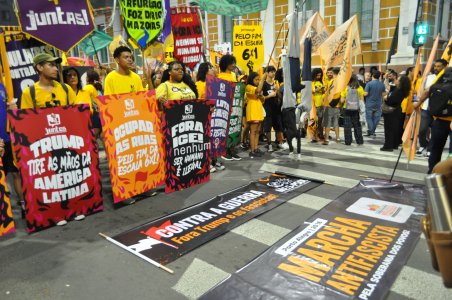
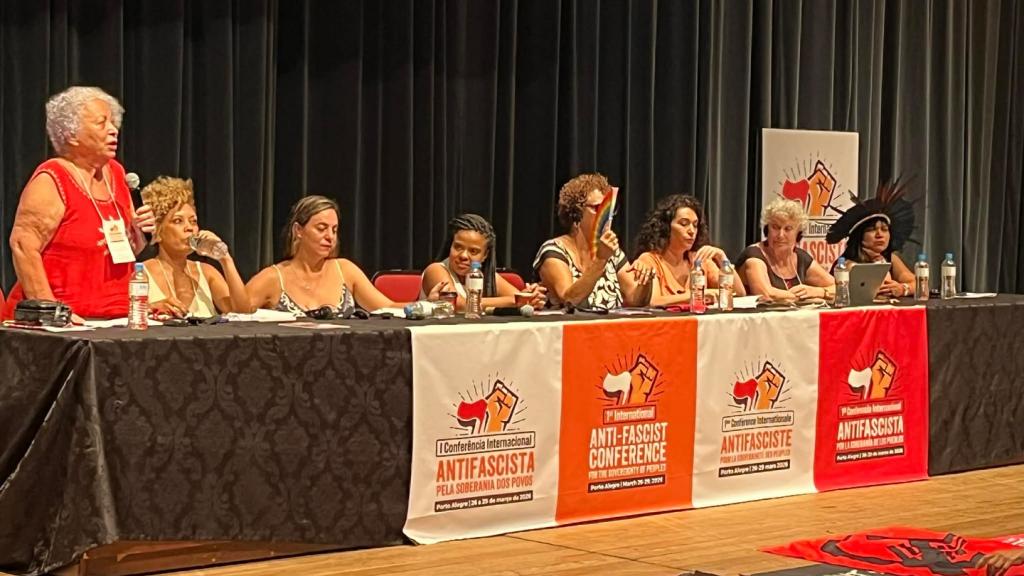
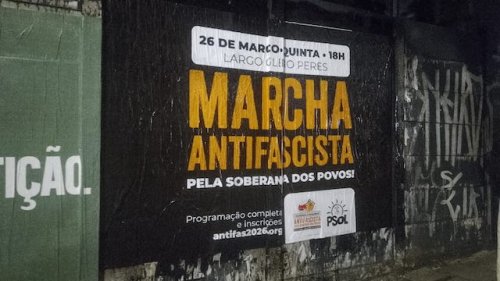
It is urgent that we share analyses, strengthen ties, and agree on concrete actions. Those are the goals that inspired the convening of an International Antifascist and Anti-imperialist Conference in the city of Porto Alegre, Brazil, from March 26 to 29, 2026.

The Porto Alegre conference is an important step on a much longer path. The undersigned organizations and individuals commit to continue, tirelessly and in the most unified way possible, the struggle against the rising far right and imperialist aggressions, which is an essential dimension of our emancipatory, socialist, ecological, feminist, anti-racist, and internationalist project.

As Che Guevara wrote to his children: “Above all, always be capable of feeling deeply any injustice committed against anyone, anywhere in the world. This is the most beautiful quality in a revolutionary.”

Sign the call here

Initial signatories:

Argentina
1. Atilio A. Boron, professor at the University of Buenos Aires and the National University of Avellaneda.
2. Verónica Gago, feminist activist and researcher at the University of Buenos Aires.
3. Julio Gambina, Corriente Politica de Izquierda - CPI (Left Political Current), ATTAC Argentina, CADTM AYNA.
4. Claudio Katz, professor at the University of Buenos Aires and researcher at CONICET.
5. Beverly Keene, Diálogo 2000-Jubileo Sur Argentina (Dialogue 2000-Jubilee South Argentina) and Autoconvocatoria por la Suspensión del Pago e Investigación de la Deuda (Coalition for the Suspension of Payment and Investigation of the Debt).
6. Claudio Lozano, President of the Instrumento Electoral por la Unidad Popular (Electoral Instrument for Popular Unity).
7. Jorgelina Matusevicius, representative of Vientos del Pueblo Frente por el Poder Popular (Winds of the People Front for Popular Power).
8. Felisa Miceli, Economist, Former Minister of Economy of Argentina 2005/2007.
9. Martín Mosquera, editor of Jacobin Latin America (Jacobinlat).
10. María Elena Saludas, member of ATTAC-CADTM Argentina, Corriente Politica de Izquierda - CPI (Left Political Current).

Australia
11. Federico Fuentes, editor of LINKS International Journal of Socialist Renewal.
12. Pip Hinman, Co-editor of Green Left.
13. Susan Price, Co-editor of Green Left.

Basque Country
14. Garbiñe Aranburu Irazusta, General Coordinator of the LAB Trade Union.
15. Igor Arroyo Leatxe, General Coordinator of the LAB Trade Union.
16. Josu Chueca, former professor at the UPV/EHU. Historical memory activist.
17. Irati Jiménez, parliamentarian in Navarre, EH Bildu.
18. Mitxel Lakuntza Vicario, general secretary of the ELA Sindikatua Trade Union.
19. Oskar Matute, deputy in the Congress of the Spanish state, EH Bildu.
20. Luisa Menendez Aguirre, anti-racist and feminist activist, Bilbao.
21. Amaia Muñoa Capron-Manieux, deputy general secretary of the ELA Sindikatua Trade Union.
22. Anabel Sanz Del Pozo, feminist activist, Bilbao.
23. Igor Zulaika, parliamentarian in the CAPV, EH Bildu.

Belgium
24. Vanessa Amboldi, Director of CEPAG popular education movement.
25. France Arets, retired history teacher, active in supporting undocumented people, CRACPE.
26. Eléonore Bronstein, federal secretary of the Mouvement Ouvrier Chrétien Brussels (Christian Labour Movement Brussels).
27. Céline Caudron, Gauche Anticapitaliste (Anticapitalist Left), union and feminist activist.
28. Giulia Contes, Co-president of the Coordination Nationale d’Action pour la Paix et la Démocratie – CNAPD (National Coordination for Action for Peace and Democracy).
29. Paul-Emile Dupret, jurist, former official of The Left in the European Parliament.
30. Pierre Galand, former senator, president of the Association Belgo-Palestinienne (Belgian-Palestinian Association), president of the Conférence européenne de coordination du soutien au peuple sahraoui – EUCOCO (European Conference on Coordination of Support for the Sahrawi People).
31. Corinne Gobin, professor at the Université libre de Bruxelles.
32. Henri Goldman, Union des progressistes juifs de Belgique (Union of Jewish Progressives of Belgium).
33. Jean-François Tamellini, general secretary of the trade union FGTB wallonne.
34. Éric Toussaint, spokesperson for CADTM international.
35. Felipe Van Keirsbilck, general secretary of the Centrale Nationale des Employés - CNE/CSC (National Employees’ Centre).
36. Arnaud Zacharie, lecturer at ULB and ULiège, general secretary of the Centre National de Coopération au Développement – CNCD (National Centre for Development Cooperation).

Benin
37. Émilie Atchaka, feminist, president of CADD Benin.

Bolivia
38. Gabriela Montaño, physician, former President of the Chamber of Deputies and Senators, former Minister of Health.

Brazil
39. Ricardo Abreu de Melo “Alemão”, FMG.
40. Luana Alves, black feminist, PSOL municipal councilor in São Paulo.
41. Frei Betto, writer.
42. Sâmia Bomfim, PSOL federal deputy.
43. Bianca Borges, president of UNE.
44. Ana Cristina Carvalhaes, Journalist, Inprecor magazine.
45. Raul Carrion, Historian, former deputy, member of the FMG and the Secretariat of International Relations of the PC of Brazil.
46. Rodrigo Dilelio, president of the Partido dos Trabalhadores (Worker’s Party) of the city of Porto Alegre; Organizing Committee.
47. Israel Dutra, Secretary of Social Movements of PSOL, member of the National Directorate of PSOL.
48. Olívio Dutra, Former Governor of the State of Rio Grande do Sul; Former Minister of Cities (PT).
49. Luciana Genro, state deputy of Rio Grande do Sul and president of the Lauro Campos/Marielle Franco Foundation.
50. Tarso Genro, Former Governor of the State of Rio Grande do Sul; Former Minister of Justice (PT).
51. Socorro Gomes, CEBRAPAZ and the World Peace Council.
52. Amanda Harumy, International and Latin American affairs analyst.
53. Elias Jabbour, Geographer and China specialist.
54. Joao Machado, economist, PSOL.
55. Fernanda Melchionna, federal deputy of RS.
56. Maria do Rosário Nunes, Federal Deputy; Former Minister of Human Rights (PT).
57. Misiara Oliveira, assistant secretary of International Relations / National Executive Commission (PT).
58. Raul Pont, historian, former mayor of Porto Alegre, PT.
59. Ana Maria Prestes, historian, PhD in Political Science and secretary of International Relations of the CC of the PC of Brazil.
60. Edson Puchalski, president of PC do B Rio Grande do Sul.
61. Roberto Robaina, councilor and president of PSOL in Porto Alegre.
62. Miguel Rossetto, PT leader in the Legislative Assembly of Rio Grande do Sul.
63. Juliana Souza, PT leader in the Municipal Council of Porto Alegre.
64. Joao Pedro Stedile, social activist, Movimento dos Trabalhadores Rurais Sem Terra – MST (Landless Rural Workers Movement).
65. Gabi Tolotti, president of PSOL Rio Grande do Sul.
66. Thiago Ávila, international coordination of the Global Sumud Flotilla for Gaza.

Catalonia
67. Ada Colau, social activist, former Mayor of Barcelona, President of the Sentit Comú Foundation.
68. Gerardo Pisarello, deputy in the Congress for Comuns. Professor of law. University of Barcelona.
69. Daniel Raventós, professor at the University of Barcelona. Editorial Board of the magazine Sin Permiso and President of the Red Renta Básica (Basic Income Network).
70. Carles Riera, sociologist, former deputy and member of the Board of the Parliament of Catalonia for the CUP (2016-2024), president of the FDC Foundation, president of the Global Network for the Collective Rights of Peoples.

Chile
71. Daniel Jadue, Communist Party of Chile.
72. Jorge Sharp Fajardo, former mayor of Valparaíso, member of Transformar Chile (Transform Chile).

Colombia
73. Wilson Arias, senator of the Republic.
74. Isabel Cristina Zuleta, senator of the Pacto Histórico (Historical Pact).

Congo, Democratic Republic of
75. Yvonne Ngoyi, feminist, president of the Union of Women for Human Dignity (UFDH).

Ivory Coast
76. Solange Kone Sanogo, President of the Forum national sur les stratégies économiques et sociales - FNSES (National Forum on Economic and Social Strategies), National Coordination of the World March of Women.

Cuba
77. Rafael Acosta, writer, academic and researcher.
78. Aurelio Alonso, deputy director of the magazine Casa de las Américas.
79. Katiuska Blanco, writer and journalist, RedEDH.
80. Olga Fernández Ríos, Institute of Philosophy and Vice President of the Academy of Sciences of Cuba.
81. Norma Goicochea, president of the Asociación Cubana de las Naciones Unidas (Cuban Association of the United Nations), member of the Red en Defensa de la Humanidad - REDH (Network in Defense of Humanit).
82. Georgina Alfonso González, Dr., Director of the Institute of Philosophy.
83. Rafael Hernández, political scientist and professor. Director, Temas magazine.
84. Marilín Peña Pérez, popular educator, Dr. Martin Luther King Memorial Center (CMLK).
85. Pedro Prada, journalist, researcher and diplomat.
86. Abel Prieto, writer, former Minister of Culture, deputy to the National Assembly of People’s Power, president of Casa de las Américas (House of the Americas).
87. Raul Suárez, Rev., pastor emeritus of the Ebenezer Baptist Church, Founder of the Dr. Martin Luther King, Jr. Memorial Center.
88. Marlene Vázquez Pérez, director of the Center for Martí Studies.

Denmark
89. Per Clausen, member of the European Parliament, GUE/NGL, Red-Green Alliance.
90. Søren Søndergaard, member of Parliament, Red-Green Alliance.

Ecuador
91. Alberto Acosta, former president of the Constituent Assembly in 2007-2008.

France
92. Manon Aubry (LFI), co-president of the Left group (The Left) in the European Parliament.
93. Ludivine Bantigny, historian.
94. Olivier Besancenot, NPA - l’Anticapitaliste.
95. Leila Chaibi, member of the European Parliament, La France Insoumise (LFI), The Left.
96. Fabien Cohen, General Secretary of France Amérique Latine-FAL.
97. Hendrik Davi, deputy in the National Assembly of the ecological and social group and member of APRES.
98. Penelope Duggan, member of the bureau of the Fourth International, editor-in-chief of International Viewpoint.
99. Annie Ernaux, Nobel Prize in Literature 2022.
100. Angélique Grosmaire, General Secretary of the Fédération Sud PTT.
101. Rima Hassan, member of the European Parliament, LFI.
102. Michael Löwy, sociologist, ecosocialist.
103. Jean-Luc Mélenchon, La France Insoumise.
104. Ugo Palheta, editor of the Revue ContreTemps, author of “La nouvelle internationale fasciste”.
105. Patricia Pol, academic, representative of Attac France on the international Council of the World Social Forum.
106. Raymonde Poncet Monge, senator Les Écologistes (The Ecologists).
107. Thomas Portes, LFI deputy in the National Assembly.
108. Christine Poupin, Spokesperson for NPA - l’Anticapitaliste.
109. Denis Robert, founder and editorial director of Blast, independent media outlet.
110. Catherine Samary, researcher in political economy, specialist on the Balkans, member of the FI and the ENSU (European Network in Solidarity with Ukraine).
111. Aurélie Trouvé, deputy in the National Assembly, La France Insoumise (The Unsubmissive France).
112. Cem Yoldas, Spokesperson for the Jeune Garde Antifasciste (Young Anti-Fascist Guard).
113. Sophie Zafari, FSU trade unionist.

Galicia
114. Ana Miranda, member of the European Parliament, Bloque Nacionalista Galego – BNG (Galician Nationalist Bloc).

Germany
115. Angela Klein, chief editor in charge of the magazine SOZ.
116. Carola Rackete, biologist, activist, ship captain arrested in Italy in June 2019 for protecting refugees, former member of the European Parliament.

Greece
117. Zoe Konstantopoulou, lawyer, head of the Political Movement “Course to Freedom”, member of Parliament, former President of the Greek Parliament, initiator-president of the Truth Committee on Public Debt.
118. Nadia Valavani, economist and author, alternate finance minister in 2015 and former member of the Greek Parliament.
119. Yanis Varoufakis, leader of MeRA25, co-founder of DiEM25, professor of economics – University of Athens.

Haiti
120. Camille Chalmers, professor at the Université d’Etat d’Haiti (UEH), director of PAPDA, member of the regional executive committee of the Assemblée des Peuples de la Caraïbe – APC (Assembly of Caribbean Peoples), member of the Comité national haïtien pour la restitution et les réparations – CNHRR (Haitian National Committee for Restitution and Reparations).

India
121. Sushovan Dhar, Alternative Viewpoint magazine, member of the IC of the World Social Forum and of CADTM India.
122. Vijay Prashad, director, Tricontinental Institute for Social Research.
123. Achin Vanaik, retired professor from the University of Delhi and founding member of the Coalition for Nuclear Disarmament and Peace (CNDP).

Indonesia
124. Rahmat Maulana Sidik, Executive Director, Indonesia for Global Justice (IGJ).

.Iraq
125. Noor Salem, radio journalist.

Ireland
126. Paul Murphy, member of Parliament.

Italy
127. Eliana Como, member of the National Assembly of the CGIL union.
128. Nadia De Mond, feminist activist and researcher, Centro Studi per l’Autogestione (Center for Self-Management Studies).
129. Domenico Lucano, mayor of Riace in Calabria, member of the European Parliament (left group The Left), persecuted for his humanist policy of welcoming migrants and refugees by the Italian judicial system and the far-right Interior Minister Mr. Salvini, unjustly sentenced to 13 years in prison before winning his appeal after a long legal battle and thanks to solidarity.
130. Cristina Quintavalla, philosophy teacher, decolonial activist, against privatizations and public debt.
131. Ilaria Salis, anti-fascist activist, unjustly imprisoned in Budapest until her election in June 2024, member of the European Parliament (The Left).

Kenya
132. Ikal Angelei, Dr., academic activist for indigenous rights.
133. David Otieno, General Coordinator, Kenya Peasants League and Convening Chair of the Civil Society Reference Group, member of La Vía Campesina.

La Réunion/France
134. Françoise Vergès, author, decolonial feminist activist.

Lebanon
135. Sara Salloum, co-founder and president of AgriMovement in Lebanon.

Luxembourg
136. Justin Turpel, former deputy of ’déi Lénk – la Gauche’ (The Left) in the Chamber of Deputies.
137. David Wagner, member of déi Lénk (The Left) in the Chamber of Deputies.

Madagascar
138. Zo Randriamaro, President of the Movement of the Peoples of the Indian Ocean.

Malaysia
139. Jeyakumar Devaraj, President of the Socialist Party of Malaysia.

Mali
140. Massa Kone, from the organizing committee of the World Social Forum 2026 in Benin.

Martinique/France
141. Mireille Fanon-Mendes-France, co-president of the Frantz Fanon International Foundation.
142. Frantz Fanon Foundation

Mexico
143. Armando Bartra, writer, sociologist, philosopher and political analyst.
144. Verónica Carrillo Ortega, member of the Promotora Nacional para la Suspensión de la Deuda Pública en México (National Coalition for the Suspension of Public Debt in Mexico), CADTM AYNA.
145. Ana Esther Ceceña, coordinator of the Latin American Geopolitics Observatory and the Latin American Information Agency. National Autonomous University of Mexico.
146. Martín Esparza Flores, General Secretary of the Sindicato Mexicano de Electricistas – SME (Mexican Electricians Union).
147. Diana Fuentes, philosopher and political analyst, full-time professor-researcher at the Metropolitan Autonomous University.
148. María Auxilio Heredia Anaya, trade unionist and feminist, Autonomous University of Mexico City (UACM).
149. Ana López Rodríguez, a founder of the PRT and peasant leader from Sonora, member of the MSP.
150. Sara Lovera Lopez, journalist/feminist.
151. Pablo Moctezuma Barragán, political scientist, historian and urban planner; researcher at the Metropolitan Autonomous University, spokesperson for the Congreso por la Soberanía (Congress for Sovereignty).
152. Massimo Modonesi, historian, sociologist and political scientist, Full Professor at the Faculty of Political and Social Sciences of the National Autonomous University of Mexico (UNAM).
153. Humberto Montes de Oca, secretary of Foreign Affairs of the Sindicato Mexicano de Electricistas – SME (Mexican Electricians Union).
154. Magdalena Núñez Monreal, Federal Deputy in the Congress of Mexico.
155. César Enrique Pineda, sociologist and activist, teacher at the Faculty of Social Policies of the National Autonomous University of Mexico.
156. Mónica Soto Elízaga, feminist and co-founder of the Promotora Nacional para la Suspensión de la Deuda Pública en México (National Coalition for the Suspension of Public Debt in Mexico), CADTM AYNA.
157. Paco Ignacio Taibo II, writer and Director of the Fondo de Cultura Económica.
158. Carolina Verduzco Ríos, anthropologist, professor at the National Polytechnic Institute, member of Comité 68 (Committee 68).

Morocco
159. Fatima Zahra El Belghiti, member of Attac CADTM Morocco.

Nigeria
160. Emem Okon, founder and director of the Kebetkache Women’s Development and Resource Centre.

Pakistan
161. Sheema Kermani, Performing Artist, human rights defender.

Palestine/France
162. Salah Hamouri, Franco-Palestinian lawyer, former political prisoner for 10 years in Israeli prisons, deported to France in 2022.

Peru
163. Evelyn Capchi Sotelo, Secretary of National Organization of NUEVO PERÚ POR EL BUEN VIVIR (New Peru for Good Living).
164. Jorge Escalante Echeandia, political responsible for the SÚMATE current, national leader of the organization NUEVO PERÚ POR EL BUEN VIVIR (New Peru for Good Living).
165. Yolanda Lara Cortez, Feminist and socio-environmental leader of the province of Santa Ancash.
166. Flavio Olortegui, Leader of the Federación Nacional de trabajadores textiles del Perú (National Federation of Textile Workers of Peru).

Philippines
167. Walden Bello, co-chair of the board of directors, Focus on the Global South.
168. Jen Cornelio, President of Inged Fintailan (IP/Women’s Organization of Mindanao).
169. Dorothy Guerrero, consultant, African Womin Alliance; Co-chair of the board of directors of the London Mining Network.
170. Reihana Mohideen, International Office, Partido Lakas ng Masa-PLM (Party of the Laboring Masses).
171. Lidy Nacpil, Coordinator of the Asian People’s Movement on Debt and Development.
172. Reyna Joyce Villagomez, General Secretary of the Rural Poor Movement.

Portugal
173. Mamadou Ba, researcher, leader of SOS Racismo Portugal (SOS Racism Portugal).
174. Jorge Costa, journalist, member of the national leadership of Bloco de Esquerda (Left Bloc).
175. Mariana Mortágua, economist, Bloco de Esquerda (Left Bloc).
176. José Manuel Pureza, coordinator of Bloco de Esquerda (Left Bloc).
177. Alda Sousa, former MEP of Bloco de Esquerda (Left Bloc).

Puerto Rico
178. Manuel Rodríguez Banchs, spokesperson for the Instituto Internacional de Investigación y Formación Obrera y Sindical - iNFOS (International Institute for Labor and Trade Union Research and Training).
179. Rafael Bernabe, author and university professor; former member of the Puerto Rico Senate for the Movimiento Victoria Ciudadana (Citizen Victory Movement).

Senegal
180. Aly Sagne, founder and director of Lumière Synergies pour le Développement (Light Synergies for Development).

South Africa
181. Mercia Andrews, coordinator of the Assembly of Rural Women of Southern Africa, founding member of the Palestine solidarity campaign and active member of BDS South Africa.
182. Patrick Bond, Distinguished Professor in the Department of Sociology at the University of Johannesburg, where he directs the Centre for Social Change.
183. Samantha Hargreaves, founder and director of WoMin.
184. Trevor Ngwane, President, United Front, Johannesburg.

Spain
185. Fernanda Gadea, coordinator of ATTAC Spain.
186. Estrella Galán, Member of the European Parliament for SUMAR, The Left group.
187. Manuel Garí Ramos, ecosocialist economist, member of the Advisory Council of the magazine Viento Sur.
188. Vicent Marzà i Ibáñez, deputy in the European Parliament for Compromís, Valencian Country.
189. Fátima Martín, journalist, editor of the online newspaper FemeninoRural.com, member of CADTM.
190. Irene Montero, political secretary of PODEMOS, MEP and former Minister of Equality.
191. Jaime Pastor, editor of the magazine Viento Sur.
192. Manu Pineda, former deputy to the European Parliament and head of International Relations of the Communist Party of Spain.
193. Olga Rodríguez, journalist and writer.
194. Teresa Rodríguez, Spokesperson for Adelante Andalucía (Go ahead, Andalusia), secondary and high school teacher.
195. Isabel Serra Sánchez, Deputy in the European Parliament for Podemos/The Left.
196. Miguel Urban, former MEP, member of the editorial board of the magazine Viento Sur.
197. Koldobi Velasco Vázquez, participant in the Alternativa antimilitarista y del Movimiento Objetor de Conciencia/Acción Directa No Violenta (Anti-militarist Alternative and the Conscientious Objector Movement/Non-Violent Direct Action). University professor of Social Work, Canary Islands.

Sri Lanka
198. Swasthika Arulingam, President of the United Federation of Labour.
199. Kalpa Rajapaksha, Dr., senior lecturer, Department of Economics, University of Peradeniya.
200. Amali Wedagedara, Bandaranaike Centre for International Studies.

Switzerland
201. Sébastien Bertrand, Enseignant.e.s pour le climat (Teachers for the climate), Syndicat des Services Publics (Swiss Union of Public Service Personnel) and member of solidaritéS Geneva.
202. Hadrien Buclin, deputy of Ensemble à Gauche (Together on the Left) in the Parliament of the Canton of Vaud.
203. Marianne Ebel, World March of Women and solidaritéS Neuchâtel.
204. Jocelyne Haller, solidaritéS, former cantonal deputy of Geneva.
205. Gabriella Lima, member of CADTM Switzerland and the Ensemble à Gauche (Together on the Left) platform.
206. Mathilde Marendaz, deputy of Ensemble à Gauche (Together on the Left) in the Parliament of the Canton of Vaud.
207. Aude Martenot, researcher and associative coordinator.
208. Mathieu Menghini, historian of cultural action.
209. Françoise Nyffler, Feminist Strike Collective Switzerland.
210. Stefanie Prezioso, former deputy, Swiss Parliament.
211. Juan Tortosa, spokesperson for CADTM-Switzerland and member of SolidaritéS Switzerland.
212. María Wuillemin, ecofeminist activist, member of the Colectivo Jaguar (Jaguar Collective).
213. Jean Ziegler, writer, former parliamentarian, former UN Special Rapporteur on the right to food.

Syria
214. Joseph Daher, academic and specialist in the political economy of the Middle East (resident in Switzerland).
215. Munif Mulhen, left-wing political activist. Former political prisoner for 16 years during the Hafez al-Assad regime (1970-2000).

Tunisia
216. Imen Louati, Tunisian activist, one of the founding members of the Arab food sovereignty network (Siyada).
217. Layla Riahi, member of the Siyada network for food sovereignty.

United Kingdom
218. Gilbert Achcar, professor emeritus, SOAS, University of London.
219. Jeremy Corbyn, member of Parliament, co-founder of Your Party.
220. Michael Roberts, economist and author.
221. Zarah Sultana, member of Parliament, co-founder of Your Party.

United States
222. David Adler, Deputy General Coordinator of the Progressive International.
223. Anthony Arnove, editor. Tempest Magazine and Haymarket Books.
224. Tithi Bhattacharya, professor of History, Purdue University, co-author of Feminism for the 99% : A Manifesto.
225. Robert Brenner, professor emeritus of history and director of the Center for Social Theory and Comparative History at the University of California, Los Angeles (UCLA).
226. Vivek Chibber, professor of sociology at New York University. Editor of Catalyst.
227. Olivia DiNucci, anti-militarism and climate justice organizer based in Washington D.C. and writer, affiliated with Code Pink, a grassroots feminist organization working to end U.S. wars and militarism.
228. Dianne Feeley, retired auto worker (UAW Local 235), member of Solidarity, Metro Detroit DSA and editor of Against the Current magazine.
229. Nancy Fraser, professor emerita, New School for Social Research and member of the Editorial Committee of New Left Review, co-author of Feminism for the 99% : A Manifesto.
230. Michael Hudson, professor of economics, emeritus, UMKC, and author of Super Imperialism.
231. Neal Meyer, member of DSA and editor for Socialist Call.
232. Christian Parenti, investigative journalist, scholar, author and contributing editor at The Nation.
233. Jana Silverman, Professor of International Relations, Universidade Federal do ABC (UFABC) and co-chair, Democratic Socialists of America (DSA) International Committee.
234. Bhaskar Sunkara, founding editor of Jacobin, president of The Nation magazine.
235. Suzi Weissman, professor of Political Science at Saint Mary’s College of California.

Venezuela
236. Luis Bonilla-Molina, director of Otras Voces en Educación (Other Voices in Education).

Saturday, September 13, 2025


‘We’re fighting, and we’re fighting to win’: Interview with Cyn Huang on the DSA National Convention


First published at Revista Movimento.

The DSA National Convention took place two weekends ago in Chicago, Illinois. The event brought together 1,200 delegates and around 1,600 attendees from across the country. Without a doubt, it was the most significant socialist gathering in the United States in recent years, occurring right in the middle of the Trump administration and its threats to both the American and global working class.

Our column spoke with Cyn Huang, a DSA member since 2019, currently active in the East Bay chapter in California. Cyn is part of Bread & Roses, a Marxist caucus within the DSA, a rank-and-file union activist, and an internationalist. He served as a delegate at the Convention and shared his insights with us on the event’s importance, its main resolutions, strengths, weaknesses, and challenges.

Cyn, thank you very much for the interview. Could you start by talking about the contextual background of the convention? At what moment did it take place, considering the situation in the United States, in the world, and also the internal development of DSA?

Thanks for having me! I rely quite a bit on the column “United States Today” in Fundação Lauro Campos and Marielle Franco to understand the world, so I’m glad to return the favor in a small way.

To speak to your question: DSA’s national convention really could not have taken place at a more consequential moment. It’s a moment marked by the growth of the far right, and by the bankruptcy of centrist and center-left regimes that essentially paved the way for that growth. Add to this the various economic, social, and ecological crises that have been increasingly visible since the 2008 financial crash.

Just in the past week or two, we’ve seen the international far right make very violent escalations. Of course, in Israel, with the backing of the U.S. and much of the Western world, we see the takeover of Gaza City, which is sure to result in incalculable death and destruction. In the U.S., Trump is using the power of the state to shore up the US ruling class’s dominance over the world. Domestically, that’s taken many forms: deployment of the National Guard to Washington, D.C., overhauling the judicial system, installing anti-scientific yes-men ready to give cover to the worst of Trump’s agenda. Internationally, the trade war has entered a new phase. Trump has bullied “allies” into crippling deals and issued direct attacks on BRICS countries — Brazil, as you know well, but also India, as a purchaser of Russian oil.

Conversely, though it hasn’t risen to the level of the challenge yet, the broad and fragmented anti-fascist movement has given important responses. Opposition to Trump has been growing both internationally and domestically through Bernie and AOC’s “Fight the Oligarchy” tour, protests at Democratic and Republican town halls, massive street mobilizations on symbolic days like “Hands Off” and “No Kings,” confrontations with ICE, and a lot of union-led initiatives.

This week, Zohran, the winner of NYC’s Democratic Party mayoral primary, has been touring the five boroughs to polarize the city against Trump. In the UK, over 700,000 people have expressed interest in an alternative to the Labour Party, which, like many other European parties of social democratic origin, has administered the most brutal austerity against the British working class and laid the groundwork for the rise of the far-right. In Brazil, a new front for anti-imperialist struggle has opened after Trump imposed a 50% tariff rate as punishment for the prosecution of long-time ally and coup plotter Jair Bolsonaro. And this weekend in the United States, the epicenter of global capitalism, there was a powerful reunion of about 1600 socialists who recommitted to the fight for a better world.

The convention comes at a unique moment in DSA’s growth. The theme and title of the convention –– “Rebirth and Beyond: Reflecting on a decade of DSA’s growth and preparing for a decade of party building” was fitting. The contemporary U.S. left really only began about a decade ago, on the backs of Trump’s election and Bernie’s presidential campaign. It’s been a tumultuous decade, with many challenges, but many lessons and victories to claim as well.

Though DSA is still not a decisive national force, it is a significant player in many meaningful processes, from Zohran’s primary victory in NYC, to union reform struggles, the pro-Palestine student encampments, and much more. Compared to 10 years ago, we are much more rooted and present across a diversity of struggles, which has important implications for recruitment, our political perspectives, the quality of leaders we develop, and our impact on the world. Internally, we have made progress on several questions, including democratic control over staff, the growth of caucuses, and the development of political –– not just organizational –– leadership.

I know a decade may not sound like a lot to Brazilian activists, who inherited a more sustained radical tradition, but it is very significant for us. The generation of DSA activists that began between 2016 and 2019 started at a very high point. To go from that to the political confusion and isolation caused by the pandemic and the collapse of the Sanders–Corbyn–Syriza-Podemos moment was very difficult. It was never inevitable that the left would survive and still have victories to claim on the other side.

The fact that we have an organization that is still fighting and growing against all odds is a very precious thing.

What were the main resolutions approved at the Convention?

The convention took important stances on many critical questions. I’ll try to summarize them using four main themes: Palestine, internal organizational questions, and the horizon of 2028, which can be analyzed either with an electoral or a labor emphasis.

Let’s start with the latter. The year 2028 had a lot of significance at this convention. It’s the year of the next presidential election, and it’s become a horizon that many elements of the left and labor movement have set their sights on, especially after UAW President Shawn Fain called for coordinated action and aligned contract expirations on May Day.

The debates around May Day and the 2028 elections helped clarify the organization’s thinking on our relationship to the Democratic Party, the role of DSA as an alternative, expectations for elected officials, and how electoral contests can be used to advance our broader political work. There’s a strong consensus in the organization that building an independent workers’ party is our aspiration, but there are differences about how that will come about. Some differences were explicitly debated; others could be inferred from resolutions that didn’t make it onto the floor.

These differences span a range of questions: how different tendencies read the balance of forces in society, what timeline we expect for a break from the Democrats, what role DSA should play in fostering a new party, and what kind of party that would be — a broad workers’ party or something explicitly socialist. Despite these differences, there’s a huge appetite to play a bigger role in national politics and to use nationally significant contests — like the presidential election, congressional elections, and Zohran’s mayoral race — to grow.

One resolution called for the organization to explore and prepare for a 2028 presidential run by the left. Another amendment to the National Electoral Commission’s consensus resolution proposed identifying five DSA members to run for congressional seats in 2028 with a clear platform centered on five key demands: affordability, Medicare for All, ending political corruption, reducing U.S. militarism, and so on.

It’s worth elaborating a bit on these consensus resolutions, because they’re a major way priorities are advanced in DSA. We have standing committees around long-term priorities — the National Electoral Commission, the International Commission, and the National Labor Commission. These bodies, made up of members from various tendencies, carry the main organizational weight behind national initiatives. They typically draft resolutions expected to have broad support at the convention.

For example, the electoral resolution emphasized running insurgent campaigns, promoting tactics that build DSA — like having elected members endorse each other and use their offices to empower struggles from below. The labor consensus resolution was also comprehensive and ambitious. It promoted more labor solidarity actions, standing on picket lines with workers, supporting members who are organizing in their workplaces, and pushing union reform struggles in more democratic, militant, and solidaristic directions. This is especially important since the union reform movement hit some roadblocks after the strike against the Big Three automakers in North America. The resolution also emphasized educating coworkers and moving unions to make 2028 a big priority. Right now, that call is mainly coming from leading elements of the labor movement, not yet from a broad grassroots campaign — so this was a welcome step.

Palestine was a dominant theme throughout the convention. It wasn’t just reflected in the votes and debates, but also Rashida Tlaib’s keynote speech, the self-organized breakouts, the experiences of the delegates. In terms of resolutions that passed, many focused on discipline, expectations for officials, red lines for expulsions, and the like. These are not unimportant matters, given the urgency of stopping genocide and the disappointing actions of figures like AOC on funding for the Iron Dome. But the strategic, outward-facing elements of the discussion were a bit lacking. Another resolution debated what Palestinian self-determination ultimately looks like. The convention affirmed a more ambiguous proposal that stopped short of advocating a secular, democratic, one-state solution. This outcome is consistent with longstanding debates in DSA: the organization easily affirms the primacy of fighting U.S. imperialism “in the belly of the beast,” but it has been more hesitant to engage critically with other international processes.

Lastly, on internal organization, many ongoing improvements were crystallized at this convention. Delegates supported efforts to subordinate staff to the will of the convention and membership, and to provide stipends so elected leaders can carry out priorities full-time. We defeated a proposal to move to a one-member-one-vote system, which would have depoliticized our national elections. And importantly, we accepted organizational reforms proposed by the Democracy Commission — a cross-tendency body that studies the internal democracy of parties, organizations, and social movements worldwide, drawing lessons to make DSA better. The overall trend is a desire for a more democratic and militant political culture.

Of course, approving resolutions is just the first step. Prioritization and implementation depend on the direction of the new leadership and the self-organization of the membership. Questions like our overarching strategy to confront Trump, our orientation toward Zohran’s campaign in New York City, and how we update DSA’s program are still under construction.

Sixteen hundred attendees, including twelve hundred delegates, is quite a large number. Could you tell us who these people are in general? Who are the DSA activists — what is their background, and how do they organize to fight for socialism?

The convention was a big affair — the biggest since DSA’s revitalization — with about 1,600 people in the building that weekend. Around 1,200–1,300 of them were elected from their local chapters as delegates to the National Convention. Those are the people with the power to deliberate and vote on resolutions on the floor.

But there was also a broader set of participants who contributed to the dynamism of the event: staff, volunteers, international guests, representatives of allied organizations, and DSA members who weren’t delegates but came to promote projects — like the National Electoral Commission or the Labor Commission. Others were there on behalf of initiatives aligned with DSA’s mission, such as the Emergency Workplace Organizing Committee, the Rank-and-File Project, and important voices in the left media ecosystem — Jacobin, Haymarket Books, and so on.

The number of delegates each chapter could send was proportional to chapter size, so we saw a big concentration from New York City, Los Angeles, and Chicago, the host city. But delegates also came from places beyond the metropolitan centers — I had conversations with delegates from Memphis, Tennessee, and Nebraska.

Organizers brought a wide range of experiences. Some are active in the labor movement as workplace activists, union reformers, leaders of solidarity actions. Others were deeply involved in the Palestine movement, whether on campus, in unions, in the streets, or on city council. There was also a visible layer of former student activists — reflected in important NPC candidates like Alex, Cerena, and Eleanor. And there was a big chunk of delegates mainly focused on building DSA itself: leading their chapters, running new member cohorts, organizing political education events, etc.

With the power of hindsight, you can see distinct “generations” or layers within the organization. The 2016–2018 generation, people who have been active since DSA’s revitalization, were there. Then there’s a middle layer that came in through Black Lives Matter, UAW strike solidarity campaigns, or the wave of workplace unionization at Starbucks and other retail stores. A new wave of growth can be attributed to Palestine solidarity and the excitement around Zohran Mamdani’s campaign for mayor of New York — although the delegate elections took place before his victory, so its full impact on DSA hasn’t played out yet.

Another important trend is ideological polarization. A decade ago, it was almost taboo to organize tendencies inside DSA. But this convention saw the largest number of organized formations since our rebirth, with a very complex balance of forces shaping the new national leadership. Many noted that more delegates this time were affiliated with a caucus or influenced by a caucus. That made outcomes more predictable, and it was harder to find persuadable delegates.

As for the balance of tendencies, people often describe three main blocs. There’s a more moderate or “right-wing” current, which has an electoral emphasis and is agnostic about breaking from the Democrats. On the other side, a far-left current has cohered around questions of discipline, Palestine, and a campist approach to international politics. And then there’s a Marxist center or center-left. It’s not a simple spectrum from right to left — each bloc is capable of advancing its own politics and polarizing the organization in different ways.

Right now, there isn’t an outright governing majority on the NPC. On each issue, a majority will have to be constructed depending on how different tendencies align. The development of distinct political poles is very valuable, but it is equally important to preserve DSA’s big-tent character and find opportunities for common initiatives in this next period.

What were the main conclusions drawn by Bread & Roses about the convention? From your point of view, what are the main challenges for DSA now?

I think everyone agrees that having a strong, independent, and internationalist DSA — rooted in the diverse struggles of the U.S. working class — is more important than ever. That’s true not only because of the crisis we’re living through, but also because of the opportunities it creates, including the historic unpopularity of the Democratic Party.

Right now, the main challenge is building opposition to the Trump administration on all fronts: in the student movement, the labor movement, Palestine solidarity, the defense of public services, the federal workforce, and LGBTQ rights. Our task is to broaden these struggles as much as possible while helping them develop the kind of independent, mass-action politics, democratic spaces, and solidarity needed to achieve their goals.

The solution isn’t as simple as electing Democrats in the 2026 midterms or just showing up to a protest once or twice. DSA members understand that facing the scale of the attacks will take more fights, more coordination, and more imagination. That’s why initiatives like the cross-organizational Political Exchange at DSA’s convention are so important. The political exchange was a new attempt to build links between DSA, partner organizations, and the broader working class — a big step forward in finding common initiatives for the struggle against Trump and for a better world.

Despite some heated debates, the convention was a powerful and unifying experience. And for me, the most striking impression is that, against all odds, socialists have made it clear: we’re fighting, and we’re fighting to win.

We are facing in Brazil the resurgence of the anti-imperialist struggle, considering the threats Trump has been making to Brazilian sovereignty. The new neofascist far right is organizing worldwide. In conclusion, what message would you like to convey to Brazilian activists at this moment?

Our struggles are connected. All around the world, the working class is fighting for self-determination. That struggle takes on different forms depending on the place, but all of our struggles are linked by that fundamental fact.

From our standpoint in the US, a regime that supports Israel in orchestrating and conducting a genocide, a regime that plunges the world into economic misery through punitive tariffs, is not a regime that works in our interests. If the working class here had the power to rule, we would use it for solidarity and cooperation across the international economy, to strengthen public services, and to improve people’s everyday lives.

That’s why we are laser-focused on bringing down Trump, whose administration poses the greatest threat to people’s autonomy around the world. If we succeed in pushing back against his administration “in the belly of the beast,” it will give working people around the globe more space to fight.

We see your struggles in Brazil. We followed the mobilizations against Trump’s tariffs and the Bolsonarists who do his dirty bidding there. We see you connecting the tariffs to the existential threat of climate change and predatory extractivist mining projects the Brazilian government is considering. Watching you assert yourselves strengthens our struggle here in the U.S., and we are in this fight with you until the end.


Thursday, October 31, 2024

Brazil trial begins over murder of iconic activist Franco


By AFP
October 30, 2024

L'élue Marielle Franco pendant une séance du conseil municipal de Rio de Janeiro en février 2017, moins d'un an avant son assassinat - Copyright Rio de Janeiro Municipal Chamber/AFP/File Renan OLAZ


Louis GENOT

Two ex-police officers went on trial in Brazil on Wednesday over the 2018 assassination of charismatic black LGBT activist Marielle Franco, a Rio de Janeiro councilor who was gunned down in an attack that shocked the country.

Franco, who grew up in a Rio slum and was an outspoken critic of police brutality and of militia actions in poor neighbourhoods, was 38 at the time of her death.

In posterity she has become an icon of the fight against racism and for the welfare of people living in the country’s gritty favelas.

Ronnie Lessa and Elcio Queiroz, both former military police officers, have already admitted to killing her and her driver, Anderson Gomes, in a drive-by shooting in central Rio on March 14, 2018.

The trial is being closely watched for any revelations it may yield over who ordered the hit.

Congressman Chiquinho Brazao and his brother Domingos Brazao, have been charged with masterminding the attack, based on testimony from Lessa, who said they offered him a big reward to kill Franco on behalf of militias.

The pair, who deny the charges, are still under investigation.

“Today is the first step towards justice being served. We must not trivialize the loss of the lives that were taken from us,” her daughter Luyara Santos, 25, told a rally outside the courthouse.

“After all this time I still feel as I did on the day my daughter was taken from me,” Franco’s mother Marinete Silva, told the gathering.

She was joined by her daughter, Marielle’s sister Anielle Franco, who is Brazil’s minister for racial equality.

Lessa has confessed to firing on Franco’s car with a machine gun, while Queiroz has confessed to being the driver during the attack.

The pair appeared in court by video link-up from prison.

Prosecutors are seeking the maximum sentence of 84 years imprisonment for each.

The seven jurors have been sequestered for the duration of the trial to prevent them being exposed to outside influences.

Besides campaigning for the rights of young black Brazilians, women and members of the LGBT community, Franco had frequently denounced the militia squads that sow terror in poor communities, with the complicity of police officers and politicians.

Her former PR manager Fernanda Chaves, who was in the car at the time of the attack, told the court her first thoughts were that they had been caught “in the middle of a shootout between the police and drug dealers”.

When the shooting stopped, she managed to stop the car and get out to call for help, covered in blood and broken glass.


– Seeking answers –


Around 200 people gathered outside the courthouse carrying placards with messages such as “We want justice for Marielle and Anderson.”

“Being here is an act of resistance. As a black woman I must be present to make my voice heard and show important Marielle and Anderson were and still our in our lives,” Geovanna Januario, a 26-year-old geographer told AFP outside the courthouse.

Like many of the demonstrators Januario was holding a sunflower, a flower which Franco had made her personal marker.

“What happened to her was extremely brutal,” Lucas Barbosa, a 27-year-old journalism student said.

“Years have passed without any answers being provided. It is important to get those answers as quickly as possible to put those people in jail,” he said.

Last week, the Brazao brothers were questioned by the Supreme Court, as was former Rio police chief Rivaldo Barbosa, who is accused of obstructing the investigation into Franco’s death.

He denies the allegations.

Amnesty International hailed the trial as “an important step” but said “true justice” would only come about when “all those responsible for the crime, including its masterminds” had been held to account.

Sunday, June 09, 2024


Brazilian socialist MP: Rio Grande do Sul tragedy caused by capitalism

June 6, 2024
GREENLEFT WEEKLY
AUSTRALIA
Issue 
FacebookXTelegramEmailPrin
group of people in flood affected area

Luciana Genro with members of a flood affected community in 

Rio Grande do Sul. Inset: Luciana Genro. 

Photo: lucianagenro.com.br

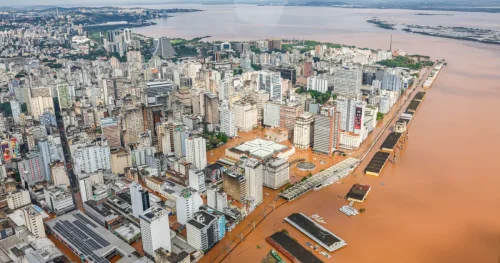
Storms that began in April triggered record-breaking and catastrophic flooding in Brazil’s southernmost state of Rio Grande do Sul. The ongoing climate disaster has affected about two million people, left at least 170 dead and displaced more than 600,000.

Rio Grande do Sul state MP Luciana Genro spoke to Green Left's Ben Radford about the flooding crisis, the government’s response and the solidarity efforts to help those affected.

Genro is a founder of the Socialism and Freedom Party (PSOL), a member of the party’s National Executive and of the Socialist Left Movement (MES) tendency within PSOL. She is a lawyer and president of the Lauro Campos and Marielle Franco Foundation. Genro was re-elected to Rio Grande do Sul’s legislative assembly in 2022 with 111,126 votes, making her the most voted-for woman MP in the state.

Fellow PSOL/MES leader Mariana Riscali will be speaking at the Ecosocialism 2024 conference from June 28-30 in Boorloo/Perth and online.

* * *

For years, there have been warnings about the increasing severity of flooding in Rio Grande do Sul. What caused the most recent flooding crisis?

What is happening in Rio Grande do Sul is not simply a natural phenomenon; it is a calamity caused and exacerbated by human actions, the advancement of the capitalist mode of production and the actions of successive neoliberal governments that have reduced the role of the state and relaxed environmental protection laws.

This is the largest flood ever recorded in our state. In the city of Porto Alegre, the capital, such a devastating flood had not been seen for 83 years. The scientific community is very clear in stating that climate change is the cause of these extreme events.

We are experiencing a climate emergency worldwide, and the situation in Rio Grande do Sul has demonstrated this in a very cruel and sad way. There are more than 170 deaths, two million people affected, more than 600,000 people displaced and almost 100% of the municipalities have been impacted by the floods.

What was the government's response to the floods?

Since the beginning of the floods, we have seen a very active stance from the federal government. President Lula [da Silva] himself has visited Rio Grande do Sul four times and has created a ministry dedicated exclusively to the reconstruction of the state. Additionally, he has implemented some important policies, such as the emergency transfer of R$5100 [A$1460] to each affected family. But clearly, much more needs to be done.

The federal government is the one best positioned to act, as it controls the country’s economic policy and has the most structure, resources, and power at its disposal.

We acknowledge that the Lula administration is taking action and doing its part, which is an incomparable advancement compared to Bolsonaro’s government, which was in denial about climate change, but it is necessary to go further and change the logic of an economic policy geared towards the market and not towards the needs of the people.

It is impossible to have a [public] spending cap in the face of a climate emergency of catastrophic proportions. The limits on government spending should be the limits of the people’s needs, not an imposition of the financial market.

Rio Grande do Sul governor [Eduardo] Leite is a young centre-right and neoliberal politician in his second term who has been implementing a policy of reducing the role of the state, withdrawing rights from public sector workers and showing total disregard for the environment. In six years of government, he has managed to amend more than 400 articles of the state Environmental Code, privatised environmental protection parks and allowed the use of pesticides that are banned in their countries of manufacture.

This is a government that has never been committed to the environmental cause, a proponent of minimal state intervention that has left the population to suffer the consequences of the state’s absence in their lives during this moment of tragedy.

The mayor of Porto Alegre, Sebastião Melo, is a politician aligned with former President [Jair] Bolsonaro, with strong ties to the Brazilian far right. He did not perform adequate maintenance of the flood protection system, despite being warned by city engineers and technicians about the need for numerous repairs and improvements.

When the river water began to recede and people could return to their homes and start the cleaning process, many destroyed furniture pieces were placed on the sidewalks and people wrote on their sofas, cabinets and tables the phrase “Culpa do Melo” (“Melo’s Fault”) ... The mayor has been repeating the phrase that “this is not the time to seek out those responsible” for the flood. Well, that is something only the guilty would say, isn’t it?

How has MES/PSOL responded to the crisis?

As a state deputy in Rio Grande do Sul, I vigorously denounced the dismantling of environmental policies by Governor Leite. Not only did I vote against his projects, but we also engaged in direct mobilisation on the streets, and we even achieved some victories. One such victory was the defeat of the construction of an open-pit coal mine near the Guaíba River.

In Porto Alegre, our councillor Roberto Robaina had already been denouncing the mayor’s actions, such as the privatisation of a department responsible for the city’s pipelines and allegations of corruption in the department responsible for the potable water supply.

When the tragedy began, all our efforts turned towards saving lives. In the first days, this was our absolute priority. People sent me messages on social media asking for rescue, sending photos showing they were on their rooftops of their flooded houses and needed to be saved. It was a desperate, calamitous situation. We set up a team to respond to all these messages and forwarded all requests directly to the sector responsible for rescues in the state government.

A member of our team, who is a police officer, managed to get a boat; we provided fuel and resources and he spent entire days rescuing people. We also immediately launched a collective fundraising campaign, which was used to purchase fuel for rescue boats, food and other items for donation to the affected people.

After the initial phase of rescues, we continued working on solidarity initiatives, helping to organise shelters with our MES comrades on the frontlines in poor neighbourhoods of Porto Alegre and areas far from the city centre. We are also involved in support actions for animals that were rescued. Over 12,000 animals, mostly dogs and cats, were rescued in Rio Grande do Sul and are now living in temporary shelters. We are supporting these shelters, providing food, structure and demanding concrete measures from the governments.

Our actions are structured around several points: rescue efforts, active solidarity and strong demands on the governments to meet the people’s needs. We go to the communities, to the shelters and to the homes of those affected without making false promises. We are not like the system politicians who promise to solve people’s problems in exchange for votes. Our work aims to strengthen popular organisation and mobilisation capacity. That is why we help organise the Flood Victims Movement.

We know that only the organisation and collective struggle of the people can bring about change. Our role, as parliamentarians and leaders of a socialist political party, is to assist in this organisation, support these struggles and hold the governments and politicians responsible for this tragedy accountable.

What needs to happen to confront the increasing climate-related disasters in Brazil?

There needs to be a complete change in the political and economic system in which we live, not only in Brazil but worldwide. The climate crisis is caused and aggravated by the capitalist mode of production, which is always expanding, producing more and devastating more without regard for the consequences. Only ecosocialism can save humanity from extinction and offer a future perspective for life on the planet.

In Brazil, the federal government believes it is possible to improve capitalism and make it more sustainable. This is an advance compared to the previous government of Bolsonaro, which denied climate change and science, but it still assumes that capitalism can solve this crisis, when in fact it only exacerbates the situation.

Within the government, there are various competing lines of thought. For example, Petrobras, a public oil company, advocates for oil exploration at the mouth of the Amazon River. This is a harmful practice to the environment, with the potential to damage the entire rich ecosystem of the region.

The Ministry of Environment and Climate Change opposes this exploration and has been trying to prevent it from happening. This is a significant dispute within the government itself. Ultimately, the decision lies with President Lula. He has the final say, but unlike President Gustavo Petro in Colombia, Lula has not shown himself to be a defender of ending fossil fuel exploration.

Therefore, we, as socialists, need to pressure and fight for another political and economic model where nature is not seen as a resource to be exploited but as an asset to be protected. It is a global fight in defence of the planet that cannot be separated from the anti-capitalist struggle, because the enemy is the capitalist system.

Amadeo Bordiga 1951

Murder of the Dead


First PublishedBattaglia Comunista No. 24 1951;
SourceAntagonism's Bordiga archive;
HTML Mark-up: Andy Blunden 2003.


In Italy, we have long experience of “catastrophes that strike the country” and we also have a certain specialisation in “staging” them. Earthquakes, volcanic eruptions, floods, rainstorms, epidemics... The effects are indisputably felt especially by poorer people and those living at high densities, and if cataclysms that are frequently much more terrifying strike all corners of the world, not always do such unfavourable social conditions coincide with geographical and geological ones. But every people and every country holds its own delights: typhoons, drought, tidal waves, famine, heatwaves and frosts, all unknown to us in the “garden of Europe”; and when one opens the newspaper, one inevitably finds more than one item, from the Philippines to the Andes, from the Polar Ice Cap to the African Desert.

Our capitalism, as has been said a hundred times over, is quantitatively small fry, but today it is in the vanguard, in a “qualitative” sense, of bourgeois civilisation, of which it offers the greatest precursors from amidst Renaissance splendour[1], in the masterful development of an economy based on disasters.

We wouldn’t dream of shedding a single tear if a monsoon washed away entire cities on the coast of the Indian Ocean, or if they were submerged by the tidal waves caused by submarine earthquakes, but we have found out how to collect alms from all over the world for the Polesine.

Our monarchy was great in knowing to rush not to the dance (Pordenone), but to where people are dying of cholera (Naples), or to the ruins of Reggio and Messina, raised to the ground by the earthquakes of 1908. Now our puffed-up President[2] has been taken off to Sardinia and, if the stalinists haven’t been fibbing, they have shown him teams of “Potemkin workers” in action, that then run to the other side of the stage like the warriors in Aida.[3] It was too late to pull the homeless out of the flooding Po, but good play was made of MPs and ministers paddling about in their wellies after setting up cameras and microphones for a world-wide broadcast of their lamentations.

Here we have the bright idea: the state should intervene! And we have been applying it for a good ninety years. The professedly homeless Italian has set state aid in the place of the grace of God and the hand of providence. He is convinced that the national budget has much wider bounds than the compassion of our Lord. A good Italian happily forks out ten thousand lire squeezed out of him so that months and months later he can “squander one thousand lire of the government’s money”. And during one of these periodic contingencies, now fashionably called emergencies but which fall in all seasons, when the central government has scarcely initiated the unfailing provisions and fundings, a band of no less specialised “homeless” will roll up its sleeves and plunge into the business of procuring concessions and the orgy of contracts.

The Minister of Finance of the day, Vanoni, suspends by his authority all other state functions and declares that he will not provide a single brass farthing from the exchequer for all the other “Special Acts” so that all means can be addressed to dealing with the present disaster.

There could be no better proof than this that the state serves for nothing and that if the hand of God really did exist, he would make a splendid present to the homeless of all kinds by causing earthquakes and bankrupting this charlatan and dilettante state.

The foolishness of the small and middle bourgeoisie shines forth at its brightest when it seeks a remedy for the terror that freezes it in the warm hope of a subsidy and an indemnity liberally bestowed upon it by the government. But the reaction of the overseers of the working masses who, they scream, lost everything in the disaster, but unfortunately not their chains, appears no less senseless.

These leaders, who pretend to be “marxists”, have for these supreme situations, which interrupt the well-being of the proletariat derived from normal capitalist exploitation, an economic formula even more foolish than that of state intervention. The formula is well-known: “make the rich pay!”

Vanoni is thus reviled because he was unable to identify and tax high incomes.[4]

But a mere crumb of marxism suffices to establish that high incomes thrive where high levels of destruction occur, big business deals being based on them. “The bourgeoisie must pay for the war!” stated those false shepherds in 1919 instead of inviting the proletariat to overthrow it. The Italian bourgeoisie is still here, and enthusiastically invests its income in paying for wars and other disasters for which it is then repaid four fold.

Yesterday

When the catastrophe destroys houses, fields and factories, throwing the active population out of work, it undoubtedly destroys wealth. But this cannot be remedied by a transfusion of wealth from elsewhere, as with the miserable operation of rummaging around for old jumble, where the advertising, collection and transport cost far more than the value of the worn out clothes.

The wealth that disappeared was that of past, ages-old labour. To eliminate the effect of the catastrophe, a huge mass of present-day, living labour is required. So, if we use the concrete social, not abstract, definition of wealth, we can see it as the right of certain individuals, who form the ruling class, to draw on living contemporary labour. New incomes and new privileged wealth are formed in the mobilisation of new labour, and the capitalist economy offers no means of “shifting” wealth accumulated elsewhere to plug the gap in Sardinian or Venetian wealth, just as one could not take from the banks of the Tiber to rebuild the ones swallowed up by the Po.

This is why it is a stupid idea to tax the ownership of the fields, houses and factories left intact to rebuild those affected.

The centre of capitalism is not the ownership of such investments, but a type of economy which allows the drawing from and profiting from what man’s labour creates in endless cycles, subordinating the employment of this labour to that withdrawal.

Thus the idea of resolving the war-time housing crisis with an income freeze on landlords of undamaged houses led to the provision of homes in a worse condition than that caused by the bombing. But the demagogues shout easy arguments so as not to confuse the working masses.

The basis of marxist economic analysis is the distinction between dead and living labour. We do not define capitalism as the ownership of heaps of past, crystallised labour, but as the right to extract from living and active labour. That is why the present economy cannot lead to a good solution, realising with the minimum expenditure of present labour the rational conservation of what past labour has transmitted to us, nor to better bases for the performance of future labour. What is of interest to the bourgeois economy is the frenzy of the contemporary work rhythm, and it favours the destruction of still useful masses of past labour, not giving a tupenny-ha’penny damn for its descendants.

Marx explains that the ancient economies, which were based more on use than exchange value, did not need to extort surplus labour as much as the present one, recalling the only exception: that of the extraction of gold and silver (it is not without reason that capitalism arose from money) where the worker was forced to work himself to death, as in Diodorus Siculus.

The appetite for surplus labour (Capital Vol. I, Ch. 10, Section 2: “The Greed for Surplus Labour”) not only leads to extortion from the living of so much labour power as to shorten their lives, but does good business in the destruction of dead labour so as to replace still useful products with other living labour. Like Maramaldo,[5] capitalism, oppressor of the living, is the murderer also of the dead: “But as soon as people, whose production still moves within the lower forms of slave-labour, corvée-labour, etc., are drawn into the whirlpool of an international market dominated by the capitalist mode of production, the sale of their products for export becoming their principal interest, the civilised horrors of over-work are grafted on the barbaric horrors of slavery, serfdom, etc.” [6]

The original title of the paragraph quoted is “Der Heisshunger nach Mehrarbeit”, literally; “The voracious appetite for surplus labour”.

Small scale capitalism’s hunger for surplus labour, as set out in our doctrine, already contains the entire analysis of the modern phase of capitalism that has grown enormously: the ravenous hunger for catastrophe and ruin.

Far from being our discovery (to hell with the “discoverers”,[7] especially when they sing even the scale out of tune, then believe themselves to be creators), the distinction between dead and living labour lies in the fundamental distinction between constant and variable capital. All objects produced by labour which are not for immediate consumption, but are employed in a further work process (now one calls them producer goods), form constant capital. “Therefore, whenever products enter as means of production into new labour processes, they lose their character of being products and function only as objective factors contributing to living labour.” [8]

This is true for main and subsidiary raw materials, machines and all other types of plant which progressively wear out. The loss due to wear which has to be compensated for requires the capitalist to invest another quota, always of constant capital, which current economics calls amortisation. Depreciate rapidly, that is the supreme ideal of this grave-digging economy.

We recalled a propos “the body possessed by the devil” [9] how, in Marx, capital has the demoniacal function of incorporating living labour into dead labour which has become a thing. What joy that the Po’s embankments are not immortal, and today one can happily “incorporate living labour into them”! Projects and specifications are ready in a few days. Good boys, you are possessed by the devil!

“Sir, the drawing office of our firm has done its duty in predisposing technical and economic studies: here they are all nice and ready.” And price analysis values the stone of Monselice higher than Carrara marble.[10]

“The property therefore which labour-power in action, living labour, possesses of preserving value, at the same time that it adds it, is a gift of Nature which costs the labourer nothing, but which is very advantageous to the capitalist inasmuch as it preserves the existing value of his capital.” [11]

This value, which is simply “preserved”, thanks always to the operation of living labour, is called the constant part of capital or constant capital by Marx. But: “... that part of capital, represented by [invested in] labour-power [wages], does, [instead] in the process of production, undergo an alteration of value. (...) and also produces an excess, a surplus-value...” [12]

We therefore call it the variable part, or simply variable capital.

The key lies here. Bourgeois economics calculates profit in relation to the constant capital which lies still and doesn’t move: in fact it would go to the devil if the labour of the worker did not “preserve” it. Marxist economics, on the contrary, places profit in relation only to variable capital and demonstrates how the active labour of the proletarian a) preserves constant capital (dead labour), and b) increases variable capital (living labour). This increase, surplus value, is gained by the entrepreneur. This process, as Marx explains, of establishing the rate without taking into account constant capital is like making it equal to zero: an operation current in mathematical analysis where variable quantities are concerned.

Once constant capital is set at zero, gigantic development of profit occurs. This is the same as saying that the enterprise’s profit remains if the disadvantage of maintaining constant capital is removed from the capitalist’s shoulders.

This hypothesis is none other than state capitalism’s present reality.

Transferring capital to the state means that constant capital equals zero. Nothing of the relationship between entrepreneurs and workers is changed, since this depends solely on the magnitude of variable capital and surplus-value.

Are analyses of state capitalism something new? Without any haughtiness we use what we have known since 1867 at the latest. It is very short: Cc = 0.

Let us not leave Marx without this ardent passage after the cold formula: “Capital is dead labour, that, vampire-like, only lives by sucking living labour, and lives the more, the more labour it sucks.” [13]

Modern capital, which needs consumers as it needs to produce ever more, has a great interest in letting the products of dead labour fall into disuse as soon as possible so as to impose their renewal with living labour, the only type from which it “sucks” profit. That is why it is in seventh heaven when war breaks out and that is why it is so well trained for the practice of disasters. Car production in America is massive, but all, or nearly all, families have a car, so demand might be exhausted. So then it is better that the cars last only a short time. So that this is indeed the case, firstly they are badly built with a series of botched parts. If the users break their necks more often, no matter: a client is lost, but there is another car to substitute. Then they call on fashion with a large cretinising subsidy of advertising propaganda, through which everyone wants the latest model, like the women who are ashamed to put on a dress, even if perfectly good, “from last year”. The fools are taken in and it does not matter that a Ford built in 1920 lasts longer than a brand new 1951 model. And finally the dumped cars are not used even for scrap, and are thrown into car cemeteries. Who dares to take one saying: you have thrown it away as if it were worthless, what harm is there in me fixing and reusing it? He would get a kick up the backside and a gaol sentence.

To exploit living labour, capital must destroy dead labour which is still useful. Loving to suck warm young blood, it kills corpses.

So while the maintenance of the Po embankments for ten kilometres requires human labour costing, let us say, one million a year, it suits capitalism better to rebuild them all spending one billion. Otherwise it would have to wait one thousand years. This perhaps means that the nasty fascist government sabotaged the Po embankments? Certainly not. It means that no one has pressed for an annual budget of a miserable million. This is not spent as it is swallowed up in the financing of other “large scale works” of “new construction” which have budget estimates of billions. Now the devil has swept away the embankments, one finds someone with the best motives of sacrosanct national interest who activates the project office and has them rebuilt.

Who is to blame for preferring the large scale projects? The fascists and the official communists. Both of them prattle that they want a productivist, full employment policy. Productivism, Mussolini’s favourite creature, consists in establishing “present day” cycles of living labour out of which big business and big speculation make billions. Let us modernise the aged machines of the great industrialists and also let us modernise the river banks after letting them collapse, all at the people’s expense. The history of the recent years of administrative management of state works and of the protection of industry is full of these masterpieces, ranging from the provision of raw materials sold below cost, to works “undertaken by a state monopoly” in the “struggle against unemployment” on the basis of “constant capital equals zero”. In a few words, let us spend it all in wages, and since the enterprise has only shovels for equipment, the Lord is convinced that it is useful to shift earth first from here to there then immediately back to here again.

If the Lord hesitates, the enterprise has the trade union organiser to hand: a demonstration of labourers shouldering shovels under the ministry’s windows and all’s well. The “discoverer” arrives and supersedes Marx: shovels, the only constant capital, have given birth to surplus value.

Today

Undoubtedly, the size of the disaster along the Po has been massive, and the estimated cost of the damage is still rising. Let us admit that the cultivated area of Italy lost one hundred thousand hectares or one thousand square kilometres, about one three hundredth or three per thousand of the total. One hundred thousand inhabitants have had to leave the area, which is not the most densely settled in Italy, or, in round figures, one five hundredth or two per thousand.

If the bourgeois economy were not mad, one could do a simple little sum. The national stock has suffered a serious blow. However, the zone was only partially destroyed. When the floodwaters recede, the agricultural soil will largely be left behind and the decomposition of vegetation along with the deposition of alluvium will partially compensate for the lost fertility. If the damage is one third of total capital, it costs one thousandth of the national capital. But this has an average income of five per cent or fifty per thousand. If for a year every Italian saved scarcely one fiftieth of his consumption, the damage would be made good.

But bourgeois society is anything but a co-operative, even if the great freebooters of native capital escape Vanoni by demonstrating that “part-ownership” of their enterprises has been distributed among the employees.

All the productivistic operations of Italian and international economy are more or less as destructive as the Paduan disaster: the water entered through one hole and left through another.

Such a problem is insuperable on capitalist grounds. If it were a question of making the arms to provide Eisenhower with his hundred divisions within a year, the solution would be found[14]. These are all short-cycle operations and capitalism is as pleased as Punch if the order for the 10,000 guns is with a delivery date in 100 and not 1,000 days. The steel pool does not exist without reasons.

But a pool of hydrological and seismological organisations cannot be formed, at least not until the great science of the bourgeois period is really able to provoke series of floods and earthquakes, like aerial bombardments.

Here it is a matter of a slow, non accelerable centuries long transmission from generation to generation of the results of “dead” labour, but under the guardianship of the living, of their lives and of their lesser sacrifice.

Let us admit, for example, that the water in the Polesine will recede in a few months and that the breach at Occhiobello is closed before the spring, only one annual harvest cycle would now be lost: no productive “investment” can replace it, but the loss is reduced.

If, instead, one believes that all the Po embankments and those of the other rivers will frequently come apart, due as much to the consequences of overlooked maintenance during thirty years of crisis as to the disastrous deforestation of the mountains, then the remedy will be even slower in coming. No capital will be invested for the good of our great-grandchildren.

Our father wrote in vain that only a few examples of virgin forest remain, growing without the intervention of human labour. The forestry system thus becomes almost man’s work despite the minimum of capital in the operation. Nevertheless, high growing trees, the most important in the public economy, always require a very long period before yielding a useful product. However, forestry science has shown that the best year to fell timber is not that at the end of the maximum life span, but that in which current growth equals average growth, one must always calculate 80, 100 and even 150 years for an oak wood. Di Vittorio and Pastore[15] would fling the book, if they had ever opened it, out of the window.

As in the operetta: steal, steal capital (love) cannot wait...

There is still worse to relate. Relatively little is said of the disaster in Sardinia, Calabria and Sicily. Here the geographical facts differ drastically.

The very slack gradient of the Po valley caused a build-up of water which then swamped over the clay and impermeable soils below. The same reasons in the South and the Islands, of high rainfall and deforestation of the mountains, along with the steep fall down to the sea caused the destruction. The mountain streams washed sand and gravel from the bedrock and destroyed fields and houses, all in a few hours, without, however, causing many victims.

Not only is the sacking of the magnificent forests of Aspromonte and the Sila by the allied liberators irreparable, but here also the renewal of the land swamped by the flood waters is practically impossible, not merely uneconomic for the “investors” and for the “helpers” (more self-interested than the former, if that is possible).

Not only the narrow horizons of cultivable soil, but also the thin non-rocky strata that gave it weak support have been washed away, soil which was carried up many times over decades by the grindingly poor farmers. Every plantation, every tree, the basis of a rather profitable agriculture, and industry in some villages, came down with the soil and the orange and lemon trees floated out to sea.

Replanting a destroyed vineyard takes about two years, but citrus plantations only provide a full harvest after seven to ten years and a great amount of capital is needed to establish and run them. Naturally, the good books do not give the cost of the unthinkable operation of carrying up again, for hundreds of meters, the soil brought down and, in any case, the water would carry it away again before the plant roots could fix it to the subsoil.

Not even the houses can be rebuilt where they were before for technical, not economic reasons. Five or six unfortunate villages on the Ionian coast in the Province of Reggio Calabria will not be rebuilt on their own hill sites, but down by the sea.

In the Middle Ages, after devastation had caused the disappearance of every last trace of the magnificent coastal cities of Magna Graecia, the apex of agriculture and art in the ancient world, the poor agricultural population saved itself from Saracen pirate raids by living in villages built on the mountain tops, which were less accessible and thus more defensible.

Roads and railways were built along the coast with the arrival of the “Piedmontese” government and, where malaria did not prohibit it, where the mountains ran down close to the sea, every village had its “on-sea” near the station. It became so convenient to carry timber away.

Tomorrow only the “on-seas” will remain and there they are laboriously rebuilding some houses. So what then if the peasant reclimbs the slope where nothing can ever take root and the very bare and friable rock strata itself does not permit the rebuilding of houses? And the workers by the sea, what will they do? Today they can no longer emigrate like the Calabrians of the unhealthy lowlands and the Lucanians of the “damned claylands” made sterile by the greedy felling of the woodlands which once covered the mountains and the trees that spread over the upland grazing.

Certainly, in such conditions, no capital and no government will intervene, a total disgrace of the obscene hypocrisy with which national and international solidarity was praised.

It is not a moral or sentimental fact that underlies this, but the contradiction between the convulsive dynamic of contemporary super-capitalism and all the sound requirements for the organisation of the life of human groups on the Earth, allowing them to transmit good living conditions through time.

Bertrand Russell, the Nobel Prize winner, who quietly pontificates in the world press, accuses man of overly sacking natural resources, so much so that their exhaustion can already be calculated. Recognising the fact that the great powers conduct absurd and mad policies, he denounces the aberrations of the individualist economy and tells the Irish joke: why should I care about my descendants, what have they ever done for me?

Russell counts among the aberrations, along with that of mystical fatalism, that of communism which states: if we have done with capitalism, the problem is solved. After such a display of physical, biological and social science, he is unable to see that it is an equally physical fact that the huge level of loss of both natural and social resources is essentially linked to a given type of production, and thinks that all would be resolved by a moral sermon, or a Fabian appeal to the human wisdom of all classes.

The corollary is pitiful: science becomes impotent when it has to solve problems of the spirit?

Those who really achieve human progress, taking decisive steps forward in the organisation of human life, are not really the conquerors and dominators who still dare to ostentate greed for power, but the swarms of insipid benefactors and proponents of the ERP[16] and brotherhood among peoples, like so many pacifist dovecots.

Passing from cosmology to economics, Russell criticises the liberal illusions in the panacea of free competition and has to admit: “Marx predicted that free competition among capitalists would lead to monopoly, and was proved correct when Rockefeller established a virtually monopolistic system for oil.”

Starting from the solar explosion, which one day will instantaneously transform us into gas (which could prove the Irishman right), Russell finishes with maudlin sentiments: “Nations desiring prosperity must seek collaboration more than competition.”

Is it not the case, Mr. Nobel Prize winner, who has written treatises on logic and scientific method, that Marx calculated the development of monopoly fifty years earlier?

If that were good dialectics, the opposite of competition is monopoly, not collaboration.

Take good note that Marx also predicted the destruction of the capitalist economy, class monopoly, not with collaboration, with which you are devoted to flattering all the Trumans and Stalins of good will, but with class war.

Just as Rockefeller came, “big moustache[17] must come!” But not from the Kremlin. That one, despite Marx, is about to shave like an American.

Footnotes

[1] “The first capitalist nation was Italy.” (Engels, “Preface to the Italian Edition of The Communist Manifesto”)

[2] Luigi Einaudi, President of Italy 1948-55.

[3] Potemkin had constructed prefabricated villages to show Catherine II on her tour of the Russian countryside. They gave the impression of rural prosperity, but after each visit they were hastily dismantled then re-assembled elsewhere on the tour.

[4] In early 1951 Vanoni introduced personal income tax to Italy. This tax entered the Guiness Book of Records as the ‘least paid tax in the world’. Still today tax evasion is widespread. (Cf. 11th. ed., 1963, p. 10)

[5] Maramaldo killed the dying General Ferrucci in 1530, the last act of Florentine independence. The British equivalent is Ivo of Ponthieu who hacked at the dying King Harold at Hastings. But he was “branded with ignominy by William and expelled from the army” (Gesta Regun Anglorum). The chivalry of nascent feudalism contrasts favourably with the squalid unscrupulousness of early capitalism.

[6] Capital Vol. I, Chap. 10

[7] Publisher’s Note — The word used in the Italian original is “troviero”. This literally means “finder” and, in the context, actually means something like “someone who thinks they’ve found something important, but they haven’t”, e.g. some bourgeois apologist who thinks they have refuted Marx. There is no obvious English equivalent so “discoverer”, with the inverted commas, will have to do.

[8] Capital Vol. I, Chap. 10

[9] In this collection.

[10] Monselice: the nearest stone quarries to the Po, Carrara: the main centre of marble production in Italy.

[11] Capital Vol. I, Chap. 8

[12] ibid.

[13] Capital Vol. I, Chap. 10, Section 1

[14] The article refers to the start of the Korean War.

[15] The “communist” and “catholic” union leaders of the period respectively.

[16] The European Recovery Programme, the “Marshall Plan”.

[17] i.e. Stalin, “Uncle Joe”.