It’s possible that I shall make an ass of myself. But in that case one can always get out of it with a little dialectic. I have, of course, so worded my proposition as to be right either way (K.Marx, Letter to F.Engels on the Indian Mutiny)
The launch of MTG-I2 from French Guiana completes the first trio of Meteosat Third Generation satellites, delivering high-resolution data and images every 2.5 minutes to transform weather forecasting and early warnings of extreme events.
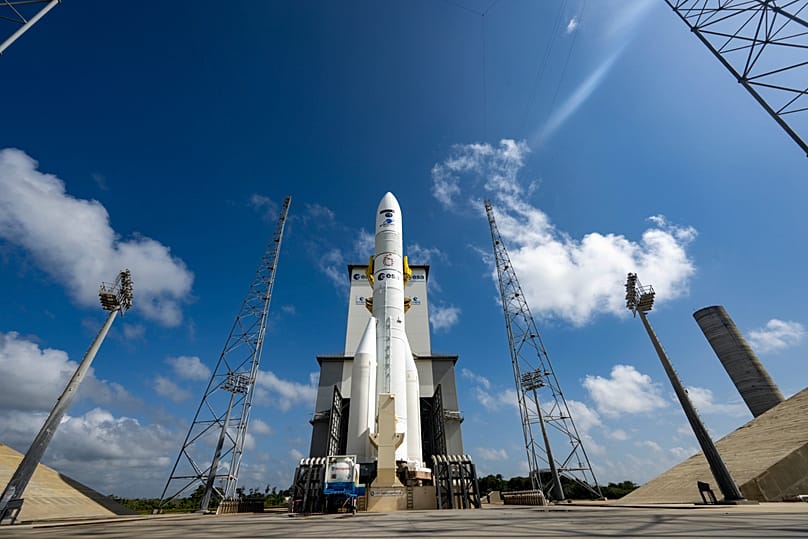
The European Space Agency (ESA) has reached a historic milestone in Earth observation and meteorological science, amid the climate crisis and meteorological disasters. The MTG-I2 ("Meteosat Third Generation Imager-2") satellite has been successfully launched aboard the Ariane 6 rocket from the European Spaceport in Kourou, French Guiana.
With this mission, ESA completes the first trio in the Meteosat Third Generation constellation (MTG). MTG-I2, successfully launched on 27 July, is the second imaging satellite in this fleet and joins the first Imager (launched in 2022) and the Sounder (launched in 2025). Once its commissioning phase is complete, the constellation will begin operating at full capacity.
Relate
Revolution in forecasting extreme weather events
Located at an altitude of 36,000 kilometres in geostationary orbit, MTG-I2 will maintain a fixed position, acting as a watchful eye over the Earth's surface. Its main instrument, the Flexible Combined Imager, will provide a rapid-scan service over Europe, delivering high-resolution observations every 2.5 minutes.
This very high refresh rate represents a change of paradigm for nowcasting, improving short-term weather forecasts and proving vital for the monitoring of disasters such as floods or wildfires. The technology will make it possible to track atmospheric fronts in real time, anticipate the formation of severe storms or DANA events and improve the monitoring of fires and air pollution across Europe, with a particular focus on the Mediterranean and North Africa.
In addition, the satellite includes the Lightning Imager, a sensor capable of detecting and mapping individual lightning discharges both day and night. Integrating these satellites will make it possible to build the "weather cube", a three-dimensional representation of lightning, winds, cloud dynamics and greenhouse gases.
The MTG-I2 provides advanced satellite technology that will improve weather monitoring and forecasts across Europe, delivering real benefits to citizens and communities throughout the continent
Simonetta Cheli
Director of ESA's Earth Observation Programmes.
A milestone for the Ariane 6 rocket and the next operational steps
The launch marked the ninth mission of Ariane 6 (source in Spanish) and the first time the European heavy-lift rocket has carried a satellite to a Geostationary Transfer Orbit (GTO). To reach the furthest distance achieved by this launcher to date, it flew in a configuration with two P120C solid-fuel boosters.
After satellite separation, contact with the spacecraft was successfully established. Ground teams are now overseeing the deployment of the solar panels and the gradual ignition of its propulsion system to raise the perigee and fine-tune its trajectory towards its final geostationary orbit. Once it has been repointed towards Earth, the Launch and Early Orbit Phase (LEOP) will end and scientific calibration can begin.
European industrial cooperation and the future of the programme
Development of the MTG family has been led by ESA together with a European industrial consortium headed by Thales Alenia Space, with support from OHB System and Leonardo. Once the calibration phase is complete, responsibility for operating the satellites and distributing data to the international scientific community will pass to Eumetsat.
This fleet guarantees continuity of the observations begun by the Meteosat Second Generation series (operational between 2002 and 2015). From 2033, a second family of MTG satellites is expected to be launched in stages, ensuring the continuity of the service beyond 2040.
ESA signs first major European Launcher Challenge contract with Spain's PLD Space
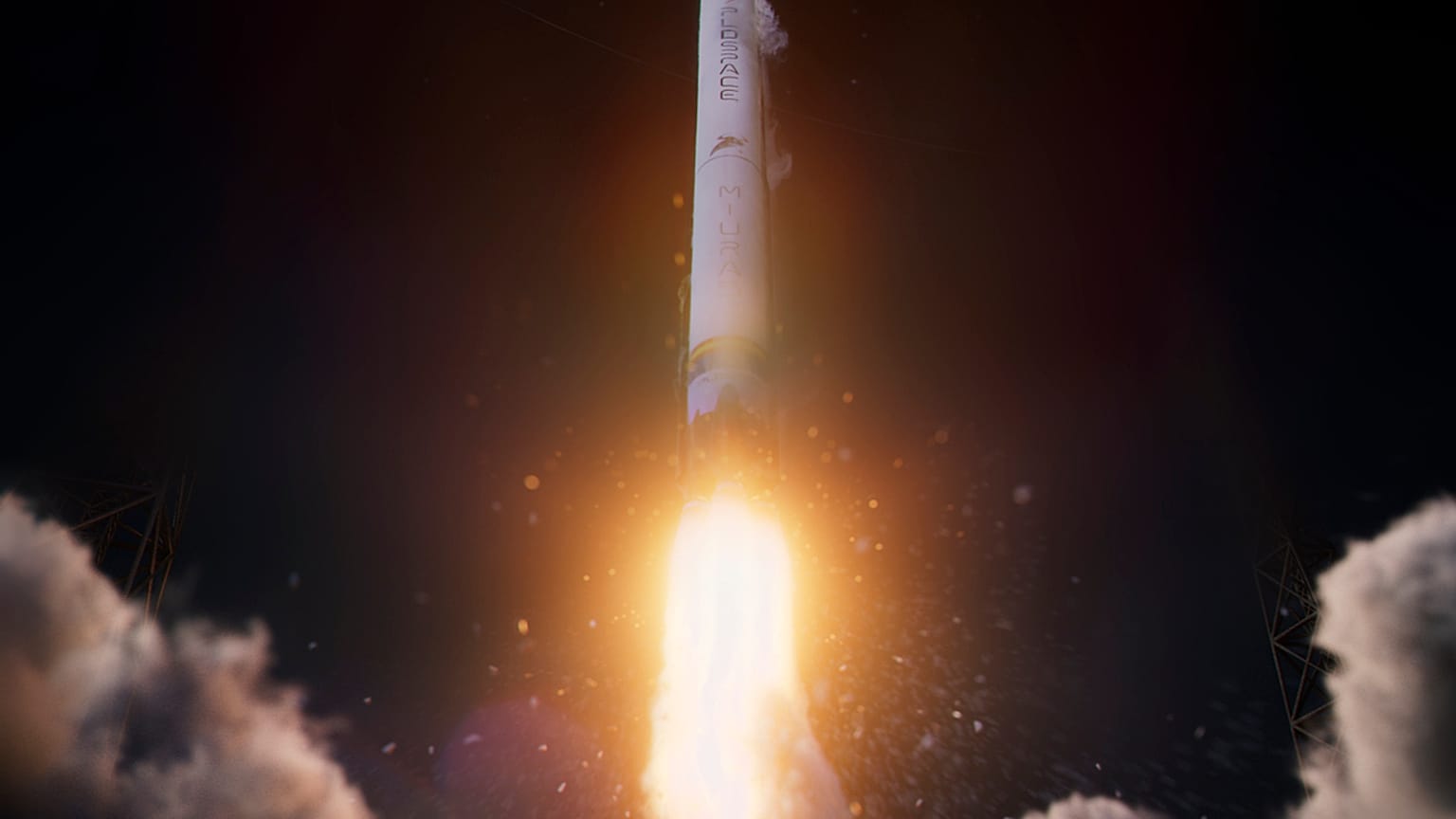
ESA has signed its first contract with PLD Space under the European Launcher Challenge, worth 158.9 million euros, to boost MIURA 5 launches and new orbital capabilities.
The European Space Agency (ESA) has begun signing the first contracts for its European Launcher Challenge (ELC), the programme with which Europe is trying to end its reliance on foreign launchers to place satellites in orbit. Among the companies selected is PLD Space, the Elche-based firm that in 2023 launched its MIURA 1 demonstrator rocket on a suborbital flight.
The contract, worth 158.9 million euros and funded mainly by Spain with a German contribution, positions the company as one of the central pieces of the future European launcher ecosystem.
The agreement is split into two components. The first aims to consolidate the commercial service of MIURA 5 and gradually ramp up its launch rate through to 2030, at a time when the company says it is already seeing growing commercial interest in the rocket in international markets.
The second, focused on what PLD Space describes as "enhanced orbital capability", will fund upgrades to MIURA 5 so that it can carry heavier payloads and reach more distant orbits, as well as incorporating propulsive landing, the first step towards reusing the rocket.
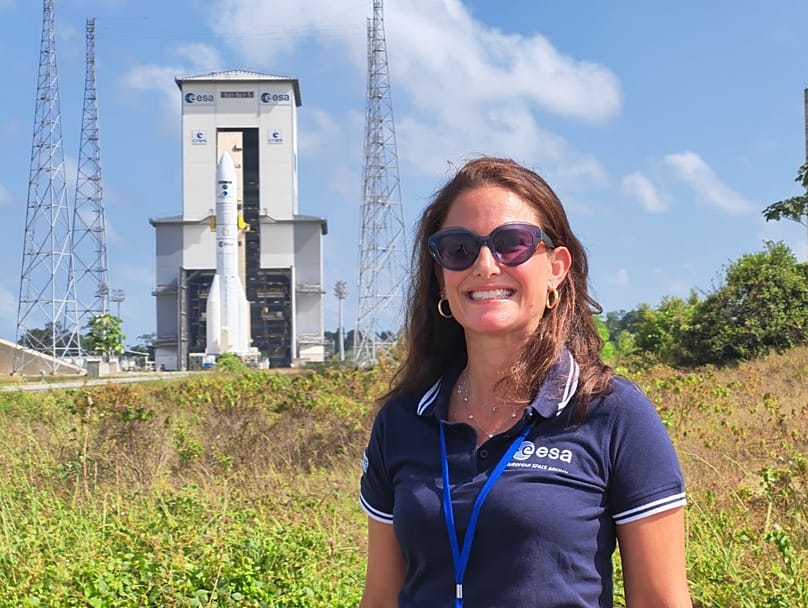
'Euronews' has spoken to Lucía Linares in French Guiana ahead of the launch of the next Meteosat. Linares is Head of Strategy and Institutional Launches at ESA and told us that companies such as PLD Space, Rocket Factory, Asbury, Maia Space and Isar Aerospace have been chosen by ESA under the Boost programme to receive co-funding: "What we do is no longer to set technical requirements for them as we do with Ariane or Vega, but simply to see how they develop their launch service and to verify that there is also private financing and that they meet certain technical objectives, of course, but without imposing anything on them."
Lucía Linares, ESA, 27 August 2026 'Euronews'
Linares also confirmed to 'Euronews' that they have already signed with PLD Space: "I have to say that we have already signed that contract with PLD Space and for me this is a source of great excitement, not only to attend the launch they will carry out, which I have been following for many years, but also to be able to see here in French Guiana how the construction work on PLD Space's infrastructure is progressing; it will launch from French Guiana, the European Spaceport."
The road to MIURA Next
According to the Spanish company, many of the subsystems developed under this orbital-improvement programme will not stay on MIURA 5: they are designed to be transferred directly to MIURA Next, the future family of heavy launchers with which PLD Space wants to scale up. The idea is that each technical improvement certified now will shorten timelines and reduce risks when it is time for the larger launcher.
"ESA's selection of PLD Space confirms the maturity of the roadmap we have been building for years," summarised Ezequiel Sánchez, the company's executive chairman, who places the contract within a trajectory that began with MIURA 1 and which, he says, should end by transferring critical technology to the heavy launcher.
As Lucía Linares told us, the PLD Space contract is not the only one ESA has signed in this round. Germany's Rocket Factory Augsburg has been awarded 186.9 million euros for its RFA One, which will operate from the SaxaVord base in Scotland, and Isar Aerospace has secured 197.8 million for its Spectrum. The three were part of a group of five finalists, completed by MaiaSpace and Orbex, which ESA shortlisted in July 2025 after receiving twelve proposals from across Europe.
ELC was created in 2023 with the aim, among others, of having before 2030 a European successor to Ariane 6 that does not depend on a single operator, and at the ministerial meeting in Bremen in November 2025 the member states stepped up their funding commitment to 900 million euros.
For PLD Space, the contract comes on top of the 42 million it had already received from CDTI through the Aerospace PERTE and arrives in the final development phase of MIURA 5, the orbital rocket that is due to succeed MIURA 1.
In The Bear’s Paw: How Europeans Can Loosen Russia’s Grip On Belarus – Analysis
Belarus has shifted from a relatively stable buffer and Russian rear base into a forward-operating platform for Moscow—hosting missiles, joint exercises, logistics, and hybrid pressure on Poland, Lithuania, and Latvia—raising direct security risks for the EU’s eastern flank.
Broad EU sanctions and isolation have deepened Minsk’s dependence on Russia without adequately addressing the military threat or easing repression of political prisoners and the diaspora.
The paper urges a more targeted EU approach: strengthen border-state defence and deconfliction, keep limited working-level channels, support civil society and SMEs, condition limited engagement on verifiable steps, and treat Lukashenko as retaining some residual agency that can still be pressured away from full Russian satellite status.
A satellite state
Take a map of Europe and find Belarus. Trace a finger clockwise, from the country’s northern borders and around to the east, where Russia is followed by Ukraine, Poland, Lithuania and Latvia. Belarus’s capital, Minsk, is itself almost at the exact geographic heart of the country, surrounded by hills, with vast forests sprawled out like capillaries beyond.
It is from here that Belarus’s longtime leader, Alexander Lukashenko, looks out from his “Palace of Independence” on Minsk’s Pieramozcau Avenue. To the east, in Russia, his fellow authoritarian Vladimir Putin continues to decimate Ukraine from its eastern borders and scheme to undermine European political interests. To the west, stretching hundreds of kilometres past Belarus’s western border with Poland and across Germany, lies Brussels. Faced with instability across the continent, the EU’s capital is increasingly unsure about what to do with its problematic Belarusian neighbour.
The EU downgraded its diplomatic relations with Belarus in 2020 after the latter’s disputed presidential election, which saw Lukashenko’s government violently repress protestors who took to the streets to oppose the president seizing victory by undemocratic means. Although bilateral trade between the EU and Belarus was largely undamaged in the subsequent years, the fall in trade with the bloc after Russia’s invasion of Ukraine in 2022 created an economic gap which Russia has exploited. For example, it has stepped up its own trading relationship with Belarus and become a key market for exports of Belarusian goods such as dairy products and petrochemicals—also allowing Moscow to evade EU sanctions. In doing so, Russia filled a vacuum for Belarus; Lukashenko, facing limited alternatives, deepened his dependence on Moscow.
Although Belarus did not formally commit troops to Russia’s war of aggression, it did allow the latter to house missiles, tanks, artillery, helicopters, aeroplanes and other military equipment in its territory prior to the invasion. It also provided military and civil infrastructure for Russia’s use, including airfields, hospitals and railway lines. This year alone, Russia has transferred more missiles—including dual-capable, hypersonic missiles—to Belarusian territory and conducted joint exercises encompassing the Belarusian Armed Forces. This, combined with a breakdown in dialogue between the EU and Belarus, gives Putin yet more sway in his quest to entrench Russia further into Belarusian structures.
Now that Belarus is apparently firmly committed to the supranational union of Belarus and Russia, known as the Union State, it has become a structural security concern for Europe. Russian deployment of nuclear-capable weapons on Belarusian territory makes Europe’s eastern flank more vulnerable, while Belarus’s already tense relations with neighbouring border states Poland, Latvia and Lithuania are at risk of deteriorating further. At the same time, Belarus has 879 political prisoners languishing, with Lukashenko’s regime having essentially outlawed any political or civic activity which the authorities see as a threat.
All this has compounded the breakdown in relations between Belarus and Europe. Russia is further emboldened to entrench its military deeper into Belarusian territory, tighten its economic dependencies and integrate the country further into its nuclear strategy.
This paper examines Belarus’s transformation from a problematic but stable buffer state between western Europe and Russia to a country which poses an increasing military and security threat to the EU. It argues that the EU should move away from relying solely on economic leverage and the blanket application of sanctions—which are pushing Belarus to rely more heavily on Russia—and develop a more targeted approach. Europeans need to actively contain the growing military and nuclear threat by finding new avenues of diplomatic negotiation, and by incorporating NATO-inspired approaches into its defence policy for its vulnerable eastern states.
Perhaps most importantly, Europeans need to assess to what extent they can treat Minsk as an autonomous actor capable of making decisions independently from Moscow. Europeans should take recent developments, such as Ukraine’s discovery of four signal relay stationsin two Belarusian oblasts and their subsequent removal, as proof that Lukashenko retains the authority to make territorial-based decisions—especially under pressure from Russia.
However, for as long as Lukashenko remains in power, Belarus will never be entirely free of Moscow: he is an authoritarian, and Minsk remains sanctioned due to its breach of human rights clauses and mistreatment of its population. Belarus’s geopolitical position is also at least partly down to early decisions that Lukashenko made when he turned towards Moscow in the mid-1990s—a time when most other former Soviet nations chose real independence. Long before 2020, this posture led to missed opportunities with the EU, reinforced Lukashenko’s propensity to commit human rights violations and kickstarted Belarus’s deepening economic and military integration with Russia.
In its pursuit of a new strategy, the EU needs to recognise that—even if Belarus remains a stable, contained buffer zone—the country will not undergo a full democratic transformation. Europeans are thus searching for a Belarus which no longer presents an urgent security threat on its eastern border. They should aim to help shape a country whose stability reduces geopolitical risk without abandoning the EU’s long-standing commitment to democracy, human rights and the well-being of Belarusian society.
Belarus as a security actor
Belarus declared its independence from the Soviet Union in 1991. But, with what Russia perceived as the NATO and European sphere of influence shifting eastwards, Belarus became increasingly valuable to Moscow—especially because of the Suwalki Gap, which lies between the Russian exclave of Kaliningrad and Belarusian territory. The Russia-Belarus relationship became more entrenched once Lukashenko and Putin came to power in 1994 and 1999, respectively. The two leaders are hardly close personal friends—but they have nonetheless developed strong cultural and economic ties based on the similarity of their two anti-Western and authoritarian regimes, and their notion of a shared history.
Over the past 30 years, Belarus has moved closer to Russia in economy, trade and idea sharing. But it has gone beyond simply sharing a similar geopolitical outlook; now it is a militarised actor on the EU’s eastern flank. The first tipping point came with Russia’s invasion of Ukraine in February 2022. At this point, Lukashenko was already politically entangled with Moscow due to its support for Belarus’s trade network and economic sector after Minsk’s break with Europe in 2020. But the invasion meant that Belarus also became entrenched in the Russian military machine: in the early phase of Russia’s invasion, it became a launchpad for Russian ground offensives towards Kyiv and Chernihiv, and for missile strikes and combat aviation operations.
Since this period, Russia has attempted to consolidate its control even further. Now it has approximately 2,000 troops concentrated around air-defence systems, training facilities, logistics hubs and long-standing Russian military installations. Between 2022 and 2023, ammunition transfers from Belarus to Russia exceeded 130,000 tonnes. Since then, joint training centres, storage bases and transport corridors (many inherited from the Soviet period) have been repurposed and modernised under Belarus-Russia Union State programmes to support Russian operational needs. Rail-linked depots, armament storage facilities and training grounds now serve as key infrastructure for Russian forces on its western flank.
The second tipping point came with the two countries regularly staging recurring joint military exercises that institutionalise operational integration, such as the Zapad military drills which have been taking place since before 2022. Now Russia is eyeing up Belarus as a key component of its nuclear ambitions and has also deployed Oreshnik intermediate-range missile systems in Belarus. In April this year, Belarus confirmed it would no longer allow Russian conscripts who desert the military to leave via its border. Belarus is also a staging post for Russian nuclear missiles and joint military exercises.
The country has thus become Russia’s territorial, militaristic and logistical resource, achieved through durability, military routinisation and institutional embedding. The military aspect of this entrenchment is also compounded through hybrid attacks. For example, as early as November 2021 the EU condemned Belarus for facilitating the weaponisation of migrants—predominantly from conflict areas such as Iraq and Syria—who it had apparently encouraged to breach the borders of Latvia, Lithuania and Poland.
This form of hybrid warfare has continued into 2026: recent reports saythat Lithuanian authorities have discovered a cross-border tunnel from Belarus to Lithuania, which they suspect is to continue to facilitate the potential movement of migrants through European territories. Now, with the Union State increasingly functioning as a homogeneous force, there is a threat that Belarus will become more emboldened to facilitate further dangerous hybrid manoeuvring. It intends to check Europe’s readiness and destabilise it from the inside.
Belarus as a threat to Europe
The difference in the threat which Belarus now poses to Europe lies in its shift—which has taken place over the past six years—from being Russia’s “rear-operating base” to Russia’s “forward-operating base”.
As Russia’s rear-operating base, Belarus functioned as a non-combat zone for logistics and maintenance. While it supported Russian military activity and provided strategic depth by shifting military infrastructure and combat flashpoints away from Russian territory, as a rear-operating base Belarus avoided deploying its own forces into Ukraine and directly engaging in combat operations. This allowed Lukashenko to avoid many of the challenges that Putin is experiencing, including politically sensitive military mobilisation, high personnel casualties and mounting internal economic pressure. This approach had previously provided Lukashenko with the degree of political deniability and diplomatic leverage necessary to continue negotiating with Western economies on economic sanctions and market access. He was able to point to Belarus’s arm’s-length approach to the war in Ukraine as proof that he was willing to engage with Europeans at a diplomatic and economic level.
However, Belarus’s position has changed since 2022. Evidence collected by the author demonstrates that Russia is increasingly establishing the country as a forward-operating base. Moscow is building on its routinisation and institutional embedding of military infrastructure to deploy personnel on Belarusian territory and undertake recurring joint military exercises, lately including nuclear forces preparation. Minsk’s rhetoric is changing to match these actions. In 2022, Belarus changed its constitution to allow Russia to store nuclear missiles on its territory; in a “Militarization of Europe” meeting held in June 2026, Belarus’s deputy minister of foreign affairs Igor Sekreta said he was “deeply concerned by… military exercises on NATO’s eastern flank” and “the EU and NATO… systematically promoting a militarist agenda at all levels.”
The Belarusian government is simultaneously becoming a component of Russian forward-military position and aligning ideologically with Russia’s view that Europe (and the West in general) constitutes an existential threat. Lukashenko himself reiterated this in May 2026, when he declared that “… [Belarus is] ready in every possible way to defend our common fatherland from Brest to Vladivostok.” The change is especially worrying for Ukraine, which is already fighting a war against Russia on several fronts. Its brow-beaten army could soon be required to deploy yet more resources to another defensive line on its northern border. Belarusian state media have suggested that Putin desires to open a “second front” against Ukraine, using Belarus as a launchpad for further attacks.
Indeed, evidence suggests that Russia is already using Belarusian infrastructure to gain an advantage in its drone warfare against Ukraine: in June 2026, Ukrainian intelligence services discovered four signal relay stations in the Belarusian oblasts of Homiel and Brest. Ukraine’s president, Volodymyr Zelensky, appealed directly to Belarus to dismantle the sites or face potential Ukrainian consequences. The Belarusian president apparently acquiesced—although no public statement or confirmation has been made.
Belarus’s transformation into a forward-operating base was further bolstered in 2023, when Russia deposited tactical Iskander nuclear-capable warheads on its territory. Then, in early 2025, Russia moved Oreshnik hypersonic missiles to a location which experts estimate to be around 60km south of Minsk. This has changed the calculus for the rest of Europe. Europeans must contend with an additional nuclear threat right on its border (aside from Kaliningrad) and consider how this could compromise security along its eastern flank.
Meanwhile, as noted above, Belarus is mixing concrete actions with rhetoric that suggests it sees Europe as a threat to its own sovereignty. In the same speech, Sekreta commented that Poland, Latvia and Lithuania have a combined defence expenditure of €52bn, which is apparently “25 times more than Belarus allocates for defence”. This suggests that Belarus increasingly views European and NATO defence investments through the lens of Russian military planning. If left unchecked, Russian influence will leave EU member states more vulnerable to further hybrid attacks from Union State forces.
For Europeans, there is also potential for escalation in how these border countries respond, and uncertainty about where escalation could lead. For example, the Zapad-2025 military drills, which took place on September 12th 2025, prompted Poland to close its border with Belarus due to “heightened security concerns”. Prior to this, on September 9th and 10th, Russia had flown several drones into Polish airspace during an attack on Ukraine. Lithuania also closed its border with Belarus for a whole month in October 2025 (and refused to enter negotiations to reopen it) after meteorological balloons travelled into its airspace from Belarus. The latter responded by accusing Lithuania of “pursuing an anti-Belarus policy”. Latvia, for its part, is struggling to deal with Belarus’s tactic of sending illegal migrants over its border. As of July 21st 2026, the Latvian government had recorded 8,413 instances of migrants attempting to cross into its territory this calendar year, stirring discontent prior to the parliamentary election in October. The country has also uncovered several sabotage operations that have appear to have been carried out by Belarusian and Russian spies.
European leaders heating up their confrontations in such critical areas is further adding to NATO’s headache. Belarus’s degradation as a buffer zone between western Europe and Russia means the potential for these flashpoints to drift further west is growing, not helped by a continually deteriorating diplomatic relationship between the Lukashenko government and the governments of neighbouring EU states. The proximity of Russian missiles and personnel to European territory could compromise NATO warning systems; it also suggests that the Union State is becoming increasingly willing to test European responses to its increasingly integrated deterrent.
Now the EU needs to reconfigure its strategy towards Belarus. The goal should be to ensure that Lukashenko does not limit his room for manoeuvre so much that he has no choice but to descend into a fully armoured satellite state; and that he has no choice but to react to any order Putin gives.
What Europe is doing…
On sanctions
Since Belarus’s flagrantly undemocratic 2020 presidential election, which sparked the country’s largest political crisis since independence, the EU and Belarus have downgraded their diplomatic relations. This is a cycle which Europe and Belarus have found themselves in since at least 2006: repression conducted by the regime triggers sanctions and isolation from Europe, which are followed by limited thaws and diplomatic re-engagement, which are then interrupted by renewed crackdowns—and so on. This time, however, the diplomatic downgrading was mutual: Lukashenko made Poland and Lithuania’s ambassadors leave Minsk in October 2020, and requested the EU ambassador return to Brussels.
In 2021, following Lukashenko’s contested re-election, Europe’s approach became more actively political. Belarusian opposition leader Sviatlana Tsikhanouskaya lobbied European governments to move beyond broad economic measures, such as existing targeted sanctions, to adopt harsher and broader sectoral sanctions. These were directed at, for example, specific officials, judges, prosecutors and police officers responsible for repression of Belarusian citizens. Belarus, for its part, suspended participation in the Eastern Partnership, an initiative which aims to strengthen political and economic relations between the EU, its member states and the partner countries of Armenia, Azerbaijan, Georgia, Moldova and Ukraine.
Europe’s response remains to take a blanket approach to sanctions towards Belarus. It reinforced its sanctions cycle even after Russia’s invasion of Ukraine in 2022 and the EU’s approach to Belarus is embedded within its anti-Russia packages. This means that the EU not only targets individuals involved in conflict operations, but also bundles Minsk in together with the trade restrictions, export controls and financial measures which it aims at Moscow. Europeans have fallen into the trap of treating their Belarus policy as an extension of their Russia policy, although some politicians—including French president Emmanuel Macron and, back in 2021, former German chancellor Angela Merkel—have also pursued limited efforts to test whether targeted incentives could shape Minsk’s behaviour.
However, some EU sources say that Minsk is an unwilling negotiating partner. It remains to be seen whether it will be explicit about the desire to reshape engagement with Europe. As of 2026, EU–Belarus relations remain largely frozen. They have seen only minimal diplomatic engagement and sustained sanctions, and only limited, transactional contact has emerged—for example, in negotiations over political prisoners and technical discussions over border management. In its latest sanctions announcement, the European Council extended its sanctions regime against Belarus until 2027.
The EU is thus in a difficult position when it comes to pursuing normalisation with Minsk. Since Europe’s Belarus policy is considerably shaped by Belarus’s neighbours, Lithuania and Poland—and Vilnius is especially reluctant to open any dialogue with Minsk—other member states are less emboldened to force through normalisation policies which are at risk of simply being blocked. What is clear is that, unless Belarus makes clear improvements in its human rights conditions and clearly distances itself from Russia’s war in Ukraine, European policy will remain structured around three aspects: progressive sanctions targeting regime elites and key economic sectors; political non-recognition of the legitimacy of Lukashenko’s rule; and support for Belarusian civil society and exiles.
Another problem for Europe is that continuing to heavily limit industrial trade and the transfer of dual-use goods and military equipment to Belarus could see Lukashenko rely more heavily on Putin’s open markets. But, if Europeans do not pursue sanctions, they indirectly aid Russia: Lukashenko supports Russia’s war against Ukraine by selling military and dual-use goods to Russia, thus helping it circumvent sanctions. This, in turn, creates a cycle of obligation whereby Minsk acquiesces to future military requests from Moscow and Russia further entrenches along Europe’s eastern flank.
The EU approach broadly treats Belarus as a subsidiary of Russia and narrows Europeans’ ability to develop a tailored security policy which directly targets Belarus as a forward-operating base. As things stand, sanctions on the economy and trade are not adequately addressing the developing threat that Belarus poses to European security. And they do not help alleviate the suffering of the ordinary Belarusians at home and in exile.
On the diaspora
Since 2020, Lukashenko has stepped up his repression and exile of Belarusian civil society actors opposed to his regime. Evidence collected by the author through focus groups carried out for ECFR suggests that, for Belarusians, exile is no longer perceived as a temporary or marginal condition. Rather, it has become a structural feature of Lukashenko’s authoritarian governance. Participants consistently described forced migration as a way for the Lukashenko regime to externalise dissent to maintain internal stability. The government pushes out political activists, journalists, researchers and civic organisers to reduce domestic pressure, while the regime projects an external image of control and normalisation.
This means that Belarus has shifted much of its political contestation into European societies. As a result, the EU has faced myriad challenges related to diaspora governance, transnational repression (including surveillance, intimidation, pressure on relatives and legal harassment across borders) and social cohesion. The EU has, particularly after 2020, provided unprecedented political recognition and support to Belarus’s democratic forces, including security guarantees and sustained funding. For Lukashenko, exile therefore functions as a strategic arena.
How Europeans govern this space—through legal regimes, funding structures or protection mechanisms—directly shapes whether repression through exile succeeds as a long-term strategy.
On its foreign policy approach
The EU’s treatment of Belarus as having limited sovereignty over its foreign policy is also at odds with the US approach. Washington’s current relationship with Minsk is based on President Donald Trump recognising Lukashenko as legitimate, and the US agreeing to negotiate sanctions relief in exchange for the release of political prisoners. America still casts Belarus as a strategic adversary; but it nonetheless accepts that the country needs careful handling to safeguard American and NATO interests in Europe. EU member states, which eye Washington’s approaches to Minsk with caution, have ramped up their scepticism further since Lukashenko joined Trump’s questionable“Board of Peace” (despite the Belarusian leader lending credence to Moscow’s campaign in Ukraine).
Overall, America is searching for “visible deals” whereby it can secure humanitarian wins via economic channels. The clearest example of this is its pursuit of calibrated sanctions relief: in 2025, Belarus released 123 political prisoners in return for the US easing sanctions on the Belarusian potash industry. And it could be argued that this has paid some dividends: lifting sanctions on Belarus helps ease the domestic economic pressure on Lukashenko, which leaves him less dependent on support from Russia for trade.
However, the thaw in America’s approach does nothing to address Belarus’s increasingly entrenched role as a Russian military staging post. Indeed, no approach taken by any American president ever has. And while former president Joe Biden synchronised Washington’s policy towards Belarus with that of Brussels, under his successor, Trump, the two approaches are disparate. Of course, the US does not have the major consideration of the security challenges which Belarus poses to Europe’s borders. But this divergence between America’s prioritisation of transactionalism and the EU’s prioritisation of security will only grow in the absence of a coordinated transatlantic frameworktowards Belarus.
There also exists the possibility that Lukashenko could exploit the gap between America’s leverage-based approach and Europe’s risk-based approach, to play each side against the other. From the US, Lukashenko has already achieved incremental sanctions relief and diplomatic rehabilitation while continuing to align Belarusian security with Russian territorial involvement and pursuing domestic repression. As it stands, all signs point to US bargaining having no impact on Belarus’s strategic alignment or its military cooperation with Russia. Human rights abuses remain.
What Europe can do next
Europe’s continued policy of isolating Belarus and imposing sanctions is turning the country towards Russia as a more attractive option for trade and investment. However, Europeans cannot simply restore diplomatic relations, even to their pre-2020 iteration: they need to hold Lukashenko accountable for his disregard of democratic norms and civilian abuse, and accountable militarily for his assistance to Russia’s war in Ukraine.
This requires developing an alternative approach which goes beyond the current binary choice of engagement or isolation and identifies as a priority exactly the type of Belarus that Europeans want to—or are willing to—work with. Europeans need to examine existing EU and US approaches to Belarus, and discover where Lukashenko could exploit gaps in their divergence—and where room for leverage and leeway exists.
This also requires Europeans to understand the type of pressure that Russia is exerting on Belarus. It is true that Russia continues to provide loans to Belarus, open its market to sanctioned Belarusian goods and give Belarus access to infrastructure through which it can continue exporting goods to Brazil, China and India. But this is illusory: Russia exerting “real” pressure would amount to trade wars, blockades of Belarusian goods, cutting off financial aid and propaganda attacking Lukashenko. Putin has exercised similar measures before, when Moscow was unhappy with Minsk. Now, in 2026, their actions might be well coordinated, but Russia has not established any real economic, financial, military, informational or political coercion against Lukashenko and his government.
Europeans could use this distinction to consider the type of Belarus they want to shape. This should be a Belarus which has secure, meaningful economic alternatives to Russia; a Belarus which sees the geopolitical and economic sense of having a choice of trading partners; a Belarus which has functioning communication channels. Overall, Europeans should expect that their future relationship with Belarus will go beyond mere transactionalism and value the voices of those who Lukashenko continues to silence. Europeans should seek a Belarus which retains a degree of political room for manoeuvre away from Putin’s military and political influence. The following recommendations set out how it can achieve this.
Support eastern border states
The EU has already made progress in strengthening its defence security arrangements for its eastern flank. For example, the 2022 Strategic Compass aimed to prevent crises in states most vulnerable to Russian (or indeed Belarusian) encroachment, and the EU has developed a targeted “Communication on the EU’s Eastern Regions Bordering Russia, Belarus and Ukraine” (or “Strong regions for a safer Europe”) programme. This includes the five priority areas of security and resilience; growth and regional prosperity; building on local strengths; connectivity; and empowering its people. The bloc is also channelling funds into shoring up transit routes and financing, including the customs infrastructure along its eastern border which is a target for Russian and Belarusian interference.
However, the EU should more deeply incorporate its support for states that border Belarus—which are facing hybrid pressure, border incidents and spillover risks—into a defence strategy which builds on the NATO model, particularly in its approach to deconfliction. This would mean better aligning military preparedness with diplomatic signalling and crisis-management channels.
For example, NATO maintains a partnership with the Organization for Security and Co-operation in Europe which promotes risk-reduction frameworks and transparency measures among signatory states—including the Vienna Document, which has been signed by the US, all European nations and Russia. Europeans could establish a similar partnership with selected states which builds on Lukashenko’s willingness—up to now—to notify his Western counterparts about activities such as Zapad military drills, where in some instances he has even invited them as observers.
Strengthen connections inside Belarus
To go one step further, however, Europeans—and especially EU border states—should maintain established working-level diplomatic contacts in Belarus, especially those located at EU member-state embassies in Minsk. These could also be third-party intermediaries or use technical-level communication formats, such as hotlines, to relay information about military movements or developments.
This could also rely on trusting selected contacts inside the country itself: for example, there are several initiatives which hold meetings which bring speakers and thinkers together to share both Western and non-Western perspectives, including from inside Belarus and Russia. By acting as a conduit for open communication—and by remaining open and depoliticised—protecting such channels encourages a more open dialogue. This, in turn, mitigates the risk of miscalculation and helps develop a diplomatic environment in Belarus which is less dependent on the relations created through the Union State. The aim for Europeans should be to build a pro-EU constituency inside Belarus through democratic initiatives—not with the intention of overthrowing the regime tomorrow, but rather to embolden those who see it in their interest for Belarus to have normal working relations with the EU.
Europeans could also continue to financially support or work with Belarus’s small- and medium-sized businesses, both inside and outside the country. Directing economic support and capacity building to enterprises within its borders would strengthen the country’s independent economic capacity by allowing it to gradually decouple from other trade relationships. At the external level, in 2022 the EU and the European Bank for Reconstruction and Development pledged €4bnfor SMEs which had relocated their businesses abroad. The EU should explore ways in which it can strengthen Belarus’s SMEs inside the country, to help build a constituency which sees partnership with the West, not just Russia, as an advantage.
Opportunities exist for cooperation at the non-profit level, too. While not directly related to European security policy, concerted work by the EU to fund Belarusian NGOs and support apolitical initiatives can help strengthen the country’s national identity and foster conditions for a more fruitful working relationship. Europeans can connect with Belarusian youth and help shape a more democratic future of Belarusian leaders through the funding of communal projects such as Erasmus+ and the European Solidarity Corps for Belarusian students.
The European Commission is funding ArtPower Belarus, in collaboration with the Belarusian Council for Culture and Danish Cultural Institute, from 2022-2028. This demonstrates how outreach in Belarus—with willing internal institutions—can forge a common sense of purpose and prevent the “othering” of either side. The EU should continue to strive for flexible support for civic and political activism, especially at the grassroots level, through institutions such as the European Endowment for Democracy. Engage with the Belarusian diaspora
Europeans should treat the Belarusian diaspora as a “strategic constituency” and help secure their participation in national and international civil life. For example, despite Belarus’s exit from the Eastern Partnership, the country’s civil society remains active in the initiative. This political knowledge and organisational capacity are vital for educating Europeans and ensuring that Lukashenko’s approach does not condemn the country and its people for any longer than it already has. Indeed, the EU needs to ensure that the Belarusian diaspora remains at the forefront of its policies regarding safe migration and access; it must avoid inadvertently reinforcing the regime’s strategy of repression through exile, lest any temporary or fragmented protections undermine diaspora members’ political and institutional capacity.
The EU should prioritise legal stability and predictability for Belarusian exiles. Where possible, longer-term residence pathways, access to labour markets and recognition of professional qualifications should be expanded and harmonised across member states. Indeed, Europeans need to take transnational repression seriously as a security issue, not only a human rights concern. Surveillance, digital harassment, pressure on family members remaining in Belarus and alleged monitoring activities in EU states challenge European sovereignty and social cohesion. To counter this, the EU should keep pursuing democratic initiatives such as the project “Towards a Local Democracy Agency (LDA) Belarus in Exile”. Its establishment has helped reinforce the notion that exile is not a temporary condition and encourages the need for “sustainable democratic infrastructure” which supports communities in exile. Addressing these practices strengthens both diaspora resilience and internal EU security norms.
In the long term, the EU should introduce more permanent diverse and sustainable funding streams, and move away from reliance on emergency or externally volatile sources. While several exile-based civil society institutions have benefited from multi-year EU funding frameworks—and the EU has committed €200m since 2020 in supporting the Belarusian people—recent reductions in US assistance have exposed structural vulnerabilities. The EU needs to use such funding streams to support independent media, research organisations and civic initiatives in exile, since they are repositories of political memory and organisational capacity.
Europeans should also continue to engage with Belarus’s political opposition on a more formal level, rather than treating it as a protest movement. For example, they generally treat Tsikhanouskaya as the de facto leader of Belarus from her base in Warsaw. This gives Europeans access to a political figure with different views and priorities, and could see the two sides shape future engagement with Belarus via insights from the country’s more civic-minded, democratic channels. The EU should be wary of treating her as the sole alternative to Lukashenko, especially because it is unlikely that Tsikhanouskaya will be installed as his successor—but openness to her influence will bolster trust between Europeans and Belarusian exiled civic society. It will also provide EU member states with an understanding of how the Belarusian state works.
Link diplomacy with action
EU engagement should focus on areas where European interests are directly implicated and where limited leverage still exists. Recent developments, including prisoner releases secured through negotiations with the US and Lukashenko inviting Western officials to observe military drills, suggest that Minsk remains open to selective forms of engagement.
But while targeted incentives can produce limited concessions, the EU should avoid simply replicating the American model. Instead, the bloc must approach conditional engagement as a security instrument rather than simply a human rights policy. Unlike Washington, it has long-term security interests in Belarus—regional stability, border security, migration management, securing its eastern frontier—and needs engagement to be more strategic than transactional.
Europeans should therefore try to couch any diplomatic, economic or symbolic concessions (such as forming high-level diplomatic contacts, limited sanctions relief or participation in dialogue formats) in measurable and verifiable actions. These could include independent verification of the release and treatment of named political prisoners, a sustained halt to politically motivated detentions and access for international humanitarian organisations.
This could build on Lukashenko’s demands for sanctions relief in exchange for Belarus releasing political prisoners and ceasing its aggravation towards Europe’s eastern borders by making such concessions with the conditionality just described. Such engagement with Belarus could help generate durable behavioural change and address underlying sources of regional insecurity.
Untangle Minsk from Moscow
Europeans can also adapt their approach to Minsk based on how America treats it: as a viable, autonomous actor, not an extension of Moscow. The fact that negotiations between Trump and Lukashenko led to the release of prisoners—albeit with hundreds still being held—suggests that the Belarusian leader remains sensitive to economic pressure and to the optics of his own international legitimacy. Trump’s recognition of Lukashenko as Belarus’s legitimate president has only served to reinforce the latter’s willingness to reestablish closer contacts between Minsk and Washington. The US can use this thaw to its advantage to leverage selective sanctions adjustments (for example, easing restrictions on Belarusian potash exports in response to global fertiliser market pressures) and further widen Lukashenko’s limited transactional opening.
Europeans should consider whether closer coordination with Washington, whereby both camps identify common red lines and incentives for better diplomatic ties with Minsk, would deter potential coercion by Lukashenko and prevent him playing the US and Europe against each other. Indeed, the two erstwhile allies finding common ground in their strategy towards Belarus could secure further progress on humanitarian issues and demonstrate to Lukashenko that the US remains key in the protection of Europe’s eastern frontier. It is worth noting that, in this event, the EU should strongly articulate its own priorities—particularly regarding border security and societal agency—and pursue pragmatic coordination at the level of officials, agencies and technical experts.
A practical example of Belarus demonstrating more autonomy is the recent ultimatum proposed to Belarus by Ukraine. Zelensky’s bold statement over the four signal relay stations in Belarus led to their quiet removal (or they were at least turned off), suggesting that Lukashenko can roll back certain decisions—even on military issues. And, even if reports that it was in fact Ukraine which destroyed them are true, Lukashenko has accepted this development without retaliation. His response suggests that he fears the consequences of escalation from Ukraine and other Western allies. But it also supposes that Putin is not yet able to dictate Lukashenko’s every move, not even in zones which Union State forces could view as fundamental to ensuring their continued sovereignty. This episode shows that Lukashenko still retains meaningful room for manoeuvre even in matters of security, and that calibrated pressure from neighbouring states can shape his decisions.
Europeans should exploit this hint of residual agency to discover in which other areas Lukashenko retains an interest in limiting escalation or preserving his room for manoeuvre. They should determine in which other areas calibrated diplomatic and economic pressure could shape Belarusian behaviour and complicate Russian military planning. This could help decouple Belarusian decision-making from Russian power structures and isolate Lukashenko into a more favourable position for further negotiations.
Shaping stabilisation on European terms
By reducing the opportunities for Russian coercion and Belarusian-enabled hybrid pressure on the eastern flank, Europeans can better counter the impact of Russian entrenchment on their neighbour. But Europeans should not frame the recommendations as a part of a rehabilitation for the Belarusian regime. Rather, these policy suggestions should function to safeguard against further deterioration of the stable buffer zone that Belarus once provided for western Europe. Most importantly, they need to address the Belarus that has been created since 2020 and seek to prevent its further entrenchment as a Russian satellite state.
To achieve this, the most important thing Europeans can do is move beyond the false dichotomy between isolation and engagement. Europe can still rebuke Belarus as an externally managed satellite state, for example by disavowing the Lukashenko regime, while providing incentives which help it shape the conditions under which stabilisation unfolds. Europe cannot force rapid change in Minsk’s strategic alignment, but it could help prevent the complete consolidation of a security order in which Europe has no voice.
Europeans should also focus on how their approach to Belarus differs in the short and the long term. In the short term, Europeans need to prioritise preventing Russia’s military configuration in Belarus from becoming permanent and irreversible, and work to limit the extent to which Russia has entrenched itself into Belarusian military institutions. They should aim to separate Belarus from Russia as much as possible by ensuring that Moscow ceases stationing its weapons (conventional or otherwise) on Belarusian territory. At the same time, Europeans need to be aware of continued escalation, such as further military deployments on Belarus’s territory, applying hybrid pressure on member states or facilitating cross-border incidents.
In the long term, Europeans should not aim for Belarus to be aligned with the West; nor should they expect that their intervention will transform Belarus into a democratic state. But the EU should work towards Belarus becoming a country that is sovereign enough to resist becoming a permanent forward base for Russian power, and open enough to maintain a managed relationship with both Europe and Russia. Ideally, Belarus should become sovereign enough that it can make rational decisions—based on the best interests of its country and its people—regarding with which power it wants to be aligned.
As it stands, Russia’s war of aggression in Ukraine shows no signs of abating. America, for its part, is increasingly reluctant to fund deterrence in EU countries, including those which border Belarus. It is, under Trump, using economic and political posturing to exert pressure on the Lukashenko regime. But Europeans can still find the avenues of cooperation which still exist in the allies’ fractured relationship. Most importantly, the EU needs to grant a degree of agency to its most problematic neighbour.
About the author:
Vasil Navumau is a former visiting fellow at the European Council on Foreign Relations. He now works as a researcher at the University of Siegen, where he focuses on civic activism in eastern European countries, particularly Ukraine and Belarus, and its transformation via information and communication technologies.
Acknowledgments:
The author would like to thank Pavel Slunkin and the ECFR editorial team (in particular Amy Sandys and Portia Kentish) for their valuable input and suggestions, as well as Nastassia Zenovich for her graphics.
Source: This work was published at ECFR and produced as part of the project “Portrait of Exiled Belarusians and the Role of Belarus in Russia’s War on Ukraine”, financed by the European Union under the EU4Belarus – Support to Advanced Learning and Training (SALT II) programme.
The European Council on Foreign Relations does not take collective positions. ECFR publications only represent the views of their individual authors.
About ECFR The European Council on Foreign Relations (ECFR) is an award-winning international think-tank that aims to conduct cutting-edge independent research on European foreign and security policy and to provide a safe meeting space for decision-makers, activists and influencers to share ideas. We build coalitions for change at the European level and promote informed debate about Europe’s role in the world. View all posts by ECFR →
Thieves buy tickets before plundering necklace worth millions from Vienna museum
Police said the two men did not wear masks, paid to enter the museum and were clearly seen on surveillance cameras in Thursday's heist.
Two men bought tickets to enter Vienna's Museum of Applied Arts (MAK) before smashing a display case, grabbing a 200-carat platinum and diamond necklace and walking away, police said on Friday.
Austrian media said the Van Cleef and Arpels necklace, with 673 precious stones, was worth several million dollars. It is the latest in a series of high-profile heists to hit European museums.
Police said the two men did not wear masks, paid to enter the museum and were clearly seen on surveillance cameras in Thursday's heist.
They "smashed a glass display case" with a hammer before "fleeing with the jewellery in an unknown direction," said a police statement.
The MAK museum confirmed the theft but said it would not comment while the investigation went ahead.
The necklace had been part of an exhibition devoted to the French designers Van Cleef and Arpels. Some 500 pieces had been on display since June. The exhibition is scheduled to end on September 27.
Despite the MAK announcing the exhibition would remain closed until further notice, the wing where the theft occurred reopened hours later.
The stolen necklace was designed for the former Egyptian royal family and was worn by Queen Nazli in 1939 for the marriage of her daughter Faiza to the future Shah of Iran, Mohammad Reza Pahlavi.
On its website, Van Cleef and Arpels called the stolen piece a "triumph of white jewellery." The French company did not immediately comment on the theft.
European museums have been hit by a series of spectacular thefts since thieves in October broke into the Louvre museum in Paris in broad daylight, escaping in less than eight minutes with jewellery worth €88 million.
Related
Thieves on Thursday raided the Treasure of Villena, one of the greatest Bronze Age gold collections, at a museum in the Spanish city of Villena, taking most of the 50-plus mainly gold bracelets, bowls, bottles and other items on display.
Four works "of extraordinary value" by Renaissance artist Antonello da Messina were stolen from a museum in Sicily, Italy's culture ministry said Sunday.
Two days earlier, Italian police said they had recovered paintings by Renoir, Cezanne and Matisse worth over €8 million which were stolen from the Magnani-Rocca Foundation museum near Parma.
Beyond Impeachment: The Politics Of Survival And Political Fatigue In The Philippines – Analysis
While Sara Duterte’s impeachment dominates Manila politics, the author argues most households are focused on inflation, rice and fuel prices, wages, and flooding—not Senate drama.
Official and survey figures cited include April 2026 inflation of 7.2% (8.5% for the poorest), rice inflation of 13.7%, a real minimum wage of about ₱378, and polls ranking prices and pay far above impeachment (about 1.2% as a top concern).
Many still support holding a trial (around 70–74% in some polls) but treat it as background noise amid political fatigue, elite Marcos–Duterte rivalry, and corruption they feel most when flood-control projects fail.
A nation of over 110 million people, the Philippines is currently enmeshed with the impeachment trial of the country’s Vice-President, Sara Duterte, over allegations concerning financial irregularities, unexplained wealth, misuse of public resources and other constitutional and legal questions. While the trial commands headlines and occupies the attention of Manila’s political elite, ordinary Filipino household is rivetted not with a debate before the Senate trial but in counting how much money is left it has after transportation, i.e., jeepney, bus, or commuter train, fare is paid; checking whether the rice in a plastic container will last for a week; and glancing anxiously at the sky during the wet season, wondering if the streets will flood again before nightfall.
This does not mean that everyday Filipinos are not concerned with the fate of the Vice-President. This is not because they are indifferent to accountability or governance. It is because economic survival is immediate, tangible, pragmatic, and inescapable, while impeachment proceedings feel distant, slow-moving, and largely disconnected from the price of galunggong (round scad, known as “poor man’s fish”) rice, vegetables, or meat at the market. This is not apathy; it is the arithmetic of survival. This suggests that political salience is strongly shaped by the immediacy of material conditions. A constitutional controversy may dominate the news cycle, but the price of food, electricity, transport and gasoline is experienced directly by households every day.
Economy and welfare
The economic reality of 2026 is brutal for the average Filipino family. The Philippine Statistics Authority (PSA) reported that inflation jumped to 7.2 percent in April 2026, its fastest pace in three years. For the bottom 30 percent of households – those most vulnerable to price shocks – inflation climbed even higher, reaching 8.5 percent. These are not abstract statistics; they translate into daily struggles at the market.
Compounding the cost of food is the relentless volatility of fuel prices. Fuel price hikes ripple through every sector of the economy. They increase the cost of transporting goods, which in turn drives up food prices further. They burden jeepney drivers and farmers alike. Energy Undersecretary Alessandro Sales acknowledged the connection, noting that “a conflict thousands of kilometres away can still affect the jeepney driver filling up for the day”
These figures demonstrate that economic concerns operate at both the national and household levels. Citizens are not simply concerned about an abstract macroeconomic indicator called inflation. They are concerned about whether their salaries can buy enough food, whether they can save money, whether they can maintain employment and whether they can provide for their families. A rise in the price of rice, vegetables, meat or fuel immediately affects household consumption. A rise in gasoline prices can subsequently increase transportation costs and the prices of goods because producers, distributors and retailers face higher logistical expenses.
A household struggling with food, transport and utility costs, the question is not primarily whether a political leader has violated a constitutional norm but whether the family’s income can cover its expenses. For a population where daily survival depends on affordable transportation and food, the impeachment trial of a Vice President feels like a distant concern.
For families in flood-prone communities, a single storm can undo years of slow, hard-won progress: a variety (sari-sari) store’s inventory ruined, a tricycle submerged and unusable, school supplies and important documents destroyed, days or weeks of lost income while roads remain impassable. These losses are immediate and personal in a way that a Senate impeachment vote, however consequential for national politics, simply is not. When a family is bailing water out of their home, the question of whether a senator votes to convict or acquit a vice president feels like it belongs to a different world entirely.
Corruption in floodcontrol projects, drainage systems, and local infrastructure has direct, visible consequences: flooding, damaged property, disrupted livelihoods, and increased household expenses. These failures are experienced physically and repeatedly, reinforcing public frustration with governance.
While the impeachment of Sara Duterte involves allegations of bribery, misuse of confidential funds, and unexplained wealth, Filipinos often perceive elite corruption as recurring and systemic. Infrastructure corruption, by contrast, is felt physically—when streets flood, when drainage fails, when communities suffer. This makes it more salient.
Philippine Vice President Sara Duterte speaks to journalists at her office in Metro Manila in response to the House filing Articles of Impeachment against her, Feb. 7, 2025. Photo Credit: Gerard Carreon/BenarNews
In July 2026, a probe by the OCTA Research (a private polling, research, and consultation found that controlling the increase in prices of basic goods and services was the country’s most urgent national concern, cited by 37 percent of respondents. Increasing wages followed at 34 percent, while fighting graft and corruption ranked third at 32 percent. The survey further revealed that 47 percent of respondents regarded having enough food every day as an important personal concern, while 41 percent cited having savings and 41 percent cited having a secure and well-paying job or income source.
In addition, Pulse Asia survey in late June and early July exhibited that 57 percent of Filipinos regarded reigning rising prices as an immediate government priority, compared with 43 percent for corruption and 36 percent for workers’ pay. Likewise, the study disclosed that 13 percent of respondents specifically identified lowering oil prices among the country’s urgent concerns. This figure was smaller than the 57 percent who prioritised regulating rising commodity prices, but the relationship between the two is important: expensive fuel contributes to the swelling cost-of-living problem.
Moreover, in a national poll done by the International Republican Institute’s (IRI) Center for Insights in Survey Research (CISR) prior to the May 2025 elections, it was divulged that cost of living and high prices, especially food prices, were identified by 62 percent as either the first or second most important problem facing the country – well ahead of unemployment and corruption.
This is not to say however that Filipinos are indifferent to accountability. In OCTA’s earlier survey, in April 2026, it bared that 74 percent of adult Filipinos supported proceeding with the impeachment trial of Sara Duterte, compared with 21 percent who opposed it. Social Weather Stations (private, non-stock, nonprofit social and survey research institution) also reported in July 2026 that 74 percent of adults were aware that the impeachment case and 70 percent also agreed that Duterte should address the impeachment charges.
Indeed, these findings indicate that Filipinos do care about accountability. However, awareness of and support for an impeachment process are not the same as making impeachment the country’s most urgent policy concern. Clearly, a citizen can simultaneously believe that Sara Duterte should face an impeachment trial and believe that restraining food prices, raising wages and combating corruption are more urgent problems.
The peoples’ interest over the trial has been determined by the National Momentum Survy in July 2026. It found out that while 68.1% of Filipinos are aware that the trial is happening, the vast majority are not actively following its details. Apparently, the interest in the impeachment process is not the same as active engagement with it. When daily survival is precarious, political dramas – no matter how consequential – become luxuries of attention that few can afford.
Political fatigue, cynicism, and elite controversies
Eight decades of corruption, political scandals, and misgovernance have produced a form of political fatigue. Many Filipinos believe that elite politicians will continue to fight among themselves regardless of public opinion. Economic issues, however, cannot be ignored. They demand attention, and they shape voting behaviour, protest movements, and community discourse.
A palpable sense of political fatigue has settled over the electorate as the impeachment proceedings against Vice President Sara Duterte drag on, increasingly perceived as just another chapter in the endless elite controversies that have come to define national politics. The political theatre – marked by the Marcos-Duterte feud, premature 2028 campaign manoeuvring, and a revolving door of corruption allegations – has begun to feel like a distant spectacle to ordinary Filipinos grappling with the immediate realities of daily survival.
The conflict between the Marcos and Duterte political families has increasingly dominated Philippine political discourse. For ordinary citizens, however, elite political rivalry can appear distant from everyday economic problems. Political families may fight over power, but households still have to pay for food, transportation, electricity, education and housing. This creates an important distinction between elite political competition and mass political priorities. Political elites may view the impeachment through the lens of succession, power and institutional control. Ordinary citizens may perceive it through a much simpler question: Will this make my family’s life better?
The public’s exhaustion is reflected in survey after survey: while a majority may acknowledge the impeachment as a significant issue, it consistently ranks at the bottom of voter priorities, far behind agriculture, healthcare, employment, and education. As one sociologist put it, “bread-and-butter issues can overshadow political dramas in people’s everyday lives.” Ultimately, the central political question for many Filipinos is not simply who wins the Marcos-Duterte struggle, but whether government can deliver a more secure economic future.
This cynicism is compounded by the realization that the political class’s obsession with the impeachment trial comes at a steep opportunity cost. While Congress fixates on the Vice President’s political fate, a long queue of urgent legislation—from anti-political dynasty and freedom of information laws to measures addressing electricity bills, food prices, and corruption remains neglected, some waiting for decades.
Meanwhile, the impeachment trial itself costs an estimated ₱25 million (US$404 thousand) a day, funds that critics argue could be better spent on roads, jobs, and social services. International ratings agencies like Moody’s have even warned that this political noise threatens to undermine economic stability and fiscal reforms, signalling that the elite’s political vendettas carry real economic consequences for every Filipino.
Faced with rising fuel and food prices, persistent inflation, and the daily struggle to make ends meet, the Filipino people have increasingly tuned out the impeachment drama. Their priority is not the fate of a political dynasty but the stability of their own households. In this context, the impeachment of Sara Duterte is not the nation’s central project – it is a distraction from the economic emergency that truly matters.
Conclusion
Filipinos’ stronger concern for economic welfare over the impeachment of Sara Duterte reflects a rational prioritization of urgent, lived problems. While they support institutional accountability, their political energy is directed toward issues that shape their daily lives: inflation, corruption in public services, and the struggle for economic stability. The impeachment may matter for governance, but economic hardship defines the Filipino present—and shapes their political future.
The peoples’ stronger concern for economic welfare over the impeachment of Vice President Sara Duterte reflects a structurally grounded pattern in Philippine political behaviour: material insecurity and governance failures in everyday life consistently outweigh elitelevel political controversies. The lesson for policymakers is not that accountability doesn’t matter to the public, but that it will matter most when it is convincingly tied to the everyday economic relief that Filipinos are still waiting for.
In the hierarchy of needs, politics must wait. Survival cannot. In this sense, the most powerful political issue in the Philippines may not be the struggle between political dynasties but the struggle of ordinary families to maintain a decent standard of living. For many citizens, political accountability matters—but economic survival comes first.
About Rizal G. Buendia
Rizal G. Buendia, PhD, is an independent consultant and researcher in Southeast Asian Politics based in Wales and England, UK. Currently Philippine country expert of the Global V-Dem Institute, University of Gothenburg, Sweden; Non-Resident Fellow of Stratbase ADR Institute for Strategic and International Studies (ADRi); Honorary Fellow of the Bangsamoro Parliament’s Policy Research and Legal Services of the Bangsamoro Autonomous Region of Muslim Mindanao (BARMM); Former Teaching Fellow in Security and Southeast Asian Politics and Governance at the Department of Political Science and International Relations and the Department of Development, School of Oriental and African Studies (SOAS), University of London, and former Chair and Associate Professor, Political Science Department, De La Salle University-Manila, Philippines.