Trafigura inks 10-year lithium deal with Smackover
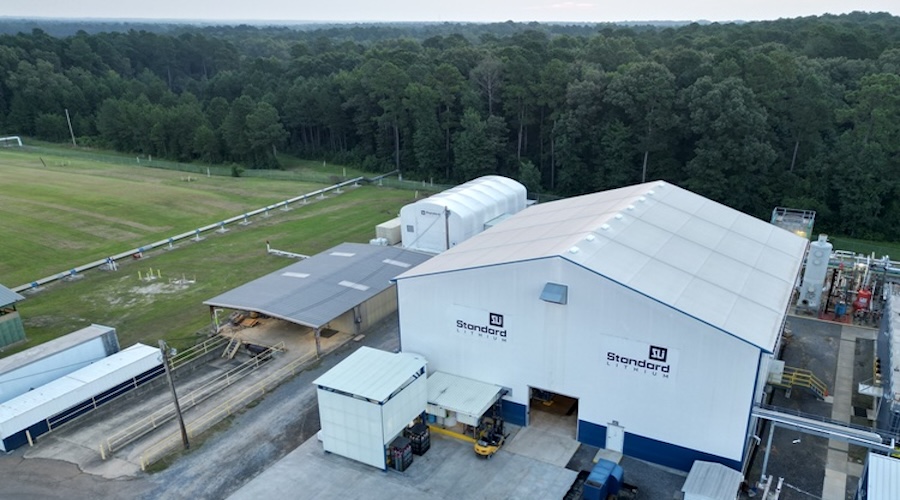
Commodities trader Trafigura has signed a binding take-or-pay agreement with Smackover Lithium to purchase battery-grade lithium carbonate from the South West Arkansas (SWA) project in the US.

Smackover Lithium, a joint venture between Standard Lithium (TSX-V, NYSE: SLI) and Norway’s Equinor (NYSE: EQNR), will supply Trafigura with 8,000 tonnes a year of lithium carbonate over a ten-year period, totalling 80,000 tonnes.
The SWA project targets initial production of 22,500 tonnes a year of battery-grade lithium carbonate in its first pahse, with potential for future expansion. The Trafigura agreement covers more than 40% of that targeted volume.
Smackover Lithium aims to make a final investment decision this year and start production in 2028.
The project will use direct lithium extraction technology to recover lithium from brine resources in the Smackover Formation in southern Arkansas.
Trafigura said the agreement supports the development of domestic supply of a critical mineral widely used in battery manufacturing and emerging technologies.
“We are pleased to have signed this offtake agreement with Smackover Lithium, further strengthening our North American critical minerals footprint,” said Gonzalo De Olazaval, Trafigura’s head of metals and minerals.
“The SWA project is expected to provide a reliable source of battery-grade lithium carbonate produced in the United States, enhancing domestic supply chains. We look forward to collaborating with Smackover Lithium on this strategic project and delivering this material to customers across North America and globally.”
Demand-supply gap
Standard Lithium chief executive officer David Park said the agreement marks a key step as the project advances toward development.
“The execution of the offtake agreement is the culmination of months of collaboration and negotiation and represents an important step toward a final investment decision and construction,” Park said.
The agreement comes as analysts warn the lithium market could tighten sooner than expected as demand from electric vehicles and energy storage accelerates.
Wood Mackenzie research director Allan Pedersen said demand could exceed 13 million tonnes by 2050 under an accelerated energy transition scenario, more than double base-case projections, with supply deficits emerging as early as 2028 unless the industry invests up to $276 billion in new capacity.
California lithium company to go public in $4.7 billion SPAC deal
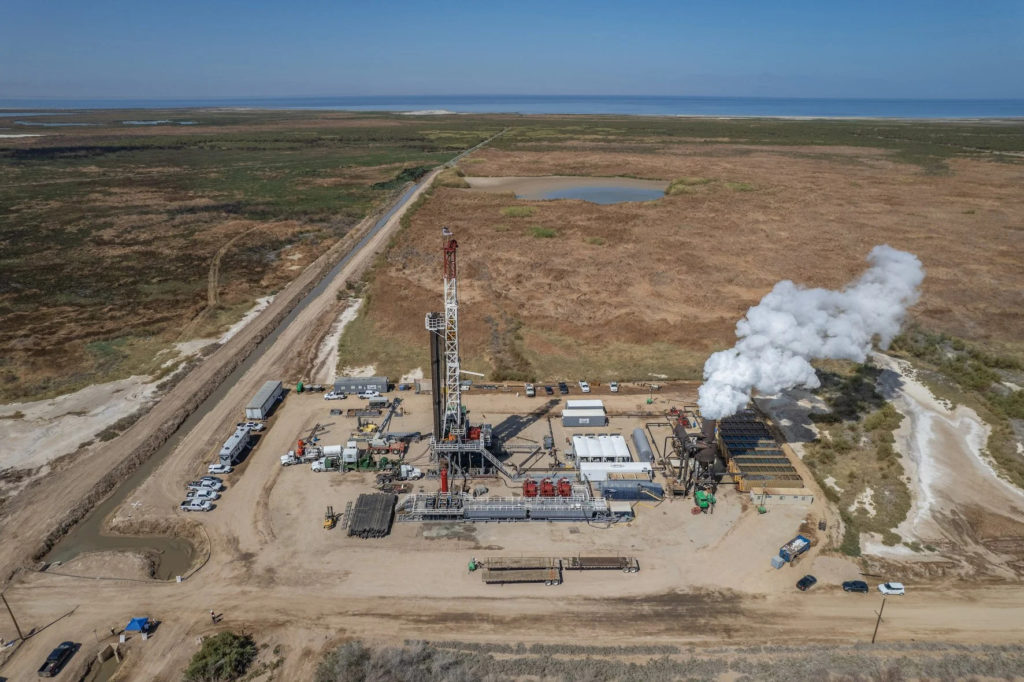
California lithium and power developer Controlled Thermal Resources will go public on the Nasdaq through a $4.7 billion merger with blank-check firm Plum Acquisition Corp IV, the companies said on Monday.
The listing has been CTR’s goal since at least 2021 and is part of a plan to attract investment from US President Donald Trump’s administration.
The deal will bring in $300 million for CTR, funds that will be used to develop its Hell’s Kitchen lithium and geothermal power project, located in the Salton Sea region, roughly 160 miles (258 km) southeast of Los Angeles.
Deals by special purpose acquisition companies (SPAC) have bounced back on Wall Street after years of muted activity, with companies turning to the alternative route to list. SPACs are shell firms that raise money through an IPO to merge with a private business and take it public.
The deal is expected to close in the second half and the combined company is expected to be listed on the Nasdaq under the ticker symbol “CTRH.”
CTR plans to extract superhot brines from deep beneath the Salton Sea and use the heat to generate steam for electricity production. Lithium will then be extracted from the brine before being reinjected back underground using so-far unproven direct lithium extraction technology.
CTR plans to use that technology developed by privately held Aquatech, which counts private equity firm Cerberus as a minority investor.
CTR’s project, which was added to a fast-track permitting list by the Trump administration, is expected to produce 50 megawatts of power by 2028 and 25,000 metric tons per year of lithium by 2029.
Energy-intensive data centers, which are vital physical infrastructure for artificial intelligence, are driving US power demand to record highs.
CTR aims to also produce zinc, manganese and potash from the Salton Sea brine.
“We have focused on diversification. We wanted to get away from just lithium,” CEO Rod Colwell told Reuters. Colwell and his family will remain the company’s largest shareholders once the listing is complete.
CTR signed lithium supply deals with General Motors and Stellantis several years ago. Those remain in place, but the volumes for the contracts may change, Colwell said, although he declined to provide details.
CTR’s faced a lawsuit from Earthworks over concerns about water use. A state court ruled last year against the environmental group, which is appealing.
Hall Chadwick advised CTR while Cohen & Company Capital Markets was Plum IV’s adviser.
(By Arasu Kannagi Basil and Ernest Scheyder; Editing by Shinjini Ganguli, Sriraj Kalluvila and Deepa Babington)

No comments:
Post a Comment