Sunday, April 18, 2021

Most charges against George Floyd protesters dropped, analysis shows

Some prosecutors and law enforcement observers say departments carried out mass arrests as crowd control tactic
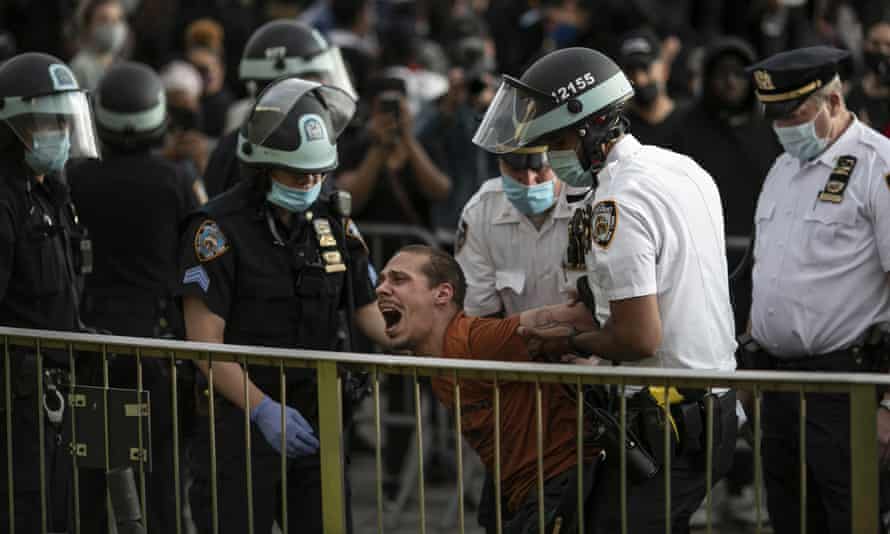

Police officers make an arrest during a rally calling for justice over the death of George Floyd, in Brooklyn, New York, on 1 June 2020. Brooklyn’s prosecutor dropped 83% of 136 more serious criminal cases, and Manhattan’s prosecutor dropped about 64% of nearly 1,000 cases. Photograph: Wong Maye-E/AP

Rights and freedom is supported by
About this content

Tom Perkins
Sat 17 Apr 2021 

The vast majority of citations and charges against George Floyd protesters were ultimately dropped, dismissed or otherwise not filed, according to a Guardian analysis of law enforcement records and media reports in a dozen jurisdictions around the nation.
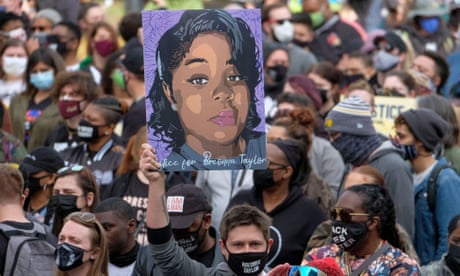

After Breonna Taylor's death, activists fought to ban surprise police raids. One year later, they're winning


But some prosecutors and law enforcement observers charge that departments carried out mass arrests as a crowd control tactic, as a means to silence peaceful protesters, and as a public relations strategy designed to turn the public against demonstrators by making them appear more violent than they were. And what’s more – some of the citing officers never witnessed the protests in the first place.

“It sends a message that you might get arrested if you express your views and first amendment rights,” said Vera Eidelman, staff attorney with the ACLU’s speech, privacy and technology project. “Police absolutely should not be relying on mass arrests to control a crowd or silence people who they disagree with.”

In most of a dozen jurisdictions examined, at least 90% of cases were dropped or dismissed. In some cities, like Dallas and Philadelphia, as many as 95% of citations were dropped or not prosecuted.

Q&A
What is the Overpoliced, underprotected series?


In Houston, about 93% of citations were dropped; in Los Angeles, about 93% of citations were not filed. The prosecutor’s office in San Francisco dismissed all 127 cases related to “peaceful protest-related charges”, though data for more serious citations was not available.

Officials did not file charges for nearly all low-level offenses, like disobeying curfews, while they most often pursued cases with strong evidence of more serious crimes, like assault or looting. Still, data shows that a majority of felony charges were also dropped, which some prosecutors said was due to a lack of evidence.

The analysis does not include federal charges, and the figures are estimates that will change as the remaining cases play out in court. Police sent citations to a patchwork of agencies and departments in different cities where prosecutors, mayors or city attorneys largely made the call to drop charges.

Mayors in every city except Detroit dropped all citations over which they had jurisdiction. The administration of Mayor Mike Duggan, a former prosecutor, pursued a high number of low-level misdemeanor charges or ordinance violations, even though the demonstrations were largely peaceful. But district court judge Larry Williams Jr dismissed more than 100 cases because police refused to provide basic evidence, such as body-cam footage.

In most instances, Detroit officers who wrote tickets were not at the protests and didn’t actually witness the alleged crimes, said the National Lawyers Guild and Detroit Justice Center attorney Rubina Mustafa. Instead of continuing to attempt to prosecute with shoddy evidence, the city earlier this year dropped nearly 300 more citations, but has still pursued dozens of charges against protest organizers. All told, 93% of Detroit cases have been dropped.


Among those still facing charges is the Detroit Will Breathe organizer Tristan Taylor, who said the mass arrests across the country are “all about intimidation” of people who vocally oppose police brutality: “It says something about the nature of policing when that’s a uniform tactic.”


NOT JAN 6
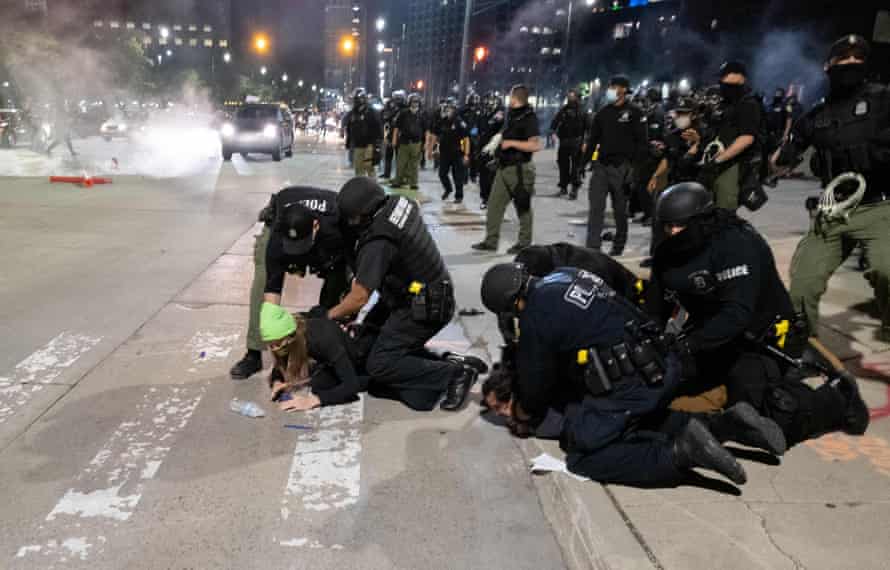
Officers arrest a protester near the police station in Detroit, Michigan, 
on 30 May 2020. Photograph: Seth Herald/AFP/Getty Images

The mass arrests were also part of a public relations campaign by Duggan and the Detroit police chief, James Craig, to paint the protesters as violent agitators and undermine their messaging, a strategy used by police in cities across the nation, said Tyler Crawford, the National Lawyers Guild director of mass defense.

“What they try to do is spin it and say ‘Look at how unlawful protesters are as is evidenced by all of these arrests that we’ve made,’” he said. “Then they hope people have stopped paying attention after six, 10, 12 months when prosecutors say, ‘Hey, we’ve got to drop these charges because these people shouldn’t have been arrested.’”

In Dallas, where more than 95% of cases were not filed, police represent an exception. The department dropped about 675 charges stemming from one protest because “the spirit of service to which the Dallas police department is committed would not be exemplified by moving forward with charges,” leadership explained in an August report. Still, it sent nearly 200 charges to the prosecutor’s office, of which about 85% were dropped or had not been filed as of September, though a department spokesperson did not know the outcome of eight cases.

In Philadelphia, police sent over 1,700 charges to the city and the office of the district attorney, Larry Krasner. Mayor Jim Kenney and Krasner dropped or are poised to drop about 95% of the charges, including all ordinance violations. Krasner is handling a large portion of the more serious misdemeanors and felonies with a restorative justice program that involves dropping charges upon completion of the program. It includes a mix of meeting with victims, community service and referrals to job and education programs. Only about 80 of the most serious charges have so far been filed.


“Police were making arrests as a form of crowd control, so in many instances there were no criminal charges to file,” a Krasner spokesperson, Jane Roh, said. “In other instances, there was simply not enough information to proceed on opening a criminal case.”

The number of dropped cases are also relatively high in cities that witnessed more violence. In Minneapolis, where Floyd was killed, more than 90% of cases were dropped by November, though a local Black Lives Matter leader told the Guardian that hundreds of charges that police made since then remain in legal limbo. Portland has also seen recent violent clashes between protesters and law enforcement. Still, only 15% of nearly 1,100 cases have been filed and 82% have been rejected by the Multnomah county prosecutor, Mike Schmidt.
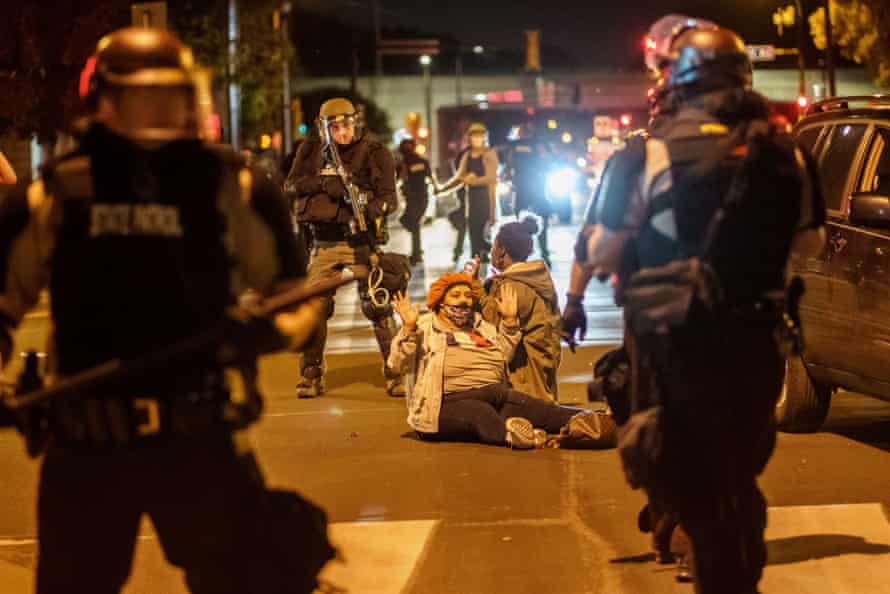
Minneapolis state patrol arrest protesters on 7 October 2020. 
Photograph: Kerem Yucel/AFP/Getty 

In New York City, more than 5,000 summonses that police wrote citywide for low-level offenses were dismissed by a summons court, according to the court’s chief clerk. Though the precise percentage is unclear, the National Lawyers Guild attorney Gideon Oliver, who coordinated defense for many of those cited, said the “vast majority”, if not all, of summonses were or will be dismissed. Meanwhile, Brooklyn’s prosecutor dropped 83% of 136 more serious criminal cases, and Manhattan’s prosecutor dropped about 64% of nearly 1,000 cases.

The mass arrests overwhelmed already strained criminal justice systems by forcing them to contend with processing thousands of protesters. That resulted in delayed arraignments and kept high numbers of inmates crowded in small New York jails for up to days at a time during the pandemic, Crawford said.

“The police response created this whole additional public health crisis that wasn’t something people talked about much, but, in the moment, that was one of the biggest issues we were concerned about,” he said.

Moreover, forcing the criminal justice system to process thousands of cases based on flimsy evidence that probably would not result in prosecutions represented an enormous waste of tax dollars and time, observers said.

“That’s not what the government should be doing,” Eidelman said. “It points to an excessive use of governmental authority.”


UCP ALREADY SOLD LEASES TO AUSTRALIAN COAL MINER

Alberta ministers defend widely criticized coal consultation plans


Presenters can only address issues that come under the authority of the Department of Energy

The Canadian Press · Posted: Apr 16, 2021 


Construction equipment is seen at left in a file photo in the mountains near Crowsnest Pass. A heavy truck is seen at right working at the Teck Elkford Operations open-pit coal mine in southeastern British Columbia, near the Alberta border. (CBC)

Alberta cabinet ministers are defending the government's widely criticized plans to consult the public over open-pit coal development in the province's Rocky Mountains.

"Our goal is to ensure the government's approach to coal reflects the best interests of Albertans and will balance stringent environmental protections and the approach to resource development," said Energy Minister Sonya Savage in an email.

On Thursday, Savage's department released rules for the consultations, which resulted from an outcry over the government's surprise plan for a massive increase in coal mining along the summits and foothills of the Rockies.

But those terms of reference limit what the five-member panel gathering the feedback can listen to. Presenters can only address issues that come under the authority of the Department of Energy.

Concerns over water contamination


Concerns over the destruction of a beloved landscape and the possible contamination of headwaters for much of the province's fresh water are off the table.

That's despite the fact that those issues have been the most commonly raised by Albertans. Thousands of hectares have been leased for exploration as road building and drilling continue.


At the Alberta Urban Municipalities Association convention on Friday, Mayor Jim Willett of Coutts, Alta., asked Environment Minister Jason Nixon if his department would supplement Savage's plans.

"We all thought a review of the coal policy would include a discussion surrounding water sources and usage and the land use act," he said. "Is there a plan for another panel to discuss the points Albertans are most concerned about?"

Nixon appeared to suggest there's no need for one, saying the province's water management is unchanged.

Environment and Parks Minister Jason Nixon said nothing has changed when it comes to water licences, water approvals, the Water Act or environmental legislation around coal. (The Canadian Press) ANOTHER UCP UNDERACHIVER

"Nothing has changed when it comes to water licences, water approvals, the Water Act or environmental legislation when it comes to water around coal," he said.

"All of the strict water rules remain within this province. They have not changed and they will not be changed in any way associated with coal."

Willett, whose municipality is in south-central Alberta, called that a "non-answer." He pointed out the government has opened discussions on water allocations in the area with a view to making the resource available for coal mines.

"We know it's being discussed. And if it's being discussed, why shouldn't we have some input on it?" he said. "Why is it such a narrow mandate that [the government] has given to the coal study group?"

'Beyond the scope of coal'


Savage said concerns such as Willett's "go beyond the scope of coal."

"This engagement is focused on how the province manages coal resources," she said.

Savage said the consultation is designed to gather input around the protections for various land categories contained in Alberta's coal policy, which the government rescinded last spring and recently restored under public pressure.

"[It's] largely focused on the aspects of coal which sparked public concern — for example, the protections outlined under the coal categories."

Nigel Bankes, professor of resource law at the University of Calgary, said that's the problem.

"If this is all we're going to get out of this consultation, then it's a policy on development of coal, not a policy on the eastern slopes of the Rockies."

The consultation is, he said, "incredibly narrow."

"I suspect within cabinet there was real push to keep this confined. I think it was a deliberate political decision."
More than 73,000 Quebec teachers will walk off the job for 2nd strike day on April 27

By Staff The Canadian Press
Posted April 16, 2021 
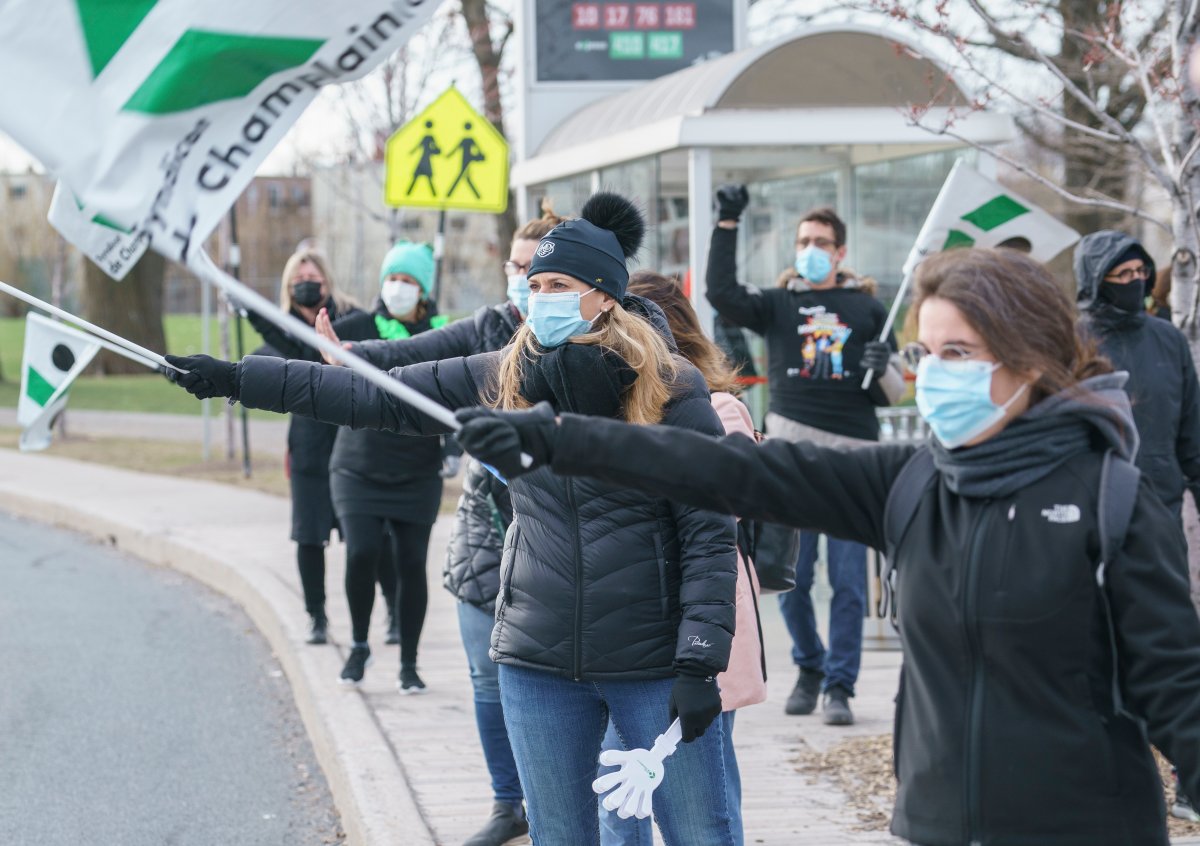
View image in full screenTeachers demonstrate outside a school during a morning walk-out in Longueuil, Que. on Wednesday, April 14, 2021. Teachers are striking to express dissatisfaction with negotiations with the Quebec government that have gone on for more than a year. Paul Chiasson/The Canadian Press

Around 73,000 Quebec teachers say they will walk off the job for several hours on April 27

The strike is scheduled to take place from 2:45 p.m. to 5 p.m. and will be the second strike day this month involving teachers who work for 58 school service centres and English-language school boards.

The teachers went on strike between midnight and 9:30 a.m. on Wednesday.

Josee Scalabrini, president of the Federation des syndicats de l’enseignement, a federation of teachers’ unions, says that by giving a 10-day notice, she hopes school administrators can adapt and won’t try to stop the strike in court.

READ MORE: Quebec man arrested after teacher on picket line struck by car

Education managers applied to Quebec Superior Court and the province’s labour board to prevent last Wednesday’s strike.

The unions say their members want reduced workloads, more support for young teachers and more money.

They say teachers voted for a mandate to strike for the equivalent of five days.

Scalabrini said today the threat of strikes is working.

“It’s funny, since we announced the first strike, we’ve seen things accelerate at the (negotiation) table,” she said in an interview.
RIP
Charles Geschke, co-founder of Adobe and co-inventor of the PDF, has died at 81

Geschke also was known for surviving a kidnapping attempt

By Kim Lyons Apr 18, 2021, 
Photo by Roger Ressmeyer/Corbis/VCG via Getty Images

Charles “Chuck” Geschke, a co-founder of Adobe who helped develop the PDF, has died at age 81, the company said in a statement.

“This is a huge loss for the entire Adobe community and the technology industry, for whom he has been a guide and hero for decades,” Adobe CEO Shantanu Narayen said in an email to Adobe employees.

”As co-founders of Adobe, Chuck and John Warnock developed groundbreaking software that has revolutionized how people create and communicate,” Narayen said. “Chuck instilled a relentless drive for innovation in the company, resulting in some of the most transformative software inventions, including the ubiquitous PDF, Acrobat, Illustrator, Premiere Pro and Photoshop.”

Geschke earned a doctorate from Carnegie Mellon University in Pittsburgh, and then took a job at Xerox Palo Alto Research Center where he met Warnock. The pair left Xerox in 1982 and founded Adobe. Their first product was Adobe PostScript, the programming language that helped boost the desktop publishing industry.


Geschke was chief operating officer of Adobe from December 1986 to July 1994 and president from April 1989 until his retirement in April 2000. He served as chairman of the board with Warnock from September 1997 to January 2017 and was a member of the board until April 2020, when became emeritus board member.

“I could never have imagined having a better, more likable, or more capable business partner,” Warnock said in a statement. “Not having Chuck in our lives will leave a huge hole and those who knew him will all agree.”

In addition to his contributions to the technology industry, Geschke was also known for surviving a 1992 kidnapping attempt. Two men snatched him as he arrived at work one morning and held him for four days, demanding ransom. He was eventually rescued by the FBI.

President Obama awarded Warnock and Geschke the National Medal of Technology in 2009.

“He was a famous businessman, the founder of a major company in the U.S. and the world, and of course he was very, very proud of that and it was huge achievement in his life, but it wasn’t his focus — really, his family was,” his wife Nancy Geschke, 78, told the Mercury News. “He always called himself the luckiest man in the world.”

Geschke is survived by his wife Nancy, who he was married to for 56 years, three children and seven grandchildren.

How David Attenborough Became Nature’s Voice of Reason (Column)

Caroline Framke
VARIETY
4/18/2021


© Gavin Thurston / Netflix

There’s little in this world more soothing than turning on a nature documentary and hearing David Attenborough’s calm, steady voice. Even as a disembodied narrator, the 94-year-old presenter has become such a ubiquitous presence that watching any nature doc without him feels strange, as if trying to put on a shoe before realizing it’s on the wrong foot. This month, in fact, Attenborough’s voice anchors two separate productions: Apple TV Plus’ documentary “The Year the Earth Changed” (out April 16) and Netflix’s “Life in Color” (out April 22). In both, he proves why he has become the go-to authority on the natural world as he highlights wonder and warnings with equal urgency.

“Life in Color” focuses mostly on the specifics of wildlife versus its place in the world at large. Making occasional appearances onscreen to marvel at a primary-colored macaw or two, Attenborough narrates the series with gentle ease, guiding the viewers through three episodes of stunning footage captured by cameras specifically constructed for this production to pick up as much detail as possible. “Life in Color” is for all those who tune in to nature documentary in the hopes of being dazzled by the majesty on display. It’s as vibrant as its animal subjects, making it easy to identify with the unmistakable note of awe in Attenborough’s voice as he explains exactly what we’re looking at.

David Attenborough Hologram to Promote 5G With BBC Series 'The Green Planet'

“The Year the Earth Changed,” by contrast, is much more explicit about the human race’s role in the natural world. Directed by Tom Beard, the film takes a unique look back at the past year under pandemic lockdown by showing all the ways in which the natural world thrived once human activity suddenly slowed down. Checking in on various locations a month, two months, six months, a year into human quarantine, the 48-minute documentary makes a compelling case for how much damage humans cause on a daily basis, and how much we could help revive the endangered planet by simply adjusting our behavior to coexist more peacefully alongside the animal kingdom.

Beard and his various camera crews show us turtles getting full access to a beach for the first time in decades, penguins getting back to their chicks in a fraction of the time without having to factor in human crowds, and a dormant luxury safari site becoming a fertile feeding ground for a leopard who can now ditch his nocturnal hunting habits. It’s striking, and more than a little depressing, to realize just how badly humans treat our surroundings every day, and how devastating it can be for everything else that lives there. Attenborough did not produce “The Year the Earth Changed,” but in tapping him to deliver its message, the team behind the documentary knows exactly what it’s doing.

Over the years, Attenborough and the projects in which he’s chosen to participate have threaded their awe of nature with an increasingly dire warning about its man-made decline. This became especially unavoidable in 2016’s “Planet Earth II,” the highly anticipated follow-up to the game-changing “Planet Earth.” (Attenborough wrote and performed the narration for both, and not for nothing: it says everything about how synonymous Attenborough became with “Planet Earth” that the gambit of casting Sigourney Weaver as narrator for the first series’ American broadcast was not repeated for the second.)

When “Planet Earth II” added a specific “Cities” episode, it not only showed off the production’s incredible ability to capture life in all corners of the world, but its determination to make its viewers understand not just how catastrophic climate change could be, but how much damage it’s already done. In one particularly terrible sequence, “Cities” demonstrates exactly how awful it can be for those turtles when humans swarm their beaches and build highways alongside them, showing a doomed procession of babies waddling onto a busy road. At the end of that episode, and thus the series, Attenborough chose a blunt conclusion. “The potential to see animals thriving within our cities is achievable across the globe,” he insists. “More than half of us now live in urban environments. Whether we choose to create a home for others, too, is up to us.”

Attenborough got yet more explicit in 2020 with a film to which he lent significantly more than voiceover narration. For Netflix, Attenborough produced “A Life On Our Planet” as his “witness statement” after observing all corners of the Earth for decades. Then 93, Attenborough opens the film in Chernobyl, the remnants of a world ruined by man strewn all about him. “The natural world is fading,” he says directly to the camera, and to us, his rapt audience. “The evidence is all around. It’s happened in my lifetime: I’ve seen it with my own eyes.” Here, Attenborough also distills his worldview and mission into a succinct sentence that encapsulates his every recent project: “[This is] the story of how we came to make our greatest mistake — and how, if we act now, we can yet put it right.”

Having spent much of his lifetime coming to this conclusion, Attenborough has made himself an unparalleled authority on the most pressing issue of climate change. Perhaps more importantly, he’s made himself an approachable, trustworthy voice of reason in a debate that too frequently gets lost in hysterical denial of the facts. Many people may tune in to a show featuring Attenborough simply because his gentle voice provides both comfort and a guarantee of quality. And even if they’re not looking for lessons on the values of conservation, Attenborough has found a way of delivering them with patience, gravity and an undeniable expertise that makes him impossible to ignore.
OCCUPY AND OPERATE UNDER WORKERS CONTROL
Paper Excellence has permanently closed the Mackenzie Pulp Mill.

Production at the mill was originally curtailed in June 2020, putting 253 employees out of work in the community north of Prince George.

It said employees from the mill have been relocated to other Paper Excellence facilities where possible and the terms of the collective agreement with Unifor Local 1092 will be respected and severance payments made.

The company attributed the decision to market impacts caused by COVID-19 and lack of local economic fibre.

"Since acquiring the Mackenzie mill in 2010, Paper Excellence has invested more than $360 million in the facility," the company said in a statement. "However, despite these investments and the committed team of employees in Mackenzie, the facility’s small production capacity and the ongoing lack of local economic fibre meant the mill could not be globally competitive."

Conversely, Paper Excellence said it is restarting one of the paper machines in its Powell River mill in early May, investing with and establishing jointly beneficial partnerships with First Nations, and making a $13 million capital investment in its Port Alberni facility to "diversify into higher-value markets."

The company is working towards a "significant capital investment" in its Crofton facility on Vancouver Island and restarting its facility in Prince Albert, Saskatchewan.

Nechako Lakes MLA and BC Liberal forestry critic John Rustad called the development disappointing. He maintained the Mackenzie area is home to one of the "biggest fibre baskets we have" and speculated that uncertainty over what the governing NDP has in store for the industry played a role.

"The big shifts that the government is talking about in terms of forest management and allocation, I think, were too much of a headache for them," Rustad said.

He also predicted a further closure of a pulp mill and a sawmill north of the Pine Pass as the restrictions on access to fibre in the name of protecting caribou take hold in the Chetwynd area.

Asked if pellet plants competing for fibre may be having an effect, Rustad suggested it's possible and noted that pulp mills on Vancouver Island can access "fibre recovery zones." He said pulp mills, with their significantly-larger capital outlays, have relied on inexpensive fibre to make ends meet.

In an emailed statement, forests, lands and natural resource operations minister Katrine Conroy said the news has left her saddened.

“My sympathies are with the impacted workers and their families. I spoke with Mayor Joan Atkinson this afternoon and assured her that our government will continue doing everything we can to support the workers, their families and the community," Conroy said.

Conroy also said that over the last two years, government has provided nearly $3 million in funding for job creation and support for employees hit by the closure.

"Through WorkBC and the Job Placement Co-ordination Office in Mackenzie we continue to help impacted workers access government programs, skills training referrals, job referrals and job placement," she said.

Paper Excellence, meanwhile said it "looks forward to the BC government’s continued focus on competitive mid-term timber supply and modernization of forest policy while ensuring an equitable distribution of access to forest tenures to support the diversity and competitiveness of the sector and the production of high value products."

Mark Nielsen, Local Journalism Initiative Reporter, Prince George Citizen
LIKE GOD BITCOIN IS A SPECULATIVE FICTION
A fintech head breaks down the 'religious' properties that make bitcoin the top cryptocurrency - and says Chamath Palihapitiya and Jack Dorsey are so devout that they ignore other crypto innovations

ilee@insider.com (Isabelle Lee) 
4/18/2021
© KTSDESIGN/SCIENCE PHOTO LIBRARY/Getty Images KTS Design/Science Photo Library/Getty Images

Ajit Tripathi, head of institutional business at Aave, described in a recent Citi report why bitcoin is the undisputed leader in the cryptocurrency space.

He provided three main reasons why bitcoin has found so much success.

Tripathi as discussed the "religious" properties that make it so singularly popular with the likes of Chamath Palihapitiya and Jack Dorsey.


The market value of cryptocurrencies has more than tripled since 2017 amid a surge of interest both from institutional and individual investors, cemented by the direct listing of Coinbase on April 14.

Bitcoin has been leading the charge for three main reasons, according to Ajit Tripathi, head of institutional business at decentralized-finance platform Aave. He provided an external voice for a new Citi report this month entitled Future of Money.

First, there's trust. Bitcoin has not been hacked in its 12 years of existene, Tripathi said.

"Anyone who touches crypto looks at bitcoin first," he said. "Bitcoin was the first one, and bitcoin platforms have gone through a lot of challenges/accidents and survived."

Next, Tripathi cites regulatory clarity. The Commodity Futures Trading Commission has classified bitcoin as a commodity, which the Securities and Exchange Commission has, thus far, not challenged.

Third, there is brand value. Tripathi, who also co-founded the UK Blockchain practice for PwC, said while the fundamental value of bitcoin has long been assessed, the brand value of the cryptocurrency has been left in the shadows unlike legacy brands such as Apple and Tesla.

Read more: Bitcoin is a headache to store, and that's created an investment opportunity that could theoretically pay determined traders big risk-free returns by December

"Bitcoin also has an extraordinary brand value," he said. "Even Silicon Valley pundits like Chamath Palihapitiya or Jack Dorsey are essentially bitcoin maximalists - they cannot think beyond bitcoin and do not acknowledge other cryptocurrency innovations."

He continued: "In that sense, bitcoin has some of those religious properties; and such strong sentiments are very valuable, if you are trading."

Citi in the report also said the characteristics of bitcoin vary widely, thus, making it hard to value. But, long term, the researchers, led by Ronit Ghose, global head of banks and co-head of global fintech research, said that bitcoin as a digital payment mechanism will have a potentially larger value than its use as a form of digital gold.

In all, Citi said it acknowledges the changing tides the world is experiencing right now.

"We are at an inflection point in the history of money, faced with different paths to modernize payments," said Tony McLaughlin, emerging payments & business development at Citi treasury and trade solutions.

Bitcoin this week hit record highs, inching close to $65,000 but slipped 2.2% on Friday.

Liberty University claims its former president failed to live up to the school's moral code.

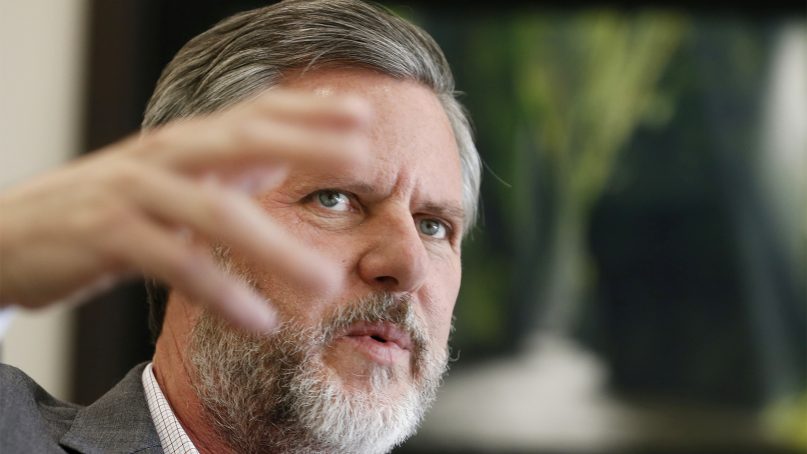
Jerry Falwell Jr. resigned after 13 years serving as president of Liberty University. (AP Photo/Steve Helber)

(RNS) — Liberty University, one of the nation’s largest Christian universities, is suing former President Jerry Falwell Jr. for $10 million, citing a breach of contract and a conspiracy to mislead the university’s board. 

Falwell, son of Liberty founder the late Rev. Jerry Falwell Sr., resigned as Liberty’s president in August 2020 after years of controversy due to his support of Donald Trump and allegations of misconduct. 

A complaint in the lawsuit, filed in a Lynchburg, Virginia, circuit court, claims Falwell “fashioned a deceitful scheme to manipulate the Executive Committee of Liberty” while negotiating his last contract.


RELATED: Jerry Falwell Jr. resigns from Liberty University. Again.


The complaint also states Falwell created the so-called “Granda plan” to conceal his family’s relationship with Giancarlo Granda, a young man the couple had met while vacationing in Florida. Granda has claimed to have had a long-term sexual relationship with Jerry Falwell Jr. and with his wife, Becki Falwell. The Falwells have denied that claim but have admitted that Becki had an affair with Granda. The couple also bought a Miami beach youth hostel in 2013 that Granda managed and also had a share in.

The complaint claims Falwell devised a plan to cover up the relationship, fearing Granda would make it public, and that Granda asked Falwell for payoffs in order to keep racy photos of Becki Falwell out of the public eye.

“Most damaging, Falwell Jr. knew that Granda would be able to provide details about the fact of the affair with Becki, its duration, Falwell Jr.’s role in abetting it, the attendant circumstances of the affair, and the specific activities in which Granda, Falwell Jr. and Becki engaged in during the affair.”

Rather than telling the board about Granda, Falwell hid it from Liberty’s board, according to the complaint. Falwell also became concerned his high-profile support of Trump would backfire and might cost him his job.

The complaint claims Falwell had a fiduciary responsibility to refrain from acts “harmful to the university” but did not do so. Specifically, the complaint points to the coverup of the relationship with Granda during the time he was negotiating a new contract as harmful to the school.

Then, in 2019, he negotiated a new employment agreement with the board, which included a raise and a more favorable severance if he were fired. The complaint claims Falwell continued to conceal his dealings with Granda while trying to create a “safety net” for himself. 

“Had Liberty’s Executive Committee known in 2018 or 2019 that Granda was attempting to extort Falwell Jr., and thus planning to harm Liberty, and had it known the full circumstances of Granda’s extortion of Falwell Jr., then the Executive Committee would have refrained from entering into the 2019 Employment Agreement,” the complaint claims.

The complaint maintains Fallwell Jr. should not have accepted the severance payment.

Falwell’s actions clashed with the school’s moral code, known as the “Liberty Way” — which requires faculty and administration to agree to a statement of faith and to adhere to “Biblical standards of morality,” including strict rules limiting sex to within a heterosexual marriage. 

The school’s president was expected to be “a standout spiritual leader for the college,” according to the complaint.

Falwell Jr. told Religion News Service that the lawsuit was filled with “lies and half-truths” and was an attempt to discredit him.

“The Executive Committee of the Liberty University Board of Trustees has made yet another attempt to defame me and discredit my record, following a series of harsh and unnecessary actions against my children, Becki, and me,” he said in the text message. “Throughout all my years at the University, where we built a multi-billion-dollar enterprise that reaches Christian’s worldwide, I always abided by the requirements that applied to everyone on the University staff. This lawsuit is full of lies and half truths, and I assure you that I will defend myself against it with conviction.”

Dustin Wahl, Liberty graduate and co-founder of Save71, which describes itself as “a group of alumni and students advocating for reforms at Liberty,” said the Liberty board of trustees had long ignored Falwell’s problems.

“To this day, the board of trustees has not apologized to Liberty students for allowing Falwell to abuse his power as president,” he told Religion News Service. “They ignored warnings about Falwell’s behavior for years, but chose to ignore them.”

“That they are now making these claims and admissions in a lawsuit and not in a heartfelt apology to Liberty’s student body reveals their misplaced priorities,” he added.

The complaint also claims Falwell “consistently refused” to use his official Liberty email address for school business, while also requiring the school to provide him with computers, phones, laptops and other devices, which he has allegedly refused to return. Liberty claims in its complaint the devices contain confidential material belonging to the school and has demanded that Falwell not destroy that information.

The suit seeks $10 million in damages and a return of any Liberty property still in Falwell Jr.’s possession. 

“While I am grateful Liberty is taking more decisive steps to separate itself from Falwell, the suit unwittingly implicates the board that for so long propped him up and gave him free rein,” said former Liberty English professor Marybeth Davis Baggett. “Even as they criticize Falwell for his failures as a spiritual leader, they highlight their own repeated failures to keep his corruption in check. My hope is that this suit underscores the need for real penitence, deep repentance, and sweeping reform at Liberty.” 

Falwell Jr. did not immediately respond to requests for comment. 

The lawsuit is the latest twist in the controversial career of Falwell Jr.

He became president of Liberty in 2007, following the death of his father, and built it into an evangelical powerhouse. In June 2007, the end of Liberty’s fiscal year, the school had annual revenue of about $300 million and $149 million in net assets. By 2018, the school had revenues of more than $1.1 billion and $2.3 billion in net assets.

“During Falwell Jr.’s tenure, Liberty capitalized on the explosive growth of online education, providing students with a quality experience of academic and biblical education remotely,” the complaint states. “Liberty also used the proceeds of on-line education to expand its beautiful campus and build a sizable endowment.”

When he became president, Falwell Jr. promised to continue his father’s vision of building “Champions for Christ.” The former Liberty president became controversial after becoming one of the first major evangelical figures to endorse Donald Trump.

Trump had visited Liberty in 2012 for a campus tour, where he was photographed with Falwell Jr.and Becki Falwell. Also in the photo was Granda.

During that visit, Granda “became closely exposed to Liberty’s high moral standards, which overtly clashed with Liberty’s first couple’s discordant sexual conduct,” according to the suit.

The relationship with Granda would prove Falwell Jr.’s undoing, asserted the suit.


RELATED: Why Jerry Falwell Jr.’s social media ‘yacht’ posts were problematic for Liberty University


In a previous suit that Falwell Jr. filed against Liberty, he alleged Granda had acquired intimate photos of his wife and distributed them. Rumors of the photos eventually made headline news after former Trump lawyer Michael Cohen claimed he had worked to prevent the release of embarrassing photos of the Falwells.

Falwell went on leave from Liberty in August 2020, after posting a selfie on Instagram, with his pants unbuttoned and his arm around a woman who was not his wife. In his hand was a glass of dark liquid, which he called “black water.”

Liberty’s lawsuit also provided details of the Falwell family’s business dealings with Granda. According to the company, Falwell Jr. loaned $1.8 million dollars to a company owned by Becki Falwell, Granda and Falwell’s son, Trey, who was also a Liberty staffer at the time. The company’s youth hostel, which catered to college students, also housed a liquor store.

Trey Falwell, who had been a vice president at Liberty, recently left the school. 

The Rev. Jonathan Falwell, pastor of Thomas Road Baptist Church, has remained relatively quiet about his brother’s troubles. He was recently named the school’s new campus pastor.

In August 2020, just before Granda went public with his claims about his relationship with the Falwells, the couple gave a statement to the Washington Examiner in which the then-Liberty president claimed his wife had had an affair with Granda and that Granda had tried to extort money from the couple.

“We have categorically rejected this person’s demands while dealing with him and this particular member of the media who seemed just as obsessed with the prurient, untrue aspects of this story, however fantastic,” the statement said.

The Examiner story caught the Liberty board by surprise, according to the complaint. Falwell was on leave at the time, and his contract with Liberty “forbade him from publishing without the Executive Committee’s prior assent.”

After the Falwell confession and Granda’s allegations went public, Falwell was out as Liberty president, with the board saying, “it would not be in the best interest of the University for him to return from leave and serve as President.”

Falwell sent mixed messages about leaving the school. He resigned, then tried to revoke his resignation, and then resigned again.

Since that time, Falwell has been largely out of the public eye, though he posted on Instagram last week that he had gotten the first shot of Moderna’s vaccine for COVID-19. He also posted photos from a Liberty lacrosse game and shared that the reason he has “been so ‘absent’ from LU” is because he has been suffering from clots in his lungs.

“I didn’t even have the strength to go on TV to refute lies in the press,” Falwell Jr. posted.

Under Virginia law, any damages awarded in the suit could be tripled.

This is a developing story and will be updated.

Emily McFarlan Miller and Jack Jenkins contributed to this report. 

GOD WANTS YOU TO BE RICH 

Former employee sues Dave Ramsey’s company for alleged religious discrimination, ‘cult-like’ atmosphere

The lawsuit claims employees have to submit to Ramsey as a spiritual leader and agree with his views on COVID-19, with no questions allowed.

BUT NOT IF YOU WORK FOR ME
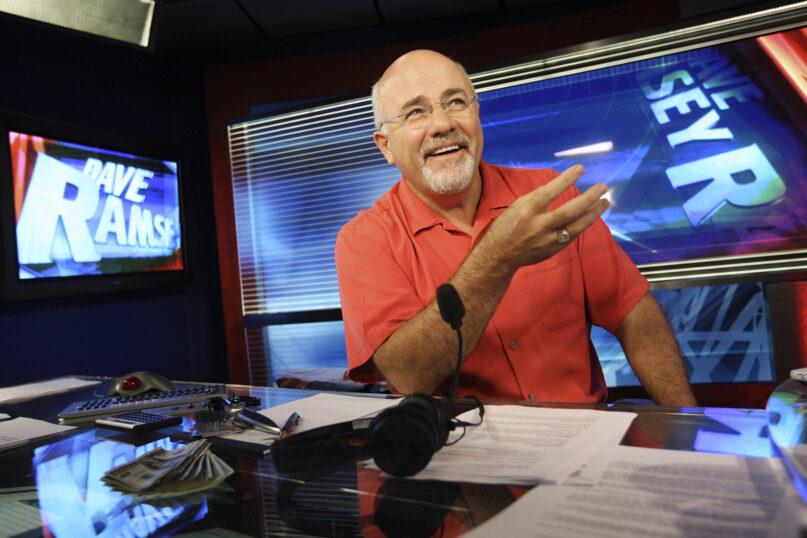
In this July 29, 2009, file photo, financial guru Dave Ramsey sits in his broadcasting studio in Brentwood, Tenn. Ramsey Solutions later moved to a new corporate headquarters in Franklin. (AP Photo/Josh Anderson, File)

NASHVILLE (RNS) — The company owned by Christian personal finance adviser and radio host Dave Ramsey is being sued for alleged religious discrimination and misrepresentation.

A complaint filed Thursday (April 15) in a county court alleges the Lampo Group, which does business as Ramsey Solutions, was run as a “religious cult” and required employees to give “complete and total submission to Dave Ramsey and his views of the world to maintain employment.”

Ramsey, whose Financial Peace University materials on personal finances are used by churches nationwide, is also named as a defendant.

The complaint also alleges Ramsey’s handling of the COVID-19 pandemic put employees and their families at risk.

Lawyers for Brad Amos, a former Ramsey Solutions video editor, alleged their client was fired by the company because he objected to Ramsey’s views on the COVID-19 pandemic. Ramsey has consistently downplayed the risk of COVID-19, has referred to those who wear masks as “wusses” and barred employees from working at home for much of the pandemic. 

The company also held a mostly maskless, in-person Christmas party and has sued a Florida hotel for breach of contract after the hotel said it would require attendees at a Ramsey conference to wear masks. 


RELATED: Is Dave Ramsey’s company the ‘best place to work’? Disagree and you are gone


The complaint alleges that Ramsey’s views on the pandemic are largely shaped by religion and that Amos was fired for disagreeing with those religious views.

“Plaintiff was terminated for failing to follow Defendant’s particular view that taking precautions other than prayer against COVID infection would make a person fall out of God’s favor,” the complaint states.

The lawsuit was filed in the Chancery Court for Williamson County, Tennessee, where Ramsey Solutions is headquartered.


RELATED: Dave Ramsey, Christian finance guru, defies COVID-19 to keep employees at desks


According to the complaint, Amos was editing movie trailers in California when he was approached in 2019 by a recruiter for Ramsey Solutions. During what the complaint described as a six-month interview process, Amos became concerned after hearing of a “cult-like culture” at Ramsey. He was also concerned that despite its claims, Ramsey was not a “family-friendly” place to work.

Jonathan Street, one of Amos’ attorneys, told Religion News Service his client had raised concerns to Ramsey leaders and was assured the rumors were not true and that the company had a “strong commitment to family time for employees.” The lawsuit claims Amos was misled in the hiring process.

Street said his client’s most pressing concern was his family’s well-being.

Amos’ wife and son are at high risk for complications of COVID-19, Street said, and his requests to work at home were denied. The lawsuit alleges any concerns about COVID-19 were dismissed as “weakness of spirit,” and the spouses of company employees were required to support Ramsey’s views on COVID.

In response to the lawsuit, Ramsey Solutions told RNS via email that the suit is “full of blatantly false allegations that have no merit.” The organization accused Amos of “inflammatory and false statements” and said they are prepared to take action, citing slander and defamation. “It appears the goal of this lawsuit is to smear Ramsey Solutions’ reputation and extort a large settlement, and we are fully prepared to defend this lawsuit and prevail.”

The lawsuit also cites a May 2020 meeting, when Ramsey threatened to fire an employee who had filed an OSHA complaint about the company’s handling of COVID-19. During an all-staff meeting, Ramsey told staff the OSHA complaint would not affect the company.

“So whoever you are, you moron, you did absolutely no good, except piss me off,” he told staff during that meeting, as RNS has previously reported. “You are not welcome here if you are willing to do stuff like that. If you are really scared and you really think that leadership is trying to kill you … please, we love you. Just leave. We really don’t want you here.”

The complaint filed by Amos’ attorney cites RNS coverage of Ramsey Solutions.

Ramsey Solutions is also being sued by a former employee named Caitlin O’Connor, who claims she was fired for being pregnant and unmarried. The company had defended her firing, saying she was fired for having premarital sex, which company policy bans. In defending its policies, Ramsey Solutions has also claimed to have fired a total of eight employees since 2016 for premarital sex. 

News of the O’Connor lawsuit led Inc. magazine to drop the company from its 2020 “Best Workplaces” list.

Ramsey personality and author Chris Hogan recently resigned from the company for violating undisclosed Ramsey Solutions’ policies. Leaders at Ramsey had long backed Hogan, despite concerns about his conduct. 


RELATED: Chris Hogan, retirement expert and ‘personality,’ departs Ramsey Solutions


Ramsey has boasted of his company’s code of conduct, which includes a “righteous living” core value, and his ability to control the personal lives of employees.

“I’ve got a right to tell my employees whatever I want to tell them,” he said in a Q&A segment about the company code posted on the company website. “They freaking work for me.”

This story has been updated with a statement from Ramsey Solutions.


First drag queen certified as a candidate for United Methodist ministry ‘speaking in a new way to new people’

Isaac Simmons is the first openly gay man to be certified within the Illinois Great Rivers Conference and, as far as anyone can tell, the first drag queen certified in the United Methodist Church.

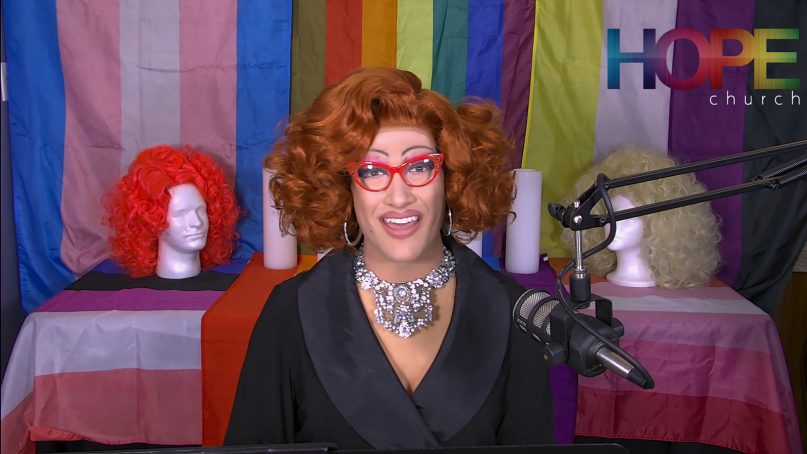
Ms. Penny Cost delivers a message during the Hope United Methodist Church virtual service in Bloomington, Illinois, on April 11, 2021. Video screengrab

(RNS) — A few things were different about Sunday’s virtual service at Hope United Methodist Church in Bloomington, Illinois.

For one, there were a few more wigs on screen.

There also was “a little bit more makeup,” said Ms. Penny Cost, that Sunday’s preacher.


RELATED: United Methodists reschedule meeting — and decision on splitting — again


Hope Church celebrated Drag Sunday on Sunday (April 11) with a message by Ms. Penny Cost and music, readings and prayer by other drag artists from central Illinois and beyond.

“It is our way of celebrating and uplifting the voices of drag artistry within the church,” Ms. Penny Cost said during the service.

The service also came in response to pushback and questions the church has received over the past few weeks.

The Illinois Great Rivers Conference’s Vermillion River District Committee on Ordained Ministry recently unanimously certified Hope Church’s director of operations, Isaac Simmons — who goes by Ms. Penny Cost in drag — as a candidate for ministry in the United Methodist Church.

Simmons, 23, is the first openly gay man to be certified within the Illinois Great Rivers Conference and, as far as anyone can tell, the first drag queen certified in the United Methodist Church. 

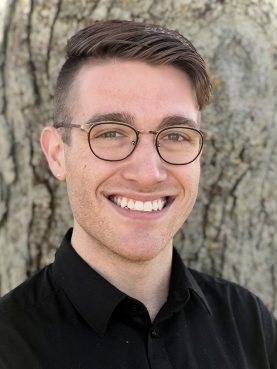
Isaac Simmons — who goes by Ms. Penny Cost in drag — is candidate for ministry in the United Methodist Church. Courtesy photo

Isaac Simmons — who goes by Ms. Penny Cost in drag — is a candidate for ministry in the United Methodist Church. Courtesy photo

“It is mind-boggling simply that it’s 2021 and I’m the first, but also it’s incredibly humbling,” he told Religion News Service.

“For the amount of pushback and the amount of hate that I have faced — simply by existing, let alone for pursuing ordination — I have received, I’ve been poured into even more love and support,” he added.

Not long after the vote, Simmons’ story was picked up by conservative United Methodists.

“How many churches in their district or conference would be comfortable with a minister who is a drag queen? Would the people in the pews say his faith and works honor God and align with the Wesleyan tradition?” asked blogger Dan Moran of the Institute on Religion and Democracy.

The pushback that followed was scary, Simmons said. He wrote for the Reconciling Ministries Network blog that he has been called “the anti-Christ,” the “spawn of Satan” and — his favorite — “a bad copy of Jack Lemmon’s performance in ‘Some Like It Hot.’”

But Simmons said he also has received a lot of support from across the denomination.

Among those celebrating his candidacy is Jan Lawrence, executive director of Reconciling Ministries. Lawrence said that while she hasn’t met Simmons yet, she views him as “an example of someone we can learn from as we understand his story.”

“In my book, he is a rock star for being bold enough to open himself to the criticism that he is experiencing now,” she said in a written statement to RNS.

“The intersections of his faith, his queerness, and his performances as a drag queen may be questioned by some. Yet, he brings his full self to his ministry which is exactly what we expect of our pastors.”

Simmons is only a year into what is about a five-year process to be ordained in the United Methodist Church, he said. His candidacy comes at a time when the United Methodist Church is deeply divided over issues related to the inclusion of its LGBTQ members.

The denomination, one of the largest in the U.S., is expected to consider a proposal to split when its global decision-making body, the General Conference, meets over nine days in August and September 2022 in Minneapolis. That meeting already has been postponed twice because of the ongoing COVID-19 pandemic.

Meantime, Simmons said, he sees his candidacy as “a sign of validation,” not only that he is seen, loved and called by God, but also the LGBTQ United Methodists he hopes will follow him.

“Queer folks, trans folks, people all over are seen loved and called, and I hope that it’s indicative of the change that is coming,” he said.

Simmons became a United Methodist while at Illinois Wesleyan University, where he is studying business management and religious studies.

He ran into Hope Church at Bloomington’s Pride Fest and thought, “If a church comes to support me, I need to go and support them.” He showed up that Sunday and never left.

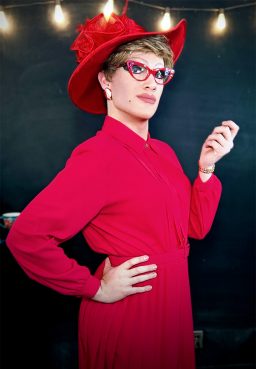
Ms. Penny Cost, the drag persona of Isaac Simmons, poses for a photo. Courtesy photo

Ms. Penny Cost, the drag persona of Isaac Simmons, poses for a photo. Courtesy photo

A “nerd at heart,” he said, he threw himself into Methodist history. The “love and grace” he sees at the foundation of Hope Church and the United Methodist Church appealed to him. So does the fact he believes that when the denomination “came out on the wrong side of history,” it then “worked to repair it and to change and to prevent it from happening in the future,” he said.

His studies brought him to drag, too, as he worked on a research project on the use of carnivalesque to subvert systems of oppression.

“For me, there is nothing more carnivalesque than drag, because it is something that is full of laughter and full of love, full of support, but also full of protest, full of change, full of demanding justice,” he said.

“And so it’s this beautiful art form that allows folks an opportunity to engage with darker topics such as theological oppression in a way that welcomes them into it and makes them feel as if they can do it without shame.”

Ms. Penny Cost is a “1960s church lady” who allows people to think about the ideas they have of a stereotypical churchgoer, Simmons explained.

Her name comes from the biblical story of Pentecost, a moment in the midst of fear and uncertainty when tongues of fire came to rest on Jesus’ disciples, they were filled with the Holy Spirit and they began to speak in different languages. She often wears bright red wigs — her own tongues of fire.

“For me, drag is my way of speaking in a new way to new people,” Simmons said.


RELATED: In this to the end’: LGBT United Methodists express hurt, hope after vote


Drag Sunday at Hope Church looked like “basically just a church service that just happened to be performed in drag,” Simmons said. The service featured special music written for the occasion by Sharon ShareAlike, a well-known drag artist, along with an offering and a benediction.

The message by Ms. Penny Cost continued the church’s sermon series on the life of Jesus based on the Gospel of Mark.

“Today we are living just a little bit more into this idea that the church is not defined by the four walls that make it up, but by the expansive acceptance of its heart,” she said.