Friday, June 18, 2021

 EIGHTIES CULT DEPROGRAMMING ORIGINS

Troubled US teens left traumatised by tough love camps

By Kelly-Leigh Cooper
BBC News 


Publi

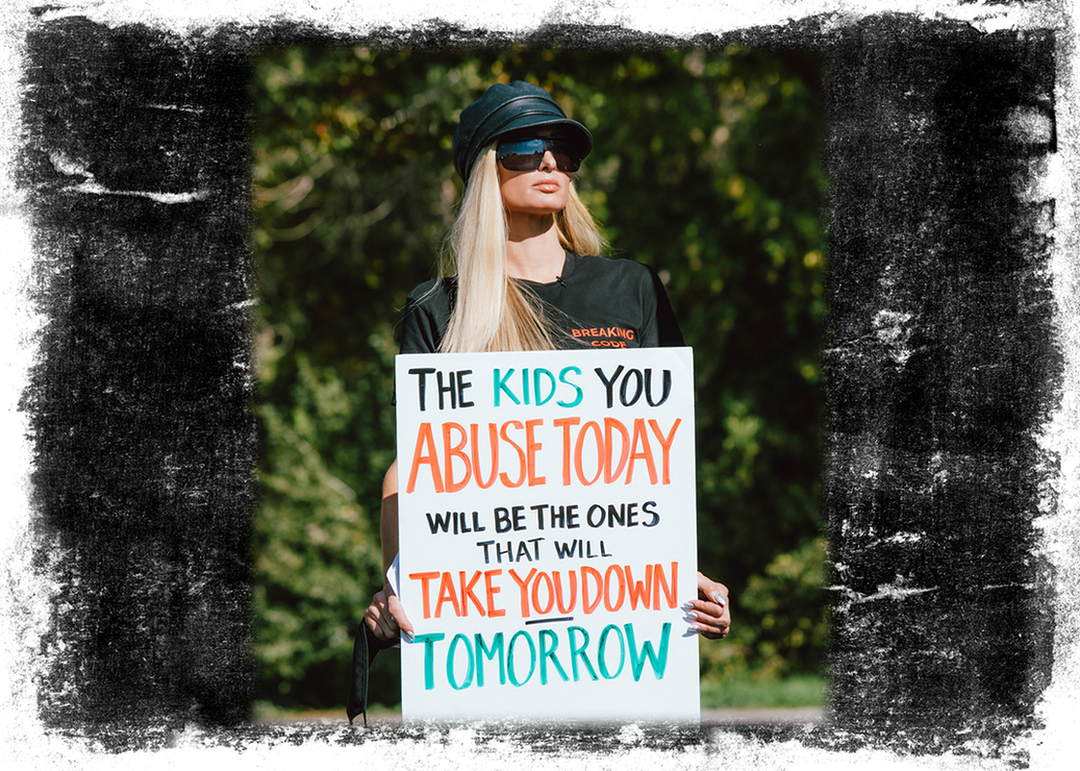
As one of the most famous faces of the 2000s, people think they know the story of Paris Hilton. So, when the 40-year-old released a YouTube documentary about her life last year, many were shocked to learn about her decades-long struggle with trauma.

Hilton tearfully recounted how she was woken up by strangers in her bedroom in the middle of the night as a teenager and forcibly taken across the country. She said her unanswered cries for help repeatedly play out in nightmares which make it difficult to sleep.

Her story, though shocking, is not unique. Hilton is one of thousands of American children sent every year by their parents into a private network of "tough love" residential programmes and schools marketed at reforming their behaviour.

No-one knows how many for sure, because nobody is keeping track.

Short presentational grey line

"My parents got me kidnapped and dropped off in the middle of the mountains," 21-year-old Daniel says in a TikTok video watched more than a million times.

As a teenager, Daniel suffered anxiety and depression. He was 15 and had recently come out as gay when he self-harmed so severely that he required hospital care. It was in hospital that he was shaken awake in the middle of the night by two men. They told him the process could be easy or hard - depending on how much he resisted. With little fight left in him, Daniel went with the pair. But when he asked a stranger if he could use a telephone to call his parents on a brief stop for food, he says the escorts threatened him with handcuffs.

Daniel was sent to a wilderness programme in Utah where he spent 77 days living outdoors, hiking miles a day on rations. He vividly remembers feeling cold, hungry and dirty for weeks on end and witnessing others attempt to run away and try to take their own lives. Like many others sent to wilderness programmes, he was then enrolled directly into a long-term facility - this time in Montana - where he would spend another 15 months.
The Troubled Teen Industry (TTI) has become an umbrella term for a wide scope of private residential programmes like these aimed at modifying adolescent behaviour. From boot camps to boarding schools, these facilities are marketed as treatment for a broad range of behavioural and mental health issues including eating disorders, drug use and defiance.

The people who took Hilton and Daniel were from companies specially marketed to families concerned about how their children might react to being enrolled in a programme. These youth transportation services are well-advertised and often come recommended, with parents typically paying a few thousand dollars to have their children taken from their beds and securely dropped off across the country.

Parents are sometimes referred to the industry by third parties after feeling they have exhausted other means of getting their children help. Programmes sell themselves on high levels of anecdotal success, with testimonials from families and students on their marketing materials and in online reviews describing them as transformative and even life-saving.

But for years, other former residents have been painting a very different picture of their time within these facilities, including in lawsuits and criminal complaints, alleging emotional and physical abuse.

Short presentational grey line

The BBC has spoken to 20 people who identify as troubled teen survivors, aged from 20 to their late 40s, about their experiences within the industry over the last few decades.

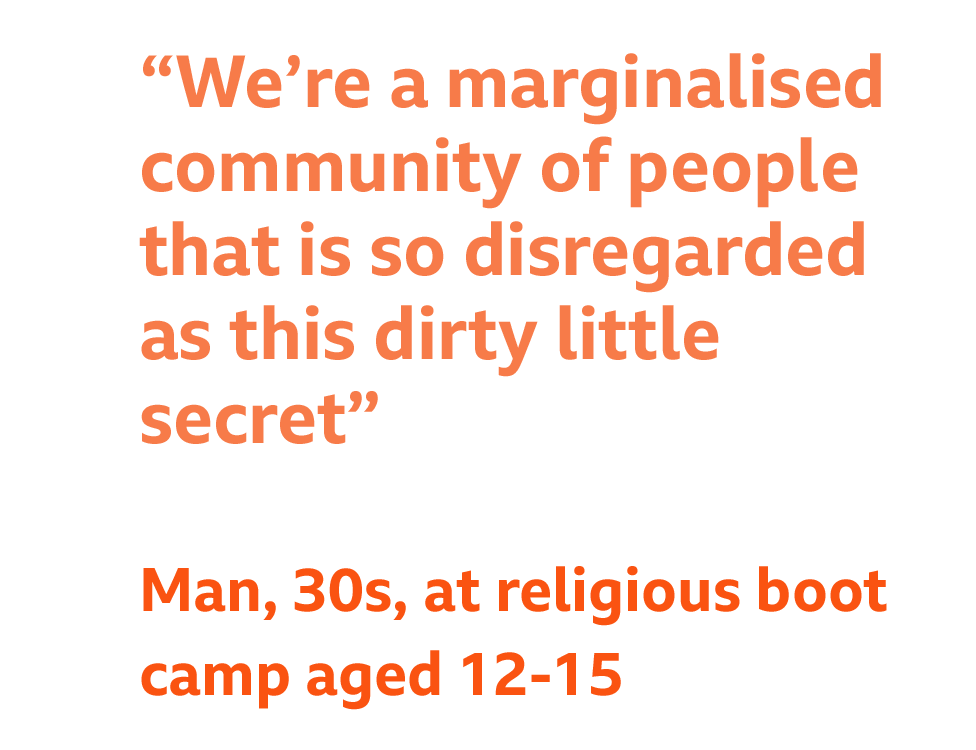
Although their individual backgrounds and reasons for being sent away differ, patterns emerge across their accounts and the hundreds more shared in TTI survivor support networks online.

The size of the industry and its yearly turnover of teenagers across the US remains elusive because there is no federal regulator monitoring it.

1px transparent line

The US Government Accountability Office was tasked with investigating allegations of neglect and abuse across the industry in 2007, but found it difficult to grasp the national picture due to irregular licensing rules at the state level and ambiguity surrounding the labels facilities use to describe themselves - like boot camps or therapeutic boarding schools.

Their investigators found thousands of allegations of abuse and examined a number of deaths at behavioural programmes across the US and in American-owned businesses operating abroad. Their reports raised concerns about the level of training required of staff as well as what they described as deceptive and questionable marketing practices aimed at parents.

Subsequent hearings in Congress saw parents whose children died within the industry testify.

Cynthia Clark Harvey was one of them. Her daughter Erica was just 15 when she died of heatstroke and dehydration on her first full day in a wilderness programme in Nevada in 2002.

Cynthia remembers her daughter as a bright, thoughtful and athletic young girl who had always done well academically until she began suffering from mental health problems aged 14. Her struggles led her to become suicidal and begin experimenting with illegal drugs. When Erica was admitted to hospital and excluded from school, the family felt frightened and out of their depth.

1px transparent line

At the time, the situation felt drastic. Erica had been doing better but her psychiatrist recommended that residential treatment could help her path to recovery.

The programme her family chose was well-known and accredited. They felt reassured Erica was in safe hands and would grow from the experience. After weeks of deliberation and planning, they travelled to Nevada under the guise of a family trip with her younger sister. When the deception was revealed, Erica became scared and angry and refused to get out of the car. After a turbulent hours-long group therapy session with other families, she and the other children were taken away.

This was the last time Cynthia and her husband ever saw their daughter alive. By the time they got back home to Arizona the following evening, there was already a message waiting on their answering phone telling them to call. They were told Erica had an accident and staff were performing CPR.

"I don't remember the time frame, but at that point she probably had been dead already for quite some time," Cynthia says.

1px transparent line

Erica's obituary could only say that she died hiking in Nevada. Her parents would not find out her cause of death for weeks - and it took years and a lawsuit for them to get records and find out the truth of what happened that day.

Cynthia says they eventually settled with the programme for an undisclosed amount on the condition they could speak freely about the circumstances of their daughter's death. She learned Erica had been pushed to keep hiking as her condition worsened throughout the day. She later testified to Congress about how her daughter's distress had been mistaken for teenage belligerence by staff. Even after Erica fell off the trail into brush and rocks, she did not receive medical help for almost an hour.

The remote location of the trek and a series of blunders in calling help to their location meant it took hours more for an emergency helicopter to arrive and take her to hospital where she was officially declared dead, long past the point her life could have been saved.

Cynthia continues to grapple with regret and grief over what happened and came to connect with other parents who found themselves in the same unimaginable position. No criminal charges were ever filed over her daughter's death but 19 years on, Cynthia continues to speak publicly in favour of industry-wide reform.

The National Association of Therapeutic Schools and Programs (Natsap) - the largest membership association of its kind - appeared on behalf of the industry in the congressional hearings, where it was grilled by lawmakers about the protections and checks in place.

Natsap's website today says it and the industry have changed over time. It emphasises that it has ethical standards in place and requires members to be licensed by their appropriate state agency or a national accrediting body and have therapeutic services overseen by a qualified clinician, though it does not accredit facilities themselves.

Campaigners argue that current levels of oversight are not enough. They say the lack of cohesive national monitoring has allowed bad actors to move around the industry and can enable facilities to rebrand under new names and distance themselves from complaints.

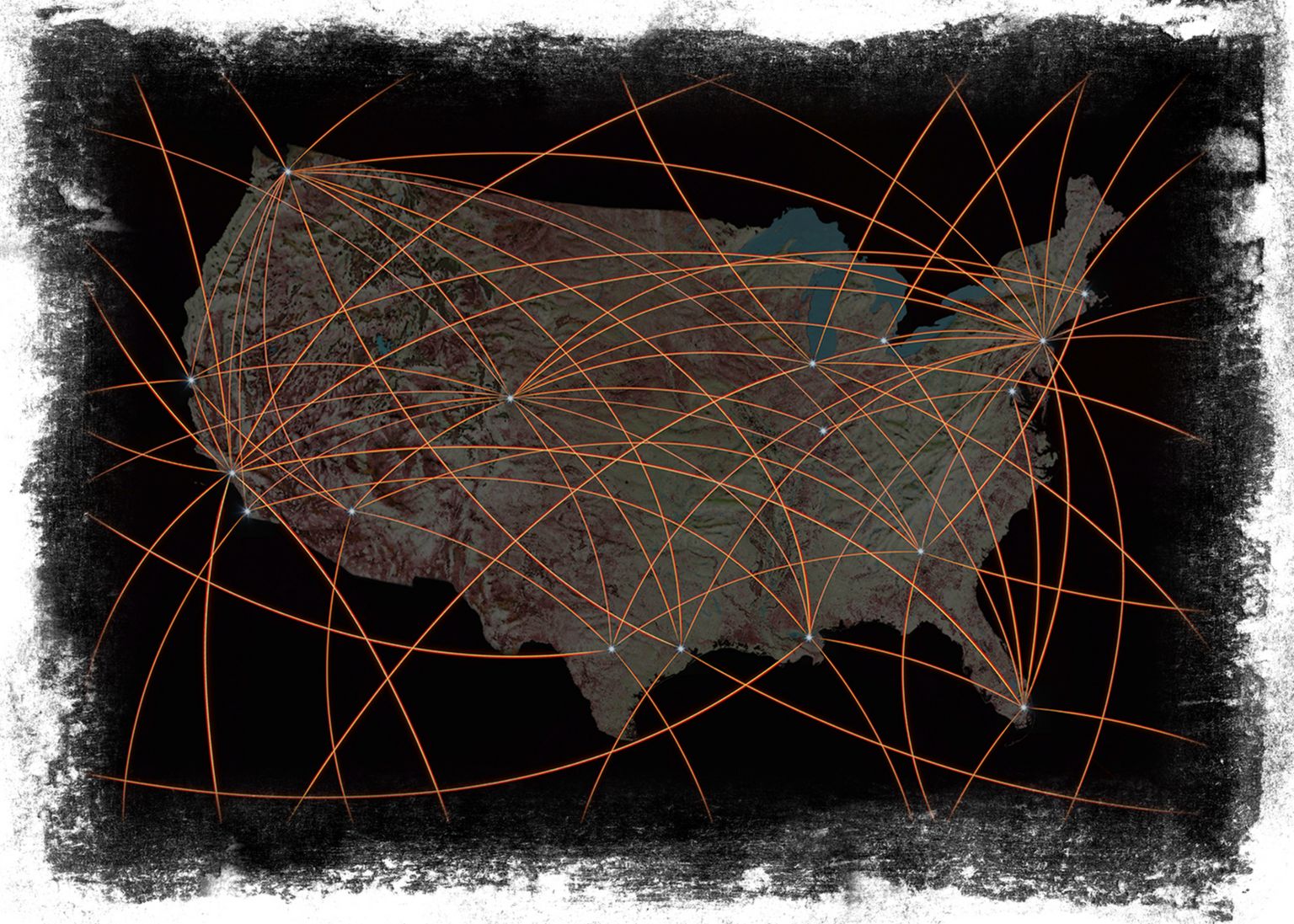
In online networks they have built, people who identify as survivors of the industry connect and offer support across the country - pooling information and resources to track alleged abuses and a revolving door of programmes and staff. One Reddit forum on the topic has more than 20,000 members alone.
Short presentational grey line

While a number of the more controversial programmes and organisations have closed down in recent years, allegations continue to plague the industry. A lot of the stories and experiences former residents recounted to the BBC had a lot in common - whether they got out decades ago or within the last couple of years.

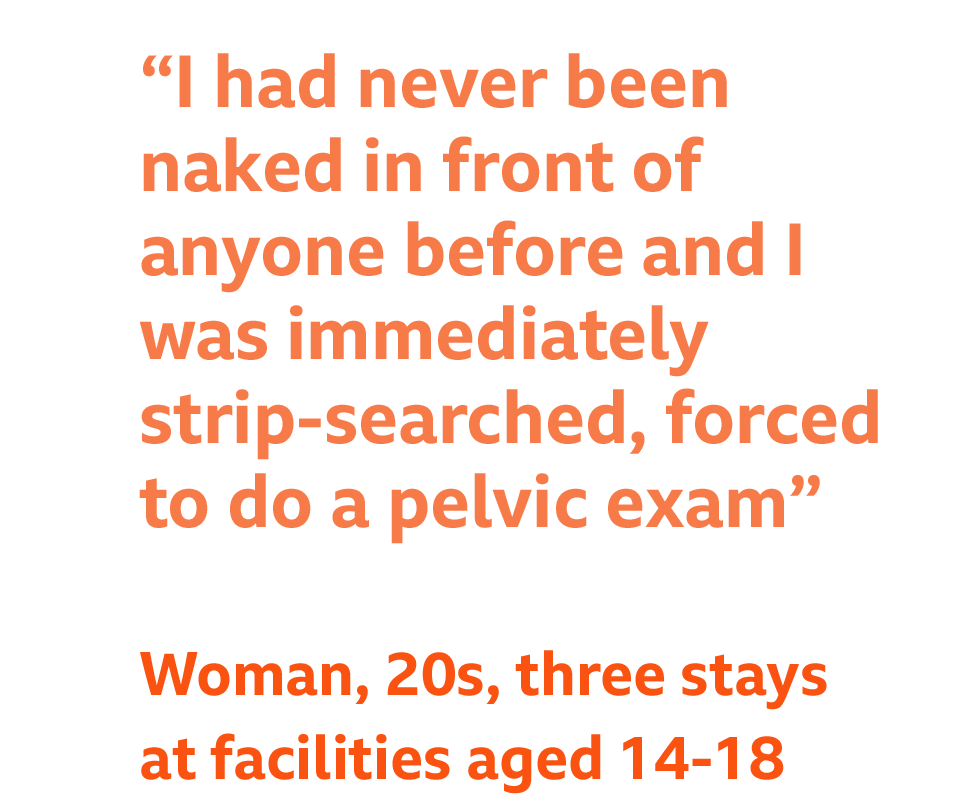
Many described arrival processes that left them feeling degraded and dehumanised. Those taken by transport companies described the process as disorienting and frightening. Some, including sex abuse victims, complained of invasive strip searches and examinations. One person, who was sent due to struggles with depression stemming from gender dysphoria, recounted undergoing a smear test as a virgin aged 14. Others described having their heads shaved and having blood and drugs testing despite having no history of substance abuse themselves.
1px transparent line

Some claim to have witnessed and experienced practices like isolation and restraint and say they were also expected to punish and restrain others. Many of the systems they described were based on levels where active participation, including in "attack therapy" sessions where group members are expected to confront and criticise one another, was required to progress and gain basic privileges. Others described arbitrary physical labour, collective punishments and periods of mandated silence which could last weeks.

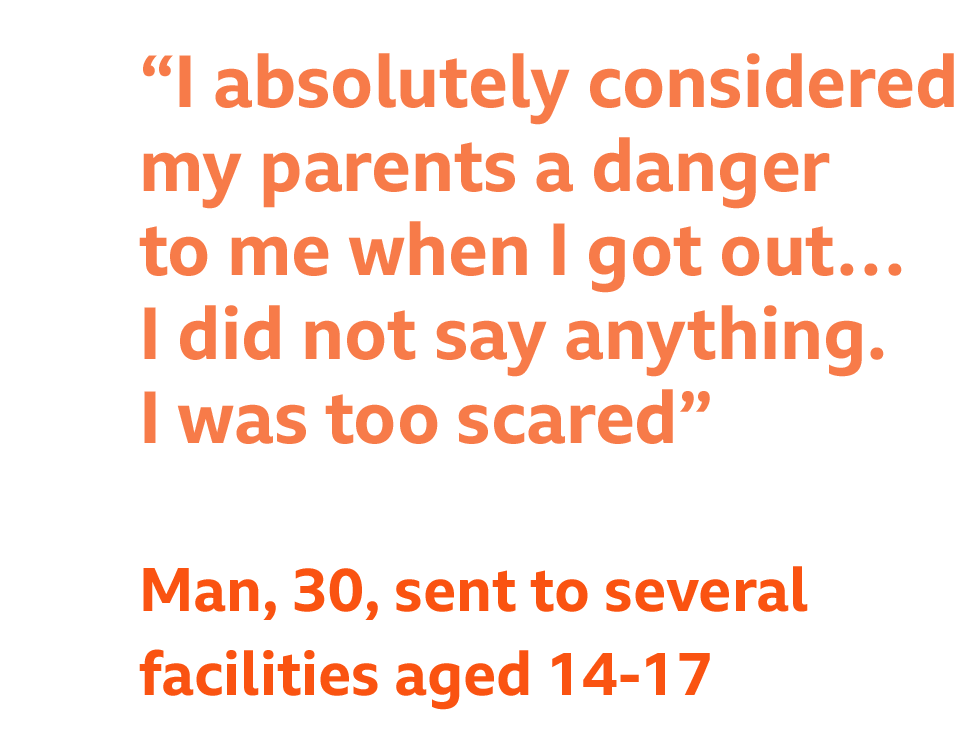
They all described repressive environments with extreme limits and censorship of their contact with the outside world. Many believe their parents were misled about the reality of the programmes they enrolled them in, and describe rules that seeded mistrust between them and their families. Some recounted ongoing damage to relationships and enduring fears of opening up about their experiences, even after leaving, for fear of being sent back or not being believed.

Some told the BBC they witnessed physical violence, self-harm and suicide attempts and many know other residents who took their own lives after leaving. Others have subsequently been diagnosed with conditions like post-traumatic stress disorder and say they continue to suffer long-term social difficulties, including in trusting in others, because of their experience.

In 2006, journalist Maia Szalavitz wrote a book that urged parents to seek evidence-based treatment for children instead of resorting to behavioural modification facilities. Her book traces the origins of many of the methods used in the industry, including confrontational group therapy, to controversial and discredited programmes from decades ago.

Advocates for change say the teenage "tough love" industry, which first began to take off in the 1980s, has been able to endure decades of controversy in part because of social stigma surrounding the issues why parents seek help. It is not uncommon for teenagers to spend years within the system and monthly tuition, sometimes in the thousands, can mount up fast.

Many, including Szalavitz, believe those referring families can exploit or exaggerate fears children will end up dead or incarcerated because of issues like drug abuse. Both her and Dr Kate Truitt, a clinical psychologist and neuroscientist who works with former residents, say the trauma experienced at these facilities can actually perpetuate or lead to long-term battles with addiction and abusive relationships.

Many ex-residents, including some the BBC spoke to, say they initially viewed their treatment as justified and even advocated for others to send their children. Some took years to change their opinion of their programme after they reflected on their experiences.
1px transparent line

Dr Truitt compares the trauma she has seen in some former residents to that experienced by former members of cults or prisoners of war. She points out that their experiences can be particularly damaging as adolescence is such a critical time for development.

"And because of the type of specific trauma they've endured, most survivors don't feel safe seeking out treatment, because the people who were the treatment providers are the perpetrators," she tells the BBC.

Short presentational grey line

Paris Hilton revealed she had already run away from a number of other placements before she was taken to Provo Canyon in Utah and kept for almost a year before she turned 18.

The documentary This is Paris shows her reuniting with classmates as they go public with their ongoing trauma from alleged experiences of emotional and physical abuse there, including allegations of punishments like solitary confinement.
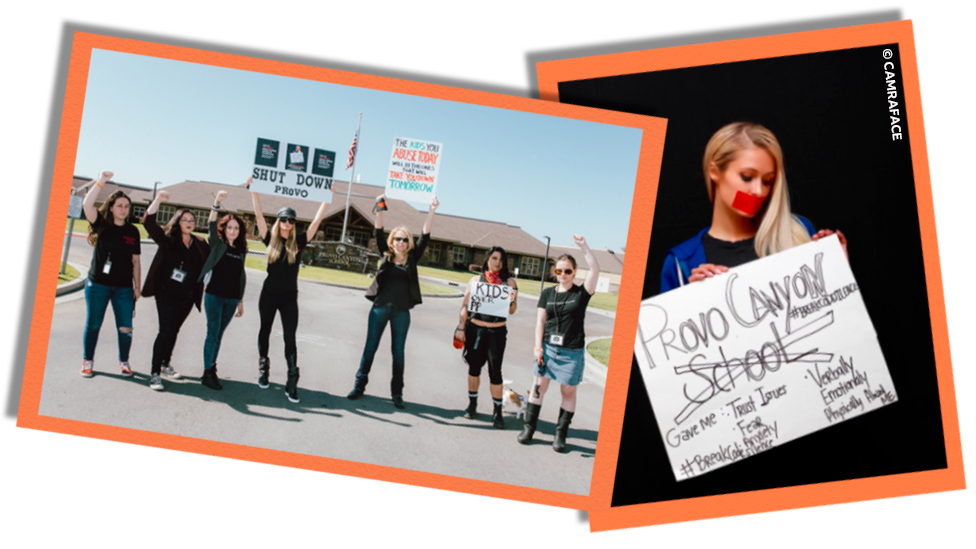
Provo Canyon remains open. A statement pinned to the top of their website says it was sold to new owners in 2000 and it cannot comment on operations or patient experiences before this time. They also say they do not use methods like seclusion or mechanical restraint now.

Hilton's documentary has been watched almost 30 million times and she has continued vocal advocacy since its release.

This role marks a drastic departure from the persona she built her celebrity brand and business empire around. Although her teenage history was already known among those who went through the same systems, they say having someone as high-profile come forward has helped bring credibility and awareness to the issue.

People within the community say the documentary has empowered some to speak out about their experience for the first time. or has been used to help others, including parents, understand what they went through.
1px transparent line

Some former residents have united under the idea of #BreakingCodeSilence, in reference to the periods of mandated social isolation used as a punishment and as a method of control in some facilities.

"One of the rules in many of these programmes is that you couldn't take anyone's phone number or name when you left. So, we were never meant to connect," Katherine McNamara, who went to Provo with Hilton, says about the groups that have emerged on social media. She and some others are now working together on a non-profit to help raise awareness, support those who identify as survivors and advocate for change.

Other celebrities, including Paris Jackson and tattoo artist Kat von D, have been inspired by the documentary to come forward.

Rapper Bhad Bhabie, real name Danielle Bregoli, has called for television personality Dr Phil to apologise for sending her and other teenagers to troubled teen facilities on his popular US show.

It came after another former guest filed a lawsuit alleging she had been punished for reporting an alleged sexual assault by a staff member at the same therapeutic boarding ranch Bregoli was sent to. The facility, which the BBC contacted for a response, has previously denied the allegations against it and disputed their accounts.

Phil McGraw said in an interview he was sad to hear of Bregoli's alleged bad experience but distanced himself and his show from her claims.
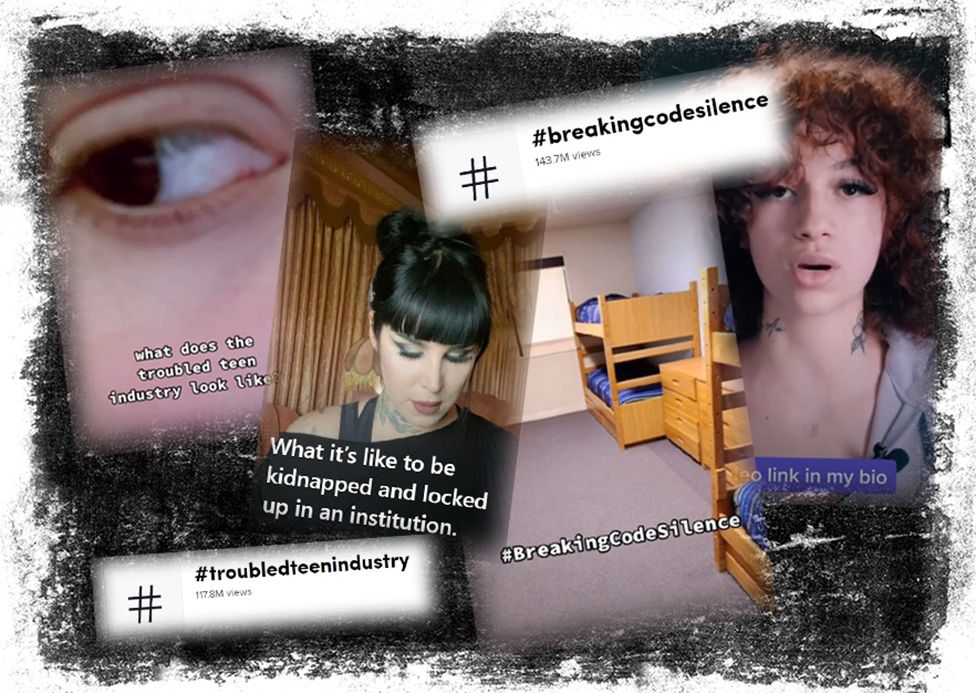
IMAGE COPYRIGHT
K

Younger people, once isolated from their teenage peers because of their experience, are using social media to try and break the stigma. Some have gained huge followings on platforms like TikTok from telling their stories. But none of this is not without personal risk - the BBC has seen legal letters sent to one content creator after they spoke publicly.

Daniel has gained more than 240,000 followers and millions of likes since he started telling his and other people's stories last year. He now gets dozens of messages every day from others who went through similar situations and has had parents contact him to say they've reconsidered plans to send their children away after seeing his videos.

"If my 15-year-old self knew that people were out there fighting for me, I would have felt so relieved," he says about the movement.

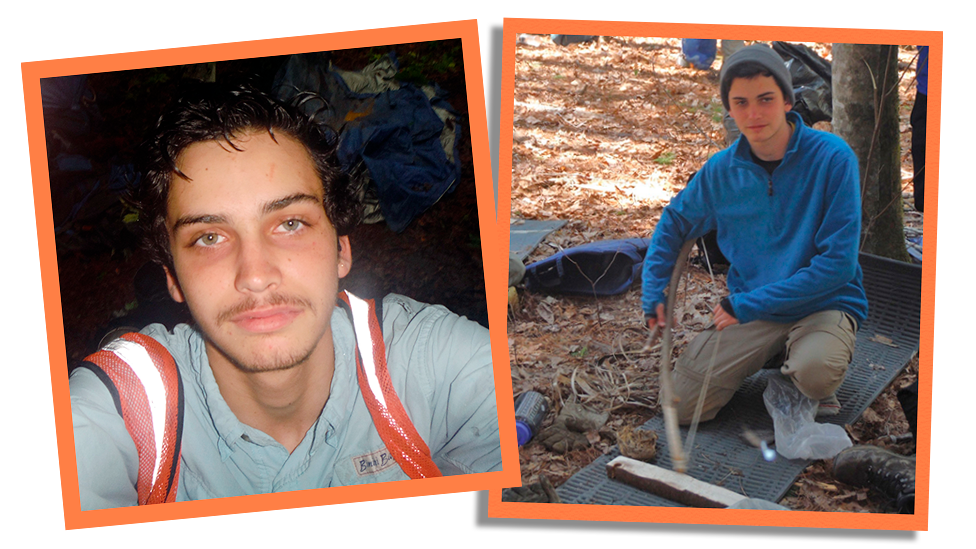
Collage shows image of Daniel now while hiking and filming a documentary

In some cases, social media has been a tool for tangible change. One woman, Amanda Householder, used TikTok to spread awareness of allegations surrounding her parents' treatment of girls at a religious boarding ranch they were running in Missouri. Millions viewed her videos and eventually officials closed the school.

All this attention has coincided with a cascade of state-level legislative reform.

Householder testified to end religious exemptions in the state of Missouri that stopped even basic oversight of conditions at private religious facilities like the one her parents ran. She described the experience to the BBC as "very cathartic… knowing that maybe in the future kids won't have to go through what we went through" and says she hopes to give evidence in their criminal case.

Hilton was part of a group who spoke at a hearing to convince lawmakers to introduce better protections in Utah - the state thought to have the biggest density of troubled teen facilities in the US.

"I don't know if my nightmares will ever go away, but I do know that there are hundreds of thousands of kids going through this, and maybe if I stop their nightmares, it will help me stop mine," she testified.

But for her and others, the real end goal is national change.
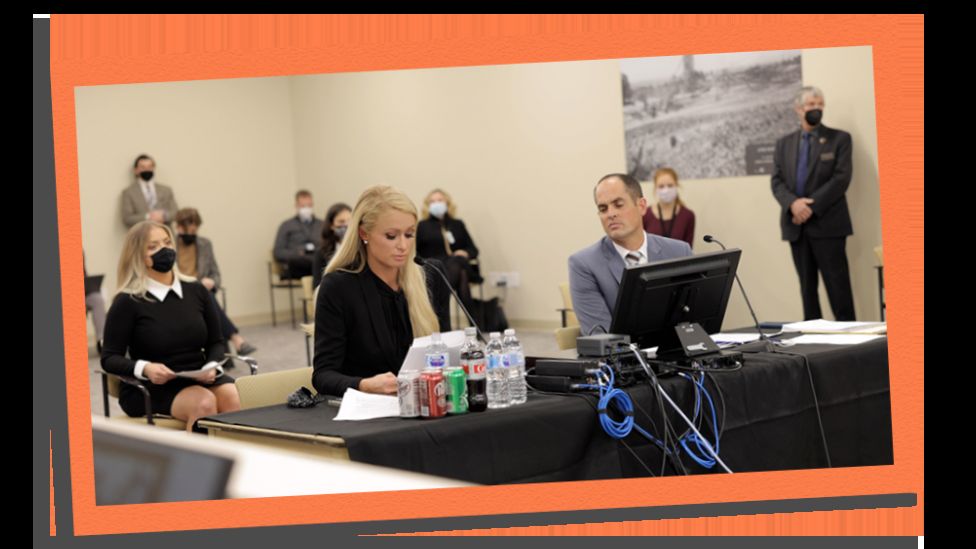
Image shows Paris Hilton testifying in Utah legislature

Previous attempts to push for federal oversight and regulation have repeatedly faltered in Congress.

But a spokesperson for Democratic Congressman Adam Schiff's office confirmed to the BBC that he is working to update and re-introduce legislation aimed at prohibiting and ending abuse at residential treatment centres and increasing national oversight of such facilities.

Short presentational grey line

Today, Erica Harvey should be in her mid-30s.

"It doesn't get better as the years go on, because it's just more milestones that go by," Cynthia reflects.

It's been well over a decade since she took part in hearings pushing for federal regulation. But against all odds, she remains hopeful.

Cynthia has been emboldened by the momentum building over the last year as more and more have come forward.

"When I first started doing my work after Erica's death, there were survivors out there, but they were not being listened to. And now they're starting to get listened to."

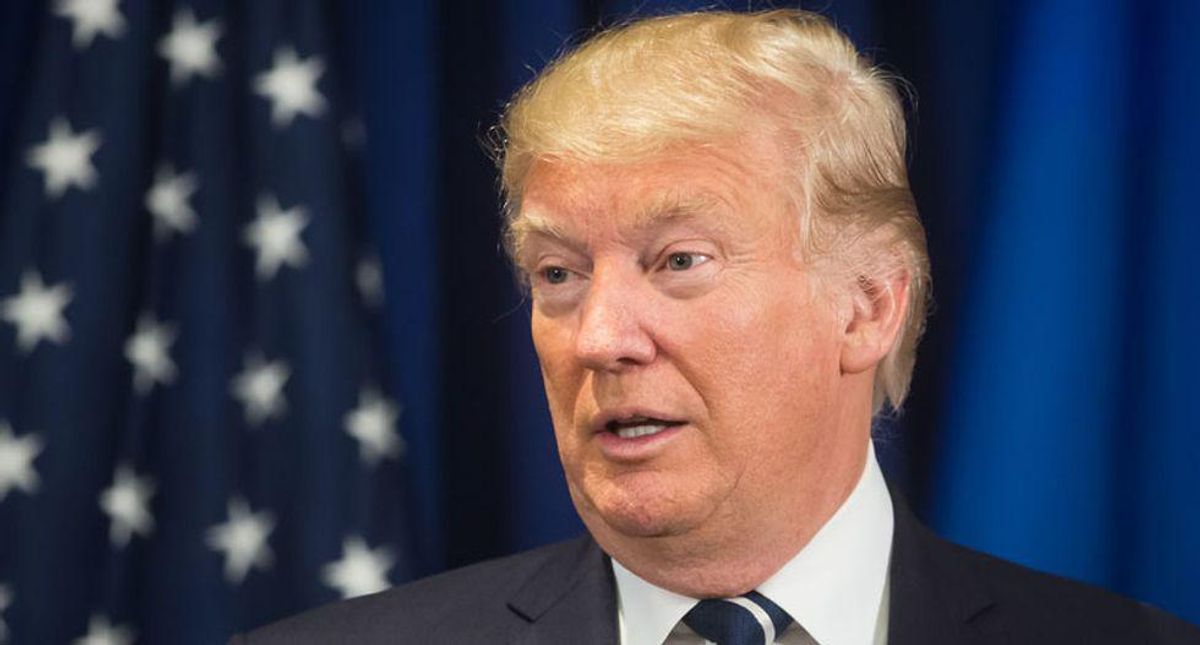
New evidence makes it clear that Trump's attempted coup is still playing out

Michael Signorile, The Signorile Report
June 17, 2021

President of the United States Donald Trump (Shutterstock)

There were so many terrible abuses of power that Donald Trump and the GOP succeeded at during the previous administration — from refusing to cooperate with investigations of wrong-doing to reappropriating funds to Trump's racist border wall — that we sometimes forget where they failed. The failures were often by sheer luck — or incompetence —and sometimes they were because someone in Trump's orbit chickened out and just wouldn't go that far.

Republicans are making sure, however, that they get it right next time.

A newly-released trove of emails shows how far Trump went in trying to overturn the election of 2020. The House Oversight Committee yesterday released emails revealing further evidence of how Trump tried to use the Justice Department even after Attorney General Bill Barr was packing up and heading out the door, refusing to continue efforts to overturn the election.

Ten days before Acting Attorney General Jeffrey Rosen began his job, Trump contacted him claiming Dominion Voting Systems machines in Michigan were rigged to hurt him and help Joe Biden. The email from Trump's assistant to Rosen, which went out on December 14th, claimed, "We believe it has happened everywhere." This occurred after courts had turned away several attempts to contest the election based on these conspiracy theories.

Trump also demanded the Justice Department challenge the election at the Supreme Court. At the same time, Mark Meadows, Trump's chief of staff and a still-dangerous true believer, was pressuring Rosen in emails to open an investigation into a completely ludicrous claim that people in Italy were using satellite technology to switch votes in machines in the United States from Trump to Biden, something Richard Donaghue, the then-acting deputy attorney general, said in an email was "pure insanity." The day before, Meadows sent an email asking Rosen to open an investigation into voter fraud in Georgia.


Rosen pushed back on these attempts, just as the Georgia Secretary of State Brad Raffensperger pushed back on Trump's attempt in a phone call to get him to "find" over 11,000 votes to put Trump over the top in the state — an action that has Reffesperger and his wife now the target of continued death threats by Trumpist extremists.

What is extraordinary to think about is if Barr — a Trump loyalist who corrupted the Justice Department for Trump — had gone along with Trump's plans, or if Rosen (whom Trump appointed as deputy attorney general in 2019 and who also protected Trump and his cronies in that position) had gone along, or if Raffensperger and number of other Republican officials in the states had done so, we truly could have seen complete chaos including the possible overturning of the election. And what if GOP-appointed and Trump-appointed judges had gone along?

So democracy was actually momentarily saved by some of the very corruptors of the Department of Justice whom Trump had put in place. Rosen was a loyal soldier until then. He'd moved to stop disbursements of money to Puerto Rico, stalled a probe of Trump Interior Secretary Ryan Zinke for his own corrupt actions and was, like Barr, doing Trump's dirty work throughout DOJ. As soon as he pushed back on Trump in the aftermath of the election, however, he faced an internal failed coup attempt at the DOJ himself, when Trump tried to replace him in the last days with a low-level official who had met with Trump and whom Trump was going to use to overturn the election.

That failed as others in the DOJ helped Rosen thwart it. If that attempt had succeeded, however, it's unsure what would have happened, just as if Barr, Rosen and others had been compliant with Trump even in those last desperate moments.

But now the GOP is ready to make sure that kind of pushback can't happen — including installing officials who won't turn out to be the yellow bellies that Barr, Rosen and others did in the end. Don't believe anyone who says the GOP is afraid of Trump and is quietly hoping Trump will go away, bowing to him only to placate him. That's a distortion of who and what the GOP has become — a neo-fascist movement that will use violence to get what it wants. That's not an exaggeration, and the proof is that the party refused to have a commission investigate the domestic terror attack — the insurrection — incited by Trump and led by his supporters, who killed and wounded police officers.

The political leaders left in the GOP created Trump, they see that the corruption and cheating works — and is the only way they believe they'll maintain power — and they've stripped of power those few (like Liz Cheney) who've spoken out. And there are now so many, in Congress and in the state legislatures, who are very loyal, making sure that even the paltry but critical pushback among some in the GOP we saw in 2020 can't happen again.

The voting restrictions states are putting in place are designed to overcome any obstacles, far beyond suppressing votes. Secretaries of state have seen their power taken away, local elections boards installed with Trumpists have been given more power and more power has been given to judges to overturn elections. If these actions help them win back Congress in '22 and the White House in '24 just imagine what they'll do to the Justice Department if they get control again.

They'll make sure that whoever takes over goes much farther than Bill Barr and Jeffrey Rosen — a frightening thought indeed — and is willing to stick it out to the bitter end, killing democracy as we know it and installing an authoritarian, whoever it may be (or a series of them), perhaps for the rest of all our lives.


The media is being duped by Republicans on the "lab leak" theory
New reporting underscores how little evidence there is for the GOP-preferred story about COVID-19's origins

By AMANDA MARCOTTE
PUBLISHED JUNE 16, 2021 
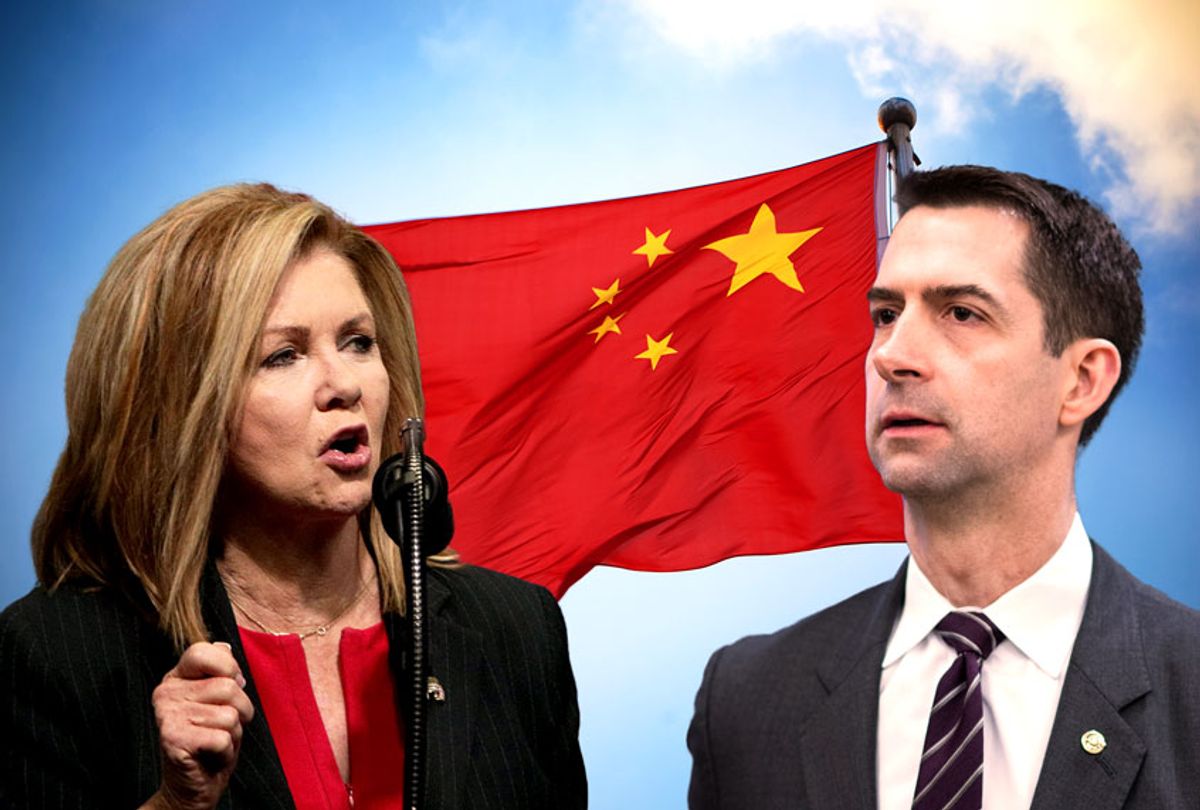
Tom Cotton, Marsha Blackburn and the Chinese flag (Photo illustration by Salon/Getty Images)

Last month, seemingly spurred on by this column from a controversial former science reporter for The New York Times, it became suddenly fashionable in some journalistic circles to scold the mainstream press for dismissing or ignoring something called the "lab leak theory" regarding the origins of the coronavirus that causes COVID-19. To be sure, the possibility that the coronavirus was released in a lab accident in Wuhan, China, has never been fully discounted by the scientific establishment but long treated as less likely than that it emerged from a purely natural origin. Still, led by Matt Yglesias from his (sigh) Substack blog, a narrative started to form in May that the mainstream media was deliberately ignoring a scientifically valid hypothesis because of a, heaven help us, bias against conservatives. Otherwise reputable opinion writers like Jonathan Chait of New York, eager to demonstrate that they are Not Biased© and Care About Hearing All Sides©, took up the mantle, scolding the mainstream press for supposedly dismissing the "lab leak hypothesis" out of hand, simply because Donald Trump and Sen. Tom Cotton, R-Ark., were fond of it.

The scolding worked.


As Jon Allsop of Columbia Journalism Review wrote earlier this month, "we've seen a gusher of opinion essays in the same vein, indicting the mainstream press and prominent experts for characterizing a plausible hypothesis as a conspiracy theory for essentially political reasons." This, in turn, resulted in a slew "of news articles asserting that the lab-leak theory has 'gone mainstream,' and is getting a 'second look.'" Here at Salon, we addressed the sudden surge of interest in this theory by highlighting the basic reality: Scientists do not think it's likely, plus there is no new evidence that would suggest that it's become any more likely than it was before the pearl-clutching about "bias" began. Soon, however, President Joe Biden gave in to the pressure and ordered an intelligence investigation into the theory.

Want more Amanda Marcotte on politics? Subscribe to her newsletter Standing Room Only.

The problem with all this moralizing about "bias," however, is that the original reason that the media wasn't doing more to hype the "lab leak" hypothesis had little to do with politics and everything to do with science. As science educator Rebecca Watson explained in a video responding to the controversy last week, "There is currently no evidence that COVID-19 originated in a lab. None." And, as Justin Ling of Foreign Policy argued Tuesday, "Despite proclamations to the contrary, there has been scant new, hard evidence pointing to the lab leak theory," and, in fact, the hype around the idea is literally "just speculation."

Indeed, the finger-waggers had it backwards. The media isn't biased against the right but biased in favor of the right.


If it weren't for conservative pressure, there would probably be no substantive media interest the "lab leak" hypothesis. Typically, news outlets are loathed to publish speculation that emerges from fringe conspiracy theory boards that have offered little in the way of real evidence for their claims. But when the conspiracy theorists are politically motivated right-wingers, they tend to get more of a media hearing than say, Bigfoot enthusiasts.

Wednesday morning, the "why won't the media do more to indulge this evidence-free right-wing speculation" crowd got egg on their face with a new report from the Washington Post that wreaked havoc on claims that the "lab leak hypothesis" failed to get a fair hearing. On the contrary, there has been "an ongoing, sometimes politicized and so far fruitless effort inside the U.S. government to determine whether the virus, SARS-CoV-2, could be the result of engineering or a lab leak."

The report documents an extensive hunt for evidence of the "lab leak" theory throughout the federal government. Much of it driven by Donald Trump's desire to blame someone else, ideally China, to divert attention from his own failures. But more responsible actors in the federal government, including prominent health officials like Director of the National Institutes of Health Francis Collins and Director of the National Institute of Allergy and Infectious Diseases Anthony Fauci also gave the "lab leak" hypothesis a good deal of time and attention. But while the White House was heavily pressuring every bureaucrat in sight to give them something, anything, they could use to push this "lab leak" hypothesis, the evidence simply wasn't there.

The report doesn't completely rule out the possibility of a lab leak, to be clear. But it is a reminder that it was incredibly irresponsible of mainstream media to hype an unevidenced theory simply to prove they aren't "biased" towards Republican actors like Cotton, Trump, and former Secretary of State Mike Pompeo, people who have proven time and again that they will lie through their teeth for political gain.

The people with unsavory political motivations in this situation are not journalists who hesitated to run stories about a theory that has no real evidence to support it. It's Trump and his Republican enablers who, as Lindsay Beyerstein of Alternet explains, feel that if they "can convince his supporters that COVID is China's fault, they'll forget the parts that were his fault."

Want more Amanda Marcotte on politics? Subscribe to her newsletter Standing Room Only.

Attention journalists: The way to avoid political bias in media is to, well, avoid political bias. Which means avoiding giving life to poorly evidenced ideas, simply because they're being hyped by the right. What happened instead is that the press gave into right-wing bullying. In doing so, the press ignored the usual journalistic standards for weighing facts and evidence. Now it's likely most Americans have heard more about lab leaks than they have about the far more plausible theory that the coronavirus pandemic emerged from nature.

To make it all worse, the hyping of the "lab leak" hypothesis meant politely ignoring the fact that Trump, Cotton, and Pompeo were winking at an even less plausible conspiracy theory that holds that China deliberately manufactured the coronavirus as a bioweapon. People who have heard this bioweapon conspiracy theory and see headlines or cable news chryons touting the "lab leak" theory will assume that's what is being discussed, and assume that it's now been proved. And once that kind of misinformation is out there, it's pretty hard to claw it back.

A lot of critics who accused the media of ignoring the "lab leak" hypothesis claim to be interested in putting facts before political bias. They worry that mainstream journalists are disregarding good information simply because the sources are conservative or even because they have a history of lying. (As if credibility isn't an important consideration in sourcing information!)

But what this debacle shows is that the mainstream media has the opposite problem. They all too often give in to Republican bullying and allow themselves to be used as conduits for right-wing disinformation campaigns. Yes, prioritizing truth over politics often leads to news stories that have a "liberal" feel to them. That's because the American right is wholly committed to lying and disinformation. But journalism should put reality before the tender feelings of lying right-wingers. Especially when it comes to scientific disputes where we all supposedly agree it would be better if politics were kept out of it.

AMANDA MARCOTTE
Amanda Marcotte is a senior politics writer at Salon and the author of "Troll Nation: How The Right Became Trump-Worshipping Monsters Set On Rat-F*cking Liberals, America, and Truth Itself." Follow her on Twitter @AmandaMarcotte and sign up for her biweekly politics newsletter, Standing Room Only.
MORE FROM AMANDA MARCOTTE • FOLLOW AMANDAMARCOTTE


How conspiracy theorists are using a CDC database to spread misinformation and fear
Jackson Proskow 

A U.S. early-warning system for detecting vaccine side effects is being weaponized by the global anti-vaccination movement.
Getty Images Doctors and leaders in Winkler say they are dealing with a high percentage of people who believe COVID-19 is a hoax.

The Vaccine Adverse Effects Reporting System (VAERS), run by the Centers for Disease Control, has become the launching pad for conspiracy theories that claim COVID-19 vaccines have caused “thousands” of deaths and serious illnesses

“COVID19 VACCINES DEATH TOLL CLIMBING!!!” screams the headline on one viral Facebook video, that claims the CDC database shows a list of “all the people who have died from vaccines.”

There’s just one problem: anyone can make a claim of severe reaction, or death, and have their report included in the CDC’s publicly accessible VAERS database. No one checks if those claims are true.

Read more: 50% of U.S. adults have received both COVID-19 vaccine doses, CDC says

The agency has inadvertently given the anti-vax community a powerful tool for spreading misinformation about the vaccines it’s encouraging the world to use.

As of June 7, VAERS logged 5,208 unconfirmed reports of death among alleged vaccine recipients — that’s the number often touted by vaccine skeptics. If true, that would amount to 0.0017 per cent of total COVID-19 vaccine doses administered in the United States.

Yet the CDC says that a careful review of those deaths “has not established a causal link to COVID-19 vaccines,” with the exception of a small handful of plausible instances of rare blood clots from the Johnson & Johnson vaccine, which, in very rare cases, can lead to death.

“They are incredibly safe vaccines, especially the ones that are being used in the U.S. and Canada,” says Dr. Saad Omer, director of the Yale Institute for Global Health.

Anti-vaccine groups are using the numbers in a different way.

They claim the sheer volume of VAERS reports tells the story of a huge safety cover-up. They often mix in individual, unverified reports with the seemingly overwhelming, and equally unverified statistics.

Video: COVID-19 myths: Doctors say false reports linking vaccines to infertility

A prominent anti-vaxx advocacy group called “America’s Frontline Doctors,” has promoted a now-deleted VAERS report that claimed a two-year-old child, who would not have been eligible for vaccination, died from the vaccine — a claim echoed in several Facebook posts that have been flagged as misinformation. The group did not respond to Global News’ request for comment.

Many other reported deaths in VAERS are just as questionable.

Two of the supposed vaccine fatalities list gunshot wounds as a cause of death.

Report #1116353 explains that a 77-year-old woman in Minnesota died one month after receiving her first dose of the Pfizer-BioNtech vaccine. It does not list a cause of death.

Report #0917790 references a 90-year-old Arkansas woman who died two weeks after receiving a first dose of the Moderna vaccine. The report notes that she tested positive for COVID-19 and explicitly states, "there is no evidence that the vaccination caused patient's death. It simply didn't have time to save her life."

There are countless other reports of people who died at some point after vaccination, through circumstances that are not conclusively linked to the vaccine.

The FDA’s Emergency Use Authorization for the vaccines is likely part of the reason for the surge in reports. The EUA requires that doctors report through VAERS any death that occurs after COVID-19 vaccination “regardless of whether the health care provider believes the vaccine was the cause.”

Read more: Influencers say they got offered thousands to spread fake news on Pfizer COVID-19 vaccine

The reports of vaccine side effects are similarly murky.

One lists a 39-year-old Alaska woman whose post-vaccination symptoms allegedly included “Jesus visiting her,” along with contracting a “sexually transmitted disease.”

In recent weeks, anti-vaccine advocates have begun to point to hundreds of VAERS reports of myocarditis, and pericarditis, a rare heart inflammation among male vaccine recipients under age 30. The CDC notes there are 623 relevant VAERS reports, but only 268 have been verified. That’s enough to warrant further investigation, which is now underway as the system was designed. There is still no conclusive determination of a link to vaccines.

“We vaccinated a lot of people,” says Dr. Tara Kirk Sell, a health misinformation expert at the Johns Hopkins School for Health Security. “We have to figure out what all of these issues are and if the rates of things are happening at more than the background rate.”

VAERS was designed to be transparent by collecting as many reports as possible to identify trends and possible problems with vaccines.

The CDC has largely relied on the honour system to keep things honest, warning that “knowingly filing a false VAERS report is a violation of Federal law punishable by fine and imprisonment.” Readers of VAERS reports are met with a disclaimer that “the reports may contain information that is incomplete, inaccurate, coincidental, or unverifiable.”

That hasn’t stopped anti-vaccine advocates from claiming everything recorded in VAERS is real.

“Whenever you have transparency, you have the opportunity for that information to be used and twisted in ways that you didn’t intend,” Sell says. “We have a whole spinning narrative of misinformation that’s based on tiny kernels of truth.”

Video: Health officials urge Canadians to break the pandemic misinformation chain

In fact, the CDC’s statistics have become the runaway favourite among vaccine skeptics worldwide.

Canadian anti-vaccination groups like Vaccine Choice Canada and Take Action Canada regularly make use of VAERS data on social media, sometimes mixing it in with various conspiracy theories about lockdowns, masks and the pandemic.

One Facebook video by Take Action Canada titled “Are you familiar with the VAERS Stats?” rattles off a list of seemingly alarming statistics about alleged vaccine reactions and deaths, with no mention that they’re based on unverified claims. A spokesperson for the group acknowledged to Global News that VAERS reports are not fully accurate, before making unproven claims that those inaccuracies also include under-reporting.

Canadian statistics are far less alarming than what VAERS documents in the U.S.

In Canada, so-called adverse events are reported to doctors and pharmacists, who determine whether to relay the reports to provincial and territorial public health departments. That data is then shared with the Public Health Agency of Canada.

As of June 4, Health Canada was tracking a total of 104 deaths reported after administration of a COVID-19 vaccine through the Canadian Adverse Events Following Immunization (CAEFI) system.

The agency classifies 40 of those deaths as likely not linked to vaccines, 43 are still under investigation, 15 do not include sufficient information, and six cases involve deaths from rare blood clots linked to the AstraZeneca vaccine.

As of June 5 in Ontario, four deaths had been investigated for possible vaccine links. Only one, relating to rare instances of blood clots, had a definitive link.

Read more: Fighting COVID-19 has meant tackling conspiracy theories, even within families

The CDC did not respond to a list of questions from Global News about the future of VAERS, including whether it was aware of its misuse, or would institute better reporting controls.

Health experts have long applauded the system as a helpful tool that can catch rare vaccine reactions, and they believe its openness and transparency are important.

Still, some wonder if it’s time to update VAERS for the era of misinformation.

“After this pandemic, there should be a review of the value of the sources of that information,” Dr. Omer says. “I think there may be some value in doing some quality control.”


Mark Ruffalo, Margaret Atwood, David Suzuki & More Join First Nations Activists Calling For The Protection Of BC’s Old Growth Forest

© Stand.earth/YouTube Mark Ruffalo

"Avengers" star Mark Ruffalo, acclaimed environmentalist Dr. David Suzuki and The Handmaid's Tale author Margaret Atwood are among those joining their voices to those of British Columbia's First Nations communities to prevent the province's old growth forests from being cut down for lumber.

In a new video released on June 17 by the environmental advocacy group Stand.earth, the celebs implore BC Premier John Horgan to halt logging of old growth forests.

"As you're watching this," begins Ruffalo, "some of the last old growth trees in rainforests across British Columbia are falling," continues Suzuki.

RELATED: Mark Ruffalo Urges ‘Inclusion And Justice’ In Emotional Golden Globes Acceptance Speech

"Some of them are over a thousand years old," adds Atwood.

"Less than one per cent of forests in British Columbia still have big, old growth trees," says Suzuki.

According to Dr. Suzanne Simard, professor of forest ecology at the University of British Columbia, these old growth trees are "essential in our fight against climate change."

The video is demanding that logging of old growth forests end immediately.

"The world is watching," the video's participants declare in unison at the video's conclusion.

RELATED: David Suzuki Turns 85 And Canadians Are Celebrating

Viewers are encouraged to sign a petition urging the BC government to ban logging for the most at-risk old growth forests.
Pro-Trump trucker gets off scot free after driving his tanker in George Floyd rally
RAW STORY
June 18, 2021


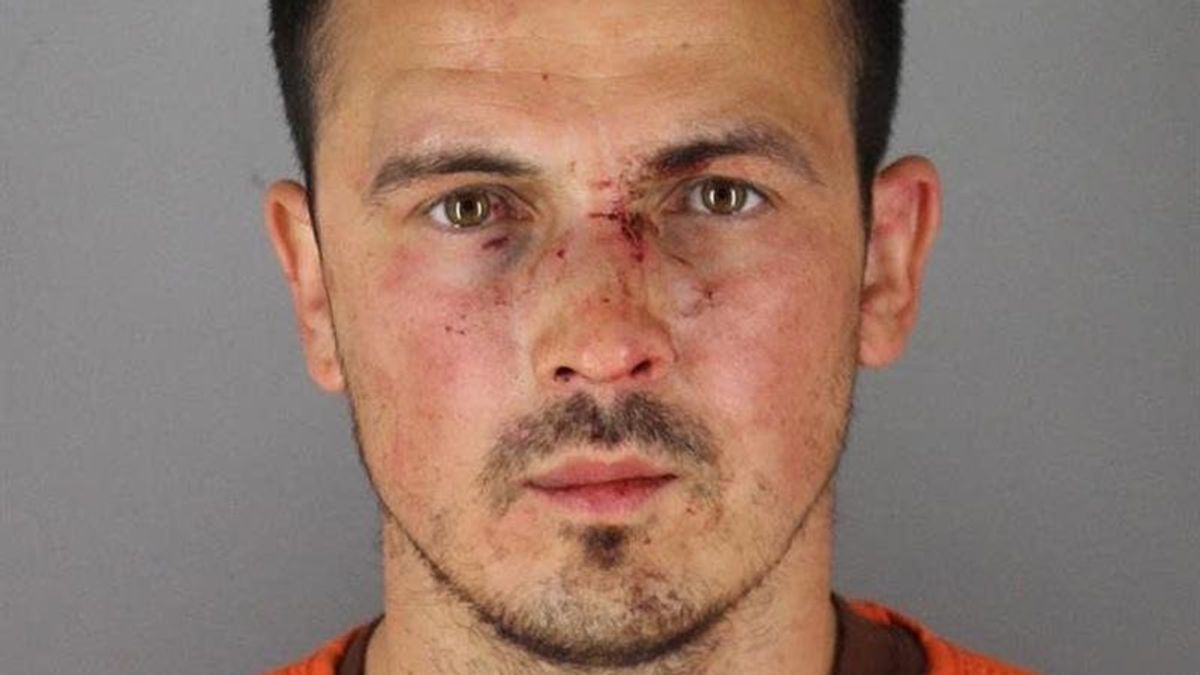
The man who made national news last May for driving his tanker into a massive George-Floyd protest in Minneapolis -- just six days after Floyd's murder-- "will see the two criminal charges against him dropped if he remains law-abiding for the next year," according to the Minneapolis Star-Tribune.

Bogdan Vechirko, 36, of Otsego, MN, was allowed to enter what is called a " continuance without prosecution" agreement with Hennepin County prosecutors before a district judge Friday. Here's how the Star-Tribune reported the development:

"Vechirko appeared via an online court session that lasted about 20 minutes. The arrangement is not a plea bargain and he didn't speak beyond saying, "yes sir" to Koch's questions about the process. Vechirko wore a suitcoat and dress shirt as he sat behind attorney Kevin DeVore.


"Hennepin County Attorney Mike Freeman didn't charge Vechirko in the incident until last October, months after it transpired. In charging Vechirko with threats of violence, a felony, and criminal vehicular operation, a gross misdemeanor, the prosecutor said he had admitted to investigators that he was "kind of in a hurry," and that the investigation found he sought to "scare" protesters out of his path.

"The incident was especially unsettling because it came amid days and nights of upheaval in the Twin Cities following Floyd's murder by former Minneapolis Police Officer Derek Chauvin. Like Floyd's killing, the incident on the bridge was captured on surveillance cameras.

"Vechirko was seen driving his big rig onto the bridge as hundreds of pedestrians protested the death of Floyd. Vechirko said at the time he was returning from a fuel delivery in south Minneapolis and didn't intend to drive into the protest or aim to hurt anyone.

"But the criminal complaint said investigators reviewed cellphone videos showing that Vechirko should have known something was occurring on the bridge because of the large crowd and vehicles stopped on I-35W northbound on the road leading to the bridge.
Report Advertisement

"The agreement approved Friday requires Vechirko to remain law-abiding for a year, pay restitution and attend three sentencing circles. He's already attended two. Assistant Hennepin County Attorney Daniel Allard said Vechirko would be required to pay restitution, but he was unable to provide an amount to the court Friday.

While Vechirko didn't address the court during the brief hearing, one victim was allowed to provide a statement.

Bennett Hartz of Minneapolis, a protester on the bridge that day, talked about the ongoing trauma he experiences from the event, saying he still has nightmares and jumps out of his skin when he hears fireworks or a car backfire. Hartz called it a "miracle" that no one was killed that day.


"Koch acknowledged that, saying, 'I don't think anybody looking at that would have taken any bet that no one would be seriously injured.'

"The criminal complaint said "at least" one protester suffered abrasions as she jumped to get out of the truck's path.

"None of the protesters who attacked and injured Vechirko was charged. Vechirko suffered cuts to his face, and his wife told the Star Tribune that his cellphone, wallet and other items in the truck's cab were stolen."

The incident was reported at RawStory last July as part of a story describing how Trump supporters were getting away with attacking and killing BLM protesters. Here's a passage about Vechirko:

"On May 31, Vechirko drove a tanker truck through protesters on a highway in Minneapolis. Video shows thousands fleeing in panic as Vechirko barrels an 18-wheeler toward them. Newscasters gasped that he went "pretty fast into that crowd." He stops feet short of hitting a person. Another video shows him stopping twice and driving toward the crowd despite bikes and other objects being thrown beneath his truck and protesters clambering on the truck to stop him. Minnesota Department of Public Safety Commissioner John Harrington said, "It was one of the most dangerous things I've ever seen."

 Protesters said, "It was a miracle no one was hurt."Vechirko is also a Trump donor. He's given more than $300

Report Advertisementto the "Trump Make America Great Again Committee" and the Republican National Committee since 2018. Vechirko, who has a criminal history that includes arrest for domestic assault, is among 19 documented vehicle attacks against protesters in three weeks. The attacks are reminiscent of the neo-Nazi who murdered anti-racist activist Heather Heyer with a car as she protested right-wing extremists in Charlottesville in 2017, and deadly vehicle attacksby religious extremists inspired by the Islamic State. Despite the grave danger he created, Vechirko was released without charges. The Democratic governor of Minnesota, Tim Walz, claims Vechirko appeared confused and was frustrated because the highway was closed. The state has not indicated what is confusing about intentionally driving an 18-wheeler at high speed towards thousands of people, or why being frustrated at traffic mitigates an assault that could have resulted in mass casualties. There is a petition with nearly 50,000 signaturesdemanding Vechirko be charged."

‘We thought it was a joke’: International opposition to Norwegian whale testing project

Crystal Goomansingh
 The Associated Press FILE: A Minke whale, between three to four metres long, is now swimming near Teddington Lock. Picture date: Monday May 10, 2021.

Norwegian and American researchers are working to capture young minke whales in northern Norway.

The waters near Lofoten are the site of a large, multi-year, first-of-its-kind acoustic testing project.

"We will work until the end of June, trying to catch whales to measure their hearing threshold," said Petter Kvadsheim with the Norwegian Defence Research Establishment.

Read more: Minke whale death toll rising off East Coast

Global News reached Kvadsheim by telephone for an interview about the project, but because of a poor connection the researcher provided a few comments about the project by email.

Kvadsheim and another researcher involved with the auditory experiments, Dorian Houser, say to determine if man-made noise is negatively effecting the whales, they must first determine exactly what sounds the whales can hear and their frequencies.

VIDEO U.S.-Norwegian whale study triggers wave of backlash

The capture and testing methods, however, have attracted the attention of scientists and veterinarians around the globe.


Video: Dead whale falls onto pavement as crew attempts to place it in dumpster

"The whales are going to be chased and herded into this fenced-off area. Then they will be kept for hours within a salmon cage, basically put between two rafts. Electrodes will be put under the skin to monitor their reaction to loud noises," said Astrid Fuchs, policy lead for the German office of Whale and Dolphin Conservation.

The group launched a petition to try to raise awareness about the project and collected signatures from more than 50 experts, calling on the Norwegian government to put an end to the research.

"When we first heard about this couple of months ago, we thought it was a joke, to be honest, because it's a very, very unusual setup, to put it mildly," Fuchs told Global News.

Read more: Humpback whale swallows up diver, then spits him out alive

There are many peer-reviewed scientific papers documenting the harmful effects of man-made noises such as those caused by navy sonar testing on whales and other marine wildlife.

"I've been studying whales since 1982. I just find the solution will not be in the biology, the solution will be in the engineering, you know, quiet technology, just like we did with aeroplanes," said Lindy Weilgart, adjunct research associate at Dalhousie University and ocean policy consultant for OceanCare.

Weilgart is one the Canadians who signed the 'statement of concern' from the scientific community.

"I mean, really, we know noise is a problem. We know it even affects ecosystem services," Weilgart said.

"How about we decrease the noise? How about that?"

Video: Global National: Jun 13

Those involved with the research said they were aware of the letter from "animal rights activists and so-called scientists."

Kvadsheim added, "Many more established researchers in the science community is supportive of the research and think that it is an important project, including the agencies regulating ocean noise."

The project has multiple funding partners including the National Marine Mammal Foundation, National Oceanic and Atmospheric Administration and the U.S. Navy.

Read more: More endangered right whales spotted in Canadian waters, some fishing areas closed

According to numbers provided to Global News by the U.S. Navy, it is contributing USD$186,000 to the project for the base year, with an option to commit USD$586,000 for fiscal years 2023-2025.

The researchers are looking to capture and test 12 juvenile minke whales.

"Basically, the question is do they actually want to protect whales and dolphins, which they claim? But as I said before, there is a lot of research on how negatively such noise affects the animals. So we know that already," said Fuchs.

The president of the Canadian Marine Environment Protection Society, Roy Mulder, fears the research will end badly for the whales.


"This is this is the first time that this has ever been done. They've never done a capture of a large whale to do acoustic testing on. And the stress levels on these particular minke whales and their disposition of minke whales doesn't lend itself to this sort of study. They're largely fairly skittish creatures," said Mulder.

Mulder, Fuchs and Weilgart all categorized this research as a step backwards, saying much of the research that happens today is observed in whales in the wild, unlike this project, which involves the whales being herded, captured and restricted during testing.

"This is an experiment and it just disturbs me that they have to do it this way. There's got to be a better way," said Mulder.

Access to the testing site has been restricted.

Norwegian government officials tell Global News access will be granted to media at some point in the future, but that those involved are concerned too many people around in boats would cause stress f

Opinion: The right is panicking over critical race theory

Opinion by Nicole Hemmer 

The moral panic around critical race theory, an academic legal framework for analyzing structural racism, reached a new level on Glenn Beck's radio show on Monday. Beck, who specializes in dreaming up bogeymen intent on destroying the United States, warned his audience that critical race theory was coming for everything that defines American culture. "Baseball: unwatchable because of critical race," he said, before teasing an upcoming segment on its attacks on another American institution: "Wait until you hear the critical race theory on apple pie that has just come out — it's
 unbelievable."
© Andrew Caballero-Reynolds/AFP/Getty Images People attend a rally against critical race theory being taught in schools at the Loudoun County Government Center in Leesburg, Virginia on Saturday, June 12.

Much of the hysteria on the right about critical race theory is unbelievable, but quite a few people believe it all the same. "Critical Race Theory" has become the song of the summer for right-wing media and politicians, the one they're playing on repeat, returning to it when they've got nothing else on tap. And while there's nothing particularly novel about this particular moral panic, it is serving a useful political purpose: arguing about critical race theory shifts the conversation away from the continued consequences of structural racism.


That conversation opens up challenging issues about equity, affirmative action, reparations, and government intervention to dismantle racist systems — all of which face significant opposition from the right — and can only hurt a Republican Party that has grown dependent on the politics of White racial grievance.

We know that because right-wing media have attempted to use critical race theory as a cudgel before. That previous effort, which occurred in 2012 and was ginned up largely by the website Breitbart News, fell flat because it was not tied to a larger debate about racism. Instead, it was part of an effort to damage President Barack Obama during his reelection campaign by tying him to the founder of critical race theory, Derrick Bell.

Critical race theory, though in practice it took many forms, emphasized the centrality of structural racism and the way institutions like the law, while seeming race-neutral, actually upheld and recreated racist practices, policies, and outcomes. That cut against the optimistic narratives about the triumph of 1960s civil rights legislation and national progress, and so tended to be controversial.

Conservative media outlets had argued for years that Obama had been insufficiently vetted before becoming president and regularly suggested that he had a closet full of anti-White skeletons. Having mostly abandoned the attacks on his citizenship after the release of his long-form birth certificate in 2011, they moved on to his school transcripts and his ties to incendiary figures. They had used up their attacks on the Rev. Jeremiah Wright and Bill Ayers (a member of the Weather Underground in the 1970s) during the 2008 campaign, so in 2012, they were looking for someone new.

Enter Derrick Bell. In 1991, when Obama was in his final year of law school at Harvard University, Bell organized a protest after the university denied tenure to Regina Austin, a Black professor (at the time, Harvard Law School had only three Black professors and five women professors, and Obama was serving as the Law Review's first Black president). Obama not only supported the protest, but there was also video showing he had — gasp! — hugged Bell.

For some, this video served as evidence of Obama's covert radicalism. It bounced around sites like Fox News and the Daily Signal, and Breitbart flogged the story for months, trying to gain traction. But it ultimately petered out, and the phrase "critical race theory" returned to the relative obscurity of academia and activist philosophizing.

Why didn't the moral panic take hold then? The Bell story broke in early March, a few weeks after Trayvon Martin's murder but a week or two before it had become a national story. The Black Lives Matter movement would not become widely known until 2013, and the 2012 election would be more focused on the Republican "war on women" than a national debate about racism. There was no urgent need on the right to distract from conversations about race.

That changed in the years that followed. But the right-wing backlash against Black Lives Matter did not take the form of opposition to critical race theory, in part because it had little overt connection to education. Nor, at first, did the anger over the New York Times Magazine's 1619 Project, which placed slavery and its aftermath at the center of the story of the United States. It took the mass protests of 2020 over the murder of George Floyd, and the efforts of conservative activists and right-wing media, to spark a real moral panic over critical race theory.

One key figure here was Christopher Rufo, a right-wing activist who carried out a campaign against diversity training in 2020. Rufo, a regular on Fox News, framed diversity training as an extension of critical race theory, a case he made repeatedly on Tucker Carlson's show. And because it was on Fox News, President Donald Trump was watching — and tweeting — about it. The one-two punch of propaganda and the president made attacks on critical race theory a national story, and a right-wing moral panic.

Like any good moral panic, it has spread through both repetition and innovation. Fox News has mentioned "critical race theory" more than 1,300 times since March, according to a study from Media Matters for America. That has turned the words into a kind of catchphrase, a signal to conservative audiences of the New Bad Thing penetrating every part of American life. But it also draws on old, familiar political fights: Battles in the 1990s over the content of history curricula and White angst over everything from "reverse racism" to "Black identity extremism."

And like any good moral panic, its creation was deliberate. As Rufo bragged on Twitter, he and his allies had turned "critical race theory" into a slogan, one that they had inserted "into the public conversation and are steadily driving up negative perceptions. We will eventually turn it toxic, as we put all of the various cultural insanities under that brand category." Given how the phrase now saturates not only right-wing media but state legislation, it's fair to say they have succeeded.

All of this is why it is important to expose that none of this hysteria is not really about critical race theory itself, but about derailing the debate about racial inequality and police brutality that seized the nation with particular force a year ago. The footage of George Floyd's murder was so brutal, the injustice and immorality so clear, that there was no effective political argument against it.

Unable to win the debate about the continuing consequences of racist policies and actions, right-wing activists are now working to sidestep it. Preventing them from doing so is the best way to honor — and continue — last year's protests.
#UBI
New York to give monthly cash payment to homeless young adults

Edward Helmore 

New York City is set to launch a pilot program aimed at combatting homelessness among young adults by giving them monthly cash payments.

The scheme, developed by Chapin Hall at the University of Chicago and financially supported by the city, will give $1,250 a month to 40 participants aged 18-25 for up to two years, with the aim of helping recipients find stable housing .
© Photograph: Shannon Stapleton/Reuters Bill de Blasio, the outgoing mayor, said the program ‘ reinforces our commitment to ending youth homelessness once and for all’.

“Direct cash transfers are supported by a solid international evidence base, and they recognize people’s agency,” Chapin Hall’s Matthew Morton said in a statement.

He added: “Providing direct financial assistance with supports to young people has the potential to empower them to make investments in their own success while helping to counter racial inequities stemming from legacies of injustice.”

The program targets young people “with lived experience of homelessness, especially Black, Indigenous, Latinx and LGBTQ [people]”.

Separately, New York’s outgoing Mayor Bill de Blasio said the program, chaired by first lady Chirlane McCray, said “will help uplift young people and reinforces our commitment to ending youth homelessness once and for all”.

A Chapin Hall statement said that “contrary to common beliefs, studies have shown that cash transfers to people experiencing adversity do not result in money poorly spent, increased substance use, or reduced motivation to work”.

In 2018, Chapin Hall found that one in 10 young adults aged 18 to 25 in the US have slept on the streets, in shelters, run away, been kicked out of home, or couch-surfed in the previous year.

The previous study, Missed Opportunities: Youth Homelessness in America, published in the Journal of Adolescent Health, also found that at least one in 30 adolescents aged 13-17 experienced some form of homelessness unaccompanied by a parent or guardian over the same period.

It also found that homelessness was no less prevalent in rural areas than in urban locations, and that certain groups, including black and Hispanic, lesbian, gay, bisexual and transgender, as well as those who do not complete high school or are young parents, were at greater risk.

“Every day of housing instability and the associated stress represents a missed opportunity to support healthy development and transitions to productive adulthood,” Chapin Hall researchers concluded.


EU envoy: Ethiopian leadership vowed to 'wipe out' Tigrayans

NAIROBI, Kenya (AP) — Ethiopia’s leaders in closed-door talks with a European Union special envoy earlier this year said “they are going to wipe out the Tigrayans for 100 years,” the envoy said this week, warning that such an aim “looks for us like ethnic cleansing.”
© Provided by The Canadian Press

The remarks by Pekka Haavisto, Finland's foreign minister, describing his talks with Ethiopian Prime Minister Abiy Ahmed and other ministers in February are some of the most critical yet of the Ethiopian government's conduct of the conflict in Ethiopia’s northern Tigray region. They came in a question-and-answer session Tuesday with a European Parliament committee.

Ethiopia’s foreign ministry dismissed Haavisto’s comments as “ludicrous” and a “hallucination of sorts or a lapse in memory of some kind.”

Haavisto’s special adviser, Otto Turtonen, told The Associated Press that the envoy “has no further comment on this matter.”

For months, Haavisto has served as the EU's special envoy on Ethiopia. In February he said he had “two intensive days in substantive meetings” with Abiy — the Nobel Peace Prize winner in 2019 — and other “key ministers” about the growing humanitarian crisis in Tigray, where thousands of civilians have been killed and famine has begun in a region of some 6 million people. Ethiopian and allied forces from neighboring Eritrea have been accused of atrocities while pursuing fighters supporting Tigray's former leaders.

It is not clear from Haavisto’s remarks this week which Ethiopian officials made the comments about wiping out ethnic Tigrayans.

“When I met the Ethiopian leadership in February they really used this kind of language, that they are going to destroy the Tigrayans, they are going to wipe out the Tigrayans for 100 years and so forth," the envoy said.

“If you wipe out your national minority, well, what is it?" Haavisto added. "You cannot destroy all the people, you cannot destroy all the population in Tigray. And I think that’s very obvious, that we have to react, because it looks for us like ethnic cleansing. It is a very, very serious act if this is true."

In comments shortly after those February meetings, Haavisto had warned that the crisis in Tigray appeared to be spiraling out of control.

The United Nations human rights office has said all sides in the conflict have been accused of abuses, but witnesses have largely blamed Ethiopian and Eritrean forces for forced starvation, mass expulsions, gang rapes and more.

Haavisto's remarks emerged as Ethiopia prepares to vote in a national election on Monday, the first major test at the polls for Abiy as he seeks to centralize power under his Prosperity Party.

Abiy was awarded the Nobel a year after he took office and introduced dramatic political reforms while sidelining Tigray leaders who had dominated Ethiopia’s government for years in a coalition with other ethnic-based parties. Months of growing tensions between Abiy’s government and Tigray’s ruling party followed, and the prime minister in November accused Tigray forces of attacking a military base.

The EU and the United States have been outspoken about Tigray, with the U.S. last month announcing it has started restricting visas for government and military officials of Ethiopia and Eritrea who are seen as undermining efforts to resolve the fighting.

The U.S. earlier this year asserted that ethnic cleansing is occurring in western Tigray. The term refers to forcing a population from a region through expulsions and other violence, often including killings and rapes.

“It is critical that leaders within the EU are raising the alarm bell,” Human Rights Watch researcher Laetitia Bader told the AP. “There is now ample evidence of widespread atrocities having been committed against civilians in Tigray. ... But so far the international response is nowhere near matching the magnitude of the crisis.”

She called on the EU to take “further concrete steps, bilaterally and in international fora, to prevent further atrocities and human suffering.”

Cara Anna, The Associated Press