Thursday, July 15, 2021

ALBERTA 
THE P IN UCP IS FOR PURITAN
Advocates say detox centre move to city's edge puts people at risk

AHS leaders made the decision without consulting clients, families or employees.

Janet French 
© Craig Ryan/CBC News AHS plans to move the Addiction Recovery Centre out of downtown Edmonton into Alberta Hospital on the northeast outskirts of the city

A plan to move one of Edmonton's two downtown detoxification centres to Alberta Hospital Edmonton indefinitely is troubling to some advocates for people dependent on drugs and alcohol.

Alberta Health Services (AHS) says imminent construction of the west leg of the Valley Line LRT will have a negative effect on patient care at the Addiction Recovery Centre (ARC) at 103rd Avenue and 107th Street.


The city is building a new station steps away from the centre, where staff supervise and treat up to 38 people going through addiction withdrawal.

Although a statement from AHS said there are benefits to moving the service to the hospital in Edmonton's far northeast, advocates say they have grave concerns.

Angie Staines said she felt "absolute fear" when she heard of AHS's plans to relocate the service this fall.

Her son Brandon, 26, has been an opioid user for nine years. She's lost count of the number of times he's overdosed. She's tried to get him into ARC before, and says he was turned away every time due to lack of space.

There's a daily one-hour window when potential clients can line up outside for assessment to see if they qualify for a bed.

She said it's illogical to move the service out of downtown, where vulnerable people and many of the agencies who serve them are located.

She said many clients would have no way to get to Alberta Hospital, which is north of 167 Avenue on 18th Street NW.

"It makes absolutely no sense," Staines said. "People will die because of this decision."

She said AHS leaders made the decision without consulting clients, families or employees.


"We need to meet these people where they are at," Staines said. "They are human beings. And frankly, I am sick and tired of my son's life not mattering because he is a drug user."

The George Spady Centre, about one kilometre from ARC's present site, also runs a 35-bed medical detox service.

An AHS statement says ARC takes both scheduled admissions and walk ins, and that many clients are transported to the centre by friends, family or organizations. Alberta Hospital also has shuttles the program could use.

Clients come from all over Edmonton and beyond city limits, AHS said — nearly a fifth are homeless.

The new space in Alberta Hospital's Building 12 would allow the program to run up to 55 detox beds on the same budget, give clients more privacy and permit more intake time flexibility, the statement said.

An ARC employee who works with patients said there are also risks to the move. CBC is not identifying the employee for fear she will lose her job for speaking out.

Colleagues have used Naloxone kits while people were standing outside hoping to be accepted, she said.

"I can't tell you how many lives we've saved during those admission times."© Craig Ryan/CBC News Spaces in the ARC detox program are limited. People line up outside every day to see if they can be admitted to the program.

Although not a drop-in centre, ARC is a safe place people can turn to in a crisis, she said. People come to ask for blankets or for a staff member to call 9-1-1 during emergencies, she said.

Relocating the detox centre to a psychiatric hospital may also exacerbate the stigma of seeking help, she said.

"It's very frightening to think, 'They're sending me to a mental institution because I'm an alcoholic,'" she said. "Most people won't go."

AHS said the move is for an undetermined period of time. Construction on the west LRT line is expected to continue until 2026 or 2027. The organization's statement was also unclear about whether the service will return to its current site.

"AHS is conducting an analysis to determine future locations for this program," it said.

Ousted Alberta MLA Pat Rehn invited back into UCP fold
3
© Facebook Pat Rehn, the MLA for Lesser Slave Lake, was also criticized for travelling to Mexico during COVID-19 travel restrictions last winter.

Lesser Slave Lake MLA Pat Rehn has been invited back into Alberta's United Conservative Party caucus five months after he was kicked out for being absent from his constituency.

Caucus chair Nathan Neudorf announced the decision in a press release Wednesday.

"Since his removal from caucus, Rehn has worked tirelessly to rebuild trust with local families, businesses, elected officials and Indigenous leaders," Neudorf said in the release.

"[Rehn] has been doing an incredible amount of work to rebuild trust and get things done in his constituency."

Neudorf said the UCP received letters from several municipalities and the Lesser Slave Lake Constituency Association, requesting Rehn be allowed to rejoin caucus

When CBC News asked for the letters, UCP caucus spokesperson Tim Gerwing sent a list of individuals who supported the decision.

The list includes reeves, councillors and local businesspeople but no municipalities as a whole.

Slave Lake Mayor Tyler Warman said neither he nor his council was consulted about the decision. They did not send a letter of endorsement.

"We found out just the same time as everybody else did," Warman said. "And so, a little bit of shock for sure, a little bit of puzzlement."

Warman had called for Rehn's resignation in January, saying Rehn was absent for meetings with local leaders and UCP cabinet ministers about important regional issues.

Rehn has been sitting as an independent MLA since Premier Jason Kenney kicked him out of caucus in January for frequently being absent from his constituency.

Rehn's expense claims for the first part of 2020 showed he spent more time in Edmonton than in Lesser Slave Lake.

His per diem expenses showed he bought meals in Edmonton for most of May, most of June and every day in July, including weekends. The legislature only sat for five days in May.

At the time, Rehn said on Facebook that an assistant had made some errors in recording meal allowances, which he wasn't aware of. He apologized and said he wouldn't claim any meal allowances in 2021.

In the press release Wednesday, Rehn said he was humbled to be given a second chance in Lesser Slave Lake.

"The past six months have been eye-opening to me, as I worked to regain the trust and confidence of my constituents. It was clear that I was not living up to expectations in representing Lesser Slave Lake, and for that I am sorry."
Premier supports decision

In January, Kenney had strong words of reprimand for the MLA, stating that Rehn would be barred from running for the UCP in the future.

Kenney's press secretary Jerrica Goodwin said Wednesday the premier supports the caucus decision to invite Rehn back. Goodwin did not answer whether Rehn will be allowed to run in the next provincial election under the UCP banner.

Rehn was also caught going to Mexico over the winter holidays despite COVID-19 travel restrictions in place. He was one of six Alberta MLAs who travelled outside the country during this time.

Opposition NDP deputy leader Sarah Hoffman rebuked Kenney and the UCP for letting Rehn back in to caucus.

"He billed taxpayers for months' worth of expenses for extended stays in Edmonton," Hoffman said in a press release, adding that Rehn had failed to show up to serve his electorate.

Hoffman said Rehn's behaviour undermined health orders and the government's response to the pandemic, calling the caucus decision another example of Kenney's inability to lead
Humphrey Bogart’s Son Addresses Similarities Between ‘Jungle Cruise’ & ‘The African Queen’

"But 70 years later, they probably won't be doing a rerelease of 'Jungle Cruise'."

Brent Furdyk 

Ask any film buff to identify the title of a movie in which a macho boat captain is hired by a prim, educated woman to take her to a remote destination up perilous river on run-down steamboat and the answer that's likely to be given is "The African Queen", the 1951 classic starring Humphrey Bogart and Katharine Hepburn.

© Disney+ / The Everett Collection/CPImages Jungle Cruise - The African Queen

Disney's upcoming "Jungle Cruise" shares a similar storyline, with "intrepid researcher Dr. Lily Houghton (Emily Blunt)" enlisting the "questionable services" of "wisecracking skipper Frank Wolff" to "guide her downriver on La Quila — his ramshackle-but-charming boat."

In an interview with Entertainment Weekly, Bogart's son, Stephen Bogart, addresses the similarities between the two movies, particularly given that "The African Queen" will be returning to the big screen this year for a special rerelease in honour of the film's 70th anniversary.

RELATED: Dwayne Johnson & Emily Blunt Ride The ‘Jungle Cruise’ In New Disney Trailer

"The Rock is fine. He's got a great personality. He seems like a very good person. I think he works hard; he cares about it, and I'll go see the movie. It'll be fun. But I never thought of it as a continuation, nor do I think Dwayne Johnson is trying to be Humphrey Bogart, that'd be tough," Bogart told EW.

"I don't want to disparage [anyone]," he said diplomatically when asked to compare the two films. "But 70 years later, they probably won't be doing a rerelease of 'Jungle Cruise'."

Disney’s “Jungle Cruise” releases in theatres and on Disney+ with Premier Access on July 30.
Dogecoin co-creator Jackson Palmer has called "cryptocurrency an inherently 
right-wing technology."

SHARE AND QUOTE OFTEN!
© Yuriko Nakao/Getty DogeCoin co-creator Jackson Palmer has called "cryptocurrency is an inherently right-wing" technology. In this photo illustration, visual representations of digital cryptocurrencies, Dogecoin and Bitcoin are arranged on January 29, 2021 in Katwijk, Netherlands.

"After years of studying it, I believe that cryptocurrency is an inherently right-wing, hyper-capitalistic technology built primarily to amplify the wealth of its proponents through a combination of tax avoidance, diminished regulatory oversight and artificially enforced scarcity," Palmer wrote in a Twitter thread posted Wednesday afternoon.

"Despite claims of 'decentralization'," he continued, "the cryptocurrency industry is controlled by a powerful cartel of wealthy figures who, with time, have evolved to incorporate many of the same institutions tied to the existing centralized financial system they supposedly set out to replace."

Palmer went on to say that the cryptocurrency industry uses "shady business connections, bought influencers and pay-for-play media outlets" to create a cult-like belief that one can "get rich quick" from the currency. This allows the industry to "extract new money from the financially desperate and naive," he added.

He added that the industry's use of technology prevents others from auditing, taxing or regulating the industry in ways that could prevent corruption, fraud and inequality. "This is the type of dangerous 'free for all' capitalism cryptocurrency was unfortunately architected to facilitate since its inception," he wrote.

Palmer also wrote that he no longer engages in public discussions about cryptocurrency because powerful leaders and retailers in the industry will "smear" any "modest critique" of the technology rather than engage in a "good-faith debate" or "grounded conversation."

While he said that new technology can make the world a better place, he said it cannot when it is "decoupled from its inherent politics or societal consequences."

Palmer and Billy Markus began the Dogecoin cryptocurrency in 2013 as a joke. The two software engineers sought to poke fun at cryptocurrencies by naming the currency after "Doge," a popular meme. The meme uses an image of Kabosu, a real-life Japanese Shiba Inu dog, and superimposes broken English exclamations in multicolored Comic Sans font on top of it, usually to humorously express admiration or discomfort.

While other cryptocurrencies, like Bitcoin and Ethereum, were created to only be available in limited quantities, Dogecoin was created to be widely available. Nearly 10,000 new Dogecoins are mined every minute, according to Coinbase, one of the United States' five most popular exchange websites.

Dogecoin has fallen in price over the past couple of months following its all-time high of $0.73 on May 8, CoinMarketCap data shows. As of July 14, Dogecoin has a price of $0.197.

Newsweek contacted Markus for comment but did not hear back before publication time.

IT IS PRONOUNCED DOGGIE NOT DO-GEE
DISASTER CAPITALI$M

208 years for Mexican expert over quake-collapsed school


MEXICO CITY (AP) — A judge sentenced a Mexican building expert to 208 years in prison Wednesday for signing off on defective remodeling work blamed in the collapse of school that killed 26 people during a 2017 earthquake.

© Provided by The Canadian Press

It was the longest sentence yet handed down in relation to the magnitude 7.1 quake of Sept. 19, 2017, though it is largely symbolic, because Mexico does not permit life imprisonment and limits sentences to 60 years.


City prosecutors said Juan Mario Velarde, the “responsible director” of the remodeling, was convicted of 26 counts of homicide. He is one of hundreds of private experts who are paid to oversee safety and standards on building sites.

In 2020, the owner and director of the private elementary school that collapsed in Mexico City was sentenced to 31 years in prison. That woman, Mónica García Villegas, was convicted of charges equivalent to manslaughter.

Much of the Enrique Rebsamen school fell, killing 19 students and seven adults, all employees of the school.

García Villegas was prosecuted because officials said her decision to improperly build an apartment atop part of the school contributed to its collapse.

As in other cases, authorities apparently failed to enforce building and operation regulations prior to the quake, which killed a total of 228 people in the capital and 141 others in nearby states.
Israel’s killer robots go on display at Greek weapons fair


David Cronin
Rights and Accountability 
15 July 2021


Was Yair Lapid (left) acting as a salesperson for Israel’s weapons when he visited Europe this week? (NATO)

There was talk of a “fresh start” when Yair Lapid visited Brussels this week.

Israel’s foreign minister was on a mission to “reboot” relations with Europe.

But behind his fresh facade lurked something rotten and sinister.

Lapid wasn’t simply visiting to charm those EU representatives who are always impressed by smartly dressed liberals. He also paid a trip to the headquarters of NATO, a military alliance dominated by the US.

A tweet from Alon Ushpiz, the top official in Israel’s foreign ministry indicated that Lapid was making a sales pitch. The discussions with NATO’s administration were part of a “continuous effort to strengthen our cooperation first and foremost on technology,” Ushpiz stated.

The technology to which he refers has often been tested on Palestinians.
Israel’s attack on Gaza during May offered an opportunity to expand the use of advanced military equipment.

A recent article in Defense Update – a website promoting Israel’s war industry – explains how the attack was facilitated by the latest version of the Elbit Systems’ Digital Army Program.
The program gathers information about “all activities related to enemy actions.” By doing so, the Israeli military could “accelerate the targeting process,” the article states.


Killing faster?

During its May offensive, Israel deliberately targeted civilian infrastructure and carried out massacres of civilians.

Moreover, Israel regards millions of Palestinians as enemies. Back in 2007, Israel designated the entire Gaza Strip as a “hostile entity.”

So what is a weapons trade website really saying when it enthuses about how technology can “accelerate the targeting process”? Does it mean that Israel can now kill children and other non-combatants faster than before?

Elbit is Israel’s top weapons firm.

Since the May attack, Elbit has proven that it is attractive to investors by raising almost $580 million worth of capital in Tel Aviv. Elbit will use some of this money to expand its business in the US and Europe, the firm has stated.

As part of efforts to boost exports, Elbit is now taking part in Defence Exhibition Athens. That fair is sponsored by the Greek government, which has become a major client of Elbit in recent years.
Elbit is one of many Israeli firms participating in the fair.
Rafael, the main firm behind Iron Done – a system for intercepting rockets fired by Palestinian resistance fighters – will be showcasing its Sea Breaker “autonomous weapon system.”
Autonomous weapon systems are more commonly known as “killer robots.” Rafael boasts of how Sea Breaker offers “effective warhead lethality” and how it uses artificial intelligence technolgy that has been “combat proven.”


“Combat proven” is a euphemism for equipment that has already been tried out in military attacks. If Rafael’s boast is accurate, it implies that Israel has begun using artificial intelligence and related technology against Palestinians – as The Jerusalem Post has reported.

Blood-stained brand

The Athens fair is one of several events in Europe where Israel’s weapons traders enjoy a hearty welcome.

In October, Paris will play host to Milipol, an exhibition of “homeland security” equipment.

Israel Weapon Industries has long booked a stall.

That firm advertises how its rifles are “developed in close cooperation” with Israel’s military. It does not spell out how those firearms enabled snipers to gun down participants in Gaza’s Great March of Return during 2018.

NSO Group – a firm producing malware for spying on journalists – is another Israeli exhibitor expected at Milipol.

So is Wintego, which assists government agencies in extracting “secured data and chats” from mobile phones.

By making ultra-modern tools for spying and killing, Israel markets itself as passionate about innovation. And elites in the West can always be relied on to endorse any Israeli brand, keeping hush about how it is stained with Palestinian blood.

David Cronin's blog
Amazon’s Greatest Weapon Against Unions: Worker Turnover


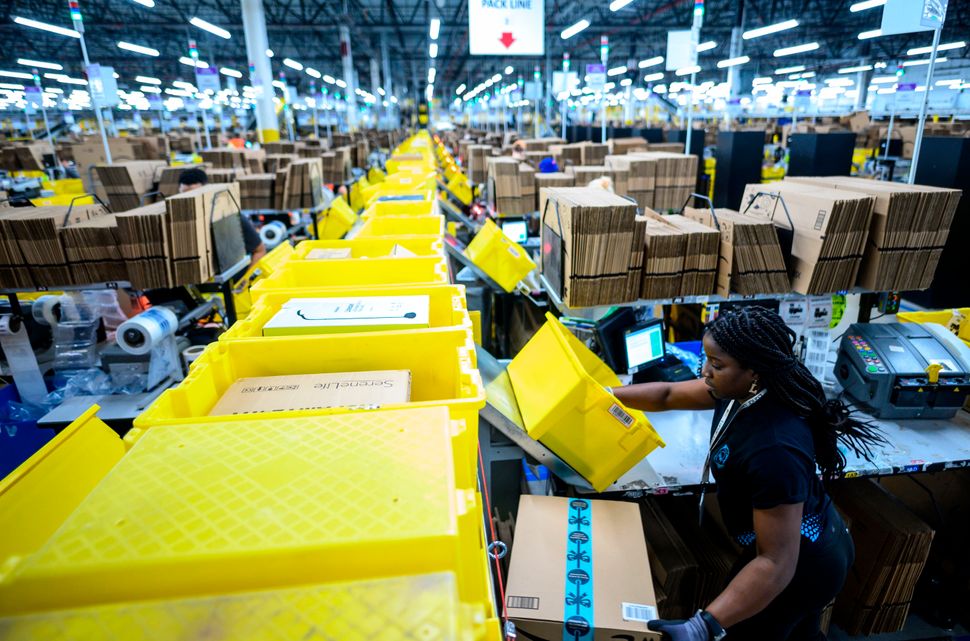
Chris Smalls made a lot of friends in his first year working at an Amazon warehouse in 2015. But within a matter of months, most of them were gone.

“That’s the name of Amazon’s game: Hire and fire,” said Smalls, 32. “They know that people don’t want to be here long, that these jobs break you down physically and mentally.”

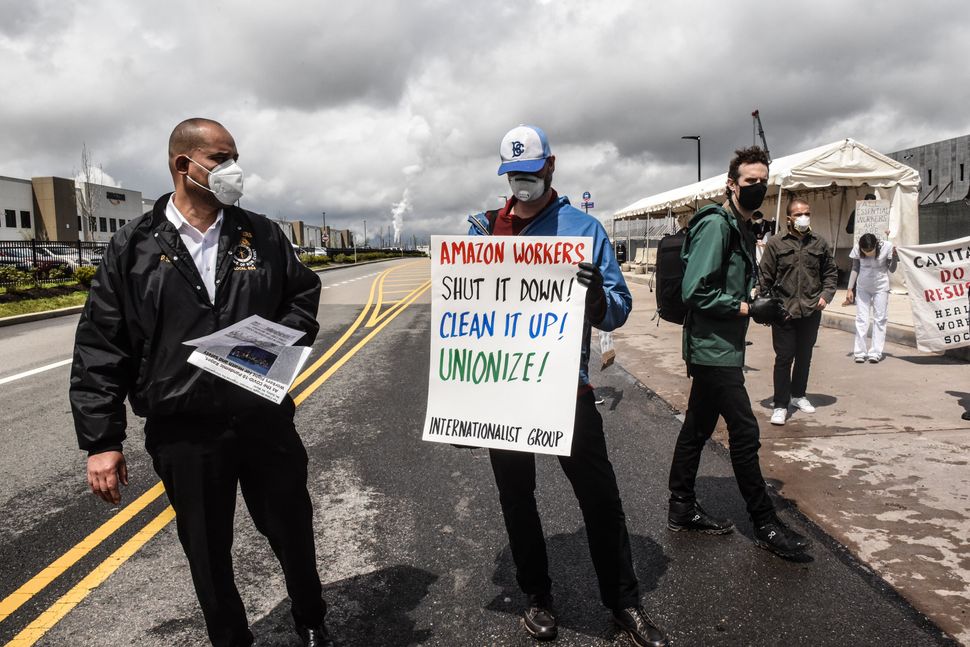
Smalls would know better than most. Amazon terminated him last March after he led a walkout at his Staten Island, New York, warehouse over safety concerns. Now Smalls has started an independent effort to organize a union at that facility, battling the same force he saw from the inside: Amazon’s high turnover rate.

“It’s definitely one way to avoid a union,” he said.

After successfully beating back a union drive at its Alabama warehouse in April, the world’s largest online retailer is facing a wave of worker activism in the U.S. and abroad. Both established labor unions and other worker groups are trying to organize employees inside Amazon’s ever-growing network of fulfillment centers and delivery hubs.

But whatever strategies the organizers deploy, they must contend with the company’s intimidating churn rate.

Amazon does not release data on the turnover in its warehouses and declined to do so for this story. But the observations of workers like Smalls square with a 2020 analysis from the National Employment Law Project, which found that the turnover rate in the local warehouse industry increases significantly when Amazon comes to town. Warehouse churn more than doubled in several California counties after Amazon facilities opened, averaging more than 100%.

The Seattle Times conducted its own analysis of Amazon’s workforce data last year, putting the company’s turnover at 111% during the pandemic. A New York Times investigation published this week put the figure even higher, at 150%, showing that Amazon was shedding 3% of its workers every week before the pandemic began.

A turnover rate above 100% doesn’t mean every single worker quits or gets fired in a year: It means the number of workers who leave is greater than the average number of workers employed during the same time period. So while some workers may last years, others last days. Under a turnover rate of 100%, every theoretical position inside the warehouse would turn over once in a year, on average.

That has huge implications for organizing.

Before the National Labor Relations Board schedules an election, a union must secure signed union authorization cards from at least 30% of the workers in an expected bargaining unit. In reality, a union wants far more than that ― ideally two-thirds or greater ― since they will need to win a majority of votes cast, and the employer may launch an anti-union campaign that weakens support.

At an Amazon warehouse, high turnover means a union would be losing cards every day as workers leave and new employees unfamiliar with the campaign replace them. Even if the union manages to win an election, high turnover could hurt its position at the bargaining table if some of the most active organizers have quit or been fired. And churn could even help the employer purge the union from the facility by convincing newer workers to decertify it.


‘It Is By Design’


High turnover has bedeviled unions for as long they’ve been organizing U.S. workers, but the vastness of Amazon’s workforce presents extreme challenges.

“It’s a big commitment for a worker to decide to start organizing with their coworkers,” said Irene Tung, who co-authored the NELP report. “And it may take years before they see a first contract.”

On a more fundamental level, high turnover makes it harder to build solidarity. Those who come to see the warehouse as just a place to get a paycheck for a few months would feel less invested in the job, or a campaign to improve it. Workers who barely know one another would be less likely to trust each other or take risks together.

Gene Bruskin, a longtime labor organizer, said Amazon’s turnover also creates basic logistical hurdles as workers try to establish networks. Bruskin is in regular touch with Amazon workers who are trying to organize their warehouses.

“When you’re trying to build a committee and sort of track leadership, map the place out and figure out where your good connections are, you just can’t count on that,” Bruskin said. “The best you can do, knowing that you’re going to lose a lot of folks, is to try and create a culture of solidarity and activity … so that when somebody [new] comes in they sort of pick up the vibe. You just can’t be as dependent on a particular group of people.”


Bruskin said one worker he knows recently lost a longtime organizing ally when he quit Amazon. She was devastated by his departure because he had so much Amazon experience relative to other workers.

“A ‘long time’ there in Amazon is people who’ve been there more than a couple years,” Bruskin said.

The turnover in Amazon warehouses stems partly from the seasonal nature of the business. Amazon fills its greatest share of orders in the runup to the holidays, during the period known as “peak.” The company staffs up accordingly, then drops workers as post-peak volume dictates.

But many workers quit or get fired because they can’t keep up with Amazon’s pace. The company tracks workers’ productivity through scanners and enforces a time-off-task policy that dings them for time away from their duties. (Amazon recently tweaked that controversial policy in a way the company said would make it less punitive.) Plenty of others likely leave because they get hurt.

One worker at a fulfillment center in the Midwest, who spoke on condition of anonymity for fear of retaliation, said a lot of workers at their facility end up quitting because of inattentive managers and unreasonable expectations. It seems that relatively few workers who opened the facility several years ago remain on the job. The worker said their facility seems to lose as many “pickers” a week as it can manage to bring on board.


Amazon openly encourages some of the turnover, offering employees annual buyouts to leave the company if they believe Amazon isn’t right for them. Under the pay-to-quit program, workers with a year under their belts are eligible for $2,000 or more to leave under the condition they can never return.

But the turnover is also part of the company’s founding ethos. According to the recent Times report, Amazon founder and outgoing CEO Jeff Bezos believed a long-tenured workforce amounted to a “march to mediocrity,” and preferred that the hourly labor at the company’s foundation be done on a short-term basis.

Turnover can be expensive for employers, since they have to constantly hire and train new workers who, for at least a period, will be less productive than the ones leaving. But labor experts say a company of Amazon’s size and sophistication would not have high churn if it didn’t prefer it that way.

Joseph McCartin, a historian and director of Georgetown University’s Kalmanovitz Initiative for Labor and the Working Poor, said industrial titans a century ago were concerned about the toll turnover was taking on their operations. He said it was a prime motivator behind Henry Ford’s famous $5-a-day compact with workers, which increased wages significantly in 1914. According to McCartin, lower turnover eventually helped foment the pre-World War II union organizing boom, since it helped stabilize workers within their industries.

But in recent years, McCartin said management philosophy at many companies has moved in the other direction, as employers wield turnover to better control the workforce. Amazon, he said, may exemplify that calculation.

“For the past 20 years or so we’ve had more and more employers who’ve gone full circle to the model that used to exist at the turn of the last century ― the model that people like Henry Ford started to break from, [the idea] that turnover actually works for us,” McCartin said.


Nelson Lichtenstein, a labor historian at the University of California, Santa Barbara, said modern employers like Amazon can mitigate the traditional expenses of turnover thanks to technology that cuts down on the costs of training. Amazon workers, after all, are largely managed by algorithms.

“It is by design,” Lichtenstein said. “They do want turnover. They don’t talk about it, but they want it.”


‘Exploiting It On A Larger Scale’

Amazon’s high turnover shaped some of the most critical decisions made by the Retail, Wholesale and Department Store Union in their unsuccessful effort to unionize an Amazon facility in Bessemer, Alabama, earlier this year.

The union assumed they were losing at least 60 cards per week — and perhaps many more — due to turnover among the workforce of nearly 6,000. That was one reason they did not resist Amazon’s effort at the NLRB to greatly expand the bargaining unit, even though it would disadvantage the union: They worried that if litigation delayed the election then turnover would naturally whittle their support.

As the lead organizer told HuffPost at the time, “You’ll never deep-organize a workplace that has 100% turnover. You’ll just chase your tail.”


The Bessemer facility had been open for less than a year and one worker recalled seeing an influx of hires in the runup to the vote. The addition of new workers would have helped diffuse union support inside the facility and put more work on organizers’ plates.

“These new people came into a building full of [Amazon] banners,” said the worker, who spoke on condition of anonymity because she supported the union effort. “I’m sure they had an orientation that told them how great Amazon was.”

Workers ultimately rejected unionization by a lopsided count of 1,798 to 738, with many voters saying they did not see a need for a union there. (There were an additional 505 challenged ballots that went unopened and may have favored the RWDSU.)

The high turnover raises questions about whether traditional union elections are worth pursuing at Amazon warehouses, especially when the company has shown its willingness to invest heavily in anti-union campaigns. In many cases, Amazon’s lawyering could delay a union election long enough that turnover would erode union support and essentially take care of the problem.

The Teamsters have gone public with an effort to unionize Amazon’s workforce, but the union said it is not beholden to going the traditional NLRB route of gathering signed cards and petitioning the labor board for an election. A Teamsters local that’s organizing in Iowa has already said it is considering recognition strikes, where workers not yet formally unionized would carry out work stoppages in an effort to pressure the company into bargaining.

Randy Korgan, national director of the Teamsters’ Amazon campaign, said it’s important to view the company’s high turnover in the broader context of the warehouse industry. Working conditions in the field were deteriorating well before Amazon’s era of dominance, Korgan said, pointing to the use of temporary workers in facilities operated by companies like Walmart, especially in major logistics hubs like California’s Inland Empire.


Amazon, he maintains, is accelerating a downward trend.

“Those of us who have been in the living rooms of these workers for 30 years, we’ve seen the transition happen,” Korgan said. “Amazon is just exploiting it on a larger scale.”

Korgan said labor organizers can manage 100% turnover at a facility that employs a couple hundred people, but in a workplace teeming with thousands, “the math is the math.” That’s why the union is keeping different approaches on the table.

“The NLRB is one strategy. Recognition strikes are another,” he said. “It’s getting workers to understand the influence they have, and what the pathways are after that.”

Some Amazon workers have been organizing under the banner of Amazonians United, which started in Chicago. The group has openly eschewed the NLRB process and appears focused instead on building militant minorities willing to carry out job actions, such as walkouts over safety issues. As one member put it, “For us, success isn’t dependent upon a union election.”


When Amazon fired Smalls following his walkout last year, the company accused him of violating the facility’s safety rules. Vice later reported that Amazon officials, facing a public-relations mess, hatched a plan to malign Smalls as “not smart or articulate.”

Smalls has created a new, independent union in his long-shot bid to organize the Staten Island facility, called the Amazon Labor Union. Working without the resources of an established union, he and a handful of fellow organizers have been posted outside the warehouse to catch workers as they come and go from their shifts. They have been gathering union cards and Smalls hopes they will someday be able to file for an election with the NLRB.

Smalls said he’s managed to bring aboard some workers with fairly long tenures at the warehouse. He believes a lot of those workers are more interested in unionizing because they’ve had more time to understand how Amazon operates. Yet each day seems to bring more fresh hires whom Smalls encounters for the first time, underlining the daunting challenge.

“We are seeing new faces,” Smalls said. “We’re trying to catch them before they even start.”


July 8, 2021


Biden administration picks to labor board could change the outlook for unions
Meghan McCarty Carino
Jul 15, 2021

A Senate committee will today consider two appointees of President Biden’s to the National Labor Relations Board, and the Senate itself is preparing to consider a Biden-appointed general counsel for the board. The five-member NLRB enforces federal laws that grant workers the right to organize and collectively bargain through a union.

If President Biden’s picks are confirmed, the board will go from Republican control to Democratic control, which could affect how it interprets the law, said Harvard Law School’s Benjamin Sachs.

“They decide which workers are entitled to the protections of Federal Labor Law, and what exactly those protections look like,” Sachs said. The current board has tended to favor employers, he added.

“For example, the Trump NLRB ruled that workers don’t have a right to use company email for the purposes of union organizing,” said Sachs. “That’s a big deal.”

A Democratic-controlled board could reverse that and speed up the union election process, said Celine McNicholas with the Economic Policy Institute.


“Standard timelines, preventing unnecessary litigation from occurring before an election actually is held … those would make real differences,” McNicholas said.

Almost 11% of workers belonged to unions as of 2020. In the private sector, the rate was just over 6%.
Line 3 pipeline opponents appeal to Minnesota Supreme Court


MINNEAPOLIS (AP) — Tribal and environmental groups opposed to Enbridge Energy's Line 3 oil pipeline project asked the Minnesota Supreme Court on Wednesday to overturn a lower court decision affirming the approvals granted by independent regulators that allowed construction to begin last December.

© Provided by The Canadian Press

The legal move came as protests continue along the route in northern Minnesota. More than 500 protesters have been arrested or issued citations since construction on the Minnesota leg of the project began in December, but they have failed so far to persuade President Joe Biden's administration to stop the project. Meanwhile, opponents have been demanding more transparency about a spill last week of drilling mud into a river that the pipeline will cross.


The White Earth Band of Ojibwe, the Red Lake Band of Chippewa, the Sierra Club and Honor the Earth petitioned the state's highest court to hear the case after the Minnesota Court of Appeals last month ruled that the Public Utilities Commission correctly granted Calgary, Alberta-based Enbridge a certificate of need and route permit for the 337-mile (542-kilometer) Minnesota segment of a larger project to replace a crude oil pipeline built in the 1960s that can run at only half capacity. Two other groups — Friends of the Headwaters and Youth Climate Intervenors — made similar but separate filings.

The state Commerce Department was part of that earlier appeal but decided not to ask the Supreme Court for further review. One of the central issues in the earlier appeal was the Commerce Department’s contention that Enbridge’s long-range oil demand projections failed to meet the legal requirements. But the appeals panel ruled 2-1 that there was reasonable evidence to support the PUC’s conclusion that the forecasts were adequate.

The department said that while the Court of Appeals disagreed with its position, the court’s opinion provided clarity for similar future proceedings. The remaining parties still argue that the PUC failed to demonstrate the need for the oil that Line 3 would transport. And they said in their petition that the appeals court should have considered whether there was enough evidence to back up the PUC's finding that the existing Line 3 poses a real and immediate safety risk.

The Commerce Department's involvement had posed a thorny political problem for Democratic Gov. Tim Walz. The Republican-controlled Minnesota Senate expressed its displeasure last summer by firing then-Commerce Commissioner Steve Kelley. And the Senate GOP reaffirmed its readiness to fight the Walz administration on environmental disputes last week when it forced out Minnesota Pollution Control Agency Commissioner Laura Bishop over other matters.

The Line 3 replacement would carry Canadian tar sands oil and regular crude from Alberta to Enbridge’s terminal in Superior, Wisconsin. The more than $7 billion project is nearly done except for the Minnesota leg, which is more than 60% complete. Opponents say the heavy oil would accelerate climate change and risk spills in lakes, wetlands and streams where Native Americans harvest wild rice, hunt, fish, and claim treaty rights. But Enbridge says the replacement, made of stronger steel, will better protect the environment while restoring capacity and ensuring reliable deliveries to refineries.

Opposition groups have stepped up pressure for authorities to disclose more details about their response to the July 6 drilling mud spill near Palisade where the pipeline will cross under the Willow River, a tributary of the Mississippi River.

“It was a bright yellow or orange color and it was bubbling up from the river bed,” said Shanai Matteson, who lives nearby and was part of a group that spotted the spill the morning it happened.

They saw no immediate efforts by officials to monitor or contain the spill, Matteson said. Crews later brought in a pump truck and placed booms in the river, she said.

MPCA spokeswoman Cori Rude-Young said the spill was inadvertent and involved around 80-100 gallons of mud made up of bentonite clay, water, and an approved, nontoxic additive made from xanthan gum, a common food ingredient.

“Upon identification of the release, all drilling activities at the location were suspended and containment and cleanup activities were started,” Rude-Young said. She said the investigation was continuing.

Even if the drilling mud was primarily clay, Matteson said, the silt can still harm sensitive aquatic organisms. And she said the spill made opponents even more worried about what could happen if the pipeline were to leak near that spot, since the heavy oil the pipeline will carry could sink and go undetected for some time.

Rita Chamblin, an activist from the Bemidji area, said she got few answers last week when she tried contacting the MPCA to see how officials there were going to respond.

“Would we have ever known about it had we not had people there?" Chamblin asked.

Melissa Lorentz, an attorney with the Minnesota Center for Environmental Advocacy, said Enbridge's permits specifically prohibit the discharge of drilling mud into waters along the route.

Enbridge spokeswoman Juli Kellner said the cleanup is complete. She said the company reported the spill immediately.

“There were no impacts to any aquifers nor were there downstream impacts because environmental control measures were installed at this location,” Kellner said.

Steve Karnowski, The Associated Press
4,000-year-old city discovered in Iraq
A group of Russian archaeologists made an impressive disco
very in Iraq’s Dhi Qar governorate, where an ancient settlement was uncoveredf

July 9, 2021
A group of Russian archaeologists discovered June 24 an ancient settlement about 4,000 years old in Dhi Qar governorate in southern Iraq. The discovery was made in the area of Tell al-Duhaila, which is home to more than 1,200 archaeological sites, including the Great Ziggurat of Ur site from the Sumerian era, and the royal tomb. Treasures similar to the ones that were found in the tomb of Egypt’s Tutankhamun’ tomb were unearthed.

Alexei Jankowski-Diakonoff, head of the Russian excavation mission, told Al-Monitor, “The works started in April 2021, which was the first full round of field archaeological research in southern Mesopotamia. The first two rounds took place in 2019 and 2020.”

He said, “The discovered city is an urban settlement in Tell al-Duhaila, located on the banks of a watercourse. According to initial speculation, the city could be the capital of a state founded following the political collapse at the end of the ancient Babylonian era [around the middle of the second millennium B.C.], which caused the systematic destruction of the Sumerian civilization’s urban life.”

Commenting on the significance of research in the area, he noted, “Researching the cities of southern Mesopotamia at the end of the ancient Babylonian era — and the Tell al-Duhaila site in particular — opens the secret of an unknown page in the history of the oldest civilization on the planet. The area of Tell al-Duhaila and the ancient city of Mashkan Shabir survived the mass robberies that began in 1991.”

Jankowski-Diakonoff added, “This site also reveals the first development in agriculture using silt in Mesopotamia. The site contains remains of the material from the period that preceded the emergence of the Sumerian civilization."

He expects a real opportunity to “find cuneiform documents in an undisturbed archaeological context, which will be extremely important not only to Russian scientists but Mesopotamian archaeologists as well.”

The mission also discovered an ancient port where ships used to anchor and the remains of a temple wall about 4 meters (13 feet) wide. “We also discovered an oxidized arrowhead, traces of tandoor stoves and clay camel statues dating back to the early Iron Age,” he said.

Talking about the history of the discoveries, the Russian archaeologist said, “According to the study of the oldest architectural building in the city and based on the design features and huge construction blocks, the edifice was most likely built during the ancient Babylonian era. It mainly reflects slave culture, the Neolithic period and Early Copper ages.”

Jankowski-Diakonoff said, “In 2019, the joint Russian-Iraqi mission obtained an official permit from the Directorate of Antiquities within the Iraqi Ministry of Culture to conduct archaeological research at two sites in southern Iraq — in the governorates of Maysan and Dhi Qar, which cover the modern delta area in Mesopotamia, the cradle of the most ancient history on earth.”

Amer Abdel Razak, antiquity director in Dhi Qar, told Al-Monitor, “The discovered city is located 70 kilometers [43 miles] southwest of the city of Nasiriyah [in the south] in the Sulaibiya depression, which is home to a large number of unexcavated archaeological sites. It is close to the city of Eridu — the oldest and greatest city where kings are said to have descended from heaven, according to Sumerian legends.”

He said, “The site was discovered before the arrival of the Russian mission. It was registered in the Dhi Qar Antiquity Department as an extremely significant archaeological site."

Abdel Razak noted that, despite the hardships and obstacles in working on-site because of the coronavirus pandemic, the Russian mission was able to make important discoveries.

“Land surveys showed that the site dates back to the ancient Babylonian era. The mission, however, believes that it might go back to more ancient ages given the pottery pieces and statues in the form of camels and other animals that were found on-site,” he said.

Abdel Razak added, “Dhi Qar is expecting visits by international universities and museums in October, including 10 Italian, American, French, British and Russian missions that are set to explore this vast area.”

Gaith Salem, professor of ancient history and civilization at Al-Mustansiriya University, told Al-Monitor, “There are many cities that have been discovered in southern Iraq over different periods of time but there has not been much talk about them.”

He called for “the development of systematic work within a fixed program to unearth the treasures of history, which are not important only to Iraq, but all humanity.”

He said, “This recent discovery is of paramount importance because it introduces the world to one of the Sumerian cities overlooking the seaports. Most cities used to have a view to the sea but have turned today into a vast desert."

Karrar al-Rawazeq, an archaeologist and member of the Muthanna antiquity rescue team, who participated in several excavations, told Al-Monitor, “Exploration and excavation works in the area will yield economic and cultural benefits only if the site was turned into a tourist and investment destination, which would attract funds and tourists.”

In this regard, Sumaya al-Ghallab, head of the Culture, Tourism and Antiquity Committee in the Iraqi parliament, spoke to Al-Monitor and called for “securing the necessary funds and protection for excavation teams, and following a strategy for an excavation and research process covering the entire archaeological map in Iraq.”

MORE FROM ADNAN ABU ZEED

Read more: https://www.al-monitor.com/originals/2021/07/4000-year-old-city-discovered-iraq#ixzz70i3YYvfC