Friday, November 05, 2021

CRIMINAL CAPITALI$M

The FBI is reportedly investigating a Chicago hospital that gave ineligible Trump Tower employees COVID-19 vaccines meant for communities of color

The glassy facade of Trump Tower in Chicago next to older brick buildings
Trump International Hotel & Tower Chicago. John Walton/PA Images via Getty Images
  • The FBI is investigating a hospital that wrongly provided COVID-19 vaccines to Trump Tower employees, Block Club Chicago reported.

  • The vaccines were provided to the ineligible workers under a program meant to help communities of color.

  • Federal subpoenas say that 107 vaccines were provided over a two-day period, according to WLS.

The FBI is investigating a Chicago hospital that gave COVID-19 vaccines to ineligible Trump International Hotel & Tower employees through a program meant to immunize communities of color, according to Block Club Chicago.

Dr. Anosh Amhed, the former COO and CFO of Loretto Hospital, stepped down from his position in March after reports that he provided vaccines to employees at Chicago's Trump Tower, where he reportedly owned a $2 million condo.

A federal grand jury issued subpoenas to the Illinois Department of Health in May and September, Block Club Chicago reported. The first subpoena indicated that there was an "official criminal investigation" into vaccines Loretto gave out over a two-day period in March, according to the report.

A spokesperson for the FBI Chicago office said in an email to Insider that Department of Justice policy "prohibits the FBI from commenting on the existence or nonexistence of an investigation."

According to local news outlet WLS, the May subpoena sought information on 107 people that got immunized at the hospital on March 10 and 11. The names of the people who got the shots were redacted.

The hospital's CEO, George Miller, said in March that he authorized 72 people to be vaccinated at Trump Tower on March 10 and 11, who were mostly employees there that lived on Chicago's West Side, WLS reported.

In a memo obtained by CNN, Miller said the hospital was "under the impression that restaurant and other frontline hospitality industry workers were considered 'essential' under the city of Chicago's 1b eligibility requirements."

Trump Tower was not located in one of the zip codes eligible to receive vaccines through the Protect Chicago Plus program meant to help hard-hit communities, and its employees were not eligible because of their employment status.

Loretto Hospital and Trump International Hotel & Tower did not immediately return Insider's request for comment.

According to Block Club Chicago, Amhed said he had vaccinated Eric Trump during a March 10 vaccination event. Ahmed took a photo with Eric Trump that he texted to his friends, telling them that he vaccinated the former president's son, who he called a "cool guy."

Ahmed later said he was only joking about vaccinating Trump, the outlet reported.

"Eric Trump happened to be in the building but we did not vaccinate him," Ahmed said in a statement shared through a spokesperson to Block Club Chicago.

Climate change: Yellen calls for 'wholesale transformation of our carbon intensive economies'


·Anchor/Reporter

GLASGOW — Treasury Secretary Janet Yellen called for a "wholesale transformation" of carbon intensive economies at the UN Climate Change Conference (COP26) in Glasgow on Wednesday, urging the private sector to capitalize on an opportunity to help developing nations transition to a carbon free economy.

"Rising to this challenge will require the wholesale transformation of our carbon-intensive economies," Yellen stated in prepared remarks. "It’s a global transition for which we have an estimated price tag: some have put the global figure between $100 and $150 trillion over the next three decades. At the same time, addressing climate change is the greatest economic opportunity of our time."

Yahoo Finance and Yahoo News will be reporting from COP26, which is set to begin on October 31 and last until November 12 in Glasgow, Scotland. Check out the coverage here.

Yellen specifically pledged U.S. support for Climate Investment Funds (CIF), a multilateral climate finance mechanism to help the poorest countries most affected by climate change, build out climate resilience, and shift to a future free of fossil fuels.

“Through an innovative leveraging structure, this initiative will help attract significant new private climate finance and provide $500 million per year for the Clean Technology Funds’ programming, including the new Accelerating Coal Transition investment Program,” Yellen stated.

Financing for developing countries have increasingly become a contentious point of larger climate discussions, with a $100 billion pledge by the world’s advanced economies yet to be paid out more than five years after it was initially promised.

Developing countries argue they are being unfairly tasked to pay for a climate crisis largely caused by emissions spewed by the world’s richest countries, while the poorest nations have been hit the hardest by extreme weather brought on by climate change.

On Tuesday, Special Presidential Envoy John Kerry admitted $100 billion would not be enough given that the climate crisis is intensifying and time is running out to cap global warming at 1.5 degrees Celsius, a goal climate scientists have said would avert a catastrophe.

“$100 billion doesn't do it, folks," Kerry said. "It's trillions of dollars that are needed. And the only way we will get this done is if trillions of dollars are forthcoming."

President Biden has already announced a U.S. commitment to quadruple international climate finance by 2024, to more than $11 billion. The private sector is expected to pick up the bulk of the investments, because of the sheer scale and cost of the effort needed to sunset coal powered plants and invest in renewable energy, among other measures.

Yellen stated the private sector stands "ready to supply the financing" to avoid the worst of the climate crisis. Some of the world’s largest multinational companies, including Amazon (AMZN) and Microsoft (MSFT), as well as asset managers have made the trip to Glasgow to seek investment opportunities in the green transition

U.S. Treasury Secretary Janet Yellen speaks during a news conference with Irish Finance Minister Paschal Donohoe at Government buildings in Dublin, Ireland, November 1, 2021. REUTERS/Clodagh Kilcoyne
U.S. Treasury Secretary Janet Yellen speaks during a news conference with Irish Finance Minister Paschal Donohoe at Government buildings in Dublin, Ireland, November 1, 2021. (REUTERS/Clodagh Kilcoyne)

However, commercial banks have been slow to line up capital for projects. While Citigroup (C), Morgan Stanley (MS), and Bank of America (BAC) have committed to shifting its investments to businesses that reduce carbon emissions, major banks from India, China, Japan, and Australia haven’t followed.

Yellen, who mentioned "investments that will be profitable in sustainable investments" to Congressional testimony last month, asserted in her COP26 remarks that "it is simply cost effective to go green."

The Financial Stability Oversight Council, chaired by Yellen, released a report last month laying out actions needed to build resilience in the financial system from the risk of climate change, including enhanced climate-related disclosures.

“CEOs representing trillions in assets are here to show their commitment," Yellen stated. "Financial institutions with collective assets under management of nearly $100 trillion have come together under The Glasgow Financial Alliance for Net Zero, or GFANZ. If these ambitions are realized, those portfolios will be carbon-neutral by 2050 and significantly reduce emissions by 2030."

Akiko Fujita is an anchor and reporter for Yahoo Finance. Follow her on Twitter @AkikoFujita

Vaccine mandates are working in US,
 but are still divisive

Issued on: 05/11/2021 - 08:24


Workers at NASA's Jet Propulsion Laboratory and their supporters protest on November 1, 2021 at JPL in Pasadena, California against a government mandate requiring federal employees to received the Covid-19 vaccine Robyn Beck AFP/File

Los Angeles (AFP) – When vaccine mandates were announced in the United States, there were dire warnings they would cause mass layoffs or walkouts. But they didn't. In fact, figures show they are working.

There are pockets of resistance to rules requiring employees be protected against Covid-19, notably among police and firefighters, but they have nudged more people towards getting the jab.

"Mandates, so far, seem to be the most effective thing we have to overcome the vaccine hesitancy," Bradley Pollock, professor of Public Health Sciences at the University of California at Davis, told the Sacramento Bee last month. "It's more than good; it's very good."

Around 58 percent of the total US population was fully vaccinated as of early November, up from half in August as mandates began to be announced.

President Joe Biden on Thursday set a January 4 deadline for employees in large companies to be fully vaccinated -- a rule the administration says will affect more than two-thirds of the country's workforce.

"Vaccination is the single best pathway out of this pandemic," he said.


"Businesses have more power than ever before to accelerate our path out of this pandemic, save lives, and protect our economic recovery."
Private sector

The government rules follow mandates announced by several major employers -- to impressive effect.

They included United Airlines, which told its 67,000 US-based staff to get the jab or face termination.

By Thursday, 2,000 had sought medical or religious exemptions and all but a handful of the rest had complied.

Tyson Foods, one of the biggest meatpacking companies in the world announced in early August that all of its 120,000 staff would need to be vaccinated.

Around 96 percent of its staff have now fallen into line, the New York Times reported.

The US military, which has told all serving personnel they must be jabbed -- or face consequences -- reports take-up is above 95 percent in all services.

On the whole, workers like the mandate and want to be vaccinated, with the AFL-CIO, the umbrella grouping for unions, calling it "a step in the right direction."
Deep space

But there are notable pockets of resistance, usually couched in terms of an objection to the mandate, rather than to the vaccine per se -- even if the two attitudes often go hand-in-hand.


People gather to protest vaccine mandates for city workers at City Hall Park on November 03, 2021 in New York City Michael M. Santiago GETTY IMAGES NORTH AMERICA/AFP

That vein of skepticism is particularly thick in police departments, despite the toll the virus has taken on them.

Covid-19 has claimed more than 260 police officers' lives this year -- five times the number shot dead, according to the Officer Down Memorial Page, which tracks deaths in the line of duty.

Los Angeles County Sheriff Alex Villanueva said this week that just 43 percent of his officers had been jabbed, and called on his bosses to suspend a rule that could see unvaccinated staff fired.

"Sadly," he said, the executive order is "actually disrupting our ability to provide public safety services."

In Chicago, several thousand police officers face being placed on unpaid leave after refusing to disclose their vaccine status.

New York City's police officers make up around half of the city employees who have applied for religious or medical exemptions.

No major religion has barred followers from taking a vaccine scientists say is safe and effective.

While hesitancy is concentrated in the more conservative-leaning professions, there is skepticism across society.

Caleb Macy, who helps build the antennas for NASA's Deep Space Network arrays was this week among dozens of staff demonstrating at the Jet Propulsion Laboratory in California.

Like other federal employees, he faces the possibility of losing his job if he has neither a religious exemption nor full vaccination by December 8.

But he says that's something he is prepared for.

"I can assure you I will never get this vaccination. Because once you tell me that I have to... I draw the line at that point. It's no longer a choice when it's forced," he told AFP.

He acknowledged, however, that he would not get what he called an "experimental" vaccine under any circumstances.
Not 'your mom'

Holdouts are getting succor from right-wing politicians, who have declared mandates everything from "overreach" to "dictatorship."

Despite reams of scientific evidence about their safety and efficacy, vaccines and other anti-pandemic measures like masks continue to rile Republicans, as the latest rallying cry in the US culture wars.

Jeremy Boreing, founder and chief executive of right-wing outlet The Daily Wire said his company would not be enforcing the mandate, and would be challenging it in court.

"Joe Biden isn't your mom. The government isn't your mom and your employer sure as hell isn't your mom.

"We've already retained legal counsel and we're prepared to go to battle with this administration to put an end to their unconstitutional bullshit."

© 2021 AFP
Myanmar jade traders squeezed between junta and rebels

Myanmar is the world's biggest source of jade, with massive demand in China a key driver of the industry 
STR AFP

Issued on: 05/11/2021 -

Mandalay (Myanmar) (AFP) – Myanmar jade traders are running from junta troops and dodging rebel attacks to sell dwindling volumes of the green gemstone, as the billion-dollar industry loses its shine months on from the coup.

The Southeast Asian country has been mired in chaos since the February putsch, with the military trying to crush widespread democracy protests and the economy in crisis.

Fighting around the Hpakant jade mine in northern Kachin state -- the largest in the world -- has squeezed digging already hampered by the pandemic, cutting supplies of one of the country's most lucrative exports.

Myanmar is the world's biggest source of jade, with the industry largely driven by insatiable demand for the translucent gem from neighbouring China.

Most stones pass through the second city of Mandalay, home to the 23-metre (75-feet) high Kyauksein Pagoda, a Buddhist shrine built using thousands of kilograms of the precious stone.

Now the complex is quiet, with just a handful of worshippers praying at its gleaming turquoise and red dome.

"Business is not good at all," said one jade trader, who spent months trying to sell his stones on Mandalay's roadsides as the pandemic and unrest closed its main jade market.

"Sometimes, people panic when soldiers come patrolling, and they run ... If one person runs, others start running. Then soldiers fire warning shots to control the situation."
'Your lives are in danger'

Two days later the market re-opened and authorities began collecting fees again -- one of the many levied on the gem that finance both sides of a decades-long civil war between armed ethnic groups and the military.

It is "nearly impossible" to purchase Myanmar jade without providing money to the military and its allies, according to watchdog Global Witness.

With widespread and often violent resistance against the generals -- who regularly appear in public sporting rings set with high-quality jade -- working with the stone has taken on a new danger.

"If you continue doing your trading business... We strongly warn that your lives are in danger," read one notice posted by Generation Z Power, a local dissident group, days before the market re-opened.


Unrest in Myanmar since the coup has led to the closure of some jade markets, while traders are in constant fear of attacks from anti-military groups 
STR AFP

A bomb exploded near the market a week after the traders returned and while there were no casualties the same group promised to set off more if people continue trading there.

Despite the threats, the market is regaining some of its former bustle.

Sitting at a small camp table examining a fist-sized rock with a flashlight, one man talks into a smartphone in Mandarin.

Beijing has shuttered its border with Myanmar because of the pandemic and sporadic fighting along the frontier, but demand is still huge -- and Chinese buyers are using the unrest to drive a hard bargain.

"Because of Covid and the political situation, they are giving very low price," said one 62-year-old dealer who did not want to give his name.

"But we have no choice. We need them for the market. If they do not buy or if we do not sell, we have no place to rely on for this business," he added.
Fear of next blast

"The price is going down," said Myo Min Zaw, who also spent his months outside the market traipsing around hotels frequented by Chinese buyers in search of a sale.

"A stone worth 10 lakh ($550) only sells for around 5 lakh nowadays."

Before the coup, 70 to 90 percent of all jade mined in Hpakant was smuggled to China without ever entering the formal system in Myanmar, according to Global Witness.


Cash made from selling jade helped finance both sides of a decades-long civil war between armed ethnic groups and the military
 STR AFP

Since the putsch, and with fighting flaring around the mines, figures from the shadowy world are even harder to come by, says Hanna Hindstrom, senior campaigner for Myanmar at the group.

"We've heard that prices in China have risen as demand is high and supply reduced," she said -- increasing competition between the rebel groups and military-aligned militia who stock the emporiums with high-quality jade.

For Thandar, who runs a small jade bead workshop across the river from Mandalay, selling her modest wares to local customers has just got more dangerous.

"We worry if we have to go to the market," she told AFP.

"We all are afraid of when the blast will come... We cannot avoid going there because of our living."

A second blast hit the market on Thursday, killing a police officer, local media reported, and sending traders fleeing.

The same day authorities announced that any shop in the complex that failed to re-open by November 5 would be "temporarily seized".

"We are stuck in the middle," said Aung Aung, using a pseudonym.

"The market said they will take the shops if owners do not open. People's Defence Forces have asked us not to do business in the market."

© 2021 AFP
COP26 braces for youth protests after vague emissions pledges

Issued on: 05/11/2021 

Demonstrations are expected across the Scottish city to highlight the disconnect between the glacial pace of country pledges and the climate emergency already swamping countries the world over 
ANDY BUCHANAN AFP/File

Glasgow (AFP) – Thousands of youth activists were preparing to descend on Glasgow on Friday to protest against what they say is a dangerous lack of action by leaders at the COP26 climate summit.

Demonstrations are expected across the Scottish city to highlight the disconnect between the glacial pace of emissions reductions and the climate emergency already swamping countries across the world.

Organisers of the Fridays for Future global strike movement said they expected large crowds at the planned three-hour protest during COP26 "Youth Day", which will be attended by high-profile campaigners Greta Thunberg and Vanessa Nakate.

"This UN Climate Summit, we're once again seeing world leaders saying big words and big promises," said Mitze Joelle Tan, a climate justice activist from the Philippines.

"We need drastic carbon dioxide emission cuts, reparations from the Global North to the Global South to use for adaptation and to manage loss and damages, and we need to put an end to the fossil fuel industry."

Delegates from nearly 200 countries are in Glasgow to hammer out how to meet the Paris Agreement goals of limiting temperature rises to between 1.5 and 2 degrees Celsius.

The UN-led process requires countries to commit to ever-increasing emissions cuts, and enjoins richer, historical emitters to help developing countries fund their energy transformations and deal with climate impacts.

Countries issued two additional pledges on Thursday to reduce their fossil fuel consumption.

Twenty nations including major financiers the United States and Canada promised to end overseas fossil fuel funding by the end of 2022.

And over 40 countries pledged to phase out coal -- the most polluting fossil fuel -- although details were vague and a timeline for doing so not disclosed.

Thunberg was unimpressed, tweeting: "This is no longer a climate conference. This is a Global North greenwash festival."

- 'Take responsibility' -


Experts say a commitment made during the high-level leaders summit at the start of COP26 by more than 100 nations to cut methane emissions by at least 30 percent this decade will have a real short-term impact on global heating.

But environmental groups pointed out that governments, particularly wealthy polluters, have a habit of failing to live up to their climate promises.

"On Monday, I stood in front of world leaders in Glasgow and asked them to open their hearts to the people on the frontlines of the climate crisis," said Kenyan activist Elizabeth Wathuti, who addressed the conference's opening plenary.


Swedish climate activist Greta Thunberg will be in Glasgow for the Friday's for Future demo 
Adrian DENNIS AFP

"I asked them to take their historic responsibility seriously and to take serious action here. So far they haven't."

Countries came into COP26 with national climate plans that, when brought together, puts Earth on course to warm 2.7C this century, according to the UN.

With just 1.1C of warming so far, communities across the world are already facing ever more intense fire and drought, displacement and economic ruin wrought by our heating climate.

"We are tired of fighting against the current 'normal -- the 'normal' we have is unviable, unsustainable and not enough," said Kenyan activist Kevin Mtai.

© 2021 AFP

'It kills me inside': Activists sound alarm on climate anxiety

Issued on: 05/11/2021

Climate activist Dominique Palmer (R) deals with her anxiety by campaigning
 Tolga Akmen AFP

Hong Kong (AFP) – From Bangladesh to Britain to Nigeria, many young campaigners on the frontlines of the global fight for climate justice now face a new problem: the impact the crisis is having on their mental health.

As thousands of delegates converged at the COP26 summit in Glasgow to discuss ways to tackle the environmental emergency, AFP interviewed three youth activists around the world who spoke candidly of their experience of climate anxiety.

In Bangladesh, ranked seventh for countries most affected by extreme weather, activist Sohanur Rahman said he feels overwhelmed with concern over what he sees as a lack of political will to stop the destruction.

"(The) climate crisis is to me a mental stress, trauma and nightmare," says the 24-year-old, who now lives in the town of Barisal and who remembers a 2007 super cyclone that killed thousands of people in the South Asian nation.

"It kills me inside," he says softly, adding that he fears for his parents who live in the village of Nathullabad that was levelled by the cyclone.

'Environmental doom'


The American Psychological Association has described climate or eco-anxiety as a "chronic fear of environmental doom".

As with other forms of anxiety, living with it long-term can impair people's daily ability to function, while exacerbating underlying mental health issues.


Climate campaigner Sohanur Rahman remembers the 2007 super cyclone that killed thousands of people across Bangladesh 
Munir UZ ZAMAN AFP

Researchers have warned children and young people are particularly vulnerable, as they contemplate a future mired with scorching heatwaves, devastating floods and storms, and rising seas.

A recent report led by researchers at the University of Bath in Britain, surveying 10,000 young people in 10 countries, found that 77 percent viewed the future as frightening because of climate change.

Around half of the respondents told researchers their fears over environmental change were affecting their daily lives.

Fear, anxiety, anger


Speaking to AFP in London, activist Dominique Palmer said: "I'm looking at the future, and what we face in the future, and there is a lot of fear and anxiety. And there is anger.

"Young people, myself included, feel betrayed by world leaders," the 22-year-old said at a climate protest ahead of the COP26 summit.
AFP

To deal with her anxiety, she campaigns.

"Sometimes it can feel quite hopeless until I am back and organising with my community," she said.

In Johannesburg, clinical psychologist Garret Barnwell showed sympathy and understanding for the young people facing difficult emotions over the crisis.

"It's a reality that children are facing this changing world. They're experiencing fear, anger, hopelessness, helplessness," Barnwell said.

The pressures of climate change also amplify pre-existing social injustices, he said, so younger generations are not only concerned about the environment but also, for example, healthcare access.

Yet despite this, when young people articulate their fears to adults such as teachers, often they find their feels are "invalidated", Barnwell added.

He welcomed the growing global awareness of climate anxiety, adding that while therapy can be helpful ultimately what is needed was political action.
'We bear the burden'

But in the eyes of many young activists, that concrete action is lacking.

At the COP26 summit, dozens of countries this week joined a United States and European Union pledge to cut methane emissions.

The initiative, which experts say could have a powerful short-term impact on global heating, followed an agreement by 100 nations to end deforestation by 2030.


Researchers have warned children and young people are particularly vulnerable to climate anxiety 
Tolga Akmen AFP

But a simmering diplomatic spat between the United States, China and Russia over their climate action ambitions showed the fragile nature of the talks.

"The previous COP, COP25, really sort of brought out this eco-anxiety I felt," said eco-feminist Jennifer Uchendu, 29, in Lagos.

She said she believed climate anxiety was especially an issue for younger people growing up in nations disproportionately affected by climate change.

"We bear the burden of climate change, even though we contributed the least to it," she said, a frown creasing her face.

Uchendu said that rather than bury her fears, she tries to accept them as valid.

"It's OK to feel overwhelmed," she said.

"It's OK to be afraid, scared and even anxious in the face of something so big and so overwhelming."

burs-rbu/ser

© 2021 AFP


GLOBALIST  GUNRUNNERS
Saudi gets first major arms deal under Biden with air-to-air missiles

By Mike Stone and Patricia Zengerle

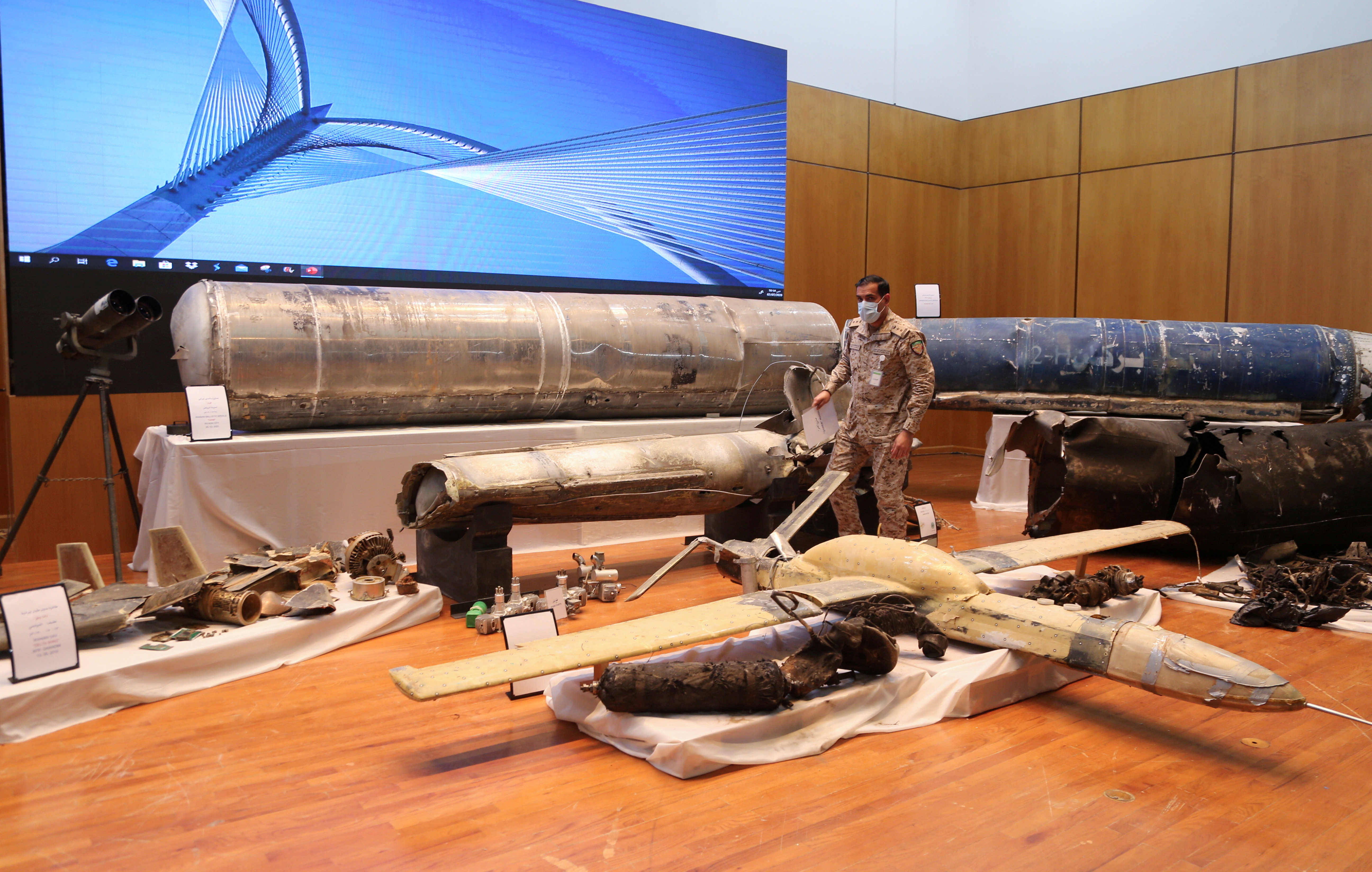
A Saudi security man walks between the display of the debris of ballistic missiles and weapons, which were launched towards Riyadh, according to Saudi Officials, ahead of the news conference in Riyadh, Saudi Arabia July 2, 2020. REUTERS/Ahmed Yosri/File Photo

WASHINGTON, Nov 4 (Reuters) - The U.S. State Department approved its first major arms sale to the Kingdom of Saudi Arabia under U.S. President Joe Biden with the sale of 280 air-to-air missiles valued at up to $650 million, the Pentagon said on Thursday.

While Saudi Arabia is an important partner in the Middle East, U.S. lawmakers have criticized Riyadh for its involvement in the war in Yemen, a conflict considered one of the world's worst humanitarian disasters. They have refused to approve many military sales for the kingdom without assurances U.S. equipment would not be used to kill civilians.

The Pentagon notified Congress of the sale on Thursday. If approved, the deal would be the first sale to Saudi Arabia since the Biden administration adopted a policy of selling only defensive weapons to the Gulf ally.

The State Department had approved the sale on Oct. 26, a spokesperson said, adding that the air-to-air missile sale comes after "an increase in cross-border attacks against Saudi Arabia over the past year."

Raytheon Technologies (RTX.N) makes the missiles.

The sale "is fully consistent with the administration's pledge to lead with diplomacy to end the conflict in Yemen," the State Department spokesperson said in a statement. The air-to-air missiles ensure "Saudi Arabia has the means to defend itself from Iranian-backed Houthi air attacks," he said.
After the Trump administration's friendly relationship with Riyadh, the Biden administration recalculated its approach to Saudi Arabia, a country with which it has severe human rights concerns but which is also one of Washington's closest U.S. allies in countering the threat posed by Iran.

The package would include 280 AIM-120C-7/C-8 Advanced Medium Range Air-to-Air Missiles (AMRAAM), 596 LAU-128 Missile Rail Launchers (MRL) along with containers and support equipment, spare parts, U.S. Government and contractor engineering and technical support.

Despite approval by the State Department, the notification did not indicate that a contract has been signed or that negotiations have concluded.

Reporting by Mike Stone and Patricia Zengerle in Washington; Editing by Rosalba O'Brien and Dan Grebler


Blue Origin loses federal lawsuit over NASA moon lander contract

SpaceX and NASA will now resume their Artemis moon lander project 'as soon as possible.'

NASA picked SpaceX's Starship spacecraft, seen here in an artist's depiction, to land Artemis astronauts on the moon. (Image credit: SpaceX)

By Mike Wall

Blue Origin has lost the lawsuit it filed over the awarding of a lucrative NASA moon lander contract, freeing SpaceX up to resume its work on the project.

In April, NASA announced that it had selected SpaceX to develop the initial Human Landing System (HLS) for its Artemis program, which aims to send astronauts back to the moon in the next few years. SpaceX beat out two other private groups for the $2.9 billion contract: Dynetics and "The National Team," a consortium led by Jeff Bezos' Blue Origin.

Both Dynetics and Blue Origin quickly lodged protests with the U.S. Government Accountability Office (GAO), citing perceived flaws in the selection process. For example, the companies objected to the selection of a single HLS concept, when NASA had said it wanted to fund the development of at least two private moon landers. (NASA officials have said that the agency's funding situation precluded awarding multiple contracts.)

The GAO denied those protests in late July. Then, on Aug. 16, Blue Origin filed a lawsuit against NASA in the U.S. Court of Federal Claims.


That didn't go Blue Origin's way, either, we just learned: In a one-page decision released today (Nov. 4), Judge Richard A. Hertling ruled against the company, granting a motion by the federal government to dismiss the case. (The full ruling is under seal and will remain so until Nov. 18, Hertling wrote.)

The protests and lawsuit prevented SpaceX and NASA from getting much work done under the HLS deal, which the company intends to fulfill using its huge, fully reusable Starship system. But today's ruling should get the wheels turning again.
"NASA will resume work with SpaceX under the Option A contract as soon as possible," agency officials wrote in a statement that was issued after Judge Hertling's ruling came out.

"In addition to this contract, NASA continues working with multiple American companies to bolster competition and commercial readiness for crewed transportation to the lunar surface," NASA officials added. "There will be forthcoming opportunities for companies to partner with NASA in establishing a long-term human presence at the moon under the agency’s Artemis program, including a call in 2022 to U.S. industry for recurring crewed lunar landing services."

Blue Origin stressed that it aims to be a big part of the larger Artemis picture going forward despite today's decision. But it's not backing down from the objections and arguments that spurred the lawsuit.

"Our lawsuit with the Court of Federal Claims highlighted the important safety issues with the Human Landing System procurement process that must still be addressed," Blue Origin representatives wrote in an emailed statement.

"Returning astronauts safely to the moon through NASA’s public-private partnership model requires an unprejudiced procurement process alongside sound policy that incorporates redundant systems and promotes competition," they added. "Blue Origin remains deeply committed to the success of the Artemis program, and we have a broad base of activity on multiple contracts with NASA to achieve the United States’ goal to return to the moon to stay."

Bezos responded to the ruling as well. "Not the decision we wanted, but we respect the court’s judgment, and wish full success for NASA and SpaceX on the contract," the billionaire wrote via Twitter today.

SpaceX founder and CEO Elon Musk also tweeted out a reaction — a screenshot from the 2012 film "Dredd" along with the text "You have been judged."


Pandemic coronavirus is widespread in Iowa deer

Researchers don’t yet know whether deer can pass SARS-CoV-2 back to humans

4 NOV 2021
FISHHAWK/FLICKR/CC BY 2.0

About 80% of Iowa deer tested between late November 2020 and early January were infected with the pandemic coronavirus, The New York Times reports. Scientists tested lymph node tissue samples from 283 wild and captive white-tailed deer across the state for coronavirus RNA between April 2020 and January. The first sign of infection appeared on 28 September 2020, and by December about 80% of samples were positive. The deer picked up mutations and variants in similar patterns to humans across the state, suggesting humans passed infections to deer multiple times. Researchers speculate deer might be catching the virus from humans who feed them in their yard, or by licking chewing tobacco left by infected hunters. The rapid rise in the prevalence of infections indicates that the deer are also spreading SARS-CoV-2 to one another, scientists write in a study posted on the biological sciences preprint repository bioRxiv. Researchers aren’t yet sure whether deer can pass the virus back to humans, or whether other wild animals are also transmitting the virus.
COP26: Indonesia criticises 'unfair' deal to end deforestation

Indonesia has criticised the terms of a global deal to end deforestation by 2030, signalling that the country may not abide by it.


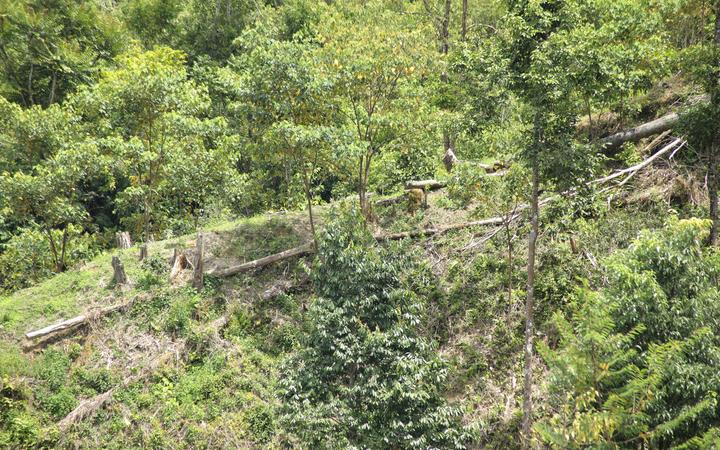
Logging in forest in Nisam Antara, Indonesia's Aceh province, October 2021. 
Photo: AFP

Environment Minister Siti Nurbaya Bakar said the authorities could not "promise what we can't do".

She said forcing Indonesia to commit to zero deforestation by 2030 was "clearly inappropriate and unfair".

Despite President Joko Widodo signing the forest deal, she said development remained Indonesia's top priority.

The deal, agreed between more than 100 world leaders, was announced on Monday at the COP26 climate summit in Glasgow. It was the event's first major announcement.

It promises to end and reverse deforestation by 2030, and includes about $US19 billion of public and private funds.

In a Facebook post Nurbaya argued that the country's vast natural resources must be used for the benefit of its people.

She cited the need to to cut down forests to make way for new roads.

"The massive development of President Jokowi's era must not stop in the name of carbon emissions or in the name of deforestation," she said, referring to Widodo by his nickname.

"Indonesia's natural wealth, including forests, must be managed for its use according to sustainable principles, besides being fair," she said.

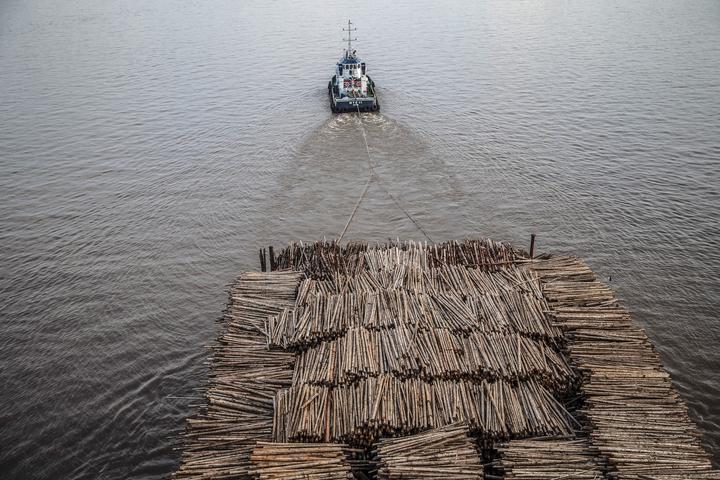
A barge carrying logs is pulled along the Mahakam River, in East Kalimantan, 4 November 2021. Photo: AFP

Experts welcomed the agreement, but they warned a previous deal in 2014 had "failed to slow deforestation at all" and said commitments needed to be delivered on.

Felling trees contributes to climate change because it depletes forests that absorb vast amounts of the warming gas CO2.

Meanwhile, Indonesia's Deputy Foreign Minister Mahendra Siregar said that describing the deal as a zero-deforestation pledge was "false and misleading".

Indonesia's vast forests are still shrinking, despite a marked slow down in the deforestation rate in recent years.

According to the Global Forest Watch monitoring website, in 2001 the country had nearly 94 million hectares of primary forest - defined as tropical forest that has not been completely cleared and regrown in recent history.

That area had decreased by at least 10 percent by 2020.

- BBC


The world has pledged to stop deforestation before. But trees are still disappearing at an 'untenable rate.'


A felled tree is seen in the middle of a deforested area of the Yari plains, in Caqueta, Colombia March 3, 2021. Picture taken March 3, 2021. REUTERS/Luisa Gonzalez

Tik Root and Harry Stevens, (c) 2021, The Washington Post
Wed, November 3, 2021

On Tuesday, more than 100 countries signed on to an ambitious plan to halt deforestation by 2030 and pledged billions of dollars to the effort. Although world leaders lauded the move, climate activists say they've heard that promise before and that past efforts have come up short - the world is still losing massive numbers of trees each year.

"Despite ambitious political commitments to end deforestation over the past decade, we are still losing tropical primary forests at an untenable rate," said Crystal Davis, the director of the Global Forest Watch monitoring initiative. "We are running out of time to solve this problem."

According to Global Forest Watch, the world lost 411 million hectares of forest between 2001 and 2020. That's roughly half the size of the United States and equivalent to 10% of global tree cover. In 2020, the world lost a near-record 25.8 million hectares - almost double the amount in 2001.

Trees play a critical role in absorbing carbon dioxide as they grow, thereby slowing global warming. There are a number of ways trees can disappear - from logging and wildfires to being cleared to make way for crops or livestock. But when they are cut, and are either burned or decay, they release the carbon into the atmosphere. According to the U.N. Intergovernmental Panel on Climate Change, about 23% of global greenhouse gas emissions come from agriculture, forestry and other land uses.

"Avoiding deforestation is the best near-term thing we could ever try to do," said Gretchen Daily, a professor at Stanford University and the co-founder of the Natural Capital Project. "That will keep more carbon out of the atmosphere and help us drive the broader transformation we need."

There have been global endeavors to combat deforestation in the past. In 2014, for instance, more than 200 governments, companies and civil society organizations signed the New York Declaration of Forests, which called for halving the rate deforestation by 2020 and halting it by 2030. But, Davis said, the world fell far short - "we blew through the 2020 targets that we set."

"It's a mixture of lack of enforcement, lack of political will and the private sector not stepping up," said Nathalie Walker, the director of tropical forest and agriculture at the National Wildlife Federation. "There has not been enough follow-through."

The Amazon is the world's largest rainforest and arguably the most closely watched harbinger of deforestation. The rainforest is 17% deforested, and losses are especially pronounced in Brazil, which lost some 1.7 million hectares of rainforest in 2020 alone.

"If you're looking at the area cleared, Brazil is usually the worst," Walker said. And of that, "cattle is the single biggest driver" of loss.

Walker notes that starting in the mid-2000s, the country saw about a decade of positive momentum on the issue. "There was a suite of public and private measures that was aiming to encourage production away from the forest frontier," she said. But in recent years, that has been reversed.

New research shows that last year, despite an economic recession, Brazil reported a 9% jump in its greenhouse gas emissions. "The principal factor," the authors wrote, "was deforestation."

South America, however, is far from the only region experiencing deforestation. Of the 10 countries that have lost the most tree cover since 2001, only two of them - Brazil and Paraguay - are Amazonian.

One of the places where Walker says trees are most at risk right now is the Democratic Republic of Congo. The country has a large amount of remaining forest but high deforestation rates due to practices such as agricultural clearing, fuelwood harvesting and logging. "The Congo is under threat," she said.

Russia is another area of concern. About half the country is covered in forests, and it has topped Global Forest Watch's list of tree-cover loss since 2001 - with some 69.5 million hectares gone. "A lot of that tends to be for timber," Walker said. While much of that may be managed timber practices, at least a portion of the logging is probably illegal, she said. And with such a large area "it's difficult to police effectively."

China is a primary consumer of Russian timber. Walker said that points to China's broader role as a purchaser of commodities linked to deforestation - whether it's Brazilian cattle hides or palm oil from Southeast Asia.

Yet the news isn't all bad.

Pakistan, for instance, is in the midst of a "Ten Billion Tree Tsunami" reforestation campaign. The project is a combination of tree planting and forest protection initiatives that have previously proved extremely successful.

In Costa Rica, the government has been paying farmers to protect forests near their farms. The project was among the five inaugural winners of Prince William's Earthshot prize, which highlights creative climate solutions and comes with a 1 million euro prize.

The efforts point to Walker's contention that "there doesn't need to be this trade-off" between economics and the environment.

Indonesia is another one of the "bright spots," Davis said. While the country is still losing forests largely to palm oil, Walker said that "they are doing much better than they were."

But addressing the problem in one place often isn't enough.

When only certain countries crack down, Walker said, the problems can just shift to places with "lower enforcement." Papa New Guinea, for instance, has also seen palm oil deforestation. And a recent investigation by the advocacy group Global Witness uncovered palm oil executives in the country disclosing corruption and brutality in secret tapes.

The global nature of deforestation-linked trade is one reason experts see this week's agreement at COP26 as important: More than 100 world leaders representing over 85% of the world's forests again pledged to halt deforestation over the next decade.

"This new set of announcements is largely a reiteration of previous commitments," Davis said. And it comes with similar risks.

Davis questions the roughly $19 billion in funding that governments and the private sector announced. "It's really just an incremental growth in the amount of finance when we need it to be exponential," she said, adding that she'll also be watching how much of the money makes it to actual projects on the ground. "It's one thing to pledge money; it's another thing to spend money."

But Davis also sees some differences this time around. More countries - particularly Brazil and China - are on board, and so is the private sector, which committed $7.2 billion of the funding. That, she said, could play an important role in helping get "deforestation out of the supply chain."

Davis said she also thinks that people - citizens - care more about this issue than in the past and can help propel political change. A recent United Nations survey of public opinion on climate change found that the most popular policy area was conserving forests and land, with over half of respondents supporting the idea.

"I have more hope for that bottom-up public pressure in this decade than the last," she said. "They are the ones that we can [apply] pressure."

COP26: Pikachu protesters gather as climate demonstrations continue
By National newsdesk

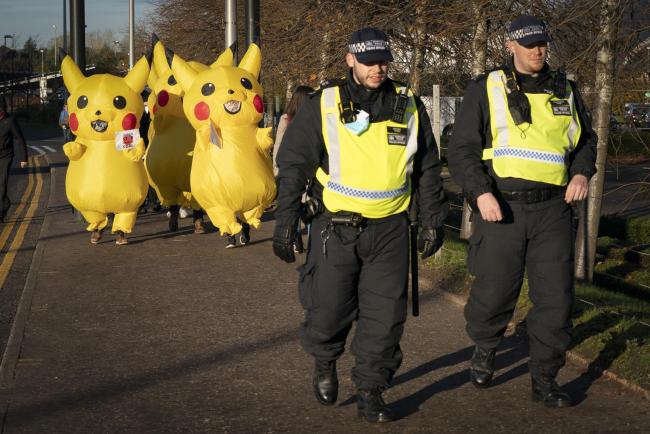
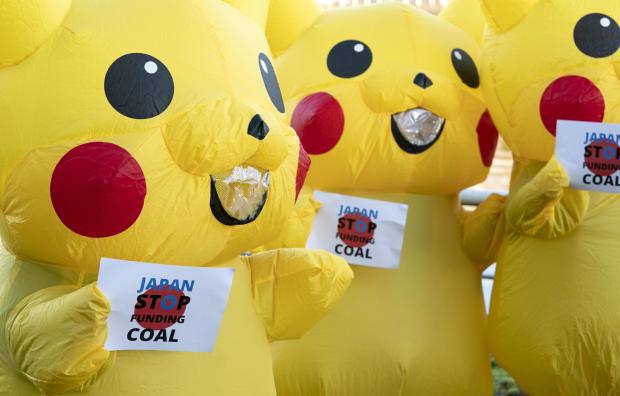
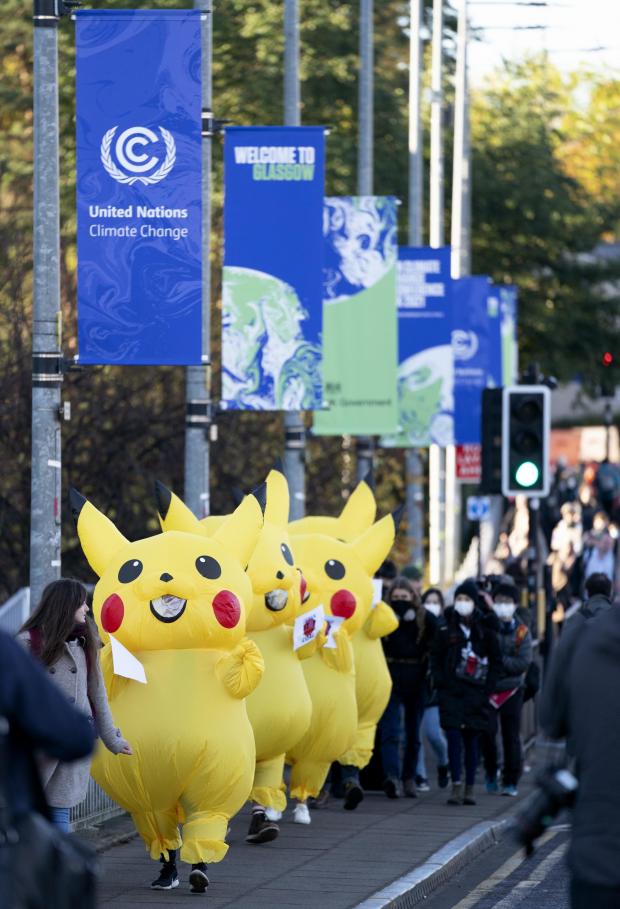
Protesters dressed as the Pokemon Pikachu are escorted by police through Glasgow. Photo: PA

PROTESTERS dressed as Pikachu have gathered opposite the COP26 conference as climate protests continue in Glasgow.

The giant Pokemon were demanding an end to Japan’s support for coal power.


It comes after several demonstrations took place in Glasgow on Wednesday, including an Extinction Rebellion march through the city attended by hundreds.

Another Extinction Rebellion protest is expected outside the Home Office building in Cessnock on Thursday, while there will be other large marches through the city on Friday and Saturday.

On Wednesday evening, Police Scotland said five arrests had been made at the demonstration, including two after officers were sprayed with paint.

Assistant Chief Constable Gary Ritchie said: “We will provide a proportionate policing response to any protest and it is therefore extremely disappointing that officers were assaulted by having paint sprayed in their faces.

“These officers were simply doing their job and trying to protect people and keep them safe.”

READ MORE: COP26 attendee details 'chaos' at Glasgow event in damning thread

Ritchie said a group of protesters were “contained” around St Vincent Street in order to protect public safety, before being allowed to move towards the COP26 site within a police cordon.

Extinction Rebellion’s protest on Wednesday was against “greenwashing” and included demonstrations outside the SSE and JP Morgan offices.

The group said police action raised “serious questions about civil liberties, right to protest, and human dignity”.

On Thursday morning, a group called No Coal Japan held up a banner saying “Japan, time to end coal” on the opposite bank of the Clyde.

Life-sized 'Pikachu' characters joined activists from the No Coal Japan coalition

They say Japan is continuing to finance coal plants in Bangladesh and Indonesia.

Extinction Rebellion is due to hold a “march for peace” starting in Cessnock at midday on Thursday.

On Friday, thousands are expected to march through Glasgow with the Fridays for Future movement founded by Greta Thunberg.

Saturday will see another large march from the Cop26 Coalition, with organisers saying tens of thousands are expected.