Friday, January 07, 2022

Prosecutor investigating PG&E's role in Dixie Fire says Cal Fire determination is 'not the end' of criminal investigation

Cal Fire determined a tree striking PG&E equipment to be the cause of the Dixie Fire. Prosecutors investigate if the company can be held criminally responsible.

CALIFORNIA, USA — On July 13, PG&E dispatched a troubleman to the Cresta Dam to investigate an outage on one of the company's power lines. That same evening, the employee made a call to his dispatcher:

"There’s a tree on the line. Started a fire," he told the dispatcher.

The flames the troubleman found were the beginnings of the Dixie Fire, which went on to burn 963,309 acres over more than 3 months. It was the second largest fire in California history.

On Tuesday, Cal Fire investigators issued a statement agreeing with that PG&E employee's initial assessment. In it, the state agency determined, “the Dixie Fire was caused by a tree contacting electrical distribution lines owned and operated by Pacific Gas and Electric (PG&E)..."

"It is not the end of the investigation," said Butte County District Attorney Mike Ramsey.

Butte County leads a group of four others impacted by the fire, including Plumas, Lassen, Tehama, and Shasta, investigating whether PG&E should be held criminally responsible for the fire.

The first sparks of the Dixie Fire fell in the same canyon as the last PG&E-caused fire that Ramsey’s office prosecuted: the deadly 2018 Camp Fire. PG&E pleaded guilty to 84 counts of felony manslaughter in that case.

"Unfortunately, we have the most experience in this type of prosecution," Ramsey said.

One of the key questions prosecutors are investigating now is whether PG&E should have cut the tree down before it fell into the line and ignited the Dixie Fire. They are also concerned with why that line was left on for nearly 10 hours after the outage was first reported, per PG&E's own timeline of the events of July 13.

"Those are elements that we take into consideration in determining whether we can prove beyond a reasonable doubt that PG&E acted recklessly in this matter," Ramsey said. 

PG&E told a federal court that the tree was not identified as a hazard in 2020 or early 2021, when trees near the line were last inspected.

PG&E is still on a five-year federal probation for crimes in the San Bruno gas explosion. Judge William Alsup, who oversees the company's probation, has made public a number of photos of the tree, before and after the fire, through his questioning. Alsup has also called to the stand the PG&E troubleman who first saw the Dixie Fire.

In a hearing Monday, the Judge called PG&E a “menace to society.” Their probation is set to expire January 26, but the judge said he would give “serious consideration” to extending it if federal prosecutors were to ask.

In a statement on Cal Fire’s finding PG&E says that “a large tree struck one of our normally operating lines,” and that it was "one of more than 8 million trees within strike distance to PG&E lines." The company does not explicitly accept Cal Fire’s determination in the statement.

Trump deal partner’s blank-check firm seeks to avoid liquidation


By Krystal Hu

(Reuters) - The chief executive of the blank-check acquisition firm that plans to merge with former U.S. President Donald Trump’s new social media venture is chasing retail investors to save another of his deals from falling apart.

According to regulatory filings and a person familiar with the matter, Benessere Capital led by Patrick Orlando has postponed its special shareholders' meeting to extend its deadline to complete a merger because not enough investors sent in their votes.

The special shareholder meeting has been rescheduled to Jan. 7, the previously set date for Benessere to close a deal, from Jan. 5. If Benessere Capital can’t secure enough shareholder votes to extend the deadline by then, the special purpose acquisition company (SPAC) will face the risk of being dissolved.


Orlando’s other SPAC, Yunhong International, liquidated last year, citing its "inability to consummate an initial business" within the deadline stipulated as per the company’s regulations in its filings.

As retail participation in SPACs rose since 2020, it can post challenges for SPACs to chase down individual investors and gather enough shareholder votes from them. Lucid Group(LCID.O), a highly popular SPAC target among retail investors, had struggled to get enough votes to approve its merger last year.

SPACs usually hire proxy solicitors to contact retail investors to vote through mails and by phone. Retail investors account for over 60% of Benessere's shareholders, according to the source.

When Orlando's other SPAC, Digital World Acquisition Corp (DWAC.O), announced its plan to merge with Trump's new social media company, many retail investors flocked into the stock as well as Benessere.

Benessere has agreed to combine with hydrogen fuel supplier eCombustible in November, valuing the energy firm at $805 million.

A SPAC is a publicly listed shell company that raises funds intending to merge with a private company within a deadline ranging from 12 to 24 months.

(Reporting by Krystal Hu in Toronto; editing by Greg Roumeliotis and Grant McCool)


Literary mystery may finally be solved as man arrested for allegedly stealing unpublished books

Filippo Bernardini is accused of impersonating publishing figures to steal manuscripts, in scam that has stumped authors and editors for years

Author Margaret Atwood. Her book The Testaments was targeted by a fraudster, who contacted her publishers and even the Booker prize judges to get the manuscript ahead of publication.
 Photograph: Ian West/PA


Sian Cain
THE GUARDIAN
Thu 6 Jan 2022 

A mysterious fraudster who impersonated publishers and agents to steal book manuscripts in an international phishing scam may have finally been caught, with the FBI arresting a 29-year-old man at John F Kennedy airport in New York on Wednesday.

Filippo Bernardini, an Italian citizen who worked at UK publisher Simon & Schuster, was arrested upon landing in the US on Wednesday. The FBI alleged that Bernardini had “impersonated, defrauded, and attempted to defraud, hundreds of individuals” to obtain unpublished and draft works.

Bernardini is charged with wire fraud and aggravated identity theft in a New York district court, with the indictment saying Bernardini had registered more than 160 fake internet domains to impersonate others since 2016.

Bernardini’s arrest may mark the start of the end of a mystery that has fascinated and appalled the literary world for five years, during which hundreds of unpublished manuscripts have been targeted.

Some authors, agents, editors, scouts and even judges for the Booker prize have been victims of phishing scams involving manuscripts of highly anticipated novels by Margaret Atwood, Sally Rooney and actor Ethan Hawke.


‘If publishers become afraid, we’re in trouble’: publishing’s cancel culture debate boils over

Those responsible created slightly tweaked email addresses to fool publishing figures, including replacing “t” with “f”, “q” with “g”, and using “r” and “n” to make “m”, as in @penguinrandornhouse.com. They would use industry lingo, such as “ms” for manuscript, and demonstrated an understanding of the publishing process, which fooled some into handing over manuscripts and information about upcoming projects or film rights.

In a statement, a spokesperson for Simon & Schuster said the publisher was “shocked and horrified” by the allegations against Bernardini and that they had suspended him pending further information.

“The safekeeping of our authors’ intellectual property is of primary importance to Simon & Schuster, and for all in the publishing industry, and we are grateful to the FBI for investigating these incidents and bringing charges against the alleged perpetrator,” he added.

Simon & Schuster was not named in the indictment, and the Guardian understands it is not accused of wrongdoing.

Publishing industry figures and authorities have been stumped for years by possible motivations behind the phishing scam, with no ransom or blackmail demands ever materialising after manuscripts were mistakenly sent on.

None of the books ever turned up online, and everything from celebrity releases to debut novels by unknown writers were targeted. Some had suspected the individual was a literary scout, attempting to secure information to make film and television deals ahead of others.

“If you try to find financial and economic gain, it’s of course hard to see,” Daniel Sandström, literary director of a Swedish publisher that was targeted multiple times, told Vulture last year.

“But if the game is psychological, a kind of mastery or feeling of superiority, it’s easier to visualise. This is a business full of resentment as well, and in that sense, it becomes a good story.”
CRIMINAL CAPITALI$M
Bike Index Uncovers International Bike Theft & Sale Operation

Jan 5, 2022
by Alicia Leggett


In early 2021, users of the bike registry Bike Index alerted the website that a seller based in Juarez, Mexico, appeared to be selling large numbers of bikes that matched many of those stolen in Colorado. The tips catalyzed a special data compilation project that took place throughout 2021, has indexed more than 1000 suspicious bikes, and has matched several victims of bike theft with their bikes.

To start out, Bike Index is a nonprofit organization that has created an online database of bikes, stolen and not, that can be used to identify and recover stolen bikes. The organization also collects information about the bicycle black market, so that the more bikes are recovered, the more the organization understands how to efficiently identify stolen bikes in the future.

Over the next several months, Bike Index watched and documented as Alexander's Bikes posted bike after bike for sale on its Facebook page, which was geo-restricted and only viewable from Mexico or using a Mexico VPN.

Bike Index tediously combed through theft reports on both Bike Index and in Colorado cycling Facebook groups. In the first batch of 43 bikes that it looked at, Bike Index was able to match 10 with owners who'd had their bikes stolen, verifying the matches using identifying markings that couldn't be attributed to chance. That was enough for Bike Index to keep going. All in all, Bike Index documented 1077 bike listings with more than 15,000 screenshots.


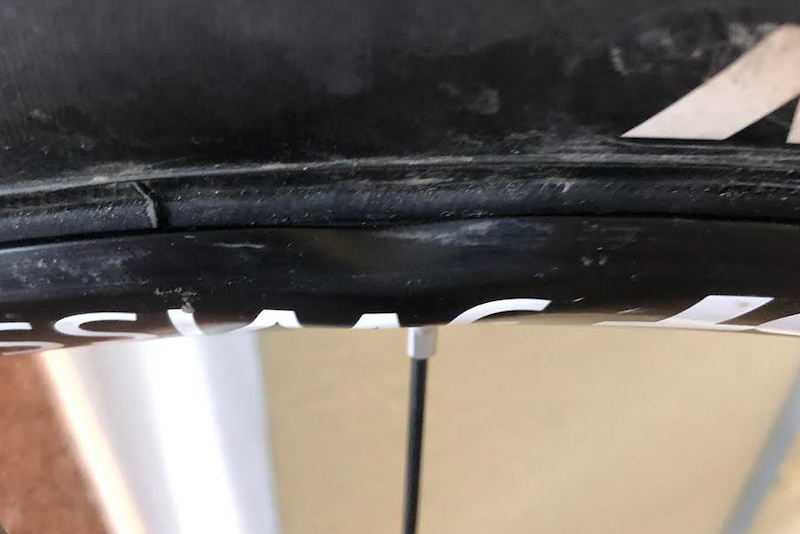
In this instance, the owner had a photo of a rim dent that they could match up with the photos in the listing.

Now, all those bikes are indexed in an exhaustive spreadsheet. If you or someone you know has had a bike stolen in Colorado since roughly 2019, that spreadsheet would be a good place to look. Read Bike Index's report for more information about using the database and working with authorities to recover the bikes.

While Bike Index was working to compile screenshots of bike listings, Colorado's Attorney General Phil Weiser was working on an anti-theft operation of his own called Operation Vicious Cycle. In November 2021, Weiser charged eight men with 227 counts related to 29 bike shop burglaries in which they stole about $985,000 in high-end mountain bikes, according to a press release.

The thieves had a system: they would steal either a box truck or a van, ram it into the front windows of a bike shop or otherwise break in using heavy landscaping rocks, and then specifically target mountain bikes. In one instance, they stole $90,000 worth of bikes in under five minutes. Some shops were hit multiple times. One was robbed four times over several months.

The press release goes on to suggest that the Attorney General believes the group worked with "fences" who sold the stolen bikes for them - such as Alexander's Bikes - and that it's likely the stolen goods may have been moved into Mexico.

The specific bikes stolen have not been publicly listed, but Bike Index has cross-referenced its list with the shops targeted, and some of the bikes listed on the Alexander's Bikes Facebook page still had stickers from some of the shops named in Operation Vicious Cycle.


The details had some tells.

Alexander's Bikes is notable in part because of the way it connected two very different demographics - the people who had their bikes stolen in Colorado and the people who were looking to buy bikes in Mexico. It's quite unlikely that someone looking for their next ride in Mexico would be keeping tabs on the bikes stolen in Colorado, and it's unlikely that someone who had a bike stolen in Colorado would stumble upon the geo-restricted Facebook page.

Also fascinating is that the bikes for sale by Alexander's Bikes came from all over Colorado and were stolen using a wide variety of tactics. The lack of specificity points to Alexander's Bikes having a multitude of thieves and groups stealing bikes, not just one main source - thus, the thieves apprehended by Operation Vicious Cycle are highly unlikely to have been the only ones, though they're likely to have been at least somewhat involved. Other large burglaries have been linked to Alexander's Bikes, too, including the Guerilla Gravity headquarters break-in in November. Guerilla Gravity has identified at least two of the bikes stolen from its showroom in the Alexander's Bikes listings.

The Bike Index investigation also highlighted how quickly bikes can make their ways into the black market - one example that Bike Index shared was a Zerode Katipo that was stolen in late August and appeared for sale in early September, taking just over two weeks to make its way south and onto Facebook.


This Zerode made it from Denver to Juarez in just over two weeks.
The vast number of stolen bikes that were listed by Alexander's Bikes points to the existence of bike theft operations that are larger and more profitable than was previously understood, but also to the possibility that once those operations are cracked, the bikes are recoverable.

The investigation also quantified the black market in a way that hadn't been done before, according to Bike Index. Most of the bikes for sale listed in the $4000 to $5000 USD range. For the number of bikes that were likely sold, even without knowing Alexander's Bikes' overhead costs, that's likely a huge profit margin.

As of right now, it appears that Alexander's Bikes has been fully shut down, and there's a fair chance that it has to do with the Colorado Attorney General's investigation or with the amount of publicity this story has received in the last few weeks. Alexander Espinosa Perez, who ran Alexander's Bikes, denied any involvement with bike trafficking and the sale of stolen goods and promised to work with US and Mexican authorities against bike theft, but he immediately deleted the shop's Facebook and TikTok pages and wiped its Instagram page clean of all content.

It's unclear where Perez is now or whether he'll be able to continue selling bikes, but authorities now definitively have more information about large-scale bike theft and resale than ever. No doubt, when the next operation of this type crops up in the future, there will be some knowledge to be taken from this, and authorities might know just where to look.
CRIMINAL CAPITALI$T COLONIALISM
Billionaire’s looted art still on display at Israel Museum
By ILAN BEN ZION

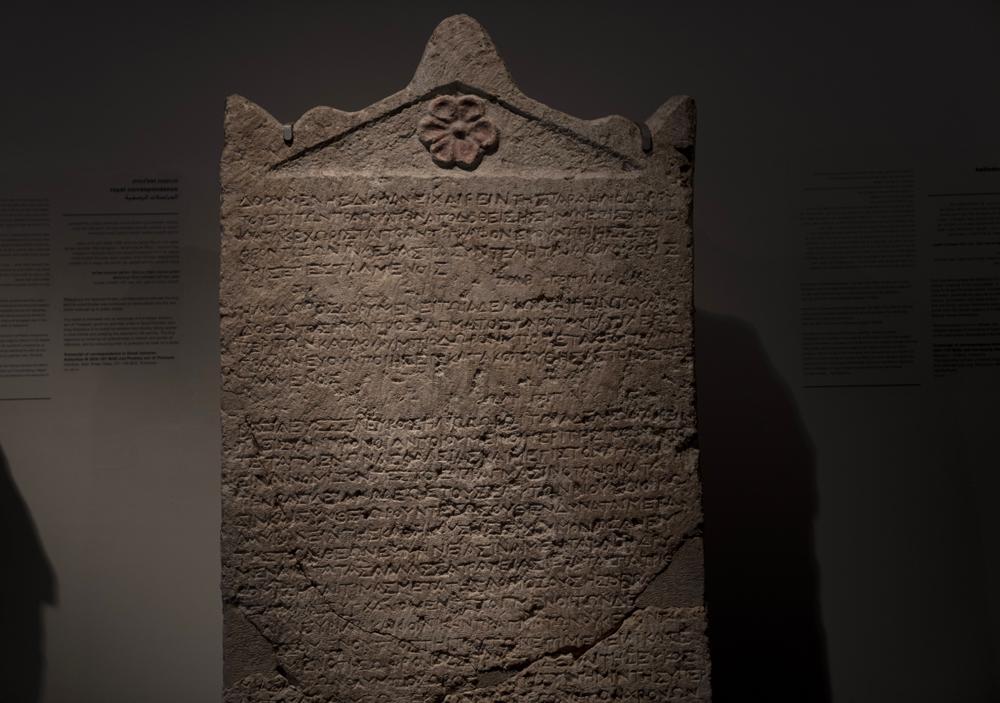
The Heliodorus Stele, loaned by American billionaire Michael Steinhardt, is displayed at the Israel Museum in Jerusalem, Wednesday, Jan. 5, 2022. Last month, Steinhardt surrendered the artifact, along with 179 others valued at roughly $70 million, as part of a landmark deal with the Manhattan District Attorney's office to avoid prosecution. Eight Neolithic masks loaned by Steinhardt to the Israel Museum for a major exhibition in 2014 were also seized as part of the billionaire's deal with New York authorities. 
(AP Photo/Maya Alleruzzo)


JERUSALEM (AP) — One of the Israel Museum’s biggest patrons, American billionaire Michael Steinhardt, approached the flagship Israeli art institution in 2007 with an artifact he had recently bought: a 2,200-year-old Greek text carved into limestone.

But shortly after it went on display, an expert noticed something odd — two chunks of text found a year earlier during a dig near Jerusalem fit the limestone slab like a jigsaw puzzle. It soon became clear that Steinhardt’s tablet came from the same cave where the other fragments were excavated.

Last month, Steinhardt surrendered the piece, known as the Heliodorus Stele, and 179 other artifacts valued at roughly $70 million as part of a landmark deal with the Manhattan District Attorney’s office to avoid prosecution. Eight Neolithic masks loaned by Steinhardt to the Israel Museum for a major exhibition in 2014 were also seized under the deal, including two that remain exhibited at the museum.

Museums worldwide are facing greater scrutiny over the provenance — or chain of ownership — of their art, particularly those looted from conflict zones or illegally plundered from archaeological sites. There are growing calls for such items to be returned to their countries of origin.

Donna Yates, a criminologist specializing in artifact smuggling at Maastricht University, said that several recent scandals involving looted artifacts — such as the Denver Art Museum’s return of Cambodian antiquities — are “causing museums to reconsider the ownership history of some of the objects that they have.”

“They can’t really afford the public embarrassment of constantly being linked to this kind of thing, because museums aren’t wealthy and many of them hold a place of public trust,” she said.

In addition to the Heliodorus Stele and two of the ancient masks, at least one other Steinhardt-owned artifact in the Israel Museum is of uncertain provenance: a 2,800-year-old inscription on black volcanic stone. The museum’s display states the origin as Moab, an ancient kingdom in modern-day Jordan.

How it got to Jerusalem remains unclear.

Steinhardt gave the Royal Moabite Inscription to the museum on extended loan in 2002, shortly after buying it from a licensed Israel dealer in Jerusalem, said Amir Ganor, who heads the Israel Antiquities Authority’s theft prevention unit.

That dealer, who confirmed the deal but spoke on condition of anonymity because of the legal questions surrounding the item, told The Associated Press that he obtained the inscription from a Palestinian colleague in Bethlehem, in the Israeli-occupied West Bank, who didn’t specify its provenance.

“I don’t know how it got to the dealer in Jerusalem,” Ganor said. He said it could have come from the West Bank, neighboring Jordan or through Dubai, a longtime antiquities hub.

The Israel Museum declined interview requests and refused to show the artifact’s documentation.

But in a statement, it denied wrongdoing, saying it “consistently follows the applicable regulations at the time the works are loaned.” It said all displays are “in full cooperation” with the antiquities authority.

The Manhattan District Attorney’s Office said the Moabite Inscription wasn’t part of the Steinhardt investigation and declined to discuss the item.

James Snyder, who was the Israel Museum’s director from 1997 to 2016, said all artifacts coming to the museum have their provenance checked by the IAA before they’re exhibited, and that Steinhardt’s other looted artworks “came with documentation of legal ownership.”

“We were given documentation of legal purchase, it was approved to come in on loan and it was approved to be returned” by the authority, Snyder said.

Israel has a legal antiquities market run by some 55 licensed dealers. They are allowed to sell items discovered before 1978, when a law took effect making all newfound artifacts state property.

This market has provided an outlet for the laundering of smuggled and plundered antiquities from around the Middle East that are given fabricated documentation by dealers in Israel. Israel began closing that loophole in 2016, when it mandated a digital database of dealers’ artifacts.


Eight Neolithic masks loaned by Steinhardt to the Israel Museum for a major exhibition in 2014 were also seized as part of the billionaire's deal with New York authorities. (AP Photo/Maya Alleruzzo)

Israel recently returned smuggled antiquities found in dealers’ stores to Egypt and Libya. Other antiquities stolen from Iraq and Syria — including thousands of cuneiform tablets purchased by Hobby Lobby owner Steve Green in 2010 — were smuggled to Israeli dealers before being sold to collectors with fraudulent documentation.

Morag Kersel, archaeology professor at DePaul University in Illinois, said the wanton plunder of archaeological sites across the Middle East ultimately “is all demand driven.”

“Looters do this because there’s someone like Steinhardt who’s willing to pay money and buy things that come straight out of the ground,” she said.

Under the deal, the Manhattan District Attorney seized 180 of Steinhardt’s artifacts and will repatriate them to their respective countries. Steinhardt also agreed to a lifetime ban from acquiring antiquities — though it is unclear how that ban will be enforced.

Steinhardt, 81, is a longtime patron of the Israel Museum and many other Israeli institutions, including a natural history museum at Tel Aviv University bearing his name. Since 2001, his family foundation has donated over $6.6 million to the Israel Museum, according to partial U.S. tax filings.

Steinhardt was not accused of plundering any items himself and has said he did not commit any crimes. But the DA’s office said he “knew, or should have ascertained by reasonable inquiry” that the antiquities were stolen.

Steinhardt declined an interview request. His office issued a brief statement saying the Manhattan DA “did not challenge Mr. Steinhardt’s right, title, or interest to any of the artifacts” other than those in the settlement.

The DA began investigating Steinhardt’s massive antiquities collection in 2017 after he loaned a Bull’s Head sculpture to the Metropolitan Museum of Art that had been plundered from a site in Lebanon.

The DA says the three items at the Israel Museum are “effectively seized in place,” and has opened talks with Israel to coordinate the return of 28 additional items. It said Steinhardt “has been unable to locate” the final nine items traced to Israel.

Of those 40 artifacts, more than half are believed to have been plundered from West Bank sites, according to court documents. An additional nine artifacts from Jordan, many sold to Steinhardt through Israel’s licensed antiquities market, are also being repatriated.

Neither the Jordanian government nor the Palestinian Tourism and Antiquities Ministry responded to requests for comment. Under interim peace deals in the mid-1990s, the fate of items taken from the occupied West Bank is to be part of a still elusive peace deal.

The Israel Museum said it had only recently learned about the settlement and is currently examining the matter.

For now, the plundered artifacts in the museum still bear Steinhardt’s name.

___

Follow Ilan Ben Zion on Twitter at www.twitter.com/ilanbenzion
Boy Scouts bankruptcy plan falls short of support from sex abuse victims

Victims who'd accused the Boy Scouts of America of sexual misconduct began voting on the proposed settlement last fall, and had until December 28 to turn in their ballots. 
 torbakhopper/Flickr


Jan. 5 (UPI) -- The Boy Scouts of America has fallen short of receiving the necessary support from sex abuse victims for approval of its $2.7 billion bankruptcy reorganization plan.

The proposed settlement covered some 82,200 claims of childhood sexual abuse. Almost 54,000 ballots were cast, according to a preliminary report issued Tuesday night.

The organization said that the plan earned support from about 73% of the victims who cast votes. The mark is just shy of the 75% the BSA had hoped for.

Victims who made claims of sexual misconduct involving the organization began voting on the proposed settlement last fall, and had until Dec. 28 to turn in their ballots.

Typically, bankruptcy courts require two-thirds support for a proposed settlement to be approved. But cases that involve greater liabilities and accusations of sexual abuse usually require more support.

"We are encouraged by these preliminary results and are actively engaging key parties in our case with the hope of reaching additional agreements, which could potentially garner further support for the plan before confirmation," the Boy Scouts of America said, according to The Washington Post.

Tuesday's report is a preliminary count of the results and the final assessment is due Jan. 17.
CRIMINAL CRYPTO CAPITALI$M
Report: Crypto crime hits all-time high in 2021

By UPI Staff

Crypto-related crimes rose to an all-time high in 2021 but haven't outpaced legitimate crypto businesses, according to new data. 
File Photo by John Angelillo/UPI | License Photo


Jan. 6 (UPI) -- Cryptocurrency crime hit an all-time high in 2021 with illicit addresses receiving $14 billion throughout the year, according to new data from blockchain analytics from Chainanalysis.

The number rose from $7.8 billion the year prior. A spike in theft and scams has resulted in a 79% rise in crypto-related crimes

Total transaction volume grew to $15.8 trillion in 2021, a jump of 567% from the year before. Of that, transactions involving illicit addresses made up 0.15% of the total volume.

Scamming was the greatest form of crypto-based crime, followed by theft.

Chainanalysis said that DeFi is one of the most exciting areas of the cryptocurrency ecosystem, but ripe for scamming and theft.

DeFi transaction volume grew 912% in 2021. DeFi is a sector of the crypto market that cuts out middlemen from traditional financial transactions.

Banks and lawyers are replaced by code called a smart contract, which is written on a public blockchain such as ethereum.

The code then executes when the right conditions are met, though experts caution that there are code vulnerabilities in some newly launched protocols that hackers can exploit.

Though cryptocurrency is at an all-time high, legitimate crypto activity is outpacing criminal usage, Chainanalysis said.
Noam Chomsky: Corporate Patents & Rising Anti-Science Rhetoric Will Prolong Pandemic


GUESTS
Noam Chomsky
world-renowned political dissident, linguist and author.


Today, a special broadcast: an hour with Noam Chomsky, the world-renowned political dissident, linguist and author, who just turned 93 years old. Chomsky spoke to Democracy Now! prior to the discovery of the Omicron coronavirus variant, but he predicted new variants would emerge. “If you let the virus run rampant in poor countries, everyone understands that mutation is likely, the kind of mutation that led to the Delta variant, now the Delta Plus variant in India, and who knows what will develop,” Chomsky said.


Transcript
This is a rush transcript. Copy may not be in its final form.


STORYDECEMBER 30, 2021


AMY GOODMAN: Today, a special broadcast, an hour with Noam Chomsky. The world-renowned political dissident, linguist and author just turned 93 years old. Democracy Now!'s Nermeen Shaikh and I recently interviewed Noam as part of Democracy Now!'s 25th anniversary celebration. Noam Chomsky joined us from his home in Tucson, Arizona, where he teaches at the University of Arizona. We asked him about the state of the pandemic and why so many Americans have refused to get vaccinated.


NOAM CHOMSKY: It’s overwhelmingly a far-right phenomenon. Others have been drawn in. And I think there are many sources. Actually, one of them is probably social media, which does circulate lots of dubious or even false information. And if people are wedded to a particular part of it, that’s what they’ll be fed. But beyond that, there is skepticism, which has justification, about the role of government. Happens to be misplaced in this case, but you can understand the origins of the skepticism.


And it’s not just the pandemic. Much worse than that are the attitudes of skepticism about global warming. So, one rather shocking fact that I learned recently is that during the Trump years, among Republicans, the belief that global warming is a serious problem — not even an urgent problem, just a serious problem — declined about 20%. That’s very serious. Here we’re talking not just about the spread of a pandemic, but about marching over the precipice and ending the prospects for sustained, organized human life. That’s the kind of thing we’re facing. Well, you can talk about the origins of the skepticism, but it has to be dealt with and overcome, and very decisively and without delay, or else the whole human species and all the others that we are casually destroying will be in severe danger.


AMY GOODMAN: Noam, can you talk about how you think that skepticism can be overcome — I mean, you, yourself, a serious critic of the corporate-government alliance — why people should trust large pharmaceutical companies like Moderna and Pfizer, that are making billions, why in this case we should trust that vaccines will save the population?


NOAM CHOMSKY: If the information came from Pfizer and Moderna, there would be no reason to trust it. But it just happens that 100% of health agencies throughout the world and the vast majority of the medical profession and the health sciences accept the actually quite overwhelming evidence that vaccination radically reduces onset of infection and deaths. The evidence on that is very compelling. And it’s therefore not surprising that it’s basically universally accepted by relevant authorities. So, yes, if we heard it just from Big Pharma PR, there would be every reason for skepticism. But you can look at the data. They’re available. And you can — when you do so, you can understand why there is essentially universal acceptance among the agencies that have no stake in the matter other than trying to save lives. You can understand why poor African countries who weren’t paid off by Big Pharma are pleading for vaccines. Their health agencies are.


And, in fact, the only exception I noted about this, apart from Trump for a period, was Bolsonaro’s Brazil, and he is now being under charges of a long senatorial investigation for charges of crimes against humanity for his failure to follow the normal protocol of trying to maximize the use of vaccines. Now that his reticence, reluctance on this matter has been overturned, it’s having the usual effect. Vaccinations are increasing, and incidence of disease and deaths is sharply declining. That correlation is so clear that it takes a real strange refusal to look at facts to see it. And again, as I say, health agencies throughout world are uniform and agreed with the medical profession on the efficacy of vaccines.


There are other things that have to be done: social distancing, care, masking in crowded places. There are measures that have to be taken. Countries where these measures have been followed carefully are doing quite well. But where there’s a high level of skepticism, whatever its roots, there are serious problems.


AMY GOODMAN: And what do you think the U.S. should do to ensure that countries get vaccines around the world, not only for altruistic reasons, but because you can’t end this pandemic here or anywhere unless these vaccines get out everywhere? And I’m talking about Moderna and Pfizer. Moderna, the U.S. gave billions to. Pfizer, the U.S. promised to purchase so much. And both corporations, among others, have made billions. And yet, what can the U.S. do to ensure that these vaccines can be made in other places, like requiring that Moderna release the recipe? Still they will make a fortune. What has Biden not done that would allow people to have access to these life-saving vaccines?


NOAM CHOMSKY: I should say that Europe’s record is even worse than that of the United States. Biden has made some effort, but the wealthy countries have not, including the United States, though not primarily the United States — they have not taken measures that are within their capacity to ensure that other countries that have the resources to produce vaccines will have access not only to the products, the vaccines, but also to the process of manufacturing them.


We should recognize that the World Trade Organization rules, instituted mainly in the 1990s largely under U.S. initiative, they are radically protectionist, radically anti-free market. They provide protection to major corporations, Big Pharma, not only for the products they produce but to the processes by which they produce them. And that patent can easily be broken. The governments have the capacity to insist that the processes be available and that vaccines be distributed to the countries that need it.


First of all, this will save uncounted numbers of lives. And, as you said, it means saving ourselves. If you let the virus run rampant in poor countries, everyone understands that mutation is likely, the kind of mutation that led to the Delta variant, now the Delta Plus variant in India, and who knows what will develop. Could be a — we’ve been kind of lucky so far. The coronaviruses have been either highly lethal and not too contagious, like Ebola, or highly contagious but not too lethal, like COVID-19. But the next one coming down the pike might be both, might even be nonsuppressible by vaccines.


We know the measures that have to be taken to try to prevent this from happening: research, preparations, health systems that work. It’s not a small point. Like, there are now new antivirals coming along which don’t stop the disease but prevent hospitalization. But you have to have a functioning health system. Very hard to see how these could even be usable in the United States, where the health system simply is not organized in such a way that people can get access to what they need.


NERMEEN SHAIKH: You yourself have experienced the ruinous effect of low vaccination rates in certain states, where hospitals have been unable to provide regular services because all the beds are taken up with COVID patients. Earlier this year, you needed hospital care but were unable to access a facility because all the beds were taken with COVID patients. Could you explain where this happened and what exactly happened?


NOAM CHOMSKY: Well, don’t want to go into the details, but I had something which was severe, couldn’t get to the hospital where my doctors are. They were overwhelmed with patients. Had to go to a couple other hospitals, and finally they managed. So, you know, it’s not the worst case by any means. I should say that even getting a booster shot was not easy. My wife was trying for — Valeria — for weeks simply to try to get an appointment. The system — I’m lucky. I’m relatively privileged. For others, it’s much worse.


Hospitals are overflowing, with almost 100% unvaccinated patients in regions of the country, which are mostly red states, which have been reluctant and unwilling to carry out appropriate measures. Hospitals have been forced to cancel regular procedures just because of the crush of almost entirely unvaccinated patients filling beds. There’s a lot of extra deaths, enormous social costs. And all of this is under control. We know how to deal with it. It’s a social malady, a breakdown of the social and cultural order, which is very serious in the pandemic case, but, as I want to keep stressing, far more serious in the case of environmental destruction. And we don’t have much time there. We can survive pandemics at enormous cost. We’re not going to survive environmental destruction.

AMY GOODMAN: Noam Chomsky, the 93-year-old world-renowned political dissident, linguist and author. When we come back, we talk about the climate emergency, the rise of proto-fascism in the United States and more.

The original content of this program is licensed under a Creative Commons Attribution-Noncommercial-No Derivative Works 3.0 United States License. Please attribute legal copies of this work to democracynow.org. 

This is viewer supported news. Please do your part today.DONATE

Next story from this daily show

Africa: Widespread Use of DDT for Malaria Control Worries Environmentalist

Share

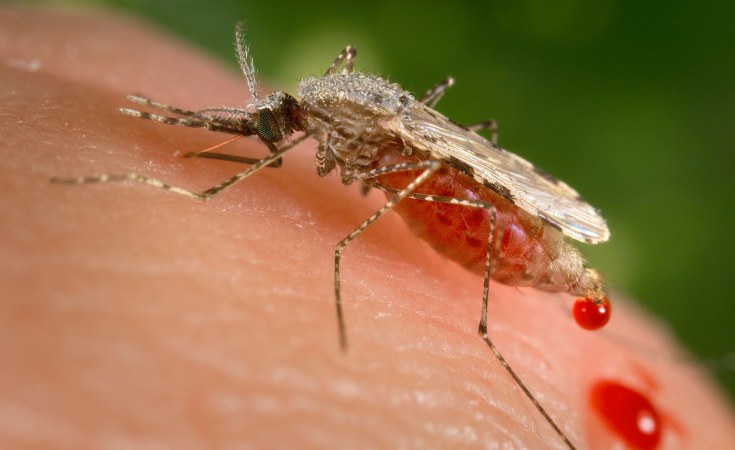
A feeding female Anopheles stephensi mosquito. A. stephensi is a known vector for the parasitic disease malaria.

The call for a total ban of DDT (dichloro-diphenyl-trichloroethane), a synthetic insecticide used in malaria-endemic countries that causes harm to the environment and human body, has sparked a debate.

Some people canvass its anti-malarial benefits while others cite its harmful effects on the environment and human health. It is banned in some countries even as many others use it to control mosquitoes that cause malaria.

Now, Prof Bontle Mbongwe, a Botswana academic and associate professor of Environmental Health and Toxicology at the University of Botswana, has joined the debate.

Any decision to ban DDT should be supported by evidence from an assessment of its risks to human health and the environment, Prof Mbongwe says, in an interview with Africa Renewal.

Cumulative evidence suggests that DDT and other pyrethroids (man-made pesticides) could have negative impacts on pregnancy, she warns, adding that, "Pyrethroids have also been linked to increased cases of mortality and an adverse effect on the cardiovascular system."

She suggests an in-depth study of the levels of DDT in breastmilk.

In addition, she laments that "The health impacts from exposure to persistent organic pollutants such as DDT are more acute in developing countries, especially on women and children's health.

"Because DDT does not degrade, it remains intact in the environment for many years; therefore, human beings and the environment are exposed to its toxic effects, some of which may affect the development of children.

"Even more concerning, DDT is transported through the environment and across boundaries through the soil, water, and especially air," she says.

Generally, the decision to use or ban DDT often depends on factors such as the cost-effectiveness of the alternatives, their hazardous properties and their impact on human health and the environment.

The environmentalist is among the newest members of the DDT Expert Group established under the Stockholm Convention on Persistent Organic Pollutants, an international environmental treaty signed in May 2004 that aims to eliminate and restrict the production and use of persistent organic pollutants.

DDT is one of the organic pollutants listed under the Convention.

The expert group handles the assessment of scientific, technical, environmental and economic information on the production and use of DDT and other alternatives for disease vector control.

"My role as a member of the expert group is to make sure that the government of Botswana, and other governments still using DDT, are advised appropriately based on science," she says.

Prof Mbongwe comes from a malaria-prevalent region; she seems to prefer a limited use of DDT, currently only permissible under the Stockholm Convention, in controlling the disease vectors, with recommendations and guidelines of the World Health Organisation, and when safe and affordable alternatives are not available locally.

This limited permission could be a first step toward containing the widespread use of DDT given the difficulty in eliminating its use immediately.

The good news is that the global use of DDT for disease vector control declined from 10 countries using it for Indoor Residual Spraying (IRS) in 2010 to five countries in 2019.

Prof Mbongwe undertook a comprehensive study of DDT in Botswana in 2000, measuring its concentrations and metabolites in water, plants, invertebrates and fish from selected lagoons in the large Okavango Delta where DDT has been used for approximately 50 years for malaria control and to treat African sleeping sickness.

Before then, in 2009, she collaborated with other researchers to analyze DDT and other pesticides in water where low levels of DDT metabolites were detected.

On the transition to alternative malaria control strategies, she says that training, financial support and research capacitation are needed, but noted that some organisations were already providing such assistance.

"For example, in terms of training, WHO continues to provide guidelines for malaria vector control which cover core and supplementary interventions, personal protection and other measures. WHO also provides support through the development of technical and operational guidelines," she says.

Still, countries often have limited capacity for entomological surveillance, insecticide-resistance monitoring and vector control, which are critical for programmes relying on IRS or Insecticide Treated Nets with few modes of action.

International organizations such as the UN Environment Programme, the UN Industrial Development Organization, the Global Environment Facility and the Bill and Melinda Gates Foundation are providing additional financial support for countries.

In terms of technology and research, efforts to develop new tools for malaria vector control are encouraged through collaboration between researchers and operational programme staff.

For alternative methods, Prof Mbongwe notes that insecticide-treated nets for control and elimination of malaria have increased in recent years, effectively reducing the reliance on DDT.

Countries in sub-Saharan Africa are shifting from DDT and pyrethroids to more organophosphate chemicals neonicotinoids.

Some countries' increased capacities for insecticide-resistance monitoring have led to improvements in the detection of DDT resistance, which, in turn, have encouraged other countries to consider non-DDT insecticides for IRS, Prof Mbongwe maintains.

"There is also a shift toward developing national strategies on IRM [Insecticide Resistance Management] for disease vectors. Finally, countries are taking measures to develop and implement Integrated Vector Management, and this can potentially reduce reliance on DDT and other chemical insecticides for disease vector control," she further explains.

Prof. Mbongwe will serve in the DDT Expert Group for five years. During her tenure, she hopes to advocate improving public education and research on chemical safety, which is limited in Botswana and other developing countries.

"I will work with other researchers and government officials to monitor pesticide residues in food with a focus on DDT," she assures.

She also plans to work with countries' ministries of environment, agriculture and health to sensitize the public on the use of DDT and other pesticides.

Such an intervention could be timely for countries, including Botswana, that are promoting agriculture and supplying farmers with pesticides.