It’s possible that I shall make an ass of myself. But in that case one can always get out of it with a little dialectic. I have, of course, so worded my proposition as to be right either way (K.Marx, Letter to F.Engels on the Indian Mutiny)
Wednesday, August 03, 2022
Iceland: Volcano erupts near island's main airport for second time in a year
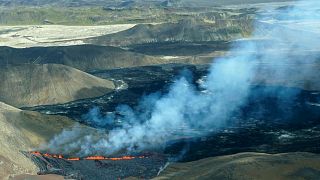
By Euronews with AP • Updated: 03/08/2022 - Aerial shot of activity from the Fagradalsfjall volcano in Iceland on Wednesday Aug. 3, 2022, which is located 32k, southwest of the capital Reykjavik -
A volcano in southwest Iceland began erupting Wednesday, the country’s meteorological authorities said - just eight months after its last eruption officially ended.
The Icelandic Meteorological Office urged people not to go near the Fagradalsfjall volcano, which is located some 32 kilometers southwest of the capital, Reykjavik.
The eruption in an uninhabited valley is not far from Keflavik Airport, Iceland’s international air traffic hub. The airport remained open and no flights were disrupted.
A live video feed from the site showed magma spewing from a narrow fissure about 100 to 200 meters long over a field of lava from last year’s eruption, the first on the Reykjanes Peninsula in almost 800 years.
Scientists had anticipated an eruption somewhere on the peninsula after a series of earthquakes over the past week indicated volcanic activity close to the crust.
Volcanologist Magnus Tumi Gudmundsson said that the eruption appeared to be small.
“But we don’t know where in the process things are at,” he said as he boarded a helicopter for a first look.
The 2021 eruption in the same area produced spectacular lava flows for several months. Hundreds of thousands people flocked to see the spectacular sight.
Iceland, located above a volcanic hotspot in the North Atlantic, averages an eruption every four to five years.
The most disruptive in recent times was the 2010 eruption of the Eyjafjallajokull volcano, which sent clouds of ash and dust into the atmosphere, interrupting air travel for days between Europe and North America because of concerns the ash could damage jet engines. More than 100,000 flights were grounded, stranding millions of passengers.
Shares in Iceland's flagship airline, Icelandair, rose 6% when news of the eruption broke Wednesday. Investors and residents alike had been spooked by the possibility of a much more disruptive eruption in a populated area of the peninsula.
Researchers from University of New Hampshire, University of Kentucky, Texas A&M University, and Florida State University published a new paper in the Journal of Marketing that examines the effect among salespeople of three negative personality traits – Machiavellianism, narcissism, and psychopathy.
Ads for sales jobs usually emphasize a preference for positive personality traits such as self-motivation, ability to be a team player, ethical behavior, and enthusiasm. Academic research also has traditionally focused on positive performance drivers, such as adaptiveness, conscientiousness, openness, and extraversion. Allen says that “While hiring people with these traits is desirable, it ignores the importance among salespeople of three negative traits – Machiavellianism, narcissism, and psychopathy – collectively known as the dark triad (DT).” Except for CEOs, lawyers, and celebrities, salespeople score higher on these dark traits than all other professions, which has led to sales professionals being characterized as conniving snakes.
That these dark personalities are employed by sales organizations suggests the ability of some salespeople to mask the dysfunctional manifestations of DT traits, such as callous self-interest, with more functional ones, such as charisma, during the hiring process. DT traits can offer significant advantages for some salespeople to get ahead and secure longer tenures. But there are downsides in the long run, too. Over time, the self-interested, antagonistic behaviors associated with DT traits are likely to undermine their relationships with colleagues, diminish their social capital, and subsequently reduce their performance.
The researchers conducted two studies to explore how and why dark salespeople persevere, and even thrive, in organizations. They investigate: (1) how dark salespeople perform over time relative to their low DT peers and (2) how ambient social structures, such as organizational social networks into which salespeople are embedded, influence these salespeople’s performance.
The first study provides empirical evidence that narcissism and psychopathy allow dark salespeople to succeed in the short term, but eventually lead to a “fall from grace,” including lost performance gains. In contrast, results show that Machiavellianism produces little in the short term, but manifests in long-term performance benefits.
The second study measures the reach efficiency of the dark personality’s social network. When a person’s network exhibits high reach efficiency, information about their actions becomes socially visible to others (i.e., friends of friends) who are indirectly connected to the dark personality. Low reach efficiency, however, impedes the spread of information and delays the social visibility of individual actions. Satornino explains that “If the network structure obscures information regarding the misdeeds of a dark salesperson, it enhances the probability for performance-enhancing cooperation between the dark personality and his or her unsuspecting peers.”
Results show that narcissism and psychopathy influence performance similarly, while Machiavellianism has the inverse effect. When reach efficiency is high, narcissism and psychopathy lead to decreased sales performance in subsequent periods. On the other hand, those with Machiavellianism benefit from high reach efficiency, which results in enhanced performance in subsequent periods.
The research team offers three key recommendations for chief sales officers:
Hiring managers should be trained specifically to recognize signs of DT traits in the interview process using tools such as behavioral questions that highlight past or potential behaviors and characteristics typical of dark personalities.
Sales managers should be trained to be cognizant of the performance patterns that may signal a dark personality to determine if interventions are needed.
Sales managers should leverage social networks and peer feedback to facilitate unmasking dark personalities.
The Journal of Marketing develops and disseminates knowledge about real-world marketing questions useful to scholars, educators, managers, policy makers, consumers, and other societal stakeholders around the world. Published by the American Marketing Association since its founding in 1936, JM has played a significant role in shaping the content and boundaries of the marketing discipline. Shrihari Sridhar (Joe Foster ’56 Chair in Business Leadership, Professor of Marketing at Mays Business School, Texas A&M University) serves as the current Editor in Chief. https://www.ama.org/jm
About the American Marketing Association (AMA)
As the largest chapter-based marketing association in the world, the AMA is trusted by marketing and sales professionals to help them discover what is coming next in the industry. The AMA has a community of local chapters in more than 70 cities and 350 college campuses throughout North America. The AMA is home to award-winning content, PCM® professional certification, premiere academic journals, and industry-leading training events and conferences. https://www.ama.org
An international research team has deciphered the mechanism by which the fungus Cryptococcus neoformans is resistant to fungus-specific drugs. It is a yeast-like fungus that can infect humans. Specific drugs, named antifungals, are available for treatment, but they don’t always work – a phenomenon similar to antibiotic resistance. A team from Duke University in the USA and Ruhr-Universität Bochum (RUB) has used genetic, bioinformatic and microbiological techniques to decipher the mechanism underlying this resistance. They describe it in the journal Nature Microbiology, published online on 2 August 2022.
“The results are highly relevant for combating fungal infections in clinical practice, veterinary medicine and agriculture,” says Professor Ulrich Kück, Senior Professor in General and Molecular Botany at RUB. He cooperated for the project with the Bochum researcher Dr. Tim Dahlmann and the team headed by Professor Dr. Joe Heitman, who is currently based at Duke University in North Carolina and has been a visiting professor at RUB on several occasions.
Number of fungal infections on the rise
“In the western hemisphere, the number of people with a lowered immune defence is increasing, because life expectancies are rising rapidly and treatment with immunosuppressants after organ transplants is becoming more common,” explains Ulrich Kück. “This is associated with an increase in fungal infections.” Cryptococcus neoformans is one of the most significant human pathogenic fungi responsible for so-called cryptococcosis. It triggers acute infections in immunocompromised patients; and the mortality rate may be as high as 70 per cent. This is because fungal strains that are resistant to the drugs often evolve in hospitals, which makes treatment more difficult. So far, it was unclear which cellular and genetic mechanisms lead to this resistance.
So-called transposons, however, were known to play a role in the resistances. Transposons are jumping genes, i.e. DNA segments that can change their position in the genome and thus affect the function of genes. If a transposon jumps into a gene that’s critical for susceptibility to a drug, it’s possible for resistance to emerge. The mobility of the transposons is controlled by regulatory RNAs, so-called small interfering RNA, or siRNA for short.
RNA mechanism causes resistance
In their current study, the researchers discovered gene mutations in resistant isolates that led to siRNA control being switched off. By introducing an intact copy of the gene, it was possible to restore siRNA control; as a result, the researchers were able to prevent the transposons from jumping and shed light on the cause of resistance. Due to their small size, the gene segments that code for siRNAs are not easy to find in the genome. Tim Dahlmann managed to locate them with special bioinformatic analyses. By identifying the resistance mechanisms, it will be possible to use them for the treatment of mycoses in humans in the future.
Wheat is one of the world’s most important staple foods – its significance for global food security was recently thrown into focus by the loss of grain exports from Ukraine due to the war. A more common threat to crops are fungal diseases, which can result in economic losses and famine. One of the most destructive pathogens is powdery mildew, a fungus which drastically reduces crop yields.
Agricultural arms race
To prevent infestation, huge sums are currently invested in the breeding of mildew-resistant grain varieties. In order to infect the crop plant, the pathogen must be an optimal match for its host – with resistant varieties, the fungus cannot attack. But powdery mildew constantly and rapidly adapts to new hosts. To be able to keep the disease under control in the long term, it is vital that scientists gain a better understanding of the pathogen. This is where historical data is crucial: powdery mildew is as old as wheat itself, but until now, it was not known how it had been able to spread worldwide on different grains.
A modern globetrotter
A research team led by Thomas Wicker and Beat Keller of the University Research Priority Program (URPP) Evolution in Action at the University of Zurich has now managed to uncover the secret of the wheat mildew’s success. To do so, they compared the genetic composition of 172 powdery mildew strains from 13 countries on five continents. “With our analyses we were able to prove that the mildew first appeared around 10,000 years ago in the Middle East, which is also the birthplace of agriculture and modern wheat,” explains Alexandros Georgios Sotiropoulos, PhD candidate at the Department of Plant and Microbial Biology. “In the Stone and Bronze Ages, agriculture spread to Europe and Asia. The pathogen was also spread to these new regions through human migration and trade. Around 300 years ago, European settlers introduced powdery mildew along with wheat to North and South America.”
Adaptation through rapid evolution
The data confirmed what had previously been suspected: as wheat was introduced to more and more corners of the Earth, powdery mildew was brought with it and underwent hybridization along the way, i.e. it genetically mixed with local powdery mildew species and formed hybrids that are better adapted to local agricultural environments. “This appears to be the cause of the rapid evolution of powdery mildew’s pathogenicity,” explains Kentaro Shimizu, co-director of the URPP. “A particularly clear example of this is seen in the many American wheat varieties brought to Japan over the past 120 years for cross-breeding with traditional East Asian wheat. The powdery mildew from the USA, which was also imported, hybridized with the resident Japanese mildew strains, and the resulting hybrids successfully attacked newly bred wheat varieties.”
To study the spread of powdery mildew, researchers used theoretical analyses originally created to study the evolutionary history of mankind. “Our study shows once again that collaboration between academic disciplines and the use of unconventional methods to research complex topics offers great potential and has implications for modern crop breeding,” says Kentaro Shimizu.
Researchers at the University of Bristol and Scottish Universities Environmental Research Centre have discovered that super-eruptions occur when huge accumulations of magma deep in the Earth’s crust, formed over millions of years, move rapidly to the surface disrupting pre-existing rock.
Using a model for crustal flow, an international team of scientists were able to show that pre-existing plutons – a body of intrusive rock made from solidified magna or lava - were formed over a few million years prior to four known gigantic super eruptions and that the disruption of these plutons by newly emplaced magmas took place extraordinarily rapidly. While the magma supplying super eruptions takes place over a prolonged period of time, the magma disrupts the crust and then erupts in just a few decades.
The findings, published today in Nature, explain these extreme differences in time ranges for magma generation and eruption by flow of hot but solid crust in response to ascent of the magma, accounting for the infrequency of these eruptions and their huge volumes.
Professor Steve Sparks of Bristol’s School of Earth Sciences explained: “The longevity of plutonic and related volcanic systems contrasts with short timescales to assemble shallow magma chambers prior to large-magnitude eruptions of molten rock. Crystals formed from earlier magma pulses, entrained within erupting magmas are stored at temperatures near or below the solidus for long periods prior to eruption and commonly have very short residence in host magmas for just decades or less.”
This study casts doubt on the interpretation of prolonged storage of old crystals at temperatures high enough for some molten rocks to be present and indicates the crystals derived from previously emplaced and completely solidified plutons (granites).
Scientists have known that volcanic super-eruptions eject crystals derived from older rocks. However, before this, they were widely thought to have originated in hot environments above the melting points of rock. Previous studies that show the magma chambers for super-eruptions form very rapidly but there was no convincing explanation for this rapid process. While modelling suggested that super-volcanic eruptions would need to be preceded by very long periods of granite pluton emplacement in the upper crust, evidence for this inference was largely lacking.
Prof Sparks added: “By studying of the age and character of the tiny crystals erupted with molten rock, we can help understand how such eruptions happen.
“The research provides an advance in understanding the geological circumstances that enable super eruptions to take place. This will help identify volcanoes that have potential for future super-eruptions.”
Such eruptions are very rare and Bristol scientists estimate only one of these types of eruptions occur on earth every 20,000 years. However such eruptions are highly destructive locally and can create global scale severe climate change that would have catastrophic consequences.
This project was supported by the Mining company BHP and by NERC.
Paper:
‘Time scales for pluton growth, magma chamber formation and super-eruptions’ by Prof Stephen Sparks et al in Nature.
JOURNAL
Nature
METHOD OF RESEARCH
Computational simulation/modeling
SUBJECT OF RESEARCH
Not applicable
ARTICLE TITLE
Time scales for pluton growth, magma chamber formation and super-eruptions’
ARTICLE PUBLICATION DATE
3-Aug-2022
Nanoscale observations simplify how scientists describe earthquake movement
UNIVERSITY OF ILLINOIS AT URBANA-CHAMPAIGN, NEWS BUREAU
IMAGE: GRADUATE STUDENT BINXIN FU, LEFT, AND CIVIL AND ENVIRONMENTAL ENGINEERING PROFESSOR ROSA ESPINOSA-MARZAL USED MICROSCOPIC-SCALE OBSERVATIONS TO SIMPLIFY HOW SCIENTISTS DESCRIBE MACROSCALE EARTHQUAKE MOVEMENT.view more
CREDIT: MICHELLE HASSEL
CHAMPAIGN, Ill. — Using single calcite crystals with varying surface roughness allows engineers to simplify the complex physics that describes fault movement. In a new study from the University of Illinois Urbana-Champaign, researchers show how this simplification may lead to better earthquake prediction.
Scientists describe fault behavior using models based on observational studies that account for the frictional coefficients of rocks and minerals. These “rate-and-state” equations calculate the fault strength, which has implications for earthquake strength and frequency. However, applying these empirical models to earthquake prediction is not practical because of the number of unique variables to be considered for each fault, including the effect of water.
The study, led by civil and environmental engineering professor Rosa Espinosa- Marzal, looks at the relationship between friction and the surface roughness of calcite – one of the most common rock-forming minerals in Earth’s crust – to formulate a more theoretical approach to defining rate-and-state laws.
The findings are published in the Proceedings of the National Academy of Sciences.
“Our goal is to examine the nanoscale processes that may trigger fault movement,” said Binxin Fu, a CEE graduate student and the first author of the study. “The processes we investigate at the nanoscale are less complex than macroscale processes. Because of this, we aim to use microscopic observations to bridge the gap between the nanoscale and macroscale worlds to describe fault behavior using less complexity.”
The roughness of a mineral crystal depends primarily on its atomic structure. However, the researchers said the rocks in contact zones are scraped, dissolved and annealed as they rub past each other, also affecting their nanoscale texture.
To test how nanoscale mineral roughness can affect fault behavior, the team prepared atomically smooth and rough calcite crystals in dry and wet environments to simulate dry rocks and those containing pore water. Atomic force microscopy measured friction by dragging a tiny, pressure-mounted silicon tip across different crystal surfaces exposed to simulated fault zone conditions: wet surface and smooth calcite; wet surface and rough calcite; dry surface and smooth calcite; and dry surface with rough calcite.
“Friction can increase or decrease with sliding velocity depending on the mineral types and the environment,” Espinosa-Marzal said. “We found that in calcite, friction typically increases with sliding rate along rougher mineral surfaces – and even more in the presence of water. By using data from such a common mineral type and a limited number of contact scenarios, we reduce the analysis’s complexity and provide a fundamental understanding of the rate-and-state equations.”
The team compared its experimental results to studies from natural settings with calcite-containing rock at shallow crustal levels.
“Our results agree with a recent study showing that water lowers the fault strength compared with dry conditions,” Espinosa-Marzal said. ”Our findings are also consistent with another study showing that low–frequency earthquakes tend to occur along wet faults, suggesting that decreased friction – caused by water – may be a mechanism for slow earthquakes in some environments.”
This advance may help seismologists redefine rate-and-state laws to determine where stress is building up in the crust – and give clues to where and when future earthquakes may occur.
The team acknowledges that there are still many other factors to consider, including temperature and the influence of other common crustal minerals such as quartz and mica. The researchers plan to incorporate these variables into future models.
The National Science Foundation supported this study.
To reach Rosa Espinosa-Marzal, call 217-300-4380; email rosae@illinois.edu.
The paper “Velocity-weakening and -strengthening friction at single and multiasperity contacts with calcite single crystals” is available online and from the U. of I. News Bureau. DOI: 10.1073/pnas.2112505119
Velocity-weakening and -strengthening friction at single and multiasperity contacts with calcite single crystals
Smells experienced in nature evoke positive wellbeing
Smells experienced in nature can make us feel relaxed, joyful, and healthy, according to new research led by the University of Kent’s Durrell Institute of Conservation and Ecology (DICE)
Smells experienced in nature can make us feel relaxed, joyful, and healthy, according to new research led by the University of Kent’s Durrell Institute of Conservation and Ecology (DICE).
Smells were found to play an important role in delivering wellbeing benefits from interacting with nature, often with a strong link to people’s personal memories, and specific ecological characteristics and processes (e.g. fallen leaves rotting in the winter).
Nature is known to play an integral role in promoting human health and wellbeing, shown especially during the Covid-19 pandemic. Yet, previous research has been limited in investigating which attributes of nature (e.g. smells, sounds, colours) affect human wellbeing and why.
This study published by Ambio (A Journal of Environment and Society) examines the role of smell in influencing wellbeing through nature. Researchers found that smells affected multiple types of human wellbeing, with physical wellbeing noted most frequently, particularly in relation to relaxation, comfort and rejuvenation. Absence of smell was also perceived to improve physical wellbeing, providing a cleansing environment due to the removal of pollution and unwanted smells associated with urban areas, and therefore enabling relaxation. Relaxation reduces stress and lowers cortisol levels, which is often linked to a multitude of diseases, and so these findings could be particularly significant to public health professionals.
The research, carried out in woodland settings across four seasons, also found that smells evoked memories related to childhood activities. Many participants created meaningful connections with particular smells, rather than the woodland itself, and associated this with a memorable event. This, in turn, appeared to influence wellbeing by provoking emotional reactions to the memory.
The study was co-led by Dr Jessica Fisher, a Postdoctoral Research Associate at DICE. She said: ‘Nature is a multisensory experience and our research demonstrates the potential significance of smell for wellbeing.
‘The study provides findings that can inform the work of practitioners, public health specialists, policy-makers and landscape planners looking to improve wellbeing outcomes through nature. Small interventions could lead to public health benefits.’
The research paper titled ‘Nature, smells, and human wellbeing’ is published by Ambio. doi: 10.1007/s13280-022-01760-w
IMAGE: IN A FIRST FOR RADIO ASTRONOMY, SCIENTISTS HAVE DETECTED MILLIMETER-WAVELENGTH LIGHT FROM A SHORT-DURATION GAMMA-RAY BURST. THIS ARTIST'S CONCEPTION SHOWS THE MERGER BETWEEN A NEUTRON STAR AND ANOTHER STAR (SEEN AS A DISK, LOWER LEFT) WHICH CAUSED AN EXPLOSION RESULTING IN THE SHORT-DURATION GAMMA-RAY BURST, GRB 211106A (WHITE JET, MIDDLE), AND LEFT BEHIND WHAT SCIENTISTS NOW KNOW TO BE ONE OF THE MOST LUMINOUS AFTERGLOWS ON RECORD (SEMI-SPHERICAL SHOCK WAVE MID-RIGHT). WHILE DUST IN THE HOST GALAXY OBSCURED MOST OF THE VISIBLE LIGHT (SHOWN AS COLORS), MILLIMETER LIGHT FROM THE EVENT (DEPICTED IN GREEN) WAS ABLE TO ESCAPE AND REACH THE ATACAMA LARGE MILLIMETER/SUBMILLIMETER ARRAY (ALMA), GIVING SCIENTISTS AN UNPRECEDENTED VIEW OF THIS COSMIC EXPLOSION. FROM THE STUDY, THE TEAM CONFIRMED THAT GRB 211106A IS ONE OF THE MOST ENERGETIC SHORT-DURATION GRBS EVER OBSERVED.view more
CREDIT: ALMA (ESO/NAOJ/NRAO), M. WEISS (NRAO/AUI/NSF)
Scientists using the Atacama Large Millimeter/submillimeter Array (ALMA)— an international observatory co-operated by the US National Science Foundation’s National Radio Astronomy Observatory (NRAO)— have for the first time recorded millimeter-wavelength light from a fiery explosion caused by the merger of a neutron star with another star. The team also confirmed this flash of light to be one of the most energetic short-duration gamma-ray bursts ever observed, leaving behind one of the most luminous afterglows on record. The results of the research will be published in an upcoming edition of The Astrophysical Journal Letters.
Gamma-ray bursts (GRBs) are the brightest and most energetic explosions in the Universe, capable of emitting more energy in a matter of seconds than our Sun will emit during its entire lifetime. GRB 211106A belongs to a GRB sub-class known as short-duration gamma-ray bursts. These explosions— which scientists believe are responsible for the creation of the heaviest elements in the Universe, such as platinum and gold— result from the catastrophic merger of binary star systems containing a neutron star. “These mergers occur because of gravitational wave radiation that removes energy from the orbit of the binary stars, causing the stars to spiral in toward each other,” said Tanmoy Laskar, who will soon commence work as an Assistant Professor of Physics and Astronomy at the University of Utah. “The resulting explosion is accompanied by jets moving at close to the speed of light. When one of these jets is pointed at Earth, we observe a short pulse of gamma-ray radiation or a short-duration GRB.”
A short-duration GRB usually lasts only a few tenths of a second. Scientists then look for an afterglow, an emission of light caused by the interaction of the jets with surrounding gas. Even still, they’re difficult to detect; only half-a-dozen short-duration GRBs have been detected at radio wavelengths, and until now none had been detected in millimeter wavelengths. Laskar, who led the research while an Excellence Fellow at Radboud University in The Netherlands, said that the difficulty is the immense distance to GRBs, and the technological capabilities of telescopes. “Short-duration GRB afterglows are very luminous and energetic. But these explosions take place in distant galaxies which means the light from them can be quite faint for our telescopes on Earth. Before ALMA, millimeter telescopes were not sensitive enough to detect these afterglows.”
At roughly 20 billion light-years from Earth, GRB 211106A is no exception. The light from this short-duration gamma-ray burst was so faint that while early X-ray observations with NASA’s Neil Gehrels Swift Observatory saw the explosion, the host galaxy was undetectable at that wavelength, and scientists weren’t able to determine exactly where the explosion was coming from. “Afterglow light is essential for figuring out which galaxy a burst comes from and for learning more about the burst itself. Initially, when only the X-ray counterpart had been discovered, astronomers thought that this burst might be coming from a nearby galaxy,” said Laskar, adding that a significant amount of dust in the area also obscured the object from detection in optical observations with the Hubble Space Telescope.
Each wavelength added a new dimension to scientists’ understanding of the GRB, and millimeter, in particular, was critical to uncovering the truth about the burst. “The Hubble observations revealed an unchanging field of galaxies. ALMA’s unparalleled sensitivity allowed us to pinpoint the location of the GRB in that field with more precision, and it turned out to be in another faint galaxy, which is further away. That, in turn, means that this short-duration gamma-ray burst is even more powerful than we first thought, making it one of the most luminous and energetic on record,” said Laskar.
Wen-fai Fong, an Assistant Professor of Physics and Astronomy at Northwestern University added, “This short gamma-ray burst was the first time we tried to observe such an event with ALMA. Afterglows for short bursts are very difficult to come by, so it was spectacular to catch this event shining so bright. After many years of observing these bursts, this surprising discovery opens up a new area of study, as it motivates us to observe many more of these with ALMA, and other telescope arrays, in the future.”
Joe Pesce, National Science Foundation Program Officer for NRAO/ALMA said, “These observations are fantastic on many levels. They provide more information to help us understand the enigmatic gamma-ray bursts (and neutron-star astrophysics in general), and they demonstrate how important and complementary multi-wavelength observations with space- and ground-based telescopes are in understanding astrophysical phenomena.”
And there’s plenty of work still to be done across multiple wavelengths, both with new GRBs and with GRB 211106A, which could uncover additional surprises about these bursts. “The study of short-duration GRBs requires the rapid coordination of telescopes around the world and in space, operating at all wavelengths,” said Edo Berger, Professor of Astronomy at Harvard University. “In the case of GRB 211106A, we used some of the most powerful telescopes available— ALMA, the National Science Foundation’s Karl G. Jansky Very Large Array (VLA), NASA’s Chandra X-ray Observatory, and the Hubble Space Telescope. With the now-operational James Webb Space Telescope (JWST), and future 20-40 meter optical and radio telescopes such as the next generation VLA (ngVLA) we will be able to produce a complete picture of these cataclysmic events and study them at unprecedented distances.”
Laskar added, "With JWST, we can now take a spectrum of the host galaxy and easily know the distance, and in the future, we could also use JWST to capture infrared afterglows and study their chemical composition. With ngVLA, we will be able to study the geometric structure of the afterglows and the star-forming fuel found in their host environments in unprecedented detail. I am excited about these upcoming discoveries in our field.”
Resource
“The First Short GRB Millimeter Afterglow: The Wide-Angled Jet of the Extremely Energetic SGRB 211106A,” Laskar et al (2022), The Astrophysical Journal Letters
About NRAO
The National Radio Astronomy Observatory (NRAO) is a facility of the National Science Foundation, operated under cooperative agreement by Associated Universities, Inc.
About ALMA
The Atacama Large Millimeter/submillimeter Array (ALMA), an international astronomy facility, is a partnership of the European Organisation for Astronomical Research in the Southern Hemisphere (ESO), the U.S. National Science Foundation (NSF) and the National Institutes of Natural Sciences (NINS) of Japan in cooperation with the Republic of Chile. ALMA is funded by ESO on behalf of its Member States, by NSF in cooperation with the National Research Council of Canada (NRC) and the Ministry of Science and Technology (MOST) and by NINS in cooperation with the Academia Sinica (AS) in Taiwan and the Korea Astronomy and Space Science Institute (KASI).
ALMA construction and operations are led by ESO on behalf of its Member States; by the National Radio Astronomy Observatory (NRAO), managed by Associated Universities, Inc. (AUI), on behalf of North America; and by the National Astronomical Observatory of Japan (NAOJ) on behalf of East Asia. The Joint ALMA Observatory (JAO) provides the unified leadership and management of the construction, commissioning and operation of ALMA.
JOURNAL
The Astrophysical Journal Letters
ARTICLE TITLE
The First Short GRB Millimeter Afterglow: The Wide-Angled Jet of the Extremely Energetic SGRB 211106A
Explosive neutron star merger captured for first time in millimeter light
Flash is one of the most energetic short-duration gamma-ray bursts ever observed
VIDEO: IN THE FIRST-EVER TIME-LAPSE MOVIE OF A SHORT-DURATION GAMMA-RAY BURST IN MILLIMETER-WAVELENGTH LIGHT, WE SEE GRB 21106A AS CAPTURED WITH THE ATACAMA LARGE MILLIMETER/SUBMILLIMETER ARRAY (ALMA). THE MILLIMETER LIGHT SEEN HERE PINPOINTS THE LOCATION OF THE EVENT TO A DISTANT HOST GALAXY IN IMAGES CAPTURED USING THE HUBBLE SPACE TELESCOPE. THE EVOLUTION OF THE MILLIMETER LIGHT’S BRIGHTNESS PROVIDES INFORMATION ON THE ENERGY AND GEOMETRY OF THE JETS PRODUCED IN THE EXPLOSION.view more
CREDIT: ALMA (ESO/NAOJ/NRAO), T. LASKAR (UTAH), S. DAGNELLO (NRAO/AUI/NSF)
For the first time, scientists have recorded millimeter-wavelength light from a fiery explosion caused by the merger of a neutron star with another star.
Led by Northwestern University and Radboud University in the Netherlands, the team also confirmed this flash as one of the most energetic short-duration gamma-ray bursts (GRBs) ever observed, leaving behind one of the most luminous afterglows on record.
Astrophysicists made the discovery with the Atacama Large Millimeter/submillimeter Array (ALMA), an international observatory operated by the National Science Foundation’s National Radio Astronomy Observatory (NRAO). Located in the high-altitude Atacama Desert in Chile, the ALMA array comprises 66 radio telescopes, making it the largest radio telescope in the world.
“This short gamma-ray burst was the first time we tried to observe such an event with ALMA,” said Northwestern’s Wen-fai Fong, principal investigator of the ALMA program. “Afterglows for short bursts are very difficult to come by, so it was spectacular to catch this event shining so brightly. After many years observing these bursts, this surprising discovery opens up a new area of study, as it motivates us to observe many more of these with ALMA and other telescope arrays in the future.”
The research will be published in an upcoming issue of the Astrophysical Journal Letters.
The brightest and most energetic explosions in the universe, GRBs are capable of emitting more energy in a matter of seconds than our sun will emit during its entire lifetime. In the new study, astrophysicists examined GRB 211106A, which belongs to a GRB subclass known as short-duration gamma ray bursts. Responsible for creating the heaviest elements in the universe, such as platinum and gold, these explosions result from a catastrophic merger of binary star systems containing at least one neutron star.
“These mergers are excellent sources of gravitational waves, making them premier multi-messenger cosmic sources that can be observed with gravitational waves and light,” Fong said. “While this GRB was out of the range of current gravitational wave observatories, we were still able to mobilize several observatories to capture its light in the millimeter, radio and X-ray wavelengths.”
“These mergers occur because of gravitational wave radiation that removes energy from the orbit of the binary stars, causing the stars to spiral in toward each other,” said the study’s lead author Tanmoy Laskar, an Excellence Fellow at Radboud University. “The resulting explosion is accompanied by jets moving at close to the speed of light. When one of these jets is pointed at Earth, we observe a short pulse of gamma-ray radiation or a short-duration GRB.”
The importance of millimeters
A short-duration GRB usually lasts only a few tenths of a second. After it fades, scientists look for an afterglow, an emission of light caused by the interaction of the jets with surrounding gas. Even still, short-duration GRBs are difficult to detect. Only half a dozen short-duration GRBs have been detected at radio wavelengths, and, until now, none had been detected in millimeter wavelengths.
“Millimeter wavelengths can tell us about the density of the environment around the GRB,” said Schroeder, study coauthor and graduate student in Fong’s research group. “And, when combined with the X-rays, they can tell us about the true energy of the explosion. Because emission at millimeter wavelengths can be detected for a longer time than in X-rays, the millimeter emission also can be used to determine the width of the GRB jet.”
“What makes GRB 211106A so special is it’s not only the first short-duration GRB that we detected in this wavelength, but also, thanks to the millimeter and radio detection, we could measure the opening angle of the jet,” added Rouco Escorial, study coauthor and postdoctoral fellow in CIERA. “The millimeter and radio bands provided us with information we needed to measure the jet opening angle. This is essential to infer the real rates of short GRBs in our universe and to compare them with the rates of binary neutron star or neutron star and black hole mergers.”
Because GRB 211106A occurred when the universe was just 40% of its current age, the light was particularly faint. Although NASA’s Neil Gehrels Swift Observatory detected the explosion with X-ray observations, the host galaxy was undetectable at that wavelength, leaving scientists unable to determine exactly where the explosion was coming from. NASA’s Hubble Space Telescope detected optical and infrared light from the host galaxy, while ALMA detected millimeter light from the afterglow. Each wavelength added a new dimension to scientists’ understanding of the GRB, and millimeter, in particular, was critical to uncovering the truth about the burst.
“The Hubble observations revealed an unchanging field of galaxies,” Laskar said. “ALMA’s unparalleled sensitivity allowed us to pinpoint the location of the GRB in that field with more precision, and it turned out to be in another faint galaxy, which is further away. That, in turn, means that this short-duration gamma-ray burst is even more powerful than we first thought, making it one of the most luminous and energetic on record.”
“ALMA shatters the playing field in terms of its capabilities at millimeter wavelengths and has enabled us to see the faint, dynamic universe in this type of light for the first time,” Fong said. “After a decade of observing short GRBs, it is truly amazing to witness the power of using these new technologies to unwrap surprise gifts from the universe.”
The study, “The first short GRB millimeter afterglow: The wide-angled jet of the extremely energetic SGRB 211106A,” was supported by the National Science Foundation (award numbers AST-1814782, AST-1909358 and AST-2047919), the David and Lucile Packard Foundation and NASA (award numbers NNM11AA01A and GO1-22059X).