Thursday, January 12, 2023

US Spy agencies report hundreds more UFO sightings since 2021


Bryan Bender and Kelly Garrity
Thu, January 12, 2023

National security agencies are studying hundreds of new reports of UFOs, including many that appear to perform maneuvers that are highly advanced, the nation’s top intelligence official reported on Thursday.

In total, 510 “unidentified aerial phenomena” observed in protected airspace or near sensitive facilities have been compiled as of August of last year, according to the report to Congress from the director of national intelligence.

Of those, 366 were gathered since a preliminary assessment was published in 2021 — an increase attributed to a “reduced stigma” around reporting, and a better understanding of the intelligence and safety threats that the phenomena may pose.

More than half of those new sightings — most of which came from Navy and Air Force pilots — exhibit “unremarkable characteristics,” according to the report: 26 were characterized as drones; 163 were labeled balloons or “balloon-like entities”; and six were described as “clutter.”

That still leaves 171 sightings, however, some of which “appear to have demonstrated unusual flight characteristics or performance capabilities,” the report says. Few other details were provided about these unidentified entities, though the report noted that no U.S. aircraft has ever collided with a UFO, and observing them has caused no adverse health effects so far.

The 12-page report, which does not detail when each of the sightings occurred, is an unclassified summary of a secret version that was delivered to Congress and was required by last year’s National Defense Authorization Act.

It is the latest installment in a growing campaign by Congress in recent years to force the military and spy agencies to take the sightings more seriously and better coordinate efforts to study them as a potential national security threat. Lawmakers also want agencies to be more forthcoming with information that has not been shared with oversight committees.

Other top officials have said in recent weeks that they have not uncovered any evidence so far that the unidentified vehicles are otherworldly in origin or indicate the existence of a non-human entity.

But they insist they are keeping an open mind.

“We have not seen anything that would … lead us to believe that any of the objects that we have seen are of alien origin,” Ronald Moultrie, undersecretary of defense for intelligence and security, told reporters at a briefing ahead of the report’s release. “If we find something like that, we will look at it and analyze it and take the appropriate actions.”

The Pentagon’s recently established All-domain Anomaly Resolution Office, which was mandated by Congress last year, is serving as the focal point for the governmentwide investigation.

“As a physicist, I have to adhere to the scientific method, and I will follow that data and science wherever it goes,” said Sean Kirkpatrick, director of the AARO.

But officials have also insisted that they are just at the beginning of a full-scale effort — drawing on multiple military and civilian agencies and government contractors — to study UFOs.

The DNI report also follows the passage of the National Defense and Intelligence Authorization Act for fiscal 2023, which dedicates 34 pages to aerial phenomena and mandates a series of additional steps for the Defense Department and intelligence agencies.

The latest legislation, which President Joe Biden signed in December, does not refrain from seeking answers to some of the most provocative and hotly debated questions that have swirled around the UFO topic for decades. Those include whether the government or its contractors have been secretly hiding crashed UFOs or whether personnel have suffered health problems after encounters.

It requires the Pentagon and DNI to create a secure system for reporting phenomena without fear of reprisal. That includes calling on people to come forward with any knowledge of retrieved materials from unidentified craft, or any secret efforts to reverse engineer UFO technology.

“We want to make sure service members, and other members of the military, that when they come forward with data and information and videos, that they can accurately give this information without having their careers suffer and being dismissed or disregarded in some way,” Sen. Kirsten Gillibrand (D-N.Y.), a member of the Armed Services and Intelligence committees who has been a leading sponsor of recent UFO legislation, told “The Brian Lehrer Show” on Dec. 21.

The new defense bill also requires the AARO to deliver, within 18 months, a historical record on government UFO efforts dating to 1945, including "any program or activity that was protected by restricted access that has not been explicitly and clearly reported to Congress."

“That is going to be quite a research project, if you will, into the archives and going backwards in time,” Kirkpatrick said.


Top Pentagon officials also insist they are committed to trying to unearth any buried secrets about UFOs that national security agencies have been accused of shielding even from congressional oversight committees and top officials in the executive branch.

“We are going back and trying to understand all the compartmented programs that this department has had,” Moultrie said.

The newly signed legislation also mandates an intelligence collection and analysis plan to study characteristics, origins and intentions of the vehicles.

Kirkpatrick said the Pentagon office is developing “a focused collection campaign using both traditional and nontraditional sources and sensors.”

That includes building a team of experts from within DoD, at NASA, CIA and other agencies, as well as from the private sector.

“More data will help build a more complete picture and support the resolution of anomalous phenomena,” Kirkpatrick said.

NASA is also stepping up its efforts to assist the overall investigation. The space agency established an independent study team in October, including leading academics, computer scientists, oceanographers, space industry executives and others.

One focus is to determine whether any of its satellites or other space sensors have picked up any UFO activity.

“Our sensor data, looking back at Earth, on this particular satellite, does it have any information that would clarify what that object is as identified by others?” NASA Administrator Bill Nelson said in a recent interview.

The NASA panel is scheduled to issue its own report in July.

US government examining over 500 'UFO' reports

Thu, January 12, 2023
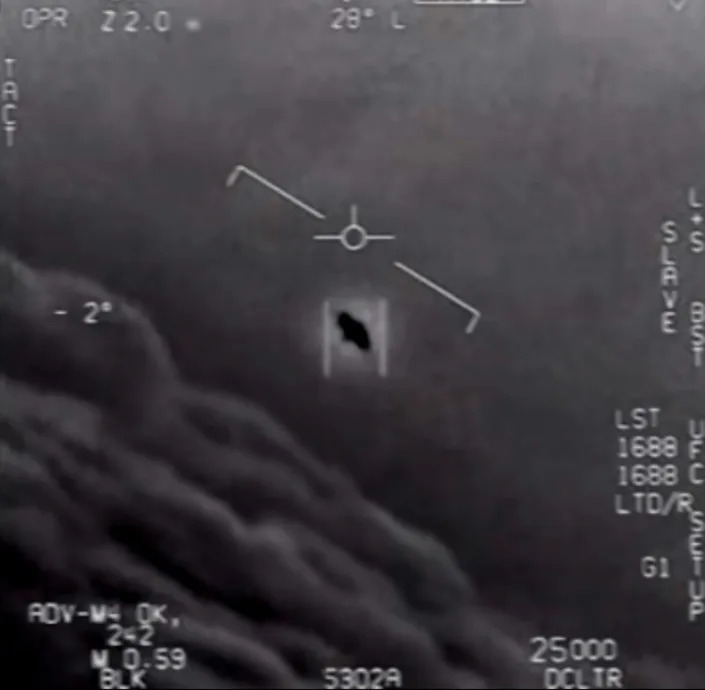

The US government is examining 510 UFO reports, over triple the number in its 2021 file, and while many were caused by drones or balloons, hundreds remain unexplained, according to a report released Thursday.

The 2022 report by the Director of National Intelligence (DNI) said that 247 "unidentified anomalous phenomena" or UAP reports have been filed with it since June 2021, when it revealed that it had records of 144 sightings of suspicious aerial objects under examination.

In addition, the report said, another 119 reports that had been buried in old records from the past 17 years had been unearthed, leaving it with 510 in total.

Most of the new reports come from US Navy and Air Force pilots, it said.

Of those, close to 200 had "unremarkable" explanations: they were balloons, drones or so-called aerial clutter, which covers birds, weather events and airborne plastic bags.

But others haven't been explained according to the DNI document, an unclassified version of a report delivered to Congress.

Those are the focus of examinations by the Pentagon, US intelligence agencies, and NASA over concerns not that they are alien spacecraft but unknown spying capabilities of rival countries.

"UAP continue to represent a hazard to flight safety and pose a possible adversary collection threat," the report said, referring to intelligence gathering.

"Some of these uncharacterized UAP appear to have demonstrated unusual flight characteristics or performance capabilities, and require further analysis," it said.

The report said many of those still unexplained reports could stem from weather phenomena, faulty sensors, or erroneous analysis by humans.

"Many reports lack enough detailed data to enable attribution of UAP with high certainty," it said.

The report came after years of pressure from Congress for the military and intelligence community to take seriously what were formerly called UFOs, or unidentified flying objects.

The US military is worried some of the UAPs spotted by military pilots in the past may represent technologies of strategic rivals unknown to US scientists.

The Pentagon previously called them unidentified aerial phenomena, but has now changed it to unidentified anomalous phenomena to include air, space, and maritime domains.

In 2020, the Pentagon released a still inexplicable video taken by navy pilots of objects moving at incredible speeds, spinning and mysteriously disappearing.

"We take reports of incursions into our designated space, land, sea, or airspaces seriously and examine each one," said Pentagon Spokesman Pat Ryder in a statement.

pmh/des


UFO reports rise to 510, not aliens but still a threat to US


FILE - The Pentagon is seen from Air Force One as it flies over Washington, March 2, 2022. The U.S. has now collected 510 reports of unidentified flying objects, many of which are flying in sensitive military airspace. While there’s no evidence of extraterrestrials, they still pose a threat, the government said in a declassified report summary released Thursday, Jan. 12, 2023. 
(AP Photo/Patrick Semansky, File) 

TARA COPP
Thu, January 12, 2023 

WASHINGTON (AP) — The U.S. has now collected 510 reports of unidentified flying objects, many of which are flying in sensitive military airspace. While there’s no evidence of extraterrestrials, they still pose a threat, the government said in a declassified report summary released Thursday.

Last year the Pentagon opened an office, the All-domain Anomaly Resolution Office, solely focused on receiving and analyzing all of those reports of unidentified phenomena, many of which have been reported by military pilots. It works with the intelligence agencies to further assess those incidents.

The events “continue to occur in restricted or sensitive airspace, highlighting possible concerns for safety of flight or adversary collection activity,” the Office of the Director of National Intelligence said in its 2022 report.

The classified version of the report addresses how many of those objects were found near locations where nuclear power plants operate or nuclear weapons are stored.

The 510 objects include 144 objects previously reported and 366 new reports. In both the old and new cases, after analysis, the majority have been determined to exhibit “unremarkable characteristics,” and could be characterized as unmanned aircraft systems, or balloon-like objects, the report said.

But the office is also tasked with reporting any movements or reports of objects that may indicate that a potential adversary has a new technology or capability.

The Pentagon's anomaly office is also to include any unidentified objects moving underwater, in the air, or in space, or something that moves between those domains, which could pose a new threat.

ODNI said in its report that efforts to destigmatize reporting and emphasize that the objects may pose a threat likely contributed to the additional reports.

Mexico, Canada sign agreement to benefit indigenous peoples

STORY: Mexican Foreign Minister Marcelo Ebrard and his Canadian counterpart Melanie Joly signed the documents in the presence of Mexican President Andres Manuel Lopez Obrador and Prime Minister Justin Trudeau.

In the document, both parties expressed their willingness to work together for the equity and inclusion of Mexican and Canadian indigenous communities.

Trudeau and Lopez Obrador held a bilateral meeting on Wednesday at Mexico's national palace, where the officials vowed to tighten economic ties.


ICYMI
Exxon scientists predicted current climate change 40 years ago: study


Saul Elbein
Thu, January 12, 2023 

Scientists at oil giant ExxonMobil accurately forecast present-day climate change going back to the late 1970s and early 1980s, a new study has found.

The findings by Harvard and the Potsdam Institute for Climate Impact Research are “the nail-in-the-coffin of ExxonMobil’s claims that it has been falsely accused of climate malfeasance,” lead author Geoffrey Supran, a research associate at Harvard, asserted in a statement.

The majority of the company’s internal climate predictions prepared during that period — between 63 and 83 percent of Exxon’s files — have closely matched actual global warming, according to the paper set to be published on Thursday in Environmental Research Letters.

“We find that most of their projections accurately forecast warming consistent with subsequent observations,” the report states. “Their projections were also consistent with, and at least as skillful as, those of independent academic and government models.”

The research assesses 32 internal documents produced by ExxonMobil scientists between 1977 and 2002, as well as 72 peer-reviewed scientific publications authored or co-authored by ExxonMobil scientists between 1982 and 2014.

In some cases, that research was better quality than far more influential studies by government scientists, according to the Harvard and Potsdam researchers’ analyses of Exxon’s predictive “skill scores,” or how their predictions matched what actually happened.

For example, when NASA scientist James Hansen presented his global warming predictions to Congress in 1988 — helping launch the modern climate movement — his studies matched subsequent warming by up to 66 percent, according to the Harvard and Potsdam researchers.

At the same time, Exxon scientists were producing climate research with an average skill score of 75 percent, the study found.

In the 1990s, the oil giant turned away from funding climate science and pivoted to a campaign raising broad-based doubt over the quality of those findings.

“Let’s face it: The science of climate change is too uncertain to mandate a plan of action that could plunge economies into turmoil,” stated one Exxon ad, addressing proposals in the late 1990s for the U.S. to join the Kyoto Protocols, a climate accord the country nearly joined more than 15 years before the pivotal 2015 Paris climate agreement.

“Scientists cannot predict with certainty if temperatures will increase, by how much and where changes will occur,” Exxon copywriters claimed.

In a statement to The Hill, Exxon spokesperson Todd Spitler sought to cast the report as part of a broader ginned-up campaign by the companies’ critics to portray “well intended, internal policy debates as an attempted company disinformation campaign.”

“This issue has come up several times in recent years and, in each case, our answer is the same: those who talk about how ‘Exxon Knew’ are wrong in their conclusions,” Spitler said. “ExxonMobil is committed to being part of the solution to climate change and the risks it poses.”

“Exxon Knew” is an activist campaign that accuses the company of spending millions to cast doubt on scientific findings that its principal products — oil and gas — would lead to potentially dangerous levels of warming.

“Just as Big Tobacco lied about the risks of addiction and cancer, Exxon orchestrated a campaign of doubt and deception, making hundreds of billions at the cost of people’s lives,” the campaigners wrote.

Exxon has repeatedly pushed back on the efforts, calling it “an orchestrated campaign” from activist organizations “that seeks to delegitimize ExxonMobil by misrepresenting our position on climate change and related research to the public.”

Exxon spokespeople now charge that allegations the company misled the public are ignoring that there was scientific dispute within the company — even if a broad majority of company scientists turned out data supporting the role of fossil fuel burning in climate change.

“Currently, the scientific evidence is inconclusive as to whether human activities are having a significant effect on the global climate,” Then-Exxon CEO Lee Raymond told the Economic Club of Detroit in 1996, according to Inside Climate News.

The following year, he said in a speech that “many people, politicians and the public alike, believe that global warming is a rock-solid certainty. But it’s not.”

In 1998 Exxon highlighted those uncertainties as part of a campaign that helped keep the U.S. out of the Kyoto Protocols, which would have committed the country to reduce carbon emissions, as PBS reported.

The Harvard study comes as part of a larger debate over Exxon’s role in contributing to historical climate change, which is itself a subset of an ever more significant dispute over the role of planet-heating fossil fuels in a rapidly warming world.

The U.S. oil industry currently faces at least 20 lawsuits by U.S. cities and towns that say it should help pay for ongoing climate damage and adaptation, PBS reported.

Exxon has sought to cast itself as an enthusiastic partner in the campaign to keep global temperatures from rising below dangerous levels. The company “is committed to being part of the solution to climate change and the risks it poses,” Spitler told The Hill.

As such, the company has announced a wide range of policies that it says are helping it to “support a net zero future.”

The company recently touted its plans to spend $17 billion on “lower-emission initiatives” through 2027, and highlighted cuts to its methane emissions of 40 percent and nearly 10 percent cuts in the carbon intensity of its operations.

It hopes to carve out a future for the fossil fuel industry through carbon capture technology, which it claims will drop the carbon cost of the industry, as CNBC reported.

But while the company is cutting the carbon cost of each barrel of oil it produces, it is also fighting Securities and Exchange Commission climate reporting rules that could see it forced to account for the carbon released when customers burn its oil and gas — rather than just when the company produces it.

Critics maintain that these investments do not change the fact that the company’s primary products remain centered around fossil fuel.

“ExxonMobil accurately foresaw the threat of human-caused global warming, both prior and parallel to orchestrating lobbying and propaganda campaigns to delay climate action,” the Harvard authors wrote.

Study: Exxon Mobil accurately predicted warming since 1970s


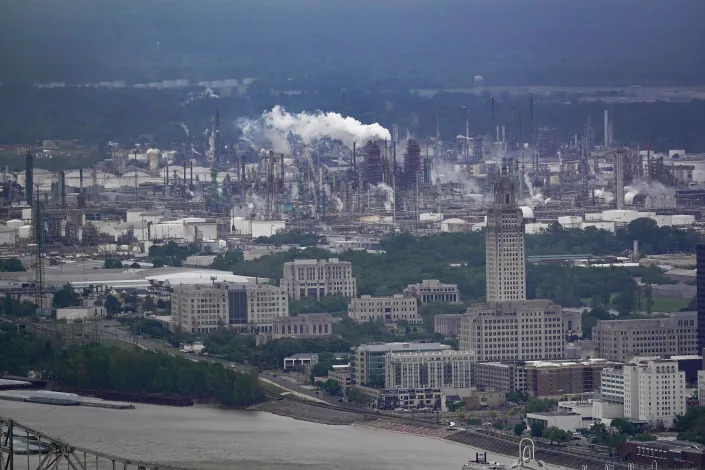
The Exxon Mobil Baton Rouge Refinery complex is visible with the Louisiana State Capitol, bottom right, in Baton Rouge, La., Monday, April 11, 2022. Exxon Mobil’s scientists were remarkably accurate in their predictions about global warming, even as the company made public statements that contradicted its own scientists' conclusions, a new study says. (AP Photo/Gerald Herbert)

ASSOCIATED PRESS
SETH BORENSTEIN and CATHY BUSSEWITZ
Thu, January 12, 2023 

DENVER (AP) — Exxon Mobil’s scientists were remarkably accurate in their predictions about global warming, even as the company made public statements that contradicted its own scientists' conclusions, a new study says.

The study in the journal Science Thursday looked at research that Exxon funded that didn’t just confirm what climate scientists were saying, but used more than a dozen different computer models that forecast the coming warming with precision equal to or better than government and academic scientists.

This was during the same time that the oil giant publicly doubted that warming was real and dismissed climate models’ accuracy. Exxon said its understanding of climate change evolved over the years and that critics are misunderstanding its earlier research.

Scientists, governments, activists and news sites, including Inside Climate News and the Los Angeles Times, several years ago reported that “Exxon knew” about the science of climate change since about 1977 all while publicly casting doubt. What the new study does is detail how accurate Exxon funded research was. From 63% to 83% of those projections fit strict standards for accuracy and generally predicted correctly that the globe would warm about .36 degrees (.2 degrees Celsius) a decade.


The Exxon-funded science was “actually astonishing” in its precision and accuracy, said study co-author Naomi Oreskes, a Harvard science history professor. But she added so was the “hypocrisy because so much of the Exxon Mobil disinformation for so many years ... was the claim that climate models weren’t reliable.”

Study lead author Geoffrey Supran, who started the work at Harvard and now is a environmental science professor at the University of Miami, said this is different than what was previously found in documents about the oil company.

“We’ve dug into not just to the language, the rhetoric in these documents, but also the data. And I’d say in that sense, our analysis really seals the deal on ‘Exxon knew’,” Supran said. It “gives us airtight evidence that Exxon Mobil accurately predicted global warming years before, then turned around and attacked the science underlying it.”

The paper quoted then-Exxon CEO Lee Raymond in 1999 as saying future climate “projections are based on completely unproven climate models, or more often, sheer speculation," while his successor in 2013 called models “not competent."

Exxon’s understanding of climate science developed along with the broader scientific community, and its four decades of research in climate science resulted in more than 150 papers, including 50 peer-reviewed publications, said company spokesman Todd Spitler.

“This issue has come up several times in recent years and, in each case, our answer is the same: those who talk about how ‘Exxon Knew’ are wrong in their conclusions,” Spitler said in an emailed statement. “Some have sought to misrepresent facts and Exxon Mobil’s position on climate science, and its support for effective policy solutions, by recasting well intended, internal policy debates as an attempted company disinformation campaign.”

Exxon, one of the world’s largest oil and gas companies, has been the target of numerous lawsuits that claim the company knew about the damage its oil and gas would cause to the climate, but misled the public by sowing doubt about climate change. In the latest such lawsuit, New Jersey accused five oil and gas companies including Exxon of deceiving the public for decades while knowing about the harmful toll fossil fuels take on the climate.

Similar lawsuits from New York to California have claimed that Exxon and other oil and gas companies launched public relations campaigns to stir doubts about climate change. In one, then-Massachusetts Attorney General Maura Healey said Exxon’s public relations efforts were “ reminiscent of the tobacco industry’s long denial campaign about the dangerous effects of cigarettes.”

Oreskes acknowledged in the study that she has been a paid consultant in the past for a law firm suing Exxon, while Supran has gotten a grant from the Rockefeller Family Foundation, which has also helped fund groups that were suing Exxon. The Associated Press receives some foundation support from Rockefeller and maintains full control of editorial content.

Oil giants including Exxon and Shell were accused in congressional hearings in 2021 of spreading misinformation about climate, but executives from the companies denied the accusations.

University of Illinois atmospheric scientist professor emeritus Donald Wuebbles told The Associated Press that in the 1980s he worked with Exxon-funded scientists and wasn’t surprised by what the company knew or the models. It’s what science and people who examined the issue knew.

“It was clear that Exxon Mobil knew what was going on,’’ Wuebbles said. “The problem is at the same time they were paying people to put out misinformation. That’s the big issue.”

There's a difference between the “hype and spin” that companies do to get you to buy a product or politicians do to get your vote and an “outright lie ... misrepresenting factual information and that's what Exxon did,” Oreskes said.

Several outside scientists and activists said what the study showed about Exxon actions is serious.

“The harm caused by Exxon has been huge,” said University of Michigan environment dean Jonathan Overpeck. “They knew that fossil fuels, including oil and natural gas, would greatly alter the planet’s climate in ways that would be costly in terms of lives, human suffering and economic impacts. And yet, despite this understanding they choose to publicly downplay the problem of climate change and the dangers it poses to people and the planet.”

Cornell University climate scientist Natalie Mahowald asked: “How many thousands (or more) of lives have been lost or adversely impacted by Exxon Mobil’s deliberate campaign to obscure the science?”

Critics say Exxon’s past actions on climate change undermine its claims that it’s committed to reducing emissions.

After tracking Exxon's and hundreds of other companies' corporate lobbying on climate change policies, InfluenceMap, a firm that analyzes data on how companies are impacting the climate crisis, concluded that Exxon is lobbying overall in opposition to the goals of the Paris Agreement and that it's currently among the most negative and influential corporations holding back climate policy.

“All the research we have suggests that effort to thwart climate action continues to this day, prioritizing the oil and gas industry value chain from the “potentially existential” threat of climate change, rather than the other way around,” said Faye Holder, program manager for InfluenceMap.

“The messages of denial and delay may look different, but the intention is the same.”

___

Bussewitz reported from New York.

___

Follow AP’s climate and environment coverage at https://apnews.com/hub/climate-and-environment

___

Follow Seth Borenstein on Twitter at @borenbears and Cathy Bussewitz at @cbussewitz

Exxon Mobil publicly denied global warming for years but quietly predicted it

Tony Briscoe
Thu, January 12, 2023 

Environmental activists rallied outside the New York Supreme Court building in October 2019 in New York City while inside New York's attorney general was taking on Exxon Mobil in a case that accused the oil giant of misleading investors about the company's financial risks due to climate change. 
(Drew Angerer / Getty Images)

In perhaps one of the most cynically ironic twists in the field of climate science, new research suggests Exxon Mobil Corp. may have had keener insight into the impending dangers of global warming than even NASA scientists but still waged a decades-long campaign to discredit research into climate change and its connection to the burning of fossil fuels.

Despite its public denials, the major oil corporation worked behind closed doors to carry out an astonishingly accurate series of global warming projections between 1977 and 2003, according to a study published Thursday in Science.

“Exxon didn't just know some climate science, they actually helped advance it,” said Geoffrey Supran, lead author of the study and former researcher in the department of the history of science at Harvard University. “They didn't just vaguely know something about global warming decades ago, they knew as much as independent academics and government scientists did. And arguably, they knew all they needed to know.”

In a review of archived documents and memos, researchers found that scientists for then-Exxon had completed a set of 16 models that predicted global temperatures would rise, on average, about 0.36 degrees Fahrenheit (0.2 degrees Celsius) per decade. Since 1981, Earth’s global average temperature has risen about 0.32 degrees (0.18 Celsius) per decade, according to NASA.

Researchers at Harvard and the Potsdam Institute for Climate Impact Research found most of the Exxon Mobil projections are consistent with subsequent global temperature observations, according to the study. Many of the Exxon projections proved to be more precise than those by James Hansen, then-director of NASA's Goddard Institute for Space Studies, who famously testified before U.S. Senate in 1988 about the "greenhouse effect."

The analysis adds to a growing body of evidence that the nation’s largest oil producer recognized burning fossil fuels was warming the Earth, even as it continued to heap doubt onto that notion publicly. The paper also shows, for the first time, just how precise and sophisticated the fossil fuel industry's own climate research was.

In response to the study, Exxon Mobil spokesperson Todd Spitler said the company’s understanding of climate science has evolved along with that of the broader scientific community. The energy company, he said, is now actively engaged on several efforts to mitigate global warming.

“This issue has come up several times in recent years and, in each case, our answer is the same: those who suggest ‘we knew’ are wrong,” Spitler said in a statement. “Some have sought to misrepresent facts and Exxon Mobil’s position on climate science, and its support for effective policy solutions, by recasting well intended, internal policy debates as an attempted company disinformation campaign.”

The Harvard-led study builds previous academic research, in addition to investigative reporting by InsideClimate News and the Los Angeles Times, that uncovered a tranche of internal company memos demonstrating Exxon officials knew burning fossil fuels would lead to global warming since the late 1970s.

Exxon was once a pioneer in the arena of climate research in the early 1980s. But its public stance on global warming changed sharply by 1990.

In one internal draft memo from August 1988 titled “The Greenhouse Effect,” a public relations manager detailed the scientific consensus about the role of fossil fuels in global warming but wrote that the company should “Emphasize the uncertainty.” An archived presentation in 1989 from Exxon’s manager of science and strategy development said:

 “Data confirm that greenhouse gases are increasing in the atmosphere. Fossil fuels contribute most of the CO2.”

In 1999 — the year Exxon and Mobil merged — company Chief Executive Lee Raymond, however, said future climate “projections are based on completely unproven climate models, or, more often, sheer speculation.”

In 2015, Raymond’s successor, Rex Tillerson, who later served as secretary of State under President Trump, also questioned climate projections involving the amount of carbon dioxide gas in the atmosphere.

“We do not really know what the climate effects of 600 parts per million versus 450 parts per million will be because the models simply are not that good,” Tillerson said.

As Exxon Mobil CEO, Rex Tillerson, shown in 2014, questioned climate projections involving the amount of carbon dioxide gas in the atmosphere. (LM Otero / Associated Press)

Years earlier, however, Exxon's own modeling from 1982 suggested that 600 ppm of CO2 would lead to 2.3 degrees (1.3 Celsius) more global warming than 450 ppm.

The analysis also found that Exxon scientists had projected that global warming would first become detectable at the turn 21st century. The Exxon scientists concluded this warming trend would render the Earth hotter than at any time in at least 150,000 years, debunking unfounded theories of “global cooling” and a forthcoming ice age.

Despite such findings by their own scientists, company officials poured millions of dollars into a public relations campaign to cast doubt on the science behind climate change. That campaign included prominent ads in the Washington Post, the Wall Street Journal and the New York Times.

“They were right on the money in terms of rejecting a possible ice age, accurately predicting when warming would first be detectable, estimating the carbon budget for 2 degrees — and then, in all of those points, the company’s subsequent public statements contradicted its own data,” said Supran, now an associate professor of environmental science and policy at the University of Miami.

It wasn't until 2007 that Exxon Mobil publicly conceded that climate change was occurring, and was largely driven by the burning of fossil fuels and proliferation of heat-trapping CO2.

Before the Industrial Revolution, CO2 levels were consistently around 280 ppm for almost 6,000 years of human civilization, according to the National Oceanic and Atmospheric Administration. Since then, humans released an estimated 1.5 trillion tons of carbon emissions through the burning of fossil fuels -- including gas, coal and methane.

In 2022 — which NOAA now ranks as the sixth-warmest year on record — CO2 levels reached 420 parts per million in November, a mark the planet hasn’t seen in millions of years.

Nine of the last 10 years have been the warmest since 1880, according to NOAA. These rising temperatures are fueling extreme weather events worldwide, and California and the Western U.S. have been on the frontlines in recent years.

Despite a recent barrage of deadly storms that have hit California since the beginning of the year, the American Southwest is still braving one of its driest stretches in 1,200 years. California is also still recovering from a record-setting wildfire season in 2020, during which 4.3 million acres were scorched statewide. And as Arctic ice continues to melt, sea level rise threatens to exacerbate coastal erosion.


Vapor rises from the former Exxon Mobil refinery in Torrance in 2016. The company sold the facility to a smaller energy corporation the same year. (Michael Owen Baker / For The Times)

The recent Exxon Mobil findings have given more fodder to the #ExxonKnew campaign — an environmental crusade that traces its origins to a 2012 meeting of climate activists and experts in La Jolla. Its supporters have accused Exxon Mobil of intentionally misleading the public and causing humanity to lose precious time in the fight to curtail carbon emissions. They have called for investigations into the company’s statements about climate change and fossil fuels.

In that time, dozens of local and state governments, including several California cities, have filed suit against Exxon Mobil and other energy companies for orchestrating public deception campaigns in spite of internal scientific knowledge.

In 2019, a New York state judge dismissed the New York attorney general’s lawsuit against Exxon Mobil that accused the company of defrauding its shareholders by failing to accurately account for the risks of climate change.

As Exxon Mobil continues to challenge similar litigation elsewhere, the company’s website is now chock-full of climate-friendly lingo on how it intends to support a “net-zero future” with “lower-emission efforts” — a stark departure from its public stance more than a decade earlier.

“There's this sort of gradual evolution away from outright denial and towards what we call discourses of delay,” Supran said. “That kind of blends into the present where we have these much more subtle discourses that position fossil fuels as essential to the future of humanity.”

This story originally appeared in Los Angeles Times.
ANY OF THEM TRAIN/SUBWAY DRIVERS?!
Mexico deploys National Guard in metro after accidents

Thu, January 12, 2023 


Thousands of National Guard members will be deployed in the Mexico City metro following a series of safety incidents, including a crash this month that left one person dead, officials said Thursday.

Safety concerns have shaken public confidence in a transport system used by millions of people in the congested megacity.

From Thursday, around 6,000 members of the National Guard will be present in the metro, Mexico City Mayor Claudia Sheinbaum told reporters.

The move comes after two metro trains collided in a tunnel Saturday, killing a young woman and injuring dozens.

It was the most serious incident since a section of elevated track collapsed in May 2021, killing 26 people and injuring dozens.

Other less serious but unusual incidents, including problems with wheels, have been reported in recent months, Sheinbaum said.

She denied they were the result of budget cuts, as alleged by critics of the mayor, who is seen as a leading candidate to replace President Andres Manuel Lopez Obrador next year.

Lopez Obrador has been accused by his opponents of overseeing the "militarization" of Mexico by giving increased responsibility to the armed forces.

Commenting on the National Guard deployment in the metro, Lopez Obrador said: "If they call that militarization or whatever they call it, we assume responsibility."

pam-axm/dr/bfm
US judge orders museum not to move Van Gogh painting caught in row

Thu, January 12, 2023


A US judge has ordered a museum to keep hold of a Vincent Van Gogh painting after a collector filed a lawsuit alleging the work had been stolen from him.

"The Novel Reader," also known as "The Reading Lady," is on display at the Detroit Institute of Arts until January 22 as part of an exhibition of the impressionist painter.

Brazilian Gustavo Soter said in a complaint filed Tuesday in a Michigan court that he acquired the painting in 2017 for $3.7 million.

He immediately transferred possession -- but not ownership of the 1888 painting -- to a third party, according the lawsuit.

"This party absconded with the painting, and plaintiff has been unaware of its whereabouts for years," says the complaint, which now values the work at $5 million.

Soter learned recently that the painting was in the possession of the museum in Detroit, apparently on loan from a private collection.

Fearing that the institute would return the painting to the third party at the end of the exhibit, Soter's lawsuit seeks the art be turned over to him.

On Wednesday, judge George Caram Steeh barred the institute from "damaging, destroying, concealing, disposing, (or) moving" the painting.

The ruling was a temporary move ahead of a court hearing on the matter on January 19.

The museum, which isn't accused of wrongdoing, did not immediately reply to a request for comment from AFP.

ube/pdh/caw

Ancient ostrich eggs found in southern Israeli desert

The ostrich eggs were found in fragments
The ostrich eggs were found in fragments.

Ostrich eggs estimated to be at least 4,000 years old have been found in Israel, archaeologists announced on Thursday, providing insight into the life of ancient peoples in the region.

The eight crushed eggs were discovered in fragments in the Negev desert's Nitzana sand dunes near the Egyptian border.

They were located close to a fire pit that was part of a camp site used by nomads "since ," said Lauren Davis, the Israel Antiquities Authority excavation director.

Their proximity to the fire alongside stones, flint, tools and , implies that the eggs were to be cooked, said Davis.

Wild ostriches used to roam the area until they became extinct in the 19th century, the IAA said.

To Davis, the eggs could provide clues into the enigmatic lives of the ancients, whose lifestyle did not provide much lasting .

"Although the nomads did not build permanent structures at this site, the finds allow us to feel their presence in the desert," Davis said.

She noted "the exceptional preservation of the eggs" and said they will be taken for examination which should yield a more exact timeline for the site and its function.

Israel Antiquities Authority excavators dig at the site in the Negev desert
Israel Antiquities Authority excavators dig at the site in the Negev desert.

© 2023 AFP


Israeli archaeologists dig up large tusk of ancient elephant
Colombia VP Says Assassination Bid Foiled

By AFP Published on: January 10, 2023

In this file photo taken on October 7, 2022, Colombian Vice President Francia Marquez arrives at a Territorial Dialogue Forum in Guachene, department of Cauca, Colombia. (Photo by JOAQUIN SARMIENTO / AFP)

Marquez said that her security had carried out "the deactivation and destruction of a high-capacity explosive device" in the road leading to her family home in Colombia's southwest.

Her security team discovered the bag after being alerted to suspicious behaviour by "outside elements" on the road leading to the village of Yolombo in the Suarez municipality where Marquez was born.

Colombia Vice President Francia Marquez on Tuesday claimed her security detail had foiled an assassination attempt close to her home.

Marquez, the first black vice president in the South American country, said on Twitter that her security had carried out "the deactivation and destruction of a high-capacity explosive device" in the road leading to her family home in Colombia's southwest.

"It is another attempt on my life," added the 41-year-old, who survived an attack in 2019 linked to her work as an environmental activist in her home department of Cauca.

The latest bid, she said, involved "a plastic bag containing a high-powered explosive substance made of ammonium nitrate, powdered aluminium and... nails."

Her security team discovered the bag after being alerted to suspicious behaviour by "outside elements" on the road leading to the village of Yolombo in the Suarez municipality where Marquez was born.

She is part of Colombia's first-ever left-wing government, led by President Gustavo Petro.

He has attempted to end decades of armed conflict in the country by negotiating with left-wing rebels and armed groups such as drug traffickers.

In August, a few days after Petro was sworn in, a vehicle in the presidential motorcade came under gunfire in the northeast of the country.
Brazil's muscular response towards far-right rioters means 'endgame might be nearer than we think'

Issued on: 12/01/2023 - 

05:15 Video by:Mark OWEN

Skittish Brazilian authorities on Wednesday spared no effort to boost security in the face of a social media flyer promoting a “mega-protest to retake power” in two dozen cities that fizzled amid preventative security measures. For more on the future of Brazil's far-right, FRANCE 24 is joined by Lauri Tähtinen, non-resident Senior Associate at the Center for Strategic and International Studies and the founder of Americas Outlook.

Brasilia rioters likely had inside help: Lula

Issued on: 12/01/2023

Brasília (AFP) – Brazil intensified a mop-up operation Thursday after the weekend sacking of government buildings in the capital, as President Luiz Inacio Lula da Silva said the rioters likely had inside help.

Lula told reporters he had ordered a "thorough review" of presidential palace staff after Sunday's violent uprising, which saw backers of his far-right predecessor Jair Bolsonaro storm the presidency, Congress and Supreme Court, and cause widespread damage.

"I am convinced that the door of the Planalto (presidential) palace was opened for people to enter because there are no broken doors," the president said in Brasilia.

"This means that someone facilitated their entry," added Lula, who is dealing with the aftermath of the violent reaction by so-called "bolsonaristas" to his brand-new presidential term.

The rioters looted offices, destroyed priceless works of art and left graffiti messages calling for a military coup in their wake

The exact extent of the damage is still being calculated.

"We will investigate calmly to see what really happened," said Lula, who defeated Bolsonaro by a razor-thin margin in an October vote that followed a deeply divisive election campaign.

Authorities are seeking to determine who planned and financed the riots.
'Under pressure'

Seeking to prevent a repeat of Sunday's destruction, the security forces were placed on a war footing Wednesday in response to threats of fresh protests in Brasilia and other cities.

But the promised mass mobilization to "take back power" from Lula and his leftist government never materialized, leaving riot police with helicopter backing twiddling their thumbs as they maintained a security ring around the Esplanade of Ministries in Brasilia.

A poll published by the Datafolha institute Wednesday said 93 percent of Brazilians condemned Sunday's violent uprising, though another -- by Atlas Intelligence -- found that one in five supported the rioters.

The arrest of nearly 2,000 and continued detention of more than 1,100 rioters as well as the strong security deployment appeared to act as a deterrent to renewed mobilization Wednesday.

Many were discouraged "for fear of being arrested," said Guilherme Casaroes, a political scientist with the Getulio Vargas Foundation.

For Geraldo Monteiro of the Federal University of Rio de Janeiro, "the Bolsonaro movement is under pressure and does not have the organization for a counteroffensive."

Following the attacks on Brazil's symbols of democracy, Lula's hand was strengthened after he received the public backing of leaders of Congress and governors -- some of whom are in the Bolsonaro camp.

Efforts continue, meanwhile, to track down more of those involved, with suspected rioters identified through security cameras or selfies they themselves posted on social media.

Heads rolling

High-level heads have also been rolling: An arrest warrant is expected to be executed in the coming days against Anderson Torres -- a justice minister under Bolsonaro who served as Brasilia security chief when the riots happened.

He has since been fired, and is expected to return to Brazil from a holiday in the United States on Friday to face accusations of collusion with the rioters.

Brasilia's military police chief and the region's governor have also lost their jobs.

According to national chain TV Globo, investigators have identified some of the alleged financiers of Sunday's riots in ten of Brazil's 26 states, including leaders in the pro-Bolsonaro agro-business sector.

They are suspected of having paid for the food and transport of rioters who arrived in Brasilia from several regions of the country on about 100 passenger buses.

Benedict's confidant spills beans on two-popes tension

Ella IDE
Wed, January 11, 2023 


Just one week after the funeral of Benedict XVI, his closest aide released a much-trailed memoir Thursday, revealing details of tensions between the late pope emeritus and his more liberal successor Pope Francis.

Georg Gaenswein's book reveals private conversations with both popes in charting the German ex-pontiff's rise to power and the decade spent in retirement following his shock resignation in 2013.

The Vatican has not officially responded but Pope Francis called Gaenswein in to a private meeting on Monday, following days of pre-publication interviews in which the 66-year-old German aired years of grievances.

In one, he claimed it had "pained Benedict's heart" when Francis effectively reversed his predecessor's decision to relax restrictions on the use of the traditional Latin mass.

Up until his death on December 31 at the age of 95, Benedict had remained a figurehead for the conservative wing of the Catholic Church, which views Pope Francis as too liberal.

- Shocked and speechless -

As his secretary since 2003, Gaenswein was a constant presence at Benedict's side, and during his final years living in a monastery in the Vatican grounds, his gatekeeper.

After Benedict's death, Gaenswein led the mourners, greeting visitors to his mentor's lying-in-state and kissing the coffin in front of tens of thousands at St Peter's Square during the funeral led by Pope Francis.

In "Nothing But the Truth: My Life Beside Pope Benedict XVI", Gaenswein describes Benedict's perplexity at some of Francis's decisions, and the latter's apparent attempts to keep his predecessor in check.

After becoming in 2013 the first pope in six centuries to resign, Benedict promised to live "hidden from the world", but broke that pledge to speak out on several explosive issues.

The last straw appears to have been a book Benedict co-authored on priestly celibacy in 2020 -- a PR disaster that Gaenswein said Francis appeared to blame in part on him.

Gaenswein was effectively fired as head of the papal household with immediate effect.

"Stay home from now on. Accompany Benedict, who needs you, and act as a shield," he said Francis told him.

Gaenswein, who had been propelled into the limelight on Benedict's election, says he was left "shocked and speechless" by his demotion.

On hearing the news, Benedict half-jokingly said "it seems Pope Francis doesn't trust me anymore, and is making you my guardian".

The ex-pontiff intervened and tried to get Francis to change his mind, but to no avail, Gaenswein wrote.

- 'Gorgeous George' -

Like Benedict, Gaenswein was born in Bavaria. He describes his young self as "a bit transgressive", sporting unruly locks and listening to Pink Floyd.
THE REBELLIOUS YOUTH TURNS REACTIONARY

The son of a blacksmith, he was ordained in 1984 and rose through the ranks to become secretary to the then-Cardinal Joseph Ratzinger.

When Ratzinger was elected to the papacy in 2005, the international media was instantly smitten by his dashing blond-haired assistant.

He was nicknamed "Bel Giorgio" ("Gorgeous George") and gossip magazines gleefully began splashing paparazzi-style photographs of him in his tennis whites.


His close relationship with Benedict sparked jealousy, he said in the memoir.

But the new pope, Francis, appeared not to want him nearby, Gaenswein said, citing the pontiff's refusal to allow him to live in the palace apartment that Benedict had used.

The memoir is not expected to improve relations between the pair, and it was not clear what job Gaenswein will be given now.

Some Vatican commentators have speculated he could be appointed as a Vatican ambassador, or as director of an important shrine.

ide-ar/ams/pvh
Nuclear reactor experiment rules out one dark matter hope

Pierre Celerier and Daniel Lawler
Thu, 12 January 2023 


It was an anomaly detected in the storm of a nuclear reactor so puzzling that physicists hoped it would shine a light on dark matter, one of the universe's greatest mysteries.

However new research has definitively ruled out that this strange measurement signalled the existence of a "sterile neutrino", a hypothetical particle that has long eluded scientists.

Neutrinos are sometimes called "ghost particles" because they barely interact with other matter -- around 100 trillion are estimated to pass through our bodies every second.

Since neutrinos were first theorised in 1930, scientists have been trying to nail down the properties of these shape-shifters, which are one of the most common particles in the universe.

They appear "when the nature of the nucleus of an atom has been changed", physicist David Lhuillier of France's Atomic Energy Commission told AFP.

That could happen when they come together in the furious fusion in the heart of stars like our Sun, or are broken apart in nuclear reactors, he said.

There are three confirmed flavours of neutrino: electron, muon and tau.

However physicists suspect there could be a fourth neutrino, dubbed "sterile" because it does not interact with ordinary matter at all.

In theory, it would only answer to gravity and not the fundamental force of weak interactions, which still hold sway over the other neutrinos.

The sterile neutrino has a place ready for it in theoretical physics, "but there has not yet been a clear demonstration that is exists," he added.

- Dark matter candidate -


So Lhuillier and the rest of the STEREO collaboration, which brings together French and German scientists, set out to find it.

Previous nuclear reactor measurements had found fewer neutrinos than the amount expected by theoretical models, a phenomenon dubbed the "reactor antineutrino anomaly".

It was suggested that the missing neutrinos had changed into the sterile kind, offering a rare chance to prove their existence.

To find out, the STEREO collaboration installed a dedicated detector a few metres away from a nuclear reactor used for research at the Laue–Langevin institute in Grenoble, France.

After four years of observing more than 100,000 neutrinos and two years analysing the data, the verdict was published in the journal Nature on Wednesday.

The anomaly "cannot be explained by sterile neutrinos," Lhuillier said.

But that "does not mean there are none in the universe", he added.

The experiment found that previous predictions of the amount of neutrinos being produced were incorrect.

But it was not a total loss, offering a much clearer picture of neutrinos emitted by nuclear reactors.

This could help not just with future research, but also for monitoring nuclear reactors.

Meanwhile, the search for the sterile neutrino continues. Particle accelerators, which smash atoms, could offer up new leads.

Despite the setback, interest could remain high because sterile neutrinos have been considered a suspect for dark matter, which makes up more than quarter of the universe but remains shrouded in mystery.

Like dark matter, the sterile neutrino does not interact with ordinary matter, making it incredibly difficult to observe.

"It would be a candidate which would explain why we see the effects of dark matter -- and why we cannot see dark matter," Lhuillier said.

LA REVUE GAUCHE - Left Comment: Search results for DARK MATTER