Brazil riots may have strengthened Lula's hand: analysts
Published on January 15, 2023
AFP
By ransacking government buildings in their fervent opposition to leftist Luiz Inacio Lula da Silva, Brazil's January 8 rioters may have strengthened his hand, at least temporarily, analysts say
Many even among the backers of defeated far-right ex-president Jair Bolsonaro were shocked by the pillaging of national heritage buildings and artefacts.
Immediately after the storming of the presidency, Congress and Supreme Court, Lula gathered leaders of the three institutions -- many of them from the political right --- for a unanimous condemnation of the events.
Presenting a united front, they affirmed publicly that democracy would not be allowed to falter just three decades after the fall of Brazil's military dictatorship.
"The events (of January 8) had the opposite effect" of what was intended, said Mayra Goulart, professor of political science at the Federal University of Rio de Janeiro (UFRJ).
"Lula will no doubt emerge stronger. These assaults have created a climate of national unity for the defense of democracy," she told AFP.
The riots happened exactly one week after Lula's inauguration went off with much pomp and ceremony, but in the absence of Bolsonaro who left the country two days earlier and dodged the traditional duty of handing over the presidential sash.
Thousands forced their way into the seats of power, smashing windows and furniture, destroying priceless works of art, and leaving behind graffiti messages calling for a military coup.
The military did not rise to the call.
More than 2,000 alleged rioters were detained, and the authorities are tracking those suspected of having masterminded and financed the revolt that shocked Brazil and the world.
An investigation has been opened into a possible role played by Bolsonaro, whose justice minister was arrested Saturday for possible collusion with the vandals.
Condemnation from abroad was unanimous.
Washington, Moscow, Beijing, the European Union, Paris and Latin American capitals expressed their full support for the new president of Brazil -- a country that was isolated from the global stage under Bolsonaro.
"The international uproar will reinforce the position of Lula, who will be perceived as an important leader who can contribute to strengthening multilateral forums," said Goulart.Â
- 'Balanced attitude' -
Leandro Gabiati of consulting firm Dominium said Lula's image has been "strengthened" by his perceived firm but fair handling of the mop-up operation.
Bolsonaro's in turn, has been harmed.
Lula "was challenged and he did quite well," said Gabiati, citing "a balanced attitude that somehow restored normalcy" without an air of retribution.
Lula’s government has been firm: "fascists" found guilty of involvement in the riots will face sentences of up to 30 years for "terrorism."
As the net also tightened around suspected organizers of the uprising, the government announced a reshuffling of the police and security forces.
Security at the presidential palace, it announced, will be cleansed of any remaining Bolsonaro sympathizers left over from the previous administration.
Lula will have to "take exemplary sanctions in order to avoid a repeat of this type of demonstrations," said Gabiati.
And even as he needs to deal urgently with pressing problems such as poverty and hunger, Lula will be forced to "expend energy in the investigations... of the putschists," added Goulart.
Meanwhile, government work continued this week, with ceremonies held in official buildings still littered with shattered glass and broken furniture to swear in Lula's new ministers.
- 'A huge shock' -
Lula will face a difficult task in trying to heal a country marked by deep divisions worsened by a vitriolic election campaign filled with disinformation and fear-mongering.
A leftist icon for many, he won the vote by razor-thin margin of 60 million votes to 58 million for Bolsonaro.
Lula's most radical opponents -- fueled by anti-"communist" rhetoric and mistrust of the election outcome -- are unlikely to give up.
"I think what happened on January 8 was a huge shock. And I think many of the people who voted for Bolsonaro did not expect or welcome what happened," said Michael Shifter, a senior fellow at the Inter-American Dialogue think tank.
Even among those who supported the riots, many were left disappointed by the failure of the military to intervene on their behalf, the analyst told AFP.
"I think what we're seeing is (the anti-Lula movement) a little bit fractured for the moment and I think the country has understandably, predictably rallied around Lula for the moment," said Shifter.
"But I think that at the same time this movement is still around and ... we probably could expect some sort of more low intensity kind of upheavals and protests and some violence," he added.
"I don't think that is going to disappear."
pt-lg/mlr/caw
Published on January 15, 2023
AFP
By ransacking government buildings in their fervent opposition to leftist Luiz Inacio Lula da Silva, Brazil's January 8 rioters may have strengthened his hand, at least temporarily, analysts say
Many even among the backers of defeated far-right ex-president Jair Bolsonaro were shocked by the pillaging of national heritage buildings and artefacts.
Immediately after the storming of the presidency, Congress and Supreme Court, Lula gathered leaders of the three institutions -- many of them from the political right --- for a unanimous condemnation of the events.
Presenting a united front, they affirmed publicly that democracy would not be allowed to falter just three decades after the fall of Brazil's military dictatorship.
"The events (of January 8) had the opposite effect" of what was intended, said Mayra Goulart, professor of political science at the Federal University of Rio de Janeiro (UFRJ).
"Lula will no doubt emerge stronger. These assaults have created a climate of national unity for the defense of democracy," she told AFP.
The riots happened exactly one week after Lula's inauguration went off with much pomp and ceremony, but in the absence of Bolsonaro who left the country two days earlier and dodged the traditional duty of handing over the presidential sash.
Thousands forced their way into the seats of power, smashing windows and furniture, destroying priceless works of art, and leaving behind graffiti messages calling for a military coup.
The military did not rise to the call.
More than 2,000 alleged rioters were detained, and the authorities are tracking those suspected of having masterminded and financed the revolt that shocked Brazil and the world.
An investigation has been opened into a possible role played by Bolsonaro, whose justice minister was arrested Saturday for possible collusion with the vandals.
Condemnation from abroad was unanimous.
Washington, Moscow, Beijing, the European Union, Paris and Latin American capitals expressed their full support for the new president of Brazil -- a country that was isolated from the global stage under Bolsonaro.
"The international uproar will reinforce the position of Lula, who will be perceived as an important leader who can contribute to strengthening multilateral forums," said Goulart.Â
- 'Balanced attitude' -
Leandro Gabiati of consulting firm Dominium said Lula's image has been "strengthened" by his perceived firm but fair handling of the mop-up operation.
Bolsonaro's in turn, has been harmed.
Lula "was challenged and he did quite well," said Gabiati, citing "a balanced attitude that somehow restored normalcy" without an air of retribution.
Lula’s government has been firm: "fascists" found guilty of involvement in the riots will face sentences of up to 30 years for "terrorism."
As the net also tightened around suspected organizers of the uprising, the government announced a reshuffling of the police and security forces.
Security at the presidential palace, it announced, will be cleansed of any remaining Bolsonaro sympathizers left over from the previous administration.
Lula will have to "take exemplary sanctions in order to avoid a repeat of this type of demonstrations," said Gabiati.
And even as he needs to deal urgently with pressing problems such as poverty and hunger, Lula will be forced to "expend energy in the investigations... of the putschists," added Goulart.
Meanwhile, government work continued this week, with ceremonies held in official buildings still littered with shattered glass and broken furniture to swear in Lula's new ministers.
- 'A huge shock' -
Lula will face a difficult task in trying to heal a country marked by deep divisions worsened by a vitriolic election campaign filled with disinformation and fear-mongering.
A leftist icon for many, he won the vote by razor-thin margin of 60 million votes to 58 million for Bolsonaro.
Lula's most radical opponents -- fueled by anti-"communist" rhetoric and mistrust of the election outcome -- are unlikely to give up.
"I think what happened on January 8 was a huge shock. And I think many of the people who voted for Bolsonaro did not expect or welcome what happened," said Michael Shifter, a senior fellow at the Inter-American Dialogue think tank.
Even among those who supported the riots, many were left disappointed by the failure of the military to intervene on their behalf, the analyst told AFP.
"I think what we're seeing is (the anti-Lula movement) a little bit fractured for the moment and I think the country has understandably, predictably rallied around Lula for the moment," said Shifter.
"But I think that at the same time this movement is still around and ... we probably could expect some sort of more low intensity kind of upheavals and protests and some violence," he added.
"I don't think that is going to disappear."
pt-lg/mlr/caw
Issued on: 14/01/2023

The rioters caused untold damage to cultural heritage in Brasilia © Sergio Lima / AFP/File
Brasília (AFP) – Thousands of opponents of leftist new President Luiz Inacio Lula da Silva stormed the seats of power in Brazil's capital on January 8, fired up by anti-"communist" rhetoric and allegations of election fraud.
Here's what we know.
Brasília (AFP) – Thousands of opponents of leftist new President Luiz Inacio Lula da Silva stormed the seats of power in Brazil's capital on January 8, fired up by anti-"communist" rhetoric and allegations of election fraud.
Here's what we know.
Rioters arrested
In all, the Federal Police detained 1,843 people after the riots in Brasilia.
Most of them were taken from an encampment outside the army headquarters in the capital, where they had been protesting for two months, clamoring for the military to prevent Lula's inauguration, which went ahead on January 1.
According to the latest update by the Federal Police, 1,159 remained under arrest Wednesday after 684 -- many of them old or ill, parents of young children and homeless people -- were released to await trial in freedom.
Police from the district of Brasilia arrested another 209 on the day of the uprising.
Charges against the rioters include terrorism, criminal association, involvement in an attack against the democratic state, participation in an attempted coup d'etat and incitement to crime.
Countering claims of mistreatment, the police said hundreds of detainees received three meals and a snack every day, and had access to medical care.
More than 430 were seen by doctors and 33 taken to health facilities.
Justice Minister Flavio Dino said on Friday that court appearances have started, without providing details.
- Top dogs -
A Supreme Court judge on Friday gave the green light for far-right ex-president Jair Bolsonaro, beaten narrowly by Lula at the ballot box in October, to be included in an investigation into the instigators of the riots.
The Federal Police on Saturday arrested Brasilia security chief Anderson Torres, a former Bolsonaro justice minister, for alleged "collusion" with the rioters.
Also in custody is Fabio Augusto, who led the military police in Brasilia and, like Torres, was fired after the uprising.
The Supreme Court has also ordered an inquiry into the conduct of Brasilia governor Ibaneis Rocha and his interim public security secretary Fernando de Sousa Oliveira.
Rocha was relieved of his duties for 90 days.
Lula and Dino have said the violence could not have happened without collusion from members of the security forces. An investigation is under way.
Financiers
The attorney general's office has identified 52 individuals and seven companies suspected of having helped pay for the uprising.
According to national broadcaster TV Globo, the suspects included leaders in the pro-Bolsonaro agro-business sector.
They are thought to have paid for the food and transport of rioters who arrived in Brasilia from several regions of the country on about 100 passenger buses.
Investigations are ongoing to track down other masterminds and financiers.
Damage
The extent of the damage has yet to be determined in monetary terms, but many of the items trashed when rioters broke into the presidency, Congress and Supreme Court are irreplaceable parts of Brazil's cultural heritage.
The buildings, all designed by famed architect Oscar Niemeyer, had their windows smashed, furniture broken, floors and walls burnt and scratched, and facades scarred by anti-Lula graffiti.
The capital is inscribed on UNESCO's World Heritage list.
In an initial report of damage, Brazil's Iphan heritage institute documented a seemingly never-ending trail of destruction.
Most of the building damage was reversible, it said, but individual items may not be salvageable.
Among the most iconic items damaged were the modernist canvas "As Mulatas" painted by Emiliano Di Cavalcanti, and the sculpture "A Justica" by Alfredo Ceschiatti.
Numberous canvases, busts, statues, ceramic vases and pieces of antique furniture were defaced.
UNESCO has offered its help in restoring damaged artworks.
Driving force
Bolsonaro had done his best on the campaign trail to raise the specter of "communism" under leftist Lula, who had already served two previous presidential terms from 2003 to 2010.
He also hammered repeatedly on Lula's graft conviction, which has been overturned.
Long before the election, Bolsonaro sought to cast doubt, without showing any evidence, on the credibility of Brazil's internationally-hailed electoral system.
When he did lose, millions were left fearful of Lula and the left, and distrustful of his victory.
"All we want is freedom," one arrested rioter told AFP.
Experts say disinformation, much of it spread by Bolsonaro himself, was in large part responsible for the radicalization of the anti-Lula faction in Brazil.
Former Bolsonaro minister arrested over Brazil riot
Issued on: 14/01/2023 -
Issued on: 14/01/2023 -
Brasília (AFP) – A former minister under defeated Brazilian ex-president Jair Bolsonaro was arrested early Saturday, local media reported, in connection with last week's sacking of government buildings.
Anderson Torres, Bolsonaro's last justice minister, was arrested when he arrived in the capital Brasilia from the United States, where both he and his former boss were at the time of the riot.
Thousands of "bolsonaristas" invaded the seats of government in the capital on Sunday, breaking windows and furniture, destroying priceless works of art, and leaving graffiti messages calling for a military coup.
More than 2,000 rioters were detained after the events, for which the full extent of the damage is still being calculated.
A Supreme Court judge announced Friday that Bolsonaro will be included in an investigation into the origins of the sacking, which was sparked by anger at the far-right leader's election defeat to President Luiz Inacio Lula da Silva.
Torres was wanted under a Supreme Court warrant for alleged "collusion" with the rioters, and stands accused of "omission" in his most recent job as security chief for the capital.
The new justice minister Flavio Dino said Friday that authorities would give his predecessor until Monday to return to Brazil, or face extradition.
Dino also confirmed the discovery at Torres' home of a draft decree proposing emergency steps for the possible "correction" of the October election, which Lula won by a razor-thin margin.
The undated and unsigned draft bears Bolsonaro's name at the bottom, but Dino said the authorship was unknown.
Torres said on Twitter the document was "likely" part of a pile of papers that were destined to be destroyed.
He said the contents of the draft had been taken "out of context" to "feed false narratives" against him.
Bolsonaro came under investigation Friday at the request of the office of the prosecutor general (PGR), which cited a video Bolsonaro had posted "questioning the regularity of the 2022 presidential elections."
By doing so, "Bolsonaro would have publicly incited the commission of a crime," the PGR said in a statement.
The Bolsonaro video was posted online two days after the violent storming of the presidency, Congress and Supreme Court but later deleted.
The PGR explained that even though the video came after the uprising, it may serve as "a probative connection" that justified "a global investigation of the acts performed before and after January 8, 2023 by the defendant."
In a note seen by AFP Friday, Bolsonaro's defense denied any involvement by the ex-president.
Bolsonaro "never had any relationship or participation in these movements," the note said, blaming the violence on "infiltrators."
Bolsonaro had for years sought to cast doubt on the reliability of Brazil's internationally praised election system, and had suggested he would not accept a defeat.
He never publicly acknowledged Lula's victory, and left for the United States -- where he remains -- two days before the inauguration.
Brazilian democracy will emerge stronger from this day of infamy
Lula and his government must take a hard line against the Bolsonaristas’ coup plotters and their financial backers
Francesc Badia I Dalmases
9 January 2023,
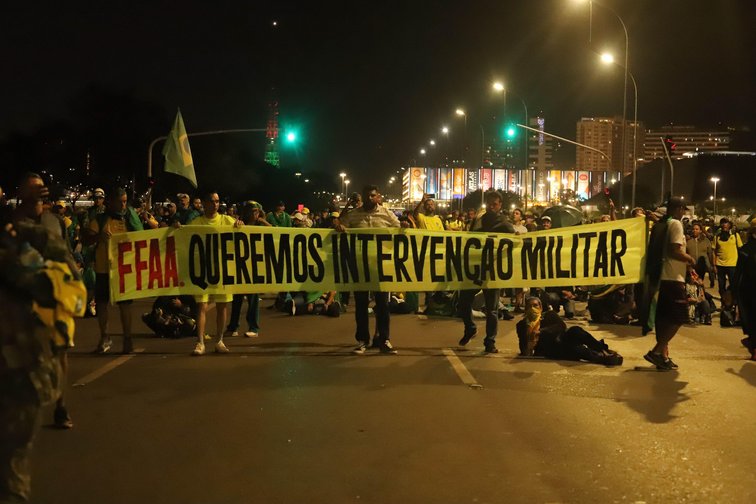
Bolsonaro supporters stage a coup in Brasilia |
Foto Arena LTDA/Alamy Live News
Yesterday’s violent assault on Brazil’s government headquarters by thousands of Jair Bolsonaro supporters will go down in the country’s history as a day of infamy.
The attack, called by groups of radical Bolsonaristas (backers of the ousted president) via Telegram and other social networks, reveals a shocking failure in the state’s intelligence system.
This week, the government will face more challenges. Many of the participants in the assault returned to their long-standing protest camp in front of the Brazilian army’s headquarters, where soldiers prevented the police from intervening. Elsewhere in the country, roadblocks have reappeared, and some groups on social media have called for fuel refineries to be blockaded too. Powerful outside political forces are also agitating on behalf of the mob.
“Lula has stolen the elections... Brazilians know it....,” wrote Steve Bannon on the social network Gettr on Sunday, expressing his satisfaction at the success of the Trumpist strategy of delegitimising the election results to the point of provoking a violent insurrection.
Dozens of buses from different parts of the country convened in the Brazilian capital on Sunday morning. They gathered at the camp that has been set up for two months in front of the army’s HQ, then marched to Three Powers Square, where Congress, the Supreme Court and the Palácio do Planalto, the presidential offices, are all located. The eight-kilometre march would not have been possible without the acquiescence of the security forces of the Federal District (DF) of Brasilia.
Thousands of assailants, some displaying banners demanding that the army intervene to remove the recently inaugurated President Luiz Inácio Lula da Silva, stormed the headquarters of the three branches of power. Their reception by security forces was timid. Clearly under-strength, they were completely overwhelmed; some security personnel were also seen talking to and taking pictures with the rioters.
Secretary of public security Fernando de Sousa Oliveira and DF governor Ibaneis Rocha, both recognised Bolsonaristas, have already been singled out allegedly as accomplices to the events.
The similarities with the invasion of the US Capitol by Trump supporters two years ago are clear – although on this occasion there was no president cheering on the rioters, nor, since it was a Sunday, were there any public representatives in session or working in the buildings.
‘Lula has stolen the elections... Brazilians know it,’ wrote Steve Bannon on social media on Sunday
Ex-president Bolsonaro (who is currently out of the country, in Florida), made a statement on Twitter only when it was evident that the assailants had not got the army support they claimed. Bolsonaro said it is legitimate to demonstrate but not to vandalise public buildings. He did not condemn his supporters’ actions.
By then, President Lula (who was not in the capital but on an official trip to Sao Paulo state) had decreed that the federal authorities will take over security of Brasilia until the end of January. He declared that the assailants – whom he described as “fascists” – and their financiers would be identified, arrested and brought to justice.
He also said that Bolsonaro, who, following Trump's example, has not yet acknowledged his defeat at the polls, is ultimately responsible for Sunday’s events.
Finally, late in the afternoon, the Bolsonaristas were evicted by federal security forces, who detained more than 400 activists and re-established control of the buildings. President Lula returned to the capital and inspected the damage to the national heritage caused by the vandalism, described by many as terrorist acts.
Rallies after election result
Indignation among political and public opinion is widespread, and many are asking how such a disaster could have occurred. Bolsonaro supporters have been very active since the close election results were announced at the end of October, first with aggressive blockades of highways across the country, followed by rallies and encampments beside army barracks across the country and demands for military intervention.
Apparent dissension within Lula’s new government – a plurality of forces and sensibilities brought together by their rejection of the far-right authoritarianism of Bolsonaro – on how to respond to such actions led to inaction. No one dared to forcibly dissolve the protests.
The main justification was that these are peaceful rallies, protected by the right to protest and freedom of expression. Bolsonaro himself used this argument in his first public appearance two days after his electoral defeat. Others point out that the demonstrators are openly calling for a coup d'état – which is illegal and intolerable under the Brazilian constitution. Following Sunday’s events, this critical situation has now become untenable.
Tense days, and problems, ahead
The outrage provoked by the resounding security failure will probably result in the hard line of Minister of Justice Flávio Dino prevailing. The police will be ordered to disband these groups, and to do so in agreement with the army. The next few days in Brazil are likely to be very tense.
A successful resolution depends greatly on the answers that can be given to the multiple unknowns that still surround the events of Three Powers Square.
The first will be to determine the responsibilities of the DF authorities. The second will be to identify the failures of intelligence, both military and civilian, which meant that they were apparently unable to alert the government to what was being planned. The third is to determine an effective strategy for breaking up the persistent rallies and preventing new ones from forming.
This grotesque attempt at a Trumpist-style coup calls into question Lula's narrative of promoting conciliation and unity
The fourth – and most difficult – problem will be how to effectively combat these radical Bolsonarista groups, which are very numerous, without provoking a violent reaction that would destabilise the country and jeopardise the viability of the new government.
On the one hand, it is possible that Sunday’s execrable spectacle will make many sympathisers of radical Bolsonarismo realise its true violent and neo-fascist nature, and its consequences – and they will moderate or withdraw support for these groups. Some prominent far-right activists have already tried to pre-empt this by accusing infiltrated leftist elements of having provoked the assault to discredit the movement.
On the other hand, this grotesque attempt at a Trumpist-style coup calls into question Lula's initial narrative of promoting conciliation and unity, in order to move the country forward and overcome the existing extreme polarisation. This must be the moment to end tolerance towards any coup supporters, who are both very active and well-financed by powerful businessmen and evangelist pastors. It will be necessary to pursue them judicially, with all that the rule of law allows – even demanding Bolsonaro's extradition from the US, if necessary.
The difficulty of governing Brazil, inherited from his predecessor Bolsonaro, a highly toxic political extremist, depends to a large extent on the success of Lula and his team in managing this new reality. The enormous illusion of change, restoration and a return to social and climate justice and democratic normality, which was visualised barely more than a week ago at Lula's inauguration, is now at stake in the resolution of this profound crisis.
As the infamous events of Sunday show, Lula's commitment to achieving national reconciliation will be a titanic task, but Brazilian democracy will undoubtedly (though not without enormous difficulties) emerge strengthened from this day of infamy. The vast majority of the Brazilian people, and the bulk of the international community, are on the new president’s side.
An Assault on Brazil’s Government Raises Hemispheric Alarm Bells
Amid growing concerns, what can be done to prevent a resurgence of political violence in Latin America?
Thursday, January 12, 2023 / BY: Patrick Duddy; John Feeley; Keith Mines; P. Michael McKinley; Anya Prusa
PUBLICATION TYPE: Analysis and Commentary
On January 8, hundreds of protesters fueled by rage over election results invaded federal buildings in Brazil’s capital city Brasília while tens of thousands gathered outside military installations across the country, openly calling for a coup.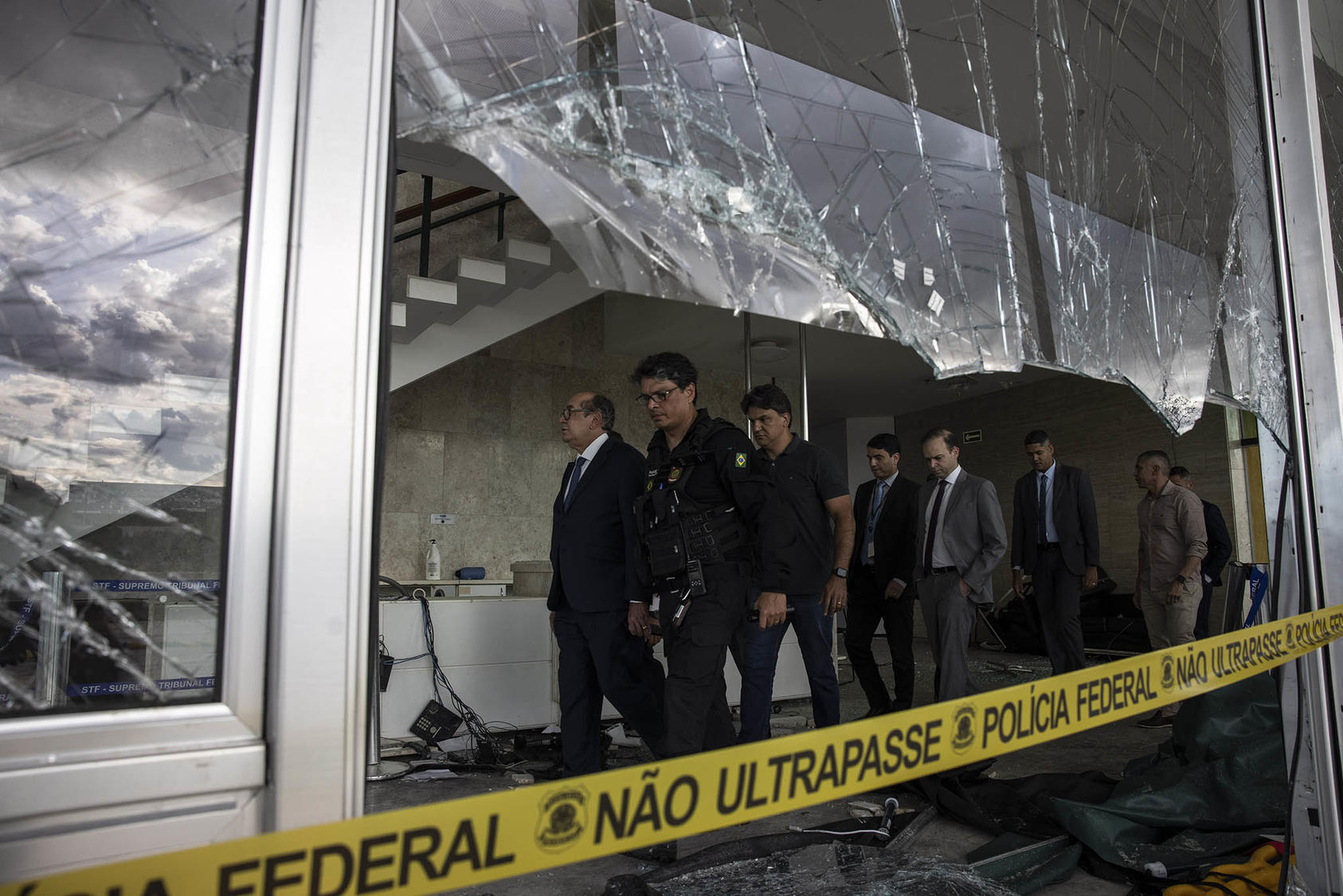
What is the political context for the assault on Brazil’s newly elected government? Is the newly inaugurated Lula’s presidency in danger?
P. Michael McKinley: Brazil, like other countries in the hemisphere, is polarized politically. The second round of presidential elections saw Luiz Inácio Lula da Silva win by a narrow margin (less than 2 percent of the more than 120 million votes cast).
Notwithstanding, Lula was elected peacefully, with no meaningful challenge to the results from high-ranking officials or the general public. When former President Bolsonaro sought to question the outcome, his allies in the Brazilian Congress, in military leadership, on the Supreme Court, among state governors and even his own vice president shut debate down within 48 hours by acknowledging Lula’s victory. Lula’s inauguration on January 1 was without incident and was attended by hundreds of thousands of people. Brazil’s political leaders rallied to condemn the violence after January 8 and to hold those responsible accountable.
It is early days yet, and information may come to light indicating broader political organization and intent. The warrants for the arrest of senior Brasília security officials suggest as much.
In the meantime, the violence in Brasília is a dangerous reflection of the reality of right-wing extremism in Brazil. The protesters reportedly organized for weeks and appear to have had financial support. Additionally, it seems many were fueled by vitriolic social media campaigns focused on election denialism and largely came from outside the capital.
Brazil, like other polarized democracies, faces the challenge of containing the potential for violence, and the untruths that lead to such extremism. The response must start at the top. The coming weeks and months will demonstrate whether Brazil’s leadership — especially the politically powerful right — can work together to continue to safeguard Brazil’s democracy.
Patrick Duddy: The rioting in Brasília, which culminated in the storming of the presidential palace, was a by-product of two prevailing realities.
First, Brazil is a deeply divided society characterized by dramatic economic inequality, racial disparities, stark regional differences and a history of government corruption. The poorest of the poor have historically had little faith in the traditional political parties, particularly those associated with the center and center-right. Many in the struggling middle and working classes have also felt frustrated and disappointed by traditional political parties in recent decades.
Second, former President Jair Bolsonaro capitalized on widespread dissatisfaction to win the presidential election in 2018. But his abrasive rhetoric, criticism of political institutions and nostalgia for military government only served to exacerbate the country’s divisions.
Current President Lula’s victory over Bolsonaro this fall left the former president’s followers feeling both enraged and disenfranchised, though Bolsonaristas obtained seats in the national legislature and won several key governorships. Since second-round election results became official, Bolsonaro’s followers have been organizing demonstrations around the country. The riot of January 8 was a part of that movement.
In the aftermath, it is important to remember that the Brazilian military did not support the rioters and there is no evidence that senior military leaders would tolerate any effort to interfere with Brazil’s democracy. The riot seems likely to have strengthened President Lula, with leaders around the region and the world expressing their solidarity and support for the country’s democratic future.
Although disruptions by Bolsonaro’s disgruntled supporters may not dissipate immediately, it seems likely their campaign will lose momentum, given the federal police response to the January 8 riots, which included hundreds of arrests. But Bolsonaro’s supporters clearly plan to make governing as difficult as they can for President Lula and his Workers Party.
What role did disinformation play in fueling the protests?
John Feeley: The sacking of Brazil's democratic seat of government on January 8 did not occur in a vacuum. The international rise in nationalistic and nativist movements was influential during the Bolsonaro presidency and in the aftermath of the close 2022 election.
Purposeful disinformation campaigns, spread virally on Telegram, WhatsApp, Facebook and other closed networks motivated — and will continue to motivate — the Bolsonaro supporters that stormed government buildings in Brasília.
Much of the post-election messaging in these disinformation campaigns has focused on claiming the election was "stolen" or "fraudulent," in some cases even before the ballots were counted.
Additionally, disinformation campaigns often weave in contentious cultural issues to portray President Lula and his supporters as extremists seeking to undermine traditional tenets of Brazilian society — only further inflaming social and political tensions in the country.
Unfortunately, these disinformation campaigns aren't going away. Despite the apparent failure of the Bolsonaro protesters, the country remains terribly polarized. Disinformation and conspiracy theories, character assassination and "fake news" reports degrading Lula and his progressive supporters will, sadly, continue to be a facet of Brazil's national discourse for some time to come.
Is the Brazil situation sui generis or is it part of a broader trend toward political violence in the region?
Keith Mines: It might not matter much to victims whether violence is politically or criminally motivated, but it does matter to those trying to find solutions to violence and to curb its scale.
The Western Hemisphere has long been wracked by higher levels of violence than most of the planet, whether criminal or political. From the 1970s to 1990s, many Latin American countries passed through periods of intense political violence, as the Cold War played out amid high levels of inequality and weak civil and political institutions. Cycles of violent upheaval sparked repression and state-sponsored terrorism in what were often intensely violent periods of political conflict.
The demise of the Soviet Union and the return of electoral democracy allowed citizens to settle conflicts without political violence. However, criminal violence surged at this time as drug trafficking by armed gangs produced levels of criminal violence that either compared to or exceeded prior civil conflicts.
The criminal violence continues to this day — but there now looms the prospect of another wave of political violence as groups on the left and right organize to tear down institutions that won’t bend to their will, upending systems of governance.
The late German philosopher Hans Magnus Enzensberger called this “molecular civil war,” in which brewing low levels of violence can “escalate at any time to epidemic proportions.” In today’s civil wars, he suggested, you don’t need uniforms and organized legions, “hatred on its own is enough.”
How does a country like Brazil ensure that politics are managed peacefully and without spasms of violence?
Anya Prusa: There are no simple fixes for the issues that contributed to the attack in Brasília, or to the problem of political violence in Brazil and Latin America more generally.
Democracy not only needs free and fair elections and avenues for meaningful political debate to function, but also trust in these institutions and their outcomes. And it needs mechanisms for accountability, whether through the legal system or at the ballot box.
Brazil is already starting to establish accountability by detaining more than 1,500 rioters and — perhaps more importantly — by launching investigations to identify those who instigated, organized and financed the January 8 attacks.
For accountability to serve as a deterrent long-term, however, the government will need to show that political leaders who knowingly spread disinformation and encourage violence, whether directly or tacitly, will also face repercussions rather than be rewarded with power or impunity. The application of justice must be transparent and impartial to avoid further inflaming tensions and hardening extremist opposition.
Many supporters of former President Jair Bolsonaro already believe that the system is rigged against them. An overzealous judicial response runs the risk of reinforcing that feeling, even among those who disapprove of vandalism and violence.
In the long run, a comprehensive response must address this disaffection among broad segments of the population. This is true not only in Brazil, but also across Latin America, where the rise of political outsiders and high rates of voter abstention testify to frustrations with the quality and responsiveness of officeholders and the policies they implement.
These frustrations can undermine faith even in free, fair and well-run elections, like those in Brazil, where authorities spent months countering disinformation and planning for a seamless election day.
Governments also need to address the legitimate grievances that help drive polarization, including corruption, poverty, inequality and inadequate access to health care or education. This will take time, resources and significant political will.
In Brazil, there may now be a unique window of opportunity to begin the work of rebuilding as the political establishment comes together to condemn political violence and reaffirm its commitment to democracy.
P. Michael McKinley is the former U.S. Ambassador to Brazil.
Patrick Duddy is the director of Duke University’s Center for Latin America and Caribbean Studies.
John Feeley is the executive director of the Center for Media Integrity and a retired U.S. ambassador.
Anya Prusa is a senior director at Dentons Global Advisors - Albright Stonebridge Group
Lula and his government must take a hard line against the Bolsonaristas’ coup plotters and their financial backers
Francesc Badia I Dalmases
9 January 2023,
Bolsonaro supporters stage a coup in Brasilia |
Foto Arena LTDA/Alamy Live News
Yesterday’s violent assault on Brazil’s government headquarters by thousands of Jair Bolsonaro supporters will go down in the country’s history as a day of infamy.
The attack, called by groups of radical Bolsonaristas (backers of the ousted president) via Telegram and other social networks, reveals a shocking failure in the state’s intelligence system.
This week, the government will face more challenges. Many of the participants in the assault returned to their long-standing protest camp in front of the Brazilian army’s headquarters, where soldiers prevented the police from intervening. Elsewhere in the country, roadblocks have reappeared, and some groups on social media have called for fuel refineries to be blockaded too. Powerful outside political forces are also agitating on behalf of the mob.
“Lula has stolen the elections... Brazilians know it....,” wrote Steve Bannon on the social network Gettr on Sunday, expressing his satisfaction at the success of the Trumpist strategy of delegitimising the election results to the point of provoking a violent insurrection.
Dozens of buses from different parts of the country convened in the Brazilian capital on Sunday morning. They gathered at the camp that has been set up for two months in front of the army’s HQ, then marched to Three Powers Square, where Congress, the Supreme Court and the Palácio do Planalto, the presidential offices, are all located. The eight-kilometre march would not have been possible without the acquiescence of the security forces of the Federal District (DF) of Brasilia.
Thousands of assailants, some displaying banners demanding that the army intervene to remove the recently inaugurated President Luiz Inácio Lula da Silva, stormed the headquarters of the three branches of power. Their reception by security forces was timid. Clearly under-strength, they were completely overwhelmed; some security personnel were also seen talking to and taking pictures with the rioters.
Secretary of public security Fernando de Sousa Oliveira and DF governor Ibaneis Rocha, both recognised Bolsonaristas, have already been singled out allegedly as accomplices to the events.
The similarities with the invasion of the US Capitol by Trump supporters two years ago are clear – although on this occasion there was no president cheering on the rioters, nor, since it was a Sunday, were there any public representatives in session or working in the buildings.
‘Lula has stolen the elections... Brazilians know it,’ wrote Steve Bannon on social media on Sunday
Ex-president Bolsonaro (who is currently out of the country, in Florida), made a statement on Twitter only when it was evident that the assailants had not got the army support they claimed. Bolsonaro said it is legitimate to demonstrate but not to vandalise public buildings. He did not condemn his supporters’ actions.
By then, President Lula (who was not in the capital but on an official trip to Sao Paulo state) had decreed that the federal authorities will take over security of Brasilia until the end of January. He declared that the assailants – whom he described as “fascists” – and their financiers would be identified, arrested and brought to justice.
He also said that Bolsonaro, who, following Trump's example, has not yet acknowledged his defeat at the polls, is ultimately responsible for Sunday’s events.
Finally, late in the afternoon, the Bolsonaristas were evicted by federal security forces, who detained more than 400 activists and re-established control of the buildings. President Lula returned to the capital and inspected the damage to the national heritage caused by the vandalism, described by many as terrorist acts.
Rallies after election result
Indignation among political and public opinion is widespread, and many are asking how such a disaster could have occurred. Bolsonaro supporters have been very active since the close election results were announced at the end of October, first with aggressive blockades of highways across the country, followed by rallies and encampments beside army barracks across the country and demands for military intervention.
Apparent dissension within Lula’s new government – a plurality of forces and sensibilities brought together by their rejection of the far-right authoritarianism of Bolsonaro – on how to respond to such actions led to inaction. No one dared to forcibly dissolve the protests.
The main justification was that these are peaceful rallies, protected by the right to protest and freedom of expression. Bolsonaro himself used this argument in his first public appearance two days after his electoral defeat. Others point out that the demonstrators are openly calling for a coup d'état – which is illegal and intolerable under the Brazilian constitution. Following Sunday’s events, this critical situation has now become untenable.
Tense days, and problems, ahead
The outrage provoked by the resounding security failure will probably result in the hard line of Minister of Justice Flávio Dino prevailing. The police will be ordered to disband these groups, and to do so in agreement with the army. The next few days in Brazil are likely to be very tense.
A successful resolution depends greatly on the answers that can be given to the multiple unknowns that still surround the events of Three Powers Square.
The first will be to determine the responsibilities of the DF authorities. The second will be to identify the failures of intelligence, both military and civilian, which meant that they were apparently unable to alert the government to what was being planned. The third is to determine an effective strategy for breaking up the persistent rallies and preventing new ones from forming.
This grotesque attempt at a Trumpist-style coup calls into question Lula's narrative of promoting conciliation and unity
The fourth – and most difficult – problem will be how to effectively combat these radical Bolsonarista groups, which are very numerous, without provoking a violent reaction that would destabilise the country and jeopardise the viability of the new government.
On the one hand, it is possible that Sunday’s execrable spectacle will make many sympathisers of radical Bolsonarismo realise its true violent and neo-fascist nature, and its consequences – and they will moderate or withdraw support for these groups. Some prominent far-right activists have already tried to pre-empt this by accusing infiltrated leftist elements of having provoked the assault to discredit the movement.
On the other hand, this grotesque attempt at a Trumpist-style coup calls into question Lula's initial narrative of promoting conciliation and unity, in order to move the country forward and overcome the existing extreme polarisation. This must be the moment to end tolerance towards any coup supporters, who are both very active and well-financed by powerful businessmen and evangelist pastors. It will be necessary to pursue them judicially, with all that the rule of law allows – even demanding Bolsonaro's extradition from the US, if necessary.
The difficulty of governing Brazil, inherited from his predecessor Bolsonaro, a highly toxic political extremist, depends to a large extent on the success of Lula and his team in managing this new reality. The enormous illusion of change, restoration and a return to social and climate justice and democratic normality, which was visualised barely more than a week ago at Lula's inauguration, is now at stake in the resolution of this profound crisis.
As the infamous events of Sunday show, Lula's commitment to achieving national reconciliation will be a titanic task, but Brazilian democracy will undoubtedly (though not without enormous difficulties) emerge strengthened from this day of infamy. The vast majority of the Brazilian people, and the bulk of the international community, are on the new president’s side.
An Assault on Brazil’s Government Raises Hemispheric Alarm Bells
Amid growing concerns, what can be done to prevent a resurgence of political violence in Latin America?
Thursday, January 12, 2023 / BY: Patrick Duddy; John Feeley; Keith Mines; P. Michael McKinley; Anya Prusa
PUBLICATION TYPE: Analysis and Commentary
On January 8, hundreds of protesters fueled by rage over election results invaded federal buildings in Brazil’s capital city Brasília while tens of thousands gathered outside military installations across the country, openly calling for a coup.
Police inspecting the damage at the Supreme Court in Brasilia, Brazil, Jan. 10, 2023. (Victor Moriyama/The New York Times)
Political violence in Latin America largely subsided with the end of the Cold War and military rule in the 1990s, even as criminal violence surged.
The events in Brazil — alongside recent unrest in Chile, Bolivia and Peru — have sparked concerns that violence has once again returned to the political sphere, potentially threatening the region’s vulnerable democracies. Patrick Duddy, John Feeley, P. Michael McKinley, Anya Prusa and USIP’s Keith Mines discuss how polarization has fueled violent protests throughout the hemisphere and examine how to inoculate elected governments from political extremism.
Political violence in Latin America largely subsided with the end of the Cold War and military rule in the 1990s, even as criminal violence surged.
The events in Brazil — alongside recent unrest in Chile, Bolivia and Peru — have sparked concerns that violence has once again returned to the political sphere, potentially threatening the region’s vulnerable democracies. Patrick Duddy, John Feeley, P. Michael McKinley, Anya Prusa and USIP’s Keith Mines discuss how polarization has fueled violent protests throughout the hemisphere and examine how to inoculate elected governments from political extremism.
What is the political context for the assault on Brazil’s newly elected government? Is the newly inaugurated Lula’s presidency in danger?
P. Michael McKinley: Brazil, like other countries in the hemisphere, is polarized politically. The second round of presidential elections saw Luiz Inácio Lula da Silva win by a narrow margin (less than 2 percent of the more than 120 million votes cast).
Notwithstanding, Lula was elected peacefully, with no meaningful challenge to the results from high-ranking officials or the general public. When former President Bolsonaro sought to question the outcome, his allies in the Brazilian Congress, in military leadership, on the Supreme Court, among state governors and even his own vice president shut debate down within 48 hours by acknowledging Lula’s victory. Lula’s inauguration on January 1 was without incident and was attended by hundreds of thousands of people. Brazil’s political leaders rallied to condemn the violence after January 8 and to hold those responsible accountable.
It is early days yet, and information may come to light indicating broader political organization and intent. The warrants for the arrest of senior Brasília security officials suggest as much.
In the meantime, the violence in Brasília is a dangerous reflection of the reality of right-wing extremism in Brazil. The protesters reportedly organized for weeks and appear to have had financial support. Additionally, it seems many were fueled by vitriolic social media campaigns focused on election denialism and largely came from outside the capital.
Brazil, like other polarized democracies, faces the challenge of containing the potential for violence, and the untruths that lead to such extremism. The response must start at the top. The coming weeks and months will demonstrate whether Brazil’s leadership — especially the politically powerful right — can work together to continue to safeguard Brazil’s democracy.
Patrick Duddy: The rioting in Brasília, which culminated in the storming of the presidential palace, was a by-product of two prevailing realities.
First, Brazil is a deeply divided society characterized by dramatic economic inequality, racial disparities, stark regional differences and a history of government corruption. The poorest of the poor have historically had little faith in the traditional political parties, particularly those associated with the center and center-right. Many in the struggling middle and working classes have also felt frustrated and disappointed by traditional political parties in recent decades.
Second, former President Jair Bolsonaro capitalized on widespread dissatisfaction to win the presidential election in 2018. But his abrasive rhetoric, criticism of political institutions and nostalgia for military government only served to exacerbate the country’s divisions.
Current President Lula’s victory over Bolsonaro this fall left the former president’s followers feeling both enraged and disenfranchised, though Bolsonaristas obtained seats in the national legislature and won several key governorships. Since second-round election results became official, Bolsonaro’s followers have been organizing demonstrations around the country. The riot of January 8 was a part of that movement.
In the aftermath, it is important to remember that the Brazilian military did not support the rioters and there is no evidence that senior military leaders would tolerate any effort to interfere with Brazil’s democracy. The riot seems likely to have strengthened President Lula, with leaders around the region and the world expressing their solidarity and support for the country’s democratic future.
Although disruptions by Bolsonaro’s disgruntled supporters may not dissipate immediately, it seems likely their campaign will lose momentum, given the federal police response to the January 8 riots, which included hundreds of arrests. But Bolsonaro’s supporters clearly plan to make governing as difficult as they can for President Lula and his Workers Party.
What role did disinformation play in fueling the protests?
John Feeley: The sacking of Brazil's democratic seat of government on January 8 did not occur in a vacuum. The international rise in nationalistic and nativist movements was influential during the Bolsonaro presidency and in the aftermath of the close 2022 election.
Purposeful disinformation campaigns, spread virally on Telegram, WhatsApp, Facebook and other closed networks motivated — and will continue to motivate — the Bolsonaro supporters that stormed government buildings in Brasília.
Much of the post-election messaging in these disinformation campaigns has focused on claiming the election was "stolen" or "fraudulent," in some cases even before the ballots were counted.
Additionally, disinformation campaigns often weave in contentious cultural issues to portray President Lula and his supporters as extremists seeking to undermine traditional tenets of Brazilian society — only further inflaming social and political tensions in the country.
Unfortunately, these disinformation campaigns aren't going away. Despite the apparent failure of the Bolsonaro protesters, the country remains terribly polarized. Disinformation and conspiracy theories, character assassination and "fake news" reports degrading Lula and his progressive supporters will, sadly, continue to be a facet of Brazil's national discourse for some time to come.
Is the Brazil situation sui generis or is it part of a broader trend toward political violence in the region?
Keith Mines: It might not matter much to victims whether violence is politically or criminally motivated, but it does matter to those trying to find solutions to violence and to curb its scale.
The Western Hemisphere has long been wracked by higher levels of violence than most of the planet, whether criminal or political. From the 1970s to 1990s, many Latin American countries passed through periods of intense political violence, as the Cold War played out amid high levels of inequality and weak civil and political institutions. Cycles of violent upheaval sparked repression and state-sponsored terrorism in what were often intensely violent periods of political conflict.
The demise of the Soviet Union and the return of electoral democracy allowed citizens to settle conflicts without political violence. However, criminal violence surged at this time as drug trafficking by armed gangs produced levels of criminal violence that either compared to or exceeded prior civil conflicts.
The criminal violence continues to this day — but there now looms the prospect of another wave of political violence as groups on the left and right organize to tear down institutions that won’t bend to their will, upending systems of governance.
The late German philosopher Hans Magnus Enzensberger called this “molecular civil war,” in which brewing low levels of violence can “escalate at any time to epidemic proportions.” In today’s civil wars, he suggested, you don’t need uniforms and organized legions, “hatred on its own is enough.”
How does a country like Brazil ensure that politics are managed peacefully and without spasms of violence?
Anya Prusa: There are no simple fixes for the issues that contributed to the attack in Brasília, or to the problem of political violence in Brazil and Latin America more generally.
Democracy not only needs free and fair elections and avenues for meaningful political debate to function, but also trust in these institutions and their outcomes. And it needs mechanisms for accountability, whether through the legal system or at the ballot box.
Brazil is already starting to establish accountability by detaining more than 1,500 rioters and — perhaps more importantly — by launching investigations to identify those who instigated, organized and financed the January 8 attacks.
For accountability to serve as a deterrent long-term, however, the government will need to show that political leaders who knowingly spread disinformation and encourage violence, whether directly or tacitly, will also face repercussions rather than be rewarded with power or impunity. The application of justice must be transparent and impartial to avoid further inflaming tensions and hardening extremist opposition.
Many supporters of former President Jair Bolsonaro already believe that the system is rigged against them. An overzealous judicial response runs the risk of reinforcing that feeling, even among those who disapprove of vandalism and violence.
In the long run, a comprehensive response must address this disaffection among broad segments of the population. This is true not only in Brazil, but also across Latin America, where the rise of political outsiders and high rates of voter abstention testify to frustrations with the quality and responsiveness of officeholders and the policies they implement.
These frustrations can undermine faith even in free, fair and well-run elections, like those in Brazil, where authorities spent months countering disinformation and planning for a seamless election day.
Governments also need to address the legitimate grievances that help drive polarization, including corruption, poverty, inequality and inadequate access to health care or education. This will take time, resources and significant political will.
In Brazil, there may now be a unique window of opportunity to begin the work of rebuilding as the political establishment comes together to condemn political violence and reaffirm its commitment to democracy.
P. Michael McKinley is the former U.S. Ambassador to Brazil.
Patrick Duddy is the director of Duke University’s Center for Latin America and Caribbean Studies.
John Feeley is the executive director of the Center for Media Integrity and a retired U.S. ambassador.
Anya Prusa is a senior director at Dentons Global Advisors - Albright Stonebridge Group