Friday, February 17, 2023

U$A
Georgia nuclear plant again delayed at cost of $200M more

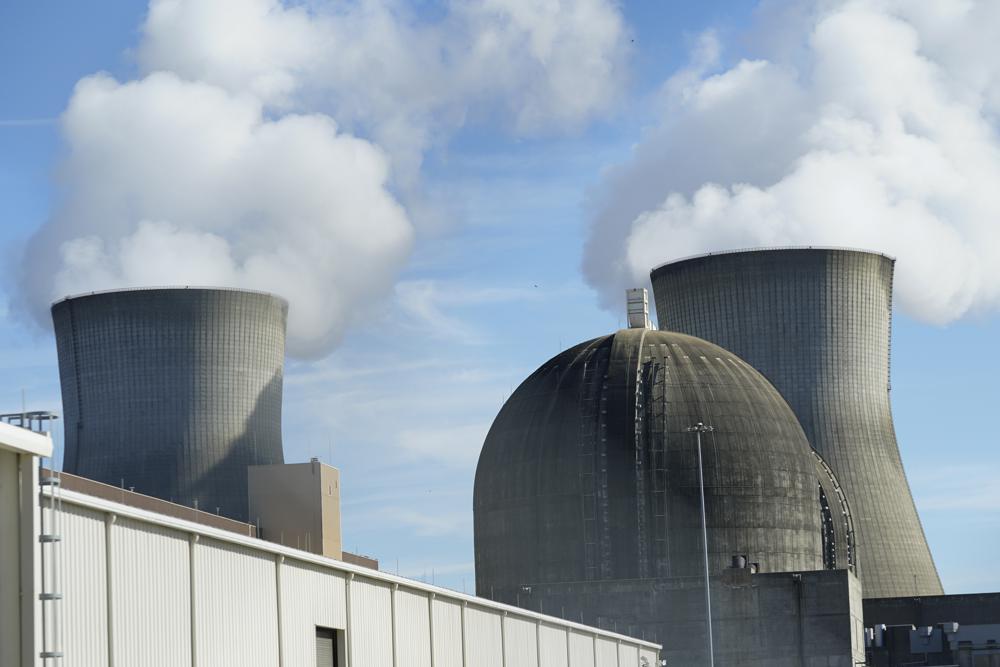
A nuclear reactor and two cooling towers are shown at Georgia Power's Plant Vogtle nuclear power plant Friday, Jan. 20, 2023, in Waynesboro, Ga. Georgia Power Co. is again delaying the projected startup for two new units at its Vogtle nuclear power plant near Augusta, saying its share of the costs will rise by a projected additional $200 million. (AP Photo/John Bazemore)

ATLANTA (AP) — Georgia Power Co. has again delayed the projected startup for two new units at its Vogtle nuclear power plant near Augusta, saying its share of the costs will rise by an additional $200 million.

Southern Co., the utility’s Atlanta-based parent, announced the delays and higher costs on Thursday as it announced its yearly corporate earnings for 2022.

Georgia Power says Unit 3 could now begin commercial operation in May or June, pushing back from the most recent deadline of the end of April. The company also now says Unit 4 will begin commercial operation sometime between this November and March 2024. The company previously has promised commercial operation of Unit 4 by the end of 2023 at the latest. When complete, the two units will be the first entirely new U.S. reactors in decades.

Georgia Power wrote off $201 million in additional costs on its earning statement, reflecting increased costs.

Despite the Vogtle delays, Southern Co. still announced strong revenue and profits. The company reported profits of $3.5 billion for the year, or $3.28 per share.

The total cost of the project to build a third and fourth reactor at Vogtle will cost all its owners more than $30 billion. Georgia Power owns 45.7% of the project, while Oglethorpe Power Corp. owns 30%, the Municipal Electric Authority of Georgia owns 22.7% and the city of Dalton owns 1.6%.

Georgia Power had already pushed back the startup of Unit 3 by a month after it discovered that a pipe that is part of a critical backup cooling system was vibrating during startup testing. Construction workers had failed to install supports called for on blueprints. Those supports have now been installed, the company said Thursday, but Southern Co. Chairman and CEO Tom Fanning told investors that “we found a few additional issues to address.”

“We will continue to take the time to get it right and will not sacrifice safety or quality to meet the schedule,” Fanning told investors on a conference call Thursday.

Fanning told investors that other issues causing delays included a slowly dripping valve that required a now-completed repair, as well as a problem involving the flow through the reactor coolant pumps that hasn’t been pinpointed.

The utility said the Unit 3 reactor is now likely to reach a self-sustaining nuclear reaction, a stage called criticality, in March or April. That’s the last major waypoint before commercial operation.

The company said it was also pushing back its completion dates for Unit 4, citing slower-than-planned testing.

Georgia Power says it will now spend a projected $10.6 billion on construction costs, not counting some financing costs. That’s projected to include $407 million in costs that Georgia Power has assumed from the other owners, after all three sued to force the company to honor a cost-sharing agreement. Georgia Power has settled its lawsuit with MEAG, but the suits with Oglethorpe and Dalton are still ongoing. The company warned it could have to pay those two co-owners another $345 million in the dispute.

Ratepayers at Georgia Power and some cooperatives served by Oglethorpe are already paying for Vogtle, and most electric customers in Georgia, as well as in parts of Alabama and Florida, will eventually be charged.

The effects of the further delay on ratepayers are unclear. Georgia Power has signaled it may not request to be repaid for more than $7.3 billion in capital costs and about $400 million in financing, but could ask for more. The Georgia Public Service Commission, a five-member e
SAVE THE WHALES
NJ uses new law to bypass local OK for offshore wind project

BY WAYNE PARRY

Land-based wind turbines generate power for a sewage treatment plant in Atlantic City, N.J. on Feb. 10, 2022. On Feb. 17, 2023, the New Jersey Board of Public Utilities used a provision of state law to supersede local authorities and grant approvals toward several easements and environmental permits to an offshore wind power project to be built off the coast of southern New Jersey. (AP Photo/Wayne Parry)

OCEAN CITY, N.J. (AP) — New Jersey utility regulators used a controversial law Friday enabling them to bypass local authorities and grant approvals needed for an offshore wind project to proceed.

The state Board of Public Utilities granted Orsted, the Danish wind energy developer, approvals toward several easements and permits that authorities in Cape May County had refused to grant the company.

They used an amendment to New Jersey’s offshore wind law passed in 2021 and signed into law by Democratic Gov. Phil Murphy removing most local control over where offshore wind projects come ashore. The law enables an offshore wind developer to apply to the utilities board for an order superseding local control over such projects.

“I just want to assure the public that we don’t take these kinds of actions lightly,” said Joseph Fiordaliso, the board’s president. “There has to be a definite public need for the board to even consider this kind of action. This is something that the majority of us believes will benefit the citizens of New Jersey.”

Fiordaliso said the route of the proposed transmission line will not harm Ocean City or Cape May County aesthetically or economically. The power cable will run from wind turbines that the company says will be located 15 miles offshore and come ashore in Ocean City, where it will run underground along existing roadways and connect to the electrical grid at the site of the former B.L. England power plant in Upper Township.

NJ groups fight power plants, wait for environmental law


The vote marked the second time the board acted under the amended law to grant approvals to Orsted when local officials had refused to do so. In Sept. 2022, the board granted the company an order superseding the authority of Ocean City in granting numerous wetlands and other environmental approvals for the same project.

Commissioner Dianne Solomon voted against the measure Friday, calling it “clearly a contentious matter,” adding she believes the board erred in overriding Ocean City’s authority in September.

“We should be seeking more information, not less,” she said.

In its petition to the board, Ocean Wind said it had tried numerous times to obtain approvals directly from Cape May County officials.

“After all the discussions, meetings, and letters exchanged by Ocean Wind and Cape May County, there has been no indication that the county will voluntarily provide Ocean Wind with any of the necessary approvals or consents for environmental permitting, or the required easements,” the applicants wrote.

The project, one of three approved so far for the waters off southern New Jersey, still needs numerous additional state and federal approvals.

The law angered many Jersey Shore communities and residents who objected to their leverage over offshore wind projects being taken away. But state lawmakers defended the law as necessary to ensure that such projects can be completed and help New Jersey move away from the burning of fossil fuels to generate energy.

Officials with Cape May County and Orsted did not immediately respond to requests for comment Friday.

The most commonly voiced objections from opponents include the unknown effect hundreds or even thousands of wind turbines might have on the ocean, fears of higher electric bills as costs are passed on to consumers, and a sense that the entire undertaking is being rushed through with little understanding of what the consequences might be.

Recently, offshore wind opponents have seized on the deaths of ten whales that have washed ashore in New Jersey and New York since December to demand investigations into whether ocean floor preparation work for offshore wind projects caused the animals’ deaths. The most recent death came Friday in New York’s Rockaway Beach.

Two Republican Congressmen from New Jersey said Friday they are introducing legislation to pause work on all current offshore wind projects, prohibit future ones, and investigate the environmental approval process for such projects.

But the National Oceanic and Atmospheric Administration and the and the Bureau of Ocean Energy Management said last month there is no evidence that offshore wind projects have had anything to do with the whale deaths.

“I want to be unambiguous: There is no information supporting that any of the equipment used in support of offshore wind development could directly lead to the death of a whale,” Benjamin Laws, deputy chief for permits and conservation with NOAA Fisheries Office of Protected Resources, said during a Jan. 18 media briefing. “There are no known connections between any offshore wind activities and any whale strandings.”

___

Follow Wayne Parry on Twitter at www.twitter.com/WayneParryAC
BUSH CHENEY PHONY WAR
Tikrit: 20 years since the US invasion, what has become of Saddam Hussein’s birthplace?

• FRANCE 24
US Sanitation firm fined $1.5mn for illegally hiring children

Issued on: 17/02/2023 - 18:56

Washington (AFP) – A sanitation company in the United States has paid $1.5 million in penalties for hiring over 100 children in "hazardous occupations" and having them work at meat processing facilities, the Department of Labor said Friday.

Officials found that the food sanitation contractor, Packers Sanitation Services, had employed at least 102 children aged between 13 and 17, and had them working overnight shifts at 13 facilities in eight states.

"Children were working with hazardous chemicals and cleaning meat processing equipment including back saws, brisket saws and head splitters," said the Labor Department in a statement.

At least three minors had sustained injuries while working for the company, the statement added.

The facilities are run by major meat-processing companies, including Tyson, JBS Foods and Cargill, according to investigations.

These companies were not fined.


The penalties followed an investigation that started in August 2022.

"The child labor violations in this case were systemic... and clearly indicate a corporate-wide failure," said Labor Department official Jessica Looman.

She told reporters that officials have seen about a 50 percent increase in child labor violations since 2018.

"These children should never have been employed in meat packing plants and this can only happen when employers do not take responsibility to prevent child labor violations from occurring in the first place," she added.

The fines come as some states are looking to ease child labor protections to help companies with a labor crunch find more workers, with bills introduced in Iowa and Minnesota.

© 2023 AFP
NASA, Boeing target April for manned Starliner test flight

By Clyde Hughes

A Boeing Starliner spacecraft sits on top of the United Launch Alliance Atlas V rocket as it is prepared for launch from Complex 41 at the Cape Canaveral Space Force Station in Florida on May 18. Its first manned flight is expected in April. 
Photo by Joe Marino/UPI | License Photo

Feb. 17 (UPI) -- NASA and Boeing said Friday they aim to launch the first manned test flight mission of the CST-100 Starliner to the International Space Station in April.

The long-awaited Starliner, described as the "next generation" spacecraft has been highly anticipated to add a needed transportation option to the orbiting laboratory, along with other missions. The launch had been planned for February after being pushed back from last fall.

Steve Stich, manager, of NASA's Commercial Crew Program, acknowledged at a joint news conference that several things will have to fall into place to keep that time frame.

Two dockings are scheduled to take place at the space station ahead of the Starliner, he said. Anticipating those go well, there are still Earth-bound challenges such as the weather.

RELATED James Webb Telescope gives scientists unprecedented view of nearby galaxies

"We still have a pretty good plan [for launch] and we're sticking to it," said Mark Nappi, vice president and program manager at Boeing. "We look at five different areas to judge our progress and measure ourselves."

He said those areas include hardware, software, mission operation and engineering products. He said many of the areas are in their final stages.

"We have a line of sight to get to our mission time frame and get through our reviews," Nappi said. "We're looking really good."


Jeff Arend, manager of the systems and engineering and integration office for NASA's International Space Station Program, said the mission is critical from a certification standpoint and gets more flights going to and from the space station.

The Starliner is expected to launch from Cape Canaveral Space Force Station in Florida and return eight days later in White Sands, N.M.

NASA astronaut test pilots Barry "Butch" Wilmore and Suni Williams will fly the Starliner and test the end-to-end capabilities of the Starliner system. In Williams, the launch will also mark the first time in history that a woman will be a crewmember of the first crewed orbital flight of a new spacecraft type
.
RELATED SpaceX wins another $1.4 billion from NASA to fly missions to Int'l Space Station

Stich said Wilmore and Williams are "excited" about the mission and are going though simulations to continue to prepare for the test flight. He said they have had dressing rehearsals for docking and landing.


TEST BOT ROSIE ROCKETEER

"Butch and Suni are very excited about flying this mission," he said, adding they will be reviewing how cargo gets stored.

If successful, the Starliner will start the final certification process for it to be making regular flights to the ISS.

During the uncrewed orbital launch last May, Nappi said there was an issue with thrusters being "deselected" by sensors. He said some minimal tweaks were done to correct that issue, and NASA believes some debris caused the sensor issue but it's unknown what the debris was.
GOP opens another in­ves­ti­gation of Afghanistan with­drawal


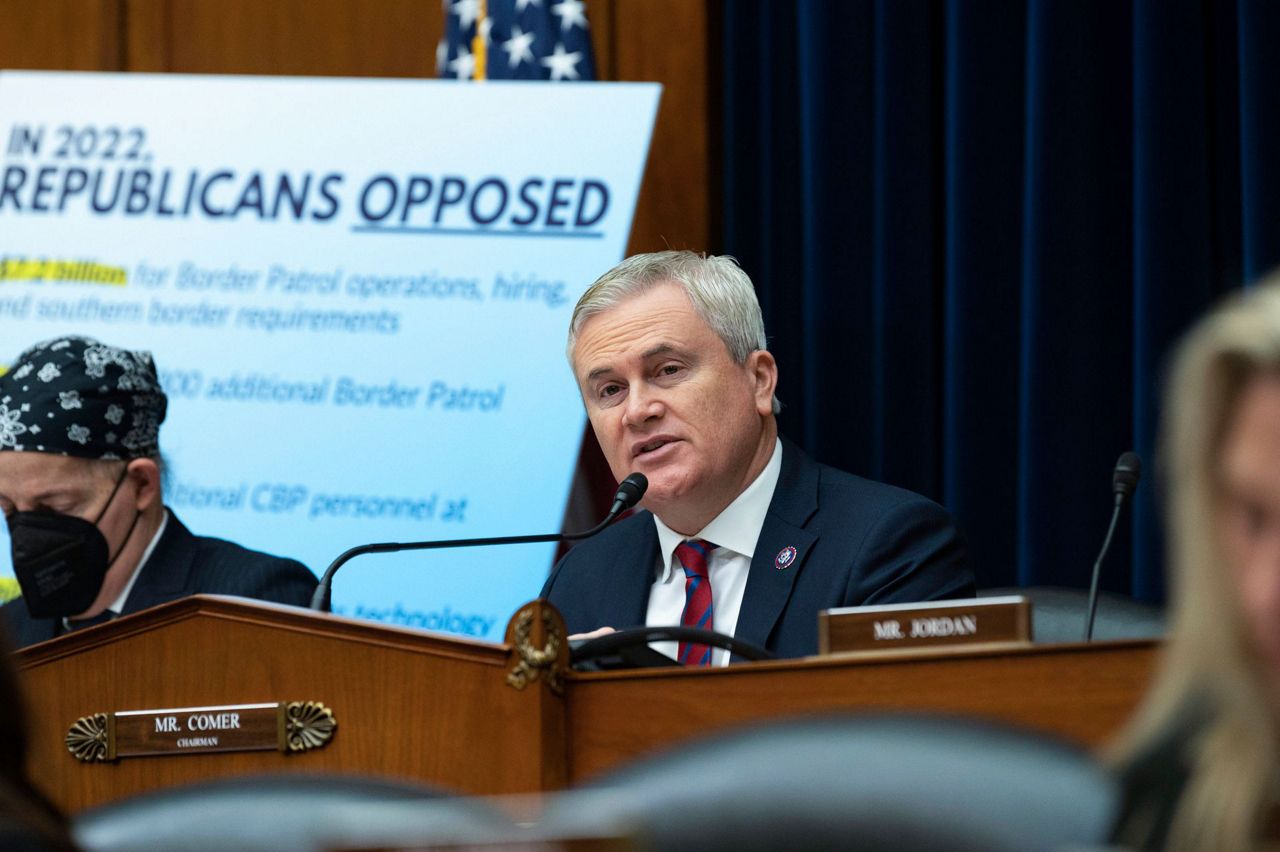
 House Oversight Chairman Rep. James Comer, R-Ky., opens a House Committee on Oversight and Accountability hearing on the border, Tuesday, Feb. 7, 2023, in Washington. Several Biden Cabinet members, including the chairman of the Joint Chiefs of Staff, received a letter Friday, Feb. 17, from House Republicans as they launched the second investigation into the chaotic U.S. withdrawal from Afghanistan. Comer sent a series of letters to senior leadership at the White House, Department of Defense, State Department and others requesting a tranche of documents related to the end of America's longest war. (AP Photo/Kevin Wolf, File)

BY ASSOCIATED PRESS WASHINGTON
PUBLISHED FEB. 17, 2023

WASHINGTON (AP) — Several Biden Cabinet members, including the chairman of the Joint Chiefs of Staff, received a letter Friday from House Republicans as they launched the second investigation into the chaotic U.S. withdrawal from Afghanistan.

Rep. James Comer, R-Ky., the chairman of the House Oversight Committee, sent a series of letters to senior leadership at the White House, Department of Defense, State Department and others requesting a tranche of documents related to the end of America's longest war.

“The Biden Administration was tragically unprepared for the Afghanistan withdrawal and their decisions in the region directly resulted in a national security and humanitarian catastrophe,” Comer said in a statement. “Every relevant department and agency should be prepared to cooperate and provide all requested information.”

Republicans have been vowing to press President Joe Biden’s administration on what went wrong as the Taliban swept to power in Afghanistan in August 2021 and the U.S. left scores of Americans and thousands of Afghans who helped them over the years in grave danger. Now with the power of the gavel, GOP lawmakers are elevating that criticism into aggressive congressional oversight, and on a topic that has been met with bipartisan support in the past.

In a statement, the State Department said that while it does not comment on congressional correspondence, the agency is committed to working with congressional committees.

“As of November 2022, the Department has provided more than 150 briefings to bipartisan Members and staff on Afghanistan policy since the withdrawal of U.S. forces from Afghanistan,” the statement continued. The White House did not immediately respond to a request for comment.

The letters Friday come nearly one month after Rep. Mike McCaul, the chairman of the House Foreign Affairs Committee, opened his own investigation into the deadly withdrawal, requesting documents from Secretary of State Antony Blinken.

McCaul’s letter outlined a request for all communications around the lead-up to pulling U.S. troops out of Afghanistan. He also made it clear that his committee, which has jurisdiction over the matter, also plans to investigate the after-effects of the withdrawal, including on the hundreds of thousands of Afghan allies left behind.

The Trump administration agreed late in its term to withdraw U.S. forces from Afghanistan in May 2021, with the former president saying in 2020, “Now it’s time for somebody else to do that work.” But Republicans are intent on reminding Americans that it was Biden who was in charge when the Taliban took over.

And the criticism over the issue began in a bipartisan manner, with several Democrat-led committees pledging to investigate what went wrong in the days and weeks after the withdrawal.

U.S. officials have said they were surprised by the quick collapse of the military and the government, prompting sharp congressional criticism of the intelligence community for failing to foresee it.

In a congressional hearing last spring, senators questioned whether there is a need to reform how intelligence agencies assess a foreign military’s will to fight. Lawmakers pointed to two key examples: U.S. intelligence believed that the Kabul government would hold on for months against the Taliban, and more recently believed that Ukraine’s forces would quickly fall to Russia’s invasion. Both were wrong.

Military and defense leaders have said the Afghanistan collapse was built on years of missteps, as the U.S. struggled to find a successful way to train and equip Afghan forces.

Last year, a watchdog group concluded it was decisions by Trump and Biden to pull all U.S. troops out of Afghanistan that were key factors in the collapse of that nation’s military.

The report by the Special Inspector General for Afghanistan Reconstruction, or SIGAR, mirrors assertions made by senior Pentagon and military leaders in the aftermath of the withdrawal. Military leaders have made it clear that their recommendation was to leave about 2,500 U.S. troops in the country, but that plan was not approved.

In February 2020, the Trump administration signed an agreement with the Taliban in Doha, Qatar, in which the U.S. promised to fully withdraw its troops by May 2021. The Taliban committed to several conditions, including stopping attacks on American and coalition forces. The stated objective was to promote a peace negotiation between the Taliban and the Afghan government, but that diplomatic effort never gained traction before Biden took office in January 2022.

___

Associated Press reporter Matthew Lee contributed to this report.


GOP officially launches probe into chaotic Afghanistan withdrawal

BY BRAD DRESS - 01/13/23
Staff Sgt. Victor Mancilla/U.S. Marine Corps via AP
In this Aug. 21, 2021,file photo provided by the U.S. Marines, U.S. Marines with Special Purpose Marine Air-Ground Task Force – Crisis Response – Central Command, provide assistance at an evacuation control checkpoint during an evacuation at Hamid Karzai International Airport in Kabul, Afghanistan.

A top House Republican has officially launched a probe into the Biden administration’s chaotic withdrawal from Afghanistan in August 2021, sending a letter to Secretary of State Antony Blinken requesting a wide array of information on the matter.

Rep. Michael McCaul (R-Texas), the chairman of the House Foreign Affairs Committee who served as its ranking member previously, said the Biden administration has so far refused to hand over documents but that he is now formally requesting compliance as chair of the panel.

“It is absurd and disgraceful that the Biden administration has repeatedly denied our longstanding oversight requests and continues to withhold information related to the withdrawal,” McCaul said in a statement. “In the event of continued noncompliance, the Committee will use the authorities available to it to enforce these requests as necessary, including through a compulsory process.”

McCaul is seeking intelligence assessments, internal agency documents and communications with the Taliban and Afghan government, among a long list of other inquiries in the letter Thursday.

He requested the information from the Biden administration by Jan. 26.

A spokesperson for the State Department said they were committed to working with the congressional committee and have already provided more than 150 briefings to bipartisan members of Congress since the withdrawal.

“Additionally, senior Department representatives have appeared in public hearings and answered questions on Afghanistan policy, and the Department has responded to thousands of requests for information and letters from members and their staffs related to Afghanistan policy,” the spokesperson said.

Republicans have long hinted at the Afghanistan investigation, one of a number of probes the party planned to launch after seizing the House in the November midterm elections.

In October, McCaul demanded the State Department preserve records related to the U.S. troop pullout from Afghanistan, promising he would investigate messy evacuations, the quick Taliban takeover of Kabul and the death of 13 American troops in a terrorist attack.

The chaos surrounding the Afghanistan withdrawal was the focus of bipartisan scrutiny in 2021 as the U.S. exit was highly publicized, with photos and videos showing refugees scrambling to leave the country.

Last year, Republicans on the Foreign Affairs Committee released a report as minority members of the panel slamming the White House for sloppy planning, understaffing at Afghanistan’s largest airport and failing to anticipate the wave of refugees.

The White House responded that the report was “riddled” with inaccuracies.

Republicans are also expected to issue subpoenas to compel U.S. officials to sit for depositions in the probe led by McCaul.Final pieces of Chinese spy balloon recovered off Atlantic CoastFamily of Tyre Nichols promises to be at every court date of five former officers

McCaul on Thursday said he takes the obligation of investigating the withdrawal “very seriously” and will “pursue this investigation until all our questions are answered and all parties responsible are held accountable.”

“We owe this to the American people, especially our service members and veterans,” the lawmaker said in his statement.

The House GOP’s many, many investigations, explained

House Republicans are ready to investigate everything under the sun.

By Li Zhouli@vox.com Feb 11, 2023,
Rep. Jim Jordan (R-OH), chairman of the House Judiciary Committee, strikes the gavel to start a hearing on US southern border security on Capitol Hill, February 1, 2023, in Washington, DC. Drew Angerer/Getty Images
Li Zhou is a politics reporter at Vox, where she covers Congress and elections. Previously, she was a tech policy reporter at Politico and an editorial fellow at the Atlantic.

If there’s anything House Republicans have promised to deliver on this term, it’s investigations — lots of them.

After retaking the House majority this year, the GOP is using its platform to do all it can to scrutinize the Biden administration. Already, lawmakers have held hearings on border security, Twitter’s handling of a story related to Hunter Biden’s laptop, and alleged biases that the federal government has against conservatives.

Many of these inquiries are dedicated to damaging the president, a strategy that’s tried and true. In a study of 53 years of congressional investigations, political scientists Douglas Kriner and Eric Schickler found that the more time Congress spent on hearings into potential executive branch misconduct, the lower the president’s approval rating became. Per their study, if lawmakers spent 20 days per month on investigative hearings, the president’s approval rating would see a commensurate decline of 2.5 percent in that timeframe.

Kriner notes that this trend is historical; it may not hold as the public has gotten more polarized in recent years and media ecosystems more siloed. But if a similar dynamic emerged ahead of 2024, Republican investigations might hurt Biden’s already-low approval ratings.

As members of the House majority, Republicans have gained key powers and a bigger platform to make their case. Now, GOP lawmakers are able to subpoena witnesses and documents, as well as hold public hearings in the hopes of generating news coverage and viral moments that cast Biden and his policies in a critical light. In the process, however, Republicans also run the risk of backlash from moderate members and voters if they go too far with their rhetoric.

GOP leaders, for their part, have said the intention of these investigations is to bring awareness to the administration’s policies and serve out their responsibility of checking the White House. “I think accountability is the most important point, but first you’ve got to get the facts out,” House Majority Leader Steve Scalise told Fox News about the need to investigate border policy.

Democrats, obviously, see things differently. “It’s a phony operation from beginning to end designed to further their partisan political interests,” Virginia Rep. Gerry Connolly, a Democrat on the House Oversight Committee, told Vox.

When the White House’s party loses the House, investigations follow

After a “blue wave” midterm elections in 2018, House Democrats set up multiple inquiries to look into President Donald Trump, including reviewing his family separation policy, potential ties between his campaign and Russia, and whistleblower allegations about how he sought to influence Ukrainian President Volodymyr Zelenskyy. Democrats emphasize, however, that Trump and his businesses have faced multiple investigations over other possible crimes, and argue that the impetus for their inquiries is not comparable to Republicans’ rationale for investigating Biden.

During the Obama administration, House Republicans also launched multiple investigations, including one that dove into the White House’s response to the Benghazi consulate terrorist attack. That review ultimately opened up potent lines of attack on Democrats’ 2016 presidential nominee, Obama’s Secretary of State Hillary Clinton. Despite concluding that there was no new evidence of wrongdoing by Clinton, the panel discovered that Clinton had used a private email server while secretary of state, a finding that spurred another investigation by the FBI, which became a central issue Republicans used against her in the 2016 election.

“All of that was designed to bring Hillary Clinton’s approval ratings down because Hillary Clinton, as secretary of state, was in the high 60s, and they were terrified of that knowing she was going to run for president,” says Connolly.

In the past, presidential family members like President Jimmy Carter’s brother Billy Carter have been the subject of congressional investigations, but the House Republicans’ focus on Hunter Biden, Biden’s son, is rarer in recent memory, according to Claire Leavitt, a Smith College government professor who previously worked as a fellow under Democrats on the House Oversight Committee. Leavitt added that the approach Republicans take to the public hearings could also set the tone for how substantive they are and how the public receives them.

“Having bomb-throwers like [Marjorie Taylor] Greene and [Lauren] Boebert on the House Oversight Committee will almost certainly make the hearings appear more overtly politicized — that is, investigations will appear more like inappropriate attacks on the president’s family than as serving a legitimate investigative purpose — than they otherwise would be,” says Leavitt.

What House Republicans are investigating

Hunter Biden: Republicans have sought to find information suggesting that the president was involved in his son’s business enterprises and that he’s been influenced by them, neither of which they have found any evidence of.

Despite this, House Oversight Committee Chair James Comer (R-KY) has noted that he’s committed to exploring whether Biden’s family’s business deals “occurred at the expense of American interests” and if they could pose a “national security threat.”

Specific concerns that Republicans have raised include work that Hunter Biden has done involving a deal with a Chinese energy company and his role sitting on the board of Burisma, a Ukrainian energy company. They argue that Hunter used his father’s name to secure business deals but have thus far not tied the president to these arrangements. The alleged contents of Hunter Biden’s laptop, which were broadly disclosed by conservatives after he left it at a Delaware repair shop and which purportedly address some of these business ventures, are set to be examined as well.

Republican efforts in this investigation are just getting underway. In early February, Comer called on Hunter Biden to submit records of communications with the president about his financial dealings as well as additional documents like bank statements. The Oversight Committee has also requested documents from the president’s brother James Biden, who has worked with Hunter Biden in the past, and Eric Schwerin, who is Hunter Biden’s business partner. Hunter Biden’s attorney, Abbe Lowell, has questioned the “legitimate legislative purpose” that the committee has to ask for these records, and noted that he would sit down with the committee to see what relevant information they can provide, if any.

Comer said the investigation could help the committee develop federal ethics policy, in an attempt to give it a clearer legislative purpose. One of the panel’s earliest hearings examined whether Twitter mishandled a New York Post story about the contents of Hunter Biden’s laptop and tried to censor its distribution. Former executives at the company testified that they had made a mistake by restricting the sharing of the story, but said that they had not been told by government officials to do so.

Border security: The first hearing from the House Judiciary committee centered on border security, an issue that Republicans have long sought to go after Democrats on because they argue that the White House’s immigration policies have been ineffective.

This panel and others intend to press the administration on the increase in migrants entering the country at the southern border and the trafficking of fentanyl, which has contributed to a high number of fatalities in the US. Republicans are eager to return to harsher Trump-era policies, including the construction of a border wall, which they describe as focused on deterrence.

A segment of Republicans has also said they’d like to push for the impeachment of DHS Secretary Alejandro Mayorkas on the grounds that he has failed to effectively address the border policy, a suggestion that’s drawn pushback from Democrats.

Given how central messaging on immigration has been to Republican campaigns in the past, these committees give them another venue to criticize Biden’s stances on the issue and try to make it a key vulnerability for the president in 2024.

“Weaponization of the federal government”: This newly created panel is aimed at reviewing long-held Republican concerns that government agencies like the Justice Department and FBI are biased against them, claims which federal officials have rebutted.

“This special subcommittee is going to deal with issues that date back before this administration, but have been clearly recognized,” Rep. Darrell Issa (R-CA), a top Republican on the panel, told Vox.

These anxieties have been spurred by issues like the FBI’s raid of Mar-a-Lago for classified documents that Trump had declined to turn over to the National Archives and what Republicans have described as the FBI’s targeting of January 6 rioters. The panel is an opportunity to discuss how conservatives have been unfairly treated, Republicans argue, though Democrats have argued that it’s simply another chance for them to use their perch to elevate conspiracy theories and unfounded allegations.

Biden documents: The recent discovery of classified documents at Biden’s Wilmington, Delaware, home and the Penn Biden Center, a think tank where he worked after the vice presidency, are another avenue that Republicans hope to explore. Notably, Biden’s approach to the classified documents has been very different from Trump’s in that he has fully cooperated and turned documents over to the National Archives and DOJ that have been found.

Since the discovery of the documents, the DOJ has also appointed special counsel Robert Hur to look into the matter. The Oversight Committee has requested the records of visitors at Biden’s home in Wilmington, something which the White House has said it’s unable to provide because such logs weren’t kept.

The discovery of the classified documents in Biden’s possession offers a way for Republicans to try to deflect the focus on Trump’s decision to hang onto classified documents while also painting the current president as careless with his own files.

Afghanistan: The House Foreign Affairs Committee is working on a review of the administration’s exit from Afghanistan in 2021, a move that garnered major criticism for the rushed and messy evacuation of US allies and refugees.

The panel has begun by requesting documents from the State Department about the lead-up to the withdrawal, how the administration addressed it, and what the outcome has been in Afghanistan since. “America’s adversaries have been emboldened and the country has once again become a safe haven for terrorists,” Rep. Michael McCaul (R-TX), the Foreign Affairs Committee chair, has argued, regarding the White House’s approach to the withdrawal.

The Afghanistan withdrawal received bipartisan criticism when it took place, although it’s not yet apparent that Republican oversight is dedicated to fully reviewing these concerns or simply seeding doubts about Biden’s approach to foreign policy and national security.

Covid-19: The origins of Covid-19, and how the Biden administration responded during the pandemic, are another subject that Republicans intend to scrutinize with testimony from health policy officials and scientists in the coming weeks. A select committee on the “coronavirus crisis” will be dedicated to this effort.

“The panel is ... expected to focus on claims, unsupported by evidence, that a laboratory in Wuhan, China, either bioengineered or accidentally released SARS-CoV-2 obtained from bats,” Science reports. In a recent hearing, acting NIH director Lawrence Tabak stressed that US-funded research at a Wuhan lab did not cause the pandemic.

Republicans have frequently attacked the Biden administration’s response to the pandemic and actively opposed policies it supported, including masking and vaccines. This committee is set to be another opportunity for the GOP to advance such rhetoric and to paint Democrats as opposed to “personal liberty.”

US-China policy: A new Select Committee on China is aimed at evaluating “strategic competition” between the two countries as lawmakers examine how the US can invest in its supply chain and research, and be less reliant on manufacturing and other services done abroad.

Lawmakers have cautioned that panels like this shouldn’t be used to advance xenophobia and racial profiling in the US, issues that have been byproducts of the Justice Department’s “China Initiative,” which has accused Chinese American scientists of espionage.

“This committee should not be used as an open invitation to engage in blatantly xenophobic anti-China rhetoric … and to promote policies that result in the racial profiling of our communities,” said Rep. Judy Chu (D–CA), chair of the Congressional Asian Pacific American Caucus.

The discovery and shooting down of a Chinese balloon hovering high over the United States has also renewed tensions between the two countries, which is likely to be a focus of the panel as well. Already, Republicans have used the balloon incident to allege that Biden is too “soft on China,” allowing the country to gain manufacturing, technological, diplomatic, and economic advantages over the US, a critique they could well use this panel to levy again this term.

Fraud in pandemic relief funds: Republicans have said they are intent on evaluating how pandemic relief funding was doled out, and how billions of dollars may not have reached the small businesses they were intended to help. Experts have estimated that $80 billion in programs like the Paycheck Protection Program were taken by fraudsters, according to NBC News.

This investigation is among those in which there is interest from both parties in addressing these problems, which affected initiatives that were set up under both the Trump and Biden administrations.

The GOP, however, has argued that Democrats haven’t done enough to root out the fraud in these programs, leading them to cast Biden and his party as being unconcerned with government spending. There is currently bipartisan support in trying to figure out how to prevent these gaps from being exploited again.
Pakistan’s Plans to Rebuild After the Floods Are Flawed. This 82-Year-Old is Trying to Fix Them

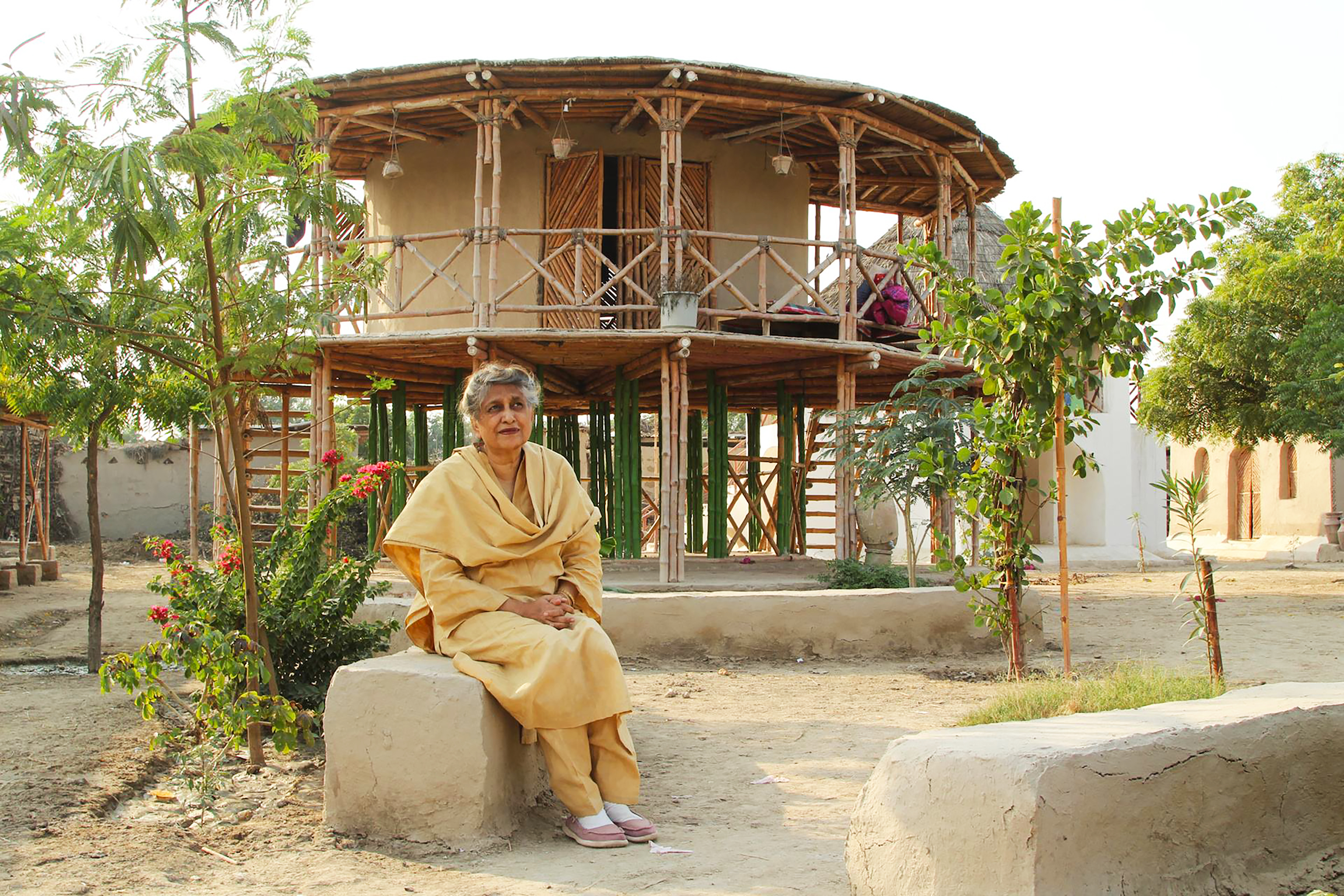
Yasmeen Lari, founder of the Heritage Foundation of Pakistan, wants Pakistan to abandon its growing reliance on concrete.

BY CIARA NUGENT
FEBRUARY 17, 2023 

Pakistan is home to one of the ancient world’s most impressive examples of flood-resilient design. The ruins of Mohenjo-Daro, a bronze age city in the southeastern province of Sindh, sit on raised platforms with sophisticated drainage systems that protected them from annual monsoon rains. Those features have helped the remains of these earthen buildings survive for 4,500 years—and weather the devastating floods that have repeatedly struck Pakistan over the last decade, most recently submerging a third of the country in August 2022.

And yet, according to Pakistani architect Yasmeeen Lari, those tasked with rebuilding the country from the floods tend to look not to Mohenjo-Daro, but to the West. “I call it the international colonial charity model: international NGOs and UN agencies say, ‘let’s bring in concrete, let’s bring burnt brick’,” she says. “Well, those are alien materials for people in these areas.”

Lari, a slight, energetic 82-year-old who was Pakistan’s first certified female architect, is on a mission to transform how her country rebuilds from natural disasters. In the past, when floods or earthquakes have destroyed homes, aid agencies have rushed to replace them with expensive concrete or burnt brick structures, believing, per the International Organization for Migration, that they were the only durable option. But these are not miracle materials. They are not immune to collapsing under the increasingly heavy rains Pakistan faces, as thousands of buildings did during the most recent floods, and when they do they can crush residents. Concrete also absorbs a lot of heat, making life inside homes tough during Pakistan’s summers, and it’s hard for poorer villagers to maintain or expand on them once construction crews have departed. And, because manufacturing concrete and burnt brick is extremely carbon-intensive, these materials worsen the greenhouse effect that is driving more catastrophic floods in the first place. (The manufacture of building materials makes up 11% of global greenhouse emissions, with the lion’s share coming from concrete.)

A better solution for Pakistan’s climate woes, Lari says, lies in its local architectural traditions. “There is no reason for us not to follow what is already there,” she says, sitting in a cafe at the U.K.’s Cambridge University, where she is lecturing for the year. “You have to design according to the conditions where you are.”

The Heritage Foundation of Pakistan, founded by Lari in 1980, is training villagers in Sindh province to build their own flood-resilient homes from cheap, locally available, low-carbon materials. Lari’s designs use bamboo panels, which are reinforced with earth and lime, and sit on raised platforms—small twists on traditional mud huts that make them waterproof. Once they have the skills, residents can expand their villages and train others. Between mid-September and the end of 2022, the foundation helped build 3,500 homes in 60 villages. Now, Lari is trying to persuade NGOs, banks, and foreign donors to directly fund her trained artisans and local communities, with the aim of building one million homes by 2024.


A woman sits on the front step of her home, built to Lari's bamboo, earth and lime designs.   
Heritage Foundation of Pakistan

The timing is urgent. Pakistan is about to launch into one of its most intense periods of rebuilding in its history. Authorities say at least two million people are in need of shelter. And money is on the way: in January, a group of banks and countries pledged some $9 billion in recovery funds.

If those resources are channeled into millions of concrete homes, built without the participation of the people who will live in them, Lari says, Pakistan will only continue in its cycle of crisis. “We have to be talking about: How will you deal with the next disaster? How do we train people to be able to defend themselves?

Read More: Pakistan Flooding Raises Tough Questions About Who Should Pay For Catastrophic Climate Impacts

Lari was not always a champion of Pakistan’s vernacular architecture. When she began her career in Karachi in the 1960s, elites in a newly independent Pakistan were still deeply influenced by British colonialism. Lari had just graduated from the U.K.’s Oxford Brookes University, and her father had been a civil servant in the colonial government. “We grew up thinking that whatever was in the West was something that we all had to emulate,” she says.

Lari spent her first four decades as an architect designing in the western-influenced, globalized palate of concrete, steel, and glass. And she was good at it. Her striking brutalist homes and hotels and other structures won a slew of national and international awards. Her most famous building is probably the headquarters for Pakistan’s state-owned oil company, a sleek, imposing, carbon-intensive behemoth that opened in downtown Karachi in 1991. “The 1980s were a very wasteful time—you could get any material in the world that you wanted,” she says. “And as a designer you do enjoy that freedom.”

She gave up that kind of freedom in 2005. That year, a magnitude 7.6 earthquake struck Pakistan-administered Kashmir, killing a staggering 79,000 people in the region. The quake also collapsed 32,000 buildings and displaced 400,000 people. Lari, who was by then working in heritage conservation, went to help rebuild. Struck by the incredible volume of debris, she determined to use recycled materials wherever possible in her shelters.

Since then, once-in-a-generation natural disasters have struck Pakistan every few years. In 2010, glacier melt combined with heavy monsoon rains swept through towns and villages along the entire length of the country, leaving 14 million without homes. Similar floods happened again the following year, and the year after that.

That cycle is only likely to get worse thanks to climate change. That’s why, Lari says, Pakistan should strive to limit the carbon footprint of its buildings—even though the country bears far less responsibility for rising global temperatures than wealthier countries. (Pakistan is home to 2.8% of the world’s population, but has contributed just 0.3% of global carbon dioxide emissions since the Industrial Revolution.) “In 2005, we built 400,000 units, mostly with concrete blocks, and then it was only five years later that we had the glaciers melting,” Lari says. “So maybe in the global emissions table, we are not that high. But I think we did hurt our own selves in some way.”

Local materials and designs are likely to be more popular in this round of rebuilding than after the 2010 floods, says Shafqat Munir, director of resilient development at Islamabad’s Sustainable Development Policy Institute. That’s in part because of who is leading the programs. Following a 2013 law change, hundreds of international NGOs that were operating in Pakistan a decade ago have departed, leaving Pakistani charities and local initiatives to take a bigger role. “Local charities will tend to use local materials, simply because concrete is too costly.”

But Munir cautions that vernacular traditions need to be adapted to Pakistan’s new climate, in which flood waters linger for much longer than in the past. That means the use of raised platforms—like those found in Mohenjo-Daro—should be greatly expanded, he says, and new technologies, like heat-resistant roofing materials, should be incorporated where available. Guidance from skilled designers like Lari will help: to water-proof earth buildings, Lari adapted a method of slaking lime that is popular in conservation work to make materials more portable.


The Heritage Foundation of Pakistan training center in the village of Pono Markaz, Sindh province.  
Heritage Foundation of Pakistan

Lari doesn’t just want to change the building materials people use, but the entire post-disaster charity system. At the Heritage Foundation of Pakistan’s two training centers in Sindh—one near Makli, an archaeological site, and one in the village of Pono Markaz—a team of 10 certified artisans teaches laborers to reinforce earth, build bamboo panels, assemble them into octagon-shaped shelters, and add a roof. Those artisans then travel to villages to teach residents how to build in three-day sessions. Once residents can build a one-room bamboo shelter, they can use earth and lime to turn them into permanent homes, personalize them with outerwall decorations, and learn to build larger versions of the structure for schools or meeting places. Then, Lari says, villages can connect with other nearby communities to train them to build the shelters too. The Heritage Foundation also arranges training sessions for villagers to learn how to make cooking stoves, terracotta tiles, woven matts, and more, with the aim of giving people skills and products to trade with nearby communities. “It is all about knowledge sharing,” Lari says. “Then it can spread massively.”

Prior to last summer’s floods, Lari’s team had helped build 950 homes in Sindh, using prefab bamboo panels assembled onsite, as well as other larger structures at Pono Markaz village. She says the Heritage Foundation surveyed the structures, some of which were left in standing water for two months following the floods, and found no structural damage.

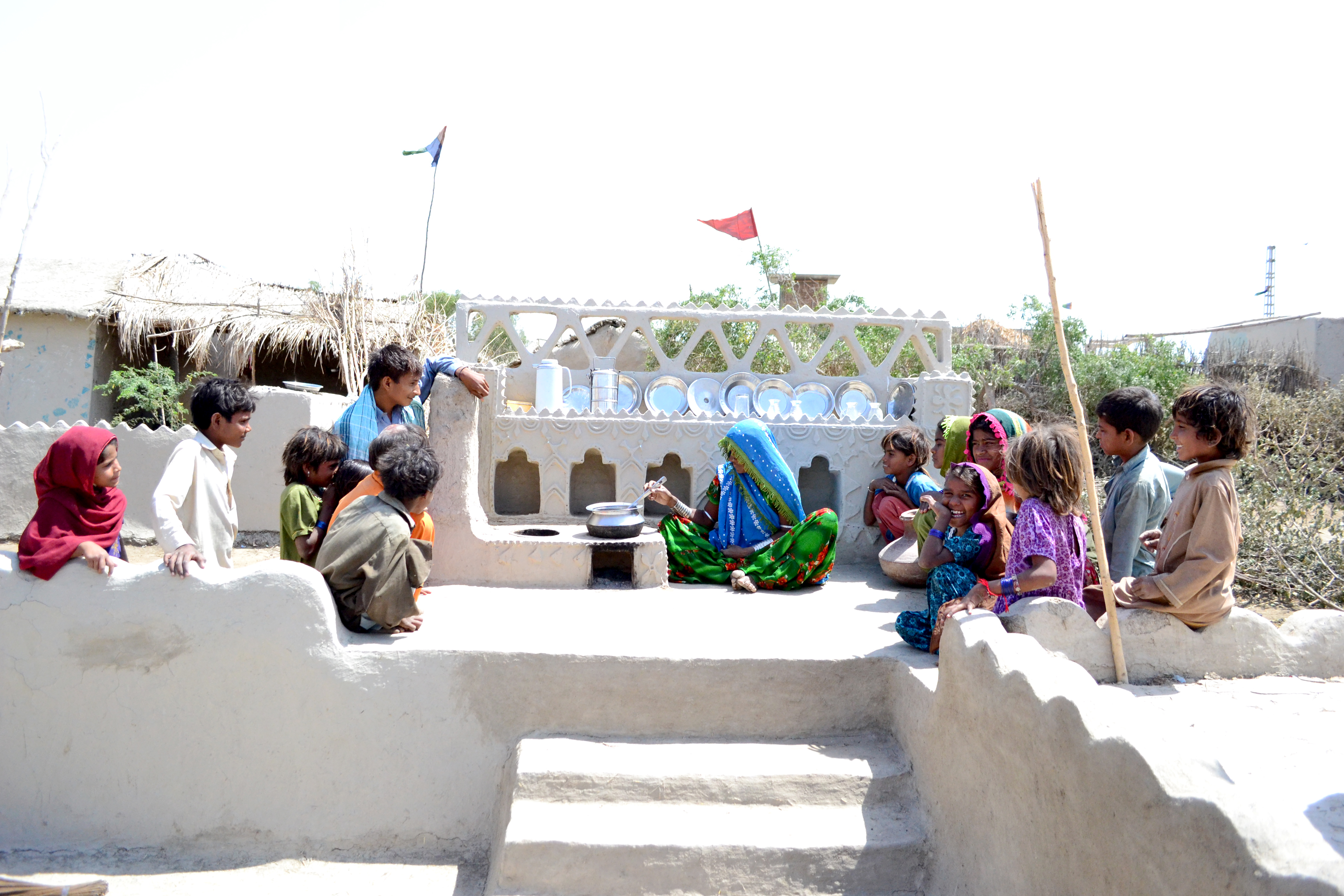
Villagers use a stove on a raised platform, designed by Lari
Heritage Foundation of Pakistan

Lari says it costs the foundation less than $200 to build each shelter, with the money going to buy materials and pay the trainers for their work. It also provides funds for villages to set up committees, led by local women, to invest in their micro-industries. (That is compared to about $1,000 to $1,600 for the average burnt brick shelter, and even more for concrete.)

Going forward, Lari wants the foundation’s role to be purely training-based, and for donors to send their money directly to village committees. Such a system, she argues, empowers people to take ownership of the rebuilding process. It would be more efficient and less vulnerable to corruption—a problem that many in the sector are concerned about following a series of massive graft scandals at Pakistani NGOs following the 2010 floods.

It’s unclear, however, if those funding Pakistan’s rebuilding will be receptive to that local-led approach. An initial flurry of interest from donors when Lari proposed her target of one million shelters by 2024 died down, she says, after the World Bank and other development banks announced a large set of grants and loans in January. “There is no longer emphasis on self reliance or empowerment, the emphasis is only on building a shelter,” she says. “If past trends are to be relied upon, the World Bank will be pushing for concrete structures.”

Still, several international development organizations, including U.N. Habitat, Rotary International, Rizq Foundation, and Islamic Relief, are in talks with the Heritage Foundation about how to apply Lari’s model. And smaller local NGOs, as Munir says, may well favor cheaper local materials.


Lari hopes their work will convince others to rethink rebuilding—both in Pakistan and in many other developing countries now facing unrelenting climate disasters. “I really believe that this is the moment to bring about a whole change in the social system,” she says. ”Climate change shouldn’t be taken only as a threat. If we start doing the right thing, it can really transform lives.”

WRITE TO CIARA NUGENT AT CIARA.NUGENT@TIME.COM. hopes their work will convince others to rethink rebuilding—both in Pakistan and in many other developing countries now facing unrelenting climate disasters. “I really believe that this is the moment to bring about a whole change in the social system,” she says. ”Climate change shouldn’t be taken only as a threat. If we start doing the right thing, it can really transform lives.”

WRITE TO CIARA NUGENT AT CIARA.NUGENT@TIME.COM.


ELIMINATE THE SECOND AMENDMENT

Addressing social isolation may be key in preventing mass shootings, study finds

Addressing social isolation may be key in preventing mass shootings, study finds
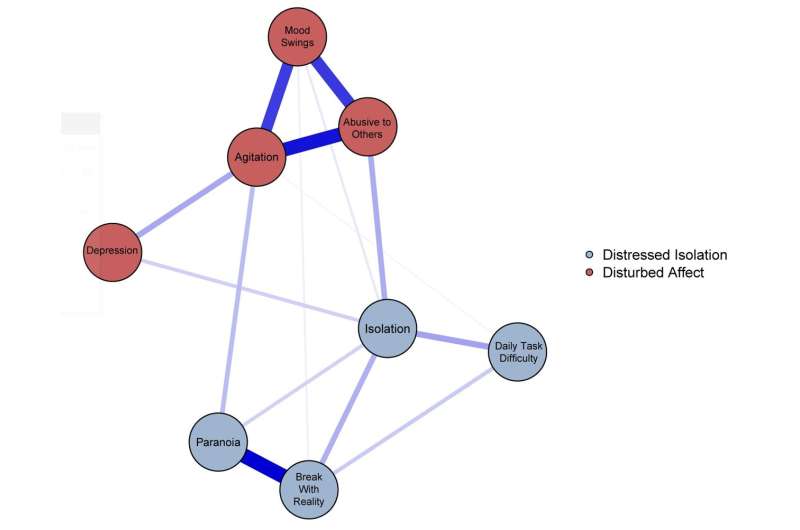
The shooter crisis network. Nodes represent cross-sectional variables. Edge width and depth of color reflects the associative strength between any pair of nodes. Credit: PsyArXiv (2022). DOI: 10.31234/osf.io/63xyt

An analysis of the psychological crises exhibited by 177 mass shooters has identified social isolation as the most important external indicator leading up to the attacks. The finding, which is based on research conducted at Virginia Commonwealth University, suggests that social isolation is an ideal candidate for acquaintances and communities of would-be shooters to intervene.

"When we are isolated from our social circles, we lose that functional component of our loved ones being frank with us when our behavior might become inappropriate," said Samuel West, Ph.D., an assistant professor of psychology at Virginia State University who led the study while he was a postdoctoral researcher at the Injury and Violence Prevention Research Lab at VCU Health.

The study also found that the "mood swings" crisis indicator was one of the strongest predictors of a  shooting's severity. However, the authors concluded that social isolation was the most important because it acted as a "crisis multiplier" in that it allowed crises to increase the risk of other crises. For example, mood swings also increased the likelihood of paranoia, breaks with reality, and difficulties with daily tasks due to its connection with isolation.

"It is easy to see how this perfect storm of multiple crises in someone who has isolated themselves could coalesce into more harmful thoughts and ultimately actions without the perspectives of others to act as a protective factor," said West, who received his doctorate from the Department of Psychology in the College of Humanities and Sciences at Virginia Commonwealth University.

West and co-author Nicholas Thomson, Ph.D., director of research and a forensic psychologist at the Injury and Violence Prevention Program, analyzed the data using psychometric network analysis, a new machine learning-based approach to exploring and visualizing complex relationships. They approached the study by focusing on psychological crises that nonexpert third parties—such as friends, family and co-workers—could observe and subsequently intervene.

"Research on  is scarce, which limits our ability to develop targeted risk assessments and prevention strategies for mass shootings," said Thomson, an associate professor in the Department of Surgery in the School of Medicine and the Department of Psychology in the College of Humanities and Sciences. "What Dr. West has achieved with the data is a step in the right direction for understanding the warning signs of people who commit mass shootings."

The study is novel in that the data collected is based on others' perceptions of a mass shooter, Thomson said.

"In many ways, this is the data that we need because others' perceptions are integral to identifying and reporting at-risk individuals, and the community is critical to preventing violence," he said. "Equipped with the right knowledge we can develop risk awareness strategies that can prevent mass shootings from occurring. Of course, this is only one piece of the puzzle, but it is an important piece."

The researchers see  as an ideal target for intervention because it can be addressed both at the individual level and the societal level.

"Although most people who experience isolation do not go on to commit such acts of violence, intervening on that isolation only holds benefits for the individual," West said.

"This can be as simple as a friend stopping by in person to say hello and catch up—something that we could all benefit from. Although this seems like it may not have such an impact, prior research makes clear that isolation is a necessary component of planning and carrying out a mass shooting as many of the behaviors involved (e.g., stockpiling guns and ammunition) are readily observable."

At the societal level, interventions could focus on building social ties and addressing isolation in communities.

"One example could be to require students at public high schools to participate in civic events and organizations as part of their compulsory education," West said. "On the other side of this coin, we also must consider that many of these individuals end up isolated for other reasons initially (i.e., social rejection). As such, working on the inclusivity of others overall while continuing to address bullying behavior in young people could be a fruitful avenue to improve the mental and social health of students and society at large."

Social isolation is also a good target for intervention because it was typically noticed significantly sooner, such as months or years before an attack, than other psychological crises, which tended to be observed days to weeks before an attack.

"Although scientifically validated interventions for isolation exist, they have all been developed to address  in those who are seeking relief," West said. "Such interventions would necessarily look different with would-be mass shooters as it is likely they would not willfully seek out such help on their own. Our work doesn't speak to causality or any specific intervention that could be applied in this context."

The work is available on the PsyArXiv preprint server and will be published in Psychology of Violence.

More information: Samuel James West et al, Exploring Personal Crises Observed in Mass Shooters as Targets for Detection and Intervention Using Psychometric Network Analysis, PsyArXiv (2022). DOI: 10.31234/osf.io/63xyt