Tuesday, February 28, 2023

Analysis: Netanyahu's balancing act got harder after post-summit violence

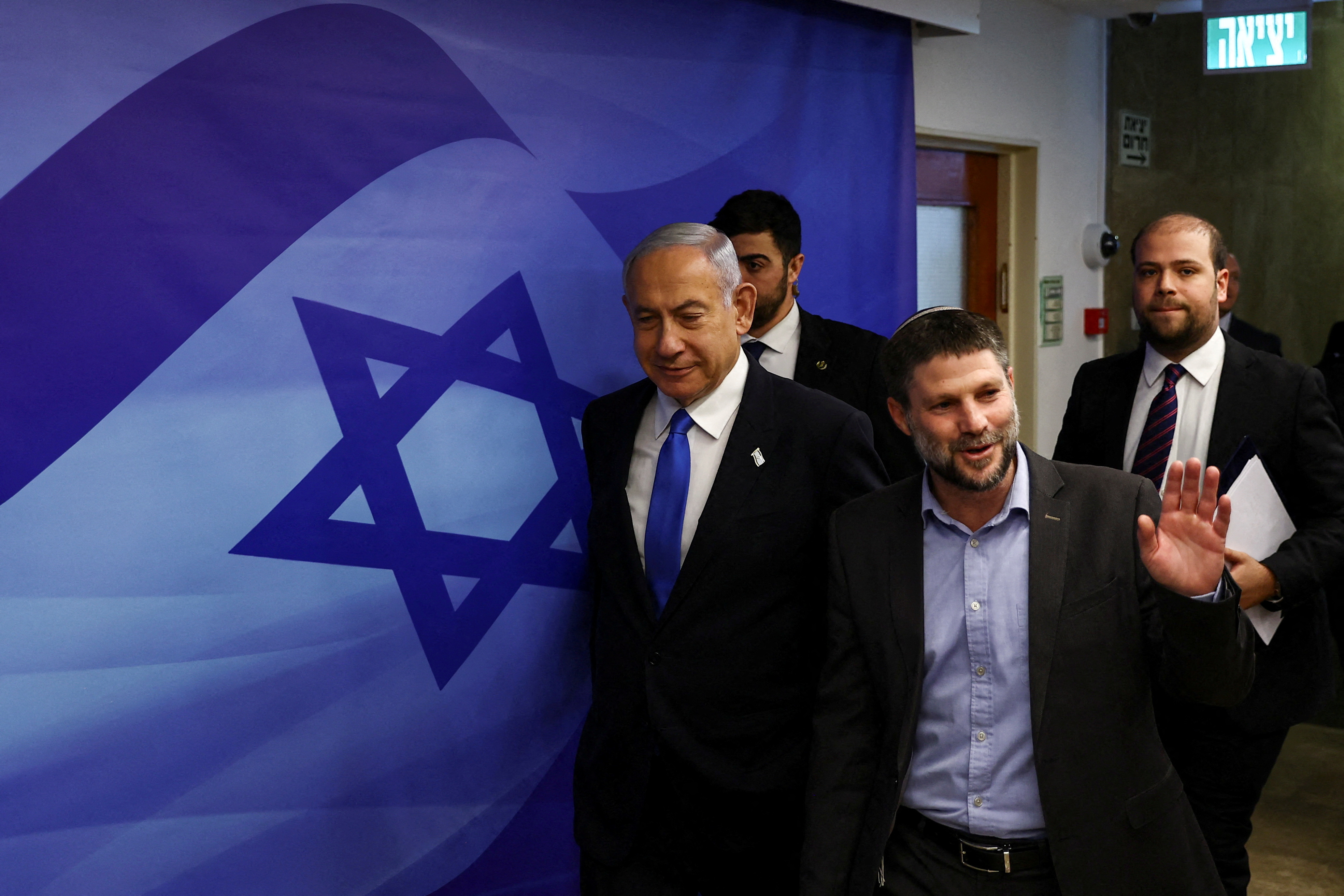
Israeli Prime Minister Benjamin Netanyahu and Finance Minister Bezalel Smotrich arrive to attend a cabinet meeting at the Prime Minister's office in Jerusalem, February 23, 2023. 
REUTERS/Ronen Zvulun/Pool

JERUSALEM, Feb 27 (Reuters) - The U.S.-brokered summit has barely ended with pledges to calm violence and slow Israeli settlement in the occupied West Bank when Palestinian homes were set ablaze by Jewish settlers in retaliation to a deadly Palestinian gun ambush.

Hopes for a calming effect of the meeting hosted by Jordan in the Red Sea port of Aqaba and attended by high-level Israeli and Palestinian security officials, faded further when Prime Minister Benjamin Netanyahu disavowed any notion of a halt to settlement-building.

"The Aqaba agreement was born dead," read a headline in the largest Palestinian daily, Al-Quds, after footage on social media showed young settlers praying while they watched fires in near Palestinian village Hawara, just hours after two brothers from a nearby settlement were shot dead in their car there.

On Monday, another suspected Palestinian shooting attack in the West Bank critically wounded one person, emergency services said.

The events cast doubt on Netanyahu's ability to walk a diplomatic tightrope between Washington - pushing for a lasting compromise - and his own cabinet that includes hard-line settlers demanding tough action against Palestinian attacks.

Less than a month ago, U.S. Secretary of State Antony Blinken was in Jerusalem reaffirming U.S. support for a two-state solution: independence for the Palestinians in East Jerusalem, Gaza and the West Bank, which they say would be incompatible with Israeli settlements.

If Netanyahu now let violence spiral out of control it would be another, even bigger source of friction with the White House, said Amotz Asa-El, research fellow at the Shalom Hartman research institute.

"If anything like what happened last night resumes and gives Washington reason to suspect that Netanyahu is impotent in handling it, they will talk to him very plainly", said Asa-El, adding that the White House has put pressure Israeli leaders before.

"It's now in his interest to show that he is clamping down on this kind of settler violence."

The U.S. State Department spokesperson condemned both the killing of two Israelis and the settler rampage, in which one Palestinian was killed and more than 100 wounded. The spokesperson stressed "the imperative to immediately de-escalate tensions in words and deeds".

But shortly after a U.S. State Department joint communique said Israel had committed to stop approving new settlement units for four months, Netanyahu said that settlement construction would go on as planned.

"There is not and will not be any freeze," he tweeted in an apparent nod to his hard-line partners.

PRO-SETTLER PARTIES

Palestinians, alarmed since Israel's Nov. 1 election, when Netanyahu started building his coalition government with ultra-nationalist pro-settler parties Jewish Power and Religious Zionism, look to Washington to rein them in.

"The U.S administration, which fosters this government, must end all these crimes," said the spokesman for Palestinian President Mahmoud Abbas.

Itamar Ben-Gvir, the national security minister who heads Jewish Power, held a special faction meeting at a settler outpost slated for eviction because it was built without government permit.

"The terrorists should be crushed and it is time to go back to targeted killings and to eliminate the leaders of the inciting terrorist organizations," said Ben-Gvir, while calling on Israelis not to "take the law into their own hands."

Palestinian political analyst George Giacaman predicted more violence. "The main battle will be with settlers," he said.

To be effective, the Aqaba agreements would need a follow-up, said Daniel Shapiro, a former U.S. envoy to Israel and now a senior fellow at the Atlantic Council think tank. Sunday's events, he said, showed that there was "a risk that the pace of deterioration will outstrip the diplomatic efforts to reverse it".

However, Netanyahu's manoeuvring room appears to be shrinking - Ben-Gvir is already issuing political threats, while Religious Zionism leader and Finance Minister Bezalel Smotrich last week consolidated his civil powers in the West Bank.

So much so, that with Netanyahu's new coalition just eight weeks old, Israeli political commentators already are asking whether the veteran politician can hold it together.

"One can see the Aqaba summit as a parable: the Americans announce that Israel has promised to freeze settlement construction, which Netanyahu then denies. At those exact moments, the Jewish Power and Religious Zionism ministers attack the summit and say it is non-binding," wrote Moran Azulay, of Israel's Ynet news site.

"On the eve of the election Netanyahu was pondering the legacy he will have when he is reelected prime minister. At the moment it appears to be chaos and disintegration."


Reporting by Maayan Lubell, Nidal al-Mughrabi, Ali Sawafta and Rami Amichay; Writing by Maayan Lubell; Editing by Tomasz Janowski
While Israeli and Palestinian officials 'talk', deadly violence continues in the Territories

Senior Israeli and Palestinian officials met yesterday in Jordan, committed to "de-escalation" and the preservation of the holy places. An attack by settlers in Huwara soon shot down the timid opening with more casualties on both sides. Israeli Finance Minister Smotrich denies reports of a settlement "freeze". Netanyahu pushes to impose the death penalty for terrorism.


Jerusalem (AsiaNews) – The spiral of violence continues in the West Bank with the risks of a new intifada in spite of shaky (and so far in vain) attempts to mediate between the parties, like yesterday’s meeting in Jordan between senior Israeli and Palestinian officials.

The latest incident began late yesterday evening, in Huwara, when a mob of Jewish settlers set fire to homes and damaged cars and garbage bins following the death earlier in the day of two young settlers shot while travelling by car near the Palestinian town.

The Israeli government immediately described the incident as "a Palestinian terrorist attack."

Also last evening, a Palestinian man was shot dead when Israeli soldiers and settlers raided Za’tara, a village near Nablus.

In addition to the three deaths, the Huwara incident saw at least 100 cars set alight and 30 homes torched or damaged. Shops and other businesses were also affected.

As a result, Israeli Prime Minister Benjamin Netanyahu urged local settlers to “not take the law into your hands” but “allow the IDF and security forces to do their work”.

Since the end of December, Netanyahu has led Israel’s most right-wing government – some members of his cabinet live in West Bank Jewish settlements or are staunch supporters.

In a statement, some settlement mayors called on residents to let the Israeli military to carry out "a determined and deterrent military operation”.

Reacting to the violence, Palestinian President Mahmoud Abbas slammed Israel for what he calls “the terrorist acts carried out by settlers under the protection of the occupation forces”.

The latter have in fact multiplied their incursions in the Palestinian territories with brutal results, like last week’s action in Nablus that left 11 people dead, the highest from a military raid in the West Bank since 2005.

Meanwhile, the death toll continues to rise. Since the start of the year, 63 Palestinians have died, both fighters and civilians; 11 Israelis, a police officer and 11 civilians; and a Ukrainian woman.

Amid all this, Israeli and Palestinian officials met in Aqaba, Jordan, to defuse tensions and prevent "further violence".

At the end of the meeting, the two sides signed a joint statement highlighting the “necessity of committing to de-escalation on the ground and to prevent further violence."

Despite this, Israel’s National Security Adviser Tzachi Hanegbi was quick to point out in the evening that Israeli government policy had not changed.

Israeli Finance Minister Bezalel Smotrich, in charge of civilian affairs in the West Bank, also said, “there will not be a freeze on construction and development in the settlement, not even for one day”.

All said, there is little hope of easing tensions, which was the goal of the talks held in Jordan, which saw the participation of representatives of Egypt, Jordan, and the United States.

One of the meeting’s goals is to preserve the holy places in Jerusalem, where Christians have been the victims to targeted attacks.

To this end, the two sides “confirmed their joint readiness and commitment to immediately work to end unilateral measures for a period of three to six months.”

Just words: no sooner was the ink dry that the violence flared up.

In fact, while the parties agreed to hold further talks in Sharm el-Sheikh, Egypt, next month, Prime Minister Netanyahu and Security Minister Itamar Ben-Gvir announced the government’s intention to introduce a bill that would impose the death penalty on people convicted of terrorism.

For Netanyahu, his administration would “continue to act by all means ... to deter the terrorists and maintain Israel's security”.
Between army invasions and settler ‘pogroms,’ the West Bank rises

Amid Israeli army assassinations and settler terror, Palestinians rally around armed resistance in a showing of spontaneous mass mobilization that has not been seen in decades.
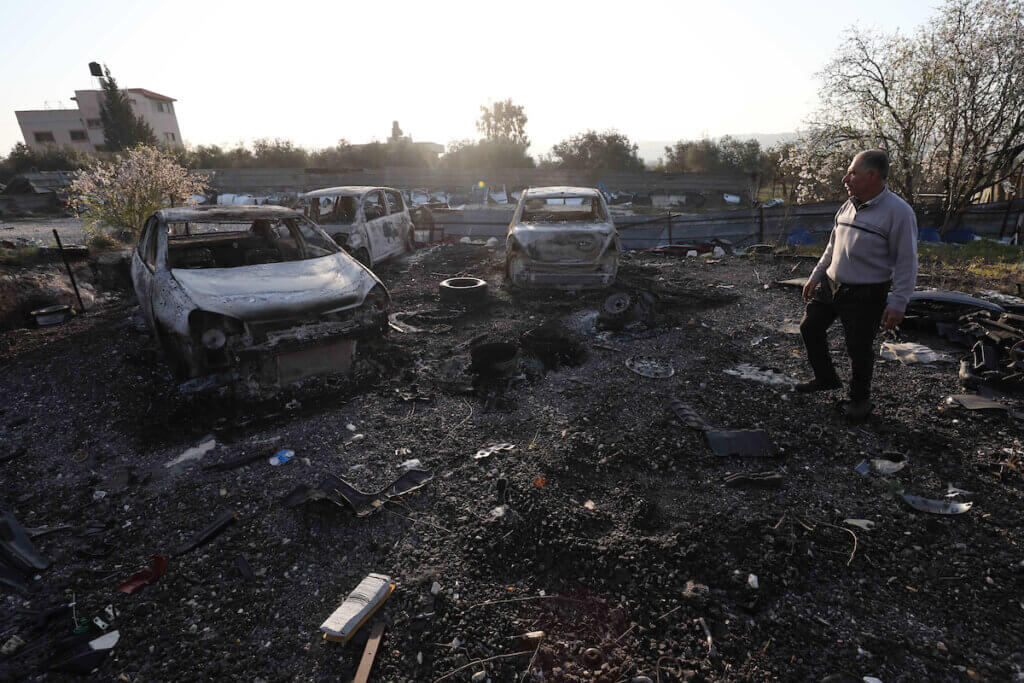
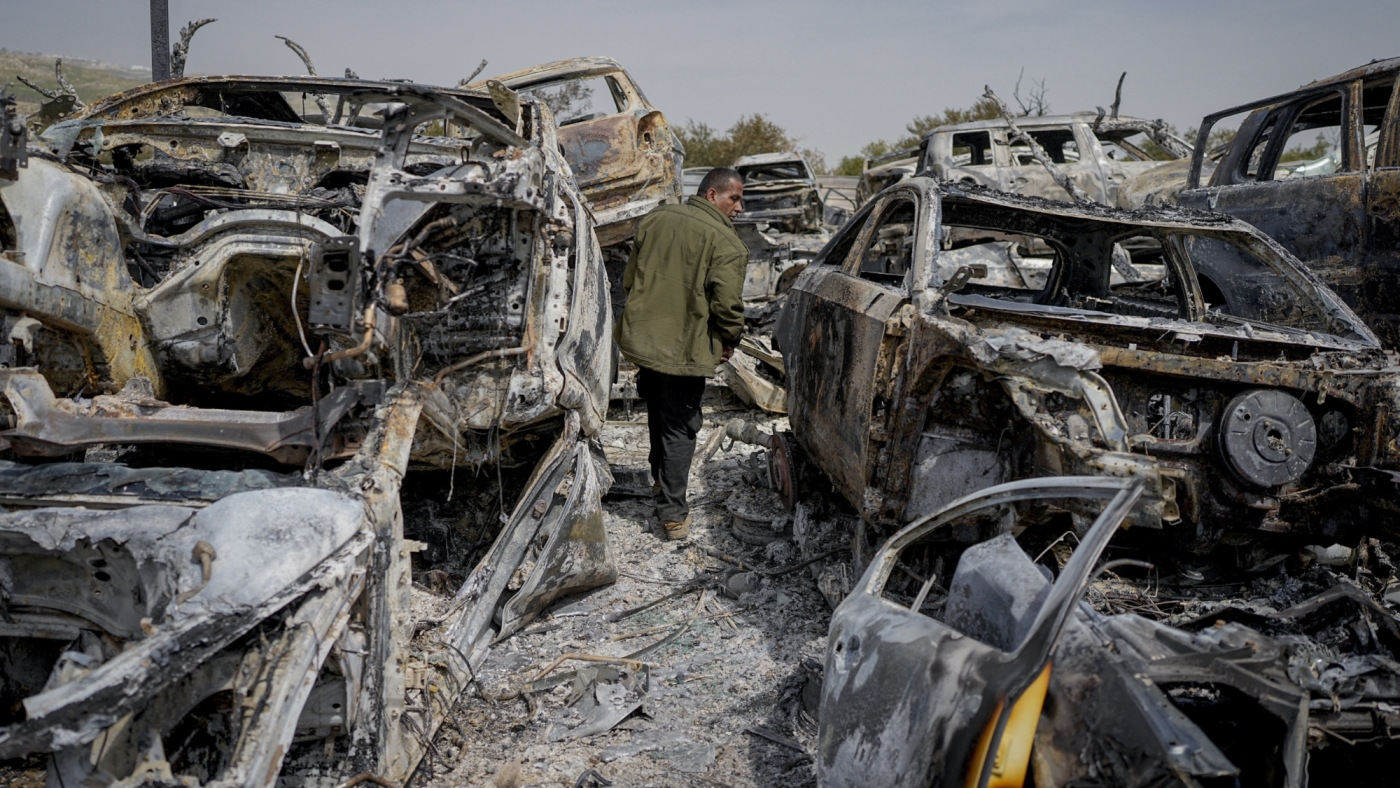
PALESTINIANS INSPECT BURNED CARS AT A SCRAPYARD IN THE TOWN OF HUWWARA NEAR NABLUS, FEBRUARY 27, 2023, AFTER A SETTLER “POGROM” THE NEXT BEFORE.
(PHOTO: SHADI JARAR’AH/APA IMAGES)

The West Bank was under a two-pronged attack last week.

The first was carried out by the Israeli state’s army in a massive military invasion of Nablus that killed 11 Palestinians and injured over 100. The second was carried out by its nominally civilian wing — gangs of colonial settlers that went on a rampage last night in response to a resistance attack that killed two Israeli settlers in Huwwara, just south of Nablus.

The raid on Nablus was one of the bloodiest in recent months, aiming to assassinate wanted resistance fighters from the Lions’ Den, Muhammad Juneidi and Hussam Isleem. Israeli special forces killed them and their comrade, Walid Dakhil, a cousin of one of the co-founders of the group. Four other fighters from armed resistance groups around Nablus were also killed in the fighting, in addition to four bystanders in the city (three elderly men and a teenage boy).

Nablus was in mourning, and the Lions’ Den put out a call asking the people to show their support at midnight, February 23:

“Do not despair and fall into sorrow, we need you all, as you have accustomed us…to take to the streets if you can, to come out in every major square, in every city in the West Bank, Jerusalem, the beloved [Gaza] Strip, and in every refugee camp in the homeland, to hear those who would pledge loyalty to the blood that has been spilled.”

Everyone responded to the call of the Lions’ Den. From Ramallah to Hebron, to Nablus and Jenin, to Bethlehem and its camps and Tulkarm and Jericho, people were out in the thousands at midnight, in a show of mass support unknown to any Palestinian political faction.

Neither Fatah nor any other faction has been able to muster this kind of spontaneous mass support since the First Intifada. Political legitimacy, it has become clear, is not to be found in summit halls and security deals, but rather sprouts from the barrel of a rifle when pointed at the colonizer.

In other words, the Lions’ Den has captured the imagination of Palestinians in a way that the political “leadership” has failed to do for decades. What’s more, it has long since stopped trying.

Yet it recognizes its increasingly tenuous hold over the West Bank cantons that it calls a state, pushing it to attend a meeting mediated by Jordan with top Israeli officials in Aqaba on Sunday, February 27. Billed as aiming “to bring an end to the bloodshed,” according to Fatah, the Aqaba Summit was held with the express purpose of calming the brewing storm of Palestinian resistance.

And on the same day as the Summit, an unidentified Palestinian gunman carried out a resistance attack against a settler vehicle in the Palestinian town of Huwwara, south of Nablus. Two settlers were killed, and with them the stillborn Summit at Aqaba.

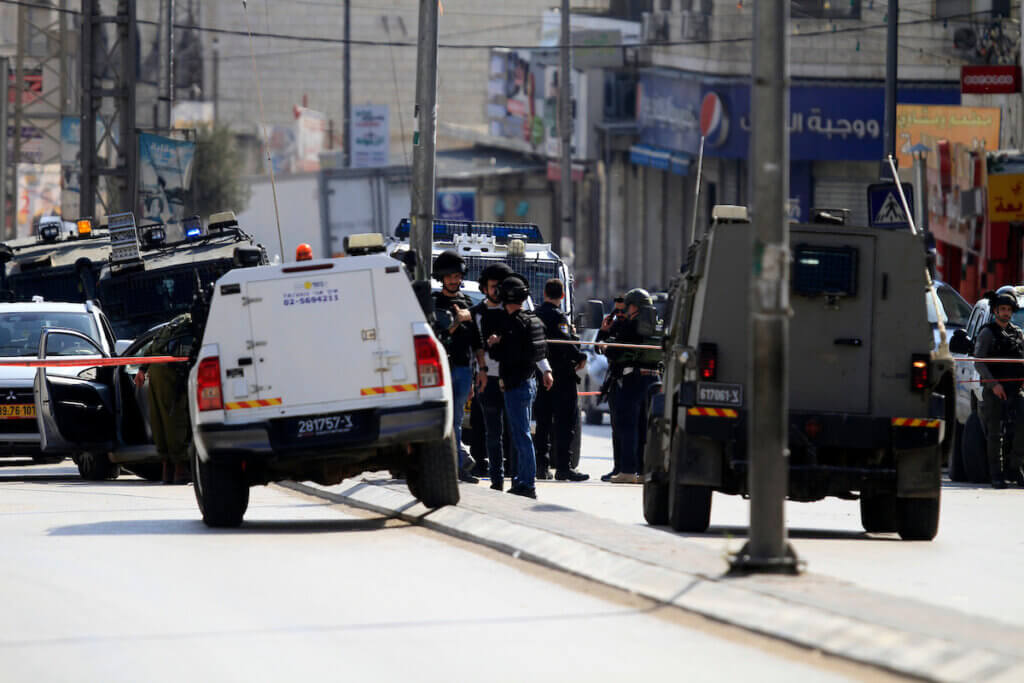
ISRAELI SECURITY FORCES GATHER AT THE SCENE OF THE SHOOTING ATTACK ON A CAR NEAR HUWWARA NEAR NABLUS ON FEBRUARY 26, 2023. 
(PHOTO: MOHAMMED NASSER/APA IMAGES)

Palestinians saw the attack as retribution for the invasion of Nablus, much like Khairi Alqam’s Neve Yaacov shooting, which was regarded as retribution for the massacre in Jenin several weeks ago.

According to reuters, one of the settlers killed in Huwwara was in the Israeli military, and both settlers were reportedly from the illegal Israeli settlement of Har Bracha, 8km away from the site where they were killed. Har Bracha is one of many notoriously violent Israeli settlements in the Nablus area, from which Israeli settlers routinely launch attacks on Palestinians.

And that is precisely what the settlers did following yesterday’s shooting in Huwwara.

The settler riot has been widely described as a “pogrom,” and with good reason. The rabid settler gangs rampaged through Huwwara and many other towns throughout the West Bank, completely burning down 35 Palestinian homes, damaging 40 others, and killing a Palestinian in Zaatara, 37-year-old Sameh Aqtash.

All the while, the Israeli army accompanied the settlers as they were out for blood, ensuring their safety and freedom to lynch and burn as they pleased. Israeli forces also imposed a closure on the Nablus area, as Wafa News Agency reported closures at the checkpoints of Huwara, Awarta, al-Muraba’a road, Za’tara, and entrances to Beita. On Monday, February 27, Wafa reported that an Israeli settler attempted to run over a group of journalists covering the Huwwara news.

Far-right Finance Minister Bezalel Smotrich, who is now in charge of the Civil Administration in the West Bank, reportedly liked a tweet from the Samaria Regional Council Deputy Chief that called for the village of Huwara to “be erased” (see tweet by Edo Konrad of 972), while his political bedfellow and Minister of National Security, Itamar Ben-Gvir, made a visit to the illegal settler outpost of Evyatar on Monday as it was being evicted, vowing to “crush our enemies” and declaring that the settlers are in a state of war that “is not going to end in one day.”

In that, Ben-Gvir is correct. The Zionist forever war against the Palestinians is as old as Zionism itself, and so is Palestinian resistance.

And as we write these words, reports stream in of the death of an Israeli settler in another operation in Jericho.
Israel PM Netanyahu coalition member calls for Hawara to be 'burned and closed'

The New Arab Staff
28 February, 2023

Zvika Foget, a member of the far-right Otzma Yehudit party, spoke approvingly of Sunday's settler violence against Palestinians as 'deterrence'.


Israeli settlers burned dozens of homes and cars in the occupied West Bank on Sunday
 [Nasser Ishtayeh/SOPA Images/LightRocket via Getty Images]

A senior member of Israeli Prime Minister Benjamin Netanyahu's governing coalition called for Hawara to be "burned and closed", whilst approving of a settler rampage in the same occupied West Bank village on Sunday.

"Yesterday a terrorist came from Huwara – Hawara is closed and burnt. That is what I want to see. Only thus can we obtain deterrence," said Otzma Yehudit (Jewish Power) party in an interview with Radio Galey Israel.

"The act that the residents of Judea and Samaria (referring to the illegal settlers living in the occupied West Bank) carried out yesterday is the strongest deterrent that the State of Israel has had since Operation Defensive Shield. After a murder like yesterday, villages should burn when the IDF [Israeli military] does not act."

Operation Defensive Shield was the Israeli assault in the occupied West Bank during the Second Intifada in 2002 when nearly 500 Palestinians were killed.

He also said in an interview with Israeli Army Radio that he "looks favourably upon" the results of violence perpetrated by Israeli settlers, who, flanked by members of the Israeli army, had killed one Palestinian and set dozens of homes and vehicles on fire in Hawara on Sunday.

Foget said the violence - which was described as a 'pogrom' - acted as a 'deterrent'.

"The effect of deterrence that was achieved yesterday following these so-called 'pogroms' hadn't been achieved in the West Bank since Operation Defensive Shield," he said, referring to the Israeli army’s actions during the Second Intifada in 2002 when several Palestinian towns and cities in the West Bank were invaded and nearly 500 Palestinians killed.

The extreme-right Otzma Yehudit party is led by Israel's National Security Minister Itamar Ben Gvir who has repeatedly encouraged settler violence against Palestinians and asserted that Israel should annex settlements in the West Bank, which are illegal under international law.

Palestinians count cost of Israeli violence in West Bank

Israeli opposition leader Yair Lapid criticised Fogel’s remarks, saying: "This is not a full right-wing government, this is a full-anarchist government. MK Fogel must go to jail for inciting terror."

Settlers rampaged through Hawara on Monday, starting fires and attacking Palestinian homes. At least one Palestinian was killed on Sunday and Monday, and more than 350 Palestinians were injured, most suffering from tear gas inhalation, the Palestinian Red Crescent Society said.

The settler violence came after two Israelis were shot dead by a Palestinian in the West Bank, just days after an Israeli massacre in Nablus, which left at least 11 Palestinians killed.

Sixty-three Palestinians - more than one a day - have been killed by Israeli forces so far this year.


Israeli military calls settler attacks on Palestinians ‘actions of terror’ after weekend of violence

By Hadas Gold, CNN
 Mon February 27, 2023

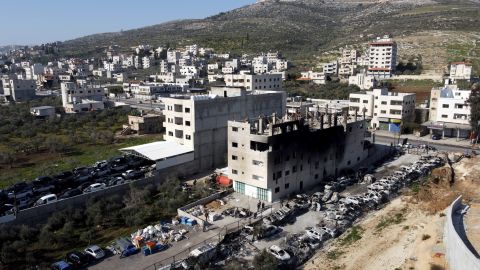
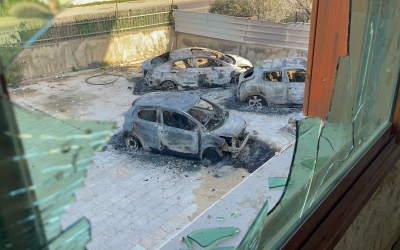
An aerial view shows a building and cars burnt in an attack by Israeli settlers, near Huwara in the West Bank, on February 27, 2023.Ammar Awad/Reuters


JerusalemCNN —

The Israel Defense Forces (IDF) sees the previous day’s attacks by Israeli settlers against Palestinians in the West Bank as “actions of terror,” an IDF official said Monday, as tensions in the region simmered after a weekend of violence.

At least one Palestinian man was killed, a Palestinian fire engine was stoned by a crowd of about 50 settlers, and other Palestinians were injured with stones or metal bars, Palestinian medical officials said Sunday, blaming Israeli settlers in the West Bank.

The attacks followed the fatal shooting of two Israeli brothers earlier in the day in the town of Huwara, south of Nablus in the Israeli-occupied West Bank, just days after a massive Israeli military raid into Nablus in search of wanted militants left at least 11 Palestinians dead.

“Last night there was revenge activity done by people that live in the area. I wanted to say we see these actions as actions of a terror, these violent riots,” the IDF official said, asking not to be named due to the sensitivity of the situation. “It’s been a horrible night,” the official added.

The official said the reason the IDF was sending three additional battalions to the area was to keep the Palestinians and Israelis apart.


About 160,000 people protest against Netanyahu's judicial overhaul in Tel Aviv


“More forces will de-escalate” the situation, the official said. “This morning we’ve sent in another Givati (reconnaissance) battalion – the Givati Special Forces battalion – into the area in addition to two Border Patrol companies, basically trying to de-escalate and keep the two sides apart.”

Israel’s Minister of Defense Yoav Gallant vowed to arrest the individual or individuals who killed the settlers and called for calm while allowing military and security forces to work and apprehend the perpetrators.

“It is neither legitimate nor possible to operate individually,” Gallant said Monday, while visiting the location where the incident took place. “We cannot allow a situation in which citizens take the law into their hands. I call on everyone to follow law and order and to trust the IDF and security forces everywhere, across the country.”

The IDF detained eight people in connection with the attacks in Huwara, some of whom have since been released, Israel Police spokesman Dean Elsdunne told CNN Monday.


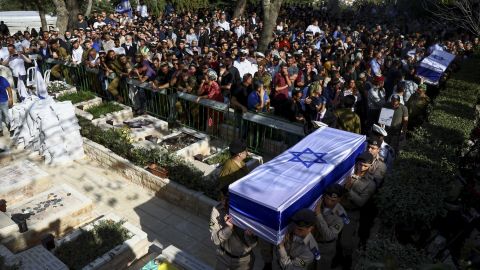
People attend the funeral of the brothers Hillel and Yagal Yaniv at the Mount Herzl 
military cemetery in Jerusalem on Monday.Ronen Zvulun/Reuters

Cycle of violence

Sameh Hamdallah Mahmoud Aqtash, 37, was shot in the abdomen and killed in the town of Za’tara, between Huwara and the Israeli settlement of Kfar Tapuach, the Palestinian Ministry of Health said Sunday night. In Huwara itself, at least one person was stabbed and another assaulted with an iron bar, the Palestinian Red Crescent said.

The Israeli settlers who were killed earlier were named as brothers Hillel Menachem Yaniv, 21, and Yagel Yaakov Yaniv, 19, according to the local settler council.

Video from the scene showed that their car had crossed a median, and hit a vehicle going the other direction, suggesting they were shot while driving.

Late Sunday, the IDF announced that the older brother, Hillel, was a serving soldier and expressed condolences in a statement.


A view over the town of Huwara on February 27.Amir Levy/Getty Images

Peace talks


Following rare talks on Sunday brokered by Jordan, Egypt and the United States, Israeli and Palestinian representatives “affirmed their commitment to all previous agreements between them, and to work towards a just and lasting peace.”

Israel and the Palestinian Authority confirmed their “joint readiness and commitment to immediately work to end unilateral measures for a period of 3-6 months. This includes an Israeli commitment to stop discussion of any new settlement units for 4 months and to stop authorization of any outposts for 6 months,” a joint statement read.

However, in response to the announcement of a halt on settlement construction, far-right Religious Zionism party leader Bezalel Smotrich firmly rejected a pause, “even for one day.”

In a post on Twitter, the Israeli finance minister appeared out of alignment with his government, writing: “There will not be a freeze on settlement building and development, not even for one day (this is under my authority). The IDF will continue to act to counter terrorism in all areas of Judea and Samaria without any limitations (we will reaffirm this in the cabinet). It’s very simple.”


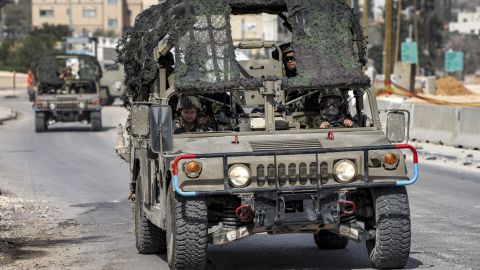
Israeli soldiers ride in a military vehicle in Huwara, near Nablus in the West Bank, on Monday.
Ronaldo Schemidt/AFP/Getty Images

Israeli cabinet approves bill allowing death penalty for ‘terrorists’

Also on Sunday, Israel’s cabinet approved a proposed law to impose the death penalty on “terrorists.” It is officially a private member’s bill sponsored by the far-right National Security Minister Itamar Ben Gvir, rather than government-backed legislation.

The law would give courts the power to “impose the death penalty on those who have committed the crime of murder on nationalistic grounds against the citizens of Israel,” a statement from Prime Minister Benjamin Netanyahu and Ben Gvir said.


Israeli incursion shatters lives in ancient Middle Eastern city


After a preliminary vote in the Knesset, or parliament, Israel’s political-security cabinet will next discuss the language in the bill, before it goes to the committee stage. If it passes the committee stage, it will require three Knesset readings to become law.

There have been previous attempts to introduce the death penalty in 2016 and 2018, according to the Israel Democracy Institute, but they did not become law.

In response to the moves, the Palestinian government on Monday condemned “in the strongest terms” the Israeli cabinet’s approval, according to a statement from the Palestinian Ministry of Foreign Affairs.

“The death penalty violates the fundamental rights of the Palestinian people to life, non-discrimination, and self-determination. It is a cruel, barbaric, and inhumane bill rooted in Jewish supremacy and precisely aimed to deny the Palestinian people their right to exist and their humanity,” it said, while also calling on the international community to take “concrete actions to pressure Israel to rescind its bill.”

CNN’s Amir Tal, Abeer Salman, Caroline Faraj, Hamdi Alkhshali, Lauren Said-Moorhouse and Kareem El Damanhoury contributed to this report.

Huwwara riots: Israel's leaders stoke flames by lauding settler attacks

Finance Minister Bezalel Smotrich among the senior politicians seen supporting the unprecedented attacks on Palestinian towns in the West Bank


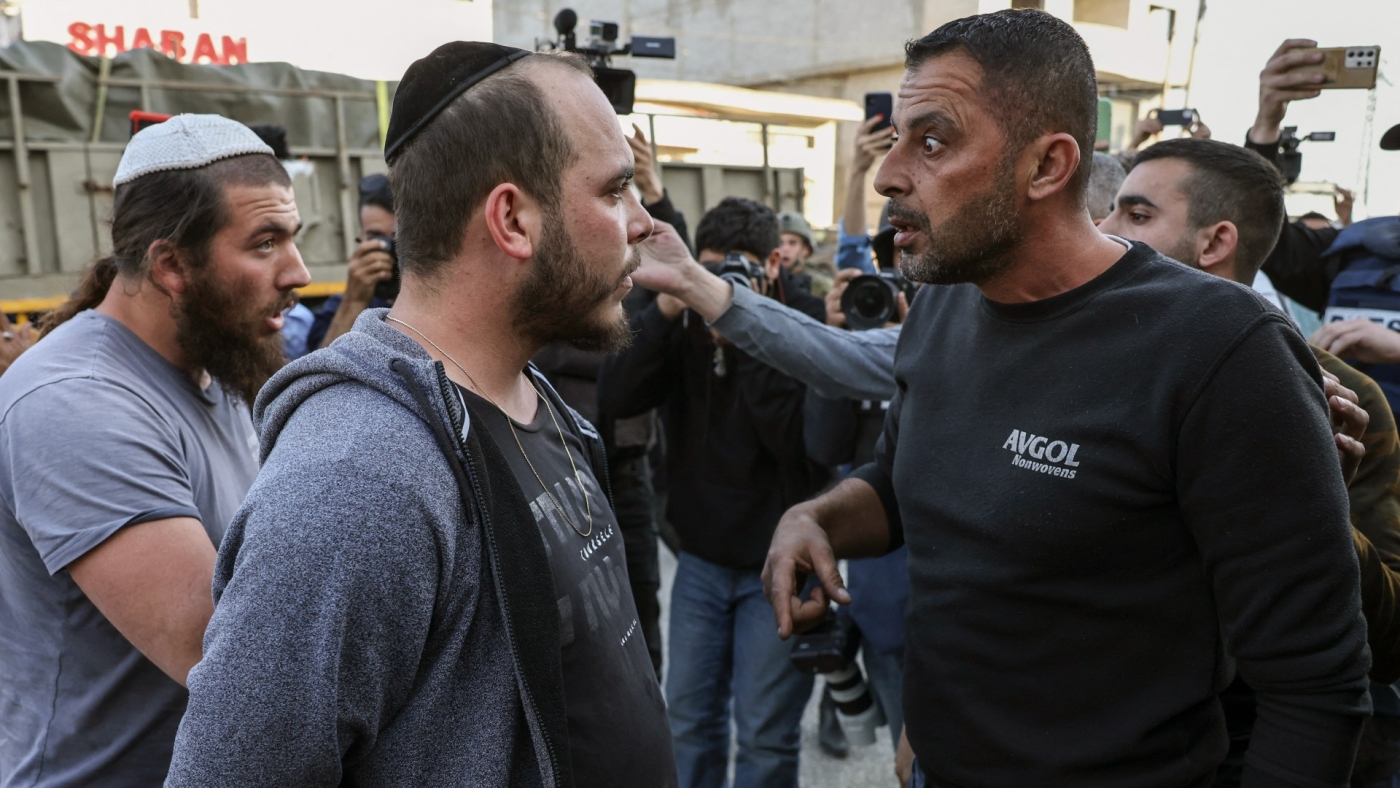
Israeli settlers confront a Palestinian in the West Bank town of Huwwara, 27 February (AFP)

By Elis Gjevori
Published date: 27 February 2023

Hours before Israeli settlers set the occupied West Bank town of Huwwara ablaze on Sunday, several Israeli politicians called for the Palestinian village to be wiped out.

In a since deleted tweet, David Ben Zion, the deputy head of the Samaria Council that governs illegal settlements in the northern West Bank, called for Israeli politicians to show no mercy and that the “village of Huwwara should be erased today”.

The tweet was liked by the country’s Finance Minister Bezalel Smotrich, and followed the fatal shooting of two Israeli settlers carried out by a suspected Palestinian gunman on Sunday in the town.

Ben Zion, who represents more than a dozen Israeli settlements in the occupied West Bank including where the attack occurred, later said that he had written the comments in the “heat of the moment”.

Smotrich’s liking of the tweet by Ben Zion also drew condemnation and was viewed by some as the state sanctioning of mob violence.

“Our minister of finance, minister of the defence ministry and a member of the security cabinet supports erasing an entire village when the only sin of its inhabitants is that they are Palestinians,” Shir Nosatzki, a social media entrepreneur, said on Twitter.

On Sunday, Smotrich escalated rhetoric himself, demanding that the Israeli army "hit Palestinian cities, with tanks and helicopters, mercilessly, in a way that would convey that the owner of the house has gone mad".

With buildings in Huwwara still smouldering and the Palestinian gunman still on the run, Smotrich took to Twitter on Sunday evening to promote a thread that recommended the “collective punishment of the terrorist's family and environment as an effective and necessary tool in asymmetric warfare”. Collective punishment of occupied populations is illegal under international law.

At least one Palestinian was killed and nearly 400 wounded in the attacks on Huwwara and other West Bank towns and villages, Palestinian health officials said. Settlers completely burnt down at least 35 homes and 40 others were partially damaged, and many of the buildings were set on fire while their Palestinian inhabitants sheltered inside. More than 100 cars were burnt or otherwise destroyed.
'Act with an iron fist'

Smotrich and Ben Zion were not the only Israeli leaders, politicians and commentators pouring fuel on the fire and seeking to legitimise the actions of the settlers.

Aryeh Erlich, an editor at the ultra-orthodox magazine Mishpacha, downplayed the riots, by writing:

“The thought now should not be of boys whose blood boiled after seeing the bodies of their two friends lying in their blood on the road.”
Whereas Limor Son Har-Melech from Jewish Power, the party of far-right National Security Minister Itamar Ben Gvir that is part of the ruling coalition, called the riots “the righteous cry of hundreds of Samaria residents who came out to protest and demand security”.

Similarly, another MP from Prime Minister Benjamin Nentanyahu’s Likud party sympathised with the settlers, urging the state to “act with an iron fist!”.

As videos of violent lawlessness spread on social media, with Israeli forces seemingly unwilling to stop rioters, settlers were more than happy to share their plans.

One settler filmed himself in Huwwara as Palestinian houses burned in the background, predicting the coming end of the Israeli army and the transition to Jewish militias, going on to laud the “very exciting revenge operation”.
 
'Immune to the law'

Yet the scenes also frightened many on the right, even drawing a comparison to Kristallnacht, the "Night of Broken Glass", the state-directed pogrom against Jews carried out by the Nazi Party in Germany in 1938, from a seasoned commentator.

“The government needs to decide if it acts as a sovereign in the territories, if it is determined to impose law and order on Arabs and Jews alike, or if it serves as a fig leaf for the hilltop youth,” wrote Nahum Barnea for the right-wing Israeli news outlet Ynet, referring to the radical settler group.

'Huwwara is closed and burned. That is what I want to see. Only thus can we obtain deterrence'
- Zvika Fogel, Jewish Power politician

While Israeli settlers have regularly committed attacks against Palestinians in the West Bank, Sunday's attacks were “almost unprecedented”, warned Barnea.

Rioting settlers feel “immune to the law. Fear of the state does not apply to them,” said Barnea.

“Smotrich and Ben-Gvir observe the rioters in Huwwara and probably remember themselves: when they were their age, they behaved like them.”


With Huwwara largely abandoned by its Palestinian residents, Israeli settlers rallied in the town, singing in unison under the protection of the army.

“Huwwara is closed and burned. That is what I want to see. Only thus can we obtain deterrence,” said Jewish Power politician Zvika Fogel, celebrating last night’s riots.

At least 62 Palestinians have been killed by Israelis this year, at a rate of more than one fatality per day. Meanwhile, 12 Israeli civilians and one police officer have been killed by Palestinians in the same period.

This follows a steep increase in violence in 2022 when at least 167 Palestinians were killed in the West Bank and East Jerusalem, the highest death toll in those territories in a single year since the Second Intifada. Palestinian attacks killed 30 Israelis last year.

Huwwara riots: Eyewitness account of Israeli settler attack on Palestinian town

Hussein al-Suwaiti describes scenes of violent Israeli settler attack across his town, which has left cars, buildings and scrapyards burned to the ground


A Palestinian man walks between scorched cars in a scrapyard, in the town of Huwwara, near the West Bank city of Nablus, on 27 February 2023 (AP)

By Hussein al-Suwaiti in
Huwwara, occupied Palestine
Published date: 27 February 2023 19:05 UTC | Last update: 14 hours 51 mins ago

As told to Ola Marshoud.

Israeli settlers had gathered at an intersection of a settlement, descended on Huwwara on foot, and set the whole town on fire.

They had come holding flags and seeking revenge because earlier that day, a Palestinian shot dead two Israeli settlers.

The settlers burned homes, shops, and scrapyards. They moved towards the town's mainstreet, where we live, and first attacked our neighbours. They burned my neighbour's car showroom, and the scrapyard facing it.


In pictures: Homes burn and cars are torched as Israeli settlers take 'revenge' in West Bank
Read More »

Then they came for my family.

They attacked our home with rocks and metal and tried to storm in. They hurled anything they could find at our house.

We started praying and my children were crying and screaming.

Huwwara has experienced settler attacks before, but not in this way, not at this level of violence. It was indescribable.

In the past, some settlers would stand outside our house, shout and throw a few rocks. They would attack one or two houses at a time, but yesterday, more than 250 settlers spread out across the town.

You couldn't even seek your neighbours for safety, because they, too, were under attack.
Burnt to the ground

I have a scrapyard nearby, with about 25 cars inside.

The settlers lit tyres on fire, threw them at the cars, and burned the scrapyard to the ground.

They also burned another nearby scrapyard, which was bigger than mine, and smoke filled the street. Israeli soldiers fired tear gas at the settlers, but most of it went into our house.

Our home disappeared under all of the smoke and tear gas; we were suffocating. We couldn't do anything except pray, scream for help, and shout at the settlers.

When settlers were at our front door trying to break in, I started throwing shoes at them, from a shoe rack near me, through the window. While this was taking place, Israeli soldiers were just standing there, watching.


We couldn't do anything except pray, scream for help, and shout at the settlers

I yelled towards the soldiers and told them that the settlers were trying to force their way into my house. They pointed their weapons at me and told me to go inside.

No one was there to help. The fire was inching closer, and we were going to burn inside our home. My biggest fear was that they'd burn my car, which I had parked in the courtyard, in front of our entrance. If they had, we would have been stuck in the house.

I wrote a distressing message on Facebook: For the love of God, we need an ambulance and a fire truck.

The fire had taken hold of the scrapyard. Palestinian officials arrived at the scene and called on us and our neighbours to leave our buildings. They put us in Palestinian ambulances and took us to hospital.

My seven-year-old had to be put on oxygen from smoke inhilation, while I received emergency treatment because I have asthma.
Audacity

I have three other children, aged 15, 14, and 13. The panic that we felt cannot be described.

The attack yesterday has compromised the security one feels in their own home, in their own town. We are in a state of alert now and expect them to return at any moment.

Before the attack started, settlers had come to Huwwara with their families, including their children, some of whom were in strollers, and walked around the town.


When I yelled out to the soldiers that we couldn't breathe, they pointed their guns at me

The army is behind their audacity.

The settlers know they are backed by soldiers, so of course, they will do whatever they want to do. They entered the town under the protection of the army, which had given them the green light.

In the past, when soldiers arrive at the scene, they contain the situation and the settlers disperse. Not this time.

When I yelled out to the soldiers that we couldn't breathe, they pointed their guns at me. We need to have international observers on the ground.

As the saying goes, "the judge and the executioner are one and the same". There's no one to save us.


Palestinian killed as Israeli settlers rampage through West Bank in 'revenge' attacks

Nearly 400 Palestinians are wounded while scores of homes, shops and cars are destroyed


A Palestinian woman stands outside a house burnt in an attack by Israeli settlers in Huwwara
 (Reuters)

By Fayha Shalash , Sheren Khalel
Published date: 26 February 2023 

Ramallah, occupied Palestine - Israeli settlers rampaged through towns in the occupied West Bank on Sunday evening in revenge attacks, burning and attacking Palestinian homes and property for hours.

At least one Palestinian was killed and nearly 400 wounded in the attacks, Palestinian health officials said.

Sameh Hamdullah Aktech, 37, was shot dead in Za'tara town near Nablus. The Palestine Red Crescent Society (PRCS) said its staff treated someone for stabbing wounds and at least two others suffered head injuries.

Homes, shops, cars and agricultural land were set ablaze by settlers who roamed the streets of several Palestinian towns, mainly near Nablus. Attacks were reported in Ramallah and Salfit.

PRCS said at least 35 homes were completely burned down and 40 others were partially damaged. More than 100 cars were burnt or destroyed, it added.

The riots followed a shooting earlier in Huwwara town earlier in the day by a suspected Palestinian which left two Israeli settlers killed.

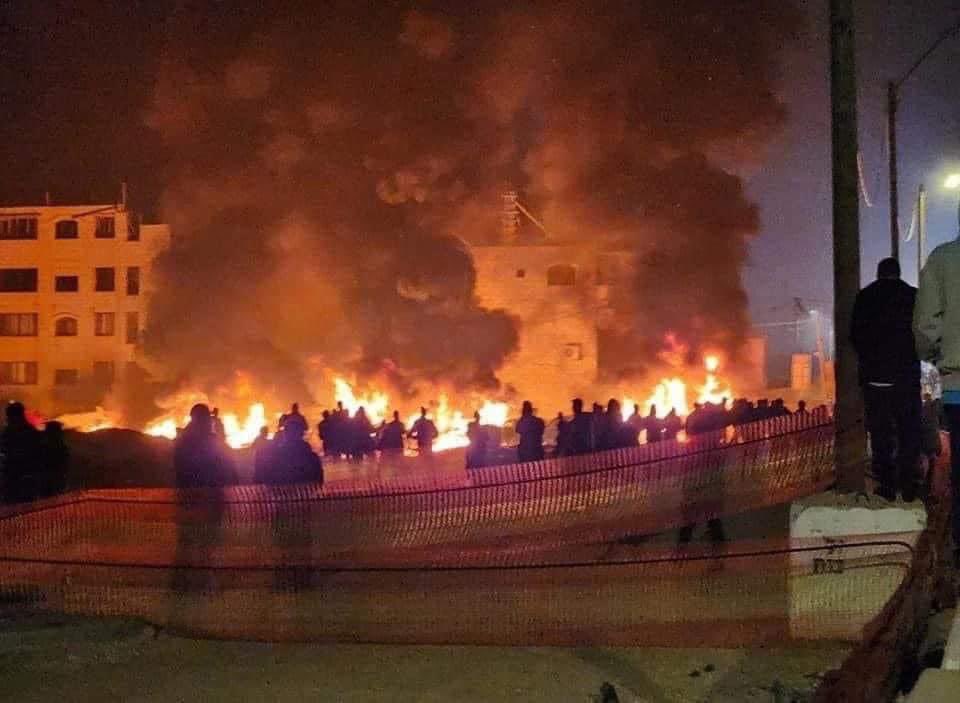
An image shared on Twitter of the chaotic scene in the northern West Bank town of Huwwara during an attack organised by Israeli settlers following an earlier fatal shooting (Twitter)

Ghassan Daghlas, a Palestinian activist monitoring the expansion of Israeli settlements in the northern West Bank, told Middle East Eye at least one shop was burned down as of 9:15pm local time.

"What the settlers are doing tonight are war crimes similar to the events of the Nakba and the attacks of the Zionist gangs," Daghlas said, referring to the violent "catastrophe" of 1948 that lead to the creation of the State of Israel.

Nine Palestinian families have had to be rescued from their burning homes, Israel's Channel 12 news reported.

'Our lives are in danger'


One Huwwara resident, Ziyad Dmaidi, told MEE that he barely got his family to safety before his home was set on fire.

Dmaidi was returning from work when he saw a group of settlers heading towards his house, he said, recalling a feeling of panic as he rushed inside to gather his family.

Within minutes "dozens of settlers" began smashing in windows, breaking into the house. The family escaped just as burning rubber tyres were thrown inside. His home was completely destroyed.

'Sounds of assault were louder than everything: swearing in Hebrew, smashing windows, burning ... It was very terrible'
- Fida Hamad, Huwwara resident

"I never thought about the house or all our stuff, I was only thinking about my children and how to save them from this nightmare," Dmaidi said.

"We got out of the house and off to safety with the help of the ambulance crews who were also attacked while trying to evacuate us.

"Our lives are in danger and all this is happening while the Israeli soldiers stand around waiting only to protect the settlers," he continued.

Fida Hamad, another resident, told MEE that the settlers' attack was the largest she had ever experienced and that houses were set on fire with families still inside.

Large clouds of smoke billowed throughout the town to the constant sounds of screaming, she said.

"We were sitting in our homes, and suddenly we heard explosions and screams of panic. We learnt that the settlers had attacked the town," Hamad recalled.

"My children started crying and I tried to calm them down, but the sounds of assault were louder than everything: swearing in Hebrew, smashing windows, burning vehicles, homes, and shops ... It was very terrible."

Palestinian Prime Minister Mohammad Shtayyeh charged the Israeli government with full responsibility for the attacks in Huwwara and urged the international community to provide protection to the civilian population.

Meanwhile, Aida Touma-Suleiman, a Palestinian member of the Israeli parliament, condemned the attacks, tweeting: "The settlers are committing a horrific crime tonight in Huwwara - burning homes while families are inside and wreaking havoc.

"They are acting in the spirit of the fascist government," Touma-Suleiman said. "I spoke to several ambassadors and asked them to intervene.

At least one Palestinian fire truck attempting to respond to the fires was attacked and its windows smashed. Several ambulances were also damaged, according to reports on social media. PRCS said they were prevented from reaching areas affected by the attacks in Huwwara for two hours.

Settlers 'seek revenge'

Earlier on Sunday, Hillel and Yagel Yaniv, two brothers from Har Bracha, an illegal settlement in the occupied West Bank, were fatally shot in their car while driving through Huwwara.

The assailant rammed the vehicle, before shooting at the two and fleeing the scene. Just after the shooting, Israel's military said it was pursuing the perpetrator.

Israeli settlers issued calls to organise a march to Huwwara on social media to "seek revenge" for the attacks.

"Israeli settlers have been terrorising the Palestinian communities today, in the occupied West Bank, attacking civilians and torching down houses and businesses," the official account of the Palestinian mission to the UK tweeted, sharing a video of one of the fires and tagging Foreign Secretary James Cleverly and two Foreign Office Twitter accounts.

The occupied West Bank is home to about 2.9 million Palestinians as well as an estimated 475,000 Jewish settlers who live in state-approved settlements that are illegal under international law.

Israeli Prime Minister Benjamin Netanyahu released a joint statement following Sunday's initial shooting, announcing that parliament had passed legislation approving the death penalty for Palestinians convicted of terrorism offences against Israelis.

"On this difficult day when two Israeli citizens were murdered in a Palestinian terrorist attack, there is nothing more symbolic than passing a death penalty law for terrorists," the statement read.

Earlier on Sunday, Israeli and Palestinian officials held talks in Jordan to try to secure calm in the West Bank and the Gaza Strip.

At least 62 Palestinians have been killed by Israelis this year, at a rate of more than one fatality per day. Meanwhile, 12 Israeli civilians and one police officer have been killed by Palestinians in the same period.

This follows a steep increase in violence in 2022 when at least 167 Palestinians were killed in the West Bank and East Jerusalem, the highest death toll in those territories in a single year since the Second Intifada. Palestinian attacks killed 30 Israelis last year.

Fayha Shalash reported from Ramallah and Sheren Khalel from Florida.

This article is available in French on Middle East Eye French edition.


Once again, Netanyahu tricks us on Jewish settlements

BY JONATHAN OFIR 
MONDOWEISS
BEZALEL SMOTRICH OF THE EXTREMIST RELIGIOUS ZIONISM PARTY MEETS WITH BENJAMIN NETANYAHU ON DEC. 1. FROM SMOTRICH’S TWITTER FEED.

Israel, Palestine, the US, Jordan and Egypt just held a one-day summit in the Jordanian city of Aqaba, yesterday, intended to cool down the flames in Israel-Palestine. Its main aim was to “build trust”. The nations issued a joint communique at its end, which stated that Israel was committed to stop “discussing setting up any new settlement units for four months and stop approving any new settlements for six months”, and that the two sides (Israel, Palestine) would work closely to “prevent further violence”, in the name of advancing toward a “just and lasting peace”, as Reuters reported.

But yesterday evening, Israeli Prime Minister Benjamin Netanyahu tweeted that the whole part about the settlement freeze was fake news. In Hebrew, he wrote that the headlines were “tweets” — just hearsay:

“In contradiction to the tweets, the building and the [retroactive] legalization [of outposts] in Judea and Samaria [biblical names for occupied Palestinian West Bank] will continue in accordance with the original timeline for planning and building, with no changes. There is no freeze and will be no freeze”.

How could it be? Was Reuters lying? Did the US just issue a lie without consulting Netanyahu?

Haaretz daily seeks to explain the discrepancy:

“In the joint announcement, there was no reference to freezing decisions that had already been made regarding construction in the settlements. Sources familiar with the talks told Haaretz that the thousands of housing units greenlit last week are all the construction plans that were ready for approval.”

So, the massive wave of construction permits – over 7,000 permits – was passed a few days prior to the summit, and will not be annulled by it. Likewise, the nine settler-outposts which were retroactively legalized, would not be affected by the supposed freeze. It’s a done deal.

It is worth reflecting upon the magnitude of those 7,000 permits. Last year Israel issued 4,427 permits for construction of Jewish settlements. In 2021, another 3,645 were approved. In other words, Israel has already processed a bulk of permits which far exceeds its tempo in the past years (in fact almost doubles it), so it has surely satiated its colonialist thirst for the coming six months of stoppage time.

Haaretz pretty much confirms that understanding. There’s not even a pause in pouring concrete:

“According to [sources familiar with the talks], the commitment not to discuss new construction in the settlements for four months does not constitute a real concession on Israel’s part. This is because the construction planning process requires a great deal of time and effort, so it would take several months regardless before the council could approve additional housing units.”

And these supposed concessions were being offered ahead of the summit. Fully a week ago, Haaretz reported that “Israel has informed the United States that it will not build or approve new Jewish settlements in the West Bank beyond the nine that were approved last week – a move which enraged Western leaders”.

Notice how the supposed liberal opposition leader Yair Lapid responded to that report of a concession a week ago:

“Opposition leader Yair Lapid said that ‘he was surprised that the government agreed to the freeze. We never agreed to this, despite repeated requests from the Americans’.”

So Lapid, the good guy as far as liberal Zionists are concerned, was basically boasting (at his party meeting), that he was tougher against the ‘Americans’, and that he was a tougher settler than Netanyahu. So much for opposition.

Michael Lynk, former United Nations Special Rapporteur for human rights in the occupied Palestinian territory, observed these political dynamics ahead of the summit when he wrote: “[O]n the other hand, Netanyahu’s far-right allies in the new government, particularly Itamar Ben Gvir and Betzalel Smotrich, were relatively quiet about the pause, indicating that they understood the prevailing American-Israeli quid pro quo on the settlements”.

That reference to “quid pro quo” means a deal that the United States cut with other countries at the United Nations Security Council to water down a resolution proposal by UAE, calling all the settlements what they are – “flagrant violations” of international law. The resolution morphed into a non-binding Security Council statement that avoids mentioning their illegality.

But that silence on the part of Netanyahu’s partners-in-war-crimes was temporary. Smotrich, who is now in multiple ministerial positions and poised to realize his full Apartheid plan, tweeted yesterday:

“I have no idea what they talked about or didn’t talk about in Jordan. I heard about this useless conference from the media just like you. But one thing I do know: there will be no freeze of the building and development in the settlement[s] not even for one day (it is under my authority)…”

Smotrich’s tweet was published exactly two hours before Netanyahu tweeted that there will be no freeze.

Following Smotrich’s tweet, his alter-ego and fellow Minister of National Security Ben-Gvir tweeted his own mockery of the summit:

“What happened in Jordan (if it happened), stays in Jordan”.

BEN-GVIR IN THE ILLEGAL JEWISH OUTPOST SETTLEMENT OF EVYATAR, CALLING FOR ITS LEGALIZATION, FEB. 27, 2023. FROM HIS TWITTER FEED.

So there you have it. The “freeze” was a trick. It wasn’t a real concession – it just sounded good. It gave Netanyahu the opportunity to have his cake and eat it. He’s now supposedly compromising, but the concessions were already made. When the noises come from the further right– and he is the most left member of his coalition!– about him being soft, he can assure them that he wasn’t.

This is very much like that now-famous secret video from 2001 (which surfaced a decade later), in which Netanyahu explained to a settler family how he manipulated the Oslo agreements, to avoid a “racing to the 1967 lines”:

“How did we do it? Defined Military zones, I said, are security zones. From my point of view, the Jordan Valley is a defined military zone, right?”

That video is where Netanyahu also boasted: “I know what America is, America is a thing you can move very easily, move it in the right direction. They won’t get in the way”.

Recall that Biden was in the Obama administration in December 2016 when it abstained on a UN Security Council resolution that described the settlements as a “flagrant” violation of international law. But Obama was a lame duck; and Biden is running for reelection.

That is enraging. But it should be equally shocking that Yair Lapid made a statement that echoes Netanyahu and Smotrich.

And so it continues. The Israeli settlement enterprise is a “national value”, as its quasi-constitutional ‘Nation-state’ law of 2018 states, and it specifies, exclusively, “Jewish settlement”.

It is not going away. It is not even freezing, not even temporarily. The minister now singularly in charge of it, Smotrich, says it won’t even freeze for a day. And these settlements sit at the very core of the whole matter. As Lynk writes:

“The settlements are the engine of the Israeli occupation, the “facts on the ground” for Israel’s looming quest to annex the West Bank, and the source of many of the human rights violations against the Palestinians living in East Jerusalem and the West Bank.”

It’s not complicated at all. In fact, Lynk notes, ”the illegality of the Israeli settlements is also one of the most settled issues in modern international law”.

And here we are discussing whether it’s freeze or no freeze, while Netanyahu, Smotrich and Ben-Gvir chuckle among themselves – they’ve tricked us again. We really are easy to move.

Study shows why conservatives may reject some pandemic measures

mask sign
Credit: Pixabay/CC0 Public Domain

A new study may reveal part of the reason why conservatives are more likely than liberals to reject some COVID-19 health measures: They see boundaries as restrictions.

Liberals were more likely to see some of the measures used in the pandemic—such as social distancing rules and plexiglass separators in restaurants and stores—as providing guidance, rather than restrictions.

"There seems to be a fundamental ideological difference in how people view boundaries," said Selin Malkoc, co-author of the study and professor of marketing at The Ohio State University's Fisher College of Business.

"Conservatives are more likely than liberals to see boundaries as a way to restrict what they can do."

And the finding doesn't apply only to politically charged topics: The study found ideological differences in how people viewed other types of boundaries, including a row of traffic cones and a three-sectioned plate.

But the findings also showed a way to describe boundaries that make them more appealing to conservatives.

The study was led by Jianna Jin, a doctoral student in marketing at Ohio State. Russell Fazio, professor of psychology, was also a co-author. The research was published recently in the Journal of Experimental Psychology: General.

In a series of four studies—three with online samples and one with college undergraduates—participants responded to various types of boundaries, indicating whether they saw them as guidance or restrictions.

In one of the studies, participants were shown a photo of a social distancing sign indicating where people should stand to stay 6 feet apart at a restaurant. Participants rated the sign on a scale of 1-7 in which 1 was "The sign seems to guide where customers can or cannot stand" and 7 was the "The sign seems to restrict where customers can or cannot stand."

The other studies were similar, but asked about partitioned time slots to pick up groceries (to "structure" when they can or cannot pick up their items versus "restrict"), a row of traffic cones (that "guide" where people can or cannot go versus "restrict"), or a three-sectioned plate (to "control" your meal portions versus "restrict").

In all four studies, people who indicated their  as conservative were more likely to see these boundaries as restrictions rather than guidance—even in the studies on their views concerning the plate partitions and traffic cones, which were not political.

When they began the study, the researchers weren't sure that conservatives would be more likely to see boundaries as restrictions, Jin said. Other research suggests conservatives have a stronger need for structure and order and thus could prefer an organized environment. So they could have seen boundaries as being more positive.

"For example, if you think about a set of traffic cones arranged in a row, they can be viewed as both 'restricting' and 'structuring' the traffic flow," Jin said. "It could be that conservatives would appreciate the structure that boundaries provide."

A follow-up study investigated further how conservatives felt about structure.

In that study, a different group of participants gave their reactions to a set of 16 words as quickly as possible, rating them on a 7-point scale from "very negative" to "very positive."

The researchers were interested in four target words—structure, guidance, guidelines and control—chosen to convey a sense of orderliness and predictability that is associated with structure.

As the researchers expected, findings showed that conservative participants were more favorable to the structure-related words.

So what would happen if messages about COVID-19 health measures emphasized how boundaries provided structure? Another study investigated that question.

Online participants completed the same social distancing sign task from the previous study: They were shown a photo of a social distancing sign indicating where people should stand to stay 6 feet apart at a restaurant.

But in this case, some participants read an additional line that said "arrow stickers on the floor are placed to structure the customer flow." Others read a line that said the arrows restricted customer flow or saw no additional line of text.

Results showed that  participants had a more positive attitude toward the sign when they were told it provided structure versus when they were told it restricted customers or when they received no message about the sign.

People who identified as highly liberal actually showed less favorability toward the sign when it said it structured customer flow. This might be because of the political climate surrounding the social distancing signs, Malkoc said.

"They may have thought the structure framing of the message suggested too lax enforcement of social distancing," she said.

The results show that conservatives and liberals inherently differ in how they think of the same boundary, Malkoc said.

"But the words used to explain these  can help focus attention on how they provide structure—and thus appeal more to conservatives," she said.

More information: Jianna Jin et al, For whom do boundaries become restrictions? The role of political orientation., Journal of Experimental Psychology: General (2023). DOI: 10.1037/xge0001361

Mapping the 'memory loss' of disinformation in fact checks

fake fact
Credit: Pixabay/CC0 Public Domain

Fact-checking is an important tool in the fight against online disinformation that can have serious implications for individuals and society by influencing elections, conflict and health. However, according to a survey conducted as part of the vera.ai project, the crucial task of archiving appearances of disinformation is made extremely difficult by anti-scraping measures taken by social media platforms such as Facebook and Instagram.

What happens in this case? There are fewer documented fact checks, and less evidence of disinformation traces. As reported in a paper posted on the "Digital Methods Initiative" website, "many links to content disappear (erased by platforms, by end-users, or kept within private groups after debunks)." This harms fact-checking memory and hampers social scientists' efforts to assess the scope of disinformation on different platforms.

The focus on Ukraine

But what is the actual extent of fact-checking "memory loss?" To answer this question, researchers at vera.ai project partner University of Amsterdam, the Netherlands, used the "War in Ukraine" fact-check dataset published by the European Digital Media Observatory (EDMO). They analyzed 1,991 fact-checking articles, extracting more than 41,000 links, of which 6,002 were archived .

The team identified the multiple  organizations contributing to archiving links, their contribution count and their country. They also investigated the evolution of the publications over time as the Ukraine war progressed.

The study revealed that at least 15% of the archived content links on EDMO's "War in Ukraine" dataset are poorly archived. "The '' is even more important as many errors due to unplayable videos have been identified during a manual analysis of a sample of 100 links," the authors report in the paper. Additionally, 23% of the non-archived Facebook links in the same dataset have missing content.

The  services used are also discussed: "Three main services (archive.today and its satellite sites with 44.1% in the dataset, 29.2% and 26.6%) are currently dominating the field. While archive.today relies on advertising, perma.cc is a freemium and commercial service built at Harvard University while the US Wayback Machine / Internet Archive remains the free-access web archive. Their use by fact checking organizations rely often on their ability to archive content from platforms and especially from Facebook, due to anti-bots and anti-scraping measures."

The researchers also found that although platform pages seem to remain accessible, many of them display archived warnings of different types of archiving issues ranging from login barriers to unplayable video content. Next, the vera.ai: VERification Assisted by Artificial Intelligence team intend to extend their study to more datasets.

More information: Mapping the 'memory loss' of disinformation in fact checks. wiki.digitalmethods.net/Dmi/Wi … 023MappingMemoryLoss


Provided by CORDIS 

EU calls out Twitter for incomplete disinformation report