Friday, April 21, 2023

North Korean hackers breach software firm in significant cyberattack
ERIC SCHMIDT CEO OF GOOGLE VISITED NK 2013


Story by Sean Lyngaas • Yesterday 

Suspected North Korean hackers infiltrated a software firm that claims hundreds of thousands of customers around the world in a cyberattack that shows Pyongyang’s advanced hacking capabilities, private investigators said Thursday.

CNN A look at the US sting operation to catch North Korean crypto hackers
Duration 3:08   View on Watch

The breach of the software firm 3CX, discovered last month, provided a potential foothold for the North Koreans into a huge swath of multinational firms – from hotel chains to health care providers – that use the firm’s software for voice and video calls.

The number of companies affected by the hack and what the hackers ultimately did with access to victim networks remain unclear. But it’s the latest evidence that North Korean hackers are pulling out all the stops to break into organizations to steal or spy on them in support of dictator Kim Jong Un’s strategic interests.

The hack shows “an increased level of cyber offensive capability by North Korean” operatives, said Charles Carmakal, chief technology officer at Mandiant Consulting, which 3CX hired to investigate the hack.

A recent CNN investigation found a rampant effort by North Korean hackers to steal cryptocurrency and launder it into hard cash that might help fund the regime’s weapon’s programs. Such North Korean cyber activity is part of regular intelligence products presented to senior US officials, sometimes including President Joe Biden, a senior US official previously told CNN.

In the case of 3CX, Mandiant said the hackers wormed their way into company’s software production environment by first compromising software made by another firm, derivatives trading platform Trading Technologies. A 3CX employee downloaded the now-defunct Trading Technologies software that the hackers had tampered with, according to Mandiant.

“This is the first time that we’ve ever found concrete evidence of a supply chain attack leading to another supply chain attack,” Carmakal told reporters Wednesday.

Yet the impact of the hack is unclear. Any of 3CX’s customers that downloaded the bugged software would have been susceptible to compromise. But the North Koreans likely singled out a much smaller number of victims for follow-on activity on their network, according to US cybersecurity firm CrowdStrike.

The suspected North Korean hackers did use the 3CX access to target cryptocurrency firms late last month, Georgy Kucherin, a researcher at Russian cybersecurity firm Kaspersky told CNN.

Kucherin said his firm saw the hackers trying to deploy malicious code on “less than 10 computers” but blocked their efforts, “so nothing was stolen.”

Nick Galea, 3CX’s CEO, on March 30 downplayed the scope of the incident, telling CNN that “very few” of his customers appeared to be “actually compromised” by the hackers. But in an email on Thursday, Galea said he doesn’t know how many customers ultimately downloaded the tampered 3CX software, or how many customers saw follow-on hacking activity.

3CX has instructed customers on how to update their software and check for compromise.

Trading Technologies has not been able to verify Mandiant’s findings yet because the company just became aware of the issue last week, a spokesperson for Trading Technologies told CNN on Thursday

“What we do know with certainty is that 3CX is not a vendor or a customer of Trading Technologies,” the Trading Technologies spokesperson said. “We would also emphasize that this incident is completely unrelated to the current TT platform.”

US officials join the investigation

The hack sent US officials and private executives scrambling to determine how many American organizations might be affected.

The US Cybersecurity and Infrastructure Security agency “continues to work with government and private sector partners to understand impacts from this intrusion campaign,” an agency spokesperson told CNN on Thursday. “In many cases, outstanding work by the cybersecurity community avoided significant harm for many potential victims.”

Sweeping supply chain hacks are typically associated with state-linked hackers from China or Russia, said Adam Meyers, vice president of intelligence at CrowdStrike.

“The fact that it’s North Korea … shows that this is an actor that does have supply chain capabilities and aspirations, and can have effects from them,” Meyers told CNN.
IMPERIALISM IN SPACE
Space Force chief says U.S. is facing a 'new era' of threats beyond Earth

Story by Morgan Brennan • Yesterday 

Gen. Chance Saltzman of the U.S. Space Force describes what he says is a new era of space activity.

"The threats that we face to our on-orbit capabilities from our strategic competitors [have] grown substantially," Saltzman said in a CNBC interview.

The message comes at a key moment as space rapidly commercializes and a heightened geopolitical backdrop increasingly sees threats extending beyond Earth.


US Space Force General B. Chance Saltzman, Chief of Space Operations, testifies about the Fiscal Year 2024 Budget request during a Senate Armed Services Subcommittee on Strategic Forces hearing on Capitol Hill in Washington, DC, March 14, 2023.
 (Photo by SAUL LOEB / AFP) 

When Gen. Chance Saltzman took the stage for his keynote at the Space Symposium in Colorado Springs, Colorado, this week, his message was simple: The U.S. is in a new era of space activity.

"The threats that we face to our on-orbit capabilities from our strategic competitors [have] grown substantially," Saltzman, the U.S. Space Force's second-ever chief of space operations, said in a CNBC interview after the speech. "The congestion we're seeing in space with tracked objects and the number of satellite payloads, and just the launches themselves, have grown at an exponential rate."

"I want to make sure that we are thinking about our processes and procedures differently," he said in an interview for CNBC's "Manifest Space" podcast, his first broadcast interview since becoming the service's highest-ranking military official last November.

The message comes at a key moment as space rapidly commercializes and a heightened geopolitical backdrop increasingly sees threats extending beyond Earth to a domain for which rules of engagement remain unclear.

Follow and listen to CNBC's "Manifest Space" podcast, hosted by Morgan Brennan, wherever you get your podcasts.


Military experts say space is likely to be the front line in any future conflicts – a battlefield that could extend to the private sector and impact civilians in real time. Look no further than Russia's invasion of Ukraine as an example: Recall the unprecedented cyberattack on the European communications network of U.S. satellite operator Viasat just as Russian soldiers mobilized to cross sovereign boundaries.

Saltzman said the space-based tactics of adversaries like Russia and China run the gamut, from the communications jamming of the GPS constellation; to lasers and "dazzlers" that interfere with cameras on-orbit to prevent imagery collection; to anti-satellite missiles like the one Russia tested in late 2021.

"We're seeing satellites that actually can grab another satellite, grapple with it and pull it out of its operational orbit. These are all capabilities they're demonstrating on-orbit today, and so the mix of these weapons and the pace with which they've been developed are very concerning," he said.

It speaks to why, despite a wave of fervent debate, the Space Force was briskly stood up in 2019 as the first new branch of the U.S. armed services in seven decades.

To respond to evolving threats and secure space assets more quickly, Saltzman is looking to further augment the service's capabilities to make satellite constellations more resilient and acquire more launch services by tapping into a burgeoning cadre of commercial space players.

Case in point: the Space Force's recently announced procurement strategy for more launch services. The new "dual-lane acquisition approach" is intended to create more opportunities for rocket startups to compete for national security launch contracts.

With business to be awarded next year, the National Security Space Launch Phase 3 is estimated to run into the billions of dollars and is expected to draw bids from the likes of Rocket Lab, Relativity Space and Jeff Bezos' Blue Origin, among others. Phase 2 awards went to SpaceX and United Launch Alliance, a joint venture of Lockheed Martin and Boeing.

An expanding budget helps, too. While still just a fraction of the country's overall defense budget, the Space Force's $30 billion request for fiscal 2024 represents a 15% increase from this year's enacted levels.

"This is a team sport and none of us is going to be successful going in alone," Saltzman said.

"Manifest Space," hosted by CNBC's Morgan Brennan, focuses on the billionaires and brains behind the ever-expanding opportunities beyond our atmosphere. Brennan holds conversations with the mega moguls, industry leaders and startups in today's satellite, space and defense industries. In "Manifest Space," sit back, relax and prepare for liftoff.
CHAUVINIST, SEXIST MALE BOSS DISPARAGES WOMEN WORKERS
CEO says many of his remote workers didn't open their laptops for a month, and 'only the rarest of full-time caregivers' can be productive employees

Story by insider@insider.com (Sindhu Sundar) • Yesterday 


Clearlink CEO James Clarke said many remote workers weren't even opening their laptops, according to a video posted by Vice. 
Screenshot/Vice

Clearlink CEO James Clarke said remote workers "quietly quit" and didn't open laptops in a month, Vice reported.

He also seemed to suggest caregivers aren't as "productive" at work, per a video posted by Vice.
A representative didn't address the remarks, but said Clarke "could not be more excited" for the company.

Clearlink's CEO James Clarke reportedly told employees that he believed many remote workers have "quietly quit" and become so brazen that dozens at his company "didn't even open" their laptops for a month.

Clarke, who founded the marketing and tech company based in Utah, made the remarks this month while addressing the company's return-to-office mandate, Vice first reported. The company has asked most of its employees in Utah to be in the office four days a week, a Clearlink representative confirmed to Insider.

Clarke also appeared to laud the work ethic of one employee who he said "sold their family dog" in order to rise to expectations at work, contrasting it with others who he said "quietly quit their positions, but are taking a paycheck," according to a video of the executive's meeting with employees that was posted by Vice, where part of his speech could be heard.


"In one month this year alone, I got data that about 30 of you didn't even open or crack open laptops," he said in the video. "And those were all remote employees, including their manager — for a whole month."

At one point, he also appeared to question whether employees with caregiving responsibilities could be as committed to their jobs, addressing arguments about the subject.

"Many of you have tried to tend your own children, and, doing so, also manage your demanding work schedules and responsibilities," he said in the video.


"And while I know you're doing your best — some would say they've even mastered this art — but one could also argue that generally, this path is neither fair to your employer, nor fair to those children," he added.

"Now, I don't necessarily believe that, but I do believe that only the rarest of full-time caregivers can also be productive and full-time employees at the same time," he said.

A company representative declined to comment on Clarke's comments at the meeting, saying it was a matter of "internal Clearlink business," but offered a general statement.

"James Clarke could not be more excited about the future of the company that he founded over 20 years ago, to which he returned in 2022 as CEO," the Clearlink representative said.

"We look forward to having these team members join us at our new world-class Global Headquarters in Draper, UT and appreciate the efforts of all of our committed team members–which includes those who work in office and those who will continue to work remotely–as we accomplish our best work together," the statement said.

Clearlink is a private company with 800 employees, a company representative told Insider.

Clarke's critiques of remote work echoed some common CEO grievances in recent months about the phenomenon — banking industry leaders including JP Morgan's Jamie Dimon and Morgan Stanley's James Gorman are among those who have called for employees to be in the office, arguing for the benefits of working in person.


Whose Family Values?

Women and the Social Reproduction of Capitalism

"proletarii, propertyless citizens whose service to the State was to raise children (proles).”
Classical Antiquity; Rome, Perry Anderson, Passages from Antiquity to Feudalism, Verso Press 1974


Pro-life movement is the dog that caught the car

Opinion by B.J. Rudell, opinion contributor • Yesterday 

For half a century, the pro-life movement resided in a self-made and self-contained cocoon, operating with equal parts political savvy and practical ignorance.


Pro-life movement is the dog that caught the car© Provided by The Hill

Politically, they hammered the consistently more popular pro-choice position, seemingly made permanent by Roe v. Wade. They demanded the eradication of women’s bodily autonomy in favor of the unborn’s bodily autonomy — even if that “body” was merely a cluster of cells.

The movement pinned down progressives and their pro-choice allies, drawing out votes and public statements based not on when abortions should be legal, but rather when they should be illegal. Pro-life proponents turned a little-known procedure and an amorphous timeframe into a push for a “partial-birth abortion” ban, tying late-term and at times even second-trimester abortions to infanticide, suggesting that women regularly conspired with doctors to simply murder babies they no longer wanted.
The movement fed off of horror and disgust from the right, as well as the left’s disunity governing the sliding scale of abortion rights.

The power of the pro-life movement was that it would never quit and never compromise. Its disciples were true believers in the unborn’s “sanctity of human life.” For half a century, Republicans advanced an absolutist, unforgiving, immovable position. As written in the GOP’s most recent party platform, “the unborn child has a fundamental right to life which cannot be infringed.”

The long game was brutally effective.

A significantly higher percentage of pro-life voters became single-issue voters compared to their pro-choice counterparts. Red states began chipping away at Roe’s foundation, backed by a motivated corps of arguably the nation’s most rabid conservative operation.

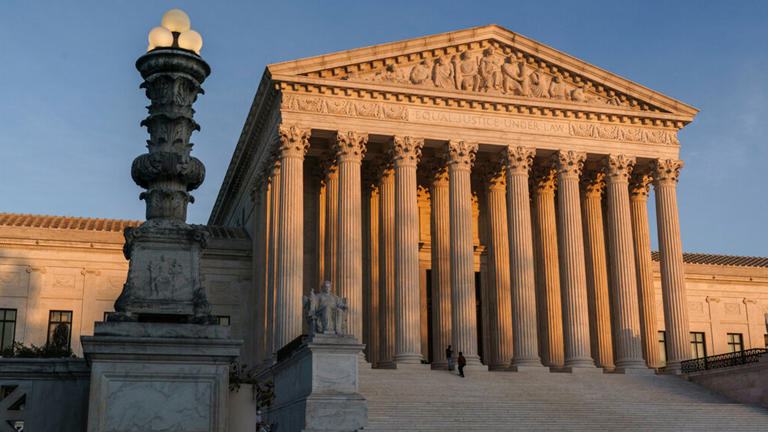
But in the aftermath of last year’s Dobbs v. Jackson Women’s Health Organization ruling by the Supreme Court, something strange happened: The pro-life movement’s muted celebration looked more like the end of a midseason baseball game than the end of a 50-year battle for supremacy.

In most red-dominated states, they waited months to change abortion laws. For example, it took ultra-pro-life Florida nearly a year to get something on the books.

Think about that: A governor whose increasingly dim path to the White House cuts straight through the pro-life movement couldn’t get a deal done until 11 months after the leak of the Supreme Court’s Dobbs ruling, and 10 months after the ruling went into effect — and by most accounts, his actions did little to bolster support for his flailing non-candidacy, while also generating increased ire from the nation’s much larger pro-choice population.

This is where political savvy and practical ignorance collide.

The GOP’s pro-life commandment has no wiggle room.

For half a century, they decreed that from the moment of conception, a human life is created and that life has a “fundamental right” to continue living. No questions asked. No exceptions.

But Dobbs changed the game. After two generations of platitudes disguised as policy, Republicans were handed the legal means to eradicate abortion — to live up to the principles of their most sacred doctrine.

And then states like Florida waited months — close to a year — hemming and hawing on devising a political solution to what for 50 years had supposedly been their holy humanitarian mission.

Why the delays? Why the exceptions for rape, incest, and the life of the child bearer? Why is the perennial frontrunner for the GOP presidential nomination largely silent on whether to ban abortions?

Because this movement was never pro-life.

During Roe, they could be stridently rigid. But with the onset of Dobbs, once they were forced to act on these supposed convictions, they’ve appeared woefully unprepared. They clearly never planned for this shift in responsibility — from tyrannical evangelicals to politically calculating legislators.

It has become evident that Republicans are, in actuality, “partial lifers.”

There is a sliding scale of what’s acceptable politically, and they’re desperately trying to figure out where that is. It’s no longer about protecting life from the moment of conception; it’s about protecting their political careers through the moment the polls close.

And now, they must rein in an increasingly divided flock while fending off an increasingly motivated opposition.

These are trying times for a majority of Americans who believe that a woman — not the government — should have ultimate control over her body. If there can be any silver lining in these otherwise horrific developments, it’s that this new “partial-life movement” — once one of the nation’s most dominant political forces — has been exposed as a feckless morass of contradictions.

Ahead of 2024, the timing couldn’t be better for a reinvigorated and more unified pro-choice America.

B.J. Rudell is a longtime political strategist, former associate director for Duke University’s Center for Politics, and recent North Carolina Democratic Party operative. In a career encompassing stints on Capitol Hill, on presidential campaigns, in a newsroom, in classrooms, and for a consulting firm, he has authored three books and has shared political insights across all media platforms, including for CNN and Fox News.

The Hill.
American Medical Association president calls abortion pill ruling 'most brazen attack on Americans' health'

Story by Lindsay Kornick • Yesterday 

A New York Times guest essay by American Medical Association president Jack Resnick, Jr. blasted the legal challenge against the abortion pill mifepristone as "one of the most brazen attacks yet against reproductive health."

Earlier this month, U.S. District Judge Matthew J. Kacsmaryk issued an injunction to halt the Food and Drug Administration (FDA)’s approval of the drug. Although the pill was previously approved in 2000, the FDA made drugs like mifepristone more widely available under the Biden administration.

Many Democratic officials and medical organizations came out against the decision with Resnick calling it "a chilling attempt to intimidate patients and physicians alike" over various other drugs.

"With ever-growing anti-science aggression, disinformation campaigns and vitriol about all types of medical advancements, there is no telling where the court challenges may lead — perhaps even to widely used drugs now sold over the counter to treat pain, allergies or heartburn that happen to have been studied with fetal stem cells," Resnick wrote.


Mifepristone is at the center of a controversy after a district judge filed an injunction against FDA approval. REUTERS/Evleyn Hockstein© REUTERS/Evleyn Hockstein

Kacsmaryk’s decision was partially overturned by the 5th U.S. Circuit Court of Appeals, though it maintained restrictions for mifepristone to only be dispensed up to seven weeks and not be delivered by mail. The Supreme Court also allowed temporary access to the drug until Friday after the Department of Justice (DOJ) appealed the case.

Resnick claimed that, should the Supreme Court choose to not remove all restrictions on the drug, it would compromise "the integrity of the long-established F.D.A.-approval process and whether we want science — or ideologues — informing decisions about our individual and collective health."

"We simply cannot be a country where your access to the care you need is determined by the whims of ideologically driven judges and lawmakers without medical or scientific training. That’s why a dozen of the nation’s leading medical organizations, including the one I head, the American Medical Association, strongly oppose this politically motivated assault on patient and physician autonomy and have filed amicus briefs to make our case," Resnick wrote.


The Supreme Court allowed temporary access to the pill until Friday. 

He added, "We cannot allow pseudoscience and speculation to override the substantial weight of scientific evidence from more than 100 studies and millions of patients that confirm the safety and efficacy of a drug or course of treatment."

The American Medical Association, which is one of the largest health care associations in the country, previously referred to abortion restrictions as a "violation of human rights" ahead of the Supreme Court overturning Roe v. Wade in June.

"Responding to the growing threat of over-policing and surveillance of reproductive health services, the nation’s physicians and medical students at the AMA Annual Meeting adopted policy recognizing that it is a violation of human rights when government intrudes into medicine and impedes access to safe, evidence-based reproductive health services, including abortion and contraception," the statement read.


The American Medical Association referred to abortion restrictions as a "violation" of human rights. 


The American Medical Association also called for the DOJ to investigate "disinformation campaigns" against hospitals providing transgender surgeries for minors.
Ugandan president refuses to sign LGBTQ bill, seeks changes

KAMPALA, Uganda (AP) — President Yoweri Museveni of Uganda has refused to sign into law a controversial new bill against homosexuality that prescribes the death penalty in some cases, requesting that it should be amended.

Museveni's decision was announced late Thursday after a meeting of lawmakers in his ruling party, almost all of whom support the bill approved by lawmakers last month.

The meeting resolved to return the bill to the national assembly “with proposals for its improvement,” a statement said.

It was not immediately clear what the president's recommendations were. Homosexuality is already illegal in the East African country under a colonial-era law criminalizing sex acts “against the order of nature." The punishment for that offense is life imprisonment.

Museveni is under pressure from the international community to veto the bill, which needs his signature to become law. The U.S. has warned of economic consequences if the legislation is enacted. A group of U.N. experts has described the bill, if enacted, as “an egregious violation of human rights.”

But the bill has wide support in Uganda, including among church leaders. It was introduced by an opposition lawmaker who said his goal was to punish the “promotion, recruitment and funding” of LGBTQ activities in the country. Only two of 389 legislators present for the voting session opposed the bill.

Related video: LGBTQ Kenyans face backlash after rights group’s court win
(France 24)  Duration 1:43  View on Watch

 The bill prescribes the death penalty for the offense of “aggravated homosexuality,” and life imprisonment for “homosexuality.”

Aggravated homosexuality is defined as cases of sexual relations involving people infected with HIV as well as minors and other categories of vulnerable people.

Jail terms of up to 20 years are proposed for those who advocate or promote the rights of LGBTQ people.

A suspect convicted of “attempted aggravated homosexuality” can be jailed for 14 years and the offense of “attempted homosexuality” is punishable by up to 10 years, according to the bill.

Anti-gay sentiment in Uganda has grown in recent weeks amid press reports alleging sodomy in boarding schools, including a prestigious one for boys where a parent accused a teacher of abusing her son.

The decision in February of the Church of England to bless civil marriages of same-sex couples also has angered many in Uganda and elsewhere in Africa, including some who see homosexuality as imported from abroad.

Homosexuality is criminalized in more than 30 of Africa’s 54 countries.

Rodney Muhumuza, The Associated Press


RIGHT WING POSTMEDIA HAIR ON FIRE
Public Health Agency of Canada report calls for toppling of 'capitalism and liberty'

Opinion by Tristin Hopper •  National Post  Yesterday


The report concludes that climate change and poor public health are caused by many of the same things: “White supremacy, capitalism, colonialism, and racism.”

A new Health Canada report suggests public health officials should be openly advocating for the toppling of capitalism, Western society and even the very concept of “liberty and individualism.”

“Fundamental changes in our socioeconomic structures are needed to rebuild our relationships with each other and with our planet,” reads the conclusion of the April 17 report prepared for chief public health officer Dr. Theresa Tam.

The paper — written by three authors who “identify as white settlers” — also recommended that Canadian public health actions should focus on “decolonization, justice and equity” above all.

The 72-page report, What We Heard: Perspectives on Climate Change and Public Health in Canada, was commissioned to detail the “impacts of climate change on the health and well-being of people living in Canada.” The authors surveyed 30 academics and public health experts for their input.

There are indeed a number of emerging public health issues spurred by a warming climate. One example is an expansion of the ranges for disease-carrying mosquitoes, vastly increasing the number of people potentially exposed to malaria, dengue fever and West Nile virus.

But the Health Canada report is careful not to get into specifics: There is no explicit mention of a condition or infectious illness that is expected to become worse in Canada as a result of climate change.

Rather, the report features Canadian public health professionals explaining how they should focus on “less tangible determinants,” such as “legal, colonial and racist factors.”

“If we don’t address capitalism, if we don’t address colonialism, racism, the patriarchy, et cetera, we’re going to tread water for a long time until we eventually drown,” reads one expert quoted in the report.

“It’s really about the foundations of our society, the capitalist system, the culture of extraction — and we need to change that. How do we do that?” said another.


One respondent delivered a lengthy explanation of why the “core values” of Western society stood in their way, most notably the concept of “liberty and individualism.”

“It advances the individual over the collective, it says ‘as long as I get what I want, bugger you,’ and it leads to a huge number of problems, and it undermines the collective process,” they said.

The report distills the views of 30 Canadian public health officials and academics deemed to “have some understanding of the role of public health systems.”

This includes many already at top levels in the Canadian public health establishment, as well as three Canada Research chairs. Among them are Sandra Allison, formerly chief medical health officer for Northern B.C., and Cristin Muecke, regional medical officer of health for the Northern Region of Nova Scotia.

Also solicited were Trevor Hancock, the first leader of the Green Party of Canada, and Melissa Lem, a Vancouver family physician who pioneered the idea of prescribing nature to patients.

All 30 were asked, either in focus groups or in one-on-one interviews, “what roles should the public health system play and why?”

Ultimately, the report concludes that climate change and poor public health are caused by many of the same things: “White supremacy, capitalism, colonialism and racism.”

The report is clear that its content comes from “uninvited land occupiers.” Yet, the authors say they are sensitive to Indigenous perspectives.

“Collectively, we have a deep appreciation for Indigenous Peoples’ close and continuing relationship to the land and waters that we live upon and we are committed to a lifelong learning journey toward becoming good guests here,” reads an opening statement.

Another theme was that public health officials should be more “courageous” in pushing for policy typically considered outside their purview.

This included promoting “low meat” diets, designing housing policy, and advocating against the extraction and use of fossil fuels.

“Practically speaking, a lot of public health people want to be making the connections, but they are literally not given the mandate or the permission to because it’s not seen to be within their box,” said one.

The report acknowledges that there may be public or official pushback to this kind of “speaking out” from health agencies, and recommends these bodies be insulated against the usual avenues of accountability.

“Health systems should be independently governed or at least arm’s length from government structures to be free of fear of repercussions,” it reads.

Recent polls show that Canadians’ trust in public health agencies remains high in the wake of the COVID-19 pandemic, even as public trust in politicians has fallen. Polls have also shown that up to 90 per cent of Canadians agree that climate change is occurring, with as much as 70 per cent supporting a move to lower carbon usage.

Nevertheless, one respondent to the report said they believed the exact opposite was occurring on both points.

“Public health is under attack in some provinces … and there’s this climate change denial that we all know is being fuelled by the fossil fuel sector. So, my worry is that with public health that we won’t actually be able to get out there and do what we need to do,” they said.

The report also contained the near-unanimous pronouncement that public health agencies should receive more funding, even at the expense of the primary health care system. The reasoning behind that is if public heath has more money to improve society and fight climate change, fewer people will be going to the hospital.

“Not only would the primary health-care system require less funding but staff would be less overwhelmed in their duties, especially as health issues related to climate change intensify,” it reads.


Life satisfaction among young people linked to collectivism
Loyalty to family and mutual assistance are important regardless of culture
NATIONAL RESEARCH UNIVERSITY HIGHER SCHOOL OF ECONOMICS
Indigenous groups going to court over Quebec's French-language reforms

Story by The Canadian Press • Yesterday 

MONTREAL — Two Indigenous groups are going to court over the reforms passed last year to Quebec's French-language law, with lawyers filing a request for a judicial review on Thursday.


The Assembly of First Nations Quebec-Labrador and the First Nations Education Council are asking Quebec Superior Court to look at 14 articles in the Charter of the French Language, which was amended by Bill 96 last June. They have argued the provisions infringe on their rights to self-determination and to teach children their ancestral languages, as stipulated in the Constitution Act of 1982.

"The provisions reinforce, perpetuate and accentuate the disparities between Indigenous students and non-Indigenous people in education, deepened by policies and assimilationist laws implemented historically by the state and the education system towards Indigenous Peoples," read the request for judicial review.

The groups have accused the government of failing to consult them before adopting the law, which reinforces the use of French across several institutions, including the education and justice systems.

“There is no nation on the planet that is going to impose legislation on another nation and their language,” said Chief John Martin, of the Mi'kmaq community of Gesgapegiag and a member of the education council.

Martin said First Nations are best suited to choose which measures are necessary to ensure culturally appropriate education.

Related video: Quebec researchers crying foul after anti-racism training cancelled (Global News)   Duration 2:18   View on Watch


He said the province's language law reform "promotes the exodus of our learners outside of the province." The provisions, which include more stringent French requirements at the junior college level, create another obstacle for those Indigenous communities where the most common non-Indigenous language spoken is English.

“The culture in our communities is not francophone," Martin said. "Indigenous languages are very present and the second language is English (so) when we face a language that we do not hear, to which we are not exposed, it is extremely difficult for our students."

A request from Indigenous communities to be exempt from the language law was refused by the Quebec government.


Chief Ghislain Picard of the Assembly of First Nations Quebec-Labrador said the Quebec government is using methods of assimilation that date from another century.

‘’In the face of the offhand treatment by the government of Quebec, and its indifference to our concerns about a law that will have significant medium- and long-term impacts on several spheres of our development, we have no choice but to assert our rights before the court," Picard said in a statement.


Sipi Flamand, chief of the Atikamekw Council of Manawan, said the law is a direct attack on the languages and cultural identities of the First Nations and Inuit and that it creates "multiple systemic and discriminatory barriers in the educational pathway of Nations youth and jeopardizes the transmission of our languages."

The Quebec government has said it wants to introduce a law protecting Indigenous languages, but Indigenous groups are opposed to the idea.

“It is not acceptable that Quebec wants to do that," Martin said. "These are our inherent rights, these are rights that are protected in the Constitution and we do not accept the fact that another government is going to impose legislation on Indigenous languages here."

This report by The Canadian Press was first published April 20, 2023.

Pierre Saint-Arnaud, The Canadian Press
ISLAMOPHOBIA IS NOT SECULARISM
Quebec bans use of classrooms as prayer spaces

Story by CBC/Radio-Canada • Yesterday

Quebec's education minister officially prohibited schools from transforming classrooms into prayer rooms Wednesday, as announced two weeks ago.


Quebec Education Minister Bernard Drainville responds to the Opposition during question period at the legislature in Quebec City, Wednesday, March 29, 2023. Drainville says it will soon be forbidden to have prayer rooms in the province's public schools.© Jacques Boissinot/The Canadian Press

"Schools are places of learning, not places of worship," said Bernard Drainville.

The guidelines put out by the Education Ministry say that "the development of places used for the purposes of religious practices" is "incompatible with the principle of the religious neutrality of the state" and "that it is likely to have an impact on the proper functioning of schools."

The minister also says that using classrooms to pray goes against secularism laws, which require that schools respect the separation of the state and religion

The guidelines state that students must be protected "from any direct or indirect pressure aimed at exposing them or influencing them so that they conform to a religious practice."

When an establishment goes against the guidelines, the school's director must take "the necessary means so that the appropriate corrective measures are taken," the document said.

Immediate backlash

Québec Solidaire's spokesperson for education, Ruba Ghazal, denounced Drainville's guidelines on Twitter Wednesday.

"It took [the minister] two weeks to write guidelines that are neither clear nor enforceable," she wrote.

"Are the teachers going to watch the halls and the schoolyards in case [students gather to pray]?"

Representatives from several mosques with the Table de concertation des organismes musulmans expressed their shock and indignation at the decision and said they are looking into legal options to rescind the ban.

The Canadian Muslim Forum (FMC-CMF) said in a news release it "calls on all political parties in Quebec to work together to unify society," and that the prayer-room ban "reinforces the regrettable impression that Quebec students are stigmatized because of their cultural and ethnic origins and that their fundamental rights have been violated."

It stresses that the use of classrooms for prayer has only happened a handful of times and for a few minutes during breaks, outside school lesson hours and with the permission of the administration.

"This approach places the educational environment once again within the framework of political polarization in Quebec and in the circle of societal tensions by imposing on Quebec students a strong sense of inferiority, injustice and double standards, two measures," said the FMC-CMF.

'Pray silently'

In early April, Drainville commented on a story reported by Cogeco Nouvelles that Laval high schools allowed students to pray in classrooms because they were gathering in stairwells or parking lots.

Claiming that he could not ban prayer at school, he invited the students to do so silently.

"There are all kinds of ways to pray. No, I can't ban prayer. I ban prayer rooms in classrooms. Now if anyone wants to pray silently, that's their basic right ," he argued.

The Parti Québécois had tabled a motion affirming that "public schools are not places of worship" and that "the establishment of places of prayer, regardless of faith, on the premises of a public school goes against the principle of secularism." This motion was adopted unanimously.

The office of the minister of higher education, Pascale Déry, specified that contrary to the decision concerning primary and secondary schools, the government does not intend to cease the use of meditation rooms in CEGEPs and universities in the province.

APRIL 24 2013, the Rana Plaza garment factories collapsed in Bangladesh, killing more than 1,130 people

 Image

On Monday, we mark the tenth anniversary of one of the deadliest disasters in the global garment industry. On that day in 2013, the Rana Plaza garment factories collapsed in Bangladesh, killing more than 1,130 people - most of whom were women - and injuring 2,500 others.

The Rana Plaza disaster was a preventable tragedy that ruined the lives of thousands of people. Many Canadians were shocked to find out that their clothes were being made there. Ten years later, Canada still does not have mandatory human rights and environmental due diligence legislation to prevent a similar tragedy.

Take action now and call on Canada to pass a law requiring Canadian companies and importers to respect human rights throughout their supply chains.

Here's how you can help:

  • Join us in Montreal on Monday, April 24 from 12:00-1:00 pm for the 10th Anniversary Rana Plaza Rally hosted by Amnesty International Canada English-speaking section, the Canadian Network on Corporate Accountability and other partners at Phillips Square in Montreal.

  • Take action now and call on Canada to pass a law requiring Canadian companies, and companies importing goods into Canada to respect human rights throughout their supply chains. Sign our petition before April 24th.

The Rana Plaza disaster can happen again. Canadian corporations and mining companies have been associated with human rights violations, environmental damage, and attacks on Indigenous Peoples and their territories for far too long. As a result, Amnesty International is calling Canada to pass mandatory human rights and environmental due diligence legislation.

In solidarity, 

Melak Mengistab Gebresilassie
Climate Justice & Corporate Accountability Campaigner

P.S. Take action now in support of a law that stops human rights abuses and environmental damage by Canadian companies abroad. It can’t wait another ten years!