Tuesday, September 19, 2023

Study of twins links early concussions to thinking, memory problems later

Cara Murez, HealthDay News

Scientists who studied male twins, from an average age of 67, found that earlier concussions were tied to lower scores on tests of thinking and memory.
 Photo by Mitrey/Pixabay


Your thinking and memory skills may take a hit decades after recovering from a concussion, a new study indicates.

Scientists who studied male twins, from an average age of 67, found that earlier concussions were tied to lower scores on tests of thinking and memory. These men also had a more rapid decline in their cognitive skills - skills needed for reasoning and the acquisition of knowledge.

"It is concerning and, honestly, since previous studies had not been able to capture the cognitive decline, it was not something I really was expecting to see," said study author Marianne Chanti-Ketterl, a gerontologist at Duke University Medical Center in Durham, N.C. "But it is also promising because it's something that we can intervene on."

Studying identical twins makes sense because they share the same genes and many of the same early life exposures. In this research, one person from each pair had sustained a traumatic brain injury (TBI) during their lifetime and the other hadn't been injured.

This study worked with data from nearly 7,200 white, male World War II veterans who were twins. The men took a thinking skills test when the study began, at age 67 on average. They took the tests three more times over 12 years. Those with a history of concussion had the brain injury 34 years earlier on average.

Participants started with an average score of 32.5 out of 50, the study authors noted.

The results showed that participants who had had a concussion were more likely than their uninjured twin to have lower test scores at about age 70. That was especially true if they had lost consciousness from the impact or were older than 24 at the time of the injury.

The twin with the injury had a test score that was 0.59 lower at 70 than the other twin, and thinking skills declined faster, by 0.05 points per year.

The effect sizes are modest, Chanti-Ketterl said, but may be enough to trigger an evaluation for cognitive impairment.

"A lot of people, they have mild traumatic brain injuries and they don't seek medical help because they think it's not going to affect them later in life. And now we know that it does," Chanti-Ketterl said.

If the research leads to acknowledging and understanding the impact a TBI has on the rate of cognitive decline later in life, a physician may be better able to identify individuals at risk and follow them more closely, Chanti-Ketterl said.

People may also be able to help themselves with early interventions to slow cognitive decline and potentially delay the onset of dementia, she suggested.

"Knowing this information empowers you to be a little more proactive and do something to keep cognitively engaged," Chanti-Ketterl added. Keeping socially involved, physically active and treating hearing loss are steps in the right direction.

The study was on brain injuries that occurred mostly in early adulthood, so the results don't really suggest what happens when someone has a concussion as a child. Nor does it provide the kind of answers parents might need when weighing considerations about contact sports and safety.

It will be important for scientists to research that age group, too, Chanti-Ketterl noted.

"Unfortunately, the studies in children just end in early life. And so we are still not knowing how those early life concussions may impact their aging process," Chanti-Ketterl said.

Dr. Holly Elser, an epidemiologist and resident physician in neurology at the University of Pennsylvania, co-wrote an editorial accompanying the research paper.

Elser thinks the historical data set the authors used is a positive aspect of the study because it allowed for an extensive period of follow-up.

"In many instances you'll have a compelling question in front of you that cannot be answered without long duration of follow up," Elser said.

Given what this study shows about the impact of concussion on future brain health, Elser offered suggestions for eliminating or limiting those risks.

Prevention is key, including wearing a helmet when you ride a bicycle and a seatbelt when traveling by car.

"Those are two great examples of good preventative measures," Elser said, noting they may prevent a head injury or perhaps make one milder.

Although this study focused on head injuries sustained by younger adults, Elser noted that head injuries are prevalent in older adults, with falls a common source of these.

It's extremely important, she said, to have and use the appropriate assistive devices to help prevent falls. These could include canes, walkers and grab bars.

The findings were published online Wednesday in Neurology. The TBIs were self-reported, which is a limitation since personal recollections aren't always accurate.

The U.S. National Institute on Aging and the U.S. Department of Defense provided support for the research.

More information

The U.S. Centers for Disease Control and Prevention has more on concussion.

Copyright © 2023 HealthDay. All rights reserved.

ARACHNOLOGY

‘Pear-shaped’ creatures — with unusual genitalia — found in Australia. See new species


Moira Ritter
September 7, 2023·


During a recent field trip through southern Australia, a group of researchers collected a number of “unusual” orb-weaving spiders.

The tiny critters’ long, cylindrical abdomen resembled other species’, but scientists noticed distinct differences. Instead, the creature was identified as belonging to a new genus and species of spider, according to a study published Sept. 4 in Evolutionary Systematics.

Named Venomius tomhardyi because of its resemblance to Marvel’s Venom — portrayed by actor Tom Hardy in several films — the new species was previously known in museum records, but it had never undergone extensive research, experts said.

Scientists said they collected an abundance of male and female Venomius tomhardyi throughout southern Australia.


A male Venomius tomhardyi.

A female Venomius tomhardyi.

At night, the creatures were found in the bushlands and forests in vertical orb-webs about 3 feet to 6.5 feet off the ground, the study said. Webs were usually found on exposed, dead or fallen branches, but they were sometimes attached to tree trunks. Some webs, especially those used by females and juveniles, were connected to silk-lined holes in the branches where the spiders could retreat to if disturbed.

During the day, the creatures were observed hiding in the silk-lined hollows, according to researchers.

The medium-sized, orb-weaving spiders are “pear-shaped” and long, scientists said. They are distinguished from other, similar spider species by their unique genitalia.

Male specimens measured between 0.2 inches and 0.25 inches, scientists said. Their carapaces (hard defensive covering), chelicerae (mouth) and upper legs are orange-brown. The lower parts of their legs are darker.

The spiders have a pale yellow abdomen that is marked with three large black streaks, photos show. The streaks expand into a large black patch at the back of the creature’s abdomen.

Female Venomius tomhardyi are larger than males, measuring between 0.35 inches and 0.46 inches, according to researchers. They have a black carapace and chelicerae. Their legs are black and yellow.

The females also have a pale yellow abdomen with dark marks that merge into a dark black patch, the study said.

NB
Profs urge Tories to reverse stance on school gender policy

Story by The Canadian Press •1w

A large group of professors at the University of New Brunswick have signed a statement urging the Progressive Conservative government to go back to the original policy on gender and name changes at schools, arguing it made young students feel welcome and safe.

The 76 professors at the Fredericton campus belong to the faculty of arts and teach courses such as history, sociology and psychology.

“We stand with the educational experts, educators, parents, and child psychologists who helped to create the original version of Policy 713 based on their expertise,” the statement reads. “We insist that any changes to the policy be rooted in evidence-based research and not ideological positioning. Policy 713 does nothing more than ensure that New Brunswick’s education system creates a safe environment for all children and makes our children better citizens.”

But New Brunswick Education Minister Bill Hogan said Wednesday his government was not going to budge.

“Our government is, and always has been, dedicated to creating a safe and welcoming environment where all children are free to be themselves, while also respecting the role parents play in their child’s life and education,” he told Brunswick News in an email. “I am comfortable with the decisions made and the updated version of the policy.”

The Tory government announced last spring it was making the controversial reforms. Among them, transgender students under the age of 16 who want to informally use a different name or pronoun will no longer be allowed to do so in the classroom without a parent’s permission.

Sabine LeBel, who teaches in the culture and media studies program at UNB, said many of the professors felt like they had to speak out because the Tory government was going down a dangerous, divisive path.

“The powers-that-be are definitely doubling down,” the professor said. “As a university, we believe in evidence-based research and human rights. And when you look at how the original Policy 713 came into place, it was put in by the current government with a lot of consultation from parents, educators and students. And when there was talk of changing it in the spring, a lot of experts, such as child psychologists and educators were saying, ‘hey, the research states this is really important for LGBTQIA+ youth to have support in the school system, so they can actually learn.’”

LeBel, a lesbian, remembers what it was like when she was a kid in places like Montreal and Toronto and couldn’t tell people how she felt.

“There was none of this when I was growing up,” said LeBel, 50. “People didn’t come out until later in life when they left home. If they did come out early, the stories were pretty awful. I certainly would never have come out in any of my schools or to my parents, and it’s because there was out-and-out homophobia among teachers. It just wasn’t an option. People of my generation would have had a much better experience if we had had the right policies in the education system, like the original 713.”

She added that more people would be alive, as plenty of her friends have been lost to suicide because of the struggles they went through early in life, including a loved one who took her life a year ago to the day on Wednesday.

“She was a proud, out, queer person, and a community pillar,” LeBel said. “She was around my age and in spite of the love and support around her, she had these struggles.”

Organizations that support lesbian, gay and trans youth have condemned the Tory government's changes as trans and queer phobic, whereas parental rights groups argue teachers and school administrators should not decide whether it's OK for younger children to change their identities. Parents, they say, should be at the core of a child's upbringing.

When the reforms were announced in the spring, they created international headlines. Eight of 29 Tory MLAs expressed displeasure with the changes, and two cabinet ministers ultimately resigned, while Premier Blaine Higgs fired two others.

The change of the policy and other moves by the premier have led to a push among some party members to demand a leadership review.

The provincial governments in Saskatchewan and Manitoba have pledged to move ahead with similar reforms.

Sophie Lavoie, a UNB professor who spearheaded the drive to deliver the statement, said while not every academic signed it, the signatories were from every major department in the faculty of arts.

John Chilibeck, Local Journalism Initiative Reporter, The Daily Gleaner


RAPE CULTURE IS MALE PRIVLEGE
Dozens of sexual assaults alleged at N.S. university, police investigating

Story by Alex Cooke •1w

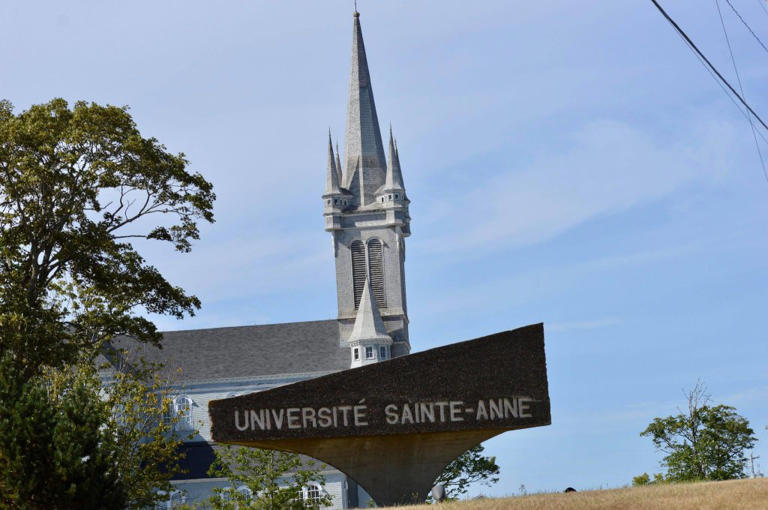
 The sign for Université Sainte-Anne in Church Point, N.S.© Alexander Quon/Global News

Police are looking into dozens of alleged historical sexual assaults at a French-language university in southwestern Nova Scotia.

In a release, the RCMP said officers with the Meteghan detachment are seeking information after they became aware of "information alleging more than 50 incidents of sexual assault" at Université Sainte-Anne in Pointe-de-l'Église.

RCMP spokesperson Cpl. Chris Marshall said the allegations were published on the website SA Change Now, where an anonymous group of students have shared accounts of being "victimized by the rape culture at the university."

The website alleges that between 2015 and 2019, there were at least 53 sexual assaults on the Sainte-Anne campus or perpetrated by Sainte-Anne students.

It also alleged that one perpetrator was responsible for at least 17 sexual assaults from 2018 to 2019, and students were "never informed there was a serial rapist on campus." The claims have not been proven.

"What's on that website is all we know," Cpl. Marshall said. "Once we became aware of that website, we thought we probably should start a file."


He said police did investigate four claims of sexual assault at the university between 2015 and 2023, two of which resulted in criminal charges.

Marshall said police are asking anyone with information about the alleged assaults to contact the Meteghan RCMP at 902-645-2326. Anonymous tips can also be submitted through Crime Stoppers.

The SA Change Now website says there "there has been a persistent rape culture" at the university for years.

"This rape culture means that sexual harassment, sexual assault, and rape on campus have been minimized, tolerated, and accepted," it said.

The website also alleged the school has failed to take sexual assault allegations seriously.


"Students at Sainte-Anne have, for years, raised complaints and questions about sexual harassment and sexual assault to little avail," it said.

It made a number of recommendations, including putting more outside lights throughout the campus, implementing trauma-informed support for students and an office dedicated to sexual assault complaints, and to have an outside consultant review and revise the sexual assault hearing process.

The Halifax Examiner first reported on the sexual assault allegations earlier this month.

School responds

In a brief statement to Global News, Université Sainte-Anne spokesperson Rachelle LeBlanc said: "We fully support the RCMP’s appeal to the public for information related to the alleged historical sexual assaults."

She also pointed to a statement posted to the school website Tuesday, "asking that any victims or anyone who has knowledge of sexual assault while at Université Sainte-Anne report the incident."

The public statement said sexual violence prevention is a priority for the school as the academic year begins.

"We assure you that this file remains a priority for the academic year which is beginning," it said in French. "The recent campaign on social networks, as well as certain texts published in the media, slightly precede our intention to communicate with you."

It said the school has almost completed a revision of its sexual violence policy, is participating in a provincial committee for preventing sexual violence, and working on modifying lighting on campus.

It also encouraged students to take part in consent and intervention skills training, which is being offered at the start of the academic year.

Campus sexual assault

The allegations at Université Sainte-Anne came as another Nova Scotia university faces legal action over its handling of alleged sexual assaults.

Last month, a former St. Francis Xavier University student launched a civil lawsuit against the school, alleging it “enabled a predator” and failed to protect her and other students.

The woman said that although the school was made aware of the allegations against the accused, it failed to take action, putting her and other students in danger.

The lawsuit alleges the school failed to perform its duties to oversee the care, control, and protection of its students. None of the allegations, either criminal or civil, have been proven in court.

Campus sexual assault is a far-reaching problem at Canadian universities. According to Statistics Canada, 71 per cent of students reportedly witnessed or experienced unwanted sexual behaviours in post-secondary settings in 2019.

Additionally, one in 10 women reported being sexually assaulted in a post-secondary institution during that same year.

Anti-Trudeau protests in India as country denies involvement in murder of Canadian Sikh leader

Global News

Sep 19, 2023 

India's government has rejected what it calls “absurd” allegations by Canada that it was behind the murder of Hardeep Singh Nijjar, a B.C. Sikh leader, and expelled a Canadian diplomat in return.

Protesters in Jammu gathered with photos of Canadian Prime Minister Justin Trudeau, accusing him of making the allegation and using an "extremist" to rally political support.

The spat deals a fresh blow to diplomatic ties that have been fraying for years, with New Delhi unhappy over Sikh separatist activity in Canada.


Britain says to continue trade talks with India despite Canada allegations

Reuters
Tue, September 19, 2023

LONDON, Sept 19 (Reuters) - Britain will continue trade talks with India despite allegations from Ottawa that the Indian government was involved in the murder of a Sikh separatist leader in Canada, Prime Minister Rishi Sunak's spokesperson said on Tuesday.

The spokesperson reiterated that Britain was in touch with Canada about the "serious allegations" but said it would not have a bearing on trade talks with India.

"Work on the trade negotiations will continue as before. The Canadian authorities will now conduct their work and I'm not going to preempt them," the spokesperson told reporters.

"When we have concerns about countries we are negotiating trade deals with, we will raise them directly with the government concerned. But with regards to the current negotiations with India, these are negotiations about a trade deal, and we're not looking to conflate them with other issues."

(Reporting by Andrew MacAskill; writing by Alistair Smout; Editing by Sachin Ravikumar)

SEE
MORE UCP AUSTERITY
Amid enrolment pressures in K-12 schools, Alberta minister stands by UCP budget boost

Story by Lisa Johnson •1w

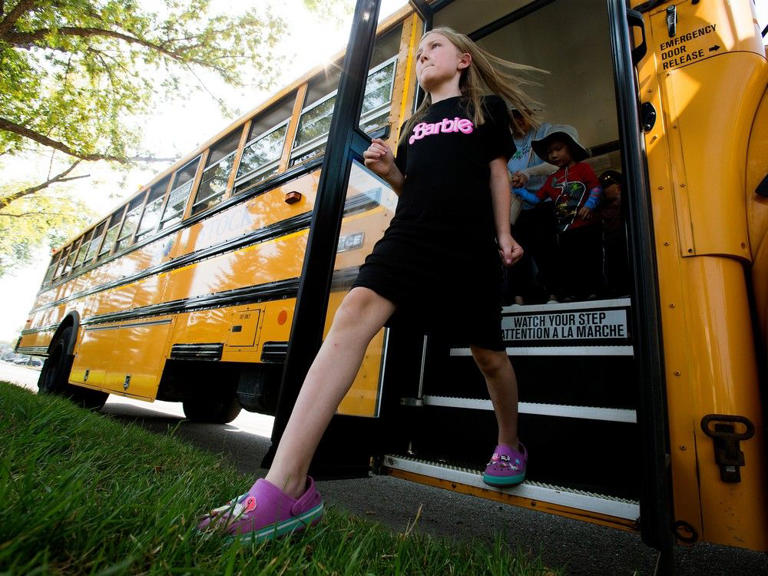
New school bus riders take part in the 15th annual First Riders event at the Edmonton Expo Centre onAug. 29, 2023. During the event students and families get to meet drivers, practice loading onto a bus, watch a safety video and learn basic safety tips. Approximately 1,000 kids took part in the event.© David Bloom

As Alberta kids enter K-12 classrooms facing unprecedented growth, Education Minister Demetrios Nicolaides says the government is doing its best to accommodate the surge in enrolment.

In an interview with Postmedia Tuesday, Nicolaides was asked to address concerns from parents that their kids will be dealing with a lack of classroom support.

“We hear you and we’re taking steps to address that,” he said, acknowledging the province’s recent population influx demanded an increase for new hires, schools, and support for student transportation.

“I think we’re moving in the right direction,” he said.

February’s budget, cushioned by a healthy surplus,
saw K-12 education funding increase by 5.2 per cent a marked jump from last year’s 1.7 per cent hike — providing $8.8 billion for 2023-24. With that boost, the UCP promised to hire 650 teachers and 1,375 educational assistants and other support workers.

“We’re starting to see some significant new hiring happen across the province,” said Nicolaides, who added that other provinces having a hard time filling education positions.

Edmonton Catholic Schools spokesperson Christine Meadows told Postmedia in an email preliminary estimates put the division’s enrolment at more than 47,000 students — about 2,000 more than this time last year, or an increase of more than four per cent — and new schools are “urgently needed.”

“ We cannot address our enrolment pressures until new schools are built.”

This school year, Edmonton Catholic drew $19.8 million from its piggy bank of accumulated surplus to address a funding shortfall.

Edmonton Public Schools expects to have more than 114,000 students, approximately 5,000 — or an increase of about four per cent — more than last year. Its operating budget of $1.2 billion last year has increased to approximately $1.3 billion this year .

That means the division expects to receive provincial funding for 109,688 students in 2023-24, according to its latest figures.


Edmonton Public Board chairwoman Trisha Estabrooks said in an interview Wednesday with Postmedia she’s optimistic the new minister might take a constructive approach to tackling long-standing challenges.

“In a province that recently posted a record surplus, now is the time to invest in public education,” said Estabrooks, who added that with 12 school builds the board is asking for, only one had a full funding commitment .

“I feel like we’re playing catch-up on the new school builds,” said Estabrooks.

On Wednesday, Alberta Teachers’ Association president Jason Schilling said on social media class sizes are only going to grow. “Government needs to address this immediately so our students get the education they deserve,” he stated.


According to a recent report from the RIGHT WING Fraser Institute, student enrolment in public schools in Canada grew by 2.7 per cent between 2012-13 and 2020-21. The biggest increase happened in Alberta, which saw a rise of 12.4 per cent.

“In 2012-13, Alberta had the third highest per-student spending among the provinces. Nine years later, the province ranked last in the same category,” the report stated.


‘Already, we’re falling behind’: NDP critic


Critics, including the Opposition NDP, have said the budget increase is not nearly enough to make up for years of flat funding that has led to larger, more complex classrooms with students who are still dealing with the impacts of the COVID-19 pandemic and learning losses.

Last week, NDP education critic Rakhi Pancholi said teachers are bracing for bigger classrooms than the year before, but extra staff alone won’t solve overcrowding when there’s a need for more schools.

“We need to see an impact of dollars right away, and already we’re falling behind because school is starting right now,” said Pancholi, adding that the new school year is an opportunity for Nicolaides to show he’s going to do things completely differently than his UCP predecessor on the file, Adriana LaGrange.

Among LaGrange’s legacies is the province’s weighted moving average funding model, which funds schools based on enrolment over three years rather than a one-year count. Introduced in 2020, the formula has taken heat, particularly from growing school divisions like Edmonton Public, because it doesn’t keep pace with student demand.

To try to fill the cash gap, the government has since introduced a new supplemental enrolment growth grant for divisions that grow by more than two per cent each year, which can amount to between $1,500 to $3,000 per student.

Estabrooks has long criticized the funding formula, which she said doesn’t keep pace with growth and squeezes capacity to hire additional teachers, educational assistants and support workers. Estabrooks said she appreciates the new grants, but called them a band-aid solution.


“It is a full admission in my mind that the funding formula is broken,” she said, echoing Edmonton Catholic’s calls for changes to the model.

Niether Edmonton Public nor Edmonton Catholic had an accurate number of how many staff they had been able to hire this year.

“The more students you get, the less able a division can staff appropriately and meet its needs. For the upcoming school year, approximately 1,000 Edmomton Catholic students will not be fully funded,” said Meadows.

“Although we receive and appreciate the supplemental enrolment growth funding for enrolment growth in excess of two per cent, the amount is not significant enough to offset the imbalance created by the (weighted moving average) model.”

Future of PUF, pronoun rules, and curriculum still up in the air

The Alberta government stopped collecting and publishing class size data from school boards in 2019. WHEN KENNEY AND UCP WERE ELECTED

When asked what he believes an appropriate class size might be, Nicolaides said the government is focused on getting staffing levels up to snuff and making sure school boards have the cash they need.

“I’ll be taking a close look at where those pressures are, talking with our school divisions about where the need is the most.”

In a mandate letter to Nicolaides in February, Premier Danielle Smith directed him to review program unit funding (PUF), although when speaking to Postmedia, Nicolaides again did not commit to restoring PUF to the way it was before it was changed in 2020. 

The UCP cut per-child funding roughly in half for many preschoolers in language therapy and some medical therapies, and imposed stricter age limits on when help could be accessed, among other changes.

Nicolaides promised to consult with parents, families and operators.

“No decisions have been made, because I want to make sure that we’re taking the opportunity to talk to those most affected,” he said Tuesday.

The province still doesn’t have a timeline on when new drafts of the most controversial elementary school curriculum subjects, including social studies, might be released, although Nicolaides said an announcement is expected soon.

While Saskatchewan and New Brunswick are making it mandatory parents be informed when kids change their gender pronouns, Smith’s government has been wary of committing to such a commandment.

“My intent is to do some more listening and have some more in-depth conversations to to get a better perspective,” said Nicolaides.

In a statement to Postmedia last week, Smith said she doesn’t want to politicize private, family issues.

“We want to make sure that kids feel supported but we’ve also been clear that we also respect parental rights,” she said, adding she expects caucus to discuss it “in the coming weeks.”

lijohnson@postmedia.com

Indigenous people reclaiming LGBTQ terms in their own language 

 There's more than 'two-spirit'.
 Learn other ways Indigenous people refer to their gender identity.

CBC

"Reclaiming Two Spirits: Sexuality, Spiritual Renewal, and Sovereignty in Native North America

City of Hampton, VA

 Jun 13, 2023

HAMPTON HISTORY MUSEUM

"Reclaiming Two Spirits: Sexuality, Spiritual Renewal, and Sovereignty in Native North America"

Join Dr. Gregory Smithers, Winner of the 2023 Prose Award in Cultural Anthropology and Sociology, and Finalist for the 2023 Publishing Triangle Randy Shilts Award for Gay Nonfiction, for a sweeping history of Indigenous traditions of gender, sexuality, and resistance that reveals how, despite centuries of colonialism, Two-Spirit people are reclaiming their place in Native nations.

Reclaiming Two-Spirits decolonizes the history of gender and sexuality in Native North America. It honors the generations of Indigenous people who had the foresight to take essential aspects of their cultural life and spiritual beliefs underground in order to save them.

Before 1492, hundreds of Indigenous communities across North America included people who identified as neither male nor female, but both. They went by aakíí’skassi, miati, okitcitakwe or one of hundreds of other tribally specific identities. After European colonizers invaded Indian Country, centuries of violence and systematic persecution followed, imperiling the existence of people who today call themselves Two-Spirits, an umbrella term denoting feminine and masculine qualities in one person.

Drawing on written sources, archaeological evidence, art, and oral storytelling, Reclaiming Two-Spirits spans the centuries from Spanish invasion to the present, tracing massacres and inquisitions and revealing how the authors of colonialism’s written archives used language to both denigrate and erase Two-Spirit people from history. But as Gregory Smithers shows, the colonizers failed—and Indigenous resistance is core to this story. Reclaiming Two-Spirits amplifies their voices, reconnecting their history to Native nations in the 21st century.

This program is presented in partnership with the Office of Diversity, Equity and Inclusion as part of the museum's monthly Port Hampton Culture Series.

The Hampton History Museum is located at 120 Old Hampton Lane in Downtown Hampton. 

For more information visit www.hamptonhistorymuseum.org

This Alberta glacier is in a melting 'death spiral,' scientist says

The Peyto Glacier in Banff National Park is one of the longest-studied glaciers in the world and has been deteriorating since about the year 2000. Researchers say the extent of the loss has recently accelerated, with hot weather and fires accelerating the glacier's death.

 cbc.ca

Scientists track rapid decline of Alberta's Peyto Glacier since 2021 heat wave

CBC News Sep 7, 2023
The Peyto Glacier in the Rocky Mountains is one of the longest-studied glaciers in the world. It’s used as a reference point to understand how other glaciers are doing— and so far the news isn’t good. 

Swiss start measuring latest glacier melts after summer

Reuters
Sep 7, 2023 
PLAINE MORTE

Fields of white snow and ice are giving way to grey rocky outcrops in the Swiss Alps as glaciers melt after another hot summer. Another wave of melting is expected to be confirmed this year, said Matthias Huss from ETH Zurich.


No One Was Prepared For The Diarrhea Plane

Darren Orf
Sat, September 16, 2023 


On September 1, 2023, a passenger on board a Delta Airlines flight from Atlanta to Barcelona experienced extreme diarrhea, forcing the aircraft to make a u-turn.

The incident highlights the complexity of addressing a potentially wide variety of medical emergencies that occur during a flight as the flight attendants had no means to clean the mess, such as hazmat or PPE suits.

Previous flights have highlighted a lack of medical resources onboard planes when an emergency occurs.

Lots of things can go wrong when flying at 30,000 feet—an airplane malfunction is the least of your worries. Increasing amounts of turbulence due to climate change certainly isn’t great, and bad weather can send wait times soaring. Then there is the laundry list of possible medical emergencies, both expected and unexpected, that can occur at any moment en route.

On September 1, the 336 passengers aboard Delta Airlines Flight 194, a red eye flight from Atlanta to Barcelona, definitely experienced the latter.

After only two hours into the flight, the airline crew experienced a nightmarish “biohazard issue” after a passenger “had diarrhea all the way through the airplane,” according to the pilot’s in-flight announcement that was later posted to X, formerly Twitter.


Passengers later confirmed that the mess did indeed run the length of one cabin aisle. DL194’s flight data on FlightRadar24 shows the aircraft’s about-face over the skies of Virginia.

Although the Federal Aviation Administration (FAA) requires aircraft to carry at least one sealed emergency medical kit containing 25 specified instruments and medications along with first-aid kits and automated external defibrillators, these kits clearly don’t include PPE or hazmat suits. One passenger told Futurism that flight attendants created makeshift biohazard suits from aprons in an attempt to clean the spill.

Ultimately, their efforts were fruitless. Upon the plane’s return to Atlanta, the carpet was ripped up from the cabin and replaced as passengers boarded a different plane and finally set off for their intended destination. This time, things went without a hitch.

With some two billion commercial passengers boarding planes every year, it’s inevitable that some will experience a medical event, especially in the unique and sometimes stress-inducing confines of an aircraft cabin, and this isn’t the first time that flight attendants didn’t have the tools they needed to get the job done.

In March 2022, a passenger (and thankfully a wilderness first responder) aboard a Frontier Airlines flight saved a woman’s life, but not after some quick thinking; the airline’s medical kit didn’t contain an oropharyngeal airway, a tool to help the woman breathe. Similarly, in June 2022, a doctor assisted in a medical emergency aboard a Delta flight and found the first aid kit sorely lacking.

The FAA has solicited ideas for new items to be added to an aircraft’s medical emergency arsenal. Perhaps the epic tale of the Diarrhea Plane will convince the administration to recommend a hazmat suit or two.


Passenger on Ill-Fated Diarrhea Plane Says Flight Attendants Were Forced to Craft "Makeshift Biohazard Suits"

Maggie Harrison
FUTURISM
September 7, 2023

On Friday, an international Delta flight bound for sunny Barcelona was forced to U-turn back to its starting point, Atlanta, for an exceedingly rare air travel horror: a passenger had suffered diarrhea throughout the plane's aisle so extensively that completing the flight was deemed untenable.

News of the incident first hit Reddit's r/ATC subreddit, to which a user shared alarming FAA flight information marking the ill-fated flight's decision to turn around.

"DIVERT TO ATL — PASSENGER DIARRHEA ALL OVER A/C," the flight strip read. "BIOHAZARD."

The news then trickled to other social media platforms, going mainstream viral on X-formerly-Twitter when another netizen shared a short clip of one of the plane's pilots' blunt conversation with air traffic control.

"This is a biohazard issue," the pilot can be heard saying. "We've had a passenger who's had diarrhea all the way through the airplane, so they want us to come back to Atlanta."

Yes, diarrhea, all through the airplane. It really did happen, and in an official statement to Insider, a representative for Delta described the incident as an "onboard medical issue," adding that its teams "worked as quickly and safely as possible to thoroughly clean the airplane and get our customers to their final destination."

"We sincerely apologize to our customers," the rep continued, "for the delay and inconvenience to their travel plans."

We tracked one of the plane's unlucky passengers down — and they confirmed that the diarrhea was, in fact, "ALL OVER" the cabin aisles, just as that flight strip read.

"I woke up and there was a bit of a strange smell," the passenger, who chose to remain anonymous while speaking of his Diarrhea Plane experience, told Futurism, adding that the flight attendants were forced to perform some DIY ingenuity to deal with the excrement.

"They found everything they could use," said the passenger, explaining that the airline staff used aprons to craft "makeshift biohazard suits" to wear while dealing with the defecatory disaster. Blankets and napkins, meanwhile, were utilized to cover the feces.

The airline's staff "tried to handle it," said the passenger, but "it was just so bad."

The passenger also noted their empathy for the person who had the unfortunate accident, explaining that the individual wound up staying in the lavatory until the last few minutes of the flight.

"They just kind of kept [the person] in there," the passenger added.

You might be imagining that Delta obviously just got these travelers a new plane, right? After all, this one was covered in human feces. But alas, there seemingly weren't enough jets to go around, and according to the passenger, the airline ultimately settled the issue by simply ripping out the Airbus' soiled carpets and giving the passenger plane an extra-thorough clean before reboarding it.

"They actually took out all the carpets for one section of it," the passenger said. "We were waiting three hours at the airport while they were trying to clean it, but they couldn't clean it, so they had to rip off the carpet and change it."

"Then we were back on," they added. "No problem."

The passenger also noted that the plane's staff fully switched over for the second flight attempt, which we're glad to hear. Anyone who's forced to make a biohazard suit out of aprons and proceeds to manage an in-flight diarrhea crisis for the next several hours deserves some time off, not to mention a raise.

Fortunately, the passenger said, the flight's second go-round went off without a hitch.

"It was just so late, we passed out," the passenger recounted. "No issues after that, but it was certainly an ordeal."


Mexican Anti-Abortion Activists Look to U.S. for Inspo After Their Country Decriminalizes Abortion

Susan Rinkunas
September 7, 2023·

Protestors rally for International Safe Abortion Day on September 28, 2022, in Mexico City, Mexico.


On Wednesday, Mexico’s Supreme Court struck down all federal penalties on abortion, saying that the national regulation was an unconstitutional violation of women’s rights and that criminalizing abortion was “gender-based violence and discrimination.” The ruling will require all federal health institutions to offer abortions to anyone who requests them. A patchwork of state restrictions remains, with 20 states still criminalizing abortion, but the ruling is a massive win for Mexican activists in the Marea Verde or “Green Wave” movement, whose supporters wear green bandanas.

The decision also highlights just how extreme the United States has become on abortion in the eyes of the rest of the world. In the last three decades, about 60 countries have expanded abortion rights, while only four countries have rolled back access: El Salvador, Nicaragua, Poland, and the U.S.

It’s all the more striking to read that statement when you remember that Mexico is a predominantly Catholic country. However, experts have noted that abortion restrictions are more correlated with creeping authoritarianism than they are with religion. A 2021 New York Times analysis contained this chilling sentence: “Curbs on women’s rights tend to accelerate in backsliding democracies, a category that includes the United States, according to virtually every independent metric and watchdog.”

Rebeca Ramos, executive director of GIRE, an abortion rights group that sued over the 1931 Mexican regulation that criminalized abortion, also made the connection between abortion and participation in society.

“We’re on a very good path,” Ramos told the Times. “This is a recognition that women and people with the ability to gestate have agency and we are first-class citizens. That democracy is coming to us, as well.” As a side note, Mexico’s next presidential election is in June 2024—both leading candidates are women.

The U.S. is, decidedly, not on a good path.

JEZEBEL