Tuesday, September 19, 2023


Strongly intriguing details of collisions at extreme energies


Peer-Reviewed Publication

THE HENRYK NIEWODNICZANSKI INSTITUTE OF NUCLEAR PHYSICS POLISH ACADEMY OF SCIENCES

Correlation variable sigma and the centrality of heavy ion collisions 

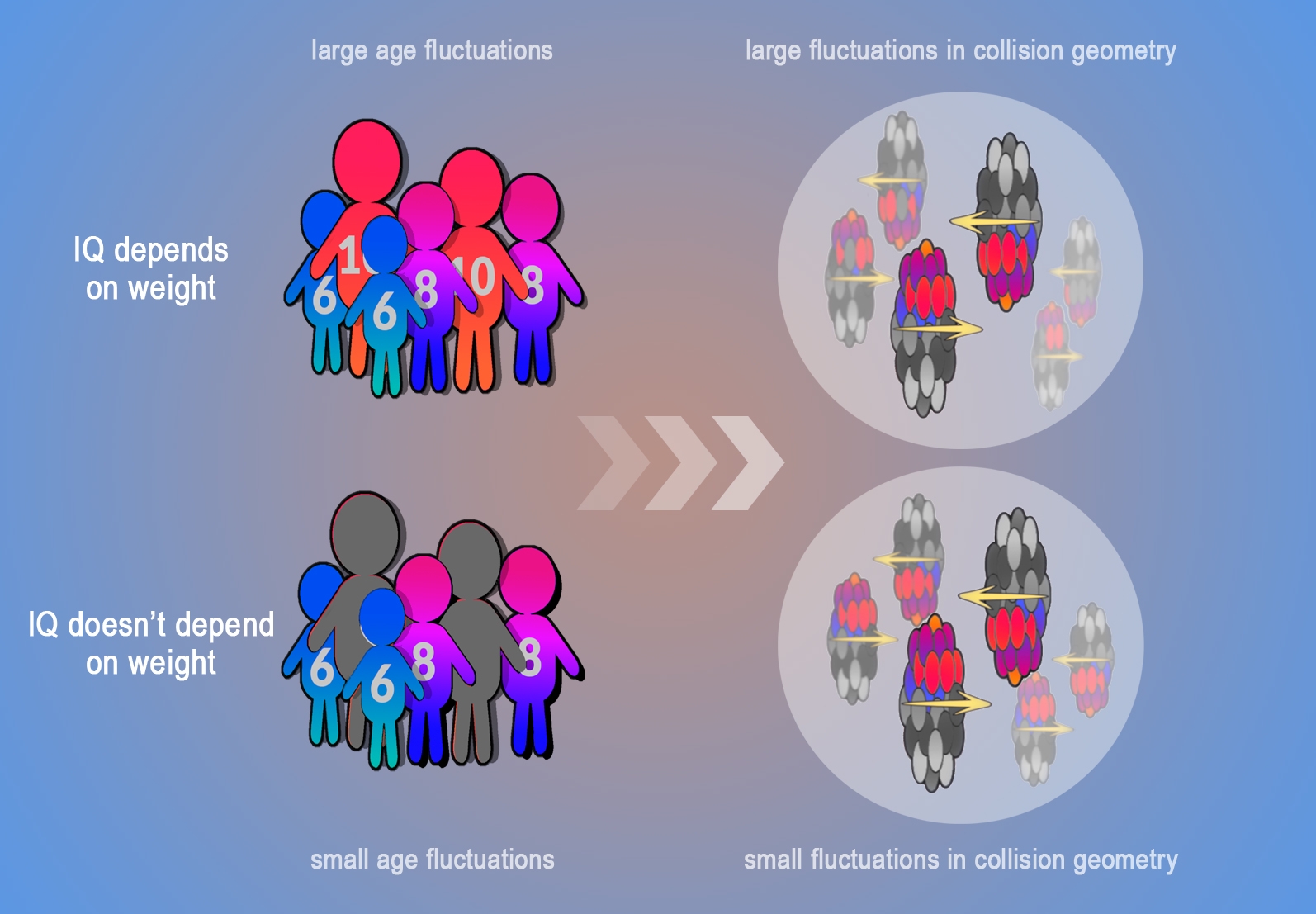
IMAGE: CHILDREN'S INTELLIGENCE MAY APPEAR TO BE STATISTICALLY RELATED TO THEIR WEIGHT BECAUSE THE RELATIONSHIP IS SENSITIVE TO AGE FLUCTUATIONS WITHIN THE STUDY GROUP. A SIMILAR PHENOMENON OCCURS IN THE CASE OF THE CORRELATION VARIABLE SIGMA AND THE CENTRALITY OF HEAVY ION COLLISIONS IN THE LHC ACCELERATOR. view more 

CREDIT: SOURCE: IFJ PAN


Cracow, 14 September 2023


Strongly intriguing details of collisions at extreme energies


The initial phases of the heavy-ion collisions occurring at the maximum energies available at the CERN Large Hadron Collider continue to remain an enigma of modern nuclear physics. New theoretical tools improved by physicists from the Institute of Nuclear Physics of the Polish Academy of Sciences in Cracow will help to unlock this mystery.


The phenomena occurring during nuclear collisions are so fast and involve particles so small that they cannot be observed directly. Guessing the course of these sorts of processes resembles the work of a detective. Just as he is unable to observe the crime being committed and has to reconstruct an image of it based on witness statements, physicists try to reconstruct the course of nuclear phenomena on the basis of “accounts” given by the secondary particles born in collisions and recorded by detectors. Sherlock Holmes’s task, however, was much easier – he could talk freely to his witnesses, whereas physicists can only observe the particles’ behaviour. In order to reconstruct the actual course of the “crime” (the collisions of atomic nuclei), they have to create a suitable language for describing events (mathematical tools) and use it to recount what took place (with the help of a theoretical model of the phenomenon), and then compare whether the “testimony” thus obtained agrees with what the recorded particles appear to “say”.


Particularly difficult processes to study include phenomena occurring in the early stages of heavy-ion collisions in the LHC accelerator, when a quark-gluon plasma may be formed. This is a state of matter in which quarks and gluons behave like free particles (in the world around us, quarks and gluons are always bound by the strong interactions and remain inside hadrons, i.e. protons or neutrons). The quark-gluon plasma ends extremely quickly because it cools as it expands. Quarks and gluons are then trapped again in hadrons, creating secondary particles that are registered in detectors. It can be concluded whether a quark-gluon plasma was created by analyzing the so-called forward-backward correlations between particles produced in collisions.


“Forward-backward correlations measure the relationship between the number of particles produced forward and backward when beams of heavy ions collide. Although these correlations concern particles very far apart, they carry information about the early stage of the collision. This is because the correlations between the particles emitted forward and backward could only have formed before the particles moved away from each other, i.e. at the beginning of the collision!” says Dr. Iwona Sputowska of the Institute of Nuclear Physics of the Polish Academy of Sciences (IFJ PAN) in Cracow, a physicist who is a member of the ALICE scientific collaboration at the LHC.


The problem with correlations, however, is that, used incompetently, they can lead to false conclusions. Suppose, for example, we conduct a study of children's intelligence in all the forms of a primary school. A correlation might then be found whereby the more intelligent a child is, the more they... weigh. However, we know that in reality intelligence and weight are correlated to another variable: the age of the child. So if we narrow down our study to children of the same age, the correlation between their intelligence and weight drops dramatically. The correlation between intelligence and weight is therefore sensitive to age fluctuations in the group of children – there are a lot of children of different ages in the whole school, but within the same form the age differences are small.


We encounter an analogous challenge when examining correlations in heavy ion collisions. The relationship between the number of particles produced forward and backward is sensitive to fluctuations in the way the two atomic nuclei collided with each other, such as whether they collided centrally or just brushed against each other. To deal with this problem, the concept of strongly intensive variables was introduced. These quantities are defined so that they depend neither on how the two ions collided with each other nor on how much the geometry of the collision fluctuated in the group of studied events.


A strongly intensive correlation variable is sigma. It was intended to provide information about the way in which the average source produces secondary particles. However, while analyzing data collected in the collisions of lead-lead and xenon-xenon nuclei as part of the ALICE experiment, Dr. Sputowska noticed that none of the most popular models used to describe these phenomena corresponds to the behavior of the sigma variable.


“There could only be one conclusion. Since our models do not correctly describe the experimental data for the highest-energy collisions available at the LHC, it means that we are incorrectly modelling how the average source produces secondary particles,” says Dr. Sputowska.


Unexpectedly, collision models proposed over 45 years ago by theoreticians from Cracow turned out to be helpful in understanding the behavior of sigma. They treated collisions of heavy atomic nuclei as multiple collisions of single nucleons of one nucleus with single nucleons of the other nucleus (in the wounded nucleon model) or as collisions not of protons and neutrons, but of quarks (in the wounded quark model). In these models, it is assumed that single, independent sources are responsible for the production of secondary particles, which are either nucleons or quarks, respectively.


Previous models have assumed that the average source generates secondary particles with the same forward and backward probabilities. Sigma, by definition, should then be equal to one. It turns out that its actual dependance on the geometry of collision can be reproduced if one allows for the possibility that the average source emits particles forward with a slightly different probability than backward. In the wounded nucleon model, an extra term then appears in the sigma formula, depending on the collision geometry, and sigma ceases to be a strongly intensive variable.


However, this situation gives rise to an intriguing contradiction, for sigma loses its status as a strongly intensive variable and yet correctly describes experimental data that do not depend on changes in collision geometry. Why? The solution to the problem turned out to be in the fact that in the wounded source model sigma always gives the values of the forward-backward correlation for the average number of wounded nucleons/quarks, i.e. for the average collision geometry in a given collision group. This situation can be compared to measuring the correlation between intelligence and weight of children in a group where the average age of the child is fixed.


“A detailed understanding of the nature of sigma allowed us to determine the fragmentation function, linking the number of particles produced by nucleons in the model with the number of particles measured in the detectors. For the first time, for the highest collision energies at the LHC, we have been able to construct tools that allow us to reliably falsify this highly intriguing sigma behaviour,” Dr. Sputowska concludes.


Dr Sputowska's achievement is presented in a paper published in the journal Physical Review C. The research was funded by the National Science Centre.


The Henryk Niewodniczański Institute of Nuclear Physics (IFJ PAN) is currently one of the largest research institutes of the Polish Academy of Sciences. A wide range of research carried out at IFJ PAN covers basic and applied studies, from particle physics and astrophysics, through hadron physics, high-, medium-, and low-energy nuclear physics, condensed matter physics (including materials engineering), to various applications of nuclear physics in interdisciplinary research, covering medical physics, dosimetry, radiation and environmental biology, environmental protection, and other related disciplines. The average yearly publication output of IFJ PAN includes over 600 scientific papers in high-impact international journals. Each year the Institute hosts about 20 international and national scientific conferences. One of the most important facilities of the Institute is the Cyclotron Centre Bronowice (CCB), which is an infrastructure unique in Central Europe, serving as a clinical and research centre in the field of medical and nuclear physics. In addition, IFJ PAN runs four accredited research and measurement laboratories. IFJ PAN is a member of the Marian Smoluchowski Kraków Research Consortium: "Matter-Energy-Future", which in the years 2012-2017 enjoyed the status of the Leading National Research Centre (KNOW) in physics. In 2017, the European Commission granted the Institute the HR Excellence in Research award. As a result of the categorization of the Ministry of Education and Science, the Institute has been classified into the A+ category (the highest scientific category in Poland) in the field of physical sciences.


SCIENTIFIC PUBLICATIONS:

 “Forward-backward correlations with the Σ quantity in the wounded-constituent framework at energies available at the CERN Large Hadron Collider”

I. A. Sputowska

Physical Review C 108, 1, 014903,  2023

DOI: 10.1103/PhysRevC.108.014903


LINKS:


http://www.ifj.edu.pl/

The website of the Institute of Nuclear Physics, Polish Academy of Sciences.


http://press.ifj.edu.pl/

Press releases of the Institute of Nuclear Physics, Polish Academy of Sciences.


IMAGES:


IFJ230914b_fot01s.jpg

HR: http://press.ifj.edu.pl/news/2023/09/14/IFJ230914b_fot01.jpg

Children's intelligence may appear to be statistically related to their weight because the relationship is sensitive to age fluctuations within the study group. A similar phenomenon occurs in the case of the correlation variable sigma and the centrality of heavy ion collisions in the LHC accelerator. (Source: IFJ PAN)


Captive pandas could be ‘jet lagged’ if their body clocks don’t match their environment


Giant pandas living in zoos outside the latitude of their normal range are less active, potentially affecting their welfare


Peer-Reviewed Publication

FRONTIERS


All animals have an internal clock called a circadian clock, which is regulated by cues from their environment — but animals in zoos can be exposed to very different cues from animals in the wild. Since all animals’ circadian clocks are linked to their behavior and physiology, this could be significant to their welfare, which is crucial to maintaining captive populations of animals at high risk of extinction in the wild, like giant pandas. Scientists set out to understand how the ‘jet lag’ of living in latitudes they did not evolve in, and therefore getting cues for their circadian clocks which they are not adapted to, affects pandas.

“Animals, including humans, have evolved rhythms to synchronize their internal environment with the external environment,” said Kristine Gandia of the University of Stirling, lead author of the study in Frontiers in Psychology. “When internal clocks are not synchronized with external cues like light and temperature, animals experience adverse effects. In humans, this can range from jet lag to metabolic issues and seasonal affective disorder.”

Clocking in

Since giant pandas live highly seasonal lives, they are an ideal study species for understanding how the circadian clock affects wellbeing and behavior. Pandas prefer to eat certain species of bamboo and love new shoots, which triggers a migration as these shoots emerge in spring. The migratory season is also the breeding season, likely because finding mates is easier when they are all following the same nutritious shoots. Pandas are also so popular that many zoos that house them maintain public webcams, so behavior can be monitored around the clock.

Zoos also provide an opportunity to understand why the circadian clock matters for animal wellbeing, by moving animals to latitudes outside their normal range where important cues like daylight and temperature ranges will be different. These changed conditions could potentially leave animals ‘jet lagged’, especially if their circadian rhythms are very dependent on seasonality, like pandas. Animals in captivity could also be affected by anthropogenic cues, like keepers’ regular visits.

Panda activity in black and white

Gandia and her fellow observers used webcams to monitor 11 giant pandas at six zoos both inside and outside pandas’ natural latitudinal range. Every month for 12 months, they carried out a day’s worth of hourly focal sampling to gauge how pandas’ behavior changed across a day, and how that changed across a year. 13 observers took part, noting general activity, sexual behavior, and abnormal behavior.

The scientists found that daylight and temperature were particularly important cues for pandas, closely associated with general activity in latitudes that matched their natural range in China. Captive pandas showed three peaks of activity over 24 hours, including a peak at night, just like their wild counterparts. Adult pandas only displayed sexual behaviors in the daytime, which could make it easier to find mates in the wild.

Pandas outside their home latitude were less active, perhaps because daylight and temperature cues differed at different latitudes. Supporting this, the researchers found that the behavior of the pandas in mismatched latitudes differed from those in matched latitudes most when the pandas in mismatched latitudes were receiving more divergent daylight and temperature cues.

Changing with the seasons

“When giant pandas are housed at higher latitudes — meaning they experience more extreme seasons than they evolved with — this changes their levels of general activity and abnormal behavior,” said Gandia.

The researchers also found that all study pandas reacted to zoo-specific cues, becoming very active in the early morning and showing abnormal behaviors that could represent anticipation of keepers visiting with fresh food.

Finally, the pandas’ abnormal and sexual behaviors fluctuated at similar points. The researchers suggested this could represent frustration that they can’t migrate or mate as normal. Pandas who lived at mismatched latitudes performed fewer abnormal behaviors, possibly because they weren’t getting the same cues for sexual behaviors.

“To expand on this research, we would want to incorporate cycles of physiological indicators,” said Gandia. “Importantly, we would want to assess sexual hormones to understand the effects the environment may have on the timing of release. This could help us further understand how to promote successful reproduction for a vulnerable species which is notoriously difficult to breed.”


Researchers discover a new species of larger benthic foraminifer from the Ryukyu Islands


Peer-Reviewed Publication

TOHOKU UNIVERSITY

Figure 1 

IMAGE: A NEW SPECIES OF THE LARGER PORCELANEOUS FORAMINIFER BORELIS PROVIDES NOVEL INSIGHTS INTO NEOGENE TO RECENT WESTERN PACIFIC PALEOBIOGEOGRAPHICAL DISPERSAL PATTERNS. view more 

CREDIT: TOHOKU UNIVERSITY


Foraminifera are tiny, single-celled organisms that live in the oceans. Their hard shells, made of calcium carbonate, can withstand the test of time and their fossils reveal a lot about Earth's history, including past climates and environments.

Now, an international group of researchers have discovered a previously unknown species of large foraminifer, shedding new light on the ecological evolution and biodiversity of coral reefs in the Ryukyu Islands.

Details of their findings were reported in the journal Palaeogeography Palaeoclimatology Palaeoecology on August 19, 2023.

"My colleagues and I have been studying modern and fossil coralline red algae and related carbonate deposits for 15 years," says Yasufumi Iryu, a professor at Tohoku University's Department of Earth Sciences within the Graduate School of Science. "A few years ago, we decided to examine the evolutionary dynamics of the biodiversity of larger foraminifera with porcelain shells from the Oligocene Epoch (about 35 million years ago). At that time, an ocean expanded from the Mediterranean area to the Indo-Pacific."

Large benthic foraminifera form a crucial part of marine communities from warm to tropical waters, especially in coral reefs. Remarkably, only three species of porcelain-shelled large foraminifera are known in today's ecosystems, thriving in the central and eastern Indo-Pacific and the central Atlantic.

Iryu, along with colleagues from Ferrara University, the University of Ryukyus, National Museum of Nature and Science, and University "La Sapienza" of Rome studied numerous paleontological collections deposited in museums and university research institutes. During one analysis, they unearthed specimens of modern large foraminifera from sediment samples of the Sekisei Lagoon, located between Ishigaki Island and Iriomote Island in the southern Ryukyu Islands. Upon further inspection, the shells had morphological characteristics different to those of the already known species. Studying the architecutral features of the cells via computerized micro-tomography, the researchers concluded that it was in fact a new species.

"We named the species Borelis matsudai," explains Iryu. The later part of the name pays homage to Professor Matsuda Shinya from the University of the Ryukyus, who has spent over a decade researching the Ryukyu Islands' past and present coral reefs." The discovery is the northern most finding of a Borelis species in the western Indo-Pacific, an area marine ecologists dub the Indo-Pacific warm pool.

The dispersal pathway of the Kuroshio Current indicates that Borelis matsudai likely appeared in the southern and central Ryukyu Islands at least since the Middle Pleistocene, around 770,000 years ago. It represents a segment of a population tracing its ancestry back to the widespread Oligocene ancestor, approximately 28 million years ago, in the Philippines. As global warming continues, the migration of Borelis matsudai to the northern Ryukyu Islands, where it has yet to be found, may be further facilitated. Consequently, the Sekisei Lagoon marks a significant biogeographical milestone in the northward migration of benthic organisms within coral reefs along the Kuroshio Current's dispersal route.

Looking ahead, Iryu plans to explore the relationship between the evolution of large benthic foraminifera (including Borelis) and the marine environment (seawater temperature, partial pressure of carbon dioxide, and pH) over the last 35 million years.


Sahmyook University researchers uncover molecular pathways underlying depression


The study offers insights into the genetic and epigenetic mechanisms underlying depression through combined mouse and human studies


Peer-Reviewed Publication

SAHMYOOK UNIVERSITY

The role of immune-related genes and epigenetic changes in depression 

IMAGE: BY USING BOTH MICE AND HUMAN MODELS, RESEARCHERS INVESTIGATED THE LINK BETWEEN GENE EXPRESSION, DNA METHYLATION, AND BRAIN STRUCTURAL CHANGES IN DEPRESSION. THEIR FINDINGS UNDERSCORE THE INVOLVEMENT OF INTERFERON-RELATED GENES IN MAJOR DEPRESSIVE DISORDERS. view more 

CREDIT: SE JIN JEON FROM SAHMYOOK UNIVERSITY


Depression is a common mental health problem that affects people across demographics. Scientists have long known that there may be a genetic component that confers predisposition to depression, but the specific underlying mechanisms have remained elusive. Growing evidence indicates that inflammation and immune-related processes in the brain could play a significant role in depression.

A team of researchers including Dr. Se Jin Jeon from Sahmyook University conducted a study to gain deeper insights into these mechanisms. Their study was made available online on 26 June 2023 and was published in October 2023 in Volume 113 of the journal Brain, Behavior, and Immunity.

The team employed a mouse model to measure their immobility, a behavior linked to depression, using a forced swim test. Through transcriptional profiling, they found that 141 genes significantly correlated with immobility, with 111 upregulated and 30 downregulated. “We found that these genes were related to the interferon pathway, which is involved in the regulation of inflammation in the body”, explains Dr. Jeon enthusiastically. The researchers further validated their findings through real-time PCR, confirming that immune-related genes were expressed at higher levels in mice with higher immobility scores. Additionally, they induced immune responses using an intracerebroventricular injection, which resulted in increased immobility and microglial activation, providing further evidence regarding the link between immune response genes and indicators of depression.

Leveraging the findings of murine study, the team aimed to understand the link between DNA methylation, brain structural changes, and depression in humans. For this, 350 patients with major depressive disorder (MDD) and 161 healthy controls were examined. DNA methylation analysis—a technique used to study the epigenetic modifications on DNA—was conducted on the genes USP18 and IFI44, since these were found to be associated with depression-like behavior in mice and were involved in interferon signaling pathways. The researchers found differences in methylation patterns between patients with MDD and controls. In patients with MDD, DNA methylation of a specific region in the USP18 gene correlated with reduced thickness in several brain regions associated with emotions and cognition. Meanwhile, in the control group, DNA methylation of another region in USP18 correlated with increased thickness in brain regions linked to vision and sensory processing. These findings link not only the expression of immune-related genes, but also their epigenetic status and their effect on brain structure, with depression.

In summary, we found elevated expression of inflammation-related genes in patients with depression compared to controls. This can increase inflammatory conditions in the body, including the brain, and ultimately lead to structural abnormalities in brain regions involved in emotional regulation, which may contribute to the development of depression”, concludes Dr. Jeon.

Thus, with the potential to serve as viable treatment targets, these immune genes offer an alternative approach or supplement to the currently approved pharmacologic treatments.


***

Reference

DOI: https://doi.org/10.1016/j.bbi.2023.06.017


About the institute

Sahmyook University is situated in metropolitan Seoul, South Korea. The university is renowned for its pristine campus, earning the title of "Korea's most beautiful university." Its commitment to environmental sustainability is reflected in its eco-friendly construction. The university prides itself on its unique holistic academic counselling system in which students and professors organically work together in receiving and giving guidance. Comprising six colleges, including the College of Theology, Humanities & Social Science, and Health Science & Social Welfare, as well as four graduate schools, Sahmyook University provides a comprehensive educational experience.

Website: https://www.syu.ac.kr/eng/


About the author

Dr. Se Jin Jeon received a Ph.D.in Pharmacology from Seoul National University and completed her postdoctoral training at the University of California, Los Angeles, USA. Currently, she is teaching pharmacology and new drug development as an assistant professor at the Department of Bio Convergence Engineering at Sahmyook University.


Breaking in the black box of pedagogical authority


Peer-Reviewed Publication

UNIVERSITÉ DE GENÈVE

Breaking in the black box of pedagogical authority 

VIDEO: THE UNIGE - HEP VAUD TEAM HAS PRODUCED ONE OF THE FIRST IN-DEPTH FIELD STUDIES ON THE EXERCISE OF AUTHORITY IN THE CLASSROOM. THE RESULTS HAVE ALREADY BEEN USED IN TEACHER TRAINING COURSES. view more 

CREDIT: @ UNIGE


How does pedagogical authority operate in the classroom? A team from the University of Geneva (UNIGE) and the University of Teacher Education, State of Vaud (HEP Vaud) has produced one of the first in-depth field studies on this subject. By filming teachers in training over a period of several months, the researchers identified different ways of exercising teaching authority and assessed their effectiveness. They found that strategies based on double addressing - i.e. addressing several students or groups of students simultaneously, using two different communication channels - were particularly effective. These results have been published in the journal Teaching and Teacher Education.


In the classroom, teachers’ authority is no longer readily accepted by students. In the face of changes in society, its traditional exercise - based for instance on threats, coercion and habits - has lost its legitimacy. To obtain the consent of their students, teachers have to adapt to this new context and build up their authority on a daily basis, depending on the class and the learning situation. New approaches need to be invented to enable both novice and more experienced teachers to gain the support of their students.


To date, few studies have documented the interactions between teachers and students in situations where authority is exercised. To address this, a team from UNIGE and HEP Vaud set up an innovative video system in twenty-four secondary-level classes in the state of Vaud (433 students in total, aged 12 to 15), which they coupled with interviews revealing the professional experience of the teachers (ten in all, in training). The survey lasted six months.


Innovative approach

‘‘We put a stand-alone wide-angle camera in each classroom to get a view of the teacher and students. The teachers wore a tracer around their necks which enabled the camera to follow their movements within the classroom,’’ explains Valérie Lussi Borer, associate professor, head of the AFORDENS group and member of the Video Learning Lab at the UNIGE’s Faculty of Psychology and Educational Sciences, who directed this work.


At the end of the lessons, the teachers were asked to identify the most significant authority situations of the day and their objectives during them. The relevant episodes were then viewed with them to ‘‘confront’’ them and measure the gap between their expectations and reality. This method made it possible to identify different ways of exercising authority and to measure their effectiveness.


The most effective strategy

‘‘Among the different methods of student-teacher interaction we identified, the most effective was the ‘double addressing’ strategy, which accounted for a third of the interactions filmed,’’ reveals Vanessa Joinel Alvarez, associate professor in the AGIRS teaching and research unit at HEP Vaud, and the study’s first author.


In these double addressing situations, teachers may combine direct and indirect communication, addressing one student to pass on a message to the rest of the group, or addressing the group to pass on a message to one student. In such a case, the apparent addressee is not the real addressee: the teacher is trying to pass on information indirectly to one or more other students.


Limiting power struggles

This is the case, for example, of teachers who, in order to prevent disruptive behaviour spreading to the rest of the group, will intervene ostensibly with the dissipated student in order to convey, indirectly, a message of dissuasion to the group. The researchers also highlighted situations where the teacher addresses the whole class directly and one or two students indirectly, the aim being to send them a message without naming them explicitly, so as not to stigmatise them or reinforce social comparisons between students.


‘‘We have found that this strategy is very effective in preventing disruptive behaviour. It allows teachers to limit confrontation, which is not very effective with teenagers,’’ explains Vanessa Joinel Alvarez. By not confronting the student directly, teachers avoid getting involved in a power struggle and also enable the student to save face with his or her peers.


The results have already been applied to new in-service training courses for teachers offered by the HEP Vaud and the University Institute of Teacher Education at the UNIGE. These courses provide teachers with the tools they need to better understand the way they interact with students in class and the impact of these interactions on the classroom climate.


16 strange new parasitoid wasp species discovered in Vietnam


A field survey in Vietnam searching for Loboscelidia, a rare group of parasitoid wasps, has increased the total known number of species worldwide by 30% and uncovered their unique egg-burying behavior


Peer-Reviewed Publication

KYUSHU UNIVERSITY

The 16 newly described species of Loboscelidia 

IMAGE: 16 NEW SPECIES HAVE BEEN ADDED TO THE GROUP, LOBOSCELIDIA, BASED ON THEIR UNIQUE PHYSICAL CHARACTERISTICS. SCALE BAR = 0.5 MM view more 

CREDIT: YU HISASUE ET AL. (2023) EUROPEAN JOURNAL OF TAXONOMY, KYUSHU UNIVERSITY


Fukuoka, Japan— Researchers at Kyushu University and Vietnam’s National Museum of Nature have discovered 16 new species of Loboscelidia, a strange-looking and elusive group of parasitoid wasps. The scientists also reported for the first time the unique parasitic behavior of a captive female of one species, Loboscelidia squamosa, who was observed digging a hole in the soil to hide her host’s egg.

The findings were published in the European Journal of Taxonomy.

While we are more familiar with hunting wasps like yellowjackets, with their dramatic black and yellow stripes and painful stings, parasitoid wasps make up the vast majority of wasp species. They are often tiny (Loboscelidia wasps are between 2-5 mm in body length, smaller than a pencil-top eraser) and while unnoticed by humans, they play a crucial role in regulating the ecosystem.

“Parasitoid wasps act as a parasite of other insects. They lay their eggs in or on the bodies or eggs of their host, ultimately killing them,” says Assistant Professor Toshiharu Mita of Kyushu University’s Faculty of Agriculture, who led the research.

Despite their ecological importance, very little is known about many groups of parasitoid wasps, including Loboscelidia. Prior research into the group has suggested that they parasitize the eggs of stick insects, also known as walking sticks.

Loboscelidia was first discovered around 150 years ago, but we still lack important knowledge about their biology. This study was the first time we were able to observe their parasitic behavior,” says first author, Dr. Yu Hisasue, formerly a PhD student supervised by Mita.

Mita and Hisasue, along with their colleague, Dr. Thai-Hong Pham of the National Museum of Nature, Vietnam, conducted field surveys at six sites across Vietnam, setting traps and using nets to capture the tiny parasitoid wasps.

On one occasion, they trapped a living female from one of the newly described species, Loboscelidia squamosa. They released her into a plastic container containing soil and placed a stick insect egg inside. The female wasp punctured the egg, laid her own egg inside and then searched for a location to bury the parasitized egg. She used her head to dig a hole, placed the host egg inside and plugged the entrance with soil.

This parasitic behavior is very developed, and similar to the nest building behavior seen in solitary hunting wasps. The researchers therefore believe that further research could help shed light on how these behaviors evolved in other wasps. It could also help explain the unique specialized head structure of Loboscelidia wasps, which could be useful for digging holes in the soil.

By the end of the field survey, the scientists had collected 70 individuals from the Loboscelidia group, taking high-resolution close-up photos of each wasp. One unusual feature of the wasps was the presence of hairs at the back of their head and on their body, with the arrangement and density of body hairs differing between each species.

In total, the scientists identified 16 new species, bringing the known number of species worldwide up to 67.

“The Loboscelidia wasps were thought to be rare group with a small number of species, but with one stroke, we have increased the number of species by 30%,” says Mita.

Importantly, each species was typically found in a very limited area, usually only at one collection site. This makes it likely that the group has many more species that still could be discovered with further field surveys. However, it also highlights the vulnerability of each species.

“As each species is only found in a small area, any disruption to their habitat could result in the loss of that species forever,” concludes Hisasue.

A series of photos captures the moment a captive female wasp from the species Loboscelidia squamosa lays her egg inside a stick insect egg before carrying and burying it in the soil. This marks the first time that this parasitic behavior has been observed.

CREDIT

Yu Hisasue, Kyushu University

For more information about this research, see "Taxonomic revision of the genus Loboscelidia Westwood, 1874 (Hymenoptera: Chrysididae: Loboscelidiinae) from Vietnam" Yu HISASUE, Thai-Hong PHAM, Toshiharu MITA in European Journal of Taxonomy, https://doi.org/10.5852/ejt.2023.877.2203

About Kyushu University 
Kyushu University is one of Japan's leading research-oriented institutes of higher education since its founding in 1911. Home to around 19,000 students and 8,000 faculty and staff, Kyushu U's world-class research centers cover a wide range of study areas and research fields, from the humanities and arts to engineering and medical sciences. Its multiple campuses—including one of the largest in Japan—are located around Fukuoka City, a coastal metropolis on the southwestern Japanese island of Kyushu that is frequently ranked among the world's most livable cities and historically known as Japan's gateway to Asia. Through its Vision 2030, Kyushu U will 'Drive Social Change with Integrative Knowledge.' Its synergistic application of knowledge will encompass all of academia and solve issues in society while innovating new systems for a better future.


Insights into the biodiversity of annelids in the world’s largest deep-sea mineral exploration region


Peer-Reviewed Publication

PENSOFT PUBLISHERS

Annelid samples found in the Clarion-Clipperton Zone 

IMAGE: ANNELID SAMPLES FOUND IN THE CLARION-CLIPPERTON ZONE. view more 

CREDIT: WIKLUND ET AL.


The demand for rare raw materials, such as cobalt, is fuelling the exploration of the deep-sea floor for mining. Commercial deep-sea mining is currently prohibited in areas beyond national jurisdiction, but companies are permitted exploratory operations in certain areas to assess their mineral wealth and measure environmental baselines. The Clarion-Clipperton Zone (CCZ) is an area of the Pacific deep-sea floor spanning up to 6 million km2, found roughly between Hawaii and Mexico. Currently, it has 17 contracts for mineral exploration covering 1.2 million km2. However, despite relatively extensive mineral exploration beginning in the 1960’s, baseline biodiversity knowledge of the region is still severely lacking. Even the most basic scientific question: “What lives there?” has not been fully answered yet.

In a new paper researchers report on the marine life of the CCZ, focusing on annelid worms. Annelids represent one of the largest group of macroinvertebrates living within the mud covering the sea floor of CCZ, both in terms of number of individuals and the number of species. Data from recent oceanographic cruises enabled researchers from the University of Gothenburg, Sweden and the Natural History Museum London to discover more than 300 species of annelids from around 5000 records. The annelid species, many considered to be new to science, were discovered through employment of traditional morphological approaches and modern molecular techniques. The current study focuses on 129 such species across 22 annelid families. Previously, the authors of this study formalized 18 new species, while altogether reporting on 60 CCZ species, including most recently 6 species in family Lumbrineridae. The lead author Helena Wiklund from University of Gothenburg comments: ‘Taxonomy is the most important knowledge gap we have when studying these unique habitats and the potential impact of mining operations. We need to know what lives there to inform the protection of these ecosystems.”

To further understand the CCZ, scientists sail the Pacific Ocean on research expeditions that employ sampling techniques ranging from the technical, like remote-controlled vehicles that traverse the ocean floor, to the simple, like a sturdy box corer collecting sediment at the bottom.

“Sadly, the soft-bodied annelids are often damaged during the collection and sediment sieving onboard” says annelid taxonomist Lenka Neal from the Natural History Museum London. As a result, the traditional morphological approach is often of limited use when working with the deep-sea specimens, with taxonomists increasingly employing DNA techniques as well.

Over the last decade, scientists have generated a large amount of annelid data. Such data are only of use when made available through publication to the wider scientific community and other stakeholders. “A priority is to make the data are FAIR, or Findable, Accessible, Interoperable and Reusable so it can be redeployed easily, if you’ll excuse the pun, for future analysis” says co-author Muriel Rabone. “The same applies to samples, where accessibility of the specimen vouchers and molecular samples allows for reproducibility and continuation of the work. This is one step of the process. And ultimately, having more robust knowledge can lead to more robust evidence-based environmental policy”.

“More often than not, ecological papers describing biodiversity do not include a list of all the species and specimens used to make the broader ecological inferences, and even more rarely make the specimens and all associated metadata available in a FAIR way. In this study, we have made a significant and time-consuming attempt to do this, in a region of the global oceans where critical policy decisions are being made that could impact the way humanity obtains its resources and manages its environment in a sustainable way,” the researchers write in their paper, which was published in the open-access Biodiversity Data Journal.

The team behind the research hope that this still partial checklist of CCZ annelids, many in too poor state of preservation to be immediately described, is a key step forward towards creating future field guides for the area’s wildlife. Given that mining operations in the area could be imminent with the International Seabed Authority considering applications this year, the use of biological data for environmental management has become more important than ever.

This research was supported by funding from UK Seabed Resources Ltd.

Further enquiries: University of Gothenburg Press contact: susanne.liljenstrom@marine.gu.se

Original source:

Wiklund H, Rabone M, Glover AG, Bribiesca-Contreras G, Drennan R, Stewart ECD, Boolukos CM, King LD, Sherlock E, Smith CR, Dahlgren TG, Neal L (2023) Checklist of newly-vouchered annelid taxa from the Clarion-Clipperton Zone, central Pacific Ocean, based on morphology and genetic delimitation. Biodiversity Data Journal 11: e86921. https://doi.org/10.3897/BDJ.11.e86921