Sunday, October 01, 2023

Mega project raises questions about psychological scientists’ accuracy in predicting societal change


How accurate are psychological scientists in predicting societal change? A series of four studies published in American Psychologist suggest that psychologists are no better at such predictions compared to laypeople.

The onset of the COVID-19 pandemic brought with it media appearances of psychologists discussing their predictions regarding what changes we ought to expect in various domains of life. However, these predictions were often outside their area of expertise. Across a series of four studies, Igor Grossmann, PhD (@psywisdom) and colleagues looked into the accuracy of psychologists and laypeople in predicting future societal change and compared these predictions to what unfolded in the real world.

“My interest in this topic stemmed from the lack of insight about how scientists viewed and anticipated major societal risks like pandemics in the past. In this and related projects (such as WorldafterCovid and the Forecasting Collaborative) I wanted to explore how scientists think such major societal shifts may unfold, assess the accuracy of these forecasts, and identify areas where predictions have been more or less successful,” said Grossmann, a professor of psychology at the University of Waterloo.

“By examining whether and how serious scientists made predictions about such uncertain events like the pandemic, and investigating how public intellectuals and scientists engaged with the media at the onset of the pandemic, my team also sought to uncover the domains in which predictions were made, thereby aiming to enhance the understanding of scientific accuracy and how it can be improved.”

Study 1 examined psychological scientists’ discussion regarding the pandemic in the news media, utilizing The Coronavirus Corpus which included over 1.8 million texts of news content containing an interview with an academic psychologist regarding the pandemic. A total of 169 unique articles were retained, which included 719 unique judgments from 213 different scientists (e.g., impact of pandemic on child development).

Study 2 was conducted in two parts. In part one, 401 scientists from 39 countries made forecasts in April 2020 regarding societal change due to the pandemic. This included cultural change in the United States across 11 domains, such as generalized trust, expected birth rates, delay of gratification, among others (verbatim questions can be found here).

Participants made their forecasts for 6 months, 1 year and 2 years into the future, with response options ranging from a 50% or greater decrease to a 50% or greater increase. Of the 11 domains that were tested, accuracy of predictions was reliably assessed for seven (including “polarization, traditionalism, individualism, trust, climate change, life satisfaction, and depression”). Participants also indicated one psychological or social issue in the United States that was not mentioned in the study, but that they believed would evolve in the coming months/year.

Part two of Study 2 was conducted after the initial peak of COVID-19. This included another group of 316 psychological scientists from 26 countries. At the same time, a sample of 394 participants who were nationally representative of the United States were recruited via Prolific. The procedure was approximately the same as that of part one.

However, alongside the 11 domains of Study 2, participants also predicted changes for four additional domains (e.g., charitable giving). In addition to predicting change, participants also provided confidence ratings of their predictions on a scale of 1 (not at all) to 5 (extremely). Reliable benchmarks of accuracy were attainable for 10 of the domains (including “loneliness, charitable giving, violent crimes, polarization, traditionalism, individualism, trust, climate change, life satisfaction, and depression”).

Study 3 was also conducted in two parts. A total of 411 laypeople and 270 scientists were prompted to provide retrospective judgements of change and confidence ratings for the same domains as in Study 2. Specifically, they provided an estimate of the amount of change they perceived on a given issue compared to six months prior. Participants also indicated the types of information they considered when providing their judgments.

In Study 4, 203 participants were prompted to consider scientists, practitioners and laypeople, and rate how accurate they would be when predicting societal change throughout the COVID-19 pandemic across the various domains of interest (e.g., life satisfaction, loneliness). They also indicated who they would prefer to hear recommendations from regarding the societal issues tackled in this project (e.g., scientist with expertise in epidemiology, practitioner with expertise in social work, average american, for a total of 10 groups to consider).

“The average person should understand that psychological scientists’ predictions regarding societal changes during the COVID-19 pandemic were found to be no more accurate than those of laypeople,” Grossmann told PsyPost.

“Despite their formal training and expertise, these scientists often based their judgments on intuition and heuristics rather than empirical evidence. This work also showed that neither specific expertise nor experience significantly improved the accuracy of these ‘off-the-cuff’ predictions. This underscores the complexity of forecasting societal responses to unprecedented events like the pandemic. At the same time, and in contrast to laypeople, scientists were more uncertain about their predictions, thus showing a sign of ‘meta-accuracy’ – they were potentially more aware of their limitations.”

An important question that emerges from this work is how to improve scientists’ predictive accuracy regarding societal effects of major events such as the pandemic.

“In this project, the lack of accuracy in predicting societal changes is not confined to one domain or level of expertise, raising questions about the underlying reasons for these inaccuracies. More investigation is needed to determine how psychological scientists can improve their forecasting abilities, perhaps by implementing models that focus on prediction-oriented designs rather than solely relying on post-hoc explanations,” Grossmann explained.

“We must also explore how to use psychological expertise in ways that take uncertainty into account and how biases like negativity bias might be corrected in both expert and policy considerations. Finally, this project does not examine what happens when scientists make predictions as a group or by relying on formal modeling of past data – a typical way many scientists operate; this question was addressed in a parallel Forecasting Collaborative initiative we ran in parallel, results from which appeared in Nature Human Behaviour this year (and were similarly disappointing).”

The researcher added, “I would like to emphasize that while the study found shortcomings in the predictive capabilities of psychological scientists, it doesn’t diminish the importance of psychological/social science in informing public understanding and policy – after all, in this study people expect scientists to be at the decision table and they were more aware of uncertainty associated with making societal predictions.”

“The findings also highlight the need for improved methods of prediction and communication of uncertainty in times of crisis. Future work should explore ways to enhance accuracy, including training strategies at both institutional and individual levels.”

The research, “On the Accuracy, Media Representation, and Public Perception of Psychological Scientists’ Judgments of Societal Change”, was authored by Cendri A. Hutcherson, Konstantyn Sharpinskyi, Michael E. W. Varnum, Amanda Rotella, Alexandra S. Wormley, Louis Tay, and Igor Grossmann.

© PsyPost
The fight over a 'dangerous' ideology shaping AI debate

Agence France-Presse

Artificial Intelligence AI (WANG Zhao/AFP)

Silicon Valley's favourite philosophy, longtermism, has helped to frame the debate on artificial intelligence around the idea of human extinction.

But increasingly vocal critics are warning that the philosophy is dangerous, and the obsession with extinction distracts from real problems associated with AI like data theft and biased algorithms.

Author Emile Torres, a former longtermist turned critic of the movement, told AFP that the philosophy rested on the kind of principles used in the past to justify mass murder and genocide.

Yet the movement and linked ideologies like transhumanism and effective altruism hold huge sway in universities from Oxford to Stanford and throughout the tech sector.

Venture capitalists like Peter Thiel and Marc Andreessen have invested in life-extension companies and other pet projects linked to the movement.

Elon Musk and OpenAI's Sam Altman have signed open letters warning that AI could make humanity extinct -- though they stand to benefit by arguing only their products can save us.

Ultimately critics say this fringe movement is holding far too much influence over public debates over the future of humanity.

- 'Really dangerous' -

Longtermists believe we are dutybound to try to produce the best outcomes for the greatest number of humans.

This is no different to 19th century liberals, but longtermists have a much longer timeline in mind.

They look to the far future and see trillions upon trillions of humans floating through space, colonising new worlds.

They argue that we owe the same duty to each of these future humans as we do to anyone alive today.

And because there are so many of them, they carry much more weight than today's specimens.

This kind of thinking makes the ideology "really dangerous", said Torres, author of "Human Extinction: A History of the Science and Ethics of Annihilation".

"Any time you have a utopian vision of the future marked by near infinite amounts of value, and you combine that with a sort of utilitarian mode of moral thinking where the ends can justify the means, it's going to be dangerous," said Torres.

If a superintelligent machine could be about to spring to life with the potential to destroy humanity, longtermists are bound to oppose it no matter the consequences.

When asked in March by a user of Twitter, the platform now known as X, how many people could die to stop this happening, longtermist idealogue Eliezer Yudkowsky replied that there only needed to be enough people "to form a viable reproductive population".

"So long as that's true, there's still a chance of reaching the stars someday," he wrote, though he later deleted the message.

- Eugenics claims -

Longtermism grew out of work done by Swedish philosopher Nick Bostrom in the 1990s and 2000s around existential risk and transhumanism -- the idea that humans can be augmented by technology.

Academic Timnit Gebru has pointed out that transhumanism was linked to eugenics from the start.

British biologist Julian Huxley, who coined the term transhumanism, was also president of the British Eugenics Society in the 1950s and 1960s.

"Longtermism is eugenics under a different name," Gebru wrote on X last year.


Bostrom has long faced accusations of supporting eugenics after he listed as an existential risk "dysgenic pressures", essentially less-intelligent people procreating faster than their smarter peers.

The philosopher, who runs the Future of Life Institute at the University of Oxford, apologized in January after admitting he had written racist posts on an internet forum in the 1990s.


"Do I support eugenics? No, not as the term is commonly understood," he wrote in his apology, pointing out it had been used to justify "some of the most horrific atrocities of the last century".

- 'More sensational' -

Despite these troubles, longtermists like Yudkowsky, a high school dropout known for writing Harry Potter fan-fiction and promoting polyamory, continue to be feted.

Altman has credited him with getting OpenAI funded and suggested in February he deserved a Nobel peace prize.

But Gebru, Torres and many others are trying to refocus on harms like theft of artists' work, bias and concentration of wealth in the hands of a few corporations.

Torres, who uses the pronoun they, said while there were true believers like Yudkowsky, much of the debate around extinction was motivated by profit.

"Talking about human extinction, about a genuine apocalyptic event in which everybody dies, is just so much more sensational and captivating than Kenyan workers getting paid $1.32 an hour, or artists and writers being exploited," they said.
The “need for chaos” is linked to the sharing of conspiracy theories, study finds


New research suggests that a psychological concept known as “the need for chaos” plays a bigger role than partisanship and ideology in the sharing of conspiracy theories on the internet. The study, published in Research & Politics, indicates that individuals driven by a desire to disrupt and challenge established systems are more inclined to share conspiracy theories.

The study was authored by Christina Farhart (assistant professor, Carleton College), Erin Fitz (PhD candidate, Colorado State University), Joanne Miller (professor, University of Delaware), and Kyle Saunders (professor, Colorado State University).

The authors wanted to explore three specific motivations behind the sharing of conspiracy theories: motivated sharing (sharing to bolster their or their group’s beliefs), sounding the alarm (sharing to generate collective action against a political outgroup due to feelings of losing), and the need for chaos (sharing to disrupt the political system regardless of partisanship or belief).

“We were motivated by prior research that revealed the relationship between the need for chaos and willingness to share conspiracy theories on social media,” the researchers told PsyPost.

“Although earlier work found a positive relationship between the need for chaos and sharing (and that the need for chaos superseded partisan motivations for sharing) these studies did not assess how the need for chaos affected sharing when pitted against a direct measure of conspiracy theory belief. Testing these mechanisms together is important because people who believe conspiracy theories might be more willing to share them online, but belief is not a necessary condition for sharing.”

To conduct the study, the researchers administered an original survey in December 2018 using the Lucid platform, which recruits online survey respondents in line with US Census demographics. The survey included questions about respondents’ beliefs in specific conspiracy theories and their willingness to share those conspiracy theories. A total of 3,336 respondents participated in the survey. Among them, 1,772 identified as Democrats/leaning Democrat, and 1,564 identified as Republicans/leaning Republican.

Motivated sharing was operationalized by assessing respondents’ beliefs in specific conspiracy theories and their willingness to share those conspiracy theories. The study examined how the willingness to share was related to whether the conspiracy theories aligned with respondents’ partisan identity.

For example, an item assessing Democratic-aligned conspiracy theories asked: “Some people believe Donald Trump is plotting with secret societies of white supremacists, such as the Ku Klux Klan, to take control of the United States. Others do not believe this. What do you think?”

On the other hand, an item assessing Republican-aligned conspiracy theories asked: “Some people believe that the Mueller investigation is not, in fact, an investigation into the Trump campaign’s collusion with the Russian government. Instead, they believe it is an investigation into nefarious activities, including child molestation and a variety of other crimes, perpetrated by the Clintons, Barack Obama, and other unelected people who are currently working behind the scenes to run the government. Others do not believe this. What do you think?”

To measure the “sounding the alarm” motivation, the researchers asked respondents about their perception of whether their political side was winning or losing more often on issues that mattered to them. The study explored how the feeling of being on the losing side influenced the willingness to share conspiracy theories.

The researchers employed the eight-item Need for Chaos scale to measure individuals’ desire for extreme disruption of the established democratic system. This scale aimed to assess whether individuals with a higher need for chaos were more likely to share conspiracy theories regardless of their truth value or partisanship.

Those with a high need for chaos agree with statements such as “We cannot fix the problems in our social institutions, we need to tear them down and start over” and “I need chaos around me – it is too boring if nothing is going on.”

The researchers also included various control variables to account for other factors that might influence respondents’ willingness to share conspiracy theories, such as their strength of partisan identity, authoritarianism, trust, religiosity, education, income, gender, age, ethnicity, and race.

After controlling for these variables, the researchers confirmed that the need for chaos was positively associated with the willingness to share conspiracy theories on social media. Individuals with a higher need for chaos were more likely to express willingness to share all six conspiracy theories included in the study.

They also found that individuals who believed in a conspiracy theory were more willing to share that theory on social media. In other words, belief in a conspiracy theory was a strong predictor of the willingness to share it.

“While we also found that those with a higher need for chaos consistently expressed greater willingness to share conspiracy theories on social media, our results ultimately indicated that belief in conspiracy theories was the strongest predictor of willingness to share,” the researchers told PsyPost. “These findings contribute to our understanding of why people share conspiracy theories by suggesting that, whereas some individuals share specifically to impugn political rivals, others do so to challenge the entire political system.”

Surprisingly, loser perceptions (feeling that one’s side is losing in politics) were negatively associated with the willingness to share conspiracy theories. Those who perceived their side as currently winning more often than losing expressed greater willingness to share conspiracy theories.

Contrary to expectations, the researchers also did not find a significant relationship between partisanship or ideology and the willingness to share conspiracy theories. Partisanship and ideology did not robustly predict the sharing of either ideologically-aligned or ideologically-inconsistent conspiracy theories.

The study, like all research, also includes some caveats. The study is observational, meaning it’s based on observing and analyzing existing behaviors rather than manipulating variables. This prevents the researchers from drawing causal conclusions about the relationships between motives, beliefs, and sharing behavior.

“Altogether, our findings reveal that prior notions of partisanship and chaos as drivers of sharing hostile political rumors (including [conspiracy theories]) are perhaps more nuanced than extant literature suggests,” the researchers concluded.

The study, “By any memes necessary: Belief- and chaos-driven motives for sharing conspiracy theories on social media“, was published online August 1, 2023.

© PsyPost
Wily coyotes are growing in numbers across N.J.
The Eastern coyote.

As for that dog down the street that’s been yipping and yapping and keeping you awake at night … it may not be a dog.

Coyotes are on the move and making their presence felt here in New Jersey, the most densely-populated state in the nation. An animal that will eat just about anything has plenty to choose from in the Garden State, be it rodents, small game, livestock, fruit, insects, or the occasional house pet.

Although not native to New Jersey, the NJ Division of Fish and Wildlife estimates there are at least 3,000 coyotes in the state, and they have been spotted in all 21 counties. With little value to hunters and no predator except the car, the coyote population is likely to keep on growing.

“After 80 years of expanding in New Jersey, anywhere there is a decent-size patch of woods, park, or farmland, there is likely to be a coyote,” said Chris Crosby, a doctoral candidate with the Rutgers Cooperative Extension who is studying the migration patterns of NJ coyotes. “And like other wild animals, they’re looking for territory and a food source.”

Although coyotes tend to avoid contact with humans, they will go after a small dog – as a 13-year-old girl found out on June 30, when a coyote attacked her pet and she was bitten at the dog park in South Mountain Reservation in Maplewood.

The girl was taken to the hospital with a puncture wound to the leg; her pet Shih Tzu was also injured but survived. An hour later, a man was attacked at the dog park and sent to the hospital for stitches, police said. Essex County closed the dog park for a few days while sheriff’s officers searched for the coyote, but didn’t find it.

Around the same time, Westfield in Union County temporarily closed its Brightwood Park following reports of an aggressive coyote.Wildwood police also warned residents in April to watch out for an aggressive coyote.

In New Jersey, the farms and forests spread across the state connect to the greenbelts of open space that run through suburban towns and into the cities. The greenbelts often provide better habitat for wildlife, with easy access to the human food supply, wildlife experts say.

“The reason you see coyote in the suburban habitat is because it is better habitat,” said Ron Jones, who runs ACP Wildlife Control Services in Gloucester County. “There’s more food, more water, and more shelter. And who’s the number one predator? The car.”

Jones said coyote tend to very active in the summer, as the mother and father go about teaching their pups that were born in the spring how to hunt.

“There are no morals involved,” Jones said. “These are animals. It kills for food and it kills for fun.”

And although attacks on humans are rare, they do happen. In 2019, Fairfield police shot a coyote after it attacked a mother and child out for a stroll in the park. Earlier this month, police in Livingston warned dog walkers to be extra cautious after an aggressive coyote was spotted prowling near a wooded area on Wingate Drive.

The relative good news is that, unlike raccoons, coyotes do not usually transmit rabies. Of the 43 confirmed cases of rabies in New Jersey in 2023, only one, in Hunterdon County, has been attributed to a coyote, according to NJ Department of Health statistics.

Jones said New Jersey’s estimate of 3,000 coyotes is likely an undercount. He compared New Jersey’s problem with urban coyotes to that of Los Angeles, San Francisco and Chicago, which are also learning to deal with a predator that many people mistake as a wild dog.

Although skittish by nature, urban coyotes often exhibit less fear of humans. “All it knows is what is was born into,” Jones said. “If a coyote was raised in den 100 feet from a backyard fence, and the food is in the trash can or in the dog’s dish in the backyard, then its going to go to it,” Jones said.

No one is sure how the coyote got here. Related to the wolf, the much smaller Western coyote is native to lands west of the Mississippi River. The first recorded sighting of the Eastern coyote in New Jersey was in Hunterdon County in 1939.

According to a report by the N.J. Division of Fish and Wildlife, there is some evidence that the state’s first coyote was kept here as a pet. His hide is kept at the State Museum in Trenton.

Whatever the reason, New Jersey’s coyote population has increased steadily for the past 80 years and shows no signs of slowing down. Coyotes have no predator in the wild, and although New Jersey added coyotes as a game species in 1997, hunters haven’t shown much interest.

Coyotes aren’t very tasty, and the fur isn’t worth much. Farmers are allowed to kill a coyote that is threatening livestock, but while last year’s harvest was 305 coyotes, which is an all-time high, it’s not likely to reduce the population, experts say.

“There isn’t a lot of hunting pressure on coyote,” Crosby said. He said coyotes tend to mate for life and litters average five or six pups, although many of the young do not survive.

Crosby said he is currently at work on a study of coyote migration to the Jersey Shore. He’s trying to determine to what extent coyote are pushing other predatory species out in the quest for food.

“There’s not a lot of them along the coast, but what we’re finding is they tend to alter how the other predators use the area,” he said, adding that the study covers an area from Sea Bright to Cape May. “They may drive out other predators, like the red fox, from the area out of the area.”

Crosby said although coyotes are remarkably adaptable, they do not have a particularly long life expectancy. Most live about six or eight years, and besides getting struck by cars, frequently die of disease or starvation, he said.

Richard Cowen may be reached at rcowen@njadvancemedia.com.

© Advance Local Media LLC.
Sarah Huckabee Sanders' office under scrutiny for spending: 'Clear and convincing evidence' of misconduct

Travis Gettys
September 30, 2023

Former White House Press Secretary Sarah Huckabee Sanders speaking with attendees at the 2019 Student Action Summit. (Gage Skidmore/Flickr)

A whistleblower has accused Arkansas Gov. Sarah Huckabee Sanders' office of misconduct.

Rogers-based attorney Tom Mars sent a letter to state Sen. Jimmy Hickey (R-Texarkana) offering testimony from the whistleblower and documents to show the governor's office improperly altered and withheld public records related to its spending, reported News from the States.

"The letter says Mars’ client 'can provide clear and convincing evidence' that Sanders’ office altered and withheld documents that Little Rock attorney and blogger Matt Campbell of the Blue Hog Report requested in recent weeks," the website reported. "Campbell has been scrutinizing and reporting Sanders’ use of the Arkansas State Police airplane for in-state travel as well as her office’s spending habits and purchase of the lectern from an out-of-state events company with a state-issued credit card."

Hickey asked the Legislative Joint Auditing Committee on Wednesday to investigate the purchase of a $19,000 lectern and the retroactive shielding of government records after Sanders signed new exemptions for the Freedom of Information Act.

The whistleblower accused the governor's communications director Alexa Henning of altering a FOIA-accessible document to change the meaning and directed state officials not to share the original with the blogger and also withheld other documents that showed Amazon purchases by Sanders' office.

Sanders' staff also removed portions of FOIA-accessible email threads and directed an attorney who oversaw FOIA responses for the state to alter the contents of a flash drive for the governor's office.
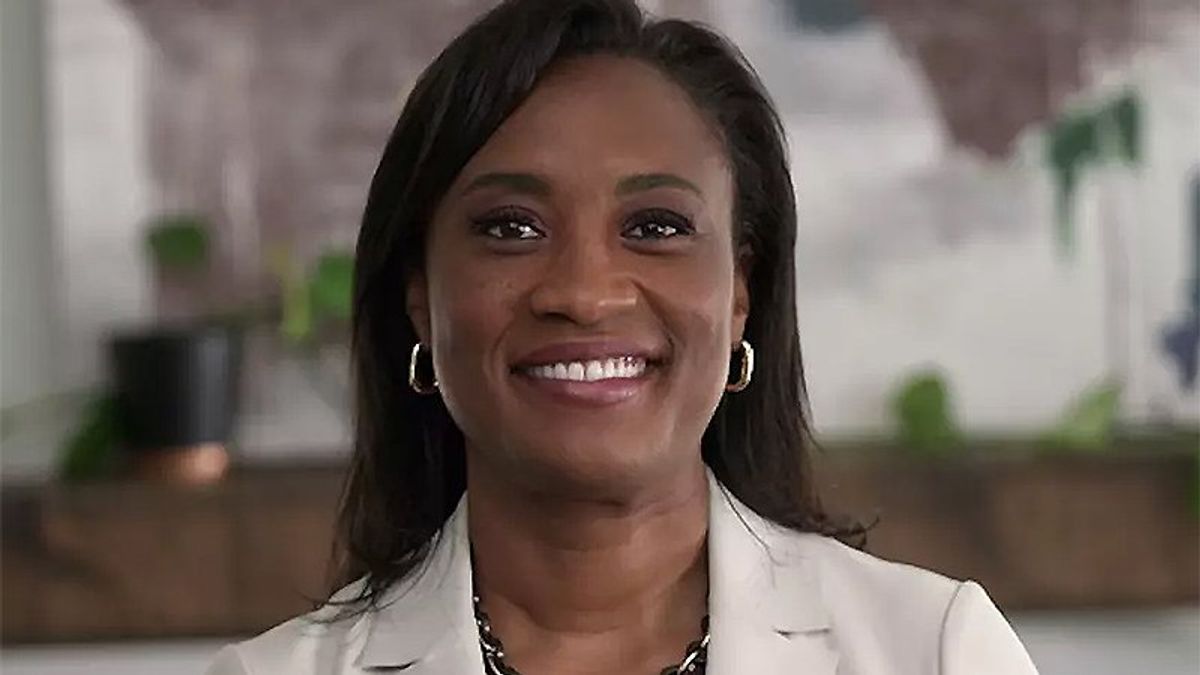
Gavin Newsome will appoint women's group president Laphonza Butler to fill Feinstein seat

Sarah K. Burris
October 1, 2023 

Photo: EMILYs List

NBC News confirmed Sunday evening that California Gov. Gavin Newsome will appoint Laphonza Butler to the late Sen. Dianne Feinstein's Senate seat.

Butler has been serving as the president of the women's group EMILYs List, which works to elect pro-choice Democratic women, including candidates like Tulsi Gabbard. The group is known for helping usher in scores of women in politics, even if it meant going up against more progressive male candidates.

"Butler's professional career has been rooted in California, where she led SEIU Local 2015, the largest union in the state," the report said. "She has also been a longtime ally of Vice President Kamala Harris, member of the University of California Board of Regents and served as director of public policy and campaigns in North America for Airbnb."

Newsome said that he would not appoint any of the candidates running for the seat in 2024 to fill out the term.

She will be the third Black woman to serve in the Senate.
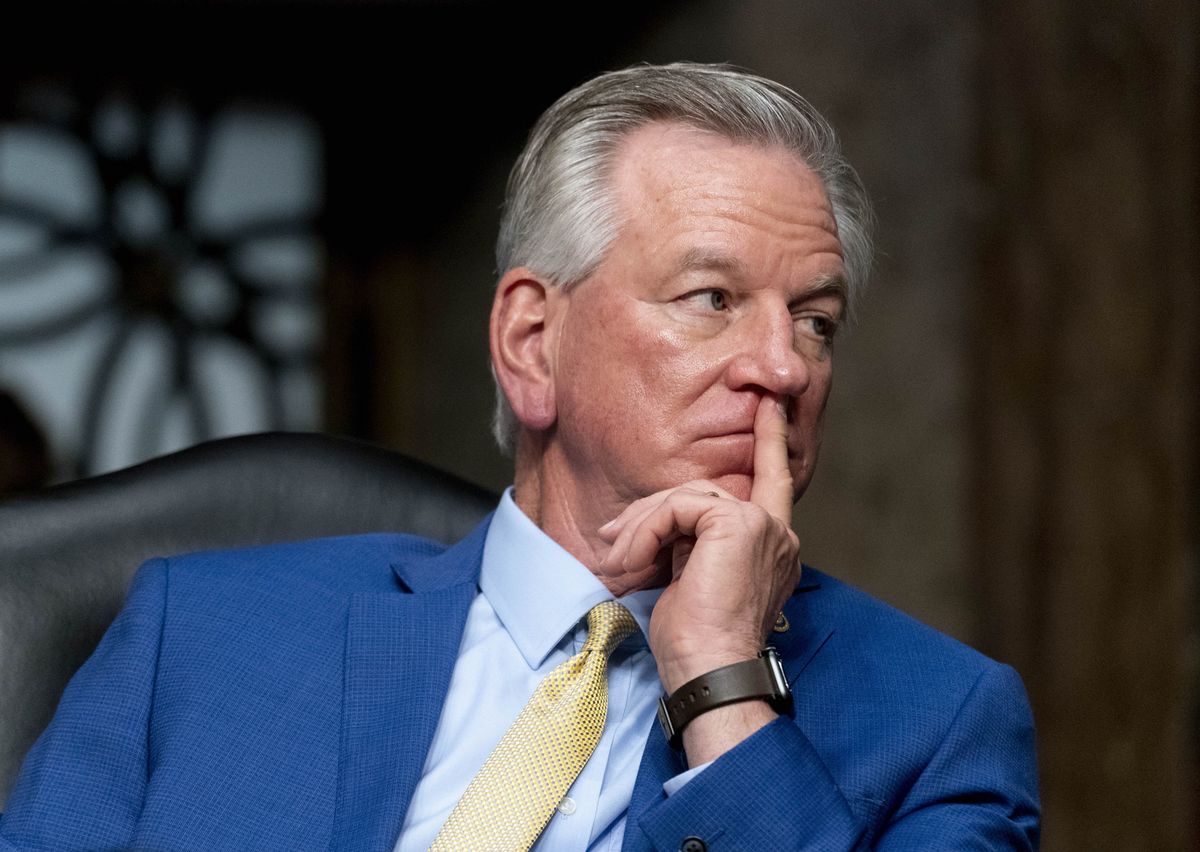
'Jaw-dropping': Tommy Tuberville slammed for 'open' talk about 'white supremacy'
David Badash, The New Civil Rights Movement
September 27, 2023

Andrew Harnik-Pool/Getty Images

A top Democratic senator is blasting freshman Republican Sen. Tommy Tuberville for his "jaw-dropping" and open talk about white supremacy after the Alabama Republican denigrated President Joe Biden's nominee for chairman of the Joint Chiefs of Staff.

Tuberville, the Alabama Republican who has single-handedly blocked well over 300 U.S. military promotions, said the U.S. military is “not an equal opportunity employer,” appearing to imply Biden's nomination of an accomplished officer was based on the color of his skin, not his achievements and experience.

Air Force General Charles “CQ” Brown Jr., who is Black, is set to be the next chairman of the Joint Chiefs of Staff after a strong bipartisan 83-11 vote by the U.S. Senate confirming him last week. Tuberville voted against him, saying Tuesday he had "heard some things that he talked about race and things that he wanted to mix into the military."

Brown is the first African American to head a branch of the U.S. Armed Forces. He was one of TIME's "100 Most Influential People of 2020."

"He is a respected warfighter who will serve America well," wrote former Secretary of the Air Force Heather Wilson that year, lauding Brown in his TIME profile. "As the former commander of Pacific Air Forces, he’s highly qualified to deter China and reassure allies in the Indo-Pacific. The suppression of ISIS militants in Iraq and Syria was largely accomplished by local forces on the ground, enabled by air power CQ helped orchestrate."

“Let me tell you something: Our military is not an equal-opportunity employer,” said Tuberville, appearing to imply it should not be.

“We’re not looking for different groups, social justice groups,” the senator continued in a Bloomberg News interview, explaining why he voted against Brown's nomination. “We don’t want to single-handedly destroy our military from within. We all need to be one.”

"I think he'll do a good job," Tuberville also said, "but I heard him say a few things that really didn't fit with me in terms of making our military better and better. We have things that that we need to do to make sure that we can uphold – and we can't do that without a great, hard, strong military.

"Let me tell you something, our military is not an equal opportunity employer. We're looking for the best [of] the best, to do whatever. We're not looking for different groups, social justice groups. We don't want to single-handedly destroy our military from within."

Asked for specific concerns, Tuberville said Brown, "came out and said we need certain groups to have an opportunity to be pilots. Listen. I want it to be on merit. I want our military to be the best. I want the best people, I don't care who they are. Men. Women, if that makes any difference, Catholics, Protestants, I want everybody to believe in the one goal that we have in this country for our military, to protect the taxpayers, protect the United States of America. Don't give me this stuff about equal opportunity, because that's not what this military is.

“Our military is becoming so political that we’re going to go south when it comes to readiness,” he warned, despite having been warned repeatedly that his military holds are negatively impacting military readiness, and are expected to do so for years to come.

But as CNBC reported, America's military "is an equal opportunity employer, and the Pentagon is an 'Office of Equal Employment Opportunity.'"

Tuberville has a history of making extremist remarks, so much so that in a rare move, Senate Majority Leader Chuck Schumer in July delivered a speech on the Senate floor denouncing Tuberville by name, along with his "one-man mission to defend white nationalism."

Earlier this year, Tuberville insisted that white nationalists are simply “Americans,” and said, “I look at a white nationalist as a Trump Republican. That’s what we’re called all the time.”

As NCRM reported in May, those remarks came immediately after an NBC News reporter told Tuberville, “A white nationalist propagates Nazism, a white nationalist could be someone who doesn’t believe that Black and Brown people are equal.”

U.S. Sen. Chris Murphy, Democrat of Connecticut, criticized Tuberville late Tuesday night, responding to the Alabama Republican's interview with Bloomberg.
"The way Sen. Tuberville talks so openly about white supremacy is just jaw-dropping," Murphy said. "I refuse to allow this to feel normal."

Feds must release ‘secret’ record on Nazis in Canada: ‘We cannot move forward’

Story by David Baxter •

The Canada flag flies atop the Peace Tower on Parliament Hill in Ottawa 
© Sean Kilpatrick / The Canadian Press


The apology by Prime Minister Justin Trudeau for a tribute by Parliament to a man who had fought in a Nazi unit is an important healing step — but more needs to be done, Jewish groups say. Namely, declassifying more of the “secret” information contained in the Deschenes Report.

These reports were completed after the Second World War and contain information on Nazis who came to Canada after the conflict ended. However, the names are all redacted, as is any information on how those individuals were allowed to come.

A former Liberal MP and current CEO of the Friends of the Simon Wiesenthal Center for Holocaust Studies told The West Block that he advocated for the declassification of the Deschenes Report, but says he carries shame that the government he served did not open the documents.

While specific numbers are not known, Michael Levitt said the historic consensus is about 2,000 people who fought for the Waffen SS and Galicia Division, in which the man initially honoured by Parliament served, came to Canada after the war.

“The namesake of our organization – Simon Wiesenthal, the Nazi hunter – he, in his later years, traveled the world, speaking out, looking to pursue justice. He actually refused to come to Canada,” Levitt said.

“He refused to set foot to Canada because he was so mortified by the shameful track record of successive governments in dealing with the dirty laundry.”

During Ukrainian President Volodymyr Zelenskyy’s address to Parliament, now-former House of Commons Speaker Anthony Rota recognized a constituent, 98-year-old Yaroslav Hunka, as a Ukrainian and Canadian “hero” for his military service fighting the Russians.

Afterward, it was discovered that Hunka fought for the 14th Waffen Grenadier Division of the SS, a volunteer Nazi unit primarily comprised of Ukrainians.

“We cannot move forward and learn the lessons of the past if we don't know the past,” B’Nai Brith CEO Michael Mostyn said alongside Levitt in a panel discussion. "And of course, our government records are still a secret. And that's a big part of the problem."

In the days since Hunka’s recognition, Mostyn said he received a phone call from a woman who said she had survived atrocities committed by that unit.

“She told me how this was the moment in time. Just don't stop. Keep going. Get the records open and tell Canadians what really happened,” Mostyn said.

“How did we let the Nazis into this country? And we are just not going to move beyond this scandal until that chapter is opened.”

Video: Renewed calls to take down Nazi-linked Ukraine monuments in Edmonton

On Wednesday, Immigration Minister Marc Miller told reporters that reopening the Deschenes Report is something that could be worth looking at. He noted that at times it was easier for Nazis to enter Canada than Jewish people.

This includes ex-Nazi death squad member Helmut Oberlander, who was expelled from the U.S. and facing a Canadian deportation battle when he died for having been an interpreter for Einsatzgruppe D, a paramilitary death squad. These units killed approximately two million people, mostly Jews, and were seen as a central part of Hitler’s so-called “Final Solution.”

Oberlander died in Waterloo, Ont. on September 20, 2021.

“[Oberlander] managed to evade justice, you know, dying as a very old man in the comfort of Canada,” Levitt said.

“In that case, for about 40 years, there was process after process underway and no government wanted to take action, including shamefully my own at the time. And this was something that I was very outspoken about, but it did not make a difference.”

Mostyn said that B’Nai Brith has filed several access-to-information requests in an effort to get more information on the contents of the Deschenes Report, but they’ve been unsuccessful. He believes embarrassment is the reason successive governments have been tight-lipped.

“If I had to guess, it would just be that there's going to be a lot of embarrassment over successive governments, as Michael said, but also other institutions like the RCMP, on how we could possibly have such indifference for Nazi perpetrators who came to this country and there were no prosecutions and no deportations,” he said.

Poland’s education minister has requested that country's Institute for Remembrance look into Hunka’s past service to see if there are grounds for his extradition.

Exceedingly dangerous': Why the rise of Christian nationalism is 'entirely out of our control'


Story by Maya Boddie •  
AlterNet
Image via lukexmartin/Flickr.© pro


In a Sunday, October 1 op-ed, New York Times opinion columnist David French posits that Christian nationalism may not be "serious," but it is "very dangerous."

He argues, "It's not a serious position to argue that this diverse, secularizing country will shed liberal democracy for Catholic or Protestant religious rule. But it's exceedingly dangerous and destabilizing when millions of citizens believe that the fate of the church is bound up in the person they believe is the once and future president of the United States."

French notes that upon seeing "a tremendous surge of interest in Christian nationalism" immediately following the January 6, 2021 attack on the United States Capitol, "I started to hear questions I'd never heard before: What is Christian nationalism and how is it different from patriotism?"

The columnist cites Baylor University church history professor Thomas Kidd, who argues, "Actual Christian nationalism is more a visceral reaction than a rationally chosen stance."

French responds to Kidd's argument saying, "He's right. Essays and books about philosophy and theology are important for determining the ultimate health of the church, but on the ground or in the pews? They're much less important than emotion, prophecy and spiritualism."

He adds:

That's why the Trump fever won't break. That's why even the most biblically based arguments against Trump fall on deaf ears. That’s why the very act of Christian opposition to Trump is often seen as a grave betrayal of Christ himself. In 2024, this nation will wrestle with Christian nationalism once again, but it won't be the nationalism of ideas. It will be a nationalism rooted more in emotion and mysticism than theology. The fever may not break until the 'prophecies' change, and that is a factor that is entirely out of our control.

READ MORE: Pastors call out 'far-right Christian nationalism' as a source of 'white supremacist' violence

French's full op-ed is available at this link (subscription required).

Related Articles:

'Mean-spirited, vulgar grab for power': This evangelical pastor is fighting back against Christian nationalism

'Fight this wicked ideology': Evangelical fundamentalist declares war on white Christian nationalism

A 'new breed' of charter schools is spreading Christian nationalism — at taxpayers’ expense

Pierre Poilievre called out for Truth and Reconciliation Day photos with Inuk elder

Story by The Canadian Press •

OTTAWA — Conservative Leader Pierre Poilievre found himself the subject of online criticism after posting photos with an Inuk elder alongside a caption about meeting with Algonquin elders on the National Day for Truth and Reconciliation.

Poilievre posted two photos to X, formerly known as Twitter, on Saturday with a caption about joining Algonquin elders and leaders at the eternal flame on Parliament Hill to mark the holiday at an event hosted by the Algonquin Nation and the National Centre for Truth and Reconciliation.

Marc Miller, the former minister of Crown-Indigenous relations, responded to Poilievre's post by pointing out that the people in the photos are not Algonquin, but rather Inuit.

"We are all learning some difficult truths, particularly today, and mistakes can happens [sic]," Miller posted. "The Indigenous people in this picture are Inuit, not Algonquin, wearing Inuit traditional clothing, including Elder Manitok Thompson, who is very well known."

MP Lori Idlout similarly confirmed it was Thompson in the photos on X, saying she is Inuk and originally from her Nunavut riding.

In one photo, Poilievre is standing head-to-head with Thompson near the eternal flame, with her hand placed on his shoulder.

The second photo taken in front of Parliament shows Poilievre standing beside Thompson and three others, including two wearing traditional Inuit clothing.

A spokesperson for Poilievre's office said the Conservative leader was at an event led by Algonquin leaders to commemorate the day, and spoke with other Indigenous Peoples there, including "these Inuit women" who were in attendance.

Poilievre was seen at the event speaking with Claudette Commanda, a well-known elder and residential school survivor from Kitigan Zibi Anishinabeg, an Algonquin community located about an hour and a half away from Ottawa.

Thompson was posting about her meeting on X with Poilievre as early as Friday evening, saying she was ready to speak with him in the morning.

"My issues are Inuit priorities -- elder care, health, housing, economic development, hydro opportunities, carbon tax effecting Nunavut cost of living, food security, homelessness, addiction centres," she wrote.

After the meeting, she posted that Poilievre "took time" and listened to her. In another post, she said they prayed for Canada and "all the people who have been hurt by the residential school years."

"I prayed to God and told him to bless Pierre for taking the time to stand with us at the ceremonies."

Poilievre was at the event earlier in the day, but left before the official broadcasted events commenced.

Thompson took issue with Miller's post, saying if politicians could work in a nonpartisan manner, implementing the Calls to Action from the Truth and Reconciliation Commission could be a quicker process.

"I speak for myself as an aboriginal, I’m not a people of pain, we want businesses, we want to own homes, we want to get ahead with our own independence, we don’t want government hand outs," she wrote. "We were an independent people before contact. We want to be equal. We are not down cast."

Saturday was the third year of the federal statutory holiday, adapted from the grassroots Orange Shirt Day, that recognizes the abuse suffered by Inuit, First Nations and Metis people at hundreds of state- and church-run residential schools.

Residential school survivors and Indigenous leaders were among the crowd of thousands who converged on Parliament Hill for the commemorative event, including Crown-Indigenous relations Minister Gary Anandasangaree and Governor General Mary Simon.

This report by The Canadian Press was first published Sept. 30, 2023.

Alessia Passafiume, The Canadian Press