Monday, October 02, 2023

Killing of alleged gang member in Winnipeg 'a wake-up call': Sikh youth organization leader

CBC
Mon, October 2, 2023 
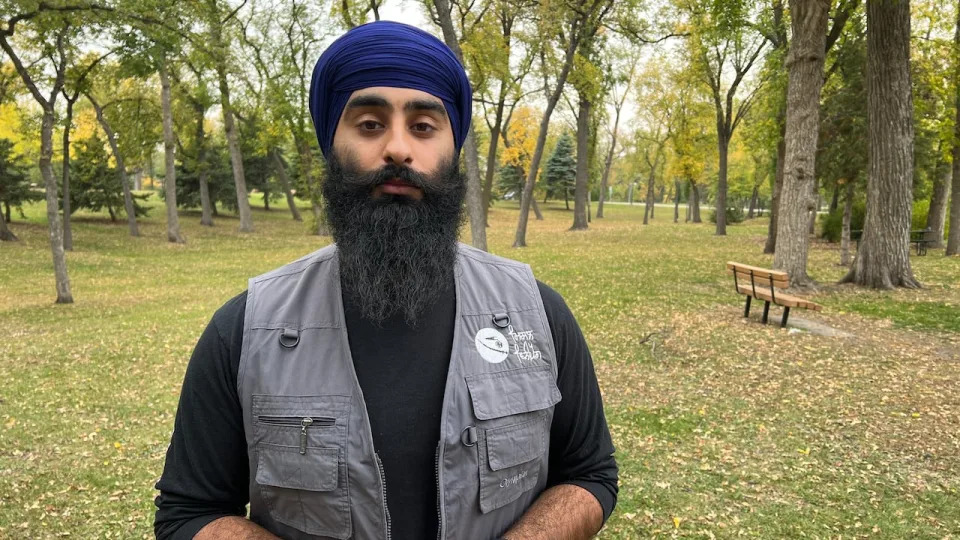
Rajbir Singh of Misl, a Sikh youth organization in Winnipeg, says some members of the community are concerned after the homicide of an alleged Punjabi gang member in the city. (Travis Golby/CBC - image credit)

A Winnipeg Sikh youth organization says it's concerned about the possibility of gang activity in the city after the fatal shooting of a man who police in India allege was a notorious criminal there.

Sukhdool Singh Gill, 39, was found dead by police in a duplex on Hazelton Drive, in northwest Winnipeg, on the morning of Sept. 20.

His death came just two days after Prime Minister Justin Trudeau said there are credible allegations linking India to the death of Hardeep Singh Nijjar, a pro-Khalistan activist, in Surrey, B.C., in June.

"There's obviously a lot of shock, there's a lot of confusion," said Rajbir Singh, who leads Misl Winnipeg, a Sikh youth organization.

"Indo-Canadian gangs isn't something new. It's been going on for quite some time on the West Coast, in Ontario. However, this is the first time we've seen something like this in Winnipeg."

A person who lives near the home where Gill was killed told CBC they heard 11 gunshots right before officers discovered Gill's body.
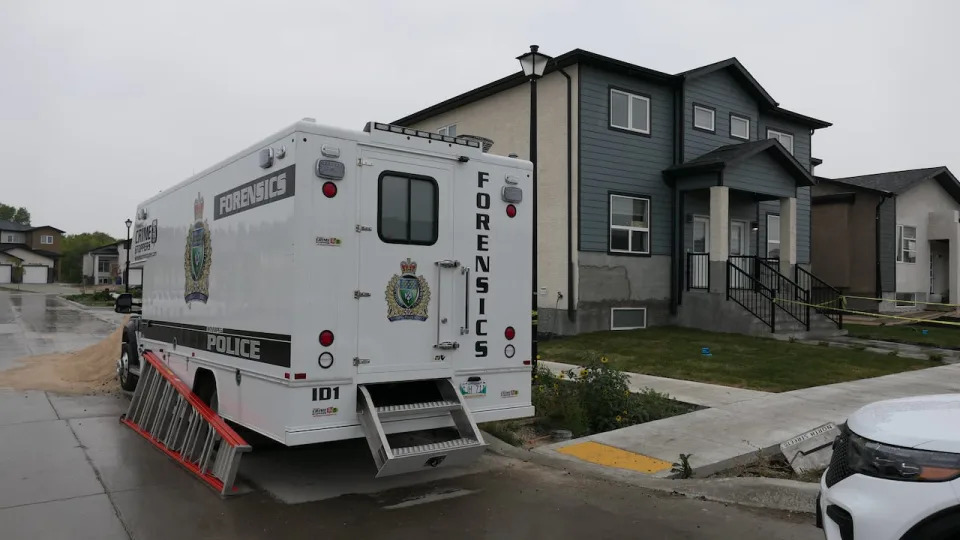

A forensics van was parked outside a home on Hazelton Drive Thursday. Police say Sukhdool Singh Gill inside a home on this street Wednesday morning.

A forensics van was parked outside on Hazelton Drive the day after Sukhdool Singh Gill was found dead in a home on the northwest Winnipeg street. (Trevor Brine/CBC)

The area is home to a large population of Punjabi people, who have settled there to keep community connections and be close to a gurdwara, a Sikh place of worship, Singh said.

Gill, who went by the alias Sukha Duneke, was allegedly part of the Bambiha gang in India, according to police documents in that country. He was accused of extortion and arranging money for gang members to buy weapons, and his name was linked to murders in India.

An expert on conflict management in India said Gill was involved in a long-running feud with rival gangs.

He allegedly left India in 2017 after obtaining a passport illegally with the help of police.

Gulneet Singh Khurana, a former senior police superintendent in Moga — a district in India's Punjab state — told CBC the passport case was filed in 2022 after police got complaints about extortion calls and learned Gill was in Canada.

"When we looked into the matter, we came to know he was in Canada," Khurana said in an interview translated from Hindi. "When we verified the matter, we came to know that he had hidden facts and gone abroad."
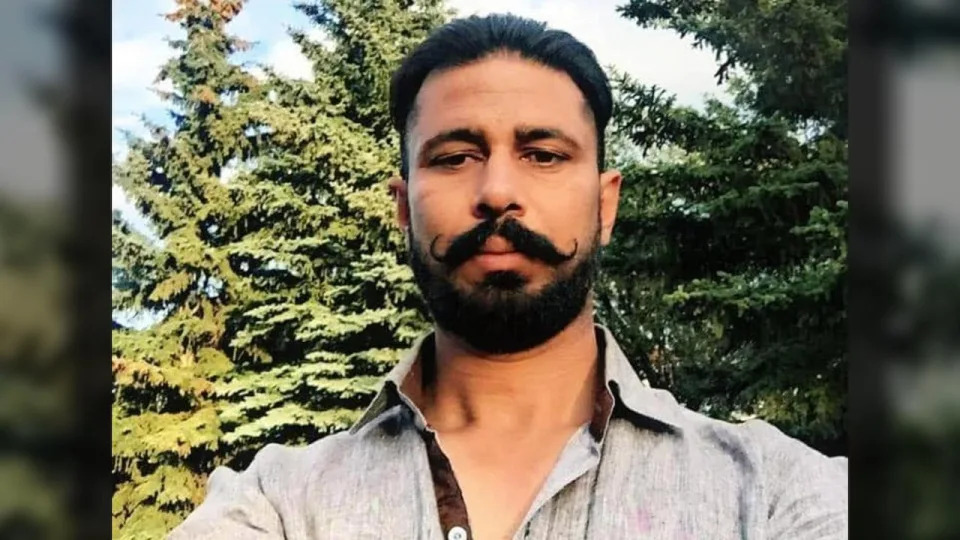
Sukhdool Singh Gill appeared on a wanted list released via the social media platform X by India's National Investigation Agency — a specialized counter-terrorism law enforcement agency — on Sept. 21, 2023. Gill, 39, was found dead in a northwest Winnipeg home the same week, according to the Winnipeg Police Service.

Gill, 39, was found dead in a northwest Winnipeg home on Sept. 20. A person who lives nearby told CBC they heard 11 gunshots before officers discovered Gill's body. (NIA India/X)

Singh said no one here really knew of Gill, or the fact he was in Winnipeg, until his death.

"He might've been known as a person by a very niche crowd, people who kind of keep up with the gang violence in India and outwards," said Singh. "However, I can't say he was a prominent figure of the community."

Rival gangs claim responsibility

Rival gangs in India have claimed responsibility for Gill's death, including the Bishnoi gang, which took credit in a social media post, according to reports by Indian media.

However, a justice official in India is skeptical.

Shweta Shrimali is superintendent of Sabarmati Central Jail in India's Gujarat state, where gang leader Lawrence Bishnoi is being held.

Bishnoi has no social media access and no contact with anyone who could've made the post for him, according to Shrimali.

"He has been in our jail the whole time and there is no relation of him with this," Shrimali told CBC in an interview translated from Hindi.

The week he was killed, Gill also appeared on a wanted list released via the social media platform X (formerly Twitter) by India's National Investigation Agency — a specialized counter-terrorism law enforcement agency.
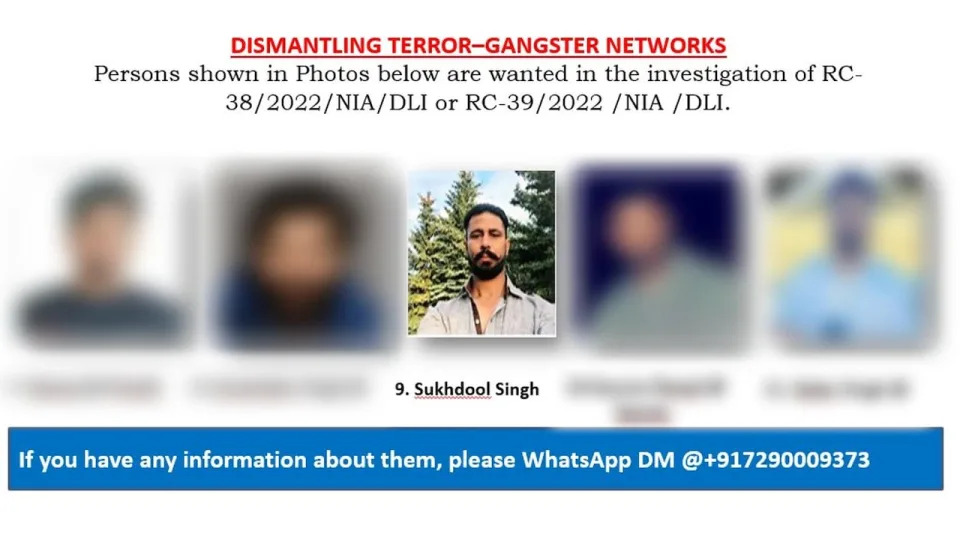
Sukhdool Singh Gill appeared on a wanted list posted on X, formerly known as Twitter on Sep.21, 2023.

The week he was killed, Gill appeared on a wanted list posted on X last week by India's National Investigation Agency — a specialized counter-terrorism law enforcement agency. (NIA India/X)

The general counsel for a U.S.-based group advocating for an independent Sikh state in India called Khalistan was named on that same list — but says he didn't know of Gill until he saw that list.

"I have no information about his past," said Gurpatwant Singh Pannun, who is general counsel for Sikhs for Justice — a group that is banned in India and is accused of supporting violent extremism.

"I have no information whether he worked in any Khalistan campaign or whether he was involved in violent activities," Pannun told CBC via Zoom.

He cautioned against coming to any conclusions until the investigation into Gill's death is complete.

Winnipeg police said investigators are looking into gang activity but haven't confirmed it was a factor in the case.

Gangs 'super fluid' in Canada: police officer

A B.C. police officer who previously worked with an anti-gang unit there says he's heard of the Bambiha gang through news sources in India, but it's difficult to say how much of a presence they have in Canada.

"The gang field is pretty transient in nature — they go where they make profit," said Surrey Police Service Staff Sgt. Jag Khosa, who worked with the Combined Forces Special Enforcement Unit of B.C. to curb gang violence.

"We've seen B.C. gangsters move to Alberta or Toronto or vice versa, even outside the country. So which group they represent, even that is super fluid," he said. "We've seen people switch sides very quickly."

Singh, the Winnipeg Sikh youth leader, said Punjabi community members see Gill's homicide as "a one-off."

The Bambiha gang, which Gill has been linked to, has been in the news in India quite a bit, said Singh, pointing to the 2022 fatal shooting of Punjabi-language rapper and music producer Sidhu Moose Wala in India, which police said was the result of an "inter-gang rivalry."

"This kind of gang violence, we've always heard about it. But me personally, and a lot of the community members here, we did not know they had a presence here," said Singh.

"Just the thought that this kind of scenario could even take place here, it's kind of a wake-up call that these kind of things may actually exist here."

Singh said his group is hopeful there will be no more violence, but his organization may have a role to play if there is.

"If these kind of Punjabi gangs take a rise here, that kind of falls on the institutions in the Punjabi community like ourselves to kind of step forward," Singh said.

"Sure, there are already people locked into that path, but there are definitely people you can keep away from them," he said.

"There are people you can bring into the gurdwaras again. There are children you can educate for a better future."
Redonda: Tiny Caribbean island’s transformation to wildlife haven

Gemma Handy - St John's, Antigua
Sun, October 1, 2023 

Seabirds now flock to the newly verdant isle

The incredible eco-restoration of one tiny Caribbean island - transformed from desolate rock to verdant wildlife haven in just a few years - has captured the imagination of environmentalists worldwide.

Now the tenacious Antiguans and Barbudans who led the metamorphosis of the country's little known third isle of Redonda are celebrating another impressive feat.

The mile-long spot has been officially designated a protected area by the country's government, ensuring its status as a pivotal nesting site for migrating birds and a home for species found nowhere else on Earth is preserved for posterity.

The Redonda Ecosystem Reserve, which also encompasses surrounding seagrass meadows and a coral reef, spans a colossal 30,000 hectares (74,000 acres).

Its sheer size means the country has already met its "30x30" target, a global goal to protect 30% of the planet for nature by 2030.

Today, Redonda is bursting with biodiversity including dozens of threatened species, globally important seabird colonies, and endemic lizards.

The number of ground dragons rebounded as the environment recovered

It did not always look like this. Invasive black rats that preyed on reptiles and ate birds' eggs, along with goats introduced by early colonists that devastated Redonda's vegetation, had left the island looking like a barren moonscape.

An ambitious project launched in 2016 to relocate the goats and eradicate the rats saw the greenery spring back to life, bringing with it an exponential rise in native species.

From moonscape to haven: A Caribbean island reborn


Why flying goats could save a Caribbean isle

The work was piloted by local NGO, the Environmental Awareness Group (EAG), in sync with the government and overseas partners including Fauna and Flora International (FFI).

The EAG's executive director Arica Hill describes the new protected status as a "huge win for Antiguans and Barbudans".

"This is the largest marine protected area in the Eastern Caribbean; it showcases the amazing work that conservationists and environmentalists can do right at home," she tells the BBC. "What is even more significant is that the government has trusted us to legally manage it too."

Magnificent frigatebirds are among those nesting on the island

The group is already carrying out feasibility studies in the hope of reintroducing species found on Redonda many years ago, such as the burrowing owl, a small sandy-coloured bird that nests underground.

The EAG is also setting up a robust governance system to ensure the island remains free of invasive critters. That includes surveillance cameras to look out for errant rats and monitoring local fishing activities which must adhere to strict guidelines.

FFI's Jenny Daltry says Caribbean islands face the highest extinction rates in modern history, meaning the restoration and protection of areas like Redonda is "critical".

There is a wealth of seabirds on Redonda's cliffs

Since the efforts began, 15 species of land birds have returned to the island, while numbers of endemic lizards like the critically endangered Redonda ground dragon have soared.

Local residents who once dubbed Redonda "the rock" are now its most vehement guardians, says the EAG's Shanna Challenger.

Before its restoration, locals called Redonda a "rock", and it is easy to see why

"Our little sister island that many people never see has been able to invoke such national pride," she smiles.

"To me as an Antiguan and Barbudan, this work has been monumental. We are forever written into the fabric of Redonda's history; I'm so proud to have been instrumental in this and can't wait to see what Redonda's legacy will be moving forward."

For small developing islands that exist on the frontier of climate change, Redonda's success represents a rare bright spark amid a glut of gloomy environmental headlines.

Now, the island is much greener

"Reaching our '30x30' target tells the rest of the world that this is possible. Even though we don't put out the most emissions, we are among the most impacted and we are still the ones meeting our target early," Shanna continues.

"We are putting our money where our mouth is. I hope this is an inspiration to other countries that if little Antigua and Barbuda can do it, so can you."

For Johnella Bradshaw, the reserve's coordinator, the accomplishments are more personal still.

Johnella Bradshaw is proud of what has been achieved on Redonda

"Growing up, going through school and college, a career in the environmental field was unheard of. The emphasis was on being a doctor, dentist or lawyer," she says.

"When you think about conservation, you think about things happening in America or Europe, not a little island in the Caribbean.

"Now we are at the forefront of international conservation we can change that narrative, and show younger generations that people who look like me can do this."

Johnella is eager to prove that the protected status won't just exist "on paper" but "in reality too".


The waters off the island are also teeming with life

Like her compatriots, she's all too aware of the unprecedented climactic conditions facing the country. Six years ago, Barbuda was devastated by Hurricane Irma and warming seas continue to pose an existential threat to islands across the region.

"You hear about climate change, rising temperatures and stronger storms but we are feeling it. This summer has been awful, it's so hot," Johnella adds. "But if we all play our part, together we can make a difference."

This Caribbean island was once plagued with rats that destroyed the ecosystem. Now, plant biomass has increased 2,000% thanks to environmental group efforts.


Lloyd Lee
Sun, October 1, 2023 

Conservationists have been working to restore native life on the island of Redonda.Addshore

Redonda, an uninhabited Caribbean island, was a critical source of fertilizer in the 19th century.


When miners stepped foot on the island, they introduced invasive species that destroyed the habitat.


Environmental groups began restoration efforts in 2016 and have seen remarkable progress.


Redonda, a small, uninhabited Caribbean island that is part of the commonwealth of Antigua and Barbuda, is on the path to recovering its native ecosystem after being destroyed by invasive species nearly a century ago.

The tiny island of Redonda, about a mile long, was formerly a haven for several species of seabirds.

Its attraction, particularly to birds, such as Brown Boobies and Masked Boobies, made the island a rich source of guano — or seabird excrement — which could be turned into fertilizer and gunpowder.

In the 19th century, the British government deployed more than 100 miners to begin extracting several tons of guano per year, according to Earth Island Journal.

Humans deserted the island around the 1930s, but the mining operations left behind invasive species, mainly domestic goats and stowaway black rats, that wreaked havoc on the island's ecosystem.

Soon, the island became a barren landscape, earning the nickname "the rock" from adjacent locals, BBC reported.

"Much like they have done elsewhere in the world, the rats and goats contributed to the deforestation and desertification of Redonda and are blamed for the extinction of the endemic skink and iguana, as well as the extirpation of the Antiguan burrowing owl on the island," according to the Environmental Awareness Group (EAG), an Antigua and Barbuda NGO. "By 2012, the ecosystem was so severely degraded that even the feral goats were starving to death."

In 2016, environmental groups such as EAG launched restoration efforts to bring back the local plant life and animal species native to the island.

The plan included relocating Redonda's estimated 60 goats to Antigua and eradicating about 7,000 rats with the help of local and international volunteers.

"That's all we did. We just removed the species that were not supposed to be there and within months we saw the vegetation growing back — the island rebounding," Johnella Bradshaw, EAG's Redonda program coordinator told CNN.

In just two years, entire species began to return, according to the EAG.

"Within 24 months of invasive species removal, populations of at least two of the three lizard species have increased by more than threefold and species of land birds and invertebrates, not seen in decades, have returned," the NGO wrote.

Today, Redonda is home to dozens of threatened species and a new generation of seabirds that haven't been seen in centuries. Total plant biomass has increased by more than 2,000%, CNN reported.

"Up to this date, we haven't planted anything, we haven't reintroduced any species. We just removed the rats and the goats, and the island transformed right in front of our eyes," Bradshaw told CNN.

This month, the government of Antigua and Barbuda established the Redonda Ecosystem Reserve which will cover 30,000 hectares or 74,000 acres of land and sea, including the small island.

Bradshaw told the outlet that this designation should help the island continue its restoration, which remains fragile.

An EAG spokesperson did not return a request for comment.
PERMANENT ARMS ECONOMY
India is a growing defense powerhouse, and now it's looking to cash in on it

Paul Iddon
Sun, October 1, 2023

Prime Minister Narendra Modi at the inauguration of the Aero India exhibition in Bengaluru on February 13.2023

MANJUNATH KIRAN/AFP via Getty Images

India has long been one of the world's biggest arms buyers, relying on others to equip its forces.


But New Delhi is investing heavily in domestic production to arm itself and export to the world.


Recent weapons sales and military exercises in the Middle East reflect that new outward focus.


India has long been the world's largest arms importer, relying on other countries to supply it with tanks, warships, and fighter jets. But it has been investing heavily in its domestic arms industry with the goal of equipping its own forces and increasing its arms sales around the world.

New Delhi has made headway toward that goal with its "Make in India, Make for the World" initiative, launched in 2020, and by forging closer defense relationships with other countries.

India's need to wean itself off its heavy dependency on arms imports became more apparent after Russia attacked Ukraine in 2022. New Delhi still has close ties with Moscow but the war has made the Russians less dependable suppliers.

Recent arms sales and exercises illustrate how India seeks to turn that domestic arms production into foreign sales and perhaps even take some of that market away from its biggest supplier.
Shopping around

A Pinaka multi-barrel rocket launcher in the Republic Day parade in New Delhi in January 2021.JEWEL SAMAD/AFP via Getty Images

In September 2022, India agreed to sell its powerful Pinaka multi-barrel rocket launchers to Armenia — the first foreign export of the Pinaka — along with anti-tank missiles and assorted ammunition in a $260 million deal.

That sale came two and a half years after Armenia bought four of India's Swathi counter-battery radars, which track incoming artillery and rockets and plot return fire, for $40 million, choosing the Indian option over equivalent Polish and Russian systems in what was considered a big achievement for the then-nascent Make in India program.

New Delhi's aspirations for a foothold in the African and Middle East arms markets would undoubtedly get a boost from a sizable arms deals with Egypt. Over the past decade, Egypt has spent large sums on high-end weapons systems, primarily from France and Russia. Between 2015 and 2019, Egypt was the world's third-largest arms importer.

India has been improving its ties with Egypt, as seen in their expanded military exchanges.


Modi and Egyptian President Abdel Fattah al-Sisi in Cairo on June 25.Indian Press Information Bureau/Anadolu Agency via Getty Images

India's air force and navy participated in Egypt's Bright Star-23, a multilateral military exercise, in September. It was the first time India had joined, and during the drills, an Indian air force Il-78 tanker refueled Egyptian MiG-29M and Rafale fighters — Russian- and French-made jets, respectively.

That refueling underscored the degree of interoperability the militaries have developed and illustrated the countries' rapidly growing defense ties — ties that may translate into arms sales, particularly of India's domestically developed weapons.

In January, Egyptian President Abdel Fattah el-Sisi visited New Delhi and met with Indian Prime Minister Narendra Modi. The leaders discussed "defense platforms" and "equipment-related linkages" and deepening cooperation between their militaries and defense industries.

In June, Modi visited Egypt, the first visit to Cairo by an Indian leader since 1997, where the two leaders decided to boost cooperation in several fields, including security and technology. During Modi's visit, a former Indian Air Force chief told Indian media that the countries were eager to cooperate on military research, development, and manufacturing.


An Egyptian jet refuels from an Indian tanker during exercise Bright Star in September.Indian air force

"There is a very significant possibility of exporting weapon systems, sensors and platforms and also supporting Egypt" in its efforts to "building up their own industrial complex," the former air force chief was quoted as saying, noting their "commonalities of equipment, and thinking."

There have been reports that India is interested in selling Egypt about 20 its Tejas light multi-role combat jets and in setting up production lines for that aircraft and for Indian-made helicopters in Egypt.

In February, the chairman of Hindustan Aeronautics Limited, which makes the Tejas, said the company was in talks to supply 35 Tejas Mk-1As to Egypt alongside a complete technology transfer that would enable Cairo to build the aircraft locally. (Egypt and India collaborated on development of the Helwan HA-300 light supersonic interceptor in the 1960s, but that project was ultimately canceled.)

India has also shown interest in exporting its domestically developed Akash medium-range air-defense system and the BrahMos cruise missile to a number of countries, including Egypt. Brahmos is a joint Indian-Russian venture and officials are now angling for billions in foreign sales of it.

Cashing in on the value market


Modi at a new Hindustan Aeronautics Limited facility northwest of Bangalore in January 2016.MANJUNATH KIRAN/AFP via Getty Images

While some of these deals could undoubtedly boost India's defense exports, it is still early days. After all, Indian defense exports in recent years were negligible compared to heavyweights like the US and France, and New Delhi remains heavily reliant on imports.

In the coming years, India could carve out a sizable place for itself in the growing market for "value arms," which caters to countries looking for a better deal on older or slightly less capable hardware.

With a bigger share of that market, India could replace Russia and compete with China for exports, profits from which would also help Indian firms develop indigenously made equipment to fulfill domestic requirements.

While selling arms to Armenia may eventually be seen as the start of the Make in India initiative's ambitious effort to take New Delhi from the being the world's largest arms importer to a significant exporter, making that transformation is much easier said than done.

Securing even bigger deals with Egypt and other countries, and sweetening the pot with technology transfers and other incentives, might get that effort farther off the ground, helping India stand out in a crowded marketplace.

Paul Iddon is a freelance journalist and columnist who writes about Middle East developments, military affairs, politics, and history. His articles have appeared in a variety of publications focused on the region.


Metro Vancouver workers poised to strike as soon as Monday, union says


CBC
Sun, October 1, 2023 

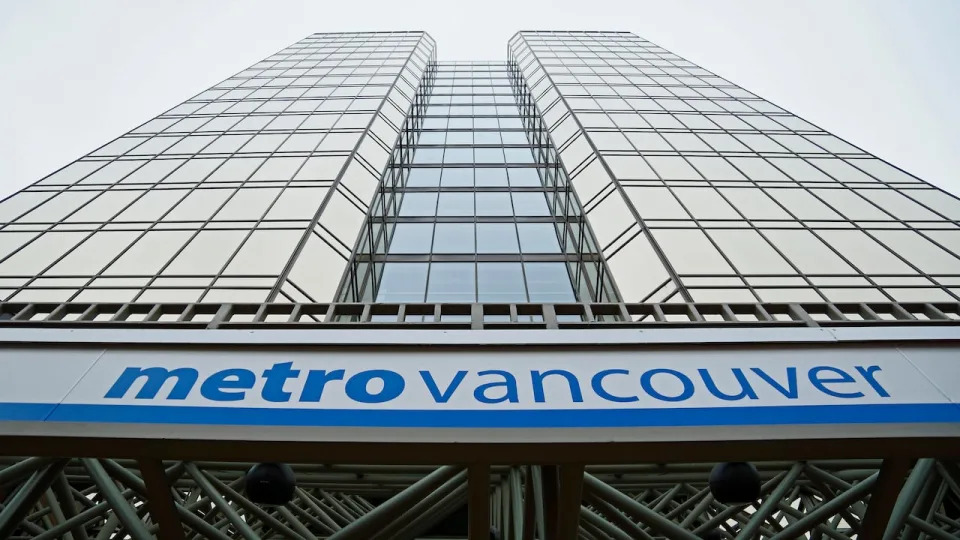
Members of the Greater Vancouver Regional District Employees' Union have issued a strike notice and can legally start job action beginning the afternoon of Oct. 2. (Peter Scobie/CBC - image credit)

Hundreds of workers at Metro Vancouver are poised to strike as soon as Monday afternoon, after their union says it issued a 72-hour strike to the regional district on Friday.

The Greater Vancouver Regional District Employees' Union (GVRDEU) says the union is asking for higher wages and protections for workers as the cost of living rises in the region.

According to its website, the GVRDEU serves "the outside employees of Metro Vancouver" with over 600 members helping maintain services such as water treatment, wastewater collection, infrastructure construction, housing, air quality monitoring, and more.

Metro Vancouver is the regional government that provides and coordinates services for 21 municipalities across the Lower Mainlaind.

Linnar Lee, secretary for the GVRDEU, says the union has been negotiating with Metro Vancouver for since before its last contract expired on Dec. 31, 2021.

"The employer wants concessions during this hard economic time where most of us are struggling … This livable region is not livable anymore economically for us," said Lee, who works as a housing dispatcher for Metro Vancouver.

Beginning Monday afternoon, the union says it will be in a legal position to start job action.

Lee says union members are making fair requests in line with other municipalities, such as wages that will allow workers to continue living in the region.

"We want to be able to tuck our kids in at night to go to sleep, instead of increasing our work hours," she said.

In a statement, the Metro Vancouver regional district said it has offered an 11.5 per cent wage increase over three years and is "committed to reaching a fair and reasonable collective agreement that recognizes how much [the value of its] staff and is affordable to the local taxpayers who must pay for it."

"The potential job action is unfortunate, however, there will be no disruption to the essential services that we provide to nearly 2.8 million residents every day," reads the statement.

Calls for wage increases and protection

On Aug. 23, union members voted 97.2 per cent in favour of a strike.

Lee says bargaining with the region hasn't gone well, due to Metro Vancouver's requests for concessions, such as cutting back on fair wage clauses and expanding working hours.

She adds one provision, known as a "me too clause," allows GVRDEU members and unionized workers from the City of Vancouver and neighbouring municipalities to receive similar wage increases as one another.

The clause ensures "that our union can settle knowing that we have some kind of wage protection if the City of Vancouver comes to an agreement with a certain wage … The employer wants to take that away from us," she said.

"They also want to amend the hours so that it opens it up that workers work longer hours, [which] contradicts work-life balance."

In a statement, the Metro Vancouver region said it is requesting "a series of cost and procedural efficiencies" that could benefit the region and its employees.

"We believe our wage offer of an 11.5 per cent increase over three years and a one-time lump sum of $2,350, plus other improvements to allowances and benefits, is fair and reasonable and aligned with other negotiated settlements in the region," reads the statement.

Essential services are established

While job action may take place, Lee says essential workers for water treatment and other services will still be staffed to ensure public safety.

But with many other staff striking, she says it would be up to management to decide whether to close or alter non-essential services, like parks.

She says the union doesn't take striking lightly, but feels it is necessary.

"For us to say, 'Hey come on, this isn't fair. We need to take strike action.' It's going to hit our pocketbooks, we know that," said Lee. "But the employer has pushed us to this point."
'What do you see?' NASA shares photos of 'ravioli'-shaped Saturn moon, sparking comparisons


Eric Lagatta, USA TODAY
Mon, October 2, 2023 at 8:24 a.m. MDT·3 min read


It's been six years since the closest images of Saturn's innermost moon were captured, but last week may have been the first time that many saw photos of the oddly shaped celestial body when NASA shared them on Instagram.

And many couldn't help but notice the resemblance between the moon known as Pan and some well-known food dishes.

"Ravioli, pierogi, empanada... What do you see?" NASA said on its Instagram page in a post accompanied by two images depicting different angles of the moon. "No wrong answers.⁣"

Many commenters agreed that Pan does indeed resemble one of those three foods, but others were more creative in their interpretation.

"It's a Koopa shell," one user said, referencing the turtle-like race of characters from the Super Mario franchise.

"A macaron with the cream squishing out," commented another.

The photos were taken in 2017 during the Cassini spacecraft's closest encounter yet with Pan, NASA said on Instagram, "improving the level of detail seen on the little moon from previous observations."
Closest images captured in 2017 after Pan discovered in 1990

The two images that NASA shared show how Cassini's perspective changed as it passed within 15,300 miles of Pan on March 7, 2017.

The views show the northern and southern hemispheres of Pan on its trailing side, which is the side opposite the moon’s direction of motion as it orbits Saturn.

The distinct-looking moon was first imaged in 1981 by Voyager 2, but it wasn't until 1990 that Mark R. Showalter, a senior research scientist at the SETI Institute, analyzed the old probe photos and officially discovered the celestial object, according to NASA.


This raw, unprocessed image released by NASA shows Saturn's tiny moon, Pan, in 2017, and was taken by NASA's Cassini spacecraft.

How do scientists explain Pan's unique shape?

Pan, like Saturn's other moon Atlas, has a prominent ridge along its equator that gives it a distinctive flying saucer shape that others have also compared to a walnut.

The thin ridge around Pan’s equator is thought to have come after the moon formed.

Cassini imaging scientists think that Pan formed within Saturn’s rings, with ring material accreting onto it and forming the rounded shape of its central mass. Scientists believe that Pan has a core of icy material that is denser than the softer mantle around it.

Because of Pan’s weak gravity, the ring material simply settled onto it and continued building up rather than flattening as it would on larger bodies, according to NASA.

NASA UFO report: How NASA hopes to shift UFO talks 'from sensationalism to science'
How did Pan get its name?

Moons of Saturn were originally named for Greco-Roman Titans and descendants of the Titans.

But because Saturn has 146 moons, scientists eventually had to begin selecting names from more mythologies. The Greek god of nature and the forest known as Pan is a satyr, which is a a creature resembling a man with the hind legs and hooves of a goat.


‘Strange noise’ heard across coast after whale calf is trapped in net in Australia

Mitchell Willetts
Sun, October 1, 2023 

Screengrab from video by Damian Coulter.

A “strange noise” could recently be heard echoing across a stretch of Australia’s Sunshine Coast, cries from a distressed humpback whale, according to witnesses.

A whale calf was caught in a net and its mother stayed by its side, calling out in anguish or, some say, for help.

“If you heard a strange noise this morning at dawn and wondered what it was..this is your answer,” drone photographer Damian Coulter said in an Oct. 1 social media post, sharing video of the whales. “The distress calls of this mother whale crying for help to release her calf from the shark nets.”

Others reported hearing the whale’s calls.

“We all could hear the mother cry for help which was not a very pleasant sound,” photographer Glenn Reeves said in an Instagram post.

“First thing in the morning my wife was saying I can hear this big noise,” Reeves told the Australian Broadcasting Corporation. “You could hear it, it’s like a didgeridoo echoing through the whole headland.”

The whale’s cries didn’t go unanswered, as a vessel sailed out to the trapped whale and freed it, photos show.

Both mother and baby swam away together,” Reeves said in the post.

The rescuers were sent by Fisheries Queensland, the government agency charged with managing Queensland’s waters, ABC reported.

Though many were happy to hear the whales were rescued, they said it shouldn’t have been necessary to begin with.

“Was such a horrible sound,” a commenter said. “Shark nets need to go.”

“The outcome was positive, but another showcase of the negative effects these nets have,” said another.

Shark nets are intended to act as a barrier to keep sharks away from beaches and therefore people, reducing the odds of an attack. The nets have been effective in this endeavor, according to the government of New South Wales.

However, environmentalists and others have criticized the practice, saying the nets are unnecessary, outdated and put sealife — such as whales — in danger, The Guardian reported.


James Webb telescope makes 'JuMBO' discovery of planet-like objects in Orion


Jonathan Amos - Science correspondent
Mon, October 2, 2023 

At just 1,400 light-years from Earth, the Orion Nebula, M42, is visible to the naked eye as a faint smudge

Jupiter-sized "planets" free-floating in space, unconnected to any star, have been spotted by the James Webb Space Telescope (JWST).

What's intriguing about the discovery is that these objects appear to be moving in pairs. Astronomers are currently struggling to explain them.

The telescope observed about 40 pairs in a fabulously detailed new survey of the famous Orion Nebula.

They've been nicknamed Jupiter Mass Binary Objects, or "JuMBOs" for short.

One possibility is that these objects grew out of regions in the nebula where the density of material was insufficient to make fully fledged stars.

Another possibility is that they were made around stars and were then kicked out into interstellar space through various interactions.

"The ejection hypothesis is the favoured one at the moment," said Prof Mark McCaughrean.

"Gas physics suggests you shouldn't be able to make objects with the mass of Jupiter on their own, and we know single planets can get kicked out from star systems. But how do you kick out pairs of these things together? Right now, we don't have an answer. It's one for the theoreticians," the European Space Agency's (Esa) senior science adviser told BBC News.


JuMBO pull graphic

Prof McCaughrean led the team that produced the new Orion survey.

Using JWST's remarkable resolution and infrared sensitivity, the astronomers have added substantially to the information already mined by older telescopes, including Webb's direct predecessor, the Hubble Space Telescope.

The Orion Nebula, also known by its sky catalogue name of M42, is the nearest, large star-forming region to Earth.

Along with the quartet of bright suns at its centre called the Trapezium, this region of space is visible to the naked eye as a smudge on the sky.

If you don't know it, it can be found low down in the constellation of Orion, which is named after a mythical Greek hunter. The nebula forms part of the hunter's "sword", hanging from his "belt".

Planetary discs: Newborn stars in the nebula are busy making the next generation of planets

The new JWST image is actually a mosaic of 700 views acquired by Webb's NIRCam instrument over a week of observations.

To give a sense of scale, it would take a spaceship travelling at light speed a little over four years to traverse the entire scene. The nebula itself is about 1,400 light-years from Earth.

Tucked away in this vista are thousands of young stars, spanning a range of masses from 40 down to less than 0.1 times the mass of our Sun.

Many of these stars are surrounded by dense discs of gas and dust which may be forming planets, although in some cases, these discs are being destroyed by the intense ultraviolet radiation and strong winds from the most massive stars in the region, in particular from the Trapezium.

The slider tool on this page shows the same nebula scene at shorter and at longer wavelengths. Using different filters in this way emphasises items of interest.

Look at the longer wavelength version to examine the sculpted green clouds of gas that contain polycyclic aromatic hydrocarbons. PAHs are ubiquitous compounds in space produced by stars.

Look also at the many-fingered red feature that dominates the background.

Known as the Orion Molecular Cloud 1 outflow, this is a mass of molecular hydrogen that has been shocked by the the immense energy streaming away from the site of a cataclysmic collision of two giant stars. The speed of the outflow at more than 100km/s indicates the star merger occurred just a few hundred years previously.

Notice the fingertips are tinged with green - a marker for gaseous iron.

Orion Molecular Cloud 1 outflow: The "fingertips" are tinged with iron

There is so much to peruse and probe in the full-sized survey image which is 21,000 by 14,500 pixels. But it is the JuMBOs that have caught the immediate attention of astronomers.

"My reactions ranged from: 'Whaaat?!?' to 'Are you sure?" to 'That's just so weird!' to 'How could binaries be ejected together?'" recalled Dr Heidi Hammel who was not on the survey team.

She said there were no models of planetary system formation that predicted the ejection of binary pairs of planets.

"But... maybe all star formation regions host these double-Jupiters (and maybe even double-Neptunes and double Earths!), and we just haven't had a telescope powerful enough to see them before," the multidisciplinary scientist on JWST told BBC News.

Esa will be posting the full image of M42 on its EsaSky portal which allows anyone to explore publicly available astronomical data. Initial papers describing the survey and the JuMBO discovery will be posted on the arXiv pre-print server on Tuesday.

The Webb survey covers a tighter region of space than a major Hubble effort in 2006

JWST is a joint venture between the US, European and Canadian space agencies.
Third grizzly killed in self-defense in one month outside Yellowstone, officials say

Brooke Baitinger
Fri, September 29, 2023 

Photo by Felicia Montenegro via Unsplash


A hunter shot and killed a charging grizzly bear that was defending its kill just outside Yellowstone National Park, officials said.

The hunter shot the bear at close range in the Tuesday, Sept. 27 encounter in Beattie Gulch north of Gardiner, Montana Fish, Wildlife & Parks said in a news release.

The bear charged the hunter when they got close to an animal carcass the grizzly had stashed to feed on, spokesman Morgan Jacobsen said. It was the third grizzly killed in self-defense in Montana in just one month.

The hunter was not injured, officials said. Bear specialists with the wildlife agency and game wardens determined the bear was defending its food source.

In a similar incident on Aug. 30, a pair of fishermen were walking through thick vegetation along a creek in the nearby Tom Miner Basin when they stumbled into a male grizzly’s path and the bear charged, McClatchy News previously reported. One of the anglers shot and killed the bear.

Only four days prior and about 250 miles northwest, two hunters surprised a mama grizzly bear and her cub while they were out scouting for the upcoming hunting season in a dense section of the Flathead National Forest, McClatchy News reported.

They came within 15 feet of the mom and cub, and shot and killed the adult bear when she charged them.

“Montana is bear country,” officials said in the release. “Grizzly bear populations continue to become denser and more widespread in Montana, increasing the likelihood that residents and recreationists will encounter them in more places each year.”

Bears are more active in late summer and autumn as they eat as much as they can to prepare for their winter hibernation — which also overlaps with hunting season and other fall recreation activities, officials said.

Two killed in bear attack at Banff National Park, grizzly euthanized: Parks Canada


The Canadian Press
Sat, September 30, 2023 


A bear attack in Alberta's Banff National Park has left two people dead, Parks Canada announced late Saturday.

Natalie Fay, external relations manager for Parks Canada's Banff field unit, said the agency received an alert from a GPS device originating from the Red Deer River Valley at approximately 8 p.m. on Friday, indicating a bear attack.

In a statement, Fay said a team specially trained in wildlife attacks was immediately mobilized, but weather hindered their response time.

"Weather conditions at the time did not allow for helicopter use, and the response team travelled through the night to the location by the ground," she said.

"The response team arrived on-site at 1 a.m. and discovered two deceased individuals."

While in the area, the response team encountered a grizzly bear displaying aggressive behaviour, Fay said, leading Parks Canada staff to euthanize it on-site for public safety.

RCMP arrived at 5 a.m. to transport the victims to Sundre, Alta., she said.

"This is a tragic incident and Parks Canada wishes to express its sincere condolences to the families and friends of the victims," the statement read.

A closure is in place around the attack area — including the Red Deer and Panther valleys, from Snow Creek Summit east to the National Park boundary, and north to Shale Pass — until further notice as a safety precaution.

This report by The Canadian Press was first published Sept. 30, 2023.

The Canadian Press
CANADA
Ukrainians reckoning with 'complexity of history' after Hunka affair

CBC
Sun, October 1, 2023 

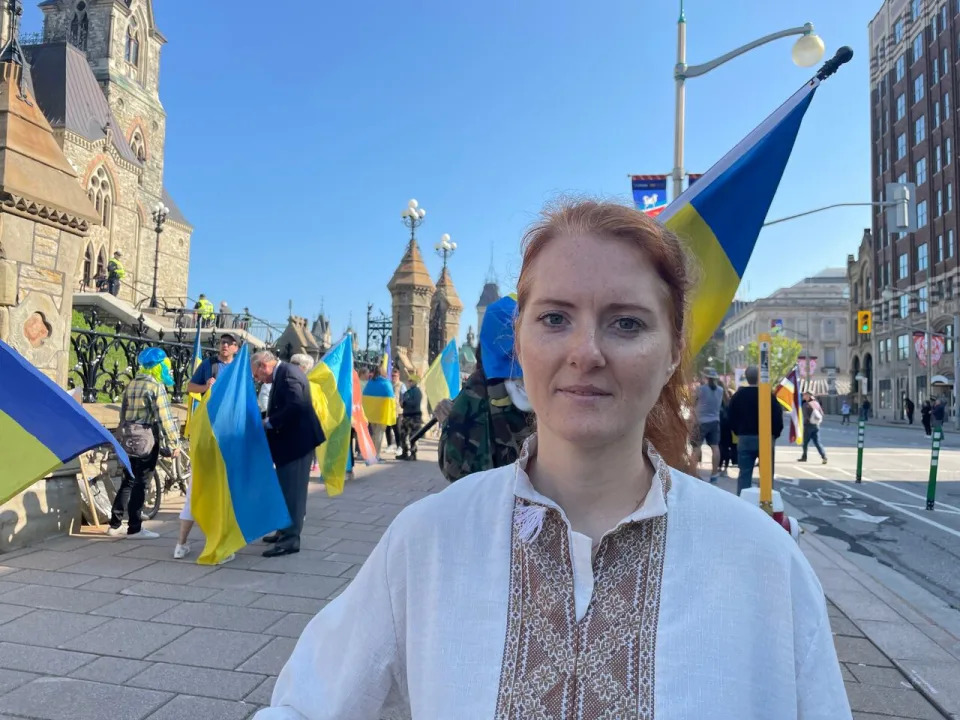
Juliia Baranova stands on Parliament Hill the day of Ukrainian President Volodymyr Zelenskyy's visit last week. Baranova says the warm welcome given to a Ukrainian veteran who fought for the Nazis has opened her eyes to the complicated history of many eastern European nations. (Avanthika Anand/CBC - image credit)

Some members of the local Ukrainian community say there's "broken trust" after a former Ukrainian solder who fought in a Nazi division was honoured in Parliament during President Volodymyr Zelenskyy's visit to Ottawa — and want an apology of their own.

"This is just so, so disappointing," said Jane Kolbe, an active member of the community in Ottawa.

Now-former House of Commons Speaker Anthony Rota invited veteran Yaroslav Hunka, one of his constituents from North Bay, Ont., to sit in the gallery during Zelenskyy's address on Sept. 22.

Hunka received a standing ovation from MPs, the prime minister and Zelenskyy himself.

Days later, it was revealed that Hunka was part of the First Ukrainian Division, also known as the Waffen-SS Galicia Division or the SS 14th Waffen Division — a voluntary unit under the command of the Nazis during the Second World War.

Members of Canada's Jewish community have called it a "humiliating debacle."

Rota resigned as Speaker last week, and Prime Minister Justin Trudeau publicly apologized to the Jewish community for what he called a "deeply embarrassing" moment in Canadian history.


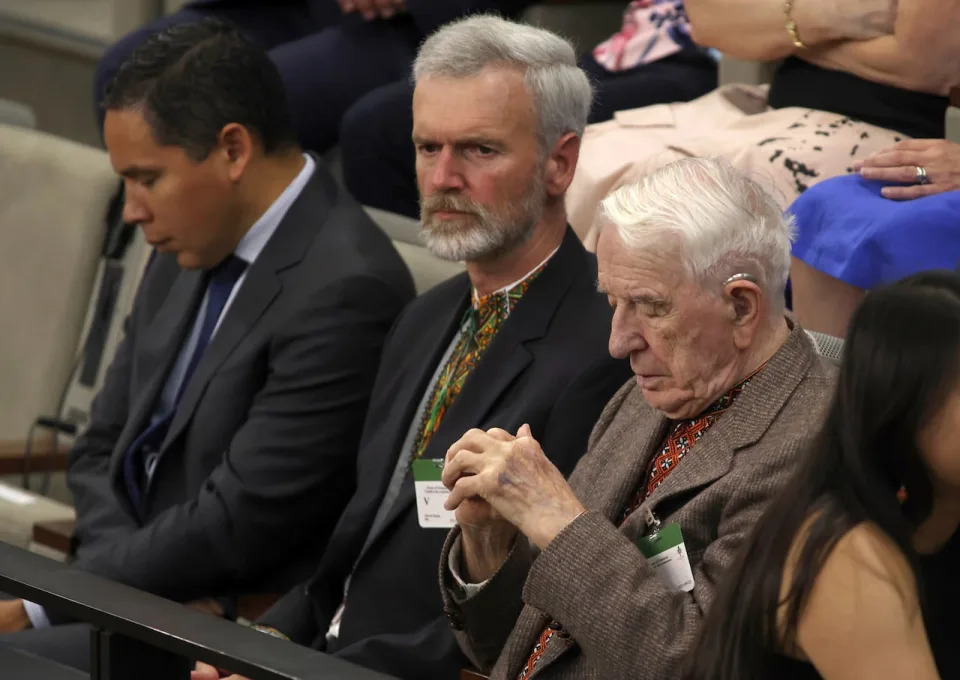
Yaroslav Hunka, right, waits for the arrival of Ukrainian President Volodymyr Zelenskyy in the House of Commons in Ottawa, Onatario, Friday, Sept. 22, 2023. Canadian Prime Minister Justin Trudeau apologized Wednesday, Sept. 27, for Parliament’s recognition of Hunka, who fought alongside the Nazis during last week’s address by Ukraine President Zelenskyy. “All of us who were in the House on Friday regret deeply having stood and clapped, even though we did so unaware of the context,” Trudeau said before entering the House of Commons.
 (Patrick Doyle/The Canadian Press via AP, File)

Ukrainian-Canadian Yaroslav Hunka, 98, was a former soldier fought who fought alongside the Nazis. He was invited by former Speaker Anthony Rota to the House of Commons last week and received a standing ovation during Zelenskyy's visit. (Patrick Doyle/The Canadian Press)

As the incident made international headlines, some members of the Ottawa region's Ukrainian community said it's been "difficult" to watch it overshadow Zelenskyy's important visit.

Many are "still trying to absorb and understand" what happened, Kolbe said.

"It is baffling because [in] the diaspora, there's so many heroes to recognize," she said. "But this really wasn't the time to recognize heroes. This was the time to honour and reflect on President Zelenskyy's speech."

Kolbe said it was important that Trudeau apologized to the Jewish community, and believes the resulting "broken trust" with the Ukrainian diaspora in Canada means they deserve one, too.


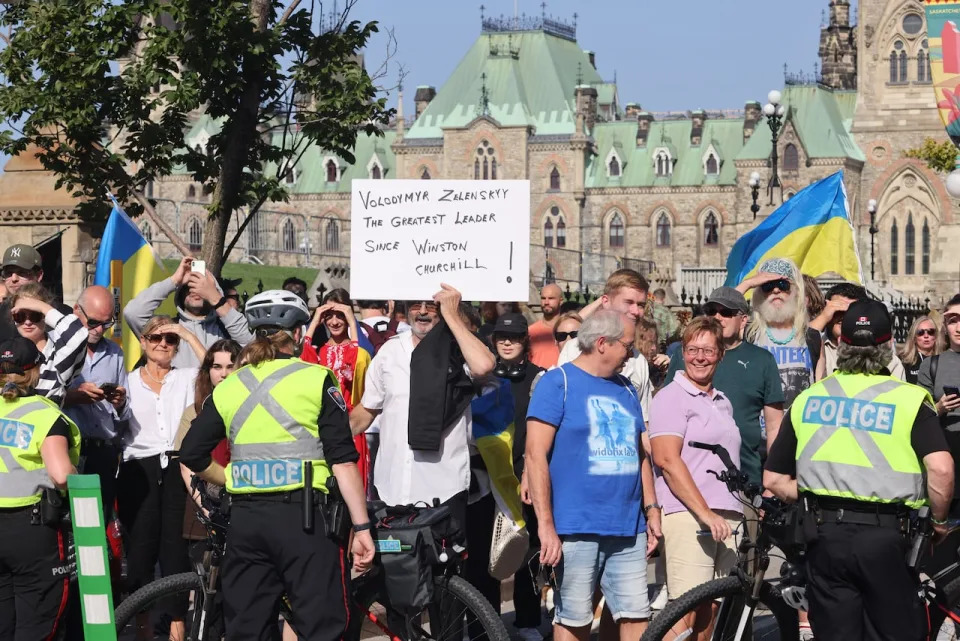
Supporters of the Ukraine stand in front of Parliament Hill as Ukrainian President Volodymyr Zelenskyy and Prime Minister Justin Trudeau attend a joint press conference in Ottawa on Friday, Sept. 22, 2023.

Supporters of the Ukraine stand in front of Parliament Hill during Zelenskyy's visit. (Patrick Doyle/The Canadian Press)

'History has a lot of complexity'

Juliia Baranova was among the hundreds of Ukrainians on Parliament Hill the day of Zelenskyy's visit and said she was "very concerned" about the Hunka incident.

"For me personally, it also shows that history lessons are not learned," Baranova said. "And eastern European countries' history has a lot of complexity."

Reports suggest as many as 2,000 Ukrainian members of Adolf Hitler's Waffen-SS were admitted to Canada after the war.

Historians have documented how soldiers like Hunka were trained at SS facilities in Germany, swore an oath to Hitler and received an education in Nazi doctrine.

But many young Ukrainian soldiers at that time were fighting not for Germany, but to expel the Russians occupying their country, said Dominique Arel, chair of Ukrainian Studies at the University of Ottawa.

The incident in the House of Commons has been made even worse, Arel added, by false Russian claims that the current invasion of Ukraine is a war against Nazism.

"No matter how you try to explain the complexity of history, the symbol is awful. It's shocking," he said.


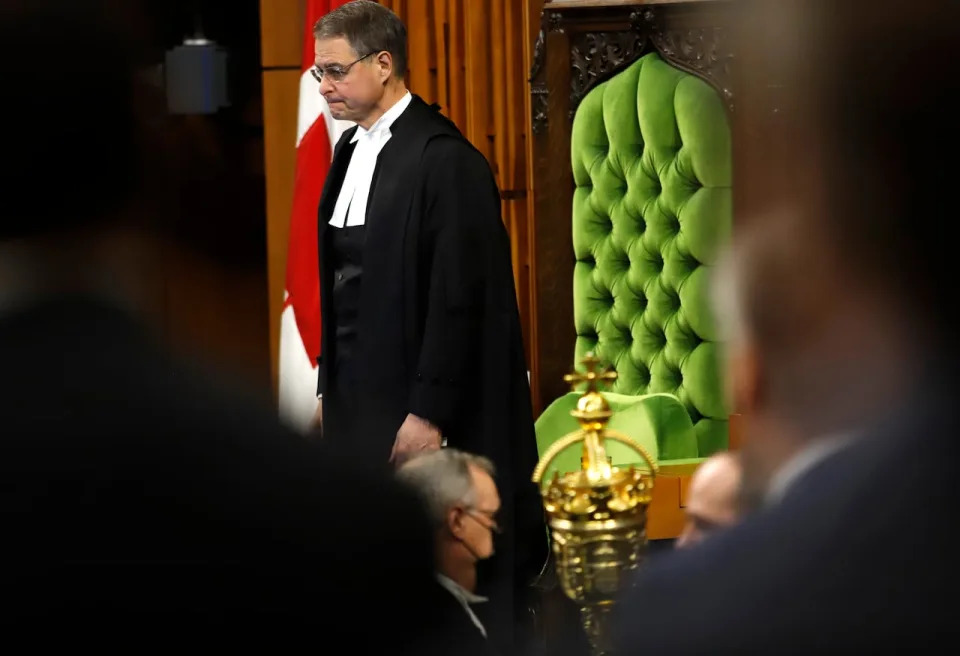
Speaker of the House of Commons Anthony Rota rises to speak in a December 2022 file photo. Rota invited Yaroslav Hunka, a 98-year-old Ukrainian-Canadian who now lives in North Bay, Ont., to witness Ukrainian President Zelenskyy's address to Parliament on Friday.

Rota resigned from his position as speaker last week following the incident. (Patrick Doyle/The Canadian Press)

Baranova, who was unaware of this history before last week, said despite its complexity, "we have to learn it."

Marina Lavow, who lives in Gatineau, Que., and moved to Canada from Ukraine nearly 30 years ago, called it a "really sad and unfortunate event" but noted that not everyone in the diaspora agrees.

"The community is not homogeneous," she said.

"There are different ways [of thinking], different generations. And to some people it means one thing, while to other people who have less knowledge of what happened, why that division was created, it means less."


Rota debacle renews calls to examine history, including war crime records


OTTAWA — Canada could revisit calls to declassify documents about the presence of Nazi war criminals in the country, Immigration Minister Marc Miller said Wednesday, as the fallout continued over Parliament's recognition last week of a man who fought for the Nazis.

"Canada has a really dark history with Nazis in Canada," Miller said, heading into the weekly Liberal caucus meeting.

"There was a point in our history where it was easier to get (into Canada) as a Nazi than it was as a Jewish person. I think that's a history we have to reconcile."

Many Jewish organizations in Canada say doing that requires a public airing of information, and that means all the records Canada has about the presence of war criminals must be opened up.

"I think part of the problem here is that the records are closed," said B'nai Brith senior lawyer David Matas in an interview.

"You can't remember the past unless you know the past, and you can't know the past unless you get the records."

B'nai Brith Canada and the Friends of Simon Wiesenthal Center both reiterated their long-standing calls this week for the government to make public all records about the admittance of former Nazi soldiers.

That includes the entirety of a 1986 report from a public commission on war criminals, which is often referred to as the Deschênes Commission for the judge who led it.

The report has never been fully released, including an appendix with the names of 240 alleged Nazi war criminals who might be living in Canada that the report recommended Canada investigate.

"It's now time for Ottawa to not only release the unredacted files related to the Deschênes Commission, but to also address the stark reality that there are still former Nazis with blood on their hands living in Canada," said Friends of Simon Wiesenthal Center President Michael Levitt.

Matas noted that in June, a House of Commons committee studying Canada's access-to-information system recommended all historical documents be released in full after 25 years.

He said implementing that recommendation would fulfil the desire to see Canada's war criminal records.

Currently, records can be released 20 years after someone's death. But Matas said that rule doesn't apply in this case, because information about people who died can't be accessed unless their names are available.

He said it's not that every person named in the records is guilty, but that a justice system relies on openness, and you can't have justice without transparency, whether you're guilty or innocent.

There is also little to no information publicly available about what follow-up was done to investigate alleged war criminals named in the Deschênes report, or bring any of them to justice.

All of this comes after what some have called the most embarrassing international debacle in Canadian history.

On Friday, during an official visit by Ukraine President Volodymyr Zelenskyy, the House of Commons Speaker pointed to a guest in the gallery he identified as a war hero.

Parliamentarians and dignitaries who were present gave two standing ovations to a 98-year-old Ukrainian Canadian war veteran without knowing or understanding that the unit he fought with was formed by Nazi Germany to fight against the Soviet Union.

Speaker Anthony Rota, who said he did not know about Yaroslav Hunka's background, apologized for making an egregious mistake inviting him to Parliament. He announced Tuesday that he would resign from the role.

On Wednesday, Prime Minister Justin Trudeau issued an apology on behalf of Canada and all parliamentarians for the debacle.

University of Alberta professor John-Paul Himka pointed out that nobody seemed to immediately understand how Hunka's military history implied he would have fought with the Germans.

That's because of a great lack of understanding of history, even among elected MPs, he said.

"I mean, this man was introduced as somebody who fought the Russians during World War II. Who was fighting the Russians during World War II? It was the Germans," he said.

Matas concurred.

"I mean if Rota didn't know about this whole issue and he was the Speaker of the House of Commons, you can imagine how widespread the ignorance is," he said.

Still, said Matas, the uproar has rejuvenated the discussion about exposing that history, including all the records.

"This is on the radar, now, I think," he said. "They're paying attention to it."

Miller said he has read the Deschênes report twice since this all happened, and encouraged all Canadians to do so.

He also said he knows there are many people demanding the release of the records, and it is something the government "could possibly examine again."

But he said because he doesn't know exactly what is contained in the documents, he doesn't yet want to say if he backs their full release.

"But again, in a country like Canada that has not only a difficult history with Nazis in Canada, but also one of the most important diaspora of Jewish people, including some of the largest proportions of Holocaust survivors, impunity is absolutely not an option," he said.

Mental Health Minister Ya'ara Saks, whose York Centre riding in Toronto has about one-fifth of its population identifying as Jewish, said Canada should look at what it can do to help provide answers and closure to Jewish Canadians.

She said opening the records is something to be looked at.

This report by The Canadian Press was first published Sept. 27, 2023.

Mia Rabson, The Canadian Press
Ontario city home to Nazi soldier that visited Parliament shares mixed emotions

The Canadian Press
Sat, September 30, 2023


NORTH BAY, Ont. — Allan Hirsh sits on a lawn chair on a cool fall evening in North Bay, Ont., pondering the mixed emotions he's been feeling since his community made international headlines.

The northeastern Ontario city is the current home to a man who was honoured with a standing ovation in the House of Commons during a visit from Ukrainian President Volodymyr Zelenskyy, but whose presence in Parliament later caused global outrage and embarrassment when details emerged about his past as a Nazi soldier during the second World War.

Hirsh says he can understand the pain many are feeling after Yaroslav Hunka's reception in the House, noting his own ancestors fled persecution by the Russian Empire for practising Judaism in the early 20th century and many of his loved ones lost relatives and friends during the Holocaust.

But Hirsh and other city residents say they are shocked to hear their long-time Member of Parliament Anthony Rota resigned as House Speaker over his choice to invite and recognize Hunka, questioning why he has faced sole blame for the debacle.

"I always think about that history and the Holocaust and everything that happened there always makes me emotional," the 75-year-old retired psychotherapist said in an interview.

"But ... am I angry at Anthony Rota? No. This is not something that he did intentionally. ...Oddly enough, it's Anthony that I'm feeling for."

Hirsh says Rota is well-known in his community after spending 16 years as MP for the Nipissing-Timiskaming riding where North Bay is located.

He was first elected in 2004 and has served ever since except for a four-year break when he lost his seat in 2011, and Hirsh has been among those that voted for him.

Rota became House Speaker in 2019 and cemented a reputation for fairness and integrity across party lines.

But on Sept. 22, shortly after Zelenskyy's address to Parliament, Rota introduced Hunka as a Ukrainian Second World War veteran who lives in his riding.

Rota described the 98-year-old as both a Ukrainian and Canadian hero, prompting a standing ovation from members of all parties. It later emerged that Hunka had fought the Soviet Union in Ukraine with the Waffen-SS Galicia Division, a voluntary unit created by the Nazis that Jewish groups say "was responsible for the mass murder of innocent civilians with a level of brutality and malice that is unimaginable."

Calls for Rota's resignation as House Speaker poured in from all sides, including some senior Liberal cabinet ministers, and Rota stepped down from the role effective Wednesday.

Hirsh and other residents feel their MP was "thrown under the bus."

"We were so proud of his career when he became a speaker. He's done, I thought, a good job. He serves his constituents. He apologized for that mistake. To see this happen to him, it's really, really sad," Hirsh said.

Since then, the Conservatives have brought a motion to the government operations committee to summon the RCMP, parliamentary security and officials from the Prime Minister's Office to study how Hunka made his way from North Bay to Ottawa.

Hirsh isn't the only one processing complex feelings dredged up by the week's events.

Karrie Emms, a local business owner, says she has been thinking a lot about when and how the city she has been living in for 35 years welcomed someone like Hunka.

"We know that we never know a true or full story for somebody so I would be interested in finding out what (Hunka's) story actually is," she said.

"I want to know more but not necessarily to hold them accountable … Mr. Rota is very well known and everyone knows he is from North Bay so it's going to be a bit of an issue to overcome."

She, too, questions why Rota has borne sole responsibility for the scandal.

"I know they've apologized but nobody else has lost their jobs over it that I know of," she said, referencing the apology Prime Minister Justin Trudeau delivered on Wednesday. "I find that a little disheartening."

Emms, who works with youth, says there is one silver lining — Canadians of all stripes, including young people in North Bay, are now taking time to educate themselves on eastern European history.

Fellow city resident George Maroosis says he was shocked to learn that Hunka lives in North Bay.

"It's very unfortunate," he said while working at his downtown North Bay business.

"My big question is if the Jewish community knew who this guy was and what his background was, where was our so-called intelligence agency that could have warned as to what the situation was with this particular individual."

After inquiring about Hunka at an assisted living home in North Bay, a Canadian Press reporter was asked to leave the property immediately, and one employee said they were prepared to call the police.

Another employee later said Hunka had lived at the home, but has since moved in with his family.

Hirsh says as political parties try to determine more details of Hunka's visit to Parliament, he hopes the discourse remains respectful.

"(We need to look into) the nuances of everything that happened," he said.

"It's messy. There's nothing black and white."

This report by The Canadian Press was first published Sept. 30, 2023.

Fakiha Baig, The Canadian Press