Monday, October 02, 2023

Detroit casino workers vote to authorize strike, if necessary

JC Reindl, Detroit Free Press
Mon, October 2, 2023 

Detroit casino workers have voted to authorize a potential strike, if necessary, for when their labor contracts expire later this month.

The Detroit Casino Council said 99% of voting casino workers at MGM Grand Detroit, MotorCity and Hollywood Casino at Greektown were in favor of a potential strike. The voting took place Friday.


Workers' current contracts expire in mid-October, and negotiations with the casinos have been under way since September.

The casino workers' vote comes at a time when more than 25,000 UAW members are on strike in Michigan and other states across the nation, as well as another 1,000-plus UAW members employed with Blue Cross Blue Shield of Michigan.

The Detroit Casino Council is composed of five unions representing workers at the three casinos: UNITE HERE Local 24, UAW, Teamsters Local 1038, Operating Engineers Local 324, and the Michigan Regional Council of Carpenters.

The workers are under a three-year extension to a five-year contract that started in 2015. The casino council said they agreed to minimal wage increases back in 2020 for the three-year extension to help the casinos during the COVID-19 pandemic and shutdowns.

"Following the end of COVID restrictions and the legalization of online gaming, industry gaming revenues have now surpassed pre-pandemic levels to a new record high, but Detroit’s casino workers are getting left behind," the casino council said in a news release.
Corporate subsidy spending spree creates discomfort for some Michigan Democrats

Clara Hendrickson, Detroit Free Press
Mon, October 2, 2023 

There's a number Michigan Democrats may not shout out when they hit the campaign trail in their quest to preserve their newfound legislative power: $4.1 billion.

That's the total spending on business subsidies they've approved so far this year, according to an analysis from the Mackinac Center for Public Policy, a self-described "free market" research organization. Many of those dollars were diverted to a state fund that has helped automakers transition to electric vehicle production.

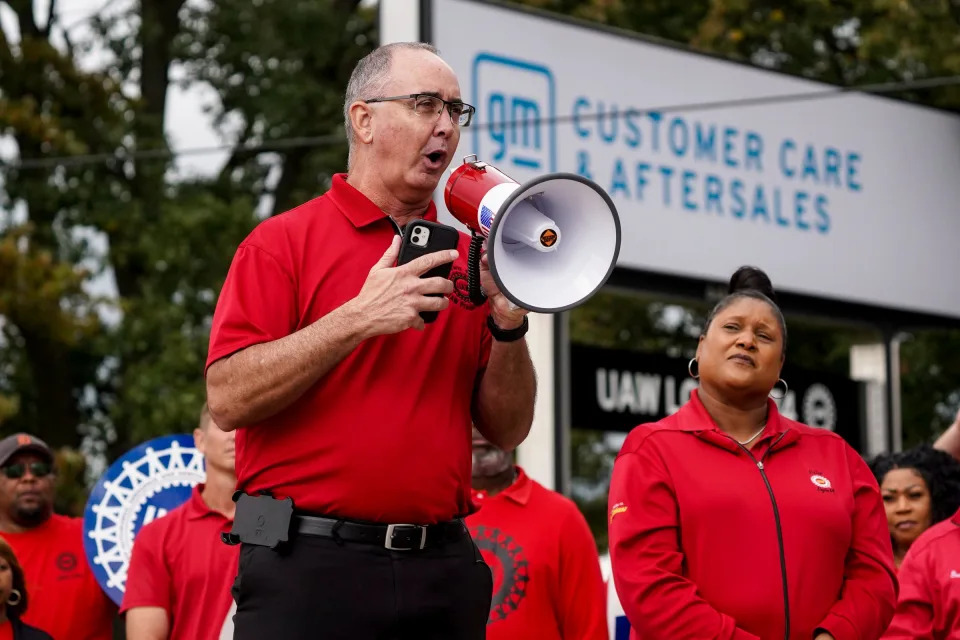
For some, the money fits uncomfortably in Democrats' legacy in Michigan where the party holds a slim majority and has a chance to pursue policy ideas after 40 years relegated to the minority. Scrutiny of the spending has also made its way to the negotiating table. UAW President Shawn Fain has said that if the public helps foot the bill for auto companies transitioning to electric vehicles, workers should also benefit. "As it stands right now, the workers are being left behind," he said on CBS last month.


While some Democratic lawmakers have touted the spending, it puzzles others who see it as hard to square with the party's rhetoric of putting people over profits. The funds haven't flowed without controversy. It's spurred infighting among Michigan Democrats, according to a person familiar with internal discussions who didn't want to speak on the record due to the contentious nature of the conversations. Even as they approved large sums for corporations, some Democratic lawmakers vowed to re-evaluate the state's economic development approach.

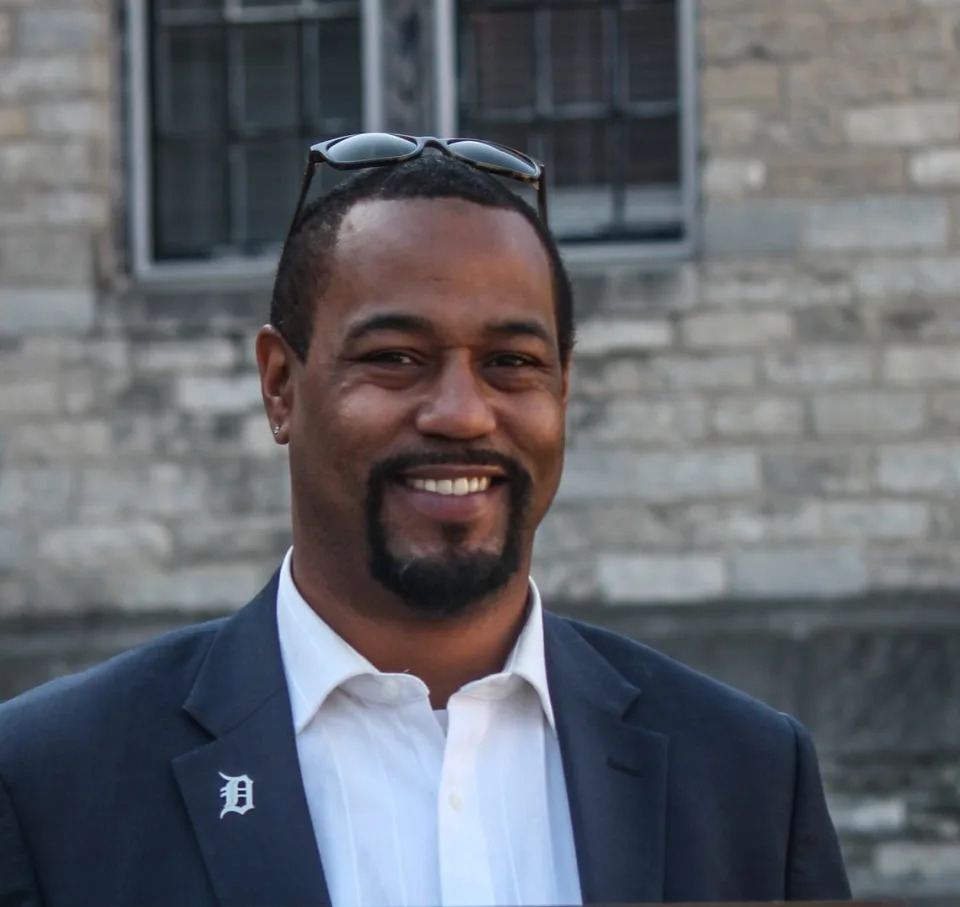
"I don't think anyone would have guessed that money for Ford or whatever would have been the first thing that they tried to do," said former Democratic staffer MoReno Taylor II, now executive director for Fund MI Future, a coalition focused on securing funding for public services from roads to schools.


Private investments backed by public dollars are just one part of Democrats' economic agenda, House Speaker Joe Tate, D-Detroit, emphasized in an interview with the Free Press. Democrats have also delivered economic relief for Michiganders such as with a tax cut for retirees and low-income earners. Tate defended the big spending on corporate subsidies as key to maintaining Michigan's competitive edge in a changing auto industry and supporting Democrats' climate goals.

Gov. Gretchen Whitmer has championed electric vehicle plants in Michigan backed by state funds, a key pillar of her economic agenda. Michigan's economic development officials note that companies must follow through on their investment promises and create new jobs in order to receive any state funds. But to land those jobs, the state needs to move quickly, Whitmer has repeatedly said. She joins economic development officials and corporate executives to announce deals before lawmakers have a chance to vet or approve the state funds to support them.

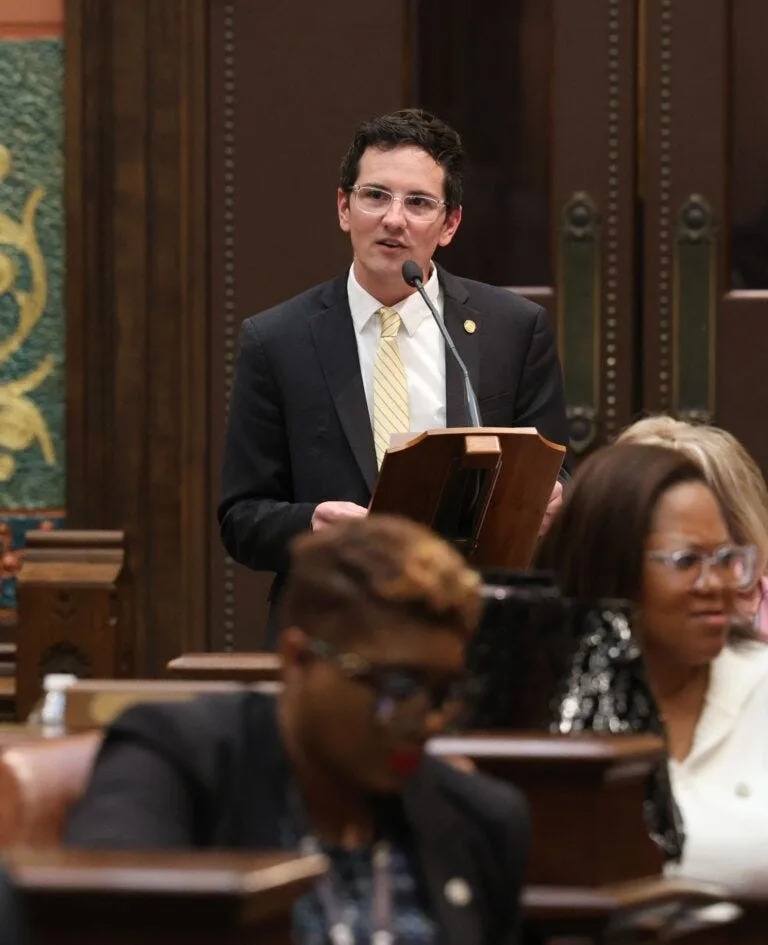
While some Democratic lawmakers want to change this process, one freshman lawmaker wants Democrats to abandon their support for such deals wholesale. "I personally feel like it is a betrayal of the working class. I think it's a big mistake," said state Rep. Dylan Wegela, D-Garden City, of corporate subsidy spending approved by Democratic lawmakers this year. "We're not supposed to be the party that believes in trickle down economics."

A record for the decade, conflicting views


The last time lawmakers reached this session's level of business subsidy spending was in the 2007-2008 session when control of the Legislature was split and Democratic Gov. Jennifer Granholm was signing bills.

While Democrats have touted their investments in families, business subsidies approved so far this year amount to more than 25 times the amount lawmakers approved to fund free school meals for all public school children in the state, and it's almost twice as large as the higher education budget for public universities.

Democrats disagree on the scale and necessity of the spending.

State Rep. Angela Witwer, D-Delta Township, has celebrated the spending as a boon for state's economy. "Until there is a national call to stop doing this, why would we stop competing?" she said in a podcast interview with MIRS in May. Witwer did not respond to a request from the Free Press for an interview.

Other Democratic lawmakers have expressed tepid support for the spending while harboring questions about its return on investment and expressing reluctance to commit more funds.

"I've been okay with what we've spent so far but have had some concerns about the volume and would be hesitant to support future investments in this one priority," said state Rep. Jason Morgan, D-Ann Arbor.


Some see an opening for what they call a long overdue need to reevaluate Michigan’s willingness to hand over taxpayer dollars to large companies.

One deal in particular has raised eyebrows: a Ford battery plant set to receive about $1.8 billion in subsidies put on hold amid the UAW strike.

"The people of Michigan and our elected officials have done so much for this corporation over the course of their time," Taylor said before Ford's construction pause. "The fact that we have to beg and f***ing bribe them to just do business here and do business in a good way, it's f***ing insane. It's really sad." Taylor said it's time to reevaluate Michigan's approach to economic development.

Some Democrats say they're doing just that. While business subsidies mark a key part of their economic agenda since taking power, it’s also prompted a Democratic-led effort to scrutinize the state's approach to spur job creation by giving cash directly to companies.
Where Michigan's corporate subsidy dollars went

James Hohman, the director of fiscal policy for the Mackinac Center, doubts that the spending will create new jobs and suggested lawmakers should share his misgivings. "Our lawmakers should be a lot more skeptical of their ability to influence the state economies by writing big checks to big companies," he said.

Among this year's big-ticket business subsidies signed into law included in the Mackinac Center's analysis:

More than $1.8 billion for the Strategic Outreach and Attraction Reserve fund, which provides grants to companies that create new jobs and subsidizes their site preparation;


$800 million to lift the cap on the brownfield program, which reimburses costs associated with redeveloping contaminated, blighted or historic properties. It was part of a Democratic-led bill package that obtained bipartisan support to expand the brownfield program with the intent of increasing the supply of affordable housing;


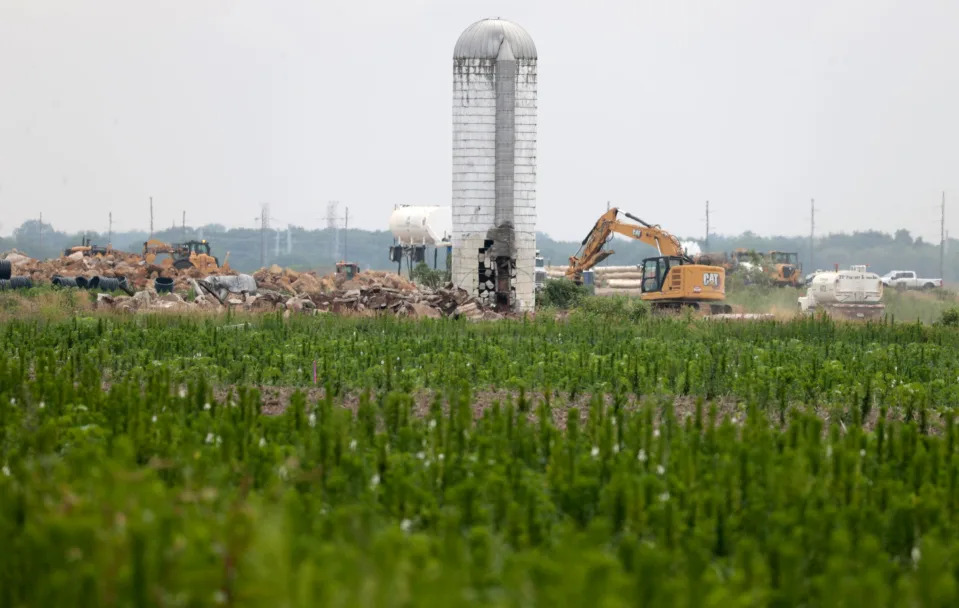
$629.7 million for site readiness as well as road and infrastructure improvements at a Ford electric vehicle battery plant near Marshall;


$400 million for revitalization and placemaking grants which can be used for business subsidies, although some grants have gone to cities and non-profit groups in the past;


More than $286.8 million for the Make It In Michigan Fund to leverage federal funding opportunities, including in economic development;


$200 million to retain jobs at a paper mill near Escanaba;


$100 million in business attraction and community revitalization funds.

Just last session, bipartisan fanfare accompanied announcements for major economic development projects receiving state support. But now in the legislative minority, Republican leaders this session have railed against the spending.

"I'm not a crony capitalist," Senate Minority Leader Aric Nesbitt, R-Porter Township, said earlier this year when asked to explain his opposition to the spending.
Corporate subsidies attached to Whitmer tax promise

Committing taxpayer dollars to business subsidies became a key part of Whitmer's long-promised tax overhaul.

When Gov. Rick Snyder, a Republican, overhauled Michigan's tax system, Democrats − including Whitmer − railed against it as a business tax cut paid for on the backs of retirees and low-income workers. During Whitmer's first run for governor, she campaigned on reversing Republican tax hikes for seniors in Michigan and increasing a tax credit for working families.


Whitmer's first budget proposed restoring tax breaks for retirees by creating a new business tax for pass-through entities. Repeated attempts to repeal Snyder's so-called retirement tax went nowhere under GOP control.

New Democratic majorities in Lansing finally gave Whitmer her opening to make good on her campaign promise. But she didn't resurface her earlier proposal to expand the corporate income tax to more businesses in the state, citing the state's strong financial position at the start of this yea

Instead of touching the corporate income tax, the legislation she signed diverted up to $1.5 billion to subsidize companies looking to grow their business in Michigan.

Wegela was the lone Democratic lawmaker to vote against the legislation because of the business subsidy spending. The tax legislation was among the votes that caused a stir within the Democratic caucus, one source said.

While Wegela was the only Democrat to speak out against the spending at the time, behind closed doors, other Democrats expressed their displeasure over attaching the corporate subsidies to the tax overhaul.

A person familiar with the discussions described them as incredibly fraught. "I mean starting the year off with this, not ideal," the source said. "I mean it got really hot." In addition to the tax overhaul, votes on funding for the Ford electric vehicle battery plant near Marshall also prompted tough conversations within the caucus. "Those two were not pretty," the source said.


An opportunity cost in corporate subsidies?

In the spending, some see the opportunity cost that comes with decisions to spend taxpayers’ dollars on business subsidies versus any number of public needs.

State Rep. Joey Andrews, D-St. Joseph, said it's hard not to look at the money lawmakers approved for business attraction projects and not see funding for mental health and roads.

"I mean even with the size that the budget was, there was stuff that got left on the cutting room floor," he said. "There's certainly things that I think a lot of us wish we could have done more on."


Morgan – another a freshman Democratic lawmaker – said there are multi-billion dollar needs in housing, infrastructure and education that lawmakers should prioritize moving forward.

Michigan entered the year with an estimated $9 billion surplus largely driven by a one-time influx of federal dollars. Without a similar sum in the state's coffers next year, lawmakers face more limits on how to spend taxpayer dollars and which funding needs to prioritize.

While another budget cycle might prompt some tough calls on spending priorities, some see an ongoing reckoning within the party as it wrestles with its changing base and the shift in party platforms that follow.

Andrews said that since Donald Trump's election in 2016, the two major parties have realigned economically, with well-off suburban communities where Republicans used to dominate turning bluer while Democrats' strength in blue-collar communities faded.

"I think with that realignment of the electorate also comes some realignments in values," he said. "So I think something that's concerned me is seeing the Democratic Party kind of very slowly over the last six years become a little more corporate, a little more ok with this sort of thing."

Contact Clara Hendrickson at chendrickson@freepress.com
Follow her on X, previously called Twitter, @clarajanehen

This article originally appeared on Detroit Free Press: Michigan Democrats wrestle with corporate spending legacy
Hungarian Economic Woes Prompt Call for Euro by Business Leader

Zoltan Simon
Mon, October 2, 2023 


(Bloomberg) -- The head of one of Hungary’s biggest manufacturers called for euro adoption after policies under Prime Minister Viktor Orban produced one of the worst economic crises in the European Union in the past year.

After a year-long recession, a brush with a currency crisis, the bloc’s fastest inflation and the suspension of crucial EU funding over democratic concerns, Hungary should waste no time committing to joining the euro and embracing the EU’s values, according to Otto Sinko, the co-chief executive officer of contract manufacturer Videoton Zrt.

“A timetable for euro adoption would by itself have a stabilizing factor, especially if it’s coupled with political steps that would make peace with the EU,” Sinko said in a written response to Bloomberg questions.

Brussels and Budapest have been in a standoff over democratic values after more than a decade of power consolidation by Orban, with graft and rule-of-law concerns paving the way for a halt in more than $30 billion in EU financing.

At the same time, Orban’s government has grown closer to Russia and China even as much of the rest of the EU takes measures to curb their influence.

“I don’t approve of the maverick, eastern-oriented steps,” Sinko said. “Hungary’s path is toward the West, not the East.”

While Sinko said his call for the euro was his personal opinion rather than the position of Videoton, which he co-owns, the comments are notable coming from the head of a company that’s one of Hungary’s biggest employers and one that may benefit from a weaker forint.

The forint has dropped more than 30% against the euro since Orban returned to power in 2010. Its weakening accelerated last year as record pre-election spending turbo-charged an EU-wide surge in prices while emergency monetary policy moves undermined investor confidence. The forint fell near a six-month low last week.

“It’s not true that a weak forint is the sole focus for exporters,” said Sinko, whose company’s 9,200 workers assemble everything from car parts to household appliances for export to EU markets. “That only makes sense if there’s economic stability.”

Central bankers were forced to hike interest rates to 18% last October to stabilize local assets in an emergency that took until last week to unwind. The move halted a “creeping euroization” that saw almost half of new savings made in euros rather than forint at one point, Deputy Governor Barnabas Virag said in April.

While inflation is expected to slow to single-digit territory before year-end and the government sees the economy growing from the third quarter, the question of how to cement those gains while shoring up the budget has revealed fault lines among top policymakers.

Last month, key Orban ministers clashed with the central bank over monetary policy and inflation, while divisions emerged inside the cabinet over ways to rein in the record budget shortfall and whether the euro could help.

Finance Minister Mihaly Varga even raised the possibility of pegging the forint to the euro under a mechanism that precedes the currency switch. Orban’s cabinet minister, Gergely Gulyas, said Thursday that it’s too early to talk about euro adoption.

Sinko said the seven eastern European nations that adopted the euro since they joined the EU were better off during times of economic turbulence, as they didn’t suffer steep currency depreciations or need to maintain high foreign-currency reserves. They also reduced the chance for “monetary-policy errors,” he said.

“When we talk about euro adoption many only talk about the the disadvantages, such as losing monetary-policy independence,” Sinko said. “But why don’t we list its advantages?”

 Bloomberg Businessweek

Ukraine Recap: EU Convenes in Kyiv in First Meeting Outside Bloc

Bloomberg News
Mon, October 2, 2023 


(Bloomberg) -- European Union foreign ministers gathered in Kyiv to renew their commitment to Ukraine’s defense against Russia’s invasion, the first time the bloc has held a meeting outside its territory and in a country at war.

Before talks with Ukrainian Foreign Minister Dmytro Kuleba, EU foreign-policy chief Josep Borrell said member states “deeply and thoroughly” regretted Saturday’s decision by US lawmakers to pass a spending bill without $6 billion in additional funding for Ukraine, part of an effort to avoid a government shutdown in Washington. Kuleba dismissed the move by the US Congress as an “incident” rather than a lasting shift in policy, while Borrell said he’s certain it will be “reconsidered.”

“We don’t feel that the US support has been shattered because the United States understands that what is at stake in Ukraine is much bigger than just Ukraine,” Kuleba told reporters. “It’s about the stability and predictability of the world and therefore I believe that we will be able to find the necessary solutions.”

Markets

Saudi Arabia and Russia, the two nations leading OPEC+ oil cuts, boosted their crude exports last month, offering solace to a global market where supply is getting increasingly tight. The two lifted their combined crude exports by about 1 million barrels a day in September, though their collective flows remained well down on where they were as recently as July.

Chile’s Economy Nears Recession After Surprise Activity Drop

Matthew Malinowski
Mon, October 2, 2023 


(Bloomberg) -- Chile’s economic activity posted its biggest monthly drop since May as services declined, pushing one of Latin America’s richest nations toward recession and paving the way for more big interest rate cuts.

The Imacec index, a proxy for gross domestic product, fell 0.5% in August from July, compared to the median estimate for a 0.2% gain from analysts in a Bloomberg survey. It matched the 0.5% decline recorded in May. From a year prior, the index dropped 0.9%, the central bank reported on Monday.

Chile has been battered this year by high interest rates, above-target inflation and uncertainty among top trading partners like China. Today’s figures indicate the country is heading back into recession after GDP contracted in the second quarter. Still, the economy is expected to gradually bounce back, expanding 2% in 2024 after posting one of the region’s worst performances this year.

“A technical recession in the third quarter is very probable, as it only requires a 0.3% month-on-month drop in September,” Jorge Selaive, chief economist at Scotiabank Chile, posted on X, the platform formally known as Twitter.

The peso fell as much as 0.5% against the dollar in morning trading. Two-year swap rates, a measure of key rate expectations, dropped 6 basis points to 6.39%.

Education Services

Services declined 0.9% on the month in August with the sector dragged down by eduction, while mining slipped 0.3%, according to the central bank. On the other hand, commerce gained 0.6% on the back of automobile sales.

What Bloomberg Economics Says

“August activity data added evidence that domestic demand is cooling in Chile. Activity figures support decelerating inflation and back our expectations for the central bank to continue cutting interest rates into 2024. They are likely to keep weakening pressure on the currency.”
— Felipe Hernandez, Latin America economist

Policymakers cut borrowing costs by a total of 175 basis points in their last two meetings, lowering the key rate to 9.5%, and economists expect it to hit 5% in a year. Central bankers have room to ease as inflation slows toward target.

Next year will be marked by low inflation and a revival of the local economy, President Gabriel Boric said in a televised speech late on Thursday. His words echoed comments from Finance Minister Mario Marcel, who said in an interview last month that the economy is stabilizing after a series of shocks.

Still, many analysts are not as up-beat. Unemployment rose more than expected in August as thousands of jobs were destroyed, according to official data published on Friday, while local political uncertainty is rising again.

“We will see slightly negative readings in coming Imacec reports,” analysts at Bice Inversiones wrote in a note. “As a result, for 2023 we expect activity to contract by about 0.5%”

--With assistance from Rafael Gayol and Giovanna Serafim.

 Bloomberg Businessweek

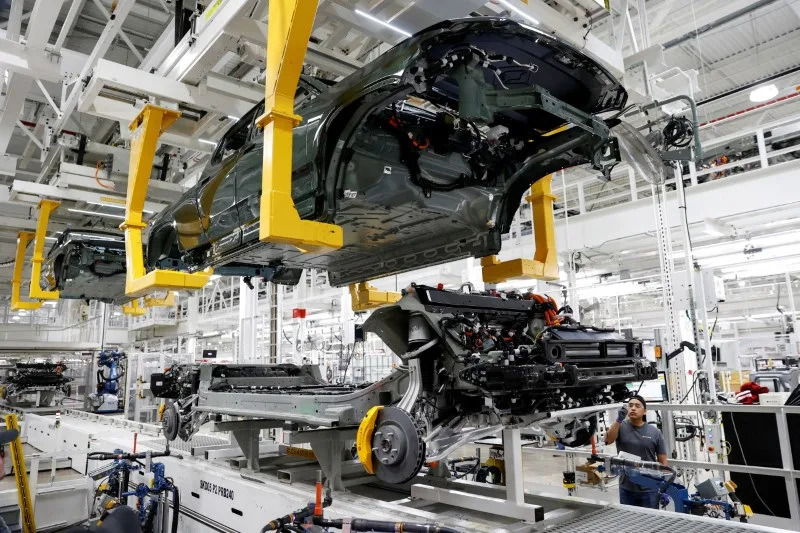
US manufacturing sector eyes recovery; construction spending solid


Mon, October 2, 2023 

FILE PHOTO: Startup Rivian Automotive's electric vehicle factory in Normal

By Lucia Mutikani

WASHINGTON (Reuters) - U.S. manufacturing took a step further towards recovery in September as production picked up and employment rebounded, according to a survey on Monday that also showed prices paid for inputs by factories falling considerably.

The Institute for Supply Management (ISM) said that its manufacturing PMI increased to 49.0 last month, the highest reading since November 2022, from 47.6 in August. Still, September marked the 11th straight month that the PMI remained below 50, which indicates contraction in manufacturing. That is the longest such stretch since the 2007-2009 Great Recession.

"U.S. manufacturing appears to be over the worst, but the outlook remain muted – particularly given the softness of global conditions," said Paul Ashworth, chief North America Economist at Capital Economics in Toronto.

Economists polled by Reuters had forecast the index edging up to 47.7. Five manufacturing industries reported growth last month, including textile mills and primary metals.

Among the 11 industries reporting contraction were computer and electronic products, machinery as well as electrical equipment, appliances and components.

Comments from respondents in the survey continued to be mixed. Makers of transportation equipment said "orders and production remain steady, and we are maintaining a healthy backlog," but cautioned that "continued inflation and wage adjustments continue to drive prices up, although we should get some relief from the markets stabilizing."

Manufacturers of miscellaneous goods said they were keeping an eye on the Panama Canal drought, U.S.-China relations, and the impact the United Auto Workers strike on the supply chains. They, however, viewed overall conditions as "stable."

Apparel, leather and allied products makers described markets as "soft," while primary metals producers said "business conditions and market demand remain strong," and they "projected to be at capacity in the next 12 months."

Stocks on Wall Street were higher. The dollar rose against a basket of currencies. U.S. Treasury prices fell.

NEW ORDERS IMPROVE

While the PMI and other business surveys have painted a grim picture of manufacturing, which accounts for 11.1% of the economy, so-called hard data have suggested that the sector continues to chug along amid higher borrowing costs.
- ADVERTISEMENT -


Orders for long-lasting manufactured goods increased 4.2% year-on-year in August and business spending on equipment appears to have remained strong in the third quarter after rebounding in the April-June period.

The ISM survey's forward-looking new orders sub-index increased to 49.2 last month from 46.8 in August. With new orders improving, production at factories accelerated. The production index increased to 52.5 from 50.0 in the prior month.

Though backlog orders shrank, inventories at factories and their customers remained very low, which should support future production. With demand still weak, prices for factory inputs remained subdued.

The survey's measure of prices paid by manufacturers fell to 43.8 from 48.4 in August. This bodes well for goods deflation, but striking auto workers could boost prices of motor vehicles.

Factory employment improved further after slumping to three-year lows in July. The survey's gauge of factory employment rose to 51.2 last month from 48.5 in August.

A separate report from the Commerce Department showed construction spending increased 0.5% in August after rising 0.9% in July, lifted by outlays on single- and multi-family housing. But with mortgage rates near 23-year highs, momentum could slow.

Construction spending jumped 7.4% on a year-on-year basis in August. Spending on private construction projects rose 0.5%, with investment in residential construction advancing 0.6% after increasing 1.6% in the prior month. Private construction spending gained 1.2% in July.

A dearth of homes available for sale is fueling new construction. The rate on the popular 30-year fixed mortgage averaged 7.31% last week, the highest since December 2000, from 7.19% the prior week, according to data from mortgage finance agency Freddie Mac.

The construction spending report showed outlays on multi-family housing projects rose 0.6% in August. There is limited room for further gains as the stock of multi-family housing under construction is near record highs. Spending on new single-family construction projects rose 1.7%.

Spending on private non-residential structures like factories climbed 0.3% in August. Spending on manufacturing construction projects shot up 1.2%. Efforts by the Biden administration to bring semiconductor manufacturing back to the United States are boosting factory construction.

Spending on public construction projects rebounded 0.6% after dipping 0.1% in July. State and local government spending was unchanged while outlays on federal government projects soared 7.8%.

(Reporting By Lucia Mutikani; Editing by Andrea Ricci)
Sask.'s minimum wage rises to $14/hour, but continues to be the lowest in Canada

CBC
Sun, October 1, 2023 

Saskatchewan's minimum wage will still be the lowest in the country after the bump to $14 an hour. (Paul Sakuma/Associated Press - image credit)

The minimum wage in Saskatchewan increases to $14 from $13 on Sunday, but is still the lowest in Canada.

Some experts and minimum wage earners say it will not be nearly sufficient as inflation fuels rising costs of living.

"I don't think it's enough. I've got a family, I've got kids and grandkids. They all depend on me and working minimum wage for 22 hours a week is not enough," Sarah Marr, who works at Taco Bell in Saskatoon, said.

Marr shares a $1,600-per-month home with five other people and said she is "scrambling every single month," borrowing money from her mother, roommates or friends to pay bills.

"I'm like a working poor person. Right now, I'm behind by almost a month and a half on my rent. I've got utility bills that I can't afford and no groceries in my house."


Sarah Marr says for three Christmases in a row, she has not been able to gift anything to her son. She says she shouldn't be struggling with where her next meal is coming from. She says the minimum wage increase in October is a step in the right direction, but it's not enough steps forward yet.

Sarah Marr says she has not been able to get her son anything for three Christmases in a row. (Pratyush Dayal/CBC)

She said she is left with hardly $10 at the end of the month. She either wants the rents to go down or minimum wages to increase – a demand most people CBC spoke to in Saskatoon echoed.

Marr said she has already lost power at her place twice and is often left in a conundrum to either purchase groceries or pay bills.

"Canada is the land of the free and the friendly, but I feel like I'm a slave. I have to work every day just to pay my bills," she said with tears in her eyes.

"I can't send money to my son back home or buy my grandkids birthday presents. Three Christmases in a row, my son hasn't gotten anything from me because we can't afford anything."

She said the provincial government should "finally open their eyes" to the plight of people and move away from having the lowest minimum wage in Canada.

"I shouldn't be struggling with where my next meal is coming from," she said.

'This is not the life that I wanted before coming here': worker

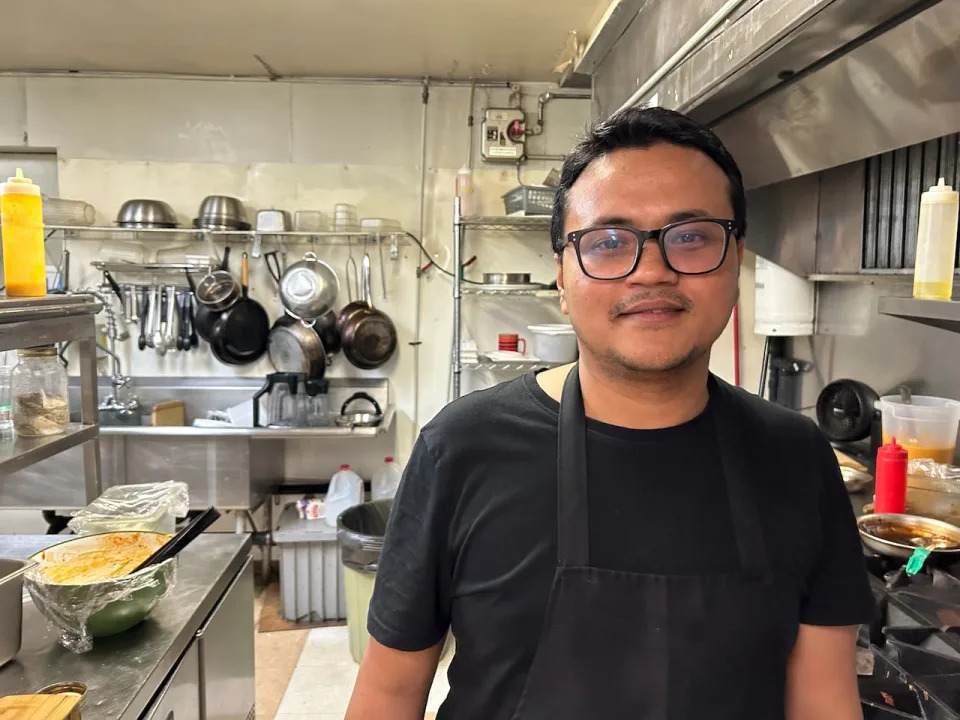
Maksudur Raahman, who works 40 to 50 hours a week for minimum wage at two restaurants, agreed. He said he had only had one weekend off in the past month.

The 38-year-old moved to Saskatoon from Bangladesh in March with his wife and three-year-old daughter for a better quality of life.

"But if you are on the minimum wage, then you don't have that quality of life. I don't even have enough time to spend with my kid. It's hard," he said.

"This is not the life that I wanted before coming here."


Maksudur Raahman moved from Bangladesh to Saskatoon in March with his wife and a three-year-old daughter for a better quality of life. Now, he works 40 to 50 hours a week on minimum wage at two restaurants and says there is no quality of life as he doesn't even have enough time to spend with his child.

Maksudur Raahman moved from Bangladesh to Saskatoon in March with his wife and a three-year-old daughter for a better quality of life, but says he isn't seeing it on minimum wage. (Pratyush Dayal/CBC)

He said the wage increase might help a little with his $1,300 rent, which occupies the largest share of his $2,000 to $2,500 monthly income.

"Another $500 goes for the food, $200 for the utility bills and mobile or Internet. So, it's pretty tight," he said. "Even a $1 increase will help a little bit. It's better than nothing."

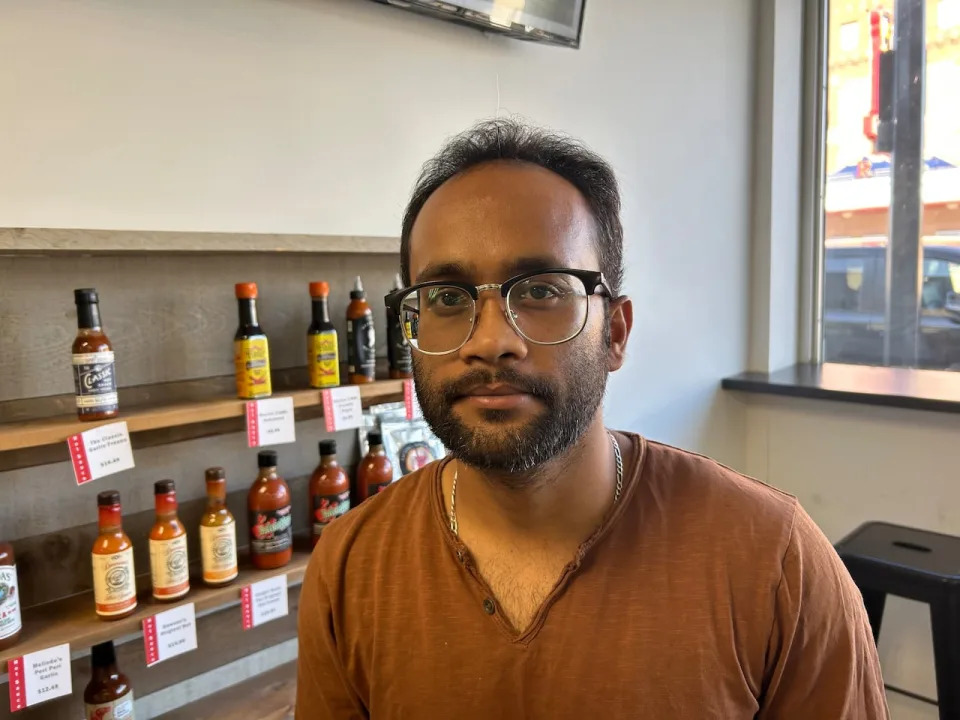
Sanjeev Kumar, who works as a line cook at A to Z Cloud Kitchen, is in the same boat.

"With the kind of inflation we have right now in the country and the interest rates and high gas prices, I don't think that $1 increase would make any difference for us," he said.

Sanjeev Kumar, who works as a line cook in Saskatoon, says he has no savings and often finds himself unable to buy groceries.

Sanjeev Kumar, who works as a line cook in Saskatoon, says he has no savings and often finds himself unable to buy groceries. (Pratyush Dayal/CBC)

The 32-year-old said he wants wages to be adjusted to reflect inflation and that the minimum should be at least $16 to $17 per hour.

A report by the Canadian Centre for Policy Alternatives says the same, stating that a decent standard of living requires a wage of $16.23 per hour in Regina and $16.89 per hour in Saskatoon.

Saskatchewan's minimum wage will further increase to $15 per hour in 2024. The Saskatchewan Party government noted in a news release that will be an 89 per cent increase from 2007, when the minimum wage in the province was $7.95.

When asked about having the lowest minimum wage in the country during a media availability Friday, Premier Scott Moe said his government made a commitment years ago to increase the minimum wage to $15 per hour over a series of years.

"In the meantime, I think we've seen unprecedented inflationary pressures that have occurred not just here in Saskatchewan but but across Canada and since some degree across North America," Moe said.

"We're going to follow through with respect to the course that we have chartered."

Kumar said he earns $1,400 a month, but that with his bills — including an $800 car payment — he is hardly left with any.

"After all the bills, if I have something remaining then I buy some groceries, otherwise I'm just eating from this restaurant these days," he said.

"Since I've come to Canada from India, I have had no savings at all. I'm in negative right now."


Tianna Morin says the government should either increase the minimum wage or work on reducing the cost of living, especially the rents.

Tianna Morin says the government should either increase the minimum wage or work on reducing the cost of living. (Pratyush Dayal/CBC)

Tianna Morin is no stranger to that feeling. The single mother of two works as a gas jockey and cashier in Pleasant Hill.

"The cost of living is really high too and then they tax everything too. I don't even get 40 hours, so the paycheques are kind of low," she said.

"Give us a raise."

'$14 an hour will barely barely make ends meet': associate prof.

University of Regina associate professor Andrew Stevens, who is also a Regina city councillor, said the increase will not do much for the workers or the economy.

"If you are on minimum wage and that's your basic form of income, you'll still be struggling with cost of living, increasing rents and grocery bills," he said.

"$14 an hour will barely barely make ends meet for most people."

Stevens said Saskatchewan should have moved to$15 an hour years ago. He said the province should now potentially look at setting the minimum wage according to local living wages.

Coun. Andrew Stevens says the City of Regina has been making strides when it comes to getting rid of nuisance properties, as defined by the community standards bylaw.

University of Regina associate professor Andrew Stevens, who is also a Regina city councillor, says increasing the minimum wage will not be a silver bullet to solve poverty. (Kirk Fraser/CBC)

Dionne Pohler, an associate professor at the University of Saskatchewan Edwards School of Business, said the increase will definitely not solve a lot of the challenges the province is facing around homelessness and poverty.

"There's really no consensus among academics about the short and long term effects on the economy and raising the minimum wage," she said.

Such increases can help alleviate people from poverty, but also mean rising labour costs for businesses, Pohler said.

"Labour markets and economies are complex at any given point in time. The effect of a minimum wage increase could be different depending on a whole variety of factors in the economy."

She said decreasing cost of living and housing costs, including rental costs, making changes to social assistance programs and providing guaranteed basic income for people who are living in perpetual poverty are other possible avenues available to the government.

"If poverty reduction is the objective, minimum wage is one instrument that can be used, but it is a very blunt instrument. It often doesn't have the impact on poverty rates that we want it to."
3 Atlantic provinces raise minimum wage to $15 an hour

CBC
Sun, October 1, 2023 

Nova Scotia, Prince Edward Island and Newfoundland and Labrador announced earlier this year that they would each raise the minimum wage by 50 cents on Oct. 1. (John Gushue/CBC - image credit)

The minimum wage in three Atlantic provinces has been raised to $15 an hour, starting Sunday.

Nova Scotia, Prince Edward Island and Newfoundland and Labrador announced earlier this year they would raise the minimum wage by 50 cents on Oct. 1.

New Brunswick previously had the highest minimum wage in the Atlantic provinces following an increase to $14.75 in April. It now has the lowest.

This is the second time the minimum wage has risen in Nova Scotia, P.E.I. and N.L. in 2023.

The largest overall increase is in Nova Scotia where minimum wage workers earn $1.40 more per hour compared to the end of 2022.

Nova Scotia has also agreed to increase the minimum wage each April based on the Consumer Price Index percentage change for the previous calendar year, plus one per cent.

In a statement Sunday, the Canadian Federation of Independent Business said the minimum wage increase creates challenges for small business owners.

The business association said there could be fewer job opportunities, reduced hours and business closures as a result.

The federation recommends other policies to support low income workers such as increasing the personal tax credit or exemption.
A Ukrainian soldier called up Russian tech support when his captured Russian tank wouldn't start: report

Kwan Wei Kevin Tan
Updated Mon, October 2, 2023 

Russia's T-72B3 tanks at a rehearsal for a military parade in 2020. Viktor Vytolsky/Epsilon via Getty Images

A Ukrainian soldier called Russian tech support to help with a captured Russian tank, Forbes reported.


The support staff seemed unaware they were speaking with a Ukrainian and offered assistance.


Ukraine has been capturing and repurposing Russia's tanks for its own use.


A Ukrainian officer apparently decided to call Russian tech support for help when he ran into issues operating a captured Russian tank.

The officer, whose call sign is Kochevnik, appeared in a video to be making calls trolling staff members of the Russian tank manufacturer Uralvagonzavod. The videos were posted to YouTube by Militarnyi, a Ukrainian media outlet reporting on the war.

Kochevnik said he had problems with his Russian T-72B3 tank, a model that is widely used by Russia's military. The T-72B3 is also the most advanced version of the Soviet-era T-72 tanks.

The video, which Forbes reported on in a story published Sunday, did not specify when or where Kochevnik and his fellow Ukrainian soldiers captured the tank. Insider was unable to independently verify who Kochevnik called and when that call took place.

Kochevnik first called up a person he said was a Uralvagonzavod staff member, who gave his name as Aleksander Anatolevich. On the call, Kochevnik ran through a litany of complaints about the tank, including that it had been spewing oil and had faulty compressors.

"I am the commander of an armor group, and the problem is we simply cannot operate it," Kochevnik said in the video, per Forbes.

The person on the other end of the phone appeared to be unaware that he was speaking with a Ukrainian soldier. He assured Kochevnik that he would raise Kochevnik's issues with the design bureau and the engine manufacturer, Forbes reported.

In the second half of the video, Kochevnik called someone he said was a Uralvagonzavod director, Andrey Abakumov. That person could be heard telling Kochevnik to report the tank's issues via a WhatsApp message, Forbes reported.

Kochevnik appeared to reveal his identity to both men at the end of the calls.

"Look, I'm the commander of the armored group K-2. This is the second mechanized battalion of Ukraine's 54th Mechanized Brigade," Kochevnik said during the first call.

"When we take more of these tanks as our trophies, make them better so that it will be easier for us to operate them. Agreed? Thank you very much. Take care of yourselves. Glory to Ukraine," he added.

Data from the open-source-intelligence website Oryx indicates the Russian military has lost two-thirds of its tanks since its full-scale invasion of Ukraine.

Jakub Janovsky, a military analyst from Oryx, told Insider in May that Russia had about 3,000 operational tanks when it invaded. Oryx's 2022 data suggested the Russians had lost at least 2,329 tanks.

Besides destroying the tanks, the Ukrainians have also been repurposing them for their own use.

Michael Kofman, the director of the Russia Studies Program at The Center for Naval Analyses, said in March that Ukraine had been capturing and using Russia's T-80 tanks.

"They were very easily identifiable. You can see an entire unit composed of nothing but captured Russian tanks," said Kofman, who was speaking at an event hosted by the Carnegie Endowment for International Peace.

Representatives for Russia's Ministry of Defense did not immediately respond to a request for comment from Insider sent outside regular business hours.
Killing of alleged gang member in Winnipeg 'a wake-up call': Sikh youth organization leader

CBC
Mon, October 2, 2023 

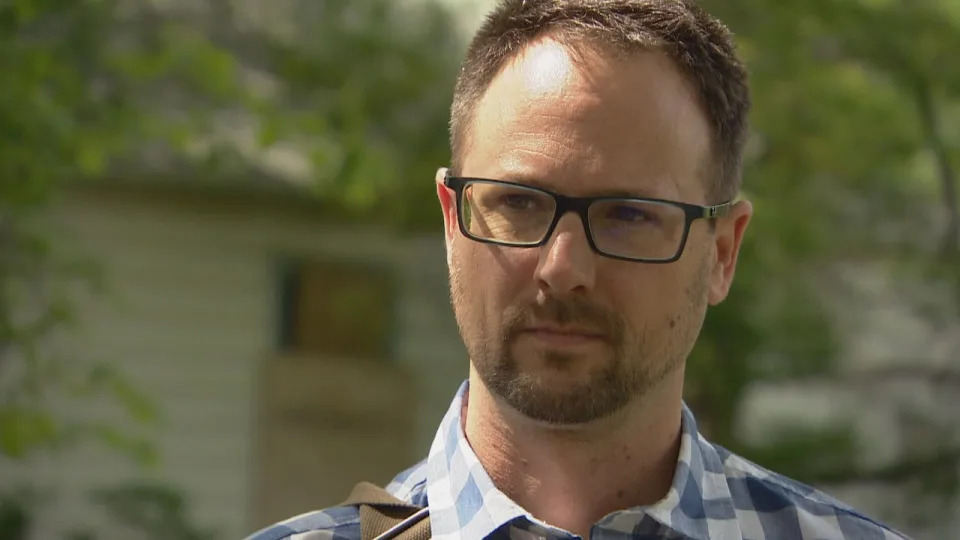
Rajbir Singh of Misl, a Sikh youth organization in Winnipeg, says some members of the community are concerned after the homicide of an alleged Punjabi gang member in the city. (Travis Golby/CBC - image credit)

A Winnipeg Sikh youth organization says it's concerned about the possibility of gang activity in the city after the fatal shooting of a man who police in India allege was a notorious criminal there.

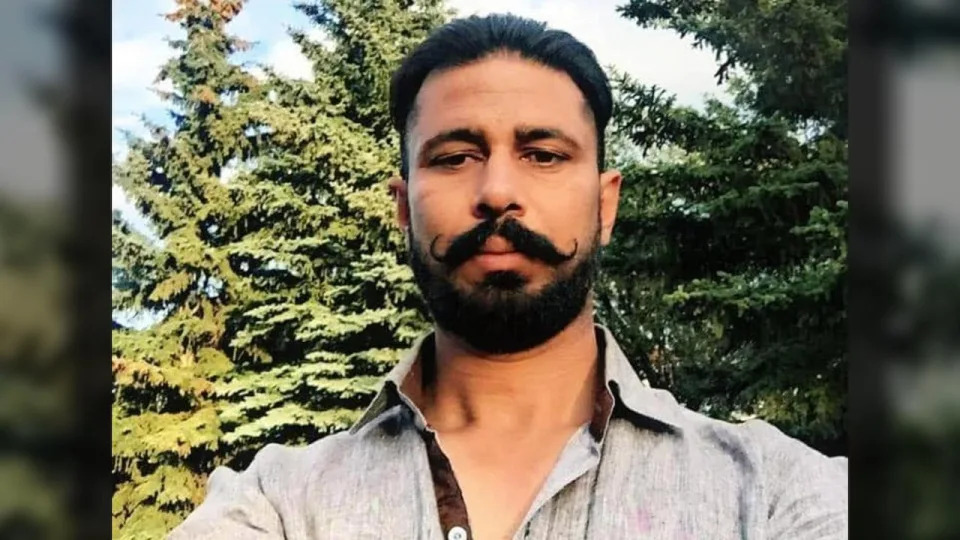
Sukhdool Singh Gill, 39, was found dead by police in a duplex on Hazelton Drive, in northwest Winnipeg, on the morning of Sept. 20.

His death came just two days after Prime Minister Justin Trudeau said there are credible allegations linking India to the death of Hardeep Singh Nijjar, a pro-Khalistan activist, in Surrey, B.C., in June.

"There's obviously a lot of shock, there's a lot of confusion," said Rajbir Singh, who leads Misl Winnipeg, a Sikh youth organization.

"Indo-Canadian gangs isn't something new. It's been going on for quite some time on the West Coast, in Ontario. However, this is the first time we've seen something like this in Winnipeg."

A person who lives near the home where Gill was killed told CBC they heard 11 gunshots right before officers discovered Gill's body.


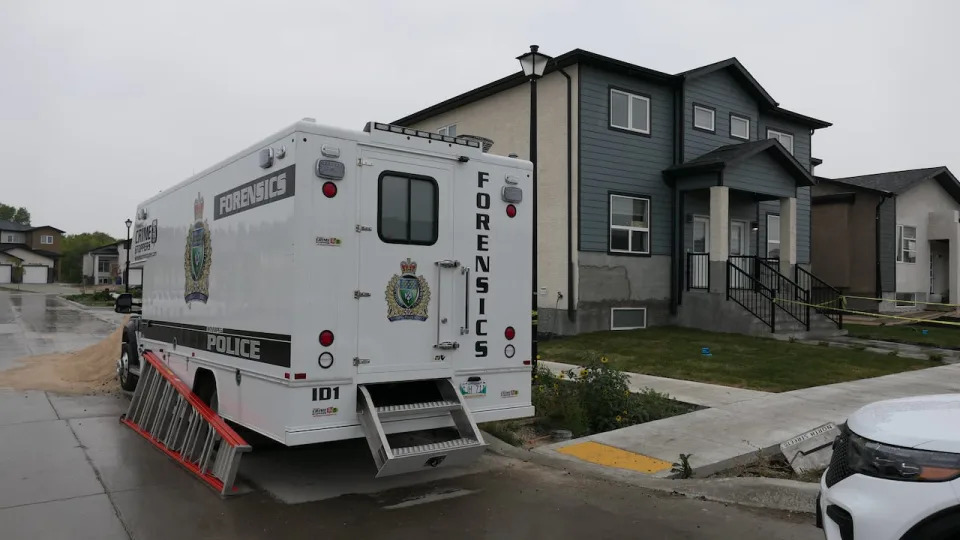
A forensics van was parked outside a home on Hazelton Drive Thursday. Police say Sukhdool Singh Gill inside a home on this street Wednesday morning.

A forensics van was parked outside on Hazelton Drive the day after Sukhdool Singh Gill was found dead in a home on the northwest Winnipeg street. (Trevor Brine/CBC)

The area is home to a large population of Punjabi people, who have settled there to keep community connections and be close to a gurdwara, a Sikh place of worship, Singh said.

Gill, who went by the alias Sukha Duneke, was allegedly part of the Bambiha gang in India, according to police documents in that country. He was accused of extortion and arranging money for gang members to buy weapons, and his name was linked to murders in India.

An expert on conflict management in India said Gill was involved in a long-running feud with rival gangs.

He allegedly left India in 2017 after obtaining a passport illegally with the help of police.

Gulneet Singh Khurana, a former senior police superintendent in Moga — a district in India's Punjab state — told CBC the passport case was filed in 2022 after police got complaints about extortion calls and learned Gill was in Canada.

"When we looked into the matter, we came to know he was in Canada," Khurana said in an interview translated from Hindi. "When we verified the matter, we came to know that he had hidden facts and gone abroad."

Sukhdool Singh Gill appeared on a wanted list released via the social media platform X by India's National Investigation Agency — a specialized counter-terrorism law enforcement agency — on Sept. 21, 2023. Gill, 39, was found dead in a northwest Winnipeg home the same week, according to the Winnipeg Police Service.

Gill, 39, was found dead in a northwest Winnipeg home on Sept. 20. A person who lives nearby told CBC they heard 11 gunshots before officers discovered Gill's body. (NIA India/X)

Singh said no one here really knew of Gill, or the fact he was in Winnipeg, until his death.

"He might've been known as a person by a very niche crowd, people who kind of keep up with the gang violence in India and outwards," said Singh. "However, I can't say he was a prominent figure of the community."

Rival gangs claim responsibility

Rival gangs in India have claimed responsibility for Gill's death, including the Bishnoi gang, which took credit in a social media post, according to reports by Indian media.

However, a justice official in India is skeptical.

Shweta Shrimali is superintendent of Sabarmati Central Jail in India's Gujarat state, where gang leader Lawrence Bishnoi is being held.

Bishnoi has no social media access and no contact with anyone who could've made the post for him, according to Shrimali.

"He has been in our jail the whole time and there is no relation of him with this," Shrimali told CBC in an interview translated from Hindi.

The week he was killed, Gill also appeared on a wanted list released via the social media platform X (formerly Twitter) by India's National Investigation Agency — a specialized counter-terrorism law enforcement agency.

Sukhdool Singh Gill appeared on a wanted list posted on X, formerly known as Twitter on Sep.21, 2023.

The week he was killed, Gill appeared on a wanted list posted on X last week by India's National Investigation Agency — a specialized counter-terrorism law enforcement agency. (NIA India/X)

The general counsel for a U.S.-based group advocating for an independent Sikh state in India called Khalistan was named on that same list — but says he didn't know of Gill until he saw that list.

"I have no information about his past," said Gurpatwant Singh Pannun, who is general counsel for Sikhs for Justice — a group that is banned in India and is accused of supporting violent extremism.

"I have no information whether he worked in any Khalistan campaign or whether he was involved in violent activities," Pannun told CBC via Zoom.

He cautioned against coming to any conclusions until the investigation into Gill's death is complete.

Winnipeg police said investigators are looking into gang activity but haven't confirmed it was a factor in the case.

Gangs 'super fluid' in Canada: police officer

A B.C. police officer who previously worked with an anti-gang unit there says he's heard of the Bambiha gang through news sources in India, but it's difficult to say how much of a presence they have in Canada.

"The gang field is pretty transient in nature — they go where they make profit," said Surrey Police Service Staff Sgt. Jag Khosa, who worked with the Combined Forces Special Enforcement Unit of B.C. to curb gang violence.

"We've seen B.C. gangsters move to Alberta or Toronto or vice versa, even outside the country. So which group they represent, even that is super fluid," he said. "We've seen people switch sides very quickly."

Singh, the Winnipeg Sikh youth leader, said Punjabi community members see Gill's homicide as "a one-off."

The Bambiha gang, which Gill has been linked to, has been in the news in India quite a bit, said Singh, pointing to the 2022 fatal shooting of Punjabi-language rapper and music producer Sidhu Moose Wala in India, which police said was the result of an "inter-gang rivalry."

"This kind of gang violence, we've always heard about it. But me personally, and a lot of the community members here, we did not know they had a presence here," said Singh.

"Just the thought that this kind of scenario could even take place here, it's kind of a wake-up call that these kind of things may actually exist here."

Singh said his group is hopeful there will be no more violence, but his organization may have a role to play if there is.

"If these kind of Punjabi gangs take a rise here, that kind of falls on the institutions in the Punjabi community like ourselves to kind of step forward," Singh said.

"Sure, there are already people locked into that path, but there are definitely people you can keep away from them," he said.

"There are people you can bring into the gurdwaras again. There are children you can educate for a better future."