Monday, March 18, 2024


Money flowing out of London stock market at a record pace, new figures show

Simon English
Fri, 15 March 2024 

Money is flowing out of the London equities at a faster pace than ever, despite government efforts to boost the stock market.

According to Investment Association recent figures UK savers took £14 billion out of UK equities last year, the eighth consecutive year of outflows.

New research by SCM Direct for the Evening Standard suggests this situation is getting worse rather than better despite some experts insisting London shares are now so cheap they represent a buying opportunity.

SCM looked at money flowing through Exchange Traded Funds, an increasingly popular tool for both small investors and large institutions.


Net retail sales of funds investing in UK equities (Evening Standard - data from SCM Direct)

Of 17 European countries, only four – Austria, Norway, Germany, Holland – have seen greater percentage outflows of money this year. The largest UK equity ETF is the iShares Core FTSE 100 ETF which has a massive £14.8 Bn invested in it – this compares with the largest US Equities ETF worldwide, the SPDR S&P 500 ETF that holds $507 Bn in assets.


Alan Miller of SCM Direct said: “Europe as a whole has seen money coming in not out. This is part of the reason for the abysmal showing of the UK market this year – the FTSE 100 is up just 0.2% vs +10.6% for the Euro Stoxx 50.”

Miller adds: “There are some underlying fundamental reasons for the poor performance of UK equities, the over-representation in the ‘old’ economy i rather than tech, together with the ongoing uncertainties surrounding Brexit and its economic implications. Political instability, including changes in leadership and policy direction, has also contributed to a lack of confidence in UK equities. But this simply does not account for the gulf in performance and valuations between the UK and its peers.”

In the budget last week Chancellor Jeremy Hunt unveiled a new “UK ISA” that allows investors to put £5,000 a year tax-free specifically in UK shares. That comes on top of the existing £20,000 annual allowance.

Miller adds: “The substantial outflows from UK equities present serious issues for the long-term health of the UK economy. It means that effectively the cost of capital for UK companies is higher as those seeking capital from the UK market must pay a higher price to attract demand and means that more and more UK companies will be prone to foreign takeovers which normally means less UK employment/investment.”

One problem is that pension funds have just 4% of their assets in UK shares compared to 50% in 1990.

This compares with Australia & Canada, both small markets, being 22% and 9% respectively of their pension funds. In fact, the pension fund that invests on behalf of Britain’s MPs and ministers, has just 1.7% invested in UK-listed companies.

There are growing calls for the government to mandate that pension funds hold a minimum level of UK equities.

The ONS, the Government’s own data cruncher, has just reported that Insurance and pension funds’ proportions in UK quoted shares have fallen since 1997 when the two sectors held a combined 45.7% of UK quoted shares. The two sectors held a total of 4.2% of UK listed shares in 2022 which is the lowest proportion jointly held by them on record.

The ONS blames this on ‘several factors, such as companies expecting more profitable returns on overseas shares as well as changes in pension fund regulations.’ At the end of 2022 57.7% of the UK market was held by non-UK investors – this percentage has increased every year since 1998 when it was just 30.7%.

Could Glencore really ditch the so-called ‘home of mining’ the London Stock Exchange?


Rhodri Morgan
Fri, 15 March 2024 
Glencore's shares have underperformed rivals since the company's listing in 2011

Activist investor Tribeca sent jitters through the City yesterday with the claim that London had lost its lustre for the likes of Glencore.

The London Stock Exchange, the Aussie hedge fund said, was no longer the “home of mining”. And to realise its true potential, Glencore should ditch its City hub and abandon much-touted plans to spin off its coal business.

The calls mirrored a similar move to that of FTSE 100 mining giant BHP in 2022 when it cancelled its London listing to head down under.

BHP was one of the comparators picked out by Tribeca as it pointed to the fact that Glencore had delivered returns of nine per cent since listing in 2011 against 95 per cent for BHP and 126 per cent for Rio Tinto.


Since the beginning of the year, shares in Glencore have fallen around 11 per cent and have struggled against a backdrop of turbulent commodity prices and uncertainty over the future of its coal business.

But the accusation against London in particular is likely to unsettle City watchers. For all the hand-wringing over the future of London as a listings venue, the capital’s role as a hub for the so-called old economy stocks of heavy industry has been largely unchallenged.

As the Chartered Governance Institute said yesterday, “mining is one of the UK’s greatest success stories”, and an exit from Glencore would be a “major setback.”

Scores of mining behemoths still populate London’s markets, however, and the suggestion of a swap for Glencore fell on largely deaf ears yesterday.

“Glencore has always said it will look at ways of maximizing value, but any idea of listing on the ASX is nonsensical,” a market source told City A.M.

Ben Davis, an analyst at Liberum, added that he doesn’t “expect much appetite from management” to switch its base to Australia.

“[It’s] unclear why Australia would need an even more heavy weighting to the mining sector than it already has, and questionable what valuation uplift it would deliver,” he added.

While Glencore’s sluggish share price has naturally attracted the attention of activists, the performance is also a symptom of the industry’s external headwinds. Lower commodity prices, for instance, have dented profits, particularly in its coal portfolio.

“A change of listing won’t magically fix these,” added Sophie Lund-Yates, an analyst at Hargreaves Lansdown.

More pressing, she says, is the uncertainty over the future of Glencore’s coal arm. Tribeca is calling on Glencore to retain the division, which it has said it will spin off following the acquisition of Canadian firm Teck Resources’ coal business last year.

Glencore paid $6.9bn (£5.4bn) in cash for a 77 per cent stake in Teck’s coal business that supplies the steel industry. Japan’s Nippon Steel and South Korea’s Posco own the rest. The deal valued the business at $9bn (£7.1bn).

The call from Tribeca runs counter to its campaign against miner Teck, which it previously pushed the firm to carve off its coal and oil sands business.

Glencore boss Gary Nagle has been insistent the firm will ultimately do what its shareholders decide.

“When we announced the transaction, we said our intention was to spin out, and that is our intention, but it’s always subject to what our shareholders want,” he said at the firm’s full-year results earlier this year.

He added: “We will consult with our shareholders, and it’s the decision of the shareholders ultimately to do that.”

While the future of its coal business will sit in the hands of investors, for now, its London base seems secure.

Telegraph gets new RECYCLED chairman to navigate UAE fallout

TORY TELEGRAPH PROTECTED FROM UAE PURCHASE BY TORY GOVERNMENT

Christopher Williams
Fri, 15 March 2024 

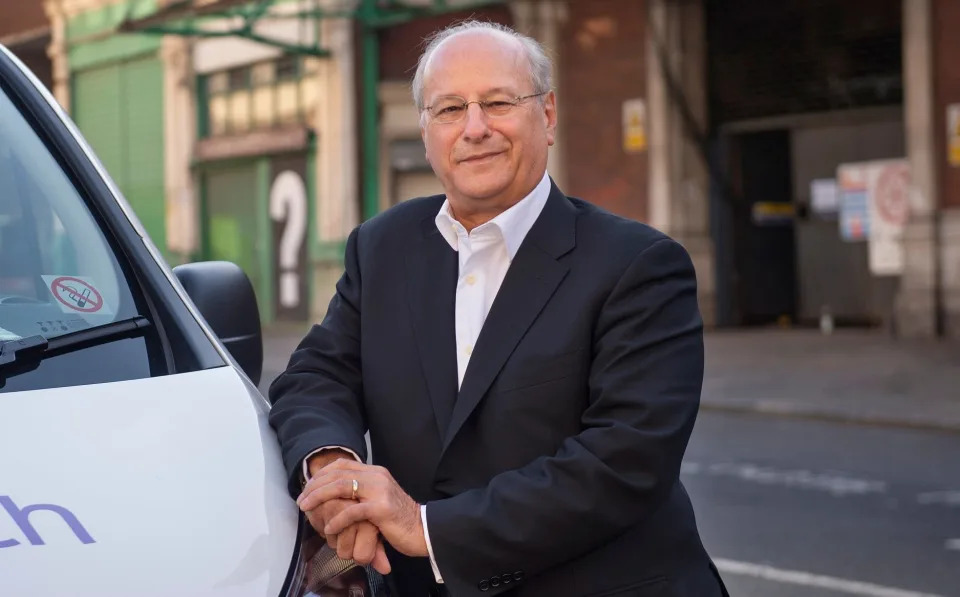
Mr McTighe is also chairman of BT's independent network arm Openreach and the FTSE 250 spread betting operator IG Group - Julian Simmonds

The Telegraph has won ministerial approval to appoint Mike McTighe as its chairman, as it faces the fallout from the failure of a takeover bid backed by the United Arab Emirates.

Mr McTighe, 70, was previously chairman of Press Acquisitions Limited, the parent company of The Telegraph and The Spectator magazine.

By becoming chairman of The Telegraph itself, it is expected he will become more closely involved in the day-to-day running of the company and the corporate, regulatory and political challenges posed by the continuing uncertainty over its ownership.

Mr McTighe, who is also chairman of BT’s independent network arm Openreach and the FTSE 250 spread betting operator IG Group, said he would seek “clarity and certainty” for The Telegraph to enable it to “continue delivering consistently high-quality and fiercely independent editorial content”.


“It is a privilege to join the board of Telegraph Media Group to provide representation for the company as we work to secure a strong future for this important organisation,” he said.

Anna Jones, chief executive of The Telegraph, said that Mr McTighe “brings a wealth of industry experience and he will provide additional stability to the operation of the business as we navigate the weeks and months ahead”.

The Telegraph’s ownership has been up in the air since June, when Lloyds Banking Group seized control as part of a debt dispute with the Barclay Family and planned to auction The Telegraph and The Spectator.

In December, RedBird IMI, a fund 75pc backed by the UAE and led by the former CNN chief Jeff Zucker, ambushed rival suitors by helping repay the £1.2bn in overdue borrowing with a new loan that included an option to immediately convert the lending to ownership.

Intervention by Culture Secretary Lucy Frazer suspended the manoeuvre for regulatory scrutiny of RedBird IMI’s plans. It meant that the Barclay family has regained ownership of The Telegraph, but are barred from exercising any control. Meanwhile, the company is barred from making any significant changes to its key personnel or structure.

Ms Frazer will continue to scrutinise The Telegraph takeover while peers debate the proposed law change - Stefan Rousseau/PA

Mr McTighe, who had been appointed chairman of Press Acquisitions Limited by Lloyds, was asked to remain in place when RedBird IMI swooped, along with two independent directors of The Telegraph.

Ms Frazer has now approved Mr McTighe joining them on the board of the operating company, despite her having protested against the decision in January to part company with the previous chief executive, Nick Hugh.

While the regulatory scrutiny of RedBird IMI continues, it was effectively superseded on Wednesday, when the Government announced it would legislate against foreign state ownership of newspapers.

The full details have not been published but are expected to outlaw RedBird IMI’s bid following an outcry over the potential threat to the public and national interest.

RedBird IMI, which had argued that the UAE would be a purely passive investor and that legally binding protections for press freedom would be put in place, immediately signalled it was likely to sell on its position.

An onward sale could allow another owner to buy the £600m loan it made to the Barclay family and convert it to ownership of The Telegraph and The Spectator.

At last year’s aborted auction, the Daily Mail owner Lord Rothermere, Rupert Murdoch’s News UK, the GB News co-owner Sir Paul Marshall, the local newspaper group National World, the Belgian publisher Mediahuis and German media empire Axel Springer all registered their interest in bidding, among others.

RedBird IMI also said that commercial interests would be the “sole priority” as it considered its next move. If the fund, a joint venture between the UAE and RedBird Capital, a US private equity firm, is unable to find a buyer to match the price it paid, it could seek an alternative exit.

RedBird IMI could “sell” the debt to one of the RedBird Capital funds that does not involve state funding. There would be challenges to this approach however, as it conducted no formal due diligence on The Telegraph before helping to repay the Barclay family debt.

It would therefore require a leap of faith from RedBird Capital’s more conventional Western backers, drawn from pension funds and family offices.
Britain to import energy from US under plan for transatlantic power cable


Jonathan Leake
Fri, 15 March 2024

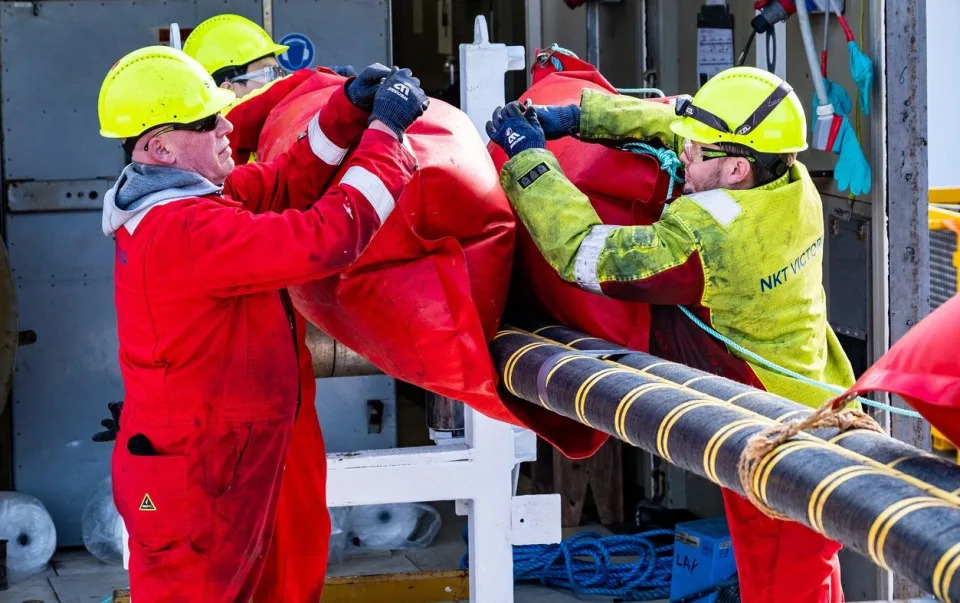
Expansion of intercontinental connections could reduce Western dependence on fossil fuels from Russia and the Middle East - Christoffer Hellmann

Britain homes could one day be powered by electricity generated in America under plans to install up to six power cables across the Atlantic.

The cables would stretch roughly 3,500 miles across the ocean, reaching depths of up to 11,000 feet, and carrying power roughly equivalent to several nuclear power stations.

A group of London investors and energy consultants are behind the ambitious scheme, as they claim technological advances in subsea cables could allow the creation of a global “intercontinental grid”.

Simon Ludlam, one of the businessmen backing the project, says such a cable would enable electricity to be traded across the Atlantic, taking advantage of the differences in peak demand as the power line crosses time zones.

“When the sun is high in London, it’d be breakfast time in New York where people could use UK or European power to cook breakfast,” says Ludlam. “And then five hours later, the sun will be high in America, so solar and other power stations there will provide the power for cooking supper in the UK.”

The scheme, which is still in its early stages, is one of several long-distance subsea cable projects that have been prompted by rapid improvements in technology.

The most advanced is the Xlinks project to lay four cables between the UK and a network of wind and solar farms spread across the Sahara desert in Morocco – a distance of 2,400 miles.

Once completed, the scheme is expected to deliver about 3.6 gigawatts (GW) of electricity to the UK’s national grid – equating to about 8pc of total power demand.

Another, on the other side of the world, will see a cable laid from wind farms in Australia’s Northern Territory to Singapore, supplying the city-state with low-carbon power.

Saudi Arabia and India are also looking at plans to link the power grids of both countries via subsea cables.

Simon Morrish, chief executive of the Xlinks project, believes long-distance interconnectors will become a key tool in the battle to decarbonise.

“As of today, we are moving energy around via molecules – meaning gas oil products and coal,” he says.

“As we decarbonise, the electricity grid will support more of our transport, heating and other needs. So we’re going to need to move electrons around instead and long-distance interconnectors are the only feasible way to do that.”

He says the prospect of global electricity grids will solve the problem of intermittency among renewables, as you can shift power to areas that are short of solar or wind.

According to Morrish, there are no longer technological barriers to prevent this.

“China’s had 3,000-kilometre links since 2018, at double the voltage that we’re doing,” he says. “It’s just a question of putting all the pieces together.”

However, running a cable across the Atlantic would be the world’s longest and most challenging project to date, with Ludlam recognising the financial and regulatory hurdles in place.

He has, however, pioneered a number of similar smaller projects.

They include ElecLink, the power cable laid through the Channel tunnel, which started operations in 2022. The 1GW cable, which is now operated by the Eurotunnel’s owner Getlink, can support the power needs of up to 1.6 million homes.

Since that success, Ludlam has moved on to become chief executive of MaresConnect, a project to install an interconnector between the UK and Ireland, carrying surplus power from Irish windfarms to the UK.

The scheme is currently being assessed by Ofgem, Britain’s energy regulator.

A transatlantic system would, he warned, need to be built with extra resilience.

“Instead of having just one very large cable, you probably have maybe three sets of two – all of them at two gigawatts,” he says.

“That means the failure of a single cable couldn’t bring the whole system down.”

Ludlam’s colleagues on the project include Laurent Segalen, a Franco-British clean energy investment banker and founder of Megawatt-X, which has overseen more than 15GW of wind and solar transactions over the past eight years.

“Strategically and economically, a transatlantic cable makes a lot of sense,” says Segalen. “It especially makes sense for members of Nato to reinforce each others’ energy supplies.

“It also means we no longer have to buy dirty fossil fuels from Russia and the Middle East.”

The cost of such an ambitious project is uncertain, although current estimates suggest it will be above £20bn but potentially cheaper than the £46bn being spent on Hinkley Point C – Britain’s new nuclear power station.

The idea of laying interconnectors over such long distances would have been unthinkable until the last decade because the electrical resistance inherent in cables would have soaked up too much power over such distances.

In recent years, however, cable makers have improved the quality and size of their systems so that power losses amount to just 3pc for every 1,000km.

The deepest cable currently in operation has been laid at 1610m water depth in the Mediterranean Sea. Another project in the same area is also under construction, with plans to reach 2000m.

One of the world’s leading cable producers is Denmark’s NKT HV Solutions, which sells cables that are being used to build the 160-mile high voltage direct current link between Scotland and Shetland, and a smaller 24-mile link between Guernsey and Jersey in the Channel Isles.

Simone Pagliuca, a director at NKT says a single cable system could now be built with the capacity to carry 2.6GW – equivalent to the entire output of two large power stations.

“Interconnectors are essential components of a dynamic and evolving renewable energy ecosystem,” he says.

“Enabling the transition to a low-carbon future, electrified transportation, and smart city infrastructure – developing and expanding grid connections, along with improving energy system interconnectivity, serve as key enablers for this.”

The UK is fast adopting such technology. Its nine operational interconnectors mean it has become heavily reliant on its European neighbours for electricity. Last year UK consumers paid a record £3.1bn for electricity generated in foreign power stations, according to new government data.

The vast imports of foreign electricity have prompted developers to install another eight subsea cables, two of which have already won initial support from Ofgem.

One of the proposed new links, dubbed LionLink, would stretch from the UK to Holland, connecting North Sea windfarms to the British and Dutch grids.

The other, Tarchon, would create a second electricity link between British and German grids.

A National Grid spokesman said: “Interconnectors play a vital role in the transition to a greener energy system, moving green energy from where it is in abundance to where it is most needed.

“As we deploy more wind power to meet our climate and energy security targets, connections to our neighbouring countries will play a vital role increasing security of supply and reducing prices for consumers.”
Honda and Nissan join forces on electric car technology to chase Chinese rivals


Alex Lawson
Fri, 15 March 2024

China's electric vehicle carmaker BYD launches its Dolphin Mini EV in Mexico.
Photograph: Toya Sarno Jordan/Reuters

Honda and Nissan have put aside the “traditional approach” of fierce rivalry to join forces and work together on electric vehicle technology as Japan’s carmakers try to catch up with Chinese competitors.

The Japanese manufacturers will work together on technology for EVs, including components and software, after signing a memorandum of understanding on Friday.

Honda and Nissan, respectively the country’s second- and third-largest carmakers behind Toyota, aim to cut costs by combining resources.

Traditional manufacturers are struggling to compete profitably with upstart rivals as the electric vehicle sector grows rapidly, adding significant development costs.

China’s BYD and Li Auto have gained market share in a competitive industry, alongside Elon Musk’s Tesla. Earlier this year, BYD, which stands for Build Your Dreams, overtook Tesla as the world’s top-selling electric carmaker.


Nissan was an early mover in EVs: its all-electric Leaf model became what it claimed was the world’s first mass-market electric car when it was launched in 2009 from its Sunderland factory. But it has struggled to keep pace with Chinese players able to access cheaper raw materials and labour, as well as greater scale and potential customers.

The Nissan chief executive, Makoto Uchida, said: “Emerging players are very aggressive and are making inroads at incredible speed.

“We cannot win the competition as long as we stick to conventional wisdom and a traditional approach.”

Honda’s president, Toshihiro Mibe, said: “We are strapped for time and need to be speedy. In 2030, to be in a good position we need a decision now.

“The rise of emerging players is becoming faster and stronger. Companies that cannot respond to the changes will be wiped out.”

Honda and Nissan each sell more than 3m cars globally and the partnership is expected across operations in Japan and overseas.

The agreement between the companies is non-binding, meaning the partnership could still fall apart, and does not involve any capital. It has been reported that, in late 2019, Japanese government officials tried to convince the carmakers to enact a full-scale merger to create a national champion, but the idea was swiftly rejected by the companies.

David Bailey, a professor of business economics at the Birmingham business school, said: “It’s two Japanese laggards playing catch up. This highlights the threat from China to western car companies, including those in Japan, and the advantages that China has in being able to produce cars at 25% to 30% lower in price.

“The Chinese government has backed EV exports in a big way and you see more Chinese cars on the road as a result.”

In the UK, Honda closed its factory in Swindon in 2021 after 35 years. Nissan recently concluded production of the second-generation Leaf in Sunderland, with its successor expected to be made there from 2026.

Nissan last year moved to rebalance its troublesome partnership with Renault, with the French carmaker reducing its stake in the Japanese company to 43% and Nissan increasing the voting rights linked to its 15% holding in its partner company.

Renault used the proceeds to invest in its own EV unit, Ampere. Uchida has previously said that Ampere is viewed as “an enabler for Nissan to participate in new business opportunities in Europe”.

The pair loosened their two-decade-long alliance after an astonishing corporate scandal which involved former boss Carlos Ghosn being arrested for allegedly underreporting his income and then later escape house arrest by hiding in a musical equipment box and fleeing via a private jet.

Although EVs are an established part of the market, carmakers and suppliers are still racing to develop the next generation of technology, including solid-state batteries that have been touted as a route to improve the range of vehicles, as well as the safety of the battery.

The industry is also at the centre of geopolitical tensions, amid political concerns about an overdependence on raw materials from China. Late last year, Northvolt, Europe’s only large homegrown electric battery maker, said it had made a “breakthrough” sodium-ion battery that could counter the problem.
ScotRail workers to strike over on-call working arrangements

Alan Jones, PA Industrial Correspondent
Fri, 15 March 2024 


Managers at ScotRail are to stage a 48-hour strike in a long running dispute over on-call working arrangements.


Members of the Transport Salaried Staffs Association (TSSA) will walk out on March 30 and 31 in a dispute which dates back to 2021 involving Operations Team Manager grades.

TSSA general secretary Maryam Eslamdoust said: “It’s simply not acceptable to have ScotRail stick their heads in the sand and ignore the pressing concerns of our members. That is why we will act by returning to the picket line.

“Our union only goes on strike as a last resort and I would urge ScotRail to come back to the table with meaningful proposals regarding our numerous concerns about the terms and conditions of on-call duties.


“Our members are vital to the running of the Scotland’s railways and deserve to be treated with respect by their employers over their legitimate grievances.

“Since our last walkout we have only grown in strength among these grades.”

Baby formula lawsuit wipes £7bn off FTSE 100 giant

Daniel Woolfson
Mon, March 18, 2024

A feeding bottle with infant formula - Liudmila Chernetska/iStockphoto

Consumer goods giant Reckitt has suffered a £7bn share price slump after it lost a US legal case claiming its baby formula contributed to the death of a premature child.

London-listed Reckitt’s share price plunged by the most in two decades and to its lowest point in more than a decade after an Illinois jury ruled Reckitt had failed to warn about the risks of necrotising enterocolitis (NEC) from its milk-based Enfamil brand products.

NEC is an illness that damages the stomach and tends to affect premature babies. Reckitt’s US subsidiary Mead Johnson Nutrition had been sued by Jasmine Watson, who claimed the baby formula caused the death of her premature baby.

FTSE 100-constituent Reckitt has now been ordered to pay Ms Watson $60m (£47m) after losing the case.

Ashley Keller, a lawyer for Ms Watson, said: “The jury’s finding confirms what Mead Johnson folks already knew – that its formula dramatically increases the NEC risk. “This is the first verdict in the US, but won’t be the last, unless baby formula makers accept responsibility for their misdeeds.”

News of the decision sparked a near 20pc plunge in Reckitt’s share price, wiping around £7.3bn ($9.3bn) from its market value.

It comes amid hundreds of US lawsuits against formula makers over NEC. The Illinois case was the first to go to a jury trial.

Shares in Abbott Laboratories, another formula maker facing legal claims, fell almost 5pc. Jurors took less than two hours to decide that Mead Johnson should pay $60m in compensatory damages. Mr Keller said: “We only asked for $25m, but the jury came back with more than double that.”

More than 400 suits targeting Mead Johnson and Abbott are consolidated before a federal judge in Chicago for pre-trial information exchanges. The judge hasn’t yet scheduled a trial. Thousands of other suits are pending in state courts, Mr Keller said. Reckitt continues to insist its products are safe and not linked to NEC. It has vowed to appeal the Illinois case.

NEC has a fatality rate of as much as 40pc. It is a major cause of death among premature babies, though rarely occurs in full-term babies.

The disease, which affects intestinal tissues, can be hard to diagnose. According to the NHS, symptoms can include general signs of illness, problems feeding or vomiting, and a swollen and tender abdomen.


While it has a high fatality rate, it can be treated with intravenous feeding and antibiotics. In some cases it can require surgery.

Reckitt said in a stock market update that it stands by the safety of its products and “strongly rejects any assertion that any of our products cause NEC”.

The company added: “It is important to note that this is a single verdict in a single case and should not be extrapolated.

“This case, and others like it, exclusively involve products used under the strict supervision of neonatologists in neonatal intensive care units and provide lifesaving nutrition options for vulnerable premature infants.

“We are, of course, surprised and deeply disappointed with the verdict and will pursue all options to have it overturned.”

Reckitt is one of the world’s largest consumer goods companies, pulling in revenues of £14.6bn in 2023. As well as Enfamil, it makes products such as Durex condoms, Cillit Bang cleaning fluid and Gaviscon.

Nutrition brands account for about 16pc of its sales, contributing £2.4bn to its turnover last year.

News of the Illinois jury’s decision marks the latest in a series of blows for the company, which last month revealed a £55m hit to revenues caused by an accounting controversy in the Middle East.

Kris Licht, chief executive at Reckitt, said the company had unearthed “some commercial practices that we weren’t particularly pleased with”, leading to the dismissal of a number of employees.

Reckitt in January recalled two baby formula products from sale in the UK amid concerns they could contain dangerous bacteria, in an event unrelated to the case in the US.

FTSE 100 giant Reckitt responds to share price plunge as Enfamil baby formula lawsuits mount


Rupert Hargreaves
Fri, 15 March 2024 

Products produced by Reckitt Benckiser REUTERS/Stephen Hird

Shares in FTSE 100 consumer goods giant Reckitt plunged more than 15 per cent on Friday as concerns grew about the firm’s exposure to lawsuits in the US.

On Wednesday, an Illinois jury ordered Reckitt’s unit Mead Johnson to pay $60m (£41.1m) to the mother of a premature baby who died of an intestinal disease after being fed Mead’s baby formula product Enfamil.

The trial was the first of several hundred trials that are set to come to court surrounding the baby formula, and the result was always going to be seen as a test case for the company.

Mead Johnson could still appeal the Illinois court ruling.

More importantly for investors, the cleaning products to baby formula producer hasn’t made a provision for the lawsuits.

In a statement published late Friday afternoon, Reckitt said: “Reckitt/Mead Johnson stands by the safety of our products. We strongly reject any assertion that any of our products cause NEC, a serious gastrointestinal problem that mostly affects premature infants.

“While we continue to offer our deepest condolences to Ms. Watson, we strongly disagree with the jury’s decision to fault Mead Johnson and award damages. We continue to believe that the allegations from the plaintiff’s lawyers in this case were not supported by the science or experts in the medical community. This was underscored during the trial by a dozen neonatologist,” the statement continued.

The company added: “It is important to note that this is a single verdict in a single case and should not be extrapolated.

“This case, and others like it, exclusively involve products used under the strict supervision of neonatologists in neonatal intensive care units and provide lifesaving nutrition options for vulnerable premature infants.”

Reckitt summarized: “We are of course, surprised and deeply disappointed with the verdict and will pursue all options to have it overturned.”

The size of the initial case and the further impending court cases suggest Reckitt could be forced to make a substantial charge and provision for payouts that would take a large chunk out of its bottom line.

Reckitt reported an adjusted operating income of £3.4bn for 2023, disappointing investors with a worse-than-expected performance and lack of growth compared to peers.

Susannah Streeter, head of money and markets, Hargreaves Lansdown said: This ruling has come at a bad time for the Reckitt which had already been struggling with falling volumes across its household goods and hygiene ranges.

“It’s not simply the size of this payout which has caused nervousness, but the fact a long line of other lawsuits are pending, which could mount up to be huge sum for the company,” Streeter added.

“Although nutrition is Reckitt’s smallest division, it’s also been another volume drag, and hitting the headlines for the wrong reasons could also lead to reputational damage. After missing expectations in the fourth-quarter, investors were always going to be highly sensitive to set-backs and this judgement has led to a fresh loss of confidence.’’

The decline has taken the stock back to levels not seen since 2013.


THATCHER'S PRIVATIZATION 
Put Thames Water into special administration, Lib Dems tell ministers

CANADIAN PENSION; OMERS IS ONE OF THE LARGEST INVESTORS


Sandra Laville and Alex Lawson
Fri, 15 March 2024 

Thames Water this week declined to commit extra funds to a £180m industry-wide initiative to fast-track efforts to reduce sewage pollution.Photograph: Toby Melville/Reuters

Thames Water should be put into special administration by the government and reformed as a public benefit company, the Liberal Democrats have said.

Sarah Olney, the Lib Dems’ Treasury spokesperson, has called in a parliamentary debate for the biggest privatised English water company to be wound up under legislation that has recently been updated by ministers.

It makes the Lib Dems the first mainstream political party to say the struggling company must be taken over to secure water and sewerage services for 15 million people.

Thames Water is seeking a shareholder bailout of £2.5bn to the end of the decade to stay solvent, but it wants Ofwat, the water regulator, to allow it to increase customer bills by 40%, pay higher dividends and face lower fines for pollution in order to secure the shareholder investment.


Olney said in parliament: “Thames Water is no longer a functioning company and the government has a choice: either bail them out with taxpayer money or listen to our calls to put them into special administration to then be reformed into a company for the public benefit.”

Thames Water declined to commit extra funds this week to a £180m industry-wide initiative to fast-track efforts to reduce sewage pollution in England’s waterways. Its parent company has been told by its auditors that it could run out of money by April if shareholders do not inject more cash into the company. It needs to repay a £190m loan due in April.

Special administration can be triggered if a company cannot pay its debts or is not performing its statutory requirements.

“The final straw was this week, when Thames Water bosses refused to stump up the cash for new sewage investments,” said Olney. “It was shocking that Conservative ministers just let them get away with it.”

The government is drawing up an emergency plan, known as Project Timber, in the event of the collapse of Thames Water. But Olney said ministers must use their recently updated water insolvency legislation to put the company into special administration.

This can be triggered by the secretary of state or Ofwat. Olney said with the company unable to pay its debts, and recusing itself from new sewage investments, the threshold for special administration had been met.

Under the updated water insolvency legislation the company can be taken over as a going concern to make sure that water and wastewater services continue for 15 million people. The taxpayer would not be liable for the debts, which would stay with the holding company, according to independent analysis of the updated legislation by the House of Commons library.

Olney said the company, once in special administration, could be reformed as a public benefit company, where “profit is no longer put above environmental goals”.

Olney asked the government to provide details of Project Timber. In response, Mark Spencer refused to comment specifically on Thames Water, citing “market sensitivities around private companies”. The environment minister said “the government does have a plan” to support companies in essential services such as utilities or banking “in moments of distress”.

He said: “The government’s priority is the ongoing provision of water and wastewater services.”

Thames Water admits in its latest business plan, which has been submitted to Ofwat for approval, that it has overseen the “sweating of assets” and allowed its infrastructure to decline over decades because it has stretched the life of the assets, repairing rather than replacing.

It is promising to invest £4.7bn to tackle the decline of its infrastructure but says to fully repair its sewers would cost £1.5bn and its sewage works £2.2bn. Thames says it will not be able to deliver the full extent of the investment into its ageing assets nor meet the environmental obligations it had wanted to meet by the end of the decade.

The company is also under investigation by Ofwat and the Environment Agency for suspected illegal sewage discharges from many of its treatment works. The Ofwat investigation, which is due to report within months, could impose multimillion-pound fines on Thames. The company admits that 157 treatment works are non-compliant.

Thames Water declined to comment.

A government spokesperson said: “Water companies are commercial entities and we do not comment on the financial situation of specific companies as it would not be appropriate. We prepare for a range of scenarios across our regulated industries – including water – as any responsible government would.”
UK
Tory Minister Admits Party Could Accept More Cash From Tory Donor In Diane Abbott Race Row


Kevin Schofield
Sun, 17 March 2024 


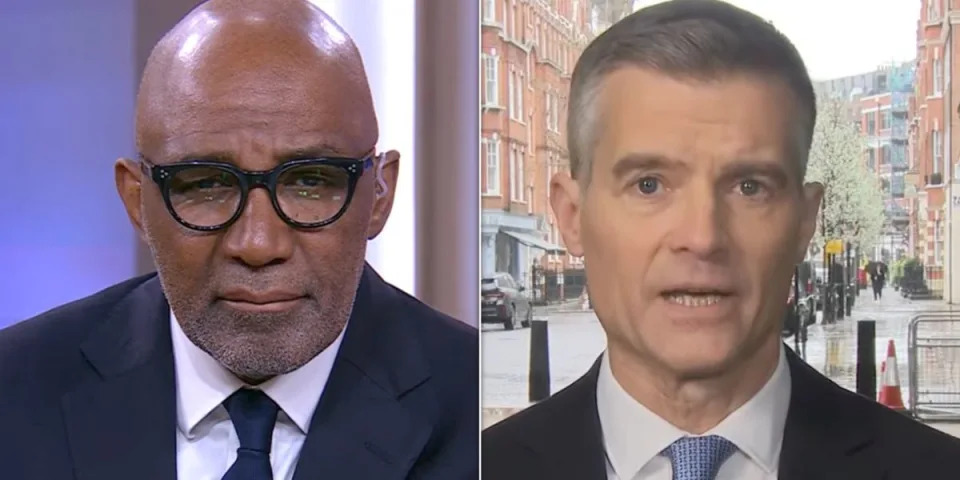
#TrevorPhillips: As a matter of principle would you be comfortable receiving more donations from Frank Hester?

Mark Harper: You're asking me about hypothetical things...

TP: So you personally wouldn't be embarrassed if the Tories got another £5m from Hester?#bbclaurakpic.twitter.com/vI3NE3IF0s

— Haggis_UK 🇬🇧 🇪🇺 (@Haggis_UK) March 17, 2024

Tory minister has refused to rule out taking millions of pounds more from the donor embroiled in a race row over comments he allegedly made about Diane Abbott.

Frank Hester has not denied saying the MP made him “want to hate all black women” and “should be shot”.

The health tech executive donated £10 million to the Conservatives last year and has reportedly given another £5m so far in 2024.

Labour and the Lib Dems have called on the Tories to return the cash.

But on Sky News this morning, transport secretary Mark Harper repeatedly dodged the question when asked to confirm the Tories have taken more of Hester’s money.

And he also raised the possibility of the party accepting more donations from him, despite Rishi Sunak admitting his comments about Abbott were “racist and wrong”.

Sky presenter Trevor Phillips asked Harper: “Can you confirm the party’s received another £5 million from him and if so, when?”

The minister replied: “No. Any donations that we receive from anybody are declared in the usual way and that’s why you know that Mr Hester made those donations in the past and if there are any donations in the future, and that’s hypothetical, the party will declare them in the usual way.”

Phillips then asked: “There must be an answer to this. They must have told you, or at they just hiding it from you whether or not they’ve got another £5 million, as is being widely reported?”

Harper said: “We’ve declared in the proper way any donations that we’ve received, and if in the future there are any donations, those donations will be declared in the usual way.”

Trying again, the increasingly-frustrated presenter said: “You’re a man of principle, if there are future donations, as a matter of principle, would you be comfortable to receive them?”

Harper again side-stepped the question by saying: “You’re asking me about hypothetical things that might or might not happen in the future.

“We have a proper process for donations and about assessing whether we should accept them and if we accept them we then publish the results and declare them as we’re required to do in an open and transparent way.”

Phillips then asked Harper if he would be “embarrassed if the process ended up with another £5m in the Conservative Party’s locker”.

But Harper replied: “What you’re really doing is you’re asking me the question in a different way. You’re asking me about hypothetical things that might or might not happen in the future.”
Related...

The Tories Have Accepted Another £5 Million From Donor Who Said Diane Abbott 'Should Be Shot'


'Is That An Extremist View?' Naga Munchetty Clashes With Michael Gove Over Tory Donor's Diane Abbott Attack

Frank Hester racism row: how key figures reacted to remarks about Diane Abbott

Daniel Boffey 
Chief reporter
The Guardian
Fri, 15 March 2024 

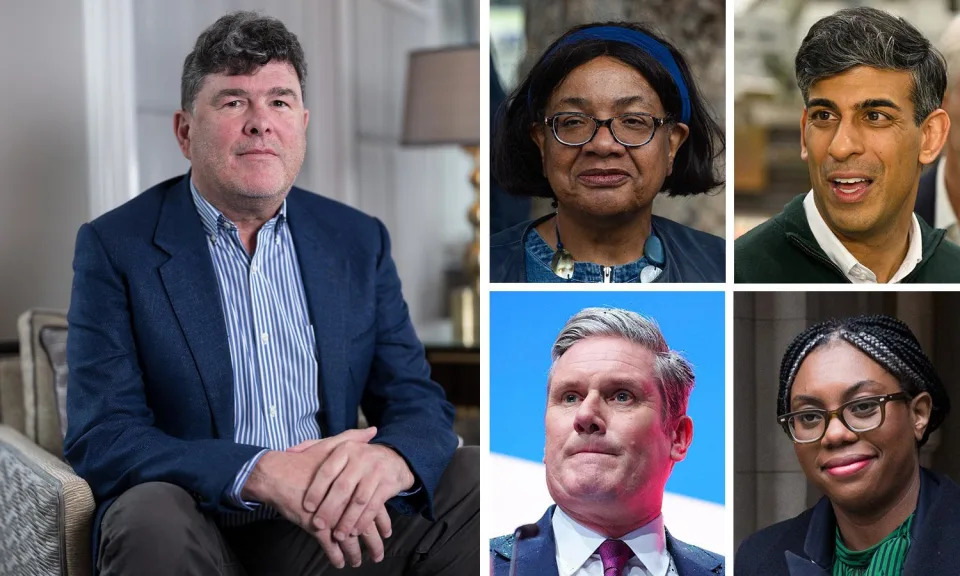
Clockwise from left: Frank Hester, Diane Abbott, Rishi Sunak, Keir Starmer and Kemi Badenoch.
Photograph: Getty Images/AP/ Christopher Pledger/Daily Telegraph

It has been four days since the Guardian reported on the extraordinary remarks by the Tory donor Frank Hester about Diane Abbott. They elicited widespread condemnation for being racist and misogynistic. Here are some of the key voices – and what they have said:

Diane Abbott MP
“Reading his remarks, I was upset but not surprised. This is partly because I am hardened to racist abuse. I receive hundreds of abusive emails, phone calls and letters monthly, and the numbers shoot up whenever I am in the media. Most of this correspondence targets my appearance, questions my intelligence and features classic racist lines such as: ‘go back to where you come from’. Recently, the abuse has taken an even darker turn, with accusations of child abuse. For instance: ‘If you and your child want to fuck children, go back to one of your sick third-world shitholes and bury yourself, sicko.’”

Rishi Sunak, prime minister
“The comments were wrong and they were racist. He [Hester] has rightly apologised for them and that remorse should be accepted. There is no place for racism in Britain, and the government that I lead is living proof of that.”


Keir Starmer, Labour leader
“Those comments about Diane Abbott are just abhorrent. Diane has been a trailblazer, she has paved the way for others. She has probably faced more abuse than any other politician over the years on a sustained basis.”

Kemi Badenoch, business secretary
“Hester’s 2019 comments, as reported, were racist. I welcome his apology. Abbott and I disagree on a lot. But the idea of linking criticism of her to being a black woman is appalling. It’s never acceptable to conflate someone’s views with the colour of their skin. MPs have a difficult job balancing multiple interests – often under threats of intimidation, as we saw recently in parliament. Some people make flippant comments without thinking of this context. This is why there needs to be space for forgiveness where there is contrition.”

Samuel Kasumu, former adviser to Boris Johnson on civil society and communities
“As a black Brit, Diane Abbott is someone who is very historically significant. So it’s very important to note that that every time Diane is attacked we do feel it. We feel a sense of hurt because of her historical significance. She ran so that people like me could walk.”

Dr Alan Stout and Dr Andrew Buist, co-chairs of the BMA general practitioners committee
“There is no room for racism or sexism in the NHS, and the committee believes he [Hester] should resign his position with immediate effect.”

Dr Steve Taylor, spokesperson for the general practice committee of the Doctors’ Association UK
“The Doctors’ Association UK GP committee have significant concerns over the recent comments reportedly made by Frank Hester, owner of TPP, one of the major suppliers of GP IT systems. The GP workforce is a diverse community of people and these comments are deeply upsetting. We agree with other GP bodies that it calls into question the leadership of TPP.”

Jacqueline McKenzie, human rights lawyer
“This has hit [Diane Abbott] to the core and that is what it is meant to do. It is meant to diminish her, it is meant to diminish me, it is meant to diminish all black women.”

George Osborne, former Conservative chancellor
“[It] falls into the definition of the extremism rules. That is the paradox. The Tories are saying we are not going to give money to extremists whilst taking money from someone who appears by their own definition to be an extremist.”

Andy Street, Conservative mayor of the West Midlands
“I would think about the company I kept and I would give that money back. I have to give you my view rather than what the party should do, but I have thought about how I would handle that situation.”

Chris Patten, Tory peer and former cabinet minister
“If he’s made remarks which are racist, how can you in a reasonable way take 10 million smackers of his money? It seems to me that it’s pretty open and shut, as people like Andy Street and others have said. So I think the sooner this is brought to an end the better.”

Sayeeda Warsi, Conservative peer and former party chair
“Elections fought on the money of donors who make racist and offensive statements make for dangerous election campaigns.”

A spokesperson for Frank Hester
“Frank Hester accepts that he was rude about Diane Abbott in a private meeting several years ago but his criticism had nothing to do with her gender nor colour of skin. The Guardian is right when it quotes Frank saying he abhors racism, not least because he experienced it as the child of Irish immigrants in the 1970s. He rang Diane Abbott twice today to try to apologise directly for the hurt he has caused her and is deeply sorry for his remarks. He wishes to make it clear that he regards racism as a poison which has no place in public life.”

Metropolitan police
“On Monday, 11 March officers from the parliamentary liaison and investigation team were contacted in relation to a report about an MP that appeared in the Guardian. We are assessing the matter and are liaising with West Yorkshire police as the alleged incident is believed to have taken place in Leeds. Officers from the parliamentary liaison and investigation team remain in contact with the MP.”


Rishi Sunak ‘visited Frank Hester’s office on helicopter trip paid for by donor’

Sophie Wingate, 
PA Deputy Political Editor
Sat, 16 March 2024 

Rishi Sunak reportedly visited Frank Hester’s office on a £16,000 helicopter trip to Leeds paid for by the businessman last year, raising questions about whether the Tory backer’s £10 million donations have bought him access to the Prime Minister.

Mr Sunak is facing calls to reveal the extent of his relationship with Mr Hester following the emergence of comments the donor allegedly made about MP Diane Abbott – that she made him want to “hate all black women” and “should be shot”.

The Prime Minister has this week come under fire for his handling of the fallout from the remarks. He eventually described them as “racist” but only after Cabinet minister Kemi Badenoch broke ranks with No 10 to condemn them as such.

Frank Hester reportedly paid for Rishi Sunak’s helicopter ride to Leeds, where the PM visited the businessman’s company (CHOGM Rwanda 2022/YouTube/PA)


The Guardian, which broke the story on Mr Hester’s comments, on Saturday reported that he paid for Mr Sunak’s travel costs to Leeds, where the Prime Minister got a private tour of his company.

The newspaper said the visit came around three weeks after Mr Hester’s software firm, the Phoenix Partnership (TPP), gave a second £5 million tranche to Mr Sunak’s party last November.

He had already individually donated £5 million in May while another £5 million is reportedly on the table.

Mr Sunak was pictured meeting small business owners at a jewellery studio in Farsley, West Yorkshire, on November 23.

He visited TPP’s offices in Leeds for around an hour later that day, the Guardian reported, citing unnamed sources.

No 10 declined to comment on the Prime Minister’s “private meetings”.

Labour Party chairwoman Anneliese Dodds said: “Everyone can see that Frank Hester’s disgusting remarks were clearly racist and misogynistic. Rishi Sunak keeping these millions is inexcusable.

“There are serious questions to answer on Rishi Sunak’s close relationship with Frank Hester.

“The Prime Minister must urgently confirm what was discussed, and whether Frank Hester’s contract running over 60% of confidential UK health data or Government AI policy came up.

“And Rishi Sunak needs to grow a backbone, pay this money back, cut ties and deal with the extreme views that appear to be tolerated in his party.”

A No 10 source said: “Donations such as for flights are all publicly available in his declarations of interest. Wouldn’t get into his private meetings.”

Diane Abbott was the target of Frank Hester’s alleged racist remarks in 2019
 (Jonathan Brady/PA)

Mr Hester has posted on LinkedIn about attending Mr Sunak’s discussion on artificial intelligence with tech billionaire Elon Musk last year and told the Telegraph: “I’ve had some quite long conversations with Rishi about AI.”

Mr Hester has apologised for making “rude” comments about Ms Abbott, the first black woman elected to Parliament, but claimed they had “nothing to do with her gender nor colour of skin”.

The Prime Minister has insisted the donor’s “remorse should be accepted” as he resisted calls to hand back his £10 million donations amid the row.

Ms Abbott on Friday said “no Conservative has apologised” to her after the emergence of Mr Hester’s 2019 verbal attack.

The veteran MP told Channel 4 News: “They keep saying that the Hester guy, he’s apologised. He’s not apologised. He’s apologised for being rude, whereas in fact he was racist, and he’s not apologised for that.

“In fact, he was inciting violence. He’s not apologised for that.”


GPs call for health tech boss Frank Hester to resign after Abbott remarks


Matthew Weaver and Phillip Inman
Fri, 15 March 2024 

Frank Hester’s firm TPP runs the electronic patient records of 
almost half the GP practices in the UK.
Photograph: George Cracknell Wright

GPs are calling on the Tory donor Frank Hester to resign from his health tech company after his remarks about Diane Abbott, which have been widely condemned as racist and misogynist.

Hester’s company TPP runs the electronic patient records of almost half the medical practices in the UK, making them his main UK clients. On Thursday the BMA’s general practice committee (GPC), which represent all UK GPs, voted in favour of an emergency motion urging Hester to stand down from the company with immediate effect.

The Guardian revealed on Monday that at a meeting in 2019, Hester said seeing Abbott on TV made “you want to hate all black women” and that the long-serving MP “should be shot”. Hester has apologised for the remarks but denied they were motivated by race or gender.

The GPC urged family doctors to consider Hester’s comments about Abbott before agreeing to sign any more contracts with TPP.


The motion said: “This meeting is disgusted by the reported violent, openly racist and misogynistic comments, made by Frank Hester, director of The Phoenix Partnership (TPP), and directed at the Rt Hon Ms Diane Abbott MP.”

The GPC also noted that Hester’s comments “contravened NHS England’s fit and proper person test framework introduced in response to the 2019 Kark review recommendations”.

The motion “calls upon UK health boards to apply their own processes vigilantly when contracting external stakeholders whose views and values may not align with the wider professional NHS workforce”.

After the meeting, Dr Alan Stout and Dr Andrew Buist, co-chairs of the GPC, said: “This emergency motion makes clear how appalled GPs are. There is no room for racism or sexism in the NHS, and the committee believes he should resign his position with immediate effect.”

TPP has received more than £400m in contracts from the NHS and other government bodies since 2016.

Hester has given £10m to the Conservatives, making him the party’s largest donor. He is also reported to have donated a further £5m earlier this year. Rishi Sunak is under increasing pressure to return the money after the disclosure of Hester’s remarks.

When the £5m donation was announced this month, Hester rejected the idea that he was giving money to secure more government contracts, saying many came from hospitals and GPs. “GPs decide which software they’re using, not Rishi Sunak,” he said.

Dr Steve Taylor, a spokesperson for the general practice committee of the Doctors’ Association UK, backed the GPC motion.

He said: “Doctors’ Association UK GP committee have significant concerns over the recent comments reportedly made by Frank Hester, owner of TPP, one of the major suppliers of GP IT systems. The GP workforce is a diverse community of people and these comments are deeply upsetting. We agree with other GP bodies that it calls into question the leadership of TPP.”

TPP has been contacted for comment.

Meanwhile, the leaders of 10 prominent anti-racism groups have written to Sunak raising concerns about Hester’s remarks and calling on the prime minister to “unequivocally commit to fighting racism”.

They said “an increasingly normalised culture of racism that has been allowed to fester under the current administration” meant Hester “felt emboldened to express vile sentiments”.

The letter signed by David Weaver, the chair of Operation Black Vote; Shabna Begum, the chief executive of the Runnymede Trust; Timi Okuwa, of the Black Equity Organisation; Jeremy Crook, of Action for Race Equality; and Zara Mohammed, secretary general of the Muslim Council of Britain, urged Sunak to take “immediate and tangible steps to address this situation”.

They said: “We would invite you to take this opportunity to champion the cause of anti-racism and to lead by example, demonstrating that the UK government is unequivocally committed to fighting racism and fostering a society where equality, respect, and inclusivity are paramount.”

Lee Jasper, a signatory and chair of the Alliance of Police Accountability, said Abbott’s case had brought together a broad coalition of leaders from the most influential UK African, Asian and Caribbean anti-racist groups “in a remarkable show of unity”.

He said the case raised questions about political fundraising ethics and “casts a spotlight on the ongoing challenges of racism and sexism in UK politics”.

He said: “It serves as a stark reminder of the importance of consistent and principled stands against race discrimination and the need for all political parties to reflect deeply on their policies, practices and responses to racism within their ranks.”


Health workers’ unions call for Frank Hester to lose NHS contracts

Daniel Boffey, Matthew Weaver, Rowena Mason and Henry Dyer
Fri, 15 March 2024 

Rishi Sunak has been urged to return the money given to his party by Frank Hester
Photograph: No Credit

Unions representing GPs and health workers have called on the Conservative donor Frank Hester to stand down from running NHS contracts, saying his “racist and misogynistic comments” breach its fit and proper person test.

Hester’s company TPP runs the electronic patient records of almost half the medical practices in the UK. His remarks about Diane Abbott have prompted calls for him to step aside amid a growing political row.

Downing Street refused to say how many times the prime minister has met the Conservative donor since he gave the party £10m.

The pair are believed to have met in the afternoon on the day after the autumn statement in November when Hester paid about £16,000 in travel costs for Sunak to fly to Leeds by helicopter for a political visit. Downing Street declined to “get into the details” of whether they met.


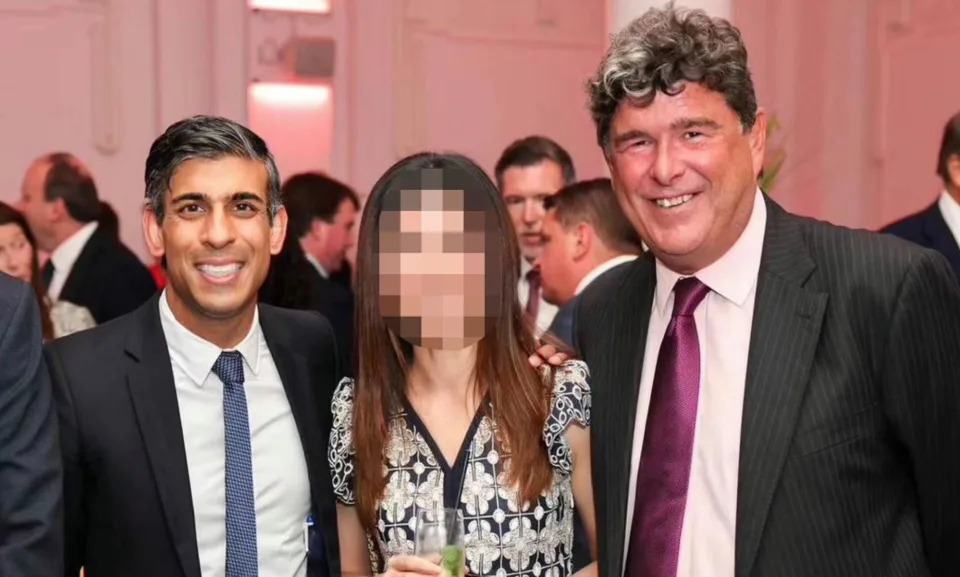
The Guardian can also reveal the pair were photographed together at a party fundraiser in June last year.

It is understood the health tech entrepreneur attended at least two party events in London: the Conservatives’ main summer party in central London last June, where they were photographed, and another just two weeks ago.

Hester, who has worked on artificial intelligence as part of his IT business, has previously said he has had “some quite long conversations with Rishi about AI”.

He also tweeted about witnessing a “brilliant AI discussion between Rishi Sunak and Elon Musk” in November last year.

Anneliese Dodds, Labour’s chair, said Sunak must be clear about their relationship.

“Rishi Sunak has shown he is just too weak to pay back his millions and cut ties completely. Rishi Sunak needs to come clean about the relationship he has with Frank Hester, including how many times he has met with him since becoming prime minister.”

The NHS’s fit and proper person test applies to the leadership of trusts but accompanying notes suggest that other bodies “may also want to follow this guidance as a matter of good practice”. Among the minimum expectations is the avoidance of discrimination as set out in the Equality Act 2010.

The Guardian revealed on Monday that at a meeting in 2019, Hester said seeing Abbott on TV made “you want to hate all black women” and that the long-serving MP “should be shot”. He has apologised for the remarks but denied they were motivated by race or gender.

On Thursday the British Medical Association’s general practitioners’ committee (GPC), which represent all UK GPs, voted in favour of an emergency motion that said Hester’s comments “contravened NHS England’s fit and proper person test framework introduced in response to the 2019 Kark review recommendations”.

The motion called on “UK health boards to apply their own processes vigilantly when contracting external stakeholders whose views and values may not align with the wider professional NHS workforce”. It said he should resign from his company with immediate effect.

After the meeting, Dr Alan Stout and Dr Andrew Buist, co-chairs of the GPC, said: “This emergency motion makes clear how appalled GPs are. There is no room for racism or sexism in the NHS, and the committee believes he should resign his position with immediate effect.”

TPP did not respond to a request for comment.

Dr Steve Taylor, a spokesperson for the GP committee of the Doctors’ Association UK, also backed the GPC motion.

He said: “Doctors’ Association UK GP committee have significant concerns over the recent comments reportedly made by Frank Hester, owner of TPP, one of the major suppliers of GP IT systems. The GP workforce is a diverse community of people and these comments are deeply upsetting. We agree with other GP bodies that it calls into question the leadership of TPP.”

TPP has received more than £400m in contracts from the NHS and other government bodies since 2016.

Christina McAnea, the general secretary of Unison, which represents half a million NHS workers, echoed the views of the doctors’ body.

She said: “The abusive comments levelled at Diane Abbott were appalling. People rightly expect that companies providing public services aren’t headed by individuals with racist views.”

Hester has given at least £10m to the Conservatives, making him the party’s largest donor. He is also reported to have donated a further £5m earlier this year.

Sunak is under increasing pressure to return the money after the disclosure of Hester’s remarks, amid wider unrest about his leadership. On Friday night it was reported that MPs on the right of the the Conservative party had held talks with moderates about uniting behind Penny Mordaunt to replace him.

“The mood has shifted a long way this week,’ a source told the Daily Mail. “There is a feeling that we cannot go on as we are and that even Penny would be better.”

Rachel Harrison, the national secretary of the GMB, whose members include nurses and ambulance drivers, said there should be a pause on granting any further contracts to Hester’s company.

She said: “The Hester affair is just another example of a rotten Conservative government failing the country at every turn.

“The public should expect the highest standards from public sector suppliers, and it’s time to call a halt on the money-go-round from public contracts straight into the Tory party’s coffers. There should be a moratorium on new NHS contracts while he is negotiating a new £5m donation to the Conservatives – it’s a clear conflict of interest.”

When the £5m donation was announced this month, Hester rejected the idea that he was giving money to secure more government contracts, saying many came from hospitals and GPs. “GPs decide which software they’re using, not Rishi Sunak,” he said.

A petition calling for Hester to be stripped of the OBE he was awarded in 2015 for services to healthcare has 89,000 signatures.

Among those supporting the demand is Dorothy Price, a professor of history of art at the University of Bristol, where she was a founder member and the inaugural director of the centre for black humanities.

Price tweeted: “Frank Hester has made vile comments about Diane Abbott. He doesn’t deserve to be honoured, but holds an OBE. Agree? Sign the petition demanding his OBE be stripped from him now!”

The leaders of 10 prominent anti-racism groups have written to Sunak about Hester’s remarks, calling on the prime minister to “unequivocally commit to fighting racism”.

They said “an increasingly normalised culture of racism that has been allowed to fester under the current administration” meant Hester “felt emboldened to express vile sentiments”.

The letter – signed by David Weaver, the chair of Operation Black Vote; Shabna Begum, the chief executive of the Runnymede Trust; Timi Okuwa of the Black Equity Organisation; Jeremy Crook of Action for Race Equality; and Zara Mohammed, secretary general of the Muslim Council of Britain – urged Sunak to take “immediate and tangible steps to address this situation”.

They said: “We would invite you to take this opportunity to champion the cause of anti-racism and to lead by example, demonstrating that the UK government is unequivocally committed to fighting racism and fostering a society where equality, respect and inclusivity are paramount.”