Monday, April 01, 2024

Palestinians Want April Vote for Full United Nations Membership

Palestinians walk through the destruction left by the Israeli air and ground offensive on the Gaza Strip near Shifa Hospital in Gaza City, Monday, April 1, 2024. (AP)

1 April 2024 AD ـ 22 Ramadan 1445 AH


The Palestinian Authority wants the United Nations Security Council to vote this month to make it a full member of the world body, the Palestinian UN envoy told Reuters on Monday, a move that can be blocked by Israel's ally the United States.

Riyad Mansour, who has permanent observer status in the UN, made the Palestinian plans public as the war between Israel and Palestinian Hamas militants nears a six-month milestone in Gaza and Israel is expanding settlements in the occupied West Bank.

Mansour told Reuters that the aim was for the Security Council to take a decision at an April 18 ministerial meeting on the Middle East, but that a vote had yet to be scheduled. He said a 2011 Palestinian application for full membership was still pending because the 15-member council never took a formal decision.

"The intention is to put the application to a vote in the Security Council this month," he added.

Alongside a push to end the war, global pressure has grown for a resumption of efforts to broker a two-state solution - with an independent Palestinian state alongside Israel.

The war began after Hamas fighters attacked Israel on Oct. 7, killing 1,200 people and seizing 253 hostages, according to Israeli tallies. Israel retaliated by imposing a total siege on Gaza, then launching an air and ground assault that has killed more than 32,000 Palestinians, health authorities in Gaza say.

UN approval


An application to become a full UN member needs to be approved by the Security Council - where the United States can cast a veto - and then at least two-thirds of the 193-member General Assembly.

The US mission to the United Nations did not immediately respond to a request for comment.

A Security Council committee assessed the Palestinian application in 2011 for several weeks. But the committee did not reach a unanimous position and the council never voted on a resolution to recommend Palestinian membership.

At the time, diplomats said the Palestinians did not have enough support in the Security Council to force a veto by the United States, which had said it opposed the move. A resolution needs at least nine votes in favor and no vetoes by the US, Russia, China, France or Britain to be adopted.

Instead of pushing for a council vote, the Palestinians went to the UN General Assembly seeking to become a non-member observer state. The assembly approved de facto recognition of the sovereign state of Palestine in November 2012.

Little progress has been made on achieving Palestinian statehood since the signing of the Oslo Accords between Israel and the Palestinian Authority in the early 1990s. Among the obstacles are expanding Israeli settlements.

The Palestinian Authority, headed by President Mahmoud Abbas, exercises limited self-rule in the West Bank and is Israel's partner to the Oslo Accords. Hamas in 2007 ousted the Palestinian Authority from power in the Gaza Strip.

Israeli settlements risk eliminating any practical possibly of a Palestinian state, UN human rights chief Volker Turk said last month. He said the transfer by Israel of its own population into occupied territory amounted to a war crime.

US President Joe Biden's administration said in February that Israel's expansion of West Bank settlements was inconsistent with international law, signaling a return to long-standing US policy on the issue that had been reversed by the previous administration of Donald Trump.


Fired Myanmar garment workers await court resolution after 4 years

Kiana Duncan for RFA
2024.03.30
Mae Sot, Thailand


The entrance to the VK Garments compound in Mae Sot, Thailand, March 21, 2024.

When Phyu Phyu Mar from Myanmar got a job at VK Garments in 2017, she had plans to one day open her own small business. 

Located in Mae Sot, a town straddling the Thai-Myanmar border, the factory appeared to be a promising employer, especially because it was a supplier for the British retail giant Tesco. Yet, Phyu’s dreams quickly dissolved into disillusionment.

Despite the initial optimism, Phyu Phyu Mar and 135 of her colleagues found themselves embroiled in a struggle against debt, job insecurity and the loss of their legal status in Thailand after being laid off in 2020.

Their termination by the management of VK Garments came as a direct result of their complaints about labor violations and demands for rightful wages. Although they sought justice through the legal system and were partially compensated in October 2020, the awarded sum fell significantly short of their claims.

Now, years later, the repercussions of their stand for fair treatment continue to profoundly affect their lives, and the hope for resolution hinges on two court cases, one local and one international, which they hope will conclude their protracted ordeal.


Former VK Garment workers San San Aye (left) and Khin Mar Aye, who have waited nearly four years for wages they say they’re owed, are pictured in Mae Sot, Thailand, Jan. 26, 2024. [Kiana Duncan for RFA]

In January, employees lodged an appeal against VK Garments with Thailand’s Supreme Court, seeking 34 million baht (U.S. $946,000) for unpaid overtime and severance. 

According to the case’s lawyer, Charit Meesidhi, the labor inspector reviewing evidence for the prior court case failed to collect appropriate evidence like pay documentation and interviews that would have allowed Phyu Phyu Mar and her co-workers to prove their case.

But Charit remains cautious about the prospects of the new case as well. 

“According to the legal requirements, the chance to convince the Supreme Court to review the case is extremely difficult,” the lawyer said. “This is subject exclusively to the authority of the Supreme Court and in most cases, it does not accept to review the case.” 

Workers have also not seen a cent of the earnings they say they’re owed because the amount is disputed by all parties in the Thai court cases, causing many to take on increasing debt, work low-paid jobs and become illegal migrants in their adopted homeland.


A small pond near the eastern side of the VK Garments compound in Mae Sot, Thailand, March 21, 2024. Workers say they used water from lakes inside the compound for daily necessities. [Kiana Duncan for RFA]

Khin Mar Aye, another former VK Garments employee, said she was reduced to taking agricultural jobs that pay as low as 36 baht ($1) a day. 

“At that time, we didn’t have any income for our survival. We had to go to the plantation and we had to work at the onion field,” she said. “For one kilogram of onions, we receive eight baht (22 U.S. cents). We don’t always have this work, maybe 15 or 20 days in a month. We’ve been doing this kind of work until now.” 

UK case

In the United Kingdom’s high court, the workers filed a lawsuit on Dec. 18, 2022 against Tesco, its former Thai subsidiary Ek-Chai Distribution Systems, auditor Intertek Group PLC and Intertek Testing Services Limited, all linked to alleged labor violations stemming from VK Garments, for negligence.

Despite manufacturing jeans for the U.K.-based Tesco Group intended for distribution in Thailand, workers earned a mere 2,000 baht ($55) per month, according to former employees.

They often struggled to receive even this modest amount as management deducted charges for accommodation in worker dormitories, legal work documents they often did not receive and other unexplained fees, significantly reducing their actual take-home pay.

Workers have also made other allegations of enduring near 100-hour work weeks, unsafe housing that led to the rape of an employee’s child and being forced to purchase other equipment, like lightbulbs, to sew at their stations after dark.

Phyu Phyu Mar said workers had to use a lake in front of the factory for water and that accommodation and bathrooms were unsafe and filthy. 

“I think almost all the workers who are working inside the factory feel like they’re going to prison every day, not a workplace,” she said. 

“Mae Sot doesn’t have industrial zones, it has refugee camps. We are all refugees in this situation.”


Former VK Garments employees say they often felt like they were going to a prison, not a factory. The front gate of the compound is seen March 21, 2024. [Kiana Duncan for RFA]

A spokesperson for Tesco told Radio Free Asia that they “continue to urge the supplier to reimburse employees for any wages they’re owed.”

“The allegations highlighted in this report are incredibly serious, and had we identified issues like this at the time they took place, we would have ended our relationship with this supplier immediately,” the spokesperson said in a written statement. 

VK Garments declined to comment. 

Waiting game

Khin Mar Aye and Phyu Phyu Mar have seen their debt burgeon during their prolonged wait. 

Initially incurred at VK Garments, their financial obligations have escalated to 50,000 ($1,413) and 100,000 baht ($2,823) respectively, due to borrowing from the factory and other lenders at steep interest rates of up to 20%. 

This was a desperate measure to cover the basic necessities of food and shelter for their families.


The eastern side of the gated VK Garments compound in Mae Sot, Thailand, March 21, 2024. [Kiana Duncan for RFA]

Whether or not they will see a resolution soon remains to be seen.

Given the complexity of the case, the case’s stakeholders were made aware that the process could take years, said Priscilla Dudhia, public outreach coordinator for Clean Clothes Campaign. 

The group has been involved in the workers’ case since it was flagged in 2020, and it, involving other non-profits, connected workers to Leigh Day, their legal representation in the U.K. 

“Our hope has always been that Tesco and Intertek come to the table and agree to fully compensate the workers for the harms that they’ve suffered,” she said. “One of the big reasons for this is because this claim was issued in 2021 – we’re in 2024, and we’re still not in a position where all the defendants have been served.”

Despite facing harassment by factory staff about the ongoing case, Phyu Phyu Mar says she hopes this will be an example for employers in Thailand.

“I want justice and fairness from that case,” she said. “We had to work very strenuously in the factory, but we faced a lot of violations of our rights and entitlement. This case should be kind of a lesson for the employer, the employer needs to face these kinds of things.”

Radio Free Asia (RFA), a news organization affiliated with BenarNews, produced this report.

Northern Thailand chokes under severe smog as wildfires rage

Nontarat Phaicharoen
2024.04.01
Bangkok


Northern Thailand chokes under severe smog as wildfires rageStaffers at the Pang Tong Forest Fire Control Station battle a wildfire in Mae Hong Son province, Thailand, March 30, 2024.
 Department of National Parks, Wildlife and Plant Conservation

Massive wildfires raging across northern Thailand have created a severe smog crisis as air quality readings in Chiang Mai province exceeded hazardous levels for more than two consecutive weeks, officials warned Monday.

Nearly 1,000 hotspots have been detected across the region by satellite monitoring while unseasonably high temperatures and drought conditions fuel the uncontrolled blazes, which mostly started because of agricultural burning.

“Choking smog clouds from the fires have enveloped multiple provinces, with Chiang Mai’s haze spreading to Lampang, Lamphun and beyond. The wildfires are forecast to continue raging for over 10 more days, exacerbating the region’s hazardous air pollution levels,” environmental scholar Jain Charnnarong told BenarNews.

From Jan. 1 to March 29, a total of 3,748 wildfire hotspots have been recorded on 27,000 acres of forest land, according to the Geo-Informatics and Space Technology Development Agency (GISTDA).

The hardest-hit provinces are Chiang Mai, where about 39,500 acres have burned, and Mae Hong Son, where 10,500 acres burned. 

On Monday, GISTDA announced that Thailand had detected a total of 1,864 hotspots across the country, with 952 hotspots identified in the northern region alone, based on March 28 satellite data.

“The wildfire in the Mae Sariang district of Mae Hong Son province, which started on March 24 has damaged over 26,600 rai (about 10,644 acres),” said Likhit Waiprom, chief of the Salawin National Park. 

The crisis has resulted in hazardous air pollution levels across the region. The Pollution Control Department’s Air Pollution Solution Communication Center warned that most of the northern region had dust levels exceeding the standard 37.5 micrograms/cubic meter, measuring between 42.4 and 161.9. 

“The highest dust concentration was recorded in Chiang Dao district, Chiang Mai province, at 161.9 micrograms/cubic meter,” the center stated, advising the public, especially those in critical areas, to reduce outdoor activities and use protective equipment such as masks. 


A firefighting helicopter transports water to combat forest fires amid heavy air pollution at the Mae Ngat Somboon Chon Dam, in the northern Thai province of Chiang Mai, March 16, 2024. [Lillian Suwanrumpha/AFP]

Chatchawan Thongdeelert, a member of the Chiang Mai Breath Council, a local NGO, said all sectors should reduce wildfires.

“We have tried to disseminate knowledge about firefighting widely. Now we must mobilize equipment that will help our community in emergency situations, such as volunteer drone teams. Drones are being used to allow villagers to employ technology in both prevention and firefighting,” Chatchawan told BenarNews. 

Meanwhile, Onnicha Kimsang, a coffee shop owner in Chiang Mai, observed that the city’s temperatures and dust levels had significantly increased compared to the past decade. 

“We can only take care of ourselves by wearing masks and buying air purifiers. If local organizations could help us, we would like them to distribute air purifiers to every household and provide masks daily to everyone,” Onnicha told BenarNews. 

Conditions worsen

Experts have warned that the crisis could escalate as temperatures potentially reach a sweltering 42 degrees Celsius (107.6 degrees Fahrenheit) in the coming weeks. Charnnarong, the environmental scholar, predicted the temperature could spike at 45 degrees Celsius (113 degrees Fahrenheit) in a few years amid worsening drought conditions. 

Meanwhile, the government has taken steps to address the crisis – the cabinet approved a special budget of 272.65 million baht (U.S. $7.45 million) from the 2023 fiscal year expenditure to tackle the wildfire and smog issues in the north. 

Additionally, the House of Representatives unanimously passed the first reading of seven Clean Air Act drafts in January. A special commission has been established to prepare the legislation for approval. 

Prime Minister Srettha Thavisin has stated that addressing air pollution is a national emergency.

“Even if the pollution level is lower than last year at this time, we are still concerned and will find solutions to improve the livelihood of the people,” the prime minister said during a visit to Chiang Mai in March, Agence France-Presse reported.

Ruj Chuenban in Bangkok contributed to this report.

ZOONOSIS

Person diagnosed with bird flu in Texas after contact with cows

Health officials say the person is being treated with an antiviral drug

A group of brown cows nestle together.
Dairy cows sit on high ground after days of heavy rain in Corcoran, Calif., on March 29, 2023. Health officials say a man in Texas has contracted avian flu after being in contact with dairy cows. (David Swanson/Reuters)

A person in Texas has been diagnosed with bird flu, an infection tied to the recent discovery of the virus in dairy cows, health officials said Monday.

The patient is being treated with an antiviral drug and their only reported symptom was eye redness, Texas health officials said.

Health officials say the person had been contact with cows presumed to be infected, and the risk to the public remains low.

Last week, dairy cows in Texas and Kansas were reported to be infected with bird flu - and U.S. agriculture officials later confirmed infections in a Michigan dairy herd that had recently received cows from Texas.

The virus has been found in hundreds of mammal species globally in recent years. This bird flu was first identified as a threat to people during a 1997 outbreak in Hong Kong.

More than 460 people have died in the past two decades from bird flu infections, according to the World Health Organization.

The vast majority of infected people got it directly from birds, but scientists have been on guard for any sign of spread among people.

It's only the second time a person in the United States has been diagnosed with what's known as Type A H5N1 virus. In 2022, a prison inmate in a work program picked it up while killing infected birds at a poultry farm in Montrose County, Colorado. His only symptom was fatigue, and he recovered.

Texas officials didn't identify the newly infected person, nor release any details about what brought them in contact with the cows

TEXAS

Human Contracts Bird Flu After Cases in Cattle, Goats: Officials


By Zachary Stieber
April 1, 2024

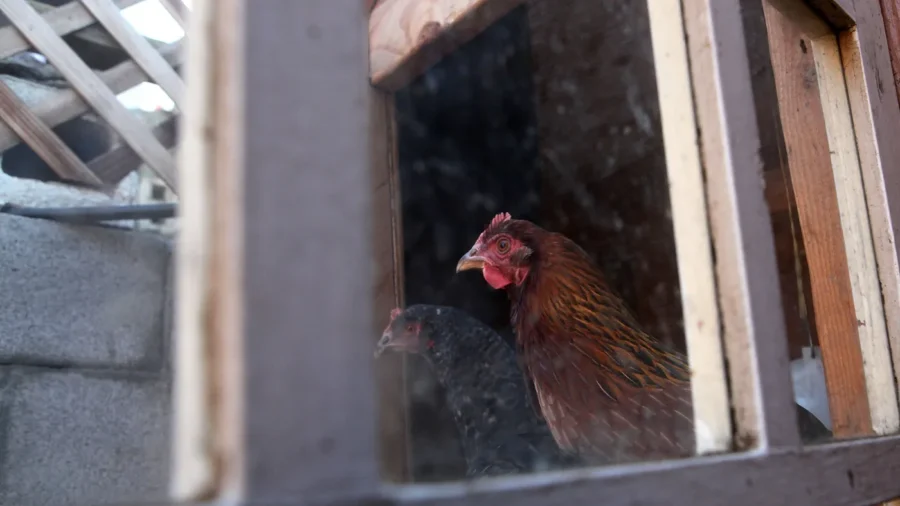
A chicken sits in its house in Heidi Kooy's yard which she calls the "Itty Bitty Farm in the City" in San Francisco on Nov. 16, 2009. (Justin Sullivan/Getty Images)

Avian influenza has been detected in a person in the United States, officials said on April 1.

The person became ill after coming into contact with cows that are likely sick with the influenza, also known as the bird flu, the Texas Department of State Health Services said.

The Centers for Disease Control and Prevention (CDC) said that its testing confirmed the person has highly pathogenic avian influenza A(H5N1).

The first human case domestically was confirmed in Colorado in 2022. That man recovered after experiencing fatigue.


Worldwide, hundreds of cases, as well as hundreds of deaths, have been recorded since 2003, according to the World Health Organization.

“This infection does not change the H5N1 bird flu human health risk assessment for the U.S. general public, which CDC considers to be low,” the CDC said in a statement. “However, people with close or prolonged, unprotected exposures to infected birds or other animals (including livestock), or to environments contaminated by infected birds or other animals, are at greater risk of infection.”

The new patient’s main symptom was conjunctivitis, or eyeball inflammation, according to officials.

The CDC said over the weekend that people who are exposed to confirmed or probable cases should monitor themselves daily for 10 days and report any new respiratory symptoms or heightened temperatures. The incubation period is generally three to five days, but can last as long as 10 days, according to the agency.

The human case comes after cows in five states, including Texas, tested positive for the influenza.


Tests came back positive from New Mexico, Idaho, and Michigan, the Department of Agriculture said on Friday. Cows in Texas and Kansas previously tested positive for the illness, officials announced on March 25.

The cows in Idaho and Michigan came from Texas. The cattle did not appear sick when they were picked up from Texas and moved to Michigan, the Michigan Department of Agriculture and Rural Development said.

Federal and state officials have been investigating the cases, which have been found among mostly older cows exhibiting symptoms such as decreased milk production and a diminished appetite. The CDC and the Food and Drug Administration (FDA) are assisting.

Because the affected cows in Idaho came from another state that has identified influenza cases in cattle, the cases in Idaho may have been transmitted by cows, the Idaho State Department of Agriculture said.

The flu has been detected in birds before, and dead wild birds were found at farms that reported initial cases, the Department of Agriculture said. As of now, birds “are believed to be the source” of the infections, the agency said. But the spread of the illness among Michigan cattle, it said, indicates that transmission between cattle “cannot be ruled out.”

“The coincidence of timing is just too coincidental to say well, the shipment of cattle came up from an affected facility in Texas and then two weeks later we saw it in some other cattle,” Idaho state veterinarian Scott Leibsle told Politico. “That just doesn’t make any sense.”

Farmers are being encouraged to quickly report illnesses among their cattle to veterinarians, particularly if cattle experience symptoms associated with the influenza.

“As more is learned, it is vitally important for producers to work with their veterinarian and isolate sick animals from others, minimize the number of visitors to their farms, prevent contact between their animals and wildlife, and continue to vigilantly monitor the health of their animals,” Nora Wineland, Michigan’s state veterinarian, said in a statement.
Officials Say Milk Still Safe

The growing number of cases are not putting people at risk because milk bought commercially is pasteurized, officials said.

“Dairies are required to send only milk from healthy animals into processing for human consumption; milk from impacted animals is being diverted or destroyed so that it does not enter the human food supply. In addition, pasteurization has continually proven to inactivate bacteria and viruses, like influenza, in milk. Pasteurization is required for any milk entering interstate commerce for human consumption,” the Department of Agriculture said.

The FDA said the cases are a reminder that it can be harmful to ingest raw milk, which is favored by some people who say there are health benefits to drinking unpasteurized milk.

“This outbreak has quickly grabbed the attention of the agriculture industry on a national level. Understanding the details surrounding the transfer of avian virus to livestock is the top priority of animal health professionals and agriculture agencies. While troubling, this outbreak is not currently expected to threaten our nation’s commercial dairy supply,” Texas Agriculture Commissioner Sid Miller said in a statement.

The flu is affecting about 10 percent of each affected herd, there’s been “little to no associated mortality” so far, and the impact on the milk supply is limited, federal officials said.

“Milk loss resulting from symptomatic cattle to date is too limited to have a major impact on supply and there should be no impact on the price of milk or other dairy products. Further, the U.S. typically has a more than sufficient milk supply in the spring months due to seasonally higher production,” the Department of Agriculture said.

EVEN THEIR ALLIES WARNED THEM

Iran warned Russia about possibility of terrorist attack on its soil before massacre at Crocus City Hall — Reuters

Islamic State has Claimed Responsibility for the Terrorist Attack on a Concert in Moscow, Russia. Photo: Screenshot The Gaze MSNBC

Tehran contacted Moscow to tell that a terrorist attack would take place in Russia a few days before people at Crocus City Hall were killed.

That’s according to Reuters, citing three sources.

“Days before the attack in Russia, Tehran shared information with Moscow about a possible big terrorist attack inside Russia that was acquired during interrogations of those arrested in connection with deadly bombings in Iran,” one of the sources told Reuters.

Iran obtained such information from those ISIS-K members arrested and interrogated in January for twin bombings on in the city of Kerman that killed nearly 100 people on January 3, 2024.

This once again proves Ukraine cannot be linked to the terrorist attack, but continues a discussion why Russia ignored intel provided by its ally and decided not to apply appropriate security measures.

Even earlier, the US issued a warning about a terrorist threat in Russia. However, Russia later accused the US, the UK and Ukraine of being behind the attack on the concert hall near Moscow.

Read also: The main beneficiary of the terrorist attack in Crocus was Putin – analysis of a Russian journalist

Pakistani PM promises better security for Chinese workers

April 01, 2024 
By Sarah Zaman
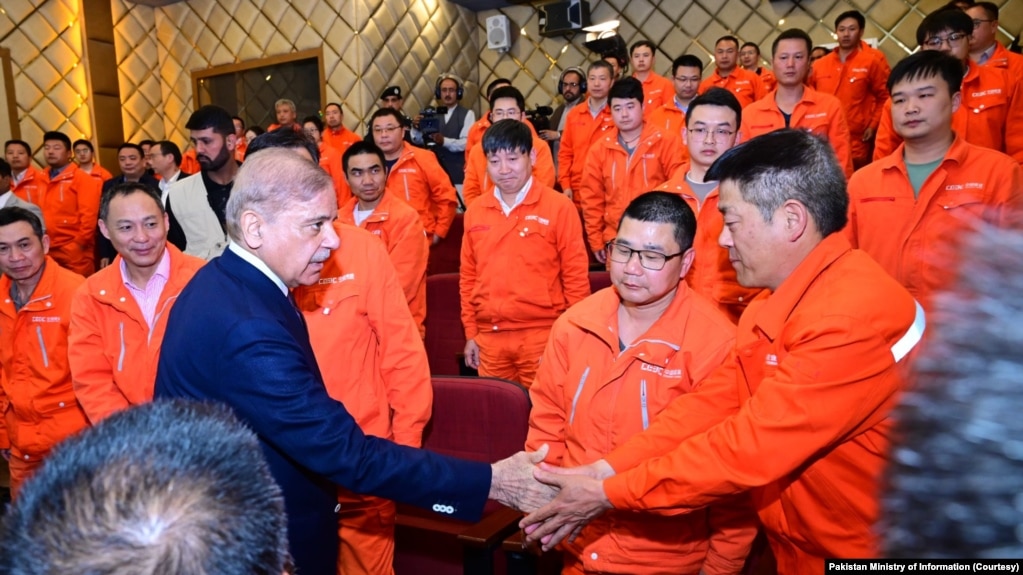
Pakistani Prime Minister Shahbaz Sharif met Chinese workers at Dasy hydropower plant April 1, 2024. Five workers of the plant were killed in a suicide attack on March 26.

ISLAMABAD —

Pakistan’s Prime Minister Shahbaz Sharif has promised the “best possible” security for Chinese nationals working in his country as Islamabad repatriated the remains Monday of five workers from China, killed last week in an attack.

On March 26, five Chinese workers and their Pakistani driver died when a suicide bomber rammed an explosive-laden car into their bus.


SEE ALSO:
Suicide Bombing Kills 5 Chinese Citizens in Pakistan


The workers were traveling to the Chinese-funded Dasu hydropower project in the remote region of Kohistan in Khyber Pakhtunkhwa province when they came under attack in Bisham, about 4-hours north of the capital Islamabad.

In a visit to Dasu, Monday, with Jiang Zaidong, Beijing’s ambassador to Islamabad, Sharif met the Chinese workers at the hydropower project and assured them of “fool-proof” security arrangements.

“I will not rest until we have put in place the best possible security measures for your security. Not only in Dasu, [but] all over Pakistan,” Sharif said, adding that, this was his promise to the people of China, and to the Chinese leadership including President Xi Jinping.

After the attack last Tuesday, Pakistan quickly put together a joint investigation team to probe the incident as well as an inquiry committee to examine security measures for Chinese citizens working in the country.

Sharif assured the Chinese nationals that his government “will not waste any time to act on the recommendations of the inquiry committee.”

Since 2015 a special military unit that includes thousands of personnel as well local police contingents have been providing security for Chinese nationals working on the nearly $60 billion China-Pakistan Economic Corridor. Popularly known as CPEC, the mega-project is part of Beijing's global Belt and Road Initiative.

A team of Chinese investigators is working with Pakistani officials to ascertain the facts surrounding last week's deadly attack.

Speaking at a regular news briefing Monday, Chinese Foreign Ministry spokesperson Wang Wenbin reiterated Beijing’s demand to find and punish the perpetrators of the attack.

“China firmly supports Pakistan in looking into what happened with utmost resolve and effort, bringing the perpetrators and whoever’s behind the attack to justice,” Wang said.

The spokesperson added that Beijing supports Pakistan in “doing everything possible to protect the safety and security of Chinese personnel, projects, and institutions in Pakistan.”

SEE ALSO:
China presses Pakistan to 'eliminate security risks' to its nationals after deadly attack


Referring to those responsible for the attack, Sharif promised workers at Dasu that his government will “make sure that exemplary punishment is given to them.”

Muhammad Imran, the district police officer of Shangla which includes Bisham — the site of last Tuesday's attack — told VOA that security has increased on the Karakoram Highway.

“We are trying our best to give robust security to [the] Chinese as well as to [foreign] tourists who travel this route frequently,” Imran said. However, he refused to say how many additional personnel had been called to provide enhanced security.

Remains repatriated

Earlier on Monday, a Pakistani military plane carrying the bodies of the five Chinese victims of the attack arrived in the city of Wuhan, China. Chaudhry Salik Hussain, minister for overseas Pakistanis and human development, accompanied the remains.

Before the plane departed, Pakistan’s President Asif Zardari, and army chief Gen. Asim Munir, along with Sharif took part in a wreath-laying ceremony at a military air base near the capital.

So far, no group has claimed responsibility for the attack. Banned Pakistani militant group Tehreek-e-Taliban that was behind several recent deadly attacks in Pakistan denied involvement.

In July 2021, 13 people including nine Chinese nationals were killed in a suicide attack on their convoy as they travelled to Dasu – Pakistan’s largest hydroelectric project.

In 2022, an anti-terrorism court in Pakistan handed the death penalty to two men accused of facilitating the deadly attack.


Q&A: Potential TikTok ban is a high-stakes threat for its young user base and beyond

tiktok
Credit: Unsplash/CC0 Public Domain

The popular social media app TikTok is facing an uncertain future in the U.S. amid concerns about national security. In Congress, the House passed a bill recently that would lead to a nationwide ban of the platform if its China-based owner, ByteDance, doesn't sell off its stake.

The bill's prospects are less certain in the Senate, though President Joe Biden said he would sign it—and it could take effect within six months. But what would a TikTok ban mean for its more than 150 million U.S. users, and how would influencers and brands be affected?

Joshua Smith, an assistant professor in Virginia Commonwealth University's Richard T. Robertson School of Media and Culture in the College of Humanities and Sciences, said lawmakers should be asking that question.

TikTok has its own social media ecosystem made up of primarily young (Gen Z) users, Smith said. Thanks in part to its diverse collection of available music and its short-form content model, as well as the visual variety and unique way that users can interact with one another, the platform's grip on the youth base is strong, with Gen Z spending upwards of two hours a day on the app.

"TikTok's algorithm has made the platform stand out," Smith said. "The For You Page (FYP) brings users closer to the stuff that matters to them most and adapts to how their interests are evolving while they use the app. The near-instant virality of videos and videos taken from multiple perspectives makes full-blown, international trends come and go in days—not weeks or months."

VCU News spoke with Smith about TikTok and what a ban could mean for U.S. users.

For context, what is TikTok's role in the wider cultural landscape?

This won't truly be known for years, but between 2019 and now, TikTok has become central to youth-based . There are researchers looking at the phenomena of how much more time was spent on TikTok than on any other social media during lockdowns associated with COVID-19, when the spike was so large and pervasive that some scholars are showing negative health-based outcomes due to a lack of physical activity resulting from the hours of time users spent on the app.

But what were they doing? Many of them were jumping into , connecting with friends, seeking social support and trying to maintain a sense of normalcy while they were stuck inside. TikTok was the starting place of many youth-supported social movements happening during that time. I believe many  sought connection through TikTok and developed an affinity for the app that carried into the present day, though we won't know this empirically for years.

If you look at social advocacy issues and connect them to TikTok, you'll find a huge collection of young individuals who are conversation starters, not just post sharers. Many social advocacy issues, such as Black Lives Matter, gun reform, environmental issues, women's rights, LGBTQ+ rights, health care and immigration, are widely discussed on TikTok because TikTok is the place where Gen Z feel comfortable sharing and discussing their world. Opinions, attitudes and beliefs get formed on TikTok.

It took a lot of refinement to get to where it is now and to become a more trusted platform, but the algorithm isn't perfect. The app has been called out by the media and users for prioritizing FYP content based on users' looks, their race and their choice of words, which has brought needed attention to bias in algorithmic value systems.

In broad terms, how do organizations or businesses use TikTok most effectively for reaching an audience?

Brands don't really belong on TikTok; people do. Social media apps are designed to facilitate peer-to-peer interaction. Brands jump on these platforms to get market share, but brands aren't people—they don't have a face, per se. Thus, they fit diagonally on most platforms, including TikTok.

If brands want to participate in the conversation, they either need real people such as users and influencers to help them, or they have to run ads. It's easy to buy media flights on TikTok, but the content falls short. Most people don't want to see ads. Young people in particular are quick to spot the word "sponsored" and to hit the skip button. This is where the magic of influencers comes in.

Influencers are real and trusted people. Whether they're funny or serious, these are people who get watched, liked and followed, driving engagement. This is why the word "influencer" has become mainstream in marketing and communications in the last 10 years: It works. The best part about these individuals is their vetting and reach. Just like a friend who recommends a good restaurant, you evaluate them on their advice. If they know what they're talking about, you'll keep coming back to learn more.

Who would be most affected by a ban?

Everyone who has a stake in TikTok, be that in time, money or social capital, would be affected by an outright ban. Individual users would be most affected, simply because there are more of them—150 million users in the U.S. alone would lose their network.

For some, this means losing access to social support they can't get anywhere else. Users would lose their archive of stories, which act as memories, timestamps and nostalgic keepsakes, as well as access to comments they've received. Imagine someone going into your photo archive and pressing delete. They'll also lose their bookmarks to other TikToks. This could be inconsequential to some, but to others, these serve as a quick guide, full of life hacks, tips and other forms of useful content you can only find on TikTok.

Influencers would also be significantly affected. Think of them as small-business owners. They generate income on their content, whether that's in direct viewer kickbacks or through big-brand deals. Engagement is the currency that allows them to be compensated. If you lose the app, you lose the engagement. Many influencers are waging their own advocacy campaign with lawmakers right now and encouraging legislatures to think about the small-business owners who might be affected by a ban.

In the scope of for-profit big business, the challenge for brands would be to spot the next place where they could break in and get market share. These decisions are far more analytical than emotional, which sets this group apart. Big business will always find a way.

Have there been any comparable situations in the past?

So many, and some are still missed to this day. RIP Vine, which was the first truly short-form  app shut down in 2017 by parent company Twitter.

There's a list of over 100 platforms, many of which came and went without much notice. Others, like Google+, gained some momentum but never really broke into the top-five lineup. I'd even add Twitter to this list. Not that Twitter was banned, but I think one could argue Elon Musk's "X" of today is loosely based on original Twitter's footprint. The X platform has done a lot of things that made longtime Twitter users fly the coop.

What makes this TikTok ban so interesting is the volume of users and uniqueness of use. Nothing of this size or scale is comparable. Decision-makers and lawmakers are dabbling with something that affects more than 150 million users in the U.S. Most of them are young, soon-to-be voters. My hope is that lawmakers will take a harder look at the economic and social benefits of TikTok and resolve risk-related issues without an outright ban.

Provided by Virginia Commonwealth University Cross-cultural TikTok study offers insights into user behavior and motivations


Is a TikTok Ban Coming?


American lawmakers look increasingly willing to ban the popular app TikTok due to its parent company’s ties to the Chinese Communist Party.


TikTok's CEO Shou Zi Chew testifies during the Senate Judiciary Committee hearing on online child sexual exploitation, at the U.S. Capitol in Washington on January 31, 2024.
Nathan Howard/Reuters

Blog Post by Joshua Kurlantzick
CFR
April 1, 2024

In recent months, there has been a hardening of views toward the wildly popular social media app TikTok on Capitol Hill, among many U.S. state governments, and some officials in the Biden administration. Congressional legislation would potentially shut off U.S. users’ access to TikTok roughly six months from now, disappointing its primarily young viewership.

As CBS News has reported, “Americans could lose access to TikTok within six months if a bill that seeks to force its Beijing-based parent company ByteDance to sell its stake is signed into law. But the popular video-sharing app’s potential demise in the United States depends on whether the legislation can overcome a number of hurdles in Congress and survive legal scrutiny. Lawmakers have long tried to regulate the platform because of its ties to China. They argue it threatens national security because the Chinese government could use TikTok to spy on Americans or weaponize it to covertly influence the U.S. public by amplifying or suppressing certain content … The House overwhelmingly passed a measure on March 13 that gives ByteDance a choice: sell TikTok within six months or lose access to app stores and web-hosting services in the United States.”

Other developed states have similar fears. Germany’s leaders have expressed deep concerns about TikTok and suggested it could be banned; other European leaders have shared these concerns. U.S. state governments have increasingly expressed fears, with many banning TikTok from government-issued mobile devices and Montana trying to completely ban TikTok from the state—a ban blocked by a federal judge arguing that it violated the First Amendment rights of users. (A federal ban would also probably be challenged in court.)

The fear, expressed by many policymakers, is that TikTok’s parent company ByteDance, which has close links to the Chinese Communist Party, could be used as a tool to gather information on its users (more so even than that collected by U.S.-based social media companies) and could also censor commentary critical of Beijing, or be used as a tool to spread disinformation.

How greatly should they be concerned? As I noted in my most recent book, Beijing’s Global Media Offensive, which focused on China’s information and influence efforts, “TikTok, for instance, which harvests vast amounts of users’ data, claims that it has not given any users’ information to Beijing, but the U.S. government is investigating whether the company has exfiltrated a range of data back to China. (Another app owned by ByteDance, Douyin, essentially the Chinese version of TikTok, clearly employs censorship and user monitoring.)

There are already examples of TikTok seeming to remove comments from the app, such as comments made outside China that were critical of Beijing. And with Beijing becoming more sophisticated in its disinformation tactics in recent years—they were very clumsy in the past—there is a genuine concern that TikTok, along with Chinese disinformation on other platforms, now more sophisticated, could be used to affect voters in Australia, Canada, Europe, the United States, and other countries. More likely than not, it appears now, that if Beijing will not sell the U.S. subsidiary of TikTok to a U.S. firm—something it has firmly rejected, as it sees TikTok as a Chinese crown jewel—the giant social media app might indeed wind up being banned in the United States.


A Brazilian rising political star's killing was a mystery — until an explosive federal report

Explosive revelations in a 500-page Federal Police report allege ties between a federal police chief and organized crime in the killing of Councilwoman Marielle Franco.

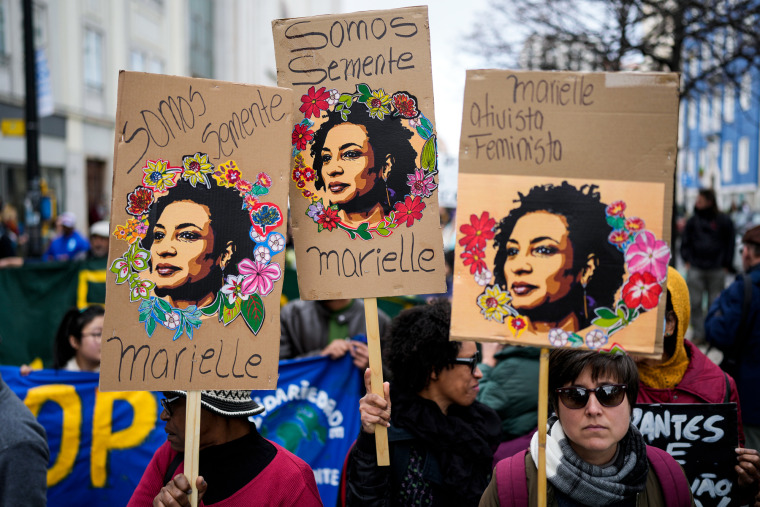
People carry posters with images of slain Brazilian councilwoman Marielle Franco during a demonstration against racism, in Lisbon, Portugal, on Feb. 24.
Armando Franca / AP file

April 1, 2024, 
Source: The Associated Press

RIO DE JANEIRO — Two days after Rio de Janeiro city councilwoman Marielle Franco’s 2018 assassination, her widow sat down with the chief of the state’s civil police, Rivaldo Barbosa, who pledged to do everything in his power to hold the guilty parties to account.

In fact, the man Brazilian media once exalted as “Rio’s Sherlock” had the exact opposite intent, according to newly revealed allegations. Federal Police arrested Barbosa on March 24 — over six years later — for allegedly helping orchestrate Franco’s killing and taking money to obstruct the very investigation he would oversee.


“Hours after my wife’s murder, I was in front of a man who knew exactly what had happened and, more than that, who was part of ordering it,” Mônica Benício told TV Brasil through tears after his arrest.

The explosive revelations in the nearly 500-page Federal Police report offer an unprecedented glimpse into how organized crime has undermined Rio’s institutions and reveal the extent of corruption in a city where militias allegedly pay police to look away. The death of Franco, a rising political star who resisted militias’ expansion and fought for the poor, has driven home the consequences of allowing organized crime to run roughshod over Rio’s sprawling landscape.

“The Marielle case is quite emblematic,” said Jacqueline Muniz, a professor of public security at the Federal Fluminense University and ex-director of Rio’s public security secretariat that oversees police. “In Rio, we govern with crime — not against it.”

Barbosa’s arrest came only after federal authorities started investigating once leftist President Luiz Inácio Lula da Silva took office in 2023. Federal Police made a plea deal with former police officer Ronnie Lessa, who told them that two politician brothers hired him to kill Franco and informed him Barbosa had signed off beforehand. Police say they ordered her dead because she was an obstacle to militias’ interests.

Barbosa’s attorneys told The Associated Press that he denies any wrongdoing or having ever met the accused politicians, and said the allegations are conjecture based on a criminal’s words.

Upon his promotion to police chief, Barbosa delivered a defiant speech to a packed auditorium, demanding the “fight against one of the greatest evils that destroy the state: corruption!”

The very next day, Franco was killed.

Then-Rio de Janeiro Councilwoman Marielle Franco in Cinelandia square in Brazil in 2018
.Ellis Rua / AP file

The masterminds anticipated the assassination would be a blip — a bit of noise feeding a news cycle and just another death in a city where death is commonplace. But they underestimated how many people had placed their hopes in Franco, who hailed from one of the working-class communities known as favelas. The 38-year-old stood out as a Black, bisexual women in politics and her abrupt end shook Brazil with mass protests that echoed around the world.

Weeks later, with no signs of outrage abating, Lessa was getting nervous. He met the politicians to vent. They assured him Barbosa had been paid to “turn the cannon in the other direction.”

Federal Police say Barbosa tapped an officer to lead the capital’s homicide division whom he trusted to slow-walk and obstruct the investigation, while another accomplice induced a witness to give false testimony implicating a suspect they knew to be innocent.

As time passed, “Who killed Marielle?” became the mantra of those clamoring for justice.

In 2019, the Federal Police told Rio prosecutors they should investigate Barbosa, sharing a cellphone recording of a militia member one of their operations targeted, local media reported at the time. In that conversation, reproduced in the new report, the militia member said Barbosa had received 400,000 reais to not clear Franco’s case.

“It stretched credulity that he would be one of the chief architects and directly involved in preventing the investigation into this extraordinarily well-publicized murder,” recalled Robert Muggah, co-founder of Igarapé Institute, a security-focused think tank. “Over the course of the investigation, we became more skeptical, not necessarily of him, but of the civil police’s level of commitment.”

The police report alleges Barbosa laundered bribe money through front companies ostensibly owned by his wife, whose personal earnings skyrocketed the year he assumed control of the homicide division. Financial records show abundant profits for the enterprises and massive cash withdrawals.

Luisa Ferreira, a criminal law professor at the Getulio Vargas Foundation, said plea bargain testimony should be viewed with a grain of salt but noted the financial data corroborates Lessa’s account.

“We don’t need full proof at this point (for Barbosa’s arrest); we need some corroboration of what was said by the cooperating defendant, and the report does this. Starting now, the bar for evidence will be higher,” Ferreira said.

Barbosa’s lawyers, who also represent his wife, said she denies participating in any illicit activities and questions about her income will be clarified.

The arrested politicians allegedly started planning Franco’s assassination after she voted against a bill to bypass authorities and bestow legal title to land and buildings in militia territory
.
Then-head of the Rio Civil Police, Rivaldo Barbosa, is escorted by a federal police officer upon arrival at the Federal Police headquarters in Rio de Janeiro on March 24.
Daniel Ramalho / AFP - Getty Images file

The militias, which formed in the late 1980s to stop drug traffickers’ expansion, moved into land-grabbing and real estate more recently and control over half the territory in Rio’s metro region, according to a 2022 study from the Federal Fluminense University and the Fogo Cruzado Institute.

“This is happening because of the public security choices Rio has made over the last 30 to 40 years,” said Rafael Soares, author of “Milicianos,” a book about Rio’s militias. No Rio administration has addressed corruption, instead appeasing public opinion through bloody confrontations, particularly in poor neighborhoods, that infamously produce collateral damage, Soares said.

Robson Rodrigues, who once led Rio’s military police in the Mare favela where Marielle grew up, said police overhaul must look beyond street-level officers to the corps’ entire hierarchy. He noted that some politicians fear civil police, who are rumored to keep blackmail dossiers to discourage pushing for deep reform.

“Everybody is scared. There is reluctance, because of the power that the police force has, especially civil police. It’s not just about political will; it’s about having the courage to do it,” said Rodrigues, who researches public security at the State University of Rio de Janeiro.

The police report leading to the arrests provided detailed accounts of corruption. One militia member testified in a separate investigation that the homicide division gets a monthly allowance of about 70,000 reais ($14,000). Specific cover-ups require more; in one case, the unit received 300,000 reais, he said, claiming Barbosa was among those benefiting.

Homicide detective Brenno Carnevale testified in a 2019 case that seized material went missing and lead investigators were suddenly swapped, especially in cases related to militias. A victim’s daughter testified that Carnevale couldn’t conceal his exasperation when she came seeking information: All the records had vanished.

These machinations are “the reason why major homicides were never solved,” the police’s report said. “This whole dynamic would not be possible if the main body responsible for repressing the actions of these groups was not complicit in the scheme.”

Rio authorities solved 23% of homicides in 2021, half the rate of neighboring Sao Paulo state and among the country’s lowest, according to a 2023 report from nonprofit Instituto Sou da Paz.

The brother of Franco’s political mentor was murdered in 2006, and 14 years elapsed before Rio’s police indicted three former officers associated with militias. Prosecutors didn’t press charges. In November, a decorated officer investigating corruption within her ranks was gunned down by camouflaged men. An officer who previously worked with her in the internal affairs division was arrested; local media reported he was on a militia’s payroll.

And newspaper O Globo reported that lawyers are already pushing to reopen at least six cases from when Barbosa was a homicide detective, head of the unit or police chief.

Franco’s case has revealed how, at present, only societal outrage and federal involvement yield advances, security experts told the AP. The alleged masterminds behind Franco’s killing were arrested, but that doesn’t mean justice will be done. For now, it remains one more killing in a city where life is cheap and impunity reigns.