Sunday, January 05, 2025

Number of cyclones steady, but storms more intense due to climate change

While the number of tropical cyclones has remained steady over the past four decades, their intensity has significantly increased, according to international databases that confirm climatologists' projections.

 04/01/2025 - RFI

A satellite image of December's Cyclone Chido approaching Mayotte. 
© AFP

Since 1980, tropical cyclones – also commonly known as hurricanes and typhoons – have been occurring at an average of 47 per year, according to global data coordinated by the United States National Oceanic and Atmospheric Administration (NOAA) and recognised by the World Meteorological Organization (WMO).

But while the frequency of these storms has remained relatively steady, new findings show that their intensity is increasing.

Data comparing the period from 1981 to 2010 with the last decade reveals a rise in the average maximum wind speed of cyclones, from 182kph to 192kph – a 5 percent increase.

Previously, around one in 10 tropical cyclones surpassed 250kph, but that figure has increased to 1.4 in 10 over the past decade – representing a 40 percent rise in the number of category five cyclones on the Saffir-Simpson scale.


Climate change

These figures support the conclusions of the United Nations' Intergovernmental Panel on Climate Change (IPCC), which has warned that climate change is likely to increase the frequency of the most destructive cyclones, particularly categories four and five.

"If one can assume climate change is responsible for these trends, make no mistake, the humanitarian catastrophes generated by cyclones are largely due to poverty, vulnerability and a lack of protection for the affected populations," Robert Vautard, climatologist and IPCC official, told French news agency AFP.


In 2024, up to 15 December, there were 42 tropical cyclones, including 19 that made landfall.

The most powerful of the year was Hurricane Milton, which hit the US coast on 10 October, with wind speeds reaching 278kph.

The West Pacific was the hardest-hit region, enduring 15 typhoons – six in the Philippines alone.

On 16 December, Cyclone Chido hit the French territory of Mayotte in the Indian Ocean.

The latest official death toll – given by authorities on 24 December – was 39, with 124 people seriously injured and more than 4,000 slightly injured.


(with AFP)
‘The most powerful weapon in the world is a camera,’ says anti-whaling activist Paul Watson

Interview

Anti-whaling activist Paul Watson arrived in France on Friday after spending five months in detention in Greenland based on an Interpol red notice requested by Japan. He spoke to FRANCE 24 about his time in detention and his plans for the future.


22/12/2024 - 
By: FRANCE 24

18:48

Anti-whaling activist Paul Watson © FRANCE 24


Watson, 74, a Canadian-American citizen, was released on Tuesday after Denmark refused an extradition request from Japan.

Japan is one of three countries to conduct commercial whaling along with Iceland and Norway.

Watson said he and his group were likely targeted because their TV series, Whale Wars, "reached millions of people" and was exposing illegal whaling operations in the Southern Ocean whale sanctuary.

"So we embarrassed Japan, that's what this is all about."

Exposing illegal activities is still the way forward, Watson said. “The most powerful weapon in the world is a camera.”

Watson noted that Denmark, which rules the autonomous territory of Greenland, was not obligated to arrest him based on the Interpol red notice issued at the request of Japan. But the country has interests that dovetail with Japan's, notably the dolphin and pilot whale kills in the Faroe Islands, which he says are illegal under EU law.

Most residents of the islands hold Danish passports, he said, and "shouldn't be allowed to enjoy the benefits of EU membership if they are not going to abide by EU regulations and laws".

'Aggressive non-violence'

Speaking in Paris earlier in the day, Watson promised to continue his battle.

"One way or the other we are going to end whaling worldwide," Watson told reporters in central Paris, where several hundred supporters gathered to greet him.

"We need to learn to live on this planet in harmony with all those other species that share this world with us."

French President Emmanuel Macron had pressed Danish authorities not to extradite Watson, who has applied for French nationality and has been living in France since 2023.

Watson's Sea Shepherd association is known for using direct-action tactics in confrontations with Japanese ships as they slaughtered hundreds of whales every year, allegedly for "scientific purposes". Watson calls such tactics "aggressive non-violence" – direct intervention aimed at halting illegal activities that stops short of hurting anyone.

"If Japan intends to return to the Southern Ocean we will be there," he said.

Sea Shepherd activists say Japanese whaling vessels have used "military-grade" acoustic weapons and water cannon to fend off their inflatable boats.

Watson is the founder of the Sea Shepherd Conservation Society and the Captain Paul Watson Foundation.

(FRANCE 24 with AFP)
How exiled photographer Ernest Cole captured apartheid’s human toll

Ernest Cole's haunting photographs of apartheid shocked the world and yet his own life ended in obscurity. Now, Oscar-nominated filmmaker Raoul Peck has brought Cole's story to the screen in Ernest Cole: Lost and Found. Speaking to RFI, Peck reflects on Cole's groundbreaking work and the exile that tore him apart.


RFI
Issued on: 05/01/2025

Photograph of segregational signs at a South-African train station taken by Ernest Cole in the 1960s. © Wikimedia/CC

By: Isabelle Martinetti with RFI

"I remember the first photos. it was a long time ago in Berlin when I was studying," Haitian film director Raoul Peck told RFI.

"The anti-apartheid struggle was beginning, and Ernest Cole's photos were circulating a lot because it was the first time we discovered the horrors of apartheid at a human level, from the perspective of men and women."

Born in 1940, Cole fled South Africa in 1966 to escape the apartheid regime. He lived in exile in the United States, where he captured striking images of life in New York City and the American south.

His seminal work, House of Bondage – banned in South Africa – exposed the brutal realities of apartheid and earned Cole international acclaim at just 27 years old.

"He was seen, perceived as a black photographer, whereas he wanted to be a photographer like one of his idols, Cartier-Bresson," Peck explains.

Filmmaker Raoul Peck presents his latest film, Ernest Cole, Photographer, about the first South African photographer to expose the horrors of apartheid in South Africa. 
Joel C Ryan/Invision/AP - Joel C Ryan

"Ernest Cole's ambition was also to photograph, as he says, 'the human condition'."

Peck's film also tells the story of the wandering of Cole after his exile in 1966.

"He is an angry man, but he is also a man, like many men and women I’ve known in exile, who are disturbed, torn, and broken by being away from their country, who often suffer. So, he is also isolated in this society," Peck says.

Cole’s later years were marked by hardship and obscurity, but his story took a surprising turn in 2017 when 60,000 of his negatives and photographs were discovered in a Stockholm bank.

The collection, which includes thousands of images shot in the US, had long been thought lost. The mystery of who deposited the photos remains unsolved.

Ernest Cole: Lost and Found was released in France on 25 December, 2024.


Guadeloupe to fell 'exotic' coconut trees to stem coastal erosion

France's Caribbean archipelago of Guadeloupe, famed for its tropical beaches, plans to remove some of its exotic coconut palms to stem coastal erosion and eradicate a tree disease.

Issued on: 04/01/2025 - 

Coconut trees on Sainte-Anne beach in Guadeloupe. © Wikimedia/CC

By: Isabelle Martinetti with RFI


At the picture-perfect beach of La Perle, in the north of the French overseas region of Guadeloupe, authorities have a two-year plan to remove some of the palm trees that fringe its turquoise waters – and replace them with native species with roots that will better stem coastal erosion.

"The coconut palm is an exotic species," explained Julien Lorthios, from the French Office of Biodiversity (OFB).

It does not have the same capacity as some endemic species to put down deep roots, as even tall palms have a tiny root system, spreading less than one square metre from the base of the trunk. This means they cannot fix sand in place to stop it being washing away by powerful waves, according to Guadeloupe's department of the environment.

Lorthios recommends, along with other experts, replanting more endemic species in order to slow down coastal erosion – a natural phenomenon which is accelerating with climate change.

Coral threatened by chemicals, including several in sunscreen, French study confirms


Palm disease


Native species may also be more resilient to a disease called lethal yellowing, which is ravaging the exotic coconut palm.

"The disease is spread by a tiny insect that looks like a cicada," explains Fabian Pilet of the French Agricultural Research Centre for International Development (CIRAD).

Lethal yellowing is highly contagious and requires the immediate removal of the palm tree to prevent contamination. "It's curtains for the palm the minute the first symptoms appear," added Pilet.

French overseas territory Guadeloupe declares dengue epidemic

Coconut palms in other countries have also been decimated by the disease, including in the Caribbean island of Jamaica in the 1980s.

So far, nine cases have been identified in Guadeloupe, in various parts of the archipelago and on several types of palm trees.

A tree infected with lethal yellowing, a phytoplasma disease affecting palms. © Wikimedia/CC
Role in tourism

"We don't know how to cure or control the disease, but we can mitigate its effects by replanting, for every tree that is cut down," said Pilet.

The effects of the disease on Guadeloupe's coconut palms has not yet raised major concerns among French authorities. The coconut industry in the region remains entirely informal, although it plays a role in attracting tourism, with vendors selling fresh coconut water by the roadside.
A decade after genocide, Iraq's Yazidis make bittersweet return to Sinjar

Issued on: 03/01/2025 - 
VIDEO 12:51 min
By: Marie-Charlotte ROUPIE
From the show


Ten years after the genocide perpetrated against the Yazidis by the Islamic State group in Iraq's Sinjar region, tens of thousands of displaced survivors are returning home. But their homecoming is bittersweet, as the atrocities have left indelible wounds. FRANCE 24's Marie-Charlotte Roupie reports.


On the morning of August 3, 2014, the Islamic State group launched a highly coordinated attack on the Yazidi community in the northwestern Iraqi region of Sinjar. Faced with this offensive, the population had few choices: convert, flee or die.

In the space of a few weeks, more than 5,000 people were killed, while the captured women and children were enslaved. Among them was Rayhan, now 24, who has finally found her brother again and settled with him in Sinjar. But this young Yazidi, like many survivors, is hoping to leave Iraq as soon as possible. In many villages, returning to live in this war-torn region of northwestern Iraq still means living among ruined houses, lunar landscapes and the sad memory of those who are gone.

A decade after the genocide, some 2,600 people are still missing and many mass graves have still not been excavated. Unanswered questions weigh heavily on those who have chosen to return home.

An estimated 350,000 Yazidis fled during the genocide. Since January 2024, between 130,000 and 150,000 of them have returned to Sinjar, amid pressure from Baghdad to close the internally displaced persons (IDP) camps in Iraqi Kurdistan.

Although life is gradually returning to Sinjar, the fear of a new genocide still looms large and the wounds of 2014 are far from healed.

Watch more

FLOATING BOMB SHIP

Ivory Coast's Abidjan on edge as ship loaded with volatile cargo nears port

A vessel loaded with 20,000 tons of ammonium nitrate – the same chemical that left large parts of Beirut in ruins in an explosion in 2020 – is nearing the port of Abidjan. Campaigners have expressed concern about letting the ship unload its allegedly damaged cargo, but authorities say they have put measures in place to ensure the population’s safety.


Issued on: 05/01/2025
By: NEWS WIRES
A general view of the port of Abidjan on May 8, 2020. © Issouf Sanogo, AFP file photo


Officials at the Ivorian port of Abidjan said Saturday they were taking precautions ahead of the arrival of a ship carrying 20,000 tons of potentially explosive ammonium nitrate.

Campaigners have expressed concern about the condition of the cargo, which is arriving Monday on the Barbados-flagged Zimrida.

“Following allegations of damage to the cargo transported and as a precaution to protect the population and property”, the ship would remain in the outer harbour, said the port authority.

On Monday morning port and customs officials will meet with owners of both the cargo and the vessel to examine the situation in depth, the statement added.

The port is due to unload 3,000 tonnes of the controversial cargo.

Although normally used as an agricultural fertiliser, ammonium nitrate can also be used to make explosives.

It was an explosion of ammonium nitrate in Beirut that killed more than 220 people, injured at least 6,500 and devastated swathes of the Lebanese capital in 2020.
A long journey

It is not the first time this particular cargo has raised concerns.

Last August the Ruby, a Handymax bulk carrier, left Russia carrying the 20,000 tonnes of fertiliser.

Having left the port of Kandalaksha on August 22, it ran into a storm in the Barents Sea and limped, damaged, into the Norwegian port of Tromso for inspection.

But it was ordered to leave and proceed with the aid of a tug to another port elsewhere for repairs.

After being turned away by Lithuania – which wanted it to unload its volatile cargo before docking – it anchored off southeast England for several weeks.

In early December, French ecologist group Robin des Bois (Robin Hood) and several British media reports said the cargo had been transferred to the Zimrida at the English port of Yarmouth.

Abidjan’s port authority said in its statement Saturday that it wanted to “reassure the Ivorian population that all merchandise entering or leaving the Ivorian ports is subject to strict checks”.

Many here still remember the August 2006 Probo Koala disaster.

Toxic residues on board the Panamanian-registered freighter arrived in Abidjan for treatment after the Dutch port of Amsterdam had refused to receive them.

An Ivorian sub-contractor dumped the waste on the city’s garbage sites and in at least 18 other locations.

Ivorian judges say that more than 500 cubic metres (18,000 cubic feet) of spent caustic soda, oil residues and water killed 17 people and poisoned thousands more.

(AFP)
MAKE A MASS CITIZEN ARREST

South Korean protesters face off in snowstorm over fate of impeached president

Thousands of South Koreans on Sunday braved heavy snow to rally for or against the country’s impeached leader Yoon Suk Yeol, who is resisting arrest over his botched attempt to declare martial law. A warrant for his detenton expires on Monday.


 05/01/2025 - 
By: NEWS WIRES
Supporters of impeached South Korea president Yoon Suk Yeol took part in a rally near his residence as snow fell. © Philip Fong, AFP


Thousands of South Koreans braved a snowstorm Sunday to rally in support or opposition of President Yoon Suk Yeol, suspended over a failed martial law bid and resisting arrest a day before the warrant expires.

Yoon plunged the country into political chaos last month with the bungled martial law declaration and has since holed up in the presidential residence, surrounded by hundreds of loyal security officers.

An attempt to arrest him by investigators Friday failed when a tense six-hour standoff with his presidential security service ended over security fears, with his supporters also camped outside.

Read moreImpeached South Korean President Yoon is resisting arrest. What happens now?


Thousands descended on his residence again Sunday despite bitter snow conditions blanketing the capital -- with one camp demanding Yoon's arrest while the other called for his impeachment to be declared invalid.

"Snow is nothing for me. They can bring all the snow and we'll still be here," said anti-Yoon protester Lee Jin-ah, 28, who had previously worked at a coffee shop.

"I quit my job to come to protect our country and democracy," she said, adding that she had camped outside the residence overnight.
South Korea: a month of turmoil. © John Saeki, AFP

Park Young-chul, in his 70s, said the snowstorm wouldn't deter him from showing up to back Yoon before the warrant expires at midnight on Monday (1500 GMT).

"I went through war and minus 20 degrees in the snow to fight the commies. This snow is nothing. Our war is happening again," he told AFP.

The rallies in the cold come as Yoon this week said he was watching protests in support of his rule on a YouTube livestream, pledging to "fight" those trying to question his short-lived power grab.

-Prosecutors report ministers' pleas -

Yoon faces criminal charges of insurrection, one of a few crimes not subject to presidential immunity, meaning he could be sentenced to prison or, at worst, the death penalty.

If the warrant is executed, Yoon would become the first sitting South Korean president to be arrested.

A prosecutors' report for his former defence minister seen by AFP Sunday showed Yoon ignored the objections of key cabinet ministers before his failed martial law bid.
A placard of impeached South Korea President Yoon Suk Yeol with horns is seen on an installation during a rally in Seoul. © Philip Fong, AFP

It said the country's then prime minister, foreign minister and finance minister all expressed reservations about the potential economic and diplomatic fallout in a cabinet meeting on the night of the decision.

The country's opposition Democratic Party called Saturday for the dissolution of the security service protecting Yoon.

Their announcement followed scenes of high drama on Friday, when hundreds of Yoon's guards and military troops shielded him from investigators who eventually called off the arrest attempt citing safety concerns.

The security service's top officials have refused police requests for questioning, citing the "serious nature" of protecting Yoon.

Blinken wades in

A staff member works at the Gwanghwamun gate during snowfall in Seoul. © Philip Fong. AFP

Late Sunday US Secretary of State Antony Blinken arrives in Seoul, likely to wade into the crisis of a key security ally in talks Monday with his counterpart Cho Tae-yul.

Yoon's lawyers decried the warrant underpinning Friday's arrest attempt as "unlawful and invalid", and filed an objection to the Seoul court that issued it.

But the court told AFP Sunday the objection case was dismissed, saying the reasons could not be disclosed.

Yoon's lawyer said they would file another complaint against the head of the Corruption Investigation Office (CIO) that tried to arrest Yoon.

The president's legal team "intend to hold those who committed illegal acts strictly accountable under the law," Yoon Kab-keun said in a statement.

The Constitutional Court slated January 14 for the start of Yoon's impeachment trial, which if he does not attend would continue in his absence.

However the suspended leader plans to appear at "an appropriate session" of the trial's five hearings, lawyer Yoon said Sunday.

People hold placards reading 'Arrest Yoon Suk Yeol immediately' during a rally held to protest against the impeached South Korean president. © Philip Fong, AFP

South Korea's Constitutional Court has up to 180 days to determine whether to dismiss Yoon as president or restore his powers.

Until then, while suspended, Yoon holds the title of president.

Former presidents Roh Moo-hyun and Park Geun-hye never appeared for their impeachment trials.

(AFP) 


COLD WAR 2.0 SPURIOUS CLAIMS

China rejects accusations it targeted US Treasury in cyberattack


China on Tuesday rejected US accusations that it was behind a cyberattack targeting the Treasury, calling the claims “groundless”, lacking evidence. The breach occurred earlier in December and resulted in remote access to some of the department’s workstations.


31/12/2024 - 
By: NEWS WIRES
Video by: FRANCE 24

01:44
The US Treasury Department said on December 30, 2024, that a China state-sponsored actor was behind a cyber breach resulting in access to some of its workstations.
 © Saul Loeb, AFP/ File picture

Beijing on Tuesday hit back at accusations that a China state-sponsored actor was behind a cyber breach at the US Treasury Department, calling the claims “groundless”.

The Treasury said the attack resulted in access to some of its workstations, according to a letter to Congress seen by AFP.

According to the Treasury, the incident happened earlier this month, when the actor compromised a third-party cybersecurity service provider and was able to remotely access the workstations and some unclassified documents.

China denied the claims, with the foreign ministry saying Beijing “has always opposed all forms of hacker attacks, and we are even more opposed to the spread of false information against China for political purposes”.

“We have stated our position many times regarding such groundless accusations that lack evidence,” foreign ministry spokeswoman Mao Ning said.

The Treasury contacted the US Cybersecurity and Infrastructure Security Agency after it was alerted of the situation by its provider BeyondTrust, and has been working with law enforcement to ascertain the impact.

“The compromised BeyondTrust service has been taken offline and there is no evidence indicating the threat actor has continued access to Treasury systems or information,” the department’s spokesperson said.

In its letter to the leadership of the Senate Banking Committee, the Treasury said: “Based on available indicators, the incident has been attributed to a China state-sponsored Advanced Persistent Threat (APT) actor.”

An APT refers to a cyberattack where an intruder establishes and maintains unauthorised access to a target, remaining undetected for a sustained period of time.

The department did not provide further details on what was affected by the breach, but said more information would be released in a supplemental report at a later date.

“Treasury takes very seriously all threats against our systems, and the data it holds,” the spokesperson added.

Alarm over hacks


Several countries, notably the United States, have voiced alarm in recent years at what they say is Chinese-government-backed hacking activity targeting their governments, militaries and businesses.

Beijing rejects the allegations, and has previously said that it opposes and cracks down on all forms of cyberattacks.

In September, the US Justice Department said it had neutralised a cyber-attack network that affected 200,000 devices worldwide, alleging it was run by hackers backed by the Chinese government.

In February, US authorities also said they had dismantled a network of hackers known as “Volt Typhoon”.

The group was said to be targeting key public sector infrastructure like water treatment plants and transportation systems at the behest of China.

In 2023, tech giant Microsoft said Chinese-based hackers seeking intelligence information breached the email accounts of a number of US government agencies.

The group, Storm-0558, had breached email accounts at approximately 25 organisations and government agencies.

Accounts belonging to the State Department and Commerce Secretary Gina Raimondo were among those hacked in that breach.

(AFP)


Pro-Russian hackers target websites of several French cities
Europe

The websites of several French cities were taken down on Tuesday after being targeted by pro-Russian hackers. The NoName collective claimed the attacks, which they described as retaliation for French support for Ukraine.

 31/12/2024 
FRANCE24
By: NEWS WIRES
File photo: A man holds a laptop computer as cyber code is projected on him in this illustration picture taken on May 13, 2017. © Kacper Pempel, Reuters

The internet sites of several French cities and at least one department were inaccessible Tuesday after a group of hackers claimed attacks they described as retaliation for French support for Ukraine.

At 1600 GMT, the sites of the cities of Marseille and Tarbes were down, as was the site of the department of Haute-Garonne.

The attacks were claimed on X by a hackers group calling themselves NoName, a collective already known for other attacks and for defending Russian points of view.

On their X account, the hackers claimed to have also attacked the sites of cities such as Nantes, Bordeaux, Poitiers, Pau, Nimes, Nice, Angers, Le Havre, and Montpellier, as well as the department of Les Landes, French Polynesia and New Caledonia, but there were all still operating Tuesday.

The mayor of Nice, Christian Estrosi, confirmed on X that the city's website had been targeted.

Marseille's town hall told AFP that the servers that host the city's websites had been subject to attacks that required them to enact "protection mechanisms that had the consequence of making them inaccessible".

The cities of Pau and Angers, as well as the Landes department, said they had not noticed any incidents.

DDoS attacks, or "distributed denial of service", are frequently used by NoName in a technique that involves saturating sites with a huge number of automatic requests that render them inoperable.

The attacks generally do not involve stealing data.

Benoit Grunemwald, a cybersecurity expert at ESET, said the goal appears to be propaganda by "creating an impression of a climate of digital insecurity".

(AFP)
'Shame': Sweden to Start New Year With Controversial Wolf Hunt


"The Swedish government since 2010 has been blatantly disregarding the wolf's special protection status, allowing a yearly licensed quota hunt and thereby breaking E.U. law," one campaigner said.


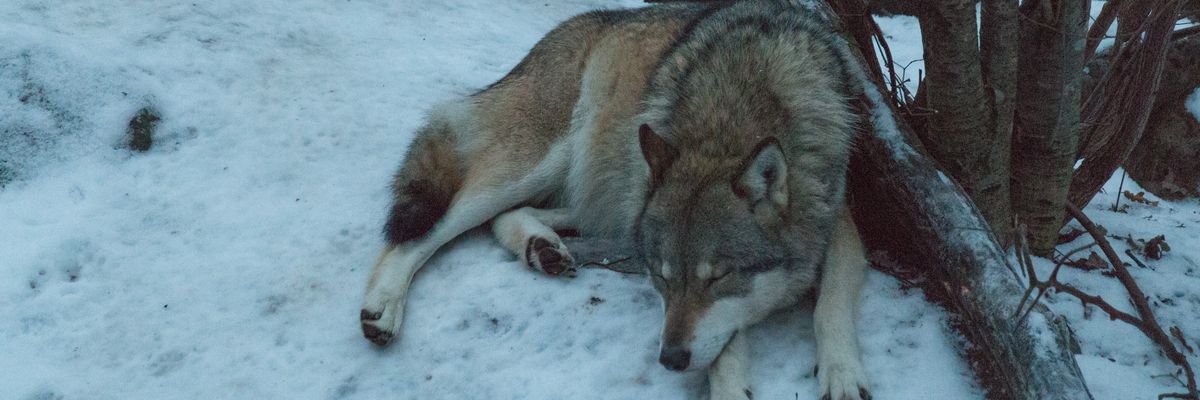
A wolf in Sweden sleeps on the ground in winter time.
(Photo: Daria Trefilova via iStock/Getty Images Plus)

Olivia Rosane
Jan 01, 2025
COMMON DREAMS

Sweden is set to start a controversial wolf hunt on Thursday that could see its declining wolf population fall by another 8%.

The country has authorized the killing of 30 of the nation's 375 wolves—or five entire families—in a move that conservationists say is illegal under European Union law. Ultimately, the Swedish government wants to nearly halve the minimum number of wolves for "favorable conservation status" from 300 to 170.

'Imagine... the outcry if this were Sri Lanka killing leopards, or Botswana lions, both much trickier animals to live with," U.K. environmentalist Ben Goldsmith wrote on social media. "Shame, shame on Sweden."

"If Sweden, one of the richest countries in the world with a population of 10.5 million people, can't accept a population of 375 wolves, what hope is there for the planet's biodiversity?"

Under the Council of Europe's Convention on the Conservation of European Wildlife and Natural Habitats, or Bern Convention, countries must preserve the populations of protected species so that they remain above a sustainable level. However, Magnus Orrebrant, the chair of the Swedish Carnivore Association, toldThe Guardian that E.U. law has not meant much for Sweden's wolves.

"The Swedish government since 2010 has been blatantly disregarding the wolf's special protection status, allowing a yearly licensed quota hunt and thereby breaking E.U. law," Orrebrant said. "We filed a formal complaint to the E.U. commission, leading to an infringement procedure against Sweden, as yet to no avail."

Excessive wolf hunting has been a problem in Sweden for decades, and was part of the reason that the country had no breeding population at all between 1966 and 1983. In addition, increased hunting slashed the population by nearly 20% between 2022 and 2023.

Beyond licensed hunts, Sweden's wolf population also faces pressure from poachers, according to conservation group Revolution Rov, with DNA evidence suggesting that up to 80 wolves are killed illegally each year.

"In many license hunting decisions on wolves in recent years, it has been argued that if legal hunting is allowed, illegal hunting will disappear, but that has not happened at all... Instead, even more wolves have had to die," the group wrote in a petition against 2024's hunt.

The group also wrote that Sweden's wolf population is genetically vulnerable, with many mating pairs being closely related. For the population to remain healthy, it needs an influx of new genes from wolves migrating from Finland or Russia, but these wolves are often killed before they can pair off.

Wildlife advocates outside of Sweden also criticized the 2025 hunt.

"I believe that one of the hallmarks of human progress is learning to coexist with other species that our ancestors once feared," wrote Wildlife Trusts CEO Craig Bennett on social media. "And sadly, it often feels like we still live in the Dark Ages."

Ecologist and conservationist Alan Watson Featherstone wrote: "I really do despair about humanity—we are such a selfish species. If Sweden, one of the richest countries in the world with a population of 10.5 million people, can't accept a population of 375 wolves, what hope is there for the planet's biodiversity?"

However, Sweden is not alone in Europe in its hostility to wolves. The Bern Convention in December accepted an E.U. proposal to lower the wolf's status from "strictly protected" to "protected." The decision followed complaints from farmers that the continent's rebounding wolf population was harming livestock, but conservationists say that allowing the killing of wolves will threaten the species in a vulnerable moment and is not the solution to livestock killings.

"The wolf is still endangered in many parts of Europe, and weakening its protection will only lead to further conflict and threaten its recovery," Ilaria Di Silvestre, regional director of policy at the International Fund for Animal Welfare, toldThe Associated Press in December.

The Bern Convention's decision, which will go into effect on March 7, will clear the way for the European Commission to alter its habitats directive for wolves to reflect their higher numbers in the mountains and forests of Scandinavia and Western Europe, which will then make it easier to approve more wolf killings.

"We are very critical to the path that the E.U. is now taking, downgrading the protection status of the wolf," Orrebrant told The Guardian. "If the E.U. follows up the latest Bern Convention decision by changing the wolf's protection status in the habitat directive, the result will be very negative not only for the wolves, but for all wildlife in Europe."


Humanity's Chance to Reverse Amazon's Slide Toward Tipping Point Is 'Shrinking'


The world's largest rainforest showed "ominous indicators," including wildfires and extreme drought, in 2024.


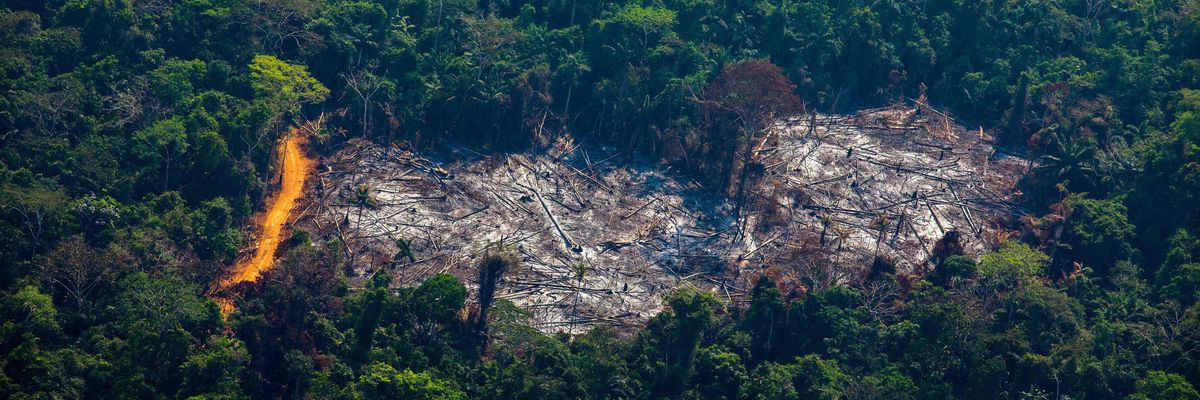
This aerial view shows Amazon forest degradation in the Menkragnoti Indigenous Territory in Altamira, Pará state, Brazil, on August 28, 2019.

(Photo: Joao Laet/AFP/Getty Images)

Eloise Goldsmith
Dec 31, 2024
COMMON DREAMS

The Amazon, sometimes called the "lungs of the planet," this year showed signs of further inching toward a much-feared tipping point, threatening the very existence of the world's largest rainforest.

Rampant wildfires and extreme drought ravaged large parts of the Amazon in 2024. The fires and dry conditions were fueled by deforestation and the El Niño weather pattern, and also made worse by climate change, according to the World Economic Forum. "The number of fires reached its highest level in 14 years this September," the group reported in October.

Drought has also impacted the Amazon River, causing one of the river's main tributaries to drop to its lowest level ever recorded, according to October reporting from The Associated Press. The drop in the river has negatively impacted local economies and food supplies.

Andrew Miller, advocacy director at Amazon Watch, told the AP last week that the fires and droughts experienced across the Amazon in 2024 "could be ominous indicators that we are reaching the long-feared ecological tipping point."

"Humanity's window of opportunity to reverse this trend is shrinking, but still open," he said.

The Amazon plays a vital role in keeping the planet healthy. 150-200 billion tons of carbon are stored in the Amazon, and it also carries 20% of the earth's fresh water to sea.

According to the World Economic Forum, if the Amazon tipping point is reached, "it will release billions of tonnes of CO2 into the atmosphere through fires and plants dying off. This would further exacerbate climate change and make the 1.5°C goal impossible to achieve. It would also alter weather patterns, which would impact agricultural productivity and global food supplies."

A paper published in the journal Nature in February indicates that up to half of the rainforest could hit a tipping point by the middle of the century. "We estimate that by 2050, 10% to 47% of Amazonian forests will be exposed to compounding disturbances that may trigger unexpected ecosystem transitions and potentially exacerbate regional climate change," explained the researchers behind the paper.

However, it wasn't all bad news out of the Amazon in 2024. According to the AP, the amount of deforestation in Brazil and Colombia declined in this year. In Brazil, which houses the largest chunk of the Amazon, forest loss dropped 30.6% compared to the year prior, bringing it to the lowest level of destruction in nearly a decade.

The improvement is an about-face from a couple of years ago, when the country registered 15-year high of deforestation during the leadership of former far-right President Jair Bolsonaro. Brazil is now led by the left-wing President Luiz Inácio Lula da Silva, who—despite presiding over this drop in deforestation—has also come under scrutiny, as APnoted, by environmentalist for backing projects that they argue could harm the environment.