Tuesday, April 01, 2025


Establishment of the OCEANS at The University of Osaka in April 2025

ClassNK
The Techno Alliance Building at The University of Osaka, where the collaborative research laboratory will be established.

Published Apr 1, 2025 7:31 AM by The Maritime Executive


[By: ClassNK]

The University of Osaka (President: Atsushi Kumanogoh), in collaboration with Imabari Shipbuilding Co., Ltd. (President: Yukito Higaki, 'Imabari Shipbuilding'), Japan Marine United Corporation (President: Takashi Hirose, 'JMU'), Nippon Kaiji Kyokai (President & CEO: Hayato Suga, 'ClassNK'), and MTI Co., Ltd. (President: Hideki Suzuki, 'MTI') will establish the Open Collaboration Laboratory for Enabling Advanced Marine Systems (OCEANS) at the Techno Alliance Building within the Graduate School of Engineering at The University of Osaka in April 2025. In addition, Nihon Shipyard Co., Ltd. (President: Kiyoshi Higaki, hereinafter referred to as 'NSY'), a sales and design company owned by Imabari Shipbuilding and Japan Marine United Corporation (JMU), will also cooperate with this program. NSY will actively participate in the design and engineering research activities led by OCEANS.

This initiative aims to promote the global competitiveness of Japan’s maritime industry. Your attention to the OCEANS initiative is greatly appreciated.


Background and Objectives of Collaboration
In an era of unprecedented change, driven by rising geopolitical risks, growing awareness of economic security, climate change, the rapid development of technologies such as AI and their social impact, and the aging population in developed countries, the Japanese maritime industry is being called upon to make revolutionary transformation. A major revolution in design and manufacturing processes is needed to quickly supply high-performance next-generation ships that embody innovative functions, excellent environmental performance and safety features, to customers.

This collaboration, established under the 'Industry on Campus' program promoted by The University of Osaka, integrates diverse engineering fields such as ship hydro and structural dynamics, propulsion, electrical systems, and control systems. Leveraging advanced systems engineering and cutting-edge AI technologies, this initiative also serves as a hub for education and training of the next generation of talent.

For Japan, which is surrounded by sea, the maritime industry, that supplies and operates ships for marine transportation is fundamental for social and economic stability and people’s living. Japan’s shipbuilding industry is highly regarded worldwide for its design and construction technologies. The shipping industry has one of the world’s largest fleets and excellent safe and efficient transportation technologies. The classification society develops classification rules and conducts certification services for safe and efficient marine transportation, and the number of ships certified by it is one of the highest in the world.

The Graduate School of Engineering at The University of Osaka, particularly its Department of Naval Architecture and Ocean Engineering, has achieved global recognition for its research on ships and marine structures. The department has contributed significantly to international maritime safety standards and criteria, collaborating with leading companies and fostering interdisciplinary, advanced research.

International shipping has set a goal to achieve net-zero greenhouse gas (GHG) emissions by around 2050, with Japan’s maritime industry expected to play a crucial role in achieving this target. In addition to the essential transition to alternative fuels for GHG reduction, advancements in ship automation technologies are anticipated to progress further. This will undoubtedly lead to increased complexity in the processes of design, construction, certification, and operation. To address these challenges, innovative systems engineering leveraging cutting-edge technologies such as AI will be indispensable for the future of the maritime industry. This research laboratory will undertake these studies, contributing to the enhancement of the global competitiveness of Japan’s maritime industry.

This collaborative research program leverages the strengths of Japan's world-renowned maritime industry cluster, including shipbuilding, shipping, and ship classification. By deepening industry-academia collaboration, it aims to enhance international competitiveness, advance world-class research, and foster talent development. The ultimate goal is to establish itself as a leading research and educational hub that drives the global maritime industry forward.

Overview of the Laboratory
Name: Open Collaboration Laboratory for Enabling Advanced Marine Systems (OCEANS)
Duration: April 1, 2025 – March 31, 2030 (5 years)
Location: Techno Alliance Building A 804-806, The University of Osaka

Faculty and Research Team (As of April 1, 2025)

  • Full-Time Faculty: Specially Appointed Assoc. Prof. Yasuo Ichinose, Specially Appointed Asst. Prof. Kouki Wakita
  • Part-Time Faculty: Prof. Atsuo Maki, Prof. Kazuhiro Iijima, Prof. Munehiko Minoura, Prof. Naoki Osawa, Assoc. Prof. Akira Tatsumi, Assoc. Prof. Masahiro Sakai, Asst. Prof. Takayuki Takeuchi
  • Visiting Faculty: Visiting Prof. (currently being selected), Visiting Assoc. Prof. (currently being selected)
  • Researchers from participating companies: Approximately 10 researchers

Research Focus Areas

  1. Basic research on innovative systems engineering and design automation
    1. Resilience of supply chain for stable marine transportation
    2. Application of AI in ship basic design, function design and certification
    3. Production design and digital shipyards
    4. Digital twin technologies in ship operation and maintenance
    5. Individual studies on design, construction, operation, and certification, including both open and closed research projects
    6. Education and training for the next generation of maritime industry experts

The products and services herein described in this press release are not endorsed by The Maritime Executive.


ABS and the Singapore Institute of Technology Sign Strategic Agreement

ABS

Published Mar 31, 2025 12:57 PM by The Maritime Executive


[By: ABS]

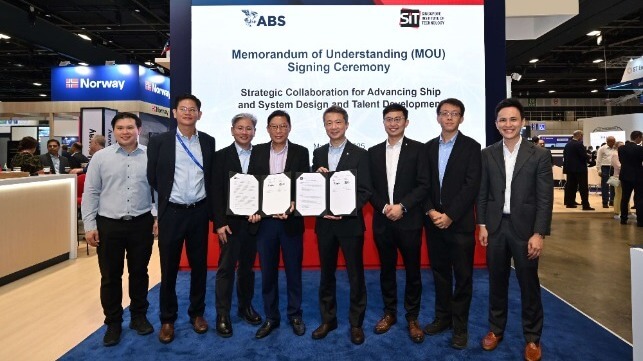
American Bureau of Shipping (ABS) and the Singapore Institute of Technology (SIT) signed a memorandum of understanding (MOU) at Singapore Maritime Week to advance innovations in applied research in maritime technology and enhance talent development within the global maritime and offshore industries.

The collaboration advances applied research in next-generation vessel system design, including ship power simulations with hardware-in-the-loop, shore-to-ship charging technologies, and augmented and virtual reality tools for visualizing simulated scenarios.

It also fosters talent and workforce development by offering targeted upskilling and professional growth opportunities under SIT’s Industrial Doctorate and Industrial Master’s (IDIM) programs, alongside structured on-the-job training placements for SIT undergraduate students.

“Given the rapid pace of technological evolution across the maritime industry, it is important to share best practices, breakthroughs and insight. Signing this MOU formalizes our long-standing collaboration with SIT and brings ABS’ global perspective to further maritime innovation on a range of technical and safety topics while also supporting the next generation of seafarers with new skills and competencies,” said Dr. Gu Hai, ABS Vice President of Technology.

Bernard Nee, Deputy President of Industry and Community at SIT, said: “We are committed to empowering the next generation of maritime professionals with the skills and knowledge to excel in a dynamic global landscape. As the university for industry, we offer students authentic, hands-on experience through real-world projects and industry placements. Together with ABS, we are shaping the future of maritime innovation and talent development in areas such as power system simulation, ship charging technologies, and augmented and virtual reality applications.”

The products and services herein described in this press release are not endorsed by The Maritime Executive.


Finding Zero

The emissions reduction circus continues.

Emissions graphic

Published Mar 30, 2025 5:07 PM by Sean M. Holt


(Article originally published in Jan/Feb 2025 edition.)


The global maritime industry is racing to cut emissions with solutions ranging from cutting-edge tech to, well… sails. Yes, we've come full circle. The same technology that powered pirates is now hailed as the future of sustainable shipping. What a time to be alive!

While we await warp drives and fusion reactors, the industry juggles alternative fuels – methanol, ammonia, hydrogen – plus hybrid propulsion, carbon capture and electrification. Regulations tighten the noose: IMO 2023 introduced energy efficiency rules; the EU ETS expanded to maritime in 2024, tripling compliance costs by 2030, and FuelEU Maritime kicked in this year with strict emissions targets.

The IMO's 2023 GHG Strategy aims for net-zero by 2050 with milestones along the way: 20 percent reduction by 2030 and 70 percent by 2040. Mid-term measures are due by 2027, following key meetings this year.

The race is on – powered by wind, data and just a dash of regulatory panic.

"GO GREEN, SAVE SOME GREEN"

The Liberian Registry (LISCR), the world's largest ship registry by gross tonnage, is deeply embedded in the maritime industry's efforts to meet decarbonization targets. Thomas Klenum, Executive Vice President of Innovation & Regulatory Affairs, sheds light on how the registry adapts to the decarbonization challenge.

"Our goal is to accelerate the transition to net-zero by 2050, embrace innovation and apply new IMO regulatory frameworks," he says, referencing the launch of LISCR's Innovation and Energy Transition Team in 2024. The team collaborates directly with shipowners, shipyards and design firms, ensuring sustainability is embedded from the design phase onward.

A key part of LISCR's strategy is its incentive programs.

"We offer discounts on registration fees for ships enrolled in green programs," Klenum states. The registry actively enhances these schemes to align with the evolving regulatory landscape, including EEXI and CII requirements. The message is clear: "Go green, save some green."

While alternative fuels dominate the discourse, Klenum quickly points out that efficiency gains are just as critical. "Wind-assisted propulsion systems are showing promising results," he notes, with LISCR soon to release an entire year's worth of data from Liberian-flagged vessels employing these systems.

Hull optimization also remains a priority. "With zero or near-zero emission fuels expected to be expensive and limited, efficiency becomes a survival strategy," Klenum emphasizes. Optimizing hull forms can significantly reduce both fuel consumption and operational costs.

When it comes to onboard carbon capture, LISCR is pushing the boundaries. "We've submitted proposals to the IMO to recognize carbon capture as a legitimate decarbonization technology," Klenum reveals, stressing the need for regulatory frameworks to catch up so shipowners can receive proper credit for captured emissions.

The revised 2023 IMO GHG Strategy adds another layer of complexity by expanding from tank-to-wake to well-to-wake emissions. "Depending on how the fuel is produced and transported, you could even bunker fuel with a negative CO2 impact," Klenum says, noting the potential for new net-zero pathways.

LISCR is also exploring emerging technologies. "We're conducting trials with artificial intelligence and autonomous shipping (with Avikus)," Klenum states. These technologies offer efficiency gains in route optimization, machinery operations and even collision avoidance, contributing to both decarbonization and navigational safety.

Klenum provides a candid assessment of nuclear power: "We've been involved in nuclear power plants for fixed locations, which is simpler due to localized regulatory frameworks. However, trading with nuclear-powered vessels globally faces complex challenges. The IMO's nuclear ship code is outdated, though discussions are underway to update it."

Despite the hurdles, he sees potential: "In the long term, nuclear could play an important role. A nuclear-powered vessel (which may not need refueling over its lifecycle) might offer a more stable, low-emissions solution compared to the cumulative risks of handling toxic alternative fuels like ammonia over 25 years."

He also voices concerns over regional emissions regulations: "We're not in favor of fragmented regional requirements for international shipping. Global regulations should come from the IMO to maintain consistency and fairness."

Regarding the timeline for the IMO's mid-term measures, Klenum was cautiously optimistic: "It could be achieved, but it requires global collaboration, technological innovation and scaling up near-zero carbon fuel availability." The roadmap includes the MEPC 83 meeting in April with critical decisions expected on fuel intensity standards and carbon pricing mechanisms. "We're up against a tight deadline," he admits, with implementation slated for early 2027.

Klenum concludes that decarbonizing shipping isn't about a single solution: "The biggest challenge is balancing innovation, new technologies and alternative fuels. It's not as simple as discovering a zero-emission fuel."

FUEL FUTURES FOG

In maritime decarbonization, Finland-based Auramarine is the go-to specialist for fuel supply systems across methanol, ammonia and biofuels. But beyond the polished technical specs, there's a landscape riddled with practical challenges that even the most sophisticated systems can't mask.

Methanol is often pitched as a "drop-in" fuel, but as Auramarine's responses make clear, it's more of a "rip out and rebuild" situation. Its systems demand dedicated safety automation, leak detection and specialized handling – hardly the seamless transition some in the industry like to suggest.

Auramarine CEO John Bergman says, "Quality is key as shipping navigates a multifuel future." Translation: Swapping fuels is easy; making it work safely isn't. Plus, methanol comes with a hidden caveat: Its lower energy density means vessels need up to twice the volume compared to traditional fuels to achieve the same range – a detail often missing from the marketing brochures.

Ammonia offers zero-carbon potential, but toxicity levels make LNG look like a scented candle. Auramarine's Ammonia Release Mitigation System (ARMS) sounds impressive on paper, focusing on gas capture, leak prevention and zero emissions to both air and water. Yet, behind the jargon, it boils down to one thing: mitigating risks that could make a minor leak catastrophic.

Risk thresholds for ammonia exposure are measured in parts per million (ppm), leaving no margin for error in operational settings. Bergman acknowledges this tightrope act, noting, "In navigating the energy transition's unknowns, experience and collaboration matter." Experience, yes—but even experience doesn't entirely solve ammonia's operational headaches.

Any volunteers for the first engine room crew? Ya, me neither.

When it comes to biofuels, Auramarine shifts from pioneering to pragmatic. Its Porla Fuel Measurement System is designed to ensure fuel stability, but the broader issue remains: Biofuels may work technically, but scaling them sustainably is another matter entirely. While biofuels can claim up to an 80 percent reduction in lifecycle CO2 emissions, feedstock availability is the elephant in the engine room. Without sustainable sourcing at scale, the emissions savings look good on paper but falter in practice.

Regulatory pressure is accelerating these transitions, particularly from the IMO 2023 GHG Strategy and the EU Emissions Trading System (ETS). But even as regulations tighten, the real issue isn't whether Auramarine can build systems for these fuels – it seems they can. The question is whether the fuels themselves are ready for prime time.

Bergman's closing sentiment, "If we want a healthy planet for our children, we need to start now," feels right. But the industry still seems to be debating where "now" even begins.

EMISSIONS DATA SMOG

While fuel suppliers tackle decarbonization from the engine room, Houston-based Cyanergy works from the data deck. Its focus? Continuous emissions monitoring systems (CEMS) that promise not just compliance but clarity.

In an industry where emissions reporting often relies on manual fuel logs and conversion formulas (like the EPA's "1 gallon of diesel = 22.8 lbs. of CO2"), Cyanergy's approach is refreshingly direct: Measure what you emit, not what you estimate.

"Estimates leave room for inaccuracies, which can result in misleading reports, unattainable targets and even regulatory fees," says CTO Mohammed Khambaty. Enter continuous monitoring, where real-time data reduces anomalies, identifies inefficiencies and minimizes carbon accounting errors. Translation: less guesswork, fewer surprises.

Cyanergy estimates that over 90 percent of ships still rely on manual emission calculations, exposing operators to the risks of inaccurate reporting and potential penalties. Its IoT-enabled system, utilizing LoRaWAN (a low-power, wide-area networking protocol), integrates seamlessly with onboard sensors, including physically installed CO2 sensors in the engine and exhausts.

"Direct measurements have shown a three percent discrepancy compared to EPA/MARPOL formulas," Khambaty notes, "translating to significant cost savings for large vessels."

Steve Manz, CFO of Cyanergy, emphasizes the financial impact: "The carbon market is around $70–75 per metric ton for CO2. A big ship emits about 250 tons of CO2 per day at sea. Those are big numbers. The financial risk is huge if you're underestimating – or worse, overpaying."

Cyanergy claims its technology can save large vessels around $150,000 annually. Based on Shelf Drilling data, they've reported four to seven percent fuel savings with an ROI projected within one year. Manz adds, "These savings don't even factor in reductions in administrative and labor costs tied to compliance."

Looking ahead, Cyanergy is exploring blockchain for immutable, transparent carbon credit tracking and machine-learning to enhance predictive capabilities. It anticipates a standardized emissions monitoring scheme within five to six years.

FINDING ZERO

And so the maritime industry sails on, powered by wind, data and a fair amount of regulatory paperwork. What a time to be alive!

The opinions expressed herein are the author's and not necessarily those of The Maritime Executive.


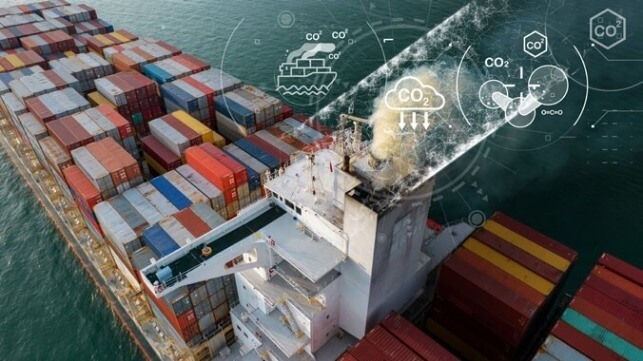
A Radical Solution to the Challenges of Slow Steaming

Wartsila Fit4Power

Published Mar 31, 2025 3:26 PM by Andreas Wiesmann


Slowing down vessels may be the most direct way to cut fuel consumption and emissions, but it is not without its issues. A new solution from Wärtsilä, Fit4Power, offers an alternative that tackles many of the challenges of running large engines on low load, while monitoring since the first installations in October 2022 reveals just how effective radical derating can be. Andreas Wiesmann, General Manager of Strategy and Business Development for 2-stroke Engine Services at Wärtsilä Marine, explores the potential of the technology, leveraging broad industry expertise to demonstrate its transformative effect on the shipping industry.

Slow steaming is a crucial component of emissions reduction strategies for vessels that do not need speed to cater to their markets, such as those on scheduled routes as opposed to spot trades. One of the key drivers is IMO’s Carbon Intensity Indicator (CII), which demands annual improvements in operational efficiency from vessels based on reported fuel consumption and voyage data. Wärtsilä analysis shows that, without modifications or operational measures, more than 80% of the global merchant fleet could fall into the ‘D’ and ‘E’ CII ratings by 2030, requiring mandatory corrective action.

Balancing speed and emissions

Slowing vessel speed therefore offers a straightforward option for cutting fuel and emissions without investing in new efficiency technologies. However, operating at low loads well below those for which they were designed is not an ideal scenario for engines. As a result, an overall reduction in fuel consumption and emissions can carry a significant penalty in efficiency. Less fuel is used overall, but more fuel is needed to generate an equivalent power output.

The practice leaves operators with another cost problem: the maintenance requirements of a big engine with the power output of a small engine. In addition, because engines that run outside their optimal load are more prone to wear, those costs can also increase with slow steaming. The result is an oversized engine for which operators are paying oversized maintenance and fuel bills, without being able to take advantage of the surplus installed power.

Further, slow steaming does not necessarily help comply with design efficiency regulations. The IMO’s Energy Efficiency Index for Existing Ships (EEXI), for example, does not directly demand that less fuel is used but instead that available power is limited. That means using mechanical or software-based measures to ensure that the lower power is maintained (with an exception for emergencies). Those limitation solutions come at a cost and add complexity to the engine configuration.

A radical approach

When Wärtsilä applied itself to the inherent problems of slow steaming, it came up with a radical solution. If vessel operators can sail at slower speeds, the most efficient way to do it would be to reduce the size of the engine. Thermodynamically, running a smaller engine at higher loads will always be more efficient than running a bigger engine at low loads due to relatively lower mechanical losses and a more optimal air-fuel mix in the combustion chamber.

While this principle has guided engine selection for newbuild vessels for decades, until recently it had little value for ship operators with existing vessels. It was not viable to reduce the size of an engine already installed. The unique proposition behind Wärtsilä’s radical derating solution for two-stroke engines is that it makes reducing the size of the engine achievable.

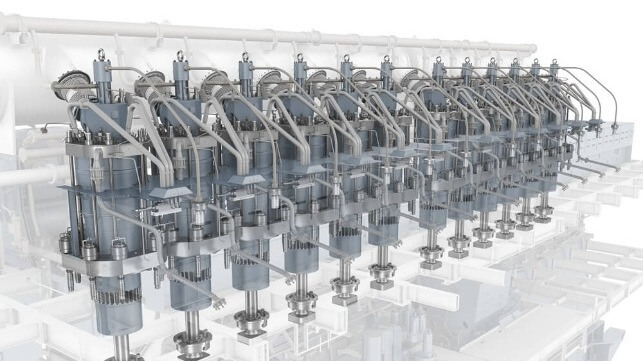
The advanced retrofit solution enables ship owners to reduce the bore size of two-stroke engines by 25%, enabling the vessel to reduce speed while the engine runs at optimal loads, with outstanding fuel and combustion efficiency. This cuts both fuel consumption and greenhouse gas emissions. The bore size reduction is achieved with no changes to the engine frame and only matching part replacements on turbocharger installations. This simplifies the conversion process, limiting it to cylinder, piston and fuel injection components alongside an update to the engine automation system.

While Fit4Power is a significant project, it does not represent what IMO classes a ‘major conversion’, meaning that the derated engine does not need a new nitrogen oxide (NOx) certification. The engine’s original tier rating can be maintained and is confirmed by Wärtsilä after the project using its approved ‘shop test at sea’ methodology. This process avoids the time-consuming and costly process of running an equivalent engine on a testbed.

A retrofit project of this scale is an exercise in teamwork. Across the 17 vessels already installed by the end of the first quarter in 2025, Wärtsilä has developed close relationships with partners across the supply chain and with repair yards. The retrofit execution has been refined over time, allowing the current conversion to be completed in less than four weeks – comparing favorably to other technology installations and allowing operators to plan their regulatory compliance less than a year into the future.

Staying ahead of the curve

It is already clear that the benefits of the radical derating are well worth the effort. An engine retrofitted with the Fit4Power technology can deliver annual fuel savings of up to 2,000 tons and a reduction in CO2 emissions of 6,400 tons. In financial terms, this translates to potential yearly savings of two million euros, or more, in operational expenses, based on current fuel costs and carbon levies. Add to this an annual savings in parts, and the economic case for radical derating becomes compelling. 

Fit4Power can cut fuel consumption and emissions by 10-15%. Across 17 vessels retrofitted since late 2022, Wärtsilä has saved operators a total of more than 25,000 tonnes of fuel, translating to 80,000 tonnes of CO2 emissions or more. Further translated into regulatory compliance terms, this buys operators a further three to five years of compliance with CII, giving them time to plan the next stage of their decarbonization investment strategy.

However, derating is more than just an interim measure. By making engines smaller and more efficient, operators are setting a new efficient baseline for the operation of their vessels, as well as paving the way for incremental steps towards decarbonization. For example, future conversion of the engines for methanol, LNG or ammonia fuel, using Wärtsilä’s Fit4Fuels platform, will enable the use of zero- or near-zero emissions fuels, and because the engine is already running at optimal efficiency, the cost of those expensive fuels will be minimized.

Slowing the speed of vessels can be a game-changing strategy as operators seek to reduce emissions. But slowing down the vessel need not mean slowing down the engine and all the inefficiencies that come with it. With Fit4Power, operators can sail full steam ahead into a future of lower emissions.

Andreas Wiesmann is General Manager of Strategy and Business Development for 2-stroke Engine Services at Wärtsilä Marine. This article is brought to you by Wärtsilä Marine.

The opinions expressed herein are the author's and not necessarily those of The Maritime Executive.


Norway to Invest $1.5 Billion for Stake in Two RWE Offshore Wind Farms

offshore wind farm construction
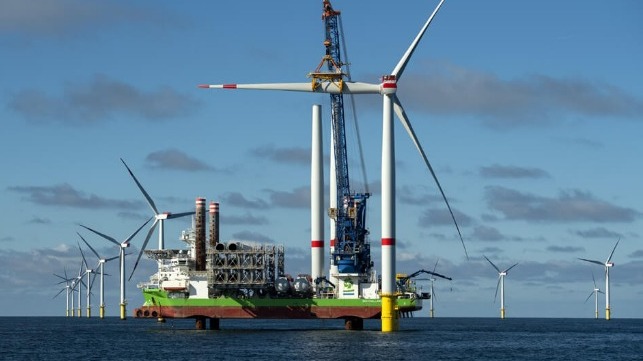
RWE is selling stakes to Norway in two under construction offshore wind farms (RWE file photo)

Published Mar 31, 2025 7:42 PM by The Maritime Executive


Providing a strong demonstration of confidence for the offshore wind energy sector and helping Germany’s RWE fend off pressure from activist investors, Norway’s sovereign wealth fund has agreed to acquire stakes in two under construction wind farms. Norges Bank Investment Management will invest $1.5 billion for 49 percent stakes in the projects RWE is developing in Denmark and Germany.

RWE has been dealing with activist shareholders who have been demanding the company take steps such as share buyback to generate more value for investors. The company during its year-end financial report said it would be exploring partners for more of its wind farm while also cutting €10 billion (US$10.8 billion) from its planned green technology investments. 

Norges expects to close on the transactions in the third quarter of 2025 acquiring stakes in the Nordsecluster in Germany and the Tho project in Denmark. RWE has also said it would seek a 50 percent partner for a project in the UK in 2026. The company reports work is progressing on the two projects in today’s agreement as well as a new wind farm in the UK and another for the Netherlands. RWE currently operates 19 offshore wind farms.

The projects in Germany and Denmark have the potential to provide more than 2.6 GW. Nordseecluster, located approximately 50 km (30 miles) north of the island of Juist in Germany, is being built in two phases, with Nordseecluster A with 660 MW scheduled for commissioning in 2027 and Nordseecluster B with 900 MW, scheduled for full commissioning in 2029. Thor wind farm is Denmark’s largest offshore wind farm to date. Located approximately 22 km (14 miles) off the west coast of Jutland, it will have a capacity of 1,080 MW, and full commissioning is planned for 2027.

Norges is reported to be the world’s largest sovereign wealth fund driven by the country’s oil and gas sector. It has been an investor in renewable energy since 2021 starting with a Dutch wind farm. Last year it invested in wind energy assets in the UK and solar power in Spain.


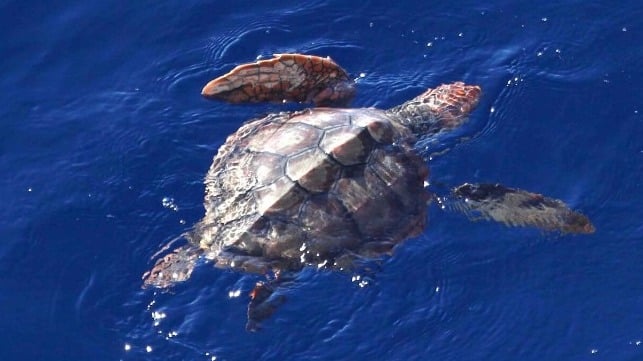
Researchers Find Dangerous Levels of Microplastics in Sea Turtles' Organs

Juvenile loggerhead (File image courtesy NOAA Fisheries / Paula Olson)

Published Apr 1, 2025 3:30 PM by The Maritime Executive


Researchers from the University of Manchester have discovered astonishing quantities of microplastics in the organs of loggerhead sea turtles, particularly in the reproductive organs of males. It is the first study of its kind, and if representative of the condition of the population at large, the results suggest serious potential effects on reproduction and vitality for the iconic species. 

The team obtained the remains of ten loggerheads that were caught up as bycatch in fishing nets in the Mediterranean. Musculature and vital organs in both male and female examples contained high levels of microplastics, including the liver, kidney and heart. 98.8 percent of all tested samples contained foreign particles, and 70 percent contained microplastics. 

The ultra-tiny particles measured about 15 microns, and researchers were surprised to find so many of these solid contaminants migrating from the turtles' gut into all kinds of soft tissue.  The majority of particles came from the kinds of plastic used to make synthetic clothing and packaging, notably plastic bags, which the turtles often mistake for jellyfish and consume by accident. Plastics can stay in a turtle's gut from 40-120 days, depending on the turtle's activity level and whether there are blockages caused by the plastic. The turtles may also have picked up microplastics by rooting in contaminated bottom sediment, inhaling sea air containing plastic fibers, or consuming prey that already contained contaminants. 

Reproductive organs contained an average of 15 particles per gram, ranging as high as 25. Heart tissue contained up to seven particles per gram.  

"Exposure to MPs in reproductive organs can cause reproductive toxicity, and be vectors for contaminants and additives that can disrupt the endocrine system (EDCs), such as bisphenol A and PCBs and phthalates," the researchers noted. "Microplastics accumulation can lead to a suite of sublethal physiological impacts that are likely to be far less conspicuous, and harder to detect at both the individual and population level."


Mowing Down An Ecosystem

Courtesy Monaco Expeditions / The Outlaw Ocean Project

Published Mar 31, 2025 9:42 PM by Ian Urbina


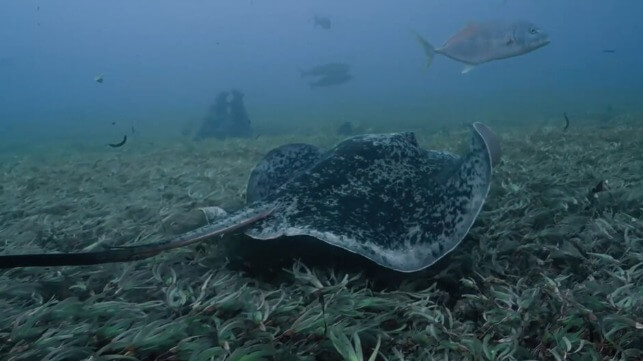
Situated in the Indian Ocean between Mauritius and Seychelles, more than 200 miles from land, the Saya de Malha Bank extends over an area the size of Switzerland and is one of the world’s biggest seagrass meadows, which make it the planet’s most important carbon sink. Much like trees on land, seagrass absorbs carbon dioxide from the atmosphere and stores it in its roots and soil. But seagrass does it especially fast—at a rate 35 times that of tropical rainforest. As such, it is existentially crucial to the planet. Due to its remote location, the Bank is among the least-studied, shallow marine ecoregions on the planet—and, tragically, the area is today being systematically decimated by a multi-national fleet of fishing ships that virtually no one tracks or polices.

The Bank got its name, which means “mesh skirt,” more than 500 years ago, when Portuguese sailors came across it on the high seas and noticed rolling waves of seagrass below the surface. In 2012, calling it “globally unique,” UNESCO named it as a potential candidate to become a Marine World Heritage site for its “potential outstanding universal value.” 

Seagrasses are frequently overlooked because they are rare, estimated to cover only a tenth of one percent of the ocean floor. “They are the forgotten ecosystem,” said Ronald Jumeau, the Seychelles Ambassador for Climate Change. Nevertheless, seagrasses are far less protected than other offshore areas. Only 26 percent of recorded seagrass meadows fall within marine protected areas, compared with 40 percent of coral reefs and 43 percent of the world’s mangroves. 

Often described as the lungs of the ocean, seagrasses capture about a fifth of all its carbon and they are home to vast biodiversity. Thousands of species, including in the Saya de Malha Bank, many as yet unknown to science, depend on seagrasses for their survival. But the planet has lost roughly a third of them since the late nineteenth century and we lose seven percent more each year – roughly equivalent to losing a football field of seagrass every 30 minutes.?

Seagrass also cleans polluted water and protects coastlines from erosion, according to a 2021 report by the University of California, Davis. At a time when at least eight million tons of plastic end up in the ocean every year, seagrass traps microplastics by acting as a dense net, catching debris and locking it into the sediment, found a 2021 study in Nature. At a time when ocean acidification threatens the survival of the world’s coral reefs and the thousands of fish species that inhabit them, seagrasses reduce acidity by absorbing carbon through photosynthesis, and provide shelters, nurseries, and feeding grounds for thousands of species, including endangered animals such as dugongs, sharks, and seahorses. 

But the Saya de Malha is under threat. More than 200 distant-water vessels - most of them from Sri Lanka and Taiwan - have parked in the deeper waters along the edge of the Bank over the past few years to catch tuna, lizardfish, scad and forage fish that is turned into protein-rich fishmeal, a type of animal feed. Ocean conservationists say that efforts to conserve the Bank’s sea grass are not moving fast enough to make a difference. “It’s like walking north on a southbound train,” said Heidi Weiskel, Acting Head of Global Ocean Team for IUCN.

On May 23, 2022, the United Nations General Assembly adopted a resolution to declare March 1 as World Seagrass Day. The resolution was sponsored by Sri Lanka. Speaking at the assembly, the UN Permanent Representative of Sri Lanka, Ambassador Mohan Pieris, said seagrasses were “one of the most valuable marine ecosystems on earth,” highlighting, among other things, their outsized contribution to carbon sequestration. But recognition is one thing; action is another. As the ambassador gave his speech in New York, dozens of ships from his country’s fishing fleet were 9,000 miles away, busily scraping the biggest of those very ecosystems he was calling on the world to protect.

Ian Urbina is the director of The Outlaw Ocean Project, a non-profit journalism organization based in Washington D.C. that produces investigative stories about human rights, environment and labor concerns on the two thirds of the planet covered by water. 

Reporting and writing was contributed additionally by Outlaw Ocean Project staff, including Maya Martin, Joe Galvin, Susan Ryan, and Austin Brush.

The opinions expressed herein are the author's and not necessarily those of The Maritime Executive.
 

Nationwide Strike Paralyzes Belgium’s Ports, Airports, and Services

Belgium port
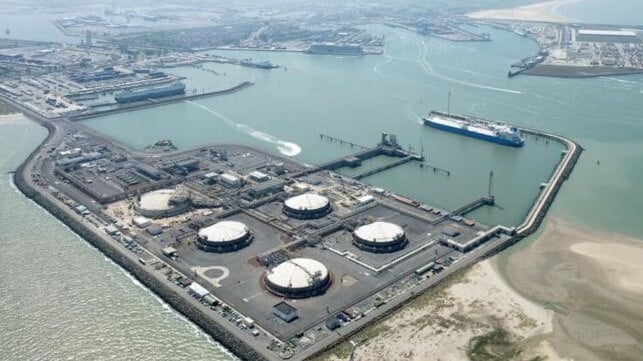
Both Antwerp and Zeebrugge were reported to have long backlogs of vessels by late on Monday (Zeebrugge)

Published Mar 31, 2025 7:02 PM by The Maritime Executive


Upset by Belgium’s new collation government’s plans for budget cutting, public and private workers walked on their jobs on Monday, March 31, for a 24-hour strike that stopped many parts of Belgium for the day. Officials for the Port of Antwerp-Bruges said the disruptions began on Sunday evening and were expected to last until Tuesday with it taking days to fully recover.

The European Transport Workers’ Federation announced it was standing in solidarity with the Belgium Trade Union Confederation which led the call for the 24-hour nationwide strike. The union cited planned cuts to pensions, reforms to the labor market, and cuts to the public service sector. The universal call across all the groups was to maintain pensions and fair working conditions.

“Transport workers are particularly affected, facing drastic budget cuts, job insecurity, and the erosion of collective bargaining rights. At a time when Belgium should be investing in its workforce and public services, this government is taking the country in the wrong direction,” said the ETF in its statement of support.

The Port of Antwerp-Bruges which manages the country’s two busiest ports, Antwerp and Zeebrugge, reported “very strong obstacles for ships.” The delays and backlogs grew as the day progressed with the authority’s final update saying only about 10 ships had been able to enter and leave Antwerp all day on Monday. It said the backlog grew to about 50 ships. Three of Antwerp’s locks were closed.

“The disruption will continue until tomorrow morning (Tuesday). Afterward, we will see how we can quickly and safely clear the backlog. This is expected to take one to two days,” the authority said in its update at 2015 Monday evening.

Zeebrugge reported there had been a complete blockage since 1100 saying it would continue until 0700 on Tuesday. No seagoing vessels entered or departed the port on Monday afternoon. Earlier it had reported that one ship had departed and two arrived, before the end of the day saying a backlog of 25 ships was waiting for the port to resume activity.

The problems were not limited to the seaports. Brussels Airport canceled all 244 outbound flights for Monday and said incoming traffic might also be impacted. Public services were reported to be at a standstill, including the post office and garbage services. Some schools also closed for the day and much of public transport around the country was disrupted.

The government which came to office in February has presented an austerity plan for the country. Today was the second round of major strikes against the planned sweeping cuts to all sectors of the economy.


New study finds Rocky Mountain snow contamination


An examination of Rocky Mountain snow finds higher contamination levels of mercury and others metals in the northern part of the range, consistent with increased current and historical mining in the region


Desert Research Institute

Image1 

image: 

The study measured metal contamination in snow across nearly 50 sites in the Rocky Mountains. 

view more 

Credit: DRI


Mountain snowpacks accumulate snow throughout the winter, building up stores of water that will supply communities across the American West throughout the long dry season. Now, a new study shows that as storms carry snow to the Rocky Mountains, they are also bringing mercury and other contaminants from mines in the region. The research helps scientists understand how contaminants are spread by atmospheric circulation and has implications for snowpack preservation and illuminating the lasting environmental impact of mining activities. 

The study, published in the May issue of the journal Environmental Pollution, examined contamination levels for Mercury, Zinc, Cadmium and Antimony from nearly 50 sites in the Rocky Mountains. DRI’s Monica Arienzo, Associate Research Professor of Hydrology, led the research, along with colleagues from the U.S. Geological Survey (USGS), the University of Nevada, Reno, and Portland State University. They found higher levels of metal contaminants in the northern Rockies and identified mines in the Pacific Northwest, Idaho, and Montana as the likely source by following winter storms back in time. It is one of the first studies to look at metal contamination across the greater Rocky Mountains.  

“Metal pollution in the Rockies is relatively understudied,” Arienzo said. “Other studies have focused on certain parts, so the fact that we have this transect from Montana to New Mexico makes this study unique.”  

Although contamination levels were found to be within guidelines set by the EPA for both drinking water and aquatic life,  dust can accelerate snowmelt by decreasing the reflectivity of the snowpack. The data can also provide critical information about how environmental contaminants and dust are distributed by the atmosphere.  

The study combined a number of data sets to capture a comprehensive understanding of the amount of metal contamination making its way to the region. First, snow samples were collected from 48 sites throughout the Rocky Mountains during the spring of 2018. The researchers then measured metal concentrations in each sample, including metals like calcium that come from natural dust rather than human activities. By comparing the amounts of purely dust-sourced metals to those that result from both dust and industrial activities like mining, the scientists determined how much metal contamination stemmed from human activities.  

To strengthen their findings, they then examined data from the National Atmospheric Deposition Program that measured mercury and calcium in precipitation from 2009 through 2018. Again, the scientists saw higher amounts of metal contamination in the northern Rockies, across Montana, Idaho, and Northern Wyoming.  

“I was surprised by the amount of agreement we saw between all these different data sets we brought together,” Arienzo said. “The snow samples showed us that contamination is higher in the northern Rockies, and that was really interesting. Looking at mercury contamination over time helped us say that 2018 is not just a fluke. When you start to see these trends that are consistent between different records, it makes you feel more confident that something’s really happening here.” 

To determine the likely source of the contaminants, Arienzo and her colleagues tracked the winter’s storms back through time. For the northern Rockies, many of the storms had moved in from the Pacific Northwest region, whereas in the southern stretch of the mountains, storms came from across the Mojave Desert.  

By referencing a USGS dataset that tracks mining and smelting locations, the scientists identified active sites near the northern Rockies. An examination of EPA Superfund locations uncovered historical sites that could also be sources of contamination.  

“Our idea is that the dust from current and historical mining sites gets carried up into the mountains and deposited across our study sites,” Arienzo said. “This study shows the importance of continued scientific monitoring efforts, like the long-term USGS datasets we used here, as well as mitigation of current and historical mining sites.” 

The research is part of a larger study, supported by the National Science Foundation (NSF), using tree rings to examine historical mercury contamination. Arienzo and her team will compare the mercury record found in tree rings to that found in the snowpack to better understand how mercury is deposited and spread throughout the environment.  

----------------

More information: The full study, Latitudinal gradients of snow contamination in the Rocky Mountains associated with anthropogenic sources, is available from Environmental Pollution at https://doi.org/10.1016/j.envpol.2025.126094 

Study authors include: Monica Arienzo (DRI), Kelly Gleason (Portland State U.), Graham Sexstone (USGS), Mae Gustin (UNR), Melissa Schwan (UNR), Nicole Choma (UNR), Sarrah Dunham-Cheatham (UNR), Joe McConnell (DRI), Peter Weisberg (UNR), and Adam Csank (UNR) 

About DRI 

We are Nevada’s non-profit research institute, founded in 1959 to empower experts to focus on science that matters. We work with communities across the state — and the world — to address their most pressing scientific questions. We’re proud that our scientists continuously produce solutions that better human and environmental health.   

Scientists at DRI are encouraged to follow their research interests across the traditional boundaries of scientific fields, collaborating across DRI and with scientists worldwide. All faculty support their own research through grants, bringing in nearly $5 to the Nevada economy for every $1 of state funds received. With more than 600 scientists, engineers, students, and staff across our Reno and Las Vegas campuses, we conducted more than $52 million in sponsored research focused on improving peoples’ lives in 2024 alone. 

At DRI, science isn’t merely academic — it’s the key to future-proofing our communities and building a better world. For more information, please visit www.dri.edu


The research team collecting snow samples in the Rocky Mountains in the spring of 2018. Credit: DRI

Credit

DRI

A graphical abstract of the study, showing (left) higher levels of metals sourced from natural dust in the southern Rockies; (center) snowpack sampling sites; (right) higher levels of metal contaminants sourced from human activities in the northern Rockies. Credit: Arienzo et al. 2025

Credit

Arienzo et al. 2025