It’s possible that I shall make an ass of myself. But in that case one can always get out of it with a little dialectic. I have, of course, so worded my proposition as to be right either way (K.Marx, Letter to F.Engels on the Indian Mutiny)
On Monday, U.S. Central Command continued to exchange fire with Yemen's Houthi rebels for the 17th day. U.S. Navy forces launched additional Tomahawk missile strikes and airstrikes on positions in Yemen, while Houthi fighters claimed to have shot down another U.S. MQ-9 Reaper drone over the region of Marib. The claim could not be immediately verified, and footage was not provided.
"The Iran-backed Houthi terrorists have been decimated by the relentless strikes over the past two weeks. Many of their fighters and leaders are no longer with us," said U.S. President Donald Trump in a statement Monday. "The choice for the Houthis is clear: Stop shooting at U.S. ships, and we will stop shooting at you. Otherwise, we have only just begun, and the real pain is yet to come, for both the Houthis and their sponsors in Iran."
Strikes overnight Sunday hit the Houthi capital of Sanaa, killing one person, Houthi media reported. An additional strike targeted a moving vehicle in Hajjah, killing two. The Trump administration has changed tactics and is now bombarding Houthi military leaders individually, a practice not pursued under the Biden administration.
U.S. National Security Advisor Mike Waltz has claimed that the campaign killed the Houthis' "top missile guy" on the first night of bombardment, but military sources have not confirmed this, according to Reuters. The Pentagon and the White House have not released the names of any high-value Houthi targets who may or may not have been killed in the strikes.
Experts on the decade-long Yemen conflict have warned that the Houthis will be difficult to influence or remove.
"They are very pain tolerant, so they're the worst people to try and publicly coerce," said Michael Knights, a fellow at the Washington Institute for Near East Policy, speaking to Reuters. "We're probably pursuing something unattainable in trying to actually make the Houthis be submissive."
China Carries Out Huge Drills Around Taiwan
Timing coincides with U.S. Secretary of Defense's first visit to Asia
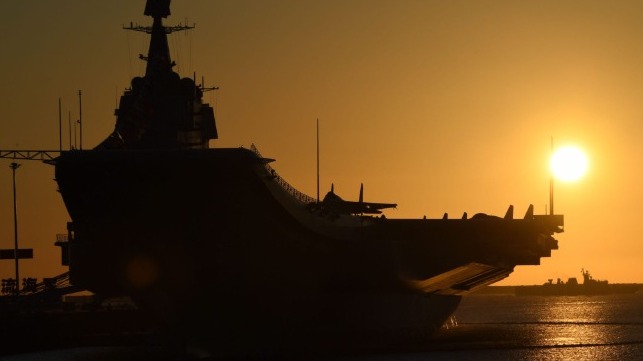
The carrier Shandong joined in the drill (PLA Navy file image)
On Tuesday, China's navy carried out a massive drill in the Western Pacific as a "stern warning" to the independent government of Taiwan.
It was the latest in a series of muscular exercises that many analysts view as a rehearsal for a naval blockade or invasion. The People's Liberation Army used similar language, describing the drill as a preparatory exercise for "seizing comprehensive control, striking maritime and land targets and imposing blockade controls." An estimated 20 Chinese warships and 70 military aircraft joined the exercise.
The carrier Shandong and her escorts joined the operation in a major show of force. According to the Japan Self Defense Force, the task force was spotted east of Taiwan, positioned to interdict vessels arriving from the Pacific and the Philippine Sea.
Political science professor Ja Ian Ching of the National University of Singapore told Bloomberg that the political objective of China's drills is to "weaken confidence in U.S. deterrence" and display how far the Chinese military can go in operating near Taiwan.
"The Taiwan question is purely China’s internal affairs that brook no external interference," asserted Chinese Foreign Ministry Spokesperson Guo Jiakun in a press conference Tuesday. "The DPP authorities are hellbent on seeking 'Taiwan independence,' and attempt to solicit external support for that agenda . . . The historical trend that China will and must achieve reunification is unstoppable."
Australia Watches, and Speculates, as Chinese Research Vessel Sails Nearby
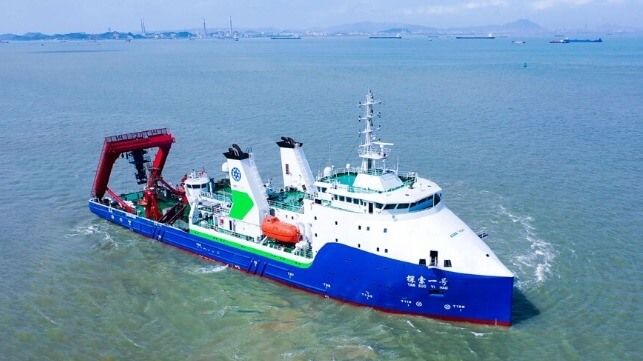
China's research vessel is attracting attention as it sails along Australia's southern coast (IDSSE-CAS)
The Australian government confirmed it is tracking the movements of a Chinese research vessel that many believe is also a spy ship as it sails along the Southern Coast. While the vessel has done nothing considered improper, it is drawing wide attention in the Australian media which prompted Prime Minister Anthony Albanese to tell reporters, “I would prefer that it wasn’t there.”
The Tan Suo Yi Hao departed Wellington, New Zealand on March 23 and its AIS signal shows it is bound for Sanya, China where it is due on April 30. However, instead of taking a northern course, the vessel transited the Tasman Sea, between New Zealand and Australia, crossed the Bass Strait, and is now traveling along the southern coast of Australia. It has not requested a port stop in Australia.
The media was quick to highlight that it is the same route that Chinese warships took last month after conducting live-fire exercises that also raised concern in Australia. Concerns over the vessel’s purpose were further increased when China’s Foreign Ministry spokesperson Guo Jiakun largely declined to respond to a question when asked during his regular briefing for the media.
“I would like to emphasize that China has always carried out normal maritime activities in relevant waters in accordance with international law, including the United Nations Convention on the Law of the Sea. I hope the Australian side will view it correctly and not be suspicious or make unwarranted speculations,” said Guo. He directed the question to the relevant authorities.
The vessel operates as one of three ships for China’s Institute of Deep-Sea Science and Engineering (IDSSE) within the Chinese Academy of Sciences. It was built in 1984 as an offshore supply vessel and converted between 2014 to 2016 to its role as a research ship. China reports the vessel, which is 5,000 gross tons, has 11 research labs and supports two submersibles, one capable of nearly 15,000 feet (4,500 meters) and the other going to 32,800 feet (10,000 meters).
In 2016, it carried out China's first 10,000-meter and deepest exploration along the Mariana Trench. It again set a depth record on the Mariana Trench in 2020 of 10,900 meters.
Albanese told reporters that they were aware of the vessel’s presence. He said he was confident in the Australian Defense Force which was tracking the ship’s movements. The media reports note the presence of undersea cables in the area where the vessel is sailing as well as other critical infrastructure in the region.
“It’s been in New Zealand on a joint research operation and this isn’t the first time that a similar vessel has been around the Australian coast. It occurred in 2020, just to give one example. Australia, as you would expect, is monitoring this,” Albanese said in response to reporter’s questions on Monday.
Five Chinese Nationals Arrested for Spying on U.S. Navy at Subic Bay
The Chinese suspects allegedly used "fishing" drones to take photos of U.S. Navy ship movements (NBI)
In a rare public bust, Philippine police have arrested five Chinese nationals and two accomplices for allegedly spying on U.S. Navy ship movements in Subic Bay.
Last week, a task force led by the Philippines' National Bureau of Investigation (NBI) launched a tactical raid at Grande Island, a former strategic fort at the entrance to Subic Bay. Today, it is home to a Chinese-operated resort complex, along with the ruins of U.S.-built Fort Wint.
The five Chinese suspects were posing as recreational fishermen and tourists, according to the NBI, and were accompanied by one Cambodian national and one Filipino guard. (Initial reports appear to have misidentified the Cambodian suspect as a sixth Chinese national.)
"We have identified this group as the one flying drones during the day and night under the guise of sending fishing bait out to sea," NBI cybercrime official Van Angluben said at a press conference. "These drones are actually being used for surveillance . . . of the U.S. Asiatic [Indo-Pacific] fleet."
The men had multiple photos of American warships on their personal devices, according to NBI, along with images of shipments of military cargo. The police also recovered a handwritten document marked in Chinese characters, which described the date, time and ID of vessels coming and going from Subic Bay.
Immigration records show that the foreign nationals entered and exited the Philippines frequently, the agency said.
The Chinese suspects declined to comment, but the Filipino man who was arrested with them - identified as Melvin Aguillon - told media that he was not aware of the alleged spying activity. "I'm just the driver," he told ANC. He was in possession of an illegal firearm at the time of his arrest, according to the NBI.
The Chinese resort operator's lease on the island is now under review, according to the Subic Bay Metropolitan Authority (SBMA).
CMA CGM Sues Houston Supplier for $5M in Damages Due to Fuel Contamination
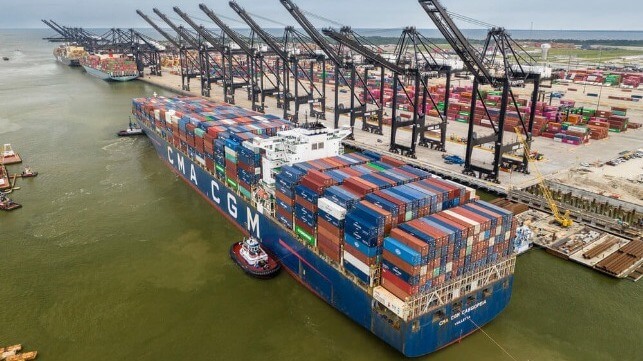
CMA CGM sued over damages to 13 vessels that bunkered in Houston in 2023 (Port of Houston file photo)
French shipping giant CMA CGM Group is citing more than $5 million in damages in a suit filed in a Houston court. The suit alleges that 13 vessels either owned or chartered by the company were damaged due to faulty fuel supplied while they were in Houston, Texas.
The complaint filed in the U.S. District Court for the Southern District of Texas reports between March and June 2023, CMA CGM took delivery of 33,628 metric tons of very low sulfur fuel oil for its vessels while they were docked in the Port of Houston. The company had a supply contract with GCC Supply & Trading for the manufacture, sale, supply, and delivery of maritime fuel.
“Shortly after the fuel was supplied, the vessels encountered significant operational issues, including but not limited to fuel pump seizures, ICU leakages, loss of engine power and propulsion in some cases leading to blackouts. CMA CGM put GCC on notice of these issues as soon as they became known,” the complaint alleges. It goes on to state, “The vessels suffered physical damage to their fuel tanks, fuel purifiers, fuel systems, and their engines and engine components, causing CMA CGM damages.”
They are alleging that GCC should have known that it was delivering “contaminated, defective, off-specification, unfit for consumption,” fuel that would cause physical harm to the vessels. They contend the supplier failed to “employ reasonable practices and policies for testing and screening its product for harmful contaminants or components.”
CMA CGM says it incurred disrupted and delayed operations, which caused operational cost increases, lost opportunities, demurrage, and further damages. They are suing for breach of contract, breach of warranties, negligence, and product liability.
The shipping company is demanding a jury trial. It asks the court to determine the final amount of damages and relief it will be granted.
Bunker fuel testing and advisory company VPS issued a public report on the problem in July 2023 saying that it detected the presence of Dicyclopentadiene (DCPD) and associated isomers at significantly high levels in VLSFO bunker fuel deliveries in Houston. At the time, it said at least 11 vessels had been impacted but it caused widespread concern. Weeks earlier in March 2023 over 200 vessels reported issues after fueling in Singapore. Regulators later traded the problem back to the origin well and imposed significant penalties on the supplier.
EU Scrutinizes Fraud in Certification of Biofuels
Palm plantations and forest in Sentabai Village, West Kalimantan, 2017 (Nanang Sujana/CIFOR / CC BY NC ND 2.0)
The scrutiny on the use of biofuels in Europe has intensified, with reports emerging last week that the EU is planning to suspend recognition of the ISCC certification of waste-based biofuels. The International Sustainability and Carbon Certification (ISCC) has an EU certification scheme that verifies that biofuels entering the EU market are compliant with the bloc’s sustainability requirements, as set out in the Renewable Energy Directive (RED) II.
The EU Committee on Sustainability of Biofuels, Bioliquids and Biomass Fuels had convened to discuss rising fraud cases of biofuels in the European market. While the deliberations of the committee are confidential, one of the outcomes reportedly is a proposal to the European Commission to suspend recognition of ISCC certifications for waste-based biofuels for 2.5 years. If the 27 member states approve the suspension, EU countries will have the discretion to accept or reject ISCC certificates.
A surge of imports from South-East Asia has raised serious concerns on the compliance of these biofuels with EU market regulations. Market players blame this on lax verification procedures by ISCC, which is the largest feedstock accreditor. Data from fuel regulators in Europe estimate that 1.8 million tons of fraudulent ISCC-certified Palm Oil Mill Effluent (POME) entered the EU in 2023. POME is a byproduct of palm oil processing and is used as a feedstock in production of biodiesel. The biofuel is gaining widespread use in the shipping industry.
“Based on European Commission data published in December, a third of the used cooking oil (UCO) is undoubtedly fake, most likely sourced directly from virgin palm oil,” James Cogan, EU Government Affairs, Industry& Policy Director at biotech firm ClonBio Group, told S&P Global. Virgin palm oil as a feedstock is ineligible for renewable energy incentives under the EU’s RED II initiative. This is based on its alleged contribution to deforestation abroad.
In addition, the EU proposal comes at a time when the shipping industry in Europe has started a journey on use of ISCC certified biofuels, as a measure towards a green transition.
The ISCC system said that it is aware of the EU Biofuels Committee’s discussions, noting that it was surprised by the suspension proposal.
This latest step from the EU adds to the growing pushback against use of biofuels in shipping. Next week, the IMO will be hosting MEPC 83 (Marine Environment Protection Committee 83) where a raft of mid-term measures on green shipping will be debated. In line with this, some shipping lines - including Hapag Lloyd and environmental NGOs - have come forward to warn about the widespread use of biofuels in shipping industry.
Nearly a third of global shipping could run on biofuels in 2030, up from less than one percent today. This would see close to 300 million bottles of vegetable oil (palm and soy) diverted to powering ships every day in 2030, according to a study by the transport NGO T&E. Unfortunately, vast amounts of farmlands - 3.4 million hectares, almost total area of Germany - would be needed to produce enough crops to meet biofuels demand for shipping, taking up resources that would otherwise be used to make food.
Norway Uncovers Russian Scheme for Marine Insurance Fraud
Norwegian investigators have charged four people in connection with an alleged marine insurance fraud scheme linked to the Russian dark fleet, according to NRK.
The investigation centers on the activities of insurer Ro Marine AS, a company with a listed address in the prestigious Norwegian Shipowners Association building in Oslo. According to NRK and the shipowners' association, Ro Marine never had a presence in the building - and Norway's finance authority says that the company wasn't selling real insurance, either.
A routine check of the insurer's paperwork revealed that it had sent clients a forged document that purported to be an approval letter from the Finanstilsynet, Norway's Financial Supervisory Authority. The seal was wrong; the signature was fake; and the document referred to nonexistent regulations, Finanstilsynet told NRK. The agency reported the apparent fraud to the police and on March 4, it instructed Ro Marine AS to cease operations immediately.
Four people have been charged in connecton with the scheme: two Norwegians, who deny knowledge of any wrongdoing; one Bulgarian; and one Russian resident of St. Petersburg, who owns and manages the business. NRK contacted Ro Marine by email, and the company denied any violations of sanctions.
The firm's Russian owner is not in custody, and despite the instructions from Norwegian authorities, the company's website remains live. As of March 25, Finanstilsynet said that it was unable to reach the brokerage.
"Finanstilsynet warns against entering into agreements with Romarine AS and against using the services offered through the company's websites," the agency cautioned in a statement.
The new insurance inspection regime in the Baltic Sea turned up seven tankers that claimed to be covered by Ro Marine, authorities told Danwatch, including the dark fleet tanker Achilles. The false coverage documents passed muster at the time, given the Norwegian address and connections of Ro Marine, but had no actual insurance behind them. This left the tankers dangerously uncovered in the event of a casualty or a spill.
"False insurance is in direct violation of international conventions and increases the danger for everyone," Harvard sanctions expert Craig Kennedy told NRK. "It violates a core principle of global shipping safety and should be of concern to all coastal states."
The Ro Marine case is one of many alternate insurance arrangements used by the "dark fleet" of Russia-linked tankers. These vessels cannot access Western insurance markets because of sanctions, and have turned to Russian and Indian insurers to plug the gap, with questionable results. It may be the most egregious example of a workaround, experts say.
"There have been isolated cases, but not on this scale and not this systematically. It’s outrageous. It completely undermines the system,” says Kristina Siig.
One Killed as New Chinese Domestic Boxship and Bulker Collide off Ningbo
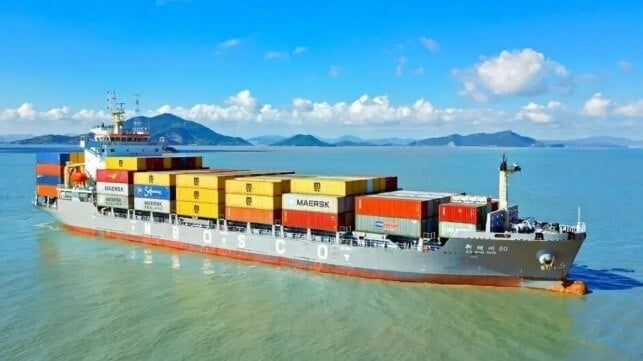
China's new domestic feeder Ningyuan Beilum was invoplved in a collision killing one seafarer as a bulker sank (NBOSCO)
The Ningbo Maritime Safety Administration confirmed that one seafarer died and three others were injured last weekend when a domestic container ship and a domestic dry bulk carrier collided. The collision happened overnight in the early morning hours of March 29 in a busy area near the Ningbo port complex.
The report indicates that the collision took place between a brand new containership, Ningyuan Beilun (15,000 dwt) which had been delivered at the end of February to Ningbo Ocean Shipping. The vessel is part of the domestic feeder carrier’s expansion efforts. The open-hatch containership was departing Ningbo carrying 934 TEU.
It collided with the dry bulk carrier Jianghai Zhida 66 (14,000 dwt). The vessel entered service in May 2023. It is unclear if it was loaded when the collision occurred. It had a crew of 13 aboard.
The bulker immediately began taking on water and according to the reports sank in just five minutes. The Safety Administration reports the rescue operation lasted four hours to locate the crewmembers from the water. Nine were recovered uninjured and three were taken to a hospital. One person was deceased when they recovered the body.
Damage to the containership is reported to be minor. The vessel is being held in the Zhoushan Anchorage pending the investigation.
Ningbo Ocean had just celebrated the entry of the new vessel into service highlighting with its delivery its fleet reached a new level. The company said its total capacity now exceeds 50,000 TEU. It is one of eight ships in this class, each with a length of 136 meters (446 feet). The company said they have a higher transportation efficiency, larger loading capacity, and provide better energy-savings. The company is now operating a total of over 100 ships owned or chartered and serving 40 routes.
Twelve Rescued From Burning Cargo Ship in Manila Bay
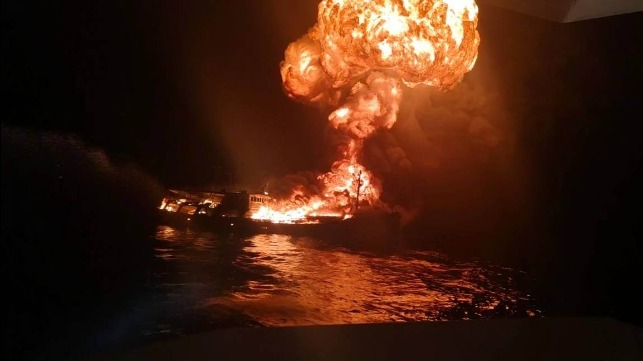
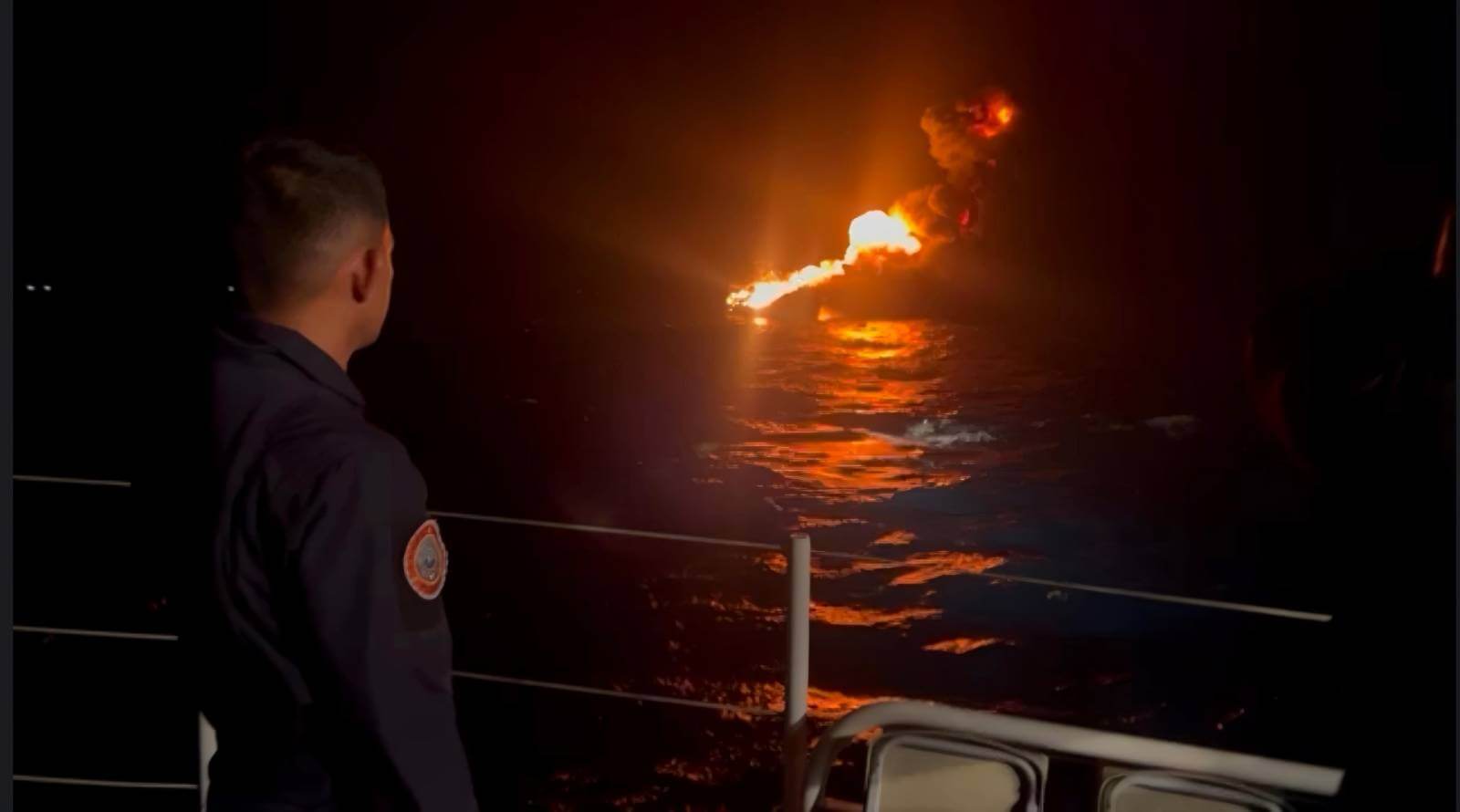
On Sunday, a cargo vessel caught fire and burned southwest of Manila, forcing the crew to abandon ship.
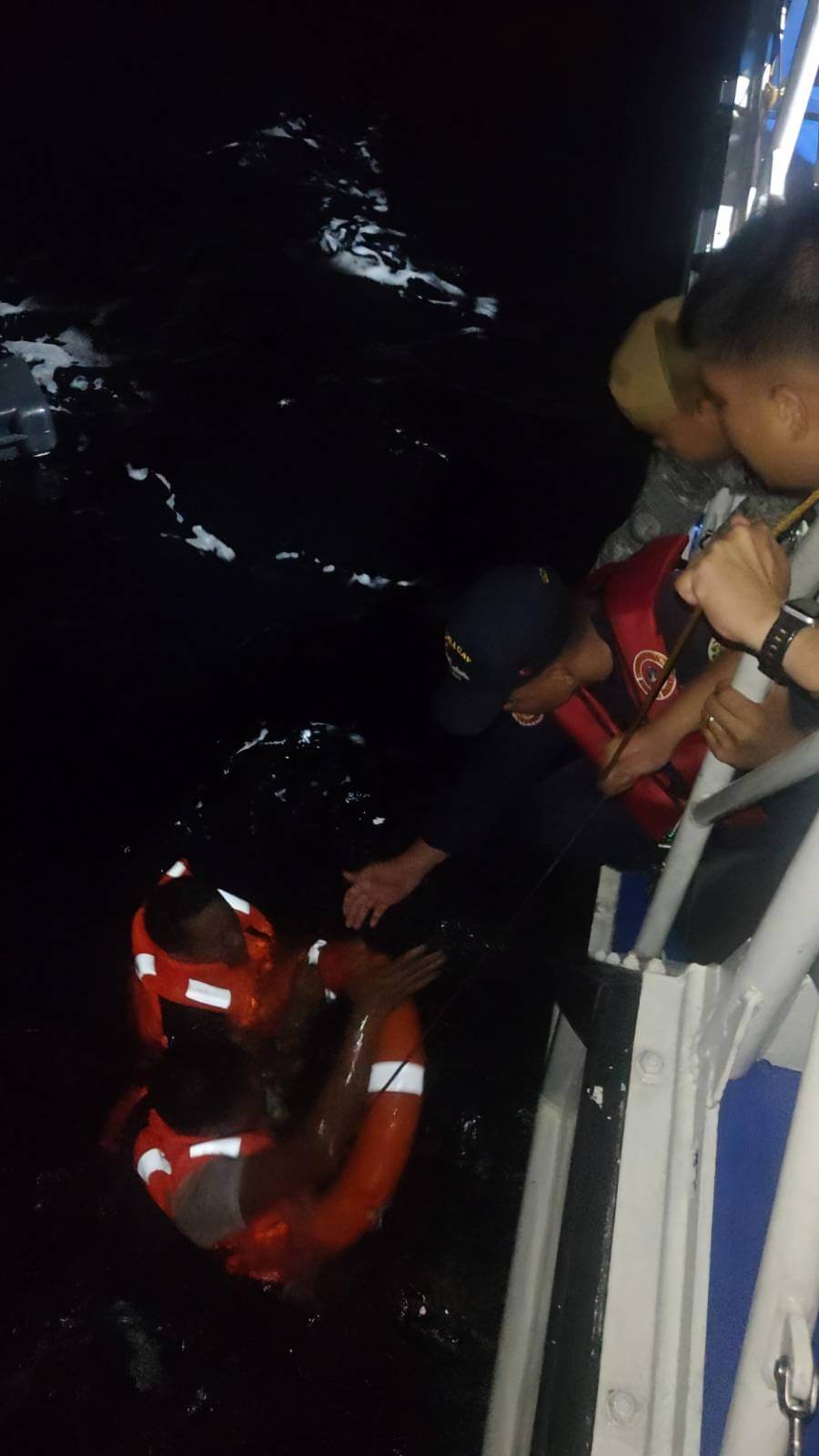
The Castphill XV was operating near the entrance to Manila Bay early Sunday when it caught fire. The Philippine Coast Guard responded, and at about 0430, the patrol vessel BRP Boracay rescued seven crewmembers from the water. Only minor injuries were reported, and all seven were delivered safely to shore in Manila for a medical evaluation.
Personnel from the PCG station in Maragondon, Cavite rescued five more survivors at about 0730. All were transferred back to Maragondon for treatment.
Courtesy PCG
The PCG has started an investigation to identify the cause of the fire. Based on PCG photos of the casualty, the vigorous fire and tall plumes of flame coming from the vessel's foredeck suggest she was carrying flammable cargo.
"The PCG also reaffirms its commitment to ensuring maritime safety and responding promptly to emergencies at sea," the agency said.
The freighter Castphill XV is a classic stick-boom coaster. Though it is not a tanker, the vessel appears to be linked to a Manila-based fuel distribution company, Mega Oil.
Castphill XV does not appear in international databases, as is common for coastal vessels in domestic trades in Southeast Asia. A video of her most recent drydocking shows signs of advancing age, including dented plating around her stern.
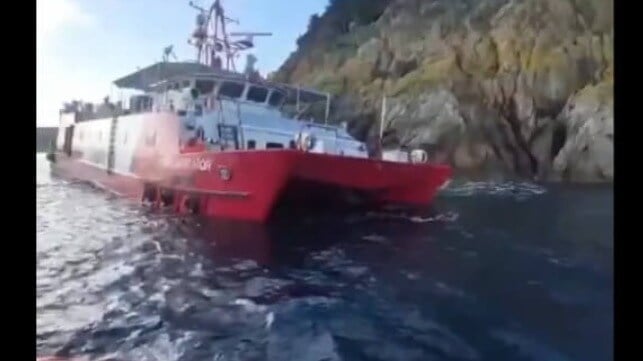
The Netherlands-based surveying firm Fugro has reported successful refloating of its geophysical survey vessel, Fugro Mercator, off the north coast of Italian island of Elba. The vessel run aground on March 22; though the cause is yet to be determined, harsh weather condition were reported in the area at the time.
On Friday, Fugro said that the vessel was safely towed back to port and is at a shipyard for inspection. The incident caused no injuries and no harm to the environment. A full review of the event is ongoing to determine what caused the vessel to run aground.
“We are grateful to the Italian coastguard and our partners for their swift response in evacuating our crew and salvaging the Fugro Mercator,” said Erik-Jan Bijvank, Group Director Europe and Africa.
The Fugro Mercator was performing survey work for the Italian Institute for Environmental Protection and Research (ISPRA) as part of the Italian government’s Marine Ecosystem Restoration (MER) Project. The initiative is being carried out under the Italian National Recovery and Resilience Plan, which aims to restore marine habitats, update the national system for observing marine and coastal ecosystems, as well as map marine habitats across Italian waters.
The two-year project began in January and Furgo is working alongside Italian partners Poliservizi Srl and Prisma. In addition to the surveys, two seabed tsunami early-warning stations in the Sardinian Channel and the South Ionian Sea will be included.
Fugro has said that it working with the Italian government to ensure the survey work goes uninterrupted after the grounding incident. In this regard, Fugro has committed to dispatch another survey vessel, Fugro Helmert, which will sail to the Mediterranean to pick up the Mercator’s project. This will minimize the overall impact of the incident, added Fugro.
Progress Toward Refloating Chinese Bulker Grounded in Russia Seven Weeks
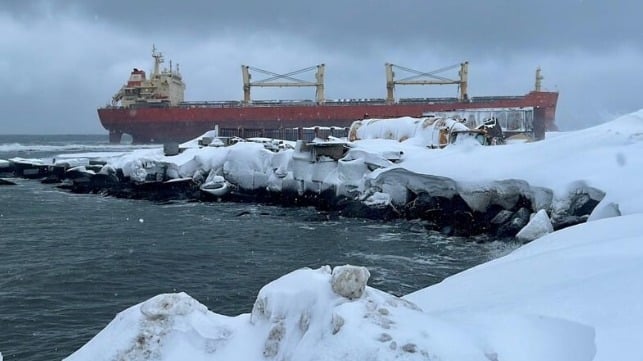
Chinese-owned bulker has been stuck for seven weeks aground in Russia (Sakhalin Region government)
After seven weeks of preparation, Russian and Chinese officials are reporting progress toward the refloating of a bulker that has been stranded since early February. The Chinese crew remained aboard the vessel being supplied from shore while the efforts were underway.
The vessel named An Yang 2, a Chinese-owned and registered bulker, was built in 2010, The vessel which is 56,700 dwt and 623 feet (190 meters) in length, was inbound to the Russian port of Nevelsk located on the southwest coast of the Sakhalin Island, on February 9. It was transporting 1,000 tons of coal.
The vessel encountered high seas and strong winds as a winter storm was overtaking the area. Early in the morning, it ran aground near the entrance to the port. Initial rescue efforts were delayed by a heavy snowfall and temperatures falling to 14 degrees F (-10 C). Efforts to survey the hull were hampered by the high seas and the fact the vessel was sitting on the rocks.
Determining there was no significant damage visible to the vessel, local authorities determined that the crew would remain aboard their ship, but emergency accommodations were arranged if they had to be evacuated. The surveys determined there were 50 tons of diesel and 700 tons of heavy fuel aboard but no leaks were observed.
Chinese officials report a delegation visited the ship. They also met with the local officials to plan the salvage effort. A contract has been signed for the removal of the fuel to lighten the vessel. Russian officials said that an access road also had to be created to reach the vessel.
No timing was offered for when they expected to have the vessel afloat.
Six More Ships Robbed in Singapore Strait in 48 Hours
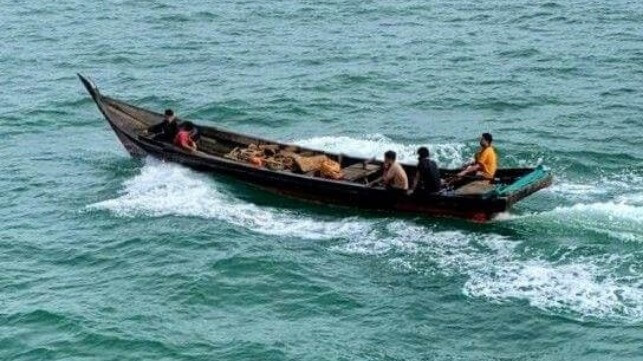
Pirates struck six times and robbed two ships in 48 hours in the Singapore Strait (file photo)
ReCAAP, the regional monitoring operation for Asia, issued a new alert to ships in the area of the Singapore and Malacca Strait warning of the continuing surge in sea robbery incidents and while cautioning of the possibility of further incidents. They received reports of six incidents between March 28 and 30 prompting the continued caution based on the increase in activity so far in 2025.
As with the incidents earlier this year, the perpetrators seem more brazen in their efforts but during the last incidents there was no direct interaction and none of the crewmembers were attacked. Other incidents in 2025 have included crewmembers being assaulted and tied up, but as with the prior incidents in several of the cases in the past few days, the boarders appeared to be armed.
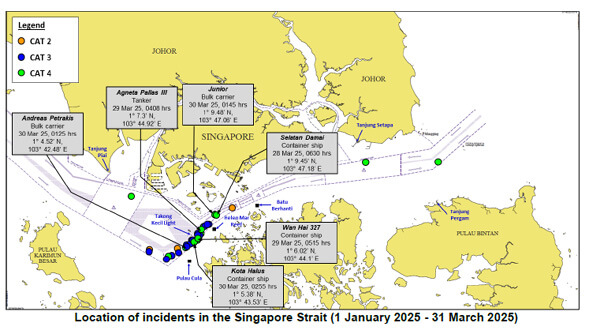
Three vessels were boarded in a period of one and a half hours on March 30, between 0125 and 0255 all in the Phillip Channel in the eastbound lane in the Singapore Strait. This area has seen a concentration of piracy activity in 2025.
Among the ships boarded was the containership Kota Halus (18,872 dwt with a capacity of 1,080 TEU) which is operating for Pacific International Line (PIL). Three perpetrators were seen aboard the vessel, but they jumped overboard into a small boat when discovered. A search showed that they had entered an air conditioning room and a portable welding machine was missing.
In the other two incidents on March 30, bulkers were boarded, Junior (92,995 dwt) and Andreas Petrakis (76,000 dwt), in each case by a single perpetrator. In both cases, the person fled when discovered and the ships reported nothing was stolen.
Four perpetrators were sighted aboard the Wan Hai 327 (37,160 dwt) containership on March 29. They were moving between a small boat and the stern of the ship but also fled. Nothing was stolen. About an hour earlier that same day, five perpetrators were seen aboard a VLCC tanker, Agneta Pallas III (319,000 dwt). They also fled without taking anything from the ship.
The containership Selatan Damai (8,150 dwt with a capacity of 28 TEU) was boarded on March 28. The vessel, which also operates for PIL, reported four individuals were sighted going to the engine room. They escaped from the ship but the crew said that some engine spares were stolen.
ReCAAP emphasizes that there have now been 35 incidents reported in 2025 in the area around the Straits of Malacca and Singapore versus just 11 in 2024. A total of 18 incidents were in March, while 12 took place in February.
Ships are being told to intensify vigilance and maintain a sharp lookout while transiting the area. ReCAAP has also repeated its urging for the littoral states to increase patrols and surveillance in their waters.
China Says Fishing Boat Crew is Safe After Piracy Incident Off Ghana
Chinese fishing vessel MV Hailufang II was attacked by pirates in 2020 off Nigeria (Nigerian Navy)
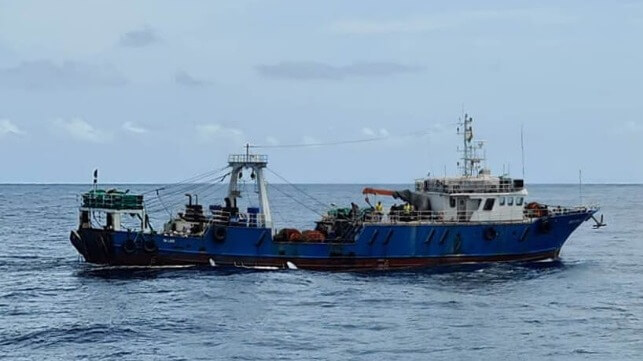
Ghana’s Navy announced over the weekend that it was investigating a suspected piracy attack on a commercial fishing boat off the coast of the West African country. Initial reports indicated that three Chinese nationals had been kidnapped from the vessel but today, March 31, Chinese officials reported the crew are “physically safe.”
The incident took place Thursday evening, March 27, according to the report from Ghana. The fishing vessel Mengxin 1, registered in Ghana, was at sea when it was approached and boarded by seven armed pirates. The Ghana Navy reports warning shots were fired and several crewmembers on the fishing vessel went into hiding.
The pirates assembled the crewmembers they could locate on deck and robbed the crew of their mobile phones. After about three hours the pirates left the vessel. MDAT-GoG (Maritime Domain Awareness Trade - Gulf of Guinea), the French – British effort for maritime situational awareness in the Gulf of Guinea reports the incident took place approximately 16 nautical miles southwest of the Ghanian capital of Accra.
The crewmembers in hiding reported they emerged to find the captain, chief mate, and chief engineer, all Chinese nationals, missing. Because there was no mobile network coverage out at sea it took some time for the incident to be reported until the remaining crew could get the vessel close enough to shore to gain a signal.
The Ghanaian Navy began a search. It also issued an alert to neighboring countries to be looking for the pirates. The fishing boat proceeded back to the port of Tema in Ghana.
Asked about the incident, a spokesperson for China’s Ministry of Foreign Affairs said it had been in touch with the embassy and Ghanian officials.
“The crew members are physically safe now. China will work with Ghana to earnestly protect the safety and security of Chinese nationals and institutions in Ghana,” responded spokesperson Guo Jiakun during the ministry’s daily press briefing in Beijing on March 31.
It is the second incident with a Chinese fishing vessel in recent months. In November, a Chinese fishing boat operating in the east off the Horn of Africa was boarded and held by pirates from Yemen. The Chinese embassy reported that the vessel had been released in January 2025 without providing details.
DEI
Hempel Launches New Podcast to Advance Diversity in the Maritime Industry
Hempel A/S, a global supplier of paints and coating solutions, has today launched its first podcast, Beyond the Horizon. As a long-standing partner to the maritime industry, Hempel has chosen to focus the inaugural season on advancing diversity, bringing together influential voices from across the maritime sector to explore how greater diversity, equity and inclusion can shape a stronger, more resilient industry.
“As a key partner to the maritime sector, we have a responsibility to contribute to its long-term sustainability - not only environmentally, but also socially,” says Alexander Enström, Executive Vice President and Head of Marine at Hempel. “That’s why we created this podcast: to help bring visibility to the diversity challenges our industry faces and to highlight the practical actions that can move us forward.”
Season 1: Diversity in the maritime industry
Over five episodes, Beyond the Horizon Season 1 explores how companies can create more inclusive working environments at sea and onshore. Through open conversations with business leaders, academics and non-profit voices, the series explores both the systemic barriers to progress and the opportunities for collaborative change.
Season 1 guests include:
Mia Krogslund-Jørgensen, Vice President, People, Culture & Strategy at Hafnia
Irene Rosberg, Programme Director, Blue MBA at Copenhagen Business School
Jan Dieleman, President of Cargill Ocean Transportation
Susanne Justesen, Director, Human Sustainability at The Global Maritime Forum
Alexander Enström, Executive Vice President and Head of Marine at Hempel A/S
Key themes explored in the series:
Why diversity is a business imperative
The structural and cultural barriers that prevent progress
The importance of industry-wide collaboration and leadership accountability
The role of data, visibility and communication in accelerating change
How to make maritime careers more attractive to future generations
While Season 1 focuses on diversity in the maritime industry, Beyond the Horizon will evolve to address other timely topics across the industries Hempel serves.
“This podcast reflects our ambition to be more than a coatings provider. We want to contribute to the long-term resilience of our customers’ industries by engaging in the conversations that matter. Season 1 is just the starting point,” says Alexander Enström.