Tuesday, April 01, 2025

First Quantum pulls back from arbitration on Panama copper mine

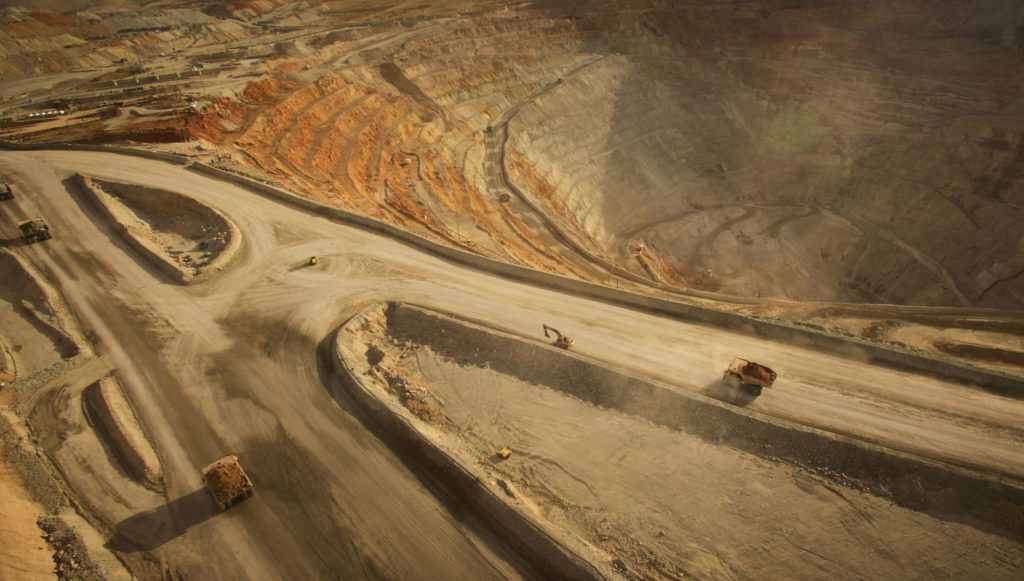
(Image courtesy of Cobre Panama.)

First Quantum Minerals Ltd. dropped one of its arbitration cases against Panama and suspended another, signaling potential for more negotiations with the nation over the company’s copper mine that’s been shuttered for more than a year.

The company said Monday it agreed to discontinue arbitration proceedings with the International Chamber of Commerce that sought compensation for Cobre Panama’s closure. It also said it has suspended arbitration filed under the Canada-Panama Free Trade Agreement.

The moves pave the way for renewed talks with Panama over the future of First Quantum’s $10 billion mine. The government ordered it to shut in December 2023 amid sweeping anti-mining protests and political upheaval. Panama’s President Jose Raul Mulino has repeatedly said his government would only negotiate with First Quantum if they first ended their arbitration proceedings against the country.

Cobre Panama is significant for both Panama and First Quantum, as well as the copper market. The operation accounted for about 5% of Panama’s economy before its closure and generated about 40% of First Quantum’s annual revenue. At its height, Cobre Panama’s output represented about 1.5% of global copper production.

“The company reiterates that it remains committed to dialogue with the government of Panama and to being part of a solution for the country and the Panamanian people,” the company said in a statement Monday.

(By Jacob Lorinc)

Trade war saps Canadian share sale market despite metals deals

Bloomberg News | April 1, 2025 


Volatility from trade tensions with the US kept a lid on Canada’s market for equity deals in the first quarter, even as activity in precious metals perked up.


Canada-listed firms raised just $2 billion in the first quarter, compared to the $2.9 billion raised during the same period a year ago, data compiled by Bloomberg show. Investment bankers say market gyrations wrought by the US-Canada trade war have made dealmaking difficult.

“Whatever thesis you have for making your investment today could be very different from a month, an hour, a year from now,” said Grant Kernaghan, chief executive officer and chairman of Citigroup Global Markets Canada Inc. “This is not, for the most part, a positive backdrop just because there’s too much volatility.”


The cooling market dashed the hopes of some dealmakers who saw green shoots in 2024, including an initial public offering that ended an 18-month dry spell and a steady flow of deals for existing shares.

Companies weighing a share sale today believe the price they’ll get might fluctuate wildly with every conflicting headline, and that uncertainty also dampens buyer sentiment, Kernaghan said. That’s why investment bankers have been very picky about when they bring deals to the market, and it’s also why deals that take longer to market — like IPOs — could be delayed, leading potentially to a further slowdown in activity.

“There have been some very good days,” said Daniel Nowlan, managing director of equity capital markets, corporate and investment banking at National Bank Financial Markets. He pointed to Swiss Re’s C$655 million ($455 million) sale of its 10% stake in Definity Financial Corp., a Canadian insurer, announced March 18.

“For a company that’s not very liquid, it went very well with great names in the book,” Nowlan said. “But it’s one of those things where we had to pick exactly the right day to be able to do it.”

One bright spot in the market has been miners of precious metals. Precious metals companies raised $1.1 billion in Canadian markets in the first quarter, more than four times the amount in the same period last year, according to data compiled by Bloomberg. Discovery Silver Corp.’s C$247.5 million deal is Canada’s biggest equity raise so far this year.

“It hasn’t been a surprise given gold’s strength recently,” said Mike Wang, portfolio manager, ECM and options with Periscope Capital Inc. in Toronto. The increase in activity in materials has prompted the firm and its Periscope Capital Multi-Strategy Fund to focus on it, he said.

“There are certainly sectors within mining that would have no problem coming to market right now and raising equity, but outside of that, I think it’s certainly very challenging,” Citigroup’s Kernaghan said.

(By Geoffrey Morgan)

 BlackRock CEO Says Bitcoin Threatens Dollar’s Reserve Currency Status


BlackRock CEO Says Bitcoin Threatens Dollar’s Reserve Currency Status

Baystreet Staff - Tuesday, April 1, 2025

BlackRock (BLK) CEO Larry Fink writes in his latest annual letter that Bitcoin (BTC) could threaten the U.S. dollar’s status as the world’s reserve currency.

“The U.S. has benefited from the dollar serving as the world’s reserve currency for decades," wrote Fink in his annual letter to shareholders. “But that’s not guaranteed to last forever … If the U.S. doesn’t get its debt under control, if deficits keep ballooning, America risks losing that position to digital assets like Bitcoin.”

Fink’s 2025 letter comes at a time of high market uncertainty and anxiety among investors about the economic state of the U.S. and amid policy changes under U.S. President Donald Trump.

The CEO of BlackRock, the world’s largest investment firm with more than $10 trillion U.S. of assets under management, said investors should diversify their portfolios.

Specifically, he encouraged investors to add private market exposure to their portfolios in addition to stocks and bonds.

Looking ahead, Fink expects cryptocurrencies and other digital assets to continue rising in popularity.

He said that tokenized funds are likely to become as well-known as exchange-traded funds (ETFs), provided that the industry can create a better infrastructure for digital identities.

“Every stock, every bond, every fund— every asset—can be tokenized. If they are, it will revolutionize investing,” he wrote in the letter to shareholders.

BlackRock’s iShares Bitcoin Trust (IBIT) is the most successful ETF in the history of the asset class with nearly $50 billion U.S. of assets, about half of which has come from retail investors.

The stock of BlackRock has risen 15% over the last 12 months to trade at $946.48 U.S. per share.


Critical Metals Corp's Tanbreez rare earth project in Greenland valued at $3B

Investing.com -- Critical Metals Corp (NASDAQ:CRML), a leading mining development company, has announced the results of an independent Preliminary Economic Assessment (PEA) on its Tanbreez Project in Southern Greenland on Monday. The PEA was conducted by Agricola Mining Consultants Pty Ltd and it reveals that 1% of the project's 4.7 billion metric ton host rock has a Net Present Value (NPV) of approximately $3 billion.

The Tanbreez Project is one of the largest rare earth deposits in the world. The PEA demonstrates that the project is expected to have an Internal Rate of Return (IRR) of approximately 180%. The NPV was calculated based on an initial Mineral Resource Estimate (MRE) of 44.97 million metric tons of rare earth materials, which is about 1% of the host rock.

The project is strategically located on a coastal site with deep-water fjord access and close to existing infrastructure. It is expected to become a long-term supplier to US/EU critical mineral and defense sectors. The resource base of the project is robust, with 45 million metric tons at 0.40% Total Rare Earth Oxide (TREO) with 27% Heavy Rare Earth Elements (HREE).

The mining license for the project has been granted through to 2050. The project also has logistical advantages due to its fjord-side location with year-round deep-water access. It is one of the few Western-aligned HREE sources and could potentially become a supply partner for US/EU critical materials strategy.

Tony Sage, CEO and Chairman of Critical Metals Corp, stated that the PEA confirms the exceptional economic credentials of the project and fast tracks the development strategy for this game-changing rare earth deposit. He added that the project is expected to play an essential role in supporting an integrated Western supply chain.

"We’re obviously beyond pleased with this evaluation of a $3.0 billion NPV for Tanbreez in Greenland, especially given that it covers only a small portion of the 4.7 billion metric ton host rock," Sage told Investing.com exclusively following the news. "It’s a fantastic development that demonstrates the importance of this rare earth asset and the macroeconomic tailwinds in our favor. Given the importance of rare earths for national security in the West and other next-generation technologies, I strongly believe there is a marked disconnect between the market valuation and long-term fundamentals of Critical Metals Corp. I look forward to progressing our plans for this world-class asset."

Critical Metals Corp plans to invest $10 million in exploration expense in Tanbreez by the end of 2025. Once the investment is completed, the company will have the option to acquire an additional 50.5% equity interest, which would bring its aggregate ownership in Tanbreez to 92.5% at such time, by issuing additional ordinary shares to Tanbreez’s current majority owner having a value equal to $116 million at such time.

Critical Metals Corp is a leading mining development company focused on critical metals and minerals. Its flagship Project, Tanbreez, is one of the world's largest rare earth deposits and is located in Southern Greenland. The company also holds the Wolfsberg Lithium Project located in Carinthia, Austria, which is the first fully permitted mine in Europe.

This content was originally published on Investing.com

ILLEGAL UNDER INTERNATIONAL LAW

Finnish Government Moves to Reinstate Anti-Personnel Mines to Boost Defense Capabilities


A soldier wearing the Finnish flag on his sleeve speaks to the media, as members of the Finnish arctic expert Jaeger Brigade train British, Swiss and French troops on November 19, 2024 near Heinujarvi, Finland. (Source: Getty Images)

UNITED24
Apr 01, 2025 


Finland has initiated preparations to withdraw from the Ottawa Convention, which prohibits the use, stockpiling, production, and transfer of anti-personnel landmines.

This decision was announced by Finnish Prime Minister Petteri Orpo, as reported by Yle.

According to him, the proposal is based on advice and assessments from military officials. As Defense Minister Antti Häkkänen states, the idea of withdrawing from the convention is unanimously supported in the defense sector.

“The return of anti-personnel mines will enhance Finland’s defense capabilities. They are an economically effective weapon for protecting against criminals and are well-suited for Finland’s terrain. For our conscript army, they are easy to use, convenient to maintain, and reliable,” Häkkänen asserts.


How Ukraine Has Adapted to Europe’s Largest War Since WWII
Feb 25, 2025 08:10

The proposal is also supported by many parliamentarians. According to a survey conducted by Yle, out of 117 Finnish lawmakers, 91 support withdrawing from the agreement, 12 oppose it, and 14 were unable to answer.

Additionally, Finland plans to increase defense spending to 3% of GDP by 2029. As Finance Minister Riikka Purra noted, this represents an increase of approximately three billion euros. Alongside this, the country will begin a reform of its land forces.

On April 1, Finnish President Alexander Stubb wrote that Finland will increase its defense spending to 3% of GDP by 2029 to protect itself from potential Russian aggression.


Protesters block roads to Glencore’s Antapaccay mine in Peru


Reuters | March 31, 2025 | 


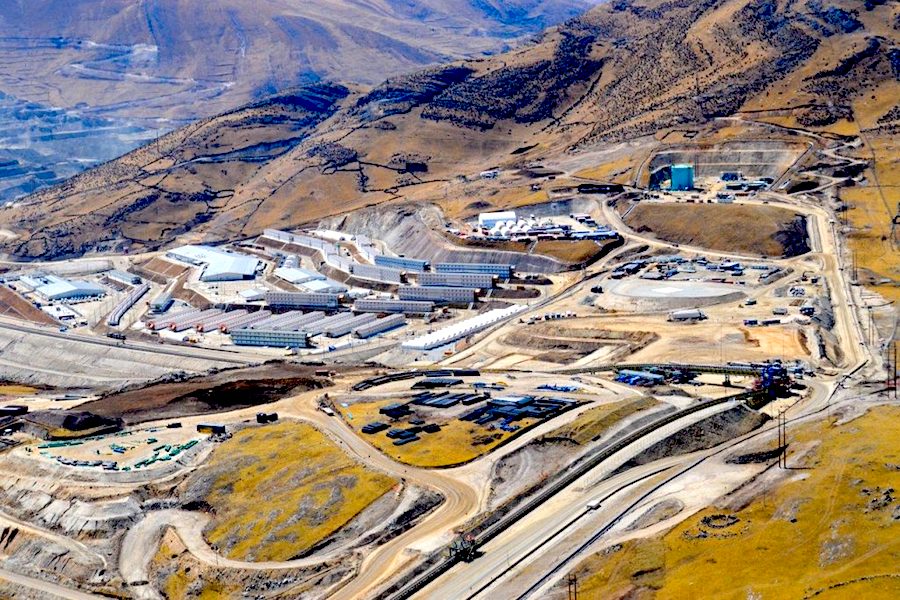
Antapaccay copper mine in Peru. (Photo: Glencore)


Protesters are blocking access to Glencore’s Antapaccay copper mine in the Cusco region of Peru, a local community leader and a source close to the company said on Monday.


Residents of nearby towns on Sunday began blocking roads to the mine to protest a major expansion project, said community leader Flavio Huanque.

(By Marco Aquino; Editing by Daina Beth Solomon)


MMG seeks to reassure investors amid Peru ‘illegal’ copper boom

Bloomberg News | March 31, 2025 | 


Las Bambas is considered the world’s ninth-largest copper mine with an output of about 400,000 tonnes of the industrial metal per year. (Image courtesy of MMG.)


Chinese-owned metals producer MMG Ltd. attempted to reassure investors about its prospects in Peru, saying a surge in “illegal” mining activity in the country isn’t affecting its copper production or development plans.


The company — a unit of state-owned China Minmetals Corp. — shared concerns with the Peruvian government about a “significant increase in illegal mining activity,” MMG said in a March 31 post on its website. The firm’s shares in Hong Kong fell as much as 6.1% on Monday, more than most peers.

The statement is a response to last week’s Bloomberg News article about the emergence of a large, informal mine run by thousands of local community members on the Sulfobamba area of MMG’s Las Bambas concession. That puts MMG and the community on a collision course given Sulfobamba will host the company’s planned third phase of mining in Peru.

To be sure, MMG isn’t the only mining company affected by informal operations, with both Southern Copper Corp. and First Quantum Minerals Ltd. suffering disruptions at their projects.

Mining at Sulfobamba isn’t due to start for another decade and the company is in talks with “all stakeholders” to ensure that the future pit “can be operated sustainably and in a way that benefits host communities,” MMG said.

MMG has only explored 10% to 15% of the concession, and is looking for for new deposits. Its mining operations continue to produce in line with 2025 guidance of between 360,000 metric tons and 400,000 tons, MMG said.
Trump push for US fertilizer won’t be enough to replace imports

Bloomberg News | March 31, 2025 |\

Allan potash mine in Canada’s Saskatchewan province. (Image courtesy of Nutrien.)


President Donald Trump has included potash among the minerals that need an immediate ramp up in US production. That’s unlikely to significantly break America’s reliance on fertilizer imports.


The US gets roughly 90% of its potash — used in the production of corn and soybeans, the nation’s two biggest crops — from other countries. Most of that comes from neighboring Canada, the top producer. US potash production accounts for less than 1% of the country’s total demand, according to Corey Rosenbusch, chief executive officer of the Fertilizer Institute.

“Increased production helps, but we still would be very reliant on Canadian potash,” Rosenbusch said in an interview Friday.

Farmers and fertilizer companies are bracing for possible new US tariffs this week, just as planting season gets under way. The potential for 10% to 25% duties on potash and other Canadian fertilizers coming into the US poses the risk of higher costs for growers that in turn are passed along to consumers.

Rosenbusch said he’s hopeful that Canadian fertilizer might be spared new levies. The Fertilizer Institute, the US lobby for the industry, has been pushing for the federal government to add potash to its permanent list of critical minerals, which are considered essential to US national security and the economy.

While noting there are no guarantees, “we would feel a lot better about our ability to make the case for specific exemptions if it were on the list,” Rosenbusch said.

Michigan Potash & Salt Co. is among companies seeking to ramp up domestic output of potash. The closely held firm has identified a huge potash deposit in Michigan with an estimated value of “up to $65 billion” that can be accessed, according to founder and CEO Theodore Pagano.

The company aims to produce about 10% of the US’s potash needs by 2028, and could ultimately reach as much as 40% with the one reserve, said chief operating officer Aric Glasser.

(By Kim Chipman)

OUTLAW SEABED MINING

Exclusive-White House weighs executive order to fast-track deep-sea mining, sources say

Story by Ernest Scheyder and Jarrett Renshaw
• 1d • REUTERS


FILE PHOTO: A Greenpeace activist holds a banner during a protest near the deep sea mining vessel Hidden Gem, commissioned by Canadian miner The Metals Company, in the Mexican Pacific port of Manzanillo, in Manzanillo, Mexico September 27, 2023. Gustavo Graf/Greenpeace Mexico/Handout via REUTERS/File Photo© Thomson Reuters

(Reuters) - The White House is weighing an executive order that would fast-track permitting for deep-sea mining in international waters and let mining companies bypass a United Nations-backed review process, according to two sources with direct knowledge of the deliberations.

If signed, the order would mark U.S. President Donald Trump's latest attempt to tap international deposits of nickel, copper and other critical minerals used widely across the economy after recent efforts in Greenland and Ukraine. Trump earlier this month also invoked emergency powers to boost domestic minerals production.

The International Seabed Authority - created by the United Nations Convention on the Law of the Sea, which the U.S. has not ratified - has for years been considering standards for deep-sea mining in international waters, although it has yet to formalize them due to unresolved differences over acceptable levels of dust, noise and other factors from the practice.

Trump's deep-sea mining order is likely to stipulate that the U.S. aims to exercise its rights to extract critical minerals on the ocean's floor and let miners bypass the ISA and seek permitting through the U.S. Department of Commerce's National Oceanic and Atmospheric Administration's mining code, according to the sources.

Such a step could give mining companies a formal permitting process to complete and avoid the potential perception that they aim to mine the ocean's floors without any oversight.

The plans are under discussion and could change before Trump signs the order, the sources said.

The White House did not respond to requests for comment.

Companies that aim to mine the seabed say they consider the practice's environmental impacts to be significantly smaller than mining on land, although multiple environmental groups say the practice should not be allowed to begin given the potential risks to marine life.

Any country can allow deep-sea mining in its own territorial waters, roughly 200 nautical miles from shore. Governments most interested in developing deep-sea mining industries in their waters include the Cook Islands, Norway and Japan.

The 36-member ISA council met again in Kingston, Jamaica, earlier this month to review hundreds of proposed amendments to a 256-page draft mining code for international waters, although the meeting ended without resolution.

The ISA's lack of progress led Vancouver-based The Metals Co - which is backed by metals giant Glencore - to formally ask Washington for deep-sea mining permits last Thursday.

The Metals Co said "commercial industry is not welcome at the ISA" and that the U.S. is "a regulator willing to engage with the applicants and give applications a fair hearing."

AMERICA FIRST POLICIES

The move would mark the latest step back by Trump's White House from global institutions it sees as at odds with his "America First" economic policies. Trump last week paused contributions to the World Trade Organization, sources told Reuters.

The move could also raise tensions with other nations competing for resources in international waters, and who believe permitting should be in the hands of a global body that oversees access and resolves disputes.

Part of Trump's hunt for fresh sources of critical minerals has to do with efforts to reduce China's broad control over their production and processing, with Beijing beginning to block exports of key minerals used in defense applications.

It was not immediately clear what kind of staffing NOAA would require to review deep-sea mining permits. Like many U.S. federal government agencies, NOAA has seen job cuts as part of Trump's efficiency push with Elon Musk.

Deep-sea mining is also more technically complex than mining on land given the distance from shore, among other factors.

In a visit last week with Jamaican Prime Minister Andrew Holness, U.S. Secretary of State Marco Rubio said that Washington aimed to partner with Kingston on energy-related projects, including "mining opportunities off the seabed."

Beyond The Metals Co, other companies eyeing deep-sea mining include California-based Impossible Metals, Russia's JSC Yuzhmorgeologiya, Blue Minerals Jamaica, China Minmetals, and Kiribati's Marawa Research and Exploration.

(Reporting by Ernest Scheyder and Jarrett Renshaw; editing by Richard Valdmanis and Marguerita Choy)


Custom Cable System Makes For Smooth Sailing for Crowley's eWolf

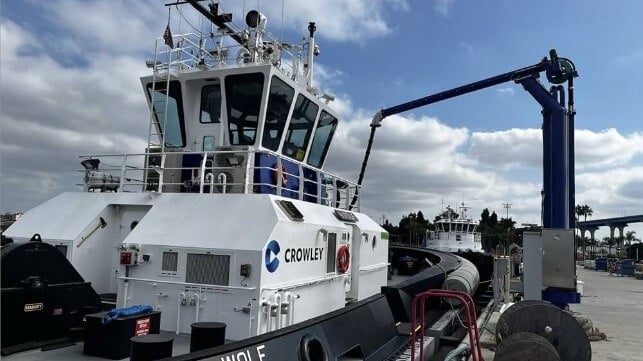
The igus® e-dispenser® delivers power from the shore to the tugboat, delivering a plug to the vessel to charge its batteries.

Published Mar 30, 2025 12:33 PM by The Maritime Executive


The maritime industry — like many industries — is seeing more electrification to reduce carbon emissions, enhance environmental sustainability and safeguard marine ecosystems. One recent example is the launch of the eWolf, an all-electric tugboat that eliminates emissions and is poised to significantly curb air and water pollutants.

One pivotal aspect of maritime electrification is the shoreside power infrastructure, which must offer quick connection and disconnection to the charging system to charge the vessel’s batteries. For eWolf, this meant designing a special plug delivery system that could meet several challenging technical requirements, all while providing a reliable and uninterrupted power supply.

Fortunately, igus® was up to the challenge. To support eWolf, the company designed a custom version of its e-dispenser® shore power system, which offers smooth cable retraction and extension for fast, efficient charging. In addition to being an important part of the tugboat's electric operations, the e-dispenser represents a milestone in the electrification of maritime vessels.

About the eWolf Tugboat

The eWolf electric tugboat is the first fully electric tugboat to be built and operated in the U.S. Designed to operate with zero emissions, it provides a sustainable alternative to traditional diesel-powered tugboats. Designed by Crowley Engineering Services, the 82-foot-long tugboat supports ship arrivals and departures at the Port of San Diego, California. It’s equipped with an integrated electric propulsion system, which includes a 6.2 megawatt-hour energy storage system (ESS) that enables the vessel to operate for a full day on a single charge.

Part of the Port of San Diego’s Maritime Clean Air Strategy, the eWolf’s zero-emissions design is part of broader sustainability efforts and is expected to reduce emissions equivalent to over 350,000 gallons of motor vehicle gas during its first ten years of operation.

The Need For an Innovative Cable Management System

igus® played a crucial role in eWolf’s development by designing a custom cable management system based on its e-dispenser® shore-power system. Essential for delivering power from the shore to the tugboat, the e-dispenser delivers a plug to the tugboat to charge its batteries.

The plug delivery system had to meet several technical requirements, such as handling the large cables and connector needed to meet the eWolf’s high power transfer requirements. It also needed to accommodate the tidal ranges at the Port of San Diego, ensuring there was always enough extra cable to cycle through the range without pulling cables attached to the vessel without impeding other operations on the pier. Part of meeting these requirements involved the use of special cables with very tight bend radii to prevent cable loops from protruding into work areas.
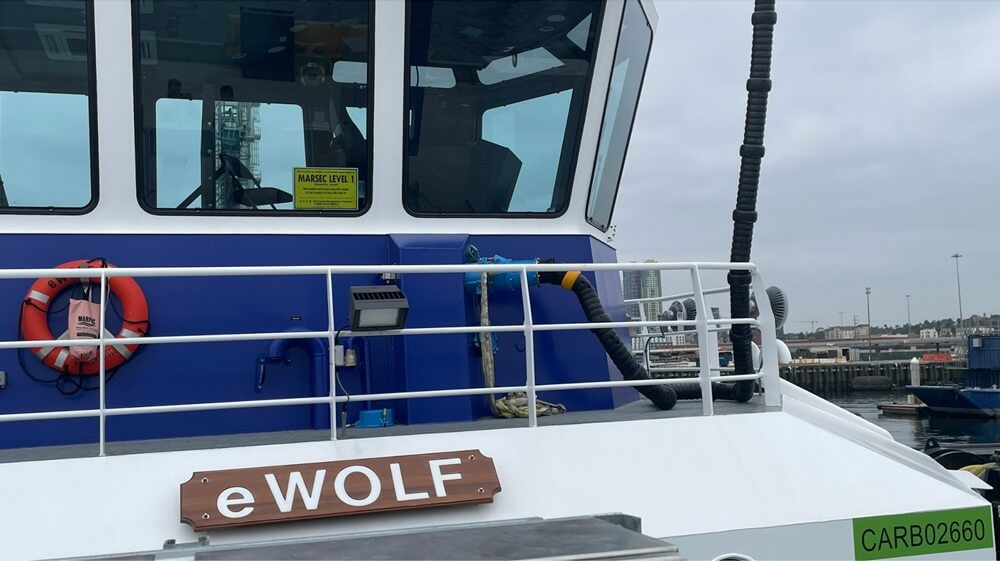
Perhaps most importantly, the cable system had to be fast. Tugboats have limited charging time, and operators need to connect and disconnect power as efficiently as possible. When these vessels dock, cable systems must deliver power immediately. Once the charging is done, the system needs to power down and disconnect rapidly so the tugboat can promptly return to service. This quick-connect capability maximizes operational time on the water and ensures vessels receive necessary power during their brief shore visits.

Customization and R&D Efforts

For igus®, developing the e-dispenser for the eWolf was a unique R&D effort, requiring input from various stakeholders, such as the battery system manufacturer, the vessel design team, charging system team and team from the port. igus® also worked closely with safety experts, who had to qualify the system for marine environments and ensure the system could withstand seismic events, wind speeds and storm conditions.

In this application, the e-dispenser included several igus® core products, many of which had to be modified because of the high loads and tensile stresses involved. For example, the system included triflex® e-chain® cable carriers, which the igus® team strengthened with the addition of a metal pin to the spherical ball connection. For cable management, the team incorporated standard chainflex® products, whose torsion capabilities and small bend radii are ideal for continuous flexing.

Durable yet flexible, igus® chainflex® cables and e-chain® cable carriers can withstand harsh marine conditions, including exposure to saltwater and extreme temperatures. They are also tested for over 10 million cycles, ensuring long-term reliability and efficiency.

Standout Cable System Features

The result of these R&D efforts was a custom plug delivery system that eliminated the need for slip rings, ensuring a reliable and uninterrupted power supply for eWolf. Thanks to its smooth cable retraction and extension, it created a fast yet safe plugging procedure. In fact, disconnecting the plug from the eWolf takes only a few minutes.

One of the e-dispenser’s standout features was its quick onsite installation. igus® delivered the entire system pre-assembled in a single open-top container, with the boom folded down for transport. Once on site, crews used just one crane operation to lift the complete unit from the container and position it on its foundation. The only other assembly processes were selecting the location to mount the operator stations and terminating the shore power cables.

The e-dispenser was also designed to handle different cable configurations and connector styles with the same delivery system. AC, DC or low- and medium-voltage can all be implemented within the same size, shape and function of the e-dispenser without custom multiconductor cables that drive cost.

The eWolf tugboat is a groundbreaking innovation in maritime applications, demonstrating the potential for zero-emissions operations in a traditionally diesel-dependent industry. igus®'s contribution to the eWolf project, through the development of a custom plug delivery cable system, was crucial in enabling the tugboat's electric operations.

This article is sponsored by Igus. For more information, please visit www.igus.com

The opinions expressed herein are the author's and not necessarily those of The Maritime Executive.
 

Yang Ming Buys Methanol Containerships as First Step in Fleet Optimization

Yang Ming containership
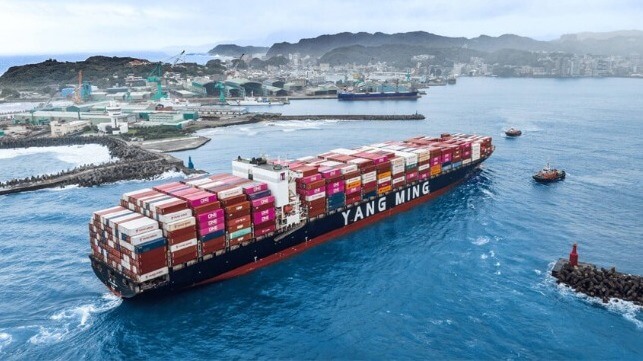
Yang Ming took the first step in its fleet optimization plan (Yang Ming)

Published Mar 31, 2025 8:12 PM by The Maritime Executive


After reporting strong financial results for 2024, Taiwan’s Yang Ming took the first steps in a fleet optimization and expansion program first announced in December 2024. The company reported it is buying three under-construction dual-fuel methanol containerships from Japanese leasing company Shoei Kisen Kaisha.

The three vessels are reported to already be on order with Imabari Shipbuilding. They are scheduled for delivery in 2028 and 2029 and each will have a capacity of 8,000 TEU. The report says they will be equipped with energy-efficient main engines to maintain flexibility for the future adoption of alternative fuels. It also plans to pursue digitalization and smart technologies. 

Yang Ming, which is currently number 10 on Alphaliner’s sector ranking with a capacity of just over 700,000 TEU, has said it is committed to strengthening its core business. The group is part of the reworked Premier Alliance that launched in February 2025 along with HMM and Once Network Express (ONE). The new five-year alliance agreement calls for the expansion of services to make up for the loss of Hapag-Lloyd in the former The Alliance. Yang Ming has already announced its new 2025 Transpacific trade service and Transatlantic routes. It said it plans to strengthen its regional services to broaden its service portfolio.

As reported two weeks ago, the company's financial results for 2024 achieved consolidated revenues of $6.9 billion. It reported a new profit of nearly $2 billion, while still highlighting the challenges in 2024. It cited supply growth outpacing demand last year while expressing long-term confidence in the sector.

The fleet optimization plan calls for replacing its over 20-year-old vessels with between 5,500 and 6,500 TEU capacity. The group plans the addition of 13 new vessels, including up to six 8,000 TEU dual-fuel-ready vessels. It is also planning seven 15,000 TEU LNG dual-fuel vessels.

No timing was announced for the fleet optimization program but the company reports it is a key part of the business strategy.