Thursday, April 03, 2025

Declining Eid travel and spending in Indonesia and discrimination in India dampen holiday spirit

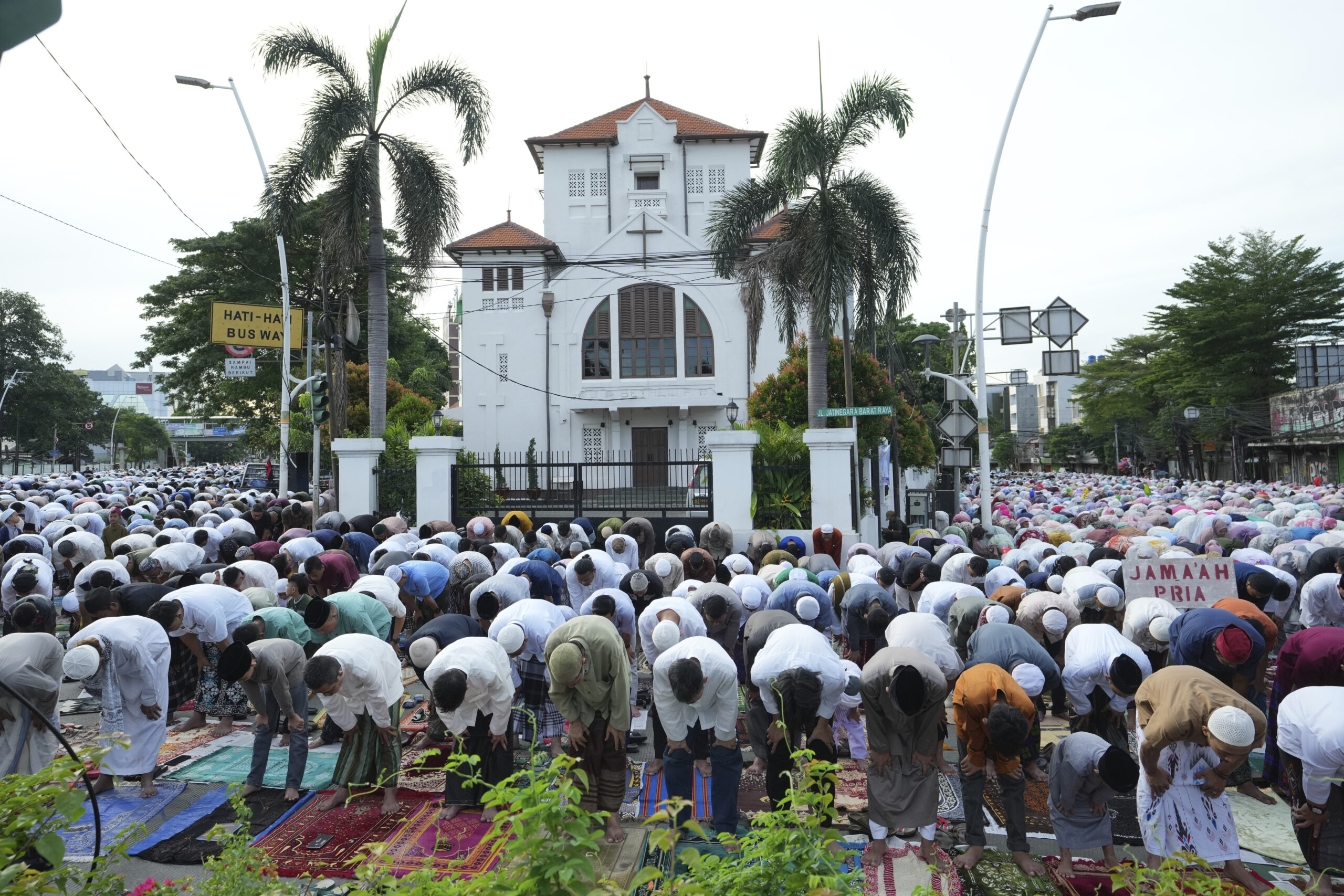
JAKARTA, Indonesia (AP) — Consumer spending ahead of the biggest religious holiday for Muslims, which was celebrated on Sunday in Indonesia, has declined compared to the previous year, with a predicted slowdown in cash circulation due to fewer travelers.


Niniek Karmini
April 1, 2025

JAKARTA, Indonesia (AP) — The usual festive mood of Eid al-Fitr holiday to mark the end of the Islamic holy month of Ramadan has been subdued in Indonesia this year as people grapple with soaring prices for food, clothing and essential goods.

Consumer spending ahead of the biggest religious holiday for Muslims, which was celebrated on Sunday in Indonesia, has declined compared to the previous year, with a predicted slowdown in cash circulation due to fewer travelers.

Each year in Indonesia, nearly three-quarters of the population of the world’s most populous Muslim-majority country travel for the annual homecoming known locally as “mudik” that is always welcomed with excitement.

People pour out of major cities to return to villages to celebrate the holiday with prayers, feasts and family gatherings. Flights are overbooked and anxious relatives weighed down with boxes of gifts form long lines at bus and train stations for the journey

But this year the Transportation Ministry said Eid travelers reached 146 million people, a 24% drop from last year’s 194 million travelers.

The Indonesian Chamber of Commerce and Industry projects that money circulation during Eid will reach 137.97 trillion rupiah ($8.33 billion), down from 157.3 trillion last year. The weakening purchasing power is also reflected in Bank Indonesia’s Consumer Confidence Index which dipped to 126.4 in February from 127.2 in January.

Bhima Yudistira, executive director of the Center for Economic and Law Studies, or Celios, said those trends indicate the economy is under strain, driven by economic hardship, coupled with currency depreciation and mass layoffs in manufacturing.

“These have weakened both corporate earnings and workers’ incomes that suppress consumer spending,” Yudistira said, adding he “expects a less vibrant festive season.”

He said the festive spirit has been stifled by harsh economic realities, as soaring prices and dwindling incomes force residents to prioritize survival over celebration.

Traditionally household consumption is a key driver of Indonesia’s GDP. It contributed over 50% to the economy last year, helping push annual growth to 5.11%. However, consumer spending in 2025 is expected to be more subdued, Yudistira said.

Despite the downturn, the government remains optimistic that the Ramadan and Eid momentum will support economic growth in the first quarter of 2025.

“Eid usually boosts the economy through increased spending,” Chief Economic Affairs Minister Airlangga Hartarto said ahead of the Islamic holiday.

The government recently introduced incentives to stimulate economic activity, including airfare and toll road fee discounts, nationwide online shopping events, direct cash assistance for 16 million households, electricity bill reductions for low-consumption customers, and tax exemptions for labor-intensive sectors.

“With these programs in place, the government hopes to sustain consumer spending and support economic stability,” Hartarto said.

The situation has also affected Endang Trisilowati, a mother of four, who said her family had to scale down their festivities budget.

“Honestly, the economic hardship is affecting us,” Trisilowati said. She described how she used to cook different dishes every Eid and invite neighbors, but now she can only afford a simple meal for her family.

“Many have resorted to just finding a way to eat on that festivity, but the spirit is low,” she said.

Muslims in India grapple with discrimination

In India, Muslims are marking the celebration of Eid with special prayers, family gatherings and festive meals.

The holiday comes as the minority community faces vilification by hardline Hindu nationalists. Muslim groups are also protesting against a proposal by Prime Minister Narendra Modi’s government to change laws governing Muslim land endowments.

The government says it wants to weed out corruption and mismanagement in hundreds of thousands of Muslim land endowments. But Muslim groups say the proposal pending approval in India’s parliament is discriminatory.

Muslims, who comprise 14% of India’s 1.4 billion population, are the largest minority group in the Hindu-majority nation.

Modi’s Hindu nationalist Bharatiya Janata Party launched a nationwide initiative called “Saugat-e-Modi,” or “Modi’s gift,” during Ramadan that is expected to provide food and clothes to over 3 million underprivileged Muslims to celebrate Eid.

In New Delhi, thousands assembled in the Jama Masjid, one of the country’s largest mosques, to offer Eid prayers. Families came together early Monday morning and many people shared hugs and wishes.

“This is a day of giving and receiving love. Even if you meet an enemy, meet them with love today,” said 18-year-old student Mohammed Nooruddin.

___

Associated Press writers Aijaz Hussain in Srinagar and Rishi Lekhi in New Delhi, India, contributed to this report.

Associated Press religion coverage receives support through the AP’s collaboration with The Conversation US, with funding from Lilly Endowment Inc. The AP is solely responsible for this content.
Eid-al-Fitr 

UN agency closes its remaining Gaza bakeries as food supplies dwindle under Israeli blockade

DEIR AL-BALAH, Gaza Strip (AP) — Israel, which later resumed its offensive to pressure the Hamas militant group into accepting changes to their ceasefire agreement, said enough food had entered Gaza during the six-week truce to sustain the territory's roughly 2 million Palestinians for a long time.


Sam Mednick and Wafaa Shurafa
April 3, 2025

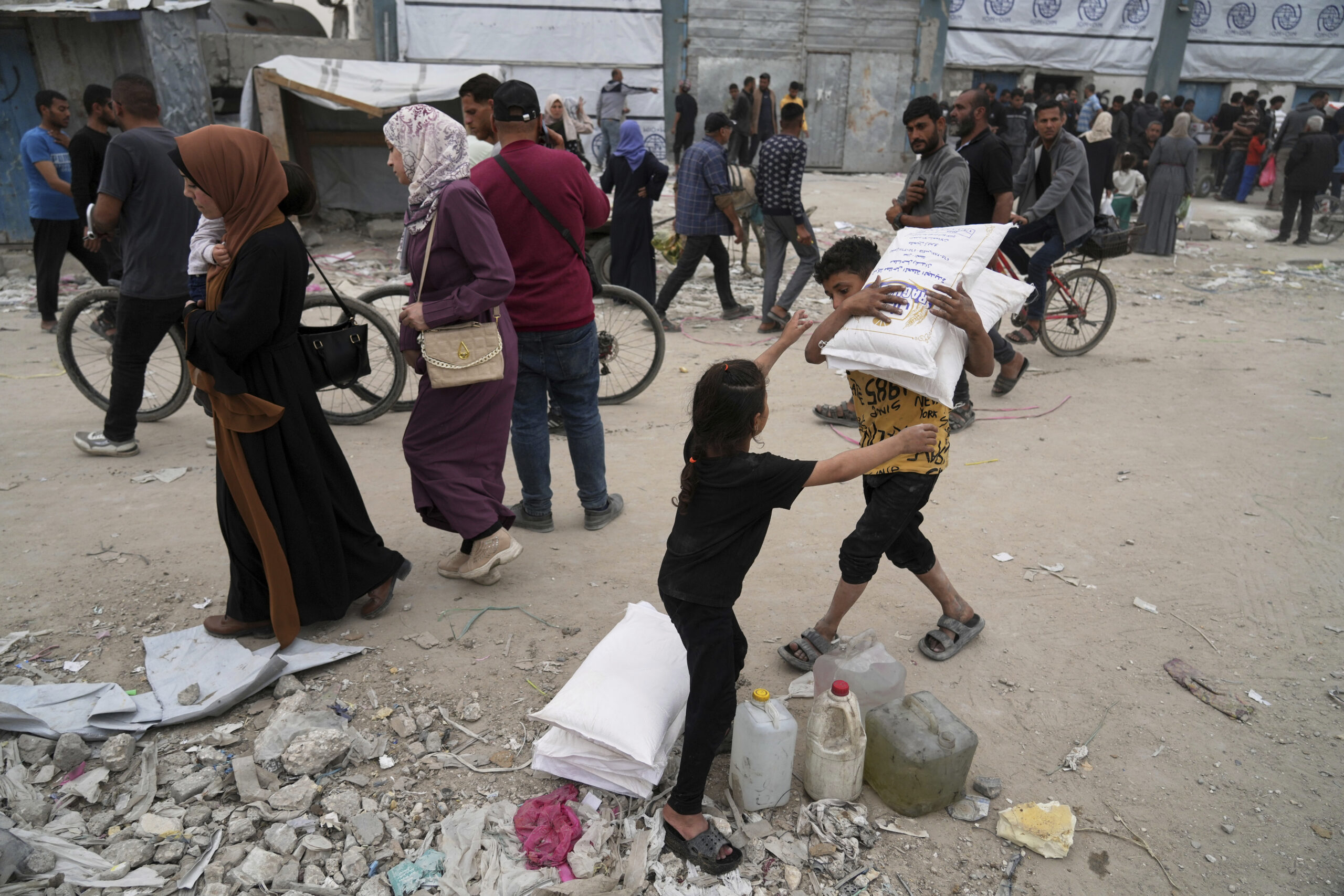
DEIR AL-BALAH, Gaza Strip (AP) — The U.N. food agency is closing all of its bakeries in the Gaza Strip, officials said Tuesday, as supplies dwindle after Israel sealed off the territory from all imports nearly a month ago.

Israel, which later resumed its offensive to pressure the Hamas militant group into accepting changes to their ceasefire agreement, said enough food had entered Gaza during the six-week truce to sustain the territory’s roughly 2 million Palestinians for a long time.

U.N. spokesperson Stephane Dujarric said Israel’s assertion was “ridiculous,” calling the food shortage very critical. The organization is “at the tail end of our supplies” and a lack of flour and cooking oil are forcing the bakeries to close, Dujarric said Tuesday.

Markets largely emptied weeks ago. U.N. agencies say the supplies they built up during the truce are running out. Gaza is heavily reliant on international aid because the war has destroyed almost all of its food production capability.

Mohammed al-Kurd, a father of 12, said his children go to bed without dinner.

“We tell them to be patient and that we will bring flour in the morning,” he said. “We lie to them and to ourselves.”

For the second consecutive day, Israel’s military warned residents of Gaza’s southernmost city of Rafah to immediately evacuate, a sign that it could soon launch a major ground operation. At least 140,000 people were under orders to leave, according to the head of the U.N. agency for Palestinian refugees.

Gaza’s bakeries shut down

A World Food Program memo circulated to aid groups said it could no longer operate its remaining bakeries, which produce the bread on which many rely. The U.N. agency said it was prioritizing its remaining stocks to provide emergency food aid and expand hot meal distribution. WFP spokespeople didn’t immediately respond to requests for comment.

Olga Cherevko, a spokesperson for the U.N. Office for the Coordination of Humanitarian Affairs, said WFP was closing its remaining 19 bakeries after shuttering six last month. She said hundreds of thousands of people relied on them.

The Israeli military body in charge of Palestinian affairs, known as COGAT, said more than 25,000 trucks entered Gaza during the ceasefire, carrying nearly 450,000 tons of aid. It said the amount represented around a third of what has entered during the war.

“There is enough food for a long period of time, if Hamas lets the civilians have it,” it said.

U.N. agencies and aid groups say they struggled to bring in and distribute aid before the ceasefire took hold in January. Their estimates for how much aid reached people in Gaza were consistently lower than COGAT’s, which were based on how much entered through border crossings.

Israeli strikes kill dozens

Gaza’s Health Ministry reported that at least 42 bodies and more than 180 wounded arrived at hospitals over the past 24 hours. At least 1,042 Palestinians have been killed in the two weeks since Israel broke the ceasefire and resumed heavy bombardments.

The war began when Hamas-led militants attacked southern Israel on Oct. 7, 2023, killing around 1,200 people, mostly civilians, and taking 251 hostages. Hamas is still holding 59 captives — 24 believed to be alive — after most of the rest were released in ceasefire agreements or other deals.

Israel’s offensive has killed more than 50,000 Palestinians, including hundreds killed in strikes since the ceasefire ended, according to Gaza’s Health Ministry, which doesn’t say whether those killed are civilians or combatants. Israel says it has killed around 20,000 militants, without providing evidence.

Israel sealed off Gaza from all aid at the start of the war but later relented under pressure from Washington. U.S. President Donald Trump’s administration, which took credit for helping to broker the ceasefire, has expressed full support for Israel’s actions, including its decision to end the truce.

Israel has demanded that Hamas release several hostages before further talks on ending the war. Those negotiations were supposed to begin in early February. It has also insisted that Hamas disarm and leave Gaza, conditions that weren’t part of the ceasefire agreement.

Hamas has called for implementing the agreement, in which the remaining hostages would be released in exchange for the release of more Palestinian prisoners, a lasting ceasefire and an Israeli withdrawal.

Palestinian journalist and family killed by Israeli strike

Palestinians mourned Mohamed Salah Bardawil, a journalist with Hamas-affiliated Aqsa Radio who was killed along with his wife and three children by an Israeli strike early Tuesday at their home in southern Gaza.

Associated Press footage showed the building in Khan Younis collapsed, with dried blood splattered on the rubble. A child’s school notebook, dust-covered dolls and clothing lay half-buried in the ruins. The Israeli military declined to comment.

The journalist is the nephew of Salah Bardawil, a well-known member of Hamas’ political bureau who was killed in an Israeli strike that also killed his wife last month.

Israeli strikes have killed more than 170 journalists and media workers since the war began, the Committee to Protect Journalists has estimated.

___

Mednick reported from Tel Aviv, Israel. Associated Press writers Fatma Khaled in Cairo and Edith M. Lederer at the United Nations contributed to this report.

___

Follow AP’s war coverage at https://apnews.com/hub/israel-hamas-war
Associated Press religion coverage receives support through the AP’s collaboration with The Conversation US, with funding from Lilly Endowment Inc. The AP is solely responsible for this content.

Eid-al-Fitr begins with the images of Gaza’s children dressed in death

(RNS) — Eid is meant to be a day of celebration. But this year, it was also a day of mourning.


Relatives mourn 12-year-old Ahmad Abu Teir, who was killed in an Israeli army strike, before his funeral along with seven other Palestinians, including a father, mother, and their three children, on the first day of the Muslim holiday of Eid in Khan Younis, southern Gaza Strip, Sunday, March 30, 2025. (AP Photo/Abdel Kareem Hana)
Omar Suleiman
March 31, 202

(RNS) — Eid al-Fitr is supposed to be a day of joy marking the end of a month of spiritual striving, of fasting, prayer and giving. It’s the day when, after a month of self-denial, the entire community comes together — dressed in new clothes, exchanging gifts, embracing one another in celebration.

This year, joy was elusive.

On the morning of Eid, as we prepared to gather in prayer, news began to trickle in from Gaza. Children had been slaughtered — again. Multiple children had been bombed to death by Israeli airstrikes as the sun rose, ending their Eid excitement and their lives. One image in particular will not leave me: a child dressed in brand-new Eid clothes, now wrapped in a burial shroud clutching a toy with his lifeless hand. What was supposed to be a morning of sweets and celebration had become another chapter in a long, unending nightmare.

Just hours later, I stood at an Eid prayer in America, watching hundreds of children — my own included — running around in colorful outfits, holding new toys, laughing and hugging their friends. The sight should have filled me with joy, but the deaths of the children in Gaza made it almost unbearable.

I wasn’t alone. A doctor from my community in Dallas who is currently volunteering in Gaza messaged me with his own heartbreaking witness. “Today’s been the worst day by far. Bombing most intense at Fajr when people were getting ready for Eid. Children in their Eid clothes and jewelry are in the morgues.”

This is the backdrop against which Muslims around the world tried to celebrate.

What do we do with that kind of sorrow?

Islam teaches that Ramadan is a month of cultivating empathy. Eid is meant to continue that empathy, even into our celebrations. On the morning of Eid, every Muslim is required to pay Zakat al-Fitr — a form of charity designed to ensure that no one is left out of the feast. It is a beautiful practice: a way of saying that joy is only complete when shared, that our celebration is meaningless if others are starving.

How do we fulfill that responsibility when an entire population is being starved intentionally? The blockade on Gaza has made it nearly impossible to deliver aid. Humanitarian convoys are bombed, bakeries are destroyed, access to clean water and medicine is deliberately withheld. Zakat al-Fitr — the alms given by Muslims at this holy time — is supposed to feed the hungry. But in Gaza, even bread is a casualty of war.

And yet, amid the devastation, there was a moment that gave me hope.

A young boy named Adam, a survivor from Gaza receiving treatment here in the U.S., came up to me on Eid morning. He was hobbling on his new prosthetic leg — a reminder of what he had endured. But as he approached, he smiled wide and gave me a huge hug. In that moment, I thought about the children who didn’t survive and prayed that they were now embracing their loved ones in the gardens of paradise, celebrating a different kind of Eid — free from bombs, from fear, from sorrow.

And I prayed that those still with us, like Adam, can have a future that honors what they’ve been through — a future where they don’t have to trade limbs for safety or childhoods for survival.

Eid is meant to be a day of celebration. But this year, it was also a day of mourning. A day of tension between gratitude and grief. And in that tension, we find a deeper calling — not just to grieve, but to act. Not just to celebrate, but to remember.


Because joy, when denied to some, cannot be fully enjoyed by others.

And because children like Adam deserve more than our tears — they deserve a world that never again forces them to say goodbye before they’ve even had the chance to live.

Ohio group gathers personal letters to connect with Muslims in prison for Eid

(RNS) — Eid Letters to Incarcerated Muslims is one of several groups in America sending letters to incarcerated Muslims for the holiday and, ultimately, advocating for prison abolishment.


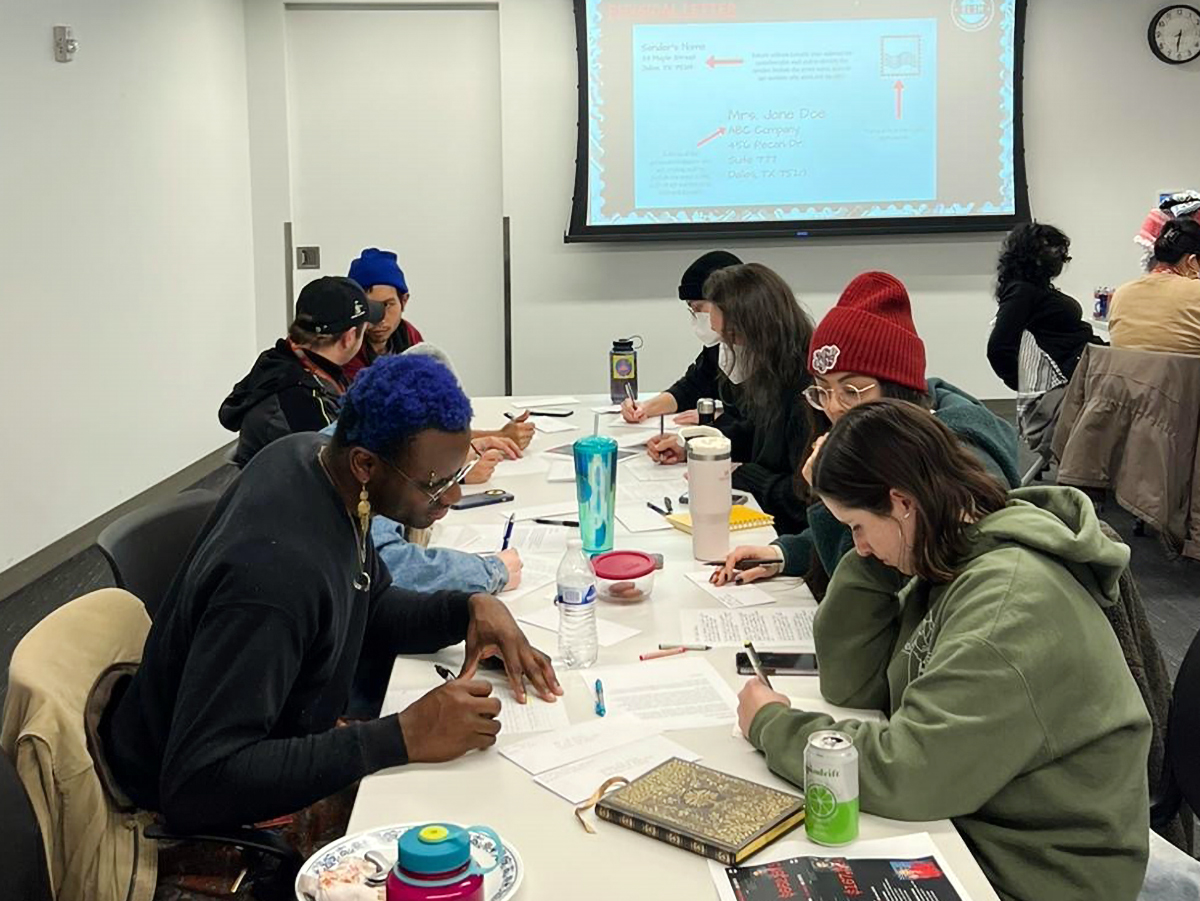
Volunteers in Ohio participate in an annual Eid Al-Fitr letter-writing campaign organized by Eid Letters to Incarcerated Muslims. (Photo courtesy ELIM)

Reina Coulibaly
March 31, 2025

(RNS) — Muslims in North America are celebrating Eid Al-Fitr, marking the end of the holy month of Ramadan. Around the world, people celebrate by donning their best attire, gathering for prayers and exchanging gifts.

For incarcerated Muslims, though, the holiday looks drastically different. While some can celebrate with other Muslims in their facility, many observe the holiday in isolation.

Earlier this month, Eid Letters to Incarcerated Muslims, an Ohio grassroots project that for the past five years has facilitated an annual Eid Al-Fitr letter-writing campaign for incarcerated Muslims in the state, hosted a webinar about its efforts.

The project aims to connect with incarcerated Muslims and sees advocacy for prison abolishment as an important part of practicing the Islamic faith, according to the group. To volunteers and leaders, letter writing is a form of advocacy work foundational to their spiritual and political commitments.

One of ELIM’s core organizers, Mariam Khan, sees the group’s work as a form of worship that follows in the example of the Prophet Muhammad.

“When I read about the Sunnah (the Prophet Muhammad’s recorded practices) and life of the Prophet, I see him as a community organizer, someone giving the clothes off his back and the money in his pocket to the most needy,” Khan said. “I want to create an Islamic practice that centers around action, around material change through our faith. That extends to our incarcerated brothers and sisters.”

RELATED: For Muslims with eating disorders, Ramadan fasting can present health and spiritual challenges

This year, ELIM volunteers gathered nearly 350 letters through community partnerships and writing events, like the annual webinar. The letters are being distributed to 230 men in two Ohio facilities: Lebanon Correctional Institution and the Ohio State Penitentiary. The recipients were identified through a “fasting roll call,” or a list of people who requested fasting accommodations provided to ELIM by facilities’ chaplains and other intermediaries.

ELIM is one of several faith-based groups across the country reaching those inside prisons through letter writing and resource distribution. Volunteer-run groups like the Philadelphia Muslim Freedom Fund, Sacramento Letters to Incarcerated Muslims and nonprofits like Believers Bail Out share a similar mission, also ultimately seeking prison abolishment. They run independently and focus on their respective locales.

Zumana Noor, a core leader for the Philadelphia Muslim Freedom Fund, said the group’s work is rooted in solidarity, not charity.

“It’s our duty as Muslims to support our brothers and sisters in need, including those behind bars,” Noor said. “That’s really the center of what we do. It’s about compassion, about giving back.”


A Philadelphia Muslim Freedom Fund letter-writing event on June 20, 2024. (Photo courtesy PMFF)

Noor also noted the often intangible impact of such outreach.

“When the system sees that someone is being cared for, that there are people checking in and mailing letters, they’re less likely to pull stuff with them,” Noor said. “They know there are people on the outside who will speak up.”

Kenza Kamal, one of ELIM’s founding members, emphasized that incarcerated Muslims have much to offer.

“The folks inside are highly learned,” Kamal said. “They study and know things that many of us on the outside have not had the focus, discipline or the pressure to learn.”

For ELIM organizers, letter writing is a way to connect with incarcerated people and send a message of hope for the future, with ending incarceration being the ultimate goal.

“Abolition isn’t separate from Islam,” said Ridha Nazir, a newer ELIM organizer. “It teaches us to stand with the oppressed and to never lose sight of justice and to act with mercy. When we write these letters for incarcerated Muslims, we’re doing more than just sending words on a page. We’re extending solidarity, we’re extending care, we’re extending the spiritual connection.”

RELATED: In Algiers, a youth-led gallery offers community through music during Ramadan

Moreover, Nazir said, the prison system “is designed to isolate, and disappear people,” to which Islam stands in contrast.

“For us, letter writing is an act of worship,” Nazir said.

However, the Ohio campaign has at least one new obstacle. A new policy from the Ohio Department of Rehabilitation and Correction, effective Feb. 1, mandates all incoming letters be copied or scanned into an electronic format for delivery and the originals destroyed after 30 days. Inmates can no longer receive original — often handwritten — letters from ELIM.

Fardowsa Dahir, another ELIM organizer, said new restrictions seem to be implemented every year in the state. And, much communication getting into the facilities relies on one person, like an amenable imam or chaplain, Khan added.

“When that person stops communicating with us, that’s the end of our lifeline to administer and organize this project,” Khan said.

The new mail policy also affects the emotional weight of the letters, Nazir said, as the scanning process strips away some of the personal and spiritual intimacy that handwritten letters offer.

“We always want to work in the way of the Prophet (Muhammad), and we’re following the example he set,” Nazir said. “He never turned his back on those who are isolated or imprisoned or struggling. And so, we remember the Quranic verses that tell us to speak truth, to show up and to not be complicit to injustice through silence.”


This article was produced as part of the RNS/Interfaith America Religion Journalism Fellowship.


Research shows that a majority of Christian religious leaders accept the reality of climate change but have never mentioned it to their congregations

(The Conversation) — Churchgoers who think their religious leaders don’t believe humans are driving climate change are less likely to discuss it with fellow congregants or take action to mitigate the effects.


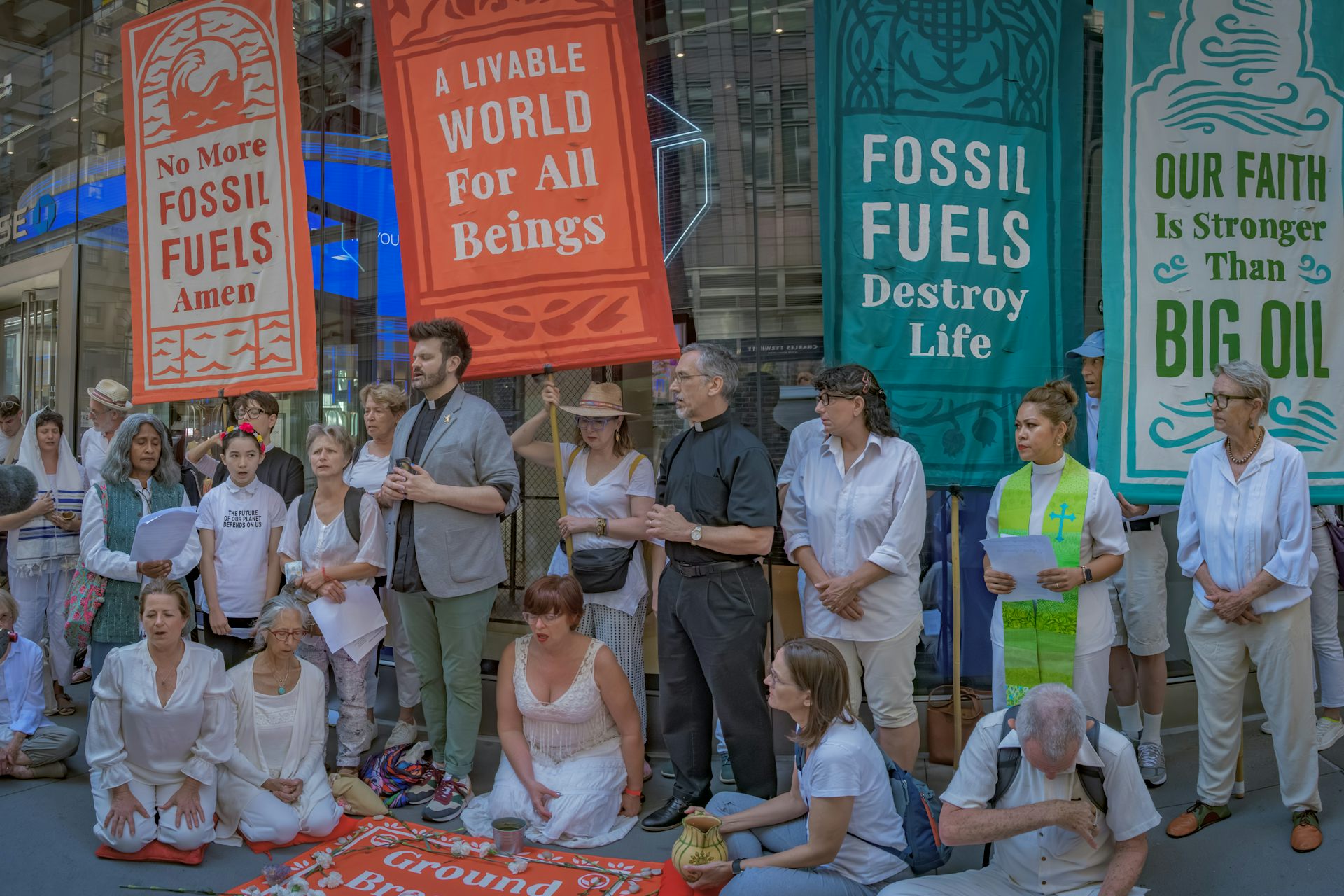
A multi-faith assembly of religious leaders and lay people in Manhattan in 2023 protest investments in fossil fuel. (Erik McGregor/LightRocket via Getty Images)

Stylianos Syropoulos and Gregg Sparkman
April 3, 2025

(The Conversation) — Nearly 90% of U.S. Christian religious leaders believe humans are driving climate change. When churchgoers learn how widespread this belief is, they report taking steps to reduce its effects, as we found in our research published in the Proceedings of the National Academy of Sciences.

We examined data collected in 2023 and 2024 from a nationwide survey of 1,600 religious leaders in the United States. The sample included religious leaders from fundamentalist and evangelical churches, Baptists, Methodists, Black protestants, Roman Catholic denominations and more – all recruited to match the proportions of churches across the country. The survey assessed religious leaders’ beliefs about climate change and whether they discuss climate change with their congregations.

According to that data, while the overwhelming majority of Christian religious leaders accept the human-driven reality of climate change, nearly half have never mentioned climate change or humans’ role in it to their congregations. Further, only a quarter have spoken about it more than once or twice.

Why it matters

When it comes to climate change, faith communities are often seen as divided. There is an assumption that religious conservatism and climate skepticism go hand in hand. This assumption is based on religious beliefs such as that the Earth was created by God and therefore humans cannot and should not alter it, along with rejection of climate science and diminished concern about climate change.

We then surveyed a sample of Christian Americans from major denominations across the country and found they think roughly half of Christian leaders in the U.S., and in churches like their own, deny that humans cause climate change. Given the actual number is closer to 1 in 10 based on the data we examined, it appears Christians overestimate the prevalence of climate denial among their leaders by around five times the level found in polling.

Churchgoers who think their religious leaders don’t believe humans cause climate change report being less likely to discuss it with fellow congregants and less interested in attending events that aim to address climate change or raise awareness of the issue.

The research also tested what would happen if we informed churchgoers of the true level of consensus among their religious leaders who accept that climate change is driven by humans. In a brief survey, Christians were told the percentage of Christian leaders nationally, and among their denomination specifically, who accepted that human activities cause climate change. As a result, we found, their perceptions and attitudes toward climate change shifted in a variety of ways.

Specifically, churchgoers who were informed about the actual consensus among religious leaders in accepting climate change were more likely to state that “taking action to reduce climate change” was consistent with their church’s values.

Churchgoers who received this information were also more likely to feel it would be inconsistent with their church’s values to vote for a political candidate who opposes actions that could slow climate change.

These findings highlight that religious leaders have a unique power to influence climate action – but only if they let their beliefs be known.


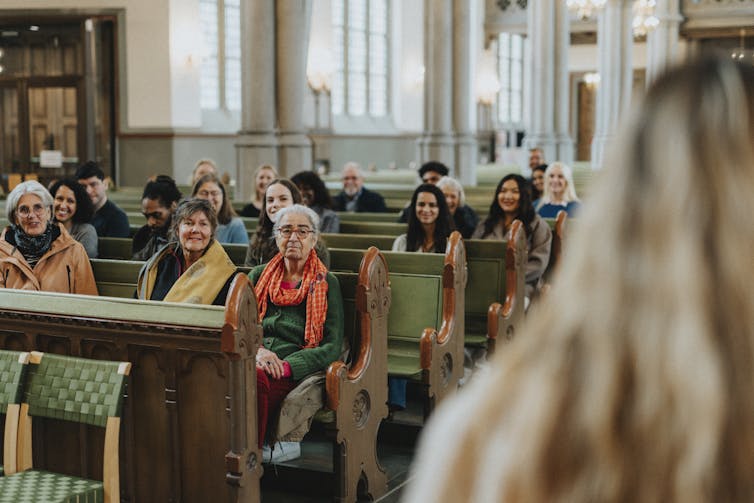
Religious leaders have a unique power to influence climate action.
Mascot/Digital Vision via Getty Images

What’s next

These findings are not focusing on what is going on in specific churches and denominations. We provided churchgoers only with information on the consensus of acceptance of human-made climate change among Christian religious leaders across the U.S. A natural next step is to conduct research with religious leaders to examine the impact of their communication directly with their congregations, including if they convey the consensus described in this work.

Religious leaders, often viewed as moral guides, have the ability to reshape climate discourse within faith communities. If they vocalize their acceptance of human-made climate change, we believe they can correct widespread misperceptions, foster dialogue and encourage action in ways that secular authorities may struggle to achieve.

The Research Brief is a short take on interesting academic work.

Gregg Sparkman receives funding from the National Science Foundation.

(Stylianos Syropoulos, Assistant Professor of Psychology, Arizona State University. Gregg Sparkman, Assistant Professor of Psychology, Boston College. The views expressed in this commentary do not necessarily reflect those of Religion News Service.)
After Khartoum recaptured, badly damaged Anglican Cathedral still stands

NAIROBI, Kenya (RNS) — ‘The damage is huge. Archbishop’s residence, dean’s house, and offices are all destroyed and looted. Praise God the building is not bombed,’ said the archbishop, days after the city was taken back by the national army.


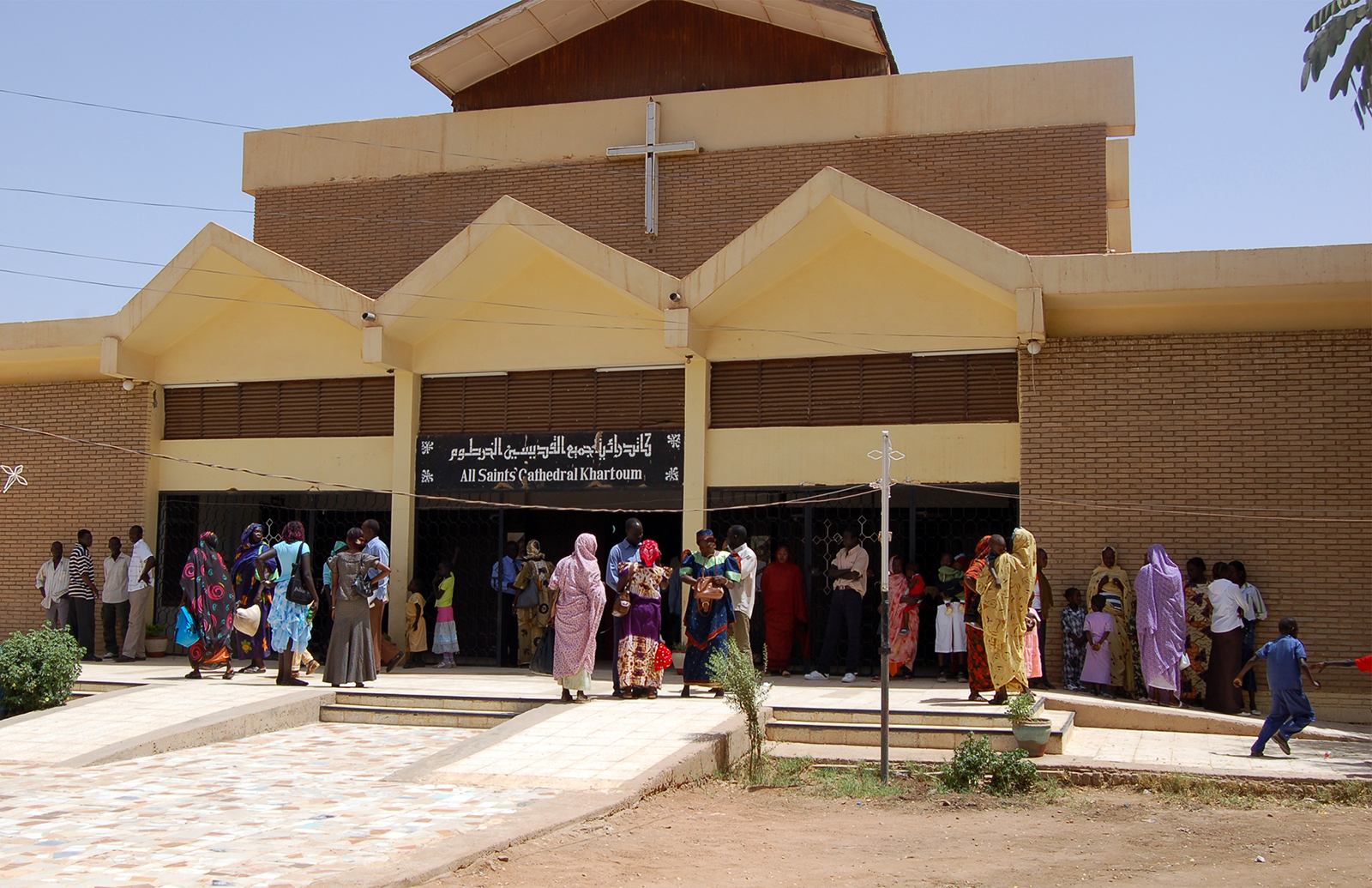
The All Saints Anglican Cathedral in Khartoum. (RNS photo/Fredrick Nzwili)


Fredrick Nzwili
April 2, 2025

NAIROBI, Kenya (RNS) — Although the All Saints Anglican Cathedral in Khartoum suffered huge damage in the two-year battle for the Sudanese capital, the country’s archbishop is relieved the structure was never bombed.

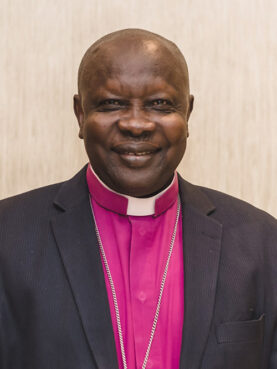
Speaking on Tuesday (April 1), days after the Sudanese Armed Forces, the national army, had recaptured the city from the paramilitary Rapid Support Forces, Ezekiel Kondo, the archbishop of the Episcopal (Anglican) Church of Sudan, told RNS he had received information about the state of the cathedral and the damage it had sustained.

“The damage is huge. Archbishop’s residence, dean’s house, and offices are all destroyed and looted. Praise God the building is not bombed,” Kondo, 68, told RNS from Port Sudan, in eastern Sudan, where he had been forced to flee two years earlier. “It will cost millions of dollars to repair the church.

According to the archbishop, Christians are yet to return to the cathedral because the army has not declared the area safe.

“There may be land mines left behind by the paramilitary. Basic services such as water and electricity have not been restored,” said Kondo.

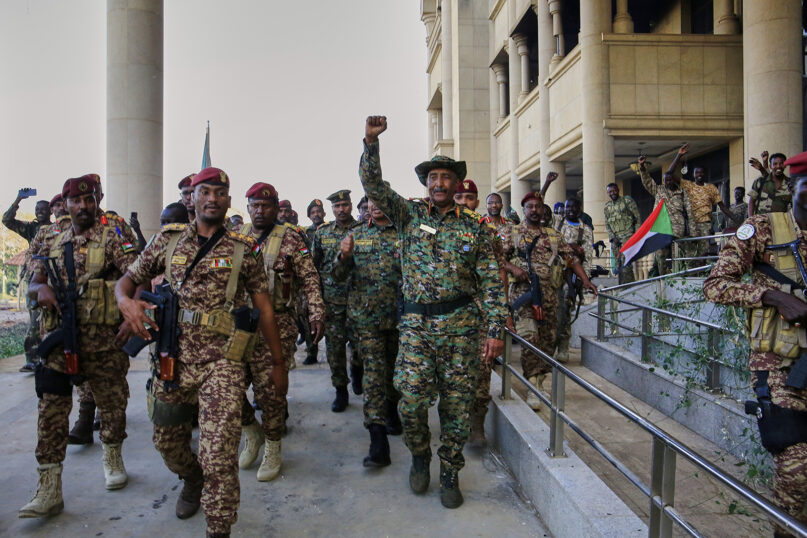
On March 26, Gen. Abdel-Fattah Burhan, the leader of the Sudanese Armed Forces, announced that his forces had taken the city back from Mohamed Hamdan Dagalo and the Rapid Support Forces, raising hopes that the bloody civil war between the two factions of the military government might move on from the area.


Sudan’s military chief, Gen. Abdel-Fattah Burhan, center, is greeted by troops as he arrives at the Republican Palace, recently recaptured from the Rapid Support Forces paramilitary group, in Khartoum, Sudan, March 26, 2025. (AP Photo)

However, a month earlier, in Nairobi, the Rapid Support Forces and allies had announced plans to form a parallel government. The Sudanese Armed Forces now controls the north and the east, while the Rapid Support Forces controls the south and the expansive Darfur region in the West, creating an impression of a split in Africa’s third largest country. Dagalo is a former leader of the Janjaweed, a group of Arab militias widely accused of committing mass atrocities in the Darfur region, recognized by the United Nations as genocide in 2004.

Like other churches and some mosques, the All Saints Anglican Cathedral has been caught in the fight for control of Khartoum and northeastern Sudan.

On April 15, 2023, Kondo, along with other church leaders and their families, had been in the cathedral preparing for the Sunday service when the paramilitary seized the church building and turned it into a military base. This past September, the archbishop told RNS the paramilitary had turned the cathedral compound into a graveyard, chopping pews for use as firewood.

In Sudan, an estimated 5% of the 50 million population are Christians. The rest, 95%, are Sunni Muslims.

While the war has forced the shutting of an estimated 165 churches, some mosques have also been targets. On March 24, the paramilitary allegedly shelled a mosque in Khartoum, killing at least five people and injuring dozens of others.

Archbishop Ezekiel Kondo. (Photo by Anglican Communion News Service)

According to reports, the militaries have also arrested numerous Muslim clerics who have advocated for peace. At least 12 mosques in Khartoum, El Fasher and El Geneina have been affected.

“The religious sites and the clerics are being caught in the crossfire in a war between two generals who are Muslims. It is not a religious war,” said Sheikh Abdullah Kheir, an imam and a senior university lecturer in various Kenyan universities. “When you look at what is happening, it is not only Christians who are suffering, but Muslims too. I have seen Muslim women being bombed as they try to flee.”

Church sources indicate that St. Matthew’s Catholic Church in Khartoum has also been badly damaged, with the interior and exterior affected. However, the structure is still standing. The 1908 cathedral, near the El Mek Nimir Bridge, is the seat of Archbishop Michael Didi Adgum Mangoria of Khartoum. Mangoria is also living in Port Sudan after having been forced out by the war.

“The building is intact, but there are no benches in the sitting area. Instead, there is rubbish,” said the Rev. John Gbemboyo Joseph Mbikoyezu, the coordinator of the South Sudan Catholic Bishops’ Conference.

Despite persistent calls by church leaders for peace, there is no ceasefire agreement in sight, and the two generals are promising to fight on.

The exact death toll in the Sudan conflict is still unknown, but organizations have put the figure between 61,000 and 150,000 people. The conflict has displaced an estimated 12 million people and created one of the world’s worst humanitarian crises, according to the U.N.
A bishop of the Arctic says goodbye

INUKJUAK, Quebec (RNS) — As Canada’s Anglican church dwindles, its most remote (and most expansive) diocese has shown growth. One bishop responsible for that trend is retiring, leaving his successor to find clergy willing to take on the Arctic’s challenges.


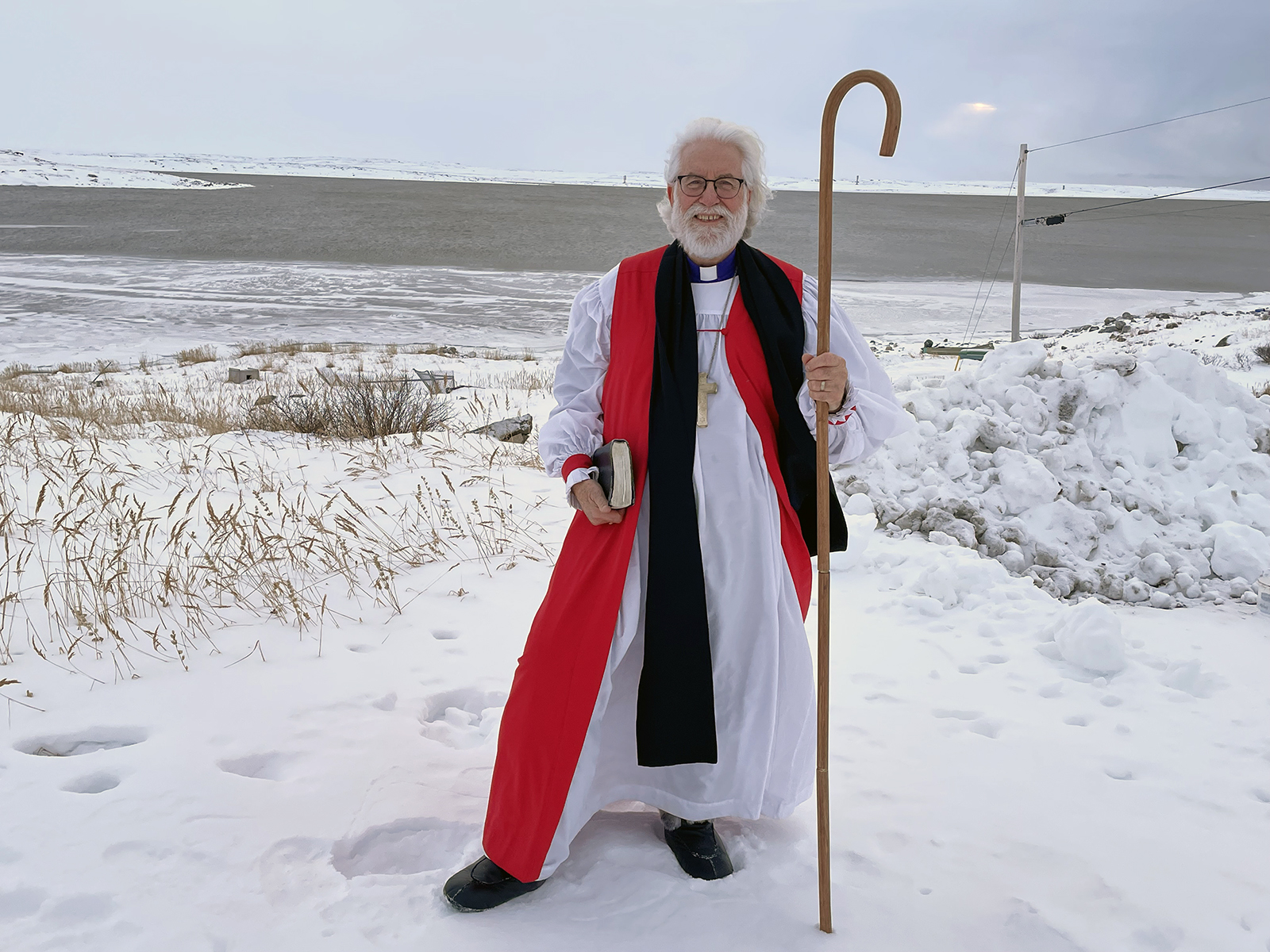
Anglican Bishop David Parsons poses in the village of Puvirnituq, Quebec, in northern Canada. (Photo by Julia Duin)


Julia Duin
April 2, 2025


INUKJUAK, Quebec (RNS) — Outside, on the banks of a chilly river flowing into the blue-black waters of Hudson Bay, it was only 10 degrees.

Inside St. Thomas Anglican Church, in the northern Canadian hamlet of Inukjuak, about 70 people were gathered — one of them an imposing, 6-foot-1 man with a thatch of white hair, a full beard and the long, sweeping red, black and white robes of an Anglican bishop.

Bishop David Parsons, holding up a red paper heart to signify the blood of Jesus, a black one to signify sin, a Bible and a flashlight, said: “This Bible is a light to show us where to go. For 12 years, I’ve worn the robes of a bishop. The robes remind me that I am a sinner.”

Parsons had recently turned 70, the mandatory retirement age in the Anglican Church of Canada, and was taking a farewell tour after a dozen years heading the Diocese of the Arctic. Covering Canada’s northern third, it is the largest Anglican diocese (by area) in the world. Inukjuak, population 1,821, is in Nunavik, a region at the diocese’s far eastern end in the remote northern reaches of Quebec.

Translating for Parsons was his predecessor and mentor, Andrew Atagotaaluk. Wiry and compact, with bushy eyebrows and silvery-black hair, and standing almost a foot shorter than Parsons, Atagotaaluk was the diocese’s first Inuit bishop and one of four translators of the first Inuktituk-language Bible.

Together, the two bishops had created an evangelical outpost with 34,171 members and still growing amid the more liberal ACC that is dropping numbers so fast, the entire denomination may not last beyond 2040.


Anglican Bishop David Parsons, left, preaches about the need for redemption while his translator, retired Bishop Andrew Atagotaaluk, holds a yellow paper heart as a sermon prop, during a service at St. Thomas Anglican Church in Inukjuak, Quebec, in late November 2024. (Photo by Julia Duin)

The diocese’s bishops have consistently voted throughout the years against same-sex unions, gender transition liturgies and other liberalizing trends in the ACC. “The South doesn’t want to support us because we’re too biblical,” the bishop mused. “We believe Jesus is Lord, we’re not interfaith and we don’t have the intelligence to run things on our own without the Holy Spirit.”

If its congregations are growing, however, Parsons’ successor, who will be elected May 9 in Edmonton, will grapple with the never-ending problem of how to attract priests to the Arctic. Only 16 full-time clergy serve the diocese’s 49 parishes, recruited from around the world to serve in 13 hamlets ranging from Kugluktuk to Kuujjuaq. Parsons has used a patchwork of retired clergy, deacons and laity to lead another two dozen churches, leaving 10 parishes with no clergy or lay leader.

Meanwhile, climate change, geopolitics and tourism bring the world farther north every year. The Anglicans, who have been in the region since the late 17th century, and the Catholics, who’ve been there a century, are seeing a bit of competition. Jehovah’s Witnesses and Muslims have established footholds in the Arctic, and independent Baptists and Seventh-day Adventists have also moved in.

To meet that challenge means a constant search for new blood, which is tremendously draining. The onetime corps of missionary Anglican clergy from the U.K. eager to minister in the Arctic no longer exists. Many non-Inuit clergy leave after a few years due to the isolation of the Arctic and easier career opportunities elsewhere.

Add to this the simple wear and tear on the body from constant travel in subzero cold. Born in Labrador, Parsons is used to living up north, but his first post as a lay minister in 1989 in Aklavik was truly remote. Only reachable by plane or ice road, the village, near the Alaskan border, was a trading post for the Hudson Bay Co. and the site of the diocese’s first cathedral.


Dioceses and provinces of the Anglican Church of Canada. The Diocese of the Arctic is highlighted in blue. (Image courtesy of ACC)

Parsons adored his four years there, he said, as there were several clergy within a day’s journey to mentor him. “It was like a party for me,” he said. “I thought I’d died and gone to heaven. These were high-caliber people who treated me if I were one of them.”

One of them, Atagotaaluk, ordained him and sent Parsons to head a parish in Inuvik, a town on the Mackenzie River Delta near the Arctic Ocean. Parsons served happily there until Atagotaaluk announced his retirement in 2012, and Parsons was nominated to replace him. Parsons dithered on whether to keep his name on the ballot.

“Dad,” said Davey Parsons, the bishop’s youngest son, then 30, “how long are you going to run away from everything?”

Parsons’ name stayed. He was elected after several ballots. “The next morning,” he remembered, “a member of the Nunavut government asked me what I was going to do about all the suicides.”

In 2012, after he prayed about how to answer the government official’s question, he realized the key was hiring a youth coordinator for the at-risk teenagers dying by suicide. He hired one and got a $45,000 grant to help train parish leaders in suicide prevention. Then COVID-19 hit. Meanwhile, the youth coordinator married, got pregnant and quit.


Bishop David Parsons prays over Willie Surusilla for healing of a broken leg at a confirmation service at St. Matthew Anglican Church in Puvirnituq, Quebec, in late November 2024. To the right is Mary Tatatoapik, a deacon. (Photo by Julia Duin)

The question of suicide came up at the bishop’s next stop, in Puvirnituq, the largest town on Hudson Bay’s eastern coast and home of the new $4 million (Canadian) St. Matthew’s Anglican Church. Its priest, Esau Tatatoapik, and his wife, Mary, a deacon, met him at the airport and took him to their home beneath skies green with the northern lights.

Just before Parsons’ plane pulled in, the couple had presided at a funeral for a woman who’d been killed by her drunken grandson. Esau averages three funerals a month, but this past week he’d had four. Parsons asked what was killing everyone, and the couple — along with their youth group leaders — responded that the causes were alcohol-related, drug overdoses or cancer.

“Mary and I are so tired,” the priest said. “There have been so many funerals. So many of the clergy have had suicides.”


Anglican Bishop David Parsons greets a child at St. Matthew Anglican Church in Puvirnituq, Quebec. (Photo by Julia Duin)

Parsons had been going all day, but somehow, he had to encourage this dispirited group. “I am soon going to be gone,” he said. “It will be you guys who will need to look for an answer. We need to get people in their 20s. We need to empower a crowd of teenagers. Instead of killing themselves, they need to come alongside each other and build each other up.”

He repeated a prophecy that Anglicans across the north have talked about for years: Through the Arctic, God will revive the South. There have been prophets among their own people, he said, that have said the dying southern half of the Canadian church will be awoken by a resurgent, evangelical, spiritually powerful North.

He repeated this message at an evening confirmation service whose Pentecostal-style hymns were led by a six-piece band. Parsons asked the youthful crowd of 70 how many teens were present without their parents. At least 10 raised their hands.

“Where are the elders?” he asked. “They are home drunk … with busyness.”

His 40-minute sermon reassured his listeners they have a destiny despite their remote locale. “God wants to send the people of the North to the whole world.”

The irony was maddening; here he had plenty of people but not enough leaders, while dioceses in the South have plenty of clergy, but no people.

The next day, Parsons was off for Ivujivik, a scenic village in a tiny fjord off Digges Sound, at the very northern tip of Quebec. The local priest, Peter Ainalik, who would turn 80 in a few days, was one of the men Parsons has talked out of retirement to staff the tiny St. Columba Anglican Church. He met with Parsons for several hours before the service to pray and reminisce.


Anglican Bishop David Parsons confirms Ricky Nayoumealuk, 23, at St. Thomas Anglican Church in Inukjuak, Quebec, in late November 2024. Deacon Allie Ohaituk, right, holds a shepherd’s crook, the symbol of a bishop’s authority. (Photo by Julia Duin)

Ainalik told the bishop that church members wanted a prayer time for all the suicides in town. Thirty-two people — mostly women — made their way through the falling snow for an evening service where one person was confirmed. When Parsons invited people up for prayer afterward, the floodgates burst open. A petite dark-haired woman named Piellie asked for prayer for a broken heart: Her 32-year-old son, Lucassie, died by suicide the year before, she said between sobs. Many others wept as well.

“Some of them cannot heal after suicide,” Parsons reflected afterward. “So many young people are doing it. Many have been lost. It’s hard to find the answer why.”

The next day, Ainalik, engulfed in a mustard-yellow parka, saw Parsons off at the tiny airport. The priest and the bishop shook hands.

“See you in heaven,” Parsons said.


Anglican Bishop David Parsons, seated right, prays with two of his priests, Peter Ainalik, left, and Esau Tatatoapik in a hostel overlooking Digges Sound in Ivujivik, Quebec, in late 2024. (Photo by Julia Duin)
Flunking Sainthood


Sociologist's new book explains why organized religion has lost relevancy

(RNS) — Christian Smith’s research shows traditional religion isn’t just declining. It’s culturally obsolete.


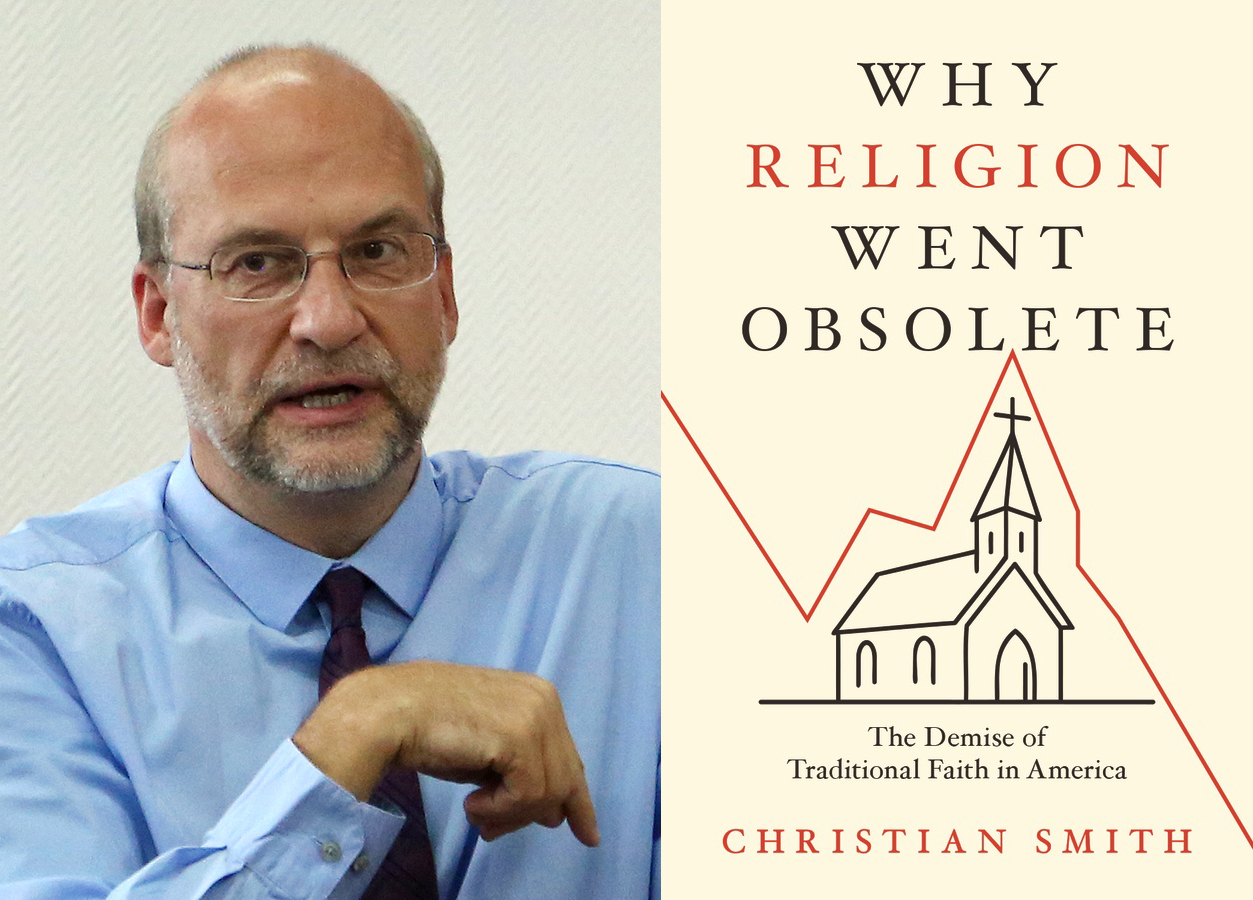
“Why Religion Went Obsolete: The Demise of Traditional Faith in America” by Christian Smith. (Courtesy images)

Jana Riess
April 3, 2025

(RNS) — Traditional religion may be destined for the walls of the Cracker Barrel, a space filled with nostalgic advertisements for products of yesteryear, like Victrolas, lace antimacassars or butter churns. All things, in other words, that have been rendered obsolete by modern life.

According to social scientist and author Christian Smith, a professor of sociology at the University of Notre Dame, “obsolete” describes the situation facing traditional organized religion in the United States. The title of his new book even puts its cultural expiration in the past tense: “Why Religion Went Obsolete: The Demise of Traditional Faith in America.”

The book, based on research that includes more than 200 qualitative interviews, will be released by Oxford University Press on Tuesday (April 8).

“We almost always use the word ‘decline’ when we talk about if things aren’t going well for religion,” Smith said in a Zoom interview with RNS. “And decline is a good word. But what it’s descriptive of is organizational matters and individual religiousness. Organizations can have decline in membership or adherence, attendance, financial giving. That’s decline — it’s measurable.”

His book, however, chronicles something bigger and harder to pin down. It’s about all the cultural changes that precipitated those declines and made organized religion so much less relevant in people’s lives.

“The culture was formed by these big institutional, technological, economic, geopolitical, military, etc., changes,” he said. Those changes include the rise of individualism, the association of religion with violence after 9/11, the third sexual revolution and more.

Smith is quick to point out that culturally obsolete things can still be quite useful for some people. He has DVDs and CDs in his house that he’s not planning to get rid of. But most younger people rely entirely on streaming services for their movies and music, making DVDs and CDs obsolete for them.

There’s a lesson there. No, religion hasn’t been supplanted by a spiffy new technology — though Smith’s book does detail 10 ways the internet “corroded” religion, including by reducing people’s attention spans and diminishing their willingness to engage in in-person communities that come with significant time demands. Nor was there an intentional plot to derail religion, with secularists setting out to cut it down.


RELATED: Decline in American Christian observance has slowed, Pew study finds

Instead, the social changes that have made religion obsolete were “long-term, highly complex and unintended,” Smith said. Delayed marriage, reduced childbirth and voluntary childlessness have all chipped away at the cultural power of religion, but eroding religion was never the aim of those social changes. People embraced them because they felt their lives were better because of them.

There have also been geopolitical changes, such as the end of the Cold War and the neoliberal economic policies that made people more devoted to their careers in order to stay competitive. Both indirectly damaged religion. The end of the Cold War, Smith writes, “was a jolt that helped to trigger the cultural avalanche that plowed over religion in the next two decades.” Americans who had been brought up to believe that what made us better than the Soviets was that they were godless communists suddenly lost their certainty that being American meant being Christian.

Another factor was the rise of religious scandals, particularly the Catholic Church’s priest sex abuse crisis and the evangelical world’s multiple scandals with pastors who covered up sexual assault and were accused of embezzlement. Even though only a small minority of clergy was involved in those scandals, they “polluted” the name of religion in the eyes of millions, Smith found in his research. In this way, religion has had a hand in digging its own grave.

Smith called this convergence of factors “a perfect storm.” All these elements and more create a zeitgeist that is, if not hostile to religion, not particularly receptive to it.

“It’s very generational,” he said. “This is especially post-boomers, especially millennials. Within the culture for that generation, religion was just kind of discredited or polluted, or it didn’t add up.”

Some people within traditional religion may see the book as being down on religion. That’s not the case though, Smith said. The sociologist’s nearly two dozen previous books have chronicled the highs and lows of religion in America for many years. His National Study of Youth and Religion project researched the religious and spiritual lives of American teenagers into emerging adulthood. His book “Passing the Plate” explored the state of charitable giving in America and considered what might be possible if Christians donated more of their money to worthy causes. And Smith is himself a Christian. He grew up Presbyterian and converted to Roman Catholicism about 15 years ago.

In sum, he’s not pining to see religion on the walls of the Cracker Barrel.

“I don’t have an anti-religious agenda in my scholarship at all,” he said. “I’m a sociologist, so I’m here to describe the world as best I can — what’s happening and why — without cheering it on or without condemning it.”

Now, his job is to explain that shift as best he can using research. While religious people are sometimes defensive or appalled by his message about religion’s obsolescence, other times they receive the news with relief. Presenting his data to audiences, he’s encountered pastors “who just think they’ve failed, like they did a bad job” if their churches aren’t growing, he said.

“I said, ‘It’s not you. There’s something bigger going on here,'” he said. The pastors found it liberating to realize their church’s decline wasn’t only happening to them, or it wasn’t because of something they’d done or failed to do.

“If people don’t have an understanding of those social contexts, it’s very easy for them to personalize it and oftentimes blame themselves,” Smith said.


RELATED: More young adults are leaving religion, but that’s not the whole story, say researchers

Smith won’t make a full-on prediction about where religion is headed next, except that just because traditional religion has become obsolete doesn’t mean secularism has triumphed.

“It’s not a binary between religion and the secular,” he said. It’s not the kind of “zero sum game,” but is more nuanced. Most Americans still believe in God, even in younger generations, he added.

Rather, he sees religion morphing into other channels. Interest in the supernatural remains very high in the U.S., which is the topic of another book he’s working on. And he sees an interesting “re-enchantment” happening outside of religious institutions as people explore neopaganism, healing crystals and the like.

“As people left religion, or grew up in a world in which religion was obsolete, they became attracted to this re-enchanted culture. And there’s lots of different entry doors into it,” he said.
Harvard Divinity School pauses religion and conflict educational initiative, cuts its staff

(RNS) — Hilary Rantisi, the associate director of the program, and the sole Palestinian American employed at the divinity school, said she was told her position was not renewed
.

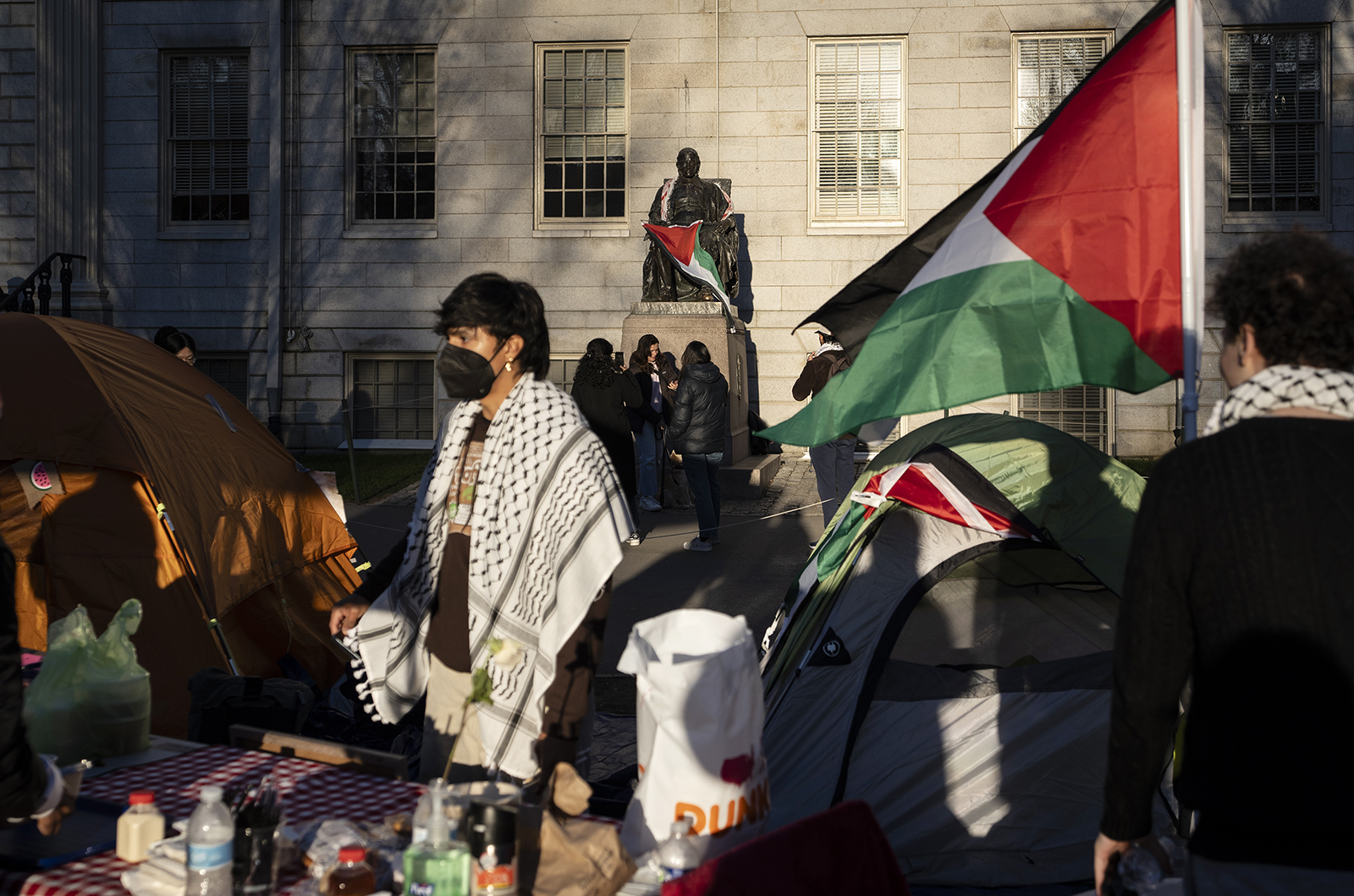
A student protester stands in front of the statue of John Harvard, the first major benefactor of Harvard College, draped in the Palestinian flag, at an encampment of students protesting against the war in Gaza, at Harvard University in Cambridge, Mass., April 25, 2024. (AP Photo/Ben Curtis, File)


Yonat Shimron
April 3, 2025


(RNS) — Harvard Divinity School announced last week it was pausing its Religion, Conflict and Peace Initiative, a program that focused on Israel-Palestine as a case study.

On Wednesday (April 2), it cut the last remaining position in the initiative.

Hilary Rantisi, the associate director of the program, said she was told her position will not be renewed. She is also the sole Palestinian American staff member at the divinity school. Her last day is at the end of June. She did not comment further.

The news follows a cascading series of events that include the departure of two leaders of Harvard University’s Center for Middle Eastern Studies and the suspension of the Harvard School of Public Health’s partnership with Birzeit University in the West Bank.

Harvard is facing a Trump administration threat to cut $9 billion in contracts and grants for failing to protect Jewish students from antisemitism and promoting “divisive ideologies over free inquiry.” The Trump administration has already indicated it might pull hundreds of millions in federal funds from Columbia University and the University of Pennsylvania for failing to address accusations of antisemitism on campus.


Hilary Rantisi. (Photo via HDS)

The divinity school declined to comment to RNS beyond the statement on its website, which says it is pausing the initiative “in order to rethink its focus and reimagine its future.” The change will be implemented in the next academic year.

The announcement posted last week also cited “long- and short-term budgetary issues” related to the initiative’s loss of financial support and said the divinity school will face a reduced budget next fiscal year.

In the wake of the Israel-Hamas war, the Religion, Conflict and Peace Initiative had come under intense criticism, mostly from Jewish groups arguing it was biased toward the Palestinian narrative and against Israel. The program’s chief offering, a class called “Narratives of Displacement and Belonging in Israel-Palestine,” included a two-week trip to Israel and the occupied West Bank. It was canceled this past semester.

Then in January, Diane L. Moore, the associate dean of the Religion and Public Life program at Harvard and a key partner of the Religion, Conflict and Peace Initiative who helped develop the class, departed one semester before she was set to retire. And in February, the assistant dean for the Religion and Public Life program, Hussein Rashid, who is Muslim, announced he was resigning at the end of the spring semester, saying in a letter to students that anti-Muslim bias was rampant at Harvard.

Rantisi, who is Christian, was born in Jerusalem and grew up in the West Bank city of Ramallah. She earned a master’s degree in Middle East studies from the University of Chicago. She has worked at Harvard since 2001 and was the director of the Middle East Initiative at Harvard’s Kennedy School of Government before the program came under the divinity school’s purview.

“As an alumna of the school, I’m just enraged,” said Atalia Omer, a professor of religion, conflict and peace studies at the University of Notre Dame who co-taught the Harvard Divinity School class. “As someone who was a part of building the curriculum, I’m devastated, and very, very sad. This was the one place at Harvard broadly where we had a very robust programming on understanding Palestine-Israel as a case study.”

Omer is Jewish and a native of Israel. She, along with Rantisi and Moore, developed the class, which was first offered in a different format in 2019, and then offered annually to look deeply at the sometimes conflicting narratives of Jews, Palestinians — both Muslims and Christians — living in the region.


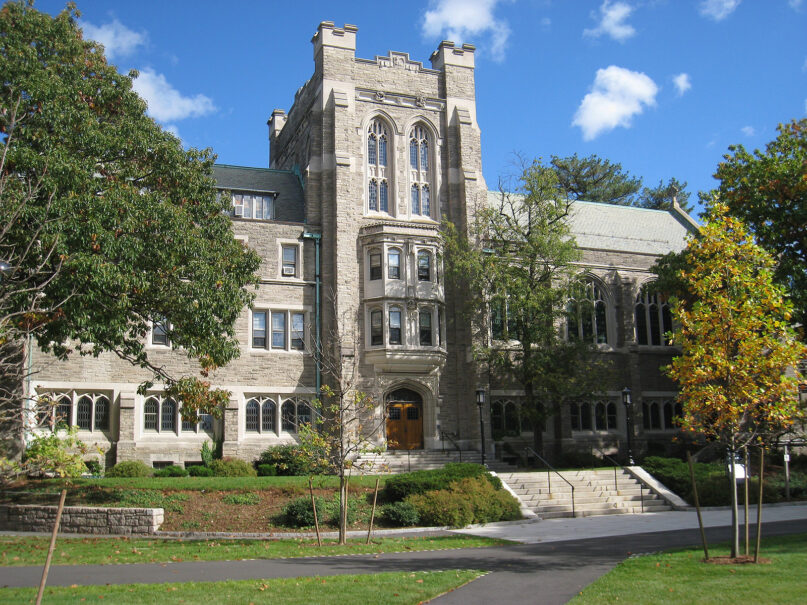
Swartz Hall, formerly Andover Hall, home to the Harvard Divinity School at Harvard University in Cambridge, Mass. (Photo courtesy of Wikimedia/Creative Commons)

In addition to the class, the Religion, Conflict and Peace Initiative invited visiting scholars to teach at the divinity school. It offered internship opportunities for students, a fellows program, reading groups for Harvard faculty and other public events on campus.

RELATED: Administrators at Harvard Divinity School quit, say school condoned hate

Harvard came to public attention among several U.S. schools with active pro-Palestinian student encampments last year protesting the war in Gaza. Its former president, Claudine Gay, resigned after a congressional hearing where she was unable to unequivocally say whether calls on campus for the genocide of Jews would violate the school’s conduct policy.

In January, Harvard settled two lawsuits with Jewish groups that claimed the school had not taken appropriate steps to keep its campus from becoming a hostile environment for Jewish and Israeli students in the aftermath of the Oct. 7, 2023, Hamas attack on Israel and the ensuing war.

As part of the settlement, Harvard also agreed to adopt the controversial International Holocaust Remembrance Alliance’s definition of antisemitism when investigating complaints.

At least four students in the divinity school were interviewed by a committee collecting information about the Religion, Conflict and Peace Initiative on Wednesday. Later that day, the divinity school announced the program was being paused.

Sarah Kahn, a master of theological studies student at the divinity school who is Muslim, said she was shocked. She had listed the program specifically in her application to the school.

“The program was instrumental to my experience at Harvard Divinity School,” said Kahn, who had attended the initiative’s events. “It was a program that really valued this kind of anthropological and intimate knowledge of ethnic conflict and religious conflict, and was committed to resolving them on the terms of the people most impacted.”


Opinion


Turkey's president arrested his top opponent. Here's why it matters to the beleaguered free world.

(RNS) — ErdoÄŸan's arrest of the Istanbul mayor is aimed at quelling an increasingly vocal political opposition. But Ekrem İmamoÄŸlu is also indispensable to the Turkish president as a symbol of religious toleration — and a foil to ErdoÄŸan's Islamist ideal.


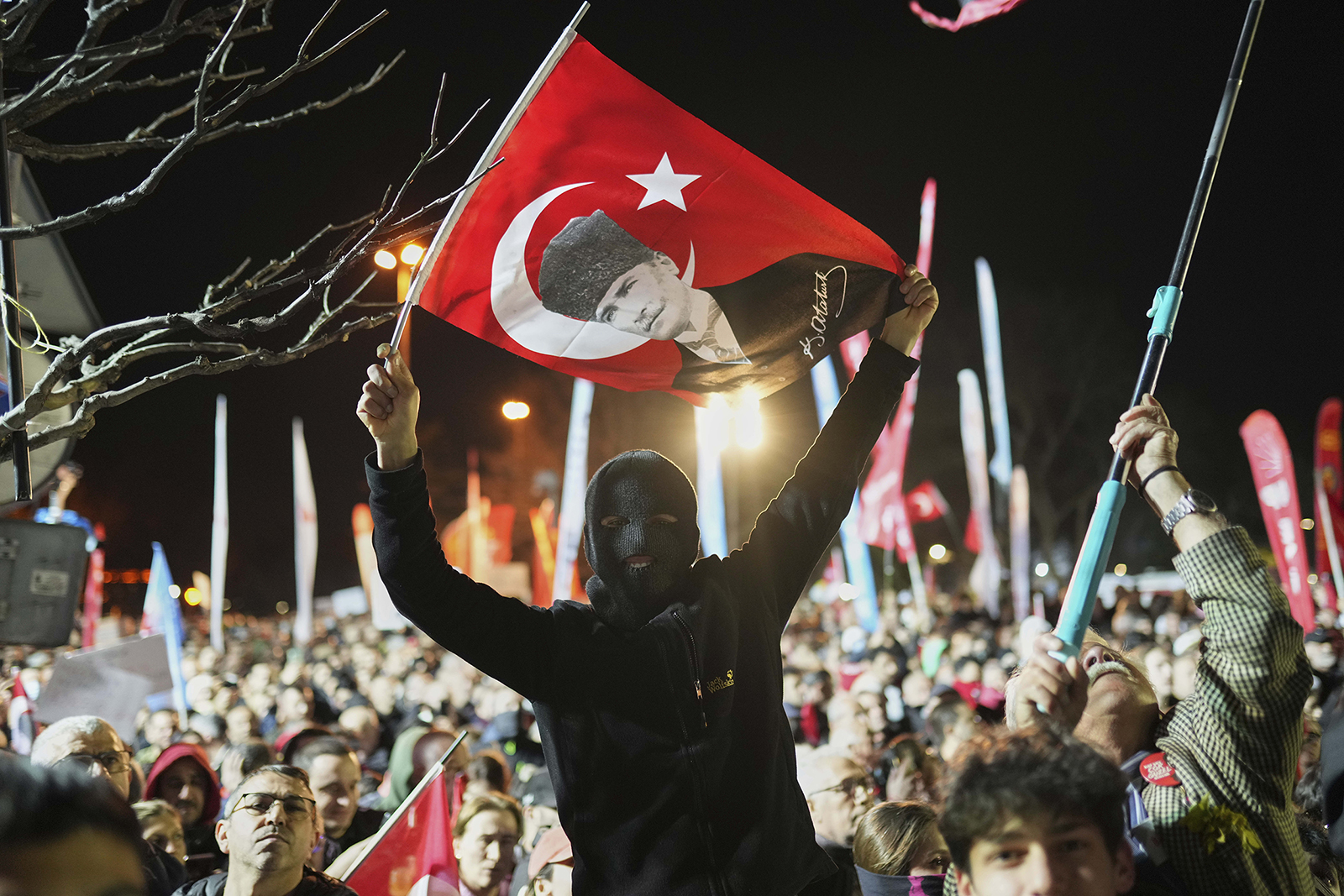
Demonstrators shout slogans during a protest after Istanbul's Mayor Ekrem İmamoğlu was arrested and sent to prison, in Istanbul, Turkey, Tuesday, March 25, 2025. (AP Photo/Francisco Seco)


Katherine Kelaidis
March 28, 2025

(RNS) — Earlier this month, the now-former mayor of Istanbul, Ekrem İmamoÄŸlu, was arrested on corruption charges along with 100 other opposition leaders. The arrests have provoked massive demonstrations across the country, not least because many Turks believe the arrests are a thinly veiled crackdown by Turkish strongman President Recep Tayyip ErdoÄŸan on the increasingly popular opposition as a 2028 general election approaches. İmamoÄŸlu is by far the most prominent of those opposition figures.

The conflict in Turkey in many ways mirrors the domestic tensions playing out in many parts of the world, as the rising tide of authoritarianism does battle against the liberal world order. Turkey’s history and geopolitical position makes its post-postmodern struggle unique, but also of wider concern. With the fate of religious pluralism in the Balkans and (one might argue) the very survival of Christianity in the Middle East in question, the outcome of Turkey’s political conflict is important for most anyone west of Moscow.

For nearly a century after Mustafa Kemal Atatürk invented the modern Turkish state, Turkey was not just secular, but aggressively secular. One of the “six arrows” of Kemalist ideology was the stringently areligious civic life the French call laïcité. If anything Turkey’s version outdid that of France, particularly in its anti-clericalism. The Kemalist consensus began to crumble at the end of the 20th century, however, and the election of ErdoÄŸan to the presidency in 2014 (after 11 years as prime minister) marked what many believed would be the end of its dominance in Turkey.

RELATED: Authoritarian movements depend on political religions — not least in America

This was due in part to ErdoÄŸan’s purported moderate Islamist leanings. In fact, like many budding strongmen of our era, ErdoÄŸan exhibits no particular ideology beyond his own power, but he did recognize the growing power of Islamist factions in the country and has curried favor with them. In 2020, for instance, he oversaw the reconversion of the Hagia Sophia into a mosque after its 85 years as a museum.

Modern Islamism and the Ottoman past have also shaped ErdoÄŸan’s foreign policy and soft power strategy. Turkey has funded the building of mosques throughout the Balkans and eastern Mediterranean, including the new Turkish-funded Namazgah Mosque that ErdoÄŸan personally inaugurated in Tirana, Albania, last year, and the massive Ottoman-style mosque in the disputed territory of Northern Cyprus completed in 2018. From Syria to Gaza to Kosovo, ErdoÄŸan has sought to position Turkey as an explicitly Muslim state and himself as the leader of the Muslim world.

The effects for Turkey’s religious minority communities — most notably its significant Christian community — has been devastating. Turkey regularly appears on human rights watch lists, often for violations of religious freedom.

The opposition has seized on this human rights record. The Republican People’s Party, the oldest political party in Turkey, founded by Kemal Atatürk himself, still holds onto its founder’s radical laïcité. İmamoÄŸlu has been so vocal in his support of Istanbul’s Greek Orthodox minority that ErdoÄŸan attacked him in a 2019 speech as a “crypto Greek” and his supporters as Greeks “disguised as Muslims.” An ErdoÄŸan deputy has said there are “many questions” about İmamoÄŸlu’s ethnic and religious identity.

İmamoÄŸlu’s response to these attacks reflect his own commitment to pluralism and the Kemalist tradition, telling The Times, “If I were of Greek origin, I wouldn’t mind to say so… I also condemn people who think they are degrading someone by calling them Greek.”


RELATED: Why are American evangelicals not backing their counterparts in Ukraine?

But the fact that such a response was even necessary highlights what is at stake for Turkey’s religious and ethnic minorities and for the future of religious freedom. ErdoÄŸan still envisions Turkey as a place that has no room for non-Muslim Turks, precisely because his personal opportunities rest on the existence of the quintessential “other” — and for the Ottomanist, that other is still, as it has been for centuries, the Greek.

If ErdoÄŸan is allowed to triumph in his battle against the more tolerant İmamoÄŸlu, the fate of Turkey’s minority groups will inevitably be a darker one. Its dwindling Christian community is watching closely as Ottamanist rhetoric and Islamic policies put them directly in the crossfire. The world must wait to see if the Turkey that emerges from this conflict is Atatürk’s pluralist and secular dream or an Ottoman-inspired authoritarian and nationalist nightmare.

(Katherine Kelaidis, a research associate at the Institute of Orthodox Christian Studies in Cambridge, England, is the author of “Holy Russia? Holy War?” and the forthcoming “The Fourth Reformation.” The views expressed in this commentary do not necessarily reflect those of RNS.)


Opinion

Christians believe human fallibility too great to allow unchecked power for our leaders

(RNS) — If the political realm will not stand up to the autocratic pretensions of the current president, it falls to people of faith to take nonviolent action.


March 31, 2025


(RNS) — Authoritarianism is not only a political issue, it’s a theological one. The human capacity for evil is too great to allow individuals to have too much unchecked political power.

Unfortunately, the current Congress, many of whose members call themselves believers, is already showing that it will succumb to the autocratic pretensions of the current president. The courts may battle for due process and the rule of law, but the president, who wants no limits on executive power, may in the end disobey the courts. In such a constitutional crisis, other voices must stand up.

For many reasons — theological and moral — people and communities of faith are mobilizing, acting with courage and leadership for the common good. For the past four Wednesdays in March, clergy and laypeople have held a multifaith vigil on the grounds of the U.S. Capitol, calling upon Congress to live up to its constitutional role as a check against a rapidly expanding executive power. Last Wednesday (March 26), they pleaded with members of Congress to preserve funding for food and health care to the poor and life-saving international aid to the most vulnerable around the world, now facing cuts at the hands of the White House.

People across the country and around the world recognize the spiritual component of these battles. After the vigil, a Danish reporter asked me, “Why did American Christians overwhelmingly vote for Trump and why is there no Christian movement to oppose him?”

RELATED: In Trump, we have abandoned our civil religion — and we are no longer the same

The question exposed two narratives that are out there: That in this moment of deepening crisis, Christians are not speaking out, and that all Christians in America support Donald Trump. Both are untrue.

According to PRRI, 68% percent of white Christians voted for Donald Trump — 6 in 10 of white mainline Protestants and white Catholics and 85% of white evangelical Christians. In sharp contrast, 83% of Black Christians did not vote for Trump. A majority of Hispanic Catholics also did not, though most Pentecostal and other evangelical Christian Hispanics did.

In addition, according to PRRI, the majority of those white Trump voters are adherents or sympathizers of Christian nationalism, while those who are skeptical or outright reject that tribal power-centered (and, I would add, heretical) ideology refused to vote for Trump on religious grounds.

Black church leaders testify they and their forebears have been to these hard places before and remind us that God is still God. The early church was a minority, countercultural community. We — the third of white Christians who voted against Trump — must learn to be one, too. There are tens of millions of us.

Already, 27 faith organizations have brought a lawsuit against the Trump administration to prevent Immigration and Customs Enforcement agents from raiding sensitive locations, including houses of worship. The case will have a hearing on April 4, and the evening before, people of faith will gather at National City Christian Church in Washington for an interfaith prayer vigil, showing that Christians and people of all faiths stand united in protecting American values of religious freedom and fulfilling our religious mandate of welcome.

There will be other opportunities in the coming weeks and months for Christians to let their voices be heard. As the House and Senate go on recess over Holy Week and the week of Easter, members of Congress will return to their home districts and states. Many Christian leaders are planning a #PublicWitness campaign at that time, calling on people of faith to organize ecumenical public events and to schedule meetings with their member of Congress to discuss upcoming votes on Medicaid, SNAP, foreign aid and immigration, in which biblical values are clearly at stake.

RELATED: Tracking the legal battles faith groups are fighting against the Trump administration

These pastors and priests, Catholic sisters and lay leaders, denominational leaders and bishops are prepared to pay the cost of protesting cruel and unjust policies and willing to be arrested in their collars, robes and other religious identifications.


The Rev. Jim Wallis. (Courtesy photo)

In the weeks and months ahead, other critical and, for us, moral votes about the poor and vulnerable will continue to come up in Congress. We will protest nonviolently and faithfully as a testimony to the theological matters at stake. Together, we will find the way forward and answer the question so many people have: “What can I do?”

(The Rev. Jim Wallis is Arch-Bishop Desmond Tutu chair and director of Georgetown University’s Center on Faith and Justice and the author, most recently, of New York Times best-seller, “The False White Gospel: Rejecting Christian Nationalism, Reclaiming True Faith, and Refounding Democracy.” The views expressed in this commentary do not necessarily reflect those of RNS.)


The ADL quietly eliminated its anti-bias educational program

(RNS) — In the wake of the Oct. 7, 2023, Hamas attack on Israel, the ADL shifted its focus to combating antisemitism.


The Anti-Defamation League logo. (Courtesy image)


Yonat Shimron
March 31, 2025

(RNS) — The Anti-Defamation League has fashioned itself as the “leading anti-hate organization in the world.” But these days, it appears to be focused mostly on fighting antisemitism specifically.

Beginning in 2023, it phased out its signature anti-hate educational program, A World of Difference Institute, without formally announcing it, the magazine Jewish Currents first reported on March 27.

In a statement, an ADL spokesperson acknowledged the program was eliminated. Updates to its educational offerings that reflect a focus on antisemitism are also noted on its website.

“We are always evaluating our programs, and phased out the A World of Difference® Institute in 2023 for efficiency reasons, as it reached a fraction of our more scalable programs,” the statement said.

Begun 40 years ago, the educational program reached thousands of schoolrooms each year and was designed to “challenge prejudice, stereotyping and all forms of discrimination.” The program consisted of a trained facilitator offering workshops to teach teachers and students how to fight bias, strengthen pluralism and promote democratic ideals.

But in the wake of the Oct. 7, 2023, Hamas attack on Israel and the ensuing war in Gaza, the ADL appears to have shifted its focus. In addition to tracking antisemitism, it has become increasingly vocal in championing Israel. ADL CEO Jonathan Greenblatt has repeatedly said that anti-Zionism is antisemitism. He has called for the campus organization, Students for Justice in Palestine, to be investigated for providing “material support” to Hamas and endorsed stronger measures to end pro-Palestinian student protests against Israel’s war in Gaza.

In January, it defended Elon Musk after he twice gave what many interpreted as a fascist Nazi salute at an event celebrating Trump’s inauguration, advising those who were upset to give Musk “the benefit of the doubt and take a breath.”


Anti-Defamation League CEO Jonathan Greenblatt delivers a prerecorded video message during the ADL’s National Leadership Summit, May 1, 2022. (Video screen grab)

Most recently, it applauded the Trump administration’s move to deport former Columbia student activist and permanent U.S. resident Mahmoud Khalil, saying there should be “swift and severe consequences for those who provide material support to foreign terrorist organizations.”

It has also lobbied for the International Holocaust Remembrance Alliance’s working definition of antisemitism, which critics say conflates the Jewish people with the Israeli state.

RELATED: Arrest of Palestinian Columbia activist divides American Jews

The ADL’s mission statement is twofold: “to fight the defamation of the Jewish people and secure justice and fair treatment to all.”

The spokesperson for the ADL said the organization has not retreated from its mission and pointed to its No Place for Hate initiative, a self-directed, student-led program that allows schoolchildren to survey their school’s climate, sign a petition and implement other activities to challenge bias and bullying.

“ADL is committed to anti-bias education; we have a variety of programs and a growing library of educational resources,” the statement said.

But the website used to have hundreds of model lesson plans devoted to anti-bias and diversity that are no longer there. Its antisemitism and Holocaust awareness classroom lessons remain.

Danielle Bryant, a former ADL education director in Austin, Texas, wrote in a March 4 op-ed in The Daily News that she quit working for the organization after it honored Jared Kushner in 2024 for his work on the Abraham Accords, a set of agreements on Arab-Israeli normalization signed between Israel and the United Arab Emirates and between Israel and Bahrain during Trump’s first administration.

The ADL, Bryant wrote, “shields Israel from criticism over its decades-long oppression of the Palestinian people and dangerously conflates that critique with antisemitism, while giving cover to right-wing extremists.”