Friday, April 04, 2025

Two Immigrant First Amendment Heroes Separated by Three Centuries


 April 4, 2025
Facebook

Engraving of Andrew Hamilton defending John Peter Zenger in court, 1734-5 – Public Domain

Rumeysa Ozturk, a Turkish doctoral student in child psychology at Tufts University in Medford, was standing alone on a sidewalk last Tuesday when she was surrounded a gang of  unidentified black-clad assailants wearing black masks, Screaming in terror, the 30-year-old woman had her wrists cuffed behind her  back, and was spirited  away to an unmarked SUV even arrested, since her accostors weren’t even sworn officers of the law —  in an unmarked SUV, driven across multiple state lines and brought to a number of government offices in violation of a federal court order. Over a period of 24 hours, during which she may not even have been offered any food, even though when kidnapped she had been on her way to break the Ramadan fast with friends, she was  flown and driven without anyone’s knowledge and dumped in a for-profit privately contracted detention cent in Louisiana, where she now awaits potential deportation. In all that frightening time she was never formally arrested, because the thugs who hd grabbed her were not sworn law-enforcement officers.

Her “crime?”  Committing journalism.

 Although Ozturk has not been charged with anything, her student visa has nonetheless been voided by a boastful Secretary of State Marco Rubio, who claims an article she co-wrote (over a year ago!) in the Tufts student paper shows she is a supporter of Hamas, is “antisemitic” and “could interfere with US foreign policy”—all patently absurd falsehoods.

Read the op-ed article she co-authored in a student newspaper which is the whole basis for Rubio’s action. If you, dear reader, can discover  the remotest shred of evidence of the authors’ supporting Hamas of being anti-semitic, much less a threat to US foreign policy, pleas email Rubio, because he sure hasn’t found it!

John Peter Zenger immigrated to New York from his native Germany in 1770 at the age of 13, where he was apprenticed to a New York printer named William Bradford. He e stablished his own printing business thirteen years later, printing his own news broadsheet, the New York Weekly Journal in 1733. A  political publication it focused on exposing the corruption of royally appointed Colonial Governor William Cosby. When Cosby sued Zenger for the libel, the .pioneering newsman found himself locked away in jail for 10 months awaiting trial.

You may wonder why I am writing about Ozturk and Zenger together in this article. My reason is to point out that Ozturk and Zenger are book ends to the history of the First Amendment — the one that guarantees freedom of speeach, association, religion, the right to petition for redress of grievances  and freedom of the press.

Zenger, even before the “shot heard round the world” that in Lexington Massachusetts on April 19, 1775 launched the American Revolution and among other things, laid down a marker asserting freedom of the press in the 13 British colonies. He did this by convincing a jury of the truth of his articles and having all charges dropped. It was the first case of freedom of the press to speak truth to power. The closely watched court case played an important role in enshrining freedom of in the press in the US Constitiution as that founding document’s First Amendment of 10 that became known collectively as the Bill of Rights, becoming the only profession to specifically have its freedom expressly protected.

Generations of journalists have learned about Zenger, who at any point could have sought some compromise to get out of jail and back to his printing business if not his newspaper. Instead, despite his having spent almost a year in jail, he chose to risk it all and have his case against the most powerful politial figure in the colony of New York put to a jury of his peers. That jury, ignoring the rulings of the judge on the case,  unanimously threw out the charges against Zenger in a n ealy example of jury nullificatrion.  In doing so, Zenger and those jurors established the principlein what would soon become the United States of Amnerica that truth is a powerful defense against libel and that the press must be free to report the truth.

It’s a lesson nobody apparently taught to Amazon founder and billionaire businessman and media baron Jeff Bezos  as a student (or if a teacher did try did try, Bzos was too busy planning how to make money to pay attention). Otherwise, how could he have just announced a few weeks ago that his publication, the once proudly independent Washington Post, would no longer  publish opinions critical of President Trump and how could he have banned a staff artist’s political cartoon depicting a group of[ of billionaires, including himself, genuflecting before a stern President Trump.  (The cartoonist resigned.)

As for that current hero Ozturk, her detention  ordeal is not over, though a federal judge has at least temporarily ruled that she cannot be moved or deported by the Trump administration’s agents until she rules on whether a federal court should have juristiction over her fate, and not Homeland Security or any other office operating under the authority of President Trump. 

Ozturk had the courage to co-author, along with three other students, an op-ed article over a year ago on Marh 4, 2024, in the Tufts’ student paper calling on the University President to adopt three resolutions voted by the Tufts Community Senate. These articles  called for for the university to condemn Israel for  commiting probable genocide in Gaza, for it to disclose the names of companies in the University’s investment portfolio that are Israeli or that do business with Israel, and for it to divest its portfolio of those holdings.

That student opinion article was provided  to the US State Department by a zionist organization, Canary Mission, which  claims its objective is  to “fight hatered of Jews on campuses.” The group singled out Ozturk as author and put her s photo on its website allegin on that in writing the op-ee she had “engaged in anti-Israeli activism in March 2024.”  “

Her “activism,” that is to say, consisted of co-authoring an article for a newspaper—a fundamental freedom described clearly and unambiguously  in the First Amendment of the US Constitution.

 US Secretary of State Marco Rubio has said he revoked Ms. Ozturk’s student  visa for what she wrote, which is why she is now being detained and is facing deportation.

It ia critical that she and some 300 other students whose visas and even green card permanent residency documens have been revoked on similarly unconstitutional grounds by this man who loves to refer to the US, as the “leader of the free world,” making himself, the Trump administration, and sadly the entire United States, a laughingstock.

Ozturk should be freed immediately or be brought before an honest federal judge to hear the Trump government’s ludicrous case against her. When that happens, I hope she and her attorney demand a jury trial, so she can win the same sort of grand history-making jury slap-down of tyranical power that John Peter Zenger won three centuries centuries ago.

This article by Dave Lindorff appeared originally in ThisCantBeHappening! on its new Substack platform at https://thiscantbehappening.substack.com/. Please check out the new site and consider signing up for a cut-rate subscription that will be available until the end of the month.


\


Beyond Signalgate: Understanding the Real Scandal in Yemen


 April 4, 2025
Facebook

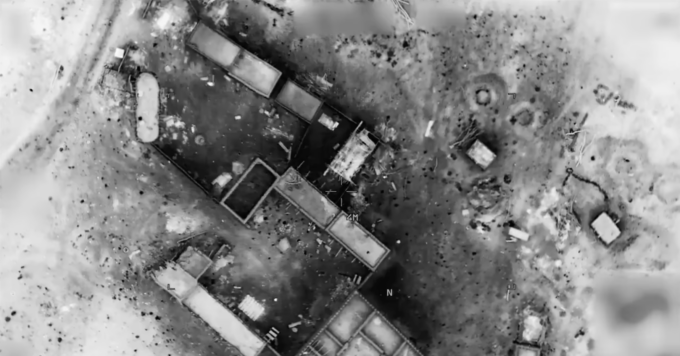
US striking Houthi positions in Yemen. Image Source: U.S. Air Force – Public Domain

On March 24, the country learned that a group of senior Trump administration officials (including the Vice President, Secretary of Defense, and the Director of National Intelligence, among others) accidentally sent classified details of military strikes against Yemen to Jeffrey Goldberg, editor of The Atlantic. Since Goldberg broke the story, there has been a steady stream of commentary about “Signalgate,” most adding little but sound and fury. The public discourse about Signalgate reveals something important about American politics—far more important than the incompetence at the center of the scandal. What has rarely been mentioned during the national conversation is the elephant in the room: the United States’ attacks on Yemen violate international law and contribute to one of the world’s most significant humanitarian crises.

The nightmare of the Washington ruling class is that we might finally open our eyes to the real, documented crimes going on in a country most Americans can’t find on a map. It would be difficult to overstate the degree of brutality and suffering that the United States has foisted upon the people of Yemen. And it is impossible to separate the United States’ strategic approach to Yemen from its support of the genocidal onslaught in Palestine. In the first year of the brutally one-sided terror campaign in the Gaza Strip, the U.S. gave billions in arms and other support to Israel, no questions asked. According to Brown University’s Costs of War project:

U.S. spending on Israel’s military operations and related U.S operations in the region total at least $22.76 billion and counting. This estimate is conservative; while it includes approved security assistance funding since October 7, 2023, supplemental funding for regional operations, and an estimated additional cost of operations, it does not include any other economic costs.

William Hartung, a senior research fellow at the Quincy Institute for Responsible Statecraft, adds that arms offers during this period (that is, beyond the $17.9 billion in military aid, including items that have yet to be delivered) are worth more than $30 billion. Yemen’s Houthis have harried shipping lanes in response to the U.S.-supported genocide in the Gaza Strip, prompting the Biden administration to re-assign the group to its spurious terror list. Washington has frequently justified its crimes against the people of Yemen by pointing to the threat of Iran, treated as a state sponsor of terror. The first Trump administration, citing a national security emergency created by Tehran, rushed weapons to the Saudis against widespread concerns about the safety of civilians—members of the Trump government were sacked for raising concerns. It is worth asking: what is a state sponsor of terror? As it has been applied to real-world events, the notion itself is incoherent and unintelligible—that is, it is propaganda aimed at confusing and misleading comfortable Americans. To give meaning to this standard requires that we grapple with uncomfortable facts, and particularly after its illegal actions against Palestine and Yemen, the United States must be regarded as the world’s foremost sponsor of terrorism.

The U.S. has killed no less than 61 people since it began a new round of strikes on March 15, but its reckless attacks and disregard for civilian life go back more than two decades. The U.S. first began drone operations and airstrikes in Yemen in 2002, causing “significant civilian harm, and no one has been held to account for these actions.” According to the Global Centre for the Responsibility to Protect, coalition airstrikes alone have killed almost 20,000 civilians, more than 2,300 of whom were children. At least 4 million people have been forcibly displaced. Today, Yemen is among the world’s poorest and most war-torn countries. We must be clear about what is happening in Yemen, because our media are committed to obscuring the truth: the intentional policy of the United States has been to starve Yemen—and to bomb its people when they cannot be starved to death. When Washington wants to kill massive numbers of innocent people without military action—to make sure they don’t have food, medicine, energy, and the other necessities of life—it uses a global-scale program of economic blockades, rationalized with vague gestures to “terrorism.” For years, the U.S. government has cut Yemen’s people off from the bare minimum necessary to survive, while attacking and destroying critical infrastructure. According to the UN Refugee Agency, over “18.2 million people are in dire need of humanitarian assistance and protection services,” with 5 million in conditions of acute food insecurity. About 10 million children in Yemen need humanitarian assistance of some kind. The U.S. supported war and the blockade have created an economic disaster in Yemen. Last summer, a World Bank report stated that in the years between 2015 and 2023, Yemen lost more than half (54 percent) of its real GDP per person, putting most people in the country in dire poverty.

The language around “terrorism” is central to Washington’s attempts to control the narrative and to conjure public support for—or at least public ignorance of—its patently illegal campaign in Yemen. As Phyllis Bennis recently pointed out, the U.S. attacks on Yemen are “always referred to as ‘bombing the Iran-backed Houthi rebels’ to avoid acknowledging that, like in Gaza, the bombs are dropping on civilian infrastructure and civilians already facing devastating hunger.”

Yemen and Palestine have tested the limits of the imperial system—how many innocent women and children can we liquidate before self-absorbed, mindlessly scrolling, Netflix-watching, garbage-eating Americans will bat an eyelash? Lots of them apparently. The Signal story is the perfect apparently anti-Trump narrative for the chattering classes: they need not even pretend to stake out a progressive position contrary to Trump. As legal residents who have broken no law are disappeared from our streets for opposing a genocide in Palestine—fully supported by both wings of the ruling class—the ruling class can focus our attention and loyalties on America’s righteous military mission.

Imperialism is the shared faith of the ruling class because the entire American economic and social system depends on it—the cheap treats that pacify us and hide the true features of the system of production: the land theft, the slave labor, the extraction of natural resources, the oppressive “intellectual property” regime that gives the very ideas themselves to privileged corporate rentiers. If the forever wars are ever questioned, the whole governing ideology and political paradigm are thrown open to scrutiny. And they cannot survive a closer look, because they represent criminal behavior at its most shameless.

Washington’s savagery in Yemen, and the corporate press’s bizarre reaction thereto, points to a deep moral crisis and loss of direction in the United States. We seem to be incapable of confronting the government’s malign influence in the world and its near-constant violations of the most fundamental principles of international law. But we will not understand MAGA fascism as a social and political phenomenon until we see clearly its connection with American empire and its crimes against innocent people, including those of Yemen.

David S. D’Amato is an attorney, businessman, and independent researcher. He is a Policy Advisor to the Future of Freedom Foundation and a regular opinion contributor to The Hill. His writing has appeared in Forbes, Newsweek, Investor’s Business Daily, RealClearPolitics, The Washington Examiner, and many other publications, both popular and scholarly. His work has been cited by the ACLU and Human Rights Watch, among others.

Thursday, April 03, 2025

Signs of the Times

Addicts are children of God. Helping them will fix the drug crisis, not tariffs on Mexico.


(RNS) — Dropping bombs and killing drug dealers may look good on television, but the real war on drugs occurs in treatment programs, which are terribly underfunded.


(Photo by Mart Production/Pexels/Creative Commons)


Thomas Reese
April 2, 2025

(RNS) — President Donald Trump loves tariffs. He uses them to bully countries into accepting his policies — for example, to get Mexico to stop migrants from coming across the border and to crack down on gangs shipping drugs into the United States.

He labeled drug cartels as terrorist organizations and his administration has threatened to use the U.S. military to attack them in Mexico.

Trump’s critics need to acknowledge that his efforts against Mexico have been somewhat successful. Fewer migrants are at our border because Mexico has stopped them at points farther south. This crackdown started under former President Joe Biden and has continued under Trump.

The Mexican government has also been more aggressive in going after drug gangs who make and ship drugs to the U.S. This has been difficult historically in Mexico because the drug lords have bought protection from police and politicians, and those they cannot bribe they threaten with violence.

But every time a gang leader or member is killed or arrested, there are others to take their places. In any case, Mexico will eventually tire of the war on drugs, as it has in the past, and will return to business as usual. And in anticipation of an American military attack, the gangs can easily disperse their drug facilities to make them more difficult to find and destroy.

I am not saying we should give up on trying to stop drugs from entering the U.S., but these attempts will never be very successful.

To deal with drugs, the U.S. needs to acknowledge its role in this crisis. That means dealing with guns and drug addiction in this country.
RELATED: Trump, the destroyer of worlds

The sale of guns is severely restricted in Mexico, with only one gun store in Mexico City, which is controlled by the army. Guns purchased in America and smuggled across the border are helping the very gangs the Trump administration has labeled terrorists.

Data shows anywhere from 68% to 90% of guns traced in Mexico were passed through the U.S., and most were also produced here. Thousands of guns are trafficked to Mexico each year.

If the Trump administration truly believes Mexican gangs are terrorists, then we must stop allowing them to get American-made guns. It could be considered granting material support to a terrorist organization, which is illegal. American gun dealers who sell guns that end up in Mexico are a greater threat to the U.S. than student protesters at Columbia University.

The Trump administration also falsely links drug trafficking with migrants crossing our borders. In truth, most drugs come through government checkpoints at the border in vehicles driven by American citizens. More agents, equipment, drug-sniffing dogs and intelligence are needed at these checkpoints if we are to put a dent in drug trafficking. But the drug traffickers’ response to seized drugs would be to simply ship more.

So, ultimately, the only way to stop the drug crisis is to cut demand. If there were no demand for drugs in the U.S., drug cartels would collapse. It is simple economics: Every addict in recovery is a lost customer for the cartels.

The pain of withdrawal from drugs is excruciating, and few addicts can do it on their own. Methadone and other alternatives to drugs can often help wean a person from drugs by reducing cravings.

Recovering from drug addiction is not easy. Anyone who wants treatment should be able to get into a program immediately and not be delayed because they have no insurance or there is no room. Depending on where you live, whether you have insurance and what type of program you are trying to get into, it can take weeks to get treatment — lots of time to relapse or change your mind.

Meanwhile, earlier this week, the Trump administration announced it was cutting about $11.4 billion in funding for grants for addiction treatment, mental health and other services, as well as staffing.

RELATED: Will Musk and Trump go to Hell for defunding the corporal works of mercy?

Dropping bombs and killing drug dealers may look good on television, but the real war on drugs occurs in treatment programs, which are terribly underfunded. Every addict, regardless of their income or where they live, should be able to get quality treatment. This is the only way we will win the war.

Every person, including a drug addict, is a child of God. They come from every race, every income bracket and every part of the country. They are Democrats and Republicans, believers and unbelievers, urban and rural, rich and poor. It doesn’t matter how they became addicted. They deserve to be treated with dignity and compassion.

The only way to win the war on drugs is to provide good treatment and support to addicts.
How does India's Sadhan village continue to resist religious polarization?


(RNS) — Residents share a belief in a common ancestry that has prevented religious fundamentalism from taking root — even as communal riots have engulfed other parts of India.


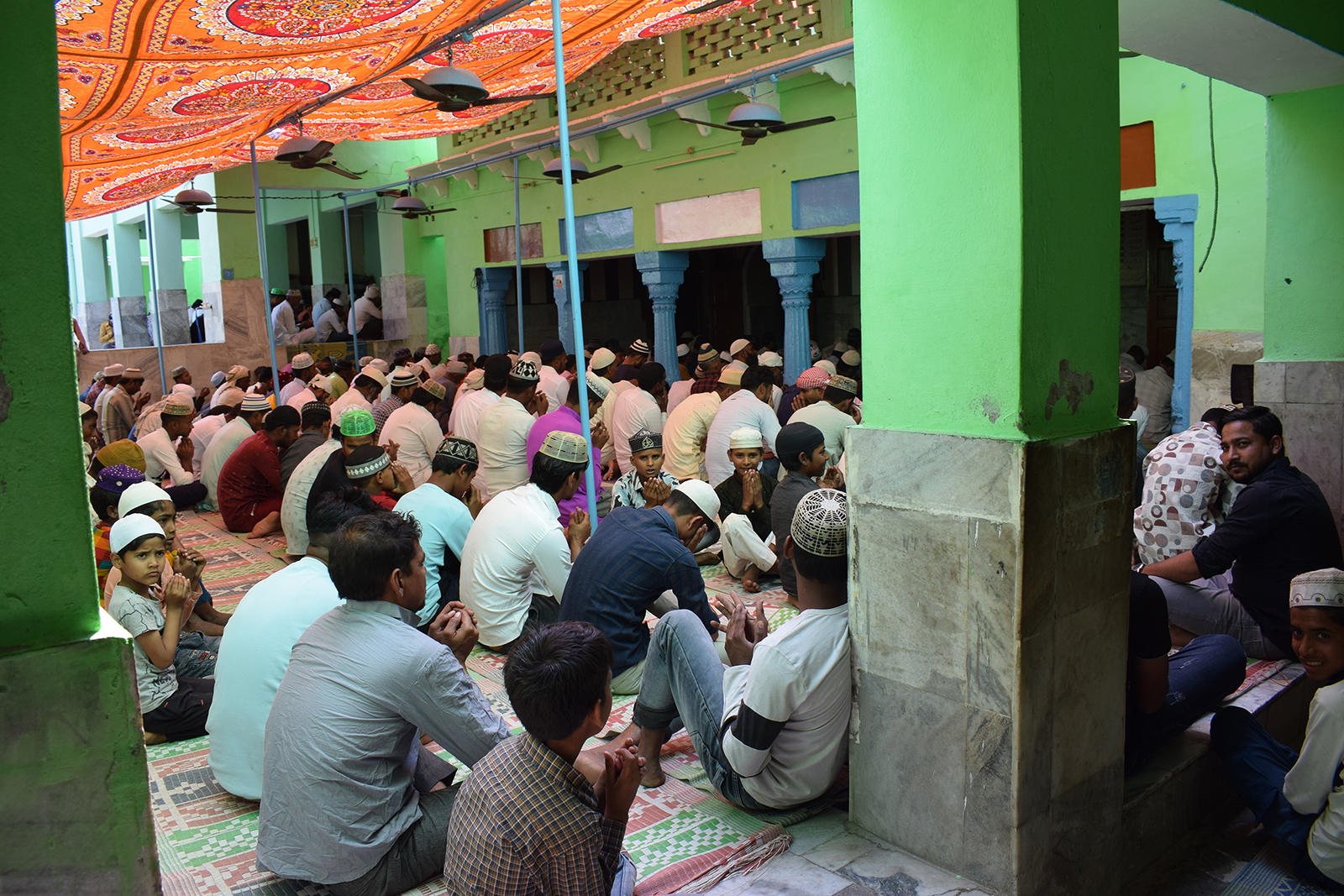
Muslims and Hindus gather together for afternoon prayers at a mosque in Sadhan village, Agra district, India, on March 20, 2025. (Photo by Priyadarshini Sen)

Priyadarshini Sen
April 1, 2025

AGRA, India (RNS) — For 83-year-old Riyaz Ahmed Khan, the ivory-white Taj Mahal is more than a symbol of love. The monument, to him, mirrors his village, Sadhan, located about 25 miles away.

“For generations, Hindus and Muslims have lived together in harmony here,” said Khan, a practicing Muslim and a retired teacher of Sanskrit, the sacred language of Hinduism. “If the Taj is an ode to love, our village has many Taj Mahals in it.”

The 17th-century marble mausoleum on the banks of the River Yamuna in the north Indian city of Agra was built by the Mughal Emperor Shah Jahan in loving memory of his wife, Mumtaz Mahal. And in Sadhan, spread over more than 70 acres in plain sight of the Taj Mahal, tolerance of different faiths has endured over centuries. Its 20,000 residents consist of Hindus and Muslims across caste lines, belonging to a farming community that tills lush fields of mustard and wheat.

Historically, residents have shared a belief in a common ancestry that has prevented religious fundamentalism from taking root in the village — even as communal riots have engulfed other parts of India. That rare communal harmony has withstood a rise in polarization across the country that has reached even nearby villages recently.

While Hindus comprise nearly 75% of Sadhan’s population, it’s common to find Muslims with Hindu names in the village, Hindus with Muslim names, mixed-faith families and families that haven’t shunned interfaith unions. That tolerance is nearly unheard of in the country, residents explained.


Riyaz Ahmed Khan, an observant Muslim and a former teacher of Sanskrit — the sacred language of Hinduism — reads from the Hindu epic Mahabharata, in Sadhan village, Agra district, India, on March 20, 2025. (Photo by Priyadarshini Sen)

“People think Taj Mahal is the ultimate symbol of love,” said Kedar Singh, a former wrestler from the village. “But they should see how we’ve made space for love in every form, including our worship practices and interfaith love.”

Singh said the love that has bound the residents together comes from their belief that religious conversions over centuries are a natural phenomenon.
RELATED: Hindu governing body shuts out Muslim vendors from world’s largest religious festival

According to oral tradition, large-scale conversions to Islam took place in Sadhan during the reign of Aurangzeb, the last of the great Mughal emperors of India during the 17th century. However, many residents returned to Hinduism in the early 20th century during a pan-India movement to facilitate reconversion of Hindus who embraced other religions.

“Religious conversions and takeover of religious spaces are causing societies to break up everywhere,” said Taj Khan, a Hindu who said he is proud of his Muslim name. “But what people forget in the process is our shared humanity.”

In contrast, the town of Sambhal, 125 miles from Sadhan, has been witnessing regular breakouts of violence between religious communities since a local court ordered a survey of a 500-year-old mosque last November, after claims the mosque was built on the ruins of a Hindu temple allegedly demolished during the Mughal period.

Moreover, Aurangzeb, who residents say initiated religious conversions in Sadhan, has been one of the latest targets of Hindu extremists, who demand that his grave in western India’s Maharashtra state be demolished.

People visit the Taj Mahal in Agra, India.
 (Photo by Chee Huey Wong/Pexels/Creative Commons)

Over the last month particularly, communal tensions and rioting have seized western India, with some extremists arguing Aurangzeb was a religious zealot who discriminated against Hindus and demolished their places of worship.

“It’s so upsetting to see all the polarization in the name of religion,” said Jameel Jadon, Sadhan’s former village leader. “It runs contrary to what our forefathers wanted since religious differences never mattered to them.”

Jadon said that even though a noted industrialist from Mumbai set up a mustard-colored temple with a green spire in the village in the 1920s to attract more people to return to the Hindu fold, it never flared communal tensions. Since the temple’s inauguration, Hindus have gathered in large numbers to offer their prayers there, while Muslims have peacefully made their way to the adjacent mosque to perform namaz. Sometimes, they’ve even prayed together.

And during weddings and festivals, Sadhan residents take part in each other’s religious and cultural ceremonies, read the Quran and Gita in each other’s homes and discuss ways to resolve disputes amicably during village meetings.

“Faith can bind or break people, so we try not to hurt anyone’s sentiments,” said Shahid Pervez, a Muslim lawyer from Sadhan. “Except male circumcision, halal and burial of the dead, most of our practices are indistinguishable from Hindus’.”

Although women have remained largely in the shadows in the village, they’ve also spoken out against communal violence and targeting of mixed-faith families.

“I was enraged by incidents like the Babri mosque demolition, Bombay riots and Muzaffarnagar riots that fanned the flames of vote-bank politics,” said Farzana Khan, a homemaker who’s a supporter of mixed-faith families in her village, referring to violent incidents in the last few decades.
RELATED: India’s anti-conversion law is fine-tuned to allow policing of Christians

And when communal riots broke out in the neighboring towns of Agra, Fatehpur Sikri and Achhnera in 2017 over alleged slaughtering of a cow and accusations of a plot to incite Hindu-Muslim riots, Sadhan remained calm.

“We told people that brotherhood matters much more than narrow identity politics,” said Shishya Pal Singh, a Hindu by faith whose family includes several members who follow Islam. “We tied sacred threads at the Fatehpur Sikri monument and led peace marches in the village to remind people of our history.”

Some residents say local leaders in recent years have tried to create communal frenzies or spearhead Hindu conversion campaigns, promising economic gains to attract people to the divisive movements. Harish Rajput, an 18-year-old law student living in the village, said the conversion campaigns in the last decade or so have been geared primarily toward dividing communities and triggering violence. But as a result, Rajput said, some of Sadhan’s youth are becoming more militant.

“Religious nationalists backed by right-wing organizations want to widen their support bases in our villages,” Rajput said. “Some of our young are attaching themselves to them and becoming more conscious of their religious identity.”


Overlooking Sadhan village in Agra district, India, where Hindus and Muslims have lived together, shared names and religious practices over centuries, on March 20, 2025. (Photo by Priyadarshini Sen)

This year on Holi — the Hindu festival of colors — some residents said police personnel were stationed in the village to give the “perception” that there could be breakouts of intercommunal violence threatening peace and harmony.

“This is what we need to prevent,” said Ganesh, a 53-year-old Hindu priest who turned his modest ashram into a “space of fluidity between Islam and Hinduism,” where both a Muslim saint and the Hindu goddess Kali are worshipped. Ganesh does not use a caste-based surname.

Ganesh has been undertaking pilgrimages on foot to spread communal harmony in the village by reminding people of India’s pluralistic traditions. Under his care, Muslims recite Vedic mantras while Hindus recite verses from the Quran, he said


“We need to preserve our age-old love,” Khan said. “Like how the Taj Mahal has seen love and hate over centuries, we will continue on the path of nonviolence and inclusion.”
Earthquake compounds Myanmar's humanitarian crisis as the death toll passes 2,000

BANGKOK (AP) — Some 700 Muslim worshipers attending Friday prayers were killed when mosques collapsed, said a member of the steering committee of the Spring Revolution Myanmar Muslim Network.


Rescuers work through rubble of a collapsed building following Friday's earthquake in Naypyitaw, Myanmar, Tuesday, April 1, 2025. (AP Photo)

David Rising
April 1, 2025

BANGKOK (AP) — The death toll in last week’s massive earthquake in Myanmar has passed 2,000, state media said Monday, as accounts of some people’s last moments emerged: Two hundred Buddhist monks crushed by a collapsing monastery. Fifty children killed when a preschool classroom crumbled. Seven hundred Muslims struck while praying at mosques for Ramadan.

The quake could exacerbate hunger and disease outbreaks in a country that was already one of the world’s most challenging places for humanitarian organizations to operate because of civil war, aid groups and the United Nations warned.

The 7.7 magnitude quake hit Friday, with the epicenter near Myanmar’s second-largest city of Mandalay. It damaged the city’s airport, buckled roads and collapsed hundreds of buildings along a wide swath down the country’s center.

Relief efforts are further hampered by power outages, fuel shortages and spotty communications. A lack of heavy machinery has slowed search-and-rescue operations, forcing many to search for survivors by hand in daily temperatures above 40 degrees Celsius (104 Fahrenheit).

Rescue workers at Mandalay’s collapsed U Hla Thein monastery said they were still searching for about 150 of the dead monks.

Some 700 Muslim worshipers attending Friday prayers were killed when mosques collapsed, said Tun Kyi, a member of the steering committee of the Spring Revolution Myanmar Muslim Network. He said some 60 mosques were damaged or destroyed. Videos posted on The Irrawaddy online news site showed several mosques toppling.

It was not clear whether those numbers were already included in the official toll.

Myanmar state MRTV reported that the leader of the military government, Senior Gen. Min Aung Hlaing, told Pakistan’s prime minister during a call that 2,065 people were killed, with more than 3,900 injured and about 270 missing.

Relief agencies expect those numbers to rise sharply, since access is slow to remote areas where communications are down.

The United Nations’ Myanmar country team called for unimpeded access for aid teams.

“Even before this earthquake, nearly 20 million people in Myanmar were in need of humanitarian assistance,” said Marcoluigi Corsi, the U.N. resident and humanitarian coordinator.

Devastation’s full extent is not clear

“We’re really not clear on the scale of the destruction at this stage,” Lauren Ellery, deputy director of programs in Myanmar for the International Rescue Committee, told The Associated Press. “They were talking about a town near Mandalay where 80% of the buildings were reportedly collapsed, but it wasn’t in the news because telecommunications have been slow.”

Groups the IRC works with have reported that some places are cut off by landslides, she said.

The World Health Organization said it has reports of three hospitals destroyed and 22 partially damaged in the region.

“There is an urgent need for trauma and surgical care, blood transfusion supplies, anesthetics, essential medicines and mental health support,” it said.

More than 10,000 buildings are collapsed or severely damaged in central and northwest Myanmar, the U.N. humanitarian agency said. One preschool classroom building collapsed in Mandalay district, killing 50 children and two teachers, it said.

An artificial intelligence analysis of satellite images of Mandalay by Microsoft’s AI for Good Lab showed 515 buildings with 80% to 100% damage and another 1,524 with 20% to 80% damage. It was not clear what percentage of the city’s buildings that represented.

Civil war had displaced millions

Rescue efforts are also complicated by the civil war. In 2021, the military seized power from the elected government of Aung San Suu Kyi, sparking what has turned into significant armed resistance.

While one group has declared a partial unilateral ceasefire, the government and other armed groups have not stopped fighting.

Government forces have lost control of much of Myanmar, and many places were dangerous or impossible for aid groups to reach even before the quake. More than 3 million people have been displaced by the fighting, according to the U.N.

Ellery with the International Rescue Committee noted that the area worst hit by the earthquake was seriously damaged by flooding last year, and many displaced people sought refuge there.

Since the earthquake, many people have been sleeping outside, either because homes were destroyed or out of fear of aftershocks.

Monsoon rains start in May and finding people shelter will be a major challenge, she said.

Myanmar’s neighbors and allies send aid

International rescue teams from several countries are on the scene, including from Russia, China, India and several Southeast Asian countries.

On Monday, an Indian team jackhammered through slabs of fallen concrete at one site in Mandalay. They could be seen bringing out one body.

The European Union, Britain, Australia, New Zealand, South Korea and others have announced millions of dollars in aid.

Despite massive cuts and firings at the U.S. Agency for International Development — the body charged with delivering humanitarian assistance overseas — the U.S. Embassy said a team of experts was on its way to Myanmar. The embassy said it would provide up to $2 million through local organizations.

Looking for survivors in Bangkok

A small number of U.S. military personnel were sent to assist in Bangkok, where the earthquake killed at least 18 people, many at a construction site where a partially built high-rise collapsed. Another 33 have been reported injured and 78 missing, primarily at the construction site near the popular Chatuchak market.

On Monday, heavy equipment was temporarily shut down at the site and authorities urged onlookers to be silent as they used machines to try and detect signs of life.


Bangkok Governor Chadchart Sittipunt told reporters that signs had been detected Sunday night, though experts could not determine whether it had been machine error.

Watching the crews at work, Naruemon Thonglek said she had “made some peace” with the fact that her partner and five friends there were unlikely to be found alive.

“A part of me still hope they will survive,” she said.

___

This story has been updated to correct that 200 monks were reported killed.

___

Associated Press journalists Jerry Harmer and Jintamas Saksornchai in Bangkok, and Jon Gambrell in Dubai, United Arab Emirates, contributed to this report.
Associated Press religion coverage receives support through the AP’s collaboration with The Conversation US, with funding from Lilly Endowment Inc. The AP is solely responsible for this content.

Opinion

Charlie Kirk doesn't feel safe in Bethlehem. It's his worldview that's to blame, not my city.

(RNS) — To Charlie Kirk, Mike Huckabee and every Christian taught to fear my people and my city — come and see.


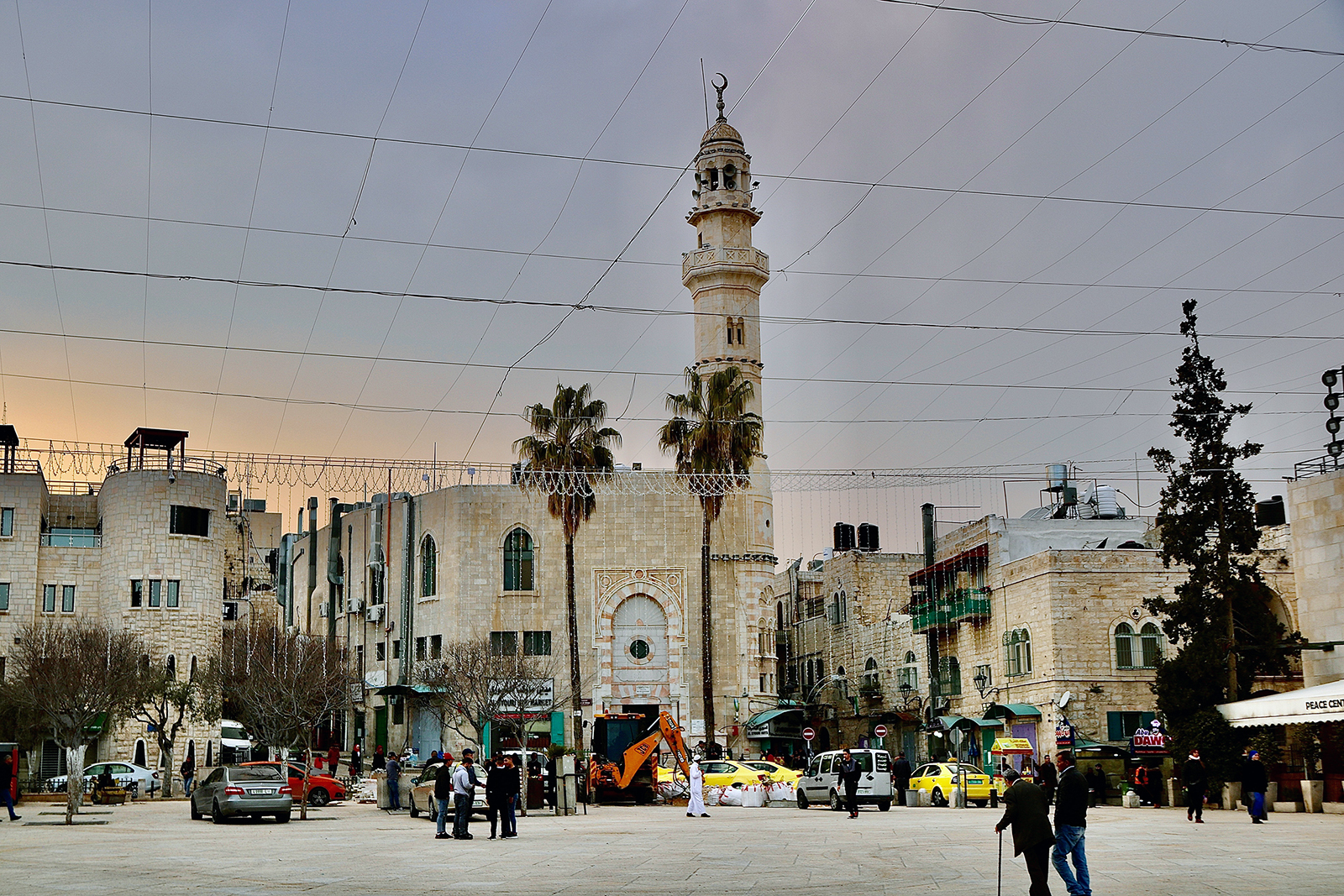
People move about their daily lives in Bethlehem in the West Bank. (Photo by Jorge Fernández Salas/Unsplash/Creative Commons)
Fares Abraham
April 1, 2025

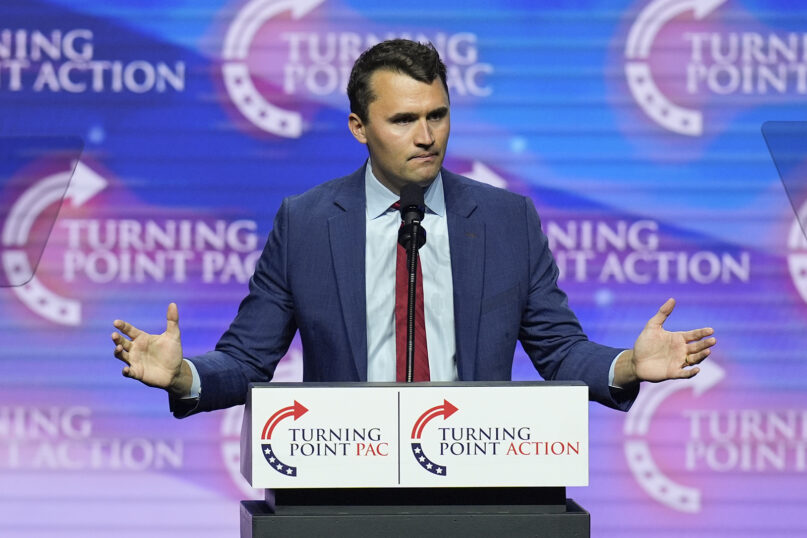
(RNS) — During a recent campus Q&A, a Palestinian Christian student discussed U.S.-Israel relations with Charlie Kirk, executive director of evangelical Christian activist group Turning Point USA. Kirk asked the student at one point: “As me as a Christian, do you think it would be safe for me to walk the streets of Bethlehem without armed guards?” When the student confidently answered yes, Kirk rolled his eyes in disbelief.

That moment wasn’t just factually dubious — it was revealing. Kirk’s unspoken suggestion was that Palestinian Muslims are inherently hostile to Christians, ignoring the student’s affirmation — and the reality in Bethlehem — that, in the very town where Jesus was born, Christians continue to worship freely and have maintained an unbroken presence for two millennia. Suggesting otherwise, Kirk exposed a worldview shaped by fear and ideology.

The same posture is echoed by the Trump administration’s nominee to be ambassador to Israel, former Arkansas governor and evangelical pastor Mike Huckabee. At his March 25 confirmation hearing before the Senate Foreign Relations Committee, Huckabee was asked about achieving a lasting peace between Israelis and Palestinians. He responded in part, “There has to be some recognition that there will be a change in the policy of educating (Palestinian) children to hate Jews.”

This is a slanderous distortion that vilifies an entire people. I was raised in the Palestinian education system in Bethlehem, was taught by Christian and Muslim educators alike and grew up forging friendships with people of all faiths, including Jewish and Messianic Jewish believers with whom I now partner in gospel ministry. If the curriculum I learned had taught hatred, it clearly failed.
RELATED: Why younger evangelical Christians are losing their faith in Israel

Contrary to Huckabee’s testimony, and the caricatures often presented in Western media, Palestinian youth in Bethlehem and elsewhere in the West Bank are not raised on a curriculum of hate. Yes, they learn about the Nakba, when Palestinians were forced out of what is now Israel. They learn the history of the reality they know firsthand: the ongoing occupation and the complex realities of checkpoints and land restrictions. But various Palestinian educators make active efforts to cultivate peace, critical thinking and coexistence.

Organizations such as Bethlehem Bible College offer academic and experiential programs to equip young people with the tools of nonviolence, restorative justice and cross-cultural understanding. Musalaha, a ministry rooted in biblical reconciliation, has worked for decades to bring together Israeli and Palestinian youth through camps, leadership development and storytelling. These and countless others are not signs of indoctrination, but signs of resilience and a longing for a just peace.


Turning Point USA Founder Charlie Kirk speaks before Republican presidential nominee former President Donald Trump during a campaign rally at Thomas & Mack Center, Oct. 24, 2024, in Las Vegas. (AP Photo/John Locher)

Huckabee’s and Kirk’s statements are not isolated gaffes; they come out of a shared ideological framework that fuses theology with geopolitics. At its core is the belief that Israel is not only a strategic American ally, but a moral extension of the West itself. By contrast, Palestinians are portrayed as inherently antisemitic or culturally regressive, unworthy of equal moral consideration. This binary narrative not only erases the complexities of the region, but it also dehumanizes millions of people — Christians like me as well as my Muslim neighbors — simply because we are Palestinian.

I was born and raised in Bethlehem. I’ve walked its streets my entire life — as a child, a minister, a father and a community leader. It was not my Muslim neighbors or fellow Palestinians I’ve feared, but the Israeli military patrols that entered our neighborhoods: tanks rolling down our streets, soldiers storming homes in the dead of night, armed with automatic rifles and impunity, the so-called “home-mapping operations,” in which soldiers invade Palestinian homes under the pretense of collecting layout data, leaving behind terrorized families and traumatized children.

I’ve seen that violence up close. An Israeli soldier once shot my mother in the back — unprovoked, without warning. I’ve buried teenage friends killed by Israeli fire. These weren’t terrorists. They were kids. They were neighbors. They were human beings. The fear we live with isn’t imagined — it’s lived. And yet we are the ones portrayed as dangerous.

Kirk, if he had any curiosity about Palestinians or Bethlehem, would know that the city is led by a Christian mayor, as are the leaders of several West Bank cities. The Palestinian Authority not only allows this; it mandates Christian leadership in places like Bethlehem to reflect the heritage and dignity of the local Christian population.


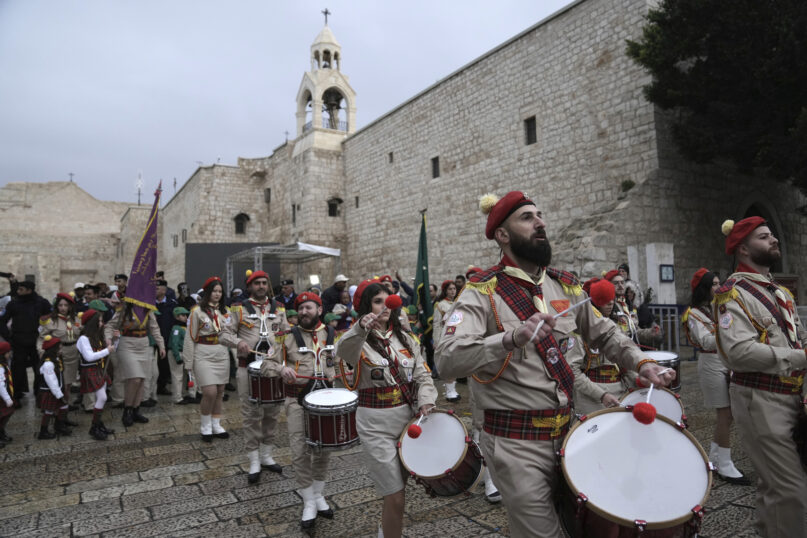
Palestinian scouts march during the Christian Orthodox Christmas Eve celebrations at the Church of the Nativity in the West Bank city of Bethlehem, the traditional birthplace of Jesus, Jan. 6, 2023. 
(AP Photo/ Nasser Nasser)

Christians make up just 2% of the West Bank’s population, but through quiet, faithful presence, our impact reaches far beyond our size. We help operate nearly one-third of all health care services, lead nearly half of the region’s NGOs, and serve in high-level government roles. Today, four Palestinian Authority cabinet members are Christians — including the official spokesman of the PA. Church-run organizations also rank as the third-largest employer in the occupied territories, providing vital services and jobs across communities. Ours is not a story of power, but of perseverance. We are few, but we are faithful, and our witness is undeniable.

Nobody would say Palestinian society is perfect. Our failures include corruption, political stagnation and factionalism, as well as the erosion of democratic life. More grievously, armed resistance has devolved into horrific violence, the killing of innocent Jewish civilians and the terrorizing of entire Israeli communities. These realities have disillusioned our people and betrayed the hope for dignity and justice.

But these internal failures, however serious, must never be used to justify military occupation, collective punishment or the denial of our basic rights. A people’s imperfections do not nullify their humanity. We must face our own brokenness — even as we cry out against the injustice done to us

In the Gospel of John, when Nathanael hears about Jesus of Nazareth, he asks, “Can anything good come out of Nazareth?” Philip’s reply is timeless: “Come and see.”

To Charlie Kirk, Mike Huckabee and every Christian taught to fear my people and my city — come and see.

Come walk the streets of Bethlehem. Come visit the churches, clinics and classrooms. Come worship with Palestinian believers who still cling to Jesus in the very place he was born. Come meet the Muslim community of Bethlehem, who has hosted countless pastors, Christian leaders and mission teams and welcomed them to speak about Jesus.

Come meet the living stones — not just the ancient ones.

When Kirk says he doesn’t feel safe in Bethlehem, it isn’t a commentary on our city. It’s a reflection of a theology that prefers ideology over incarnation and fear over fellowship.

RELATED: In Bethlehem, a Christian pastor says a year of protest for Palestinians shows few gains

Bethlehem doesn’t need guards. It needs truth-tellers, bridge-builders and gospel witnesses who will refuse to demonize their fellow believers simply because they carry the name Palestinian.

The gospel didn’t begin with political power or military dominance. It began in a manger — in occupied Bethlehem.


Fares Abraham. (Courtesy photo)
(Fares Abraham is a Palestinian American evangelical minister and the president of Levant Ministries and now leads several ministries across the Middle East to strengthen gospel witness and promote peace. The views expressed in this commentary do not necessarily reflect those of RNS.)