Tuesday, May 13, 2025

From the front line: a critical look at Indo Pak War 2025

Sunday 11 May 2025, by Farooq Tariq

On the morning of 7 May, when I answered my doorbell and went outside looking for who rang, my neighbor loudly asked me to turn off all my lights. This command signaled to me that we are living in a moment of war.

Living near the Wahgha border, we heard a deafening noise around 8.30 am, followed by a blast. An Indian Harop drone, made by Israel, struck a close by military installation. We later heard that four soldiers were injured.

Armed with a 50-pound warhead, the Harop uses its camera system to track and engage moving targets. The drone can fly for about six hours or about 600 miles after being launched from a truck.

Apart from the target near our homes, many of the Harop drones were brought down by Pakistani armed forces before they hit their targets. But in most cases, they fell on civilians. Out of curiosity, hundreds of people then gathered to see where these drones were brought down. People seem to be worried but not panicked.

Many friends and comrades have asked if I thought a full-fledged war is now erupting between two nuclear-armed neighbors. I replied that war had already erupted.

The Modi government launched “Operation Sandoor” to hit nine sites inside Pakistan. The intended targets were madrassas and mosques Modi believes are the base of religious terrorists.

According to figures released by the Pakistani army, most of the 31 who died in the one-hour attack by over 125 Indian jets were civilians, including children and women. There would have been more casualties had madrassas not evacuated just after the religious fundamentalist attack in Indian-occupied Kashmir. Twenty-six people, mainly tourists, were killed in the Pahlgam area on 22nd April 2025.

At that time my brothers and sisters encouraged me to move from my home in Lahore. I refused since there are military installations or cantonments in most Pakistani cities. In fact, Unlike the previous wars between Pakistan and India in 1965 and 1971, there has been no mass exodus from the cities.

This is first time that Indian missiles have hit nine Pakistani cities. A violation of Pakistan sovereignty, it has been condemned by almost all of the country’s political groups from right to left. But unlike the right-wing political religious parties, most of the left groups demand an immediate halt to the war. Although much smaller in proportion to the Indian left, the Pakistani left was unanimous.

Unlike the mainstream Indian community parties who have given up any independence from the Modi’s BJP government, there is no warmongering in Pakistan. A 8th May Gallup Pakistan survey reported that the majority of Pakistanis are not in favor of war with India; peace should be the goal under all circumstances. However, this may change when the war escalates.

This is second time that India and Pakistan has gone to full fledge war despite having the nuclear weapons, the other time was Cargill war in 1999. India carried out its first nuclear test in May 1974 and in May 1998, conducted another five tests, declaring itself a nuclear weapon state. Pakistan carried out its nuclear tests on 28th May 1998, thus officially becoming a nuclear state. In reality, it means nuclear weapons are not a deterrent to war.

Pakistan has an estimated 170 nuclear warheads, roughly equivalent to those in India. With such undeniably high stakes, the India decision to strike inside Pakistan for the third time (2016, 2019 and now in 2025) reveals that all the pride of having nuclear bombs is not a deterrent to war between the two.

Nuclear weapons are the most inhumane and indiscriminate weapons ever created. They violate international law, cause severe environmental damage, undermine national and global security and divert vast public resources away from meeting human needs. It is not a weapon of war but a weapon of total destruction. A single nuclear bomb detonated over a large city could kill millions of people.

While both countries bear responsibility for proxy warfare, the Modi regime has clearly instrumentalized the Pahalgam tragedy to divert from its failures in Kashmir, boost domestic popularity, and advance strategic goals regarding the Indus River system and regional hegemony.

Pakistan is accused of supporting the terrorist group that has led to the terrible loss of lives in Pahalgam Kashmir. However, the present realities paint a different picture.

Although there is no doubt that Pakistan government had supported and promoted these religious fanatic groups for decades after the Saur revolution of Afghanistan in 1978, this was with the wishes and whims of U.S. imperialism. Since 2022, when the Imran Khan government was dissolved after a vote of no confidence, the relationship between the military establishment and these fanatic groups has been at odds. There has been an escalation of attacks by the fanatics on Pakistan state institutors since Taliban has returned to power in Afghanistan.

The Taliban government in Afghanistan supports the Pakistani Taliban in its attempts to capture the government.

This includes carrying out bomb blasts, suicidal attacks, occupying areas and forcing people to support them. The Pakistani Taliban were strengthened by the Afghan Taliban by giving them NATO weapons left behind when the Americans left Afghanistan.

In 2024, Pakistan experienced one of the most violent years in over a decade. The religious fanatics took over control of several areas of Pakhtunkhwa province. Almost every day, there were attacks and causalities the Tehreek Taliban Pakistan (TTP) inflicted on the Pakistan armed forces.

Contrary to cooperating with each other, there are now open hostilities. The Pakistani state now longer supports these fanatic groups, who are now relying on the Afghan Taliban.

Of course, there are religious fanatic groups still active in Indian-occupied Kashmir and the question about the extent local support to large extent may still be strong. But it is difficult to believe that the current Pakistani government had anything to do with the April 2025 attack.

The Pahalgham terrorist attack seems to be an act of an independent religious fanatic group.

The danger is that the war can linger on. Both governments have claimed victory. But if it were to continue, it will not be like the one in 1965 and 1971, when the ground forces fought. Instead, India is using the same tactics as Israel is using in Gaza. Missiles and drone attacks could destroy infrastructure, perhaps only then introducing ground forces. Pakistan is not Palestine. It has a large, well-trained and equipped army. Yet it lacks the modern weapons India has.

Clearly the situation is very volatile and unstable. This means anything is possible.
What we do know is that war brings destruction and no one wins. Continuing the war will only result in more loss of lives. But if you listen to the Indian and Pakistani mainstream media, each side claims victory.

Yet a durable peace requires respecting sovereignty, ending proxy warfare, and demilitarizing Kashmir. Any war between nuclear-armed nations would be catastrophic regionally and globally.

Progressive forces throughout South Asia must unite against war hysteria and work toward a peaceful future.

We demand an independent inquiry into the Pahalgam attack in order to establish facts and accountability.


Attached documentsfrom-the-front-line-a-critical-look-at-indo-pak-war-2025_a8989.pdf (PDF - 910.7 KiB)
Extraction PDF [->article8989]

Farooq Tariq
Farooq Tariq is General Secretary, Pakistan Kissan Rabita Committee.
and President Haqooq Khalq Party. He previously played leading roles Awami Workers’ Party and before that of Labour Party Pakistan.

International Viewpoint is published under the responsibility of the Bureau of the Fourth International. Signed articles do not necessarily reflect editorial policy. Articles can be reprinted with acknowledgement, and a live link if possible.

 

The declining rate of profit: Avoiding the key issue


Published 

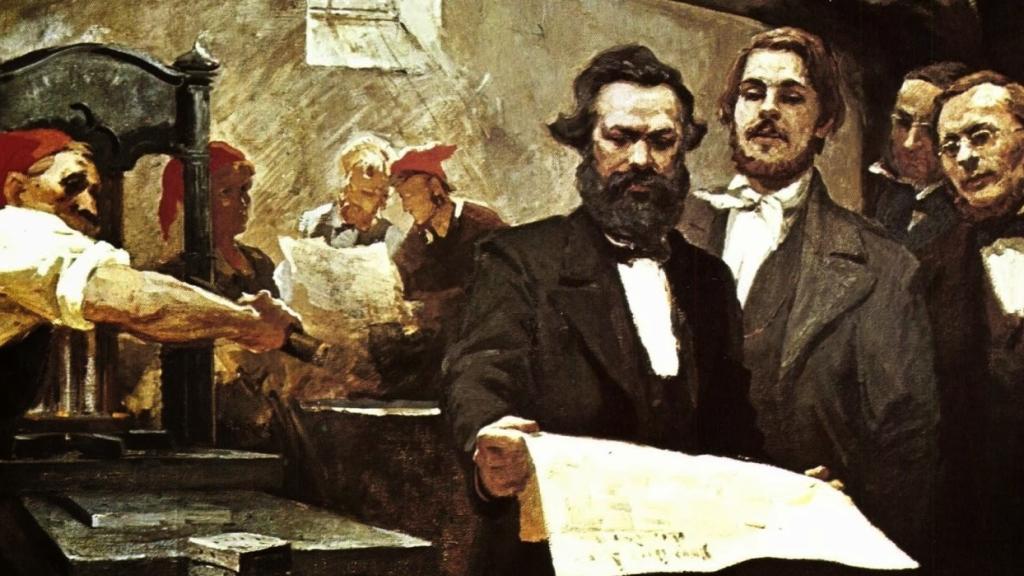
Karl Marx Friedrich Engels

James Doughney’s latest contribution to the discussion around Karl Marx’s tendency of the rate of profit to fall largely avoids the key point — the relationship between the proportional rise in the mass of physical capital and productivity rate rises. Leaving aside other issues (what is investment, whether Marx finished his theory, if something is considered a stock or flow, whether demand creates supply or supply creates demand, etc.) for the Okishio/Kalecki critique to hold water it must be shown that any rise in the amount of means of production used in one industry must be more than offset by rises in productivity in sectors supplying those means of production, such that the rise in the mass of constant capital is more than offset by the reduction in its unit price. 

James expresses confusion over this point. Really there is nothing to be confused about: productivity reduces the unit cost of output. The question is whether productivity must reduce the unit cost of output enough to reduce the unit value/price of the accumulated capital by more than its increased amount. Demonstrating this mathematically is as simple as putting the appropriate numbers into the equation; demonstrating it in reality is a different matter altogether. 

Let us assume that the physical proportion of constant capital relative to living labour doubles (twice as many machines, stocks of raw materials, etc, are used in the labour process relative to the number of workers who use them, meaning the technical composition of capital doubles the proportion of means of production relative to labour). If, due to productivity more than doubling, the cost of means of production more than halves, then certis paribus the proportion of spending on constant capital must fall. 

Nobuo Okishio and MichaƂ Kalecki merely assume this is necessarily always true; that it must always occur. They reduce a real but essentially arbitrary phenomena — that productivity cheapens the means of production and therefore offsets the rise in the organic composition of capital — to a tautology — that offset will always be larger than the physical rise in its mass, so the rate of profit (the difference between profits and costs) must rise. Mathematical attempts to refute the theorem are necessarily futile. It is akin to assuming that if the runner with the longest legs always wins the race, then runner X with the longest legs must win the race. The real question is: must the runner with the longest legs always win the race?

Alfred Marshall in his 1895 Principles of Economics sought to prove diminishing marginal utility by assuming a shower of diamonds fell from the sky like rain, but only once. On this assumption, Marshall claimed the scarce diamonds would be rapidly used up and therefore their value would rise, irrespective of production (in this case there is no production). Hence, he claimed, value was determined not by supply but demand and that there was no relationship between labour values and prices. 

Assuming this, David Ricardo’s labour theory of value, which is predicated on conceptually unlimited production, was therefore wrong. The labour theory of value was refuted! But as diamonds do not fall from the sky (not once or ever), Marshall refuted nothing. Similarly, neither have Okishio or Kalecki, as there is no necessary relationship between the rise in the mass of means of production used in one industry and changes in productivity of the different suppliers of those means of production. 

Classical political economy sought an explanation for an observed empirical phenomenon that capitalist cycle profit rates tended to fall. Adam Smith attributed the fall to intensifying competition. Ricardo, in contrast, considered it the result of rising labour costs due to the fall in the marginal quality of agricultural land. Neither explanation stood up, as competition merely redistributes value but does not create it. Although there are differences in the marginal productivity of land, this is not necessarily reflected in the price of staple food stuffs, as the existence of these differences does not exclude changes to their absolute level; that is, the absolute amount of production can go up or down, even while the relative differences remain the same. 

Marx, in contrast, explained falling profits as due to the accumulation process itself. Over time the proportion of dead or constant capital to living labour — the source of all surplus value and, therefore, profit — tended to rise. Hence, as capitalists of necessity accumulate in the search for profits higher than the maximum, falling profit rates were “just an expression peculiar to the capitalist mode of production of the progressive development of the social productivity of labour”. However, if this were a unilinear law, then capitalism would be in a perpetual slump. So, Marx continued, the explanation of

the falling rate of profit, gives place to its opposite, namely to explain why this fall is not greater and more rapid. There must be some counteracting influences at work, which cross and annul the effect of the general law, and which give it merely the characteristic of a tendency, for which reason we have referred to the fall of the general rate of profit as a tendency to fall. (Marx 1894, Capital III, chapter 14

Five offsetting factors reduce the law to a tendency: raising the intensity of exploitation, reducing wages below their value, cheapening elements of constant capital, expanding the population that could be exploited by capital, and foreign trade. These factors are almost a list of the key changes that occurred in the world capitalist economy during the 1990s as a result of the Soviet Union’s collapse and China’s transition to the market. The relevance of the law is, ironically, demonstrated in the operation of these factors in causing a rise in profit rates during the period of globalisation (roughly 1991 until 2021), and their current exhaustion as globalisation transitions towards a phase of multipolar crises that defines world capitalism today. 

The current period and analyses of the present crises for capitalism echo the original discussion around collapse or Zusammenbruch in the Second International, in the period leading up to World War I. In 1899 Alexander Parvus, Leon Trotsky’s close collaborator, defined the longer phases in the world economy as periods of “Sturm und Drang” (storm and stress) for capitalism. These periods resulted from a combination of the extension or opening of new markets, the rise of new sectors of capital accumulation, the reduction in turnover times, and the advent of new technological advances,

This does not abolish the periodical alternation of upswing and crisis, but the upswing develops in a stronger progression, while the crisis sharpens but its duration is shortened. This continues until the forces of development have unfolded to their full potential. Then a sharp commercial crisis takes place, which finally turns into an economic depression. (cited in Jefferies 2025, War and the World Economy: Trade, Tech and Military Conflicts in a De-globalising World

In 1995 Ernest Mandel, a post-war Trotskyist leader, identified the conditions to end the long depression of the 1970-80s as,

A massive “system shock” which combines a sharp rise in the rate of profit (induced by an even steeper rise in the rate of surplus value) and a considerable broadening of the market. The latter could only occur, in the present world situation, through total integration of the former USSR and the People’s Republic of China into the capitalist world market. (Mandel 1995, Long Waves of Capitalist Development

This expansion, if combined with major defeats of the working class and Third World national liberation movements, could enable a new period of upswing. Mandel thought it “unlikely,” but in fact these defeats had already occurred by 1995. 

Marx noted

Accumulation can have a rapid effect on the demand for labour only if accumulation was preceded by a large increase in the labouring population, and wages are therefore very low so that even a rise of wages still leaves them low because the demand mainly absorbs unemployed workers rather than competing for those fully employed. (Marx 1861-63, Theories of Surplus Value, chapter 18)

In the newly globalised world, the populations of the former Centrally Planned Economies (CPEs), previously excluded from the world market, were now available for capitalist exploitation. US free market economist Richard Freeman estimated the restoration of capitalism doubled the labour capable of being exploited by the market from approximately 1.46 billion workers to 2.93 billion. The means of production of these states — whole cities (Prague, Moscow, Berlin, Dresden, Warsaw) and attendant infrastructure (electricity, roads, railways, docks, etc) — were appropriated by capitalists free of charge. Barriers to trade attendant on multipolar competition vanished and the expanded market enabled the computer, phone and internet technological revolution. 

Capitalism escaped the slump of the 1970-80s and experienced its most rapid period of growth in history. However, the expansion of the world market during the 1990s was systematically, albeit inadvertently, concealed by the application of neoclassical statistics. Far from a critique of these statistics being “overreaching,” as James puts it, it is necessary, first, to understand the world and, second, to show the absurdity of neoclassical economics. 

Neoclassical statistics do not differentiate between modes of production, as they consider all production to be a form of market economy, albeit “distorted”. CPEs measured the output of the plan through the Material Product System (MPS), which took physical aggregates and allocated them a “value” according to planners’ preference. There was no market mechanism and no value or price, as understood in a market economy. As a result there was no national income, which is a measure of changes in production measured in price. 

How then to measure an economy without a market when national income is a measure of market exchanges (however modified)? By simply pretending that planned economies were in fact a form of market. British economist Angus Maddison, who founded the Maddison World GDP Project, followed the CIA’s Abram Bergson to develop a “counterfactual” — that is fictional — analysis of the Soviet Union’s output, which simply assumed away the difference between planning and the market. These estimates of Soviet national income,

create a counter factual [sic] estimate of what Soviet prices would have been if the economy were run on capitalist lines, removing the ‘distortions’ created by the command economy, and getting a better picture of the real cost of production. (Maddison 1998, “Measuring the Performance of a Communist Command Economy: An Assessment of the CIA Estimates for the U.S.S.R”, Review of Income and Wealth, Series 44, Number 3, September)

The problem was that the difference between central planning and the market was objective, not subjective. There was a real, material, objective difference between planned and market prices. Planned prices were not really prices at all, but applied (insofar as they were at all) post factum by planners according to political criteria. They were subjective not objective; they were not tested in the market through exchange. 

When the market was introduced by Boris Yeltsin’s 1991 Big Bang, centrally planned output collapsed. But the collapse of centrally planned material products represented the creation of market output; of market production and national income. The System of National Accounts (SNA) of neoclassical statisticians obliterated the distinction between planned and market output, thereby measuring the creation of the market as its collapse. Hence, the 1990s, which laid the basis for the hyper-globalisation of 2001-08 was, according to the statistics, a period of contraction and slump. Yet it was central planning that was contracting and slumping, not the market, which was in fact increasing or growing

Just as neoclassical statisticians mismeasured the transition of the CPEs to capitalism, so too did the use of their fictional valuations of fixed capital stock to estimate the rate of profit yield lead to completely false results. Their use by Marxist economists shows a basic failure to appreciate the categorical distinction between costs and opportunity costs. This really elementary mistake is conceptually absurd. It treats estimates of future profits as identical to, analogous with or somehow a reflection of, past costs, when there is essentially no relationship between the amount of profit that may be made and the cost of constant fixed capital advanced. 

Leaving aside the conceptual question, there is also a more practical problem. Opportunity cost valuations grossly overestimate the value of fixed capital stock when compared with the Internal Revenue Services (IRS) measures of actual business costs. The stock of fixed capital advanced, or its book value, is estimated by the IRS as Depreciable Assets Less Depreciation (DALD). Depreciable assets are those assets that may be depreciated. In general, they are assets before depreciation has been subtracted from them, just as an inflatable balloon may be inflated but, in general, has not yet been. The subtraction of Accumulated Depreciation (the accumulated reduction in the value of those assets through use) reveals the assets net or book value. This is the amount of fixed capital advanced. 

Using the neoclassical SNA’s opportunity cost fictional data sets overvalues the amount of fixed capital advanced by between five and seven-fold. There use duly measures a rise in the mass of profit as a reduction in the rate of profit by multiplying estimated rises in profits by their anticipated service life. Of course, these conceptual and practical problems do not stop neoclassical statistics from being used. A widely disseminated example of this is World Profit Rates, 1960–2019, authored by Deepankar Basu, Julio Huato, Jesus Lara Jauregui and Evan Wasner this year. It shows US profits slumping between 2001–08 — the period of hyper globalisation and perhaps strongest period of US economic growth in history.

James insists that once we accept “the causal priority of demand” then “rigour demands consistency,” but demand is the result of production; that is, demand is determined by production. He was both bewildered and amused, he said, by my reference to Thomas Malthus. Malthus explained the necessity for a parasite class to consume the social surplus created by workers in production. As workers are only paid a fraction of the value they create, they cannot pay for the surplus out of their wages, leading to an implicit disproportional and inadequate effective demand. 

How then to realise the social surplus? James’ reference to borrowing merely kicks the problem down the road, for where do the lenders get their money from? For Malthus, unproductive consumers provide the demand necessary to pay for the surplus workers cannot afford. Marx remarked what Malthus 

required therefore are buyers who are not sellers, so that the capitalist can realise his profit and sell his commodities “at their value”. Hence the necessity for landlords, pensioners, sinecurists, priests, etc, not to forget their menial servants and retainers. How these “purchasers” come into possession of their means of purchase, how they must first take part of the product from the capitalists without giving any equivalent in order to buy back less than an equivalent with the means thus obtained, Mr. Malthus does not explain. (Marx 1861-63, Theories of Surplus Value, chapter 19

The causal priority of demand does not explain — indeed cannot explain — how the purchasers come into possession of the means of purchase. It is a theory predicated on the absence of explanation; that is, the generalisation of amused bewilderment.

I discuss these issues in greater detail in my book 2025 book War and the World Economy and this short introductory video


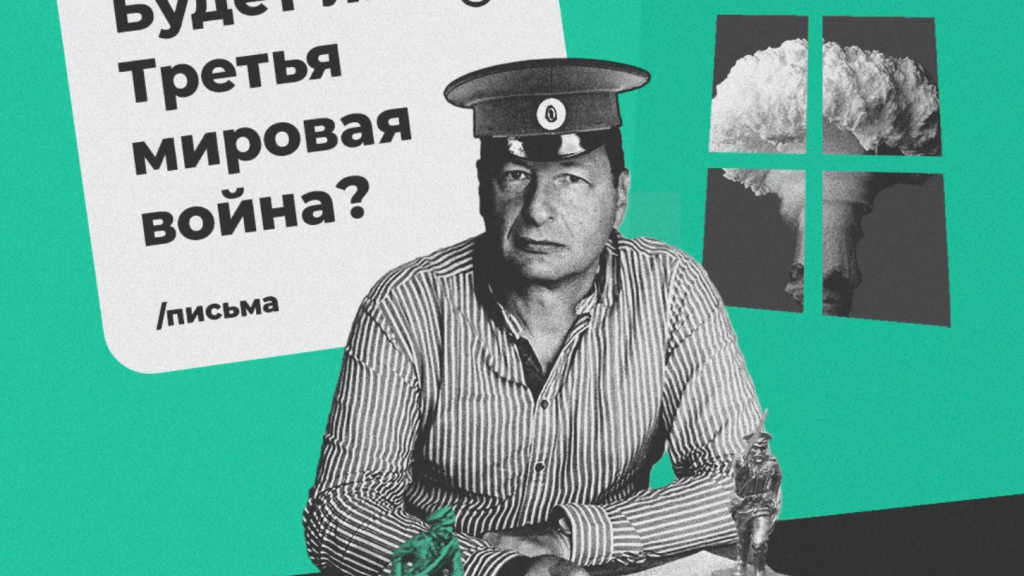
Should we expect a new world war? Two prison letters from Boris Kagarlitsky


Published 

Boris from prison Spichka

First published in Russian at Spichka. Translation and introduction by Dmitry Pozhidaev for LINKS International Journal of Socialist Renewal.

The following text is based on two letters sent from a Russian penal colony by sociologist and Marxist thinker Boris Kagarlitsky, who is currently imprisoned on charges of “justifying terrorism.” The first letter is comprised of responses written on October 4 to questions posed by the Marxist media platform Spichka (Match), which initiated a correspondence with Kagarlitsky in late 2024. The second letter, written on October 24, includes some further comments by Kagarlitsky to Spichka regarding the specific topic of the potentials for a new world war.

Spichka is a Russian left-wing media collective committed to reviving Marxist theory and making it accessible. Initially focused on socialist countries, it now covers capitalism, culture and leftist strategy through articles, podcasts, and a visually distinctive online presence.

Many Russian Marxists began considering the threat of a new world war at the very outset of the “Special Military Operation” (the official term for Russia’s aggression against Ukraine). Since 2022, a series of long-smoldering local conflicts have flared up — in Ukraine, Gaza, Nagorno-Karabakh, Syria, and among the Turkish Kurds — reinforcing the belief that the present moment echoes the run-up to 1914, when a proliferation of local tensions ultimately culminated in World War I.

From the start, however, Kagarlitsky took a different view. He argued the present moment more closely resembles the Crimean War of 1853–1856, in which a "small victorious war" turned into a disaster for Russia, ultimately triggering sweeping reforms — including the abolition of serfdom.

Spichka directly asked Kagarlitsky: should we expect a new world war? In his letters, he reflects on that question by drawing on historical analogies, analysing China’s place in the global system, and uncovering the deeper structural crises that underpin today’s international conflicts.

Kagarlitsky laid out his analysis in his responses written back in October 2024, six months ago. Is it still relevant? The answer appears to be yes.

While written in response to immediate questions, Kagarlitsky’s letters focus on underlying structural and geopolitical trends rather than momentary developments. His central argument — that we are not heading toward a Third World War, but rather toward an era of intensifying regional conflicts and systemic crises — remains strikingly consistent with global events in 2025.

His reflections on the Sino-American relationship have proven especially prescient. Kagarlitsky argued China, unlike Germany before 1914, is not seeking global hegemony but is instead building a China-centric economic zone while continuing to rely heavily on access to US and European markets. The recent escalation of the US–China tariff dispute supports his view: rather than leading to open confrontation, the conflict has played out as an economic tug-of-war — disruptive but carefully managed by both sides, underscoring the interdependence neither can afford to sever outright.

Similarly, Kagarlitsky warned that the Israeli-Palestinian conflict, though severe, would not spiral into a global war — primarily due to the disinterest of major powers, such as China, and the strategic restraint shown by regional actors, such as Iran and Hezbollah. That assessment still holds: despite ongoing violence and immense human cost, the conflict has remained regionalised, not globalised.

Kagarlitsky identifies a new condition of modern warfare: wars not fought to win, but to prolong power. This applies to Israel, to Russia, and — potentially — to other declining regimes. In these cases, war is not a continuation of economics by other means, but of domestic politics — a desperate attempt to sustain fragile legitimacy through external conflict. When peace threatens power more than war, the very logic of political survival becomes destructive. It is a grim insight — but a necessary one for understanding the dynamics of today’s fragmented and protracted conflicts. 

It is always interesting — and often instructive — to revisit earlier political forecasts. Kagarlitsky’s letters do more than offer short-term commentary; they frame today’s crises in the context of long-term systemic contradictions. That alone is a compelling argument for translating and revisiting them now.*


‘For many elites, peace is more frightening than war’

In recent years, long-smoldering conflicts have been intensifying. Doesn’t this resemble the situation before World War I?

I have seen comparisons to World War I — or rather to the period that preceded it — in many different texts for some time now. And indeed, there are similarities. World War I was preceded by an unprecedented globalisation of the economy, which eventually reached the limits of available markets. As a result, competition increased and, as Marxists of the time said, inter-imperialist rivalry intensified. Naturally, only libertarians believe that markets operate on their own. In reality, market competition inevitably fuels political confrontation — in its most extreme forms.

But that is the similarity. There are also fundamental differences. For one, in the early 20th century, relatively stable blocs had formed: Germany and its allies versus the old empires (Britain, France and Russia), later joined by the US, whose ruling class at the time pursued a non-aggressive strategy. Rather than trying to push Britain out of its hegemonic position, the US chose to support it, gradually replacing it in that role — at first only partially.

It is important to note that the arena of rivalry used to be the same territories, the same markets. Today, the situation is qualitatively different. Only the Russian elite continues to play by the rules of the late 20th century, and only a few domestic Marxist dogmatists persist in analysing the situation through those categories.

The fact is, China is not striving for hegemony within the world-system at all. Rather, it is constructing a China-centric economic space around itself, using the rest of the world merely as a source of resources. Naturally, it needs to export goods — to Europe, the US and Russia. But Chinese capital does not consciously seek to create or reshape new markets; it simply exploits them. China’s rise is becoming destructive for the world-system precisely because there is not even an attempt to struggle for hegemony. After all, hegemony is not merely about domination — it is about organising and developing the system in an orderly way. And that is entirely absent here.

For the US, a war with China holds no real prospects — but that does not solve the main problem: as long as the neoliberal regime of global trade persists, China will continue to take advantage of it. And if you want to change that, then you need to radically overhaul the entire system. Trump [during his first term] tried to introduce protectionist measures (which were painful for Chinese capital), but he never intended to reform the system — not even in a reformist sense (let alone a revolutionary one). That approach will not work.

The crisis is deepening. It will be accompanied by local wars and eventually a wave of revolutions. In short, as the old Soviet joke goes: "There won’t be a war — but the struggle for peace will be so fierce that no one will be spared."

Do you see the threat of a new world war? Could the war between Israel and Palestine become the cause of a world war?

From what I have already said, it logically follows that the conflict in the Middle East will not escalate into a world war. Not least because of China’s position — it has no need for war. China is not trying to reclaim anything from the West. This is not pacifism — it is arrogant indifference. China needs calm, especially since the internal situation in the Middle Kingdom is far less stable than it may appear.

The paradox is that military conflicts today are being initiated by regional players who are trying to drag in the great powers — the US, China and basically anyone they can. The ruling clique in Israel is defending itself from growing domestic discontent by diverting public attention to a war with an external enemy. That is [Benjamin] Netanyahu’s policy. But in reality, neither the US nor China, nor even Iran needs this war. It is a paradox: the forces once considered irresponsible and radical — Hezbollah, Iran — have shown restraint, while Israel (supposedly a civilised democracy) is displaying complete irrationality.

I have written before about the similarities between our own situation and what is happening in Israel. Netanyahu understands that any end to the war would mean the end of his power.

In Russia, we see influential forces thinking along the same lines. And if we look at the situation in Lebanon, the war is not being waged to defeat Hezbollah, but to prevent peace — because peace would mean having to answer for everything. Including the war itself.

What would have to happen for a world war to begin?

As I have said before, we are not facing a new world war. What we are facing is the prolongation and expansion of numerous (or regional) conflicts that consume enormous human lives and resources.

The cumulative casualties could be monstrous. They already are. But this is not a world war with two opposing global camps. And, moreover, I very much hope that the warring sides, each suffering from deep internal crises, will gradually slide toward peace. You cannot fight forever — especially when, from a geopolitical perspective, these wars have neither purpose nor meaning. No one can win — and no one really wants to. 

But war for the sake of continuing war — that is a dead end. If holding on to power depends on endless war, then power itself will not last much longer. Alas, for many today, peace is more frightening than war. In the long run, peace means revolution. Or, at the very least, radical reforms.

We stand on the brink of major changes. I think old [Immanuel] Wallerstein was right when he predicted the end of the current world-system — which, by the way, included the world wars themselves.


‘The West cannot afford to suddenly break ties with China’

I would like to continue the discussion on the fundamental differences between the situation in 1914 and the current state of affairs. The fact is that in the early 20th century, the struggle between the major imperialist powers was over access to the markets of third countries. Colonial protectionism played an important role — Germany and Italy were simply denied access to the markets of the British Empire, the French colonial empire, and, notably, the United States, which pursued a strict protectionist policy.

For Germany, the territorial redivision of the world became a pressing issue due to purely commercial problems — particularly the issue of access to cheap resources in those same colonies. At the same time, Germany’s domestic market was extremely strong, which made the country well-prepared for war under conditions of commercial isolation (although by 1917–18 it was the looming economic catastrophe that forced Berlin to essentially capitulate).

In our time, however, the main markets for China are precisely the US and Western Europe, and China’s grievances toward them centre on the fact that they are limiting Chinese capital’s access to their markets. As [University of Massachusetts economics professor] Jayati Ghosh noted several years ago, both India and China are already being forced to indirectly subsidise the West in order to prevent a collapse in demand for their goods. China’s (relative) weakness in terms of domestic consumption makes it objectively peace-seeking. Of course, the domestic market has grown impressively over the past 20 years — but for it to make a real qualitative leap, not only would social policy have to change, but the social structure itself.

However, transitioning to a high-cost labour model undermines (in the short term) the country’s export potential. China still depends on exports, and despite rising labour costs, it remains a country with relatively cheap labour. The real competitive pressure China faces in this regard does not come from the West, but from India and, to some extent, Vietnam. By contrast, in 1914, the conflict was between countries with expensive labour, and capital needed new markets to offset the high cost of labour.

Right now, China’s agenda is dominated by domestic changes, social and political. And yes, the desire to postpone or avoid these changes makes the Chinese party elite aggressive, prone to seeking external enemies to consolidate the nation. In such situations, leaders often try to launch a “small victorious war,” but Beijing currently has no such option: a conflict in Korea or around Taiwan would automatically escalate into a major war, one that China is not prepared for — and the elite understands this.

Vietnam remains a possibility, but there is no pretext, and Beijing still remembers the humiliation of the previous [1979 Sino-Vietnamese] war [when Vietnam repelled China’s invasion]. Vietnam is, as some Vietnamese have put it, “the Prussia of East Asia” or “the Israel of the Far East.”

Then there is the factor of the “Asian slowdown”. In the 1970s, we saw rapid growth in Japan (along with predictions of Japanese hegemony in the 21st century), followed by stagnation. Twenty years later, the same pattern repeated in South Korea. The same is true of the Asian Tigers. The reasons are:

  1. At a certain point, the original growth model exhausts itself and must be replaced;

  2. The socio-demographic composition of the population changes.

In part, stagnation softens the internal crisis, buying time to restructure the system.

China's situation, however, is specific. On the one hand, the scale and momentum of its economic growth are unprecedented, which means the process can be prolonged, and the transition to a new phase of development delayed. But on the other hand, the disproportions, imbalances, and contradictions are accumulating on such a scale that collapse, not stagnation, may follow. This is why China’s leadership, aware of the growing threat, is interested in maintaining economic growth at virtually any cost. It will not risk losing access to its core markets.

Nor can the West, despite its emphasis on reindustrialisation through new “green” technologies, afford to risk a sudden break in ties with China — even if Chinese exports can, to some degree, be replaced by Vietnam and India. Russia, however, cannot substitute Western markets for China.

The conclusion is clear: The Chinese leadership, due to internal political reasons, is interested in preserving ideological tension with the West, but has no intention of crossing the line that would lead to a full-scale military conflict.

And if you are looking for a historical analogy to today’s situation, it is not 1914 — it is the late Cold War-era between the Soviet Union and the United States, when both sides continued to build up their arsenals and even clashed in local conflicts, yet simultaneously expanded trade relations with one another. The only difference is that the Soviet Union, with its state-run economy, did not depend on selling surplus goods to Western Europe and the US, whereas for China, this is a matter of survival.

As we know, even Cold Wars have winners and losers — but that is already a different story.

  • *

    Spichka only published an excerpt from the first letter, in which Kagarlitsky focuses on the differences between the situation before World War I and today. The full letter can be read at https://links.org.au/boris-kagarlitsky-us-elections-trump-peace-talks-and-prospects-world-war

 Burkina Faso

Who is Captain Ibrahim Traoré?


In the footsteps of Thomas Sankara


From Samori Touré to Thomas Sankara [left], our ancestors chose resistance. Now, we must choose: either we fight for sovereignty, or we remain slaves to neo-colonialism.

— captain Ibrahim TraorĂ© [right], Interview with Radio Omega FM, November 2023

A young, by political standards, military captain, now an acting president has captured widespread admiration in Burkina Faso and across Africa. The legend of Ibrahim Traoré appears to be growing by leaps and bounds.

But to understand from whence captain TraorĂ© comes, one should be cognizant of the young revolutionary Marxist leader captain Thomas Sankara who served the people of Burkina Faso (Land of Upright People) before TraorĂ©. Tragically, Sankara was assassinated in a hail of gunfire, betrayed by his close friend Blaise Compaore.

African Hub calls Thomas Sankara the best president in Africa’s history. During Sanakara’s four years as leader he:

Empowered women.

Increased literacy from 13-73% refused aids and made his country self reliant.

Renamed his country to Burkina Faso (meaning Land of the Upright People)

Vaccinated 2M kids.

Reduced all public servants salaries including his.

Built 350 schools, roads, railways without foreign aid

Increased literacy rate by 60%

Banned forced marriages

Gave poor people land

Planted 10 million trees

Appointed females to high governmental positions, encouraged them to work, recruited them into the military, and granted pregnancy leave

Sold off the government fleet of Mercedes cars and made the Renault 5 (the cheapest car sold in Burkina Faso at that time) the official service car of the ministers.

He reduced the salaries of all public servants, including his own, and forbade the use of government chauffeurs and 1st class airline tickets.

As President, he lowered his salary to $450 a month and limited his possessions to a car, four bikes, three guitars, a fridge and a broken freezer.

He opposed foreign aid, saying that “he who feeds you, controls you.”

Drove out French imperialism & withdrew Burkina Faso from the IMF.

He was later killed in a French backed coup in 1987.

Thomas Sankara, the man, was killed, but his ideals live on. Into the fore another revolutionary has stepped. Ibrahim TraorĂ© is serving the BurkinabĂ©African Hub calls TraorĂ©, “The youngest and most loved President in the world.”

Russia’s president Vladimir Putin seems to have recognized this appeal and invited TraorĂ© to Moscow. Nigeria’s Igbere Television reported on the dignified transportation accorded to Burkina Faso’s acting president for the 80th Victory Day celebrations in Moscow on 9 May:

Russia didn’t just invite President Ibrahim TraorĂ© to Moscow — they sent a state aircraft to personally pick him up from Burkina Faso. That’s not diplomacy. That’s respect.

That’s symbolism. In a world where African leaders are often summoned like subordinates, this moment flips the script. It tells a new story: of African sovereignty being recognized, of alliances built on mutual interest — not colonial residue.

The security provided for the distinguished guest reportedly included two accompanying Su27 fighter jets.

Given the history of what happened to Sankara and the threats posed by imperialist operatives, the high level of security is understandable, especially given that TraorĂ© is said to have survived 19 assassination attempts.

TraorĂ© himself came to power through a coup against another coup leader Paul-Henri Sandaogo Damiba who fled to Togo. TraorĂ© was disillusioned by Damiba’s failure at handling the “jihadist” insurgency in his country. Armed jihadist groups, purportedly linked to Al Qaeda, are fighting BurkinabĂš government forces.

*****

Since coming to power in 2022, TraorĂ© has quickly burnished his anti-imperialist and socialist convictions. Burkina Faso is a resource-rich but economically impoverished country. TraorĂ© seeks to overturn that economic contradiction by removing the colonialists who exploited Burkina Faso. TraorĂ© is quoted as saying: “We have been receiving French aid for 63 years, yet our country has not developed, so cutting it off from us now will not kill us, rather it will motivate us to work and rely on ourselves.” (Quoted by Qiraat Africa, published by the South Sahara Research Center, UK)

Yet the West still has strings to pull on. Burkina Faso, Niger, and Mali were suspended from the western-backed Economic Community of West African States (ECOWAS). Subsequently, the three countries formed their own anti-imperialist grouping as the Alliance of Sahel States (AES).

It won’t be easy going, as the former French colonies use the CFA franc, an international currency set at a fixed rate against the euro. This renders the African states economically dependent on France which holds a veto over the monetary policies of the CFA franc.

Aware of this currency bind, Africa Reloaded quotes TraorĂ© saying, “Perhaps everything we’ve done has surprised you, hasn’t it? Don’t worry more changes are coming that might still surprise you. We will break every tie that has kept us in slavery.”

In 2023, French troops were ordered to leave Burkina Faso. The French embassy in the capital Ouagadougou is closed and French diplomats have been expelled. Some French passport holders have been detained on suspicion of espionage.

Russian troops have since arrived to help Burkina Faso bolster its security. Nigeria’s Afro Page also reports the “arrival of 1700 Russian commandos, armed, coordinated, and highly trained” in Burkina Faso “not in secret … but boldly in broad daylight…. This is a message from the Kremlin to Washington.” In addition, 700 North Korean troops are said to have arrived in Burkina Faso.

Gaining control over the resources of Burkina Faso is also underway. Burkina Faso has started to nationalize resources, particularly its gold mining sector. Burkina Faso’s prime minister Jean Emmanuel OuĂ©draogo realizes, “Our gold represents our greatest opportunity for economic resilience during these challenging times.”

Africa Hub quotes TraorĂ©: “We will mine our gold ourselves not for France, but for our people!”

To achieve this, TraorĂ©’s proposal is: “Targeting foreign exploitation, particularly by France, Traore has pushed to nationalize gold mines, like Boungou and Wahgnion, and approved a state-owned gold refinery in 2023 to process 400 kg daily, aiming to retain profits for local development.”

The national transformation planned by TraorĂ© government includes:

  1. sweeping reforms redirecting government funds from inflated salaries to crucial development projects
  2. launching ambitious industrialization projects
  3. unprecedented mechanization of the agricultural sector, including introduction of modern farming techniques and equipment that have significantly increased crop yields and farmer incomes
  4. implementing rapid response protocols to counter security threats and dismantle terrorist networks
  5. bringing about unprecedented levels of national unity and mobilizing citizens behind a shared vision of progress
  6. demonstrating that African nations can chart their own paths to development
  7. a deep commitment to public service and national development that focuses on tangible results rather than procedural democracy

Back in 2023, TraorĂ© spoke of the aims of the AES partnership: “We really want to look at other horizons, because we want win-win partnerships.” Security was addressed as a need: “If we can’t afford to buy military equipment in one country, we’ll go to other countries to buy it.”

*****

Meanwhile, the United States stirs the imperialist pot against Burkina Faso. On 3 April, US general Michael Langley, commander of US Africa Command (AFRICOM), accused TraorĂ© of misusing the country’s substantial gold reserves for the military instead of benefiting the nation’s 23 million citizens. If Langley (whose basic pay is estimated by Deepseek at $203,700 per year) had done his homework, instead of making unsubstantiated accusations, he would know that TraorĂ© revealed his net worth at $128,566. He might also know that TraorĂ© refused a presidential salary, continuing instead to receive the same salary he earned as a soldier. Malawi24 was impressed: “Traore’s decision is a stark contrast to the actions of his predecessors, signaling a new era of leadership focused on public service rather than personal enrichment.”

Langley’s comments brought BurkinabĂ© into the streets in support of TraorĂ© and his government.

It is abundantly evident that TraorĂ© has the support of the people, as did Sankara. Despite TraorĂ© having reportedly booted out French and American media from Burkina Faso, even the BCC, a media organ of empire, admits that TraorĂ© “has captured hearts and minds around the world.”

Traoré represents a tangible hope, a hope that is more than an abstraction, it is a hope that, given time and momentum, could ignite a revolution to topple an empire.

Until defeated, empire will not rest. As long as revolutionary men and women are committed, above all, to serving the people, they will pose a threat to empire.

The lives of humans are finite, but the ideals of good people can outlive them and continue to represent a threat to empires until they fall.

Kim Petersen is an independent writer. He can be emailed at: kimohp at gmail.com. Read other articles by Kim.