Saturday, September 27, 2025

Slovakia's government is fighting on all fronts

DW
September 25, 2025

After a relatively quiet summer, there have been a number of anti-government protests in Bratislava and across Slovakia over the past two weeks. What has motivated protesters to take to the streets again?


Anti-government protesters showed their displeasure with signs reading 'Entrepreneurs are not the government's ATM
'Image: Radovan Stoklasa/REUTERS

Around 10,000 people filled Bratislava's Freedom Square on Tuesday evening to protest the policies of Prime Minister Robert Fico's government, with rallies also taking place in several other cities across Slovakia.

The turnout was smaller than last week, when 16,000 gathered in the capital. On that occasion, demonstrators also heard four liberal opposition parties announce a cooperation deal.

The protests are an extension of the series of demonstrations that began after Fico returned as prime minister in late 2023.

They also add to a growing list of challenges — both domestic and international — faced by the strongman premier.

International opprobrium


At the international level, attention remains focused on Fico's cozy relations with Russia and China, which sparked the early grassroots-led protests.

The leaders of four parties, (from left: Jaroslav Nad, Branislav Groehling, Michal Simecka and Milan Majersky) addressed a crowd protesting the government's proposed cost-cutting measures last week
Image: Joe Klamar/AFP

European noses were put out of joint again by Fico's early September meetings with Russian President Vladimir Putin and Chinese President Xi Jinping, his refusal to stop buying Russian energy and his push to change the constitution to give Slovak law precedence over that of the EU.

All this, alongside authoritarian clampdowns on media and NGOs, has reportedly convinced the Party of European Socialists (PES) to permanently exclude Fico's nominally left-leaning Smer party from the EU faction.

Michal Simecka, leader of the opposition liberal Progressive Slovakia (PS) party, told DW that the move, which PES is expected to ratify in mid-October, "marks a significant blow to Mr. Fico's reputation."

Domestic issues more important to Slovaks


However, analysts say that the depth of political polarization in Slovakia means that international issues barely make a mark there at present.

Radoslav Stefancik of the University of Economics in Bratislava told DW that the move by PES "will not even be noticed by Smer voters."

Domestic issues are clearly the main battleground in Slovakia right now.

Recent opposition rallies, which have been organized under the banner "Protest against impoverishment!" have aimed squarely at Fico's economic policies.

They are a response to a consolidation package announced by the government, its third set of austerity measures since taking power.
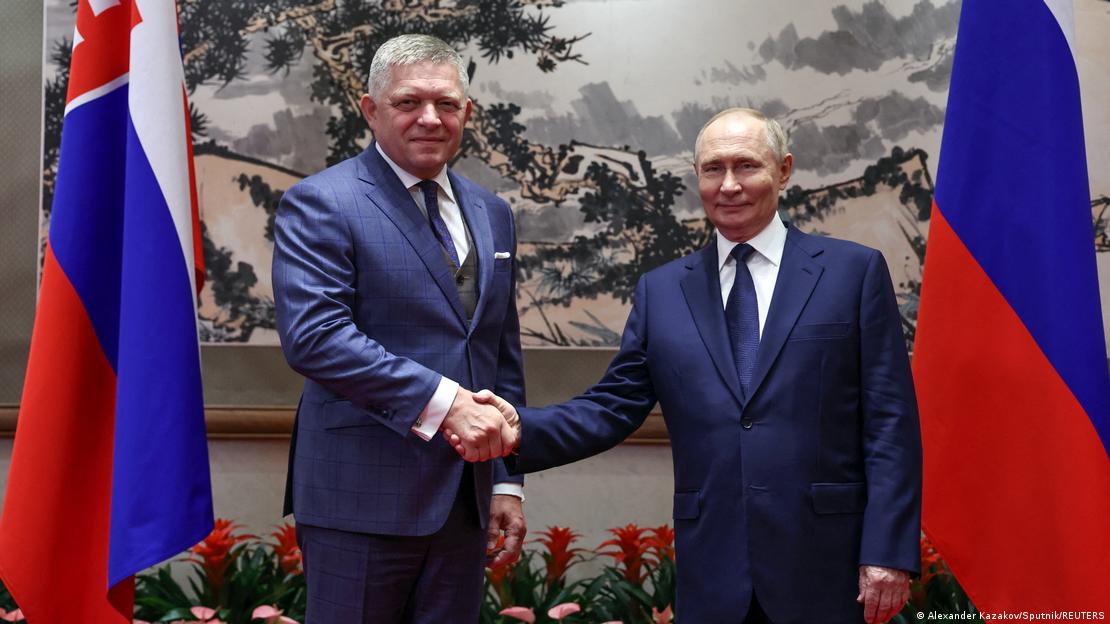
Despite pressure to cut back its Russian oil and gas imports, the Slovak government says it would be too expensive to do so. Pictured here: Slovak PM Robert Fico (left) with Russian President Vladimir Putin earlier this monthImage: Alexander Kazakov/Sputnik/REUTERS

The package, which was approved by Slovakia's parliament on Wednesday evening, is a bid to contain the country's economic crisis, a struggle not helped by US tariffs on Slovakia's key auto industry.

It aims to cut €2.7bn from the 2026 budget deficit. While no one disputes the need to act, the emphasis on raising taxes and contributions, slashing public sector salaries and jobs and cutting social benefits is provoking fury.

Critics contend that the package will hit ordinary citizens while sparing oligarchs linked to Fico's Smer party. Business groups complain it will weaken competitiveness.

The government's media office did not respond to a request for comment.

Government instability

Some suggest that the widespread anger over the consolidation plan could revive the instability that has plagued the three-party governing coalition since it came to power almost two years ago.

After slipping to a minority earlier this year as rebel MPs sought to leverage the government's slim majority to push through demands, Fico bought back their loyalty with ministerial posts, leaving him with 79 of the 150 seats in parliament.

Adrius Tursa of the London-based risk consultancy Teneo Intelligence said in an analysis note that he expects the parliamentary debate on the package to "test Fico's fragile majority."

Coalition partners unwilling to rock the boat

The opposition is keen to use the current situation to help push the coalition over the edge. But this will be no easy task.
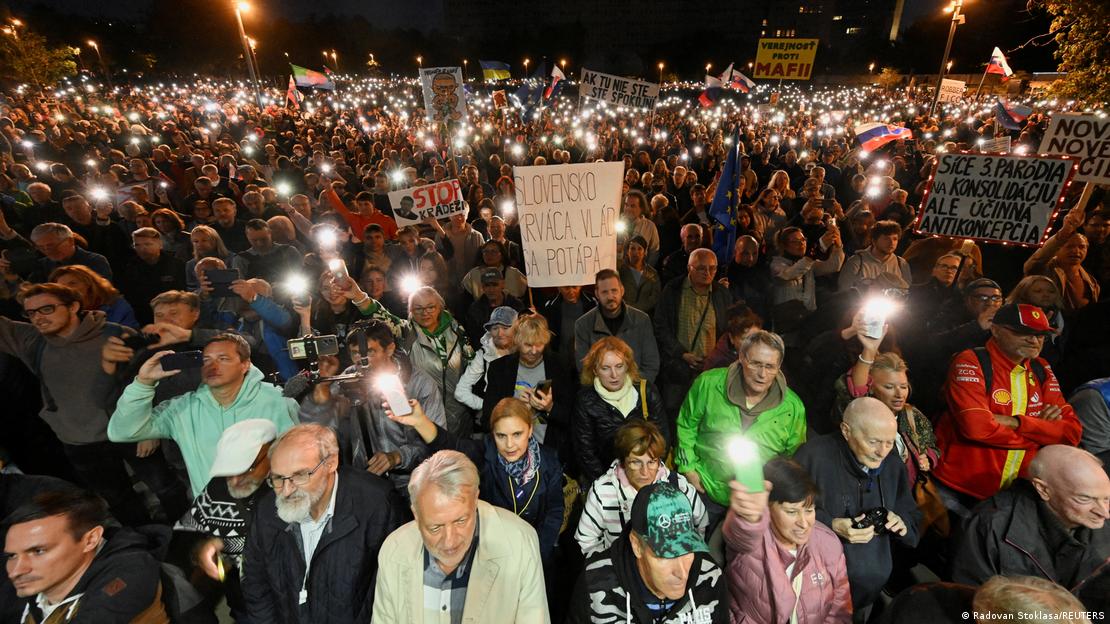
Thousands of Slovaks gathered in Bratislava on Tuesday shouting 'Enough of Fico! Fico go to jail!' and 'It is enough. We are fed up!'
Image: Radovan Stoklasa/REUTERS

Although, as Simecka says, "the representatives of each party are now publicly bickering about the consolidation package," Smer's junior coalition partners — the center-left Hlas and radical-right Slovak National Party — are wary of rocking the boat, given they've seen their support fall since the last election.

None of them "wants to repeat the situation from 2020 to 2023, when they were in opposition," says Stefancik.

Would voters back the liberals?

At the same time, voters have not forgotten those same three years when a bickering governing coalition cobbled together by liberal parties caused chaos.

Asked how they can convince the country that the newly announced cooperation deal will be different, Simecka stressed that PS has been "touring the regions … talking to disenchanted people who voted for Fico's coalition."

However, analysts suggest that these voters — most of whom belong to the poorer cohort and will feel the economic effects of the consolidation package most keenly — are more likely to turn to parties such as the far-right Republika than to the liberal parties.


Link to the past

Aware of this threat, some in the liberal opposition are attempting to use Fico's pro-Russian stance to draw a line linking the controversy over the consolidation package to 1989's Velvet Revolution.

Perhaps the most contentious part of the consolidation package is a proposal to ditch two national holidays, one of which is the November 17 celebration of the revolt that kick-started the collapse of the communist regime in erstwhile Czechoslovakia.
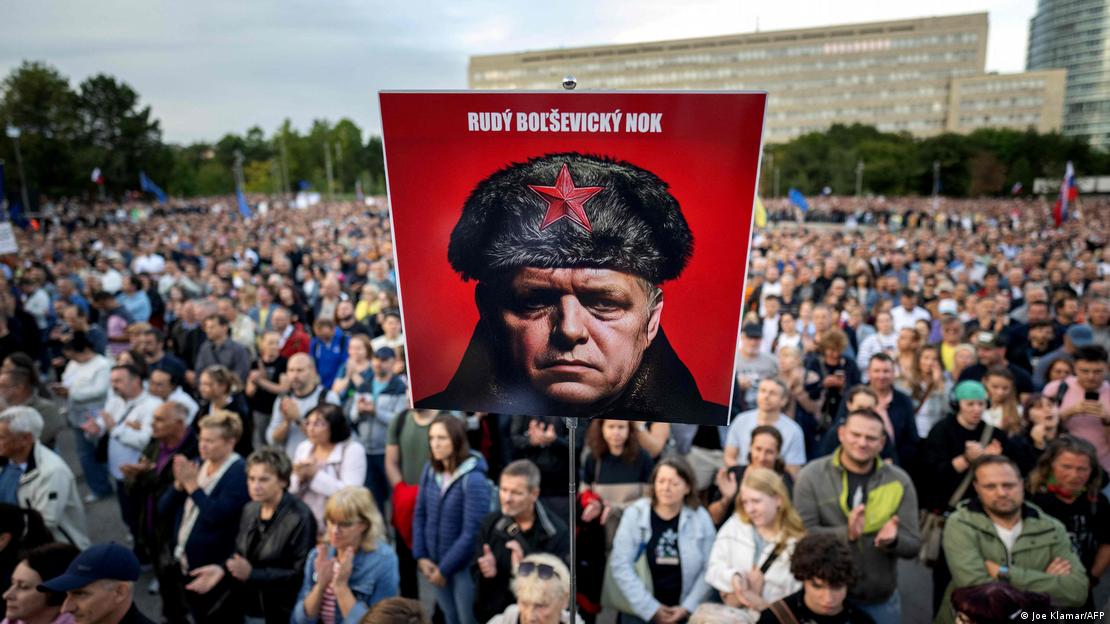
Since his return to power in 2023, Fico has faced a series of protests over his curbing of rights and close ties with Russian President Vladimir Putin. The placard in the photo reads 'Enough Red Bolshevik'
Image: Joe Klamar/AFP

Some opposition parties have called for a general strike to mark the date, as happened 36 years ago.

However, others among the opposition are wary that it could prove an embarrassing — and extremely expensive — flop.

Observers appear no less skeptical. Andrej Matisak, an editor at the Slovak broadsheet Pravda, brands the idea "unrealistic," insisting that the momentum is not there to carry it off.

Radoslav Stefancik notes that the mood in the country is very different today than it was in 1989: "At that time, the majority sought democracy, political freedoms and a market economy," he says. "Now the country is polarized, and many would not join the protest."

Simecka suggests that his PS party will remain patient, insisting that it "stands ready to challenge Mr. Fico in the upcoming elections, whether they come in two years or tomorrow."

Observers suggest that the scheduled date of 2027 appears the most likely.

Fico already gave up power once in 2018, following the murder of journalist Jan Kuciak, and ended up in the political wasteland and facing prosecution. "He's not going to do that again without a big fight," says Matisak.

Edited by: Aingeal Flanagan

Tim Gosling Journalist covering politics, economics and social issues across Central and Eastern Europe
Living with the legacy of France's nuclear weapons testing

DW
26/09/2025

France tested nuclear weapons for 30 years in the Pacific. The people of French Polynesia bore the brunt of the testing.


For 30 years, France tested nuclear bombs on the Mururoa Atoll in the South Pacific
Image: dpa/picture alliance

"For 30 years, we were France's guinea pigs," says Hinamoeura Morgant-Cross, a young member of parliament from French Polynesia.

This South Pacific archipelago, a French overseas territory that includes Tahiti and is famed for its white beaches, swaying palms, and turquoise waters, is often romanticized as a paradise.

But beneath the idyllic image lies a painful legacy: decades of nuclear testing and its enduring consequences.

Between 1966 and 1996, the French military detonated 193 nuclear bombs on the remote atolls of Mururoa and Fangataufa. These tests were carried out in Ma'ohi Nui, as the territory is known to its indigenous inhabitants. The first explosion, codenamed Aldebaran, took place on July 2, 1966. It marked the beginning of a long chapter that would leave deep scars on the land and its people.

In 2025, Morgant-Cross journeyed over 15,000 kilometers (more than 9,320 miles) to Berlin to speak at an event in May, hosted by the international medical NGO International Physicians for the Prevention of Nuclear War, or IPPNW. There, she delivered a searing testimony about the long-term consequences of France's nuclear testing program: disproportionately high cancer rates, children born with deformities and ongoing contamination of the region's water and soil.

"So they really poisoned the ocean where we found all our food," says Morgant-Cross who has also addressed the United Nations in New York. "We have been poisoned for the greatness of France, for France to be a state with a nuclear weapon."

Hinamoeura Morgant-Cross received the Nuclear-Free Future Award in 2023, for her commitment to the victims of French nuclear weapons testing
Image: IPPNW


The 'clean bomb' myth


The French government at the time knowingly gave false assurances to the islanders about the dangers of the nuclear testing.

Then-President Charles de Gaulle described the French atomic bomb as "green and very clean," suggesting it was safer or more environmentally friendly than the bombs dropped on Hiroshima and Nagasaki .

Morgant-Cross calls it nothing more than "French propaganda."

In reality, radioactive clouds drifted across vast parts of the South Pacific and even reached the main island of Tahiti, more than 1,000 kilometers from the test site. Often, residents of nearby islands weren't informed or evacuated.

No Apology from France


France didn't cease its nuclear testing program until 1996, following intense domestic and international outcry. Despite the halt, the French government has never formally apologized for the harm caused to its overseas territories.

During a 2021 visit to French Polynesia, President Emmanuel Macron acknowledged France's role, stating, "The guilt lies in the fact that we conducted these tests."

"We would not have carried out these experiments in Creuse or Brittany [in mainland France]," he said.

United Nations and various NGOs have observed September 26th as the International Day for the Total Elimination of Nuclear Weapons since 2014. The days is a solemn reminder of the ongoing responsibility borne by nuclear-armed states.

Yet the suffering endured by victims of nuclear testing is in danger of being forgotten. In response, a rising generation from former test sites is refusing to accept the silence of those in power. They are mobilizing across borders, channeling their concern into coordinated action.

Parliamentarian Hinamoeura Morgant-Cross is among those speaking out. While visiting Berlin, she shared her family's painful legacy: her grandmother was 30 when the nuclear tests began and later developed thyroid cancer as did her mother and aunt.

Morgant-Cross, born in 1988, revealed that both she and her sister also developed cancer, underscoring the generational toll of radioactive exposure.


Cancer can develop generations later

Experts warn that nuclear testing has led to clusters of cancer cases within affected families. Exposure to ionizing radiation can cause genetic mutations, which may be inherited by subsequent generations.

"The insidious nature of ionizing radiation lies in its ability to affect people across generations," says nuclear weapons expert Jana Baldus of the European Leadership Network (ELN). "It significantly increases the risk of various cancers, particularly lymphoma and leukemia."

Another consequence of nuclear testing is reproductive harm.

"Women exposed to radiation during the tests have given birth to children with congenital defects and have suffered miscarriages," Baldus tells DW. "These effects can be passed down through generations, potentially leading to infertility in women."

For Hinamoeura Morgant-Cross, the multiple cancer diagnoses in her family were a driving force behind her decision to enter politics.

She is now calling on France — the state responsible for the nuclear tests — to provide greater support for her fellow citizens.

"We don't have the medical care that we should have, that we deserve, because we are 30 years late, in terms of medicines. We don't have technology like medical scans." she says. "It really pushed me to go into politics, and to demand that we deserve a better hospital, we deserve better treatment."

Only a small fraction of those affected have the means to travel to Paris for medical treatment, leaving many without access to adequate care.

Victims face an uphill battle for compensation


In 2010, the French government enacted legislation to provide compensation to victims of nuclear testing. However, each case is assessed individually, and claimants must demonstrate a direct link between their illness and the nuclear tests. That burden of proof is not always easily achieved.

Expert Jana Baldus points out a major hurdle.

"Victims must prove they were physically present at the exact location when the tests occurred — a nearly impossible task decades later." In addition, compensation is limited to a narrow list of officially recognized illnesses. According to the global coalition ICAN (International Campaign to Abolish Nuclear Weapons), only 417 residents of French Polynesia received compensation between 2010 and July 2024.

For Hinamoeura Morgant-Cross, the fight isn't only about securing practical support, it's also about education.

In her homeland, a persistent narrative still portrays the nuclear tests as a so-called clean endeavor that brought prosperity.

"For decades, we had pictures of the nuclear mushroom in all the living rooms of the Tahitian people because we were proud the French decided to choose us," she recalls. Her mission now is to dismantle what she calls that "colonial mindset" and shed light on the true consequences of the tests.


The future of nuclear testing: risk or rhetoric?

France wasn't alone in conducting extensive nuclear tests. The Soviet Union, the United States, the United Kingdom and China also carried out large-scale detonations.

In total, more than 2,000 nuclear explosions have taken place. The resulting radioactive fallout not only contaminated the immediate test sites but also contributed to elevated radiation levels across the globe.

Nuclear testing was halted primarily through moratoriums and international negotiations surrounding the Comprehensive Nuclear-Test-Ban Treaty (CTBT).

In recent years, North Korea has been the only country to conduct such tests. Yet amid rising geopolitical tensions, experts warn that a resurgence of nuclear testing remains a real possibility.

This article was originally published in German.
REST IN POWER 
Assata Shakur: Fugitive Black activist dies in exile in Cuba

Jenipher Camino Gonzalez 
DW with AP, EFE
26/09/2025

Assata Shakur had lived in exile in Cuba since 1979, after escaping a prison sentence for killing a police officer.

Assata Shakur died of health conditions and advanced age, Cuban officials said
Image: AP Photo/picture alliance


The Cuban government announced on Friday that Assata Shakur had passed away at the age of 78. Shakur had lived in exile in Cuba since 1979, after escaping from a US prison.

The Black liberation activist died of "health conditions and advanced age," Cuba's Ministry of Foreign Affairs said in a statement. Her daughter Kakuya Shakur, also confirmed her mother's death in a Facebook post.

Shakur, who was born Joanne Deborah Byron, had been convicted and sent to prison for killing a police officer. Shakur and her supporters maintained she was innocent.

Members of the Black Liberation Army stormed the female prison posing as visitors, taking two guards hostage and enabling Shakur to escape.


She emerged in Cuba in 1984, where Fidel Castro granted her asylum. In 2013, the FBI added her to its list of "most wanted terrorists."

BLM celebrates Shakur's 'courage'

In her writings from Cuba, Shakur said she did not shoot anyone and had her hands in the air when she was wounded during the gunfight with New Jersey State Police troopers, where she was accused of murdering one of the policemen.

Many of her followers believed her and celebrated her role in Black activism in the 1970s.

"It is our duty to fight for our freedom. It is our duty to win," Shakur wrote in a biography published in 1988.

"We must love each other and support each other. We have nothing to lose but our chains."

Her writings also became a rallying cry for the Black Lives Matter movement in recent years, although her opponents accused her of being influenced by Marxist and communist ideology.


Black Lives Matter Grassroots Inc., the group representing activists of racial justice activists from across the US, paid tribute to Shakur on Friday.

"May her courage, wisdom, and deep, abiding love permeate through every dimension and guide us," the group said in a statement.

"May our work be righteous and brave as we fight in her honor and memory."

Edited by: Zac Crellin


Netherlands to return 'Java Man' fossils to Indonesia

Carlos Muros 
DW with Reuters, AFP
26/09/2025


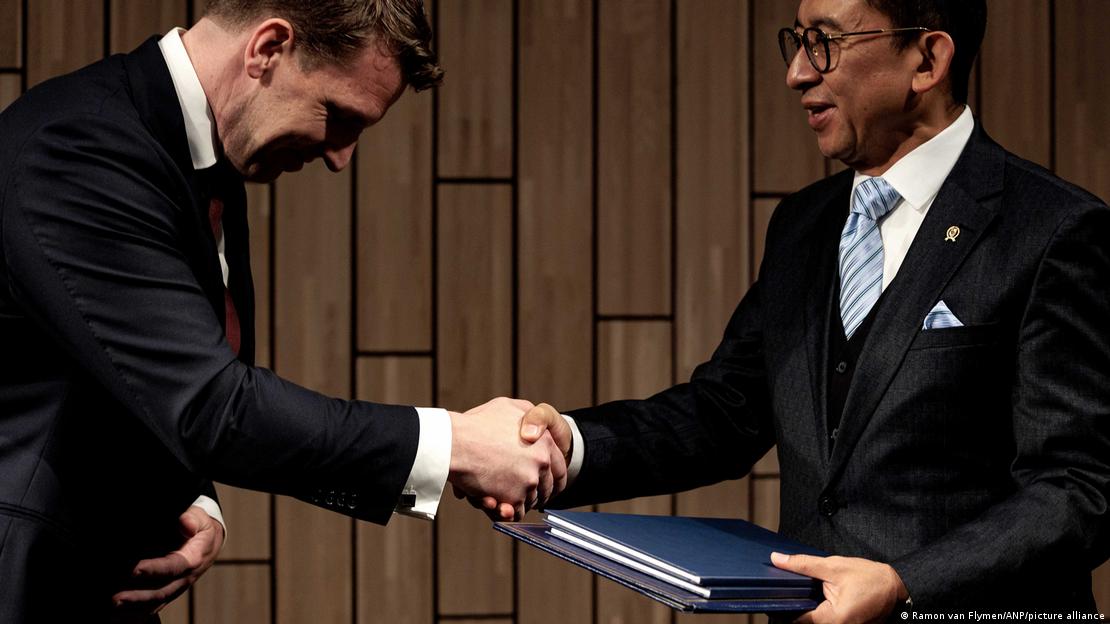
The Netherlands will give back the "Java Man" fossils that were taken "against the will of the people" from colonial Indonesia. The fossils were the first to show links between apes and humans.


The colonial-era collection is made up of over 28,000 fossils
Image: Ramon van Flymen/ANP/picture alliance

The Netherlands announced on Friday that it will give back a collection of thousands of fossils to Indonesia.

The collection is made up of over 28,000 fossils, including some of the so-called "Java Man" bones. These are the first known fossils of the Homo erectus, an ancestor to the Homo sapiens species.

"At Indonesia's request, the Netherlands is transferring more than 28,000 fossils from the Dubois collection," the Dutch government said.

The soon to be retrieved fossils are known as the Dubois Collection, named after the Dutch anthropologist Eugene Dubois. Dubois extracted the fossils from Indonesia in 1891, time during which the country was a Dutch colony.

The "Java Man" part of the collection is considered to include the first fossils to ever show links between apes and humans. It often receives that name because its discovery was made on the Indonesian island of Java.

"This collection is an important resource in research into human evolution," the Dutch government said.
Fossils 'of spiritual and economic importance' to Indonesia

Friday's announcement comes after the Dutch Independent Colonial Collections Committee found that "the circumstances under which the fossils were obtained" and came to the conclusion that "it is likely they were removed against the will of the people, resulting in an act of injustice against them."

it recommended that the fossils be repatriated to Indonesia.

"Fossils were of spiritual and economic significance to the local population," said the Dutch Culture Ministry.

\
Dutch Culture Minister Gouke Moes and his Indonesian counterpart Fadli Zon attended a handover ceremony in Leiden
Image: Ramon van Flymen/ANP/picture alliance

This is not the first case involving Indonesia, which already received more than 200 returned items from the Netherlands two years ago.

Indonesia became independent from the Netherlands in August 1945. The Netherlands had occupied the Southeast Asian archipelago for three centuries and did not accept the independence of the territory after four years later, in 1949.

Netherlands reckons with colonial collections

This is the sixth time the Netherlands has returned items based on the recommendations of the Dutch Independent Colonial Collections Committee.

The Dubois collection is the latest example, however, the Netherlands have also been gradually returning other pieces once obtained from former colonies.

Earlier this year, for example, the Dutch government returned 113 of the ancient Benin Bronzes collection to Nigeria.

Edited by: Zac Crellin
France accused of restricting protests and eroding democracy

France’s human rights record is under fire, with a new report warning that freedoms once taken for granted are being steadily chipped away.


Issued on: 25/09/2025 - RFI

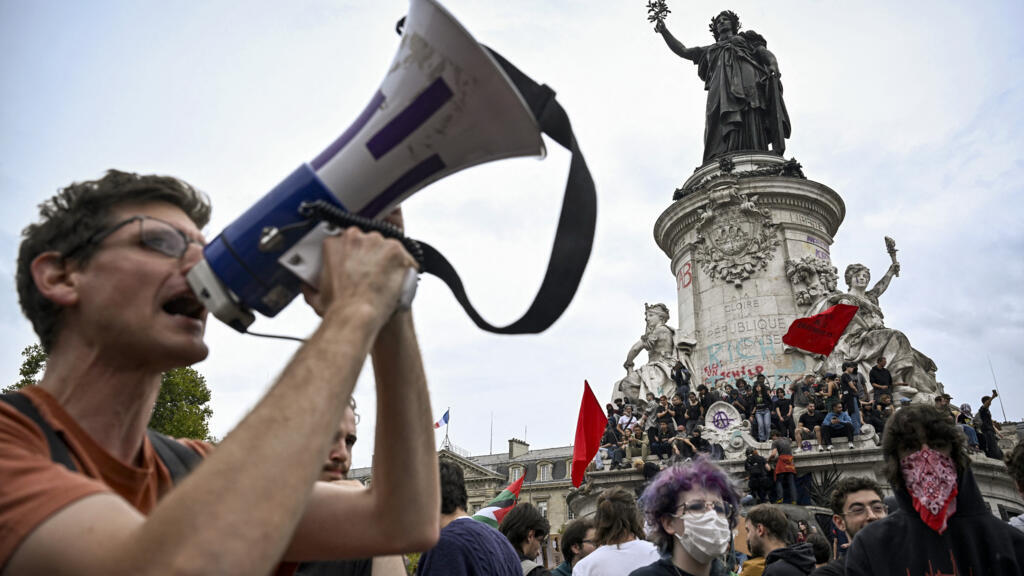
A protester at the Place de la RĂ©publique in Paris during the "Let's Block Everything" protests on 10 September. © Julien de Rosa / AFP

A report from the Observatory for the Protection of Human Rights Defenders – a partnership between the International Federation for Human Rights (FIDH) and the World Organisation Against Torture (OMCT) – says that democracy in France is sliding.

The report posits that state authorities are increasingly stigmatising civil society organisations and the causes they champion – particularly when those causes challenge established power.

It says this shift has been especially visible since 2017, following the formal end of the state of emergency that had been introduced after the 2015 terror attacks.

The authors of the report say that full democratic normality has not been restored.


There has been a notable surge in administrative orders prohibiting demonstrations. These orders, the report warns, are often deployed excessively, with around 80 percent later overturned by the courts.

“It’s a bulwark,” AĂŻssa Rahmoune, secretary-general of FIDH, told RFI, “but how long will it last? In Nice, for instance, the prefecture issues bans so late that protesters have no realistic judicial recourse.”

These police bans are sometimes announced just hours before a protest is due to begin, which makes it almost impossible for organisers to lodge a timely legal appeal, even though French administrative courts often suspend such orders

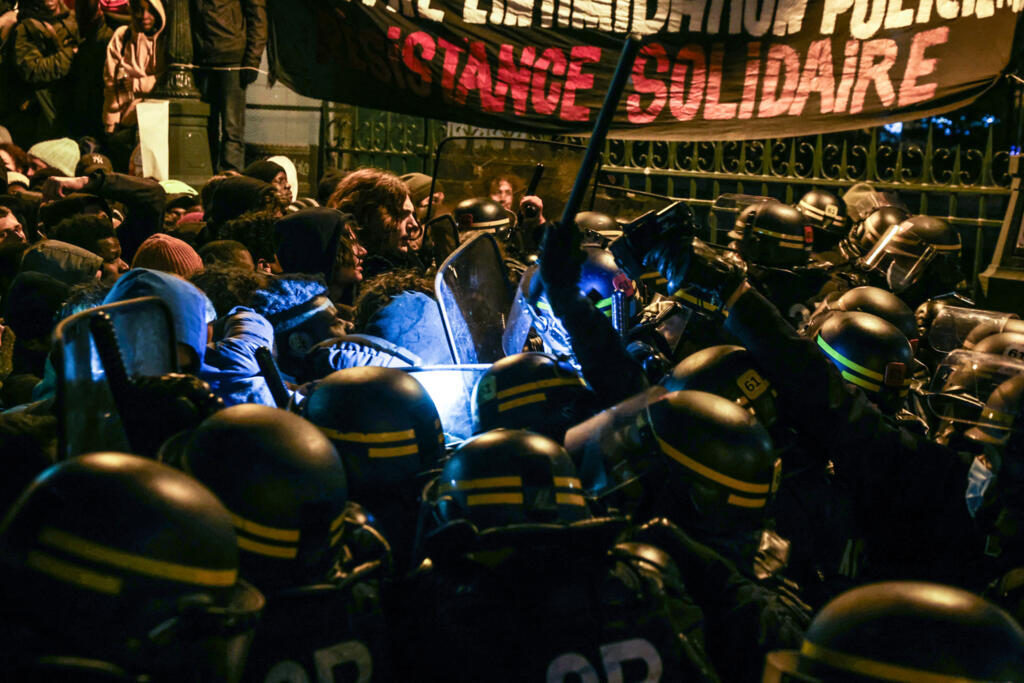
A crowd scuffles with French riot police on 18 March, 2025, following a police order to evict unaccompanied migrant minors from the GaĂ®tĂ© Lyrique theatre they occupied for three months in Paris. © AFP/Alain Jocard

Pushback

According to the report, even when protests are authorised, participation is increasingly constrained.

Under France’s 2019 anti-riot law, police can carry out checks and identity controls on potential protesters before they even join a march.

The report also warns over the normalisation of force, as France deploys one of the most militarised policing arsenals in Europe.

Demonstrations often end in the mass detention of participants – too often without any subsequent prosecution. In practice, authorities seem less interested in accountability than in dissuasion, the report says.


In terms of pushback, however, the report notes there is an active and engaged human rights community, with civil society organisations drawing public attention to these trends.

The high rate of judicial pushback – including the high rate of bans being suspended – also shows that the French legal system remains intact and impartial, it says.

In 2023, for example, a court in Paris suspended a prefectural order banning non-declared demonstrations – explicitly citing its illegality and the impact on fundamental rights.

As Rahmoune notes, institutional checks and balances and civic resistance remain alive and well in France – and when under pressure, those checks gain a renewed purpose.
Ghana accused of dumping West African migrants deported from US in Togo

West African migrants deported from the United States to Ghana earlier this month have been transferred to neighbouring Togo by force, according to their lawyers, who are pursuing lawsuits in US, Ghanaian and regional courts alleging violations of fundamental human rights.


Issued on: 26/09/2025 - RFI

A protest against the United States' Immigration and Customs Enforcement (ICE) and migrant detentions in in Elizabeth, New Jersey, on 3 March 2025. © AP / Seth Wenig

By: Zeenat Hansrod


Of 14 people who landed in Ghana from the US on 6 September, lawyers say 11 were kept in detention. After around two weeks at a military camp near Accra, six of them were allegedly taken across the border to Togo.

“The deportees were forced by armed military guards to climb wire fences,” said Samantha Hamilton, an attorney for Asian Americans Advancing Justice (AAJC), a civil rights organisation that has filed a lawsuit in the US on behalf of the migrants.

“A woman in her late 50s was thrown on the back of a motorcycle and smuggled across the border.”

The lawyers believe that Togo was chosen for its proximity. It is two and a half hours' drive from where the deportees were held in Ghana.

Only two of the people removed between 18 and 19 September are Togolese nationals, according to their lawyers, the others hailing from Nigeria, Mali, Liberia and Gambia.

“A Malian woman who only speaks Bambara was left to fend for herself in Togo. She was sexually assaulted and now she’s been kidnapped, and her kidnappers are demanding a $50,000 ransom from her family,” Hamilton told RFI.

A spokesperson for the Ghanaian government, Felix Kwakye Ofosu, told RFI on 23 September that "all deportees have left Ghana for their respective home countries".

Yet their lawyers say they have information that indicates four other deportees were not transferred to their countries of origin but sent by Ghanaian authorities to different countries offering them protection. One of the deportees has reportedly been released to family in Ghana.

Public embarrassment

Hamilton believes it was a “calculated attempt to get rid of these people”.

The migrants were transferred after they filed lawsuits against the authorities in Ghana, suing for their release and to avoid being repatriated to countries where they could be in danger.

After an initial hearing on 17 September, a judge adjourned the case until 23 September. By then, the 11 deportees were no longer in Ghana – so the lawyers had to withdraw their applications to prevent their repatriation and to oblige the government to produce them in court.

“What the government did was try to circumvent and frustrate the court processes,” said Oliver Barker-Vormawor, a senior partner at Merton & Everett law firm in Accra and one of the lawyers representing the deportees.

“There was every attempt to keep this under wraps. The government was embarrassed by the lawsuits and this becoming public,” he claimed.

“The deportees told us that the military hierarchy and those who were holding them were in an apparent state of confusion regarding the publicity and wanted to get rid of them as fast as they could.”

Lawsuits ongoing

Barker-Vormawor told RFI that the case against the government in Ghana for breach of human rights remains ongoing.

“We're also pursuing the government for the detention of the deportees in a military facility. They were detained as civilians in a military facility for around 14 days without being brought before a court,” he said.

The matter will be taken to the court of regional body Ecowas, involving lawyers from the US, including the American Civil Liberties Union.

A motion has also been filed to compel Ghana's government to disclose its agreement with the US and halt its implementation until it is submitted to parliament for ratification.

Ghana's foreign affairs minister Samuel Okudzeto Ablakwa said that his government was not under any obligation to produce its memorandum of understanding with Washington.

Opposition parties, however, point to a 2017 Supreme Court ruling that states any international agreement must be ratified by parliament.
US efforts

In the US, the AAJC has also been trying to get hold of the agreement – “but the US government has been unwilling to provide that information”, said Hamilton.

“This seems like a scheme to disappear people in violation of American immigration laws as well as international law.”

Hamilton claims President Donald Trump's administration entered a deal with Ghana while knowing it has a history of unlawfully repatriating people to countries where they face torture and persecution, as documented by the US Department of State.

“We want to put an end to this third-country removal policy completely,” she said, adding that a lawsuit is underway to that effect.

Several US federal courts have ordered the return to the US of people who have been deported to third countries, Hamilton noted.

“These federal courts are some of the only tools we have to try hold the Trump administration to account... The Trump administration has flouted the rule of law repeatedly. I have to believe, for my own sanity, that one of these days the government will comply with court-ordered decisions, because that's all that we've got.”

'Pan-African solidarity'

Ghana, one of five African countries to agree deportation deals with Washington, is preparing to take in more people expelled from the US.

According to Barker-Vormawor, some 14 more deportees reached Ghana on 19 September.

“We know that the government is taking extreme measures to prevent any leak of information about the detention of these persons,” he said.

Last week, foreign minister Ablakwa announced that 40 more deportees were to be transferred to Ghana from the US.

He also said that accepting them in Ghana was an act of "pan-African solidarity" designed to provide "temporary refuge" and prevent suffering.

Barker-Vormawor dismissed that justification. "Given what we have uncovered, the government’s PR about pan-African solidarity does not stand," he said.

"We think that the initiative came from the US, whereby certain actions from Ghana might be favourably looked upon by the Trump administration. We think that was the deal on the table, and that's why the government accepted it."

When African dictatorships reach out to Trump


Monday 22 September 2025, by Paul Martial


The United States’ goal is to force African countries to take in deported individuals. Some despots have already agreed.


South Sudan, Eswatini (formerly Swaziland), Rwanda and, most recently, Uganda, in addition to being dictatorships, have another thing in common: they have signed an agreement with the United States to this effect, which is part of Trump’s policy of harassing immigrants.

‘Considerable pressure’

The US Supreme Court, where conservative judges are in the majority, has validated the mass deportation measures in defiance of international conventions that the United States has ratified: the 1984 convention prohibiting torture and other cruel, inhuman or degrading treatment or punishment, as well as the 1951 convention and its 1967 protocol, which prohibit the return of refugees to countries that do not respect human rights.

The first deportees to Eswatini have already seen their rights violated. The Southern African Litigation Centre has filed a petition because the absolute monarchy refused to allow them access to their lawyer.

The Trump administration’s goal is to sign agreements with 58 countries, including 31 in Africa, to take in banned individuals. Yusuf Maitama Tuggar, Nigeria’s Minister of Foreign Affairs, confirms that considerable pressure has been exerted on his country, which has nevertheless maintained its refusal.

A boon for dictators

The agreements remain secret. However, some have been leaked and are hardly reassuring. In South Sudan, ravaged by armed militias, President Salva Kiir, a party to a civil war that has already claimed tens of thousands of lives, made his demands known during the negotiations: the lifting of sanctions against one of the regime’s three senior officials, the lifting of visa bans, the unfreezing of a US-based bank account, and support for legal proceedings against his main opponent, First Vice-President Riek Machar, who remains under house arrest.

As for Rwanda, where torture is commonplace in prisons, President Paul Kagame sees himself as a privileged ally of the Western camp. This allows him to be regularly elected with 98% of the vote and to continue his offensives against neighbouring Congo without fear of retaliation.

For the Ugandan president, in a country where homosexuality is punishable by death, signing the agreement with the United States is a guarantee: the certainty that the US administration will not be too concerned about the repression surrounding the presidential election, which will confirm a seventh term in office.

Whether it is the European Union, which uses African countries to outsource its borders, or the United States, which is trying to force them to take in ‘some of the most despicable people’, in the words of Secretary of State Marco Rubio, both are perfectly happy to accommodate despotic African regimes, to the detriment of the people.

16 September 2025

Translated by International Viewpoint from l’Anticapitaliste.

Attached documentswhen-african-dictatorships-reach-out-to-trump_a9183.pdf (PDF - 904.9 KiB)
Extraction PDF [->article9183]

Paul Martial is a correspondent for International Viewpoint. He is editor of Afriques en Lutte and a member of the Fourth International in France.


International Viewpoint is published under the responsibility of the Bureau of the Fourth International. Signed articles do not necessarily reflect editorial policy. Articles can be reprinted with acknowledgement, and a live link if possible.

Emergency medicine workers report job satisfaction, though burnout and staff retention remain major problems


European Society for Emergency Medicine (EUSEM)


Vienna, Austria: One of the largest international surveys into job satisfaction among emergency department workers has revealed that while the majority found their work satisfying and rewarding, there are still many areas where improvements are needed, according to research presented at the European Emergency Medicine Congress today (Sunday) [1]. The paper, “Global Job Satisfaction Among Emergency Medicine Professionals: Results from the 2025 Emergency Medicine Day Survey”, is published today in the European Journal of Emergency Medicine. [2]

The survey, conducted by the EUSEM Emergency Medicine Day Working Group, received responses from 1,112 healthcare providers in 79 countries, and represents one of the largest and most comprehensive global assessments of emergency medicine (EM) workforce well-being to date. EM professionals face persistent challenges including excessive workloads, high pressure, shift/night work and emotional stress. While job satisfaction is essential for workforce sustainability, quality of patient care and staff retention, international data on this topic remain limited.

The average satisfaction score among participants was 25.37 out of 36 and reflected a generally positive sentiment, but Professor Luis Garcia-Castrillo from the Marquès de Valdecilla University Hospital, University of Cantabira, Santander, Spain, says career development opportunities, work organisation, and workload received relatively low scores.

“These are areas where action is needed urgently if specialist staff are to be retained and new team members recruited,” he says.

EM professionals working in high-volume emergency departments that received more than 100,000 visits a year reported significantly lower job satisfaction, as did those in mid-career with between five- and 20-years’ experience. While satisfaction did not vary significantly by gender, academic role, or hospital type, the survey highlights that nurses and paramedics reported higher satisfaction levels than physicians, particularly in workload and organisational aspects.

“Co-worker support, organisational commitment, and professional fulfilment were the most positively-rated factors. We also found that respondents intending to stay in their current role over the next year had significantly higher satisfaction scores, and this emphasises the important link between well-being and staff retention,” says Prof Castrillo.

“The very nature of EM means that it places high demands on staff, but we have shown that with professional support, good team work and a sense of purpose, such demands do not inhibit their enthusiasm for their work. But we cannot emphasise enough that strategies are needed to strengthen leadership, support mid-career staff, improve work-life balance and create clear professional growth opportunities. There are urgent red flags around the incidence of burnout, especially in departments with a very high patient demands,” says the paper’s first author, Professor Roberta Petrino, from the Ente Ospedaliere Cantonale, Lugano, Switzerland.

The team plans to publish additional findings and to conduct further analyses of the data, including differences between countries and systems.

Emergency Medicine Working Group Chair, Dr Basak Yilmaz, from the Emergency Medical Services of Burdur Provincial Health Directorate, Burdur, Turkiye, says: “Our data are already sufficient to be useful to local and national EM bodies as a benchmark for improving staff retention and care quality. One of our most striking findings is the strong correlation between job satisfaction and professional retention. This is important, not just for individual staff members, but also for the sustainability of the EM system as a whole.”

(ends)

[1] Emergency Medicine is a happy journey: the results of a global survey, Emergency Medicine Day session, Sunday 28 September, 16:30 - 18:00 hrs CEST, Strauss rooms 2+3.

[2] DOI: 10.1097/MEJ.0000000000001272


Eating fruit may reduce the effects of air pollution on lung function


European Respiratory Society


Eating fruit may reduce the effects of air pollution on lung function, according to research presented at the European Respiratory Society Congress in Amsterdam, the Netherlands [1].

The study was presented by Pimpika Kaewsri, a PhD student from the Centre for Environmental Health and Sustainability at the University of Leicester, UK.

She explains: “Over 90% of the global population is exposed to air pollution levels that exceed WHO guidelines, and ample research shows that exposure to higher air pollution levels is associated with reduced lung function.

“Separately, a healthy diet - particularly one high in fruits and vegetables - has been linked to better lung function. We wanted to explore whether a healthy diet or specific food groups could modify or partly mitigate the known adverse effects of air pollution on lung function.”

Using UK Biobank data from around 200,000 participants, Kaewsri compared people’s dietary patterns - including their fruit, vegetable and whole grains intake - with their lung function (FEV- the amount of air exhaled in one second) and their exposure to air pollution in the form of fine particulate matter (PM2.5). PM2.5 concentration is the amount of very tiny particles, 2.5 micrometres or smaller, released into the air, for example by vehicle exhausts and industrial processes. The team also accounted for other factors such as age, height, and socioeconomic status.

For every increase in exposure to PM2.5 of five micrograms per cubic metre of air, the team observed a 78.1ml reduction in FEV1 in the low fruit intake group, compared to only a 57.5ml reduction in the high fruit intake group in women.

Kaewsri explains: “Our study confirmed that a healthy diet is linked to better lung function in both men and women regardless of air pollution exposure. And that women who consumed four portions of fruit per day or more appeared to have smaller reductions in lung function associated with air pollution, compared to those who consumed less fruit.

“This may be partly explained by the antioxidant and anti-inflammation compounds naturally present in fruit. These compounds could help mitigate oxidative stress and inflammation caused by fine particles, potentially offsetting some of the harmful effects of air pollution on lung function.”

Kaewsri also noted that, in the study population, men generally reported lower fruit intake than women. “This difference in dietary patterns may help explain why the potential protective effect of fruit against air pollution was only observed in women,” she adds.

Kaewsri plans to extend the research by exploring whether diet can influence changes in lung function over time.

Professor Sara De Matteis, Chair of the European Respiratory Society’s expert group on occupational and environmental health, based at the University of Turin, Italy, who was not involved in the research said: “This study confirms the potential respiratory health benefits of a healthy diet, especially rich in fresh fruit intake.

“However, access to a healthy diet is not equally distributed in the population and, even if the authors adjusted for socio-economic-status, some residual confounding cannot be ruled out.

“A healthy plant-rich diet should be promoted in the population starting from primary school, not only for preventing chronic diseases, but also to reduce the carbon-footprint of meat-rich diets.

“This does not exempt governments from continuing with environmental policies to reduce air pollution to as low as possible, given there are no safe exposure levels, and it does not transfer their accountability to individuals whose diet choices are often constrained by economic needs.” 

 COP30 nears: Do aid cuts threaten land-rights progress?


ByDr. Tim Sandle
SCIENCE EDITOR
DIGITAL JOURNAL
September 26, 2025


Land rights and environmental protection. — Image by © Tim Sandle.

International donor commitments made at the 2021 UN Climate Conference helped to substantially increased financial support for the communities on the frontlines of climate change. Yet what is the situation like in 2025?

Not so good,according to new data from Rainforest Foundation Norway and Rights and Resources Initiative. These figures show that, despite a 46% rise in annual disbursements since COP26, funding for Indigenous Peoples, local communities, and Afro-Descendant Peoples peaked in 2021. Since then, it has declined every year.

The report shows that the largest contributor to the COP26 pledge so far has been Germany, which has doubled its funding for IPs, LCs and ADPs in since 2021. Other leading nations are more hesistant.

Yet how reliable is the German funding? Current budget discussions in the German Parliament, however will decide whether it will continue to play this leading role.

The outlook elsewhere from the rich and powerful nations is somewha bleak. The prevailing trend sees several governments cutting aid or redirecting budgets toward security and defence; this decline risks accelerating. The irony is that this is occurring just as COP30 (Brazil, November 2025) is set to place tropical forests and community land rights at centre stage.

The report finds that while funding has increased, there has yet to be a fundamental shift in how resources are delivered. Direct funding is low, while funding through international organizations and multilateral institutions still dominates. Without new investment, current trajectories leave a $2.9 billion gap towards Path to Scale’s $10 billion target by 2030. Even at 2021’s peak disbursement rate, funding would still fall short by $2.1 billion, while a regression to the 2017-2020 funding rate would leave a shortfall of $4.7 billion.

Life – all life – is dependent upon nature and indigenous people are central for maintaining this essential state of equilibrium.

Indigenous Peoples steward vast carbon- and biodiversity-rich territories, yet receive less than 1% of climate-related funding and philanthropy. On current trajectories, there’s a $2.9 billion gap to 2030 to scale up tenure rights needed to deliver on the Glasgow declaration to end deforestation by 2030.

According to the Rainforest Foundation Norway, COP30 in Brazil represents an opportunity for donors to recommit and renew the funding momentum and progress on global climate and biodiversity targets.

Speaking on these trends, Solange Bandiaky-Badji, President and Coordinator of RRI says: “It is heartening to see the increase in donor attention and funding for Indigenous Peoples, local communities, and Afro-Descendant Peoples since 2021, but it also shows an alarming decline in that progress which means that communities are still not getting the funding levels necessary to achieve global climate and conservation targets.”

In terms of the findings, Bandiaky-Badji thinks: “This report should serve as an impetus for donors across all sectors to raise their investment in scaling up funding delivered directly to Indigenous Peoples and local communities’ own organizations and funding mechanisms, and to carry forward the remarkable political leadership displayed at COP26 even if they weren’t part of the original Pledge.”

Consequently, the Alliance is calling on donors, in particular the leading donor countries such as Germany, to step up and commit to a new Land Tenure Pledge at COP30 that speeds up the funding towards 2030.

Will the communities affected learn to know if the rich and powerful have their backs?


Road to COP30: What are the climate targets?

Environment
From the show
Down to Earth

World leaders will convene at a climate summit hosted by UN Secretary-General Antonio Guterres on Wednesday in New York. Countries face mounting pressure to set more ambitious emission reduction targets for 2035 ahead of COP30 in Brazil. Governments were invited to submit their updated pledges by February 2025. Of the 195 Paris Agreement signatories, only 13 countries have met the deadline, while a total of 37 have submitted new plans. FRANCE 24’s ValĂ©rie Dekimpe explains.  


Earth's oldest living organisms survive in Europe's last wild forest

Environment
From the show
Down to Earth

It’s a sacred sanctuary for bisons, wolves and countless birds. The BiaĹ‚owieĹĽa Forest is the last untouched forest in Europe. Not a single tree has ever been cut down there. Located between Poland and Belarus, it fascinates scientists and nature lovers alike. Our France 2 colleagues report.