Saturday, September 27, 2025

Trump to put import taxes on pharma, home furnishings, heavy trucks


By AP with Eleanor Butler
Published on 26/09/2025 -

While Trump did not provide a legal justification for the tariffs, he appeared to stretch the bounds of his role as commander-in-chief by stating on Truth Social that the taxes on imported kitchen cabinets and sofas were needed “for national security and other reasons".

President Donald Trump said on Thursday that he will put import taxes of 100% on pharmaceutical drugs, 50% on kitchen cabinets and bathroom vanities, 30% on upholstered furniture and 25% on heavy trucks starting on 1 October.

The posts on his social media site showed that Trump's devotion to tariffs did not end with the trade frameworks and import taxes that were launched in August, a reflection of the president's confidence that taxes will help to reduce the government's budget deficit while increasing domestic manufacturing.

While Trump did not provide a legal justification for the tariffs, he appeared to stretch the bounds of his role as commander-in-chief by stating on Truth Social that the taxes on imported kitchen cabinets and sofas were needed “for National Security and other reasons".

Under the Trade Expansion Act of 1962, the administration launched a Section 232 investigation in April about the impacts on national security from pharmaceutical drug and truck imports. The Commerce Department launched a 232 investigation into timber and lumber in March, though it's unclear whether the furniture tariffs stem from that.


Economic uncertainty


The tariffs are another dose of uncertainty for the US economy with a solid stock market but a weakening outlook for jobs and elevated inflation. These new taxes on imports could pass through to consumers in the form of higher prices and dampen hiring, a process that economic data suggests is already underway.

“We have begun to see goods prices showing through into higher inflation,” Federal Reserve Chair Jerome Powell warned in a recent news conference, adding that higher costs for goods account for “most” or potentially “all” of the increase in inflation levels this year.

The president has pressured Powell to resign, arguing that the Fed should cut its benchmark interest rates more aggressively because inflation is no longer a concern. Fed officials have stayed cautious on rate cuts because of the uncertainty created by tariffs.

Trump said on Truth Social that the pharmaceutical tariffs would not apply to companies that are building manufacturing plants in the United States, which he defined as either “breaking ground” or being “under construction.” It was unclear how the tariffs would apply to companies that already have factories in the US.

In 2024, America imported nearly $233 billion (€199.5bn) in pharmaceutical and medicinal products, according to the Census Bureau. The prospect of prices doubling for some medicines could send shock waves to voters as healthcare expenses, as well as the costs of Medicare and Medicaid, potentially increase.

The pharmaceutical drug announcement was shocking as Trump has previously suggested that tariffs would be phased in over time so that companies had time to build factories and relocate production. On CNBC in August, Trump said he would start by charging a “small tariff” on pharmaceuticals and raise the rate over a year or more to 150% and even 250%.

According to the White House, the threat of tariffs earlier this year contributed to many major pharmaceutical companies, including Johnson & Johnson, AstraZeneca, Roche, Bristol Myers Squibb and Eli Lilly, among others, to announce investments in US production.

Pascal Chan, vice president for strategic policy and supply chains at the Canadian Chamber of Commerce, warned that the tariffs could harm Americans' health with “immediate price hikes, strained insurance systems, hospital shortages, and the real risk of patients rationing or foregoing essential medicines".

The new tariffs on cabinetry could further increase the costs for homebuilders at a time when many people seeking to buy a house feel priced out by the mix of housing shortages and high mortgage rates. The National Association of Realtors on Thursday said there were signs of price pressures easing as sales listings increased 11.7% in August from a year ago.
Investing in domestic production

Trump said that foreign-made heavy trucks and parts are hurting domestic producers that need to be defended.

“Large Truck Company Manufacturers, such as Peterbilt, Kenworth, Freightliner, Mack Trucks, and others, will be protected from the onslaught of outside interruptions,” Trump posted.

Trump has long maintained that tariffs are the key to forcing companies to invest more in domestic factories. He has dismissed fears that importers would simply pass along much of the cost of the taxes to consumers and businesses in the form of higher prices.

His broader country-by-country tariffs relied on declaring an economic emergency based on a 1977 law, a drastic tax hike that two federal courts said exceeded Trump's authority as president. The Supreme Court is set to hear the case in November.

The president continues to claim that inflation is no longer a challenge for the US economy, despite evidence to the contrary. The consumer price index has increased 2.9% over the past 12 months, up from an annual pace of 2.3% in April, when Trump first launched a sweeping set of import taxes.

Nor is there evidence that the tariffs are creating factory jobs or more construction of manufacturing facilities. Since April, the Bureau of Labor Statistics has reported that manufacturers cut 42,000 jobs and builders have downsized by 8,000.

“There’s no inflation,” Trump told reporters Thursday. “We’re having unbelievable success.”

Still, Trump also acknowledged that his tariffs against China had hurt American farmers, who lost out on sales of soybeans. The president separately promised on Thursday to divert tariff revenues to the farmers hurt by the conflict, just as he did during his first term in 2018 and 2019 when his tariffs led to retaliation against the agricultural sector.


The nations and firms threatened by Trump’s pharma tariffs


By AFP
September 26, 2025


Image: — © AFP/File TIMOTHY A. CLARY

Anne Padieu with AFP's European bureaus, 

Donald Trump has shocked the global drug industry by announcing 100-percent tariffs on all branded, imported pharmaceutical products — unless companies are building manufacturing plants in the United States.

With just five days left until the US president is set to impose the harshest measures yet in his global trade war, analysts have been racing to figure out which nations, firms and drugs could be affected.

While plenty of uncertainty remains, there do appear to be some exemptions. Major exporter the European Union says a previous trade deal shields the bloc from the tariffs.

– Which products will be hit? –

Trump announced late Thursday he would impose a 100-percent tariff on “any branded or patented Pharmaceutical Product” unless the company has started construction on a manufacturing plant by October 1.

The statement indicates that generic medicines — cheaper versions of drugs produced once patents expire — are exempt.

Neil Shearing, an economist at Capital Economics, said this exemption would have limited impact because while “90 percent of US drugs consumption volumes go toward generic drugs”, they account for “just 10 percent or so of spending values”.

Kathleen Brooks, research director at XTB, said that “most of the big pharma producers already produce their drugs for the American market in the US”.

However there are many popular exceptions — such as the blockbuster weight-loss drugs Wegovy and Mounjaro — as well as some cancer treatments that are all made in Europe, she added.

Last year, the US imported nearly $252-billion worth of drugs and other pharma products, making it the second-largest import in value after vehicles, according to the Department of Commerce.

– Which countries could be spared? –

The EU said Friday that a trade deal sealed with the US in July shielded the bloc.

“This clear all-inclusive 15 percent tariff ceiling for EU exports represents an insurance policy that no higher tariffs will emerge for European economic operators,” EU trade spokesman Olof Gill said.

Tariffs on medicine “would create the worst of all worlds” by increasing costs, disrupting supply chains and preventing patients from getting life-saving treatment, Nathalie Moll of the European Federation of Pharmaceutical Industries and Associations said in a statement to AFP.

Macro Angel Talavera from Oxford Economics said the July trade deal should in principle protect EU companies– but it remains “far from clear”.

Switzerland — which is home to pharma giants Roche, Novartis and AstraZeneca — was likely most at risk because the country is not a member of the EU, he said.

Denmark, where Ozempic and Wegovy producer Novo Nordisk has a major impact on the national economy, was also under threat, he added.

The pharma sector in Ireland — whose exports to the US represent roughly 12 percent of GDP, according to Shearing — was among the European groups calling for urgent talks to avert the looming tariffs.

A British government spokesperson said the UK was “actively engaging with the US and will continue to do so over the coming days”.

In Asia, Japan and South Korea are thought to be shielded by trade deals, while India mostly exports generic drugs, according to Louise Loo at Oxford Economics.

“Singapore, focused on high-value patented drugs, faces the greatest risk,” she added.

– What are pharma firms doing? –

Trump had previously threatened even steeper tariffs of 200 percent on pharmaceuticals in July.

Aiming to protect themselves from Trump’s protectionist policies, pharma giants have announced around $300 million in investments in the US in recent months.

“Although many pharma companies have pledged to build plants in the US, construction may not have started yet, as these plants are complex to build,” Brooks said.

However Trump was clear that he defined building as “breaking ground” on construction sites.

Swiss pharma giant Novartis said on Friday that “we have ongoing construction and expect to announce five new sites to be under construction before end of year”.

A spokesperson for Bayer said the German company was “assessing the situation”. Other major firms contacted by AFP have yet to respond.

Trump announces steep new tariffs, reviving trade war


By AFP
September 25, 2025


US President Donald Trump has announced a fresh round of tariffs on drugs, big-rig trucks, home renovation fixtures and furniture - Copyright AFP/File CHARLY TRIBALLEAU

US President Donald Trump announced Thursday punishing tariffs on pharmaceuticals, big-rig trucks, home renovation fixtures and furniture, reviving his global trade war.

The late evening announcement is the harshest trade policy by the president since last April’s shock unveiling of reciprocal tariffs on virtually every US trading partner across the globe.

Starting October 1, “we will be imposing a 100% Tariff on any branded or patented Pharmaceutical Product, unless a Company IS BUILDING their Pharmaceutical Manufacturing Plant in America,” the Republican wrote on his Truth Social platform.

In a separate post, he wrote of a 25 percent tariff on “all ‘Heavy (Big) Trucks’ made in other parts of the world” to support US manufacturers such as “Peterbilt, Kenworth, Freightliner, Mack Trucks and others.”

Foreign companies that compete with these manufacturers in the US market include Sweden’s Volvo and Germany’s Daimler, which includes brands Freightliner and Western Star.

Shares in both companies were sharply lower in after-hours trading in Europe.

Trump said the truck tariffs were “for many reasons, but above all else, for National Security purposes!”

Earlier this year, the Trump administration launched a so-called Section 232 probe into imports of trucks to “determine the effects of national security,” setting the stage for Thursday’s announcement.

Section 232 is a trade law provision that gives the president broad authority to impose tariffs or other restrictions on imports when they’re deemed a threat to national security.

Trump has made extensive use of Section 232 to initiate investigations and impose tariffs on imported goods as part of his efforts to bolster US manufacturing and punish countries that he says are taking advantage of the US.

The real estate tycoon also targeted home renovation materials, writing “We will be imposing a 50% Tariff on all Kitchen Cabinets, Bathroom Vanities and associated products,” as of October 1.

“Additionally, we will be charging a 30% Tariff on Upholstered Furniture,” he added.

According to the United States International Trade Commission, in 2022 imports, mainly from Asia, represented 60 percent of all furniture sold, including 86 percent of all wood furniture and 42 percent of all upholstered furniture.

Shares in home furniture retailers Wayfair and Williams Sonoma, which depend on these imported goods, tumbled in after-hours trading following the announcement.

The tariff onslaught will rekindle fears over inflation in the US economy, the world’s biggest.

Trump is on a mission to rebuild manufacturing through protectionist policies that mark a complete reversal of modern US policy to maintain an open and import-dependent economy.

His administration has imposed a baseline 10 percent tariff on all countries, with higher individualized rates on nations where exports to the US far exceed imports.

The president has also used emergency powers to impose extra tariffs on trade deal partners Canada and Mexico, as well as on China, citing concerns over fentanyl trafficking and illegal immigration.

It was not yet clear how these new tariffs that kick in next week would factor into the existing measures.
STATE MONOPOLY CAPITALI$M

Heavy hand: Free-market US tested as Trump takes stakes in private companies

“Is Trump a State Capitalist?”

By AFP
September 25, 2025


As a condition of allowing the sales of US Steel to Nippon, President Donald Trump demanded a government 'golden share' in the enteprise 
- Copyright GETTY IMAGES NORTH AMERICA/AFP/File Drew Angerer

The Trump administration is in talks to take an equity stake in Lithium Americas, which would insert the government into another private enterprise in the latest challenge to American free-market traditions.

The move comes on the heels of Trump announcements establishing government holdings in struggling semiconductor giant Intel and the rare earth company MP Materials. Trump also secured a “golden share” for Washington in United States Steel as a condition of its sale to Japan’s Nippon Steel.

Talks are still ongoing on the Lithium Americas stake, part of a renegotiation of a US Department of Energy loan held by the Canadian mining company and General Motors, said a Trump administration official.

The White House has characterized the stock holding arrangements as a boon for taxpayers that points to Trump’s prowess as a dealmaker, while asserting that day-to-day management will be left to companies.

But free-market advocates have reacted with various degrees of alarm to a trend they see as undermining the strength of the US system and stoking crony capitalism. In the US system, the government sets up the rules governing the private sector but generally stays out of it thereafter as firms respond to market signals.

“It undermines competition,” said Fred Ashton, director of competition policy at American Action Forum, who believes inserting the state into private enterprise leads to inefficiency and benefits politically favored firms over those less connected.

“We know the president likes to win so there’s no way the government lets these firms fail,” Ashton said.

Trump administration officials recently made use of the US Steel golden share. The company had planned to keep paying 800 workers while idling an Illinois factory, but decided to keep the plant running after Commerce Secretary Howard Lutnick invoked the golden share, according to a Wall Street Journal report.

“You need to let an executive of the company conclude the best use of the capital,” said governance expert Charles Elson of the University of Delaware, who criticized the White House intervention.

“The government is not in the business of picking winners and losers in the capital system,” he said. “That’s why we have a capital system.”


– Bipartisan consensus –

It is not unprecedented for the US government to hold equity stakes. In response to the 2008 financial crisis, the US government amassed holdings in insurer AIG, General Motors and fellow automaker Chrysler as a condition of government support packages.

But the Treasury Department sold off the shares after the crisis ended, reflecting a bipartisan consensus, according to Michael Strain of the American Enterprise Institute think tank, who said presidents from Ronald Reagan to Barack Obama embraced the free market.

“Obama would have laughed out of the room the suggestion that the government take an equity stake in a manufacturing company,” Strain said in a recent column that also criticized the White House’s tying of Nvidia and AMD export licenses to payments to the government.

Obama “understood that in America’s system of democratic capitalism, the government does not own or shake down private companies,” Strain said in the piece headlined “Is Trump a State Capitalist?”

Strain, in an interview, predicted a “massive amount of crony capitalism” under Trump compared with the norm, but said the shifts will be too limited to significantly tilt the US macroeconomy given its size and tradition.

Ashton said he agrees that US status as a free market economy is not seriously in question. But he believes Trump’s conduct is distorting company behavior, noting reports that Apple may take a stake in Intel following Apple CEO Tim Cook’s August White House visit when he presented Trump with a 24-carat gold piece.

“It’s become so murky,” Ashton said. “We don’t know whether it’s a business decision because it’s a business decision or whether it’s a business decision because they have to please the White House in some way.


New York’s finance sector faces risks from Trump visa crackdown


By AFP
September 24, 2025


Image: — © Digital Journal.


Corin FAIFE

On a bright September morning, employees stream through the turnstiles and vast lobby of Goldman Sachs’ headquarters in the sunlit Battery Park City neighborhood of Manhattan.

More than 9,000 people work at the investment bank’s New York head office.

And hundreds of them depend on the H-1B skilled worker visa, recently targeted by the Trump administration for a dramatic overhaul.

A September 19 order by President Donald Trump mandates $100,000 payments from companies for every new hire through the program.

Though the major impact will be on the tech sector — the largest source of H-1B hiring — financial companies like Goldman Sachs will also be forced to re-evaluate their practice of hiring from abroad.

– Concentration in New York

In the first two quarters of 2025, Goldman Sachs was the biggest recipient of H-1B visas in New York City. The Big Apple was, in turn, the single location with the most H-1B recipients in all of the United States.

Aggregated at the state level, California and Texas both attract more H-1B visa holders than the state of New York; but there is no one city or town in either of these states that boasts a higher number of H-1B holders than the east coast metropolis.

This concentration of H-1B visas in New York is driven by hiring at Wall Street’s financial giants.

Data from US Citizenship and Immigration Services analyzed by AFP shows that four of the top five H-1B visa recipients in New York City are financial services companies: the investment banks Goldman Sachs, Morgan Stanley, and Citigroup, and financial data company Bloomberg.

The other company in the top five is the consulting and professional services firm McKinsey.


Goldman Sachs is among financial service firms based in Lower Manhattan that employ large numbers of skilled foreign workers whose H-1B visa status could be jeopardized through recent actions by the US government – Copyright AFP/File Johannes EISELE

Further down the list, and outside of the finance sector, universities such as Columbia and NYU and medical institutions like the Memorial Sloan Kettering Cancer Center and Weil Cornell Medical College also brought a number of H-1B hires to the city.

– Negative impacts


According to 2025 data, H-1B positions filled by the banks skewed towards the more technical side of the finance industry, with many visa holders working in software engineering, quantitative analytics, and data science.

Goldman Sachs did not respond to emailed questions asking how a $100,000 price tag would impact their ability to hire for such roles in the future.

Contacted by AFP with similar questions, Bloomberg and Citigroup declined to comment.

In general, experts believe the fee will lead to a large reduction in applications for the visa scheme, which could have further negative impacts on the economy.

“A visa fee of this scale is likely to drastically curtail the use of H-1B visas,” Ethan G. Lewis, Professor of Economics at Dartmouth College, told AFP.

“It will lead to reduced hires of US workers and slower productivity growth, and, longer term, discourage people [from other countries] from going to college and beyond in the US, because many tend to rely on H-1B visas for their first job out of studies.”

In the tech industry the announcement of the visa fee has caused consternation, with many entrepreneurs — among them Trump’s ally Elon Musk — warning that the US will not be able to fill highly skilled roles with only homegrown talent.

Others have speculated that, rather than being offered to American workers, some jobs will simply be outsourced overseas.

Tech migrants ‘key’ for US growth, warns OECD chief economist


By AFP

September 23, 2025


Alvaro Pereira said high-skilled migrants were a 'key strength' of the US economy - Copyright AFP STR

Ali BEKHTAOUI

High-skilled migrants are vital for the US economy, the OECD’s chief economist told AFP, after the United States imposed a $100,000 fee for H-1B visas widely used by the tech industry.

Alvaro Pereira, who is leaving his post after being named governor of Portugal’s central bank, spoke to AFP as the Paris-based organisation released an updated outlook for the world economy.

The Organisation for Economic Co-operation and Development, a 38-member grouping of wealthy nations, upgraded the forecast to 3.2 percent growth in 2025, up from 2.9 percent in its last report in June.

The OECD said the economy “proved more resilient than anticipated” in the first half of the year as companies rushed to import goods before US President Donald Trump’s tariffs took effect.

It also raised the US growth outlook from 1.6 percent to 1.8 percent but warned it was expected to slow as higher tariffs start to bite.

The OECD said cuts in the US federal workforce and Trump’s crackdown on immigration would also soften growth.

“There’s obviously less labour growth and less labour growth means that obviously this will impact total GDP,” Pereira told AFP.

He noted that the report was written before the new H-1B visa fee rule came into force over the weekend.

“We do think that continuing to attract high-skilled individuals from the United States or from around the world is a key strength of the US economy,” Pereira said.

“This will only become exacerbated with the AI boom, because basically there’s significant labour shortages in the ICT (information and communication technology) sector.”

H-1B visas allow companies to sponsor foreign workers with specialised skills — such as scientists, engineers and computer programmers — to work in the US, initially for three years but extendable to six.

Such visas are widely used by the tech industry. Indian nationals account for nearly three-quarters of the permits allotted via lottery system each year.

The US and Germany are the two OECD countries with the highest labour shortage in the ICT sector, Pereira said.

– Tariff impact taking ‘longer’ –


The OECD report said the impact of Trump’s tariffs had been mitigated by companies “front-loading” — importing goods before the levies came into force.

“The impact of tariffs is taking longer to reach the economy,” Pereira said.

“A lot of firms decided to act and export a stockpile (to) the United States … to avoid the tariffs.”

But he warned that the OECD was already seeing “less growth and more inflation” than expected.

“Usually when the world economy is doing really well, it’s growing around four percent, so were far away from that,” he said.
Ethical robots and AI take centre stage in ‘robot theatre’


By Dr. Tim Sandle
SCIENCE EDITOR
DIGITAL JOURNAL
September 24, 2025


Robot for interactive play. — Image by © Tim Sandle

Virginia Tech researchers have received a grant worth more than $500,000 from the U.S. National Science Foundation. This money is to be used to expand robot theatre, an after-school programme designed to help children to explore robotics through performance-based learning.

We occupy a world where human-robot interaction is constantly evolving. This means that learning to interact with machines at an early stage can confer many advantages. Through the programme, grade school children can gain firsthand experience collaborating with robots using art as a medium.

With the initiative, students can spend afternoons dancing with robots, acting alongside them, using them to make music.

The after-school programme engages children through four creative modules: acting, dance, music and sound, and drawing. Each week includes structured learning and free play, giving students time to explore both creative expression and technical curiosity.

Older children sometimes learn simple coding during free play, but the program’s focus remains on embodied learning, like using movement and play to introduce ideas about technology and ethics.

Myounghoon “Philart” Jeon, professor of industrial and systems engineering in the College of Engineering, came up with the idea for the programme in 2015 while at Michigan Technological University.

Jeon launched the first robot theatre program the following year and has spent nearly a decade refining the experience and collaborating across disciplines to bring robotics education to children throughout the community.

“The idea is to help children learn about science, technology, engineering, arts, and math while using robots,” Jeon explains. “The programme culminates in a performance where the children and robots act on stage together. Now, we’ve added a strong focus on robot and AI [artificial intelligence] ethics, and we want to learn more about what teachers and students need from the program as we develop a curriculum to share.”

Building on the success to date, the grant will enable researchers to add a sharper focus on AI ethics, conduct needs assessments with educators and children and formalize the curriculum so it can be shared more broadly.

Understanding students’ knowledge about AI, robots, and their literacy in these areas is a key goal. The next wave will begin to focus on social and ethical boundaries to ensure students use these technologies responsibly now and in the future. This includes integrating the programme with climate change awareness.

The grant will further the team to formalise the programme’s foundation through literature reviews, focus groups, and workshops with educators and children. This additional research will help identify how young learners currently encounter ideas about robotics and AI and where gaps exist in teaching ethical considerations.

The expanded curriculum is set to weave in topics such as fairness, privacy, and bias in technology, inviting children to think critically about how robots and AI systems affect people’s lives. These concepts will be introduced not as abstract lessons or coding, but through storytelling, performance, and play.
Lufthansa planning thousands of job cuts: sources


By AFP
September 26, 2025


Lufthansa has lost ground to key European rivals IAG and Air France-KLM, which have outperformed the German group in terms of profitability - Copyright AFP Issam AHMED

Lufthansa is planning to cut thousands of administrative staff as the German aviation giant seeks to reduce costs following a fall in earnings, sources close to the matter said Friday.

The group’s profits tumbled nearly a fifth in 2024 due to problems ranging from a string of walkouts to aircraft delivery delays.

Two sources, speaking on condition of anonymity, confirmed to AFP that Lufthansa was planning to axe up to 20 percent of its administrative staff.

The Handelsblatt financial daily, which also reported on the job cuts, said the group employs some 15,000 office staff. Its total workforce currently numbers around 103,000.

Lufthansa — whose carriers also include Eurowings, Austrian, Swiss and Brussels Airlines — declined to comment when contacted by AFP.

But the group’s shares jumped over three percent in Frankfurt after reports emerged of the plans, which follow growing investor concerns about the airline giant’s flagging profitability.

Lufthansa is planning to update investors on its strategy and outlook on Monday.

Gerald Wissel, an aviation expert at Airborne Consulting, said Lufthansa wanted to centralise its management.

“In this context, the job cuts at the office level seem justified, but it will still be difficult to lay off so many employees in a socially acceptable manner,” he told AFP.

The Verdi union, which represents some Lufthansa workers, said it would not accept “drastic cuts”.

“We will use the next round of collective bargaining” to combat any such measures, the group’s Marvin Reschinsky told AFP.

Lufthansa has lost ground to key European rivals IAG and Air France-KLM, which have outperformed the German group in terms of profitability.


The Ganges River Drying Worst In Over 1300 Years – OpEd

ganges river india boat people sun hot heat

By 

The Ganges River, a lifeline for 600 million people in India and neighboring countries, is experiencing its worst drying period in over 1,300 years. Using a combination of historical data, paleoclimate records and hydrological models, researchers from IIT Gandhinagar and the University of Arizona discovered that human activity is the main cause. They also found that the current drying is more severe than any recorded drought in the river’s history. 


Not only is the Ganges river drier overall, but droughts are now more frequent and last longer. The main reasons are the weakening of the summer monsoon and global warming. 

In their study, published in the Proceedings of the National Academy of Sciences, researchers first reconstructed the river’s flow for the last 1,300 years (700 to 2012 C.E.) by analyzing tree rings from the Monsoon Asia Drought Atlas dataset. The scientists found that the recent drying of the Ganges River from 1991 to 2020, is the worst Ganges River’s drying in 1,300 years, which occurred during the 16th century. 

The Ganges river’s present drying, as the worst in 1300 years, is a warning for India and neighboring countries similar to the western world’s warning of Armageddon.

The Greek word Armageddon is a transliteration of the Hebrew har mÉ™giddô, a mountain near Megiddo, a hilltop fortification built by King Ahab, that dominated the Plain of Jezreel. Har Magedon is the symbol of a battle in which, when the need is greatest and believers are most oppressed, God suddenly reveals His power to distressed peoples and the evil enemies are destroyed. 

Armageddon is a warning of humanity’s need to change to avoid Armageddon. The term “apocalypse” comes from the Greek word “apokalypsis,” meaning “revelation.” Although often associated today with the end of the world, apocalypses in ancient Jewish thought were a source of encouragement in times of great hardship or persecution.


The majority of Christians, Jews, and Muslims do not believe that all of humanity is moving closer and closer to many catastrophic nature Judgement Days. The minority who do think that Judgement Day is coming soon share the usual negative, fear-filled views of most end-times thinkers: Christians, Jews and especially Muslims, who do believe that: “The hour (of Judgement) is near” (Qur’an 54:1); and ˹The time of˺ people’s judgment has drawn near, yet they heedlessly turn away.” (Qur’an 21:1) 

Like Judaism and Christianity, Islam has a powerful eschatological strain. It anticipates the end to the world as we know it; a final historical confrontation between good and evil (Armageddon); after which, with God’s help, human life will be rewarded and transformed. 

As the Qur’an states: “Verily! Those who believe and those who are Jews, Christians, and Sabians, whoever believes in Allah and the Last Day, and do righteous good deeds, shall have their reward with their Lord, on them shall be no fear, nor shall they grieve.” (2:62 and 5:69) Notice that the Qur’an specifically stresses religious pluralism applies on God’s judgment day. 

As Pope Francis said: ‘All Religions Are Paths To God’ This is a new and very strong support for religious pluralism.

Yet a Pew Research Center poll found that in South and Southeast Asia 55-60% of all Muslims believe in the Madhi’s imminent return; and in the Middle East and North Africa 51% do.

A hadith says that Prophet Jesus, will return to a place east of Damascus and will join forces with the Islamic messiah, the Mahdi, in a battle against the false messiah, the one eyed Dajjal. As ibn Babuya writes in Thawab ul-A’mal, “The Apostle of God said: `There will come a time for my people when there will remain nothing of the Qur’an except its outward form, and nothing of Islam except its name, and they will call themselves by this name even though they are the people furthest from it. The mosques will be full of people but they will be empty of right guidance. 

“The religious leaders (Fuqaha) of that day will be the most evil religious leaders under the heavens; sedition and dissension will go out from them and to them will it return.” This sounds, and indeed is, terrible. But, those who trust in God know that the night is coldest in the last hours before sunrise.

Secularists believe that these apocalyptic visions of a future (Armageddon) are absurd, although many secularists themselves fervently believe that runaway genetic modification of food and/or extreme climate change is going to doom human civilization in future generations. 

The basic difference between the pessimistic, humanist secularists and the religious optimists is that those who believe in the God of Abraham also believe that God’s inspiration and guidance guarantees that the spiritual forces of good, will overcome all the world’s evils at the end of days; and  justice, peace and religious pluralism will prevail. Or as Prophet Micah envisions it: (4:1-5)

“In the end of days the mountain of the Lord’s Temple will be established  as the highest mountain; it will be exalted above the hills, and peoples will stream to it. Many (not all) nations will come and say, ‘Come, let us go up to the mountain of the Lord, to the Temple of the God of Jacob. who will teach us his ways, so that we may walk in his paths.

“Torah will be broadcast from Zion, and the word of the Lord from Jerusalem. God will judge between many (not all) peoples and will settle disputes among powerful nations far and wide. They will beat their swords into ploughs, and their spears into pruning hooks. Nation will not take up sword against nation, nor will they train for war any more.


“Everyone will sit under their own vine and under their own fig-tree, and no one will make them afraid, for the Lord Almighty has spoken. All the nations will walk in the name of their gods, and we (Jews) will walk in the name of the Lord our God for ever and ever.”

Thus, the Bible and the Qur’an’s final judgement is the self-destruction of violent, hate filled, religion twisted terrorism and narrow ‘my way or death’ philosophy (Armageddon); and the victory of kindness, love, democracy and religious pluralism. 

The Qur’an refers to Prophet Abraham as a community or a nation: “Abraham was a nation/community [Ummah]; dutiful to God, a monotheist [hanif], not one of the polytheists.” (16:120) If Prophet Abraham is an Ummah then fighting between the descendants of Prophets Ishmael and Isaac is a civil war and should always be avoided. Remember: “The very earth itself is a granary and a seminary,” said Henry David Thoreau  “and every seed means not only birth; but rebirth.

If all Arabs and Jews can live up to the ideal that ‘the descendants of Abraham’s sons should never make war against each other’ is the will of God; we can help fulfill the 2700 year old vision of Prophet Isaiah: “In that day there will be a highway from Egypt to Assyria. The Assyrians will go to Egypt, and the Egyptians to Assyria. The Egyptians and Assyrians will worship together. 

“On that day Israel  will join a three-party alliance with Egypt and Assyria, a blessing upon the heart. The LORD of Hosts will bless them saying, “Blessed be Egypt My people, Assyria My handiwork, and Israel My inheritance.”  (Isaiah 19:23-5)


Rabbi Allen S. Maller

Allen Maller retired in 2006 after 39 years as Rabbi of Temple Akiba in Culver City, Calif. He is the author of an introduction to Jewish mysticism. God. Sex and Kabbalah and editor of the Tikun series of High Holy Day prayerbooks.


China, Russia, Pakistan and Iran push back on Trump ambitions in or near Afghanistan

China, Russia, Pakistan and Iran push back on Trump ambitions in or near Afghanistan
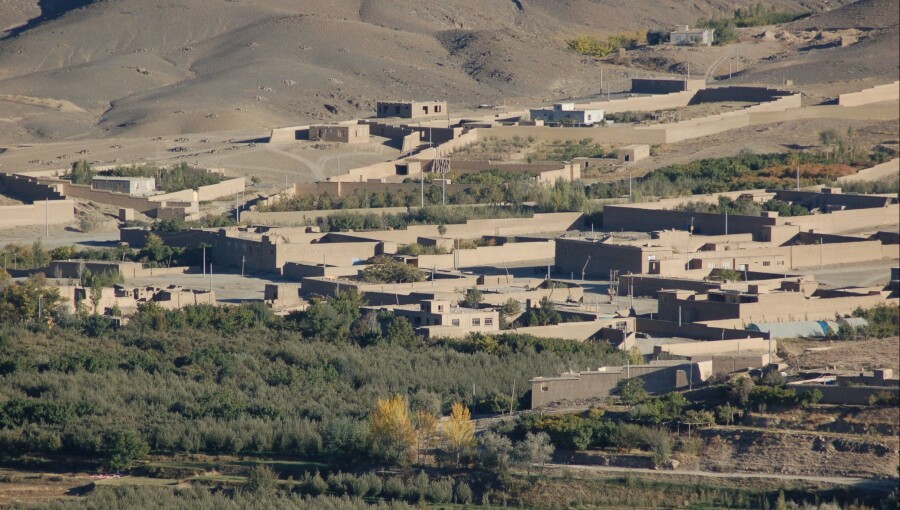
Wardak - west of the Afghan capital Kabul / Bashir Ahmadi - Unsplash
By Mark Buckton - Taipei September 28, 2025

In a rare display of alignment, Pakistan, China, Iran and Russia have jointly rejected proposals for the establishment of any US military bases in or around Afghanistan, insisting upon respect for Kabul’s sovereignty and territorial integrity, The Times of India states. The statement was issued following a meeting of the foreign ministers from each of the four nations on the sidelines of the 80th session of the United Nations General Assembly in New York.

In a communiqué published on September 27, it was stressed that any foreign military installations in the region would be contrary to the principle of non-interference. To this end it was declared that no military bases in or around Afghanistan should be permitted. In just the past week, US President Donald Trump has been pushing for the US military to retake control of the sprawling Bagram Afghan airbase near Kabul, long operated by the US Air Force, in what is being painted in the US media at least as a move to help limit Chinese nuclear expansion in the area.

Trump’s administration has, according to The Times of India citing regional sources, been exploring options for keeping a military footprint in Afghanistan.

Key stakeholders in the region have, however, expressed concern that permanent bases or even long-term military deployments could undermine regional stability. For Islamabad, the issue carries high political stakes, especially given its historical sensitivity over any foreign military presence near its borders. Meanwhile, Beijing, Moscow and Tehran also share apprehensions about US influence extending into areas they regard as within their strategic periphery, The Times of India adds.

During the foreign ministers’ meeting, Pakistan, China, Iran and Russia urged that any arrangements involving foreign defence infrastructure should be made only with the full consent of the Afghan government in order to help preserve its territorial integrity.

No obvious response from the US has yet been made, although Secretary of War, Pete Hegseth has called a meeting in the coming days in which, according to abc NEWS, hundreds of senior US generals and admirals will sit before Hegseth as he “delivers his message of restoring the "warrior ethos" to the US military and presents new standards toward that goal.” Pentagon figures reveal that the US currently has over 830 generals and admirals, and with all on one place, at one time this itself poses a major security risk.

Yet, with international attention on Afghanistan set to intensify, particularly with regards to governance and security, the rejection of proposed US bases by four countries often seen as hostile to the US only adds another layer of complexity to the diplomatic landscape.


Germany preparing to enter direct negotiations with Afghanistan’s Taliban government

Germany preparing to enter direct negotiations with Afghanistan’s Taliban government
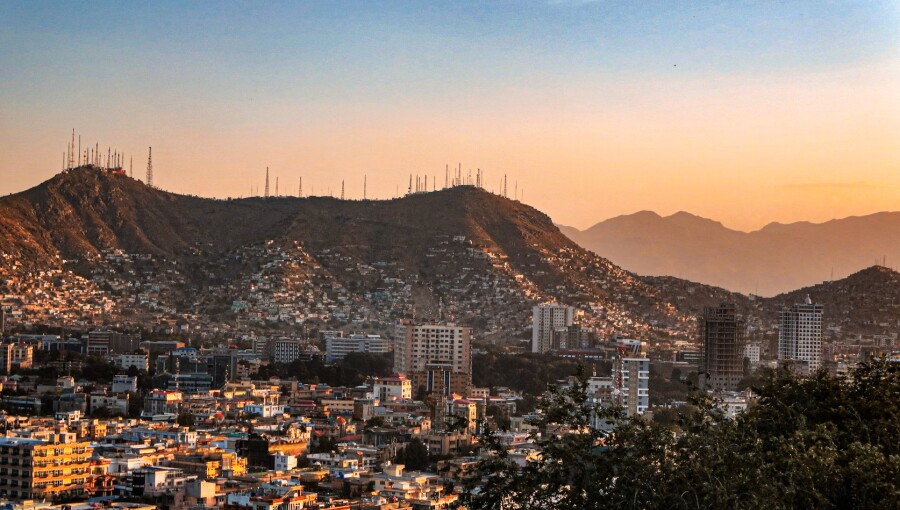
Kabul - the Afghan capital / Mohammad Husaini - Unsplash
By bno - Kolkata Office September 28, 2025

In a striking shift of policy, the German federal government is reportedly preparing to enter direct negotiations with the Taliban in Kabul as early as October over the deportation of Afghan nationals, Spiegel Politik reports. The move signals a sharp departure from past reliance on third-party intermediaries and has already drawn fierce criticism from human rights organisations.

A representative of the Federal Ministry of the Interior is said to have confirmed plans to dispatch officials to the Afghan capital next month to establish mechanisms for returning so-called serious criminals and security risks, it has been reported.

In recent months, the subject of deporting several million Afghans back to Afghanistan has made headlines across southern Asia, with Iran and Pakistan in particular keen to return large numbers of Afghans, many of whom have spent decades abroad.

Germany has long lacked diplomatic representation in Afghanistan since the Taliban’s return to power in August 2021. Previous repatriation efforts relied on third-party intermediaries – most notably Qatar - to help broach deals for charter flights.

According to the report in Spiegel Politik, the decision comes amid growing domestic and international controversy. Pro Asyl, Germany’s leading refugee rights organisation, castigated the shift, arguing that such deportations may violate international law given the deteriorating human rights situation in Afghanistan, including reports of reprisals, eroded civil liberties, and draconian penalties for minor infractions.

It has also been speculated that Germany might be readying to accept a liaison presence on the part of the Afghan government, that stops short of full recognition.

In recent months, debates have intensified over whether Germany and other countries in Europe should resume deportations of serious offenders to Afghanistan, and while some government officials see the move as fulfilling a duty to deter crime and maintain order, critics warn of grave legal and moral risks, the report adds.


Growing calls for France to lift 'collective punishment' ban on visas for Gazans

France's recognition of Palestinian statehood at the United Nations this week has led to calls for it to reinstate evacuations from Gaza, which were halted on 1 August following antisemitic posts by a Gazan student at Lille University. The suspension has left scientists, artists and students who were due to arrive in France on special visas in limbo.


Issued on: 26/09/2025 - RFI

A group of French people have helped Gazan poet Alaa al-Qatrawi file an application to come to France via the Pause programme, which offers special one-year "talent" visas. 
© Alaa al-Qatrawi

By:Alison Hird


Of the hundreds of people evacuated from Gaza to France since the conflict in the enclave broke out in October 2023, 73 have come as part of a partly state-funded humanitarian programme known as Pause.

Run by the prestigious Collège de France research institute, Pause provides special one-year visas to artists and scientists in danger.

Since 2017, it has supported more than 700 people from more than 40 countries, including Ukraine, Syria and Afghanistan. For Palestinians in Gaza, it represents one of the few pathways to safety.

'A life jacket'

"The Pause programme was literally a life jacket for us," says Abu Joury, a well-known Gazan rapper who arrived in the town of Angers in western France in January, with his wife and three children.

Sponsored by a local organisation, Al Khamanjati, he has been able to provide financial stability and security for his family – something he says has become impossible in Gaza.
Rap artist Abu Joury waits to perform with the Radio Gaza collective in Grigny, south of Paris, 23 September, 2025. © A.Hird/RFI

But that life jacket is no longer available.

On 1 August, Foreign Minister Jean-Noël Barrot announced that "no evacuation of any kind" would take place until further notice.

The trigger was a Palestinian student at Sciences Po Lille who was accused of sharing antisemitic statements in 2023, and was subsequently expelled to Qatar.

The student was not part of the Pause programme, but the decision to halt all evacuations has left more than 120 people – 25 approved candidates and their families – stranded in what the UN has described as genocidal conditions.

France halts Gaza evacuations over antisemitic posts by Palestinian student

"They’ve been waiting for months and are sending us constant messages calling for help,” says Marion Gués Lucchini, head of international diplomacy for the Pause programme. "They’re saying: 'why are we being condemned for comments made by just one person? Why have we been abandoned?'"

The decision is unprecedented, Gués Lucchini says. "Because of a single person, all the others are condemned to remain in Gaza.

"We've been around for eight years. We've had people from all over the world, including countries where there may be sensitivities – Russia, Iran and so on. We've never had a security problem, we've never had anyone who was supposedly close to a terrorist group. Never."

She adds that all Pause candidates are subject to rigorous screening by four different ministries, including security checks by the Interior Ministry.

Listen to an audio report featuring Abu Joury on the Spotlight of France podcast:


‘Collective punishment’


After President Emmanuel Macron recognised Palestinian statehood at the UN on Monday, the French government now faces mounting pressure to reinstate evacuations.

A collective of Palestinian and migrant rights groups has filed a case with the Conseil d’Etat – France’s top court – claiming the suspension of evacuations for Gazans is in breach of the constitution.

Last week, some 20 acclaimed writers, including French Nobel laureates Annie Ernaux and J.M.G. Le Clézio, called on Macron to "restore this lifeline" as soon as possible.

“This suspension of evacuation programmes on the basis of one case of a racist social media post is a form of collective punishment at a time when all signatories to the Genocide Convention should be doing their utmost to save Palestinians from annihilation and should refuse to be complicit in crimes against humanity,” they wrote in an open letter.

While evacuating only writers, artists and researchers was “inadequate and even cruel in the context of the killings and destruction in Gaza”, they underlined that “today this programme is one of the only ways by which a few people in Gaza can be saved from genocide, a part of which is scholasticide".

The authors called on France to “follow through on its proclaimed humanist values”.

'I fear for my friend'


Mathieu Yon, a 48-year-old fruit farmer from southern France, has become an unlikely advocate for Palestinian evacuation rights.

On Wednesday he took up position on a bench in front of the Foreign Ministry holding a sign addressed to Barrot: "Monsieur le ministre, resume the reception of Gazans."

Around six months ago, Yon struck up a friendship with Gazan poet Alaa al-Qatrawi after reading her poem “I’m not well”, about losing her four children in an Israeli bombing in December 2023.

“She lost her four children and yet she’s still full of love and without any anger or aggression,” he says. “I fear for my dear friend.”

He, his wife and two friends have raised the necessary €48,000 to cover al-Qatrawi’s year-long residency.

They have work and accommodation lined up for her in their home town of Dieulefit, north of Avignon. "Everything is in place," Yon said, hoping that his protest will see her file, handed in on 26 August, treated as a matter of urgency.

Left to right: Julie Yon, Mathieu Yon (centre), Alric Charbit and Sophie Charbit protest in front of the Foreign Ministry on 24 September, 2025, to call on Jean-Noel Barrot to restart evacuations of Gazans to France. © A. Hird/RFI

From a refugee camp in Gaza, al-Qatrawi describes the constant danger: "Every Palestinian living now in Gaza is at risk of being killed at any second and in any place you can think of. You are exposed to assassination attempts throughout the day. And if you survive, you think about how you are going to survive the next day."

Her four children – Orchid, Kenan, Yamen and Carmel – were killed on 13 December, 2023. "There was a cordon around the area. The occupation [by the Israeli army] prevented ambulances from arriving," she told RFI’s sister radio station MCD.

The Ma'an collective, which helps Pause applicants, reports receiving increasingly desperate messages from Gaza.

"These are no longer calls for help, but testaments and farewells," it said in a statement. One read: "I am writing to you, and maybe my last words. We are starving and losing everything around us."

Ahmed Shamia, an architect who had been accepted by the Pause programme, was killed in bombardments on 1 May this year, just days before he was due to be evacuated.

"It was very difficult for us all," says Gués Lucchini. "It was the first time [someone selected for] the programme had died."

"I am one of thousands of mothers...who lost children in this war," says Palestinian poet Alaa al-Qatrawi. 
© Monte Carlo Douliya

Conflating Gazans with terrorists

Gués Lucchini laments that a programme offering a lifeline to scientists and artists has become a target for the far right, with Pause dealing with online attacks.

“These accounts created the controversy surrounding the student [in Lille], which led to the suspension of the evacuations. Since then there have been other smear campaigns against [people selected for] the Pause programme. It’s clear there is a desire to confuse aid and support for Gazans – scientists, artists and others – with support for a terrorist group.”

The French Sunday newspaper Le Journal du Dimanche, which has a controversial far-right editor, recently accused Pause of "opening the door to Hamas”.

Yon, who has Jewish ancestry and whose great-uncle was deported to Auschwitz, rejects any suggestion that Gazans pose an inherent security risk. "There are antisemitic people in Gaza. But I think there are in France, too. There are in all countries, not especially in Gaza."

He added: "This is a collective punishment without any kind of justice. In France we have the principle of presumption of innocence, but this is presumption of guilt."

France’s Foreign Ministry has not commented publicly on when evacuations of Gazans will resume. But a diplomatic source told RFI: “Since the Israeli authorities have suspended evacuations, no operation is possible at this stage."

French services are effectively dependent on local authorities, in this case Israel, who grant or deny exit permits based on lists submitted by the French authorities.


Race against time

For those still waiting, time is running out. "Every day that passes is another day that we take the risk that someone supported by a French national programme will die,” Gués Lucchini warns.

Joury could be considered one of the lucky ones. But despite finding safety and a “very warm welcome” in France, he remains haunted by those left behind – especially his mother and brother, who didn't manage to reach Egypt before Israel closed the Rafah crossing.

"I'm physically out. But my mind is still in Gaza. My mother and my brother, I'm thinking of them all the time. My soul is still in Gaza," he said.

As Yon continues his vigil outside the Foreign Ministry, he reflects on how hard it was to tell al-Qatrawi evacuations had been halted.

“She said, ‘even if it doesn't happen, this relationship, this poetry exists. Even if the result is sad for our life, all of this poetry, all of this love, all of this kindness is real’.

“This relationship has a value in itself," Yon concludes. A lifeline of friendship – but no life jacket.
Gustavo Petro: US to revoke visa of leftist Colombian leader
DW with AP, AFP, Reuters
September 27, 2025

The left-wing Colombian president is a critic of Trump and vocally opposes Israel's operation in Gaza. Petro is in New York for the UN General Assembly and had called on US soldiers to disobey Trump.

Colombian President Gustavo Petro strongly condemned the Trump administration's strikes on alleged drug-trafficking boats in the Caribbean Sea during his UNGA addressImage: Leonardo Munoz/AFP

The US Department of State said Friday that it will revoke the US visa held by left-wing Colombian President Gustavo Petro.

The State Department said in a post on X that the revocation was due to Petro's "reckless and incendiary actions."

What do we know so far?

Petro is in New York City for the United Nations General Assembly. Earlier on Friday, he told a group of protesters in New York that US soldiers should "disobey the orders of Trump" and "Obey the orders of humanity!"

Those comments seem to be the last straw for US President Donald Trump's administration. Under the US Constitution, the president is the commander-in-chief of the US mlilitary.

During his speech at the United Nations General Assembly, Petro strongly criticized the Trump administration's strikes on alleged drug-trafficking Venezuelan boats in the Caribbean Sea. The Colombian president even went so far as to say that Trump should face "criminal proceedings" over the killings.


Petro, who took office in August 2022, is also a strong critic of Israel's military campaign in Gaza, putting him at odds with the Trump administration. Trump, meanwhile, has said the Colombian government is failing to meet its "drug control obligations."

Petro in standoff with Trump administration over deportees earlier this year

Earlier this year, Colombia blocked two US military planes which were transporting deported migrants from landing on Colombian territory. Petro was not happy with the treatment of Colombian deportees by the Trump administration.

In retaliation, the Trump administration revoked visas for Colombian officials and even announced 25% tariffs on Colombia, a major coffee producer. In response, Petro announced tariffs on US goods.

That standoff was ended when then-Colombian Foreign Minister Luis Gilberto Murillo announced Colombia would take back its citizens. Trump then announced he would not move forward with the implementation of the punitive measures on Colombia.

Edited by: Kieran Burke
Wesley Dockery Journalist and editor focused on global security, politics, business and music