Sunday, October 26, 2025

How deepfakes and cloned voices are distorting Europe's elections

Europe’s busy election schedule in 2025 and 2026 is being targeted by AI-generated manipulation on social media. But this time around, Europe’s political landscape is transforming. The fight for voters’ hearts is no longer waged on the streets but on screens, through artificially generated images, cloned voices and sophisticated deepfakes.


Issued on: 24/10/2025 - RFI


A woman looks at a phone as she uses the Albanian government portal "E - Albania", now assisted by government artificial intelligence cabinet minister avatar "Diella". AFP - ADNAN BECI

By:Jan van der Made


It began in Moldova. In late December 2023, a video purportedly showing President Maia Sandu disowning her government and mocking the country’s European ambitions went viral on Telegram.

The Moldovan government swiftly dismissed the clip as fake, but the damage was done.

According to Balkan Insight, an investigative news website, and Bot Blocker, a fake-news watchdog, the Kremlin-linked bot network “Matryoshka” generated the clip using the Luma AI video platform.

The footage, voiced in Russian, caricatured Sandu as ineffective and corrupt, recycling earlier disinformation tied to fugitive oligarch Ilan Shor.

French cybersecurity agency Viginum later described how AI-generated deepfake videos, including the one mimicking President Sandu, were distributed through Telegram and TikTok by a pro-Russian propaganda network affiliated with the Russian media outlet Komsomolskaya Pravda.

Viginum said websites like moldova-news.com were backed by what it called a “structured and coordinated pro-Russian propaganda network.”
Troll factories and cloning

Saman Nazari, a researcher with Alliance4Europe, a Europe-wide pro-democracy platform, told RFI the use of AI to influence elections is massively increasing.

In the past, he said people who wanted to influence elections would copy-paste the same text over and over again.

“They just have AI rewrite them, publish them across different accounts, different pages, with small variations aimed at specific target audiences,” Nazari said.

Nazari also said AI tools are now used to make disinformation operations look legitimate.

France’s Foreign Ministry said Storm 1516, a cyber-attack group, had launched 77 Russian disinformation campaigns targeting France, Ukraine and other Western countries since 2023.

According to Nazari, the operations were run by the successor to the Saint-Petersburg-based Internet Research Agency [founded by Yevgeny Prigozhin in 2013 and dissolved in 2023], the Russian Foundation for Battling Injustice – which created websites that look exactly like well-known media outlets.

The groups running these websites clone news sites, fill them with stolen articles that are rewritten or translated and then re-publish them to appear credible, Nazari said.

Alliance4Europe has counted hundreds of such websites during European elections.

"In the past, it was quite a big job to create a website and fill it with content, but now it's being done almost automatically," Nazari said.
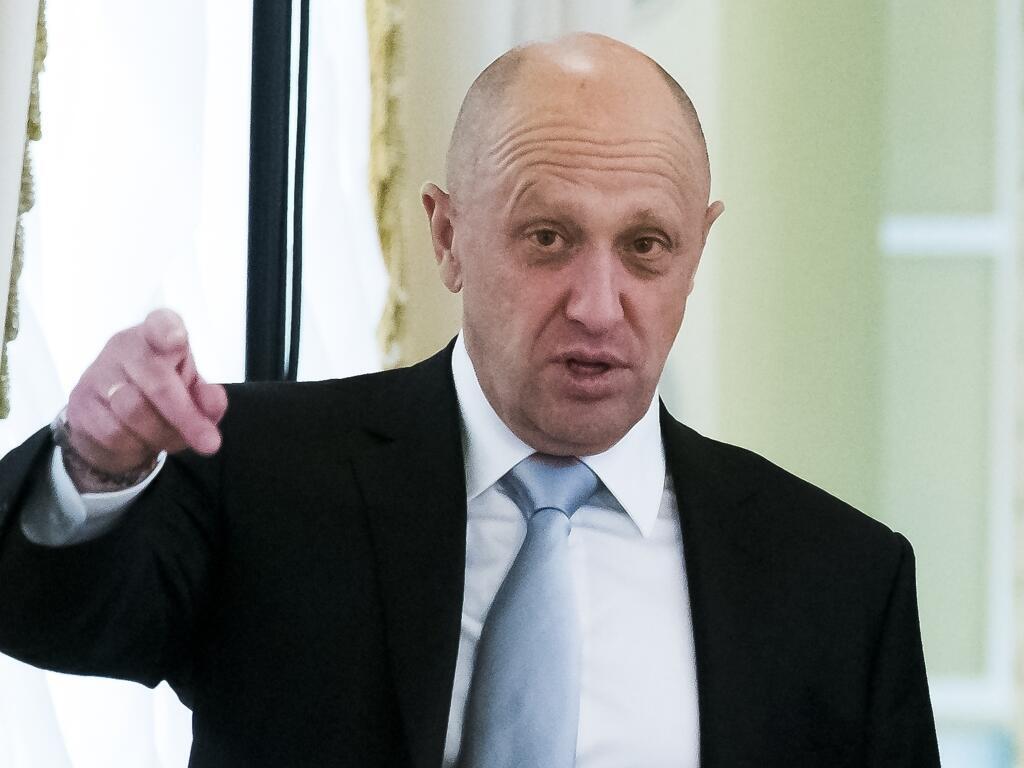
Yevgeny Prigozhin, founder of the Internet Research Agency, later head of the Wagner group and killed in a plane crash in 2023. AP - Alexander Zemlianichenko

Personal targets

The threat is spreading into Western Europe. Professor Dominique Frizon de Lamotte of CY Cergy Paris University was targeted by an AI-generated video that faked his image and voice and attempted to link him to pro-Russian groups in Moldova.

“I have no connection with Moldova; I don’t even use Telegram,” he told France 3 television. The video was flagged by EUvsDisinfo, an EU misinformation monitoring group, and French media as an attempt to undermine trust in academics.


The older generation may not be able to distinguish between a real video and a deep fake. And there is a large portion of the voting popultation which is in that upper bracket.


The older generation may not be able to distinguish between a real video and a deep fake. And there is a large portion of the voting popultation which is in that upper bracket.

03:11

REMARKS by Saman Nazari, researcher 

with Alliance4Europe

Jan van der Made

The 2024 presidential election in Romania brought further evidence of AI-linked interference.

Officials said the interference, widely attributed by European governments to Russian-backed actors, led to the annulment of the election results by Romania’s Constitutional Court, an unprecedented move in Europe.

During the rerun in mid-2025, far-right narratives and fabricated content circulating on TikTok and Telegram sought to influence public opinion. Pro-European candidate Nicusor Dan ultimately won the repeat vote.
All eyes on Hungary

Hungary is preparing for a flood of AI-influenced content ahead of its 2026 elections.

Pro-government groups, including the National Resistance Movement, have already spent over €1.5 million promoting unlabelled AI videos attacking opposition leader Peter Magyar.

Some clips show fabricated scenes of Hungarian soldiers dying in Ukraine to provoke nationalist sentiment. Magyar has called the videos “pathetic” and “election fraud”.

Analysts say that even when viewers think content might be fake, emotional impact still shapes opinions.

Within a larger legal framework, the European Union has rules forcing platforms to show who is behind political adverts.

Within a wider framework, the European Union has already introduced the Digital Services Act in 2022 to strengthen platform rules on transparent political advertising.

The commission also operates a Rapid Alert System and an AI Integrity Taskforce to detect and counter manipulative content across languages and borders.

French cyber agency warns TikTok manipulation could hit Romania's vote, again


Voters at risk

Nazari said young people are used to seeing altered images and deepfakes online.

“Young people have grown up with memes, with people making deep fakes. Edited images and videos and so on. [They] are familiar with the concept.”

But older voters, he told RFI, are more likely to be misled.

“They might not be able to distinguish between a real video and a deep fake video,” Nazari said, adding they are especially vulnerable in countries where digital literacy is not very high.
TikTok under scrutiny as toxic videos reach young users within minutes

Teens can be shown self-harm and suicide content on TikTok within minutes of joining the app, Amnesty International has warned, as families in France pursue legal action and MPs examine the platform’s impact on young users.


Issued on: 26/10/2025 - RFI

Concerns are growing about self harm and suicide videos on TikTok. 
© AFP - Loic Venance


A French teenager called Emma (not her real name) told RFI she was quickly drawn into toxic content.

Two years ago, the now 18-year-old installed the app on her phone for the first time. At first, the videos matched the interests she had selected. But after a few minutes, a music video caught her attention.

“The song talked about the struggles the singer faced with mental distress. Since I stayed on the video for quite a while, I was shown more like it. That is when I started falling into that spiral. And it kept getting worse and worse”, Emma remembers.

Within a week – and without having actively looked for it – she was being exposed to content that "normalised death, that encouraged self-harm, all kinds of dangerous and harmful behaviors”.


Emma’s mental health deteriorated. Visits to a psychologist were no longer enough. She became depressed and was hospitalised six times.

Self-harm and suicide

Her testimony echoes an Amnesty International report released this week. The NGO spent months looking into how TikTok affects the mental health of young users.

It created three fake accounts of 13-year-olds and found that dangerous content appeared very quickly, even before users expressed any interest.

“When we created the three fake teenage accounts, we did not like anything, share anything, comment or even search,” says Katia Roux, advocacy officer at Amnesty International France.

“We only watched two videos related to mental health. And yet, that was enough to see the feeds of those accounts filled, almost flooded, with this kind of content. And after 45 minutes, we had the first content related to self-harm and suicide on two of these three accounts.”

French parliament to probe psychological effects of TikTok on children

Legal Action

Amnesty says TikTok’s moderation policies remain inadequate. It wants the platform to rethink its business model, which keeps users on the app as long as possible, in order to protect them better.

That is also the view of Stéphanie, whose daughter died by suicide five years ago after watching toxic content on TikTok.

“We could have shown her more friendly content or sport programmes or told her: go for a walk," she says.

"But the problem is, if you show her that, she will not stay on the platform. And in fact, TikTok’s model is to maximise time on the social network. They do not care about childhood.”

TikTok says it has moderation systems, parental controls and mental health resources in place.

Together with 10 other families, Stéphanie has filed a complaint in France for incitement to suicide. The case is still being investigated.

As for Emma, progress has been slow.

“I saw those videos, and some of them remain burned in my retina. I will have those contents for a very long time,” she says.

Now, however, she reports all toxic content she comes across on social media.
Political scrutiny

In March 2025, a French parliamentary inquiry opened to examine TikTok’s impact on young people. It will not investigate ongoing cases but has looked at whether the app shows more dangerous content to vulnerable groups.

On a broader European level, the Digital Services Act now requires stronger oversight of online platforms.

This article was adapted from the original version in French and edited for clarity.
Sweden’s crowd-forecasting platform ‘Glimt’ helps Ukraine make wartime predictions


Sweden has been stepping up its support for Ukraine, including signing a letter of intent this week on up to 150 Gripen fighter jets. Ukraine is even using its online crowd-forecasting platform, which uses thousands of user responses to predict future events – and potentially, developments in the war.


Issued on: 24/10/2025
FRANCE24
By:Grégoire SAUVAGE

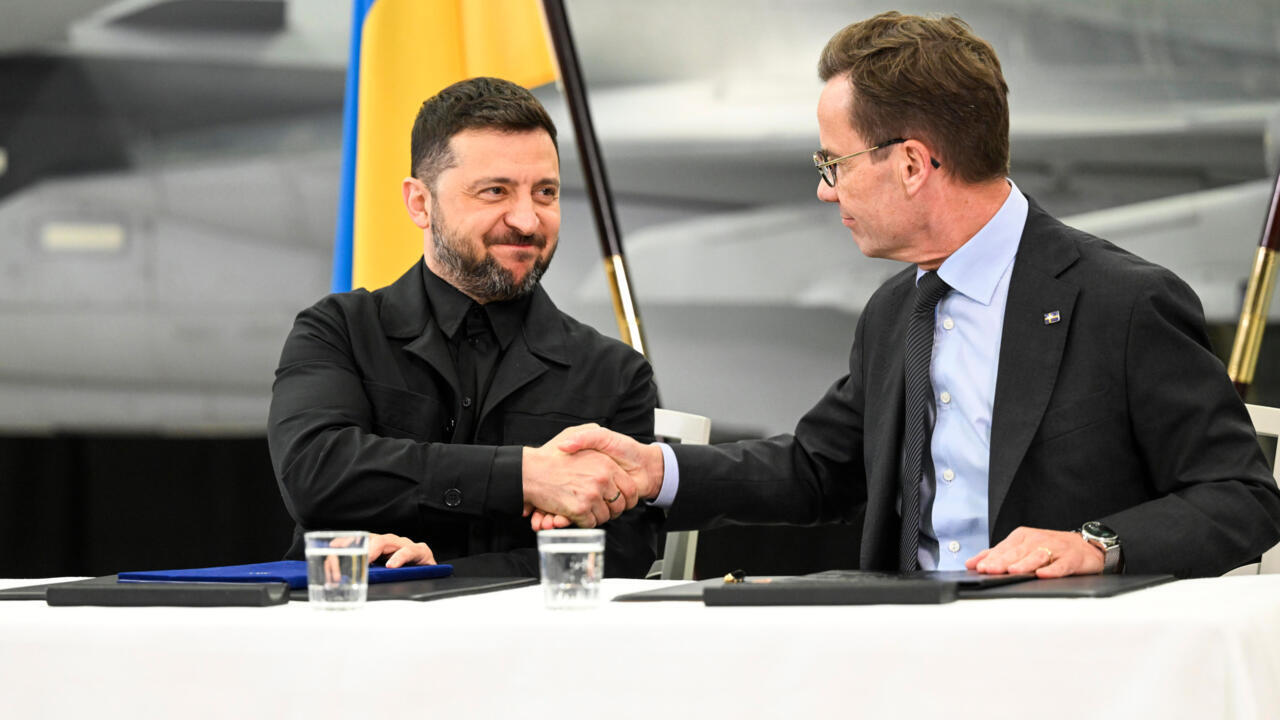
Sweden's Prime Minister Ulf Kristersson, right and Ukrainian President Volodymyr Zelenskyy hold a joint press conference following their meeting and visit to Saab, in Link̦ping, Sweden, October 22, 2025.ʩ Fredrik Sandberg, AP


New NATO member Sweden is boosting support to Ukraine, with a letter of intent signed this week on the sale of up to 150 Gripen fighter jets. Shortly after joining NATO in March 2024 and bringing an end to two centuries of military non-alignment, Sweden approved a €989 million military support package that included Archer self-propelled artillery systems and long-range drones.

Its latest contribution to the war effort is Glimt, an innovative project launched by the Swedish Defence Research Agency (FOI) earlier this year. Glimt is an open platform that relies on the theory of “crowd forecasting”: a method of making predictions based on surveying a large and diverse group of people and taking an average. "Glimt" is a Swedish word for "a glimpse" or "a sudden insight". The theory posits that the average of all collected predictions produces correct results with “uncanny accuracy”, according to the Glimt website. Such “collective intelligence” is used today for everything from election results to extreme weather events, Glimt said.

Between 2011 and 2015, the United States’ ACE (Aggregative Contingent Estimation) program of the Intelligence Advanced Research Projects Activity gathered 10,000 forecasters. Over the course of its existence, ACE collected millions of forecasts on geopolitical events.

“We used this method and research, and we suggested to the Ukrainians that it could improve their understanding of the world and its evolution,” said Ivar Ekman, an analyst for the Swedish Defence Research Agency and programme director for Glimt.


"If you have a large group of people, you can achieve great accuracy in assessing future events. Research has shown that professional analysts don’t necessarily have a better capacity in this domain than other people," Ekman said.

Group forecasting allows for a broad collection of information while avoiding the cognitive bias that often characterises intelligence services. Each forecaster collects and analyses the available information differently to reach the most probable scenario and can add a short comment to explain their reasoning. The platform also encourages discussion between members so they can compare arguments and alter their positions.

Available in Swedish, French and English, the platform currently has 20,000 registered users; each question attracts an average of 500 forecasters. Their predictions are later sent to statistical algorithms that cross-reference data, particularly the relevance of the answers they provided. The most reliable users will have a stronger influence on the results; this reinforces the reliability of collective intelligence.
Will Zelensky meet Putin in 2025?

Glimt focuses on questions regarding the future of the war in Ukraine because they were all posed by the Ukrainian intelligence services: Will Zelensky and Putin meet in 2025? “There is a 10 percent chance,” forecasters responded. Will Tomahawk missiles be sent to Ukraine before February 1, 2026? “There is a 25 percent probability,” said Glimt.

Other questions involve the economic consequences of the war, the possibility of full Russian control of the Donetsk region by next summer or the outcome of the 2026 legislative elections in Hungary, a country led by Russian President Vladimir Putin's closest ally within the European Union, Viktor Orban.

“The questions generally cover a period ranging from a few weeks to a year. This data is therefore designed to be useful in Ukraine’s day-to-day existence,” said Ekman. “Beyond that, we don't know how Ukrainians make their decisions. It’s obviously a sensitive issue regarding the work of their government."

Glimt reflects a renewed enthusiasm for predictive tools since Russia’s full-scale invasion of Ukraine, with wargaming on the rise – among military officers and civilians alike.

“By providing information on global trends, Glimt helps Ukraine adapt and reinforce its defence strategy, increasing its chances of success against Russian aggression,” Sweden's Defence Minister Pal Jonson said as the project was launched.

Glimt doesn’t claim to be a crystal ball; it’s simply one tool among many for forecasting Ukraine’s future. The nation continues to face uncertainty amid the war and the numerous reversals of US President Donald Trump.

The US president has recently hardened his tone toward Putin, announcing new sanctions this week on Russia’s two largest oil companies. But there is little hope for a quick end to the war.

“Not before 2026,” said 91 percent of Glimt’s forecasters.

This article has been translated from the original in French.

French fishing nets find new purpose on Ukraine’s front lines


By AFP
October 25, 2025


French charity association Kernic Solidarites members Christian Abaziou (R) and Gerard Le Duff (L) sorted fishnets collected by the association to be sent to Ukraine for use against drone attacks - Copyright AFP Peter PARKS


Antoine Agasse

Once used to scoop fish from the sea off the coast of France, recycled fishing nets are finding new life in Ukraine to protect the country’s roads and military infrastructure from Russian drone attacks.

“It smells like rotten fish,” joked Christian Abaziou, 70, as he picked up a piece of used netting at Roscoff port in western Brittany’s Finistere department.

He and his fellow volunteer Gerard Le Duff, 63, members of the Kernic Solidarites association, were awaiting a delivery of used nets.

Stuffed into giant white bags to be recycled, they loaded the packed piles of thin green netting into a truck to be sent on its way to Ukraine, where they are used to entangle Russian drones.

In early October, the two men had already transported 120 kilometres (75 miles) of nets to Ukraine. And a second truck carrying 160 km of nets left Friday from nearby Treflez.

“When we started humanitarian convoys three years ago, drones weren’t part of the picture at all,” said Gerard, the association’s president.

But the war has evolved, “and now it’s a drone war”.


– ‘Proud’ to help –


Russia’s drone arsenal used against Ukraine includes small flying devices identical to those sold commercially, but equipped with explosives and capable of striking more than 25 km from the front line.

To defend against them, Ukrainians have been covering roads with nets mounted on poles, stretching for hundreds of kilometres.

As drones approach, they get trapped—like insects in a spider’s web.

When Abaziou learned of this new tactic, he quickly got in touch with a retired fisherman.

“Within 48 hours, I had all the fishing nets I needed,” he said.

“It’s from the heart,” said Jean-Jacques Tanguy, 75, former president of the Finistere fisheries committee.

According to him, fishermen “are proud to know that their used equipment… is going to help save lives”.

Fishing nets, replaced annually, pile up along the docks of Breton ports.

“The ones we collect are destined for recycling. They might as well serve a good cause,” said Marc-Olivier Lerrol, deputy director of Roscoff port, which gathers around 20 to 25 tonnes of nets per year.

“You’re always welcome — come back anytime!” he called out to Gerard and Christian in farewell.


– ‘Moved to tears’ –


Stored alongside several tonnes of soup, infant formula and medical supplies, the nets are transferred to a Ukrainian truck at the Polish border, more than 2,000 km from Brittany.

The first convoy headed to Zaporizhzhia in the south, where the nets are meant to protect certain neighbourhoods of the city.

The second is expected to go a bit farther south, toward Kherson, a city also facing the daily threat of drones.

A Frenchman living in Ukraine, who wished to remain anonymous, facilitated the exchanges between Kyiv and the volunteers in Brittany.

“There’s a huge need for nets here,” he told AFP.

“The idea that Breton volunteers would think to send kilometres of fishing nets to save lives in Ukraine… When you tell that to any Ukrainian, they’re moved to tears.”

Looking ahead, Abaziou hopes Ukrainians will send transporters to collect the nets in Brittany.

“We’ll help gather and load them, but we don’t have the budget to continue (the convoys) ourselves.”

Kernic Solidarites isn’t the only group sending nets to the Ukrainian front.

Stephane Pochic, owner of a fleet of trawlers in Finistere’s Loctudy, sent some in August via a Hautes-Alpes-based association, Arasfec Paca.

“It’s a symbolic gesture to show our support,” Pochic told AFP.

And the fishermen’s solidarity movement isn’t limited to France.

Ukrainian positions are also being protected by nets from Northern Europe, notably Sweden and Denmark.
AI succeeds in detecting masses of missing science data


By Dr. Tim Sandle
SCIENCE EDITOR
DIGITAL JOURNAL
October 25, 2025


A scientist operating an autoclave. — Image by © Tim Sandle

Huge quantities of valuable research data remain unused, trapped in laboratories or lost to time. It is estimated that out of every 100 datasets produced, about 80 stay within the lab, 20 are shared but seldom reused, fewer than two meet the standards of shared research, and only one typically leads to new findings.

Researchers are seeking to change this with artificial intelligence. This is with a new algorithm called FAIR² Data Management. This AI-driven system makes datasets reusable, verifiable, and citable.

By uniting curation, compliance, peer review, and interactive visualization in one platform, FAIR² empowers scientists to share their work responsibly and gain recognition.
What’s FAIR?

The open-science publisher Frontiers has introduced Frontiers FAIR² Data Management, described as a comprehensive, AI-powered research data service. It is designed to make data both reusable and properly credited by combining all essential steps — curation, compliance checks, AI-ready formatting, peer review, an interactive portal, certification, and permanent hosting — into one seamless process. The goal is to ensure that today’s research investments translate into faster advances in health, sustainability, and technology.

FAIR² builds on the FAIR principles (Findable, Accessible, Interoperable and Reusable) with an expanded open framework that guarantees every dataset is AI-compatible and ethically reusable by both humans and machines. The FAIR acronym and principles were defined in a March 2016 paper in the journal Scientific Data by a consortium of scientists and organisations. At the 2016 G20 Hangzhou summit, the G20 leaders issued a statement endorsing the application of FAIR principles to research.

The FAIR² Data Management system is the first working implementation of this model, arriving at a moment when research output is growing rapidly and artificial intelligence is reshaping how discoveries are made. It turns high-level principles into real, scalable infrastructure with measurable impact.
Democratic science?

It is hoped that many obstacles within the current science trajectory will be overcome, including slower progress in cancer treatment, climate models that lack sufficient evidence, and studies that cannot be replicated.

To achieve these aims, work that once required months of manual effort — from organising and verifying datasets to generating metadata and publishable outputs — is now completed in minutes by the AI Data Steward, powered by Senscience, the Frontiers venture behind FAIR².

Researchers who submit their data receive four integrated outputs: a certified Data Package, a peer-reviewed and citable Data Article, an Interactive Data Portal featuring visualisations and AI chat, and a FAIR² Certificate. Each element includes quality controls and clear summaries that make the data easier to understand for general users and more compatible across research disciplines.

These outputs should ensure that every dataset is preserved, validated, citable, and reusable, helping accelerate discovery while giving researchers proper recognition.

Example: Environmental Pressure Indicators (1990-2050)

Combining observed data and modeled forecasts across 43 countries over six decades, this dataset tracks emissions, waste, population, and GDP. It underpins sustainability benchmarking and evidence-based climate policy planning.

Frontiers FAIR² also seeks to enhance visibility and accessibility, supporting responsible reuse by scientists, policymakers, practitioners, communities, and even AI systems, allowing society to extract greater value from its investment in science.

In terms of the reception from the global science community, according to Dr. Ángel Borja, Principal Researcher, AZTI, Marine Research, Basque Research and Technology Alliance (BRTA): “I highly [recommend using] this kind of data curation and publication of articles, because you can generate information very quickly and it’s useful formatting for any end users.”

From Illusion to Real Peace: Trump’s Test in Gaza and Ukraine

Real peace demands Palestinian statehood, Ukrainian neutrality and the courage to defy the war lobby


United States President Donald Trump styles himself as a peacemaker. In his rhetoric, he claims credit for his efforts to end the wars in Gaza and Ukraine. Yet beneath the grandstanding lies an absence of substance, at least to date.

The problem is not Trump’s lack of effort, but his lack of proper concepts. Trump confuses “peace” with “ceasefires,” which sooner or later revert to war (typically sooner). In fact, American presidents from Lyndon Johnson onward have been subservient to the military-industrial complex, which profits from endless war. Trump is merely following in that line by avoiding a genuine resolution to the wars in Gaza and Ukraine.

Peace is not a ceasefire. Lasting peace is achieved by resolving the underlying political disputes that led to the war. This requires grappling with history, international law and political interests that fuel conflicts. Without addressing the root causes of war, ceasefires are a mere intermission between rounds of slaughter.

Trump has proposed what he calls a “peace plan” for Gaza. However, what he outlines amounts to nothing more than a ceasefire. His plan fails to address the core political issue of Palestinian statehood. A true peace plan would tie together four outcomes: the end of Israel’s genocide, Hamas’s disarmament, Palestine’s membership in the United Nations, and the normalisation of diplomatic ties with Israel and Palestine throughout the world. These foundational principles are absent from Trump’s plan, which is why no country has signed off on it despite White House insinuations to the contrary.  At most, some countries have backed the “Declaration for Enduring Peace and Prosperity,” a temporising gesture.

Trump’s peace plan was presented to Arab and Muslim countries to deflect attention from the global momentum for Palestinian statehood. The US plan is designed to undercut that momentum, allowing Israel to continue its de facto annexation of the West Bank and its ongoing bombardment of Gaza and restrictions of emergency relief under the ruse of security. Israel’s ambitions are to eradicate the possibility of a Palestinian state, as Prime Minister Benjamin Netanyahu made explicit at the UN in September.  So far, Trump and his associates have simply been advancing Netanyahu’s agenda.

Trump’s “plan” is already unravelling, much like the Oslo Accords, the Camp David Summit, and every other “peace process” that treated Palestinian statehood as a distant aspiration rather than the solution to the conflict.  If Trump really wants to end the war – a somewhat doubtful proposition – he’d have to break with Big Tech and the rest of the military-industrial complex (recipients of vast arms contracts funded by the US).  Since October 2023, the US has spent $21.7bn on military aid to Israel, much of it returning to Silicon Valley.

Trump would also have to break with his donor-in-chief, Miriam Adelson, and the Zionist lobby.  In doing so, he would at least represent the American people (who support a state of Palestine) and uphold American strategic interests. The US would join the overwhelming global consensus, which endorses the implementation of the two-state solution, rooted in UN Security Council resolutions and ICJ opinions.

The same failure of Trump’s peacemaking holds in Ukraine. Trump repeatedly claimed during the campaign that he could end the war “in 24 hours”. Yet what he has been proposing is a ceasefire, not a political solution. The war continues.

The cause of the Ukraine war is no mystery – if one looks beyond the pablum of the mainstream media. The casus belli was the push by the US military-industrial complex for NATO’s endless expansion, including to Ukraine and Georgia, and the US-backed coup in Kyiv in February 2014 to bring to power a pro-NATO regime, which ignited the war. The key to peace in Ukraine, then and now, was for Ukraine to maintain its neutrality as a bridge between Russia and NATO.

In March-April 2022, when Turkiye mediated a peace agreement in the Istanbul Process, based on Ukraine’s return to neutrality, the Americans and the British pushed the Ukrainians to walk out of the talks. Until the US clearly renounces NATO’s expansion to Ukraine, there can be no sustainable peace. The only way forward is a negotiated settlement based on Ukraine’s neutrality in the context of mutual security of Russia, Ukraine, and the NATO countries.

Military theorist Carl von Clausewitz famously characterised war as the continuation of politics with other means. He was right. Yet it is more accurate to say that war is the failure of politics that leads to conflict. When political problems are deferred or denied, and governments fail to negotiate over essential political issues, war too often ensues.  Real peace requires the courage and capacity to engage in politics, and to face down the war profiteers.

No president since John F Kennedy has really tried to make peace. Many close observers of Washington believe that it was Kennedy’s assassination that irrevocably put the military-industrial complex in the seat of power. In addition, the US arrogance of power already noted by J William Fulbright in the 1960s (in reference to the misguided Vietnam War) is another culprit. Trump, like his predecessors, believes that US bullying, misdirection, financial pressures, coercive sanctions and propaganda will be enough to force Putin to submit to NATO, and the Muslim world to submit to Israel’s permanent rule over Palestine.

Trump and the rest of the Washington political establishment, beholden to the military-industrial complex, will not on their own account move beyond these ongoing delusions. Despite decades of Israeli occupation of Palestine and more than a decade of war in Ukraine (which started with the 2014 coup), the wars continue despite the ongoing attempts by the US to assert its will. In the meantime, the money pours into the coffers of the war machine.

Nonetheless, there is still a glimmer of hope, since reality is a stubborn thing.

When Trump soon arrives in Budapest to meet with Russian President Vladimir Putin, his deeply knowledgeable and realistic host, Hungary’s Prime Minister Viktor Orban, can help Trump to grasp a fundamental truth: NATO enlargement must end to bring peace to Ukraine. Similarly, Trump’s trusted counterparts in the Islamic world –  Turkiye’s President Recep Tayyip Erdogan, Saudi Arabia’s Crown Prince Mohammed bin Salman, Egypt’s President Abdel Fattah el-Sisi, and Indonesia’s President Prabowo Subianto – can explain to Trump the utter necessity of Palestine as a UN member state now, as the very precondition of Hamas’s disarmament and peace, not as a vague promise for the end of history.

Trump can bring peace if he reverts to diplomacy. Yes, he would have to face down the military-industrial complex, the Zionist lobby and the warmongers, but he would have the world and the American people on his side.

Jeffrey D. Sachs is a University Professor and Director of the Center for Sustainable Development at Columbia University, where he directed The Earth Institute from 2002 until 2016. He has been advisor to three United Nations Secretaries-General, and currently serves as an SDG Advocate under Secretary-General Antonio Guterres. Sybil Fares is a specialist and advisor in Middle East policy and sustainable development at SDSN. Read other articles by Jeffrey Sachs and Sybil Fares.
Israel Tried to Destroy Gazans’ Peoplehood; It Failed

For ordinary people, survival, continuity, and self-assertion are the ultimate signs of victory against Israel, a country that does not hesitate to use genocide for temporary political gains.


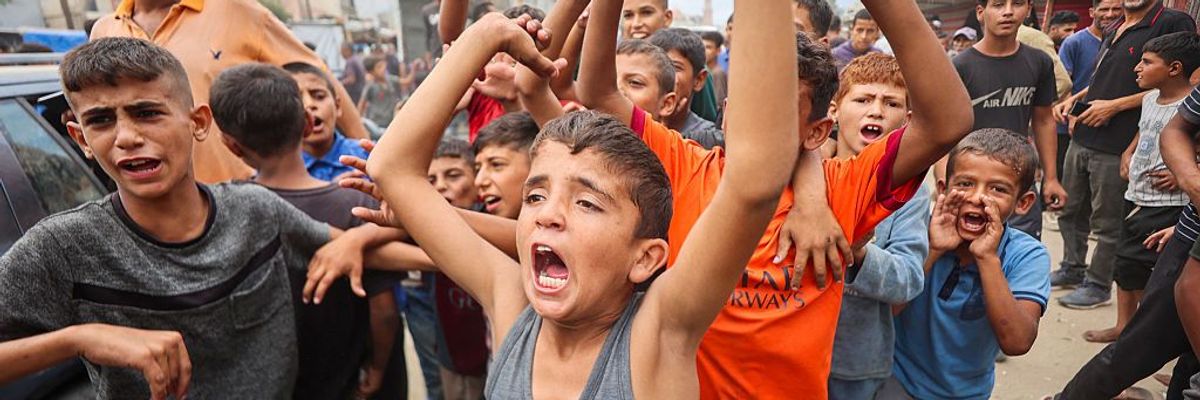
Palestinian children celebrate in Khan Younis on October 9, 2025, following news of a new Gaza ceasefire deal.
(Photo by Omar AL-Qattaa / AFP via Getty Images)


Ramzy Baroud
Oct 25, 2025
Common Dreams


For the last two years, my social media algorithm has been relentlessly dominated by Gaza, particularly by the voices of ordinary Gazans, displaying a blend of emotions that centers on two core principles: grief and defiance.

Grief has characterized life in Gaza for many years, a consequence of successive Israeli wars, the unrelenting siege, and habitual bombardment. The last two years, marked by genocide and famine, however, have redefined that grief in a way almost incomprehensible to the Palestinians themselves.

RECOMMENDED...


NYT Slammed for Backing Trump Plan to ‘Deradicalize’ Gaza—Not the Country Committing Genocide


Ceasefire Imperiled as Israel Kills Scores of Palestinians in Gaza

Yes, Palestine has endured numerous massacres before, during, and since the Nakba—the tragic destruction of the Palestinian homeland. But those massacres were typically episodic, each distinctively marked by specific historical circumstances. Each is incorporated into the Palestinian collective psyche as proof of Israeli barbarity, but also as a demonstration of their own enduring resilience as a people.

I grew up in a Gaza refugee camp where we commemorated each massacre with rallies, general strikes, and artistic expressions. We knew the victims and immortalized them through chants, political graffiti, poetry, and the like.

The Palestinian nation has emerged even more deeply rooted in its identity, both in Gaza and elsewhere.

The war of extermination launched by Israel against Gaza in the last two years has fundamentally changed all of that. On a single day, October 31, 2023, the Israeli army killed 704 Palestinians, and 120 in the Jabaliya refugee camp alone. Single bombs would annihilate hundreds in one strike, often in hospitals, refugee shelters, or United Nations schools. Massacres were taking place every day, everywhere.

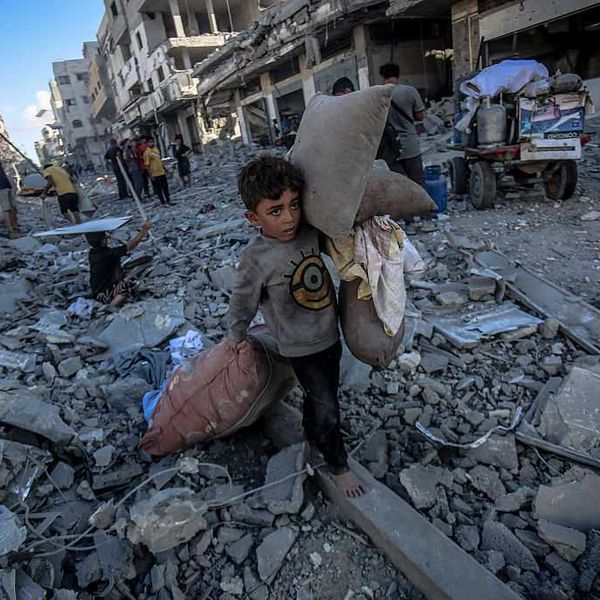
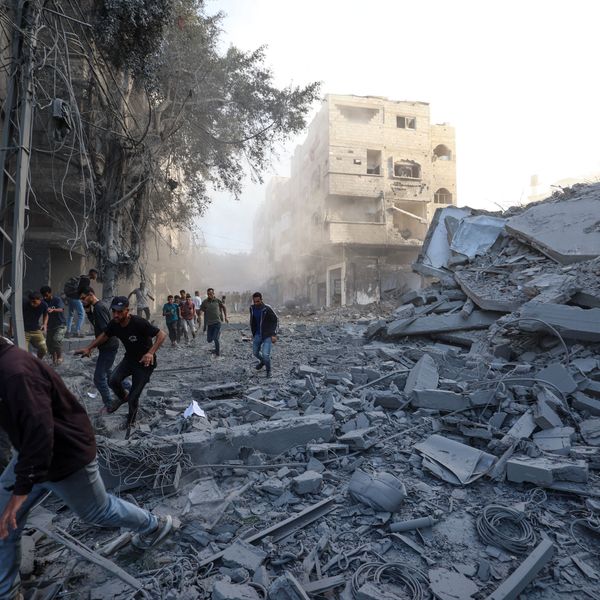
There was no time to reflect on any of these massacres, to pray for the victims, or even to bury them with proper dignity. All that Gazans could do was desperately try to cling to life itself, bury their loved ones in mass graves, and use their own bare hands to dig out the wounded and dead from underneath the massive slabs of concrete and mountains of rubble. Thousands remain unaccounted for, and about a quarter of a million Gazans have been killed and wounded.

The tally will continue to grow, and the degree of devastation keeps worsening, even now that the rate of killing has subsided. But why, then, does my social media feed continue to show Palestinians openly celebrating their victory? Why are Gaza’s children, though gaunt and exhausted due to the famine, continuing to perform traditional debka dances? Why is 5-year-old Maria Hannoun, one of Gaza’s many influencers, continuing to recite the poetry of Mahmoud Darwish and sending fiery messages to US President Donald Trump that Gaza will never be defeated?

To say that “Gazans are built differently” is a massive understatement. I have spent the last 20 years dedicated to academic research on the people’s history of Palestine, focusing heavily on Gaza, and I still find their collective will astonishing. They seem to have made a shared, conscious decision: The metrics for their defeat or victory would be entirely separate from those used by the media covering the war.

These measures are rooted in resistance as a foundational choice. Core values like Karamah (dignity), Izza (pride), and Sabr (patience), among others, are the standards by which Gaza judges its performance. And, by these profound standards, the people of the genocide- and famine-stricken strip have won this war.

Because these values are often ignored or misinterpreted in war coverage, many have found Gaza’s response to the ceasefire, one of unbridled joy and celebration, confusing. The scene of mothers waiting for their sons to be released in a large celebration in Khan Younis, southern Gaza, was particularly illuminating. They cried bitterly, while clapping and ululating all at once. One mother perfectly clarified the paradox for a reporter: The tears were for the sons and daughters killed in the war, and the ululating was for the ones being released.

News media, however, rarely understand the complexity of the Gaza survival paradigm. Some, including Israeli military analysts, have concluded that Israeli Prime Minister Benjamin Netanyahu has lost the war because he failed to achieve any of his declared objectives. Others speak of some kind of Israeli victory simply because Israel managed to obliterate nearly the whole of Gaza and a large section of its population.

Each side uses numbers and figures to back up their claims. Yet, Palestinians in Gaza view this situation in a fundamentally different way. They understand that Israel’s war was ultimately an attempt to destroy their very peoplehood—to shatter their spirit, disorient their culture, turn them against one another, and ultimately eradicate the core essence of being Palestinian.

Gazans celebrate precisely because they know Israel has failed. The Palestinian nation has emerged even more deeply rooted in its identity, both in Gaza and elsewhere. The child singing of the martyrs, the civil defense workers dancing the debka for their fallen comrades, and the woman using the wreckage of a destroyed Israeli Merkava tank to air her laundry—all these images speak of a nation unified by its love for life and its fierce commitment to shared values of valor, honor, and love.

Some analysts, trying to find a more nuanced and reasoned conclusion, have resolved that neither Israel won the war, nor were Palestinians defeated. While this balanced approach can be appreciated in terms of the strategic reading of the ceasefire, it is still profoundly incorrect when understood against the backdrop of popular Palestinian culture. For ordinary people, survival, continuity, and self-assertion are the ultimate signs of victory against Israel, a country that does not hesitate to use genocide for temporary political gains. The core of their triumph is simply this: They remain.


Our work is licensed under Creative Commons (CC BY-NC-ND 3.0). Feel free to republish and share widely.


Ramzy Baroud

Ramzy Baroud is a journalist and the Editor of the Palestine Chronicle. He is the author of five books including: "These Chains Will Be Broken: Palestinian Stories of Struggle and Defiance in Israeli Prisons" (2019), "My Father Was a Freedom Fighter: Gaza's Untold Story" (2010) and "The Second Palestinian Intifada: A Chronicle of a People's Struggle" (2006). Dr. Baroud is a Non-resident Senior Research Fellow at the Center for Islam and Global Affairs (CIGA), Istanbul Zaim University (IZU). His website is www.ramzybaroud.net.
Full Bio >


American Child Details Abuses in Israeli Prison as Democrats Demand His Release

Mohammad is imprisoned in an overcrowded cell with no heating or cooling and “extremely insufficient” meals, he said.

By Sharon Zhang , 
October 22, 2025

Mohammed Zaher Ibrahim, the Florida-born cousin of slain Palestinian American Sayfollah Musallet.Provided by Council on American-Islamic Relations

A group of Democrats is demanding Israel release 16-year-old Mohammad Ibrahim after the Palestinian American child has described the horrific abuses he’s facing at the hands of Israeli officers in military prison.

On Tuesday, Defense for Children International-Palestine (DCIP) shared testimony from Mohammad. Israel has held Mohammad in pre-trial detention for eight months, during which Israel has barred him from seeing his family. He has lost a significant amount of weight and contracted scabies in that time.

The boy, who faces charges of rock throwing from Israeli authorities, detailed overcrowding and deprivation in Ofer military prison.

“[My] section consists of 19 rooms, each equipped with four bunk beds,” Mohammad told DCIP. “In each room, eight children occupy the beds, while the remaining children sleep on mattresses on the floor.”

“The mattresses, whether on the beds or on the floor, are extremely light and inadequate. Each prisoner receives two blankets, yet we still feel cold at night. There is no heating or cooling system in the rooms. The only items present are mattresses, blankets, and a single copy of the Quran in each room,” he said.

Related Story

102 Groups Call for Release of Palestinian American Child From Israeli Prison
Israeli authorities have barred Mohammed Ibrahim’s family from seeing him for over six months. By Sharon Zhang , Truthout  August 27, 2025

Mohammad said that authorities feed prisoners “extremely insufficient” meals. They are not fed dinner, and are only given three “tiny” pieces of bread and a spoonful of labneh for breakfast, and, for lunch, “half a small cup of undercooked, dry rice, a single sausage, and three small pieces of bread.” The prisoners are also denied basic hygiene, with limited access to showers and soap, said the boy.

Israel is notorious for its treatment of Palestinian children, trying them in military prisons and detaining them without charges or trial. In March, a Palestinian child, Walid Khalid Abdullah Ahmad, collapsed and died in Israel’s notorious Megiddo prison after being systematically starved by Israeli guards. He was just 17 years old.

Mohammad is a U.S. citizen hailing from Florida, and was 15 when Israeli forces blindfolded and arrested him at his family’s home in the occupied West Bank in February. He is the cousin of Sayfollah Musallet, a 20-year-old Palestinian American who was beaten to death by Israeli settlers in the occupied West Bank in July.

Mohammad’s family has advocated for him to be released, saying that U.S. pressure would be instrumental in that effort — but the U.S. government has thus far refused.

On Wednesday, 27 Democrats sent a letter to Secretary of State Marco Rubio and U.S. Ambassador to Israel Mike Huckabee, urging them to pressure the Israeli government to secure Mohammad’s release. The letter effort was led by Senators Chris Van Hollen (D-Maryland) and Jeff Merkley (D-Oregon) and Representatives Kathy Castor (D-Florida) and Maxwell Frost (D-Florida).

The lawmakers note that no one has been arrested for the killing of Musallet, and expressed concern that a continued lack of pressure by the U.S. government could lead to death for young Mohammad, like it did for Walid.

“In a disturbingly similar case, and underscoring our urgency concerning Mohammed’s continued pre-trial detention, 17-year-old Palestinian Walid Ahmad collapsed and died in Megiddo Prison on March 22nd, 2025 after also being detained for six months without charges or trial for allegedly throwing rocks,” the lawmakers said. “It is the responsibility of the U.S. government to ensure that this recent tragedy does not repeat itself with Mohammed.”

“As we have been told repeatedly, ‘the Department of State has no higher priority than the safety and security of U.S. citizens abroad.’ We share that view and urge you to fulfill this responsibility by engaging the Israeli government directly to secure the swift release of this American boy,” they went on.

“Not even an American passport can protect Palestinian children,” said Ayed Abu Eqtaish, who directs DCIP’s accountability program. “Despite his family’s advocacy in Congress and involvement of the U.S. embassy, Mohammad remains in Israeli prison. Israel is the only country in the world that systematically prosecutes children in military court. Despite obligations under U.S. and international law, the American government either doesn’t have the will or the power to help Mohammad, and continues to send Israel weapons with no restrictions.”

Support justice-driven, accurate and transparent news — make a quick donation to Truthout today!

Trump’s 20-Point Peace Plan: View from Tehran


Israel destroyed Iran’s press center in June.

Don’t be fooled by Trump’s words on “Gaza peace”, his peace gesture, and promises of international aid

It has been two years since the unequal war of the Zionist regime against the defenseless and resilient people of Gaza. We are now at the most sensitive and turning point in world history. The major media under the control of the Zionists and the United States are seeking to divert public attention towards US President Donald Trump’s alleged peace in Gaza, the disarmament of Hamas in Gaza, the exaggeration of sending humanitarian aid to the besieged Gaza region and international aid for the reconstruction of this war-torn region, and downplaying the great victory of the resistance and the people of Gaza.

Donald Trump administration has proposed a 21-point plan as the “final solution” for Gaza, but this plan, more than being a plan for peace, is a tactic or political trick for Trump to portray himself as the savior of the Middle East. Trump’s so-called peace plan ignores the main issues and roots of the crisis, especially the rights of the Palestinians. It does not create a lasting peace and is more in line with Trump’s own interests or the Zionist regime. It must also be emphasized that the restoration of the rights of the Palestinian people can only be achieved through resistance and an end to the occupation, not by encouraging criminals and their alleged plans.

The United States has given at least $21.7 billion in military aid to the Zionist regime during the two years of the Gaza war, when the Zionist regime has been engaged in genocide against the residents of the Gaza Strip. Even Trump himself has repeatedly acknowledged the issue, and this confession reveals the true face of the United States as the main party in the aggression against Gaza, not a mediator, and is conclusive evidence of Washington’s direct intervention in the massacre of Palestinians, especially women and children.

By publishing and producing mass news in the media under their control, the aggressors and criminals want to divert public attention to the fact that the war is over, but the war is not over, and that Gaza is still under siege, its cities are in ruins, and the oppressed and resistant people of Palestine are struggling with a lack of food, water, and medicine. The Zionist regime continues its crimes throughout occupied Palestine, including the West Bank, and every day we witness attacks and aggressions against Palestinian citizens, desecration of mosques and holy sites, attacks on gardens and farms, destruction of homes, and arrest of youth and children.

We warn:

Do not be fooled by Trump’s “peace” word. His so-called peace plan is a deception of public opinion. The nations and public opinion worldwide should remain vigilant about Trump’s plans and slogans, especially regarding the Middle East crises.

The word “peace” in Trump’s literature often does not mean lasting justice and stability, but rather a deception plan for short-term political goals or unilateral interests. Peace without justice is an illusion. Any agreement that ignores the main roots of the crisis, especially the occupation and the inalienable rights of the Palestinian people, cannot be called peace. These plans only seek to establish a “temporary ceasefire” and the release of hostages, and do not provide a guarantee for the formation of an independent Palestinian state or an end to the occupation.

The goal of these peace maneuvers is not to end the bloodshed, but to gain political advantage from the parties involved and consolidate the interests of the great powers and their supporting regimes.

Two Years of Resistance, Endurance, and the Unbroken Spirit of Gaza – including the resistance groups and the people, which is exemplary in history, were the main factors in Trump’s intervention to end the war and impose a ceasefire to save Netanyahu. This ceasefire agreement is primarily seen as an opportunity to whitewash the Zionist regime, move away from accusations of genocide, reduce the growing international pressure against this regime to exit the crisis, and give a sense of “political victory” that Netanyahu had not been able to achieve through military force during two years of war, siege, and a policy of starvation and destruction.

The Zionist regime’s war has proven to the world the steadfastness and resistance of the people of Gaza. The wave of global hatred of the Zionists has increased during this time, and we have witnessed and are witnessing widespread demonstrations in most countries of the world in support of Gaza. If it weren’t for journalists in the Palestinian media, the efforts of media supporting the axis of resistance, and the awakening of other media outlets around the world, we might not have witnessed this large-scale global demonstration in solidarity with Gaza. This is the first time that the Right Front has won the war of narratives against the Front of Infidelity and Arrogance. Of course, 255 Palestinian journalists were martyred in Gaza along the way, and their names and memories will be honored.

And a final word…

If the world is truly seeking to achieve real peace in Gaza, the real peace will be established when the occupation ends and all Palestinians are free to play a role in shaping their future.

Trump’s so-called peace is a cover for discrimination and oppression against Palestinians and a neglect of the main issue, which is the liberation of the entire Palestinian land. Let us not fall into the quagmire of deception and let Trump’s “fake peace” divert the victims of the crisis from achieving full rights and justice. We must resolutely resist any attempt to normalize injustice under the guise of the deceptive word “peace”. The world’s view must remain focused on Palestine, and the people of the world must continue to support the Palestinians.

In the near future, the world will witness internal divisions and growing problems of the Zionists, and these deceptions cannot stop the downward spiral of the criminal Zionist regime. And in the end, the blood of the children, women, and men of Gaza will continue to engulf them and drag them to the abyss of destruction.

Now, it is expected that regional and international journalists will enter Gaza to further expose and document the Zionist regime’s crimes and genocide in Gaza, and this request should be a demand from international organizations.

Qods News Agency

The Qods News Agency (Qodsna) is the first specialized news agency in Iran, focusing on issues related to the Palestinian cause. The Qodsna publishes first-hand news and articles on Palestine in three languages (http://qodsna.com/en).

Eric Walberg is a journalist who worked in Uzbekistan and is now writing for Al-Ahram Weekly in Cairo. He is the author of From Postmodernism to Postsecularism and Postmodern Imperialism. His most recent book is Islamic Resistance to ImperialismRead other articles by Eric, or visit Eric's website.


They think it’s all over


OCTOBER 20, 2025

Ahead of tomorrow’s online Labour & Palestine event, Hugh Lanning explains why the latest ‘ceasefire’ falls a long way short of lasting peace and Palestinian self-determination.

Read the press, listen to the supposed leaders of the world congregating in Sharm El-Sheikh and you’d think Israel’s war on Gaza and the Palestinian people had ended. That we had peace in our time. The breaches and bombings by Israel already show that they regard this ceasefire as the same as all those that went before – there to be broken at their discretion.

The true intent of Trump’s plan can be seen from those queuing up behind him to make money out of the genocide. Trump’s son-in-law, Jared Kushner, is organising companies through his investment business, Affinity Partners, to be ready to grab a large share of the business of reconstructing Gaza. Not to be outdone, the British Government has hosted a three-day PFI gala in London with the same purpose.

It is transparently obvious that this is not about the self-determination of the Palestinian people. It is about creating a new neo-colonial infrastructure overseen and controlled by the US and Israel, that Palestinians – as long as they are well behaved – will be able to inhabit. But it won’t be an independent state in any meaningful sense.

This isn’t an abstract, technical issue about the nature of a nation state: for Palestinians it is a very real one. For the last 70 years Israel has been constructing an apartheid regime from the Jordan River to the Mediterranean Sea. It is based on stolen Palestinian land enforced by Israel’s military might, funded and supplied by the West and the US in particular.

The truth of the agreement signed in Egypt over the heads of the Palestinians can be easily judged. Do the Palestinians get their land back, does Israel withdraw from the 60% of Gaza it has militarily occupied? Will the military occupation of the West Bank end? Will Palestine be able to have its own security forces, laws and courts?

Then there’s the issue of what the borders will be. Israel has never set any limit to its borders; it has never recognised the right of Palestine to exist. Netanyahu and his Government have repeatedly stated there will never be a Palestine they will recognise, and made it clear they want a ‘greater Israel’ from the “river to the sea” – a claim not decried by Starmer as racist and anti-Palestinian. A two-state solution based on the 1967 borders with East Jerusalem as its capital is a million miles from Israel’s mind.

If not a million miles, then a million settlers. Is Israel promising to remove a single settlement or settler – all illegal under international law? Quite the reverse, Israel wants this process to result in the normalisation and international acceptance of its colonisation of the West Bank and East Jerusalem. It leaves the Palestinians in a string of unsustainable Bantustans dependent on external aid and trade. There’s no mention of the wall being taken down or removed to within the 1967 borders. It will continue to enclose and imprison the Palestinian people.

Will Palestine have control of its own borders, as most Western countries are currently saying is so vital to protect their democracies from invading migrants and refugees? Will it be allowed to expel its unwanted Israeli ‘immigrants’, withdraw their ‘leave to remain’? Will Palestinians be able to travel, trade, import and export freely – restoring its airport, rail and sea links?

We know the answer to all these questions – none of them are positive. The two states the Western powers are pretending to be interested in is nothing but a wafer-thin cover story used to mask the reality of the war crimes they have committed. These crimes cannot be un-done by a phony peace agreement that entrenches Israel’s power.

If the truce, pause or ceasefire sustains itself for days, weeks or months – it will never undo the many red lines of international law that have been crossed. It is not only Netanyahu and his criminal colleagues that need to be arrested and held to account in the Hague, but the British and Western Governments complicit in these crimes. This wasn’t just a crime of sitting on their hands, doing nothing while the genocide went on – it was the active collaboration of our arms industry, our intelligence services and our armed forces. We were, indeed still are, part of Israel’s war machine.

In addition to these issues, there is a growing body of evidence, not only of Israel’s genocide, but of its ‘ecocide’. It has deliberately destroyed Palestinian agricultural land, its olive trees, its farms and animals. It has poisoned the land, polluted the water and aquifers, destroyed its water, electrical and sewage systems.

In this context, it is not the time to wind down our campaigning in support of Palestine. We need to continue to build, focus and develop the strength and impact of our work. Whilst Labour tries to find more and more ways to limit the right to protest, it is fighting a losing battle. The tide of global opinion, justice, the younger generation, voters – all are against this totalitarian ‘Iron Heel’ agenda Labour is rolling out as part of its ongoing sectarian onslaught on all its critics. Unless of course you happen to be a racist, right-wing reformist.

The agenda we should be supporting is the decolonisation of Israel’s apartheid regime – brick by brick, settlement by settlement, until there is a genuinely free, viable, secure Palestine, recognisable as a state, not just in name but in reality, too.

Hugh Lanning is an officer of Labour and Palestine and former Chair of the Palestine Solidarity Campaign.

Freedom for Palestine – the defining issue of our time

Online, Tuesday, October 21st, 18.30. Register here 

Palestinian speakers live + Ryvka Barnard (PSC,) Richard Burgon MP, John McDonnell MP, Jess Barnard (Labour NEC), Hugh Lanning & Rachel Garnham (chair.)

A vital discussion in light of developments around the Trump plan and ceasefire, the deepening criminalisation of pro-Palestine protestors here and Labour Conference terming Israel’s illegal war on Gaza a genocide.

Hosted by Labour & Palestine association with Arise.

Image: c/o Labour Hub.