Sunday, October 26, 2025


The Future Is Collective: Structuring Organizations That Reflect Our Values


Workers are reorganizing their workplaces, yes—and they’re also building something more. They’re pushing for deeper, systemic changes that go beyond just wages and benefits. They’re pushing for a culture of fairness, transparency, and collective power.


Members of Pangea Legal Services participate in the California Collaborative for Immigrant Justice CCIJustGoals tournament in 2023.
(Photo by Pangea Legal Services/Facebook)

Niloufar Khonsari
Oct 25, 2025
Common Dreams


As we look to the future, the path forward is clearer than ever. The world of work is shifting, and with it the way we govern ourselves, care for each other, and build organizations. In this new era, our future is collective. The rise of worker-led organization—those where shared leadership and shared responsibility are the backbone of decision-making—is not a mere trend; it’s a transformation in how we understand power and community. The change has already begun, and the seeds planted in collective governance are sprouting in real time.

But for these models to thrive, they need commitment from all sides. It requires those at the top and those coming down from the top to be vocal in their support, to model the behaviors of shared power, and to make space for others to lead. Workers, too, need to lean in, both to do their jobs and to take responsibility for the whole. It’s uncomfortable at times—asking people to take ownership of something that isn’t just theirs but all of ours, and allowing leaders to step back and let others lead. But in this discomfort, growth happens. The challenges are real, but so are the possibilities. When we create spaces where everyone is invited to participate, to have a say, and to lead in their own way, it opens up a whole new world of possibility. It’s not just about fairness or equality; it’s about creating a better, more supportive way of working together. And we’re seeing this already in places like the nonprofit sector, where workers are pushing back against the “do more with less” mentality that has so often dominated our culture, even in social justice spaces.
RECOMMENDED...
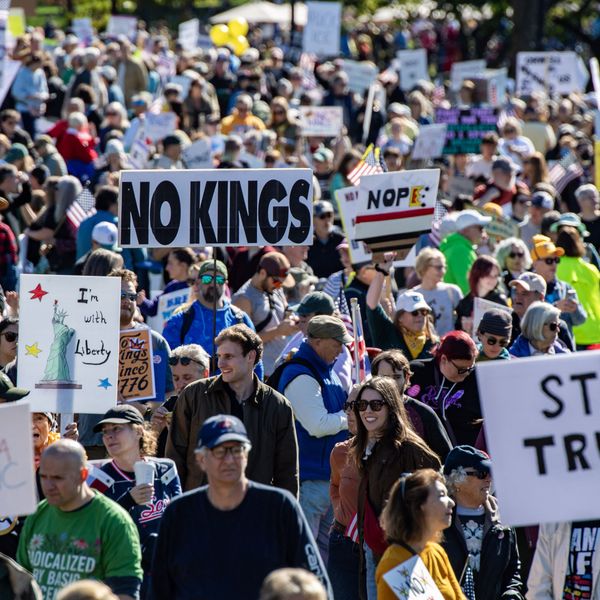


The No Kings Day Project Must Evolve From Protest to Civil Disobedience



Some Signs I Saw at the No Kings Rally

Workers are reorganizing their workplaces, yes—and they’re also building something more. They’re pushing for deeper, systemic changes that go beyond just wages and benefits. They’re pushing for a culture of fairness, transparency, and collective power. The rise in worker-led governance models in the non-profit sector (along with a renewed surge in public-sector union organizing) is showing us that people are ready to reclaim power, not only in how much they’re paid or what benefits they receive, but in how decisions are made and how they’re treated. Nonprofits especially are looking at their internal structures and realizing that they need to change. It’s a slow, steady process, but it’s happening. Workers are taking control, demanding fair treatment, and saying, “We deserve better—and we can create it.” But as the great thought leader Audre Lorde reminds us, achieving real liberation takes more than a fight against oppression; it requires a thorough deconstruction and rebuilding of the systems that perpetuate it. The challenge here is not only to fix the problems we see but also to dismantle the structures of power that created them in the first place. This is why shifting from a strictly hierarchical, top-down system to one of participatory, collective governance isn’t just about equity and inclusion—it’s about the profound and necessary act of rebuilding how we work, how we lead, and how we treat one another. It’s about justice. We are not simply asking for better conditions within the old systems. We are evolving into something new.

But let’s be real: it’s not going to happen overnight. It takes time—at least three to five years of sustained effort—for real transformation to occur within an organization. And we can’t expect perfection from the start. Transforming how we work, how we lead, and how we make decisions is a long-term investment. It takes time, patience, and a willingness to be uncomfortable. It takes experimenting, making mistakes, learning from them, and trying again. The kind of collective governance we dream of doesn’t happen in one big leap; it happens through incremental progress. We start with small changes, perhaps by creating a new decision-making process in a team, or introducing a regular meeting for everyone to voice their concerns. It’s in the small, intentional shifts that we begin to build something bigger.

This is our generation’s work: to create organizations that are efficient and serve an immediate need while also being holistic and human-centered—organizations where everyone has a voice and every person feels empowered and accountable.

I’ve seen this up close. When I was part of Pangea Legal Services, we took a step toward formalized co-governance, and it was far from easy. At first, I found myself reluctant to relinquish control and let others take the lead, especially when I thought I knew better. I had to learn to trust others, reconcile my ego, lean back, and allow mistakes to happen. But over time we saw how much stronger we became. When leadership was shared and decisions were made collectively, we found new ways of doing things—sometimes better ways than I could have imagined. And the results were there: The year after I left, my colleagues continued to thrive and raised millions of dollars in new, unrestricted funding—an extraordinary achievement for a twenty-person nonprofit, especially after a founder transition. We continually proved to ourselves that this model works, and it was because we made the decision to embrace collective leadership, even when it was hard.

When we look to history for guidance, we can see how seemingly small and thoughtful actions have led to enormous change. In the 1960s, the Black Panther Party launched its Free Breakfast for Children program, not as a temporary fix but as a way to meet basic needs and challenge systemic inequalities. What began as free school breakfasts in local communities eventually inspired state-wide programs and national policies. Meaningful change often starts small—one organization, one community, one movement at a time. If we want to transform the future, we have to start where we are and build from there. We have to live the change we want to see now. We have the power to create the future we envision; the key is to begin practicing it every day in our workplaces, our homes, and our communities.

This is our generation’s work: to create organizations that are efficient and serve an immediate need while also being holistic and human-centered—organizations where everyone has a voice and every person feels empowered and accountable. We will create spaces where workers can lead and decision-making is shared, and we will build systems that reflect our deepest values of care, respect, and justice. This vision is not a distant dream. It’s happening now, and each of us has a role to play.

So where do we begin? There are as many starting points as there are individuals and organizations, but one thing is clear: We begin with values and points of unity. We ground ourselves in shared values, we build relationships, and we create what we can with what we have. We don’t wait for the perfect conditions. And in this practice, in this steady, deliberate work of transforming our workplaces from the inside out, we create a future that reflects our highest aspirations.

Change starts with the choices we make and the values we commit to embodying. Each time we prioritize collaboration over competition, equity over expediency, and care over control, we lay the groundwork for something transformative. As these principles take root in our actions and relationships, the change deepens and expands, offering not just a new way of working but a new way of being together. We may not have all the answers yet, but we have the capacity to shape the future. And that future is collective.

From The Future Is Collective by Niloufar Khonsari, published by North Atlantic Books, copyright © 2025 by Niloufar Khonsari. Reprinted by permission of North Atlantic Books.

Our work is licensed under Creative Commons (CC BY-NC-ND 3.0). Feel free to republish and share widely.


Niloufar Khonsari
Niloufar Khonsari is a longtime Bay Area organizer, facilitator, and movement lawyer who supports communities and organizations to build more just, caring, and participatory ways of working together. They are the cofounder of Pangea Legal Services, a worker-led immigrant justice organization, and now work through Bala Rising to support groups with organizational development, capacity building, and practicing collective leadership. Their work is rooted in lived experience—shaped by their journey across borders, years of legal advocacy, and an ongoing practice of listening to and learning from community. The Future Is Collec
tive is their first book.
Full Bio >


1933


GERMANY ;  THE LEFT

‘We rose like the phoenix from the ashes’: Interview with Die Linke’s Janis Ehling


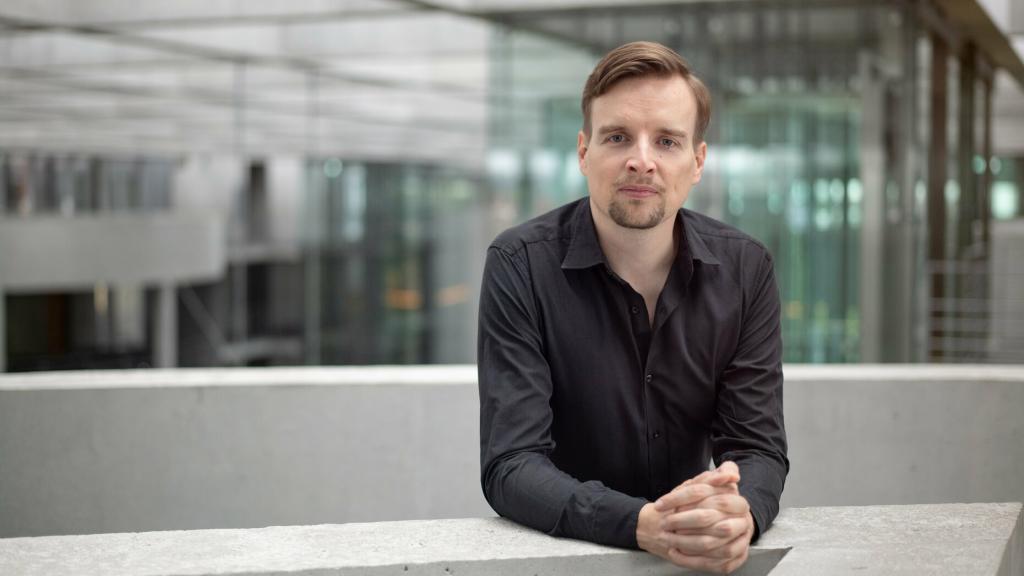
Janis Ehling

First published at Meer.

Janis Ehling is General Secretary of Germany’s Die Linke (The Left Party). He oversaw the come-from-behind victory of the party in the elections to the Bundestag this February. He was born and raised in the former German Democratic Republic. He also sits on the Executive Board of the Party of the European Left in the European Parliament.

Walden Bello is a former member of the House of Representatives of the Philippines and a retired professor of sociology at the University of the Philippines and the State University of New York at Binghamton. Full disclosure: He has been an honorary member of Die Linke since 2010.

Before the Feb elections, it was generally expected that it would be difficult for Die Linke to make the five percent hurdle or cut for representation in Parliament, but you got nearly eight percent of the vote. What happened?

We were at three per cent at the polls during the autumn. Most of our members thought we were facing a great defeat. But we rose like a phoenix from the ashes. Even for us, it was very surprising, because over the last few years, owing to the split with Sahra Wagenknecht, we were in a deep crisis. I, myself, thought that, like the Italians, like in other countries where the far right is on the march, we would be totally defeated.

What was responsible for the turnaround?

Oh, I think that’s a big puzzle. There were some key moments. Over the last 10 to 15 years, we have had big strategic discussions in our party. It was not only about which part of the left is responsible for its decline, but also about how the whole situation in Western countries is changing. When our party was formed, like most similar parties in Europe, we were a gathering of people against neoliberalism. We brought together different currents of the left and the anti-capitalist movement to take on neoliberalism. That was the main goal. Unlike the workers’ movement, these parties were made up of different types of people from the left. Aside from opposing neoliberalism, there was no common goal.

But now with the rise of the far right, and the weakening of the traditional German conservatives — like Angela Merkel and Friedrich Merz, who is an old-fashioned neoliberal — there is a clear, common enemy. It was very similar to the fight between Biden versus Trump. There, you had a left liberal project, like the Green New Deal, a progressive program. You had that too in Germany, but it was a total disaster, so the far right had a big momentum. So, a lot of the left-wing forces in the country were really scared and they gathered around our party. We were the most disciplined.

The second thing is we used a lot of new tools, like canvassing and knocking door to door, and social media. The funny thing is, Zohran Mamdani in New York said he was inspired by Die Linke in Germany, but to be honest, it was the other way around. A few years ago we had this donors’ campaign where we were assisted by the comrades in New York, so we learned this stuff from them.

Also, we attracted a lot of young people by using Instagram and TikTok, and other social media, so it was like before autumn, when young people had something on their social media feed, it was mainly from the far right, and since that time, it was from us too. We were competing with the far right among the young people, and among them, we were the strongest party, with 30 per cent of the youth voting for us. This was something new for us since most of our comrades are old, in fact, very old.

Can you elaborate on how you competed with the far right in terms of messaging?

Before we wrote our program, we asked people what they really wanted and told them what we stood for. It was not the typical left-wing debate, but telling people this is what we stand for, and we said it was a struggle between the working people and the rich. In every speech, the head of the party would say, I’m Jan van Aken and I am for the abolition of billionaires. That was always the first sentence during the election campaign. Focus, focus, focus! The second thing was about the high cost of living. So even if we were asked about immigration, we would say we wanted to tax the rich, and that was really the common goal.

This sounds very much like Mamdani in New York.

No coincidence.

About Mamdani, could you clarify? Did he say he was influenced by Die Linke…?

Yes, he said he was influenced by Die Linke. But as I said, that’s the funny thing. Ten years ago, we sent a lot of people to New York to learn from our comrades on the left how they did their campaigns. We used the same methods here during the campaign. So they influenced us, and later we influenced them.

And your own personal role in this? What do you think was your personal contribution?

I was the organizer of the election campaign, but it was a totally new situation for me, for all of us. I’ve been 17 years in the party, and there are still older comrades, some from the 1968 movement, and they were telling us it’s a totally new situation. Election campaigns can be a bit boring, but this time, people were in the streets, cheering us on, saying they were thankful for us being there, competing with the far right. It was totally crazy. Let me just give you some numbers. In the first of January, we had a party with 58,000 members. And in six weeks, we doubled the size of our membership. 110,000 members at the end of the election campaign. I was 23, seventeen years ago, when I joined the party. Now, I am one of the old veterans. There are only about 9 to 10 per cent of the party who would be considered veterans. That’s really funny.

We phoned every new member, and they directly joined the campaign. So it was really huge. For instance, in Berlin, we had meetings of 600 canvassers, and there was also a lot of support coming from other countries.

And this was throughout Germany?

Yes, but in order to win, we had to focus on certain areas. Six areas specifically, and we mobilized a lot of our members for these areas. They were knocking on literally every door, talking to people.

Which areas were these?

These were three areas in Berlin, including the area where most of the migrants live, and in Leipzig, the biggest city in Saxony, Erfurt, Thuringia, and Rostock.

Tell me about the collapse of Sahra Wagenknecht’s party, the BSW?

The media said, “She’s the up-and-coming star, and we are dead”. We were like the zombie party. I think the big mistake she made was that, although she’s a leftist, she was saying the same thing as the right-wing people. She was railing against gender politics, against ecological politics, and against migrants.

And during the election campaign, there occurred a real turning point for her and for us. In early February, there was a motion of the conservatives against the migrants, really cracking down on them, against the right to asylum, and so on and so on. The only way for the conservatives to win the majority was to have the far right on board. It was the first time in the parliament that the far right voted for a motion of the conservatives. They had a majority, and it was only possible because of the votes of Wagenknecht’s party. So that was a real turning point for us because we were the only party that was saying immigration was not the real issue, it was not responsible for the condition of the people here. For Wagenknecht, it was a controversial point among her voters. I think she lost a lot of support there. After the election campaign, many of their members started rejoining our party, because they said we’re not against migrants. Migrants are not the issue.

And there was another issue, to be honest, and that was the war in Ukraine. Their main goal was to end the war in Ukraine. But Trump won the November elections in the US, and he said he was going to end the war in Ukraine, so that Sahra’s main mobilizing topic had no role in the elections. Everybody thought Trump would end the war in Ukraine, so the war will end, so why continue to vote for her?

So, objectively, Trump contributed to her defeat.

Yes, sometimes history goes in a funny way.

So, I’d like to ask your policy with respect to migrants.

Yes, we faced this question all the time in our door-to-door campaign because the far right brought it up every time. But our answer every time was that the crisis in Germany was due to the bad policies of the conservatives and the social democrats, not the migrants, and that was the reason the people were suffering. Migration was being used by the conservatives and the far right to derail people from the real issues. So that was the first thing. But if journalists pressed us, we said that people have the right to asylum and that we need migration because the population is getting older and older, and if people want their pensions protected, we need migration. We need a workforce.

With Wagenknecht, we had a huge debate on migration. For eight or nine years. That was one of the main topics of our internal party struggle. Because you might say that 40 per cent of all voters are xenophobic. But people would say, ok, we don’t agree with you on this issue, but it’s important to support the Left Party because it is a party of the working people, so a vote for them is in our best interest. So we put the focus on another topic, and we were always saying we were a party against racism, and on that point, we were honest. And if somebody said I cannot vote for an anti-racist party, we said that was fine but that’s where we stand. But I think you have to be very clear on that.

So Sahra split from the party on the migration issue, or was that the main issue?

Migration was one issue, and the other was how to deal with climate change. Sahra was for maintaining the fossil fuel industry and said that the climate issue was a minor issue. She said that workers did not like putting the emphasis on it. The third one was the war in Ukraine. We changed our party position to say that we are against any kind of imperialism, and that includes Russian imperialism. The US is the biggest threat to the world, but there are other rising imperialist countries, and Russia is one of them. They said that the enemy of my enemy is my friend, and this was their position on Russia. They said that the West was responsible for the war in Ukraine. We said that too, but this does not justify one country attacking a brother country.

Let me just interrupt you there. What about China? How do you see China?

On the one hand, our party says, it’s good that China is rising again, that poverty is decreasing there. I think it’s historic what China has done, lifting millions and millions of people from poverty. And it also shows that this kind of state capitalism is more effective than anarchic capitalism, like that of the West. But on the other hand, this very centralized country has a lot of problems. It’s cracking down on workers, and it’s not very democratic. China is an anti-colonial force, so that’s good. But on the other hand, there’s a lot of repression there. That’s not our concept of socialism.

Sorry for the digression. Now back to Sahra. With the party not making it, and with people coming back to the party, do you expect her party to now vanish?

They may vanish, but there’s a chance they may establish themselves as an East German Party. Let me explain. If you look at our party membership in East Germany, 30 per cent of them are below 50, and 40 per cent of them are above 80. So, you can see that our main voters in East Germany are old people, very old. A lot of them left us with Wagenknecht, and during the elections, a lot of young people joined our party, so that our party changed totally.

So now Die Linke has the momentum. But can you tell me where the social democrats, the Christian Democrats, and the Greens are?

I think that what is clear now is that the social democrats are getting weaker. When you see the election results, it was a major success for the conservatives and the far right. So in terms of the big picture, it’s a defeat for left-wing forces. Since I joined the party, I have always hated the social democrats because they were always compromising. But now that the far right is so strong, I really feel sorry for them. We didn’t gain what they lost in the working class. So, in the coming years, we’re going to face the same situation as in most Western countries.

We have three deindustrialized regions, and in these regions, it’s us or them, them meaning the far right. We expect a real polarization. People will either turn to the right or to us. So, we have a huge responsibility, because normally, these people would vote for the social democrats, but they have really lost trust in the SPD. I met some social democrats at a party last weekend, and they themselves feel they are getting weaker. So, in the Grand Coalition with the conservatives, they’re very weak and the conservatives have the upper hand, and the social democrats can’t prevent them from doing really bad things to the people, and they’re not doing what is necessary at this moment of crisis.

And the Greens, since you asked, they have a power vacuum, and it’s not clear where they are going. The Greens were a left-wing party, but they are also the party of the voters with the highest income. They are a progressive party, but it’s not so clear on some issues. On some issues, they are a bit conservative. But in Berlin, they are more left-leaning. But it’s not clear which way they’re going. In the last few years, they wanted to form a coalition with the conservatives, and now they’re not clear whether they want to form a coalition with the conservatives, with us, or with the social democrats. So, will they prefer a progressive alternative or a liberal conservative one?

Do you think, at some point, there is a possibility of Die Linke and the social democrats getting together?

No. Well, your questions really put me in a difficult position as general secretary of the Party. But maybe I can answer not as a party member but as one doing a PhD in Marxist history. There have been great schisms on the left, like the schism between the communists and the social democrats. Now there are no longer any schisms left, except one on how you deal with the state. It’s really very difficult to deal with the state, even when you’re in government. The state is really not in the interest of workers but in the interest of the conservatives. It's a liberal democracy. It’s supposed to be a democracy, but it isn’t.

We are a bit more skeptical than the social democrats when it comes to government. That’s the main difference. I think in the upcoming years, the far right will be rising faster than even now. In Western countries, you have a fascist momentum. In times like this, you have to think about forming coalitions.

I think you need to bring in history. In 1929, you had a social democratic government whose finance minister was Rudolf Hilferding, the Marxist economist. It introduced a number of austerity measures, which Hilferding said would intensify class war. They did not. They only intensified the struggle between the social democrats and the communists. I think this was one of the biggest mistakes of both parties, the social democrats and the communists, with their social fascist theory. This building [Die Linke headquarters], by the way, was a house where torture was carried out on communists, social democrats, and Jews. It’s a reminder that we must work together.

So you said you’re saying this as an academic?

I grew up here in East Berlin, and during the 1990s, I was engaged in street battles with the fascists and neo-Nazis. So, it’s personal. I don’t want to spend my life in exile, like so many communists and social democrats, after Hitler came to power.

I think it really is important to take the threat of fascism seriously. Before the US elections, I thought Trump was a right-wing clown. But now, the threat he and the far right pose to democracy is very real. Every day, Trump comes up with something new, and the US left does not know what to do.

So do you think that the far right has a strong possibility of coming to power, whether as the leading force in a coalition or independently?

Again, let me speak as an academic. I have been following developments in other European countries, and in many of them, far-right parties are now normal. They are in a lot of governments. It could happen here, too. Maybe in 2029 or 2033, which would mark the 100 years of the coming of fascism in Germany. But as the general secretary of the party, I will do everything possible to prevent that from happening again. If it does, this would be the first time since 1945, and all Germans know what that means.

I asked this question when I interviewed Wolfgang Streeck, the director emeritus of the Max Planck Institute for the Study of Societies in Cologne. He had an interesting answer. He said that the structural conditions for the far right to come to power are absent, but that the cultural resentment is what drives the right, and that’s not enough for the right to be able to govern. Some other progressives in Spain and the Netherlands I talked to also provided similar explanations.

I think they are right. One reason is that, in proportion to the population, there are not so many young people now in Western countries compared to the 1930s. So that the youth base for revolutionary movements is no longer there. Also, the far right has no paramilitary wing, so that groups like the SA [Sturmabteilung or Brownshirts] that were terrorizing people in the streets in the 1930s are not there. So, I don’t think the danger is the same as that posed pre-World War II.

But I think the real danger is to the migrants, to the rights of working people, to the rights of women, and of transgender people. So, there’s a real threat to minorities in this country. But, again, the far right does have people who attack us physically, and some of our people have experienced this. I would also say this, that back in the 1930s, there were those in the Communist Party who said that the Nazis were an unstable formation and that they would be able to govern for only one year. So as a social scientist, I would say the far right is not the same as the fascists of the 1930s, but on the other hand, the left was wrong then, and I could be wrong now.

So, would you say that the threat is not so much violence and coercion but repressive legislation?

Yes, for instance, in Germany, the authorities are talking about mass deportation, as in the US. But we have every year about 20,000-40,000 migrants being deported from Germany. On the other hand, we have some 400,000 to 700,000 migrants coming to Germany. So, for the people being deported, that’s a tragedy, a real threat to their lives. But in the bigger picture, you will have different kinds of citizens. Nowadays, you have 12 million people who cannot vote. Many of them are not citizens, so what the right wing is doing is saying they will create a new class of illegal people, that is, a working class that is a very low sector of society, and on the other hand, they’re threatening the rights of workers living here. Now that is what they’re doing. That’s very dangerous, because you’ll have millions of people without fundamental rights.

I was reading the autobiography of Angela Merkel, and I was struck by two things: one, that she did not seem to understand that the neoliberal policies she promoted created a huge economic crisis in Germany. Two, she seemed to be very proud of her assimilation of the one million Syrians. It seems she even considers it the high point of her career. What do you think of that?

On the one hand, the neoliberals were responsible for the crisis in Germany. And it was especially bad for East Germany. For instance, where my wife comes from, Mecklenburg, since 1990, some 30 to 40 per cent of the people have left the place in just 30 years. The last time we had a situation like this was during the 30 Years' War in the 17th century. East Germany was a laboratory for neoliberal tactics, and after that, they also brought these to West Germany. The conservatives were responsible for that, and Merkel was also responsible because she was the Prime Minister. So, she’s a bit of a devil for me.

On the other hand, on the migration issue, she’s a real liberal, with all the contradictions of liberals. The conservatives and the social democrats keep on saying, "our workforce is getting old, and we need more migration". But what we also say is that there are already migrants in this country. Why can’t we equip them to work? There are all these Syrian physicists driving taxis. Why don’t we allow them to work? The conservatives say they’re not against migrants, but they don’t want refugees. What we say is that if you don’t want refugees, then you must prevent wars, because it is wars that create refugees. As to her 2015 decision to open the borders to the Syrian refugees, Merkel did the right thing. It was pragmatic. We need people for the workforce. They should stay. She was right.

What is the future of US-German and US-European relations?

What Trump is doing is so crazy. It’s not rational because he’s cutting ties with a lot of countries. And our party thinks we’re in a new global situation, with the reemergence of China, which is competing with the US. Europe must find its role in this new situation. What we are in favor of is for Europe to find its autonomy because, like so many countries in the Global South, we don’t want to be part of this bloc confrontation, and hopefully, we can avoid war in the future. We don’t want to be fellow imperialists alongside the Americans. In this sense, Trump is helping us in a very unexpected way with his policies towards Europe.

But what do you think of the recent NATO meeting, where the Secretary General of NATO said something to the effect, Thank you, Mr Trump. You’ve finally made us take seriously this proposal to spend some 5 per cent of our GDP on the military?

That’s not so easy to answer. The French can sometimes be in opposition to the US owing to their role as a former global power. In Germany, it’s more difficult, because every party except us is transatlanticist. Friedrich Merz, the new Chancellor, who’s a lobbyist for transatlantic interests, is being put by Trump in a very difficult position. The trade war is really affecting us negatively. After China and the US, we’re the world’s third biggest exporter, and as you know, German industry is the last remaining big industry in Europe, so the trade war is affecting us very harshly. So, the European elites may be forced to develop some autonomy from the US and focus on Europe again.

But this also has problems, because those elites also say we’ll need to become more independent of the US, so we need more military spending. Over the last few years, we on the left in Europe have been fighting against the creation of a rapid deployment force for interventions in Africa, in Mali, and elsewhere. And the elites now want a major rearmament, to make it possible to fight a full-scale war.

Doesn’t this rearmament also create the possibility of nationalist competition within Europe?

Good question. Well, following Benedict Anderson’s work, there can be a nationalism that can be a left-wing thing. Resentment of US imperialism can be a force both among left and right-wing forces. But, yes, when nationalism is rising again, it can bring a lot of trouble. It can bring the EU down. What I think Europe should do is be a coalition of countries that does not focus on building military power but on building soft power. Soft power is better than military power.

Walden Bello is currently co-chair of the Board of the Bangkok-based research and advocacy institute Focus on the Global South, an associate of the Transnational Institute in Amsterdam, and a retired professor at both the University of the Philippines and the State University of New York at Binghamton. A recipient of the Right Livelihood Award, aka the Alternative Nobel Prize, he is the author of 26 books, the latest of which is Global Battlefields: Memoir of a Legendary Public Intellectual from the Global South (2025).


US grants 0% tariffs to Malaysia alongside Cambodia and Thailand

US grants 0% tariffs to Malaysia alongside Cambodia and Thailand
/ White House - X
By bno - Surabaya Office October 27, 2025

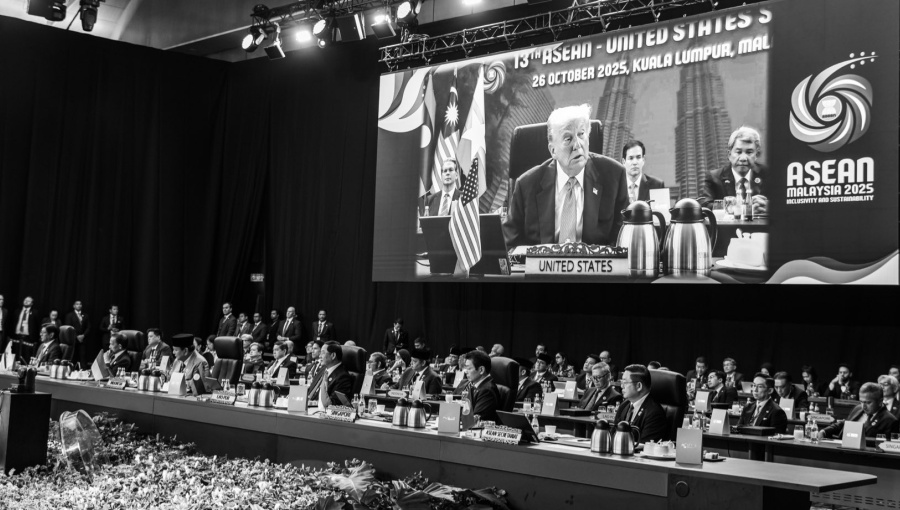
US President Donald Trump has approved a 0% tariff scheme for selected goods from Malaysia, Cambodia, and Thailand, a move formalised during the ASEAN Summit in Kuala Lumpur, DetikFinance reports. The three Southeast Asian nations had previously faced reciprocal tariffs of 19%. Under the new arrangement, a range of products will now enjoy duty-free access to the US market.

Malaysia’s Minister of Trade, Tengku Zafrul Aziz, said the tariff exemptions would cover aerospace equipment, pharmaceuticals, and key commodities such as palm oil, cocoa, and rubber. The deal is expected to significantly boost Malaysia’s export competitiveness and deepen its trade ties with Washington.

Indonesia also stands to gain, as it is currently negotiating a similar reciprocal tariff adjustment with the US, which has likewise stood at 19%. Coordinating Minister for Economic Affairs Airlangga Hartarto confirmed that trade talks between the two countries had resumed following delays caused by the recent US government shutdown.

Airlangga noted that discussions are progressing well and could conclude within the next two to three weeks. “Talks will continue intensively this month, and we hope to finalise them soon,” he said earlier this month.

He added that Indonesia has a strong chance of securing 0% import duties on several of its major export commodities. “In principle, the agreement applies to products that can be cultivated in Indonesia but not in the US, and vice versa. So, for items such as palm oil, cocoa, and chocolate, they’re offering zero tariffs,” Airlangga explained.

The US trade concessions mark a major step in strengthening economic cooperation with Southeast Asia and are expected to encourage greater trade diversification across the region.

Maduro warns US against 'crazy war' after Trump authorises covert Venezuela action


Venezuelan President Nicolas Maduro appealed Thursday for calm as tensions rose with Washington, saying in English: “No crazy war, please!” His plea followed US President Donald Trump’s announcement that he had authorised covert action against Caracas amid an expanding US military campaign targeting alleged drug traffickers in the Caribbean and Pacific.


Issued on: 24/10/2025 
By: FRANCE 24

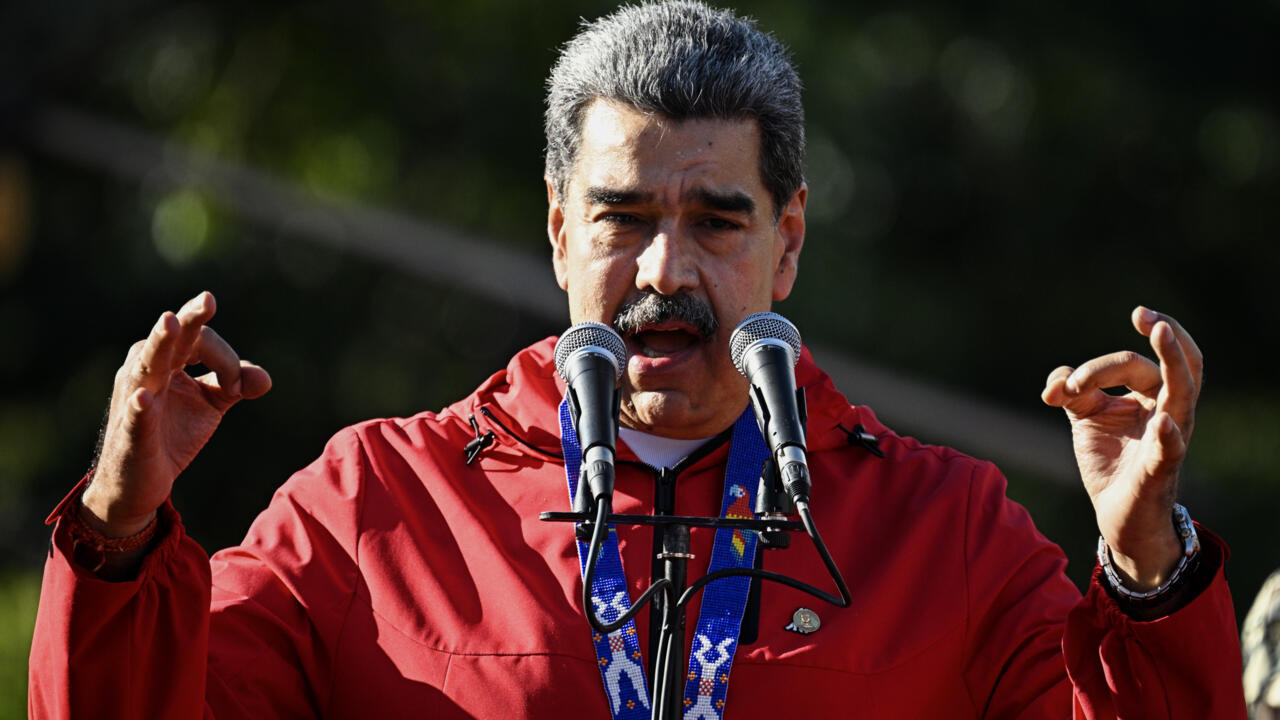
Venezuelan President Nicolas Maduro during the "Day of Indigenous Resistance" in Caracas, October 12, 2025 © Federico PARRA, AFP
01:49


Venezuelan President Nicolas Maduro on Thursday launched a plea in English as tensions mount between Washington and Caracas: "No crazy war, please!"

Maduro's comment came after US President Donald Trump said he had authorised covert action against the South American nation, and amid an escalating US military campaign against alleged drug traffickers in the Caribbean and Pacific.

"Yes peace, yes peace forever, peace forever. No crazy war, please!" Maduro said in a meeting with unions aligned with the leftist leader, a former bus driver and union leader.


© France 24
05:57


The United States has deployed stealth warplanes and Navy ships as part of what it calls anti-narcotics efforts, but has yet to release evidence that its targets -- eight boats and a semi-submersible -- were smuggling drugs.

The US strikes, which began on September 2, have killed at least 37 people, according to an AFP tally based on US figures.

Regional tensions have flared as a result of the campaign, with Maduro accusing Washington of seeking regime change.

Last week, Trump said he had authorised covert CIA action against Venezuela and was considering strikes against alleged drug cartels on land.


© France 24
41:30


The Republican billionaire president accuses Maduro of heading a drug cartel, a charge the Venezuelan leader denies.

"We know the CIA is present" in Venezuela, the country's defense minister Vladimir Padrino said Thursday.

"They may deploy -- I don't know how many -- CIA-affiliated units in covert operations...and any attempt will fail."

Padrino was overseeing military exercises along Venezuela's coast in response to the US military deployment in the Caribbean.

Experts have questioned the legality of using lethal force in foreign or international waters against suspects who have not been intercepted or questioned.

(FRANCE 24 with AFP)
UK

Nigel Farage appoints anti-abortion theologian with ties to Trump as his senior adviser

20 October, 2025 
Left Foot Forward


James Orr is friends with JD Vance and said the US Capitol Riot in January 2021 was exaggerated by the "global left"


TweetShareWhatsAppMail


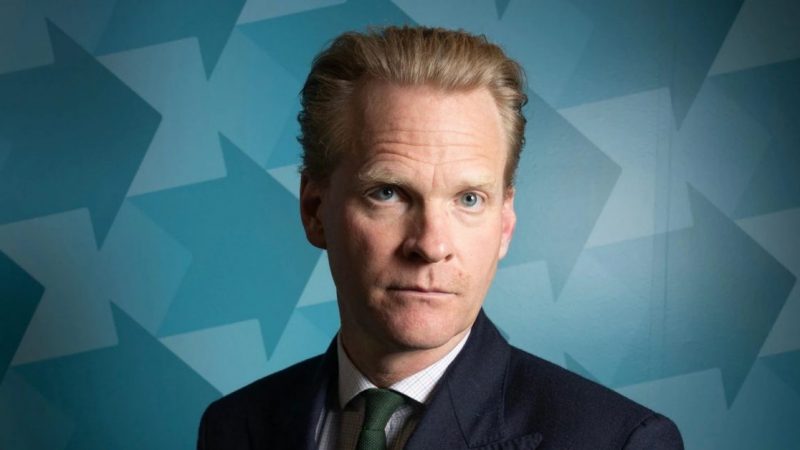
Nigel Farage has appointed a friend of JD Vance and hardline anti-abortionist James Orr, as his senior adviser.

Orr, an associate professor in Theology at the University of Cambridge, has been influential in Donald Trump’s administration.

Orr opposes abortion at any stage of pregnancy, including in cases of rape.

He also referred to asylum seekers as “invaders”. In an interview with the European Conservative, he said: “No civilisation has invited invaders in, put them up in four-star hotels, and given them all the money they can possibly want.”

Orr said he was friends with the late right-wing activist Charlie Kirk, who was also close to Trump.

Kirk was assassinated on 10 September, while addressing a group of students on the campus of Utah Valley University.

The academic said that the US Capitol Riot on 6 January 2021 was exaggerated by the “left-wing media”.

A mob of Trump supporters who wanted to overturn Trump’s 2020 election defeat were behind the Capitol attack. Kirk’s organisation Turning Point USA was involved in the attack.

Kirk bragged about sending 80 buses of supporters to the rally, which descended into a riot.

More than 1,500 people were convicted in connection with the riot, but Trump pardoned them all when became President for the second time on 20 January this year.

His posts on X often describe ethnic diversity as “disastrous demographic change” in the UK.

Orr is also chair of the pro-Reform UK think tank Centre for a Better Britain (CFABB).

The Financial Times referred to CFABB, which aims to build policy for Reform and attract US donors, as a “MAGA-style think tank” .

The think tank has endorsed cutting state funding for the NHS, scrapping DEI and reducing immigration.

A Labour spokesperson said: “Reform’s embrace of figures like James Orr tells you everything you need to know about the direction their party is taking. His opposition to abortion even in cases of rape and his description of asylum seekers as ‘invaders’ are extreme even by the standards of contemporary right-wing politics.”

Lib Dem deputy leader Daisy Cooper warned: “This appointment confirms what we’ve always known: Reform UK is just a British franchise of Donald Trump’s Maga movement.

“We can all see what is happening in Trump’s America. We cannot stand by and let this become Farage’s Britain.”

Green Party leader Zack Polanski said: “Reform UK’s decision to welcome James Orr as a senior advisor to Nigel Farage is further evidence that Farage is embracing dangerous and divisive right wing ideology.

“By choosing someone close to JD Vance to be by his side – someone who describes asylum seekers as ‘invaders’ and someone who is anti abortion – he is signalling that Reform UK has nothing to offer but fuel for divisive, inflammatory politics.”

Olivia Barber is a reporter at Left Foot Forward


Nigel Farage’s partner embroiled in criminal investigation involving allegations of fraud

20 October, 2025
Left Foot Forward

Ferrari has rejected the accusations and said that the investigation is politically motivated


Reform UK leader Nigel Farage’s partner Laure Ferrari has hit the headlines amid allegations of fraud at a Eurosceptic group that she ran when the pair were both working in Brussels.

Although there is no suggestion of wrongdoing on Farage’s part, the story will nonetheless cause him another headache as he tries to portray himself as a prime minister in-waiting.

The Times reports that ‘Laure Ferrari served as executive director of the Institute for Direct Democracy in Europe (IDDE), a think tank based in the Belgian capital, when auditors refused to sign off spending of hundreds of thousands of euros of public funds in 2016’.

It is understood that the European Commission anti-fraud unit spent years investigating the organisation, after Dutch press reported it had received funds from private donors who were awarded contracts in return, alongside allegations of financial irregularities.

European parliamentary authorities reported finding “several cases in which a company or individual had made a donation and that same company, or a company linked to the donor, was awarded contracts for sums exceeding the amount of the relevant donation”.

Ferrari has rejected the accusations and said that the investigation is politically motivated and “fake” accusations leaked by a hostile MEP.

On November 5, a specialist financial crime court in Brussels, Chamber 69 of the tribunal de première instance, is expected to deliver its verdict.

Ferrari also made the headlines recently after Farage was forced to insist he had no “financial stake” in a £885,000 house in Clacton brought by her in cash, amid claims he structured the purchase in order to avoid paying additional tax.


Basit Mahmood is editor of Left Foot Forward

UK

Eve of Budget protest – join the November 25th People’s Assembly demo

“On the night before the Chancellor announces yet another Budget for the bosses, we will raise our voices for justice.”

By the People’s Assembly

Since its founding, the People’s Assembly Against Austerity has been the loudest, clearest voice against cuts, privatisation, and endless attacks on working-class communities. We’ve been there when governments tried to make austerity sound inevitable, when politicians said there was no alternative. Time and again, we’ve exposed that lie and mobilised to resist it. Now, shockingly, a Labour Government is still pursuing an austerity agenda. With our help, public opinion has forced some retreats from the government, but this coming budget will be an assault on public services and ordinary working-class people.

Now, the fight is bigger than ever.

Britain is in crisis:

  • Our public services are on their knees.
  • Millions are pushed into poverty while billionaires stash fortunes.
  • This government pours money into warfare, not welfare.

This is not mismanagement. This is a political choice. A system designed to protect the rich and powerful at the expense of everyone else.

We demand:

  • Tax the rich –  make the corporations, the profiteers and the billionaires pay their fair share.
  • Fund our future – invest in the NHS, schools, housing, jobs and a green economy.
  • Welfare not warfare – stop pouring billions into weapons and war while communities suffer.

That’s why on Tuesday, 25 November, at 6pm, outside Downing Street, we are calling on every Londoner to join us for the Eve of Budget Protest. On the night before the Chancellor announces yet another Budget for the bosses, we will raise our voices for justice.

If you’re in London, be there. Bring your friends, colleagues, and banners. If you’re not in London, help us spread the word and make sure the streets are filled with resistance.

When: Tuesday, 25 November
Time: 6pm
Where: Downing Street, London

For on-the-ground info join our Whatsapp Channel

The People’s Assembly has always been the movement that says what others won’t: austerity is a political choice, and we will not pay for their crisis. On 25 November, we take that message right to the doors of power.

See you on the streets,

The People’s Assembly Against Austerity


UK

Tackling poverty needs a radically different economic model 


OCTOBER 22, 2025

Failure to build an economy geared towards fairer rewards and growth that meets social priorities will hamper the fight, argues Stewart Lansley.

After months of growing pressure, the government has finally given hints of a lift to the two-child benefit limit. In his speech to Party conference, Keir Starmer maintained that Labour are committed to cutting poverty. These are positive signs, but they leave open a vital question: by how much – if at all – will poverty be cut at the end of Labour’s term?

Official figures show 4.5 million children (almost a third of all children) lived in relative poverty in 2024. This was up by 100,000 over 2023. Yet desirable and effective as an end to the cap would be,  such a move would only cut child poverty by around half a million. Moreover, if the change involves a partial, rather than a complete lifting of the cap, limited, say, to three or four children as the Treasury seems to be insisting, the fall would be a lot less.  Even if it is scrapped in full, 28 per cent of children would stay poor. This is more than double the historic low point of the 1970s.

The government has taken other steps to help low income families, with the extension of free school meals predicted to lift up to 100,000 children out of poverty in the long term. A more substantial strike however depends on a much more fundamental overhaul of the British economy, of how rewards are shared and resources are allocated. 

Ultimately, the level of poverty depends on how the cake is shared. It is Britain’s yawning income and wealth gap – and the way the gains from economic activity have been captured by an ever-powerful financial and corporate elite – that explains Britain’s dismal record. Yet there has been little mention of inequality by Labour leaders, or a recognition of the umbilical link between trends in poverty and the income and wealth divide. Britain has been a high poverty, high inequality nation for most of its history, the one exception being the short-lived period of post-war egalitarianism initiated by the post-war Labour government. The achievements of the 1970s have been overturned by the ideological counter-revolution against the more managed model capitalism, with the state returning to its long term role as an agent of inequality.

The rise in poverty since the 1970s has been driven by a hike in top fortunes engineered at the expense of stagnant and falling living standards across much of society. This surge in personal wealth at the top is the product of a range of predatory business methods. Companies have been turned into cash cows for owners through the ‘skimming’ of the gains from economic activity at the cost of weakened social and economic resilience and declining life chances. 

Britain’s built-in bias to inequality and poverty is not just bad news for social progress. With the process of enrichment achieved by often unproductive activity that leads to hollowed out companies, it is also the principal explanation for the stifling of economic advance. 

In 1759, the patron saint of economics, Adam Smith,  warned of how the rich and powerful rig economies against the rest of society. “The test of our progress is not whether we add more to the abundance of those who have much,” declared the American President, Franklin D. Roosevelt in 1936, “It is whether we provide enough for those who have too little.” For the last 50 years, these warnings have been largely ignored. Instead, a toxic mix of extreme inequality and an over-reliance on private markets has delivered a hike in activity that serves little social purpose. 

The scale of the task involved is revealed by the ‘poverty gap`. This is the amount by which a  particular household falls below the poverty line. The current gap across all poor households is around 30%.  This is equivalent to an average shortfall of £6,200 a year for a couple with two children. It is a gap that stood at around 23% in the 1990s. It is a stark indicator of the inadequate share of national income and wealth enjoyed by those on the lowest incomes.  The poorest fifth of households currently hold 7% of the nation’s aggregate income (after taxes and benefits). In contrast, the top fifth hold 41%.

Rising and deepening poverty has nothing to do with a lack of resources, or Labour’s claim  that there’s ‘no money left’. Its roots lie in a mix of flat taxes, over-privatisation, excessive reliance on markets, and growing monopolisation, that has transferred power over how land, the workforce and financial resources are used to global asset managers, boardrooms, bankers and an increasingly wealthy billionaire class.

An effective war on poverty depends on a much more radical reshaping of a badly broken economy through a more progressive tax system, tougher anti-poverty policies, and a new regulatory war on corporate power and extraction. Failure to build an economy geared to fairer rewards and growth that meets social priorities will keep Britain at the top end of global poverty and inequality league tables while its economy will continue to fester.

Stewart Lansley is the author of The Richer, The Poorer: How Britain Enriched the Few and Failed the Poor, a 200-year History,  He is a visiting fellow at the University of Bristol and a Council member of the Progressive Economy Forum.

Image: c/o Labour Hub