Sunday, October 26, 2025


Can California Still Lead the Charge on Electric Trucks?

  • California aimed for a 100% zero-emission medium- and heavy-duty vehicle fleet by 2045, but lost EPA support under the Trump administration.

  • The California Air Resources Board repealed key zero-emission purchasing rules after failing to secure a federal waiver.

  • Despite setbacks, demand for electric trucks remains strong, driven by limited incentives and private-sector optimism.

In recent years, California has pursued an accelerated shift to green by encouraging consumers to make the switch from internal combustion engine (ICE) vehicles to electric vehicles. The government of California hopes to eventually decarbonise its medium-duty and heavy-duty vehicles to improve the state’s air quality and help tackle the effects of climate change. However, following significant opposition from the truck industry and the federal government, achieving this aim now appears increasingly unlikely. 

California’s medium- and heavy-duty vehicles make up just 6 percent of the vehicles registered with the state’s DMV; however, they contribute more than 20 percent of the greenhouse gas (GHG) emissions. Therefore, decarbonising the fleet would help improve air pollution as well as decrease the negative effects of this form of pollution on environmental and human health. 

The government of California introduced a comprehensive statewide strategy to reduce transportation emissions, which included the aim of achieving carbon neutrality by 2045. Governor Gavin Newsom’s Executive Order N-79-20 states the target of transitioning to a 100 percent zero-emissions drayage truck and off-road equipment population by 2035 and a 100 percent zero-emission medium- and heavy-duty vehicle fleet by 2045, where feasible. The targets align with the air quality standard objectives stated in the 2022 State Implementation Plan Strategy. 

While the cost of electric trucks is higher than that of equivalent ICE vehicles, the government expects the price of these vehicles to fall as uptake increases and production costs decrease. In addition, the State of California has introduced a range of incentives for purchasing zero-emission vehicles in recent years to encourage uptake. For example, the California Energy Commission launched a $50 million multi-year EnergIIZE programme, which provides incentive funds for the infrastructure needs of the companies and public agencies that plan to use zero-emission vehicles.

Several state agencies have introduced ambitious transport decarbonisation aims in recent years, which have made a transition to electric seem increasingly more achievable. The California Air Resources Board (CARB) has established several zero-emission regulatory requirements and incentive programmes, such as the Innovative Clean Transit regulation, which requires a phase-in of zero-emission bus purchases to achieve 100 percent zero-emission fleets by all public transit agencies by 2040.

However, California’s electrification aims have often been at odds with those of the federal government, which has not generally supported the state’s decarbonisation efforts for the transport sector. In addition, the truck industry has been staunchly opposed to the transition, and, under the President Trump administration, achieving its clean transport targets has become even more difficult. 

At the beginning of the year, California hoped to receive a waiver from the Environmental Protection Agency (EPA) to enforce its new Advanced Clean Fleets regulation, but the change in administration meant this was not achieved. Although CARB introduced new rules on zero-emission trucks at the end of last year, it needed a waiver to enforce these new rules. The board eventually decided to withdraw its request for a waiver after Trump came into power in January, effectively putting a stop to the new regulation. This decision responded to Trump’s electoral pledge to reverse vehicle emission regulations enacted during Biden’s presidency.

Then, in September, CARB voted to repeal its zero-emission purchasing rule for private fleets, thereby halting its mandate for the accelerated electrification of the state’s trucking sector. This decision came just shortly after State Governor Newsom discussed California’s great potential as an EV power during Climate Week. CARB was unable to secure the waiver it needed before President Biden left office, and it became increasingly clear in the following months that it would not receive such a waiver under the Trump administration. Strong lobbying efforts by both republicans and the trucking sector eventually upended California’s strategy.

Some suggest that improved incentives could encourage truck companies to make the switch, even without the new regulations in place. Matt LeDucq, the CEO of Forum Mobility, which is developing heavy-duty charging stations near West Coast ports, said, “It’s up to us to show that electrification is going to be a great thing… [that it’s] not something you have to do, but something that you want to do.” 

Meanwhile, Nick Chiappe, the California Trucking Association’s director of government and regulatory affairs, said, “Incentives are a powerful tool to encourage and advance the adoption of ZEVs for use cases where it is feasible.” Chiappe said that trucking companies and other transit companies rapidly took up the $200 million in incentives for electric trucks and buses after they were launched in September. “The demand for this equipment is there, with or without mandates,” said Chiappe. However, due to the ongoing budget deficits, the introduction of more far-reaching incentives may not be possible. 

By Felicity Bradstock for Oilprice.com


Shale Giants Slash Thousands of Jobs as Lower Prices Bite

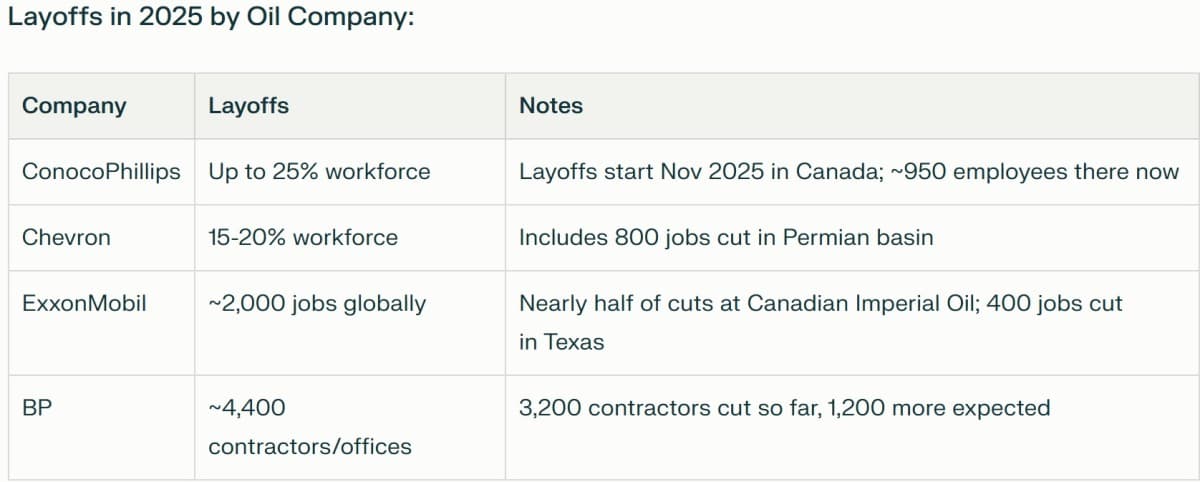
  • U.S. oil majors, including ConocoPhillips, Chevron, and ExxonMobil, are cutting jobs substantially in 2025 to reduce costs amid lower oil prices.

  • ConocoPhillips is planning to cut up to 25% of its workforce globally, including layoffs starting in November 2025 in its Canadian operations.

  • Chevron aims to cut 15-20% of its global workforce by the end of 2026, including 800 jobs in the Permian basin.

U.S. oil and gas producers seek efficiencies and cost reductions amid lower oil prices this year compared to 2024 levels.

Fresh off multi-billion-dollar mergers and acquisitions in the 2023-2024 period, many major producers in the U.S. shale patch are restructuring businesses and operations.

The result so far has been a series of announcements and reports of workforce reductions across geographies and basins.

The latest such report came this week, by Reuters, which reported a memo it had seen regarding layoffs at the Canadian business of U.S. oil and gas giant ConocoPhillips.

The U.S. firm, one of the world’s largest independent exploration and production companies based on production and proven reserves, has its Canadian headquarters in Calgary, Alberta.

ConocoPhillips Canada develops the Surmont oil sands project in the Athabasca region of northeastern Alberta and opportunities in the unconventional liquids-rich Montney play in northeastern British Columbia. 

According to the memo on workforce reductions, ConocoPhillips’ employees in Calgary will be notified virtually on November 5, and those in Surmont and Montney will be told in person on the following day, sources told Reuters.

Related: Saudi Arabia’s Spending Spree Meets Oil Price Reality

“We will not be sharing area-specific workforce numbers for current or impacted employees and contractors,” ConocoPhillips spokesperson Dennis Nuss told Reuters via email.

At present, the company employs about 950 people in Canada.

The number will shrink later this year and next year as ConocoPhillips and other large oil and gas producers look to streamline structures, eliminate duplicate roles or inefficiencies, and save costs.

ConocoPhillips already has plans to slash workforce numbers by up to 25% across functions and geographies to simplify the organization and cut costs.

Last year, ConocoPhillips completed its acquisition of Marathon Oil Corporation, in an all-stock deal with an enterprise value of $22.5 billion, including debt.

The Marathon Oil transaction was viewed by analysts as ConocoPhillips pursuing scale and size and diversified exposure in several U.S. shale basins.

Months before the announcement of the deal, ConocoPhillips CEO Ryan Lance told CNBC in an interview in March 2024, “We have said our industry needs to consolidate.”

“There are too many players. Scale matters, diversity matters, and we are going through a natural cycle of that in the business,” Lance added.

“It’s healthy for our business. It’s the right thing to be doing for our business,” according to ConocoPhillips’ top executive.

The consolidation wave is now receding, and the wave of streamlining and cost-cutting is underway among the major U.S. and European oil firms.

The U.S. shale patch is seeing the deepest jobs cuts in three years as producers respond to lower oil prices with slowing drilling activity and greater efficiencies through consolidation and cost cuts.

The biggest producers are cutting headcount, in the thousands, following blockbuster acquisitions in recent months.

Chevron, which bought Hess Corporation for $53 billion, has said it would reduce its workforce by 20% by the end of 2026 as part of wide cost cuts. This includes 800 jobs in the Permian.

ExxonMobil will slash 2,000 jobs worldwide, with nearly half of these cuts at its Canadian business, Imperial Oil.

Exxon has already eliminated about 400 jobs in Texas since it acquired Pioneer Natural Resources in a $60-billion deal finalized in May 2024.

UK-based BP, which is under intense shareholder pressure to slash costs and reduce debt, said in August that it was accelerating the reduction of contractor numbers and office-based workforce.

“Across the supply chain, we’ve delivered around $900 million of savings. Over a third of our supply chain spend reductions seen so far reflect a reduction in contractors, significantly enabled by technology,” BP’s chief financial officer Kate Thomson said on the Q2 earnings call.

BP has already reduced contractor numbers by 3,200, and expects a further 1,200 contractors to exit by the end of 2025.

“Beyond that, we will continue to rigorously review the remaining contractor activity across our businesses and functions,” Thomson added.

An executive at an oilfield services firm said in comments to the latest Dallas Fed Energy Survey last month, “Operators are less prone to utilize outside services and continue to reduce their own workforces.”

By Irina Slav for Oilprice.com


The big winners from the Australia-US critical minerals deal


Cue region in Western Australia. (Image: Austockphoto.)

The Australian mining sector was buzzing this week off the back of the critical minerals deal announced by US President Donald Trump and Australian Prime Minister Anthony Albanese in Washington DC on Monday.

News of the deal filtered through on Tuesday morning local time, just hours ahead of the opening of Australia’s largest mining event, the International Mining and Resources Convention (IMARC) in Sydney, and it dominated discussions during the conference.

Association of Mining and Exploration Companies CEO Warren Pearce told the conference the deal was much better than expected.

“We’d hoped for a high-level agreement which would enable negotiations and hopefully lead to commercial contracts between American companies and Australian producers,” he said. “What we got was that, plus commitments of investment.”

Two big winners

While the deal boosted sentiment in the Australian critical minerals space, there were two big winners in Albanese’s announcement, Arafura Rare Earths (ASX: ARU) and a joint venture between Alcoa (NYSE: AA) and Sojitz Corp (TYO: 2768).

It was a double win for Gina Rinehart-backed Arafura, which also received a letter of interest (LoI) from the Export-Import Bank of the United States (EXIM) for up to $300 million of funding for its $1.2 billion Nolans project in the Northern Territory.

“I’ve never seen this level of cooperation between the tops of two governments working together in terms of matching supply and funding. It’s actually quite historic,” Arafura managing director Darryl Cuzzubbo told MINING.com from New York, where he had just completed 12 consecutive hours of investor meetings.

“Essentially, through the agreement, Australia is giving somewhat preferential treatment to its critical minerals, to the US, and in return, the US is giving somewhat preferential treatment to funding and price mechanisms, particularly funding, both on the debt and the equity side.

“And then secondly, the agreement spells out how the process can be sped up, which will allow projects to move into construction quicker than they otherwise would,” Cuzzubbo said.

EXIM issued LoIs worth up to $2.2 billion to another six projects: Graphinex’s Esmeralda graphite project in Queensland, Northern Minerals’ (ASX: NTU) Browns Range rare earths project in Western Australia, La Trobe Magnesium’s (ASX: LMG) plant in Victoria, VHM’s (ASX: VHM) Goschen mineral sands and rare earths project in Victoria, RZ Resources’ Copi rare earths project in New South Wales and Sunrise Energy Metals’ (ASX: SRL) Syerston scandium project in NSW.

Ready to build

The Australian government announced a $100 million equity investment in Arafura’s Nolans project through Export Finance Australia.

Arafura has already invested A$60 million ($39 million) in early works at Nolans.

“We’re expecting to finalize our cornerstone equity by the end of this year, and that allows us to then finalize the rest of the funding early next year and then move into construction early next year,” Cuzzubbo said.

Nolans has a three-year construction period and a two-year ramp-up phase. Once in full production, it will produce 4,440 tonnes per annum (tpa) of neodymium-praseodymium, 573tpa of mixed middle-heavy rare earths oxide and 5144,393tpa of phosphoric acid.

“You’ve got Korea, the US and Germany trying to diversify away from China. At the same time, demand is doubling,” Cuzzubbo said.

“Then you look at the rare earths supply pipeline, the number of projects that can move into construction, there’s not too many projects that are going to move into production in the next five to 10 years.”

Gallium hopes boosted In August, Alcoa revealed it had signed a deal with Sojitz and the Japanese government to investigate the production of gallium as a by-product of alumina from its Wagerup refinery in WA.

The Australian government announced up to $200 million in concessional equity finance for the project, which includes a right of offtake for the Australian government.

The US government is also making an equity investment, though the amount is yet to be disclosed, with a right of offtake.

Speaking on a conference call this week, Alcoa CEO William Oplinger said the Japanese would own 50% of the project, with the combination of the US, Australia and Alcoa to own the other half.

Oplinger said negotiations were ongoing but conceded Alcoa may only end up with 5% ownership of the project.

“The real strategic advantage of this deal is that it provides a supply chain outside of China for gallium that is around 10% of the world’s gallium market,” he said.

“We are pushing to have first metal by 2026. We think we will be first to market outside of China on an aggressive schedule. The next step is that we need to get final documents signed, but we’re pushing to be able to extract gallium by 2026.”

South32 (ASX: S32) has its own bauxite and alumina facilities near Alcoa’s in WA and is also considering gallium production.

CEO Graham Kerr told the company’s annual general meeting in Perth on Thursday it had been more focused on working with the US government on its Hermosa project in Arizona and Ambler project in Alaska.

“We do obviously have a list of different priorities and we’re ticking through those,” he said. “Gallium, we’ll continue to look at and study, but Alcoa are probably one step ahead of us on that.”

US $20B backing, stability key to Argentina’s mining push


Argentine President Javier Milei with US President Donald Trump. (Image courtesy of US embassy in Argentina.)

Argentina’s push to unlock vast lithium, copper, oil and gas reserves depends on President Javier Milei’s political stability and continued support from the United States, analysts say.

As voters prepare to head to the polls, Milei’s administration faces a critical test. Experts at RXN Group’s “Election Day Argentina: Milei, Minerals, and Money” briefing warned that Sunday’s election could determine whether the president consolidates power or plunges the country back into political and market turbulence.

Milei rose to power on a wave of outsider appeal but without an established political base. His coalition, La Libertad Avanza, remains fragile, and a 14-point defeat in Buenos Aires province exposed the limits of his combative style. “Milei understands he must now build consensus,” said political reporter Gabriel Ziblat. “He can’t govern by aggression alone.”

Despite the political uncertainty, Argentina’s economy has shown rare signs of stability. The US Treasury’s $20-billion support package underscores Washington’s strategic bet on Milei’s reforms and the country’s mineral wealth. “It’s a major wager,” said Ryan Berg of the Center for Strategic and International Studies. “If Argentina succeeds, it could become the model for deeper US partnerships across Latin America.”

Analysts cautioned that a loss of more than 10 points could trigger market volatility and weaken Milei’s congressional leverage. Even a narrower setback, however, may leave him able to govern—if he moderates his tone and delivers economic results.

Lithium, oil and gas

For investors, Argentina’s natural resources remain a powerful draw, provided infrastructure and political stability catch up. “The provinces are where the real opportunities lie,” said Argentine journalist Guadalupe Vázquez. “But none of it works if the macroeconomy collapses.”

Ziblat argued that credible macroeconomic management and deeper provincial engagement from foreign investors, especially from the US, will decide whether the mining sector accelerates or stalls. Berg described Washington’s $20-billion Exchange Stabilization Fund commitment as both a strategic gamble on Milei’s reform path and a signal that Argentina can offer predictable conditions for large-scale projects. Confidence, he noted, is crucial in mining, where long lead times and heavy capital costs demand policy continuity.

Not since the free-market revolutions of 1990s Eastern Europe has a leader attempted to rewrite the investment playbook so completely, and so quickly, as Milei. Already, he’s witnessed the $4.1-billion BHP (ASX: BHP) and Lundin Mining (TSX: LUN) tie-up over Filo Corp. in the country, as well as Rio Tinto’s (ASX: RIO) $6.7-billion purchase of Arcadium, which has two of its three lithium projects in Argentina.

Infrastructure, however, remains the sector’s main bottleneck, the panellists said. Many high-grade deposits sit far from paved roads and export hubs, inflating costs and slowing timelines. Analysts pointed to the revival of the Belgrano Cargas state-owned freight network, now moving to tender with open-access rules that allow mining firms to operate their own trains, as evidence that the government is prioritizing logistics to connect northern mining provinces with ports.

Integrating rail into mining production enables the sector to move large volumes of raw materials and key components required for the installation and operation of mining projects, a costly process demanding major investment, they said.

Clear rules

Regulatory stability is emerging as the other critical pillar. The government’s Regime for Large Investments (RIGI) seeks to anchor multibillion-dollar projects with tax and legal certainty while promoting coordination with provincial governors, who control key mining permits under Argentina’s federal system. Panellists said US firms should “go local,” following China’s province-level strategy that has led to swift deals often bundled with infrastructure.

If the current policy mix endures, analysts expect an industrial and export surge led by the Vaca Muerta shale formation. Oil alone could generate about $30 billion annually within five years, which is roughly on par with Argentina’s historic soy exports. Shale gas, lithium and potential copper output could further strengthen the country’s role in global energy transition supply chains.

However, market jitters over exchange-rate policy and election outcomes can quickly unsettle financing conditions, panellists warned. Sustained coalition-building and disciplined communication will be as vital as the legal framework itself.

The consensus: Argentina’s geology offers a rare opportunity, but only consistent rules, reliable infrastructure and a durable US–Argentina alignment will turn resources into revenues. 

Without those, investors may look to Chile or to Chinese-financed projects that move faster from pit to port.


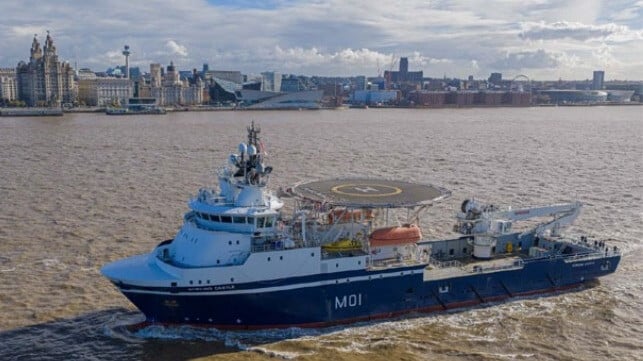
Royal Navy Starts Trials with Repurposed PSV Transferred from RFA

Royal Navy minehunter Stirling Castle
Stirling Castle now underway for the Royal Navy after a transfer from the RFA (Royal Navy)

Published Oct 26, 2025 3:08 PM by The Maritime Executive


The former commercial vessel that was repurposed in 2023 by the Royal Fleet Auxiliary as a “mothership” to host various autonomous minehunting systems has now resumed operations for the Royal Navy. HMS Stirling Castle sailed for the first time under the trademark White Ensign as a Royal Navy warship after a difficult period with the RFA.

The United Kingdom government acquired the ship in 2023 at a cost of $50 million from the Norwegian company Island Offshore. She had begun life as an offshore support vessel named MV Island Crown, built by Vard in 2013. Measuring 317 feet, the ship offered services in the oil and gas and wind sectors. 

Following her acquisition by the Ministry of Defence, she underwent conversion at HM Naval Base Devonport, where she was transformed into a vessel dedicated to support mine hunting missions under the operations of RFA, a civilian-manned naval auxiliary fleet that provides logistical and operational support to the Royal Navy and Royal Marines.

Due to insufficient manpower as well as reports in the media of mechanical problems, Stirling Castle, however, only completed a few missions and spent much of her time idle. Navy Lookout reported in August 2024 she had been idled due to problems with her deck crane. In July 2025, she was formally commissioned into Royal Navy service. 

According to the Royal Navy, the past four months have been instrumental in preparing the ship for her new role. Her 55 crew, alongside RFA personnel, are said to have worked tirelessly to prepare the ship for sea, conducting essential maintenance, safety checks, and training to ensure she was ready for operations. With those checks and sea safety training now complete, she was ready to take on her role in the Royal Navy as a minehunter.

“Taking Stirling Castle out of lay-up and getting her back into service in just four months has demanded extraordinary things from my team,” said Commanding Officer, Commander Phillip Harper. Stirling Castle, he notes, recently sailed for the first time for the Royal Navy. She is undertaking a series of trials and assessments, as well as conducting training.

When fully operational in the coming weeks, the ship is expected to significantly enhance the Royal Navy’s mine hunting capabilities. Specifically, she will be carrying high-tech equipment, including autonomous surface and underwater vehicles, for specialist mine hunting operations primarily in UK waters. 

Stirling Castle was part of an effort launched by the Royal Navy to move away from traditional minehunting. A year ago, the Royal Navy disbanded its autonomous systems testing team and folded its functions into the fleet, ending a decade of R&D effort. Stirling Castle will now use cutting-edge technology and act as a mothership for an array of remotely operated and autonomous systems that will scour the vast UK waters looking for mines.

Later this year, Stirling Castle will undertake operational sea training, including with the vessel’s autonomous surface and underwater vehicles. Currently, the ship is still in her original blue and white colors, but the Royal Navy reports there are plans in the future to have the ship repainted in gray, the color of Royal Navy ships for more than a century.

NGOs Sue to Protect Whales from Ships Docking in California’s Ports

Whales are dying preventable deaths It shouldn’t take another lawsuit to force federal officials to fulfil mandated duties

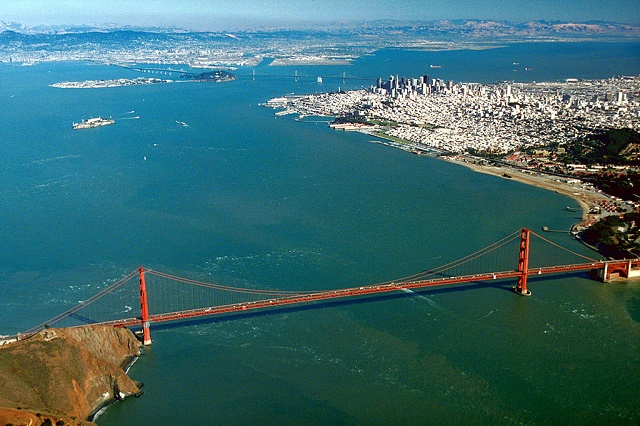
San Francisco Bay
San Francisco Bay

Published Oct 26, 2025 7:36 PM by The Maritime Executive


The never-ending controversy over commercial ships' threats to endangered whales and other species in the Californian waters has flared up again after conservationist groups sued the Trump administration for failure to protect the mammals.

With reports showing that at least 10 gray whales have been killed by probable ship strikes in the San Francisco Bay Area so far this year, while several more whales have died from undetermined causes, the Center for Biological Diversity and Friends of the Earth now wants the courts to compel the administration to impose strict navigation rules to contain strikes from ships docking in California’s major ports.

The lawsuit filed against the National Marine Fisheries Service and the U.S. Coast Guard also targets air pollution from vessels. The case will be heard in the U.S. District Court for the Northern District of California.

The non-governmental organizations (NGO) argue in the lawsuit that California’s shipping lanes overlap with important feeding grounds for blue, fin, humpback, and Southern resident killer whales, as well as critically endangered leatherback sea turtles.

Owing to the failure by the federal agencies to reroute lanes or impose restrictions on ship speeds, the suit argues that the number of fatal ship collisions with the endangered species has been on the rise. Records show that ship strikes are now the leading cause of death for blue and fin whales off the California coast, besides being the second-largest mortality source for humpback whales. Between July and November, ship strikes are believed to cause over 80 deaths of large whales annually.

Considering the carcasses of whales and sea turtles killed by collisions often sink before stranding or washing up ashore, it is estimated that the actual number of ship strikes could be 10 or 20 times higher than the documented strandings suggest.

The NGO also contends that apart from causing deaths, underwater noise pollution and risks of oil spills also threaten the survival of the mammals. It cites the Southern Resident killer whales, which need to echo locate prey but noise pollution interferes with their communication and can mask sounds for hunting. In effect, reduced prey availability has become one of the primary threats to their sustainable existence.

“Commercial shipping is proving deadly to whales and sea turtles, but it doesn’t have to be that way if federal officials get their act together,” said David Derrick, Center for Biological Diversity staff attorney. “Rerouting and slowing ships in hotspots can prevent strikes, curb noise and air pollution and save endangered marine life”.

He added that the Trump administration is legally required to look at how to minimize harm to whales and sea turtles, and officials need to take this problem seriously and make a plan.

In filing the lawsuit, the two NGOs have been emboldened having won another lawsuit in December 2022 in which the courts admonished the federal agencies for failure to protect endangered whales from being struck by ships using ports in the Los Angeles, Long Beach, and San Francisco Bay regions. The ports of Long Beach and Los Angeles alone record about 4,000 vessel calls annually. 

Despite the high numbers of commercial ships in the California waters, existing designated shipping lanes route shipping traffic through several “hot spots” where whales congregate, including the Santa Barbara Channel and the northern approach to the San Francisco Bay. For this reason, the agencies are being accused of failure to implement measures, including imposing mandatory speed limits to reduce ship strikes and cut down on air pollution.

“Whales are dying preventable deaths,” said Hallie Templeton, Friends of the Earth legal director. “It shouldn’t take another lawsuit to force federal officials to fulfil mandated duties to assess and manage risks to whales from shipping traffic, yet here we are.”

Saudi’s RSGT Finalizes 30-Year Lease of Djibouti’s Tadjourah Port

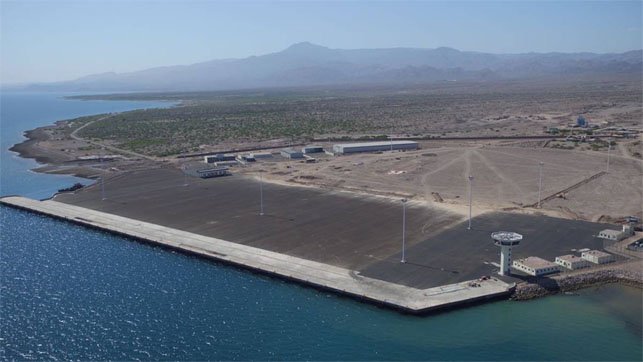
Djibouti port Tadjourah
The port was developed to provide Djibouti with a modern facility (Tehnital)

Published Oct 26, 2025 6:40 PM by The Maritime Executive


The Middle East-based terminal operators continue to expand their footprint in Africa, with governments in the region opening ports to private investors. Last week, Saudi Arabia’s Red Sea Gateway Terminal (RSGT) signed a 30-year concession agreement with Djibouti Ports and Free Zones Authority (DPFZA) to operate and develop the Port of Tadjourah. The concession builds on a memorandum of understanding (MoU) signed by the two parties in March. The MoU set out cooperation between Djibouti and Saudi Arabia in the maritime and logistics sectors.

Tadjourah port was commissioned in 2017 as part of Djibouti’s government plan to expand transport infrastructure in northern Djibouti. The port was also built to facilitate potash exports from Ethiopia, mined in the Danakil Depression of the Afar region. Other Ethiopian general cargo exports processed at the port include livestock and sesame.

Under the 30-year concession deal, RSGT has pledged to transform the Port of Tadjourah into a multi-purpose terminal of choice in the region. The operator projects that in the next few years the port will reach a handling capacity of five million tons per year, enhancing its status as a gateway for Ethiopia’s general cargo imports and exports.

“The collaboration between RSGT and DPFZA in the development of the Port of Tadjourah will further consolidate Djibouti’s strategic position as a leading logistics and maritime hub in the Horn of Africa and the Red Sea,” said DPFZA.

In addition, the RSGT concession comes at a time when there are plans to expand multi-modal connections to Tadjourah port. Last week, the Ethiopian Railway Corporation announced plans for a $1.58 billion standard-gauge railway intended to connect Northern Ethiopia to the Red Sea ports of Tadjourah, Assab, and Massawa. These ports offer the closest sea access for Ethiopia’s Afar and Tigray regions, which are seeing growth in the potash mining sector.

The proposed extension of the railway to Tadjourah port is part of the existing Ethiopia-Djibouti line, completed in 2017. The route is currently served by the Tadjourah-Balho-Mekelle highway. The northward expansion of the Ethiopia-Djibouti railway to reach Tadjourah will go a long way in accelerating growth for the port. 


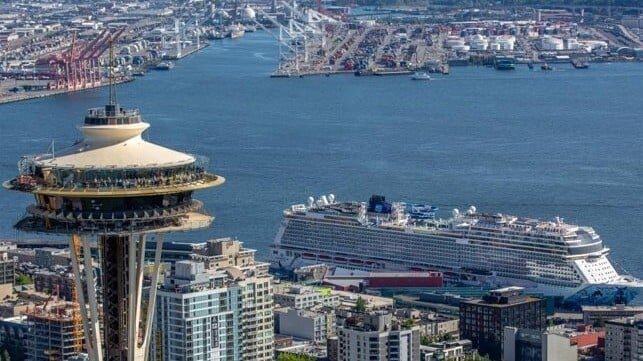
Seattle's Cruise Season Ends with Record Passenger Numbers

Port of Seattle

Published Oct 26, 2025 9:29 PM by The Maritime Executive


[By Port of Seattle]

The Port of Seattle announced today the completion of the 2025 cruise season. The record cruise season delivered an estimated $1.2 billion in regional economic benefit, while providing more than 5,120 individuals direct and indirect jobs throughout the season. The season also saw a record number of passengers and sailings, plus significant shore power use by ships in berth:

  • 298 total ship calls across 8 home port cruise brands operating 14 different ships
  • 1.9 million revenue passengers
  • 2025 set a new record with 65% of ships utilizing shore power at berth as the Port approaches the 2027 date for 100% utilization by homeported ships
  • The Port supported Carnival Corporation in the first biofuel demonstration project in the Seattle cruise market, testing biofuel bunkering on three Holland America Line sailings
  • Cruise ships made 23 sailings to destinations other than Alaska including Mexico, Hawaii, New Zealand, and Asia, plus coastal cruises along the Pacific Northwest

“Seattle set new standards this season on environmental sustainability and economic development by focusing on a shared vision across the Port and our cruise partners,” said Port of Seattle Executive Director Steve Metruck. “We are not just preparing for the future — we are building it. With major infrastructure investments we are preparing for the 2027 requirement that all home port ships connect to shore power at the dock. Through our Pacific Northwest to Alaska Green Corridor and partnership work we are advancing market development for alternative maritime fuels such as green methanol and renewable biodiesel. Our cruise line partners are making deeper investments locally as well to expand economic activity, the impact of which we estimate to be worth $1.2 billion each year. We end this season in a very strong position and look forward to an even better 2026.”

During the season, the Port was proud to welcome Cunard’s Queen Elizabeth for its first Seattle home port season. Queen Elizabeth, whose maiden call was on June 12, operated 11 roundtrip voyages out of Seattle and will return in 2026.

“Seattle is a premier home port for unforgettable Alaska cruise experiences, and the cruise industry is proud to bring significant economic impact to the region while showcasing the Pacific Northwest’s beauty, attractions, local businesses, and stunning new Waterfront Park,” said Sally Andrews, Vice President of Communications for Cruise Lines International Association (CLIA). “As the 2025 season ends, we celebrate another successful year of collaboration, innovation, and advancing sustainability goals.”

This year also marked the first time shore power was available at all three cruise berths. Sixty-five percent of ships plugged into the shore power, up from 42% in 2024, avoiding an estimated 1.67 tonnes DPM (diesel particulate matter) and more than 6,185 tonnes of CO2e from emissions. This shore power utilization demonstrates how the Port and its cruise line partners are meeting the evolving environmental needs and capabilities of the cruise industry.

Seattle continues its Port Valet program, which transfers bags directly from cruise ships to SEA, giving cruise visitors an opportunity to explore Seattle’s unique sights, sounds, and flavors before they head to the airport. This year, the service handled over 200,000 bags, allowing thousands of cruisers to enjoy the city luggage-free. Looking ahead, the 2026 cruise season will feature two new homeported brands when Virgin Voyages Brilliant Lady and MSC Cruises Poesia arrive in Seattle. A preliminary 2026 cruise schedule is available for download from the Port’s website.

The products and services herein described in this press release are not endorsed by The Maritime Executive.


Report: Japan and U.S. to Sign Memorandum on Shipbuilding Cooperation

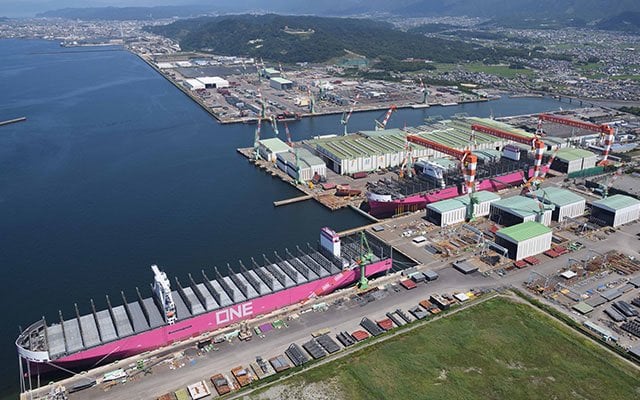
Imabari Shipbuilding
Japan and the U.S. will cooperate on a shipbuilding and repair cooperation (Imabari Shipbuilding)

Published Oct 26, 2025 5:38 PM by The Maritime Executive


Japan is prepared to sign a memorandum with the United States providing additional details on the investment in shipbuilding that was continued in the countries trade talks. The Yomiuri Shimbun news outlet reports the signing is likely to happen on Monday, October 27, time to Donald Trump’s visit to Japan, which will also see the two countries’ leaders sign a memorandum for greater cooperation.

Japan committed to an investment of $550 billion in the United States during its prolonged trade talks with the Trump administration. Like South Korea, Japan dangled investment and cooperation with its shipbuilding industry as one of the elements to win a more favorable trade agreement. While Japanese shipbuilding has seen its market share slip dramatically in the past two decades, it still remains the world’s third-largest shipbuilder, and the government is providing financial support for projects developing new technologies for shipping.

The Yomiuri Shimbun reports the new agreement calls for the formation of a Japan-U.S. shipbuilding working group that will focus on investments that can be made to make the shipbuilders more efficient and competitive. They call for considering standardizing ship design and parts, and possibly having Japan design parts that could be produced in the United States. By standardizing designs, they propose that the countries could repair each other’s ships.

Another part of the cooperation focuses on new technologies. The report cites the use of AI to improve ship design and functionality.

The Japanese government has called for large investments into its shipbuilding industry. Last week, the country’s shipbuilders’ association, which represents 17 leading companies, said the companies were prepared to invest approximately $2.3 billion using their own financing. They are calling for the government to provide the remainder to reach the goal of a $6.5 billion investment in the industry by 2035.

The government views shipbuilding as a critical sector. It is anxious to combat China’s dominance of the sector, and working with the U.S. could help to increase market share. The U.S. Navy has occasionally used Japanese shipyards to make repairs on vessels. Japan’s Mitsubishi Heavy Industries highlighted in May 2025 that it was completing the first large-scale maintenance contract bid on and won for a U.S. Navy vessel. It was part of the Navy’s strategy to make more repairs locally for forward-deployed vessels.

Japan remains a builder mostly of containerships, dry bulk, and tankers, with it receiving approximately 8 percent of global shipbuilding orders in 2024. 


Hyundai and HII Expand Relationship Targeting US Navy and Commercial Ships

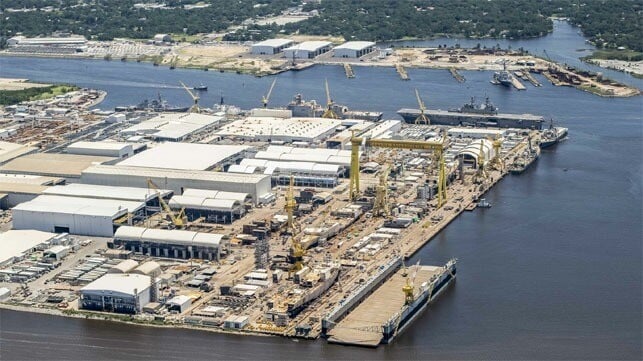
Inglass Shipbuilding Mississippi
HII's Ingalls Yard in Mississippi is the focus on the opportunities for the US Navy and comemrcial shipbuilding (HII)

Published Oct 26, 2025 12:52 PM by The Maritime Executive


HD Hyundai Heavy Industries, South Korea’s largest shipbuilder, and HII (Huntington Ingalls Industries) signed an agreement designed to further expand their cooperation in shipbuilding and repair, as they target the U.S. Navy and commercial shipping. It is the next step in support of a relationship was launched this year, designed to take advantage of the opportunities in South Korea’s Make American Shipbuilding Great Again initiative.

HII and HHI signed the agreement at the Asia-Pacific Economic Cooperation forum to advance their joint objectives in the shipbuilding dialogue between the United States and South Korea. As part of the trade negotiations, South Korea pledged earlier this year to invest $150 billion in the U.S. shipbuilding industry as part of a larger $350 billion investment to support the United States. South Korea’s HD Hyundai and Hanwha Ocean are the two shipbuilders moving most aggressively to capture the opportunities.

Hyundai and HII cite the exploration of joint investments to strengthen and expand U.S. shipbuilding as one of their key goals. They are also discussing “strategic teaming” opportunities and plan to collaborate on engineering, R&D, and technology implementation. 

“This marks the beginning of deeper collaboration between not only our companies, but each of our countries, that will support enduring changes to military and commercial shipbuilding in America,” said Eric Chewning, HII’s executive vice president of maritime systems and corporate strategy. “We look forward to working collaboratively with HHI, the U.S. and South Korean governments, and with our customers to transform the U.S. shipbuilding industrial base and enable accelerated throughput in our shipyards.”

The agreement follows an announcement that the two shipbuilders were jointly pursuing the assignment for the U.S. Navy’s next-generation logistics ship. The Navy recently released a request for proposals for the design contract. 

They look to leverage HII’s strong relationship with the U.S. Navy and HHI’s track record of building auxiliary vessels. The South Korean company highlights that it delivered its first auxiliary vessels, HMNZS Endeavour in 1987 and the new HMNZS Aotearoa in 2020, both to the Royal New Zealand Navy. Hyundai also cites three Cheonji-class and one Soyang-class auxiliary ships supplied to the South Korean Navy.

The two companies announced their partnership in April, reporting they would be focusing on best practices to improve cost efficiency and shorten construction schedules. They have also said they were exploring opportunities to expand U.S. shipbuilding capacity for national security, and HD Hyundai has been reported to be considering buying a U.S. shipyard.

Hyundai says it is committed to strengthening the U.S. Navy Indo-Pacific in-theater ship lifecycle support. After being certified in 2024 to bid in the U.S. Navy’s MRO (Maintenance, Repair, and Overhaul) business, HD Hyundai began its first repair assignment in September 2025 on the support ship USNS Alan Shepard at its HD Hyundai Mipo yard in Ulsan, South Korea.


HD KSOE Awarded DNV AIP for SMR-Powered Container Vessel Design

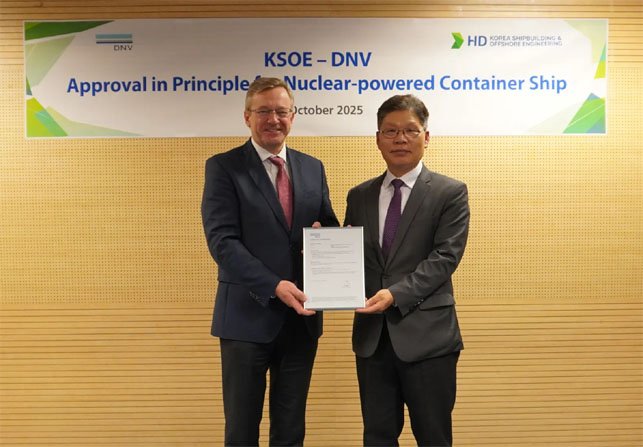
DNV HHI AIPI ceremony

Published Oct 26, 2025 8:37 PM by The Maritime Executive

[By DNV] 
 
Classification society DNV has awarded HD Korea Shipbuilding & Offshore Engineering (HD KSOE) an Approval in Principle (AiP) for a new 15,000 TEU container vessel design powered by Small Modular Reactor (SMR) technology. The presentation was attended by Sungkon Han, Executive Vice President of the Green Energy Research Lab at HD KSOE, Geir Dugstad, Technical Director at DNV, and Ole Christen Reistad, Senior Principal Researcher and nuclear research lead at DNV, who discussed the outcome of the project and the potential for nuclear-powered shipping at DNV’s Busan offices.

The design demonstrates the application of SMR technology in a 15,000 TEU container vessel, capable of operating at 24 knots. The vessel concept incorporates a supercritical CO?-based power generation system, which can provide higher thermal efficiency and a reduced equipment footprint compared to conventional steam-based systems. DNV has reviewed the conceptual design of the nuclear-powered ship in line with the relevant rules and regulations and the safety levels as outlined in SOLAS Ch. VIII and the IMO Code of Safety for Nuclear Merchant Ships.

Dr. Kwangpil Chang, CTO of HD KSOE, commented on the project: “This SMR-powered container vessel concept represents a key milestone in our efforts to explore alternative fuels for decarbonizing shipping. The design focuses intensely on the safety of the vessel and advancing the propulsion system in the application of SMR technology. In addition, we have developed a novel shielding and containment system, which is designed to maintain reactor safety and vessel survivability even in the event of collisions, groundings, or sinking accidents. We will continue to collaborate with global partners to advance marine nuclear technologies.”

During the development of the ship design concept, the DNV team worked closely with HD KSOE to assess the vessel’s overall safety and the design of the advanced power generation system. This review includes the vessel’s main functions, power supply and overall approach to safety. In May 2025, HD KSOE and DNV also conducted a HAZID (Hazard Identification) workshop at DNV’s headquarters in Oslo to identify potential risks and accident scenarios for nuclear-powered vessels and to guide improvements in the design.

Geir Dugstad, Technical Director at DNV, commented: “Shifting environmental requirements and advances in technology are reigniting interest in nuclear propulsion as a potential solution for maritime decarbonization. But with little recent experience in utilizing nuclear power for cargo vessels, this AiP represents an important first step in building the technical verification process for nuclear-powered vessels. We are very pleased to award KSOE this new AiP, which is the well-deserved result of an intensive and productive cooperation, which we look forward to continuing as this exciting technology continues to develop.”

DNV recently released a new white paper on the potential of nuclear vessels for commercial shipping. It examines the reactor technologies, vessel construction and operation, fuel management, waste handling, and the oversight of nuclear supply chains.

An Approval in Principle (AiP) is an independent assessment of a concept within a defined framework of requirements. It confirms the feasibility of the design and verifies that no significant technical barriers exist to its implementation.
 

The products and services herein described in this press release are not endorsed by The Maritime Executive.