Monday, October 27, 2025

Norway Leads Global EV Adoption

  • The global market for battery electric vehicles (BEVs) exceeded 10 million annual sales in 2024, marking a nearly 10 percent increase from 2023, with China also achieving a milestone of over one million electric cars sold in a single month in May 2025.

  • Norway leads the world in electric vehicle adoption, with over 90 percent of newly registered passenger cars being electric in the first half of 2025, while Denmark and the Netherlands also show high market shares, contrasting with the United States' lower adoption rate.

  • Norway's highly effective policy measures, such as tax and toll exemptions, are not easily transferable to other countries due to its unique economic conditions, including high vehicle import duties and a high median household income.

With sales continuing to thrive in many countries, the global market for battery electric vehicles (BEVs) surpassed the 10 million annual sales mark for the first time in 2024, with sales up nearly 10 percent compared to 2023. More recently, in May 2025, China also reached a major milestone, with over one million electric cars sold in a single month, according to the International Council on Clean Transportation (ICCT).

While China unsurprisingly dominates the global market in terms of sales volume, some European countries still lead the way in terms of adoption (looking at the share of BEVs in new car sales).

As Statista's Tristan Gaudiaut details below, for several years now, Norway has been a notable exception at the top of the list: in the first half of 2025, according to data compiled by PwC, more than 90 percent of newly registered passenger cars in that country were electric, a record.

Infographic: Electric Mobility: Norway Leads the Charge | Statista

You will find more infographics at Statista

Reflecting the rapid adoption of electric mobility in Northern Europe, Denmark and the Netherlands also have some of the highest market shares: 63.6 percent and 35.0 percent, respectively (between one and two out of every three new vehicles sold). Outside Europe, China leads the way in terms of adoption, with a BEV share of 29.8 percent in the first half of the year (including commercial vehicles). In comparison, the United States lags with a BEV share of just 7.3 percent.

While Norway’s policy measures (such as tax exemptions, toll exemptions, and other incentives) did prove highly effective in promoting electric cars, the Norwegian model cannot be easily transferred to other countries.

First and foremost, this country imposes hefty vehicle import duties and car registration taxes, making cars significantly more expensive than, say, in the United States. By waiving these duties for electric vehicles, Norway is effectively subsidizing EV purchases at a level that a larger country such as the U.S. couldn’t afford.

Secondly, Norway is a very wealthy country (ironically, thanks to its oil reserves) with a high level of income.

According to Norway's national statistical institutethe country’s median household income after taxes was around $64,000 in 2025, which is roughly level with the United States but significantly higher than the EU average.

By Zerohedge

By 

A new study reveals significant gaps in how investments are allocated in the governance of Norwegian forests. Several essential forest ecosystem services remain underfunded or neglected.


Economic instruments like subsidies and tax reliefs are widely used to promote forest ecosystem services. However, such instruments typically target services traded in markets, such as timber and hunting licenses. Non-market services like habitat provision and climate regulation are declining worldwide.

With Norway as a case, researchers have mapped economic instruments used in Norwegian forest governance and examined how they promote or constrain forests’ capacity to provide different ecosystem services (see facts below).

Data was collected from a review of policy documents and fiscal budgets, compared with data on trends and condition of ecosystem services from Norwegian forests.

Facts: Ecosystem Services – The Benefits of Nature

Forests play a vital role in supporting people and societies by delivering a wide range of ecosystem services—the benefits we receive from nature:

Provisioning services are the tangible goods forests supply, such as timber, food, and clean water.


Regulating services act as nature’s life-support systems, including carbon storage, water purification, soil formation and nutrient cycling.

Supporting services are the fundamental processes that make life possible, such as habitat provision for species.

Cultural services represent the non-material benefits of nature—recreation, a sense of place, and spiritual or cultural values that enrich human life.

Together, these services illustrate how forests are not just sources of raw materials, but also the foundation of human well-being, biodiversity, and resilience in the face of environmental change. When ecosystems are degraded, these services decline, compromising society’s life support systems.

Focus on Marketable Goods

The study reveals that ecosystem services traded in markets attract the majority of investments in Norwegian forests, with timber alone generating almost 600 million euros annually. Hunting licenses contribute an additional 70 million euros per year, while government funding and tax relief schemes that promote timber production amount to an additional 38 million euros per year.

“In contrast, ecosystem services that are harder to quantify and that do typically not enter market exchanges receive a fraction of investments compared to timber”, says Elisabeth Veivåg Helseth, head author and researcher at The Norwegian Institute for Nature Research (NINA).

An exception is the government expenditure to promote habitat protection through ‘voluntary forest conservation’, amounting to 43 million euros per year.

A Call for a More Balanced Approach

The continuous promotion of timber production, both through markets and public spending, constrains forests’ capacity to supply several regulating, cultural, and supporting services. For example, industrial forestry practices are often associated with clear-felling and infrastructure development, which negatively affect the long-term capacity of forests to provide essential services like nutrient cycling, regulation of extreme events, and habitat.

The study also found no economic instruments directly targeting cultural ecosystem services aimed at revitalizing local, cultural relationships between people and forests.

This disparity suggests that Norwegian forest governance remains heavily focused on provisioning ecosystem services, with limited investment in cultural, regulating, and supporting services.

“To achieve a sustainable and balanced forest governance model in Norway, we recommend reallocating funds from overemphasized provisioning services like timber production towards those ecosystem services that are in decline”, says Helseth.

Sustainability Transformation in Future Forest Governance

By viewing Norwegian forest governance through the four sustainability pathways developed by IPBES (see facts below), the study discusses the relationship between forest investments and overall societal goals and values.

Results indicate that economic instruments applied in Norwegian forest governance primarily align with a green economy pathway, increasing timber production and carbon sequestration to promote an envisioned ‘bioeconomy’.

Although the ‘voluntary forest conservation’ scheme align with a nature protection pathway by enhancing habitat for biodiversity, few of the assessed economic instruments align with policy measures associated with either a degrowth pathway (such as reducing production and consumption) or an earth stewardship pathway (such as promoting traditional knowledge and human-forest relationships).

“Based on our study, we underline that a true sustainability transformation will require more than shifting financial investments. It calls for policies that recognize the full range of forest values, biodiversity, cultural values, and the regulation of ecosystem function, ensuring that future governance goes beyond timber to reflect society’s broader goals”, Helseth concludes.

Facts: IPBES’ Sustainability Pathways

In the IPBES Values Assessment (2022), four diverging sustainability pathways were presented. They illustrate different understandings of how societies can live well while safeguarding nature:

1. Green economy / Green growth: Focuses on continued economic growth, but with a shift toward renewable energy, green technology, and more sustainable industries.

2. Degrowth: Challenges the idea that endless growth is sustainable. Emphasizes reducing consumption and production, especially in wealthy countries, to stay within planetary boundaries

3. Nature Protection: Prioritizes strict conservation of biodiversity and large areas of nature. Calls for expanding protected areas, reducing human impacts, and leaving more space for ecosystems to thrive.

4. Earth Stewardship: Emphasizes repairing and strengthening the relationship between humans and nature. Focuses on local stewardship, traditional knowledge, and community rights.

Sunday, October 26, 2025


Russia test fires its Burevestnik nuclear-powered cruise missile

Russia test fires its Burevestnik nuclear-powered cruise missile
Russia has developed a new nuclear-powered cruise missile, the Burevestnik, that President Vladimir Putin says has no analogues in the Western world / bne IntelliNews
By bne IntelliNews October 26, 2025

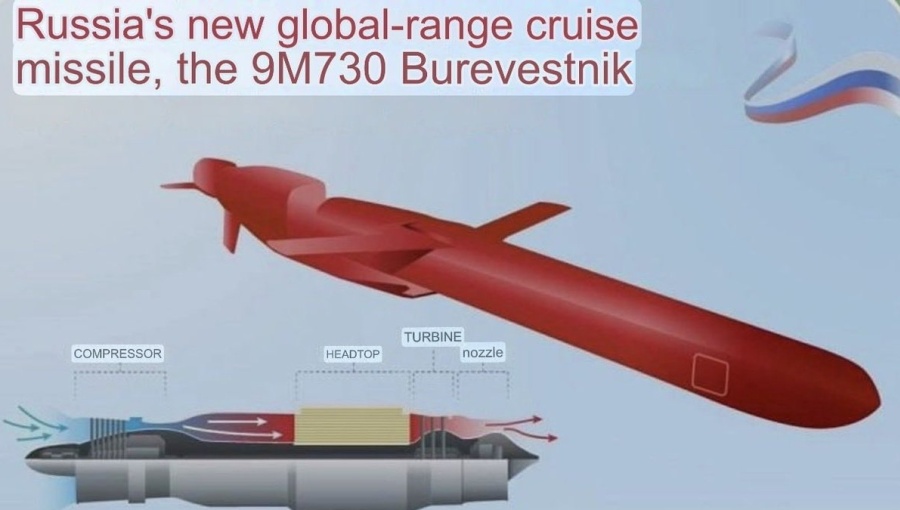
Russia’s Burevestnik nuclear-powered cruise missile has no analogues in the world, Russian President Vladimir Putin said on October 26, as the Kremlin escalates the unfolding missile arms race with Ukraine another notch.

Wearing military fatigues, Putin made the comments during a visit to one of the Russian command posts of the joint group of forces and held a meeting with Chief of the General Staff Valery Gerasimov and commanders of the battlegroups involved in the war in Ukraine.

"I have a report from the industrial bodies, and in general I am familiar with the estimates of provided by the defence ministry. It's a unique product that no one else in the world possesses," the Russian president said.

"I remember quite well when we announced that we were in the development stage of such weapons and even high-level experts told me that it worthy objective indeed, but in the historical short term was unrealisable. I reiterate that this opinion was voiced by high-class experts," Putin added.

Russia successfully tested the nuclear-powered and nuclear-capable Burevestnik cruise missile, which Putin says can pierce any defence shield, and will now deploy the weapon.

The test was part of a nuclear drill last week and is designed to send a message to Washington that is toying with the idea of supplying Ukraine with equally powerful Tomahawk cruise missiles. In his remarks in a televised meeting, Putin said that Russia will “never bow to pressure” from the West over the war in Ukraine as US President Donald Trump hardened his line against Russia again last week, imposing the first sanctions on Russia since he took office in January with oil sanctions on Russia’s two biggest oil companies.  

Gerasimov, a close Putin ally, told Putin that the 9M730 Burevestnik (Storm Petrel) - dubbed the SSC-X-9 Skyfall by Nato - flew 14,000 km and was in the air for about 15 hours during a test on October 21. Putin called it "invincible" against current and future missile defences, with an almost unlimited range and unpredictable flight path.

The Burevestnik was first mentioned in 2018, according to Reuters, when it was cast in response to moves by the United States to build a missile defence shield after Washington in 2001 unilaterally withdrew from the 1972 Anti-Ballistic Missile Treaty, and to enlarge the Nato military alliance.

Ukraine's missiles

Ukraine has been throwing its efforts into developing missiles to counter Russia’s overwhelming advantage in long-range cruise and ballistic missile production. It has already developed the Neptune sea-launched, which was used early in the war to sink Russia’s Black Sea flagship, the Moskva in April 2022. Since then the missile has been adapted for land use.

Ukraine also developed the Palyanytsia cruise missile, but it has limited range and has since been superseded by the powerful and long-range Flamingo cruise missile which has a 1,200kg payload and range of more than 3,000km that can threaten strategic targets deep inside Russia as well Moscow itself.

Ukraine developed the missile, which uses generic engines produced by local aviation plant Motor Sich, in only nine months. As a result, the cost of the missile is a very affordable $400,000 each and the factory is already producing seven a day with the hope of rapidly increasing the output.

For comparison, Russia produced 1,200 missiles of various sophistication last year, but with heavy investment, the Kremlin says that will increase to 2,500 this year.

While the Flamingo is a welcome addition to Ukraine’s arsenal, and goes someway to compensating for the US decision to provide Kyiv with its powerful Tomahawk missiles. Ukraine’s Western allies remain reluctant to send Ukraine really powerful missiles that can fly deep into Russian territory as part of its “some, but not enough” escalation containment strategy of support. Likewise, German Chancellor Friedrich Merz has refused to supply Ukraine with its powerful Taurus cruise missile. France and the US have sent their Storm Shadow missiles to Ukraine, but as those went out of production 15 years ago, the stockpile has almost been depleted.

Russia ahead in missile development

For its part, Russia remains well ahead in missile development in the unfolding missile war it launched this summer. In addition to the Burevestnik, it has also developed the Oreshnik cruise missile that can hit any city in Western Europe as well as a family of new hypersonic missiles which Putin showcased in his 2018 state of the nation speech, which he claims the West has no defences against.

At the other end of the spectrum, Russia has upgraded its FAB glide bombs – WWII vintage heavy gravity bombs that can carry a devastating payload of up to 3,000kg of explosives. More recently, the Armed Forces of Russia (AFR) have put an improved FAB 500 glide bomb into service that is jet propelled, which has significantly increased its range.

Military analysts say the shortcomings of the Flamingo include the lack of satellite navigation system, which makes targeting inaccurate, and sophisticated defence capabilities. According to reports, the AFU has fired several Flamingos at Russia, but several were shot down by Russian surface-to-air defence systems.

And Ukraine has little in the way of air defences to protect itself against Russian-made missiles, almost entirely reliant on US-made Patriot missiles, where after months of exchanges, ammo supplies are running low. In recent months, the AFR has changed tactics and is flying waves of drones against key military and energy assets to deplete air defence measures before firing a salvo of missiles at the target, which has caused significant damage.

As bne IntelliNews reported, both sides have been targeting energy assets this summer with the AFU targeting Russian oil refineries, but the jury remains out on who is doing the most damage as winter looms. Ukraine is facing a dark and cold winter, but Russia’s size is its Achilles’ heel as it is simply too big to be able to protect important assets spread across its vast territory and most of its best air defence systems are deployed in Ukraine.


Putin Touts Successful Tests Of Nuclear-Powered Burevestnik Missile

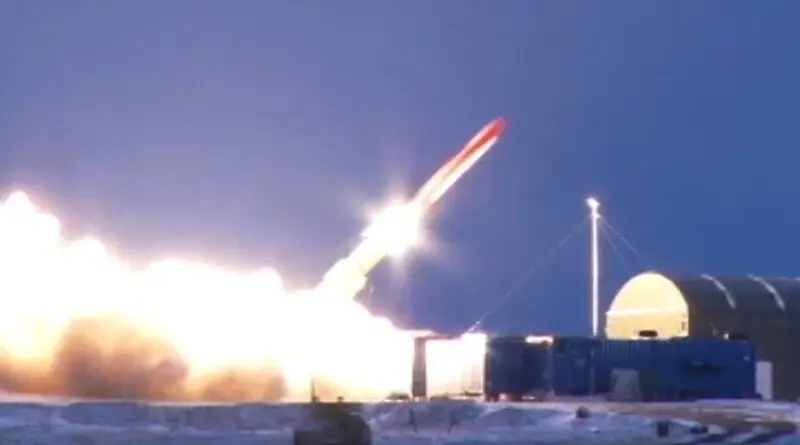
File photo of a previous test launch of Russia's Burevestnik missile. Photo Credit: Mil.ru, Wikipedia Commons

By 

President Vladimir Putin said Russia has successfully tested the nuclear-powered, nuclear-weapon capable Burevestnik cruise missile and is seeking ways to deploy it at a time when the Kremlin’s war in Ukraine drags on.

The Kremlin published a video on October 26 of a meeting between Putin and Chief of the General Staff, General Valery Gerasimov, which reportedly took place at a command post of the joint group of forces.

Gerasimov said the test occurred five days earlier, when the missile, which Moscow claims cannot be detected by any defense system, traveled 14,000 kilometers (8,700 miles) and was in the air for about 15 hours.

The missile, dubbed Skyfall by NATO, has been under development for more than a decade. It’s one of several new systems Russian designers have focused on as the Kremlin pours money into weapons development as part of a not fully recognized arms race — mainly against the United States.

“The decisive tests are now complete,” Putin said in the video, adding he has ordered the preparation of “infrastructure to put this weapon into service in the Russian armed forces.”

The advancement of the project comes after Putin’s war on Ukraine entered its 45th month with Russian troops grinding out incremental gains.

Kyiv has been pushing the United States and its Western allies to provide longer-range weapons such at Tomahawk missiles to allow Ukraine to strike deeper into Russia as it tries to gain an upper hand in the war and strengthen its position in any peace talks, which currently appear to be stalled.

The Burevestnik is powered essentially by a small nuclear reactor built into the engine, theoretically enabling it to stay aloft for days. The United States researched the possibility of such a weapon in the 1960s, but abandoned it as dangerous and unfeasible. 

The missile has drawn particular attention from arms control and intelligence experts, partly because of the technology but also its past failures.

botched bid to recover a sunken missile — thought to be a Burevestnik — caused a radiation blast in the White Sea in 2019, killing five people, documents, photographs, satellite imagery, and other open-source materials reviewed by RFE/RL showed. 

Russia’s state nuclear agency, Rosneft, later said five technicians had been killed in the incident. And US officials confirmed the radiation plume was caused during the recovery of a nuclear-powered missile.

Putin’s announcement comes as the New START treaty, which limits US and Russian nuclear forces to 1,550 strategic warheads and 700 strategic launchers deployed on each side, is set to expire early next year.

The Russian leader recently offered to voluntarily respect the treaty’s limits for one year, a proposal US President Donald Trump said “sounds like a good idea to me.”


Paris Court Dismisses Most Greenwashing Claims Against TotalEnergies

TotalEnergies SE (NYSE: TTE) said Friday that the Paris Judicial Court dismissed the majority of claims brought against it in a high-profile greenwashing case, rejecting accusations that the company’s corporate and institutional communications misled consumers about its environmental commitments.

The ruling, which focused on TotalEnergies’ statements about its carbon neutrality ambitions, ordered the company’s French affiliate to remove three paragraphs from its customer-facing website. The court found that the removed content failed to reference the internal energy transition scenario underpinning TotalEnergies’ multi-energy strategy.

However, the court rejected key allegations concerning TotalEnergies’ 2021 rebranding campaign and broader communications about the role of natural gas and biofuels in the energy transition—both central themes in the company’s strategy. No advertising by TotalEnergies or its affiliates was condemned, contrary to some earlier media reports.

TotalEnergies said it will not appeal the ruling, adding that it plans to replace the removed paragraphs with factual updates highlighting its progress in implementing its multi-energy strategy. The company reiterated its view that the decision confirms the overall integrity of its public communications.

The French energy major also used the occasion to spotlight its domestic and global investments in low-carbon energy. Since 2020, TotalEnergies has invested more than €20 billion worldwide—including €4 billion in France—across renewables, biofuels, electricity, and EV charging. It now operates 32 GW of gross installed renewable capacity and produces 50 TWh of electricity annually, equivalent to about fifteen nuclear reactors.

In France, the company has built a 2 GW renewables portfolio spanning 430 wind and solar projects, serves 4.2 million electricity and gas customers, and leads the motorway EV charging market with nearly 1,900 fast chargers. It has also invested close to €1 billion in two biorefineries producing biofuels and sustainable aviation fuel, while developing 117 agrivoltaic projects totaling almost 2 GW.

Globally, TotalEnergies said it has reduced greenhouse gas emissions from its operated oil and gas facilities by 36% since 2015 and cut methane emissions by 55% since 2020.

The court’s decision comes amid mounting scrutiny of oil and gas companies’ climate claims in Europe, where regulators and environmental groups have targeted corporate “greenwashing” in advertising and investor communications. In recent years, TotalEnergies and its peers have faced lawsuits seeking to challenge the credibility of their net-zero and transition strategies.

Despite ongoing criticism, TotalEnergies defended its record, emphasizing that it continues to balance energy security, affordability, and decarbonization goals. “Regardless of those who accuse us of greenwashing, we are proud to make every effort to serve our customers every day and to help build the energy system of tomorrow,” the company stated.

By Charles Kennedy for Oilprice.com