Thursday, October 30, 2025


World’s leading medical journal details the climate emergency


The Lancet Countdown on Health and Climate Change


University of Sydney


New global findings in the 2025 Lancet Countdown on Health and Climate Change reveal that the continued overreliance on fossil fuels and failure to adapt to climate change continues to be paid in people’s lives, health, and livelihoods, with 13 of 20 indictors tracking health threats now reaching unprecedented levels.


The University of Sydney’s Heat and Health Research Centre contributed to the global report of the Countdown, which is published annually by The Lancet, the world’s leading medical research journal and is regularly among its most highly cited articles.


The annual indicator report, now in its ninth year, informs government policy globally with respect to climate change. It covers 50+ indicators tracking the impacts of, and efforts to adapt to, the ongoing health effects of climate change globally across five working groups, representing the work of 128 leading experts from 71 academic institutions and UN agencies globally. 


Findings of 2025 report


This year’s report indicates: 


  • 2.5 million deaths every year being attributable to the air pollution that comes from continued burning of fossil fuels. 


  • Heat-related mortality per 100,000 increased by 23 percent since the 1990s, with total heat-related deaths reaching an average of 546,000 annually between 2012 and 2021


  • The year 2024 was the hottest on record. Worldwide, the average person was exposed to a record extra 16 health-threatening hot days owing directly to climate change, with the most vulnerable (those aged under 1 year and over 65 years) experiencing, on average, an all-time high of 20 heatwave days - a 389 percent and 304 percent increase, respectively, from the 1986–2005 yearly average.


  • Hotter and dryer conditions have fuelled conditions for wildfires, with fine particle pollution (PM 2.5) from wildfire smoke resulting in a record 154,000 deaths in 2024 (up 36 percent from the 2003–2012 yearly average).


  • Heat exposure resulted in a record 639 billion potential hours of lost labour productivity in 2024, with income losses equivalent to US$1.09 trillion (almost 1 percent of global GDP). At the same time, the costs of heat-related deaths in those over age 65 reached an all-time high of US$261 billion.


  • Droughts and heatwaves increased the number of people experiencing moderate or severe food insecurity by 123 million in 2023, compared to the annual average between 1981 and 2010.


  • Across 65 countries with low access to clean energy, air pollution from the household use of dirty fuels resulted in 2.3 million avoidable deaths in 2022; including some of the 2.52 million deaths still attributable to ambient air pollution from the burning of fossil fuels globally. 


  • High-carbon, unhealthy diets contributed to 11.8 million diet-related deaths in 2022, which could largely be avoided by transitioning to healthier, climate-friendly food systems.


  • Over 128 million hectares of forest were destroyed in 2023 (up 24 percent since 2022), diminishing the world’s natural capacity to mitigate climate change.


  • 15 out of 87 countries responsible for 93 percent of global CO2 emissions spent more on net fossil fuel subsidies than their national health budgets in 2023.


  • Governments collectively spent $US956 billion on net fossil fuel subsidies in 2023. Meanwhile oil and gas giants keep expanding their production plans – to a scale three times greater, on projected production, by 2040 than a liveable planet can support. 


  • Private banks are supporting fossil fuel expansion, with the top 40 lenders to the fossil fuel sector collectively investing a five-year high of $US611 billion in 2024 (up 29 percent from 2023). This exceeded their green sector lending by 15 percent. 


Positive action


The report also details actions local governments, individuals, civil society, and the health sector are undertaking to shape a healthier future including: 


  • A growing number of cities (834 of 858 reporting in 2024) have completed or intend to complete climate change risk assessments. 


  • The health sector itself has shown climate leadership, with health-related greenhouse gas emissions falling 16 percent globally between 2021 and 2022.


  • Almost two-thirds of medical students around the world received climate and health education in 2024, building capacity for further progress.


  • An increased shift away from coal, particularly in wealthy countries, prevented an estimated 160,000 premature deaths yearly between 2010 and 2022, due to fine particulate air pollution from burning fossil fuels. 


  • The share of electricity generated by modern renewables reached a record-high 12 percent in 2022, with the clean energy transition generating healthier, more sustainable jobs. 


Professor Anthony Costello, Co-Chair of the Lancet Countdown warned, “As a rising number of world leaders threaten to reverse the little progress to date, urgent efforts are needed at every level and in every sector to both deliver and demand accelerated action that will yield immediate health benefits. As some governments uphold an unsustainable, unhealthy and ultimately unliveable status quo, people around the world are paying the ultimate price. We have to build on the momentum we have seen from local action: Delivering health-protective, equitable, and just transition requires all hands on deck.”


University of Sydney contribution 


Ollie Jay, Professor of Heat and Health and Director of the Heat and Health Research Centre (HHRC), is a Chair of the one of the five working groups, Working Group 1, contributing to the global report making the University of Sydney the host institution of the group. 


This group addresses all aspects of health impacts and vulnerabilities and has academic oversight of the 20 indicators associated with it, the highest number of the report, including indicators Professor Jay has led on, supported by University of Sydney HHRC researchers Dr Federico Tartarini and Associate Professor Troy Cross. 


  • heatwave exposure of vulnerable populations


  • heat and physical activity


Dr James Smallcombe, also from the HHRC is the Working Group 1 global fellow and an author on the report. 


Professor Jay said, “The findings in this year’s report are sobering, revealing that millions of lives have already been lost unnecessarily due to over-reliance on fossil fuels, rising greenhouse gas emissions, and inadequate adaptation to climate change. The imperative now is to limit future harm by placing human health at the centre of policy decisions. The HHRC at the University of Sydney is proud to be leading several contributions featured in this year’s report—driven by our team of early and mid-career researchers who represent the next generation of leaders the world urgently needs.”


The Lancet Countdown is funded by Wellcome Trust and the online launch event of the global report yesterday was addressed by speakers including:

  • Chair of the Lancet Countdown, Helen Clark
  • Director of the WHO Dr Tedros Adhanom Ghebreyesus
  • Chair of Wellcome Hon. Julia Gillard 

The 9th Lancet Countdown annual indicator report is led by University College London and is produced in strategic partnership with the World Health Organization (WHO). 


Mapping the missing green: An AI framework boosts urban greening in Tokyo


Researchers develop an AI-based spatial framework to identify where vertical greenery is most needed in Tokyo’s high-density neighborhoods


Chiba University

Mapping vertical greening across Tokyo’s 23 wards 

image: 

Researchers from Chiba University analyzed over 80,000 street-view images to map vertical greenery in Tokyo, revealing that green façades are much more prevalent than living walls. The study also identified areas where additional greenery could improve urban comfort, mitigate heat, and enhance overall city life.


view more 

Credit: Professor Katsunori Furuya from Chiba University, Japan https://www.sciencedirect.com/science/article/pii/S2210670725006729


In rapidly growing cities like Tokyo, incorporating greenery is a challenging task. With limited space for trees or parks, vertical greening—the placement of vegetation on building façades—has become a creative solution to reintroduce nature into crowded urban settings. However, until now, there has been no clear method to assess where this type of greenery is most needed or most effective.


To address this challenge, researchers from Chiba University in Japan have created a data-driven spatial framework that identifies the best locations for vertical greening throughout Tokyo's 23 wards. The study, made available online on September 6, 2025, and published in Volume 132 of the journal Sustainable Cities and Society on September 15, 2025, provides the first citywide map of vertical greenery in one of the world’s densest metropolitan areas.


The research team—led by Professor Katsunori Furuya, along with Ms. Ruochen Ma, Ms. Yunchen Xu, Ms. Yan Tang, Mr. Sihan Zhang, and Ms. Yuhui Liao from the Graduate School of Horticulture, Chiba University, Japan—used artificial intelligence to analyze more than 80,000 Google Street View images. Using a deep-learning model (YOLOv8), they detected façades featuring vegetation, such as green walls and balcony plants, to create a detailed spatial inventory of Tokyo’s vertical greening systems.


“With this study, we aimed to provide a clearer picture of how vertical greenery is distributed in dense urban areas like Tokyo and how it aligns—or fails to align—with environmental needs,” explains Prof. Furuya. “By combining AI-based image analysis with spatial data, we can now pinpoint where greening efforts could make the greatest difference.”


The researchers introduced a new metric called the vertical greening demand index (VGDI), which evaluates where additional greening could reduce urban heat most effectively and improve environmental quality. The VGDI integrates multiple factors, such as land use, building density, surface temperature, and pedestrian exposure to heat.


Their findings revealed an uneven distribution of vertical greenery across the city. While commercial and residential zones in central Tokyo had some vegetated façades, several heat-prone and lower-income neighborhoods had far less greenery, highlighting the need for a more equitable distribution. The team also identified “priority greening zones,” where adding vertical vegetation could reduce surface temperatures and improve thermal comfort for residents.


“Our analysis shows that vertical greening is not just an architectural feature—it’s an environmental necessity,” says Prof. Furuya. “With data-driven planning, city authorities can target specific areas to enhance cooling, biodiversity, and overall urban resilience.”


The framework’s implications extend beyond Tokyo. As compact cities around the world face rising temperatures and limited ground space, similar data-driven tools can guide the selection of sites for vertical greening to achieve maximum benefit. Policymakers can use indices like the VGDI to inform building regulations, urban renewal projects, and greening incentive programs.


In the long run, such approaches could reshape how cities address the growing challenges of climate change. “Expanding greenery within existing built environments is one of the most urgent urban challenges today,” adds Prof. Furuya. “Over the next decade, combining AI and spatial analysis will help governments and designers plan greener, cooler, and more livable cities.


The study also highlights the importance of accessibility and fairness in urban environmental planning. By visualizing where greenery is lacking, the framework allows for more transparent and equitable decision-making. As cities worldwide strive toward sustainability goals, data-driven tools like this can help ensure that the benefits of urban greening reach all residents—not just those in wealthier districts.


Overall, this work marks an important step toward integrating artificial intelligence with urban ecology and planning. In the future, researchers hope to refine the model by including more environmental parameters, such as air quality and energy savings, and extending it to other megacities that face similar urban heat challenges.


To see more news from Chiba University, visit https://www.cn.chiba-u.jp/en/news/


About Professor Katsunori Furuya from Chiba University, Japan

Dr. Katsunori Furuya is a Professor in Landscape Planning at the Graduate School of Horticulture, Chiba University, Japan. He earned his Bachelor of Agriculture in Landscape Architecture in 1985, Master of Agriculture in Landscape Architecture in 1988, and Ph.D. in Environmental Planning in 1991—all from Chiba University. His research focuses on nature conservation, landscape planning and architecture, environmental education, urban green space, ecotourism, and public participation. He has published over 200 peer-reviewed papers and 14 books, with more than 1,000 citations. Among his distinctions are the Japanese Institute of Landscape Architecture Award and Chiba University’s Best Teacher Award.

US to cut refugee admissions to 7,500 from 125,000

Jenipher Camino Gonzalez
DW with AP, Reuters
Issued on: 30/10/2025 

The US will cut the number of refugees allowed into the country to 7,500 next year, the White House has said, adding most would be Afrikaners from South Africa.

The US considers white South Africans a group suffering 'illegal or unjust discrimination'
Image: Jerome Delay/AP Photo/picture alliance

The administration fo President Donald Trump plans to allow only 7,500 refugees in 2026, according to a notice published on Thursday in the US Federal Registry.

The figure represents a dramatic reduction after his predecessor Joe Biden's administration had previously admitted 125,000 people from all over the world.

"The admissions numbers shall primarily be allocated among Afrikaners from South Africa," Trump's order said, along with "other victims of illegal or unjust discrimination in their respective homelands."

The statement did not elaborate on the origin countries of "other victims."

After taking office in January, Trump essentially halted refugee arrivals, only making an exception for white South Africans.

Trump has previously claimed that Afrikaners face persecution in South Africa, based on their race. The South African government has denied the claim.

The refugee program has been around since 1980, and the authority to set the cap on admissions rests with the president.

During his first term, Trump lowered the cap each year until it reached 15,000 in the last year of his presidency.

Rights groups decry program's 'politization'

Advocates for refugee rights in the US and abroad criticized the Trump administration's move, saying it undermined national security.

"By privileging Afrikaners while continuing to ban thousands of refugees who have already been vetted and approved, the administration is once again politicizing a humanitarian program," said Sharif Aly, president of IRAP, a global legal aid and advocacy organization.

The NGO Human Rights First said the decision was a "new low point" in US foreign policy.

Krish O'Mara Vignarajah, president & CEO of Global Refuge, warned that concentrating "the vast majority of admissions" on any one group "undermines the program's purpose as well as its credibility."

Aaron Reichlin-Melnick, a senior fellow at the American Immigration Council, said more than 2 million refugees have been admitted into the US under the program since 1980.

Reichlin-Melnick lamented what he saw as "a downfall for a crown jewel of America's international humanitarian programs."

Edited by: Sean Sinico

Absence of toxic foam in Indian river cheers Hindu devotees

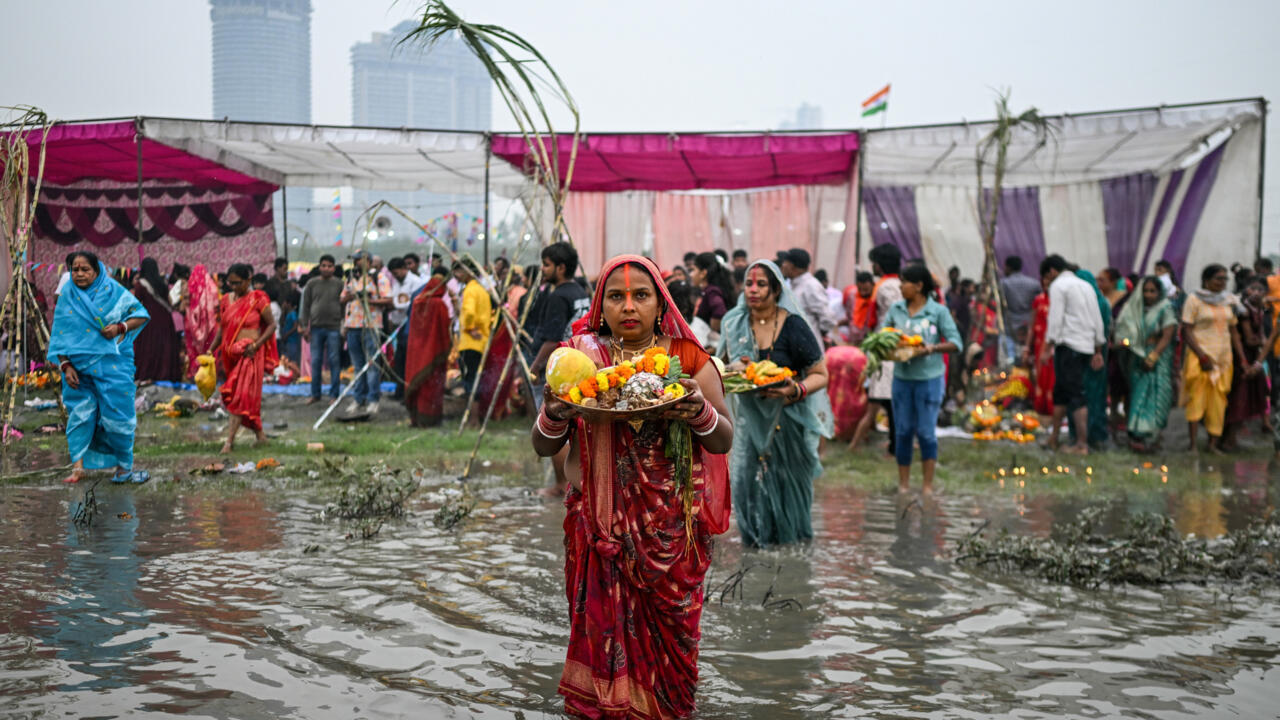
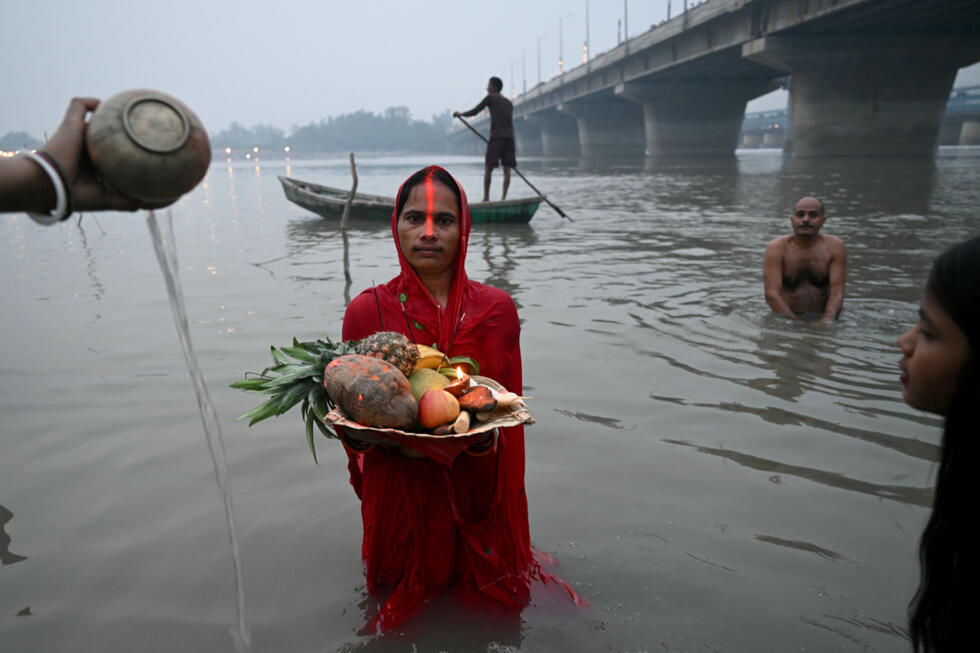
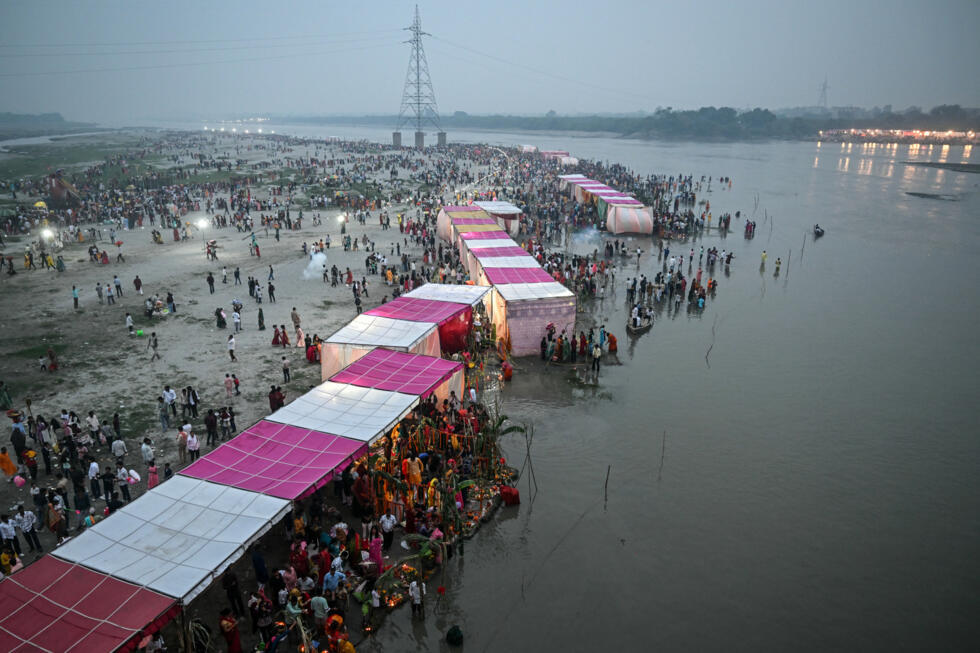
New Delhi (AFP) – Thousands of devotees waded into the foul waters of the Yamuna river in the Indian capital Monday for a Hindu festival, amid political wrangling over the sacred but severely polluted waterway.


Issued on: 27/10/2025 - FRANCE24

The Yamuna river, a major tributary of the Ganges, continues to suffer from severe pollution despite repeated clean-up pledges © Arun SANKAR / AFP

At dusk, worshippers stood waist-deep in the river's brown waters to offer prayers to the sun god Surya as the setting orb sank into the haze blanketing New Delhi's skyline, marking the annual Chhath festival.

Unlike previous years, the scene was free of the thick layers of white foam that have long symbolised the Yamuna's toxic condition.

"At least this time it feels like a river, even if dirty," said 35-year-old homemaker Kanchan Devi.

"Earlier it was like going into a filthy drain."

The Yamuna river, a major tributary of the Ganges, continues to suffer from severe pollution despite repeated clean-up pledges.

At one location in south Delhi in 2021, faecal bacteria levels exceeded safe health limits by 8,800 times.

Hindi worshippers in New Delhi offer prayers to the sun god Surya for the annual Chhath festival © Arun SANKAR / AFP


The river's dismal condition was a key issue in Delhi elections earlier this year that saw Prime Minister Narendra Modi's Bharatiya Janata Party (BJP) return to power in the sprawling megacity of more than 30 million people.

One of the Hindu nationalist party's main campaign promises was to clean the river.

Delhi's Chief Minister Rekha Gupta said Monday that becuase of her government's efforts, "after many years, our brothers and sisters will be able to worship the sun on the banks of the Yamuna."
'Cosmetic'

"This water is now in such a condition that aquatic creatures can live very well in it, whereas earlier, even a mosquito could not thrive in this water," Gupta told reporters.

But opposition leaders have called the clean-up "cosmetic", alleging that chemicals had been used to mask the froth without addressing the fundamental causes of the pollution: untreated sewage and industrial effluents.

Laboratory analysis conducted earlier this month indicated that the faecal count in the river had reduced since last year but remained far from safe at most sites.

Opposition leaders warn that chemicals had been used to mask the froth without addressing the fundamental causes of the Yamuna river pollution © Arun SANKAR / AFP


"All said and done, it is certainly better than before," said Sanjay Paswan, a carpenter.

"I have been coming here for a decade. The difference is clear."

Delhi's pollution crisis extends beyond its rivers.

The capital is routinely blanketed by toxic smog each winter, a deadly combination of emissions from crop burning, factories and traffic.

Despite years of government initiatives, little progress has been made, and the pollution is blamed for thousands of premature deaths annually.

Earlier this month, air quality worsened sharply, following widespread use of fireworks during the Hindu festival of Diwali.

Although bans have been imposed in previous years, enforcement has been weak due to the deep religious significance of fireworks for many devotees.

This year, the Supreme Court eased restrictions, allowing the use of so-called "green" firecrackers that are designed to emit fewer particulate pollutants.

At the Chhath festivities too, firecrackers lit up the sky, leaving the air acrid with the smell of burnt sulphur.

Revellers, though, said they were not concerned.

"At least the water is clean and so is the riverbank," said daily wage labourer Sanjay Prasad.

© 2025 AFP
Mexico prepares Day of the Dead national celebrations


Issued on: 27/10/2025 - FRANCE24

Thousands of people in vibrant costumes and skull-like makeup gathered for #Mexico City’s annual #Catrina parade, a tribute to one of Mexico’s most iconic symbols of the #DayoftheDead. The Catrina is a skeleton often dressed in elegant clothing that has turned into a symbol of the country’s annual celebration.

A year on, families of Spain's flood victims voice sorrow and rage at memorial ceremony


Issued on: 30/10/2025 - FRANCE24

Spain commemorated the anniversary of last year’s massive floods that killed over 230 people. A year later, citizens continue to express frustration over what they consider to be a botched government response, saying there could have been less deaths had the population been warned sooner. The heavily criticised leader of the Valencia region was heckled at the state memorial service for the victims of the country's deadliest natural disaster i
n a generation.

Dutch centrist D66 party wins big in election as far right loses support

Issued on: 30/10/2025 - FRANCE24

In the Netherlands, the centrist D66 party looks on course to beat the far right in the national election. Exit polls have predicted Rob Jetten's party will claim victory, which could lead him to become the country's youngest ever prime minister. Dutch far-right leader Geert Wilders who had come first in the last elections in 2023 said he was disappointed about his Freedom Party's result. Meanwhile the leader of the left-wing Dutch Greens Labour party stood down after a disappointing result.

Video by: Morgan AYRE


Centrist D66 narrowly leads far-right PVV in knife-edge Dutch vote, exit polls show

The centrist Democrats 66 (D66) have taken a slim lead in the Dutch parliamentary election, according to exit polls, narrowly ahead of the far-right Party for Freedom (PVV) in a tightly contested race that could reshape the country’s political landscape.


Issued on: 30/10/2025 - RFI

Leader of D66 (Democrats 66) Rob Jetten reacts on stage to the announcement of the Dutch parliamentary exit poll during a results evening of the party in Leiden on October 29, 2025. The Dutch headed to the polls on October 29, 2025 for a knife-edge election, with all eyes on the performance of the far-right, which is riding high in many top European countries. 
AFP - ROBIN UTRECHT

By:Jan van der MadeFollow

The current tally shows a 1700-vote gap between the centrist liberal D66 and the far-right PVV, with each party looking likely to win 26 seats in a close fight.

Having processed 98.6% of the vote, projections indicate that both the centrist liberal D66 and the far-right PVV will be the major winners. However, in the current scenario the PVV will be down from 37 seats, while D66 will gain 17.

By 5 o'clock in the morning, the margin between the parties stood at just over 2,000 votes.

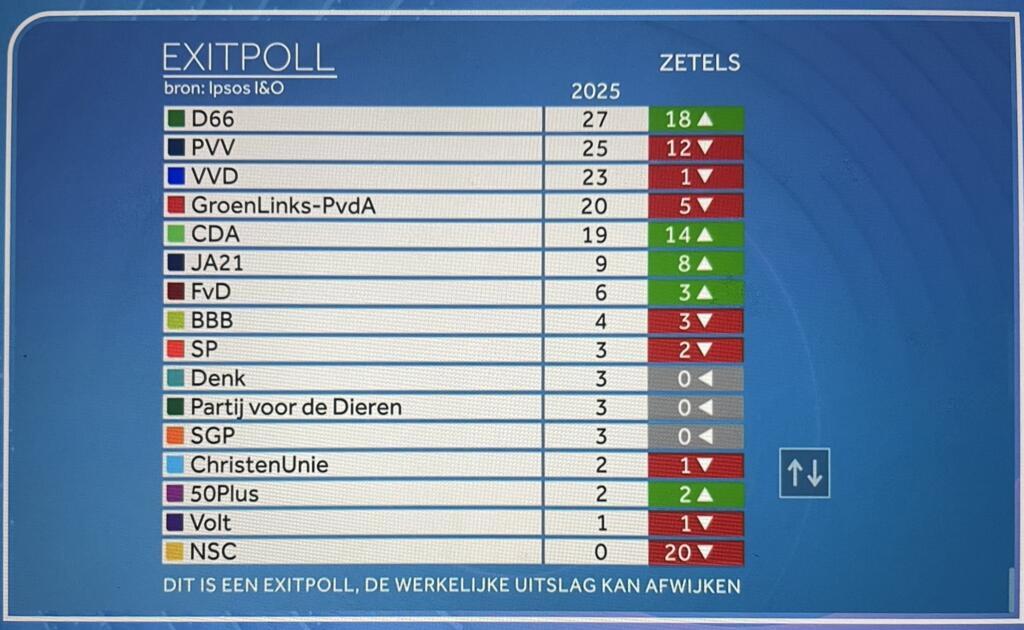
This represents a substantial shift from the previous evening. An Ipsos I&O poll published shortly after voting ended on Wednesday night had projected D66 to win 27 seats, with Geert Wilders' PVV close behind on 25 and the liberal-conservative People's Party for Freedom and Democracy (VVD) on 23.


The left-green alliance GL-PvdA is forecast to secure 20 seats and the Christian Democrats (CDA) 19, which would be a considerable gain.

Exit polls of Dutch elections, 29 October 2025. © Screenshot NOS TV


'Great day for democracy'

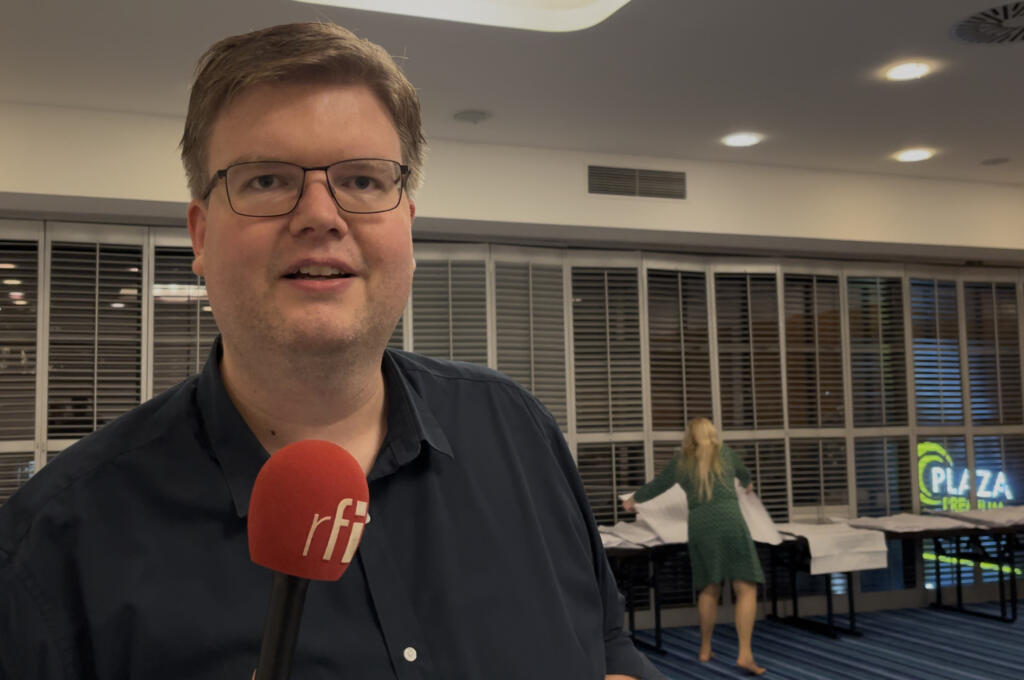
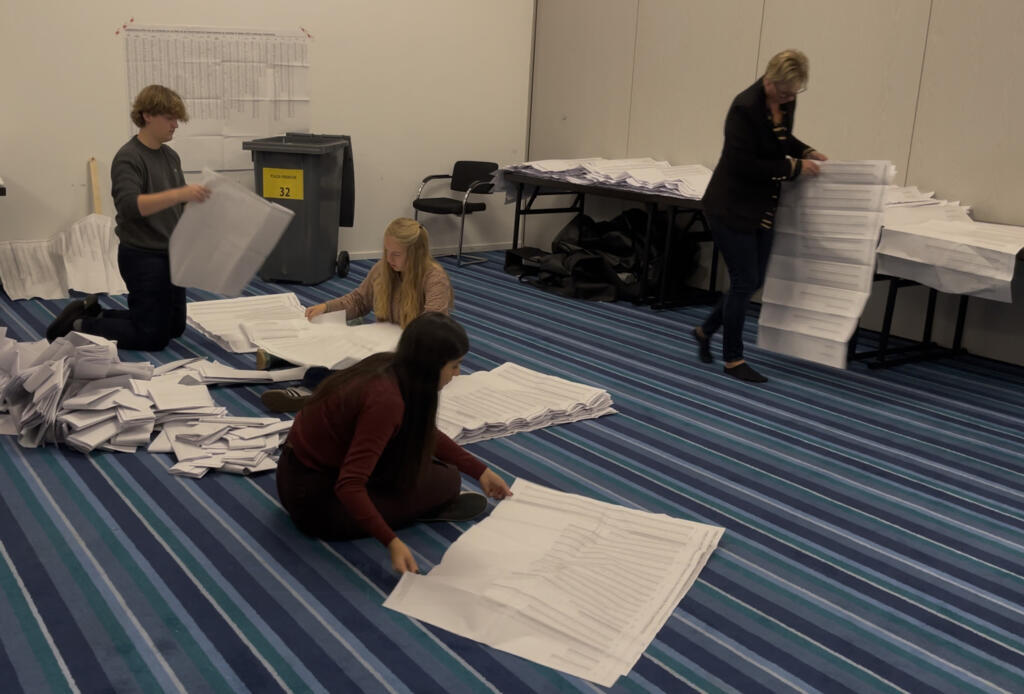
In a polling station in Rijswijk, a suburb of The Hague, Sven van den Berg led his team of volunteers in counting the votes after the polls closed at 21:00.

In total, he said around 850 people turned up to vote during the day, which was a little bit more than last time. “It was a great day for democracy,” one of the vote counters told RFI.


Sven van den Berg, head of a polling station in Rijswijk, The Netherlands, during national elections on 29 October 2025. © RFI/Jan van der Made


Meanwhile, at a jubilant gathering in Leiden, D66 leader Rob Jetten told supporters that the early figures showed “a vote of confidence in openness, in Dutch democracy, and in the future of Europe.”

Jetten, 38, has campaigned on a pro‑EU and progressive ticket, promising a coalition that would “restore pragmatism and stability” to Dutch politics.


Volunteers at a polling station in Rijswijk, The Netherlands, unfolding ballot sheets after elections, 29 October 2025. © RFI/Jan van der Made

Dutch voters cast ballots amid discontent over politics and stalled promises

All four parties in the governing coalition –⁠ the PVV, VVD, New Social Contract (NSC) and Farmer-Citizen Movement (BBB) –⁠ are projected to lose ground. Wilders reacted on X. “The electorate has spoken. We remain the second and perhaps even the largest party in the Netherlands," he wrote.

Among the smaller parties, JA21 is expected to move from one seat to nine, while Thierry Baudet’s Forum for Democracy (FVD) is expected to go from three to six seats. BBB was projected to fall back to four from seven, and the Socialist Party (SP) slipped to three from five. NSC, which entered parliament in 2023 with 20 seats, is now projected to lose all representation.

Other minor movements include the return of the pensioners’ party 50Plus with two seats, and small shifts affecting Christian Union (CU) at two, Volt at one, and Denk, the Party for the Animals (PvdD) and the orthodox SGP all holding steady on three.

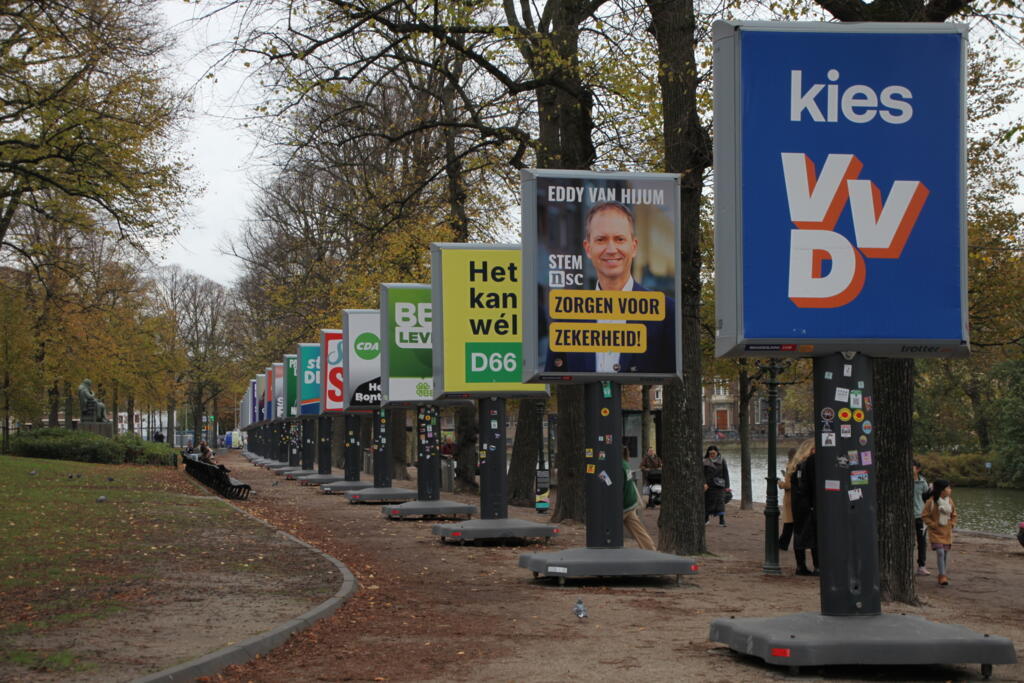
Election posters in The Hague, The Netherlands, 29 October 2025. © RFI/Jan van der Made

According to Ipsos I&O, about 80,000 voters took part in the nationwide “shadow election” at 65 polling stations, completing anonymised replicas of the real ballot. The firm emphasised that the exit poll serves only as an indication: in exceptional circumstances, the final tally could differ by as many as three seats.

Turnout was estimated at 76.3 percent, slightly down from 77.7 percent in 2023. Early official results were expected overnight, with smaller municipalities reporting first.

For much of Europe, the Dutch result is being watched as a barometer of the far right’s resilience after recent electoral surges in Italy, France and Austria. Whether Jetten’s centrist revival can hold when full counts arrive remains uncertain, but for the first time in years, the political tide in The Hague may be moving against Wilders.


More than 100 killed as Rio police launch deadliest-ever raids on drug gangs

The death toll from military-style police raids on drug gangs in Rio de Janeiro has risen, with the state public defender's office reporting 132 people killed and state police reporting 119 deaths. Residents have accused the police of carrying out execution-style killings in the deadliest anti-drug raids in the city's history.


Issued on: 29/10/2025 
By: FRANCE 24

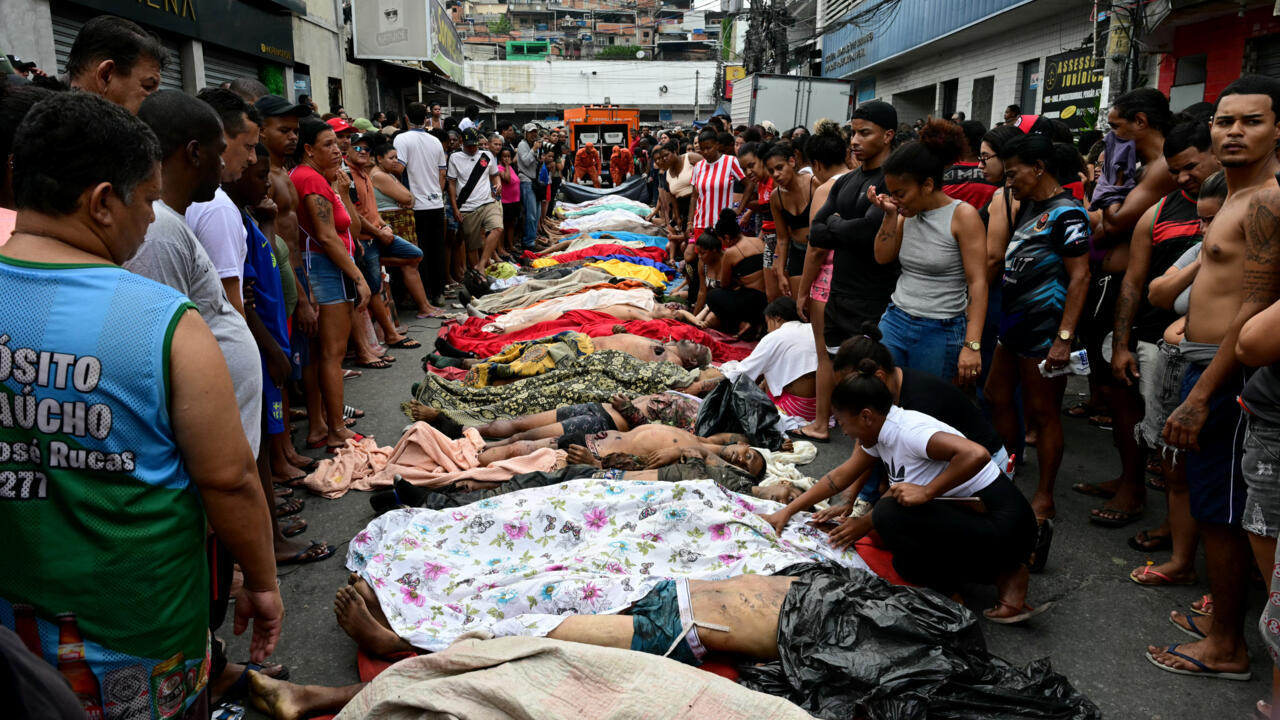
People line up bodies on Sao Lucas Square of the Vila Cruzeiro favela at the Penha complex in Rio de Janeiro, Brazil, on October 29, 2025, in the aftermath of Operacao Contencao (Operation Containment). © Pablo Porciuncula, AFP
05:29


Grieving residents laid out dozens of bodies in Rio de Janeiro's streets as the new death toll was announced, with some angry residents accusing the police of execution-style killings.

"The most recent update is 132 dead," the Rio state public defender's office, which provides legal assistance to the poor, told AFP. There was no immediate corroboration of the figure from other sources.

Rio state Governor Claudio Castro put the death toll from violence on Tuesday at around 60 but warned that the real figure was likely higher as more bodies were being taken to a morgue where the dead were being counted.

Four police officers were slain during the military-style operation, which involved 2,500 officers taking on Rio's most powerful criminal organisation, the Comando Vermelho or Red Command.

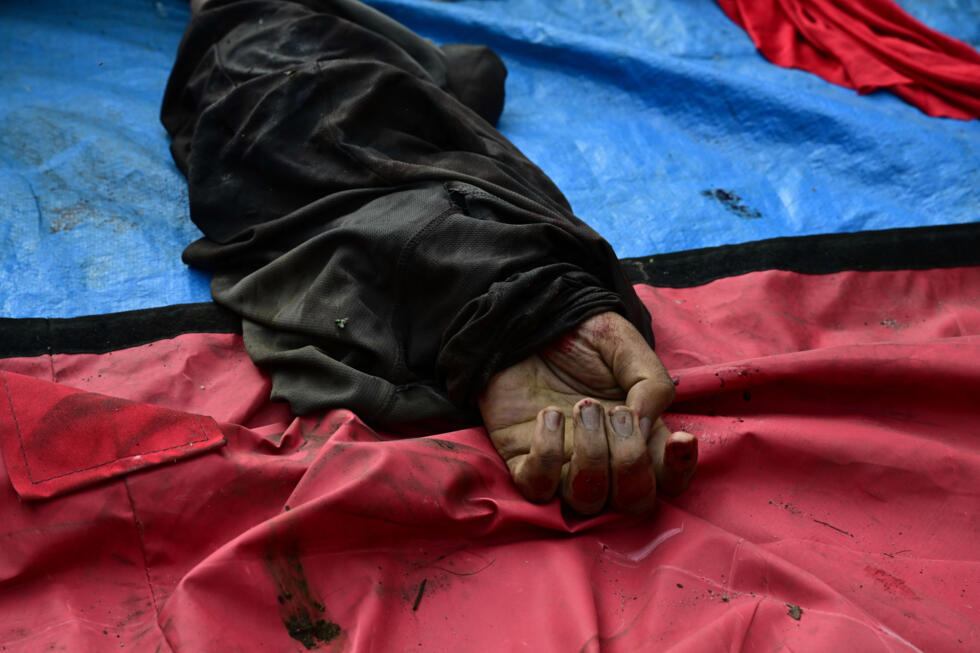
In Penha Complex – one of two densely populated, working-class neighbourhoods targeted in northern Rio – residents wept over a line of at least 50 corpses early Wednesday. A woman screamed as she hunched over the body of one of the victims, who were laid out in a line, covered in make-shift shrouds, some stained with blood.

Two girls, their faces streaked with tears, gently caressed the face of a dead man, wrapped in a sheet with a floral motif, and then hugged each other tightly.

"The state came to massacre, it wasn't a [police] operation. They came directly to kill, to take lives," one woman, who did not wish to give her name, told AFP.

Authorities said that "60 criminals" had been killed in fighting that unfolded during the drug raids in the Penha Complex and the Alemao Complex, located near Rio's international airport.

The hand of a dead man is seen among a line of bodies on Sao Lucas Square of the Vila Cruzeiro favela at the Penha complex in Rio de Janeiro, Brazil, on October 29, 2025, in the aftermath of Operacao Contencao (Operation Containment). Residents of a favela in Rio de Janeiro lined up more than 50 bodies at a plaza in their low-income neighborhood on Ocotber 29, a day after the bloodiest police operation in the city's history, AFP reported. © Pablo PORCIUNCULA / AFP

'Executions'

Angry residents accused the police of summary killings.

"There are people who have been executed, many of them shot in the back of the head, shot in the back. This cannot be considered public safety," said Raul Santiago, a 36-year-old resident and activist.

Lawyer Albino Pereira Neto, who represents three families that lost relatives, told AFP some of the bodies bore "burn marks" and that some of those killed had been tied up.

Some were "murdered in cold blood", he said.

Police raids in Rio's favelas, where drug gangs have a powerful presence, are a common occurrence. However, Tuesday's operation stood out for the scale and lethality.

The Office of the United Nations High Commissioner for Human Rights said it was "horrified" and called for "swift investigations".

A delegation from left-wing President Luiz Inacio Lula da Silva's government will travel to Rio on Wednesday for an emergency meeting with Castro.

Last year, approximately 700 people died during police operations in Rio, almost two a day.

The Human Rights Commission of the Rio state legislature will demand "explanations" of how the favela was turned into a "theater of war and barbarism", commission head Dani Monteiro told AFP on Tuesday.

The huge number of police officers who took part in the operation were backed by armoured vehicles, helicopters and drones as the streets of the favelas saw war-like scenes.

The police and suspected gang members traded heavy gunfire. Fires erupted around the neighbourhoods.

The authorities accused the suspects of using buses as barricades and of using drones to attack the police with explosives.

"This is not ordinary crime, but narcoterrorism," Rio state Governor Castro wrote Tuesday on X, where he shared a video from the fighting.

(FRANCE 4 with AFP)
Maduro says Venezuela intercepted three drug planes amid US Caribbean deployment


Venezuelan President Nicolás Maduro said Wednesday that his country intercepted three aircraft allegedly used for drug trafficking, coinciding with a major US military operation against narcotics groups in the Caribbean. Caracas has accused Washington of using its deployment as a pretext for regime change.


Issued on: 30/10/2025 
By: FRANCE 24


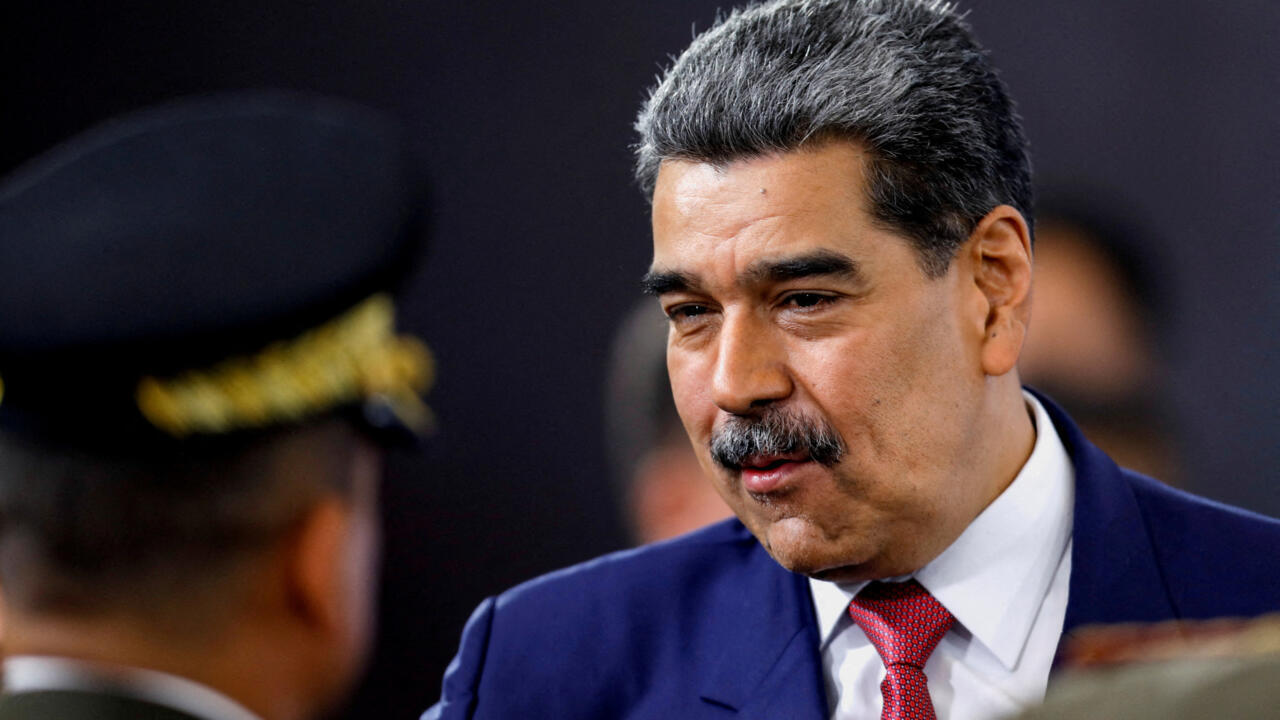
Venezuela's President Nicolas Maduro prepares to leave at the end of a press conference. © Leonardo Fernandez Viloria, Reuters

Venezuelan President Nicolás Maduro said Wednesday his country had intercepted three planes allegedly used for drug trafficking, in operations coinciding with a US military deployment against narco groups in the Caribbean.

“The day before yesterday... a drug-trafficking plane entered through the Caribbean. Our aviation detected it in a second,” Maduro said at an official event.

“Today, two drug-trafficking aircraft entered from the north. And in accordance with our law, we have an interception law... bam, boom, bang!”

It was not immediately clear if this meant the planes were shot down.

Maduro said the action was taken “to make them respect Venezuela... What is that called? Exercising sovereignty.”

Caracas has sought to showcase anti-drug efforts in the face of a massive US military deployment within striking distance of the country.

Earlier Wednesday, Venezuela’s armed forces said they had destroyed two Colombian “narcotrafficking terrorist” camps on its territory and seized ammunition, all-terrain vehicles, tactical vests and fuel.

Washington calls its deployment an anti-drug operation, but Caracas fears it is a guise for military action to oust Maduro.

Trump says new strike kills six 'narcoterrorists' off Venezuela

US President Donald Trump’s administration says Maduro is a drug lord – an accusation he denies – and has issued a $50 million reward for information leading to his capture.

Maduro insists there is no drug cultivation in Venezuela, which he says is used as a trafficking route for Colombian cocaine against its will.

US strikes on alleged drug-smuggling boats in international waters in the Caribbean and Pacific have killed at least 57 people in recent weeks.

© France 24
01:39

Experts say the attacks amount to extrajudicial killings even if they target known traffickers.

The head of Venezuela’s armed forces strategic command, General Domingo Hernández Lárez, said Wednesday that pamphlets of the Colombian ELN guerrilla group were found during the camp raids.

The ELN (National Liberation Army) insurgency group holds territory near the Venezuelan border that experts say is an important source of coca and a gateway to the Caribbean coast – where Colombian cocaine begins its journey to the rest of the world.

(FRANCE 24 with AFP)