COMMENT: The coming Sunni-Shia showdown in the Middle East
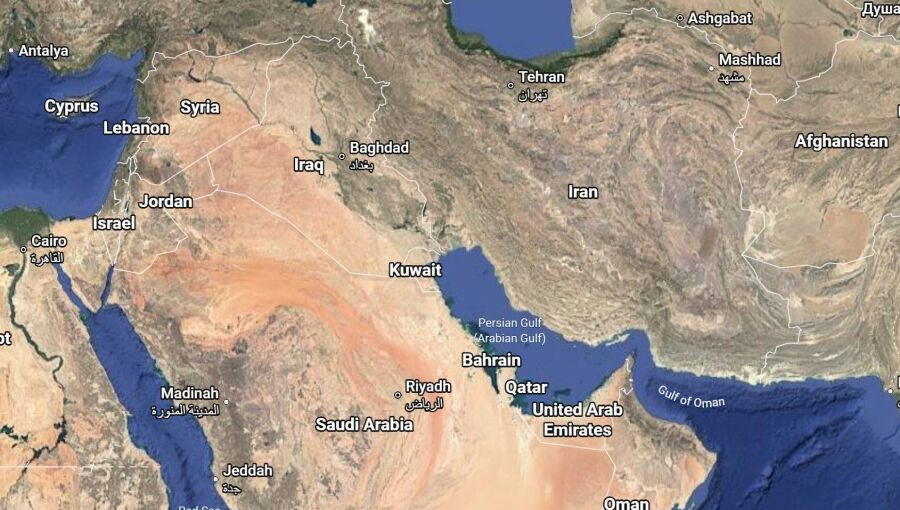
The question not yet asked in all the confusion over the outbreak of hostilities on multiple fronts in the Middle East is whether or not the tangled web of historic rivalries that makes up the region could yet slip into an all-out Sunni–Shia war?
At present, the short answer appears to be that the region’s oldest fault line is being revived, but on Day 4 of missile exchanges and targeting tankers, it remains far from a clear‑cut sectarian battlefield.
What is playing out though is a dangerous blend of sectarian identities and wider regional alliance politics that could resemble a Sunni‑Shia axis if the conflict escalates further.
For decades, the gulf between Shia‑majority Iran and a cluster of Sunni‑dominated states, especially in the Gulf has been a slow-burning proxy‑inflected rivalry. Riyadh and Tehran have never been in a one-on-one war, but their networks of militias and political influence has long made the region appear like a chessboard of competing sectarian kingdoms. That dynamic has floated just below the surface of Middle East politics since the 1979 Iranian Revolution. But now, the current conflict is bringing the possibility of a full-on Sunni VS Shia flashpoint to the fore.
With the fault lines sharpened, the confrontation as it is playing out between the US and Israeli-led West and Iran has pulled a number of governments around the wider Middle East into positions of choice and solidarity like never before.
Dividing lines
Saudi Arabia – overwhelmingly Sunni – on March 1 summoned Iran’s ambassador in protest over Tehran’s attacks on its territory. Along with Saudi Arabia, Kuwait, Qatar and the UAE as well as Jordan - all Sunni – have found themselves dealing with Iran’s military aggression to differing degrees in the past few days.
The United Arab Emirates (UAE) – another Sunni-majority nation – has seen more than its share of Iranian missiles and drones fired toward UAE territory. These have made headlines around the world as a result of the UAE’s now shattered image of being a safe haven for rich expats. Areas around Abu Dhabi and Dubai have been hit, and UAE air defences have intercepted large numbers of Iranian ballistic missiles and drones, though debris has caused civilian casualties and substantial property damage.
Kuwait, Sunni to the tune of 70% or so, has also seen Iranian strikes at the Ali al‑Salem Air Base and Kuwait International Airport. There are also reports that drones have struck US military facilities in the country.
Qatar too – 90% Sunni with only a tiny Shia minority – is a lynchpin in global energy supplies and has been the victim of multiple Iranian air attacks. These are reported to include missiles and drone strikes targeting facilities including the Al Udeid Air Base and civilian infrastructure.
To the west on the border with Israel, Jordan as a signatory of a recent joint international statement, with other Gulf states and the US condemning Iran’s actions in calling for de‑escalation, has been intercepting missiles headed to air bases including Muwaffaq al‑Salti – at present home to a large number of US combat aircraft including F-15s.
The nation’s two predominantly Shia nations meanwhile are are also seeing their share of trouble. Bahrain has seen numerous Iranian missiles reported near or over Bahraini territory. As home to the US Fifth Fleet base in Manama, this was an inevitability, but the derogatory manner in which state-backed nationalist Iranian media has referred to Bahrain in recent months by claiming the country should be ruled from Tehran, is an indication of Iran's view of the Kingdom. It is a view which, in 1957, saw Tehran claim Bahrain as its 14th province prior to eventual recognition of its independence in the early 1970s, following a period of international pressure.
To the northwest, Iraq, and in particular the Iraqi Kurdistan region, has been on the receiving end of missile and drone volleys near Erbil in the north of the country as well as around US bases. This is likely no coincidence given that most Kurds are Sunni Muslims and that Kurds in Iran have long faced discrimination and unequal treatment by the Iranian state.
Even Afghanistan to the east of Iran, while sympathetic to Tehran and not 'yet' involved in the ongoing conflict based is between 85 and 90% Sunni.
Sectarian or coincidence?
For outsiders and many observers, what we’re seeing feels like a Sunni–Shia confrontation – of Iran’s making, intentional or otherwise.
The imagery writes itself with a Shia-dominated nation and its network of terrorist proxies facing off against multiple regional Sunni governments that just happen to be backed by Washington and Jerusalem.
But looking at the issue in simple black and white terms risks missing vital nuance.
Predominantly Sunni states in the Gulf should in no way be deemed puppets of the West regardless of any unspoken Iranian beliefs that may emerge to this end. Riyadh, Abu Dhabi and Doha all have their own priorities that more often than nor fail to perfectly align with either Washington or Jerusalem.
The wider public and political elites in these states, as do billions around the world, likely view Iran through a prism of security issues, energy politics and even historical prestige, just as much as they may see Israel at least partially through the lens of Palestinian and Arab identity.
To this end, while the conflict appears sectarian on the surface there are multiple layers of socio and geopolitical nuance below that cannot be ignored. One of the most dangerous is the existence of Iran’s network of Shia militias and allied armed groups of which Hezbollah in Lebanon is the most prominent. That they are already involved in moves against Israel is concerning. Should other Iran-backed militia, of which there are between five and ten active, pop up in any way elsewhere in the Gulf region, that concern could switch to alarm.
As such, while the risk is very real that this war may turn full-on sectarian should the actors involved align further with historic Sunni or Shia identities, we are not there yet. However, should the region’s Gulf states lean more visibly into support for Israel or the US campaign as a result of constant Iranian missile and drone attacks, or even Iran-linked militia activity, the perception of a Sunni‑Shia war could harden into reality whereby Sunni versus Shia symbolism would no longer just be theoretically superimposed onto geopolitical conflict – it could be acted upon.
Eyewitness Report: Twelver Shiite* Villages Of Nubl And Al-Zahra In The Aleppo Countryside In The Post-Assad Period – Analysis

LONG READ
By Aymenn Jawad al-Tamimi
Media coverage of the status minorities in Syria tends to focus on the Alawites in Homs and the coastal regions; the Druze in the southern province of al-Suwayda; the Christians in light of the Mar Elias church bombing in Damascus (late June 2025), which was claimed by the jihadist group Saraya Ansar al-Sunna; and Syria’s Kurds. Insofar as the Twelver Shiite minority is discussed in reports, the coverage mostly revolves around the Sayyida Zaynab shrine in Damascus,[1] which was a crucial focal point for foreign Shiite militia mobilization on the side of the Assad regime during the war. After all, Iran, whose government belongs to the same sect, was not only interested in propping up the regime as a strategic ally but also purported to represent Twelver Shiite interests in Syria through protecting Twelver Shiite shrines and communities.
There has been no real in-depth coverage of Twelver Shiite communities outside of Damascus such as the two villages of Nubl and al-Zahra in the countryside north of Aleppo. This report aims to remedy that deficiency in coverage. Unlike many media reports on Syria that are often based on a day visit or a few days’ visit to a particular place, this study is the result of extensive time spent in Nubl and al-Zahra.
Isolated Communities
A crucial fact to realize about Nubl and al-Zahra is that the two villages constitute an isolated pocket of Twelver Shiism, surrounded on all sides by Sunni localities, whether Arab Sunni to the east and south or Kurdish to the northwest. While there was much talk during the war about an alleged wave of “Shiification” occurring in Aleppo province, which was a key center of the Iranian and Hezbollah–backed “Local Defense Forces” (LDF) project, most of the discourse was the result of exaggeration and misunderstanding. In fact, even taking into account the people of Nubl and al-Zahra and individual converts to Shiism,[2] the majority of those who worked with the LDF in Aleppo were Sunnis, in keeping with the province’s own demography. This is true even of the “Baqir Brigade,” which was often seen as the crown jewel of Iranian and Hezbollah influence in Syria. The apparent affinity that some members and leaders of the group displayed for Shiism did not translate to conversion to Twelver Shiism but rather reflected general affinity for the Prophet Muhammad’s family and reverence in particular for Muhammad al-Baqir (the Fifth Imam for Shiites but also respected by Sunnis), as well as an attempt to court the Iranians for continued support.[3]
The isolation of Nubl and al-Zahra meant that, as the Assad regime rapidly collapsed in November and December of last year, the population effectively had two choices: they could either accept that the regime was no more and try to adjust to a new post-Assad order or they could flee and opt for indefinite exile. Although the two villages had acquired the status of “fortresses of steadfastness” in pro-Assad regime and pro-“resistance” propaganda and social media, as they were effectively besieged by the insurgents in the period 2012–2016,[4] there was simply no way to resist the insurgents’ advance through the province this time unless they simply wanted to die for no meaningful purpose. After all, as the defenses in Aleppo collapsed, it was also clear that there would be no forthcoming miracle intervention by Iran and Hezbollah to save the regime and those who had stood by it.
Initially, with the exception of a few elderly people and a local notable called Badr Nashab (who was in contact with the insurgents prior to the offensive),[5] the population of Nubl and al-Zahra chose to flee as there were fears (not entirely unjustified at the time) that the insurgents would massacre them on a sectarian basis and as revenge for collaboration with the regime, Iran, and Hezbollah. As such, many inhabitants fled to the Sayyida Zaynab area in Damascus while others ended up being stuck in the al-Safira area just southeast of Aleppo city, effectively coming under “siege,” as they initially refused to accept assurances from the insurgents that they would not be harmed and would be free to return to Nubl and al-Zahra. The insurgents’ assurances, of course, were part of a wider appeal by the insurgent leadership to minority communities as the offensive developed. Eventually, after a few individuals sympathetic to the political opposition and some others returned to Nubl and al-Zahra and could prove to those who had fled that they would not be harmed, larger numbers of the two villages’ inhabitants began returning.
As part of this process of return, virtually all weapons within Nubl and al-Zahra were handed over to the new government, and those who had served with the Assad regime’s army or various auxiliary formations (including the LDF) engaged in a process called taswiya (“regularization” of status, effectively granting an amnesty). Even so, there are many people from Nubl and al-Zahra who still live as exiles today. Some, for example, are working in Aleppo city or Damascus or outside the country in Lebanon and Iraq. A few who were already in Iran for reasons of religious study remain there and refuse to come back. Some who fear or are wanted by the new government have fled to Iran or Lebanon.[6] Some others also live in Europe, having left many years ago for reasons such as a desire to avoid military service and make a better living.


The Security Situation
Given the isolation of Nubl and al-Zahra, the two villages’ notables and the wider population currently accept that they need to adjust to the new order and that actively trying to fight it would be pointless. The conciliatory approach with the new administration and the surrounding environment is underscored by the entrance to Nubl from the Aleppo–Gaziantep route, which describes the town as one of “affection and peace.” Demonstrations held in Nubl and al-Zahra in support of the government (e.g., against “federalism” and denouncing the Syrian Democratic Forces (SDF)) and attended by local notables, Shiite clerics, and a portion of the wider population, should similarly be understood as an outwardly “official” stance of pragmatic conciliation. This is so even if some of the inhabitants do not like the new order because they see it as hostile to the wider “axis of resistance” (with which some still identify emotionally and ideologically); or because they see it as a Sunni-dominated order that is prejudiced against Shiites; or because the overthrow of the regime has meant a loss of status and/or income.
For instance, one individual I know in Nubl was previously a brigadier general in the Syrian air force and now finds himself selling fruit, vegetables, and various other food products like Indomie (a well-known brand of instant noodles) at a stall. Although he would like to offer his expertise for building the new Syrian state’s forces, he claims that for now his help will be rejected on the basis that the new army will be an “Umayyad army”—Umayyad referring to a new Sunni populist trend in Syria that emphasizes Syria’s connection with the Umayyad Dynasty, whose caliphate was based in Syria. Although he uses the expression in a somewhat joking way, the “Umayyad” populist trend itself reflects continuity with the rhetoric of Syrian President Ahmad al-Sharaa and his supporters prior to the fall of the regime in which they emphasized the status of Hay’at Tahrir al-Sham (HTS) as an entity upholding Sunni interests in Syria.[7] In addition, the new Syrian army does in fact feature religious instruction that appears to exclude non-Sunnis from joining for the time being.[8] For her part, the ex-brigadier general’s wife claimed that under Assad life was better because they were living with “dignity.” Even so, neither of them has any interest in taking up arms against the new state.
Alongside the pragmatic approach of Nubl and al-Zahra to the new order and the disarmament of the two villages, one should also note that the new authorities appear to have taken up a particular commitment to protecting minorities in the Aleppo area. According to Omar al-Hasan, who served as an independent M.P. in the Syrian parliament under the Assad regime and was backed by the Baqir Brigade, one of the conditions for defection the Baqir Brigade’s leader al-Hajj Khalid put to Ahmad al-Sharaa and the insurgent leadership was that they should protect minorities in the Aleppo region, including the people of Nubl and al-Zahra.[9]
All the above factors combined mean that the security situation in Nubl and al-Zahra is stable. Indeed, it would not be an exaggeration to say that Nubl and al-Zahra are among the safest places in Syria right now. One does not walk the streets in fear of being confronted by an armed gang or individual or that an armed clash will take place in the street between rival individuals (including members of a single family), families, and clans—a regular occurrence in the primarily Sunni province of Deraa in the south, by way of contrast.[10] Nor are there reports of murders and assassinations. Nor does security need to be managed by auxiliary militias amid a deficiency in the capacity of the local police and security forces.
In fact, locals now say that security and law enforcement are better under the police and security apparatus in Nubl and al-Zahra (an outgrowth of the HTS–backed Salvation Government’s police force and the HTS–backed “Public Security Apparatus”) because the police apparatus in the days of Assad regime control during the war had little power to deal with complaints, given how widespread possession of weapons was. Now, by contrast, while Nubl and al-Zahra are certainly not crime-free (for example, residents are careful about ensuring doors are locked in order to be on guard against thefts), the police and security apparatus can meaningfully respond to complaints. The police and security apparatus have also taken the additional measure of installing security cameras to identify suspects.

In addition, the police and security forces, all of whom come from outside Nubl and al-Zahra,’ with no efforts made to recruit locals, generally behave professionally in dealing with the local population. They do not roam the streets harassing locals or shouting sectarian insults at them, nor are there raids, arbitrary arrests, or confiscations of property targeting “regime remnants”[11] and supposed cells linked to Hezbollah and/or Iran. The checkpoints at the entrances to Nubl and al-Zahra via the Aleppo–Gaziantep route are not there to harass and humiliate the local population or restrict their movements but rather to prevent the entry of individuals who might harass or harm the local population.
At the entrance to Nubl, I have observed the checkpoint being manned by personnel of the Public Security Apparatus and, more recently, Military Police who originated from the Turkish–backed “Syrian National Army.”[12] I have always seen them deal respectfully with locals, and they have behaved similarly in my own interactions with them. The first time I entered Nubl for a visit (a visit lasting only a few hours), the Public Security Apparatus’s primary concern was to make sure I did not have weapons with me and to know where I had lived “before the liberation.” They kept my passport on that occasion but just to make sure that I would actually leave the town after my visit. From that time on, I have generally had no problem entering or exiting the town. On one other occasion, I was held for an extended time by the Public Security Apparatus at the town’s checkpoint, though this was because the new personnel at the checkpoint did not know me and decided to refer the matter to their supervisors to check that I had entered the country legally and that my documentation was valid.
The sense of optimism about security is reinforced by the fact that while there were widespread concerns within Nubl and al-Zahra when reports emerged in March 2025 about massacres of Alawites in the coastal regions, fears that they too would be targeted did not at all materialize. In short, Nubl and al-Zahra currently find themselves effectively protected by the new state. This protection has not gone unnoticed among some people from some neighboring Sunni towns and villages and is in fact a source of some resentment. In February 2025, some inhabitants of these neighboring localities held a demonstration at the entrance of Nubl, demanding that people from Nubl and al-Zahra who are implicated in crimes against them be held accountable.[13] To be fair, there is some justification to those demands: some of those from Nubl and al-Zahra who fought on the side of the Assad regime, Iran, and Hezbollah did engage in acts of criminal destruction and looting of properties in some of the neighboring Sunni villages. Just opposite Nubl, on the Aleppo–Gaziantep route, is the Sunni village of Mayer. The majority of the village (which was captured by the regime in 2016 and was, to be sure, a place from which many projectiles were fired indiscriminately at Nubl and al-Zahra)[14] remains in ruins, having been subjected to looting by some fighters from Nubl and al-Zahra. However, some locals in Nubl and al-Zahra, in response to these demands for accountability, assert that those who have actually committed crimes have either been arrested by the state or are wanted and have fled.
In a similar vein, a local news page for the town of Hreitan (a Sunni town located just north of Aleppo city) featured the following post by a North Aleppo countryside local called Muhammad Balkash, complaining about how displaced Sunnis who supported the opposition to Assad have not received any justice or recompense while Sunni supporters of the former regime and the people of Nubl and al-Zahra seemingly enjoy immunity and protection:
In north Aleppo countryside: from Tel Refaat in the north to Hreitan, Anadan, Kafr Hamra and al-Layramun in the south, passing through Mayer, Hayyan, Bayanun and Ratyan, the displaced returns to sell his land either to rebuild his home or build a new home, while the Sunni shabih (Assad supporter) who stole and plundered the displaced people’s livelihoods enjoys the wealth he stole. In contrast, the localities of Nubl and al-Zahra enjoy protection under the slogan of “civil peace,” when they were the human resource for Iran’s militias and were the tip of the spear in killing us, displacing us and stealing our homes and possessions![15]
In some cases, the rhetoric against Nubl and al-Zahra is inflammatory, and while the government may make occasional rhetorical commitments to stamping out sectarian incitement, little in practice is actually being done by the government to address this problem. For example, activist Abd al-Jabbar Abu Thabit, commenting on a social media post in which the Azaz regional administration[16] highlighted the honouring of outstanding school students from Nubl, wrote a message collectively labelling the people of Nubl and al-Zahra as criminals and the students as “children of killers.” He similarly criticized the government and its advertisement of the event as “deepening the wound and increasing the pains of the people of the northern countryside.” To those from Nubl and al-Zahra who posed in photographs with government officials, he warned that “you are thus provoking the revolutionaries and are digging your grave with your foolishness and hands.” [17]
More recently, some initiatives have been advertised in pro-government media in a bid to promote a spirit of conciliation between Nubl and al-Zahra and the surrounding Sunni villages. Most notably, it was claimed that during the government–sponsored fundraising campaign for Aleppo (“Aleppo is the Respected Lady of All”) in December 2025, the people of Nubl and al-Zahra pledged more than a quarter of a million dollars. However, such pledges mean little to the people of the surrounding Sunni villages if they do not readily translate to actual compensation and reconstruction.[18]
Some Restrictions and Grievances
Whatever positive observations might be made about security and law enforcement, there are some de factorestrictions that seem to be the result of consultations between the notables of Nubl and al-Zahra and the local security apparatus and regional security authorities. These consultations and the restrictions are driven by a desire to avoid fitna (internal strife), which could refer, for instance, to behavior that might be seen as provocative towards Sunnis. The most obvious restriction is that it is now de facto forbidden to engage in any public expressions of support for Iran, its supreme leader Ayatollah Khamane’i, or Hezbollah and other Shiite components of the “Axis of Resistance.”
Thus, while one will find residents of Nubl and al-Zahra who identify Khamene’i as their marja’ (a Shiite clerical authority whose rulings and guidance one follows), public images of Khamene’i are forbidden. It is also notable that efforts are being made to remove the image of the deceased IRGC Quds Force commander Qassem Soleimani: most notably, his image that was on a monument in Nubl’s “Martyrs Park” (a cemetery dedicated to the “martyrs” of Nubl during the war, a project that was financed by Iran) has now been removed. However, graves that feature images of fighters alongside the old flag of Assad’s Syria and Hezbollah have otherwise not been touched, likely out of regard by the new authorities for the sentiments of families in Nubl who have relatives buried in the cemetery.


On the wider religious level too, celebrations of Shiite religious festivals in the streets are not taking place. A recent example to illustrate the contrast between now and then is the occasion of Ashura, which occurs on the tenth day of the Islamic month of Muharram and is commemorated by Shiite Muslims as an occasion to mark the martyrdom of al-Husayn bin Ali, the Third Shiite Imam. In the past, the day of Ashura would be commemorated by a public march in the streets. Further, in the days leading up to Ashura, Latmiyat (songs to express mourning) would be played in the streets. In 2025, no such rituals took place, although inside mosques and homes “Husayn councils” could be held as usual (meetings that would include reading of the Qur’an, sermons from clerics where applicable, and recitation of stories about the killing of Islam’s Prophet Muhammad’s family at the Battle of Karbala).


The caution against fitna extends to use of social media too. For example, al-Sayyid Muhy al-Din Muhy al-Din, a cleric from Nubl who is a follower of Ayatollah Sistani, put out an online circular to the people of Nubl and al-Zahra in summer 2025, urging them to delete any status updates or posts on social media that contain “provocation of the other side” (i.e., the Sunnis). As he emphasized, “The situation is sensitive and tense, and we do not need anything that increases the tension . . . when you put on your status or account a picture of so-and-so, and such-and-such post, or such-and-such latmiya, this contains provocation of the other side . . . embrace silence and keep away from everything that stirs up sensitivities.” The caution against fitna aside, there are also some grievances that concern the economic situation and services. In this regard, there is some overlap with problems in other parts of Syria, but there is also a local sectarian angle at play here. The departure of Iran and Hezbollah has led to a surge of unemployment in Nubl and al-Zahra because those who were working with the LDF formations just before the regime fell lost their jobs and salaries. In the realm of agriculture, livelihoods were impacted by the drought in 2025 that caused widespread crop failure across the north Aleppo countryside. More generally, some complain that individuals from Nubl and al-Zahra who seek work in neighbouring localities are rejected on the grounds of being Shiite and/or perceived supporters of the prior regime.[19]
The difficult economic situation has thus continued to contribute to emigration from Nubl and al-Zahra, with many young people seeking job opportunities in Lebanon and Iraq, reflecting a trend from prior to the fall of the regime.

In terms of services, while good quality water is available from underground wells, there is generally no reliable national grid electricity to meet domestic needs. The main exception to this was the provision of some national grid electricity that would allow households to fill their water tanks with water from the state network. In November 2025, however, unidentified assailants destroyed an electricity tower that supplied this electricity to Nubl and al-Zahra, and, as of the time of writing, this disruption has not yet been fixed, forcing residents to rely on water from private wells at higher costs. It is certain that the sabotage was carried out for motives of hatred toward the people of Nubl and al-Zahra.
For other electricity needs, households are mostly reliant on diesel generators that are very costly, at a rate of around $1 per kilowatt,[20] a rate several times higher than in the town of Azaz on the border with Turkey that has long been connected to the Turkish grid.[21] There is talk within Nubl and al-Zahra about plans to extend the Turkish grid connection to the two villages, but there is no definitive confirmation. Others with more money at their disposal can also install solar panels to supply electricity for purposes such as refrigeration and charging of electronic devices. Even so, maintaining constant use of a fridge can prove prohibitively expensive for many households, which then resort to turning off the fridge for periods—posing health risks from the food stored therein.
Assessment: Nubl and al-Zahra and Minorities in Syria
On the positive side, one might argue that the excellent security situation in Nubl and al-Zahra, which is likely to endure, could provide a model for law enforcement in the country, more generally, and protection of minorities within their own localities, in particular. The authorities’ commitment to protecting the inhabitants, the inhabitants’ own pragmatism, and the authorities’ monopoly on force have meant that the two localities have not witnessed the sort of violence and instability observed in other parts of Syria. At times, it almost seems as though Nubl and al-Zahra are a world apart from the reports of violence in other parts of Syria. On a wider level, encouraging a state of law and order and arms control should be among the top priorities of outside actors engaging with the new Syrian government.
However, it has to be said that Nubl and al-Zahra—by virtue of their status as geographically isolated minority communities that can only realistically survive by accepting the new government and adopting a conciliatory stance—present a rather exceptional situation compared with regions inhabited by larger, more widely distributed minority populations such as the coastal region with its Alawite population, the primarily Druze province of al-Suwayda’, and the Kurdish Northeast. In al-Suwayda’, in particular, possession of personal arms is widespread, and the existence of local Druze armed groups that have largely assumed responsibility for security reflects continuity with the situation during the war prior to the fall of the Assad regime. With the widespread violations committed against Druze by government forces and pro-government “tribal militias” in the summer, Druze armed groups have now congregated around a rejectionist position toward the central government, demanding either a Druze autonomous region or an independent Druze state. Whether or not one thinks the notion of Druze independence is realistic, the armed groups in al-Suwayda’ have reason to be skeptical of the government and maintain their status.
Even going beyond the issue of minorities, the past fourteen years of war saw the widespread dissemination of weapons among the Sunni population, with acquisition of arms being remarkably easy even in Sunni areas not too far from Nubl and al-Zahra, such as the town of Azaz and its environs. It is doubtful whether the state has the capacity or will to enforce disarmament among the Sunni population, which, after all, constitutes the new government’s core support base. As the events in al-Suwayda’ showed, al-Sharaa is appreciative of the notion of armed Sunni tribal mobilization in the name of supporting the new Syrian state.[22] Would he want to risk alienating this constituency of support by seeking to disarm it? Within the environment of Nubl and al-Zahra and its environs, a problem posed by the disarmament of the two villages as opposed to the lack of disarmament of the surrounding Sunni localities is that some locals may feel reluctant to venture outside the two villages out of fear of being targeted for sectarian and/or revenge killings.
This fear is then amplified by incidents in which people from Nubl and al-Zahra who went outside the two villages and were killed, such as the kidnapping and killing of Qays Ghreeb in August 2025[23] and the killing of Ali Faraj al-Sayyid in September 2025.[24] Adding to anxieties are occasional rumours of abduction of girls from Nubl and al-Zahra, the most recent case being that of Aya Dasho, a writer who worked with the Iranians in producing propaganda for the Islamic Republic and had returned from Lebanon to Nubl. She then disappeared in December 2025 in a case that was rumored either to be a criminal kidnapping or arrest by the security forces, although the latter seems unlikely. It has since been claimed that she and her family left for Lebanon, but there are no definitive confirmations of her whereabouts. Whatever the truth of the affair, the uncertainty surrounding her story has reinforced anxiety that women in Nubl and al-Zahra might not be safe.
Turning to other Syrian Twelver Shiite communities, it is clear that not all of them have enjoyed the same protection from the new authorities as that afforded to the two villages of Nubl and al-Zahra. In Homs province, in particular,where the Twelver Shiite community is more geographically widespread, there have been multiple reports of displacement and violations.[25] For example, a prominent Shiite cleric in Homs province, Rasul Shahud, was assassinated by unknown assailants in July 2025. They almost certainly targeted him on a sectarian basis.[26]Moreover, whereas the people of Nubl and al-Zahra have been able to return to their homes, the original inhabitants of the two Idlib Twelver Shiite villages of al-Fua and Kafariya—who were fully evacuated in 2018 as part of a deal brokered by Iran, after being besieged by the insurgents since 2015[27]—have not yet been able to return. Their homes were confiscated by armed factions, and Sunni IDPs from other parts of Syria were settled in them and the villages were effectively transformed into Sunni localities. The government seems either unwilling or unable to evict those living in al-Fua and Kafariya and secure the return of the original inhabitants, some of whom have told me that they do not feel it would be safe to return as there is no security guarantee from the government, in addition to threats from inhabitants of neighboring Sunni localities such as Binnish.[28]
In short, while Nubl and al-Zahra present nuances in understanding the situation of minorities in the country, outside actors should realize that the two villages do not necessarily represent the general experience of minorities in Syria and that there are significant obstacles to replicating the positive aspects of the Nubl and al-Zahra model elsewhere. The new Syrian government should thus be held to account for its shortcomings, focusing in particular on the need for building the country’s security apparatus and military forces on a basis that rejects a sectarian framing of Syria’s identity and eschews animosity toward minority sects such as the Alawites and Twelver Shiites. This building of a new, non-sectarian identity is of course also required on the national level such that in the long-run, minority towns should no longer need special checkpoints to protect them from attacks; nor should Shiite practices like holding Ashura processions in the streets or playing Latmiyat be seen as “provocative” acts that have to be suppressed.
Endnotes
1 For example, Murtaza Hussain and Ali Younes, “Dispatch from Damascus: The Shia Shrine That Could Define the Future of Syria,” DropSite News, January 30, 2025, https://www.dropsitenews.com/p/damascus-syria-sayyida-zeinab-shrine-kil-iran.
2 I am aware of at least one individual from the Aleppo city neighbourhood of Aziziya who worked with the Iranian-backed “Aleppo Defenders Legion” (which focused on “cultural” activity in the sense of promoting ideological support for the “Axis of Resistance”) and converted to Shiism.
3 Aymenn Jawad al-Tamimi, “How Aleppo Fell,” Syria in Transition, July 2025, https://bit.ly/SiT26July.
A similar example is the Martyr Zayn al-Abidin Berri Brigade, which was also known as the Imam Zayn al-Abidin Brigade (named for the Fourth Shiite Imam). The group received Iranian support and had its origins in the Berri family of Aleppo, a Sunni family known for support for the regime.
4 For a memoir of the siege, see Nour Kourko, When the Paths of the Sky Become Crowded (Qom: al-Mustafa University, 2025).
5 Conversation with Badr Nashab, December 2025. Badr became director of the government-affiliated cultural center in Nubl but resigned in January 2026. During the war he faced harassment from the regime for his sympathies for the opposition cause.
6 The most notable case is Ahmad Junayd, one of the leading local military figures in Nubl who worked with Iran and Hezbollah.
7 See, for example, Ghassan Yasin, “Hay’at Tahrir Al-Sham and Its Madhhabist Entity in Idlib,” Syria TV, September 13, 2024, https://www.syria.tv/هيئة-تحرير-الشام-وكيانها-المذهبي-في-إدلب.
8 See also Raja Abdulrahim, “Syria, Rebuilding Its Military, Relies on Loyalists and Religious Teaching,” New York Times, December 11, 2025.
9 Conversation of author with Omar al-Hasan about Liwa al-Baqir, July 2025.
10 See, for example, “After a Person Was Killed in Familial Infighting, Curfew and Heavy Security Deployment in Tafas in Deraa Countryside,” Syria TV, September 16, 2025, https://www.syria.tv/بعد-مقتل-شخص-باقتتال-عائلي-حظر-تجوال-وانتشار-أمني-كثيف-في-طفس-بريف-درعا. Similarly, on January 5, 2026, the local news site Deraa 24 noted that it had documented the killing of at least 438 people in Deraa during 2025, including 266 civilians. See “Tally of Victims in Deraa Between 2025 and 2025: The Total Number Versus the Civilians,” Deraa 24, January 5, 2026, see https://bit.ly/FacebookPhotoLink.
11 A notable exception is the house of one Yahya Taher al-Aswad, a retired officer of the former regime who is accused of participating in the Hama massacre of 1982. Yahya is outside Nubl. As of the time of writing, his house is used as a base for local security personnel.
12 There are regular rotations of the personnel manning the checkpoint.
13 The outlet al-Mayadeen, known for supporting the “Resistance Axis,” misrepresented this demonstration as calling for mass displacement of the people of Nubl and al-Zahra. See “Syria: Demonstration Demanding the Displacement of the People of Nubl and Al-Zahra’ in North Aleppo Countryside,” al-Mayadeen, February 21, 2025, https://www.almayadeen.net/news/politics/سوريا–تظاهرة-تطالب-بتهجير-أهالي-بلدتي-نبل-والزهراء-في-ريف-ح.
14 See, for example, Kourko, When the Paths of the Sky Become Crowded, 141.
15 See post in Facebook, “Hreitan City News,” July 1, 2025, https://www.facebook.com/Hreitan.City.News/posts/pfbid0J5h7RrEAmpjmeUCHGFrSyQgPzoMiRkf8FrzYz7jJByV9gnUVzYv4ZrmB4W1WYutUl.
16 This regional administration has oversight of Nubl and al-Zahra, reflecting continuity with the prewar administrative division.
17 Facebook post by Abd al-Jabbar Abu Thabit, September 19, 2025,https://www.facebook.com/photo?fbid=780234968048804&set=a.122808663791441.
18 Conversation in January 2026 of author with a member of the local council in Hayyan, a nearby Sunni village largely destroyed during the war.
19 Conversation, for example, of author with an imam in Nubl, September 2025.
20 It is noteworthy that in 2025 there were rumours that the general director of the Nubl and al-Zahra area (Abu Ahmad, whose real name is Bassam Abd al-Wahhab and who originates from the Aleppo locality of Darat Izza) was collecting a portion of the profits from private diesel generator fees, regarding them as jizya (i.e., tribute from non-Muslim minorities to Muslims). Such behaviour may have been a factor in his removal as director in September 2025. The general director in turn answers to the director of the Azaz region to which Nubl and al-Zahra are affiliated.
21 Receipts from Nubl and Azaz in author’s possession.
22 For a concise overview of this matter, see “Lions of Syria,” Syria in Transition, August 2025, https://www.syriaintransition.com/en/home/archive/issue-27/lions-of-syria.
23 He was lured to the town of al-Bab. located northeast of Aleppo city, having been contacted by a gang that posed as customers for a shipment of sand for building work. Besides financial motives, the incident may have been motivated by a desire for revenge, with one rumour being that a relative of one of Qays’ murderers was killed by a relative of Qays.
24 He was killed after an unknown assailant who opened fire on him and two others from the locality of al-Zahra, at the intersection of the nearby Sunni village of Bayanun. The three men had been heading to work.
25 See Aymenn Jawad al-Tamimi, “The Twelver Shiites of Homs: Interview,” Middle East Forum Online, July 1, 2025, https://www.meforum.org/mef-online/the-twelver-shia-of-homs-interview.
Some of the violence and displacement may reflect acts of revenge rather than purely sectarian-motivated violence in the sense of targeting Shiites just for being Shiites. For instance, a local in Nubl more sympathetic to the new administration explained some of the incidents in Homs province by noting that Shiite supporters of the regime in Homs did steal property from displaced Sunnis. Conversation with the author, August 2025.
26 “News About His Assassination in Homs . . . Who Is Shaykh Rasul Shahud,” an-Nahar, July 9, 2025, https://www.annahar.com/arab-world/arabian-levant/230084/أنبا-عن-اغتيال-رجل-الدين-رسول-شحود-في-حمص.
27 For a historical account, see Muhammad Hasan Taqi, Al-Fua and Kafariya: A Story of Glory and Defiance (Qom: al-Mustafa University, 2024).
28 Conversations author with people from al-Fua and Kafariya, September 2025.
Like what your read?
Middle East Quarterly
Middle East Quarterly, published since 1994 and edited by Efraim Karsh, it is the only scholarly journal on the Middle East consistent with mainstream American views. Delivering timely analyses, cutting-edge information, and sound policy initiatives, it serves as a valuable resource for policymakers and opinion-shapers.
The Twelvers believe that, at the death of the Prophet Muhammad in 632 ce, the spiritual-political leadership (the imamate) of the Muslim community was ordained to pass down to ʿAlī, the Prophet’s cousin and son-in-law, and then to ʿAlī’s son Ḥusayn and thence to other imams down to the 12th, Muḥammad ibn al-Ḥasan, who is understood to have been born circa 870 but to have gone into occultation (Arabic ghaybah; Persian ghaybat)—a state of concealment by God—soon after his father’s death circa 874. The “Hidden Imam,” as he is sometimes called, is considered to be still alive and will return when God determines it to be appropriate and safe. As the Rightly Guided One (mahdī), upon his return he will inaugurate the processes associated with the last days and the Day of Judgment in particular; as part of that process, Jesus also will return. Other titles associated with him include the Awaited One (al-Muntaẓar); the Imam, or Lord, of the Age (Imām al-Zamān or Ṣāḥib al-Zamān); the Lord of Authority (Ṣāḥib al-Amr); the One Who Arises (al-Qāʾim); and, in reference to the presence of God, the Proof (al-Ḥujjah).
During their years in the community, the imams faced harassment and persecution at the hands of the ʿAbbāsid caliphs, who feared that the imams would organize risings against their rule. Following the 12th imam’s occultation, the Twelver Shiʿah enjoyed a measure of tolerance during the Būyid period (945–1055) in what is now Iran and in Baghdad. There were also pockets of the community scattered across a region extending from what is now Lebanon to Khorāsān (what is now northeastern Iran and parts of Turkmenistan and Afghanistan) and in the Persian Gulf region. At the fall of Baghdad to the Sunni Seljuqs in 1055, the Baghdad community scattered to these other centres. From the years following the 1258 Mongol conquest of Baghdad (the ʿAbbāsid capital from the 8th century) through the Il-Khanid period in Iran (1256–1335), Twelver Shiʿi scholars enjoyed some favour at court, but the bulk of the community remained scattered across the region.
BRITANICA