Thursday, March 05, 2026

Concern Among Indigenous Leaders, Relief For A Few, As Amazon Soy Moratorium Falters – Analysis


Deforestation in Brazil's Amazon. Photo Credit: POLÍCIA FEDERAL/DIVULGAÇÃO

March 5, 2026 
 Mongabay
By Rubens Valente

Indigenous leaders and researchers in Brazil say an end to a key zero-deforestation agreement, the Amazon Soy Moratorium, will increase deforestation around Indigenous lands and encourage the invasion of their territories for soy farming. Already, some are pointing to forest loss advancing near one Indigenous land following efforts to curtail the agreement.

Meanwhile, a few Indigenous leaders are seeing an economic opportunity as companies pull out of the agreement. Members in communities that sell soy farmed on their lands say they already do so sustainably and that the agreement unfairly penalizes their product.

Mongabay spoke with stakeholders across various sectors, from Indigenous leaders and corporate entities, to conservationists and government officials — people across Brazil’s political spectrum — to get their take on what the possible dissolution of the moratorium may mean for Indigenous peoples and their lands in the Amazon.

The moratorium is a voluntary pact between companies, public agencies and NGOs to reduce deforestation in the Amazon. Participants agree to ban from their supply chains any soy produced in areas of the Amazon deforested after July 2008. While the expansion of soy farms grew by 361% from 2006 to 2023 as farmers prioritized converting already cleared lands, fresh deforestation in the Amazon for soy farms dramatically dropped to 1% in the first 10 years after the agreement came into force in 2006.

The results had been hailed by various sectors as one of the most positive experiences in combating deforestation in the country by protecting forests while allowing agriculture expansion.

However, over the past two years, right-wing political leaders started pushing for an end to the moratorium through legal proceedings. This political pressure gained support from the National Confederation of Agriculture and Livestock (CNA), a powerful agribusiness lobbying group, under the assertion that rural producers in the Amazon already produce sustainably.

Earlier this year, the Brazilian Association of Vegetable Oil Industries (Abiove), which represents 18 companies including commodities giants such as Bunge, Cargill, Cofco and Amaggi, announced its withdrawal from the pact. Abiove, along with another signatory, the National Association of Cereal Exporters (Anec), “account for approximately 90% of the soybean market in the Amazon,” according to a report by the agreement’s monitoring group. Anec has not yet announced its departure from the agreement, but 13 of its 24 members are also part of Abiove.

A study by the Amazon Environmental Research Institute (IPAM) suggests that if the moratorium collapses, cumulative deforestation by 2045 could be 30% higher than the total recorded up to 2024. Two of Brazil’s Amazonian states, Amazonas and Acre, would be the most impacted, with deforestation there rising by 114% and 70%, respectively.


Most Indigenous leaders say they view the abandonment of the moratorium with concern. Chief Taú Metuktire, a Kayapó Indigenous leader and grandson of the famed Indigenous leader Raoni Metuktire, told Mongabay that the possible end of the moratorium “is worrying.”

“We, the leaders, don’t want this … nowadays, there are many soybean plantations around our territories. And there are rivers that come from our territories, pass through farms, pass through soybean plantations, corn and other plantations,” he said. “The poison [pesticides] they are spraying on the plants, during this rainy season, will enter the river. We, Indigenous people, consume water that comes from farms, we [will] have diarrhea [and] various types of diseases.”

Last June, Taú went to Paris on a campaign to defend the moratorium with campaign groups the Earthworm Foundation, Mighty Earth and Planète Amazone.

For Alessandra Korap Munduruku, an Indigenous leader from Pará state and recipient of the Goldman Environmental Prize in 2023, the dissolution or possible end of the moratorium is linked to other actions in the rural sector pushing to clear more rainforest for soy farms.

According to Alessandra, three initiatives — the end of the moratorium, dredging and privatization of the Tapajós River, and the construction of the Ferrogrão railway to transport grains — should provide an unprecedented boost to soy production across a large swath of the Amazon.

A giant in the soybean industry, Cargill built a soy terminal on the banks of the Tapajós River in Santarém, Pará, to export soybeans produced in southern Pará and northern Mato Grosso state. In 2018, an expansion project undertaken at the port more than doubled its shipping capacity to 4.9 million metric tons per year.


In a demonstration against a decree — now revoked — allowing dredging and privatization without properly consulting Indigenous communities, about 1,000 Indigenous people protested in Santarém and occupied part of the Cargill terminal. Alessandra, who participated in the occupation, told Mongabay by phone that the end of the moratorium is part of the same “death project” and makes Indigenous lands more vulnerable to unsustainable agribusiness.

“They [soybean farmers] already invade, but now they will be very clear, they will invade even more,” she said. “When they leave [the moratorium], they don’t even care. They want land, they want to deforest, they want to kill. The important thing is to profit from the traditional peoples.”

Another point of concern for Indigenous leaders and environmentalists with the end of the moratorium is the possibility of other Indigenous peoples, such as the Paresi, Nambikwara and Manoki of Mato Grosso, embarking on soy cultivation themselves or expanding plantations in the Amazon where soy farming is already normalized.

Paresi leader Arnaldo Zunizakae told Mongabay that his community already cultivates 17,800 hectares (44,000 acres) of soy on the 564,000-hectare (1.39-million-acre) Pareci Indigenous Territory. Another 2,200 hectares (5,400 acres) are planted in lands neighboring the Nambikwara and Manoki peoples. He said that “more than 3,000” Indigenous people benefit from soy farming in the region.

Unlike most Indigenous leaders who have spoken publicly on the issue, Zunizakae said he considers the end of the moratorium a good thing.

“The soy moratorium, for us, is an obstacle because it hinders — despite us having all these [government] authorizations — the legal commercialization of our product. So, even though we have all these regulated activities, it makes us look like criminals when it comes to selling our product,” he said. “And this prevents us from accessing the international market.

“We are forced to sell our soy clandestinely here, even putting at risk the companies that buy our production. Although we meet all the social and environmental requirements, we are forced to plant only conventional soy; our production is sold here clandestinely, to crushers, to feed producers.”

Zunizakae said the moratorium, though it made soy more valuable to foreign traders, penalized small producers, including Indigenous people who depend on this production for a better quality of life. The government, he said, only provides a meager assistance.

The Paresi leader said he believes there’s no environmental risk from increased farming on their territory because they have a territorial management plan that’s valid for 40 more years.

“It includes [designated] hunting areas, fishing areas, gathering areas, sacred areas, traditional areas, and areas for mechanized farming. We have a plan within a maximum of 50 years — if we have the financial means to expand — to reach 50,000 hectares [or about 124,000 acres, of protected land inside the territory]. So, there is no danger of environmental imbalance due to the end of the [Amazon] Soy Moratorium.”


Last year, through IBAMA, Brazil’s environmental protection agency, the federal government granted the Paresi people an operating license for “agricultural activities to be carried out by cooperatives of Indigenous peoples, within the established conditions,” according to a statement sent by the agency to Mongabay.

The case of the Paresi is frequently highlighted by right-wing politicians as an example other Indigenous peoples should follow. In late February, Mato Grosso Governor Mauro Mendes, a supporter of former president Jair Bolsonaro, said in video on Instagram that the Paresi are “an example that we need to follow with other ethnic groups, including all Indigenous people in Brazil.” He added that “besides liking asphalt, they [the Paresi] like to work.”

In parallel with the political movements aimed at weakening the moratorium, in 2024 the Mendes state administration sanctioned a law approved by the state legislature that made it more difficult for companies participating in the moratorium to access tax incentives.

But Greenpeace Brazil underlines that potential impacts on Indigenous lands and the environment indeed exist. The NGO denounced the state law as “a defense of deforesters, tarnishes Brazil’s image, and undermines the federal government’s efforts toward zero deforestation,” a commitment announced by President Luiz Inácio Lula da Silva for the beginning of 2030.

Ana Clis Ferreira, spokesperson at Greenpeace Brazil, told Mongabay that the end of the moratorium expands grain production already driven by supporting infrastructure projects in Mato Grosso and Pará.

“It is very clear from the rural lobby the attempt to open Indigenous lands to private capital and, in some cases, especially the Indigenous lands of the Cerrado and Lavrado, which are the natural savanna areas,” she said.

Maurício Voivodic, executive director of WWF Brasil, said that experts “are already seeing deforestation increase” in Mato Grosso, following the enactment of the tax incentive law that undermines the moratorium. He said he believes the moratorium will come to an end.

According to Voivodic, the federal government’s satellite monitoring system, PRODES, detected that deforestation decreased in the Amazon last year, “except in the state of Mato Grosso, which was the only one that registered an increase.”

This deforestation is consuming areas surrounding Indigenous territories, such as Xingu Indigenous Park, a frontier of soybean deforestation, he said, while under the moratorium such deforestation was largely interrupted.

“If deforestation increases there, in the forests that still exist outside the Xingu Indigenous Park, in the headwaters of the Xingu River, [it] directly affects the villages and Indigenous territories of the Xingu,” he told Mongabay. “Because it affects the headwaters, it will compromise the quality and volume of water in the Xingu River downstream.”

In a statement to Mongabay, Brazil’s Ministry of Environment and Climate Change said it recognized the end of the moratorium may generate greater pressure on already deforested areas in the Amazon; shift farming to new areas; and expand deforestation vectors. Given these potential impacts, “monitoring will continue to be intensified with reinforced territorial enforcement and control actions.” For Indigenous lands, “environmental enforcement and credit control mechanisms remain active and strengthened.”


The ministry stated that the eventual end of the moratorium will not weaken “public policies for command and control of deforestation and the promotion of sustainable production.” (Because the moratorium is a voluntary pact, the federal government doesn’t have the authority to enforce it.) The ministry also called for economic instruments that discourage deforestation, encourage the use of already cleared lands for farming, and add greater value addition to soy.

“The experience of the moratorium demonstrated that it is possible to reconcile agricultural expansion and environmental conservation,” the ministry said. “The agreement contributed to consolidating Brazil’s image as a reliable supplier of soy produced without deforestation and without socio-environmental violations.”

In a statement to Mongabay, the government of Mato Grosso said the moratorium creates a “parallel law” that goes beyond Brazil’s Forest Code, which is the highest authority on what constitutes legal land use, and punishes producers who don’t comply with Brazilian legislation.

The Mato Grosso state environmental department, or SEMA, said an end to the moratorium “should not generate impacts” and that “strategies that segregate those who comply with the law are not socially just, nor do they consistently strengthen environmental governance.”

“The strategy adopted by the Government of Mato Grosso to ensure compliance with existing regulations, with robust oversight, accountability, and firm action against environmental crimes, has proven effective in controlling deforestation,” SEMA said.

Regarding potential impacts on Indigenous lands, the department said that “the State of Mato Grosso has no jurisdiction over Indigenous lands; federal agencies are responsible for operations in these areas.”

In a statement to Mongabay, Abiove said the moratorium consolidated Brazil as a global reference for sustainable production. But the industry association didn’t provide an official response to a question about potential impacts on Indigenous lands.

Abiove also said it trusts the existing legislation and guidelines will ensure that Brazilian soy maintains its high socioenvironmental standards.

“The legacy of monitoring and the expertise acquired over almost 20 years will not be lost,” an Abiove spokesperson said. “There will be individual attention given to the rigorous demands of global markets, with equal confidence in the Brazilian authorities for the full implementation of a new regulatory framework.”

Meanwhile, many Indigenous leaders are celebrating the revocation of the decree that would have allowed dredging works in the Tapajós River for year-round transportation of soy. According to Alessandra Korap Munduruku, Indigenous peoples show that they can produce very well, without additional deforestation.

“For us, the Munduruku, there’s no way to deforest, kill the river, doing what the non-Indigenous people want because profit is good,” she said. “We are fighting to keep the forest standing. We still guarantee water to drink, we guarantee the forest is standing.”

Mongabay contacted Cargill, the Brazilian president’s office, the Ministry of Indigenous Peoples and the federal Indigenous affairs agency (Funai) for comment, but none had responded by the time this story was published.


About the author: Rubens Valente is an award-winning investigative journalist based in Brasília, Brazil. He has written for Folha de S.Paulo, O Globo, Intercept Brazil, Agência Pública, UOL and others. He is the author of Operação banqueiro and Os Fuzis e as Flechas.


Source: This article was published by Mongabay


Why US Firms Aren’t Racing into Venezuela, Even With Political Incentives – OpEd


March 5, 2026 
 MISES
By Nicoleta Tanase


On January 3, 2026, the capture of Venezuelan President Nicolas Maduro by US forces marked a turning point in US-Venezuela relations and reopened questions about the future of Venezuela’s oil sector. In principle, improved political access and the easing of restrictions could be expected to stimulate renewed foreign investment in one of the world’s most resource-rich oil economies. Despite this apparent political incentive, investment by major US oil companies has remained limited.

This article examines why firms have been reluctant to reenter Venezuela, arguing that high production costs associated with heavy crude, severe infrastructure deterioration, and persistent policy uncertainty significantly reduce expected returns and increase investment risk. These factors raise the option value of waiting, making delay a rational economic response rather than a failure of political incentives. The analysis highlights that, without credible long-term institutional guarantees, resource abundance alone is unlikely to translate into sustained foreign investment in high-risk, resource-rich economies such as Venezuela.
Venezuelan Oil

Venezuela has one of the largest proven crude oil reserves in the world. According to the US Energy Information Administration, Venezuela’s oil reserves amount to approximately 303.8 billion barrels, making it the country with the greatest proven oil reserves in the world. These reserves are responsible for approximately 17 percent of the world’s total proven crude oil. Most of them are concentrated in the Orinoco Belt, where oil is predominantly heavy crude, demanding specialized extraction and refining techniques that raise production costs compared to lighter grades. This type of crude oil must be heated to bring it to the surface and diluted with other hydrocarbons before it can be processed and declared a final product, raising both capital and operating costs.

Despite this massive resource base, Venezuela’s actual production remains only a small portion of its potential due to infrastructure challenges and underinvestment. Economically, this reflects that heavy crude extractions require substantial sunk capital and technologically-intensive infrastructure, increasing production costs, delaying profitability, and implying high levels of fixed investment. Therefore, Venezuelan oil projects typically require higher and more stable oil prices to break even, making them particularly vulnerable to price volatility in global energy markets.


In comparison, producers of lighter crude in countries with modern infrastructure and more stable regulatory environments can operate at lower costs and with more flexibility. As a result, even abundant reserves do not translate into higher output, since firms face elevated upfront costs and uncertain returns that weaken investment incentives and delay capacity expansion. Rational profit-maximizing firms may prefer alternative investment destinations that offer lower production costs and more predictable returns. This helps explain why Venezuela’s actual oil output remains far below its potential, even in periods of elevated global oil prices.
Other Problems: Aging Equipment and Neglected Infrastructure

According to the US Environmental Information Administration, Venezuela’s aging pipelines used for transporting oil from wells to refineries have not been upgraded for the last 50 years. Many parts of the network suffer from corrosion and leaks, which reduce operational capacity. Satellite imagery and industry analysis show that refineries and storage facilities are frequently inoperable or in a catastrophic state, with corroded tanks and rupturing pipelines contributing to frequent spills and safety hazards.


This extended period of neglect has substantially reduced the effectiveness of the current pipeline system and increased production costs, acting as an economic barrier to increased output. Industry estimates an investment of $100 billion in rehabilitation before marginal production can be increased, which, in turn, raises expected costs of capital and lowers the expected return on investment. Given the heavy nature of the majority of Venezuelan crude, the transport and processing networks must operate closer to design tolerances to avoid bottlenecks, further increasing costs relative to producers with modern systems.
Risk, Costs, and Regime Uncertainty

In this case, firms are being put in a difficult situation as they need to weigh the cost of bringing the infrastructure to its former capacity levels against the uncertain future prices, ongoing political risk, and the potential for renewed sanctions, further discouraging immediate capital commitment. For many major oil companies, such as ConocoPhillips, facing uncertainty, monitoring developments in Venezuela rather than committing capital reflects a rational response to this environment, as early speculations about future business activities or investments could intensify political tension and potentially worsen investment conditions, while immediate capital commitment exposes firms to high infrastructure risk without clear guarantees of stable returns.

Beyond technical and financial challenges, political risk remains the central factor shaping firm behaviour in Venezuela’s oil industry. Frequent policy changes, sanctions uncertainty, and weak legal enforcement create an environment in which even large-scale investments can be expropriated, delayed, or even declared unprofitable. For foreign firms, this uncertainty is particularly damaging because oil extraction is characterized by irreversible, long-term investments with payoffs that depend on stable regulatory and contractual conditions.

Historical experiences in Venezuela and across Latin America reinforce those concerns. For example, past instances of nationalization, contract renegotiation, and sudden policy shifts have repeatedly reduced investor confidence, highlighting that political access alone cannot guarantee returns. In such an environment, firms face a classical investment-under-uncertainty problem: committing to capital too early eliminates flexibility, while waiting preserves the option to invest once risks become clearer. These uncertainties raised the option value of waiting, as firms prefer to delay irreversible investment until the political and regulatory environment becomes more predictable.

Conclusion

In this context, US oil companies’ caution is rational; despite the potential profit from Venezuela’s vast reserves, the combination of infrastructure challenges and persistent political risk raises the expected cost of capital and lowers the expected return on investment. Moreover, policy uncertainty is not confined to Venezuela alone. President Trump’s sudden decision to consider the exclusion of Exxon from certain Venezuelan oil agreements shows how the US policy statements can further complicate investment plans. The unpredictable nature of such announcements makes firms more cautious when releasing statements about future plans, as even informal remarks can affect market expectations, alter risk perceptions, and influence the anticipated returns on irreversible investments.

This analysis suggests that encouraging renewed investment in Venezuela’s oil sector requires more than temporary political openings or symbolic policy gestures. From an investor’s perspective, credible long-term commitments are necessary to offset the irreversible nature of capital-intensive oil investments.Source: This article was published by the Mises Institute
Like what your read?

Please consider supporting Eurasia Review, and thanks for you consideration!


MISES

The Mises Institute, founded in 1982, teaches the scholarship of Austrian economics, freedom, and peace. The liberal intellectual tradition of Ludwig von Mises (1881-1973) and Murray N. Rothbard (1926-1995) guides us. Accordingly, the Mises Institute seeks a profound and radical shift in the intellectual climate: away from statism and toward a private property order. The Mises Institute encourages critical historical research, and stands against political correctness.
A New Front In Iran War? 
US Considers Arming Iranian Kurdish Opposition Groups – Analysis


March 5, 2026 
RFE RL
By Frud Bezhan


The United States is considering arming Iranian Kurdish opposition groups based in neighboring Iraq, according to reports, in a move that could open a new front in the war on Iran and risks igniting a civil war in the Middle East country.

Several Iranian opposition Kurdish groups are based in Iraq’s semi-autonomous Kurdish region and have been waging a low-level insurgency against Tehran for years. Some have demanded autonomy within Iran while others are fighting for secession from the Islamic republic.

The possibility of the United States supplying weapons to Iranian Kurdish groups and supporting potential cross-border ground attacks in the western part of the country comes as the United States and Israel wage a massive aerial bombardment of Iran.

The US aim, experts say, would be to stretch Tehran’s military resources, weaken the state’s grip on power, and foment an uprising inside Iran, a multiethnic country of some 90 million people.


Iran’s clerical rulers, despite the killing of Supreme Leader Ayatollah Ali Khamenei and senior military leaders, have not capitulated or fragmented and maintain control of the country since the joint US-Israeli air campaign began on February 28.

“The main goal is to make sure the Islamic republic starts losing control of some areas of the country,” said Michael Horowitz, an independent defense expert based in Israel.

“The assessment may be that by doing so, other minorities as well as the broader opposition may be inspired. Some elements within the regime who may be tempted to defect or flee may also see this as a sign that they should do so now, before the situation spins fully out of control.”

Kurds make up around 10 percent of Iran’s population and primarily live in the country’s west along the border with Iraq. Iran has long been accused of suppressing and discriminating against the country’s ethnic minorities, including Kurds.

Sascha Bruchmann, a military and security affairs analyst at the London-based International Institute for Strategic Studies, said possible ground incursions by Iranian Kurdish groups into western Iran could stretch Tehran’s military resources.


“If the Kurdish factions were to stage a concerted series of attacks, the IRGC [Islamic Revolutionary Guards Corps] would have to seek reinforcements,” said Bruchmann, referring to the elite branch of Iran’s armed forces.

“However, that would weaken their posture in core cities such as Tehran, Isfahan, or Karaj. It would thus create a dilemma for the regime where to send sparse reinforcements in times when coordination is also more difficult. It is this dilemma and thinning out of forces that is the operational goal.”

The risks of the United States possibly arming Iranian opposition Kurds groups are considerable, experts say.

“Washington could trigger a civil war and the fragmentation of the country, which could have lasting consequences,” said Horowitz.

Many of these groups were previously armed but have since laid down their weapons.

“If they engage in a long-term war against Iran, and the US support disappears, this will prove very dangerous for them,” said Horowitz.

The United States recently cut support to the Syrian Democratic Forces (SDF), a Kurdish-led militia that was a key US partner for years in the war against the Islamic State extremist group.
Longstanding Disputes

In anticipation of a US attack on Iran, five Iranian opposition Kurdish groups based in Iraqi Kurdistan announced a new political coalition last month aimed at overthrowing the Islamic republic and ultimately achieving Kurdish autonomy.


The new coalition includes the Kurdistan Freedom Party (PAK), the Democratic Party of Iranian Kurdistan (PDKI), the Kurdistan Free Life Party (PJAK), the Organization of Iranian Kurdistan Struggle (Khabat), and the Komala of the Toilers of Kurdistan. The coalition does not include several Kurdish political heavyweights such as the Komala Party of Iranian Kurdistan.

Iran has sporadically conducted military strikes against the exiled Kurdish groups, which Tehran has designated as terrorist organizations and accused them of serving American and Israeli interests. Those attacks could intensify if the United States arms the groups.

On March 4, Iran launched rocket attacks at a camp near the border operated by the PAK, the group said, adding that one person was killed and three wounded. A day earlier, drone strikes struck a base run by the PDKI in northern Iraq.

Experts say it is unclear if the various Iranian Kurdish groups in Iraq can settle their deep differences and have the willingness and ability to fight against the Islamic republic.

“There are longstanding disputes, and they need to prove solidarity on the field,” said Bruchmann. “It is less about the potential impact of some better or more weapons from the US, but rather the will to fight the Iranian regime decisively and coordinate military attacks among them that will decide whether the Kurds will add a ground element to the US-Israeli air campaign


.”Frud Bezhan is Senior Regional Editor in the Central Newsroom at RFE/RL, with a primary focus on the Near East and Central Asia. Previously, he was the Regional Desk Editor for the Near East. As a correspondent, he reported from Afghanistan, Turkey, and Kosovo. Before joining RFE/RL in 2011, he worked as a freelance journalist in Afghanistan.

RFE/RL journalists report the news in 21 countries where a free press is banned by the government or not fully established.

The Global Costs Of Instability In The Strait Of Hormuz – Analysis


Strait of Hormuz. Credit: VOA

March 5, 2026 
Observer Research Foundation
By Pratnashree Basu


The Strait of Hormuz has once again emerged as a fulcrum of geopolitical risk and economic disruption in the early months of 2026. On 2 March 2026, Iran’s Islamic Revolutionary Guard Corps declared the waterway, the narrow throat between the Persian Gulf and the Gulf of Oman, through which roughly 20 percent of the world’s crude oil and a substantial share of liquefied natural gas transit daily, effectively closed to commercial shipping and threatened to attack any vessel attempting passage. This marked Iran’s most explicit and forceful maritime stance yet, following intensifying conflict with Israel and the United States, including coordinated strikes on Iranian territory.

The immediate and palpable impact of this escalation has been a near collapse of normal shipping flows. In response to heightened risk, international tanker companies and container operators are haltingbookings and cancelling transits across the strait. At the same time, insurers are withdrawing coverage, making trade through the Hormuz commercially unfeasible. With roughly 10 percent of the global container fleet now caught in a bottleneck near Hormuz, the crisis starkly illustrates how swiftly geopolitical risk can translate into logistical paralysis.

These developments have sent shockwaves through international energy markets. Following Iran’s warnings of closure, crude oil prices surged, with Brent crude rising by 8.6 percent amid reports of halted tanker traffic and escalating tensions. Both market psychology and the potential for a direct supply shortfall are reflected in this price increase. Traders are also factoring in the potential for long-term disruption at a chokepoint that supports energy flows to Asia, Europe, and beyond. At the same time, officials and investors recognise that even a brief obstruction in Hormuz can raise input costs across the transportation, industrial, and energy sectors. Reports from shipping analytics indicate that freight costs for very large crude carriers bound for Asia have spiked, illustrating how risk repricing along one route reverberates through global transport markets. Higher insurance premiums — rising by as much as 50 percent — further embed elevated costs into the logistics ecosystem, dampening trade and squeezing profit margins for shippers and commodity buyers alike.

The significance of Hormuz as a maritime artery cannot be overstated. At about 33 km at its narrowest point, it is one of the world’s most critical chokepoints, with oil, gas, and petrochemical exports from producers in Saudi Arabia, the United Arab Emirates, Kuwait, Qatar, and Iran traversing this corridor en route to global markets. The strait’s closure thus represents not just a regional flashpoint but a systemic risk to global energy security. While the most immediate focal point of disruption has been energy, the interconnectedness of global supply chains means the spillovers extend far more broadly. Maritime freight rates, particularly for oil tankers, have spiked dramatically.


From an operational perspective, shipping companies and ports are scrambling to adapt. Carriers are exploring long reroutes around Africa’s Cape of Good Hope or seeking transhipment options that avoid the Gulf entirely, since Hormuz is essentially off-limits. These changes, however, involve clear trade-offs, including longer journey times, higher fuel consumption, and increased congestion at other hubs. These inefficiencies ripple through inventory cycles, delivery schedules, and consumer prices in importing economies, not just the cost of a single voyage.

The crisis exposes fundamental vulnerabilities in the global trade system that extend beyond economic calculations. The geographic concentration of energy exports through a narrow seaway demonstrates how systemic shocks from regional conflicts can be transmitted instantaneously. Maritime chokepoints, far from being passive conduits of commerce, are potential fault lines that governments and corporate organisations must confront. This realisation is likely to shape longer-term planning, from energy diversification strategies to naval deployments aimed at ensuring freedom of navigation.

India’s exposure vividly illustrates the geopolitical–economic nexus. Estimates indicate that almost half of the country’s monthly oil imports pass through the Strait of Hormuz. As a major importer, India sources a significant portion of its crude and LNG via routes through the strait. With tanker movements stalled and supply chains disrupted, New Delhi has issued advisories for Indian-flagged vessels to exercise extreme caution, highlighting the risk to national trade interests and the safety of seafarers.


Similar risks exist in the Indo-Pacific region for China, the world’s largest importer of crude; a protracted closure or ongoing risk premium on Gulf crude supplies would restrict refinery throughput, strain inventories, and potentially lower export competitiveness amid higher input costs. In the European Union(EU), where energy markets remain sensitive to global oil and LNG prices, heightened volatility amplifies cost-of-living pressures and complicates monetary policy for growth and inflation control. Japan and South Korea, heavily reliant on imported energy and lacking substantial domestic resources, are especially vulnerable even to brief disruptions; delays in LNG and oil deliveries can necessitate stockpile draws and refinery slowdowns, raising production costs and increasing inflationary pressure. Together, these patterns show how chokepoint risk translates into actual economic vulnerability for major importers, strengthening the motivation for strategic reserves and diverse sourcing.

Yet even as the world reels from these impacts, debate continues over the nature and duration of the disruption. The current crisis reaffirms that maritime routes are both strategic and economic assets, linking producers with consumers across hemispheres while remaining vulnerable to geopolitical turbulence. The interplay of conflict, risk pricing, and supply-chain mechanics in the Strait of Hormuz vividly illustrates how rapidly regional hostilities can translate into global economic stress. This emphasises the need for both crisis management and structural resilience, including investment in diversified commerce corridors, alternative energy routes, and cooperative marine security frameworks, alongside strengthened diplomatic channels to lower escalation risks.

The crisis unfolding in the Middle East is arguably the most severe in decades. Beyond the battlefield, it constitutes a systemic stress test for global maritime commerce and energy supply chains, highlighting the fragility of interconnected systems and the need for robust policy responses that address both the immediate impacts and the structural vulnerabilities exposed by such disruptions.

About the author: Pratnashree Basu is an Associate Fellow at the Observer Research Foundation.

Source: This article was published by the Observer Research Foundation.


Observer Research Foundation

ORF was established on 5 September 1990 as a private, not for profit, ’think tank’ to influence public policy formulation. The Foundation brought together, for the first time, leading Indian economists and policymakers to present An Agenda for Economic Reforms in India. The idea was to help develop a consensus in favour of economic reforms.


 COMMENT: Iran's oil war could reshape the global economy — and Europe has the most to lose

COMMENT: Iran's oil war could reshape the global economy — and Europe has the most to lose
Iran's Azadi Square with smoke behind from Israeli strike on city's old Mehrabad airport March 3. / CC: IRNA Akbar Tavakoli
By bne IntelliNews March 4, 2026

Iran's retaliatory strikes on American and British oil tankers and, most dramatically, on oil storage facilities in the United Arab Emirates, have pushed an already fragile global energy market to breaking point. The Strait of Hormuz remains effectively blocked. Oil and fertiliser prices are surging. Fuel costs in Britain have doubled. And the reverberations are only just beginning, with people fleeing the UAE and Qatar as fast as they can. 

The immediate consequences are stark enough: 800-plus Iranians are dead and a growing number of Americans, Kuwaitis, Lebanese, Israelies and others. Even if hostilities were to cease tomorrow -  purely hypothetical scenario - the damage to freight rates and insurance premiums would persist for months, if not years. Ships and their cargoes are insured separately, and underwriters have no appetite for risk in what has become the most volatile chokepoint in global trade. Every barrel transiting the Persian Gulf now carries a hefty geopolitical surcharge, and that cost will be passed directly to consumers at a record-breaking speed. Probably the fastest increase since the 2020 Coronavirus (COVID-19) spike. 

The latest numbers speak for themselves. Roughly 20% of the world's natural gas and up to 30% of its oil passes through the narrow mouth of the Hormuz Strait, connecting the Persian Gulf to the Gulf of Oman and on to the Indian Ocean. Of the cargo that reaches the Indian Ocean, some 80% is bound for South-East Asia - principally China, India, Japan and South Korea. Only 15-20% heads to Western Europe and elsewhere, but don't let that calm readers in London into thinking that risk price is spreading far and wide.

This matters enormously. China absorbs between 30% and 40% of that 80% share. India takes a substantial portion of the remainder. These are the two great locomotives of global economic growth, and both now face a sharp and unavoidable increase in the cost of energy. Beijing may have stockpiled strategic reserves and developed alternative supply routes - including the Power of Siberia pipeline and shipments via Vladivostok - but restructuring supply chains is a process, not an event. In the near term, the hit is real.

The likely outcome is not collapse but deceleration. China's growth rate could slip from 5% to 4%, still impressive by Western standards, but a meaningful slowdown for an economy on which much of the developing world depends. India faces a similar trajectory. And when the world's primary growth engines lose momentum, the drag is felt everywhere. Countries teetering on the edge of positive growth risk tipping into contraction, with all the social and political instability that entails.

Europe's position is particularly precarious, as Tucker Carlson remarked on his latest podcast this week. On paper, only 10-15% of Persian Gulf energy supplies are destined for European markets. But context is everything. The continent entered the winter heating season with underground gas storage already below 30%. The Netherlands, once a pillar of European gas security, has seen reserves plummet to a catastrophic 11%. With a month and a half of winter still ahead, every percentage point of supply matters.

For Britain, the unlucky Chancellor of the Exchequer, Racheael Reeves, was blindsided by events (again) despite careful planning for the spring financial statement. British homes are particularly vulnerable at the moment, as around 20% of the country's gas supply comes from Qatar as liquid natural gas (LNG), which could add around GBP500 to households' annual bills, already under immense pressure. For them, a sigh of relief, however, as spring appears to be a saving grace as thermostats turn down. 

There is no evidence that summer will bring relief for the rest of Europe. The EU's increasingly brutal heatwaves drive air-conditioning demand that rivals winter heating loads. The continent faces the unenviable task of replenishing its depleted reserves amid sustained global supply disruption - and must do so while drawing down strategic stocks once considered untouchable.

On currency markets, predictions of a dollar crash appear premature. The greenback remains anchored to the fundamentals of the American economy, which continues to post roughly 3% growth with inflation contained below 4%. The United States' $921bn trade deficit - near its post-2022 record - is a structural vulnerability, not an acute crisis. The dollar's real weakness is not economic but political: Washington's aggressive use of dollar-denominated sanctions has accelerated de-dollarisation, not because the currency is unsound, but because it is feared as a weapon.

The gold market tells a more revealing story. Prices have surged past $5,500 per troy ounce, with some analysts forecasting $5,600 in the near term. Gold's role as the ultimate safe haven is being reaffirmed in spectacular fashion, and these elevated levels are unlikely to retreat even if a ceasefire materialises.

For oil-producing nations outside the conflict zone, the picture is mixed. Higher prices mean higher revenues, and the prospect of increased supply volumes to China, India and - eventually - a chastened Europe is commercially attractive. But no economy is hermetically sealed. Higher global energy prices feed through into domestic inflation, squeeze industrial margins and invite tighter monetary policy. For countries already struggling with anaemic growth, the net effect may be negative even as headline oil revenues climb.

The geopolitical implications are perhaps the most consequential of all. A Europe pushed to the wall on energy security will find it increasingly difficult to sustain support for Ukraine (US isn't helping). With reserves dwindling and prices climbing, the fiscal and political space for continued military and economic assistance is shrinking by the week.  What is clear is that Iran's strikes have altered the calculus for every major economy on earth. This is not a regional skirmish with localised consequences. It is a systemic shock to the architecture of global energy trade, and its effects will be measured in slower growth, higher prices and harder choices for years to come.

The Strait of Hormuz crisis may yet prove to be the United States' "Suez Crisis" and Europe's final jolt to break free from Washington's increasingly insane actions. 


Iran war: How exposed are European economies?

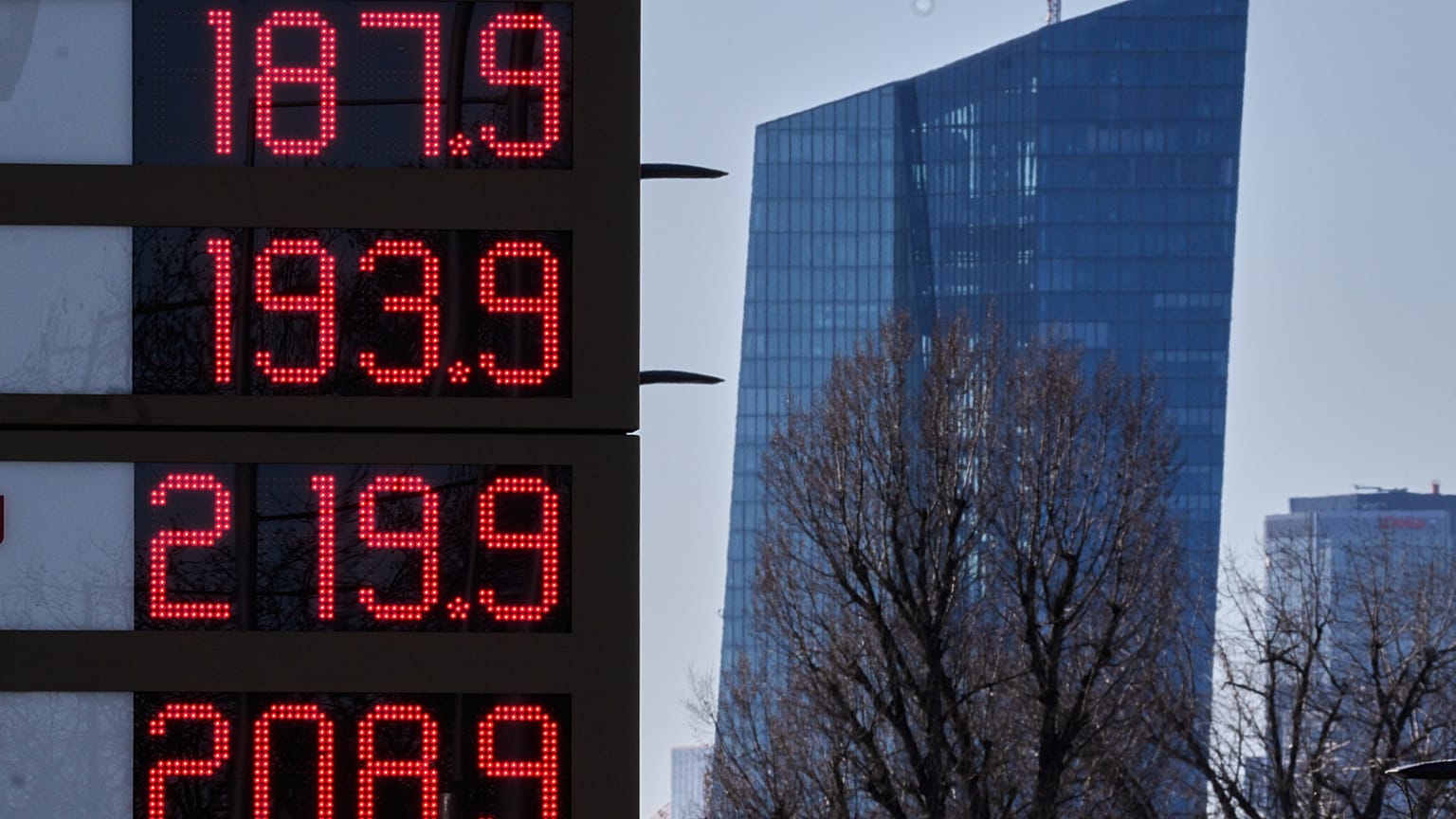
Gas prizes are displayed at a gas station with the European Central Bank in background in Frankfurt, Germany, Monday, March 2, 2026.
Copyright Copyright 2026 The Associated Press. All rights reserved


By Piero Cingari
Published on 

The closure of the Strait of Hormuz has sent gas prices surging by 60%, putting additional strain on Europe's already-depleted winter inventories and prompting economists to revise their 2026 growth and inflation outlooks.

Dutch TTF natural gas futures — Europe's benchmark price — hit €50 per megawatt-hour on Thursday morning, up 60% since US and Israeli strikes on Iran closed the Strait of Hormuz

The move is the continent's sharpest energy shock since the 2022 crisis, and it is landing on a market that was already dangerously exposed: gas inventories across Europe stand at their lowest seasonal levels in years.

With the strait — which carries roughly a fifth of the world's oil trade — still closed, economists and energy analysts warn that even a brief disruption could inflict damage on European growth, push inflation back above target and potentially force the European Central Bank (ECB) to revisit interest rate paths they had only recently stabilised.

Why the Strait of Hormuz matters for Europe

Around 20% of global oil supply and roughly one-fifth of global liquefied natural gas (LNG) trade pass through the strait, making it one of the most strategically important energy corridors in the world.

For Europe, the stakes are considerable. Qatar supplies approximately 15% of the continent's total LNG imports, making unimpeded passage through the strait a matter of energy security.

Europe’s exposure to Gulf energy flows has increased considerably since the continent dramatically reduced imports of Russian fossil fuels after 2022.

Bridget Payne, head of energy forecasting at Oxford Economics, said trade disruption rather than lost production is currently the primary concern.

She estimates oil supply could be disrupted by around 4 million barrels per day over the coming quarter.

While Gulf producers have spare capacity to offset Iranian supply losses, Payne warned that alternative shipping routes can only handle about one-third of the oil normally passing through Hormuz.

Europe entered March with unusually low gas storage levels. Inventories across the continent stood at roughly 30%, with Germany — Europe’s largest economy — reporting reserves as low as 21.6%.

Oxford Economics warned that disruptions to Qatari LNG exports could force Asian buyers to compete more aggressively with Europe for cargoes, potentially making it harder for European countries to refill gas storage ahead of next winter.

Inflation and growth risks rising

Higher energy prices are expected to feed through into inflation across Europe.

"Europe's depleted gas stores and reliance on transport routes via the Middle East point to heightened risks of a larger inflationary supply shock. That could become an additional drag on our already below-consensus forecast for 2026 GDP growth," said Oliver Rakau, chief Germany economist at Oxford Economics.

Oxford Economics expects the conflict to raise eurozone headline inflation by 0.3–0.5 percentage points in 2026, pushing it to around 2.3%.

Higher energy costs could also reduce household purchasing power, trimming economic growth.

Rakau estimates the shock could lower eurozone GDP growth by around 0.1 percentage points to roughly 1.0% this year.

Economists at Goldman Sachs said the conflict in Iran has already prompted revisions to their forecasts for economic growth, inflation and central bank policy.

“We are making changes to our growth, inflation and central banks forecasts in light of the evolving conflict in the Middle East,” said Sven Jari Stehn, chief European economist at Goldman Sachs.

Goldman Sachs also estimates that higher energy prices would trim economic growth by 0.1 to 0.2 percentage points this year across the eurozone, the United Kingdom, Sweden and Switzerland.

However, the outlook could deteriorate if energy prices rise more sharply or remain elevated for longer.

In a downside scenario, oil prices could remain near $80 (€74) per barrel while gas prices stay around €70 per megawatt-hour, according to the bank's estimates.

In a severe scenario, oil could reach $100 (€92) per barrel and gas €100 per megawatt-hour.

In more severe scenarios, the impact could be much larger.

Headline inflation by late 2026 could be nearly two percentage points higher in a downside scenario and as much as 3.6 percentage points higher in a severe shock.

Goldman said it would expect the ECB to deliver two 25 basis point rate hikes in the second half of 2026 in the severe downside scenario, should energy price increases generate significant second-round effects on core inflation.

Logistics disruptions add pressure

The war is also disrupting global logistics networks, adding further uncertainty for European trade.

According to Freightos research head Judah Levine, military strikes and retaliatory attacks in the region have already forced several shipping companies to suspend bookings to Persian Gulf ports.

"The US-Israel strikes on Iran and subsequent Iranian retaliation are driving significant logistics disruptions in the region which could start to be felt more broadly if the conflict stretches on," said Levine.

The Strait of Hormuz handles approximately 2% to 3% of global container volumes, and around 100 container vessels are currently stranded in the Persian Gulf.

Some of the world’s largest carriers, including Hapag-Lloyd and MSC, have halted bookings to and from Gulf ports, while CMA CGM has stopped accepting shipments to the region entirely.

The crisis has also revived concerns about the Red Sea.

The Houthis, who paused attacks on commercial vessels in October, have threatened to resume strikes, prompting the few carriers who had returned to that route to divert back around the Cape of Good Hope, further increasing transport costs.

Meanwhile, disruptions to major Gulf aviation hubs have reduced global air cargo capacity.

Qatar Airways Cargo, Emirates SkyCargo and Etihad together account for roughly 13% of global air freight capacity and play a key role in connecting Asia and Europe.

With many flights grounded and regional airspace closed, freight forwarders are beginning to charter direct flights between Asia and Europe, a shift that is already pushing up transport costs.

Freight rates from Southeast Asia to Europe have risen more than 6% in recent days, according to the Freightos Air Index.

Currency markets reflect rising risk aversion

Financial markets are also reacting to the geopolitical uncertainty.

European currencies have weakened as investors move toward safe-haven assets such as the US dollar and gold.

According to Michał Jóźwiak, market analyst at financial services firm Ebury, the euro has fallen about 1.8% against the dollar since the conflict intensified.

The sell-off has been even more pronounced in Central and Eastern Europe.

The Hungarian forint has weakened nearly 5% against the dollar, while the Polish zloty has dropped around 3.5%, marking one of the sharpest weekly moves since the start of the Ukraine war in 2022.

Further weakness in European currencies could also amplify inflationary pressures by increasing the cost of imports.

A fragile energy balance

For Europe, the unfolding conflict underscores the vulnerability of its post-Russia energy model.

While the continent has significantly reduced its reliance on Russian pipeline gas since 2022, much of that supply has been replaced by seaborne LNG.

This shift has made Europe more exposed to disruptions along global shipping routes and to geopolitical tensions in key transit regions such as the Middle East.

With gas inventories already low and the seasonal refilling of storage facilities under way, any prolonged disruption to energy flows from the Gulf could quickly ripple through European markets and economies.


What are Europe's oil route alternatives to the Strait of Hormuz?

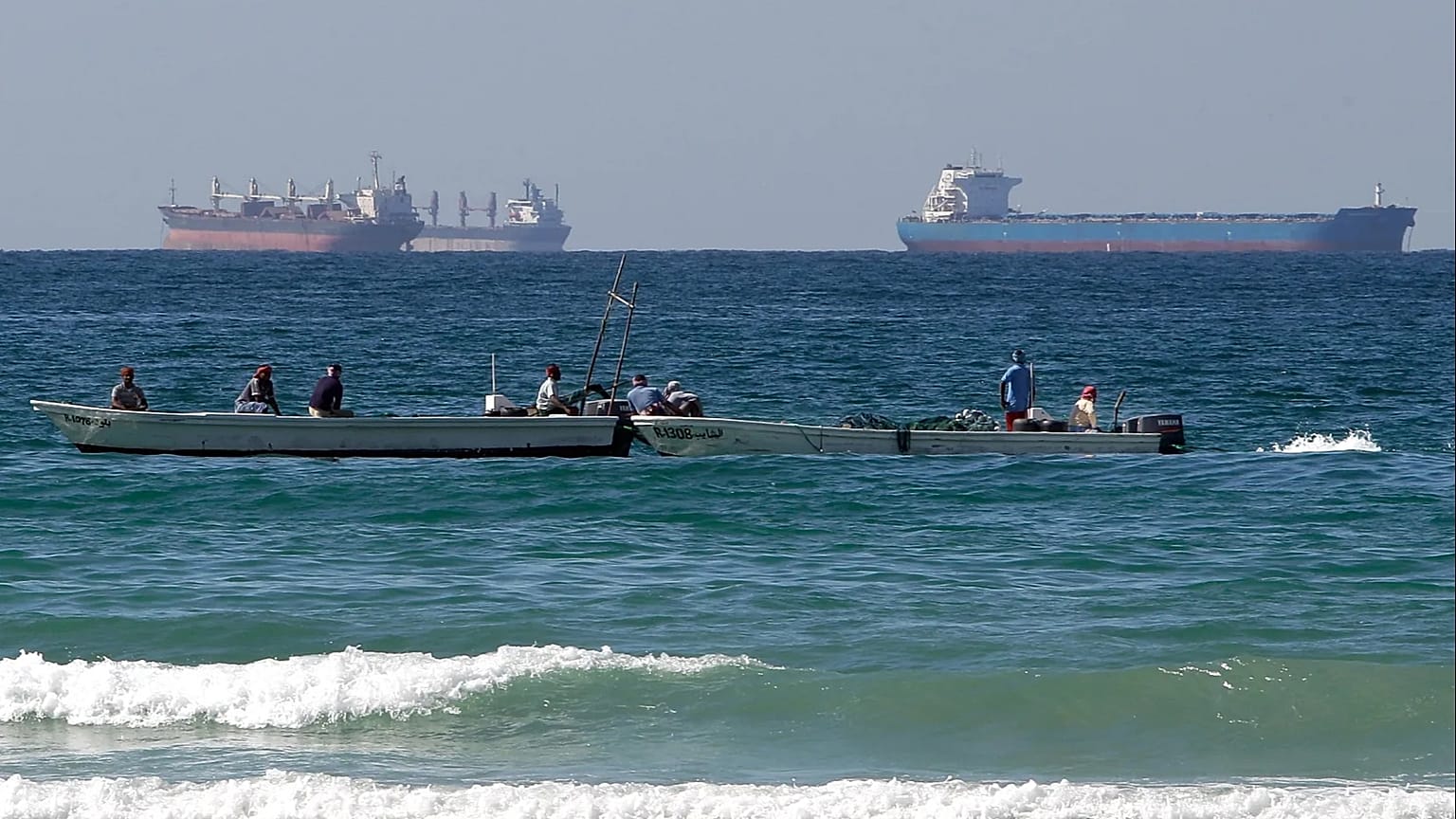
Oil tankers south of the Strait of Hormuz off the town of Ras Al Khaimah in the United Arab Emirates.
Copyright AP Photo / Kamran Jebreili


By Marta Pacheco
Published on 

Many European countries like Italy, Greece, Spain, Poland and Belgium rely on the Strait of Hormuz for imports or refining. Experts say the closure of this corridor will not cut off Europe’s oil supply, but will continue to drive up oil prices and disrupt markets.

As military escalation surges in the Middle East, Iran's announcement of the closure of the Strait of Hormuz has sent crude oil and natural gas prices soaring.

Faced with rising energy costs at home, European leaders are scrambling to avoid a cascading energy crisis, and are especially concerned about mitigating the price shock already being felt in markets.

Many European countries like Italy, Greece, Spain, Poland and Belgium rely on the Strait of Hormuz for imports or refining. Experts say the closure of this corridor will not cut off Europe’s oil supply, but will continue to drive oil prices and disrupt markets.

Lying between the Persian Gulf and the Gulf of Oman, the Strait is a narrow shipping corridor largely under Iranian control, and serves as one of the world’s most critical energy choke points for oil, accounting for 20% of global production.

Johannes Rauball, a senior crude analyst at the real-time data and market intelligence firm Kpler, estimated Hormuz-related disruptions to last another three to four weeks, keeping Europe exposed to elevated prices and volatility, with crude prices currently carrying a risk premium of around $15 (€13) per barrel.

"(Prices) will begin stabilizing once credible prospects of US–Iran talks emerge, or if flows via the Hormuz restart. We expect most of the risk premium to fall when negotiations look tangible, and largely disappear once a structured agreement is reached," Rauball told Euronews.

The European Commission is convening technical experts on Wednesday to address the new energy crisis, which severely complicates the bloc's ongoing battle to cut high electricity prices in a bid to re-industrialise the EU27's competitiveness.

While the bloc's oil imports are diversified, with Norway (14.6%), the United States (14.5%), and Kazakhstan (12.2%) ranking as the top three major suppliers, several EU countries do import oil from Gulf producers.

Saudi Arabia accounted for 6.8% of the bloc's total imports in the first 9 months of 2025, according to EU data, with Spain, Germany, France, and the Netherlands the bloc's top importers.

Iraq has already recorded oil production shut-ins as a result of the military strikes, Rauball said. Other Gulf states — including the UAE, Kuwait, Saudi Arabia, and Qatar — have roughly 10–20 days of flexibility before shut-ins are required, assuming normal production rates.

Alternative oil routes

Baird Langenbrunner, Research Analyst at the Global Energy Monitor, said there are two viable oil pipelines that could serve as an alternative to the Strait of Hormuz.

The first option is the Saudi East-West crude oil pipeline, which has a capacity of 5 million barrels per day. It runs east-to-west across Saudi Arabia from the Abqaiq processing center to Yanbu on the Red Sea

"Yanbu wasn’t designed to be Saudi Arabia’s main export hub, so its infrastructure and tanker-loading capacity will likely constrain actual throughput," Langenbrunner told Euronews.

Parallel pipeline infrastructure along this route could be temporarily converted to carry extra oil, Langenbrunner added, increasing the total takeaway to 7 million barrels per day.

"That would compete with carrying other important liquids to Yanbu," Langenbrunner added.

The second alternative is the Habshan–Fujairah oil pipeline in the United Arab Emirates (UAE), which could transport crude oil to the Fujairah terminal on the Gulf of Oman, but Langenbrunner pointed out it has a much lower daily capacity of 1.8 million barrels.

"The UAE already uses it as a routine export route, because it bypasses insurance and security costs of transiting the strait, and there’s not much spare capacity to use," the energy analyst added.

The recently built Goreh-Jask Crude Oil Pipeline in Iran would, in theory, be capable of bypassing the Strait, he explained, but not without complications.

"This pipeline sits in Iran, which was already under heavy US sanctions and whose infrastructure is under direct military attack. In addition, its confirmed capacity is around 300,000 barrels per day, quite small compared to what the strait handles each day," Langenbrunner said.

Ultimately, only a small fraction of what normally flows through the Strait could transit alternative pipeline routes, compared to the 20 million barrels per day that transit that corridor.

All the while, shipping through the Strait of Hormuz between Iran and Oman has ground to a near halt after vessels in the area were hit as Iran retaliated against US and Israeli strikes.

Shipping insurers have announced they are cancelling war risk coverage after the Iranian armed forces, the Islamic Revolutionary Guard Corps, said the Strait was closed, and tankers are also likely to avoid transiting the Red Sea via the Suez Canal to reach Europe.

"For volumes that can’t go through pipelines and rely on ships, an alternative is to re-route tankers around the Cape of Good Hope to reach Europe, which adds substantial time and cost to transit," Langenbrunner said. "And this only helps oil not already trapped in the Persian Gulf."

North Sea, North Africa and Latin America

North Sea production remains one of Europe’s most secure alternative supply sources.Crude from offshore fields in Norway and the UK can be shipped directly by tanker to European ports.

The US and West Africa also offer viable substitutes, with producers such as Nigeria and Angola shipping crude directly to Europe along Atlantic tanker routes.

North Africa, particularly Algeria and Libya, provides very short-haul Mediterranean supply routes into Southern Europe. These shipments avoid major global chokepoints and benefit from minimal transport distance. But political instability, especially in Libya, poses recurring risks to sustained supply.

Caspian and Central Asian producers such as Kazakhstan and Azerbaijan offer additional diversification. Their crude typically travels by pipeline to Black Sea export terminals before being shipped through the Turkish Straits into the Mediterranean.

Latin American suppliers, notably Brazil and Guyana, can deliver crude to Europe via Atlantic tanker routes that avoid Middle Eastern chokepoints altogether.

Pauline Heinrichs, Lecturer in War Studies at King's College London, said that if Europe wants to take security strategy seriously, it will need to reduce the insecurity from fossil fuel dependency.

“Our security strategy is currently reduced to responding to fossil fuel-induced crises, and I mean that both in terms of fossil fuels themselves, but also the powers that depend on fossil fuels to support their power, including the United States," Heinrichs said.