Tuesday, March 10, 2026

TRUMP RECYCLES

Trump announces America is opening its first new oil refinery in 50 years

Robert Davis
March 10, 2026 
RAW STORY

President Donald Trump announced on Tuesday that the U.S. is opening the first domestic oil refinery in the last half-century.

Trump claimed in a new post on Truth Social that the refinery will be located in Brownsville, Texas, and will be built using funds from a more than $300 billion investment deal struck with an Indian oil company called Reliance.

"THIS IS A HISTORIC $300 BILLION DOLLAR DEAL — THE BIGGEST IN U.S. HISTORY, A MASSIVE WIN for American Workers, Energy, and the GREAT People of South Texas!" Trump wrote on Truth Social.

"It is because of our America First Agenda, streamlining Permits, and lowering Taxes, that have attracted Billions of Dollars in Deals coming back to our Nation," Trump added. "A new Refinery at the Port of Brownsville, will fuel U.S. Markets, strengthen our National Security, boost American Energy production, deliver Billions of Dollars in Economic impact, and will be THE CLEANEST REFINERY IN THE WORLD."

The deal was announced at a time when the Trump administration's war in Iran sent energy prices skyrocketing over the weekend. On Monday, the price of a barrel of oil hit nearly $120 a barrel before Trump announced that the war in Iran was effectively over.

AAA measured the national average gas price at $3.54 per gallon on Tuesday, which is about $0.40-cents higher than it was a week ago.


Trump mocked for taking credit for Biden-era investment: 'He's having waking nightmares'

Robert Davis
March 10, 2026 
RAW STORY

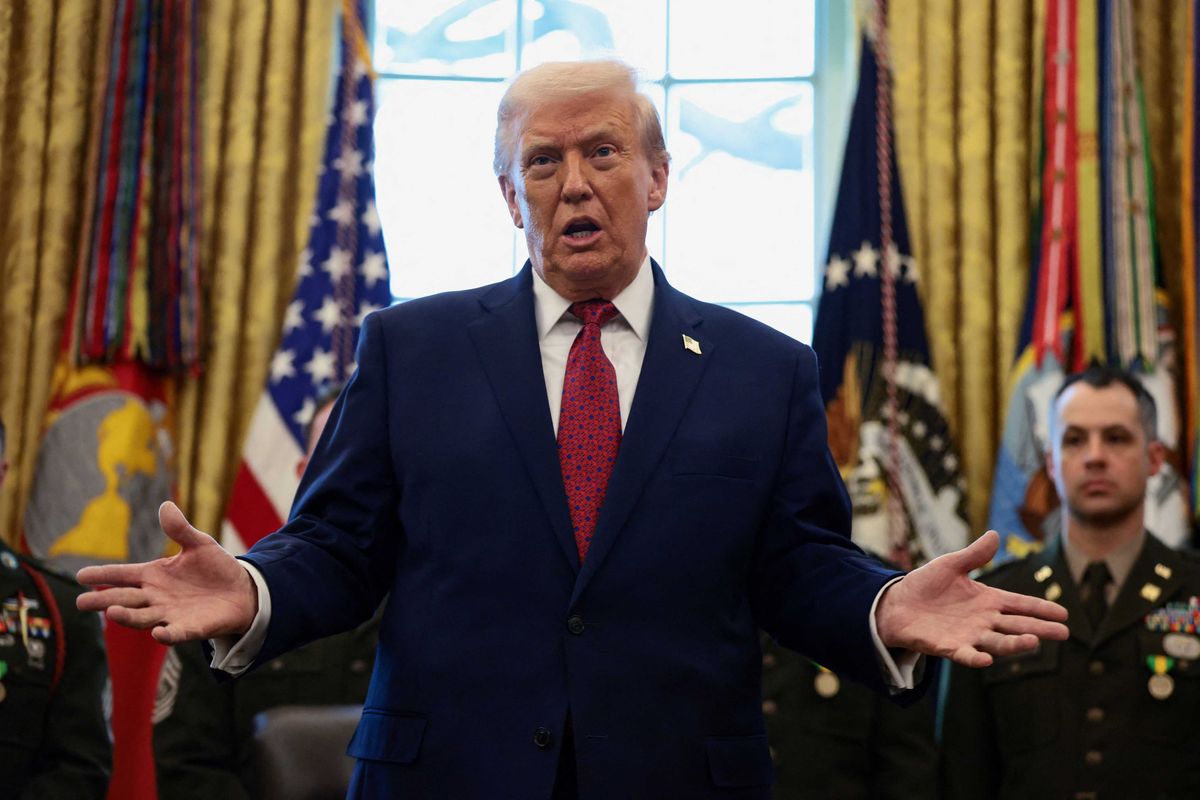
Donald Trump speaks. REUTERS/Evelyn Hockstein

President Donald Trump was brutally mocked by political analysts and observers on Tuesday after he announced a new oil refinery would open in Brownsville, Texas.

Earlier in the day, Trump claimed that his administration had attracted a new $300 billion investment from an Indian oil company, Reliance, to build a new refinery. However, some analysts and observers noted that Trump appeared to take credit for an investment announced under the previous Biden administration.

The announcement was made at a time when global markets were reeling from the aftershocks of the U.S. and Israel's decision to bomb Iran earlier this month. On Monday, the price of a barrel of oil hit nearly $120. In the U.S., gas prices are up more than $0.40-cents across the nation since last week, according to data from AAA.

Political analysts and observers shared their reactions on social media.

"I love how you can tell that he's having waking nightmares about the volatility in the oil market and is trying to post through it," Jacob Weindling, editor-at-large for Splinter News, posted on Bluesky.

"This project began construction in 2024 and cost between $3-$4 billion, according to the company. The refinery capacity is 160,000 [barrels per day]," Patrick De Haan, head of petroleum analysis at GasBuddy, posted on X.

"Interesting. This company was named 'Element Fuel Holdings LLC' during the Biden years. Wonder why they changed it to a Trump slogan?????" Noah Sachtman, contributing writer for Rolling Stone, posted on Bluesky.


"If he actually cared about 'energy dominance,' he wouldn't be doing everything he can to cancel renewable energy projects," writer Thor Benson posted on Bluesky.

ANTI SNAP TROPE

Senate Republican claims poor people 'not experienced at navigating the real world'

Matthew Chapman
March 10, 2026 
RAW STORY

 
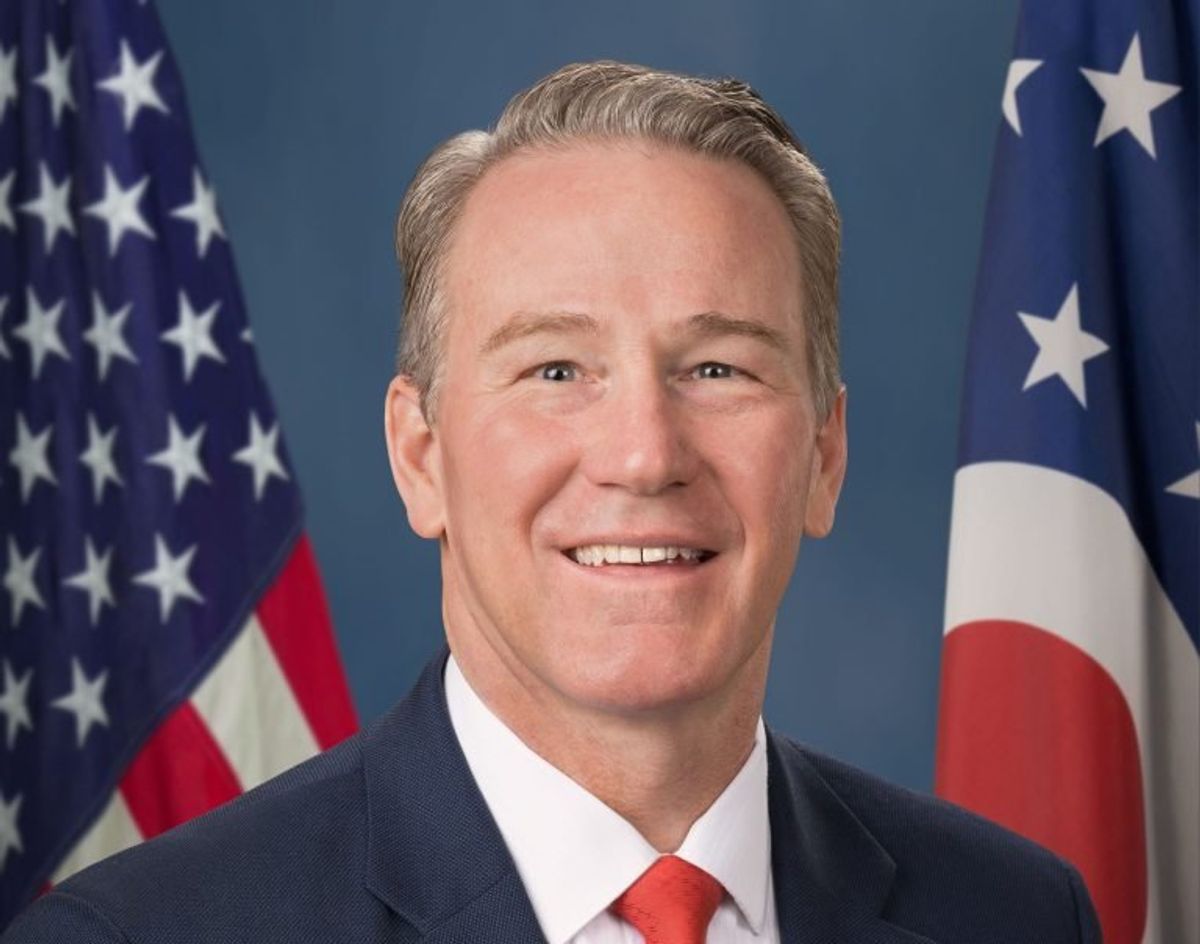
Sen. Jon Husted. (Official photo)

Sen. Jon Husted (R-OH) claimed in an interview released on Tuesday that low-income people don't know how to "navigate the real world" because they're too dependent on the government just handing them money.

"People living in poverty are just not very experienced at navigating the real world, right?" said Husted, who was appointed to the Senate seat held by now-Vice President JD Vance. "I remember talking to one young lady who said, 'Well, I don't really know how money works at a grocery store,' because she grew up and has lived all of her adult life using SNAP cards to buy groceries. You literally have to teach people how to budget."

"The buzzword today, let's face it, is 'affordability,' right?" he added.

The Ohio Democratic Party, which hopes to unseat Husted by running former Sen. Sherrod Brown, immediately pounced on the interview.

“Jon Husted couldn’t be more wrong and out of touch," stated a senior communications adviser for the party. "Ohioans are working harder than ever to make ends meet, but they’re being screwed by Husted and politicians in Washington voting to make everything more expensive. It’s clear that Jon Husted has no clue what people in Ohio are actually going through.”


Brown also responded.


“If there's anyone here who isn't experienced at navigating the real world, it’s Jon Husted, who says struggling Ohioans should just ‘earn more’ and fix their ‘broken work ethic,’” said the former senator. “Ohioans are working harder than ever, yet they're seeing more money go out the door than coming in. Affordability isn’t a buzz word, it’s a crisis that Husted has only made worse. Instead of talking down to Ohioans, Jon Husted should ease the economic burden that families across the state are facing.”


OPINION

Dark new poll reveals something deeply broken in America — and it predates Trump

Robert Reich
March 10, 2026


A demonstrator shouts in front of Trump Tower in New York City. 
REUTERS/Eduardo Munoz

A survey released last Thursday by the Pew Research Center finds that 53 percent of American adults describe the morality and ethics of our fellow citizens as “bad” (ranging from “somewhat bad” to “very bad”).


This puts Americans way out front of other nations on the we-hate-our-compatriots scale. In the 24 other countries polled by Pew, most people called their fellow citizens somewhat good or very good.


At the opposite end of the spectrum from the United States is Canada, where 92 percent say their fellow Canadians are good, while just 7 percent say they’re bad.

Why are we so down on our fellow citizens? It may have something to do with our politics.

Some 30 years ago, my dear friend, the late Republican Senator Alan Simpson, told me Democrats viewed Republicans as stupid and Republicans viewed Democrats as evil.

“I’d rather be in the stupid party,” he chuckled.


I asked him why Republicans saw Democrats as evil.

He took a deep breath. “Religion.”

I said I didn’t understand.

“It’s the Christian right,” he said as if talking to a five-year-old. “Since Reagan, my party has been a magnet for religious conservatives and Christian fundamentalists, where it’s all about good and evil. Too bad, pal. You’re on the evil side.”

That was 30 years ago. Since then, the divide has only sharpened.

In 2012, Mitt Romney told supporters that “47 percent” of Americans would vote for Obama no matter what because they’re “dependent upon government ... believe that they are victims ... believe the government has a responsibility to care for them ... [and] pay no income tax.”

Insulting 47 percent of Americans was no way to win an election. It was also no way to unite the country.

Then in 2016, Hillary Clinton described half of Trump’s supporters as a “basket of deplorables.” Also no way to win or to foster mutual trust.

Once Trump took office, dislike of our fellow citizens soared.

Before he entered the White House, 47 percent of Republicans and 35 percent of Democrats said people in the opposing party were “immoral.”

By 2022, after years of Trump’s venom, 72 percent of Republicans and 63 percent of Democrats called people in the opposing party “immoral.”

Since he’s been back in the Oval, it’s got even worse.

After Charlie Kirk was assassinated last September, Trump blamed a “radical left bunch of lunatics” for the killing. Vice President JD Vance, parroting Trump, vowed to “punish these radical leftist lunatics.”

As Democratic Senator Chris Murphy noted at the time, “Kirk’s assassination could have united Americans against political violence, but the Trump camp seems to be preparing a campaign to destroy opponents.”

When a federal judge ruled in March that Trump didn’t have authority to send National Guard troops into Los Angeles, White House spokeswoman Anna Kelly — in language typical of what we hear from the Trump regime — called him a “rogue judge” and claimed Trump “saved Los Angeles” from “deranged leftist lunatics sowing mass chaos.


After ICE agents killed Renee Good and Alex Pretti in Minneapolis, Kristi Noem, Trump’s former secretary of Homeland Security, called the two of them “domestic terrorists.”

Since then, the Department of Homeland Security has sent out a steady stream of tweets — catching some 380 million views on X — claiming that its agents have been under attack by U.S. citizens whom it describes as “terrorists,” “rioters,” and “agitators,” and asserting, among other things, that “Americans are fed up with rampant criminality ruling this country.”

Meanwhile, Trump has been threatening to cut off funding for various programs that help poor Americans by vilifying them as “fraudsters” and withholding money from Democratic-led states.

A few days ago, Vance charged that Medicaid and food assistance programs were rife with fraud perpetrated by “bad actors in our society … who take the goodwill and trust of the American taxpayers and use it against us, [who] decide to make themselves rich.”


***

For almost a decade, Trump has told us that certain other Americans should be feared: among them, Democrats, liberals, Mexican Americans, Muslim Americans, Black Americans, transgender people, and LGBTQ+ people. All are presumed to be the “enemy within.”

As Barack Obama said at Jesse Jackson’s memorial on March 6, “Each day, we’re told by those in high office to fear each other and to turn on each other, and that some Americans count more than others, and that some don’t even count at all.”


Is it any surprise that a majority of Americans now describe the morality of other Americans as “bad?”

But I can’t help wonder: How much of our distrust and resentment is the byproduct of something more fundamental that’s been unfolding in America for over four decades — something Trump took exploited but that would have invited a hateful demagogue like Trump eventually: the increasing concentration of wealth and power in fewer and fewer hands?

Trump took advantage of anger and distrust that had been building for years — at a system increasingly seen as rigged against most of us.

What do you think?


Robert Reich is an emeritus professor of public policy at Berkeley and former secretary of labor. His writings can be found at https://robertreich.substack.com/. His new memoir, Coming Up Short, can be found wherever you buy books. You can also support local bookstores nationally by ordering the book at bookshop.org


Central Asia shaken by fears of huge acid rain cloud heading to region from Iran

Central Asia shaken by fears of huge acid rain cloud heading to region from Iran
Inhabitants of Central Asia are beset by worries that huge amounts of toxic pollution released by Israeli military strikes on Iranian oil facilities are heading their way in the form of carcinogenic acid rain. Scientists say the scenario is implausible. / bne IntelliNews
By bne Eurasia bureau March 9, 2026

Fears that Central Asia could be deluged by cancer-causing acid rain as a result of devastating Israeli strikes on Iranian oil depots that released giant plumes of acrid smoke have spread across the region.

Anxieties over claims that a huge toxic cloud might be moving towards Central Asia were intensified by a Kyrgyz MP, Makhabat Mavlyanova, who raised the issue in parliament, saying: "As a result of Israel's attack on Iranian oil refineries, many harmful chemicals were released into the air. And now there's talk that these substances could fall here in Kyrgyzstan as acid rain. Is anyone monitoring this process? In what areas could such acid rain fall?"

Kyrgyzstan’s Deputy Minister of Natural Resources, Environment and Technical Supervision Asel Raimkulova replied that the country’s hydrometeorological service was monitoring the situation at its stations.

In neighbouring Kazakhstan, however, Orda.kz reported how the Centre for Combatting Disinformation got involved and pointed out that no threat had been confirmed by experts at meteorological service Kazhydromet with either data or observations.

A statement from the disinformation centre said: "Acid precipitation is formed from sulfur and nitrogen oxides emitted into the atmosphere primarily by industry, energy, and transport, and typically occurs near pollution sources.

“As air masses travel long distances, the concentration of these substances is significantly reduced by natural atmospheric processes.”

Kazhydromet said on March 9: “According to current monitoring, there are no signs of the spread of pollutants to Kazakhstan and Central Asia [from consequences of the Iran conflict]"

In largest Kazakh city Almaty, however, inhabitants reportedly began to associate a warning of increased air pollution on March 9 with the military strikes on Iranian oil refineries and fuel storage facilities.

Also on March 9, Uzbekistan’s meteorological service Uzhydromet joined the effort to reassure people that “acid clouds” from Iran pose no threat.

“This information has no scientific basis,” newshub.uz reported Uzhydromet as saying. 

It added that “the formation of dangerous concentrations of acid precipitation thousands of kilometres from the source is virtually impossible".


COMMENT: Armenia caught between East and West as “corridor war” tests strategic pivot

COMMENT: Armenia caught between East and West as “corridor war” tests strategic pivot
/ Image by Makalu from Pixabay
By bne IntelliNews March 10, 2026

Armenia is navigating one of its most consequential geopolitical transitions since independence in 1991, as it seeks to recalibrate security ties away from Moscow while courting Western support, says a report published by the Central Asia-Caucasus Institute. 

Armenia is navigating one of its most consequential geopolitical transitions since independence in 1991, as it seeks to recalibrate security ties away from Moscow while courting Western support, as outlined in the paper by independent researcher Ebru Akgün. The report warns that the country is now at the centre of a “corridor war” between the US, Russia, and Iran, as new transport and energy initiatives highlight Yerevan’s strategic vulnerability.

The US-backed Trump Route for International Peace and Prosperity (TRIPP) corridor is intended to link Azerbaijan with its Nakhchivan exclave through Armenian territory in Syunik province. Under Armenian sovereign and customs control, the project is intended to provide both economic incentives and an implicit security guarantee.

“By promoting this ‘Crossroads of Peace’ vision, the United States is attempting to create a vested economic interest in Armenia’s territorial integrity,” the report by the Central Asia-Caucasus Institute states.

However, the corridor also exposes Armenia to geopolitical friction. “the TRIPP corridor brings its own set of risks. While it offers an economic lifeline and a potential implicit security shield, it places Armenia at the heart of a “corridor war” between the West, Russia, and Iran,” the report says. 

Tehran has expressed deep concern over increased Western influence in Syunik, viewing it as a “red line,” while Moscow considers corridors not overseen by its security services as a violation of the 2020 ceasefire. 

“The TRIPP corridor is as much a security challenge as it is an opportunity, requiring Armenia to balance American ambitions against the immediate geographical realities of its neighbours,” the report notes.

Armenia has simultaneously begun modernising its military with contracts for French GM200 radars, Mistral anti-air missiles, Indian Akash-1S systems, and Pinaka rockets, moving away from a decades-long dependence on Russian hardware. Yet the report cautions that “buying Western” does not automatically translate into security. Existing Soviet-era command-and-control networks remain vulnerable to electronic surveillance and jamming, leaving Armenia exposed until full technical independence can be achieved.

Prime Minister Nikol Pashinyan has championed a “dual-track” approach, combining continued hosting of Russian forces with Western civilian instruments such as the European Union Monitoring Mission in Armenia (EUMA), which has been extended until 2028. The government argues the mix provides “visibility-based deterrence” but acknowledges that civilian missions cannot substitute for hard military guarantees.

The stakes are heightened ahead of Armenia’s June 7 parliamentary elections. The report warns that public support hinges on whether projects like TRIPP and arms modernisation translate into tangible security and economic benefits. “Armenia’s ability to sustain its independence will depend on whether its Western partners are willing to provide actionable security pathways that go beyond binoculars and political statements,” the report concludes.

With Moscow retaining control over much of Armenia’s gas infrastructure and Iran wary of northern transit routes, the country faces a narrow path: maintain sovereignty through Western engagement while avoiding provocation of its powerful neighbours.


Hormuz closure would cost Gulf states average 3.8% of GDP, Marex warns as Bahrain most exposed

Hormuz closure would cost Gulf states average 3.8% of GDP, Marex warns as Bahrain most exposed
Bahrain, which has no alternative export route, would see its current account swing from a surplus of 3.8% of GDP to a deficit of 3.2%. / bne IntelliNews
By bne IntelliNews March 10, 2026

A three-month closure of the Strait of Hormuz would inflict an average current account deterioration of 3.8% of GDP across Persian Gulf states, with Bahrain the most vulnerable and Oman the sole clear beneficiary, according to an analysis by commodities and financial services firm Marex.

The note, written by Marex head of GEM strategy Matthew Vogel, models a scenario with oil at $120 per barrel during a three-month supply squeeze, finding that Saudi Arabia and the UAE emerge as relative winners while Iraq, Kuwait, Bahrain and Qatar face the most severe damage.

Bahrain, which has no alternative export route, would see its current account swing from a surplus of 3.8% of GDP to a deficit of 3.2%, while its fiscal deficit would widen from 9.9% to 12.2% of GDP. Kuwait's fiscal surplus would collapse from 4.5% to a deficit of 13.9%, and Qatar's current account surplus would fall from 10.2% to around 2.1%.

Saudi Arabia can divert an estimated 2mn barrels per day through its East-West pipeline to Yanbu on the Red Sea, covering around 35% of exports, while the UAE can route up to 40% of output via the Abu Dhabi Crude Oil Pipeline to Fujairah.

Marex estimates both countries would suffer external and fiscal deterioration of only around 1% of GDP under the diversion scenario.

However, the note cautions that Saudi Red Sea exports face potential threats from Suez closure to the north and Houthi activity near Bab El-Mandeb to the south.

Iraq can divert only around 10% of exports via the Kurdistan Region-Ceyhan corridor, leaving its current account deficit widening to around 7.9% of GDP and its fiscal deficit reaching 13.9%.

Oman, sitting outside the Gulf with full market access and the ability to benefit from freight rerouting through its ports, would see its current account swing from a deficit of 0.7% to a surplus of 6.1% of GDP.

Marex noted that sovereign wealth funds provide a buffer but warned that liquidity constraints could limit their usefulness over an extended closure, and that monetary authorities would need to support local banks. Oil would need to reach $169 per barrel to fully neutralise the current account impact for Saudi Arabia and $155 per barrel for the UAE.

TURKIYE

Erdogan’s jailed top rival Imamoglu gets courtroom standing ovation as he arrives for trial

Erdogan’s jailed top rival Imamoglu gets courtroom standing ovation as he arrives for trial
All protests within a one-kilometre radius of the courtroom were banned. Supporters of Imamoglu therefore gathered at a distance, waving images of Imamoglu and co-defendants. / dw, screenshot
By bne IntelliNews March 9, 2026

Ekrem Imamoglu, the jailed top rival to Turkey’s President Recep Tayyip Erdogan, on March 9 received a standing ovation from an Istanbul courtroom public gallery as he arrived to face the start of what is widely believed to be a politically motivated trial designed to prevent him running for the presidency.

Proceedings got off to a chaotic start. The presiding judge rejected a request from the deposed mayor of Istanbul Imamoglu to speak and momentarily adjourned the trial. That reportedly triggered cries of “Shame!” from many of those watching the trial.

Imamoglu, 55, was detained in a dawn police swoop on his home almost exactly a year ago, days after it became clear that Turkey’s main opposition party CHP was set to make the popular politician its presidential candidate, a move it went ahead with even after he was put in a cell.

He faces a raft of corruption charges that could lead to a prison sentence of more than 2,000 years. The indictment runs to almost 4,000 pages, accusing Imamoglu of running a criminal organisation that, in the words of Erdogan, is like“an octopus”.

Imamoglu pleads his innocence on all counts, arguing the charges are trumped up, absurd and spurious.

There are more than 400 co-defendants in the case.

The trial could last months or possibly even years, analysts were quoted as saying by the Financial Times.

“The whole matter is about Erdogan’s fear of Imamoglu,” CHP leader Ozgur Ozel told supporters at a rally last week. 

Ozel and Imamoglu's wife, Dilek, sat side-by-side in the large courtroom.

"We are nervous and anxious," Dilek Imamoglu told reporters before the hearing started, as reported by Reuters. "We hope that they move to trial without detention. I last saw Ekrem last week, and ​he was in very good ​spirits."

All protests within a one-kilometre radius of the courtroom were banned. Supporters of Imamoglu therefore gathered at a distance, waving images of Imamoglu and those of more than a dozen other detained CHP mayors, according to AFP and DW.

Human Rights Watch said the trial represented “the culmination a 17-month campaign by the Turkish authorities against the main opposition party through criminal investigations, detentions, and other lawsuits targeting İmamoglu, other elected officials, and the party leadership, pointing to a concerted effort to remove Imamoglu from politics and discredit his party in ways that undermine democracy”.

Sweden's Skanska to build US data centre for $191 million

10.03.2026 dpa


Photo: Marijan Murat/dpa


Swedish construction and development company Skanska AB said on Tuesday that it has signed a contract with an existing client to build a new $191 million data centre in the United States.

The construction is scheduled to begin in the first quarter of 2026 and is expected to be completed in the third quarter of 2027.

The order will be included in the company's US order bookings for the first quarter of 2026, it said.

The project includes construction of the data centre building shell and interior fit-out for technical spaces, support areas and office functions.

Skanska is currently trading 3.41% higher at 263.60 Swedish kronor ($28.91) on the Stockholm Stock Exchange.

AI bots are ignoring their programming and giving hackers superpowers

10.03.2026


Photo: Matthias Balk/dpa

Hackers recently used mainstream AI chatbots to steal data on 195 million Mexican citizens, battering Claude and ChatGPT with prompts until the systems helped them break in. How long before even tougher breaches — or autonomous AI-driven hacks — become impossible to stop?

By Nilesh Christopher, Los Angeles Times

Welcome to the age of AI hacking, in which the right prompts make amateurs into master hackers.

A group of cybercriminals recently used off-the-shelf artificial intelligence chatbots to steal data on nearly 200 million taxpayers. The bots provided the code and ready-to-execute plans to bypass firewalls.

Although they were explicitly programmed to refuse to help hackers, the bots were duped into abetting the cybercrime.

According to a recent report from Israeli cybersecurity firm Gambit Security, hackers last month used Claude, the chatbot from Anthropic, to steal 150 gigabytes of data from Mexican government agencies.

Claude initially refused to cooperate with the hacking attempts and even denied requests to cover the hackers' digital tracks, the experts who discovered the breach said. The group pummeled the bot with more than 1,000 prompts to bypass the safeguards and convince Claude they were allowed to test the system for vulnerabilities.

AI companies have been trying to create unbreakable chains on their AI models to restrain them from helping do things such as generating child sexual content or aiding in sourcing and creating weapons. They hire entire teams to try to break their own chatbots before someone else does.

But in this case, hackers continuously prompted Claude in creative ways and were able to "jailbreak" the chatbot to assist them. When they encountered problems with Claude, the hackers used OpenAI's ChatGPT for data analysis and to learn which credentials were required to move through the system undetected.

The group used AI to find and exploit vulnerabilities, bypass defenses, create backdoors and analyze data along the way to gain control of the systems before they stole 195 million identities from nine Mexican government systems, including tax records, vehicle registration as well as birth and property details.

AI "doesn't sleep," Curtis Simpson, chief executive of Gambit Security, said in a blog post. "It collapses the cost of sophistication to near zero."

"No amount of prevention investment would have made this attack impossible," he said.

Anthropic did not respond to a request for comment. It told Bloomberg that it had banned the accounts involved and disrupted their activity after an investigation.

OpenAI said it is aware of the attack campaign carried out using Anthropic's models against the Mexican government agencies.

"We also identified other attempts by the adversary to use our models for activities that violate our usage policies; our models refused to comply with these attempts," an OpenAI spokesperson said in a statement. "We have banned the accounts used by this adversary and value the outreach from Gambit Security."

Instances of generative AI-assisted hacking are on the rise, and the threat of cyberattacks from bots acting on their own is no longer science fiction. With AI doing their bidding, novices can cause damage in moments, while experienced hackers can launch many more sophisticated attacks with much less effort.

Earlier this year, Amazon discovered that a low-skilled hacker used commercially available AI to breach 600 firewalls. Another took control of thousands of DJI robot vacuums with help from Claude, and was able to access live video feed, audio and floor plans of strangers.

"The kinds of things we're seeing today are only the early signs of the kinds of things that AIs will be able to do in a few years," said Nikola Jurkovic, an expert working on reducing risks from advanced AI. "So we need to urgently prepare."

Late last year, Anthropic warned that society has reached an "inflection point" in AI use in cybersecurity after disrupting what the company said was a Chinese state-sponsored espionage campaign that used Claude to infiltrate 30 global targets, including financial institutions and government agencies.

Generative AI also has been used to extort companies, create realistic online profiles by North Korean operatives to secure jobs in U.S. Fortune 500 companies, run romance scams and operate a network of Russian propaganda accounts.

Over the last few years, AI models have gone from being able to manage tasks lasting only a few seconds to today's AI agents working autonomously for many hours. AI's capability to complete long tasks is doubling every seven months.

"We just don't actually know what is the upper limit of AI's capability, because no one's made benchmarks that are difficult enough so the AI can't do them," said Jurkovic, who works at METR, a nonprofit that measures AI system capabilities to cause catastrophic harm to society.

So far, the most common use of AI for hacking has been social engineering. Large language models are used to write convincing emails to dupe people out of their money, causing an eight-fold increase in complaints from older Americans as they lost $4.9 billion in online fraud in 2025.

"The messages used to elicit a click from the target can now be generated on a per-user basis more efficiently and with fewer tell-tale signs of phishing," such as grammatical and spelling errors, said Cliff Neuman, an associate professor of computer science at USC.

AI companies have been responding using AI to detect attacks, audit code and patch vulnerabilities.

"Ultimately, the big imbalance stems from the need of the good-actors to be secure all the time, and of the bad-actors to be right only once," Neuman said.

The stakes around AI are rising as it infiltrates every aspect of the economy. Many are concerned that there is insufficient understanding of how to ensure it cannot be misused by bad actors or nudged to go rogue.

Even those at the top of the industry have warned users about the potential misuse of AI.

Dario Amodei, the chief executive of Anthropic, has long advocated that the AI systems being built are unpredictable and difficult to control. These AIs have shown behaviors as varied as deception and blackmail, to scheming and cheating by hacking software.

Still, major AI companies — OpenAI, Anthropic, xAI, and Google — signed contracts with the U.S. government to use their AIs in military operations.

This last week, the Pentagon directed federal agencies to phase out Claude after the company refused to back down on its demand that it wouldn't allow its AI to be used for mass domestic surveillance and fully autonomous weapons.

"The AI systems of today are nowhere near reliable enough to make fully autonomous weapons," Amodei told CBS News.