Showing posts sorted by relevance for query CANID. Sort by date Show all posts

Monday, September 19, 2022

Genomic analysis reveals true origin of South America’s canids

The continent’s diverse species all evolved rapidly from a single ancestral population, study shows

Peer-Reviewed Publication

UNIVERSITY OF CALIFORNIA - LOS ANGELES

South American maned wolf 

IMAGE: THE MANED WOLF, THE TALLEST AND LONGEST-LEGGED CANID IN SOUTH AMERICA, IS MOST CLOSELY RELATED TO THE SHORTEST, THE BUSH DOG, RESEARCHERS FOUND. view more 

CREDIT: ROGÉRIO CUNHA DE PAULA

South America has more canid species than any place on Earth, and a surprising new UCLA-led genomic analysis shows that all these doglike animals evolved from a single species that entered the continent just 3.5 million to 4 million years ago. Scientists had long assumed that these diverse species sprang from multiple ancestors.

Even more surprising? The tallest and shortest species are the most closely related.

Some of the key genetic mutations that led to the rapid emergence of extreme variations in the height, size and diet of South American canids have been introduced artificially through selective breeding over the past few thousand years to produce the staggering diversity seen in a more familiar canid: the domestic dog.

The research, published in Proceedings of the National Academy of Sciences, shows how quickly new carnivore species can evolve and spread in environments lacking competition and offers guidance for the conservation of threatened and endangered South American canids.

Ten species within the dog and wolf family, known as canids, live in South America today. Seven are foxes and three are more unusual: the short-eared dog, bush dog and maned wolf.

For years, scientists had a theory about how South America had become home to so many types of canids. The continent had very few placental mammals, and no ancestral canids, until the volcanic strip of land known as the Isthmus of Panama rose above level sea some 3 million years ago, allowing the free movement of animals between continents. That’s a short window for so many species to evolve from a single ancestor, so scientists assumed that multiple canid species had entered through the isthmus at different times, giving rise to existing and now-extinct species.

To learn how these species were related and how long ago and by what genetic mechanisms they diverged, UCLA doctoral student Daniel Chavez, now a postdoctoral researcher at Arizona State University, and UCLA evolutionary biology professor Robert Wayne sequenced 31 genomes encompassing all 10 extant South American canid species. They traced the evolutionary relationships between the species by studying the locations, quantity and types of genetic mutations among them.

Surprisingly, the genetic data pointed to a single ancestral canid population that arrived between 3.5 million and 3.9 million years ago — before the isthmus had fully risen — and comprised approximately 11,600 individuals. The researchers said those ancestors must have made their way south through the newly developing Panama corridor, then just a narrow strip of savannah that generally was not navigable by large populations.

“We found that all extant canids came from a single invasion that entered South America east of the Andes,” Chavez said. “By 1 million years ago, there were already a lot of canid species, but they weren’t very genetically distinct because of gene flow, which happens when populations can interbreed easily.”

These species soon spread all over South America, including the thin strip of land west of the Andes, adapting to different environments and becoming more genetically distinct. Today’s 10 species, the researchers found, all emerged between 1 million and 3 million years ago.

They also discovered that the maned wolf, the tallest and most long-legged canid in South America and the only one that eats mostly fruit, and the shortest, the bush dog, which depends even more on meat than wolves and African wild dogs, are the most closely related. Changes in the gene that regulates leg length are responsible for the height difference.

“There were also many other now-extinct species of hypercarnivores related to the bush dog,” Chavez said. “Maybe they were bigger in size, so to compete, the ancestors of the bush dog got smaller while the maned wolf got taller and eventually stopped competing for meat.”

Such rapid and extreme speciation through natural selection resembles the vast differentiation among domestic dogs, which occurred quickly through artificial selection by humans.

“South American canids are the domestic dog of the wild animal kingdom in that they vary hugely in leg length and diet, and these changes happened very fast, on the order of 1 to 2 million years,” Wayne said. “It’s a natural parallel to what we’ve done to dogs. This all happened because South America was empty of this kind of carnivore. There was lots of prey and no large or medium-sized carnivores to compete with. In this empty niche, nature allowed such fast radiation.”

The findings have also illuminated relationships between the species and identified genes that can help efforts to save species threatened by habitat loss and climate change.

“Darwin’s fox, which currently survives only on one island off the coast of Chile and very small regions on the mainland, is a good example of the need for conservation,” Wayne said. “We’ve proved at genome level great differences in variation among species, with the most endangered having very low levels of variation and genes that can be harmful. We can rescue small populations through thoughtful captive breeding programs.”

Sunday, April 27, 2025

16,000-Year-Old Dog-Like Skeleton Found in France Raises Haunting Questions

Cared for like a companion, or killed like prey?

\byTudor Tarita
April 24, 2025
ZME Science 
Edited and reviewed by Mihai Andrei

At some point in the late Ice Age, in the depths of a cave in southern France, a dog-like creature met a violent end. Its skeleton, astonishingly well-preserved, would lie undisturbed for millennia—until a team of spelunkers stumbled upon it in 2021. Now, the bones from Baume Traucade are raising provocative questions about how far back the human-canine bond truly stretches—and what it originally looked like.

The animal in question was a female canid, roughly 26 kilograms in weight and about 62 centimeters tall at the shoulder. The skeleton was well preserved, allowing Mietje Germonpré, a paleontologist at the Royal Belgian Institute of Natural Sciences, to compare it with those of fossil and modern wolves and dogs.

Those comparisons, laid out in a paper published in Quaternary Science Reviews, point to a surprising conclusion: the Baume Traucade canid shows strong morphological resemblance to a group known as Palaeolithic dogs—early domesticated or semi-domesticated animals that coexisted with Ice Age humans. Yet the story doesn’t end there.


Artists’ rendering of Palaeolithic dogs in human settlements. Credit: John James Audubon & John Bachman


An Uneasy Alliance

Unlike most prehistoric canid finds—which typically consist of a jawbone here, a partial skull there—the Baume Traucade skeleton is almost entirely intact. That rarity gave researchers a unique chance to study the individual as a whole. Analyses of its cranial and limb measurements strongly confirm that the animal belonged within the Paleolithic dog group, with a confidence level topping 96%.

Researchers believe these dogs, which spread from Belgium to Russia, are part of an early and still poorly understood stage of domestication. They are not necessarily the ancestors of modern dogs, but they do bear telltale signs of human influence. These include smaller body size and shorter, broader snouts—traits associated with selective pressures found in human settlements.

“Palaeolithic humans began to collect wolf pups from dens and raise them at home as ‘pets’ in a tamed state,” Loukas Koungoulos, an archaeozoologist at the University of Western Australia, who was not involved in the study, told New Scientist. He suggests that this may have started during the Last Glacial Maximum, when humans and wolves increasingly shared the same ecological spaces.

Indeed, the Baume Traucade canid seems to have lived a life closely entangled with people. Several of its vertebrae had been broken but later healed—evidence, researchers believe, that it received care after being injured.
A Violent End

But care, it seems, did not guarantee protection. The skeleton also revealed two circular puncture wounds on one of its shoulder blades—unhealed at the time of death. According to Koungoulos, “Punctures to the scapula have been observed in hoofed animals hunted during the Mesolithic to early historic times, suggesting that people aimed their projectiles—spears and arrows—at this part of the body.”

The implication is chilling. Humans struck down this animal.

“It is feasible that the individual obtained [its] injuries from being beaten or struck by people,” Koungoulos adds.

The wounds tell a conflicted story. On one hand, there’s the possibility of companionship—an animal cared for through sickness or injury. On the other, the unmistakable signs of lethal violence.

Why was the animal killed? Was it an act of ritual, necessity, or cruelty? These are questions Germonpré and her team hope to explore in future work, including genomic analyses that may reveal whether this Palaeolithic dog was closely related to modern breeds or belonged to an extinct lineage.


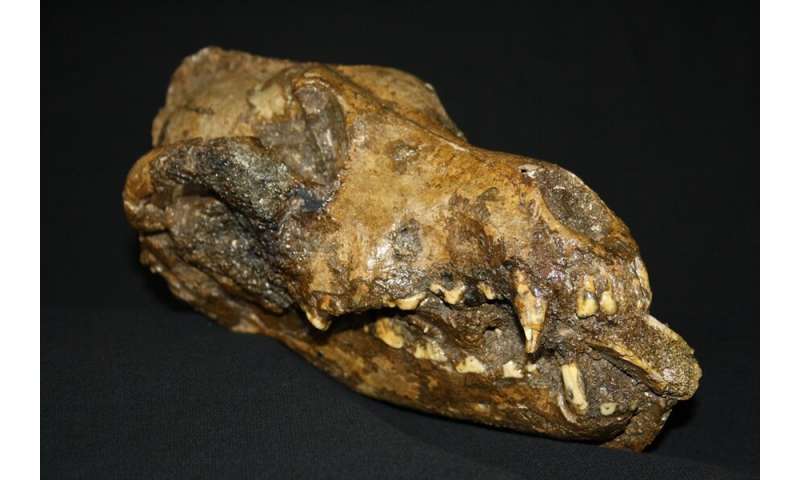
The skull of the newly discovered Palaeolithic dog. 
Credit: Jean-Baptiste Fourvrel.


Rewriting the Origins of Domestication

This skeleton joins a sparse but growing list of similar finds across Europe. The Baume Traucade canid dates to just after the Last Glacial Maximum, placing it among the earliest post-Ice Age animals associated with humans. Paleontologists have unearthed comparable remains at sites in France, Germany, and Spain, but few are as complete.

Until now, much of what scientists knew about early dog domestication came from fragmented remains and speculative reconstructions. This discovery offers something different: a full-body portrait of prehistoric man’s best friend.

While still unclear whether these ancient dogs were truly domesticated in the modern sense, they were certainly not entirely wild. They stood at a threshold—no longer wolves, not yet Labradors. The tragic story of this dog offers an important piece of the puzzle.

Wednesday, July 21, 2021

DNA assay aids in identifying and protecting North American wolves, coyotes

NORTH CAROLINA STATE UNIVERSITY


DIRE WOLF NORTH AMERICA


Research News

Forensics specialists can use a commercial assay targeting mitochondrial DNA to accurately discriminate between wolf, coyote and dog species, according to a new study from North Carolina State University. The genetic information can be obtained from smaller or more degraded samples, and could aid authorities in prosecuting hunting jurisdiction violations and preserving protected species.

In the U.S., certain wolf subspecies or species are endangered and restricted in terms of hunting status. It is also illegal to deliberately breed wolves or coyotes with domesticated dogs.

"If it's a case where you have a whole specimen, authorities can typically identify it based on physical characteristics, though similarity between some species makes that method less than ideal," says Kelly Meiklejohn, assistant professor of forensic science at NC State and corresponding author of the research. "If you're working with cross-bred animals, or incomplete specimens, you need DNA-based methods to accurately determine what species you have."

Although some U.S. federal laboratories perform DNA-based identification of wolves and coyotes, their methods and genetic reference databases aren't publicly available. Meiklejohn partnered with the U.S. Fish and Wildlife Service to see if it was possible to use a commercially available assay designed for dogs as a way to recover the mitochondrial genome from diverse North American canid species.

The mitochondrial genome is one of two genomes inherited from an animal's parents. Specifically, the mitochondrial genome is inherited from the mother. It is useful for species identification both because its circular shape makes it less prone to degradation, and because there are more copies of this genome per cell, increasing the chance of retrieving useful material from small or damaged samples.

The team used a method, called a 'hybridization capture,' in which about 80 base-pair long RNA fragments are used to isolate DNA for sequencing. Samples are incubated with the RNA fragments, and if there's a match, the fragment will bind with the sample's DNA. The bound DNA can be isolated and sequenced. In this case, the team used a hybridization capture panel designed for the dog mitochondrial genome.

"The fragments will bind if there is about 80% similarity, which is why we felt the dog kit would be useful for sequencing wolves and coyotes," Meiklejohn says. "Dogs only diverged from wolves around 20,000 years ago, so the mitochondrial genomes aren't that different."

They sequenced 51 samples, and were able to recover full mitochondrial genomes and successfully differentiate between four species of interest: dog, wolf, Mexican wolf, and coyote.

"Essentially, this finding means we can do more with less," Meiklejohn says. "In forensics we rarely have high quality DNA samples; they've usually been exposed to the environment and are degraded. The flexibility of this kit allows us to determine the species we're looking at, which in turn may aid in prosecuting hunting or breeding violations and protecting endangered canid species."

###

The research appears in Forensic Science International: Animals and Environments, and is supported by seed funding from NC State. Dyan Straughan and Mary Burnham-Curtis, from the U.S. Department of the Interior, Fish and Wildlife Service, are coauthors.

Note to editors: An abstract follows.

"Using hybridization capture to obtain mitochondrial genomes from forensically relevant North American canids: assessing sequence variation for species identification"

DOI: 10.1016/j.fsiae.2021.100018

Authors: Melissa Scheible, Kelly Meiklejohn, North Carolina State University; Dyan Straughan, Mary Burnham-Curtis, U.S. Department of the Interior, Fish and Wildlife Service

Published: June 25, 2021 in Forensic Science International: Animals and Environments

Abstract:

The majority of DNA casework processed by forensic laboratories focuses on human samples, but material from canids (dogs, wolves, coyotes) can also be encountered. Undomesticated canids can be the center of forensic investigations in the U.S. since some species are endangered. As many wolf species are similar morphologically, identification in the field by wildlife officers is not always straight-forward, making molecular based-approaches ideal. While some published methods using mitochondrial DNA targets can discriminate among Canis species, they are either not compatible with highly degraded samples or cannot differentiate closely related sub-species. Although some U.S. laboratories regularly perform veterinary/wildlife casework including canid identifications, their validated methods and reference genetic databases are not publicly available. We aimed to assess the utility of alternative regions in the mitochondrial genome for discriminating among canid species, including the complete genome. To achieve this, we utilized a commercial hybridization capture panel composed of biotinylated RNA "baits" designed for the domestic dog to enrich canid mitochondrial genomes for next-generation sequencing. We used this panel to successfully sequence complete mitochondrial genomes for 51 samples, representing four U.S. forensically relevant canids (coyote, wolf, Mexican wolf, dog). While the complete mitochondrial genome permitted discrimination, we also assessed previously published mitochondrial DNA targets (n, 5) for resolution and identified four alternate ~200 bp fragments from ND1, ND5, COI and CYTB genes that could help resolve canids. The utility of these alternate regions should be assessed in future studies using forensic-type samples representing canids from diverse geographic areas, prior to casework implementation.

Friday, September 15, 2023

First ever dog-fox hybrid discovered in the wild

Joe Pinkstone
Wed, September 13, 2023

Dog-fox hybrid dubbed 'dogxim' had a 'shy and cautious personality' - Flavia Ferrari

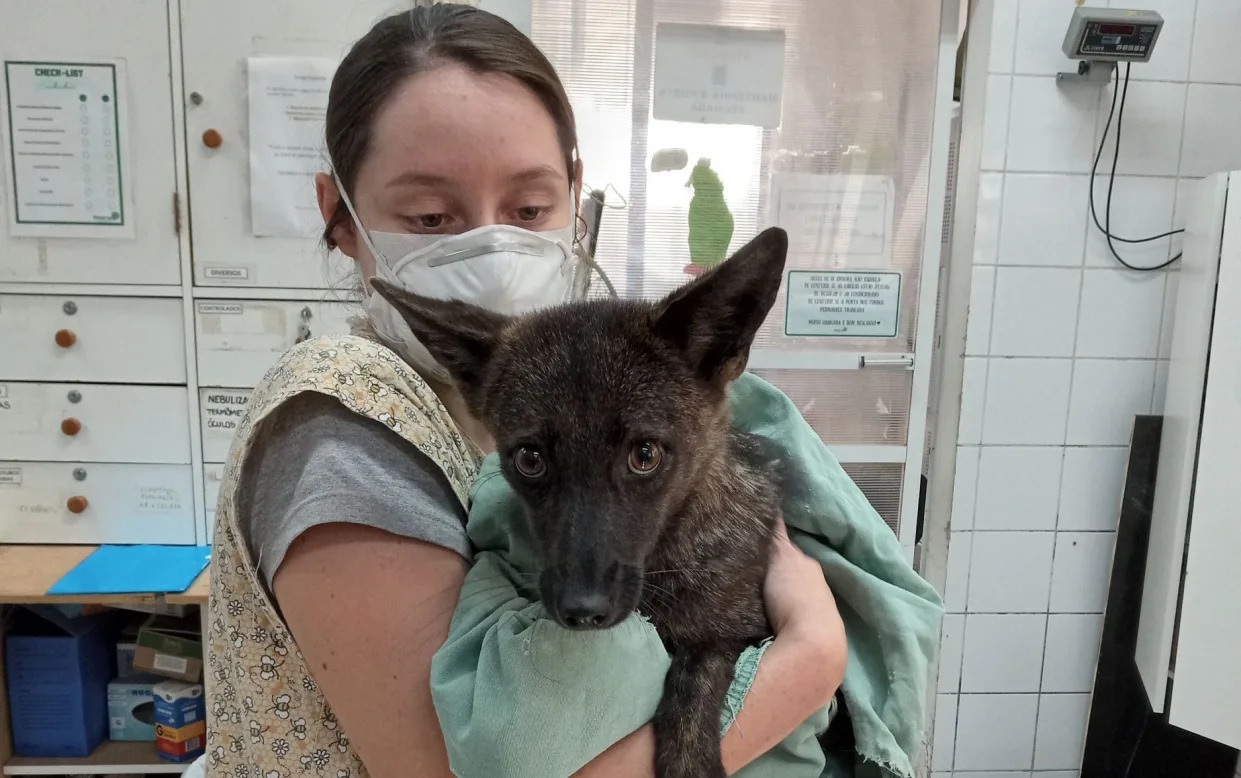
The world’s first confirmed dog-fox hybrid has been found in the Brazilian wilderness.

The animal was hit by a car in the area of Vacaria in 2021 and taken to a veterinary hospital for treatment but staff were unable to conclude whether it was a fox or dog they were taking care of.

Unusual physical characteristics, including some dog-like and some fox-like traits, piqued the interest of scientists from local universities who subsequently analysed her genes.

A recently published study revealed the animal’s mother was a pampas fox and her father a domestic dog of an unknown breed. It is the first recorded instance of a fox and dog breeding, experts believe.


It has the same build as a medium-sized dog, large, pointy ears, a long snout with a jet black nose and bulging brown eyes set into a thick, wiry black-brown coat with specks of white and grey throughout.


The animal has the same build and features as a medium-sized dog

The young wild canid was given the names “graxorra” and “dogxim” by carers and researchers.

The first moniker is a portmanteau of “grax”, from graxaim-do-campo, the Portuguese common name for the pampas fox, and “orra” from “cachorra”, which means female dog in Portuguese.

Academics also dubbed the animal “dogxim” as a merger of “dog” and “xim” from graxaim-do-campo.

The dogxim looked like both dog and fox, and also behaved in a strange way akin to both, the team noted. It refused food and ate live rodents; barked like a dog but had a thick, dark coat similar to the fox; and was wary of people but warmed to them over time.

“She was an amazing animal, really a hybrid between a pampas fox and a dog,” Flávia Ferrari, a conservationist that worked with the animal during her recovery, told The Telegraph.

“It was not as docile as a dog, but it also lacked the aggressiveness expected of a wild canid when handled.

“She had a shy and cautious personality, generally preferring to stay away from people. Over the time she was hospitalised for treatment, I believe she started to feel safer.”

Despite its fear of humans, the dogxim over time allowed some to approach if they were cautious and calm, Ms Ferrari said.

“So, in some moments, she allowed herself to be touched and even caressed, also interacting, and sometimes even playing with toys,” she added.

The animal was neutered as part of her treatment so scientists do not know if she would have been able to reproduce, but believe it would have been possible.

Scientists looked at the dogxim’s genes and found 76 chromosomes. Only one canid, the maned wolf, has this amount of chromosomes and it looks so different to the newly-discovered Brazilian animal that the scientists ruled it out.

A dog has 78 chromosomes and a pampas fox 74 and hybridisation of the two would produce 76 chromosomes. No other interspecies could produce the dogxim’s karyotype, the team says.

Mitochondrial DNA, which is passed down maternally in the cell’s energy-making capsules, revealed fox heritage. However, elsewhere in the genome were clear stretches of dog-like DNA.

“In our study we recorded the first case of hybridisation between one species of wild canid and the domestic dog,” study first author Bruna Elenara Szynwelski, a PhD student in genetics and molecular biology at Universidade Federal do Rio Grande do Sul, told The Telegraph.

“But, different to cases of hybridisation studied in North America, Europe, and Africa, this hybridisation occurred between species from the distinct genera: lycalopex and canis.”


Scientists found the animal to have 76 chromosomes - Flavia Ferrari

Dr Rafael Kretschmer, a cytogeneticist who ran the genetic analysis, said: “She is not a new species; she is a hybrid individual between two different species: pampas fox and domestic dog.

“We consider her to be unique because it was the first case of hybridisation between pampas fox and domestic dog and the first case of hybridisation between dogs and wild canids in South America.”

The animal was cared for at the veterinary hospital of the Universidade Federal do Rio Grande do Sul, where she recovered fully and was then transferred to a conservation centre called Mantenedouro São Braz in Santa Maria city.

The movement of the rare animal was organised by the region’s government. She died this year of unknown causes.

Hybrids have been seen before of domestic dogs and other wild species including coyotes, wolves and dingos.


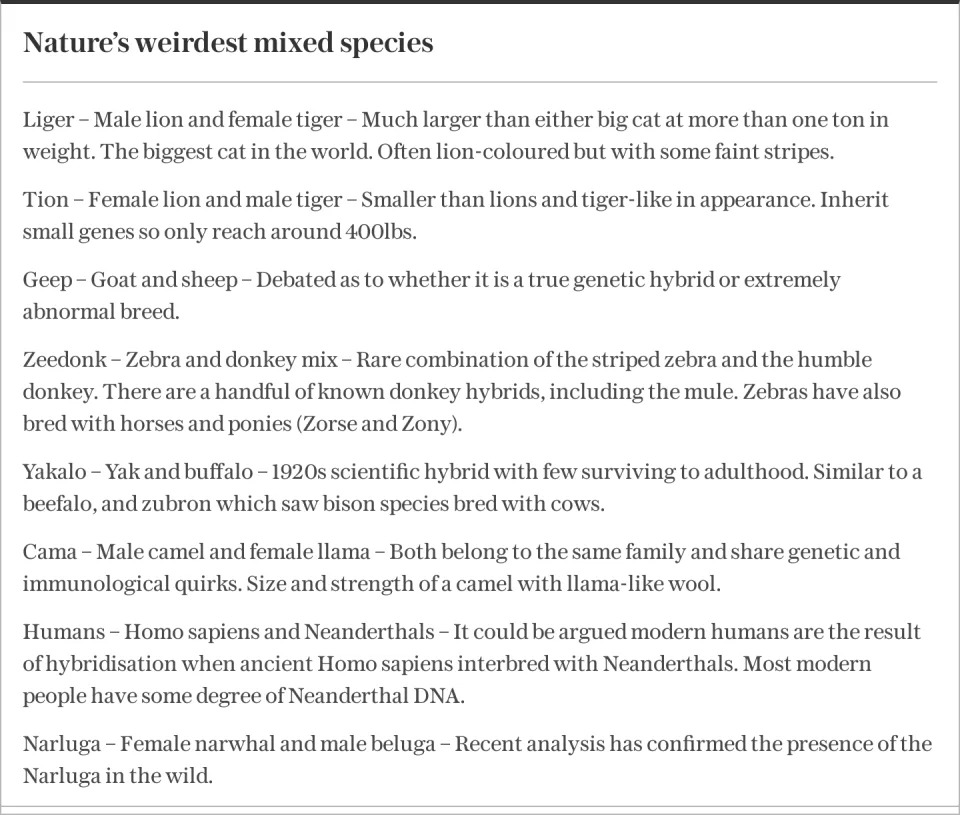
Nature’s weirdest mixed species

However, these instances involved interspecific breeding of animals in the same genus (canis). South American foxes, however, belong to the genus lycalopex.

Lycalopex animals, which includes the pampas fox, are genetically different to both dogs and European foxes. The genus name literally means “wolf fox”. This hybrid is believed to be the first time a dog has bred outside the canis group.

“Although the common English name is pampas fox, the species is not closely related to the European foxes,” Dr Kretschmer said.

“The pampas fox is more closely related to dogs. Even so, this hybridisation occurred between two species that are more phylogenetically distant than the previously reported hybridisation reported in other parts of the world.”

Further investigations required

The team published their findings in the journal Animals and believe there may be more dogxims in the wild, with this individual being the tip of the iceberg and the only one to be captured and studied.

“Our findings suggest that this individual represents a first-generation hybrid between a dog and a pampas fox,” the scientists write in their paper.

“This discovery implies that, although these species diverged about 6.7 million years ago and belong to different genera, they might still produce viable hybrids. Further investigations are required to determine the fertility of these hybrids.”

Human activity has pushed the pampas fox into closer contact with people, and therefore dogs, and increased the likelihood of these species mating, the team say.

It remains unknown how common the hybridisation event occurs but the overlap of foxes and dogs increases the chance of them meeting and mating.


Thursday, April 17, 2025

The Dire Wolf Has Not Been Revived: Problems for Conservation Biology


 April 16, 2025
Facebook

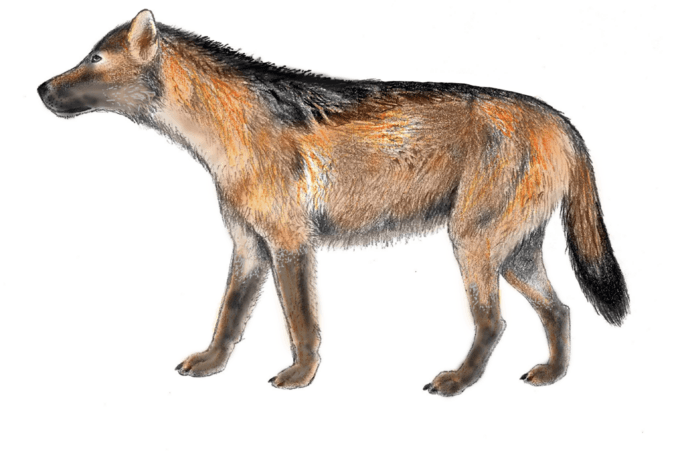
Illustration of what an extinct Ise Age dire wolf (Aenocyon dirus) may have looked like, based on mounted fossil material from the tar pits at Rancho La Brea, California. Illustration by Laura Cunningham Copyright 2025.

In early April, Colossal Laboratories & Biosciences claimed they had resurrected the long-extinct Ice Age dire wolf using gene editing techniques such as CRISPR on gray wolf genes. These edited genes were then inserted into eggs that were carried to term by domestic dogs. In a big press splash and social media frenzy, Colossal revealed the white-colored wolves to the world as a supposed model for the conservation of imperiled species.

Secretary of the Interior Doug Burgum tweeted about how this “marvel of ‘de-extinction’ technology can help forge a future where populations are never at risk.” He continued, “The only thing we’d like to see go extinct is the need for an endangered species list to exist.” We all share that dream, Mr. Burgum, but true conservationists aren’t interested in sci-fi futures where near-extinct animals live in captivity for the sake of thwarting true protections.

Science does not support this methodology as a viable future to save wildlife. Colossal chose to genetically engineer a designer wolf-dog straight out of Game of Thrones, cherry-picking some traits that they thought might resemble a dire wolf such as larger size. But they are ignoring most other morphological characters that define dire wolves as a separate species from living wolves. Dire wolves had very strong jaws and a bone-crushing dentition, beginning to approach hyenas.

Dire wolf DNA that has been extracted from Pleistocene fossil material: a recent peer-reviewed paper analyzed the fragmentary nuclear genome of dire wolves compared to living canids (see Perri et al., 2021, Dire wolves were the last of an ancient New World canid lineage). Dire wolves fall out genetically as closer to jackals than to gray wolves, and appear to be a unique and ancient North-South American canid lineage that diverged as far back as 6 million years ago from gray wolves and coyotes.

Fossil dire wolves turn out to be so different from modern wolves (Canis lupus) that they were given a whole new genus to mark them as distinct from the gray wolf and its living relatives. Dire wolves are in their own group: Aenocyon dirus, a lineage which went extinct about 12,900 years ago.

Colossal’s own scientists team agreed, differing markedly from their media team.

In a detailed and technical scientific paper released as a preprint before peer review, Colossal scientist Gregory Gedman and a slew of credentialed co-authors analyzed reconstructed paleogenomes from fragmentary ancient DNA extracted from two fossil specimens of dire wolf. Their results bolstered previous research indicating that the dire wolf lineage diverged early, before the split between black-backed jackals and other wolf-like canids, about 4.5 million years ago in the Miocene Epoch. Colossal’s DNA analysis was sensitive enough to pick up two or three modeled gene flow events through the history of the dire wolf lineage where admixtures (hybridization) of other canid lineages enriched dire wolves. The proposed gene tree might support some past Ice Age gene flow from dire wolves into the lineage that lead to gray wolves and coyotes. But that is a far cry from saying that genetically engineered modern white-colored gray wolves are the same as dire wolves.

Colossal’s project isn’t even close to de-extincting dire wolves, and that’s a good thing. Where would they live?

Habitat loss is one of the primary drivers of population declines and extinctions. The loss of habitat for rare or imperiled species is a major issue neglected by this GMO wolf experiment. Colossal is keeping its three white wolf hybrids in a zoo-like enclosure, hardly their native habitat.

Elon Musk shared Colossal’s post and joked about ordering a mini mammoth from the tech company. At least, I hope it was a joke. While this billionaire fantasizes about having the coolest pet in town, his pet project – DOGE – is gutting the very agencies tasked with ensuring species don’t go extinct in the first place.

The negative implications for threatened and endangered species conservation are profound. Wild animals are more than a sum of genetic characters and phenotypic looks. They are part of a complex ecosystem with food webs, behavioral interactions, and population dynamics. Wild species need habitat, and plenty of it, to survive. No amount of technology can fix this need, and intact habitat must be conserved to allow endangered species to thrive.

Laura Cunningham has a Bachelor’s of Science degree in Paleontology from the University of California at Berkeley. She worked in the field of wildlife biology for several years before joining the conservation nonprofit Western Watersheds Project, as their California Director. She is the author of A State of Change: Forgotten Landscapes of California (Heyday: 2010).

Wednesday, February 19, 2020

New study results consistent with dog domestication during Ice Age

New study results consistent with dog domestication during Ice Age
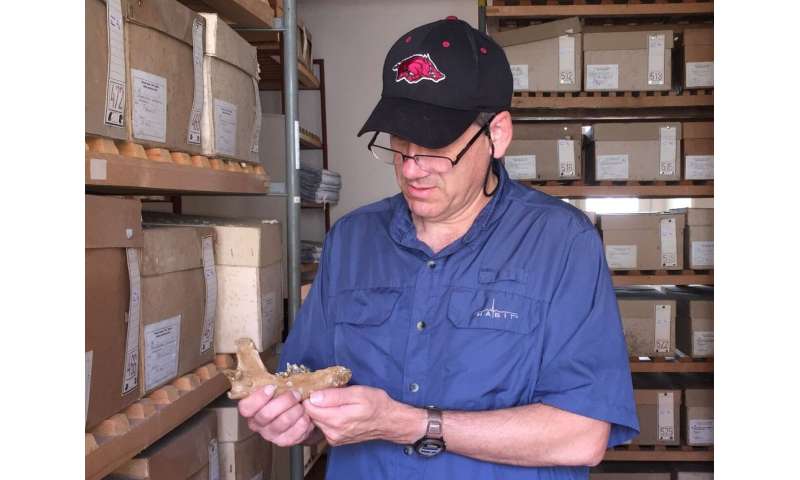
Peter Ungar with the jaw of a dog-like canid at the Moravian Museum in the Czech Republic. Credit: Peter Ungar
Analysis of Paleolithic-era teeth from a 28,500-year-old fossil site in the Czech Republic provides supporting evidence for two groups of canids—one dog-like and the other wolf-like—with differing diets, which is consistent with the early domestication of dogs.
The study, published in the Journal of Archaeolgical Science, was co-directed by Peter Ungar, Distinguished Professor of anthropology at the University of Arkansas.
The researchers performed dental microwear texture analysis on a sample of fossils from the Předmostí site, which contains both wolf-like and dog-like canids. Canids are simply mammals of the dog family. The researchers identified distinctive microwear patterns for each  morphotype. Compared to the wolf-like canids, the teeth of the early dog canids—called "protodogs" by the researchers—had larger wear scars, indicating a diet that included hard, brittle foods. The teeth of the wolf-like canids had smaller scars, suggesting they consumed more flesh, likely from mammoth, as shown by previous research.
This greater durophagy—animal eating behavior suggesting the consumption of hard objects—among the dog-like canids means they likely consumed bones and other less desirable food scraps within human settlement areas, Ungar said. It provides supporting evidence that there were two types of canids at the site, each with a distinct diet, which is consistent with other evidence of early-stage domestication.
New study results consistent with dog domestication during Ice Age
Peter Ungar with the jaw of a dog-like canid at the Moravian Museum in the Czech Republic. Credit: Peter Ungar
"Our primary goal was to test whether these two morphotypes expressed notable differences in behavior, based on wear patterns," said Ungar. "Dental microwear is a behavioral signal that can appear generations before morphological changes are established in a population, and it shows great promise in using the  to distinguish protodogs from wolves."
Dog domestication is the earliest example of animal husbandry and the only type of domestication that occurred well before the earliest definitive evidence of agriculture. However, there is robust scientific debate about the timing and circumstances of the initial domestication of , with estimates varying between 15,000 and 40,000 years ago, well into the Ice Age, when people had a hunter-gatherer way of life. There is also debate about why wolves were first domesticated to become dogs. From an anthropological perspective, the timing of the  process is important for understanding early cognition, behavior and the ecology of early Homo sapiens.
3-D analysis of dog fossils sheds light on domestication debate

More information: Kari A. Prassack et al. Dental microwear as a behavioral proxy for distinguishing between canids at the Upper Paleolithic (Gravettian) site of Předmostí, Czech Republic, Journal of Archaeological Science (2020). DOI: 10.1016/j.jas.2020.105092

Wednesday, May 04, 2022

Rare fossil of ancient dog species discovered by paleontologists

Rare fossil of ancient dog species discovered by paleontologists
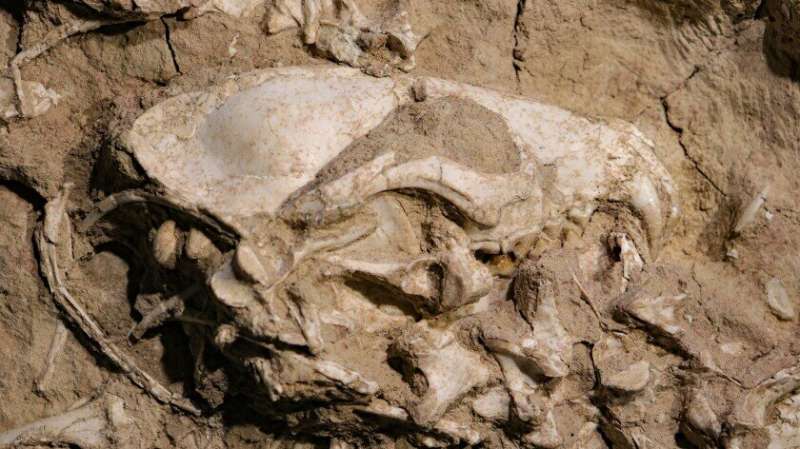
The partially excavated skull (facing to the right) of an Archeocyon, an ancient doglike
 species that lives in the area that’s now San Diego up to 28 million years ago.
 Credit: Cypress Hansen/San Diego Natural History Museum

Sometime around 14,000 years ago, the first humans crossed the Bering Strait to North America with canines, domesticated dogs they used for hunting, by their side.

But long before the canines arrived here, there were predatory doglike canid species who hunted the grasslands and forests of the Americas. A rare and nearly complete fossilized skeleton of one of these long-extinct species was recently discovered by paleontologists at the San Diego Natural History Museum.

This  belongs to a group of animals called Archeocyons, which means "ancient dog." It was embedded in two large chunks of sandstone and mudstone unearthed in 2019 from a construction project in the Otay Ranch area of San Diego County. The fossil dates to the late Oligocene epoch and is believed to be 24 million to 28 million years old.

While the fossilized remains are still awaiting further examination and identification by a canid researcher, its discovery has been a boon for the San Diego museum's scientists, including the curator of paleontology Tom Deméré, post-doctoral researcher Ashley Poust and curatorial assistant Amanda Linn.

Because the existing fossils in the museum's collection are incomplete and limited in number, the Archeocyons fossil will help the paleo team fill in the blanks on what they know about the ancient dog mammals that lived in the area we now know as San Diego tens of millions of years ago.

Did they walk on their toes like today's dogs? Did they burrow in the ground or live in trees? What food did they prey on and what animals preyed upon them? How did they relate to extinct doglike species that came before them? And, potentially, is this an entirely new undiscovered species? This new fossil is providing SDNHM scientists with a few more pieces of an incomplete evolutionary puzzle.

"It's like you've found a tree branch, but you need more branches to figure out what kind of tree it is," said Linn, who spent nearly 120 hours from December through February partially uncovering the fragile, and in some places, paper-thin skeleton from the rock. "As soon as you uncover the bones, they start to disintegrate ... I used a lot of patience, and a lot of glue."

Archeocyons fossils have been found in the Pacific Northwest and Great Plains states, but almost never in Southern California, where glaciers and plate tectonics have scattered, destroyed and buried deep underground many fossils from that period of history. The chief reason this Archeocyons fossil was found and made its way to the museum is a California law that requires paleontologists be onsite at major construction projects to spot and protect potential fossils for later study.

Pat Sena, the San Diego Natural History Museum's paleo monitor, was observing the rocks tailings in the Otay project nearly three years ago when he saw what looked like tiny white fragments of bone protruding from some excavated rock. He marked the rocks with a black Sharpie marker and had them moved to the museum, where scientific work soon ground to a halt for nearly two years because of the pandemic.

On Dec. 2, Linn started work on the two large rocks, using small carving and cutting tools and brushes to gradually pare away the layers of stone.

"Every time I uncovered a new bone, the picture got clearer," Linn said. "I'd say, 'Oh look, here's where this part matches up with this bone, here's where the spine extends to the legs, here's where the rest of the ribs are.' "

Poust said that once the fossil's cheekbone and teeth emerged from the rock, it became clear that it was an ancient canid species. In March, Poust was one of three international paleontologists who announced their discovery of a new saber-toothed catlike predator, Diegoaelurus, from the Eocene epoch. But where ancient cats had only flesh-tearing teeth, omnivorous canids had both cutting teeth in front to kill and eat small mammals and flatter molar-like teeth in the back of their mouths used to crush plants, seeds and berries. This mix of teeth and the shape of its skull helped Deméré identify the fossil as an Archeocyons.

The new fossil is fully intact except for a portion of its long tail. Some of its bones have been jumbled about, possibly as the result of earth movements after the animal died, but its skull, teeth, spine, legs, ankles and toes are complete, providing a wealth of information on the Archeocyons' evolutionary changes.

Poust said the length of the fossil's ankle bones where they would have connected to the Achilles tendons suggests the Archeocyons had adapted to chase its prey long distances across open grasslands. It's also believed that its strong, muscular tail may have been used for balance while running and making sharp turns. There are also indications from its feet that it possibly could have lived or climbed in trees.

Physically, the Archeocyons was the size of today's gray fox, with long legs and a small head. It walked on its toes and had nonretractable claws. Its more foxlike body shape was quite different from an extinct species know as Hesperocyons, which were smaller, longer, had shorter legs and resembled modern-day weasels.

While the Archeocyons fossil is still being studied and not on public display, the museum does have a large exhibit on its first floor that features fossils and a large mural of animals that lived here in San Diego's coastal region during ancient times. Poust said one the animals in the mural painted by artist William Stout, a foxlike creature standing over a freshly killed rabbit, is close to what the Archeocyons may have looked like.

Once the Archeocyons fossil was partially identified in February, Deméré had Linn stop work on the fossil, leaving it partially embedded in the rock. He didn't want to risk any damage to the intact skull until it can be further studied by a world-renowned carnivore researcher like Xiaoming Wang of the Natural History Museum of Los Angeles County.

"Nothing makes a curator happier than having visiting researchers to the collection," Deméré said. "Hopefully, someone comes along. A nearly complete skeleton like this can answer all sorts of questions, depending on who's interested."New sabre-tooth predator precedes cats by millions of years

©2022 The San Diego Union-Tribune.
Distributed by Tribune Content Agency, LLC.

Thursday, November 13, 2025

Paleogenomics: humans and dogs spread across Eurasia together


A genomic study shows that over the last 10,000 years, diverse Eurasian cultures kept and spread genetically distinct dog populations.


Ludwig-Maximilians-Universität München


Dogs have been part of human societies across Eurasia for at least 20,000 years, accompanying us through many social and cultural upheavals. A new study by an international team, published in the journal Science, and led by Laurent Frantz, paleogeneticist at the Ludwig Maximilian University of Munich (LMU) and Queen Mary University of London (QMUL) shows that the spread of new cultures across Eurasia, with different lifeways, was often associated with the spread of specific dog populations.

Scientists from LMU, QMUL, the Kunming Institute of Zoology and Lanzhou University in China, and the University of Oxford, sequenced and analyzed the genomes of 17 ancient dogs from Siberia, East Asia, and the Central Asian Steppe – including, for the first time, specimens from China. Important cultural changes occurred in these regions over the past 10,000 years, driven by the dispersal of hunter-gatherers, farmers, and pastoralists. The specimens came from archaeological sites between 9,700 and 870 years old. In addition, the researchers included publicly available genomes from 57 ancient and 160 modern dogs in their analyses.

Dogs followed metalworkers across the Eurasian Steppe over 4,000 years ago

A comparison of ancient dog and human genomes reveals a striking concordance between genetic shifts in both species across time and space, most notably during periods of population turnover. This link is especially evident during China's transformative Early Bronze Age (~4,000 years ago), which saw the introduction of metalworking. The research shows that the expansion of people from the Eurasian Steppe, who first introduced this transformative technology to Western China, also brought their dogs with them.

This pattern of human-dog co-movement extends back far beyond the Bronze Age. The research traces signals of co-disperal back at least 11,000 years, when hunter-gatherers in northern Eurasia were exchanging dogs closely related to today's Siberian Huskies.

“Traces of these major cultural shifts can be teased out of the genomes of ancient dogs,” says Dr. Lachie Scarsbrook (LMU/Oxford), one of the lead authors of the study. “Our results highlight the deeply rooted cultural importance of dogs. Instead of just adopting local populations, people have maintained a distinct sense of ownership towards their own dogs for at least the past 11,000 years.”

“This tight link between human and dog genetics shows that dogs were an integral part of society, whether you were a hunter-gatherer in the Arctic Circle 10,000 years ago or a metalworker in an early Chinese city,” says Prof. Laurent Frantz. “It’s an amazing, enduring partnership and shows the sheer flexibility of the role dogs can play in our societies, far more than with any other domestic species.”