China to overtake Australia as world’s top lithium miner by 2026, Fastmarkets says
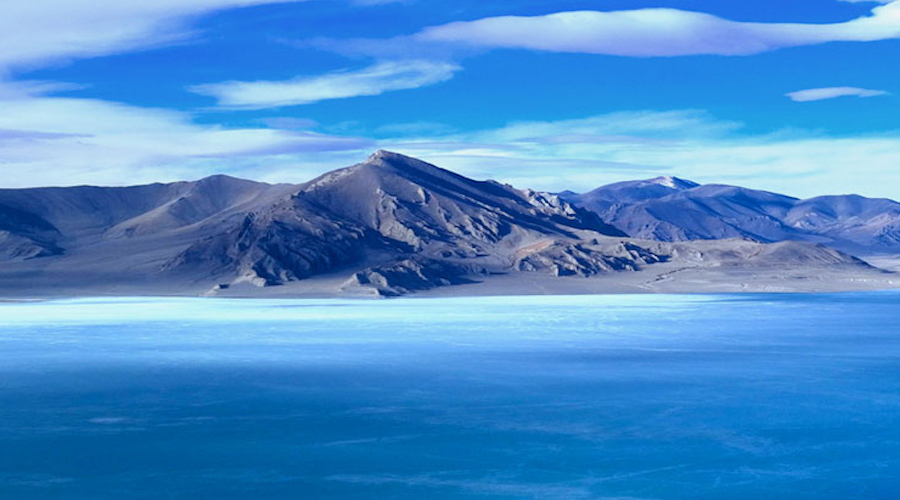
China by next year will overtake Australia as the world’s top miner of the battery metal lithium, according to a forecast from consultancy Fastmarkets, and its market prowess is expected to grow through 2035 even as many Chinese producers remain unprofitable.
The projections are the latest data point underscoring Beijing’s commanding presence across the global metals supply chain, with China the dominant miner or refiner of more than half the minerals considered critical by the U.S. Geological Survey.
“China’s got a very clear strategy to develop its mineral resources,” Paul Lusty, the consultancy’s head of battery raw materials research, told Reuters on the sidelines of the Fastmarkets Lithium and Battery Raw Materials Conference in Las Vegas.
Australia has been the world’s largest lithium miner since taking that spot from Chile in 2017, but Australian miners have curtailed production or delayed expansions amid a global drop in lithium prices.
By next year, Chinese miners are likely to extract 8,000 to 10,000 more metric tons of lithium than Australian rivals, according to the Fastmarkets forecast. That would be a jump from 2023, when China was the world’s third-largest lithium producer.
By 2035, Chinese miners are likely to extract 900,000 metric tons of lithium, compared to Australia’s 680,000 metric tons, Chile’s 435,000 metric tons and Argentina’s 380,000 metric tons, according to the forecast.
Much of China’s growth has and likely will continue to come from mining a type of hard rock ore known as lepidolite, which is prolific in the southern part of the country.
China’s lepidolite mining is more costly than extracting lithium from salty brines and can cause more environmental harm due to toxic by-products such as thallium and tantalum that pollute water supplies.
China’s lithium miners have been reticent to cut production due to support from the Chinese government, “pressure” from local municipalities to keep operations open – and thus local jobs, and a desire to maintain market share as demand for the metal rises, Lusty said.
“This continued production – despite the lack of profitability within the market – starts to make a lot more sense when you consider all those factors,” he said.
Chinese battery giant is one of the largest producers of lepidolite and had paused production at a key mine last September before resuming output in February.
Beyond mining, China for years has been the world’s largest refiner of the ultralight metal, with roughly 70% market share. Lithium refineries turn the metal into a form that can be used to make cathodes for batteries.
Efforts by other countries to grow their own lithium refining should cut China’s market share to 60% by 2035, Fastmarkets forecasts.
China’s market prowess also extends to electric vehicle supply chain, with more than 60% of all EVs globally sold last year in that country, according to data from battery producer LG Energy Solutions.
(Reporting by Ernest Scheyder; editing by Leslie Adler)
Gradiant to build lithium production plant in Pennsylvania’s Marcellus Shale Formation
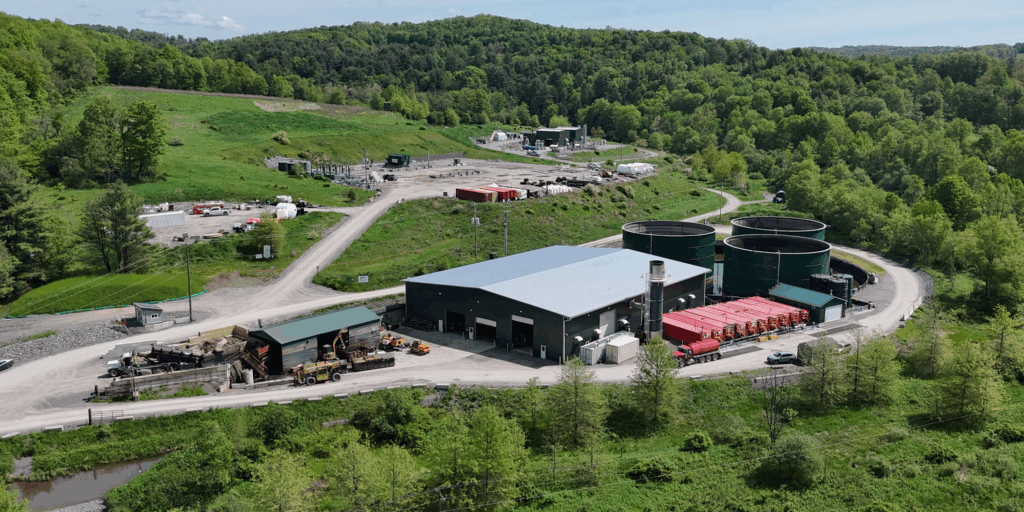
Water and resource recovery company Gradiant announced Tuesday that its wholly-owned lithium business, alkali, will design and build a commercial lithium production facility in Montrose, Susquehanna County, within the Marcellus Shale Formation of Pennsylvania.
The site, the company said, is the world’s first to extract, concentrate and convert (EC²) lithium in a fully integrated, end-to-end process from oilfield produced water.
This announcement builds on last year’s launch of alkaLi’s EC² platform, which Gradiant said guarantees a minimum 95% lithium recovery at customer sites—empowering producers to deliver battery-grade lithium carbonate in a more efficient, cost effective and sustainable environment.
Gradiant’s alkaLi owns and operates the Pennsylvania facility—including equipment, land, water and mineral rights, and permits. This vertically integrated model, it said, could secure long-term US lithium supply while avoiding the permitting and ownership delays that often stall critical minerals projects.
Currently in testing, Gradiant said the system has already proven 97% lithium recovery from produced water and 99.5% purity for battery-grade lithium carbonate.
Gradiant said alkaLi has signed a multi-year offtake agreement to supply up to 5,000 metric tonnes annually of battery-grade lithium carbonate to a US lithium-ion battery manufacturer for electric vehicles and energy storage systems.
“We now have a fully operational lithium production asset in the U.S. that proves what EC² can deliver,” Gradiant CEO Anurag Bajpayee said in a news release.
“This isn’t a concept—it’s a live facility demonstrating that clean, domestic lithium production is both viable and scalable,” Bajpayee said. “Our goal isn’t to compete with customers, but to empower them—and the broader industry—to meet surging demand for battery-grade lithium and accelerate the clean energy transition. This strategic investment in the Marcellus Shale, which could supply 50% of U.S. lithium demand, validates the maturity of alkaLi’s technology and secures a long-term domestic supply.”
The company said commercial operations are on track for early 2026.
Halliburton to design demonstration wells for GeoFrame Energy’s DLE project in Texas
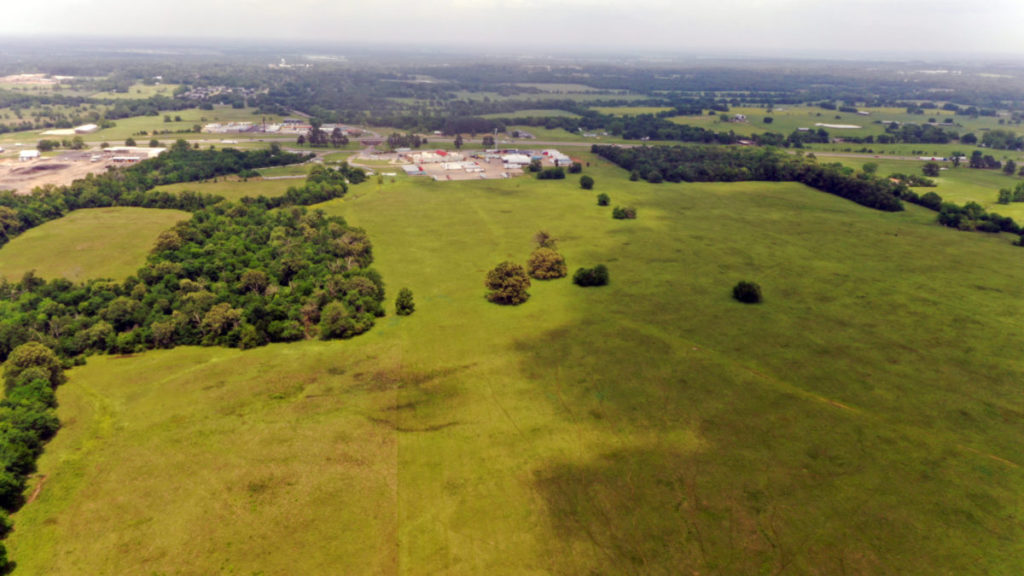
Halliburton (NYSE: HAL) announced Monday it has secured a contract for GeoFrame Energy’s geothermal and direct lithium extraction (DLE) project in Texas.

The company said it will plan and design the first demonstration phase wells in the Smackover Formation of East Texas. GeoFrame has said it is set to become the first company to deliver battery-grade lithium carbonate from this US reservoir to the market.
According to GeoFrame, the project is expected to produce approximately 83,500 metric tons of battery-grade lithium carbonate annually—enough to meet 100% of domestic demand. This would mark a turning point in ending US dependence on Chinese lithium imports, it said.
“GeoFrame Energy is in an excellent position to capitalize on the current demand for lithium through brine extraction,” Halliburton’s vice president of low carbon solutions Duane Sherritt said in a news release.
“Halliburton’s 100-year legacy of well expertise and execution, combined with innovation to support new energy projects and decades of experience in the Smackover Formation, makes us the best candidate to help support GeoFrame Energy’s vision.”
“Halliburton, as a critical member of our team, will support the drilling phase of our project through the construction, design, and operation of the demonstration wells and the expansion into full field development,” GeoFrame CEO Bruce Cutright stated.
Cutright said the company plans to use geothermal brine to generate renewable electricity through zero-emission binary cycle generators. This process will power its direct lithium extraction and lithium carbonate production plant with renewable energy. The company will sell the excess geothermal power produced electricity to the grid.
Work is expected to begin in late 2025.

No comments:
Post a Comment