Iranians protest for 12th day as Kurdish opposition calls for general strike
An Iranian police officer was killed in a stabbing during unrest near the capital, local media reported on Thursday as protests over the cost of living in the country entered a 12th day. Several Kurdish opposition parties based in neighbouring Iraq have called for a general strike in support of the protest movement.
Issued on: 08/01/2026
By: FRANCE 24
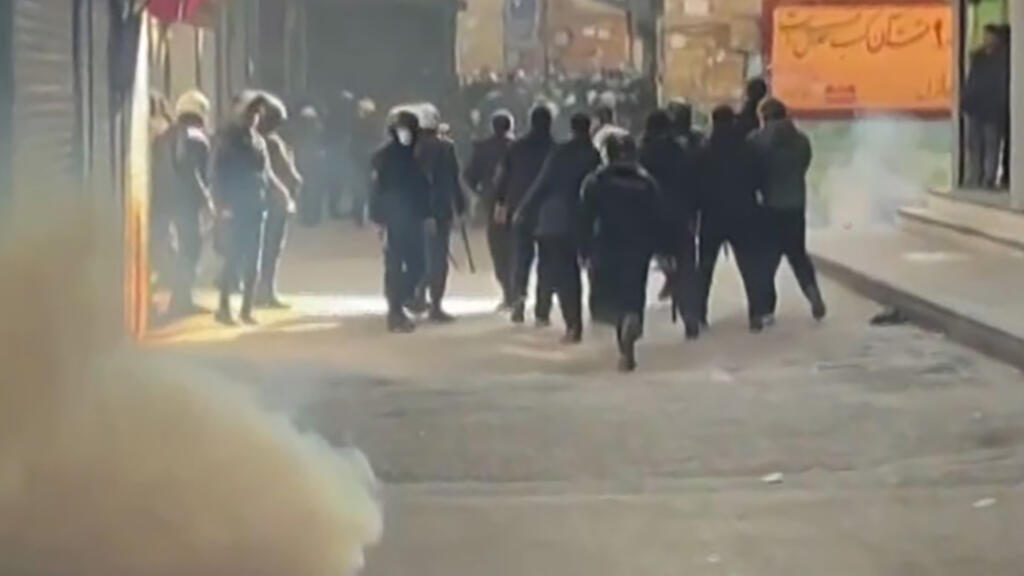 Screen grab of a UGC video posted on social media showing Iranian riot police dispersing protesters in Tehran on January 6, 2026. © UGC screengrab via AFP
Iranian media said a police officer was killed in a stabbing during unrest near the capital, Tehran, on the 12th day of protests over the cost of living in the country.
Shahin Dehghan, a member of the police force in Malard county west of Tehran, "was martyred a few hours ago after being stabbed during efforts to control unrest", Fars news agency reported, adding that efforts to identify the perpetrators are underway.
Unrest broke out in Iran on December 28 after merchants in Tehran staged a protest against rising prices and the collapse of the rial, triggering a wave of similar actions in other cities.
The demonstrations have spread to 25 of Iran's 31 provinces, according to an AFP tally based on official statements and local media, and left dozens killed including from security forces.
It is the most serious protest movement in the Islamic republic since the 2022-2023 nationwide rallies sparked by the death in custody of Mahsa Amini, who was arrested for allegedly violating the strict dress code for women.
The demonstrations have yet to reach the scale of the 2022-2023 movement, let alone that of mass 2009 street protests that followed disputed elections.
But they have presented a new challenge for Iran's leadership against the backdrop of a biting economic crisis and on the heels of the 12-day war with Israel last June.
General strike call
Several Iraq-based Iranian Kurdish opposition parties have called for a general strike on Thursday in Iran in support of the protests, one of the exiled parties told AFP.
The Komala party, an exiled Iraq-based Iranian Kurdish separatist group that Tehran considers a terrorist organisation, announced the strike on Wednesday.
"Seven Kurdish opposition parties have called for a general strike tomorrow Thursday," said Komala central committee member Hassan Rahmanpanah.
"The aim of this call is to demonstrate the unified support of the Kurdish people for the struggle and protests being waged by the Iranian people against the Islamic republic," he told AFP.
Rahmanpanah also accused the Iranian authorities of "brutal and criminal attacks" against demonstrators.
(FRANCE 24 with AFP)
Iranian media said a police officer was killed in a stabbing during unrest near the capital, Tehran, on the 12th day of protests over the cost of living in the country.
Shahin Dehghan, a member of the police force in Malard county west of Tehran, "was martyred a few hours ago after being stabbed during efforts to control unrest", Fars news agency reported, adding that efforts to identify the perpetrators are underway.
Unrest broke out in Iran on December 28 after merchants in Tehran staged a protest against rising prices and the collapse of the rial, triggering a wave of similar actions in other cities.
The demonstrations have spread to 25 of Iran's 31 provinces, according to an AFP tally based on official statements and local media, and left dozens killed including from security forces.
It is the most serious protest movement in the Islamic republic since the 2022-2023 nationwide rallies sparked by the death in custody of Mahsa Amini, who was arrested for allegedly violating the strict dress code for women.
The demonstrations have yet to reach the scale of the 2022-2023 movement, let alone that of mass 2009 street protests that followed disputed elections.
But they have presented a new challenge for Iran's leadership against the backdrop of a biting economic crisis and on the heels of the 12-day war with Israel last June.
General strike call
Several Iraq-based Iranian Kurdish opposition parties have called for a general strike on Thursday in Iran in support of the protests, one of the exiled parties told AFP.
The Komala party, an exiled Iraq-based Iranian Kurdish separatist group that Tehran considers a terrorist organisation, announced the strike on Wednesday.
"Seven Kurdish opposition parties have called for a general strike tomorrow Thursday," said Komala central committee member Hassan Rahmanpanah.
"The aim of this call is to demonstrate the unified support of the Kurdish people for the struggle and protests being waged by the Iranian people against the Islamic republic," he told AFP.
Rahmanpanah also accused the Iranian authorities of "brutal and criminal attacks" against demonstrators.
(FRANCE 24 with AFP)
New clashes in Iran as opposition urges more protests
Paris (France) (AFP) – Security forces used tear gas to disperse protesters in Iran as people angered by the economic situation in the Islamic republic kept up their challenge to the authorities and the exiled opposition Thursday urged them to step up their actions.
Issued on: 08/01/2026 - RFI
The 12 days of protests have shaken the clerical authorities under Ayatollah Ali Khamenei already battling economic crisis after years of sanctions and recovering after the June war against Israel.
The movement, which originated with a shutdown on the Tehran bazaar on December 28 after the rial plunged to record lows, has spread nationwide and is now being marked by larger scale demonstrations.
Authorities have blamed unrest on "rioters" and the judiciary chief has vowed there would be "no leniency" in bringing them to justice. On Wednesday, an Iranian police officer was stabbed to death near Tehran "during efforts to control unrest", the Iranian Fars news agency said.
Reza Pahlavi, the son of the shah ousted by the 1979 Islamic revolution and a key exiled opposition figure, said that the turnout during Wednesday's protests had been "unprecedented" and called for major new protests Thursday evening.
He said in a message on social media he had received reports the "regime is deeply frightened and is attempting, once again, to cut off the internet" to thwart the protests.
The HRANA monitor published a video of protesters in Kuhchenar in the southern Fars province cheering overnight as they pulled down a statue of the former foreign operations commander of the Revolutionary Guards Qassem Soleimani who was killed in a US strike in January 2020 and is hailed as a national hero by the Islamic republic.
HRANA said according to its count protests had taken place in 348 locations over the last 11 days in all of Iran's 31 provinces.
It also published a video of people massing late at night in the Tehran satellite city of Karaj and lighting fires in the streets and also images of security forces using tear gas to disperse a protest in the Caspian Sea town of Tonekabon.
The Norway-based Iran Human Rights group said security forces on Wednesday "opened fire on protesters, used tear gas and violently assaulted civilians" during a protest in the key southeastern hub of Kerman.
The protests are being characterised by larger-scale demonstrations, with hundreds marching through a main avenue in the northeastern city of Bojnord on Wednesday in a video verified by AFP.
Demonstrators are repeating slogans against the clerical leadership including "this is the final battle, Pahlavi will return" and "Seyyed Ali will be toppled", in reference to Khamenei.
IHR said on Tuesday at least 27 protesters including five teenagers under the age of 18, have been confirmed to have been killed in a crackdown on the protests, warning the death toll will climb as more killings are verified.
© 2026 AFP
The 12 days of protests have shaken the clerical authorities under Ayatollah Ali Khamenei already battling economic crisis after years of sanctions and recovering after the June war against Israel.
The movement, which originated with a shutdown on the Tehran bazaar on December 28 after the rial plunged to record lows, has spread nationwide and is now being marked by larger scale demonstrations.
Authorities have blamed unrest on "rioters" and the judiciary chief has vowed there would be "no leniency" in bringing them to justice. On Wednesday, an Iranian police officer was stabbed to death near Tehran "during efforts to control unrest", the Iranian Fars news agency said.
Reza Pahlavi, the son of the shah ousted by the 1979 Islamic revolution and a key exiled opposition figure, said that the turnout during Wednesday's protests had been "unprecedented" and called for major new protests Thursday evening.
He said in a message on social media he had received reports the "regime is deeply frightened and is attempting, once again, to cut off the internet" to thwart the protests.
The HRANA monitor published a video of protesters in Kuhchenar in the southern Fars province cheering overnight as they pulled down a statue of the former foreign operations commander of the Revolutionary Guards Qassem Soleimani who was killed in a US strike in January 2020 and is hailed as a national hero by the Islamic republic.
HRANA said according to its count protests had taken place in 348 locations over the last 11 days in all of Iran's 31 provinces.
It also published a video of people massing late at night in the Tehran satellite city of Karaj and lighting fires in the streets and also images of security forces using tear gas to disperse a protest in the Caspian Sea town of Tonekabon.
The Norway-based Iran Human Rights group said security forces on Wednesday "opened fire on protesters, used tear gas and violently assaulted civilians" during a protest in the key southeastern hub of Kerman.
The protests are being characterised by larger-scale demonstrations, with hundreds marching through a main avenue in the northeastern city of Bojnord on Wednesday in a video verified by AFP.
Demonstrators are repeating slogans against the clerical leadership including "this is the final battle, Pahlavi will return" and "Seyyed Ali will be toppled", in reference to Khamenei.
IHR said on Tuesday at least 27 protesters including five teenagers under the age of 18, have been confirmed to have been killed in a crackdown on the protests, warning the death toll will climb as more killings are verified.
© 2026 AFP
Iran teetering on the edge of the abyss
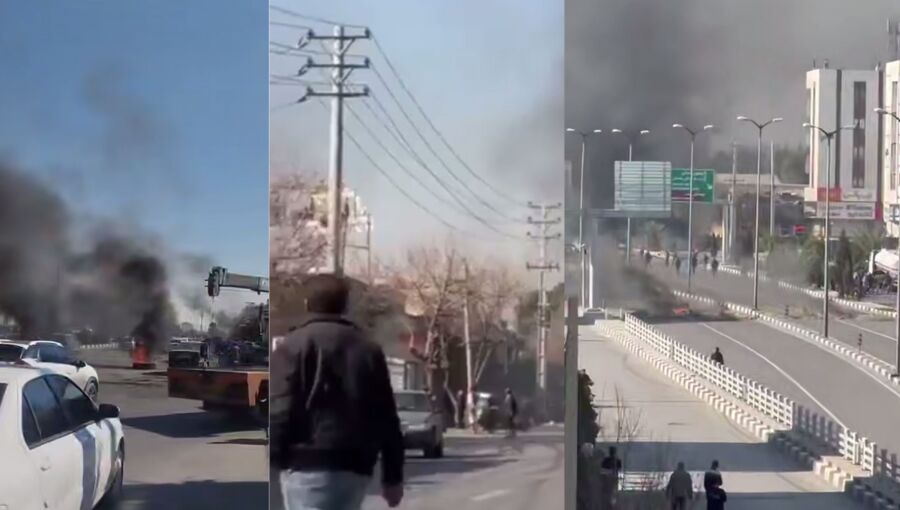 The Islamic Republic is teetering on the edge of an abyss that will either lead to the overthrow of the theocracy or plunge the contry into a violent crackdown that could see hundreds die. / CC: social media.
Like the protests in Ukraine's Maidan Square and those in neighbouring West Asian states, this latest round of protests in Iran is being driven by economic and political discontent, with a growing number of analysts and pundits in the West drawing analogies to previous protest movements.
When people cannot afford to buy bread, they lose their fear of bullets. The protests sweeping the country are teetering between the overthrow of theocracy or a violent crackdown that would leave hundreds dead, Britain's Fraser Nelson said in a Substack post this week.
The Iranian rial has been in freefall, losing nearly half its value over 2025. Inflation is running at least 40%, and food prices are up 80%. This makes businesses unviable, with shopkeepers and producers refusing to sell their products, fearing losses.
Every major protest in Iran tends to be crushed by overwhelming force and as part of his Middle East peace strategy US President Donald Trump has stepped into the fray declaring: “If Iran shoots and violently kills peaceful protesters, which is their custom, the United States of America will come to their rescue. We are locked and loaded and ready to go.”
The violence is already escalating. While the Iranian Revolutionary Guard Corps (IRGC) has the resources to crush protests in the large cities, it does not in the smaller ones where local governors are taking matters into their own hands in direct contravention of calls for calm from the presidency.
The regime’s historic knee-jerk reaction is to turn to violence, as has been shown in previous rounds of challenge to the system. In November 2019, when demonstrations erupted over a fuel price hike, the Rouhani administration imposed a total internet blackout and struck back, leading to hundreds of deaths.
“The clerics claim that Islam itself is under threat, in the hope of rallying religious groups who do not support Khamenei. No Islamic Republic, it says, no Islam,” says Nelson.
But repression is their standard response and an era of popular consent is over. Khamenei is 86; the average Iranian is 33. This is a sophisticated, educated country rolling in natural resources suffering the worst food inflation in the world next to South Sudan. All because their leaders won’t give up their nuclear ambition, leading to sanctions, says Nelson.
A gaping disconnect has opened up between the mullahs and the people they rule. The theocracy controls the economy and society. Iran’s military, judiciary and parliament are all dominated by hardliners whose worldview is now very different to the well-educated people they govern who want to see the country open up.
Recent polls suggest that Iranians have had enough of the ‘death to Israel’ rhetoric and the uranium enrichment agenda that has brought down the crushing sanctions. A post-Israel-war survey found 58% of Iranians blamed Khamenei for the June war damages; 69% said Iran should give up calling for Israel’s destruction.
Partly thanks to the internet, which has put the rest of the world on display, the social mores have shifted. The cleric-led system is not keeping up. Increasingly the people resent the economic austerity and repression that underpin domestic security, as they can now see directly how the rest of the world lives.
This desire for change was underscored by the 2022 mass protests following the death of Mahsa Amini, a young woman who was arrested and beaten to death by the morality police for incorrectly wearing her hijab. So far, the 2026 protests have not been the same size in terms of numbers of people protesting, according to reports on the ground; however, they have been more widespread, with different deciles protesting over the cost of living and the poor state of affairs. Most importantly, the 2026 protests have seen growing numbers of bazaar merchants come out on the streets, which is different to the 2022 protests.
The collapse of the rial was the spark that set the touchpaper on fire. Years of pent-up frustrations have now exploded onto the street, initially by mobile phone retailers in the condemned Aladdin Passage, the historic home of cell phones.
This time, protests are nationwide and, like in Ukraine, they are beginning to grow to a size where the security forces are hesitant to tackle them, allowing the sporadic crowds to vent their frustrations at the orders of the country's President Pezeshkian. Yet despite his order not to beat up and shoot protesters, more than three dozen have died, and over a thousand people have been arrested, according to human rights groups.
In the small town of Lordegan, protesters stormed the governor’s office and set fire to the judiciary building and the Foundation of Martyrs: a direct rejection of the regime’s ideological apparatus.
In Far’s town of Azna, protesters overran a police station. In Fasa, crowds broke down the doors of the governorate despite live fire from security forces and military helicopters circling overhead. Students at Beheshti University resisted midnight raids on their dormitories, Nelson reports.
And in a reversal of the 1979 revolution this time round the protestors are openly chanting: “Long live the shah.” And the protestors know they are taking their lives in their hands: more than 1,500 people were killed during the three days of protest in 2019.
Following protests in 2022 dozens of young men were hanged from cranes after show trials and “confessions” extracted under torture. The hangings were broadcast on state television. Executions in Iran have doubled in 2025 compared to 2024, the highest rate in nearly 40 years. Protesting in Iran means accepting the possibility of being arrested and executed. There are reports that the regime has stayed shooting people in Fooladshahr, Isfahan, which would mean calling Trump’s bluff.
The regime is scaling up its response as control slowly slips through its fingers. Earlier this week video out of Tehran showed commuters using the metro running to exits after the police fired tear gas grenades in the underground stations. Water cannons have been deployed in sub-zero temperatures, amid Iran’s worst drought in 40 years. And reports of live ammunition use are increasing daily.
The more liberal Iranian President Masoud Pezeshkian has been attempting to diffuse the growing tensions and has tried to engage the protestors in dialogue. He appeared on television this week, admitting the government’s paralysis: “If people are dissatisfied, it is our fault. Do not look for America or others to blame. The responsibility lies with us.” He accepted the resignation of the central bank governor, who has become a fall guy for the inflation spike, but so far, this soft-handed approach has failed to quell the unrest.
The regime’s response has been made more difficult following the 12-day war with Israel. Hossein Salami, commander of the Revolutionary Guards, and Mohammad Bagheri, chief of staff, were killed in Israeli strikes, weakening the leadership of the IRGC.
Khamenei recently appointed Brigadier General Ahmad Vahidi as IRGC deputy commander, his second major appointment in two months, reflecting chaos at the top, says Nelson. The lack of a knee-jerk violent crackdown suggests there are disputes amongst the elite over how to respond to the escalating demonstrations.
Many have highlighted the role of Crown Prince Reza Pahlavi, who lives in exile but has taken to social media to promote a change in regime and offer himself as a new leader. He visited Israel in April 2023 and met Benjamin Netanyahu, the first prominent Iranian to do so publicly.
For many, the return of the monarchy has become an immediate solution to the problem of how to change the leadership. As an exile, Pahlavi already has relations with the Western powers and should be able to rapidly negotiate a partial lifting of sanctions in a similar way that the new President, Ahmed al-Sharaa, has brought about a sea-change in Syria’s relations with the West and immediate sanctions relief.
But the popularity of the monarchy picture is contested. A Kurdish activist reported that regime agents infiltrate protests and chant in favour of Pahlavi, to discredit the movement and create discord, Nelson reports.
The Biden administration took a policy of containment and engagement that went nowhere. Trump has adopted an altogether more aggressive foreign policy – especially against Iran and Venezuela – of pressure and destabilisation: maximum sanctions, support for Israeli strikes, direct action against Iranian assets abroad.
It remains to be seen if Trump can deliver tangible long-term results from his transactional approach. Moscow and Beijing are allies with both Iran and Venezuela, but both are powerless to seriously affect the outcomes of these showdowns with Washington. They can at best offer solidarity and facility sanction-busting oil exports. However, Trump is specifically targeting Iran’s oil exports to China and has told the new Rodrigues government to cut ties with both Moscow and Beijing or face renewed military strikes and even harsher sanctions.
The Islamic Republic is teetering on the edge of an abyss that will either lead to the overthrow of the theocracy or plunge the contry into a violent crackdown that could see hundreds die. / CC: social media.Like the protests in Ukraine's Maidan Square and those in neighbouring West Asian states, this latest round of protests in Iran is being driven by economic and political discontent, with a growing number of analysts and pundits in the West drawing analogies to previous protest movements.
When people cannot afford to buy bread, they lose their fear of bullets. The protests sweeping the country are teetering between the overthrow of theocracy or a violent crackdown that would leave hundreds dead, Britain's Fraser Nelson said in a Substack post this week.
The Iranian rial has been in freefall, losing nearly half its value over 2025. Inflation is running at least 40%, and food prices are up 80%. This makes businesses unviable, with shopkeepers and producers refusing to sell their products, fearing losses.
Every major protest in Iran tends to be crushed by overwhelming force and as part of his Middle East peace strategy US President Donald Trump has stepped into the fray declaring: “If Iran shoots and violently kills peaceful protesters, which is their custom, the United States of America will come to their rescue. We are locked and loaded and ready to go.”
The violence is already escalating. While the Iranian Revolutionary Guard Corps (IRGC) has the resources to crush protests in the large cities, it does not in the smaller ones where local governors are taking matters into their own hands in direct contravention of calls for calm from the presidency.
The regime’s historic knee-jerk reaction is to turn to violence, as has been shown in previous rounds of challenge to the system. In November 2019, when demonstrations erupted over a fuel price hike, the Rouhani administration imposed a total internet blackout and struck back, leading to hundreds of deaths.
“The clerics claim that Islam itself is under threat, in the hope of rallying religious groups who do not support Khamenei. No Islamic Republic, it says, no Islam,” says Nelson.
But repression is their standard response and an era of popular consent is over. Khamenei is 86; the average Iranian is 33. This is a sophisticated, educated country rolling in natural resources suffering the worst food inflation in the world next to South Sudan. All because their leaders won’t give up their nuclear ambition, leading to sanctions, says Nelson.
A gaping disconnect has opened up between the mullahs and the people they rule. The theocracy controls the economy and society. Iran’s military, judiciary and parliament are all dominated by hardliners whose worldview is now very different to the well-educated people they govern who want to see the country open up.
Recent polls suggest that Iranians have had enough of the ‘death to Israel’ rhetoric and the uranium enrichment agenda that has brought down the crushing sanctions. A post-Israel-war survey found 58% of Iranians blamed Khamenei for the June war damages; 69% said Iran should give up calling for Israel’s destruction.
Partly thanks to the internet, which has put the rest of the world on display, the social mores have shifted. The cleric-led system is not keeping up. Increasingly the people resent the economic austerity and repression that underpin domestic security, as they can now see directly how the rest of the world lives.
This desire for change was underscored by the 2022 mass protests following the death of Mahsa Amini, a young woman who was arrested and beaten to death by the morality police for incorrectly wearing her hijab. So far, the 2026 protests have not been the same size in terms of numbers of people protesting, according to reports on the ground; however, they have been more widespread, with different deciles protesting over the cost of living and the poor state of affairs. Most importantly, the 2026 protests have seen growing numbers of bazaar merchants come out on the streets, which is different to the 2022 protests.
The collapse of the rial was the spark that set the touchpaper on fire. Years of pent-up frustrations have now exploded onto the street, initially by mobile phone retailers in the condemned Aladdin Passage, the historic home of cell phones.
This time, protests are nationwide and, like in Ukraine, they are beginning to grow to a size where the security forces are hesitant to tackle them, allowing the sporadic crowds to vent their frustrations at the orders of the country's President Pezeshkian. Yet despite his order not to beat up and shoot protesters, more than three dozen have died, and over a thousand people have been arrested, according to human rights groups.
In the small town of Lordegan, protesters stormed the governor’s office and set fire to the judiciary building and the Foundation of Martyrs: a direct rejection of the regime’s ideological apparatus.
In Far’s town of Azna, protesters overran a police station. In Fasa, crowds broke down the doors of the governorate despite live fire from security forces and military helicopters circling overhead. Students at Beheshti University resisted midnight raids on their dormitories, Nelson reports.
And in a reversal of the 1979 revolution this time round the protestors are openly chanting: “Long live the shah.” And the protestors know they are taking their lives in their hands: more than 1,500 people were killed during the three days of protest in 2019.
Following protests in 2022 dozens of young men were hanged from cranes after show trials and “confessions” extracted under torture. The hangings were broadcast on state television. Executions in Iran have doubled in 2025 compared to 2024, the highest rate in nearly 40 years. Protesting in Iran means accepting the possibility of being arrested and executed. There are reports that the regime has stayed shooting people in Fooladshahr, Isfahan, which would mean calling Trump’s bluff.
The regime is scaling up its response as control slowly slips through its fingers. Earlier this week video out of Tehran showed commuters using the metro running to exits after the police fired tear gas grenades in the underground stations. Water cannons have been deployed in sub-zero temperatures, amid Iran’s worst drought in 40 years. And reports of live ammunition use are increasing daily.
The more liberal Iranian President Masoud Pezeshkian has been attempting to diffuse the growing tensions and has tried to engage the protestors in dialogue. He appeared on television this week, admitting the government’s paralysis: “If people are dissatisfied, it is our fault. Do not look for America or others to blame. The responsibility lies with us.” He accepted the resignation of the central bank governor, who has become a fall guy for the inflation spike, but so far, this soft-handed approach has failed to quell the unrest.
The regime’s response has been made more difficult following the 12-day war with Israel. Hossein Salami, commander of the Revolutionary Guards, and Mohammad Bagheri, chief of staff, were killed in Israeli strikes, weakening the leadership of the IRGC.
Khamenei recently appointed Brigadier General Ahmad Vahidi as IRGC deputy commander, his second major appointment in two months, reflecting chaos at the top, says Nelson. The lack of a knee-jerk violent crackdown suggests there are disputes amongst the elite over how to respond to the escalating demonstrations.
Many have highlighted the role of Crown Prince Reza Pahlavi, who lives in exile but has taken to social media to promote a change in regime and offer himself as a new leader. He visited Israel in April 2023 and met Benjamin Netanyahu, the first prominent Iranian to do so publicly.
For many, the return of the monarchy has become an immediate solution to the problem of how to change the leadership. As an exile, Pahlavi already has relations with the Western powers and should be able to rapidly negotiate a partial lifting of sanctions in a similar way that the new President, Ahmed al-Sharaa, has brought about a sea-change in Syria’s relations with the West and immediate sanctions relief.
But the popularity of the monarchy picture is contested. A Kurdish activist reported that regime agents infiltrate protests and chant in favour of Pahlavi, to discredit the movement and create discord, Nelson reports.
The Biden administration took a policy of containment and engagement that went nowhere. Trump has adopted an altogether more aggressive foreign policy – especially against Iran and Venezuela – of pressure and destabilisation: maximum sanctions, support for Israeli strikes, direct action against Iranian assets abroad.
It remains to be seen if Trump can deliver tangible long-term results from his transactional approach. Moscow and Beijing are allies with both Iran and Venezuela, but both are powerless to seriously affect the outcomes of these showdowns with Washington. They can at best offer solidarity and facility sanction-busting oil exports. However, Trump is specifically targeting Iran’s oil exports to China and has told the new Rodrigues government to cut ties with both Moscow and Beijing or face renewed military strikes and even harsher sanctions.
Day 9 of Protests in Iran
Iran’s youth on the front lines of protests face worsening crackdown
ANALYSIS
Tehran has been tightening its grip on protests sparked by hyper-inflation and the rising cost of living, with hundreds of demonstrators – many of them under 18 – arrested or wounded. But the state's crackdown may only be radicalising a nationwide wave of opposition that shows little sign of slowing.
Issued on: 06/01/2026 -
FRANCE24By: Bahar MAKOOI
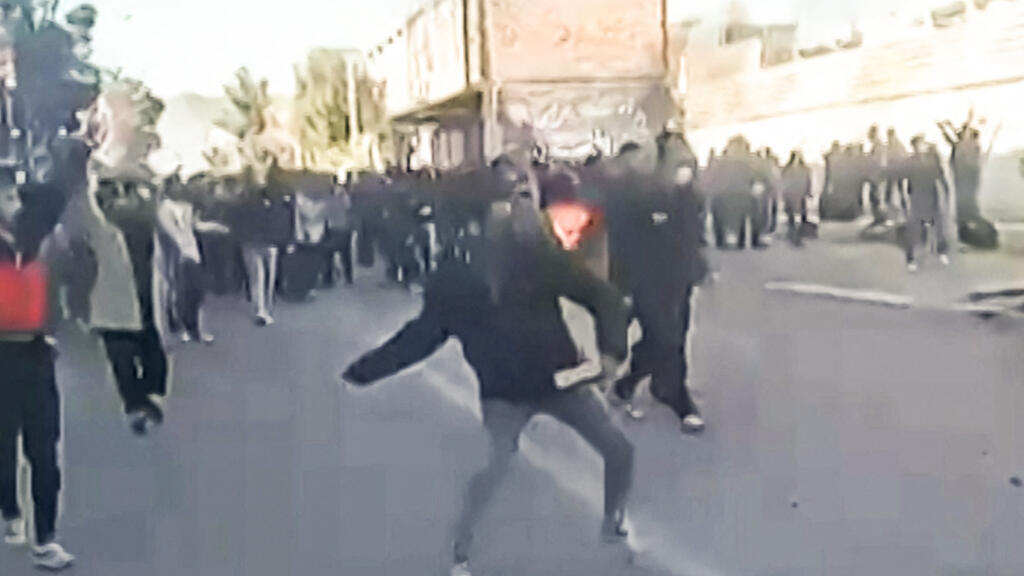 This grab taken January 2, 2026, from UGC images posted on social media on December 31, 2025, shows protestors attacking a government building in Fasa, southern Iran. © UGC via AFP
On Nazila Maroofian’s Instagram page, photographs of young Iranian protesters who have been seized by security forces follow one after the other: Kimia Hadadian, 17, Kourosh Kheiri, 13, Amirhossein Karimpour, 17.
“She was wearing a grey jacket and no information about her condition or place of detention is available at the moment … If someone has news of her, absolutely please let us know.”
Living as a refugee in France since 2023, Maroofian, 25, was herself arrested in 2022 during the widespread protests triggered by the death of Mahsa Amini in custody.
Maroofian was detained for having interviewed Amini’s father after the young Kurdish-Iranian woman was arrested by the country’s morality police for allegedly wearing her headscarf improperly.
Through her contacts with those now taking to Iran’s streets, Maroofian has taken it upon herself to act as a public conduit for the latest wave of protests, which have sparked a crackdown by the Islamic Republic’s security forces.
A series of strikes against hyper-inflation by shopkeepers in Tehran and other major cities erupted on December 28. This latest social movement has since increasingly taken on a political character, with some crowds shouting slogans explicitly calling for the government’s fall.
The demonstrations have spread to the universities, and a number of young Iranians are now joining the protests daily. Teachers’ unions have reported that several high-schoolers have been arrested across the country; their families have been kept largely unaware of their whereabouts.
Under lock and key
Iranian security forces have killed at least 27 protesters, including five minors, since late December, the Norway-based NGO Iran Human Rights said on Tuesday.
"At least 27 protesters have been killed by gunfire or other forms of violence carried out by security forces in eight provinces. Five of those killed have been verified to have been children," the NGO said after 10 days of protests, adding that over 1,000 people had been detained
The NGO on Sunday expressed concern about the fate of young Iranians detained during the demonstrations, particularly underage protesters believed to be imprisoned in Isfahan Central Prison.
Several wounded detainees have been transferred to the prison’s infirmary, the group said in a statement, including 16-year-old Soroush Azarmehr, 17-year-old Payam Aminzadeh and 16-year-old Saman Shahamat, who were arrested after being injured in the head and back.
In a prison in the conservative city of Qom, a bastion of theological universities in southern Iran, Soroush Javidi, 17, lost consciousness after suffering major blood loss, the organisation said.
“It is unclear whether he received appropriate medical care after being admitted to the prison infirmary,” the statement said. “On January 3, around 100 prisoners were transferred to Qom Central Prison, where they were all crammed into a single hall.”
Open fire
According to a January 5 report by Human Rights Activists News Agency, which tracks rights in Iran, at least 1,203 people have been arrested since the demonstrations began in late December. Official figures say that at least 12 people, including members of Iran’s security forces, have been killed.
According to Iran Human Rights, AK-47 assault rifles and possibly even machine guns were used on January 3 to repress street protests in Malekshahi county, an area with a large Kurdish population.
The latest protests have affected at least 45 mostly small to mid-sized towns across Iran, mainly in the country’s west, according to an AFP analysis of media coverage and official announcements. Protests have broken out in at least 25 of Iran’s 31 provinces.
“Each time, there are a few dozen to a few hundred people protesting,” said FRANCE 24 correspondent Siavosh Ghazi. “But the movement is gaining momentum, spreading, and becoming increasingly radical.”
Fighting back
In one viral video taken on January 4 in Hamedan, a city in Iran’s west, protesters – including several women – set upon a pro-government militiaman who had just fired upon them. A number of protesters hurl themselves on a uniformed member of the Basij paramilitary force and disarm him, dragging him to the ground and beating him while others try to stop him from being killed in the street.
In other scenes, demonstrators drop to their knees in front of motorbike-riding security forces in a non-violent display of resistance, seemingly without fear of being arrested.
Gholamhossein Mohseni Ejei, head of the country’s judiciary, said on Monday that he recognised protesters have the right to demonstrate peacefully over economic concerns. But there will be “no leniency or indulgence” towards “rioters”, he said.
Supreme Leader Ayatollah Ali Khamenei, who had mostly maintained his silence since the new protests erupted, echoed this sentiment during a Shiite festival in Tehran on Saturday. While protesters’ economic demands were “just” he said, “rioters” needed to be “put in their place”.
Iran Human Rights warned that the supreme leader's statement amounted to a blank cheque to security forces to escalate their repression.
“On 3 January, Ali Khamenei, the Supreme Leader of the Islamic Republic, implicitly issued an order to crack down by referring to protesters as ‘rioters’ and ‘agents of the enemy’,” the group said in its statement.
This article has been adapted from the original in French.
Iran’s youth on the front lines of protests face worsening crackdown
ANALYSIS
Tehran has been tightening its grip on protests sparked by hyper-inflation and the rising cost of living, with hundreds of demonstrators – many of them under 18 – arrested or wounded. But the state's crackdown may only be radicalising a nationwide wave of opposition that shows little sign of slowing.
Issued on: 06/01/2026 -
FRANCE24
On Nazila Maroofian’s Instagram page, photographs of young Iranian protesters who have been seized by security forces follow one after the other: Kimia Hadadian, 17, Kourosh Kheiri, 13, Amirhossein Karimpour, 17.
“She was wearing a grey jacket and no information about her condition or place of detention is available at the moment … If someone has news of her, absolutely please let us know.”
Living as a refugee in France since 2023, Maroofian, 25, was herself arrested in 2022 during the widespread protests triggered by the death of Mahsa Amini in custody.
Maroofian was detained for having interviewed Amini’s father after the young Kurdish-Iranian woman was arrested by the country’s morality police for allegedly wearing her headscarf improperly.
Through her contacts with those now taking to Iran’s streets, Maroofian has taken it upon herself to act as a public conduit for the latest wave of protests, which have sparked a crackdown by the Islamic Republic’s security forces.
A series of strikes against hyper-inflation by shopkeepers in Tehran and other major cities erupted on December 28. This latest social movement has since increasingly taken on a political character, with some crowds shouting slogans explicitly calling for the government’s fall.
The demonstrations have spread to the universities, and a number of young Iranians are now joining the protests daily. Teachers’ unions have reported that several high-schoolers have been arrested across the country; their families have been kept largely unaware of their whereabouts.
Under lock and key
Iranian security forces have killed at least 27 protesters, including five minors, since late December, the Norway-based NGO Iran Human Rights said on Tuesday.
"At least 27 protesters have been killed by gunfire or other forms of violence carried out by security forces in eight provinces. Five of those killed have been verified to have been children," the NGO said after 10 days of protests, adding that over 1,000 people had been detained
The NGO on Sunday expressed concern about the fate of young Iranians detained during the demonstrations, particularly underage protesters believed to be imprisoned in Isfahan Central Prison.
Several wounded detainees have been transferred to the prison’s infirmary, the group said in a statement, including 16-year-old Soroush Azarmehr, 17-year-old Payam Aminzadeh and 16-year-old Saman Shahamat, who were arrested after being injured in the head and back.
In a prison in the conservative city of Qom, a bastion of theological universities in southern Iran, Soroush Javidi, 17, lost consciousness after suffering major blood loss, the organisation said.
“It is unclear whether he received appropriate medical care after being admitted to the prison infirmary,” the statement said. “On January 3, around 100 prisoners were transferred to Qom Central Prison, where they were all crammed into a single hall.”
Open fire
According to a January 5 report by Human Rights Activists News Agency, which tracks rights in Iran, at least 1,203 people have been arrested since the demonstrations began in late December. Official figures say that at least 12 people, including members of Iran’s security forces, have been killed.
According to Iran Human Rights, AK-47 assault rifles and possibly even machine guns were used on January 3 to repress street protests in Malekshahi county, an area with a large Kurdish population.
The latest protests have affected at least 45 mostly small to mid-sized towns across Iran, mainly in the country’s west, according to an AFP analysis of media coverage and official announcements. Protests have broken out in at least 25 of Iran’s 31 provinces.
“Each time, there are a few dozen to a few hundred people protesting,” said FRANCE 24 correspondent Siavosh Ghazi. “But the movement is gaining momentum, spreading, and becoming increasingly radical.”
Fighting back
In one viral video taken on January 4 in Hamedan, a city in Iran’s west, protesters – including several women – set upon a pro-government militiaman who had just fired upon them. A number of protesters hurl themselves on a uniformed member of the Basij paramilitary force and disarm him, dragging him to the ground and beating him while others try to stop him from being killed in the street.
In other scenes, demonstrators drop to their knees in front of motorbike-riding security forces in a non-violent display of resistance, seemingly without fear of being arrested.
Gholamhossein Mohseni Ejei, head of the country’s judiciary, said on Monday that he recognised protesters have the right to demonstrate peacefully over economic concerns. But there will be “no leniency or indulgence” towards “rioters”, he said.
Supreme Leader Ayatollah Ali Khamenei, who had mostly maintained his silence since the new protests erupted, echoed this sentiment during a Shiite festival in Tehran on Saturday. While protesters’ economic demands were “just” he said, “rioters” needed to be “put in their place”.
Iran Human Rights warned that the supreme leader's statement amounted to a blank cheque to security forces to escalate their repression.
“On 3 January, Ali Khamenei, the Supreme Leader of the Islamic Republic, implicitly issued an order to crack down by referring to protesters as ‘rioters’ and ‘agents of the enemy’,” the group said in its statement.
This article has been adapted from the original in French.


No comments:
Post a Comment