Argentina to debate easing glacier protections to unlock Andean mining
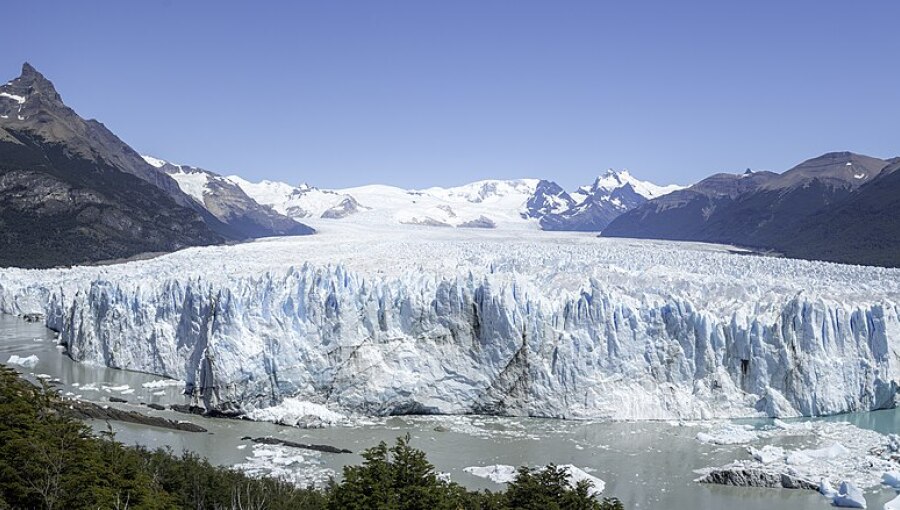
Argentina's Senate is set to debate a government-backed reform of the 2010 Glacier Law that would shift authority to provinces to determine which glaciers and periglacial areas merit protection, as President Javier Milei's administration moves to ease restrictions on large-scale mining projects in the Andes.
The proposed amendment comes as environmental groups, scientists and residents in the western province of San Juan sound the alarm that loosening protections could jeopardise strategic freshwater reserves in an already arid region. The government argues that regulatory changes would unlock billion-dollar investments in copper and gold, key minerals for the global energy transition.
Argentina has nearly 17,000 inventoried glaciers across 12 provinces, feeding 36 river basins over more than one million square kilometres. The current law establishes minimum national standards to preserve glaciers and periglacial environments as “strategic reserves of water resources for human consumption; for agriculture and as providers of water for the recharge of hydrographic basins; for the protection of biodiversity; as a source of scientific information and as a tourist attraction”.
The Senate debate takes place amid a broader controversy over whether the reform would weaken existing safeguards. Critics view the initiative as a step backwards that could compromise water security by removing protection for significant portions of glacier and periglacial ecosystems, El País reported.
Over the past 30 years, the country has lost 42% of its glacier surface area due to global warming, according to scientists. In San Juan, provincial authorities declared a water emergency three years ago as communities reported increasing shortages.
If the reform passes, provinces would define which glaciers and periglacial zones have "relevant hydric function" and therefore require protection. Critics say this would weaken uniform national standards and allow political or economic considerations to override scientific criteria, potentially opening zones currently off-limits to mining.
Juan Pablo Milana, a geophysicist and Conicet researcher, warned that the change could allow glaciers to be reclassified to facilitate mining. “That modification leaves it up to the provinces to declassify glaciers. And the problem is that the criteria are for sale,” he said, as quoted by RFI. “If there is a lot of interest from the government in a mining operation going ahead, within the university you will always find someone who says: ‘this glacier is not useful because it has little ice, contributes little, or whatever’.”
Silvio Pastore, a glaciologist at the University of San Juan and coordinator of its Cabinet of Studies in Glaciology, Nivology and Climate Change, said some periglacial areas contain little or no ice and have minimal hydrological significance compared with white glaciers or debris-covered glaciers, RFI reported. “There are sectors in which no activity of any kind will be possible, but there are sectors that can be released,” he said, adding that he sought to contribute scientific data rather than engage in politics.
Mining companies including Canada’s Lundin Mining and Australia’s BHP are advancing the Vicuña project in San Juan, one of the largest copper and gold initiatives globally, with estimated reserves of 35mn ounces of gold and 12mn tonnes of copper. But industry representatives say more regulatory certainty is needed for such projects to proceed.
Iván Grgic, institutional relations manager for Vicuña and head of the San Juan Mining Chamber, said several copper projects were at advanced exploration stages. “When the world says ‘copper, please!’, San Juan is almost ready to start selling copper,” he said, arguing that investments have remained pending because companies cannot advance in areas where inventoried ice formations are present.
Local residents in the town of Jáchal, however, oppose any weakening of protections.
Farmers say water scarcity is already affecting livelihoods. Omar Aciar, an agricultural producer in Jáchal, said mining concessions were increasing pressure on freshwater supplies. “How are we going to sacrifice the glaciers? It is very clear that water is life,” he told RFI, adding that he had planted only 60 of his 100 hectares this year due to lack of irrigation.
Environmental organisations argue that reforming the law would undermine constitutional protections and the precautionary principle enshrined in environmental legislation and the Escazú Agreement. They say the 2010 law, upheld by the Supreme Court in 2019, reflects a societal choice to preserve finite freshwater resources.
The Senate debate, set to unfold next week, will test the balance between Milei's push for economic development and long-standing environmental safeguards in one of the world's most glacier-rich nations.

No comments:
Post a Comment