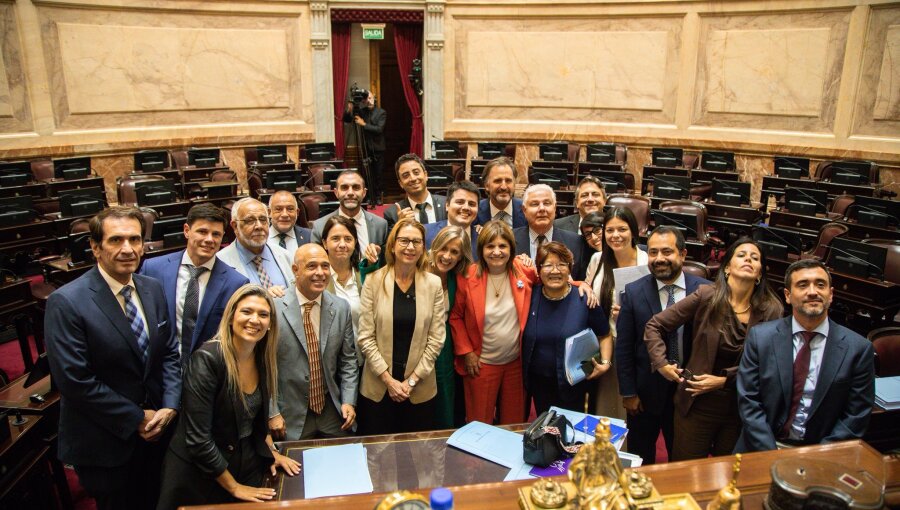
Argentina’s Senate approved President Javier Milei’s labour reform bill in the early hours of February 12 after a lengthy debate marked by last-minute amendments, political bargaining and clashes between protesters and police outside Congress.
The bill passed with 42 votes in favour and 30 against, securing support from the ruling libertarian La Libertad Avanza coalition, the centre-right PRO party, the UCR and senators aligned with several provincial governors. The Peronist bloc voted uniformly against the proposal, while two senators from Santa Cruz who had previously backed the government opposed it this time, Clarín reported.
The legislation, which now moves to the lower house of Congress, contains more than 200 articles and introduces changes to hiring and dismissal rules, collective bargaining arrangements and severance pay conditions. The government aims to have the bill approved by the Chamber of Deputies before the opening of the ordinary legislative period on March 1.
Among the key provisions are measures making it easier for companies to dismiss employees and reducing severance costs, as well as restrictions on trade unions’ participation in collective bargaining. The reform also establishes that company-level agreements may prevail over broader sectoral accords and allows court-ordered payments to be made in instalments — six for large firms and 12 for small and medium-sized enterprises, Tiempo Argentino reported.
During the debate, Senator Patricia Bullrich, head of the ruling bloc in the Senate, defended the reform as necessary to modernise the labour market. She argued that Argentina’s system had become “unbalanced” and excessively litigious, hampering competitiveness and private-sector job creation.
Peronist Senator José Mayans rejected the bill, comparing it to failed economic models of the past and warning that it violated constitutional protections for workers. He said the reform would not generate employment and accused the government of targeting labour rights.
Outside Congress in Buenos Aires, thousands of demonstrators took to the street to protest the reforms, which unions describe as an attack on workers’ rights. Security forces used water cannon, rubber bullets and tear gas after clashes erupted, while some protesters threw stones and Molotov cocktails.
The General Confederation of Labour (CGT), which helped organise the protest, said in a statement: “It’s not modernisation. It’s austerity for the workers.” The government has argued the changes are essential to attract investment and advance Milei’s free-market agenda.
Additional amendments were introduced shortly before the vote, including adjustments to a proposed Labour Assistance Fund financed partly through social security resources and modifications to union contribution rules. The reform also incorporated, as an annex, an agreement to transfer national labour courts to the jurisdiction of the city of Buenos Aires.
The debate unfolded during extraordinary sessions of Congress, reflecting Milei’s broader push to overhaul economic regulation after winning the 2023 presidential election amid high inflation and economic stagnation. The lower house is expected to take up the bill in the coming weeks.

No comments:
Post a Comment