We’re Better at Tearing Down Than Building Up
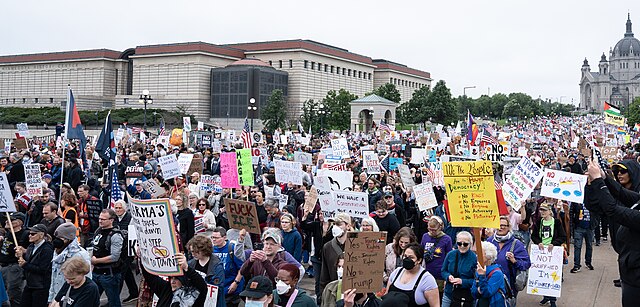
Civil resistance movements around the world are remarkably good at one thing: disruption. We know how to mobilize millions, how to make authoritarian regimes ungovernable, and how to generate the kind of sustained crisis of governance that topples strongmen. What we are terrible at – catastrophically, repeatedly terrible at – is what comes next.
This is the gap where movements die. Egypt’s revolutionaries toppled Mubarak in 2011 but lacked an actionable plan for governance; the military filled the vacuum that lack created and now rules even more anti-democratically than before. Tunisia’s uprising produced the Arab Spring’s only democracy. But that lasted only a decade before a populist strongman exploited public frustration to seize power. Even South Africa’s celebrated transition, negotiated over years, and backed by Nelson Mandela, one of the twentieth century’s great moral leaders, produced political freedom but failed to institute economic reforms that could address the extreme economic inequality created under apartheid. Now the democracy it built is visibly eroding.
The pattern is consistent enough to be a law: Victory in the streets leads to chaos in governance leads to new forms of authoritarianism. The authoritarian falls, the power vacuum opens, and whoever has organizational capacity, weapons, money, or foreign backing fills it. If the vacuum isn’t filled by the movement, it will be filled by someone else.
For those of us organizing against authoritarian consolidation in the United States, this is not an academic problem. It is perhaps the most urgent strategic question we are not asking.
The Frameworks We’re Missing
Traditional progressive power analysis assumes that institutions are persuadable, that democracy is stable, that power is national, and that the state is capturable through electoral and legislative means. Authoritarian consolidation is precisely the process of destroying those conditions. You cannot “pressure” institutions that are being captured. You cannot win elections when democracy itself is the target. You cannot successfully organize nationally when power operates transnationally.
Getting to adequate strategy requires synthesizing across frameworks that most organizations treat as separate specialties: authoritarian consolidation theory, civil resistance scholarship, comparative democratization, network theory, and, critically, the practical question of post-collapse reconstruction. The movement needs strategists who can hold all of these simultaneously, asking: Which pillars of authoritarian support can we pull? How do we reach sustained participation at critical mass? And what do we build when the old order falls?
What South Africa and Tunisia Teach Us
The two most instructive modern cases – South Africa and Tunisia – succeeded in ways that should inspire us and failed in ways that should serve as warnings.
South Africa’s negotiated transition avoided civil war, produced one of the world’s most progressive constitutions, and established a Truth and Reconciliation Commission that became a global model. The process, including creating a Government of National Unity that brought former adversaries into shared governance, built genuine legitimacy. Mandela’s moral authority and strategic vision were irreplaceable.
But the ANC accepted an economic framework to secure white buy-in for political transition that protected the extreme economic inequality produced by the white supremacist apartheid government. Thus, property rights were protected; land was not redistributed. The result: political apartheid ended, but economic apartheid persisted. Today South Africa is one of the most unequal countries on earth, with unemployment above thirty percent, endemic corruption, and a democracy whose institutions survive but whose substance is hollowing out. The political house was built; the economic foundation for it was never laid.
Tunisia’s story is both more hopeful and more devastating. Its constitutional process was a masterwork of deliberative democracy resulting from three years of debate, civil society mediation through the Nobel Prize–winning National Dialogue Quartet, and genuine compromise between secular and Islamist factions. The resulting constitution was the most democratic in the Arab world.
However, Tunisia never addressed the economic crisis that had fueled the revolution in the first place. Unemployment remained brutal, especially for young people. IMF austerity undermined the new government’s capacity to deliver. The security sector was never reformed. By 2021, a populist law professor named Kais Saied had exploited public frustration to suspend parliament, dismiss the prime minister, and rule by decree. Tunisia is now authoritarian again. A decade of democratic institution-building has been erased.
The common lesson is stark: political reforms without reforms aimed at building greater economic democracy produces fragile democracies that either erode slowly or collapse suddenly. Both countries succeeded in building democratic forms. Both failed to transform the underlying power structures – economic, security, institutional – that had enabled authoritarianism in the first place.
The Hard Work Movements Avoid
The experts tell us that post-collapse democratic reconstruction requires planning across at least eight dimensions simultaneously: transitional governance, security sector transformation, constitutional process, transitional justice, economic restructuring, service delivery, democratic culture-building, and international engagement. Most movements address one or two of these, usually the most visible ones like elections and constitutions, while neglecting the rest.
Economic transformation is the most critical and most neglected. Movements focus on political transition because it is urgent and visible. They accept international economic orthodoxy because they fear capital flight. They lack economic expertise because their organizations were built for advocacy, not governance. And they pay for these failures when the public, having won political freedom but seeing no material improvement in their lives, concludes that democracy doesn’t work.
Security sector reform is the second most dangerous gap. Leave authoritarian police and military structures intact, and you leave in place the infrastructure for the next coup. South Africa’s unreformed police massacred striking miners at Marikana in 2012. Tunisia’s unreformed security apparatus enabled Saied’s power grab. The pattern is clear: security forces that serve authoritarians will not automatically serve democracy.
Transitional justice, meaning the question of how to balance accountability for past crimes against the stability of the new order, requires a sophistication that movements rarely develop before they need it. Prosecute too aggressively, and you risk a military coup. Prosecute too little, and you undermine the legitimacy of the new system. The evidence suggests a layered approach: prosecution of top leaders for the worst crimes, truth commissions for broader documentation, conditional amnesty for lower-level participants who cooperate, and reparations for victims. But this balance must be planned in advance, not improvised under pressure.
What This Means for the United States
If authoritarian consolidation in the United States is reversed, whether through electoral defeat, institutional resistance, mass mobilization, or some combination, the day after will present challenges that dwarf anything the pro-democracy movement is currently preparing for. Who governs during the transition? What do you do with federal agencies whose leadership was complicit? How do you address the tens of millions of Americans who supported authoritarianism? How do you reform a constitutional system that enabled it? How do you break the economic power of the oligarchs who funded it?
These are not hypothetical questions. They are the questions that were determinative of whether South Africa built a lasting democracy or a failing one, and whether Tunisia’s revolution produced freedom or a new dictatorship. And they are questions that the American pro-democracy movement, focused overwhelmingly on the immediate crisis of resistance, has barely begun to ask.
The work that must begin now, today, in parallel with resistance. It must include drafting constitutional reforms, planning economic transformation, building governance capacity, preparing frameworks for transitional justice, mapping which security forces will accept democratic transition and which will not, and creating strategies for including former authoritarians in a democratic system without compromising democratic principles.
This is unglamorous work. It lacks the moral clarity of protest and the urgency of crisis response. It requires expertise in governance, economics, law, and administration that most movement organizations were not built to develop. But it is the difference between Egypt and South Africa; between a revolution that produces a worse dictatorship and one that produces an imperfect but surviving democracy.
You can topple authoritarianism and still fail to build democracy. The movement that hasn’t planned for reconstruction will watch someone else fill the vacuum. Build the capacity to govern before you win. The work starts now.

[Prefatory Note: This short essay previously published as an editorial in TransMediaService on February 16, 2026. The text below has been modified slightly]
As human beings we share deep emotional impulses to foretell the future, whether to foresee action on the basis of dread as to what the future will bring or to offer oneself and others reassurance that the future will deliver us from an ominous catastrophe or bring us the gifts of life that we most covet. From pre-modern times humans have sought this reassurance, resorting to magicians or religious seers and texts as necessary.
Diverse civilizations throughout history have thirsted after knowledge of their future as individuals or in relation to diverse collective identities as members of tribes, nations, states, religions, ethnicities, and gender identities, and more recently as a species. Fortune telling, astrology, and divining rods have all tried to foretell the future, without waiting for it to unfold. This kind of epistemological denialism has been somewhat disguised in modern sensibilities by recourse to experts, futurists, and forecasters who translate data into policy preferences and predictions that earns respect as if ‘knowledge.’ It is also us bound up with gambling and extreme sports, as if we can defy the fog clouding the future and subjugate the future to our appetites/
This passion to know the future has even penetrated sophisticated scientific circles. A prominent example is the Doomsday Clock administered for the since 1947 by the Bulletin of Atomic Scientists who select a group of scientists, weapons specialists, nuclear experts, and public figures to assess how close the world is to the midnight omega point of nuclear war. This year it was a major news item when the clock was moved four seconds closer to midnight, from 89 seconds to 85, a pseudo-precise way of anticipating the risks of an apocalyptic future for humanity. As with pre-scientific ways of relieving persons and communities of the anxieties and impatience associated with the core uncertainties of life as bearing upon prospects feared or desired. In modernity this demand for something as definite as possible about the future tends to be more comfortable relying on statistics, graphs, and data, still functioning as ways to cover up the unknowability of the future, and ultimately performs a disservice to humanity by encouraging fatalism, passivity, or sedation on one side and cynicism and complacency on the other.
Why act or struggle for the future if we know what lies ahead? Thereby arises ‘false consciousness’? This is what the philosopher, Alfred North Whitehead, famously warned us about calling it ‘the fallacy of misplaced concreteness.’ He considered this widespread fallacy induced false consciousness about the real. My purpose is more modest. It is to criticize the impact of negativity to the extent that it flourishes even among solutions-oriented peace activists in the tradition of Johan Galtung, and to energize progressive activism without the palliative of false consciousness. Unknowability about the future, starting with the precariousness of our own mortality, is never comfortable, yet it is real. It should not diminish efforts to reduce dangers or risks, but motivate us to adjust behavior on the basis of present knowledge. The Titanic would not have struck an iceberg if it had not ventured so close to Arctic waters. I would feel safer and more secure if denuclearizing initiatives were embraced by the nuclear weapons states such as by entering into a nuclear disarmament treaty process with a resolve to make it work. Even so, I would be overreaching by claiming 100% certainty that my line of advocacy was assured of being best course for humanity to take? Claiming to know the future is a mixture of dogmatism and hubris, leading in worst case scenarios to extremism of a destructive kind.
These dangers disfigure behavior in potentially destructive ways. Zionist ideology roots its justifications for apartheid, genocide, and ecocide in the biblical promise of ‘the promised land,’ taking no account of the wellbeing and attachments of the majority population in modern day Palestine. Israel’s first Prime Minister, David Ben Gurion, a confirmed secularist, opportunistically invoked this sacrosanct method of foretelling of the future by saying ‘let the Bible be our weapon,’ and further evaluating any choice by the simple question, ‘is it good for the Jews?’ Not only is the future assured and hence knowable, but its inevitability tends to relieve those so falsely enlightened of all moral constraints. This kind of manipulative futurism corrupts as exemplified by Christian Zionists who read the Book of Revelations that comes at the end of the New Testament as validating unconditional support of Israel joined with a mission to induce Jews to emigrate to Israel as the necessary prelude to the Second Coming of Jesus Christ. And then, when the initial forecast is fulfilled, Jews are to be given the choice of conversion or eternal damnation.
The most notable substitution of hope for knowledge when it comes to the future derives its strongest affirmation from the great late 18th century German philosopher of rationality, Immanuel Kant (1724-1805), who put articulated in solemn inspirational language that has cheered the best of activists for more than two centuries: “The moral arc of the universe is long but bends toward justice.” Martin Luther King, Jr, famously invoked this sentiment, although he tied it to struggle more than treated it as a foolproof prediction of the future. A reading of the present can be interpreted as vindicating Kant’s confidence in the future of humanity, as in his essay Perpetual Peace: A Philosophical Sketch (1795) or an expression of premature optimism or even as a selective blindness toward the human condition as it is currently being exhibited. The evidence is equivocal and premature, at best, and if I had to pronounce upon it, I would prefer to regard such a predisposition as an ultra-humanistic version of false consciousness about the human future.
From these perspectives, I want to encourage peace activism of all kinds, to accept the challenges associated with a refusal to indulge delusions about ‘knowable futures’ in favor of rooting their beliefs in the unknowability of the future, and to ground their activism in an ethos of humanistic struggle based on visions of desirable futures without depending on false claims about the certainties of doom or of a guarantee that their dedicated responses to such assaults on humanity as arise from warfare, climate change, poverty, racism, and imperialism will with certainty overcome such shortcomings in the human condition.
As a species we must abandon a worldview based on parts rather than the whole. As long as we speak only or primarily from the present particularities of nationality, gender, ethnicity, civilizational, and religious identity we should awaken in the present that this is not a path to a peaceful, just, and resilient path to the future. With urgency we must learn to think and act as engaged citizens of the planetary ecosystemic whole, and more expansively of the cosmos as our unavoidable shared foundation of life and spirituality.
Overall, this involves an acceptance of unknowability when it comes to the future and to struggle on behalf of our beliefs in the present, with a posture of prudence toward perceived dangers and wrongdoing. Such a reorientation of outlook and engagement entails profound changes in education, citizenship, and notions of the public good. I try to remain engaged with the help of my former mentor/teacher, Paul Tillich, and especially his book Courage to Be (1952), whose message counsels rootedness in the deep soil of present reality.


No comments:
Post a Comment