Do Workers in Germany Vote Neo-Nazi?
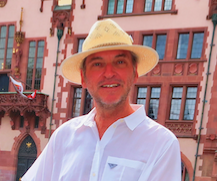
 Image by Willi Wallroth/Wikimediacommons, in public domain
In Germany’s recent election – held in February 2025 – the AfD managed to become the second-strongest political force, winning 21%. Four years earlier, the neo-fascist party’s share had been 10.4%.
In East Germany, it even reached 32%. The AfD thus succeeded in doubling its share of the vote. Worse, this is not because fewer people went to the polls. On the contrary. Voter turnout increased from 76.4% (2021) to 82.5% (2025) – the highest since 1987, almost 40 years ago.
As a result, the AfD won 10.33 million votes compared to 4.81 million in the previous election. There are specific groups within Germany’s population – workers? – in which the AfD has been particularly successful. The neo-fascist AfD has – seemingly – also managed to penetrate new groups of voters.
In geographical terms, the AfD gained particularly in those regions where it was already strongly anchored. In these regions, it received significantly more votes than in the past.
Worse still, the AfD has reached certain demographic groups it had previously struggled to access – especially young voters.
It is striking that there was a particularly high proportion of AfD voters among workers. In addition, the AfD gained especially in regions with a high proportion of industrial jobs. Accordingly, various aspects of the world of work have become politically significant.
Meanwhile, the role of the AfD’s core issue – migration – remains imperative. For the party and its supporters, limiting immigration is of great importance, despite immigration underpinning Germany’s economy in times of acute skill shortages.
Yet AfD voters and party apparatchiks hold negative attitudes toward immigrants. Worse, there is an increasing normalization of far-right attitudes, xenophobic ideologies, and racism. On top of that, there is a broader shift to the right within Germany’s general population.
Maintaining the so-called “firewall” – the refusal of democratic parties to cooperate or merge with the AfD – distinguishes AfD voters (in favour of ending it) from non-AfD voters (against). Despite the AfD’s success in the 2025 federal election and in three East German state elections, many still support excluding the AfD from government participation.
However, the fact that the firewall is visibly crumbling amid the rightward shift of Germany’s conservative parties – for example on migration – is deeply concerning.
An inglorious climax of this rightward trend came on 29 January 2025, when the millionaire, private-jet-flying conservative chancellor Merz (CDU) voted together with the AfD to secure a majority for further tightening Germany’s already restrictive migration policy in parliament.
In other words, German conservatives broke – as they did in 1933 – the “cordon sanitaire” of non-cooperation with the neo-fascist AfD in order to pass anti-migration legislation. Apart from the immediate effect of legitimizing the AfD, such a move has three additional problems:
- The Trap: Falling into the propaganda trap laid by Germany’s neo-Nazis by adopting their issues – anti-migration, xenophobia, racism – will not win voters back. Voters prefer the original (the AfD), not the copy (the conservatives).
- The Original: There is more or less conclusive evidence from other European countries showing that when conservatives adopt neo-Nazi issues, it strengthens the original rather than the copy.
- The Issues: Rather than trying to outrun neo-Nazis on their terrain, conservatives would be far better off emphasizing their own issues: conserving nature, economic stability, social order.
Instead, the AfD has succeeded in placing migration at the centre of political debate and in pushing democratic parties into attempting to “out-Nazi” the neo-Nazis – a strategy that is failing. Whatever German conservatives do, they will never be the better neo-Nazis.
When democratic parties compete with one another over tightening asylum law, thereby adopting neo-Nazi rhetoric and right-wing ideology, their positions become indistinguishable from those of the AfD. The AfD wins.
Copying the neo-fascist AfD by adopting neo-Nazi positions does not weaken the extreme right. On the contrary, it upgrades, legitimizes, normalizes, and ultimately strengthens it electorally.
Democratic parties would be better advised to focus on widespread distrust in politics, deep political dissatisfaction, and belief in conspiracy myths.
Russia’s unprovoked attack on Ukraine is a good example. The AfD seeks to excuse Putin, while democratic parties support Ukraine.
Russia triggered an energy crisis in Germany and caused record levels of inflation in the following twelve months. As a result, the economy slipped into recession, shrinking in 2023 and 2024, and is not expected to improve in 2025.
Yet democratic parties allowed the AfD to benefit massively during this period – especially since mid-2022. Its support in public polling increased from around 10–15% at the end of 2022 to over 20%.
One group in which the AfD is particularly strong is workers – especially those most negatively affected by economic downturn and rising inflation. Among routine labourers and skilled workers alike, AfD support ranges from 36% to 38%.
Despite this apparent popularity, workers – though overrepresented – do not constitute the majority of AfD voters.
Overall, workers make up just under 19% of AfD voters. In other words, for every AfD-voting worker, there are roughly four workers who do not vote for the AfD.
The geography of AfD support also reveals anomalies concerning industry. The AfD gained particularly strongly where industrial employment is high – in West Germany’s industrial heartlands:
- Ingolstadt and Wolfsburg (automotive),
- Salzgitter (steel),
- Ludwigshafen-Frankenthal (BASF), as well as
- southern constituencies with strong medium-sized industrial structures such as Rottweil-Tuttlingen and Schwäbisch Hall-Hohenlohe.
It is especially concerning that many industrial workers in these regions – regions undergoing transformation toward renewable and sustainable production – are choosing the AfD.
Fears of job losses amid weakening industrial production, lack of future prospects, and threats of restructuring or factory closures reinforce this trend.
This is compounded by the social devaluation of industrial work as the industrial share of value creation has declined in recent decades. Many workers strongly perceive this devaluation. At the same time, the everyday concerns of workers seem to find little resonance in progressive democratic parties, while neo-Nazi slogans such as “migrants are the problem” gain traction.
Worse, the concept of the working class increasingly appears to be appropriated by the far right through forms of “exclusive solidarity” – solidarity among Germans only. Dividing the working class works. The conflict is reframed: no longer capital versus labour, but German workers versus migrant workers. This strengthens the AfD while weakening workers.
Hitler’s Nazis understood this. Hence the word “workers” appeared – cunningly – in the party’s official name: the National Socialist German Workers’ Party. There was no socialism and no emancipation of workers – only misery, war, genocide, and destruction in the name of a murderous ideology. In today’s Germany, workers can be politicized under different political banners:
- as an inclusive, solidaristic vertical opposition to the rich, bosses, and owners – that is what unions should do;
- or as an exclusionary opposition directed against other wage-dependent groups such as migrants or social outsiders – that is what the AfD does.
Together with reactionary tabloids, corporate media, conservative politicians, and segments of capital, the neo-fascist AfD promotes what in Germany is known as “desolidarization” – pitting workers against workers, and against refugees, the precariat, welfare recipients, and others.
The AfD – like Hitler’s Nazis – sets the supposedly hard-working domestic “makers” against allegedly parasitic “takers.” This is reinforced by the internalization of an individualized performance ideology promoted by neoliberalism.
Within the AfD’s ideological orbit, being a worker is increasingly defined through downward demarcation – against welfare recipients and refugees – while interest-based politics against the rich and powerful is blocked.
Yet workers tend to prefer social-democratic and progressive parties when these adopt economically radical positions. Class interest can outweigh migration – at least under certain conditions.
Opportunities for political participation – including participation in the workplace – are crucial in counteracting feelings of powerlessness and the individualistic ideology of neoliberalism.
In occupational terms, teachers are among the least likely to vote AfD (only 8%). Lorry drivers are among the most likely (30%), followed by construction workers (26%) and car mechanics (25%).
Donald Trump once said, “I love the poorly educated.” The lower the level of formal education, the more likely support appears to be for Trump – or for Germany’s AfD. The pattern also works in reverse: the higher the level of education, the more likely support is for progressive parties. Albert Einstein and Stephen Hawking, for example. On the contrary, Adolf Hitler, for example, had a very limited level of educational achievement.
Among blue-collar workers, 36% support the AfD, compared to only 18% among white-collar workers. Eight per-cent of public servants support the AfD, but a staggering 37% of unskilled workers do so.
Only 12% of workers with high job autonomy vote AfD, compared to 30% of workers in routine production jobs. The AfD is supported by nearly twice as many male workers as female workers.
Workers in jobs with little autonomy show a particularly high probability of supporting the AfD. A lack of democratic participation in the workplace is closely linked to right-wing extremist attitudes and voting behaviour.
A significant decline in experiences of democratic participation at work – especially in eastern Germany – reinforces this dynamic, which helps explain the AfD’s strength there.
In short: stronger unions, greater workplace democracy, and progressive economic policies are essential components in confronting the neo-fascist AfD.
In Germany’s recent election – held in February 2025 – the AfD managed to become the second-strongest political force, winning 21%. Four years earlier, the neo-fascist party’s share had been 10.4%.
In East Germany, it even reached 32%. The AfD thus succeeded in doubling its share of the vote. Worse, this is not because fewer people went to the polls. On the contrary. Voter turnout increased from 76.4% (2021) to 82.5% (2025) – the highest since 1987, almost 40 years ago.
As a result, the AfD won 10.33 million votes compared to 4.81 million in the previous election. There are specific groups within Germany’s population – workers? – in which the AfD has been particularly successful. The neo-fascist AfD has – seemingly – also managed to penetrate new groups of voters.
In geographical terms, the AfD gained particularly in those regions where it was already strongly anchored. In these regions, it received significantly more votes than in the past.
Worse still, the AfD has reached certain demographic groups it had previously struggled to access – especially young voters.
It is striking that there was a particularly high proportion of AfD voters among workers. In addition, the AfD gained especially in regions with a high proportion of industrial jobs. Accordingly, various aspects of the world of work have become politically significant.
Meanwhile, the role of the AfD’s core issue – migration – remains imperative. For the party and its supporters, limiting immigration is of great importance, despite immigration underpinning Germany’s economy in times of acute skill shortages.
Yet AfD voters and party apparatchiks hold negative attitudes toward immigrants. Worse, there is an increasing normalization of far-right attitudes, xenophobic ideologies, and racism. On top of that, there is a broader shift to the right within Germany’s general population.
Maintaining the so-called “firewall” – the refusal of democratic parties to cooperate or merge with the AfD – distinguishes AfD voters (in favour of ending it) from non-AfD voters (against). Despite the AfD’s success in the 2025 federal election and in three East German state elections, many still support excluding the AfD from government participation.
However, the fact that the firewall is visibly crumbling amid the rightward shift of Germany’s conservative parties – for example on migration – is deeply concerning.
An inglorious climax of this rightward trend came on 29 January 2025, when the millionaire, private-jet-flying conservative chancellor Merz (CDU) voted together with the AfD to secure a majority for further tightening Germany’s already restrictive migration policy in parliament.
In other words, German conservatives broke – as they did in 1933 – the “cordon sanitaire” of non-cooperation with the neo-fascist AfD in order to pass anti-migration legislation. Apart from the immediate effect of legitimizing the AfD, such a move has three additional problems:
- The Trap: Falling into the propaganda trap laid by Germany’s neo-Nazis by adopting their issues – anti-migration, xenophobia, racism – will not win voters back. Voters prefer the original (the AfD), not the copy (the conservatives).
- The Original: There is more or less conclusive evidence from other European countries showing that when conservatives adopt neo-Nazi issues, it strengthens the original rather than the copy.
- The Issues: Rather than trying to outrun neo-Nazis on their terrain, conservatives would be far better off emphasizing their own issues: conserving nature, economic stability, social order.
Instead, the AfD has succeeded in placing migration at the centre of political debate and in pushing democratic parties into attempting to “out-Nazi” the neo-Nazis – a strategy that is failing. Whatever German conservatives do, they will never be the better neo-Nazis.
When democratic parties compete with one another over tightening asylum law, thereby adopting neo-Nazi rhetoric and right-wing ideology, their positions become indistinguishable from those of the AfD. The AfD wins.
Copying the neo-fascist AfD by adopting neo-Nazi positions does not weaken the extreme right. On the contrary, it upgrades, legitimizes, normalizes, and ultimately strengthens it electorally.
Democratic parties would be better advised to focus on widespread distrust in politics, deep political dissatisfaction, and belief in conspiracy myths.
Russia’s unprovoked attack on Ukraine is a good example. The AfD seeks to excuse Putin, while democratic parties support Ukraine.
Russia triggered an energy crisis in Germany and caused record levels of inflation in the following twelve months. As a result, the economy slipped into recession, shrinking in 2023 and 2024, and is not expected to improve in 2025.
Yet democratic parties allowed the AfD to benefit massively during this period – especially since mid-2022. Its support in public polling increased from around 10–15% at the end of 2022 to over 20%.
One group in which the AfD is particularly strong is workers – especially those most negatively affected by economic downturn and rising inflation. Among routine labourers and skilled workers alike, AfD support ranges from 36% to 38%.
Despite this apparent popularity, workers – though overrepresented – do not constitute the majority of AfD voters.
Overall, workers make up just under 19% of AfD voters. In other words, for every AfD-voting worker, there are roughly four workers who do not vote for the AfD.
The geography of AfD support also reveals anomalies concerning industry. The AfD gained particularly strongly where industrial employment is high – in West Germany’s industrial heartlands:
- Ingolstadt and Wolfsburg (automotive),
- Salzgitter (steel),
- Ludwigshafen-Frankenthal (BASF), as well as
- southern constituencies with strong medium-sized industrial structures such as Rottweil-Tuttlingen and Schwäbisch Hall-Hohenlohe.
It is especially concerning that many industrial workers in these regions – regions undergoing transformation toward renewable and sustainable production – are choosing the AfD.
Fears of job losses amid weakening industrial production, lack of future prospects, and threats of restructuring or factory closures reinforce this trend.
This is compounded by the social devaluation of industrial work as the industrial share of value creation has declined in recent decades. Many workers strongly perceive this devaluation. At the same time, the everyday concerns of workers seem to find little resonance in progressive democratic parties, while neo-Nazi slogans such as “migrants are the problem” gain traction.
Worse, the concept of the working class increasingly appears to be appropriated by the far right through forms of “exclusive solidarity” – solidarity among Germans only. Dividing the working class works. The conflict is reframed: no longer capital versus labour, but German workers versus migrant workers. This strengthens the AfD while weakening workers.
Hitler’s Nazis understood this. Hence the word “workers” appeared – cunningly – in the party’s official name: the National Socialist German Workers’ Party. There was no socialism and no emancipation of workers – only misery, war, genocide, and destruction in the name of a murderous ideology. In today’s Germany, workers can be politicized under different political banners:
- as an inclusive, solidaristic vertical opposition to the rich, bosses, and owners – that is what unions should do;
- or as an exclusionary opposition directed against other wage-dependent groups such as migrants or social outsiders – that is what the AfD does.
Together with reactionary tabloids, corporate media, conservative politicians, and segments of capital, the neo-fascist AfD promotes what in Germany is known as “desolidarization” – pitting workers against workers, and against refugees, the precariat, welfare recipients, and others.
The AfD – like Hitler’s Nazis – sets the supposedly hard-working domestic “makers” against allegedly parasitic “takers.” This is reinforced by the internalization of an individualized performance ideology promoted by neoliberalism.
Within the AfD’s ideological orbit, being a worker is increasingly defined through downward demarcation – against welfare recipients and refugees – while interest-based politics against the rich and powerful is blocked.
Yet workers tend to prefer social-democratic and progressive parties when these adopt economically radical positions. Class interest can outweigh migration – at least under certain conditions.
Opportunities for political participation – including participation in the workplace – are crucial in counteracting feelings of powerlessness and the individualistic ideology of neoliberalism.
In occupational terms, teachers are among the least likely to vote AfD (only 8%). Lorry drivers are among the most likely (30%), followed by construction workers (26%) and car mechanics (25%).
Donald Trump once said, “I love the poorly educated.” The lower the level of formal education, the more likely support appears to be for Trump – or for Germany’s AfD. The pattern also works in reverse: the higher the level of education, the more likely support is for progressive parties. Albert Einstein and Stephen Hawking, for example. On the contrary, Adolf Hitler, for example, had a very limited level of educational achievement.
Among blue-collar workers, 36% support the AfD, compared to only 18% among white-collar workers. Eight per-cent of public servants support the AfD, but a staggering 37% of unskilled workers do so.
Only 12% of workers with high job autonomy vote AfD, compared to 30% of workers in routine production jobs. The AfD is supported by nearly twice as many male workers as female workers.
Workers in jobs with little autonomy show a particularly high probability of supporting the AfD. A lack of democratic participation in the workplace is closely linked to right-wing extremist attitudes and voting behaviour.
A significant decline in experiences of democratic participation at work – especially in eastern Germany – reinforces this dynamic, which helps explain the AfD’s strength there.
In short: stronger unions, greater workplace democracy, and progressive economic policies are essential components in confronting the neo-fascist AfD.
Working Time in Germany’s Service Sector – a Union View
 Source: Ver.di union
Perhaps ever since the dawn of capitalism, when the first workers were – literally – whipped into factory work and converted from life on a farm with a natural day and night rhythm and adjusted to the factory clock on the wall of a Satanic Mill, workers have known that working hours have a huge impact on life as a whole.
A day has 24 hours, a week has seven days and five working days – for most. As a recent survey of almost 10,000 workers by Germany’s almost two-million-member service workers’ trade union Ver.di shows, the five-day work week does not exist, for example, in care work. Yet, for them and for other workers, working time remains very important for private life and recreation.
Beyond that, the length of working time, the location of work, and the reliability of working hour schedules often depend on whether work takes place under a private (corporate, i.e. for profit) or public provider. If, for example, public or corporate management – both increasingly behaving as if they were one and the same – extend working hours, there is less time spent elsewhere. Economists call this a zero-sum game. Put simply, time spent at work is not time spent with, for example, one’s family – and vice versa.
Very unfortunately for capitalism, workers still need periods of rest. Economists call this “reproduction.” One of the more dubious economists – Robert Malthus – even discussed the conditions under which workers would reproduce themselves as a class – needed as a usable commodity in 18th-century factories and workhouses.
For the necessary reproduction to occur, this includes – among other things – time for rest, sleep, housework, food, and for “private” life (Malthus’ procreation). In times of an ageing society, this increasingly includes responsibility for the care of others – the elderly, the incapacitated, etc. – and unpaid work.
Management can and does make workers work overtime and change working hours and schedules, and this has an impact on health, social life, private interests, families, and care work. Germans know this as KAPOVAZ, which roughly translates into capacity-oriented variable working time.
In this form of working time, hours are scheduled by management – unilaterally – so that they match the amount of work – also scheduled unilaterally. Work time assignments are exclusively determined by management. As a result, workers are severely restricted in terms of predictability of their time.
Yet, flexible regulation of working hours can also have a positive effect, but this only occurs if the general conditions are right – a fair distribution of paid work must be enshrined in collective bargaining agreements. Such positive effects could even extends to filling the 600,000 positions that are currently open in Germany’s public sector.
Meanwhile, management like to claim that some schedules are difficult to plan even though planning is their job. This, more often than not, is the well-crafted managerial reality “for” or perhaps “against” female workers. This, in turn, impacts the care of children as well as the care of loved ones. Next to limiting the caprices of management, an overall reduction of working hours can ensure time for care work. On the downside, this can also mean workers earn less money and experience reduced career opportunities. This will, inevitably, increase the risk of old-age poverty – particularly for female workers.
Still, the realities of working time are often incompatible with “work-life” compatibilities and health – particularly in Germany’s service and care industries. To maintain and promote humane working conditions, needs-based working hours can enable a good balance between employment and personal life. Germany’s Working Time Act provides some protective measures in this regard.
Currently, the German union index on “Good Work” shows that almost all workers want working hours that are compatible with their lives. Unsurprisingly, 95% of workers in Germany wish to be able to finish work before 6 pm and 72% would like working hours of less than eight hours.
The basis for good compatibility between employment and personal life is that work supports the mental as well as physical health of workers. In other words, work must be designed in such a way that there is no harm to health and that health is preserved in the long term.
In total, more than a third (36.9%) of workers in Germany’s service sector work on a part-time basis. The part-time rate for women stands at 53.3% – much higher than for men: 16.4%.
Almost half of all workers have reduced working hours – among other reasons – in order to have time for childcare (49.3%) and for private life (49.4%). For 41.7% of part-time workers, workloads would be too high if longer hours were required.
Yet, work stress remains a widespread phenomenon for workers in Germany’s service sector. 24.6% say they “regularly” experience stress at work, while 29.2% say they often do so. 32% say they rarely experience stress at work, while 14.2% say “never.”
As one might expect, a whopping 71.2% of all service sector workers in Germany say that irregular working hours make it hard for them to participate in social activities and private life. It gets worse.
On average, half (51.8%) of all workers in Germany’s service sector believe that the current level of work intensification – often without restrictions on managerial decisions – makes it impossible to work until retirement age. Two out of five employees – a staggering 41.5% – say they will not last that long.
However, such assessments vary greatly depending on the kind of service work performed. Forecasts in Germany’s retail sector are particularly alarming. More than half of all workers (54%) do not believe they will be able to work until retirement. It looks similarly negative in Germany’s social services (49.7%) and the health sector (49%).
Worse, almost two-thirds (62.5%) of all workers in Germany’s service sector go to work even though they feel sick. In addition, 71.5% say they work through their lunch breaks or shorten them.
The picture is similarly bleak regarding the infamous “work-life balance” – something that is talked about a lot but seemingly hard to find. German data support this assumption: 47.3% of workers in Germany’s service sector say they experience a positive work-life balance only “rarely” and 18.7% say never.
In other words, for roughly two-thirds of workers, work-life balance rarely or never exists. Yet 15.3% say they do have a positive work-life balance, with 18.7% saying they sometimes experience it. In short, the famous work-life balance exists for about one-third of all service sector workers, while for two-thirds it rarely or never does.
What does not help is that 60.9% of all workers in Germany’s service sector say they experience work pressure and pressure to work faster – imposed by management. On the statement, “I am too exhausted after work to take care of private and family duties,” 57.9% of workers in social services agreed; 55.3% in retail; and 54.5% in health.
Paradoxically, and perhaps as a result of Germany’s labour relations system, 53.5% of all workers in Germany’s service sector report that they have provisions in their collective bargaining agreements to improve conditions, such as better working time arrangements. But at the shop floor – in hospitals, care homes, day-care and aged-care centres, etc. – these provisions are often not used.
In other words, Germany’s labour relations system has negotiated collective bargaining agreements that allow for improvements in working time. Yet at shop-floor level – where works councils need to implement and oversee these provisions – these arrangements are not enforced with the necessary determination. In other words, there is room for improvement.
Overall, however, such working time arrangements in Germany’s service sector are challenged by management at the shop-floor level. As a consequence, it remains difficult to achieve good compatibility between managerial demands and a positive work-life balance. This creates health risks.
The Ver.di data also show an unequal distribution of unpaid care work. This, in turn, leads to a high proportion of women working part-time. More than half of women working part-time do so because of childcare, and almost a fifth because of the care of relatives.
Meanwhile, work stress remains widespread in Germany’s service sector. Many workers report being highly affected by management’s quest to “rush things” and by constant time pressure.
In addition, three-quarters of workers who work shifts – in the evening or on weekends – say this makes it more difficult to participate in social life. As a consequence, there are rather pessimistic expectations about the ability to work until retirement. Healthcare workers are particularly affected. In Germany’s social services and retail sectors, every second person does not expect to stay in the job until retirement.
Some workers are even forced to endanger their health in order to maintain employment. They do so by going to work even when sick or by waiving much-needed breaks. Only one third of all workers in Germany’s service sector have never gone to work sick. Just 29% do not have to make compromises regarding breaks. There are significant conflicts over time in Germany’s service sector.
More than half of all workers in Germany’s social services, retail, and healthcare sectors are often too exhausted after work to attend to family and private matters, such as caring for others.
Meanwhile, positive working time arrangements do contribute to occupational safety. In other words, even when workers have the ability to be flexible at the start and end of their daily working time, this may not help much if they are rushed, face unlimited time demands from management, and – worse – are pressured to work while sick in order to meet ever-increasing performance expectations.
Therefore, there is a need for clearly defined protective limits on maximum daily working hours as well as guaranteed breaks and recovery times. This is why mandatory recording of working time is important. Attention must be paid to human element in the organisation of work. Finally, strong works councils are needed at the ground level so that protective regulations for workers can be enforced and require – authoritarian, macho-, despotic– or otherwise – management to adhere to these regulations and collective bargaining agreements.
Perhaps ever since the dawn of capitalism, when the first workers were – literally – whipped into factory work and converted from life on a farm with a natural day and night rhythm and adjusted to the factory clock on the wall of a Satanic Mill, workers have known that working hours have a huge impact on life as a whole.
A day has 24 hours, a week has seven days and five working days – for most. As a recent survey of almost 10,000 workers by Germany’s almost two-million-member service workers’ trade union Ver.di shows, the five-day work week does not exist, for example, in care work. Yet, for them and for other workers, working time remains very important for private life and recreation.
Beyond that, the length of working time, the location of work, and the reliability of working hour schedules often depend on whether work takes place under a private (corporate, i.e. for profit) or public provider. If, for example, public or corporate management – both increasingly behaving as if they were one and the same – extend working hours, there is less time spent elsewhere. Economists call this a zero-sum game. Put simply, time spent at work is not time spent with, for example, one’s family – and vice versa.
Very unfortunately for capitalism, workers still need periods of rest. Economists call this “reproduction.” One of the more dubious economists – Robert Malthus – even discussed the conditions under which workers would reproduce themselves as a class – needed as a usable commodity in 18th-century factories and workhouses.
For the necessary reproduction to occur, this includes – among other things – time for rest, sleep, housework, food, and for “private” life (Malthus’ procreation). In times of an ageing society, this increasingly includes responsibility for the care of others – the elderly, the incapacitated, etc. – and unpaid work.
Management can and does make workers work overtime and change working hours and schedules, and this has an impact on health, social life, private interests, families, and care work. Germans know this as KAPOVAZ, which roughly translates into capacity-oriented variable working time.
In this form of working time, hours are scheduled by management – unilaterally – so that they match the amount of work – also scheduled unilaterally. Work time assignments are exclusively determined by management. As a result, workers are severely restricted in terms of predictability of their time.
Yet, flexible regulation of working hours can also have a positive effect, but this only occurs if the general conditions are right – a fair distribution of paid work must be enshrined in collective bargaining agreements. Such positive effects could even extends to filling the 600,000 positions that are currently open in Germany’s public sector.
Meanwhile, management like to claim that some schedules are difficult to plan even though planning is their job. This, more often than not, is the well-crafted managerial reality “for” or perhaps “against” female workers. This, in turn, impacts the care of children as well as the care of loved ones. Next to limiting the caprices of management, an overall reduction of working hours can ensure time for care work. On the downside, this can also mean workers earn less money and experience reduced career opportunities. This will, inevitably, increase the risk of old-age poverty – particularly for female workers.
Still, the realities of working time are often incompatible with “work-life” compatibilities and health – particularly in Germany’s service and care industries. To maintain and promote humane working conditions, needs-based working hours can enable a good balance between employment and personal life. Germany’s Working Time Act provides some protective measures in this regard.
Currently, the German union index on “Good Work” shows that almost all workers want working hours that are compatible with their lives. Unsurprisingly, 95% of workers in Germany wish to be able to finish work before 6 pm and 72% would like working hours of less than eight hours.
The basis for good compatibility between employment and personal life is that work supports the mental as well as physical health of workers. In other words, work must be designed in such a way that there is no harm to health and that health is preserved in the long term.
In total, more than a third (36.9%) of workers in Germany’s service sector work on a part-time basis. The part-time rate for women stands at 53.3% – much higher than for men: 16.4%.
Almost half of all workers have reduced working hours – among other reasons – in order to have time for childcare (49.3%) and for private life (49.4%). For 41.7% of part-time workers, workloads would be too high if longer hours were required.
Yet, work stress remains a widespread phenomenon for workers in Germany’s service sector. 24.6% say they “regularly” experience stress at work, while 29.2% say they often do so. 32% say they rarely experience stress at work, while 14.2% say “never.”
As one might expect, a whopping 71.2% of all service sector workers in Germany say that irregular working hours make it hard for them to participate in social activities and private life. It gets worse.
On average, half (51.8%) of all workers in Germany’s service sector believe that the current level of work intensification – often without restrictions on managerial decisions – makes it impossible to work until retirement age. Two out of five employees – a staggering 41.5% – say they will not last that long.
However, such assessments vary greatly depending on the kind of service work performed. Forecasts in Germany’s retail sector are particularly alarming. More than half of all workers (54%) do not believe they will be able to work until retirement. It looks similarly negative in Germany’s social services (49.7%) and the health sector (49%).
Worse, almost two-thirds (62.5%) of all workers in Germany’s service sector go to work even though they feel sick. In addition, 71.5% say they work through their lunch breaks or shorten them.
The picture is similarly bleak regarding the infamous “work-life balance” – something that is talked about a lot but seemingly hard to find. German data support this assumption: 47.3% of workers in Germany’s service sector say they experience a positive work-life balance only “rarely” and 18.7% say never.
In other words, for roughly two-thirds of workers, work-life balance rarely or never exists. Yet 15.3% say they do have a positive work-life balance, with 18.7% saying they sometimes experience it. In short, the famous work-life balance exists for about one-third of all service sector workers, while for two-thirds it rarely or never does.
What does not help is that 60.9% of all workers in Germany’s service sector say they experience work pressure and pressure to work faster – imposed by management. On the statement, “I am too exhausted after work to take care of private and family duties,” 57.9% of workers in social services agreed; 55.3% in retail; and 54.5% in health.
Paradoxically, and perhaps as a result of Germany’s labour relations system, 53.5% of all workers in Germany’s service sector report that they have provisions in their collective bargaining agreements to improve conditions, such as better working time arrangements. But at the shop floor – in hospitals, care homes, day-care and aged-care centres, etc. – these provisions are often not used.
In other words, Germany’s labour relations system has negotiated collective bargaining agreements that allow for improvements in working time. Yet at shop-floor level – where works councils need to implement and oversee these provisions – these arrangements are not enforced with the necessary determination. In other words, there is room for improvement.
Overall, however, such working time arrangements in Germany’s service sector are challenged by management at the shop-floor level. As a consequence, it remains difficult to achieve good compatibility between managerial demands and a positive work-life balance. This creates health risks.
The Ver.di data also show an unequal distribution of unpaid care work. This, in turn, leads to a high proportion of women working part-time. More than half of women working part-time do so because of childcare, and almost a fifth because of the care of relatives.
Meanwhile, work stress remains widespread in Germany’s service sector. Many workers report being highly affected by management’s quest to “rush things” and by constant time pressure.
In addition, three-quarters of workers who work shifts – in the evening or on weekends – say this makes it more difficult to participate in social life. As a consequence, there are rather pessimistic expectations about the ability to work until retirement. Healthcare workers are particularly affected. In Germany’s social services and retail sectors, every second person does not expect to stay in the job until retirement.
Some workers are even forced to endanger their health in order to maintain employment. They do so by going to work even when sick or by waiving much-needed breaks. Only one third of all workers in Germany’s service sector have never gone to work sick. Just 29% do not have to make compromises regarding breaks. There are significant conflicts over time in Germany’s service sector.
More than half of all workers in Germany’s social services, retail, and healthcare sectors are often too exhausted after work to attend to family and private matters, such as caring for others.
Meanwhile, positive working time arrangements do contribute to occupational safety. In other words, even when workers have the ability to be flexible at the start and end of their daily working time, this may not help much if they are rushed, face unlimited time demands from management, and – worse – are pressured to work while sick in order to meet ever-increasing performance expectations.
Therefore, there is a need for clearly defined protective limits on maximum daily working hours as well as guaranteed breaks and recovery times. This is why mandatory recording of working time is important. Attention must be paid to human element in the organisation of work. Finally, strong works councils are needed at the ground level so that protective regulations for workers can be enforced and require – authoritarian, macho-, despotic– or otherwise – management to adhere to these regulations and collective bargaining agreements.

No comments:
Post a Comment